

Highly sensitive skin-like sensor lights up at touch
Nanowire LED array works thanks to "piezophototronic effect"
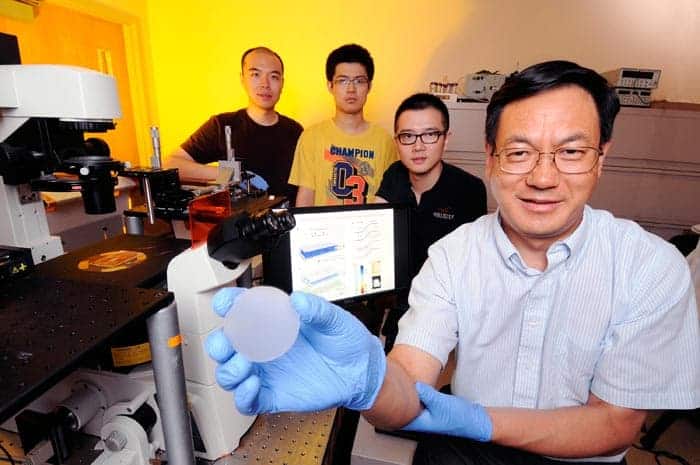 Read article: Highly sensitive skin-like sensor lights up at touch

Nanowire LED array works thanks to "piezophototronic effect"
Read article: Highly sensitive skin-like sensor lights up at touch
Technique could have implications for high-density data storage
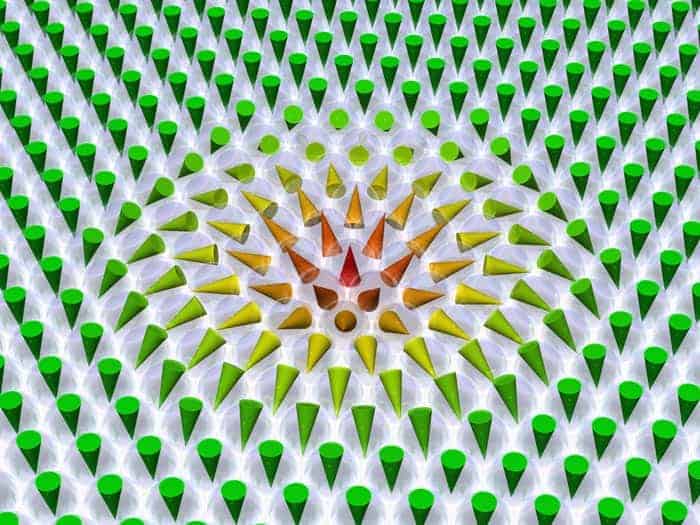 Read article: Skyrmion spin control could help speed up electronics
New device has millikelvin sensitivity
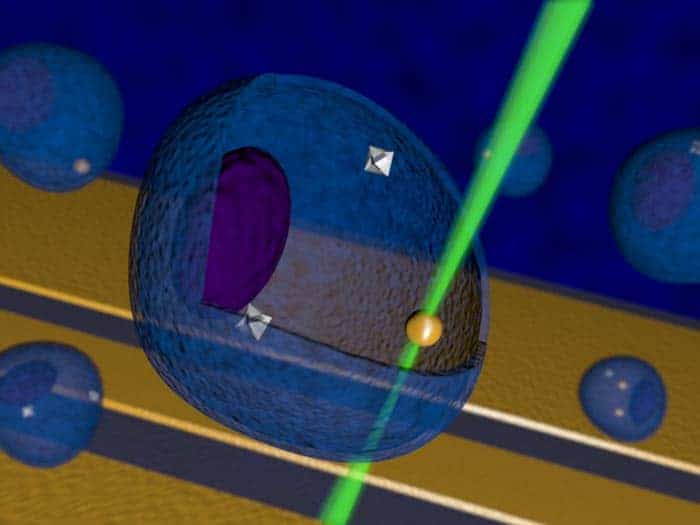 Read article: Nanodiamond thermometer takes temperature of biological cells
Flexible sensor could find use in robotics and healthcare
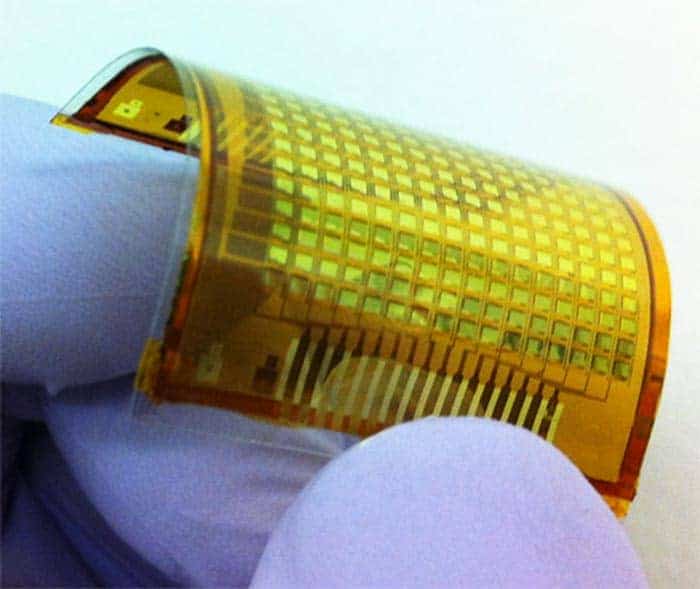 Read article: ‘Electronic skin’ lights up when touched
Best metal-oxide photoanode ever made from haematite
 Read article: ‘Champion’ nanostructures could improve solar water-splitting cells
Coated gold particles could inhibit tumours
 Read article: Nanoparticles control blood-vessel growth
All-graphene microwave circuits could be possible
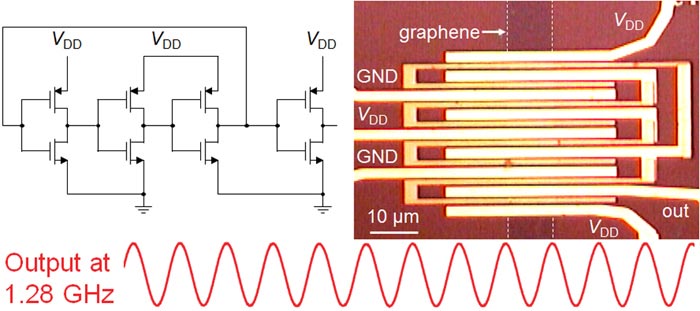 Read article: Graphene circuit breaks the gigahertz barrier
Transistor-based device could rival traditional immunoassays
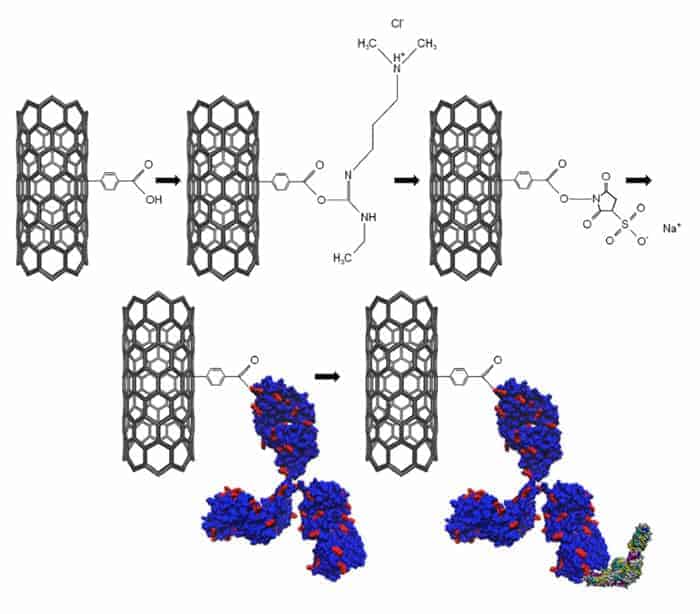 Read article: Nanotube sensor detects Lyme disease
New result could be important for biomedical applications such as drug delivery and anti-cancer treatments
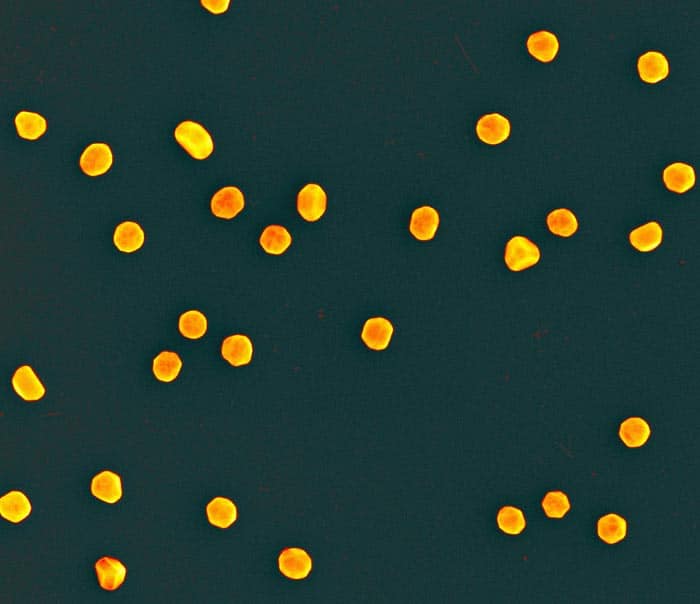 Read article: Positive or negative? Nanoparticle surface charge affects cell-membrane interactions
New carbon-based single-electron pump could help redefine the standard unit of current
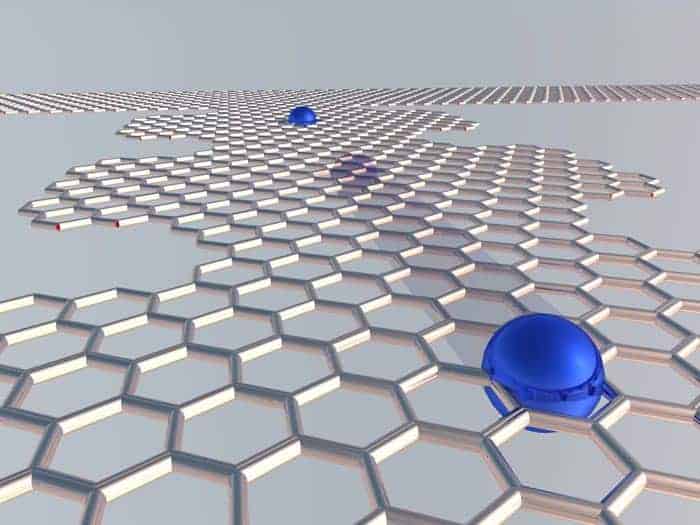 Read article: Redefining the ampere with the help of graphene?