

Recycled plastic bags make sustainable fabrics
A new material made from polyethylene yarn could be an eco-friendly alternative to conventional textiles
 Read article: Recycled plastic bags make sustainable fabrics

A new material made from polyethylene yarn could be an eco-friendly alternative to conventional textiles
Read article: Recycled plastic bags make sustainable fabrics
Researchers observe two-dimensional "puddles" emerging in a three-dimensional superconductor
 Read article: Superconductivity enters a new dimension
Result overcomes Bragg-length barrier and could have important applications in optoelectronics
 Read article: Shaped light waves penetrate further into photonic crystals
Images may aid the development of nanomaterials that dissipate heat more efficiently
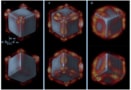 Read article: Surface electromagnetic fields mapped in 3D at the nanoscale
Two-dimensional materials called rare-earth chalcohalides might be useful in applications such as fault-tolerant topological quantum computation
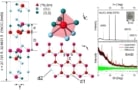 Read article: New candidates for Kitaev spin liquids found
Small gate voltage switches carbon sheet's nonlinear behaviour on and off
 Read article: Transistor-like device controls graphene’s electronic properties
Result sets a "speed limit" for transporting atoms while preserving their quantum state
 Read article: Physicists solve centuries-old brachistochrone problem for complex quantum operations
Entropy measurements reveal an unexpected phase transition analogous to the Pomeranchuk effect in helium-3
 Read article: Electrons in twisted graphene ‘freeze’ when heated
Discovery could be important for computer memory and storage applications
 Read article: Skyrmion-like object appears in ultrathin magnetic film
New atomic electron tomography measurements could transform our understanding of non-crystalline materials
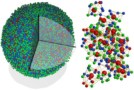 Read article: Metallic glasses reveal their secrets