

Hollow-core fibre boosts optical gyroscope performance
New device could make its way into next-generation guidance and civil navigation systems
 Read article: Hollow-core fibre boosts optical gyroscope performance

New device could make its way into next-generation guidance and civil navigation systems
Read article: Hollow-core fibre boosts optical gyroscope performance
Highly nonlinear process observed in lanthanide nanocrystals could lead to advanced imaging, sensing and light detection applications
 Read article: Tiny particles produce huge photon avalanches
Century-old “Knudsen flow” model remains valid for holes just 0.3 nm across
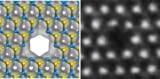 Read article: Gas flows follow conventional theory even at the nanoscale
Output of so-called "retinomorphic" device spikes in response to changing light levels
 Read article: Perovskite sensor sees more like the human eye
Single-wall carbon materials come in no fewer than 466 different hues – a finding that could benefit electrochromic displays and solar panels
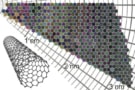 Read article: Nanotubes show their true colours
Six atoms are enough to constitute a many-body system, say researchers
 Read article: Collective behaviour emerges particle by particle
New perovskite/silicon devices show a photovoltaic conversion efficiency of nearly 30%
 Read article: Tandem solar cells break new record
150-year-old Kelvin equation remains valid for confinement widths as small as 1 nm thanks to the elasticity of capillary walls
 Read article: Capillary condensation follows classical law even at the nanoscale
New work on optimizing the location of phosphorous impurities could help silicon-based quantum processors scale up
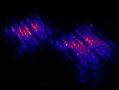 Read article: Silicon qubits find the right position
New technique could allow for faster, smaller and more energy-efficient transistors
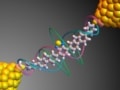 Read article: Destructive quantum interference improves single-molecule switch