Flash Physics: Huge wave seen on Venus, why some galaxies die early, free-electron laser opens in China

Huge wave spotted in the atmosphere of Venus

A large standing wave has been observed by the Japanese orbiter Akatsuki in the upper atmosphere of Venus. By imaging the planet in infrared and ultraviolet, the bow-shaped feature was seen to be more than 10,000 km long and was hotter than the surrounding atmosphere. The phenomenon is unusual because Venus’s dense atmosphere typically circulates the planet in just four Earth days – much faster than the planet’s 243 day rotation. Yet the wave remained in a fixed position for at least four days while background winds continued to speed by at 100 m/s. Makota Taguchi and colleagues report in Nature Geoscience that the wave occurred above a mountainous region about the size of Africa called Aphrodite Terra. Supported by simulations, they suggest that the uneven ground generated a gravity wave (not a gravitational wave) in the lower atmosphere that then propagated upwards. Gravity waves occur when the wind pushes air upwards because of the ground topography, yet gravity pulls the air particles downwards. Previously, scientists had thought these waves could not propagate to the upper atmosphere on Venus, yet these results suggest otherwise. While the surface or lower atmosphere conditions that caused the stationary bow are as yet unknown, the finding could lead to a better understanding of what’s going on in Venus’s atmosphere.

Why some galaxies meet an early death
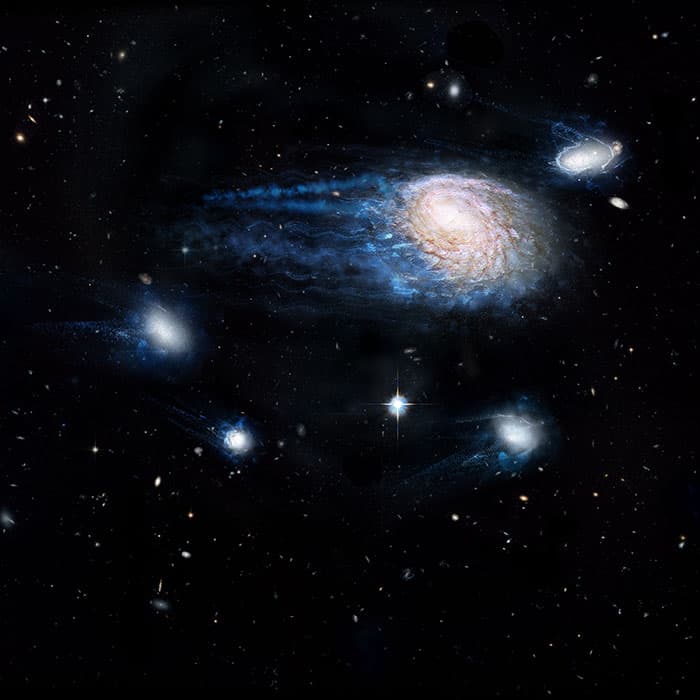
Artist's impression of ram-pressure stripping

Galaxies are being stripped of their star-forming material, leading to their early deaths. A study led by Toby Brown from the International Centre for Radio Astronomy Research and Swinburne University of Technology in Australia suggests that a process called “ram-pressure stripping” is more dominant than previously thought. Galaxies consist of vast amounts of stars and gas, surrounded by a huge dark-matter halo – all held together by gravity. Star formation within a galaxy is fuelled by hydrogen gas, yet there are many processes that stop it. These dictate the lifetime of the galaxy because once existing stars cool and grow old, there is no fuel to create new stars and the galaxy dies. Ram-pressure stripping is one such life-limiting process and is related to a galaxy’s dark-matter halo. Haloes are enormous and can stretch across galaxy clusters, changing how the galaxies interact and move because of their huge gravitational forces. As galaxies fall to the centre of their clusters, passing through halos, the super-heated intergalactic plasma sweeps the gas from the galaxies. This is ram-pressure stripping and, on a cosmic scale, it acts very fast. While previous studies have shown the process acts on large galaxy clusters with massive dark-matter halos, Brown explains that “this paper demonstrates that the same process is operating in much smaller groups of just a few galaxies together with much less dark matter.” The study, published in Monthly Notices of the Royal Astronomical Society, looked at 10,600 galaxies and could help to solve other galaxy-evolution mysteries.

China completes free-electron laser facility

Researchers in China have announced the completion of a new free-electron laser (FEL) that can produce ultraviolet light. The Dalian Coherent Light Source (DCLS) cost around $20m to construct and is located at the Chinese Academy of Sciences Dalian Institute of Chemical Physics in Liaoning Province. FELs involve accelerating electrons in a linear accelerator and then passing them through “undulators” so they give off photons. Most work in the X-ray regime, such as the Linac Coherent Light Source at the SLAC National Accelerator Laboratory in Stanford, US, as well as the upcoming European X-ray Free Electron Laser, which is under construction near Hamburg, Germany. Yet the team behind the DCLS says that it can deliver light in an energy range from 8–4 eV and is the world’s brightest in this part of the electromagnetic spectrum, known as the vacuum ultraviolet (VUV). The researchers say that the facility will be able to study molecules and atoms in gases, which is hard to do with conventional X-ray FELs. “VUV FEL light sources have wide applications in the study of basic energy science, chemistry, physics and atmospheric sciences,” says Xueming Yang from the Dalian Institute of Chemical Physics. “We expect that the new facility will become a new machine for important scientific discoveries and international scientific collaborations.”


  • You can find all our daily Flash Physics posts in the website’s news section, as well as on Twitter and Facebook using #FlashPhysics. Tune in to physicsworld.com later today to read today’s extensive news story on cooling a drum using squeezed light.
Run the solar system

By Michael Banks

Fancy running through the entire solar system while out for a jog?

Well, soon you can, thanks to a free smartphone app from the British Science Association (BSA), which is set for release in early March. Run the Solar System is an “immersive running app” with the solar system scaled down to a 10 km virtual race.

(more…)

Stretchable transistor could be a second skin

A polymer transistor that retains its electrical properties when stretched repeatedly has been developed by US researchers, who demonstrate its potential with a basic finger-mounted device. The device could have a number of different applications including systems that monitor a patient’s blood glucose levels and other physiological quantities.

The “internet of things”, in which numerous everyday objects in the world around us collect and exchange data, is a developing paradigm in electronics. This could include sensors mounted on the skin, which could continuously monitor the blood glucose levels of diabetics. Attaching computer chips to flexible, stretchable surfaces such as skin is a challenge because silicon is rigid and brittle. The quest for stretchable electronic devices has led researchers to use tiny silicon “chiplets” encased within stretchable matrices, producing electronic materials that can change shape even if the silicon itself does not.

“During the stretching, only the interconnects can dissipate the strain,” explains Sihong Wang of Stanford University in California. “That limits the density of devices they can achieve in a circuit.”

Stretchable alternative

The ideal solution is a stretchable alternative to silicon, and the leading candidates are conjugated polymers, in which overlapping electron orbitals create a delocalized electronic network that can conduct electricity. While these organic semiconductors are softer than traditional inorganic semiconductors, their stretchability generally remains poor – and designing the molecules often involves trading carrier mobility for stretchability. Researchers have compromised by blending high-mobility, brittle conjugated polymers with ductile, less conductive ones.

Now, Sihong Wang, Jie Xu and colleagues at Stanford and elsewhere have modified this approach. Previous methods have formed the polymer nanofibres first, allowing them to crystallize and fixing their properties in advance. If the nanofibres are later embedded in a softer polymer, it allows the composite to absorb more strain, but the conductive nanofibres themselves remain brittle.

In the new work, however, the researchers dissolved both types of polymer in a solution, which was then cast into films. When the films were processed, thermodynamics drove the solution to separate into two different phases, forming long, thin nanofibres of conductive polymer embedded in the soft elastomer. As the conductive nanofibres crystallized inside the confined space, they experienced the finite-size effect. This means that polymers confined into nanoscale spaces retain higher chain mobility because the growth of large crystalline regions is restricted. “The conjugated polymer here is growing inside these nanostructures,” explains Xu. “That’s why the crystallinity is decreased and the ductility is improved.”

Stretching the composite films to twice their length left their carrier mobility unaffected. Under the same treatment, the mobility of a pure conjugated polymer film dropped by a factor of up to 1000 and the material developed significant cracks.

Twisting and poking

The researchers produced fully stretchable transistors using networks of carbon nanotubes as electrodes and films of the low-mobility polymer as the dielectric. When they stretched the transistor to twice its length in the direction of charge transport, the on current of the transistor did drop, but simply because of the increase in the channel length. The device recovered its properties extremely well after stretching: it could be stretched by 25% of its length more than 1000 times without showing a significant change in its electrical properties. It could also survive repeated twisting and poking with a sharp object – provided a hole was not made.

The researchers wired up one of their transistors as a device that regulates the power supply to an LED. They attached it to a human finger and found that bending the finger did not affect the device operation. Creating more complex circuitry will require ways to pattern their film efficiently and precisely, and the team is now developing these.

Iain McCulloch of Imperial College London and King Abdullah University of Science and Technology in Saudi Arabia, who was not involved in the work, believes it could be an important development in polymer electronics: “Traditionally, organic semiconducting materials for transistor applications have found it quite difficult to replace the incumbent technology,” he says. “To identify an application that requires a unique attribute of organic electronics is always exciting, and I think that, in stretchable and wearable electronics, you can really see that an organic material could have distinct advantages.”

Brendan O’Connor of North Carolina State University in the US is pleased with the electrical stability of the films after repeated stretching: “That in itself is a pretty big accomplishment,” he says. He describes the production of fully stretchable transistors as “a pretty significant advance that only a few groups in the world can really do effectively.”

The transistors are described in Science.

Flash Physics: Species diversity explained, how turbulence affects wind farms, astronomical society awards medals

Species diversity emerges from ecosystem model

A new model of how different organisms compete for the same limited resources could explain why most ecosystems support many more species than expected. Life on Earth is remarkable in its diversity, with more than 300 tree species co-existing in a hectare of tropical rainforest and thousands of distinct types of microbes co-existing in a gram of soil. This diversity has puzzled biologists because simple resource-competition models suggest that the number of species in an ecosystem cannot exceed the number of distinct resources in that environment. Now, Anna Posfai and Ned Wingreen at Princeton University and Thibaud Taillefumier at the University of Texas at Austin have unveiled a new model that can reproduce the diverse coexistence of different species of phytoplankton. According to the trio, the diversity arises from two important features of their model. One is that it allows organisms to influence their environment – something that many real organisms do. The second is that the organisms are subject to the same trade-offs in how they metabolize nutrients using enzymes – with each organism having the same overall limit on enzyme production. The research is described in Physical Review Letters.

Turbulence study could lead to reliable wind power

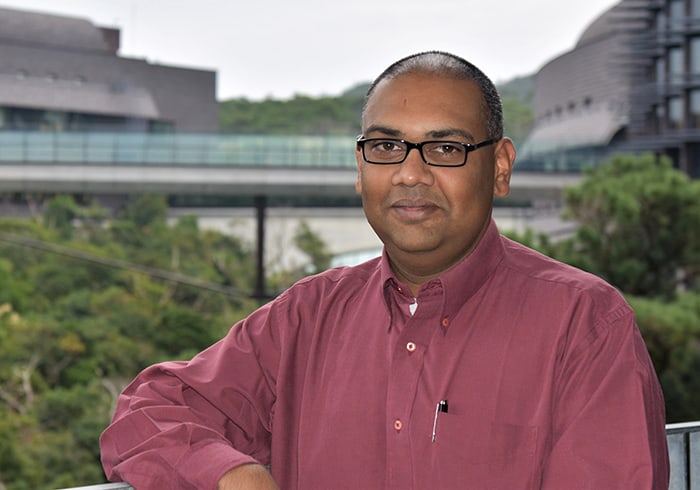
Photograph of Mahesh Bandi

Data on the energy output of wind turbines have provided Mahesh Bandi with important insights into how to design wind-power systems that deliver more reliable power. Researchers already know that the energy output of an individual turbine operated over a time T will experience fluctuations that scale with T2/3. While researchers had suspected this was caused by turbulence in the atmosphere, it had not been explained theoretically. Bandi – who is based at the Okinawa Institute of Science and Technology in Japan – looked at data from individual turbines and grids of turbines in the US, Ireland, Germany and Denmark. He has shown that the fluctuations are caused by atmospheric turbulence over distances of hundreds of kilometres. This could explain why the output of a farm of turbines spread over tens of kilometres has the same T2/3 fluctuations as a single turbine. Writing in Physical Review Letters, Bandi points out that the effect of short-term fluctuations can be smoothed out by combining the output of wind farms separated by more that 100 km – something that he saw in data from turbines in Texas and Ireland. However, he was also able to show that even this smoothing is limited.

Michele Dougherty and Nick Kaiser bag Royal Astronomical Society medals

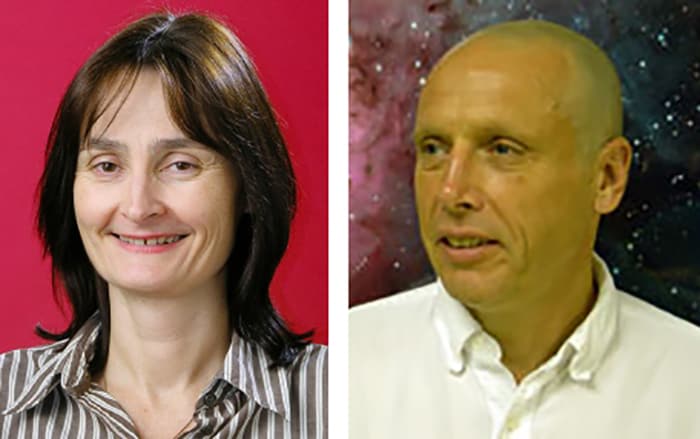
Photographs of Michele Dougherty and Nick Kaiser

The Royal Astronomical Society (RAS) has announced the winners of its annual awards, medals and prizes. Through these awards, the UK-based society honours significant achievements in the fields of astronomy and geophysics. The highest award for both fields is the Gold Medal, which typically recognizes lifetime achievement. Previous winners of the Gold Medal include Albert Einstein, Stephen Hawking and Edwin Hubble. Following in the footsteps of these notable scientists, the 2017 Gold Medal winners are, for astronomy, Nick Kaiser of the University of Hawaii, and for geophysics, Michele Dougherty of Imperial College London. The winners were announced at the RAS Ordinary Meeting and the awards will be presented at a ceremony in July at the society’s National Astronomy Meeting in Hull. A full list of the 2017 award winners can be found on the RAS website.


  • You can find all our daily Flash Physics posts in the website’s news section, as well as on Twitter and Facebook using #FlashPhysics. Tune in to physicsworld.com later today to read today’s extensive news story on a new stretchable transistor.

Bringing the universe into the lab

What is the Facility for Antiproton and Ion Research (FAIR)?

FAIR is a complex of accelerators being built by a collaboration of eight European Union countries [Finland, France, Germany, Poland, Romania, Slovenia, Sweden and the UK] plus Russia and India, as an extension to the GSI Helmholtz Centre for Heavy Ion Research (GSI) outside the German city of Darmstadt. It will feature a synchrotron housed in an 1100 m-circumference tunnel, which will supply very intense and high-energy ion and antiproton beams to a variety of experiments. Some 3000 scientists from around the world will use the facility to carry out a broad scientific programme, covering nuclear structure and matter, astro-physics, materials science, plasma physics and biophysics.

What specific topics will it address?

FAIR will allow us to study matter under extreme conditions of temperature, density and pressure, such as occurred in the early universe or takes place at the centre of stars. For example, it will allow scientists to study how quarks, which in the very early universe were thought to roam free within what is known as the quark–gluon plasma, became bound up inside protons and neutrons. This is essential to our under-standing of the way nuclei acquire mass, because the Higgs-mediated quark mass accounts for only about 1% of a proton’s or neutron’s mass. FAIR will also be used to explore the nuclear physics processes involved in the production of the heavy chemical elements that we see around us in the world today.

What experience will you bring?

I am an experimental physicist and have been building instrumentation for large experiments all of my life. I also have plenty of management experience, having been spokesperson of the ALICE experiment at the CERN laboratory in Geneva for the previous six years. Being in charge of this 1600-strong international collaboration taught me how to manage issues and crises, as well as see a project through to successful operation and get good physics out. Also, the Physics World January 2017 fact that I am not originally from the GSI is useful because it means I will bring a fresh perspective.

What is the current status of FAIR?

It is a very nice moment for the project. Construction was given final approval by member states in a council meeting in June 2016 and by the German research ministry in September. The first call for tenders for civil construction was then issued. According to a schedule approved by the council last month, civil engineering will get under way this summer and should be largely complete by the end of 2022.

When should experiments begin?

The main programme should start in 2025, by which point the accelerators should be fully operating. But there should already be new experiments by the middle of 2018, which will exploit the fact that GSI accelerators are currently being upgraded to serve as injectors for FAIR.

In 2009 FAIR was due to cost €1.35bn and be ready in 2016. What caused the price rise and delay?

FAIR is an innovative and highly complex facility. As the planning process got more detailed, it was realized that extra funds would be needed to cover the costs of radiation protection and fire protection. Construction was put on hold until member countries could agree the extra funding, which they did in last June’s council meeting.

Might the delay make the facility less competitive?

This question was addressed by an international expert commit-tee chaired by former CERN head Rolf-Dieter Heuer, after the funding gap came to light in 2014. The expert committee reassessed FAIR’s four scientific “pillars” in relation to the physics programmes available at other existing and future facilities, concluding that two of the pillars would remain unique with a large discovery potential, while the other two would provide valuable data not available elsewhere. It is not unusual that very large projects get delayed; the important thing is that along the way people look at the physics case and readjust their focus as needed.

So is FAIR now fully funded?

That is what the council had to agree upon in its meeting last June. All of the representatives of the national funding agencies had to raise their hands and say the funds could be guaranteed. They did that, and that was the turning point in the meeting. You could not get the signatures for construction unless you had a guarantee that the funding was secured.

Is it true that Russia and India have yet to sign on the dotted line?

They have agreed that they will pursue their shares of the missing funding, which are, respectively, about 18% and 3.5% of the total. They have stated that they are reasonably confident that the funding will be released. This is a long process. In India, approval has to go through parliament. And with Russia, negotiations are ongoing and promising. I think things looks quite positive as of today; in fact the German government has seen the commitment as sufficient evidence to go ahead with construction.

What happens if negotiations stall?

This is a difficult question. I think it very likely that the funding will be found. There are definitely strategies of how to cover for this. I am not involved enough in discussions with the German government to know the details, but I do know there is a plan B.

Pillars of light in the sky, an atomic knot and an atlas of physics

By Sarah Tesh

If I got woken in the middle of the night by my screaming child and then saw beams of light in the sky, I think I’d be worried. When Timmy Joe in Ontario saw them, however, he assumed the multi-coloured beams were the Northern Lights. Turns out they were actually caused by the extreme cold. Moisture was freezing so fast that it formed ice flakes only a few molecules thick that could float in the air. These then refracted the city lights to create a colourful light show in the night sky.

(more…)

Sonic tractor beam can be made for less than $90

A single-sided sonic tractor beam that can levitate objects without the need for complex phase-shifting electronics has been developed by researchers in the UK. Instead the device uses an acoustic lens, which can be made with a set of 3D-printed cells or a shaped surface to create the required acoustic fields. The team says that the device can be made for less than $90 with readily available components and a 3D printer, and has released instructions and a YouTube video explaining how.

In 2015, Bruce Drinkwater of the University of Bristol and colleagues developed a single-sided tractor beam that used sound waves to levitate, rotate and move objects. The device used an array of 64 off-the-shelf loudspeakers controlled by complex phase-shifting electronics. The array created 3D fields of sound – acoustic holograms – that could surround and trap objects. By controlling the output of the speakers, the acoustic holograms could be adjusted to hold, rotate and move objects – small polystyrene particles – in mid-air.

But using phased arrays to control multiple independent electrical signals is not simple, and such tractor beams are complex and expensive devices. To try to simplify the tractor beam, Drinkwater and colleagues explored whether they could create physical structures that could produce the required acoustic holograms, instead of electronics.

Passive adjustment

“To get a desired acoustic field, the key ingredient is to be able to adjust the phase distribution of the emitting surface,” explains Drinkwater. “We developed various way of passively adjusting the phase of the sound waves. We do this in three ways: a shaped emitting surface, a series of straight tubes of varying lengths and coiled tubes.”

The first of these methods uses 30 loudspeakers placed inside a bowl shape to hold them in the correct positions to direct the sound towards a focal point. The second and third designs involve 64 loudspeakers placed in unit cells – either straight or coiled tubes, of different lengths or revolutions – that act as delay lines, adjusting and focusing the sound waves.

Levitating fruit flies

When the loudspeakers are powered with a single electrical signal, each of these three passive devices generates a tractor beam that can levitate small polystyrene particles. The researchers also managed to levitate a fruit fly with the sculptured-surface device.

Drinkwater told Physics World that each device performs differently. “The sculpted-surface design is the most efficient as the sources are all directed towards the focal point,” he says. “The coil device is the least efficient, but it is the most compact as the delay tubes are coiled up into a layer that could be sub-wavelength.”

We can move the objects up and down
Bruce Drinkwater, University of Bristol

As well as creating static traps with a single electrical signal, the researchers showed that it is possible to add a second signal to allow some limited adjustment of the acoustic field. “With this system we can move the objects up and down,” explains Drinkwater.

The researchers have released instructions and all the files necessary to build all three devices with four input signals – to allow a greater range of movement of the levitated object – and a YouTube video demonstrating the process. They claim that a tractor beam can be built for less than $90 with readily available and 3D-printed components. For those who do not have access to a 3D printer, there are various online companies that will print the components.

Schools and hobbyists

Drinkwater says that simplicity is the main advantage of these tractor beams over previous incarnations. “This stems from less complex electronics,” he says. “With simplicity comes a reduction in cost of manufacture. So this opens up the possibility of making an acoustic tractor beam accessible to many more people. As well as industrial and medical applications, we are really excited about the possibility of DIY enthusiasts making these devices, or even schools.”

Steve Cummer, an electrical and computer engineer at Duke University in North Carolina, US, who has previously used 3D-printed blocks to create 3D acoustic holograms says that using physical structures is a good alternative to a phased array. “The tractor beam simply requires a sufficiently high sound amplitude to create the steady pressure required for levitation, and control over the phase distribution of the sound to create the precise sound amplitude distribution needed,” he told Physics World. “In this case, each of the blocks acts as the phase control for each emitter.”

Cummer agreed that building the device should be relatively straightforward. “The electronics are a lot simpler than the multi-transducer version they created before, in which each one required careful phase control. As long as the recipe for the blocks is followed, it should work.”

  • In 2015, Physics World visited Bruce Drinkwater’s lab and recorded audio and video pieces with researchers there. You can access this content at “ The wonderful world of ultrasound

Flash Physics: Home computers find pulsars, 3D graphene could be stronger than steel, SESAME opens

Home computers help discover new pulsars

The Einstein@Home project has discovered 17 new gamma-ray pulsars within a sample of 118 unidentified pulsar-like sources. Tens of thousands of volunteers donated their idle computing time to help researchers analyse data from the Large Area Telescope (LAT) on board the Fermi spacecraft. Combined with newly improved search methods and Fermi-LAT data, an international team led by scientists at the Max Planck Institute for Gravitational Physics in Hannover has been able to identify 17 new pulsars. Pulsars result from extremely dense neutron stars that emit radio waves and gamma radiation because of their strong magnetic fields and fast rotation. When these beams point towards Earth as they rotate, they are seen as a pulse. However, detecting them is difficult and requires very fine resolution, years of data and huge amounts of computer power. The Einstein@Home project allowed the researchers to perform analysis within a year that would otherwise take more than a thousand years on a single computer. Thirteen of the new discoveries are presented in The Astrophysical Journal and the director of Einstein@Home, Bruce Allen, believes that many more could be pulsars in binary systems. Einstein@Home has also examined data related to gravitational waves and radio pulsars.

3D graphene could be stronger than steel

Researchers at the Massachusetts Institute of Technology (MIT) have proposed a new 3D graphene structure that if built could have 10 times the strength of steel with only 4.6% of the density. The team, led by Markus Buehler, has used bottom-up computational modelling and 3D-printed plastic models to investigate the mechanics of the proposed material and its unusual structure. Graphene is a 2D sheet of carbon atoms arranged hexagonally and is one of the strongest known materials. However, using it to create strong 3D structures is still a challenge. The MIT group did computer simulations from the atomic level to design the synthesis process, find the ideal structure and then understand its properties. The result was a 3D porous gyroid structure comprising compressed and fused graphene sheets. To help visualize the unusual structure, the team produced 3D-printed models and performed compression tests. The work is presented in Science Advances and the team says that if made, the 3D graphene could have many industrial applications.

SESAME synchrotron opens with first electron beam

Photograph of the SESAME synchrotron-light source

The SESAME synchrotron-light facility in Jordan has circulated its first electron beam. Operated jointly by Bahrain, Cyprus, Egypt, Iran, Israel, Jordan, Pakistan, the Palestinian Authority and Turkey, SESAME is the only third-generation synchrotron in the Middle East. It will use the electron beam to create high-quality beams of laser-like light for research in a wide range of fields, including physics, materials science, chemistry, biology and archaeology. “This is a very proud moment for the entire SESAME community,” says the Jordanian nuclear engineer Khaled Toukan, who is the director of SESAME. “SESAME is now opening for business.” Next, SESAME staff will ensure that beam can be stored in the synchrotron ring at an operating energy of 2.5 GeV. Then, the light emitted by the electrons will be channelled into two beamlines and used by SESAME’s first experiments this summer.

  • You can find all our daily Flash Physics posts in the website’s news section, as well as on Twitter and Facebook using #FlashPhysics. Tune in to physicsworld.com later today to read today’s extensive news story on an acoustic tractor beam.

Figuring out a handshake

In April 2008 I moved from the physics faculty at the Massachusetts Institute of Technology to a hedge fund in Manhattan with a box-seat view of the Great Recession. My 23rd-floor corner office near Times Square offered a full view of Lehman Brothers’ headquarters a few blocks away. The investment bank Bear Stearns had imploded a month before I arrived. Lehman Brothers collapsed in the cityscape through the window behind my monitor. A former treasury secretary occupied the office adjacent to mine. I had left the arcane world of particle physics for a world-class education on incentives in finance.

Throughout the financial sector, people get paid to take bets with other peoples’ money. Such gamblers stand to make a lot if they are right. But they stand to lose comparatively little if they are wrong. And investors lack the information needed to properly police those gambling on their behalf. This is all you need to know to confidently predict an unending series of financial crises that will call into question wealth you mistakenly think you have. Such a system inevitably self-organizes into a common bet. (Large markets in which nearly everyone is naturally on the same side – such as stock and real-estate markets – are particularly convenient for this purpose.) The common bet allows the gamblers to cash in for a few years, and provides them with herd protection when things fall apart.

Heads win big …

Halting financial crises therefore requires the elimination of such “heads win big, tails lose little” incentives. Any other purported fix is a joke. Regulation can push the problem around, but it cannot possibly fix an incentive system with such a deep structural flaw. The person managing your money gets paid well if they turn out to be right; they do not lose much if they eventually turn out to be wrong; and in the meantime that person collects a salary. Even if they know nothing, such a person has an incentive to place bets, an incentive to convince you they know something, and an incentive to genuinely convince themselves they know something. The last of these provides useful protection against any future charges of fraud.

How does any of this relate to science? Well, academics are incentivized to publish papers. The rewards are clear and present: publications and citations lead to grants, promotions and scholarly accolades. Penalties for being wrong are often comparatively fuzzy and distant. The scientist reaps rewards if they turn out to be right; they often do not lose much if they eventually turn out to be wrong; and in the meantime that person collects a salary. Even if they know nothing, such a person has an incentive to publish papers, an incentive to convince you they know something, and an incentive to genuinely convince themselves they know something. The last of these provides useful protection against any future charges of fraud.

This is all you need to know to confidently predict an ongoing replication crisis in academic science that calls into question “wealth” you mistakenly think you have: useful, accurate knowledge about how nature works. Halting the crisis requires a fundamental change to the underlying incentive. Any other purported fix is a joke. Regulation – in the form of peer review, transparency requirements and so on – can push the problem around, but it cannot possibly fix an incentive system with such a deep structural flaw.

This is uncomfortable to acknowledge. Most of us strongly prefer to assume people do the right thing, whatever their incentives. We prefer to think incentives do not matter, or at least do not matter much. In the financial sector, someone will eventually develop a compelling alternative to “heads win big, tails lose little” incentives. I do not know what that alternative will be, but it will probably be simple. It will involve material loss for those who turn out to be wrong. It will provide a welcome alternative for those of us who prefer to invest with people subject to carrots and sticks aligned with our interests.

Why do scientists not simply sell what they learn from their research?

In the case of science, the appropriate alternative occurred to me a couple of years ago, as I found myself wondering why scientists do not simply sell what they learn from their research. Selling information is tricky. If academic A wants to sell information to quant Q, A needs to convince Q that the information is useful (to Q) and accurate before revealing the information. This is usually hard to do, which is why scientists do not sell what they learn. It is not for lack of desire or potential customers – these are consequences, not causes. Instead, it is because there is no mechanism for doing so.

An overcomplicated system has expanded in the resulting vacuum: dissemination through journals; quality control through peer review; funding by taxpayers rather than directly by consumers; assessment of value by citation counts. This system cumbersomely and ineffectively compensates for an extraordinary historical oversight: nobody, apparently, had ever bothered to figure out some sort of handshake allowing A to sell information to Q.

After figuring out the necessary handshake, I built Kn-X (pronounced like the word “connects”), an online knowledge exchange through which A can finally sell information to Q. Kn-X is simple. It involves material loss for those who turn out to be wrong. It provides a welcome alternative for those of us who prefer to base important decisions on information from people subject to carrots and sticks aligned with our interests. It might even address a crisis or two. www.kn-x.com

Flash Physics: Gold theory and experiment reunited, fish in space, Brexit implications for universities

Theory and experiment reunited in gold

When it comes to the electronic properties of gold, there has been a long-standing discrepancy between theoretical predictions and observation. Now, an international team, led by Peter Schwerdtfeger at Massey University, New Zealand, has made significant progress in uniting the two by calculating the interactions between an unusually high number of electrons in gold atoms. Typically, properties such as ionization energy and electron affinity are predicted by accounting for interactions between three electrons. However, the electrons of heavy atoms exhibit relativistic properties. For gold, this causes the gap between outer electron orbitals to be smaller than expected. The result is inaccurate predictions. Schwerdtfeger’s team extended the calculations to take into account interactions between five electrons. Therefore their model more precisely accounts for electron correlation contributions as well as relativistic effects and quantum electrodynamics. They achieved a ten-fold improvement in the accuracy of their ionization energy and electron affinity calculations, as described in Physical Review Letters. The research could lead to a more thorough understanding of heavy element electronic properties can be now achieved.

Fish in space help us understand microgravity effects

Researchers have sent fish to the International Space Station (ISS). A team from the Tokyo Institute of Technology monitored the transgenic medaka fish via a video link in an attempt to understand the detrimental effects of microgravity on the body. Astronauts who have spent time in a reduced gravity environment experience a large reduction in bone mineral density, yet the molecular processes involved are not fully understood. Therefore, the group led by Akira Kudo sent chambers containing hatching fish larvae to ISS, where they were placed under a fluorescence microscope. Over eight days, the signals from cells that form and degrade bone (osteoblasts and osteoclasts) where constantly measured and compared to a control group on the ground. The findings, described in greater detail on medicalphysicsweb, suggested exposure to microgravity immediately altered bone structure and triggered bone loss. The experiment could help assess the health effects of long-term human space travel.

Brexit costs for UK universities outlined in report on international students

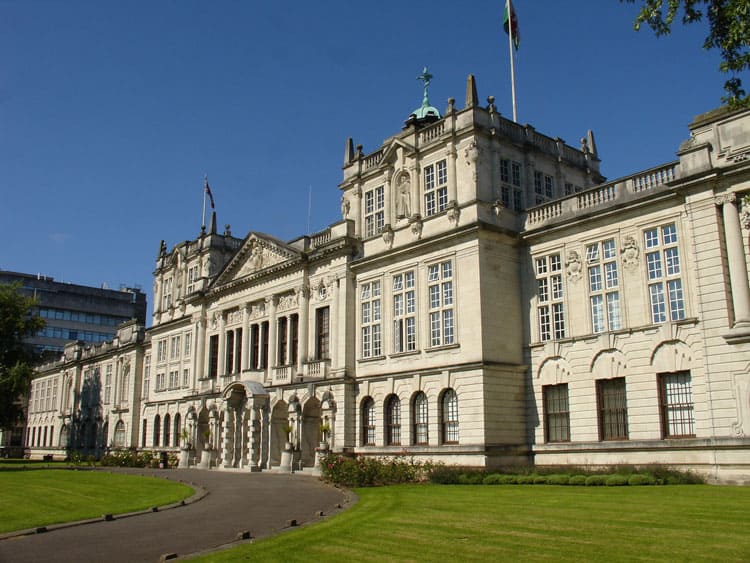
Photograph of the Main Building at Cardiff University

If the UK government requires students from the European Union (EU) to pay the same tuition fees as non-EU students after the country leaves the EU, then university enrolments from the continent could fall by over 31,000 – a 57% decline. So says a report by the Higher Education Policy Institute think tank and Kaplan International – a firm that teaches English to international students. EU students currently pay the same fees as their UK counterparts – up to £9250 per year – while students from outside the EU pay international rates, which can be as much as £35,000 per year depending on the course. The report finds that the decline in EU students would result in a loss of £40m to universities. The study also looked at the impact of a 10% decline in the value of the pound and found that this could increase the number of students studying in the UK from outside the EU by around 20,000 – an increase of 9% – in the first year alone, which would be worth over £227m in fee income. Yet, the report warns that if the UK government makes it harder for international students to study in the UK then it would not offset the loss from EU students and could cost the UK economy £2bn a year.

Copyright © 2026 by IOP Publishing Ltd and individual contributors