Optics sharpen view of extremely large telescopes

Astronomers around the world are attempting to outsmart the random nature of the Earth’s atmosphere, the part of our planet’s ecosystem that allows all of us to survive and thrive. A cool evening breeze may bring welcome relief after a long day in the suffocating summer heat, but that same gust of wind can wreak havoc on the feeble light signals that travel from distant stars and galaxies to reach telescopes on Earth.

The problem stems from turbulent eddies in the Earth’s atmosphere, which in turn are caused by changes in air density as the temperature fluctuates. Such atmospheric turbulence generates local variations in the refractive index of the air, which means that light from a cosmic object is refracted many times as it travels through the Earth’s atmosphere towards a telescope.

Unfortunately, telescopes that are designed to magnify starlight also amplify these atmospheric irregularities. If you were to take multiple photos of a star in quick succession, turbulence would cause a distorted image of the star to move around its position in the night sky. The buffeting effect of the wind also causes the telescope itself to vibrate – which is only made worse by imperfect mechanical couplings to the drive motors, the enclosure and other sources of vibration. As a result, long-exposure photos show a blurred stellar image rather than a sharp point source, with the size of the blurred image known by astronomers as “atmospheric seeing”.

Telescope designers have introduced optical techniques to correct for the effects of atmospheric turbulence, and these techniques have become ever more important and sophisticated as the light-collecting mirrors have become larger. The Thirty Meter Telescope (TMT) – now being developed in a collaboration between the US, Canada, Japan, China and India – is pushing this technology to new limits, with the ultimate aim of building a ground-based observatory with a spatial resolution more than an order of magnitude greater than that of the Hubble Space Telescope.

The first telescopes to correct for atmospheric effects exploited so-called active optical systems, which provide real-time control of the secondary mirror’s position relative to the main mirror. These active systems incorporate computer-controlled actuators positioned under the main mirror to constantly adjust its shape, helping to control the defects and deformations in the telescope structure, mirror and enclosure that are caused by temperature changes, wind buffeting and mechanical effects.

Such active optical systems greatly improve the quality of the resulting images, but telescope mirrors can only be adjusted at low frequencies, typically around 1 Hz. In contrast, atmospheric turbulence fluctuates on millisecond timescales.

New routes to sharper images

More responsive error correction can be achieved with adaptive optics (AO) systems, which use a reference star in the telescope’s field of view or an artificial laser “guide star” to continually sample the conditions that the light passes through. An optical device called a wavefront sensor analyses the incoming starlight, and prompts a computer to send corrective commands to small, deformable mirrors close to the telescope’s focus. Most telescopes with mirror diameters in the 8–10 m range are equipped with Shack–Hartmann wavefront sensors, in which the focal planes are covered with arrays of small lenslets. In this case, the wavefront distortion is measured for each lenslet, which in turn is fed back into the deformable mirror loop.

Most AO systems in operation today exploit a single guide star, but they can only correct the distortions over small patches of the sky. As an example, the bright
spot that can be generated by exciting sodium atoms at a height of around 90 km cannot sample atmospheric turbulence at greater heights. More importantly, the cone-shaped volume defined by the tele­scope mirror and the laser spot does not allow the AO system to sense the outer portions of the laser’s wavefront, which can cause differential stretching effects when using the laser guide star to correct the target’s wavefront.

The obvious remedy is to exploit multiple laser guide stars, which together can sample the atmosphere above the telescope more homogeneously. As a result, all current designs for the next generation of large telescopes include versions of such “multi-conjugate” AO systems.
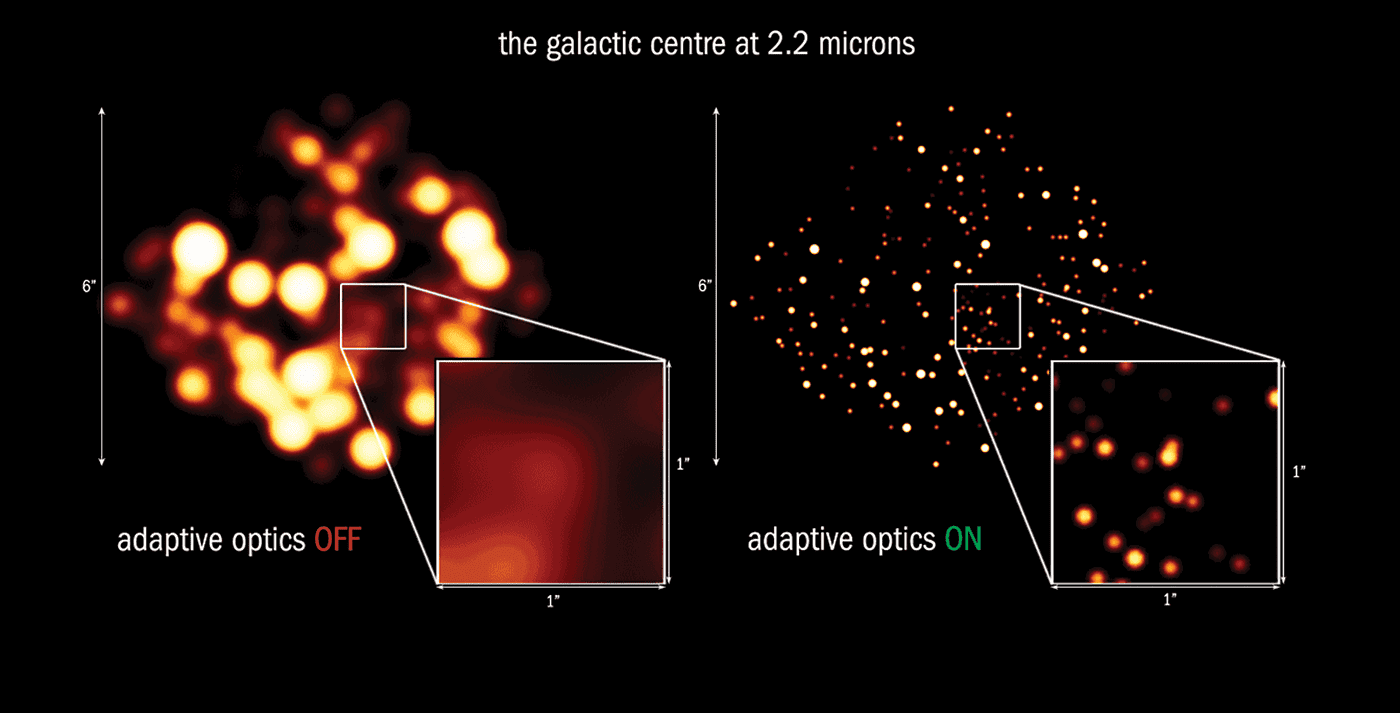
Side by side comparison of Milky Way images with and without adaptive optics

Meanwhile, the TMT is taking the AO concept one step further. Just like any other telescope, the TMT can be used as a huge “light bucket” to observe the night sky without any atmospheric correction. But it is also on track to become the first telescope designed with AO as an integral system element, part of a low-risk design strategy that will enable advances in the technology to be incorporated into the telescope as they are developed.

This integrated AO approach is crucial for the TMT to achieve its design goal, which is to routinely provide a diffraction-limited spatial resolution that will be 12.5 times sharper than that of the Hubble Space Telescope. At the diffraction limit the gains in sensitivity scale with the fourth power of the main mirror’s diameter, which means that the TMT will be two orders of magnitude more sensitive than the current generation of large telescopes.

Inaugural system

When the TMT produces its first images – most likely soon after 2027 – it will be equipped with a multi-conjugate AO set-up incorporating six laser guide stars and two deformable mirrors. This inaugural system, called the Narrow Field Infrared Adaptive Optics System (NFIRAOS), will provide diffraction-limited images over the 0.8–2.5 μm wavelength range, where AO offers optimal results.

The NFIRAOS is expected to reduce wavefront errors to well below 190 nm over a 10–30 arcsecond field of view, in so-called “median seeing”. Given the usual atmospheric conditions at the preferred construction site, Mauna Kea, the highest summit of the Hawaiian islands, this median seeing requirement implies excellent, highly competitive performance. Astronomers have been considering alternative sites as a result of sustained opposition from native Hawaiians, and have just confirmed La Palma in the Canary Islands as their second choice – which promises world-class performance, although not quite as good as on Mauna Kea.

In practice, the NFIRAOS is expected to improve the typical size of a point source from around 0.5 arcseconds in “seeing-limited” mode to about 0.01 arcseconds. A defined upgrade path is set to further reduce the wavefront errors to approximately 133 nm within five years, significantly better than the performance of any current AO system in operation. The TMT will then be blessed with an AO system that can deliver competitive Strehl ratios – a quantitative measure of how much of the light collected by the detector is delivered into the diffraction-limited point source – of 40–75% at wavelengths from 1.2 to 2.2 μm.

NFIRAOS will mostly be used to obtain near-infrared spectra – either single observations using a “long slit” or multiple targets simultaneously in “integral field unit” mode. Additional AO systems are also being developed for deployment within the first decade of TMT operations: one optimized for spectroscopic observations at mid-infrared wavelengths (small-field, diffraction-limited mid-infrared AO: MIRAO), and another for near-infrared correction of multiple small sky areas over a 5 arcminute field of view (multiple-object AO: MOAO).

Such diffraction-limited operation of 30 m class telescopes will enable a step change in our knowledge of the universe. But advances in technology must proceed in tandem with our scientific understanding for the TMT and its class of next-generation large telescopes to make ground-breaking discoveries well into the future.
LIGO’s gravitational-wave discovery is Physics World 2016 Breakthrough of the Year

Almost exactly 100 years after they were first postulated by Albert Einstein in his general theory of relativity, gravitational waves hit the headlines in 2016 as the US-based LIGO collaboration detected two separate gravitational-wave events using the Advanced Laser Interferometer Gravitational-wave Observatory (aLIGO). The first observation was made on 14 September 2015 and was announced in February this year. A second set of gravitational waves rolled through LIGO’s detectors on 26 December 2015, and this so-called “Boxing Day event” was announced in June this year. Gravitational waves are ripples in the fabric of space–time, and these observations mark the end of a decades-long hunt for these interstellar undulations.

The measurements also herald the start of the era of gravitational-wave astronomy and multi-messenger astronomy, whereby gravitational-wave observations are combined with those made by optical and radio telescopes and other detectors observing the cosmos. Indeed, LIGO’s twin detectors will soon be joined by a global network of gravitational-wave detectors.

Cataclysmic events

The gravitational waves from both events were produced by cataclysmic events in the distant universe – the collision and eventual merger of two black holes. In the first event, two black holes of 36 and 29 solar masses, respectively, merged to form a spinning, 62 solar-mass black hole, some 1.3 billion light-years away in an event dubbed GW150914.

The gravitational waveform was picked up by the then newly upgraded aLIGO detectors – one in Hanford, Washington, and the other in Livingston, Louisiana. In fact, when the signal reached the observatories, both detectors were still being calibrated. Despite this, the signal from GW150914 was so strong and clear that it could be “seen” in the data by eye and was measured to a statistical certainty of 5.1σ.

The waves in the Boxing Day event – dubbed GW151226 – were also generated by colliding black holes. These weighed in at 14 and 8 solar masses, and merged to form a single, spinning 21 solar-mass black hole, some 1.4 billion light-years away. In October 2015 LIGO recorded a third possible event, dubbed LVT151012. Although not statistically significant enough to be a discovery, the team believes this event also arose from two coalescing black holes.

Three in four months

LIGO detected three events in its four months of observation, and this was no mean feat. The instruments are sensitive enough to detect a change in length less than 1000th the size of a single proton between its interferometer’s arms – which is an incredible feat of engineering.

LIGO has already changed our view of the universe – its observations are the first direct evidence for the existence of black holes. Also, the stellar-mass black holes that merged in both events do not fit our current understanding of black holes. Astronomers had thought that such binaries would either not form at all or, if they did, they would be too far apart to merge within the age of the universe. Also, the LIGO collaboration had expected that its first detections would come from binary neutron-star mergers rather than coupling black holes, which were thought to be rare. But the data from the recent discoveries suggest that the rate of binary-black-hole mergers is higher than expected.

  • In the below video, LIGO scientists at the University of Cardiff talk about the first-ever detection of gravitational waves. Looking to the future, they speak about the prospect of a new era of gravitational-wave astronomy.

The top 10 breakthroughs were chosen by a panel of four Physics World editors and reporters, and the criteria for judging included:

  • fundamental importance of research;
  • significant advance in knowledge;
  • strong connection between theory and experiment; and
  • general interest to all physicists.

Now for our nine runner-up breakthroughs, which are listed below in no particular order.

Schrödinger’s cat lives and dies in two boxes at once

Illustration of Schrodinger's cat in two boxes

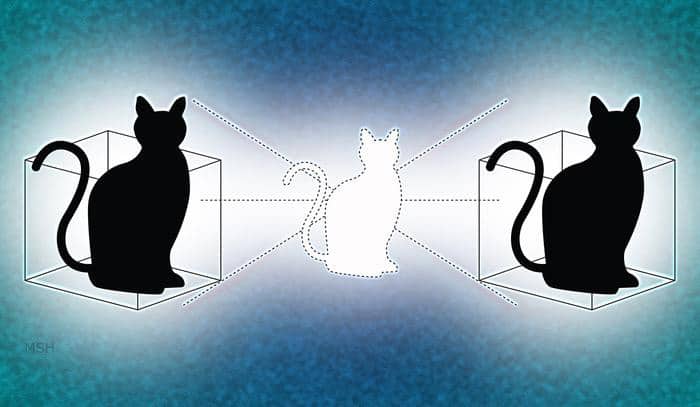
To Chen Wang, Robert Schoelkopf and colleagues at Yale University in the US and INRIA Paris-Rocquencourt in France for creating a Schrödinger’s cat that lives and dies in two boxes at once. In this new twist on a much-loved quantum paradox, the boxes that hold Schrödinger’s cat are two entangled microwave cavities. The cats are represented by large ensembles of photons, which exist in each cavity. These ensembles can be in one of two quantum states – alive or dead – and the team managed to put the entire system into a state in which both cats (in both boxes) are both alive and dead until a measurement is made. Besides providing a novel illustration of how Schrödinger’s cat can be in two places at once, the large numbers of photons in such “cat states” could provide a robust way of storing quantum information using error-correction protocols.

Elusive nuclear-clock transition spotted in thorium-229

To Lars von der Wense, Peter Thirolf and colleagues at Ludwig Maximilian University of Munich, GSI Helmholtz Centre for Heavy Ion Research, Helmholtz Institute Mainz and the Johannes Gutenberg University Mainz for detecting the elusive thorium-229 nuclear-clock transition. It has long been a goal of some in the metrology community to produce a “nuclear clock” by locking a laser to a rare low-energy nuclear transition. Such a clock would, in principle, be much more stable than a conventional atomic clock because the nucleus is much less susceptible to interference from stray electromagnetic fields. The predicted 7.8 eV transition in thorium-229 is seen as an ideal candidate – except that physicists had been unable to actually detect it. By doing experiments involving atoms and ions of thorium-229, the team showed that the transition does indeed exist and has energy in the 6.3–18.3 eV range. The next step for the researchers is to improve their measurements so that the energy is known to millielectronvolt precision. This would then allow the transition to be studied using laser spectroscopy.

New gravimeter-on-a-chip is tiny yet extremely sensitive

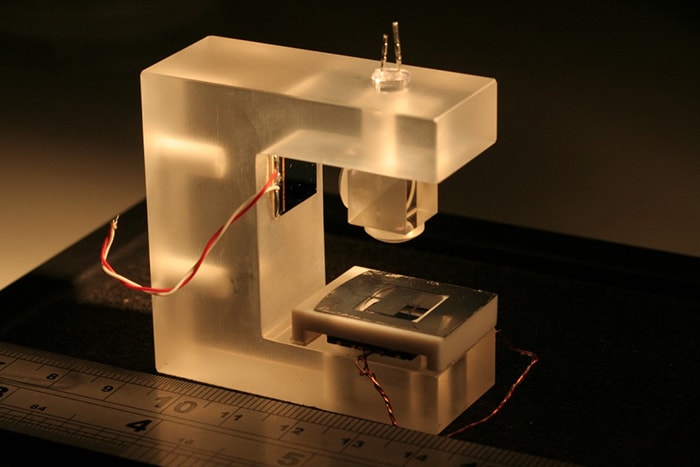
Photograph of the gravimeter in its fused silica support structure

To Giles Hammond and colleagues at the University of Glasgow for building a highly sensitive gravimeter that is both inexpensive and compact. Their tiny device can make very precise measurements of Earth’s gravity and could be deployed in drone aircraft or in multi-sensor arrays to perform a range of tasks, including mineral exploration, civil engineering and monitoring volcanoes. While the gravimeter is not quite as sensitive as the best available sensors, it could be produced for a 1000th of the cost and is also significantly smaller and lighter than current devices. The device is based on a “proof mass”, which is a piece of silicon about 10 mm long that sits on top of two flexible struts. The mass, struts and frame are all made using standard semiconductor-manufacturing processes.

Negative refraction of electrons spotted in graphene

To Cory Dean, Avik Ghosh and colleagues at Columbia University, the University of Virginia, Cornell University, the Japanese National Institute for Materials Science, Shenyang National Laboratory for Materials Science and IBM for measuring the negative refraction of electrons in graphene. Negative refraction is a property of some artificial metamaterials and can be used to create novel optical devices such as a perfect lens. Electrons in materials can behave as waves and negative refraction should also occur at the interface between an n-type and a p-type semiconductor (a p–n junction). It has proven impossible to see this effect in conventional semiconductors because most electrons are reflected at p–n junctions. Dean and colleagues created a p–n junction in graphene and ensured that the interface was very smooth to minimize reflections – allowing them to measure the negative refraction of electrons. Negative refraction could be used to bring a diverging electron beam to a sharp focus and this could form the basis of an electronic switch that consumes very small amounts of energy.

Rocky planet found in habitable zone around Sun’s nearest neighbour

This artist's impression shows a view of the surface of the planet Proxima b orbiting the red dwarf star Proxima Centauri

To the Pale Red Dot collaboration for finding clear evidence that a rocky exoplanet orbits within the habitable zone of Proxima Centauri, which is the nearest star to the solar system. Dubbed Proxima b, the exoplanet has a mass about 1.3 times that of the Earth and is therefore most likely a terrestrial planet with a rocky surface. Our newly found neighbour also lies within its star’s habitable zone, meaning that it could, in theory, sustain liquid water on its surface, and may even have an atmosphere. Proxima Centauri is a red-dwarf star that is just 4.2 light-years away from the Sun. While Proxima b could be subject to ultraviolet and X-radiation that is far more intense than that experienced on Earth, the team says that this does not exclude the existence of an atmosphere. Whether the planet contains liquid water, and ultimately life, depends upon exactly how it formed – according to the team.

Physicists take entanglement beyond identical ions

To Chris Ballance and colleagues at the University of Oxford and Ting Rei Tan and colleagues at NIST in Boulder, Colorado, for creating and measuring quantum entanglement between pairs of two different kinds of ions. The work – which was done independently by the two groups – is an important step towards the creation of ion-based quantum computers based on two or more different kinds of ion. Such hybrid systems would take advantage of the fact that some ions are better than others at performing specific quantum-computing tasks. The Oxford team entangled ions of two different isotopes of the same element – calcium-40 and calcium-43 – whereas the NIST group used beryllium-9 and magnesium-25 as their ions.

‘Radical’ new microscope lens combines high resolution with large field of view

Image of a mouse embryo taken using the new mesolens

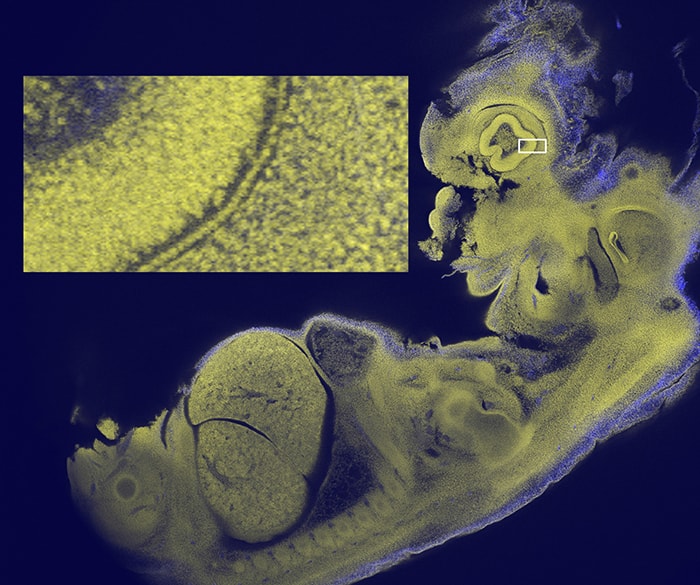
To Gail McConnell, Brad Amos and colleagues at the University of Strathclyde for creating a new microscope lens that offers the unique combination of a large field of view with high resolution. Called a mesolens, the device allows a confocal microscope to create 3D images of much larger biological samples than was previously possible – while providing detail at the sub-cellular level. The ability to view whole specimens in a single image could assist in the study of many biological processes and ensure that important details are not overlooked. The researchers used the lens in a customized confocal microscope to image 12.5 day-old mouse embryos. They were able to image single cells, heart-muscle fibres and sub-cellular details, not just near the surface of the sample but throughout the depth of the embryo.

Quantum computer simulates fundamental particle interactions for the first time

To Rainer Blatt and Peter Zoller of the Institute for Quantum Optics and Quantum Information Innsbruck and the University of Innsbruck, and colleagues, for simulating fundamental-particle interactions using a quantum computer. The team used four trapped ions to model the physics that describes the creation and annihilation of electron–positron pairs. While the result can be easily calculated using a conventional computer, problems that are beyond the reach of even the most powerful supercomputers could be solved by the quantum computer if it could be scaled up to include about 30 ions. The team has already built a system with that many ions, but its performance must be improved significantly before it can do practical simulations – something that could be possible within a decade.

The single-atom engine that could

An image of the ion trap inside the vacuum chamber

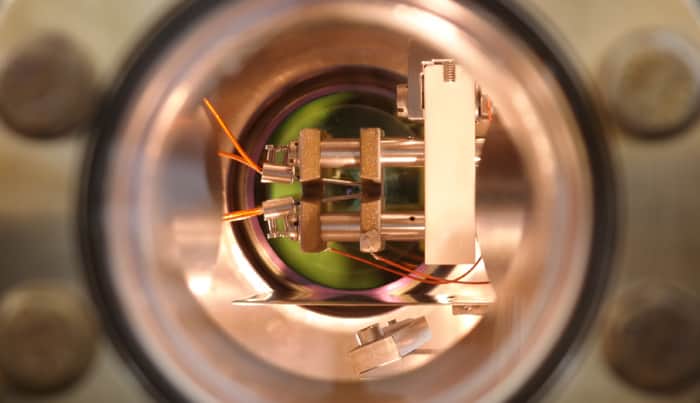
To Kilian Singer, Johannes Roßnagel and colleagues at the University of Mainz for creating an engine based on just one atom. The team’s heat engine converts a difference in temperature to mechanical work by confining a single calcium atom in a funnel-shaped trap. The researchers then heated the atom using electrical noise, and as its temperature increased, its oscillations in the radial direction became larger, causing it to sample regions of higher potential, sending the particle towards the larger end of the trap. By turning the noise on and off periodically, the researchers caused the atom to oscillate between the two ends of the trap. This motion is damped to prevent the atom from escaping the trap – and the energy required to keep the atom in the trap is the work done by the engine. Their next research goal is to cool the atom further and confine it more tightly, so that it no longer behaves as a classical particle but rather as a quantum wavepacket. This could open the door to studies of the interface between thermodynamics and quantum mechanics.

Freeman Dyson on the physics dream team, Tycho Brahe's heavy metal, Tintin bags an astronomical sum

Mr Freeman Dyson: “so lucky” not to have a PhD. (CC BY-SA 2.0/Jacob Appelbaum)

By Hamish Johnston

What would it be like to have known Hans Bethe, Wolfgang Pauli, Robert Oppenheimer and Richard Feynman? One person who can tell is the theoretical physicist Freeman Dyson, who recounts his extraordinary life in an interview in Nautilus entitled “My life with the physics dream team”. Born in the UK, he got a degree in mathematics at the University of Cambridge before embarking on a PhD with Bethe at Cornell. Remarkably, Dyson did not complete his doctorate – something he seems rather pleased with: “I was so lucky. I slipped through the cracks.”

(more…)

Flash Physics: Graphene meets Silly Putty, new linear-collider bosses, Majorana pairs spotted

Graphene and Silly Putty make an excellent strain sensor

Extremely sensitive measurements of deformation and impact have been made using a sensor that is a combination of graphene and Silly Putty. Graphene is a layer of carbon just one-atom thick that has a number of very useful properties including high electrical conductivity. Silly Putty is a children’s toy that is essentially a lump of a viscoelastic polysilicone material. When mixed together by researchers at Trinity College Dublin and the University of Manchester, the resulting “G-putty” is a good conductor of electricity. However, when the material is subject to even a tiny strain or impact, its electrical resistance increases sharply – before relaxing to its original value as the material “self-heals”. This inspired Trinity’s Jonathan Coleman and colleagues to make a sensor from G-putty that when mounted on the neck and chest of a subject could measure breathing pulse and blood pressure. The sensor was even able to detect the footsteps of a small spider. “The behaviour we found with G-putty has not been found in any other composite material,” says Coleman, adding: “This unique discovery will open up major possibilities in sensor manufacturing worldwide”. The material is described in Science.

International Linear Collider Collaboration appoints new associate directors

The International Linear Collider Collaboration (LCC), which promotes the planning and construction of a new linear collider to complement CERN’s Large Hadron Collider (LHC), has appointed two new associate directors. Shinichiro Michizono of the Japanese particle-physics lab KEK will take over as associate director responsible for the International Linear Collider (ILC) design effort – taking over from Michael Harrison of Brookhaven National Laboratory in the US. James Brau of the University of Oregon will become associate director for physics and detectors for the LCC – replacing Hitoshi Yamamoto of Japan’s Tohoku University. Both appointments will take effect in January 2017. The ILC and the Compact Linear Collider (CLIC) are currently the two most popular proposals for a next generation of linear colliders. If built, such a facility will smash together electrons and positrons to make very precise measurements of the Higgs particle and other phenomena that occur at collision energies of a few teraelectronvolts.

Pairs of Majorana fermions seen by physicists

Atomic force microscope image of a Majorana fermion

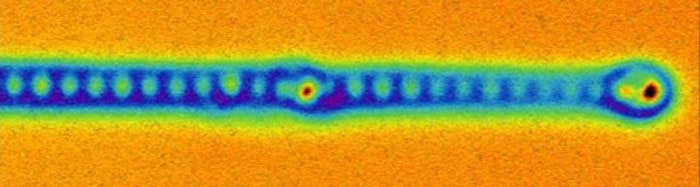
Majorana fermions have been spotted at the end of an atomically thin iron wire by Ernst Meyer and colleagues at the Swiss Nanoscience Institute and the University of Basel. First hypothesized in 1937 by the Italian physicist Ettore Majorana, the fermions are their own antiparticles. While fundamental Majorana fermions have never been detected, they do exist as quasiparticles – collective excitations of electrons in some solids. Meyer and colleagues created their Majorana fermions by growing tiny iron wires (just one-atom thick and up to 70 nm long) on the surface of a superconductor. According to calculations by team members Jelena Klinovaja and Daniel Loss, a pair of Majorana fermions should exist in the nanowire – one at each end. Using scanning-tunnelling and atomic-force microscopes, the team was able to see clear evidence of the quasiparticles (see figure). Despite being separated by tens of nanometres, the Majoranas form a quantum state that can either be occupied or unoccupied by an electron. As such, the nanowire could form the basis of a robust quantum bit (or qubit) of information. The research is described in Quantum Information.


  • You can find all our daily Flash Physics posts in the website’s news section, as well as on Twitter and Facebook using #FlashPhysics. Tune in to physicsworld.com on Monday when we will reveal the Physics World 2016 Breakthrough of the Year.

Sonic Lamb shift detected in ultracold atoms

The tiny influence that quantized sound waves called phonons have on atomic energy levels has been measured for the first time by physicists at the University of Heidelberg in Germany. Known as the “phononic Lamb shift”, the effect is predicted by the theory of quantum electrodynamics (QED), which describes how charged particles interact with quanta of light. Markus Oberthaler and colleagues say that their experimental techniques – which use Bose–Einstein condensates (BEC) to simulate the behaviour of phonons rather than conventional phonons in a crystal lattice – could be extended to test other predictions of QED.

The phononic Lamb shift is a variation on the original Lamb shift, a minuscule energy shift found between two atomic-hydrogen energy levels in a vacuum. First measured in 1947 by the American physicist Willis Lamb, this shift defied the classical understanding of empty space, which predicted that these two levels should have the same energy.

QED later explained why the classical understanding was wrong: in a vacuum, virtual electron–positron pairs pop in and out of existence. “The word ‘vacuum’ sounds empty, but it’s not,” says Oberthaler. These virtual particles perturb the hydrogen’s single electron, resulting in the small shift in energy levels.

Perturbing phonons

In the phononic Lamb shift, phonons perturb the atom instead of virtual electrons and positrons. In their experiment, the energy shift due to the phonons is about 10,000 times smaller than the spacing between the atom’s principal energy levels, says Oberthaler.

To make this measurement, the group did not use actual phonons in a crystal lattice to perturb their atoms. Rather, they used excitations in a BEC, which is an ultracold ensemble of atoms that are all in the same quantum state. These excitations behave analogously to conventional phonons. The group used lasers to trap and mix several thousand lithium atoms with a BEC made of about one million sodium atoms, all at near-absolute-zero temperatures.

The lithium atoms interact collectively with the BEC excitations to create a quasiparticle called a polaron. Using a technique known as Ramsey spectroscopy, the team measured the polaron’s lowest two motional energy states and compared these to the same energy states of lithium atoms in the absence of the BEC.

Feasible experiments

Mathematically speaking, the interactions between the lithium atoms and the excitations in the BEC are equivalent to electrons interacting with crystal-lattice phonons, respectively. But studying ultracold atoms and BECs is experimentally much easier than studying phonons in a crystal lattice, Oberthaler says. “To measure the effect, we either put lithium atoms into a sodium condensate or not,” he says. “And then we compare the results of the two cases.” The analogous experiment in a solid-state system would be to trap an electron within a crystal while turning the lattice vibrations on and off at will – which is not currently feasible.

Oberthaler says that the work paves the way for more experimental tests of QED using BECs. It has been difficult to experimentally confirm predicted QED phenomena, he explains, because many of its predictions rely on physical mechanisms that experimentalists cannot control. For example, one cannot experimentally turn off quantum vacuum fluctuations. BECs offer an experimental alternative, Oberthal says. Instead of studying the fluctuations themselves, physicists can simulate analogous behaviour in BECs, where these behaviours can be controlled and manipulated to test the theory.

The research is described in Physical Review X, and writing in an accompanying commentary, Vera Guarrera of the University of Birmingham suggests that they could use similar experimental methods to study the Casimir effect, a QED phenomenon where two neutrally charged plates placed nanometres apart feel a slight force between them due to quantum fluctuations. In addition, the techniques could be used to study other many-body physics phenomena such as superconductivity, she points out.

To the stars, through adversity

pwastro16-cover-500By Margaret Harris

Space is, famously, “the final frontier”. It is also – almost as famously – “hard”. We saw this most recently in October, when the Schiaparelli lander crashed onto the surface of Mars, but throughout humanity’s nearly 60-year history as a spacefaring species, our hopes of exploring and observing the cosmos have repeatedly come up against the stiff challenge of building vessels that can survive the journey. Arguably, no other industry on Earth (or indeed off it) has rejoiced in such high “highs”, or agonized through such low “lows”.

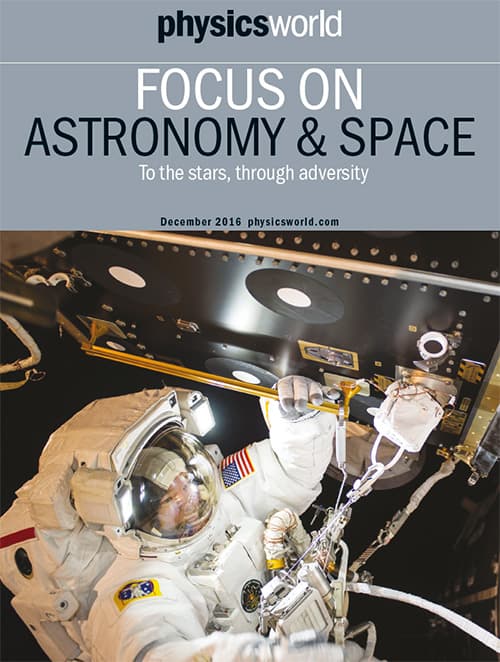
That mix of heady dreams and harsh realities is one reason why the latest Physics World focus issue on astronomy and space science carries the tag line “To the stars, through adversity” (I’ll come to the other reason at the end of this blog post). The articles in the issue – which you can read free of charge – pay tribute to the ingenuity of the scientists and engineers involved in the challenging and rewarding practical work of exploring and observing the cosmos. Here, you can learn about the latest advances in astronomical instrumentation, get up to speed with future space missions, and familiarize yourself with recent developments in the entrepreneurial “new space” industry.

(more…)

Flash Physics: Dark matter is smooth, UK boosts industrial physics, Pakistan honours Abdus Salam

Dark-matter distribution is smoother than previously thought

The distribution of dark matter in the universe appears to be smoother and more diffuse than previously thought – according to a study of wide-area images of the distant universe. Astronomers at the University of Edinburgh in the UK, Leiden University in the Netherlands, the Argelander Institute for Astronomy in Germany and the Swinburne University of Technology in Australia used the weak gravitational lensing of light from far-off galaxies to map the distribution of dark matter in intervening parts of the universe. The map is at odds with a prediction of dark-matter distribution that is based on the structure of the early universe based on measurements of the cosmic microwave background made by the Planck satellite. “Our findings will help to refine our theoretical model for how the universe has grown since its inception, improving our understanding of the modern-day universe,” says Hendrik Hildebrandt of the Argelander Institute. Edinburgh’s Catherine Heymans adds: “Unravelling what has happened since the Big Bang is a complex challenge, but by continuing to study the distant skies, we can build a picture of how our modern universe has evolved. The study is described in Monthly Notices of the Royal Astronomical Society.

UK provides £60m to boost industrial physics

The UK’s Engineering and Physical Sciences Research Council (EPSRC) has announced £60m for six new research hubs that aim to transform manufacturing in fields such as composite materials, 3D printing and medicine. The hubs, each receiving £10m, will draw together 17 universities and 200 industrial and academic partners to help turn research into products. The University of Huddersfield will lead a consortium to create a £30m Future Metrology Hub that will be based at the university’s Centre for Precision Technologies and will open next year. “Our vision is to develop new technologies and universal methods that will integrate measurement science with design and production processes to improve control, quality and productivity,” says physicist Jane Jiang, who will lead the Huddersfield hub. “These will become part of the critical infrastructure for a new generation of digital, high-value manufacturing, the so-called 4th industrial revolution, or Industry 4.0.” The other hubs are led by Cardiff University (semiconductors), the universities of Nottingham (composites), Sheffield (advanced powder processes), Strathclyde (advanced crystallisation) and University College London (targeted healthcare).

Pakistan renames physics centre after Abdus Salam

Photograph of Abdus Salam

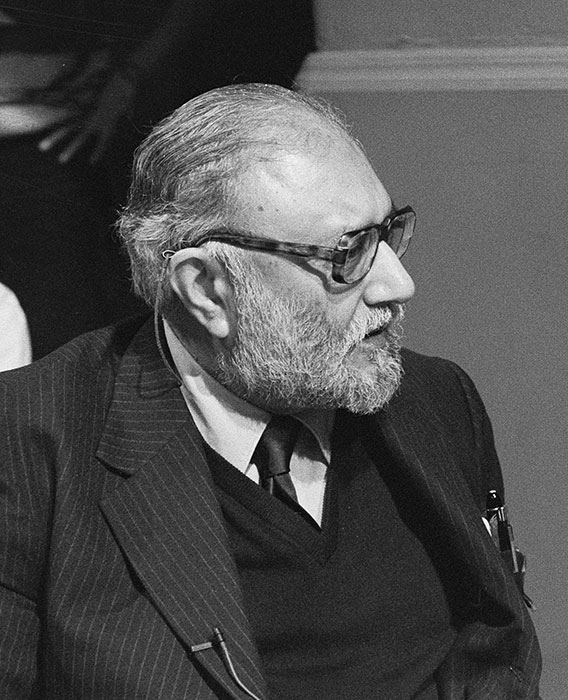
Pakistan will rename a physics research centre in Islamabad after the Nobel laureate Abdus Salam, who died 20 years ago. Born in what is now Pakistan, Salam shared the 1979 Nobel Prize for Physics for his work on unifying the weak and electromagnetic interactions. However, he was never fully celebrated in his native country because he was a member of the Ahmadiyya community. Now, the prime minister Nawaz Sharif has announced that the National Centre for Physics at Quaid-i-Azam University in Islamabad will be called the Professor Abdus Salam Center fo Physics. There will also be five annual fellowships named after Salam, which will be awarded to Pakistani students pursuing PhDs in physics. In addition to his Nobel prize, Salam is remembered for founding the International Centre for Theoretical Physics in Trieste, Italy, in 1964. Now called the Abdus Salam International Centre for Theoretical Physics, the centre fosters the growth of mathematical physics in developing countries.


  • You can find all our daily Flash Physics posts in the website’s news section, as well as on Twitter and Facebook using #FlashPhysics.

Physics World’s shortlist for Book of the Year 2016

pw-top-book-of-the-year-rgbBy Margaret Harris and Tushna Commissariat

The year 2016 has not covered itself in glory. Divisive elections, various natural and human-made disasters and a depressingly long obituary roll of well-loved celebrities mean that for many residents of planet Earth, this solar orbit has been one to forget.

But if, for a moment, we concentrate solely on the year in physics, the picture looks brighter. In particular, it’s been another strong year for popular-physics writing, and over the past few weeks, we have been determining which of the 57 books reviewed in Physics World in 2016 deserve to be on our list of the year’s best.

The books that appear on the shortlist below are all well written, novel and scientifically interesting to physicists – the criteria we’ve followed since 2009, when The Strangest Man, Graham Farmelo’s landmark biography of Paul Dirac, became our first “Book of the Year”.  A couple of biographies appear on our 2016 shortlist, too, but they face stiff competition from books on big science, stringy science, loopy science, spooky science, jazzy science and more. There’s even a book of science infographics in the running – a first for a competition that is, naturally, dominated by words rather than images.

We’ll announce the winner of our “Book of the Year” award in the Physics World podcast in mid-December, but in the meantime, take a look at the shortlist. We think it’s proof, if you needed any, that the year 2016 had some redeeming features after all.

(more…)

Life as we do and don’t know it

Is there life beyond Earth? This fundamental and as yet unresolved question has long confronted humanity. With a limited understanding of the natural world around us for most of our history, this topic has been – and continues to be – a major theme in fiction. It is not only the likelihood of finding life beyond Earth, but also understanding the relationship between life and where it could emerge in the physical universe, that gave birth to the field of astrobiology. Thanks to huge advances in both technology and our understanding of the cosmos, the field of astrobiology has taken great strides in recent years. In Goldilocks and the Water Bears: the Search for Life in the Universe, author Louisa Preston traces the path of these developments in a beautiful narrative that is easy to comprehend while still being scientifically accurate.

The book opens with science fiction’s take on aliens, before going into the history of astronomy and the beginnings of astrobiology. From classic tales like HG Wells’ The War of the Worlds, to popular films that deal with everything from time travel to space invaders – such as Star Trek, Interstellar and E.T. the Extraterrestrial – Preston describes how extraterrestrial life is depicted in a range of English-language film, television and literature. The book then moves on to the basic science of what actually constitutes life, how one could define it and the fact that carbon is a basis for all Earth-based life forms.

In many ways, astrobiology transcends any single discipline – instead, it involves everything from cosmology to geobiology, making it a truly interdisciplinary endeavour. In order to understand the likelihood of life existing beyond Earth, we first need to understand the diversity of life on Earth, its evolution, and the physical conditions that allowed life to arise and thrive in the first place. The book talks about the importance of molecules such as DNA and RNA; the mechanisms and sources of energy that sustains life; the suitability of specific environments, and the importance of water including the liquid’s origins and even the possibility of life without water.

To truly fathom where life beyond Earth may exist, we also need to understand the prevalent planetary conditions within our solar system, as well as in an ever-increasing list of known exoplanets. The middle chapters of the book dig into the specific astronomical conditions that led to the development of terrestrial planets – such as heavy metallic elements – before focusing on planetary sciences. Preston – an astrobiologist and planetary geologist at the University of London – goes into the details of how exoplanets are detected using current techniques and looks towards the telescopes of the future. As the title of the book suggests, she also writes about habitable zones – from galaxy-wide Goldilocks “zones of metallicity” to smaller-scale habitable zones within a stellar system.

Star–planet interaction is one of the most researched subjects when it comes to habitability. Frequent news stories cite the discovery of new “habitable planets” and this popular topic of discussion has captured the attention of both the media and the public alike. However, most non-scientists do not know the criteria upon which habitability is determined. Although this topic is discussed at several places in the book, given the great amount of public interest, Preston could have gone into more detail on the topic. The book could have further educated the reader on how habitability is defined, explained how many factors such as the different types of stars, orbital radii and planetary atmospheres come into play and how a Goldilocks zone evolves with the evolution of the star itself.

Even though we have a fairly good understanding of how life evolved on our planet, our understanding of its origin is limited. Astrobiology has had much to gain from state-of-the-art telescopes and planetary probes, together with improvements in theoretical modelling. A growing area of research is to understand the physical underpinnings that drive life at the most fundamental level. A lot of work has been done on the link between life and the thermodynamic concept of entropy, and the computational “systems biology” approach to understanding life. These efforts are of tremendous interest in astrobiology, and as a physicist, I feel that these concepts should have been included too.

Preston does remind the reader that life can survive in surprisingly extreme conditions, before describing a variety of extremophiles, including the titular “water bears”, and discussing the known envelope of life. If I were to suggest reading just one chapter of the book, it would be chapter eight, titled “Extraterrestrial worlds: life not as we know it”. The section is thought-provoking and talks about possible life forms on other planets. The author describes how the physical, chemical and geological environment on our planet affected the evolution of life and relates it to other planetary conditions that we know of. She also talks about the production of possible biosignatures and how one could observe them with sophisticated tele­scopes as well as how to tell them apart from other non-biological mechanisms that could produce similar signatures or “false positives”. Preston also outlines how physiological characteristics such as bone density, skin tone and visual organs would vary wildly, even allowing for “sky whales” that could fly through alien clouds.

The breadth of expertise required to cover all aspects of astrobiology is very challenging and makes this a difficult book to write. Overall, despite some minor weaknesses, I enjoyed the book and would recommend it to high-schoolers and undergraduates as an introductory astrobiology book.

  • 2016 Bloomsbury £16.99 288pp

Fermi: physicist with a capital F

Photo of the Via Panisperna boys: from left Oscar D’Agostino, Emilio Segre, Edoardo Amaldi, Franco Rasetti and Enrico Fermi

Enrico Fermi – one of the great physicists of the 20th century – was a beacon for every Italian student of physics including myself. This sentiment is wonderfully captured in The Pope of Physics by Gino Segrè and Bettina Hoerlin, as they explain how Fermi’s colleagues bequeathed him with the title of “Pope”, thanks to his ability of using “the simplest of means [to] estimate the magnitude of any physical phenomena”. With their book, Segrè and Hoerlin present the first, long-awaited, English-language biography of one of the most creative and hard-working scientists of recent times.

Fermi is no stranger to both Segrè – a professor of physics and astronomy at the University of Pennsylvania, US – and his wife Hoerlin – teacher, health commissioner and author of Steps of Courage: My Parents’ Journey from Nazi Germany to America. That is because Segrè’s uncle was the Nobel-prize-winning physicist Emilio Segrè, who happened to be Fermi’s first student in Rome. The two families always maintained their friendship, even after they were forced to flee to the US in 1939 to escape Mussolini’s antisemitic regime – the Segrè family and Fermi’s wife, Laura, were Jewish. This long-standing relationship with relatives and close friends of the Fermi family helped Segrè and Hoerlin write about Fermi – who was once described by an Italian peer as a physicist with a capital F (the Italian for physicist being fisico).

The book opens with a depiction of Fermi’s early life, delving into his family roots and in particular, the deep bond he shared with his brother Giulio, who died prematurely. Written against the background of Italy in the early 1900s, these chapters leave the reader with a feeling of nostalgia for the “good old days”. The authors describe Fermi’s education and how his interest – or more aptly, his love – for physics blossomed, before going into Fermi’s time at the Sapienza University of Rome, where he spent his days nurturing his passion for hands-on work and his friendship with Franco Rasetti and Enrico Persico. This was the period during which Fermi began to immerse himself in the then new and revolutionary field of quantum physics.

The reader follows Fermi on his travels to Göttingen in Germany and Leiden in the Netherlands – where he spent a year interacting with some of the most famous scientists of the day, including Albert Einstein. The authors also talk about the exciting time during which Fermi worked with a group of talented young scientists – know colloquially as the Via Panisperna boys. Reading about these years, it becomes obvious that Fermi was a key driver in the advancement of quantum mechanics, from mathematical abstraction to experiment. His crucial contributions include helping build a clearer picture of the atom and explaining beta decay – the work that won him a Nobel prize in 1938 and provided the foundations for nuclear physics.

In parallel, the reader also learns about his personal story with his wife-to-be Laura, the not-so-warm relationship with his two children, along with the dangerous turn taken by politics in Italy. Fermi lived through a period of great changes due to the rise of Fascism, and the book reproduces the forboding atmosphere of the time quite remarkably. It describes how Fermi and his family did not return to Italy in 1938, after picking up the Nobel prize in Stockholm. The family’s story was similar to that of many other Jewish scientists at the time. Despite the fact that Fermi never took a public stand against Mussolini’s regime, he attempted to help his Jewish friends while preparing to leave for Columbia University in New York. The tension of those tumultuous times, which many of us have only heard of, is felt by the reader and it is a relief when the Fermis arrive safely in the US.

From here onwards, The Pope of Physics tells the story of the scientific discoveries leading up to the Manhattan Project. Although widely known, it is still surprising to read that the world’s first functioning nuclear pile was built under an abandoned football stadium. At the end of the war, the project was replaced by the Atomic Energy Commission and Fermi served on its influential general advisory committee – chaired by Robert Oppenheimer – while continuing his studies.

Although Fermi’s discoveries deeply advanced knowledge in many fields of physics – and made giant leaps for example in medical physics – his work formed the basis of one of the darkest creations of human knowledge: the atomic bomb. The book discusses this, and recounts how Fermi was among the first to warn military leaders about the potential negative impact of nuclear energy. Toward the end of his life, Fermi questioned his faith in society at large and its ability to make wise choices about nuclear technology.

The story ends with the last month of Fermi’s life – he died of stomach cancer at the age of 53. In the same rational way in which he looked at nature, he also looked at the end of his passage in this world. The final pages, describing his last conversations with friends and colleagues, are moving and show his great steadiness and dignity.

I thoroughly enjoyed this well-written book, which captures the lively life and times of Fermi. The book depicts what a truly a fascinating figure Fermi was, in an attention-grabbing manner. The reader enjoys a journey through the major physics discoveries of the time, which are placed in the proper historical context. Fermi’s achievements are covered in a way that is certainly satisfactory for a more scientifically inclined reader, but still comprehensible for a casual reader. If you’re interested in the history of science, and the story of someone who could be thought of as the most famous Italian scientist since Galileo Galilei, The Pope of Physics is the book for you.

  • 2016 Henry Holt and Co $30.00hb 304pp
Copyright © 2026 by IOP Publishing Ltd and individual contributors