China eyes new high-energy collider

Matin Durrani outside the Institute of High Energy Physics in Beijing on Sunday 12 June 2016

By Matin Durrani in Beijing, China

I had just landed in Beijing this morning when I saw an e-mail from my colleague Mingfang Lu waiting for me on my phone. Mingfang, who’s editor-in-chief at the Beijing office of the Institute of Physics, which publishes Physics World, has been helping me to organize my itinerary for the next week as I gather material for our upcoming special report on physics in China. You may remember we published a Physics World special report on China in 2011 but so much has happened since then that we felt it’s easily time for another.

Mingfang’s e-mail was to say we would be off at 2.30 p.m. to interview Xinchou Lou, a particle physicist at the Institute of High Energy Physics, about the country’s ambitious plans for a “Higgs factory”. If built, this 240 GeV Circular Electron–Positron Collider (CEPC) would be a huge facility (50 km or possibly even 100 km in circumference) that will let physicists study the properties of the Higgs boson in detail. I say “if”, but knowing China’s frenetic progress in physics, it will almost certainly be a case of “when”.

(more…)

Sea monsters at LIGO, how to become a ‘thought leader’ and why not string theory?

By Hamish Johnston

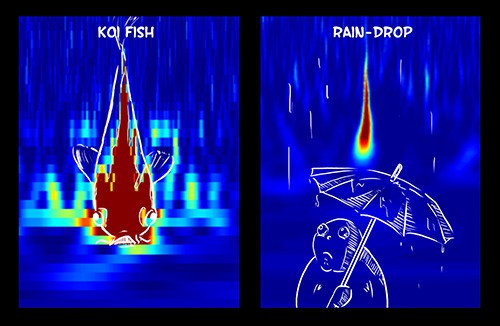
Have you ever wondered how the LIGO collaboration managed to tease out the tiny signal from gravitational wave GW150914 from all the background noise in its kilometre-sized detectors? Well you’re in luck because experts from the LIGO detector characterization group have written a lively piece on the CQG+ blog called “How do we know LIGO detected gravitational waves?”.

It’s packed full of fun facts; for example, did you know that detecting GW150914 is roughly the same as measuring a change in distance the thickness of a human hair between Earth and Alpha Centauri, the closest star to Earth? But be warned, the article is also full of technical terms such as “whistles”, “blips”, “koi fish” and even “Fringey the sea monster”. These are illustrated in the above graphic by LIGO physicist and artist Nutsinee Kijbunchoo.

(more…)

Google gains new ground on universal quantum computer

Bringing together the best of two types of quantum computer for the first time, researchers at Google have created a prototype that combines the architecture of both a universal quantum computer and an analogue quantum computer. By digitizing the traditionally analogue computations that can be done with an adiabatic quantum computer, the team’s system is one step closer to a universal quantum computer that could solve any computational problem. This is particularly relevant to some of the more complex and practical applications that scientists hope future quantum computers can tackle, including synthesizing new pharmaceutical drugs or deciphering long-term weather patterns.

A universal quantum computer is one that, in theory, can perform any computation exponentially faster than a classical computer. The race towards building a truly universal quantum computer currently involves a number of experimental groups and companies the world over – including Google, IBM and D-Wave – each of whom turn to different methods and technologies to achieve the same goal.

Slow build

Until now, both D-Wave and Google have focussed on “quantum annealing” – another method of quantum computing that is not universal but instead can be used to build an “adiabatic” quantum computer that can solve a specific problem which involves finding the global minimum value of a highly complex function. Annealing relies on “quantum tunnelling” and lets an initially simple system evolve very slowly towards the desired result. This involves encoding a problem into the states of some quantum bits (qubits) that have specifically assigned interactions. These interactions are traditionally classical, in that they are either on or off. The qubits are then put in a superposition of states and the system gradually evolves – ensuring that all the qubits always remain in the lowest energy “valley” or ground state – until the global minimum of the function is found.

While this method works fairly well for some problems, it is not the one-size-fits-all quantum computation technique that many scientists hope to create. Adiabatic quantum computing suffers from errors and noise because the process does not allow for error correction to take place during a computation. This becomes a major problem when the system is scaled up and errors accumulate. In contrast, a key component of many of the universal quantum computing architectures being developed is that their digital logic gates can be made fault-tolerant and error correction can take place while a calculation is being processed.

Digital age

Another problem with adiabatic quantum computing is the classical nature of the interactions – which puts a low limit on the number of other qubits that a qubit can interact with. For a quick computation, you would ideally want multiple interactions simultaneously taking place between all of the qubits. But in a complex computation, it would be nearly impossible to accurately keep track of these interactions. However, reducing the connectivity has a major impact on the system’s computational abilities.

To get around this dilemma, John Martinis, Rami Barends and colleagues at Google’s research laboratories in Santa Barbara, California, together with physicists at the University of California, Santa Barbara and the University of the Basque Country in Bilbao, Spain, have now added a digital component to their previously analogue device. By digitizing an adiabatic quantum computation, the team has a greater degree of control over the interactions between qubits, and they can also correct for errors while a computation is executed.

In the current work, the Google researchers have adapted their previously built superconducting nine-qubit chip, where interactions are controlled by connected logic gates that encode a problem. The team simulated a row of spin-coupled magnetic atoms in a chain. The atoms can have an aligned (ferromagnetic) or anti-aligned (anti-ferromagnetic) orientation – something that is a well-known problem in magnetochemistry. The researchers address each qubit individually via current pulses that tune into the inherent resonant frequency of their qubits, which have variable frequencies between 4 GHz and 5.5 GHz.

“In our architecture we can steer this frequency, much like you would tune a radio to a broadcast,” says Barends. He explains that they can tune the frequency of one qubit to that of another. “By moving qubit frequencies to or away from each other, interactions can be turned on or off. The exchange of quantum information resembles a relay race, where the baton can be handed down when the runners meet,” he adds. The team can even tune a qubit so that it is simultaneously in a superposition of being aligned and anti-aligned.

Scaling up

While this problem is one that a classical computer can easily crack today, the Google team’s digital approach can work on any type of interaction and is not limited by the connectivity between qubits. Barends tells physicsworld.com that “as a demonstration, we have implemented non-stoquastic interactions, something that is not possible with present-day analogue systems. This is important because problems that involve interacting electrons, like in quantum chemistry, are non-stoquastic.”

Also, digital adiabatic quantum computing is fully compatible with known quantum error-correction techniques. In an analogue system, each added qubit brings with it more noise and errors. “Arguably, this makes it difficult to get the most interesting applications, which require many degrees of freedom, to work on an analogue system. But with error correction, a digital implementation can, in principle, be scaled to an arbitrarily large number of qubits,” he explains. Currently though, there is no large-scale quantum error-corrected hardware, but it is something that many labs the world over are working towards.

The research is published in Nature.

Quantum simulator entangles hundreds of ions

More than 200 beryllium ions have been entangled in a record-breaking experiment done by researchers at NIST in the US. The ions act as quantum bits (qubits) of information and could be used to simulate physical phenomena such as magnetism and superconductivity, which can be notoriously difficult to model using conventional computers. The entanglement technique, which involves 10 times as many ions as previous efforts, could be useful for developing better atomic clocks.

Understanding a complicated system such as a large molecule or a superconductor often involves using a computer to solve the Schrödinger equation for a number of interacting atoms and electrons. Finding solutions can be very challenging, particularly in the case of biological molecules, magnetism and high-temperature superconductors.

A quantum simulator addresses this problem by creating a model of the system of interest, using components that are themselves subject to the rules of quantum physics. Strongly interacting electrons in a solid, for example, can be represented using atoms held in an optical or magnetic trap. Interactions between atoms can be fine-tuned by applying a magnetic field or adjusting the laser light – allowing for systematic studies of how interactions affect the collective behaviour of the system. This is unlike electrons in a solid, where the interactions are a fixed material property.

Rotating disc

To create their quantum simulator, Justin Bohnet and colleagues at NIST trapped as many as 219 beryllium-9 ions in a Penning trap – which holds charged particles using electric and magnetic fields. The ions form a 2D disc just one ion thick and about 1 mm in diameter. The disc is rotating at a frequency of about 180 kHz.

Electrical repulsion between the positively charged ions causes them to self-organize into a triangular lattice. Each ion has a spin that can point up or down along the z-axis of the trap. The researchers shine laser light on the atoms, which creates an interaction between neighbouring spins that is dependent on their relative orientation (up or down). This “Ising” interaction is also found in some magnetic materials, which is why such systems are proving to be useful for the quantum simulation of magnetism.

The experiments begin with zero Ising interaction, which means that the ions act independently of each other. Then the interaction is turned on, which causes the ions to form an entangled state that includes most, or all, of the trapped ions. Entanglement is a purely quantum-mechanical property that allows quantum objects such as ions to have a much closer relationship than is predicted by classical physics.

Spin depolarization

A microwave pulse is then fired at the trap, which rotates the spins by 90° so they all point in the x direction in the plane of the disc. The spins are then left for about one millisecond, and during this time, the Ising interaction causes the spins to begin to point in different directions – a process called depolarization.

Finally, the degree of depolarization that has occurred is measured by shining laser light on the trap. Spin-up ions will emit fluorescent light and spin-down ions emit no light. The components of spin in the plane of the disc (the xy) can also be measured by firing a microwave pulse at the ions to rotate their spins into the z-axis.

The team was able to show that the depolarization was occurring in a quantum-coherent manner and was the result of interactions between spins, rather than noise. This is important, because the presence of large amounts of noise in the system would suggest that the ions were not entangled, but rather behaving independently.

The team then looked closely at the quantum fluctuations in the system and was able to show that the entangled states they created were “spin-squeezed states”. This means that the quantum uncertainty in the measurement of the combined spin of the ensemble is reduced. To satisfy the uncertainty principle of quantum mechanics, this uncertainty is transferred to (or squeezed into) other degrees of freedom of the system.

Bohnet describes the results as “clear, indisputable proof the ions are entangled”. “Here, spin squeezing confirms the simulator is working correctly, because it produces the quantum fluctuations we are looking for,” he adds.

This ability to transfer uncertainty could prove to be very useful in the development of atomic clocks. “The reduction in the quantum noise is what makes this form of entanglement useful for enhancing ion and atomic clocks,” explains Bohnet.

Ben Lanyon of the Institute for Quantum Optics and Quantum Information of the Austrian Academy of Sciences told physicsworld.com that “the observation of entanglement in systems of hundreds of trapped ions is certainly a big step forward for the field of quantum simulation and quantum science in general”. He points out that the ability to work with large numbers of entangled particles is crucial in the development of powerful quantum simulators. “It’s particularly exciting that this has been done with ions, which can be precisely controlled one by one: allowing essentially any property of the system to be studied,” he says. He adds that “Bohnet’s system is 2D, where many of the most interesting and otherwise difficult to solve problems in quantum many-body physics lie.”

The quantum simulator is described in Science.

Behind the fence of a closed atomic city in Russia

https://www.youtube.com/watch?v=QcQPv-nfoZI

By James Dacey

The European première of a documentary recorded secretly within a Russian “atomic city” is among the highlights at Sheffield Doc/Fest, the international documentary festival that gets under way tomorrow in Sheffield, UK. City 40, directed by the Iranian-born US filmmaker Samira Goetschel, takes viewers inside the walls of a segregated city established by the Soviet Union during the Cold War as a guarded location for developing nuclear weapons.

The social model in Ozersk (formerly known as City 40) is reminiscent of what occurred in Richland, the US city near the Hanford site in Washington State where plutonium was produced for the “Fat Man” bomb that was detonated over Nagasaki, Japan. In both these US and Soviet cities, the citizens were lavished with higher-than-average salaries and standards of living, such as quality housing, healthcare and education systems. Today, Ozersk is still a closed city with an alleged population of 80,000 and exists officially as a facility for processing nuclear waste and material from decommissioned nuclear weapons.

(more…)

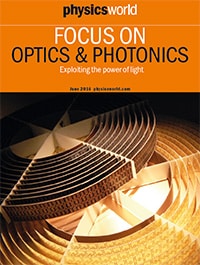
Physics World 2016 Focus on Optics and Photonics is out now

PWOPT16-cover-200By Matin Durrani

Research into optics, photonics and lasers is not only fascinating from a fundamental point of view. It’s also vital for technology, industry and applications in everyday life.

In the latest focus issue of Physics World, which is out now in print, online and through the Physics World app, you can find out about some of the latest research into optics and photonics – and how it’s being put to good use.

In our cover feature, take a look at some of the latest advances in invisibility cloaking – 10 years after first being demonstrated at microwave frequencies.

(more…)

Guarding integrity

Housed in a distinguished neoclassical building a few blocks west of the White House in Washington DC, the US National Academy of Sciences (NAS), was founded in 1863 during the American Civil War, when Congress and war departments were inundated with military-related ideas and inventions. The NAS is not a government agency, yet is required by law to “investigate, examine, experiment and report upon any subject of science or art” at the US government’s request. A former president called it the “home of science in America”, while the academy’s website describes it as “where the nation turns for independent, expert advice”.

At a time when Washington is flooded with powerful and wealthy lobbyists, the NAS is one of the few places one can expect to turn for objective guidance. The agency issues this guidance in the form of reports, which it does several times a year. During its 150-year history, some reports have attracted wide attention, most notably Rising Above the Gathering Storm (2006), on how science and technology can improve American competitiveness. Other reports, such as America’s Climate Choices (2011), have not.

On 1 July the academy will have a new president, the geophysicist Marcia McNutt, who is stepping down after three years as editor-in-chief of Science magazine to take the post. As the 22nd president of the NAS, McNutt will also be the first woman in the position.

I had arranged to meet McNutt at her current office in the American Association for the Advancement of Science building, a few blocks east of the White House. But an emergency shutdown of the Washington Metro system had paralysed transportation in the city, and so I wound up having to Skype her at her home. I intended to quiz her about a different kind of breakdown; in Washington nowadays, politicians often distort, ignore or even reject science. What, I wanted to know, could the NAS do to make politicians heed its advice?

Passing well

It turned out I was already on the wrong foot. That’s a common misconception, she said; the academy’s reports are not intended for politicians or the public. Commissioned by a sponsor – typically Congress or a federal agency – they are designed to inform that agency’s decision-making. While the reports are public, it is up to the sponsor to implement or further promote them. Occasionally, the academy uses its own resources to develop its own report on a timely and pressing issue – Climate Choices is an example – but such unsponsored reports rarely have the impact of sponsored ones.

“It’s like when you play basketball and you pass off the ball and there’s nobody there to catch it,” McNutt said. “It’s not as useful a strategy.”

She ticked off several sponsored academy reports that exemplify its mission, including three that led to the founding of the US Geological Survey (1879), the US Forest Service (1905) and the National Park Service (1916). Other reports were behind the opening of the Panama Canal and the building of the US highway system. More recent reports have tackled air quality and safety standards, examined the link between HIV and AIDS as a public-health epidemic, and provided the blueprint for the Human Genome Project.

McNutt cautioned against judging too soon whether an academy report is influential. A triggering event can attract new attention and authority to a previously overlooked report. Oil Spill Dispersants: Efficacy and Effects, published in 2005, “flew off the shelves” five years later following the Deepwater Horizon oil spill in the Gulf of Mexico, creating the largest oil spill in US waters. Even Climate Choices may grow in impact, McNutt continued, if the US begins to implement the Kyoto accords. Furthermore, agencies sometimes commission a report to buttress actions they intend to take or are already taking.

I asked what changes McNutt intended to make in the report process. She mentioned several. One involves streamlining. NAS reports have sometimes been criticized for taking years to complete, and McNutt said she might consider introducing project managers to reduce “choke points” in the process.

Another idea is to review the academy’s committee structure. The federal government has a notoriously complex committee system. “There are 26 federal agencies with jurisdiction over water issues,” McNutt said. But the right committee structure at the NAS can help. It has a single water committee, for instance. “That means we can simplify where the government can’t. Our committee can suggest which part of the water issue can be dealt with by the Army Corps, which part by the other agencies and so on.” Her idea is to make sure all NAS committees are that effective.

In a Science editorial a few weeks before we spoke, McNutt discussed an episode involving water contamination in Flint, Michigan, the danger of which had initially been dismissed by the state’s own scientists but exposed by out-of-state scientists. In the editorial, she wondered if “trust in science has been poisoned, along with the water” and I asked if she thought this a matter for the academy. There are a few ways to address it, she said. Besides issuing reports, for instance, the NAS also hands out awards, and McNutt suggested that these awards include “emphasis on how scientists made those breakthroughs”, to include personal ethics.

The critical point

In the wartime environment of its founding a century and a half ago, the NAS’s reports were treated as essential documents by the alert and responsive sponsors. These reports can have less impact when they concern politicized issues such as climate change and vaccinations, but McNutt hopes to counteract that. “By reminding the public of the importance of science to our quality of life and security,” McNutt told me, “the academy can elevate the role of science in society while safeguarding its integrity.”


Soft hairs help resolve the black-hole information paradox

For 40 years, physicists have struggled to resolve a problem put forward by astrophysicist Stephen Hawking: that black holes appear to destroy all of the information that passes their event horizons. This destruction creates a “black-hole information paradox” because it contradicts determinism, one of the most fundamental principles of science. Now, Hawking and two colleagues think they may have found a way around the problem, at least in part, thanks to information-preserving massless particles known as “soft hair”, which they say should surround black holes.

The information paradox emerged in the 1970s after Hawking used quantum mechanics to describe events at the edge of a black hole. General relativity predicts that black holes form whenever massive objects such as a large star collapse in on themselves and create a gravitational field so strong that space–time is bent into a closed loop. This creates a shell of no return, known as an event horizon, beyond which any object and any light ray is completely cut off from the rest of the universe.

Quantum mechanics dictates that pairs of virtual particles can pop into and out of existence within the vacuum, and Hawking considered what would happen to such virtual particles near to an event horizon. He reasoned that one particle from each pair would be swallowed up by the black hole, while the other would be emitted to create what we now call “Hawking radiation”. Because that radiation would remove energy from the black hole, it would cause the black hole to evaporate and eventually disappear – in the absence of any other nearby sources of matter.

Lost information

Hawking realized the potentially devastating effect of this process on information. He concluded that because the emitted radiation is generated at the edge of a black hole, it could tell us no more than an external observer can learn – namely, the values of a black-hole’s mass, charge and angular momentum. All other information – in other words, how much of each of the three quantities was possessed by the individual objects sucked into the black hole – would be lost forever.

Hawking’s colleague Andrew Strominger of Harvard University explains that quantum mechanics, like classical physics, tells us that the universe evolves deterministically; it is just that what is determined is not the values of the position and momentum of individual particles, but rather the wavefunction of the universe as a whole – measuring devices included. “People find it very hard to accept that in the quantum world, momentum and position are not absolute quantities,” he says. “But that pales into insignificance compared with what we would have to accept were Hawking’s contention true. We would have to accept that there are no laws of physics.”

Now, Strominger, Hawking and Cambridge’s Malcolm Perry have put forth a solution to the black-hole information paradox – with due caution. Two years ago, Strominger showed that general relativity predicts an infinite number of symmetries, and therefore an infinite number of conservation laws, in nature. This, he explains, invalidates one of two assumptions underlying Hawking’s paradox; namely, that a vacuum only has one quantum state per energy level. The existence of a “degenerate” vacuum, he says, is mathematically equivalent to an infinite number of possible symmetries, and implies that information can live on – encoded in the different vacuum states – once a black hole has evaporated away.

More information than was previously thought possible can escape from black holes

Andrew Strominger, Harvard University

The other assumption overturned by the new research is that black holes have no “hair” – a term coined by John Wheeler to refer to any information about a black-hole’s make-up besides its total mass, charge and angular momentum. Hawking, Perry and Strominger show that some of the information contained within electric charges crossing an event horizon in fact remains in the form of zero-energy or “soft” photons distributed around the horizon, which they dub “soft hair”. Strominger explains that black holes with “different hairdos” emit Hawking radiation with different spectra, and that, as such, “more information than was previously thought possible can escape from black holes.”

The finding has received a cautious welcome from other physicists. Dejan Stojkovic at the University at Buffalo in the US believes the idea to be “worth pursuing”, but points out that it can only account for a part of the information that enters a black hole. In particular, he notes that because vacuum states are distinguished by angular momentum, two different black holes having the same mass and angular momentum – caused by the collapse of a single spherically symmetrical shell as opposed to two concentric shells, for example – will appear indistinguishable.

Firewall problem

Sabine Hossenfelder of the Frankfurt Institute for Advanced Studies in Germany says that the new work should also help to solve what is known as the firewall problem, which posits a conflict between information-rich Hawking radiation and general relativity’s equivalence principle. But she agrees that the proposed model is rather limited as it stands, pointing out that it deals with electromagnetic but not gravitational interactions. She also says that the authors fail to spell out exactly how the information in the hair becomes encoded into the Hawking radiation.

In their paper, Strominger, Perry and Hawking acknowledge the limitations of their work and do not claim that they have fully resolved the information paradox. “We are just putting one foot in front of another and seeing where that leads us,” says Strominger. “But it is exciting that for the first time in many decades a fundamental flaw seems to have been discovered in the original argument.”

The work is described in Physical Review Letters.

IUPAC unveils names of four new elements

By Hamish Johnston

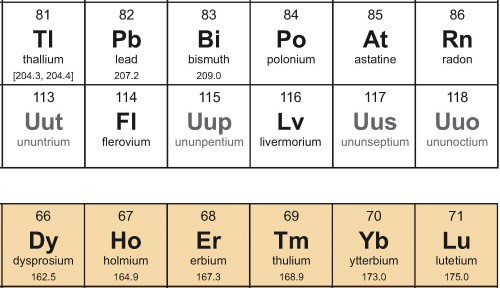
The periodic table could soon be graced by four new symbols (Nh, Mc, Ts and Og) as the International Union of Pure and Applied Chemistry (IUPAC) has just unveiled its proposed names for the four most recently discovered elements. Their discovery had been confirmed earlier this year jointly by IUPAC and the International Union of Pure and Applied Physics (IUPAP).

Element 113 was discovered at the RIKEN Nishina Center for Accelerator-Based Science in Japan and will be called nihonium (Nh). Nihon is a transliteration of “land of the rising sun”, which is a Japanese name for Japan.

(more…)

LISA Pathfinder opens the door to gravitational-wave detection in space

By Hamish Johnston

2016 is shaping up to be a bumper year for physicists trying to detect gravitational waves. In February the LIGO collaboration announced the first ever direct detection of gravitational waves using two kilometre-sized detectors in the US.

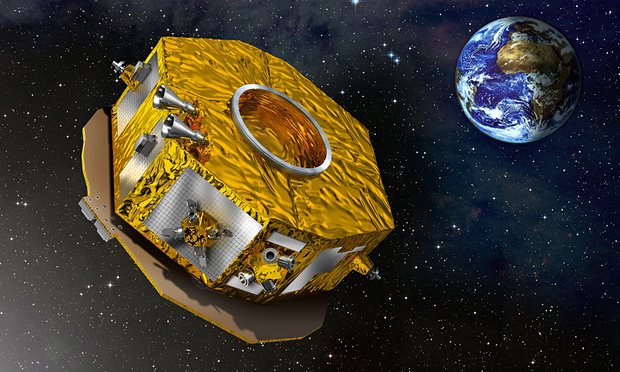
Now, it looks like an even bigger detector will get permission to launch. Researchers working on the LISA Pathfinder space mission have just announced that they were able to isolate a 2 kg test mass at a special “Lagrangian point” between the Earth and the Sun. This is important because the planned LISA gravitational-wave observatory will use test masses located at three points in space (each separated by about one million kilometres) as the basis for a huge detector.

(more…)

Copyright © 2026 by IOP Publishing Ltd and individual contributors