Rosetta reveals its target landing site

The European Space Agency’s Rosetta mission has pinpointed the spot where its Philae landing module will touch down on the surface of a comet in November this year. The site, along with a second “back-up” location, has been chosen after much deliberation, and sits in the “head” of the comet – an area that is thought to be relatively flat and devoid of large boulders.

The region, dubbed Site J, was one of five locations that the team considered as potential landing sites on the oddly shaped Comet 67P/Churyumov–Gerasimenko, which is just over 4 km across at its widest point. The 100 kg Philae should reach the comet’s surface on 11 November, if all goes to plan. Images taken by Rosetta in July showed that the comet’s nucleus is made up of two distinct segments joined by a “neck”, giving it a “rubber-duck”-like appearance. The team revealed earlier today that the decision to select Site J as the primary site was unanimous. The back-up Site C is located on the “body” of the comet. Once at either of the sites, Philae will begin making in-depth measurements to characterize the nucleus in situ, providing researchers with a unique insight into the composition, structure and evolution of a comet.

Site selection

“As we have seen from recent close-up images, the comet is a beautiful but dramatic world – it is scientifically exciting, but its shape makes it operationally challenging,” says Stephan Ulamec, at the DLR German Aerospace Centre, who is the project manager for the lander.

Finding the prime landing site on Comet 67P was no easy task – none of the five chosen sites met all of the criteria preferred by the team, but site J is touted as the best solution. While the shortlist of five sites had been identified on 24 August, the spacecraft was still 100 km from the comet. Since then, the spacecraft has moved to within 30 km of the icy body, allowing the researchers to make more detailed scientific measurements of all five sites. This past weekend, engineers and scientists from Philae’s Science, Operations and Navigation Centre at France’s CNES space agency, along with researchers at the Lander Control Centre at DLR and the Rosetta team, met at CNES, Toulouse, France, to consider the available data and choose the primary and back-up sites.

Image of comet 67P with all five landing sites marked

The group considered a number of key factors, including the identification of a safe trajectory for sending Philae to the surface, as well as making sure that there were minimal visible hazards in the landing zone. Other factors, including the balance of daylight and night-time hours at potential landing sites and how often the lander could communicate with the rest of the orbiting spacecraft, were also considered. According to the statement from the Rosetta team released today, the “descent to the comet is passive and it is only possible to predict that the landing point will place within a ‘landing ellipse’ typically a few hundred metres in size. A one-square-kilometre area was assessed for each candidate site. At Site J, the majority of slopes are less than 30° relative to the local vertical, reducing the chances of Philae toppling over during touchdown”. The site also has fewer boulders and receives the right amount of sunlight each day to recharge Philae and continue science operations on the surface beyond the initial battery powered phase.

Perfect landing?

For the trajectory that the team has currently plotted, the lander should take about seven hours to reach the surface – a duration that does not compromise the on-comet observations by using up too much of the battery during the descent. Once deployed from the main Rosetta spacecraft, Philae will be on its own, with all of its commands already prepared and uploaded before it separates from the craft. Indeed, the module will be taking images and making other observations of the comet’s environment even as it descends. The landing itself should take place at a walking pace, and the module will use harpoons and ice screws to fix itself onto the surface. It will then make a 360° panoramic image of the landing site to help determine where and in what orientation it has landed.

For now, the Rosetta team will come up with a detailed plan of how the spacecraft will approach the planned trajectory to make its landing, which must take place by mid-November, because the comet is predicted to grow more active as it moves closer to the Sun. The landing date should be confirmed on 26 September after further trajectory analysis, and the final call to land at Site J will be made on 14 October.

Timely target

“There’s no time to lose, but now that we’re closer to the comet, continued science and mapping operations will help us improve the analysis of the primary and back-up landing sites,” says ESA Rosetta flight director Andrea Accomazzo. “Of course, we cannot predict the activity of the comet between now and landing, and on landing day itself. A sudden increase in activity could affect the position of Rosetta in its orbit at the moment of deployment, and in turn the exact location where Philae will land, and that’s what makes this a risky operation.”

Assuming that all goes well with Philae’s landing, the module will be studying the plasma and magnetic environment, and the surface and subsurface temperature. The lander will also drill and collect samples from beneath the surface, delivering them to the on-board laboratory for analysis. The interior structure of the comet will also be explored by sending radio waves through the surface towards Rosetta.

Pushing the frontiers of precision

By Michael Banks in Stuttgart, Germany

“There is nothing like this in Germany,” states Klaus Kern, a director of the Max Planck Institute (MPI) for Solid State Research in Stuttgart, Germany, as we walk around the institute’s Precision Laboratory, which opened in 2012 at a cost of €25m.

Kern took me on a guided tour of the the centre, which he has been involved with since its conception in 2008, during a break from attending a symposium celebrating the life of Manuel Cardona, a former institute director who passed away earlier this year.

The building is unique, not only in Germany but worldwide, as it offers researchers a space in which to do experiments that are seismically, acoustically and electrically isolated from the environment.

(more…)

The secret life of hairdryers, the crackpot conundrum and mesmerizing animations

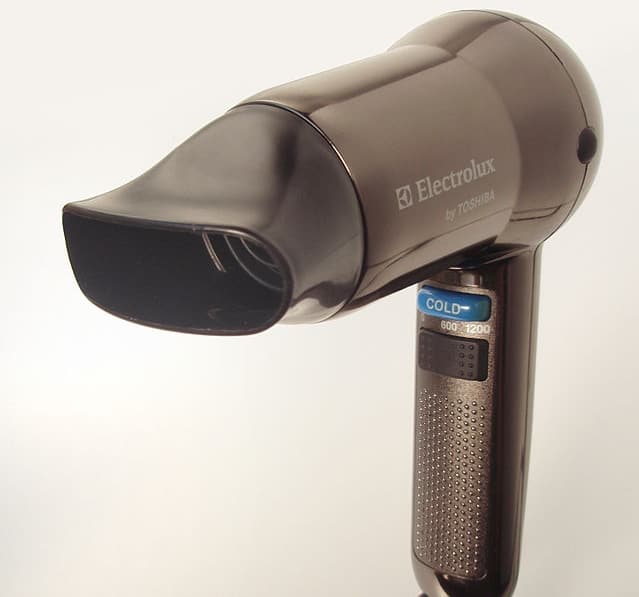
If you happen to be in London next Saturday (20 September), the Science Museum is running a workshop called “The field life of electronic objects”. Participants will measure the electromagnetic fields surrounding everyday objects such as hairdryers and hard drives “to produce astonishing light images of these objects’ secret life”. Space is limited, the cost is £10 and you can register online.

One thing that we really struggle with here at physicsworld.com is comments from crackpots. My colleagues and I put a lot of effort into writing and editing articles that we believe will be of general interest to the physics community. There is nothing more soul-destroying than spending hours trying to understand and then explain a tricky piece of research only to see the comments on your article hijacked by someone promoting their own bizarre theory.

The American Physical Society (APS) takes a brave and novel way of dealing with crackpots – it gives them their own sessions at APS conferences. In “The Crackpot Conundrum”, blogger Henry Brown describes the mood at such sessions as depressing, something that I understand based on a session that I sat through. Brown then reviews some of the various ways that physics bloggers deal with crackpots and in a moment of deep introspection suspects that he might be seen by some as a crackpot!

Finally, if you are winding down on a Friday afternoon, you can put yourself in a trance by watching these mesmerizing animations by the Irish physicist David Whyte.

Once upon a time…the art of telling a good quantum tale


It’s been nearly two weeks since I spent three intense and interesting days in Sweden bundled into a classroom with other journalists and scientists to polish up our knowledge of all things quantum. Since attending the NORDITA science-writing workshop, I have spent a lot of time thinking about one of the main themes of the meeting: “What is the best way to communicate quantum physics to the public?”

(more…)

Synchrotron X-rays track fluids in the lungs

A new method of soft-tissue imaging could allow doctors to monitor respiratory treatments of cystic-fibrosis patients, reports an international research team. The technique – which measures the refraction of a grid pattern of X-rays passing through the lungs – has been successfully demonstrated in live mice, and could eventually find application in visualizing other soft tissues, such as the brain and heart.

Cystic fibrosis is a life-threatening genetic disorder that affects the exocrine glands, resulting in unusually thick secretions of mucus. In lungs, mucus is supposed to keep the airways moist, along with forming a conveyor belt, moved by beating cilia, which carries away foreign particles and pathogens. In cystic-fibrosis patients, however, the thicker mucus flows less easily – resulting in a build-up that can cause inflammation, breathing difficulties and increased susceptibility to bacterial infection.

Respiratory therapies for cystic-fibrosis patients typically focus on increasing hydration of the airways to improve mucus flow. Tracking the progress of these treatments, however, is challenging. “At the moment, we typically need to wait for a cystic-fibrosis treatment to have an effect on lung health, measured by either a lung CT scan or breath measurement, to see how effective it is,” explains lead researcher Kaye Morgan from Monash University in Australia. With successful medications often taking months to have a measurable impact, progress in developing new treatments is correspondingly slow.

Fast yet sensitive

The challenge lies in imaging the surface layers of liquid in the airways. These are usually only a few tens of microns across, bear a close resemblance to the underlying tissue and – given the passage of air in and out of lungs – constantly move around. Consequently, any technique for imaging this interface needs to be high-resolution, as well as sufficiently fast and sensitive.

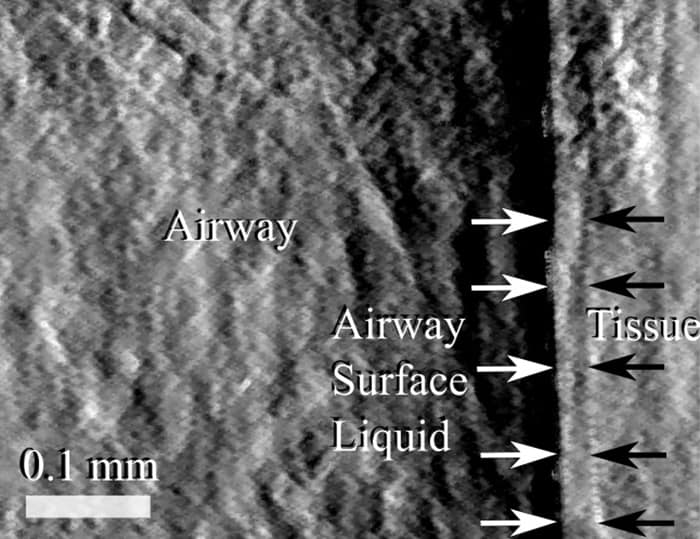
Single-grid-based phase-contrast X-ray imaging reveals a liquid surface layer in the lungs of a live mouse

Morgan and colleagues have developed an imaging method that they call single-grid-based phase-contrast X-ray imaging. Unlike conventional radiography, which measures the absorption of X-rays, the new approach measures the refraction of a grid pattern of radiation as it passes through the soft tissues.

“A good analogy is the patterns we see on the bottom of swimming pools,” explains Morgan. At the detector, the X-ray grid will appear distorted in accordance with the properties of the tissues that the rays have passed through – much in the same way that tiles in a pool appear distorted when seen through water. “By tracking the distortions in the grid pattern, we can reconstruct the airway structures.”

Anaesthetized mice

To test their method, the researchers imaged the airways of eight anaesthetized mice. Using a nebulizer, each mouse was treated first with a saline control solution, and then with a treatment designed to block the dehydrating effect of the cells lining the airway. X-rays from a synchrotron travelled through a 25.4 µm grid to create the desired pattern; this produced images at the detector with 0.18 µm-sized pixels. Images were recorded at three-minute intervals for 15 minutes after each treatment.

By tracking the distortions in the grid pattern, we can reconstruct the airway structures
Kaye Morgan, Monash University

The method successfully imaged the airway, surface liquids and underlying tissues. A noticeable increase in the surface hydration depth was observed after treatment in comparison with the control. “The new imaging method allows us, for the first time, to non-invasively see how the treatment is working, ‘live’ on the airway surface,” Morgan says.

“This is a novel and interesting biomedical application,” says Mark Anastasio, a biomedical engineer from Washington University in St Louis. With existing solutions unable to reveal such subtle soft-tissue interfaces, he adds, this result “motivates the further development of X-ray phase-contrast imaging technologies”.

Practical issues

Ke Li, a medical physicist from the University of Wisconsin-Madison, points out that making measurements on live mice “is a huge step along the course of applying phase-contrast X-ray projection imaging to medical imaging”. However, Li questions the practicality of using a synchrotron X-ray source in a clinical environment, especially given the high radiation dose necessary for such an ultra-fine pixel size.

Some of these concerns could soon be addressed, with Morgan and colleagues now exploring how their work might translate into a clinical setting. At the same time, the team is investigating other possible medical applications, looking both at lungs and other soft tissues, such as the brain and heart.

The research is described in the American Journal of Respiratory and Critical Care Medicine.

Divergent quasars fall in line

The huge spectral diversity of quasars could be explained by taking two simple parameters into account – how quickly matter is falling into the black hole at the heart of the quasar, and the direction from which we observe it. This surprising conclusion comes from a duo of astronomers in the US and China, who have analysed the spectra of more than 20,000 quasars to create a basic interpretation of the diversity of these celestial powerhouses.

Regularly irregular

Quasars are hugely energetic and luminous supermassive black holes in the nuclei of distant galaxies, and are found in the furthest reaches of the observable universe. Although each quasar appears to have a distinct optical spectrum, they all seem to have similar physical properties. Indeed, these behemoths have a surprising amount of regularity in their more quantifiable physical properties, which follow well-defined trends (referred to as the “main sequence” of quasars) discovered more than 20 years ago.

The black holes nestled at the centres of quasars do not emit any light. Instead, most of the visible light that we detect from quasars is emitted as a continuous spectrum from matter in a hot accretion disc surrounding the black hole, and as a discrete set of emission lines from ionized gas clouds in the vicinity of the black hole.

The emission lines reveal key information about a quasar’s neighbourhood – indeed, the varying intensity of the line emission depends on the characteristics of the disc’s radiation field. Many of these spectral properties are thought to be systematically connected, suggesting that a common physical parameter could drive them. The Eddington luminosity or ratio – the maximum luminosity a stellar body can achieve when there is a balance between the outward force of radiation and the inward gravitational force – has long been suspected to be a driver of variation in quasar spectra.

Telltale emissions

Now, new work carried out by Yue Shen and Luis Ho from the Carnegie Observatories in the US and Peking University in China could show that most observed quasar phenomena can indeed be explained by the balance between gravity and luminosity, along with the viewing orientation of the astronomer. The duo looked at more than 20,000 quasars from the Sloan Digital Sky Survey, applying several new statistical tests to it. “Our findings have profound implications for quasar research. This simple unification scheme presents a pathway to better understand how supermassive black holes accrete matter and interplay with their environments,” says Shen.

The duo found that the orientation of the astronomer’s line-of-sight, as they peer into the quasars inner region, plays a significant role in the observed variations. This means that astronomers might have to pay close attention to the geometry of the line-emitting region closest to the black hole – Shen and Ho claim that the gas in this region is distributed in a flattened, pancake-like configuration. In turn, this refinement could help astronomers measure the masses of the black holes more accurately, because mass is calculated via the luminosity. “Better black-hole mass measurements will benefit a variety of applications in understanding the cosmic growth of supermassive black holes and their place in galaxy formation,” says Ho.

The research is published in Nature.

Sweet-talking physics

We’re always up for trying new formats and approaches to journalism here at Physics World. You’ve probably seen our documentary-type films, podcasts and 100 Second Science video series, but the latest addition to our repertoire is a short monthly video in which one of our editorial team highlights something in the upcoming or current issue as a kind of taster.

So this month, I decided to take the plunge and get in front of the camera myself to present the third edition of what we have started jokingly referring to in the office as our “fireside chats”. (Here are the July and August versions.)

(more…)

How to make the perfect hollandaise sauce

I got an e-mail the other day from a London PR agency telling me about the latest edition of a new journal that’s tapping into the burgeoning interest in using scientific methods to improve and understand the foods we eat. Published by Elsevier, the International Journal of Gastronomy and Food Science seeks to bring chefs and scientists together “by conceiving culinary projects that nurture the relationship between cooking, science and research”.

Intrigued, I had a quick skim of the contents and my eyes were immediately drawn to an article by researchers in Norway, Denmark and Germany, who had examined the factors that affect the quality of a hollandaise sauce – and worked out the best way to make one.

(more…)

A classy look through mathematics

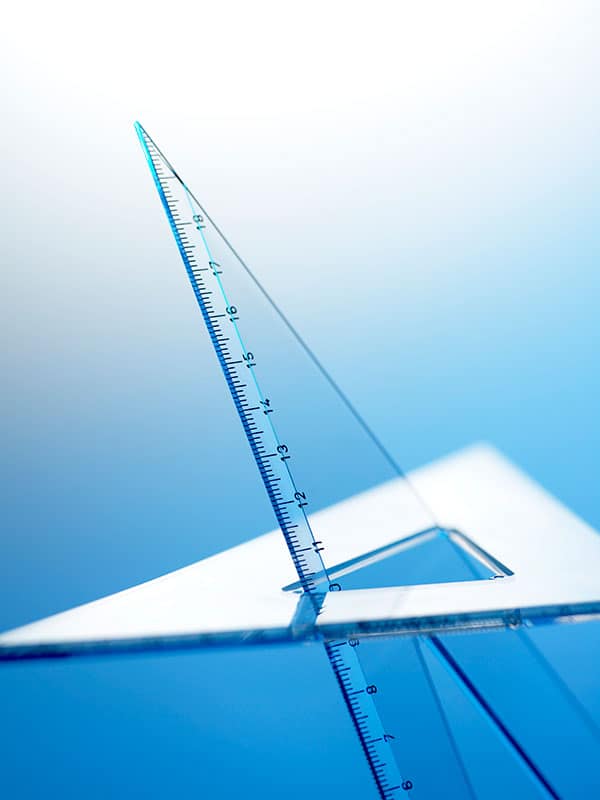
Photo of two triangular rulers

It is depressingly common to hear people say they don’t understand maths, or don’t get it, or “it never made any sense” to them, or some variation. It’s also worryingly normal (such is the low regard for numerical skills in the modern world) for these declarations to be a source of pride, as if understanding maths were something only losers or deviants would do. One of the main contributions to this lack of general understanding for and appreciation of mathematics seems to be its apparently intangible nature. While maths proves endlessly fascinating to those of us with an interest and appreciation for how important it clearly is, its abstract quality seems like a hurdle for many. Who cares what patterns these random figures on a screen form? What’s the point of it?

If these attitudes are ever going to change, it will likely be in part due to the efforts of writers such as Alex Bellos. In his latest book Alex Through the Looking Glass, a follow-up to 2011’s successful Alex’s Adventures in Numberland (the US titles are, respectively, The Grapes of Math and Here’s Looking at Euclid), Bellos endeavours to answer the “What’s the point?” question by investigating the many ways that mathematical laws and properties become manifest in the real world, and how they are used. Without giving away too many spoilers, a particular highlight is his explanation of how people charged with investigating fraud make use of a certain mathematical rule that causes distinct patterns in large data sets. Basically, in large data sets, numbers that begin with “1” are the most common, followed by those that begin with “2”, and so on. There’s not an even spread of numbers beginning with all the digits between 1 and 9 as you (or potential fraudsters) might reasonably assume. After reading this, I found it disturbingly easy to imagine a spin-off TV series called CSI: Accountancy, although the prospect that any fraudsters who read this book might become more effective at covering their tracks is perhaps a little disconcerting.

This, however, is the sort of thing that Bellos excels at: taking seemingly abstract maths formulae and rules and showing how they actually underpin much of what goes on in the real world. Making maths tangible and relatable is an achievement in itself, and it’s worth reading the book for Bellos’s elegant style of doing so.

Quite often, this is not so much a book about maths but a book about how maths affects us. The opening chapters, for example, play around a lot with the psychology of numbers and how people perceive and process them – an interesting approach given that psychology is arguably the disciplinary opposite of mathematics, in that its findings are easy to relate to, but very difficult to pin down as constant and rigid patterns. And I say that as someone who has spent about five years trying to get enough neuroscientific data to fill a PhD thesis!

I call this material “psychology” for want of a better term, as Bellos hasn’t conducted what many would recognize as “proper” psychological studies and doesn’t quote peer-reviewed data. Instead, he simply relates his own curiosity about how people feel and think about numbers, and considers the historical and cultural reasons behind their sentiments. He does refer to a few basic surveys he did to investigate people’s perceptions of numbers and the interesting results they provided, but all the research he conducted was purely for this book and related writings, not for publication in some prestigious journal. Some readers may find this a drawback, but on the other hand, Bellos doesn’t make any grandiose claims about what he’s saying, and he also doesn’t get bogged down in minutiae and rigorous analysis (although there are some surprisingly detailed findings). As a result, his book remains easily readable.

Alex Through the Looking Glass is not without its flaws, though. Bellos is clearly an engaging writer and a keen mathematician, but his own mathematical expertise sometimes gets the better of him, and as such it’s often a bit difficult to tell exactly who this book is aimed at. For example, he sometimes presents concepts and rules as “simple” equations, seemingly assuming they are self-explanatory, when they really are not for anyone who doesn’t use maths or equations on at least a semi-regular basis. It’s likely that anyone with even a casual interest in or grasp of mathematics will be able to follow most of what he is saying, but given that the book is clearly intended to get laypeople interested in maths, it seems like a somewhat self-limiting approach. And it’s not like you can just skip over the tricky bits, either. Several times, grasping the equation is integral to comprehending what’s going on in the following paragraphs, so if you don’t understand the supposedly simple formulae or equations presented at the start of the piece (which I, for my sins, often didn’t) then you’re going to miss pretty much all of what the remainder of the section is saying.

Also, as you might expect from a book that tries to cover so many different aspects of such a wide-ranging field, some sections prove more engaging than others. The previously mentioned forensic investigations are particularly intriguing, whereas the discussions about triangles and their use in measuring the Earth’s diameter are somewhat less so. Perhaps it’s because the latter was so long ago or is such a familiar subject for those (like me) who read a lot of science books. Or maybe it’s because, however talented the writer, it’s just very hard to make triangles interesting.

But all in all, Alex Through the Looking Glass is definitely a worthwhile read, especially for anyone who’d like to know more about maths but doesn’t think they have the capacity. And that’s where Bellos has made his priorities clear: this book is about sharing and explaining the world of mathematics not as some abstract, aloof area inhabited only by the most analytical and socially awkward sorts, but as something that overlaps with and influences our lives in numerous subtle but surprising ways. At this, he succeeds quite comfortably.

Granted, you may have to plough through a few more challenging sections, but there’s invariably something cool and interesting on the page.

  • 2014 Bloomsbury £18.99hb 352pp

Fractal-like honeycombs take the strain

Photograph of a fractal-like honeycomb structures being tested

Honeycomb lattices and fractal structures are found in a range of biological materials. Now, scientists in the US, the UK and France have combined the two types of pattern to create a strong and lightweight material that could be used in a range of applications, from aerospace to medicine. While the structures were made with centimetre-sized unit cells, the team believes that similar materials could be made on the nanoscale using carbon nanotubes.

Hexagonal honeycomb patterns often appear in nature, where strength, rigidity and lightness are called for. The shells of armadillos, the beaks of birds and, of course, the wax cells built by bees are just a few examples of nature’s honeycombs. Engineers have long known about the honeycomb’s strength and low density, and the structure has been used in applications as varied as satellite components and the scaffolding for growing new heart tissue.

Now, Ashkan Vaziri and colleagues at Northeastern University, along with researchers at the University of Oxford and the Université de Lyon, have shown that fractal-like structures based on honeycombs are even more resistant to deformation than conventional honeycomb materials.

Hierarchical structures

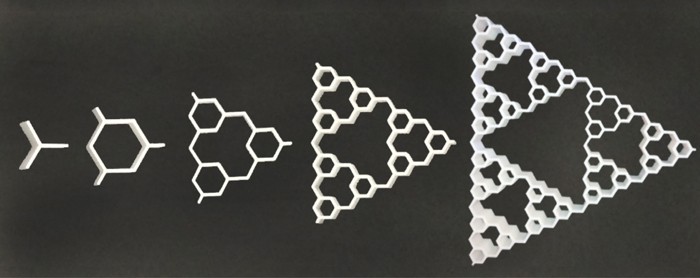
Fractals – in which the same patterns appear on different length scales – are also found in a variety of naturally occurring materials, including the buds on certain types of broccoli, pinecone seeds and nautilus shells. “Hierarchical structures are ubiquitous in nature and can be observed at many different scales in organic materials and biological systems,” explains Vaziri. Honeycombs on their own are not fractals because their characteristic shape only occurs on one length scale. However, a hierarchical fractal structure can be built upon a hexagonal honeycomb by successively replacing each vertex of three edges with another, smaller hexagon (see the image below).

Vaziri and collaborators looked at how the mechanical properties of these hierarchical hexagonal honeycombs varied as a function of how many times the fractal order was repeated. The team used both MATLAB computer models and experimental testing to study the structural performance of the hierarchical hexagonal honeycombs. Specifically, the researchers looked at the elements of the structure that can undergo stretching, shear and bending. “Our goal is to develop novel, hierarchical structures that are far superior to the classical cellular structures in terms of their mechanical response,” Vaziri told physicsworld.com.

Reaching a limit

The computer simulations focused on the elastic modulus of each structure, which measures a material’s ability to resist deformation. To make a meaningful comparison between structures comprising different numbers of hexagonal hierarchies, the team adjusted the thickness of each structure to ensure that they all had the same density.

“Generally, increasing the density of the cellular structure while preserving its topology improves the mechanical properties of the structure,” Vaziri explains. “To solely investigate the effect of hierarchical order on the mechanical properties of the hierarchical structure, we preserve the relative density while increasing the hierarchical order.”

The simulations predict that the elastic moduli of the structures increase with hierarchical order, up to a certain threshold. Furthermore, the calculations suggest that materials with desirable elastic moduli can be manufactured without having to resort to extremely high orders of hierarchy. This is good news from a practical point of view, because it would be difficult to achieve high orders of hierarchy using today’s 3D printing technologies.

Making it real

The next step for Vaziri’s team was to test its findings in the lab. The researchers used a 3D printer to manufacture extruded polymer shells of five honeycomb structures, each with a successively higher order of hierarchy. The thickness of the honeycomb walls was maintained at 2 mm because of limitations of the 3D printing process. To maintain a constant density, the size of the unit cells was adjusted instead of the thickness.

Photograph of fractal-like honeycomb unit cells

The hexagonal edge lengths of the extruded structures ranged from 0.6 to 2.2 cm. The researchers tested the compressive response and elastic modulus of each structure, recording how each structure’s resistance to deformation varied as a function of its hierarchy. The results revealed that, as predicted by the simulations, structures with a higher order of hierarchy had increasingly larger elastic moduli, to a certain limit.

Even though Vaziri and his team focused on unit cells that were on the centimetre length scale, they are confident that their findings can be applied to smaller scales. “The unit cells of the hierarchical honeycombs can be built with single- or multi-walled carbon nanotubes,” Vaziri claims. Deformation-resistant structures assembled from carbon nanotubes would have widespread applications in biological engineering and materials science.

The structures are described in Physical Review Letters.

Copyright © 2026 by IOP Publishing Ltd and individual contributors