A team at the Trento Proton Therapy Centre in Italy has delivered the first clinical treatments using proton arc therapy (PAT), an emerging proton delivery technique. Following successful dosimetric comparisons with clinically delivered proton plans, the researchers confirmed the feasibility of PAT delivery and used PAT to treat nine cancer patients, reporting their findings inMedical Physics.
Currently, proton therapy is mostly delivered using pencil-beam scanning (PBS), which provides highly conformal dose distributions. But PBS delivery can be compromised by the small number of beam directions deliverable in an acceptable treatment time. PAT overcomes this limitation by moving to an arc trajectory.
“Proton arc treatments are different from any other pencil-beam proton delivery technique because of the large number of beam angles used and the possibility to optimize the number of energies used for each beam direction, which enables optimization of the delivery time,” explains first author Francesco Fracchiolla. “The ability to optimize both the number of energy layers and the spot weights makes these treatments superior to any previous delivery technique.”
Plan comparisons
The Trento researchers – working with colleagues from RaySearch Laboratories – compared the dosimetric parameters of PAT plans with those of state-of-the-art multiple-field optimized (MFO) PBS plans, for 10 patients with head-and-neck cancer. They focused on this site due to the high number of organs-at-risk (OARs) close to the target that may be spared using this new technique.
In future, PAT plans will be delivered with the beam on during gantry motion (dynamic mode). This requires dynamic arc plan delivery with all system settings automatically adjusted as a function of gantry angle – an approach with specific hardware and software requirements that have so far impeded clinical rollout.
Instead, Fracchiolla and colleagues employed an alternative version of static PAT, in which the static arc is converted into a series of PBS beams and delivered using conventional delivery workflows. Using the RayStation treatment planning system, they created MFO plans (using six noncoplanar beam directions) and PAT plans (with 30 beam directions), robustly optimized against setup and range uncertainties.
PAT plans dramatically improved dose conformality compared with MFO treatments. While target coverage was of equal quality for both treatment types, PAT decreased the mean doses to OARs for all patients. The biggest impact was in the brainstem, where PAT reduced maximum and mean doses by 19.6 and 9.5 Gy(RBE), respectively. Dose to other primary OARs did not differ significantly between plans, but PAT achieved an impressive reduction in mean dose to secondary OARs not directly adjacent to the target.
The team also evaluated how these dosimetric differences impact normal tissue complication probability (NTCP). PAT significantly reduced (by 8.5%) the risk of developing dry mouth and slightly lowered other NTCP endpoints (swallowing dysfunction, tube feeding and sticky saliva).
To verify the feasibility of clinical PAT, the researchers delivered MFO and PAT plans for one patient on a clinical gantry. Importantly, delivery times (from the start of the first beam to the end of the last) were similar for both techniques: 36 min for PAT with 30 beam directions and 31 min for MFO. Reducing the number of beam directions to 20 reduced the delivery time to 25 min, while maintaining near-identical dosimetric data.
First patient treatments
The successful findings of the plan comparison and feasibility test prompted the team to begin clinical treatments.
“The final trigger to go live was the fact that the discretized PAT plans maintained pretty much exactly the optimal dosimetric characteristics of the original dynamic (continuous rotation) arc plan from which they derived, so there was no need to wait for full arc to put the potential benefits to clinical use. Pretreatment verification showed excellent dosimetric accuracy and everything could be done in a fully CE-certified environment,” say Frank Lohr and Marco Cianchetti, director and deputy director, respectively, of the Trento Proton Therapy Center. “The only current drawback is that we are not at the treatment speed that we could be with full dynamic arc.”
To date, nine patients have received or are undergoing PAT treatment: five with head-and-neck tumours, three with brain tumours and one thorax cancer. For the first two head-and-neck patients, the team created PAT plans with a half arc (180° to 0°) with 10 beam directions and a mean treatment time of 12 min. The next two were treated with a complete arc (360°) with 20 beam directions. Here, the mean treatment time was 24 min. Patient-specific quality assurance revealed an average gamma passing rate (3%, 3 mm) of 99.6% and only one patient required replanning.
All PAT treatments were performed using the centre’s IBA ProteusPlus proton therapy unit and the existing clinical workflow. “Our treatment planning system can convert an arc plan into a PBS plan with multiple beams,” Fracchiolla explains. “With this workaround, the entire clinical chain doesn’t change and the plan can be delivered on the existing system. This ability to convert the arc plans into PBS plans means that basically every proton centre can deliver these treatments with the current hardware settings.”
The researchers are now analysing acute toxicity data from the patients, to determine whether PAT reduces toxicity. They are also looking to further reduce the delivery times.
“Hopefully, together with IBA, we will streamline the current workflow between the OIS [oncology information system] and the treatment control system to reduce treatment times, thus being competitive in comparison with conventional approaches, even before full dynamic arc treatments become a clinical reality,” adds Lohr.
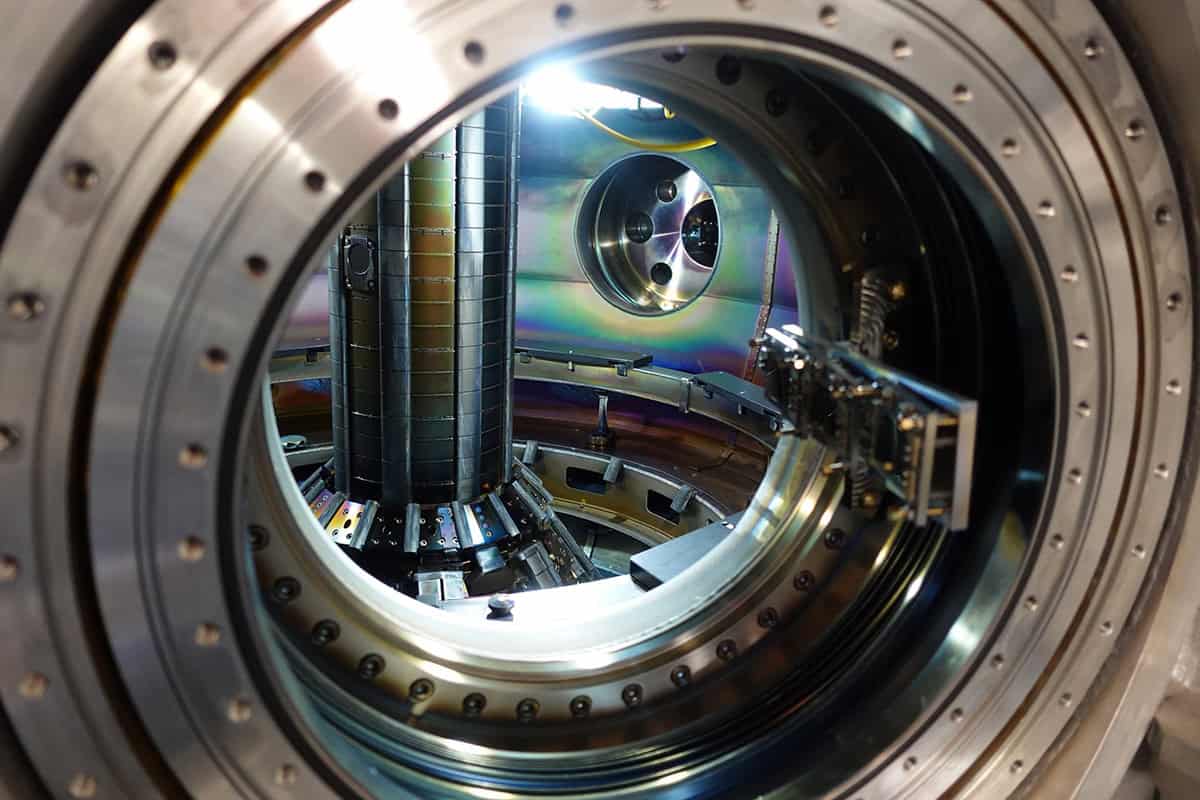
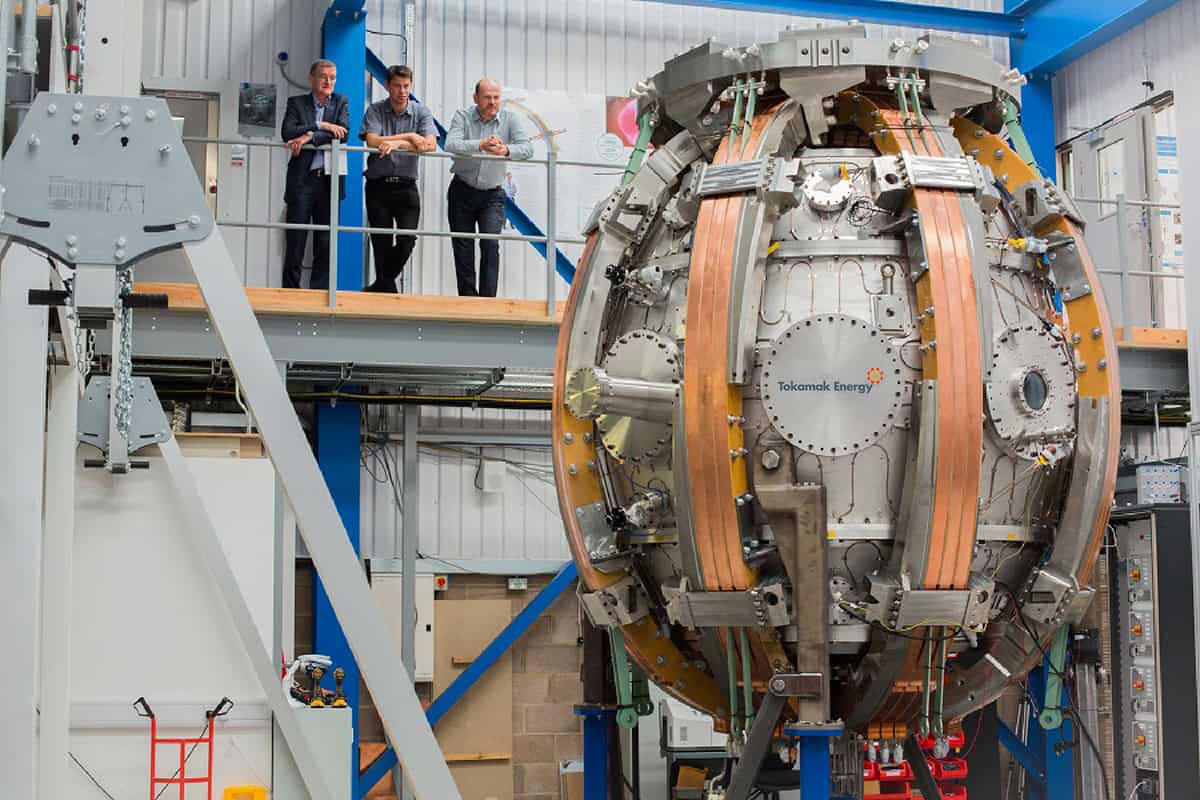
Inside view Private companies like Tokamak Energy in the UK are developing compact tokamaks that, they hope, could bring fusion power to the grid in the 2030s. (Courtesy: Tokamak Energy)
Fusion – the process that powers the Sun – offers a tantalizing opportunity to generate almost unlimited amounts of clean energy. In the Sun’s core, matter is more than 10 times denser than lead and temperatures reach 15 million K. In these conditions, ionized isotopes of hydrogen (deuterium and tritium) can overcome their electrostatic repulsion, fusing into helium nuclei and ejecting high-energy neutrons. The products of this reaction are slightly lighter than the two reacting nuclei, and the excess mass is converted to lots of energy.
The engineering and materials challenges of creating what is essentially a ‘Sun in a freezer’ are formidable
The Sun’s core is kept hot and dense by the enormous gravitational force exerted by its huge mass. To achieve nuclear fusion on Earth, different tactics are needed. Instead of gravity, the most common approach uses strong superconducting magnets operating at ultracold temperatures to confine the intensely hot hydrogen plasma.
The engineering and materials challenges of creating what is essentially a “Sun in a freezer”, and harnessing its power to make electricity, are formidable. This is partly because, over time, high-energy neutrons from the fusion reaction will damage the surrounding materials. Superconductors are incredibly sensitive to this kind of damage, so substantial shielding is needed to maximize the lifetime of the reactor.
The traditional roadmap towards fusion power, led by large international projects, has set its sights on bigger and bigger reactors, at greater and greater expense. However these are moving at a snail’s pace, with the first power to the grid not anticipated until the 2060s, leading to the common perception that “fusion power is 30 years away, and always will be.”
There is therefore considerable interest in alternative concepts for smaller, simpler reactors to speed up the fusion timeline. Such novel reactors will need a different toolkit of superconductors. Promising materials exist, but because fusion can still only be sustained in brief bursts, we have no way to directly test how these compounds will degrade over decades of use.
Is smaller better?
A leading concept for a nuclear fusion reactor is a machine called a tokamak, in which the plasma is confined to a doughnut-shaped region. In a tokamak, D-shaped electromagnets are arranged in a ring around a central column, producing a circulating (toroidal) magnetic field. This exerts a force (the Lorentz force) on the positively charged hydrogen nuclei, making them trace helical paths that follow the field lines and keep them away from the walls of the vessel.
In 2010, construction began in France on ITER, a tokamak that is designed to demonstrate the viability of nuclear fusion for energy generation. The aim is to produce burning plasma, where more than half of the energy heating the plasma comes from fusion in the plasma itself, and to generate, for short pulses, a tenfold return on the power input.
But despite being proposed 40 years ago, ITER’s projected first operation was recently pushed back by another 10 years to 2034. The project’s budget has also been revised multiple times and it is currently expected to cost tens of billions of euros. One reason ITER is such an ambitious and costly project is its sheer size. ITER’s plasma radius of 6.2 m is twice that of the JT-60SA in Japan, the world’s current largest tokamak. The power generated by a tokamak roughly scales with the radius of the doughnut cubed which means that doubling the radius should yield an eight-fold increase in power.
Small but mighty Tokamak Energy’s ST40 compact tokamak uses copper electromagnets, which would be unsuitable for long-term operation due to overheating. REBCO compounds, which are high-temperature superconductors that can generate very high magnetic fields, are an attractive alternative. (Courtesy: Tokamak Energy)
However, instead of chasing larger and larger tokamaks, some organizations are going in the opposite direction. Private companies like Tokamak Energy in the UK and Commonwealth Fusion Systems in the US are developing compact tokamaks that, they hope, could bring fusion power to the grid in the 2030s. Their approach is to ramp up the magnetic field rather than the size of the tokamak. The fusion power of a tokamak has a stronger dependence on the magnetic field than the radius, scaling with the fourth power.
The drawback of smaller tokamaks is that the materials will sustain more damage from neutrons during operation. Of all the materials in the tokamak, the superconducting magnets are most sensitive to this. If the reactor is made more compact, they are also closer to the plasma and there will be less space for shielding. So if compact tokamaks are to succeed commercially, we need to choose superconducting materials that will be functional even after many years of irradiation.
1 Superconductors
Operation window for Nb-Ti, Nb3Sn and REBCO superconductors. (Courtesy: Susie Speller/IOP Publishing)
Superconductors are materials that have zero electrical resistance when they are cooled below a certain critical temperature (Tc). Superconducting wires can therefore carry electricity much more efficiently than conventional resistive metals like copper.
What’s more, a superconducting wire can carry a much higher current than a copper wire of the same diameter because it has zero resistance and so no heat is generated. In contrast, as you pass ever more current through a copper wire, it heats up and its resistance rises even further, until eventually it melts.
Without this resistive heating, a superconducting wire can carry a much higher current than a copper wire of the same diameter. This increased current density (current per unit cross-sectional area) enables high-field superconducting magnets to be more compact than resistive ones.
However, there is an upper limit to the strength of the magnetic field that a superconductor can usefully tolerate without losing the ability to carry lossless current. This is known as the “irreversibility field”, and for a given superconductor its value decreases as temperature is increased, as shown above.
High-performance fusion materials
Superconductors are a class of materials that, when cooled below a characteristic temperature, conduct with no resistance (see box 1, above). Magnets made from superconducting wires can carry high currents without overheating, making them ideal for generating the very high fields required for fusion. Superconductivity is highly sensitive to the arrangement of the atoms; whilst some amorphous superconductors exist, most superconducting compounds only conduct high currents in a specific crystalline state. A few defects will always arise, and can sometimes even improve the material’s performance. But introducing significant disorder to a crystalline superconductor will eventually destroy its ability to superconduct.
The most common material for superconducting magnets is a niobium-titanium (Nb-Ti) alloy, which is used in MRI machines in hospitals and CERN’s Large Hadron Collider. Nb-Ti superconducting magnets are relatively cheap and easy to manufacture, but – like all superconducting materials – it has an upper limit to the magnetic field in which it can superconduct, known as the irreversibility field. This value in Nb-Ti is too low for this material to be used for the high-field magnets in ITER. The ITER tokamak will instead use a niobium-tin (Nb3Sn) superconductor, which has a higher irreversibility field than Nb-Ti, even though it is much more expensive and challenging to work with.
2 REBCO unit cell
(Courtesy: redrawn from Wikimedia Commons/IOP Publishing)
The unit cell of a REBCO high-temperature superconductor. Here the pink atoms are copper and the red atoms are oxygen, the barium atoms are in green and the rare-earth element here is yttrium in blue.
Needing stronger magnetic fields, compact tokamaks require a superconducting material with an even higher irreversibility field. Over the last decade, another class of superconducting materials called “REBCO” have been proposed as an alternative. Short for rare earth barium copper oxide, these are a family of superconductors with the chemical formula REBa2Cu3O7, where RE is a rare-earth element such as yttrium, gadolinium or europium (see Box 2 “REBCO unit cell”).
REBCO compounds are high-temperature superconductors, which are defined as having transition temperatures above 77 K, meaning they can be cooled with liquid nitrogen rather than the more expensive liquid helium. REBCO compounds also have a much higher irreversibility field than niobium-tin, and so can sustain the high fields necessary for a small fusion reactor.
REBCO wires: Bendy but brittle
REBCO materials have attractive superconducting properties, but it is not easy to manufacture them into flexible wires for electromagnets. REBCO is a brittle ceramic so can’t be made into wires in the same way as ductile materials like copper or Nb-Ti, where the material is drawn through progressively smaller holes.
Instead, REBCO tapes are manufactured by coating metallic ribbons with a series of very thin ceramic layers, one of which is the superconducting REBCO compound. Ideally, the REBCO would be a single crystal, but in practice, it will be comprised of many small grains. The metal gives mechanical stability and flexibility whilst the underlying ceramic “buffer” layers protect the REBCO from chemical reactions with the metal and act as a template for aligning the REBCO grains. This is important because the boundaries between individual grains reduce the maximum current the wire can carry.
Another potential problem is that these compounds are chemically sensitive and are “poisoned” by nearly all the impurities that may be introduced during manufacture. These impurities can produce insulating compounds that block supercurrent flow or degrade the performance of the REBCO compound itself.
Despite these challenges, and thanks to impressive materials engineering from several companies and institutions worldwide, REBCO is now made in kilometre-long, flexible tapes capable of carrying thousands of amps of current. In 2024, more than 10,000 km of this material was manufactured for the burgeoning fusion industry. This is impressive given that only 1000 km was made in 2020. However, a single compact tokamak will require up to 20,000 km of this REBCO-coated conductor for the magnet systems, and because the superconductor is so expensive to manufacture it is estimated that this would account for a considerable fraction of the total cost of a power plant.
Pushing superconductors to the limit
Another problem with REBCO materials is that the temperature below which they superconduct falls steeply once they’ve been irradiated with neutrons. Their lifetime in service will depend on the reactor design and amount of shielding, but research from the Vienna University of Technology in 2018 suggested that REBCO materials can withstand about a thousand times less damage than structural materials like steel before they start to lose performance (Supercond. Sci. Technol. 31 044006).
These experiments are currently being used by the designers of small fusion machines to assess how much shielding will be required, but they don’t tell the whole story. The 2018 study used neutrons from a fission reactor, which have a different spectrum of energies compared to fusion neutrons. They also did not reproduce the environment inside a compact tokamak, where the superconducting tapes will be at cryogenic temperatures, carrying high currents and under considerable strain from Lorentz forces generated in the magnets.
Even if we could get a sample of REBCO inside a working tokamak, the maximum runtime of current machines is measured in minutes, meaning we cannot do enough damage to test how susceptible the superconductor will be in a real fusion environment. The current record for tokamak power is 69 megajoules, achieved in a 5-second burst at the Joint European Torus (JET) tokamak in the UK.
Given the difficulty of using neutrons from fusion reactors, our team is looking for answers using ions instead. Ion irradiation is much more readily available, quicker to perform, and doesn’t make the samples radioactive. It is also possible to access a wide range of energies and ion species to tune the damage mechanisms in the material. The trouble is that because ions are charged they won’t interact with materials in exactly the same way as neutrons, so it is not clear if these particles cause the same kinds of damage or by the same mechanisms.
To find out, we first tried to directly image the crystalline structure of REBCO after both neutron and ion irradiation using transmission electron microscopy (TEM). When we compared the samples, we saw small amorphous regions in the neutron-irradiated REBCO where the crystal structure was destroyed (J. Microsc. 286 3), which are not observed after light ion irradiation (see Box 3 below).
TEM images of REBCO before (a) and after (b) helium ion irradiation. The image on the right (c) shows only the positions of the copper, barium and rare-earth atoms – the oxygen atoms in the crystal lattice cannot be inages using this technique. After ion irradiation, REBCO materials exhibit a lower superconducting transition temperature. However, the above images show no corresponding defects in the lattice, indicating that defects caused by oxygen atoms being knocked out of place are responsible for this effect.
We believe these regions to be collision cascades generated initially by a single violent neutron impact that knocks an atom out of its place in the lattice with enough energy that the atom ricochets through the material, knocking other atoms from their positions. However, these amorphous regions are small, and superconducting currents should be able to pass around them, so it was likely that another effect was reducing the superconducting transition temperature.
Searching for clues
The TEM images didn’t show any other defects, so on our hunt to understand the effect of neutron irradiation, we instead thought about what we couldn’t see in the images. The TEM technique we used cannot resolve the oxygen atoms in REBCO because they are too light to scatter the electrons by large angles. Oxygen is also the most mobile atom in a REBCO material, which led us to think that oxygen point defects – single oxygen atoms that have been moved out of place and which are distributed randomly throughout the material – might be responsible for the drop in transition temperature.
In REBCO, the oxygen atoms are all bonded to copper, so the bonding environment of the copper atoms can be used to identify oxygen defects. To test this theory we switched from electrons to photons, using a technique called X-ray absorption spectroscopy. Here the sample is illuminated with X-rays that preferentially excite the copper atoms; the precise energies where absorption is highest indicate specific bonding arrangements, and therefore point to specific defects. We have started to identify the defects that are likely to be present in the irradiated samples, finding spectral changes that are consistent with oxygen atoms moving into unoccupied sites (Communications Materials3 52).
We see very similar changes to the spectra when we irradiate with helium ions and neutrons, suggesting that similar defects are created in both cases (Supercond. Sci. Technol.36 10LT01 ). This work has increased our confidence that light ions are a good proxy for neutron damage in REBCO superconductors, and that this damage is due to changes in the oxygen lattice.
The Surrey Ion Beam Centre allows users to carry out a wide variety of research using ion implantation, ion irradiation and ion beam analysis. (Courtesy: Surrey Ion Beam Centre)
Another advantage of ion irradiation is that, compared to neutrons, it is easier to access experimentally relevant cryogenic temperatures. Our experiments are performed at the Surrey Ion Beam Centre, where a cryocooler can be attached to the end of the ion accelerator, enabling us to recreate some of the conditions inside a fusion reactor.
We have shown that when REBCO is irradiated at cryogenic temperatures and then allowed to warm to room temperature, it recovers some of its superconducting properties (Supercond. Sci. Technol.34 09LT01). We attribute this to annealing, where rearrangements of atoms occur in a material warmed below its melting point, smoothing out defects in the crystal lattice. We have shown that further recovery of a perfect superconducting lattice can be induced using careful heat treatments to avoid loss of oxygen from the samples (MRS Bulletin48 710).
Lots more experiments are required to fully understand the effect of irradiation temperature on the degradation of REBCO. Our results indicate that room temperature and cryogenic irradiation with helium ions lead to a similar rate of degradation, but similar work by a group at the Massachusetts Institute of Technology (MIT) in the US using proton irradiation has found that the superconductor degrades more rapidly at cryogenic temperatures (Rev. Sci. Instrum.95 063907). The effect of other critical parameters like magnetic field and strain also still needs to be explored.
Towards net zero
The remarkable properties of REBCO high-temperature superconductors present new opportunities for designing fusion reactors that are substantially smaller (and cheaper) than traditional tokamaks, and which private companies ambitiously promise will enable the delivery of power to the grid on vastly accelerated timescales. REBCO tape can already be manufactured commercially with the required performance but more research is needed to understand the effects of neutron damage that the magnets will be subjected to so they will achieve the desired service lifetimes.
This would open up extensive new applications, such as lossless transmission cables, wind turbine generators and magnet-based energy storage devices
Scale-up of REBCO tape production is already happening at pace, and it is expected that this will drive down the cost of manufacture. This would open up extensive new applications, not only in fusion but also in power applications such as lossless transmission cables, for which the historically high costs of the superconducting material have proved prohibitive. Superconductors are also being introduced into wind turbine generators, and magnet-based energy storage devices.
This symbiotic relationship between fusion and superconductor research could lead not only to the realization of clean fusion energy but also many other superconducting technologies that will contribute to the achievement of net zero.
Astronomers have constructed the first “weather map” of the exoplanet WASP-127b, and the forecast there is brutal. Winds roar around its equator at speeds as high as 33 000 km/hr, far exceeding anything found in our own solar system. Its poles are cooler than the rest of its surface, though “cool” is a relative term on a planet where temperatures routinely exceed 1000 °C. And its atmosphere contains water vapour, so rain – albeit not in the form we’re accustomed to on Earth – can’t be ruled out.
Astronomers have been studying WASP-127b since its discovery in 2016. A gas giant exoplanet located over 500 light-years from Earth, it is slightly larger than Jupiter but much less dense, and it orbits its host – a G-type star like our own Sun – in just 4.18 Earth days. To probe its atmosphere, astronomers record the light transmitted as it passes in front of its host star according to our line of sight. During such passes, or transits, some starlight gets filtered though the planet’s upper atmosphere and is “imprinted” with the characteristic pattern of absorption lines found in the atoms and molecules present there.
Observing the planet during a transit event
On the night of 24/25 March 2022, astronomers used the CRyogenic InfraRed Echelle Spectrograph (CRIRES+) on the European Southern Observatory’s Very Large Telescope to observe WASP-127b at wavelengths of 1972‒2452 nm during a transit event lasting 6.6 hours. The data they collected show that the planet is home to supersonic winds travelling at speeds nearly six times faster than its own rotation – something that has never been observed before. By comparison, the fastest wind speeds measured in our solar system were on Neptune, where they top out at “just” 1800 km/hr, or 0.5 km/s.
Such strong winds – the fastest ever observed on a planet – would be hellish to experience. But for the astronomers, they were crucial for mapping WASP-127b’s weather.
“The light we measure still looks to us as if it all came from one point in space, because we cannot resolve the planet optically/spatially like we can do for planets in our own solar system,” explains Lisa Nortmann, an astronomer at the University of Göttingen, Germany and the lead author of a Astronomy and Astrophysics paper describing the measurements. However, Nortmann continues, “the unexpectedly fast velocities measured in this planet’s atmosphere have allowed us to investigate different regions on the planet, as it causes their signals to shift to different parts of the light spectrum. This meant we could reconstruct a rough weather map of the planet, even though we cannot resolve these different regions optically.”
The astronomers also used the transit data to study the composition of WASP-127b’s atmosphere. They detected both water vapour and carbon monoxide. In addition, they found that the temperature was lower at the planet’s poles than elsewhere.
Removing unwanted signals
According to Nortmann, one of the challenges in the study was removing signals from Earth’s atmosphere and WASP-127b’s host star so as to focus on the planet itself. She notes that the work will have implications for researchers working on theoretical models that aim to predict wind patterns on exoplanets.
“They will now have to try to see if their models can recreate the winds speeds we have observed,” she tells Physics World. “The results also really highlight that when we investigate this and other planets, we have to take the 3D structure of winds into account when interpreting our results.”
The astronomers say they are now planning further observations of WASP-127b to find out whether its weather patterns are stable or change over time. “We would also like to investigate molecules on the planet other than H2O and CO,” Nortmann says. “This could possibly allow us to probe the wind at different altitudes in the planet’s atmosphere and understand the conditions there even better.”
Join us for an insightful webinar that delves into the role of Cobalt-60 in intracranial radiosurgery using Leksell Gamma Knife.
Through detailed discussions and expert insights, attendees will learn how Leksell Gamma Knife, powered by cobalt-60, has and continues to revolutionize the field of radiosurgery, offering patients a safe and effective treatment option.
Participants will gain a comprehensive understanding of the use of cobalt in medical applications, highlighting its significance, and learn more about the unique properties of cobalt-60. The webinar will explore the benefits of cobalt-60 in intracranial radiosurgery and why it is an ideal choice for treating brain lesions while minimizing damage to surrounding healthy tissue.
Don’t miss this opportunity to enhance your knowledge and stay at the forefront of medical advancements in radiosurgery!
Riccardo Bevilacqua, a nuclear physicist with a PhD in neutron data for Generation IV nuclear reactors from Uppsala University, has worked as a scientist for the European Commission and at various international research facilities. His career has transitioned from research to radiation safety and back to medical physics, the field that first interested him as a student in Italy. Based in Stockholm, Sweden, he leads global radiation safety initiatives at Elekta. Outside of work, Riccardo is a father, a stepfather, and writes popular science articles on physics and radiation.
Working with “student LEGO enthusiasts”, they have developed a fully functional LEGO interferometer kit that consists of lasers, mirrors, beamsplitters and, of course, some LEGO bricks.
The set, designed as a teaching aid for secondary-school pupils and older, is aimed at making quantum science more accessible and engaging as well as demonstrating the basic principles of interferometry such as interference patterns.
“Developing this project made me realise just how incredibly similar my work as a quantum scientist is to the hands-on creativity of building with LEGO,” notes Nottingham quantum physicist Patrik Svancara. “It’s an absolute thrill to show the public that cutting-edge research isn’t just complex equations. It’s so much more about curiosity, problem-solving, and gradually bringing ideas to life, brick by brick!”
A team at Cardiff University will now work on the design and develop materials that can be used to train science teachers with the hope that the sets will eventually be made available throughout the UK.
“We are sharing our experiences, LEGO interferometer blueprints, and instruction manuals across various online platforms to ensure our activities have a lasting impact and reach their full potential,” adds Svancara.
If you want to see the LEGO interferometer in action for yourself then it is being showcased at the Cosmic Titans: Art, Science, and the Quantum Universe exhibition at Nottingham’s Djanogly Art Gallery, which runs until 27 April.
2 In quantum cryptography, who eavesdrops on Alice and Bob?
(Courtesy: Andy Roberts IBM Research/Science Photo Library)
3 Which artist made the Quantum Cloud sculpture in London?
4 IBM used which kind of atoms to create its Quantum Mirage image?
5 When Werner Heisenberg developed quantum mechanics on Helgoland in June 1925, he had travelled to the island to seek respite from what? A His allergies B His creditors C His funders D His lovers
6 According to the State of Quantum 2024 report, how many countries around the world had government initiatives in quantum technology at the time of writing? A 6 B 17 C 24 D 33
7 The E91 quantum cryptography protocol was invented in 1991. What does the E stand for? A Edison B Ehrenfest C Einstein D Ekert
8 British multinational consumer-goods firm Reckitt sells a “Quantum” version of which of its household products? A Air Wick freshener B Finish dishwasher tablets C Harpic toilet cleaner D Vanish stain remover
9 John Bell’s famous theorem of 1964 provides a mathematical framework for understanding what quantum paradox? A Einstein–Podolsky–Rosen B Quantum indefinite causal order C Schrödinger’s cat D Wigner’s friend
10 Which celebrated writer popularized the notion of Schrödinger’s cat in the mid-1970s? A Douglas Adams B Margaret Atwood C Arthur C Clarke D Ursula K le Guin
11 Which of these isn’t an interpretation of quantum mechanics? A Copenhagen B Einsteinian C Many worlds D Pilot wave
12 Which of these companies is not a real quantum company? A Qblox B Qruise C Qrypt D Qtips
13 Which celebrity was spotted in the audience at a meeting about quantum computers and music in London in December 2022? A Peter Andre B Peter Capaldi C Peter Gabriel D Peter Schmeichel
14 What of the following birds has not yet been chosen by IBM as the name for different versions of its quantum hardware? A Condor B Eagle C Flamingo D Peregrine
15 When quantum theorist Erwin Schrödinger fled Nazi-controlled Vienna in 1938, where did he hide his Nobel-prize medal? A In a filing cabinet B Under a pot plant C Behind a sofa D In a desk drawer
16 Which of the following versions of the quantum Hall effect has not been observed so far in the lab? A Fractional quantum Hall effect B Anomalous fractional quantum Hall effect C Anyonic fractional quantum Hall effect D Excitonic fractional quantum Hall effect
17 What did Quantum Coffee on Front Street West in Toronto call its recently launched pastry, which is a superposition of a croissant and muffin? A Croissin B Cruffin C Muffant D Muffcro
18 What destroyed the Helgoland guest house where Heisenberg stayed in 1925 while developing quantum mechanics? A A bomb B A gas leak C A rat infestation D A storm
This quiz is for fun and there are no prizes. Answers are revealed below.
Answers
1. Quinnie 2. Eve 3. Antony Gormley. 4. Cobalt. 5. A. 6. D. 7. D. 8. B. 9. A. 10. D. 11. B. 12. D. 13. C. 14. C. 15. A. 16. C. 17. B. 18. A
This article forms part of Physics World‘s contribution to the 2025 International Year of Quantum Science and Technology (IYQ), which aims to raise global awareness of quantum physics and its applications.
Stayed tuned to Physics World and our international partners throughout the next 12 months for more coverage of the IYQ.
As physicists, we like to think that physics and politics are – indeed, ought to be – unconnected. And a lot of the time, that’s true.
Certainly, the value of the magnetic moment of the muon or the behaviour of superconductors in a fusion reactor (look out for our feature article next week) have nothing do with where anyone sits on the political spectrum. It’s subjects like climate change, evolution and medical research that tend to get caught in the political firing line.
But scientists of all disciplines in the US are now feeling the impact of politics at first hand. The new administration of Donald Trump has ordered the National Institutes of Health to slash the “indirect” costs of its research projects, threatening medical science and putting the universities that support it at risk. The National Science Foundation, which funds much of US physics, is under fire too, with staff sacked and grant funding paused.
Trump has also signed a flurry of executive orders that, among other things, ban federal government initiatives to boost diversity, equity and inclusion (DEI) and instruct government departments to “combat illegal private-sector DEI preferences, mandates, policies, programs and activities”. Some organizations are already abandoning such efforts for fear of these future repercussions.
What’s troubling for physics is that attacks on diversity initiatives fall most heavily on people from under-represented groups, who are more likely to quit physics or not go into it in the first place. That’s bad news for our subject as a whole because we know that a diverse community brings in smart ideas, new approaches and clever thinking.
The speed of changes in the US is bewildering too. Yes, the proportion from federal grants for indirect costs might be too high, but making dramatic changes at short notice, with no consultation is bizarre. There’s also a danger that universities will try to recoup lost money by raising tuition fees, which will hit poorer students the hardest.
So far, it’s been left to senior leaders such as James Gates – a theoretical physicist at the University of Maryland – to warn of the dangers in store. “My country,” he said at an event earlier this month, “is in for a 50-year period of a new dark ages.”
This episode of the Physics World Weekly podcast features an interview with the theoretical physicist Jim Gates who is at the University of Maryland and Brown University – both in the US.
He updates his theorist’s bucket list, which he first shared with Physics World back in 2014. This is a list of breakthroughs in physics that Gates would like to see happen before he dies.
One list item – the observation or gravitational waves – happened in 2015 and Gates explains the importance of the discovery. He also explains why the observation of gravitons, which are central to a theory of quantum gravity, is on his bucket list.
Quantum information
Gates is known for his work on supersymmetry and superstring theory, so it is not surprising that experimental evidence for those phenomena are on the bucket list. Gates also talks about a new item on his list that concerns the connections between quantum physics and information theory.
In this interview with Physics World’s Margaret Harris, Gates also reflects on how the current political upheaval in the US is affecting science and society – and what scientists can do ensure that the public has faith in science.
I studied physics at the University of Oxford and I was the first person in my family to go to university. I then completed a DPhil at Oxford in 1991 studying cosmic rays and neutrinos. In 1992 I moved to University College London as a research fellow. That was the first time I went to CERN and two years later I began working on the Large Electron-Positron Collider, which was the predecessor of the Large Hadron Collider. I was fortunate enough to work on some of the really big measurements of the W and Z bosons and electroweak unification, so it was a great time in my life. In 2000 I worked at the University of Cambridge where I set up a neutrino group. It was then that I began working at Fermilab – the US’s premier particle physics lab.
So you flipped from collider physics to neutrino physics?
Over the past 20 years, I have oscillated between them and sometimes have done both in parallel. Probably the biggest step forward was in 2013 when I became spokesperson for the Deep Underground Neutrino Experiment – a really fascinating, challenging and ambitious project. In 2018 I was then appointed executive chair of the Science and Technology Facilities Council (STFC) – one of the main UK funding agencies. The STFC funds particle physics and astronomy in the UK and maintains relationships with organizations such as CERN and the Square Kilometre Array Observatory, as well as operating some of the UK’s biggest national infrastructures such as the Rutherford Appleton Laboratory and the Daresbury Laboratory.
What did that role involve?
It covered strategic funding of particle physics and astronomy in the UK and also involved running a very large scientific organization with about 2800 scientific, technical and engineering staff. It was very good preparation for the role as CERN director-general.
What attracted you to become CERN director-general?
CERN is such an important part of the global particle-physics landscape. But I don’t think there was ever a moment where I just thought “Oh, I must do this”. I’ve spent six years on the CERN Council, so I know the organization well. I realized I had all of the tools to do the job – a combination of the science, knowing the organization and then my experience in previous roles. CERN has been a large part of my life for many years, so it’s a fantastic opportunity for me.
It was quite a surreal moment. My first thoughts were “Well, OK, that’s fun”, so it didn’t really sink in until the evening. I’m obviously very happy and it was fantastic news but it was almost a feeling of “What happens now?”.
What so does happen now as CERN director-general designate?
There will be a little bit of shadowing, but you can’t shadow someone for the whole year, that doesn’t make very much sense. So what I really have to do is understand the organization, how it works from the inside and, of course, get to know the fantastic CERN staff, which I’ve already started doing. A lot of my time at the moment is meeting people and understanding how things work.
How might you do things differently?
I don’t think I will do anything too radical. I will have a look at where we can make things work better. But my priority for now is putting in place the team that will work with me from January. That’s quite a big chunk of work.
We have a decision to make on what comes after the High Luminosity-LHC in the mid-2040s
What do you think your leadership style will be?
I like to put around me a strong leadership team and then delegate and trust the leadership team to deliver. I’m there to set the strategic direction but also to empower them to deliver. That means I can take an outward focus and engage with the member states to promote CERN. I think my leadership style is to put in place a culture where the staff can thrive and operate in a very open and transparent way. That’s very important to me because it builds trust both within the organization and with CERN’s partners. The final thing is that I’m 100% behind CERN being an inclusive organization.
So diversity is an important aspect for you?
I am deeply committed to diversity and CERN is deeply committed to it in all its forms, and that will not change. This is a common value across Europe: our member states absolutely see diversity as being critical, and it means a lot to our scientific communities as well. From a scientific point of view, if we’re not supporting diversity, we’re losing people who are no different from others who come from more privileged backgrounds. Also, diversity at CERN has a special meaning: it means all the normal protected characteristics, but also national diversity. CERN is a community of 24 member states and quite a few associate member states, and ensuring nations are represented is incredibly important. It’s the way you do the best science, ultimately, and it’s the right thing to do.
The LHC is undergoing a £1bn upgrade towards a High Luminosity-LHC (HL-LHC), what will that entail?
The HL-LHC is a big step up in terms of capability and the goal will be to increase the luminosity of the machine. We are also upgrading the detectors to make them even more precise. The HL-LHC will run from about 2030 to the early 2040s. So by the end of LHC operations, we would have only taken about 10% of the overall data set once you add what the HL-LHC is expected to produce.
What physics will that allow?
There’s a very specific measurement that we would like to make around the nature of the Higgs mechanism. There’s something very special about the Higgs boson that it has a very strange vacuum potential, so it’s always there in the vacuum. With the HL-LHC, we’re going to start to study the structure of that potential. That’s a really exciting and fundamental measurement and it’s a place where we might start to see new physics.
Beyond the HL-LHC, you will also be involved in planning what comes next. What are the options?
We have a decision to make on what comes after the HL-LHC in the mid-2040s. It seems a long way off but these projects need a 20-year lead-in. I think the consensus amongst the scientific community for a number of years has been that the next machine must explore the Higgs boson. The motivation for a Higgs factory is incredibly strong.
Yet there has not been much consensus whether that should be a linear or circular machine?
My personal view is that a circular collider is the way forward. One option is the Future Circular Collider (FCC) – a 91 km circumference collider that would be built at CERN.
What would the benefits of the FCC be?
We know how to build circular colliders and it gives you significantly more capability than a linear machine by producing more Higgs bosons. It is also a piece of research infrastructure that will be there for many years beyond the electron–positron collider. The other aspect is that at some point in the future, we are going to want a high-energy hadron collider to explore the unknown.
But it won’t come cheap, with estimates being about £12–15bn for the electron–positron version, dubbed FCC-ee?
While the price tag for the FCC-ee is significant, that is spread over 24 member states for 15 years and contributions can also come from elsewhere. I’m not saying it’s going to be easy to actually secure that jigsaw puzzle of resource, because money will need to come from outside Europe as well.
China is also considering the Circular Electron Positron Collider (CEPC) that could, if approved, be built by the 2030s. What would happen to the FCC if the CEPC were to go ahead?
I think that will be part of the European Strategy for Particle Physics, which will happen throughout this year, to think about the ifs and buts. Of course, nothing has really been decided in China. It’s a big project and it might not go ahead. I would say it’s quite easy to put down aggressive timescales on paper but actually delivering them is always harder. The big advantage of CERN is that we have the scientific and engineering heritage in building colliders and operating them. There is only one CERN in the world.
What do you make of alternative technologies such as muon colliders that could be built in the existing LHC tunnel and offer high energies?
It’s an interesting concept but technically we don’t know how to do it. There’s a lot of development work but it’s going to take a long time to turn that into a real machine. So looking at a muon collider on the time scale of the mid-2040s is probably unrealistic. What is critical for an organization like CERN and for global particle physics is that when the HL-LHC stops by 2040, there’s not a large gap without a collider project.
Last year CERN celebrated its 70th anniversary, what do you think particle physics might look like in the next 70 years?
If you look back at the big discoveries over the last 30 years we’ve seen neutrino oscillations, the Higgs boson, gravitational waves and dark energy. That’s four massive discoveries. In the coming decade we will know a lot more about the nature of the neutrino and the Higgs boson via the HL-LHC. The big hope is we find something else that we don’t expect.
A new “sneeze simulator” could help scientists understand how respiratory illnesses such as COVID-19 and influenza spread. Built by researchers at the Universitat Rovira i Virgili (URV) in Spain, the simulator is a three-dimensional model that incorporates a representation of the nasal cavity as well as other parts of the human upper respiratory tract. According to the researchers, it should help scientists to improve predictive models for respiratory disease transmission in indoor environments, and could even inform the design of masks and ventilation systems that mitigate the effects of exposure to pathogens.
For many respiratory illnesses, pathogen-laden aerosols expelled when an infected person coughs, sneezes or even breathes are important ways of spreading disease. Our understanding of how these aerosols disperse has advanced in recent years, mainly through studies carried out during and after the COVID-19 pandemic. Some of these studies deployed techniques such as spirometry and particle imaging to characterize the distributions of particle sizes and airflow when we cough and sneeze. Others developed theoretical models that predict how clouds of particles will evolve after they are ejected and how droplet sizes change as a function of atmospheric humidity and composition.
To build on this work, the UVR researchers sought to understand how the shape of the nasal cavity affects these processes. They argue that neglecting this factor leads to an incomplete understanding of airflow dynamics and particle dispersion patterns, which in turn affects the accuracy of transmission modelling. As evidence, they point out that studies focused on sneezing (which occurs via the nose) and coughing (which occurs primarily via the mouth) detected differences in how far droplets travelled, the amount of time they stayed in the air and their pathogen-carrying potential – all parameters that feed into transmission models. The nasal cavity also affects the shape of the particle cloud ejected, which has previously been found to influence how pathogens spread.
The challenge they face is that the anatomy of the naval cavity varies greatly from person to person, making it difficult to model. However, the UVR researchers say that their new simulator, which is based on realistic 3D printed models of the upper respiratory tract and nasal cavity, overcomes this limitation, precisely reproducing the way particles are produced when people cough and sneeze.
Reproducing human coughs and sneezes
One of the features that allows the simulator to do this is a variable nostril opening. This enables the researchers to control air flow through the nasal cavity, and thus to replicate different sneeze intensities. The simulator also controls the strength of exhalations, meaning that the team could investigate how this and the size of nasal airways affects aerosol cloud dispersion.
During their experiments, which are detailed in Physics of Fluids, the UVR researchers used high-speed cameras and a laser beam to observe how particles disperse following a sneeze. They studied three airflow rates typical of coughs and sneezes and monitored what happened with and without nasal cavity flow. Based on these measurements, they used a well-established model to predict the range of the aerosol cloud produced.
Simulator: Team member Nicolás Catalán with the three-dimensional model of the human upper respiratory tract. The mask in the background hides the 3D model to simulate any impact of the facial geometry on the particle dispersion. (Courtesy: Bureau for Communications and Marketing of the URV)
“We found that nasal exhalation disperses aerosols more vertically and less horizontally, unlike mouth exhalation, which projects them toward nearby individuals,” explains team member Salvatore Cito. “While this reduces direct transmission, the weaker, more dispersed plume allows particles to remain suspended longer and become more uniformly distributed, increasing overall exposure risk.”
These findings have several applications, Cito says. For one, the insights gained could be used to improve models used in epidemiology and indoor air quality management.
“Understanding how nasal exhalation influences aerosol dispersion can also inform the design of ventilation systems in public spaces, such as hospitals, classrooms and transportation systems to minimize airborne transmission risks,” he tells Physics World.
The results also suggest that protective measures such as masks should be designed to block both nasal and oral exhalations, he says, adding that full-face coverage is especially important in high-risk settings.
The researchers’ next goal is to study the impact of environmental factors such as humidity and temperature on aerosol dispersion. Until now, such experiments have only been carried out under controlled isothermal conditions, which does not reflect real-world situations. “We also plan to integrate our experimental findings with computational fluid dynamics simulations to further refine protective models for respiratory aerosol dispersion,” Cito reveals.