A major upgrade programme at the European Synchrotron Radiation Facility (ESRF) in Grenoble, France, is nearing completion as a suite of new beamlines is brought in to operation. When fully complete by the end of 2015, the €166m refit, which began in 2009, will offer scientists unique capabilities for probing the atomic structure of materials.
Operated by 20 member and associate countries, the ESRF generates X-rays by forcing electrons to travel around a 0.8 km-circumference storage ring at near-light speeds. Some 40 beamlines fan out tangentially from the ring, focusing the X-rays down to intense, sub-micron-diameter beams that allow scientists to carry out research using X-ray imaging, spectroscopy and diffraction. Around 7000 researchers travel to the ESRF each year to perform experiments ranging from studies of advanced materials and searches for new drug targets to palaeontology and the preservation of priceless paintings.
Numerous synchrotrons have sprung up across the world since the ESRF came online 20 years ago, particularly in Europe, with users demanding ever brighter and smaller X-ray beams. “The upgrade of the ESRF goes along way towards strengthening Europe’s leadership in synchrotron science,” ESRF research director Harald Reichert told physicsworld.com.
Paving the foundations
In addition to numerous advances in instrumentation and improvements to the storage ring, the upgrade is based on the construction of 15 new and 4 refurbished beamlines. The first, which allows matter to be studied under extreme conditions, came in to service in late 2011, but now beamlines are coming onstream thick and fast. Two beamlines opened earlier this summer, with others to follow later this year.
Two major extensions to the ESRF’s experimental halls, which were inaugurated at the end of June, are the most visible sign of the upgrade so far. Building works began at the end of 2011 and required 50,000 m3 of earth to be excavated in order to prepare the foundations for the monolithic concrete slab that forms the hall floor, which has to resist very heavy loads while being stable enough to allow samples to be aligned to within a few nanometres. Construction of four extended beamlines that will be housed in the new buildings are currently under way.
Entering a second phase
Now, the facility has launched a bid for a second phase of the upgrade that would allow the ESRF to reclaim its title as the world’s brightest synchrotron-radiation source. Estimated to cost in the region of €150m, the project would see the existing storage ring replaced with a new version that reduces the spread of the electron beam in the horizontal plane. In theory, this would boost the brilliance and coherence of the X-rays it can deliver to values never before achieved with a synchrotron-radiation source. “The upgrade programme of the ESRF is a big step towards diffraction-limited performance in the hard X-ray regime and opens a new chapter in X-ray science,” says Reichert.
A technical-design study for the second upgrade phase is expected to be complete in spring 2014. A final decision on whether to proceed with the programme will then be taken by the ESRF’s member states by late 2014, which would allow the new machine to enter operation by the end of the decade. “The plans for the next phase of the ESRF upgrade are tremendously exciting,” says Andrew Harrison, incoming chief executive of the Diamond Light Source – the UK’s national synchrotron facility – who is nearing the end of his term as director of the Institut Laue-Langevin neutron facility in Grenoble. “It offers step changes that promise to foster new science and strong European collaboration.”
Every year more than 6000 scientists travel from across the globe to the foot of the Alps in south-east France to visit a giant machine that produces intensely bright X-ray light. The European Synchrotron Radiation Facility (ESRF) is the most powerful synchrotron-radiation source in Europe and one of only four of its type in the world. Researchers use this X-ray light to study samples of materials because the radiation can reveal the interior structure of matter in fine detail without destroying it.
This short film takes you on a tour of this scientific facility to discover the inner workings of the machine and the types of research being done there. “The X-rays are used in many different disciplines in science,” explains Claus Habfast, head of communication group at the ESRF. “Of course, there is fundamental blue-sky research in physics and chemistry, but also many more applied or innovation-related research in materials science and in biology research.”
Synchrotron radiation is generated when a beam of electrons is forced to change direction using magnetic fields. This explains the ESRF’s distinctive circular shape, with experimental stations known as beamlines shooting off tangentially to the circle. “The circle is divided into 32 sections, where you have bending magnets to make the electrons circulate,” says Jean-Luc Revol, the ESRF’s operations manager. “And between these bending magnets you have undulators that produce specific radiation for each beamline.”
The film also profiles the €100m upgrade to the ESRF that is ongoing at the facility. Phase one is already under way and should be completed in 2015. Phase two, if approved next year, will be complete by 2019. “Phase one will improve the capacity and reliability of the storage ring,” explains Revol. “And the second phase – at least the accelerator part – will reduce the horizontal beam size in order to increase the brilliance and coherence of the source.”
Two hundred years before Marie Curie received the Nobel Prize for Chemistry, one of her most interesting predecessors, the physicist Laura Bassi (1711–78), was born in the city of Bologna. A contemporary of the French mathematical physicist Émilie du Châtelet, Bassi enjoyed great fame as a teacher and experimentalist. Her long, productive career also coincided with the development of experimental physics as a discipline. Like Châtelet, Bassi was widely known throughout Europe, and as far away as America, as the woman who understood Newton. The institutional recognition that she received, however, made her the emblematic female scientist of her generation. A university graduate, salaried professor and academician (a member of a prestigious academy), Bassi may well have been the first woman to have embarked upon a full-fledged scientific career.
In 1803, for example, the French astronomer Jérôme Lalande wrote admiringly of Bassi, recalling his encounter with her almost 40 years earlier. Lamenting the lack of support for women interested in science in his own country, he argued that Bassi’s example “must be followed in France”. Lalande had travelled to Bologna, second city of the Papal States, visiting its porticos, paintings and churches, and indulging himself in the culinary pleasures of Bologna. But the highlight of his visit had been the opportunity for him to meet Italy’s most famous female professor.
Bassi had begun teaching in Europe’s oldest university in December 1732 and a pilgrimage to see her was an obligatory stop for any scientist making a Grand Tour of the continent. In 1764, for example, the physician John Morgan – Benjamin Franklin’s friend and founder of the College of Physicians of Philadelphia – watched as Bassi demonstrated Newton’s prism experiments in her family laboratory on Bologna’s Via Barberia. He was well aware that Bassi and her husband Giuseppe Veratti were experimentalists who strongly supported Franklin’s theory of electrical attraction and repulsion. Morgan promised to tell his famous American colleague that he had met them in Bologna.
Fat and learned Bologna may have been, but it was also jokingly known as a “paradise for women” because of its habit of celebrating female success. In the Middle Ages Bologna reputedly produced women famous for their legal acumen; during the Renaissance it abounded in female artists. Indeed, Bassi is only the second woman, for whom we have documentary evidence, to have ever received a university degree, doing so on 17 April 1732 – five years after the death of Sir Isaac Newton. (The first was Elena Cornaro Piscopia, who received a degree in philosophy from the University of Padua in 1678.)
Almost from the start, Bassi was presented as a Newtonian physicist to signal her radical modernity. Poems were written celebrating Bassi’s explanation of Newton’s famous prism experiment, describing her account of refraction as the “sevenfold light” projecting “Great Britain’s shadow” across Italy. News of her accomplishments travelled far and wide. In Britain and France, readers of reports of Bassi’s newfound fame and institutional recognition wondered why Italy rejoiced in its learned women, when their own seemed relatively neglected. In Germany, reports of a female graduate inspired at least one father to consider whether his daughter might grow up to be the next Bassi. (Dorothea Erxleben in fact went on to become the first German woman to receive a university degree, from Halle in 1754.)
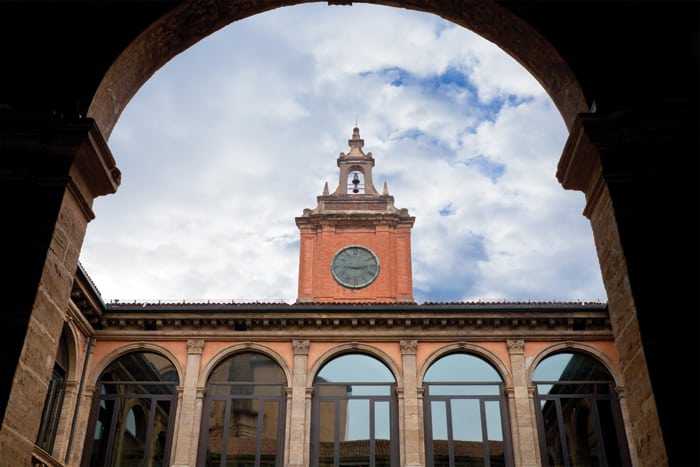
Paradise for women The Archiginnasio of Bologna, which was previously the main building of the University of Bologna, where Laura Bassi was its first female professor. (Courtesy: Shutterstock/vvoe)
During her long and fascinating career, Bassi held numerous professorships and academy memberships, beginning with her appointment as professor of “universal philosophy” at the University of Bologna in December 1732. She subsequently taught experimental physics for the Collegio Montalto (1766–78) – a residential college for scholarship students from the Marches studying for the priesthood in Bologna – and was ultimately awarded the prestigious chair in experimental physics of the Bologna Institute in 1776, in acknowledgment of her outstanding reputation as one of the best physics teachers of her generation. A young Alessandro Volta – later to become inventor of the battery – eagerly sent Bassi his earliest publications, hoping to gain her approval of his work.
A lowly start
Bassi’s celebrity status in adult life belied her relatively modest beginnings. Her father was a lawyer, while her mother Rosa Maria Cesari was often ill. Bassi grew up among her father’s books, and during his frequent visits to the Bassi home to tend to her mother’s ailments, the family physician Gaetano Tacconi noticed that their studious only child seemed to have a lively mind and great facility with Latin. Tacconi encouraged her father Giuseppe to let him tutor her in philosophy – a subject that all doctors learned as part of their medical education. As a result, Bassi received the bulk of her tuition from him at home, including the study of Aristotelian, Galilean and Cartesian physics.
By the time Bassi was a teenager, Tacconi felt ready to let others know about his star pupil, rather like Henry Higgins unveiling Eliza Doolittle in the play Pygmalion. In fact, she went on to succeed beyond his wildest expectations – something that was to become a source of tension between the two of them as the pupil surpassed the master. By the start of 1732, virtually everyone in Bologna knew of her. People crowded into her house to listen to the 20-year-old debate just about every aspect of the history of philosophy and physics with the city’s leading professors and academicians. Indeed, Bologna’s archbishop Prospero Lambertini – who believed in acknowledging talent wherever it might be found – paid a personal visit to assure himself that Bassi was truly all that her admirers reported her to be. His support helped to launch Bassi’s scientific career and in March 1732 she became the first female member of the Academy of Sciences of Bologna Institute, which was equivalent to other recent scientific societies such as the Royal Society. It was the first step towards a spectacularly public life as a female scientist in the Age of Enlightenment.
The institutional recognition that Bassi received made her the emblematic female scientist of her generation
The Bologna Academy, which still exists today, was initially reluctant to make Bassi a precedent for admitting other women. They considered her appointment as an academician to be purely honorific and did not expect her to participate in the ordinary business of the academy. This was also true of Bassi’s university position. Her professorship was created specifically for her, beyond the normal number of faculty positions. Neither appointment was without controversy since there were many young male academics waiting for such opportunities. Funding then, as now, was always tight and some of her older male colleagues – and even at least one other learned woman – considered it indecent for a young woman to be “always in the middle of a meeting of men”, debating the secrets of nature with them. Nonetheless, archbishop Lambertini’s view that women of talent deserved recognition prevailed, although with an explicit injunction that Bassi only lecture occasionally when she was specifically asked by her employers to do so “by reason of sex”. This would, for example, be when a distinguished visitor arrived, or in one of Bologna’s famous public debates on anatomy during carnival time, or on one occasion when a degree was conferred. This restriction was felt to be an important concession to the question of modesty and decency.
Shock tactics
Had Bassi accepted the terms of her position as they were defined in 1732, there would be little more to say about her life and work. From the start, however, she felt that she had been offered an extraordinary opportunity to pursue her intellectual passions and contribute to the betterment of society with her knowledge. Far from being honoured, she was annoyed. Bassi politely but firmly requested that the restrictions on her teaching be lifted. When this request was ignored, she concentrated instead on a programme of additional study designed to increase her value as a scientist. She shocked a number of people by requesting a licence to read books that had been prohibited by the Roman Catholic Church. These included many works by Protestant scientists as well as the writings of Galileo and Descartes, all of which she deemed necessary to her ambitions. Recognizing the limits of her early education, which did not include advanced mathematics, Bassi studied calculus with Gabriele Manfredi. She also apprenticed herself with the city’s professor of experimental physics and chemistry, Jacopo Bartolomeo Beccari. Both were members of the Royal Society and had stellar reputations. This postgraduate education provided her with the skills to contribute substantively to an emerging teaching and research programme of Newtonian physics then under development.
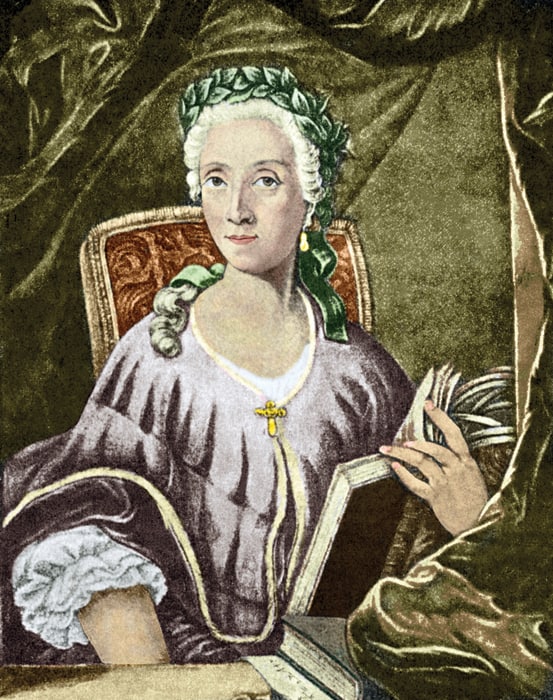
The ‘Lady Professor’ of Bologna Laura Bassi’s official portrait as a university professor, engraved in 1745 – the year in which Pope Benedict XIV made her a member of the elite ‘Benedictines’ of the Academy of Sciences of Bologna Institute. (Courtesy: Sheila Terry/Science Photo Library)
In February 1738 Bassi made another momentous decision. She married the physician and fellow professor Giuseppe Veratti, who would affectionately call her Cara Laurinda. When a friend joked that she must have encountered her future spouse doing Newton’s prism experiments in the dark, following public criticisms by moralists who declared that she was now probing the secrets of nature with her body rather than her mind, Bassi tartly responded in a moving letter that she wrote to the physician Giovanni Bianchi in 1738: “I have chosen a person who walks the same path of learning, and who, from long experience, I was certain would not dissuade me from it.” She was then two months pregnant with the first of their eight children, five of whom survived infancy.
Together, Bassi and Veratti enthusiastically promoted a programme of Newtonian experimental physics in Bologna for almost half a century, supporting each other’s aspirations in a scientific partnership. Their marriage permitted Bassi to regularly invite guests to discuss physics with her without violating the restrictions placed upon her teaching; after all, young unmarried women were at the time expected to behave with utmost propriety and her being often alone with men before her marriage had caused plenty of gossip.
Gradually, their home on Via Barberia filled with instruments necessary for teaching and experimentation. Veratti explored the relationship between medicine, physiology and animal electricity, performing experiments that would inspire a number of younger colleagues including Luigi Galvani, who became famous for his work on reanimating the legs of dissected frogs with an electrical charge. Bassi initially worked on classical problems that made use of her training as a mathematical physicist and went on to publish papers on exceptions to Boyle’s law, mechanics and hydrometry.
Yet she consistently found herself gravitating towards questions that involved her skills as an experimentalist: problems of refraction, the nature of electricity and eventually the composition of air. Had these papers survived, we would know a great deal more about her contributions to each of these subjects. Yet it is nonetheless apparent that she was a great follower of the Newtonian programme of research throughout the 18th century, including the work of Stephen Hales, Benjamin Franklin and Joseph Priestley. She was a scientist determined to keep up with the times in which she lived.
Barred from the club
In 1745 Bassi’s patron Lambertini, by then Pope Benedict XIV (1740–58), decided to rejuvenate the Bologna Academy by creating an elite tier of academicians who would be known as the Benedictines. Those selected for this honour would be paid an annual stipend of 50 lire, with the obligation to present their research annually. When Bassi discovered she was not among the 24 Benedictines, she wrote to Rome to present her credentials for the pope’s consideration. Strategically invoking her exceptionality, Bassi requested that the pope make her the 25th member of this new group. Benedict XIV agreed. But once again, her male colleagues were confronted with the uncomfortable fact of Bassi’s ambition. She still failed to persuade them that she should be given the full privileges of membership, such as voting rights and attendance at meetings. In all other respects, however, Bassi’s colleagues acknowledged her desire to participate fully in the business of advancing scientific knowledge in her native city. They also began to admit more women as honorary members of the Bologna Academy, including Châtelet in 1746 and the Milanese mathematician Maria Gaetana Agnesi in 1748. In an era in which neither the Royal Society of London nor the Paris Academy of Sciences admitted any women, Bologna was indeed a city of scientific women.
Bassi’s passion for physics was, in part, a love affair shared by an entire society that grew up enthralled with the discoveries of the new science
In 1749 Bassi officially opened her “domestic school” at home. Her eight-month course of daily lessons “accompanied by experiments” brought renewed and more lasting fame. Bassi offered far more in-depth instruction than either the university, with its traditional curriculum of natural philosophy, or the Bologna Institute, with its weekly demonstrations of experimental physics. Young men came from all over Italy and as far away as Greece, Spain and Germany to study with her as her skill in combining the theoretical and experimental aspects of physics became well known. Among them was her young cousin Lazzaro Spallanzani, who was so inspired by Bassi’s teaching that he gave up his legal studies to become an experimenter. Spallanzani asked Bassi to participate in his work as a young physics professor, invited her to confirm some of his experiments and dedicated an early publication to his famous cousin whom he affectionately called his “venerable teacher”. Another young colleague encouraged her and Veratti to apply for professorships in Padua when vacancies opened up, hoping they would join him in leaving their native city for this rival institution. They do not seem to have pursued his suggestion, however.
“In our time experimental physics has become such a useful and necessary science,” declared Bassi in 1755, noting with pride that her private lessons had done more to animate this subject than anything either of the institutions that paid her salary – but would not let her teach publicly – had ever done. The Senate of Bologna acknowledged the justice of her observation that she did something that mattered for the greater good. Uncharacteristically, they gave her a pay rise, though on one condition: that she continue her school of experimental physics. At the age of 44, Bassi had finally accomplished her goal of being respected for what she did rather than who she was.
The culmination of this appreciation would be her appointment as the Bologna Institute professor of experimental physics in 1776, two years before her death. Although her elevation was not without the usual grumbling from some – that she always asked for more than was her due – such opposition by then seemed relatively muted. The Bologna academicians, in the end, had learned to live with the century’s most famous female scientist as their colleague for almost 45 years. Veratti took a job as her assistant and together they trained their youngest son Paolo as their successor.
Lasting legacy
Given Bassi’s many scientific endeavours, it is natural to wonder why her contributions are hardly known today. One reason is that only four of her papers appeared in print during or after her lifetime. The Bologna Academy archives do, however, contain a list of 32 research papers that she presented annually between 1746 and 1777, in fulfilment of her duties as a Benedictine. When others asked after Bassi’s death when her papers might appear, Veratti lamented her habit of publishing little, suggesting it was because she expected so much from her work that she had not wanted to rush her ideas into print.
Hall of fame Laura Bassi received many honours in her lifetime, including memberships in many learned academies, scientific papers dedicated to her (such as the one by Lazzaro Spallanzani, bottom right) and even a book of poetry written about her (bottom left). (Courtesy: Biblioteca dell’Archiginnasio)
Sadly, all but one of her unpublished papers disappeared during the disruptions of the Napoleonic era. Yet even without this material, we must conclude that Bassi contributed to the advancement of knowledge primarily through conversation, demonstration, experimentation and explanation. She produced the kinds of incremental results that tend to accrue with far more ordinary research that – although not worthy of a Nobel prize – is essential to the daily pursuit of science. She reminds us of the importance of the kind of person who can reveal dimensions of science other than a singularly great discovery or insight.
Bassi’s passion for physics was, in part, a love affair shared by an entire society that grew up enthralled with the discoveries of the new science. The 18th century ushered in a spectacular world of experiments and instruments that created voids and frictionless worlds, and seemed to channel the very powers of the heavens themselves by generating electricity with machines. Yet Bassi also insisted that to experiment without a proper mathematical and philosophical foundation was to know only half of what one needed to learn to do physics after Newton. Spallanzani, well into his distinguished career as an experimental physiologist, fondly recalled his former mentor several years after her death. “What little I know,” he told Veratti in 1782, “I originally learned from her wise instruction.”
Bassi’s husband and their son Paolo continued the experimental physics course that she had made famous, until constrained finances forced Paolo to sell the instruments in 1818. Well into the 19th century a generation of men could say, as many of them did when asked, “I went to Signora Dottoressa Laura Bassi’s school.” They were all alumni of a singular experiment that produced the only female scientist before the 19th century to have this kind of visible role in the institutionalization of a new scientific discipline. This was due in no small part to Bassi’s tenacious desire to make use of the unheralded opportunity she was given in 1732 when she was celebrated by the entire world as the only woman besides Châtelet to truly understand and explain the science of Newton.
Tracing Laura Bassi today
When Bassi died in February 1778, her colleagues carried her casket in solemn procession to the church of Corpus Domini in Bologna. A marble epitaph created by her husband and four surviving sons can still be seen there today, flanked on its right by the more spectacularly gilded tomb of Luigi Galvani and his wife Lucia Galeazzi. Though the words are faded from centuries of feet marching over this forgotten monument to one of the most interesting female scientists of an earlier era, she has not been entirely ignored. Bassi’s portrait hangs in the University Museum at 33 Via Zamboni, Bologna, where one can also see a 2011 documentary film: Laura Bassi, una vita straordinaria: O de l’aurata luce settemplice, directed by Enza Negroni and produced by Valeria Consolo in consultation with one of the leading Bassi scholars, Marta Cavazza from the University of Bologna, in honour of the 300th anniversary of her birth. Meanwhile, a digital archive created by the Biblioteca Comunale dell’Archiginnasio di Bologna in collaboration with Stanford University Libraries has made her family papers available online (http://bassiveratti.stanford.edu). These are fitting tributes to a fascinating scientist whose contributions have been largely forgotten because she so rarely published.
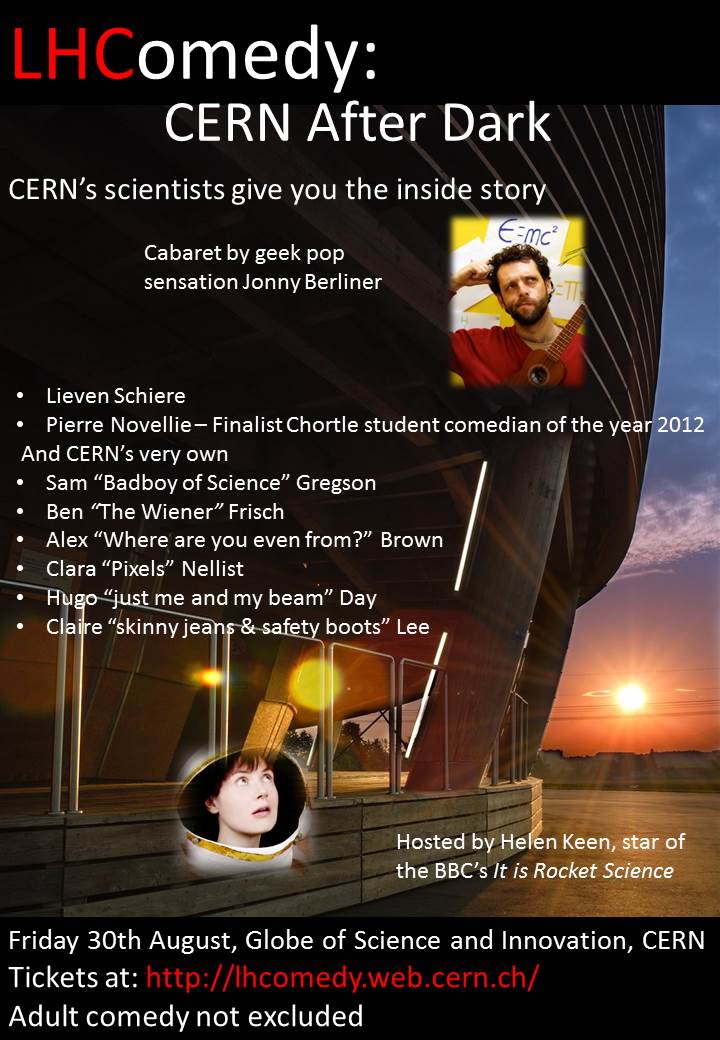
And being funny about physics at CERN’s first ever official stand-up comedy night is likely to be trickier still.
So good luck is what I say to those involved in the LHComedy event, which takes place on Friday 30 August from 7.30 to 11.30 p.m. (Central European Time) at CERN’s Globe of Science and Innovation in Geneva.
Researchers at the Massachusetts Institute of Technology in the US have developed a new way to p-dope graphene that does not sacrifice its excellent electronic properties too much – something that has proved to be a challenge until now. The resulting material could be ideal for making all-graphene integrated circuits on a chip, radio-frequency transistors and nanoelectronic circuit interconnects to name a few examples.
Graphene is a flat sheet of carbon just one atom thick – with the carbon atoms arranged in a honeycombed lattice. Since the material was first isolated in 2004, its unique electronic and mechanical properties – which include extremely high mobility and high strength – have amazed researchers, who say that it could be used in a host of device applications. Indeed, graphene might even replace silicon as the electronic material of choice in the future, according to some. This is because electrons can whizz through graphene at extremely high speeds, behaving like “Dirac” particles with no rest mass – a property that could allow for transistors that are faster than any existing today.
However, unlike the semiconductor silicon, graphene has no gap between its valence and conduction bands. Such a band gap is essential for electronics applications because it allows the flow of electrons in the material to be switched on and off. One way of introducing a band gap into graphene is to chemically dope it, but this has to be done carefully so as not to destroy the material’s unique electronic properties.
Plasma-based surface-functionalization technique
A team led by Mildred Dresselhaus and Tomas Palacios has now succeeded in p-doping graphene with chlorine using a plasma-based surface-functionalization technique. “Compared with other chemical-doping methods, the advantages of our approach are very significant,” says team member Xu Zhang. “First and foremost, the chlorine-doped graphene keeps a high charge mobility of about 1500 cm2/Vs after the doping. This value is impressively high compared with those obtained with other chemical species previously.”
The chlorine can also cover more than 45% of the surface of the graphene sample, he adds. This is the highest surface-coverage area reported for any graphene doping material until now, according to the researchers.
Density-functional theory predicts that a band gap of up to 1.2 eV can be opened up in graphene if both sides of the sample are chlorinated and if the amount of chlorine on each side covers 50% of the total sample area. “The 45.3% coverage in single-sided chlorinated graphene observed in our work is thus important and paves the way to ultimately opening up a sizable band gap in the material while maintaining a reasonably high mobility,” Zhang told physicsworld.com.
In their work, the researchers studied both “exfoliated” graphene and that obtained using chemical-vapour deposition (CVD). They performed the chlorine-plasma treatments in an electron cyclotron resonance reactive ion etcher (ECR/RIE) in which chlorine gas was excited into the plasma state by absorbing energy from an in-phase electromagnetic field at a certain frequency. The chlorine plasma was accelerated by applying a DC bias relative to the sample stage. “We carefully optimized both the ECR power and DC bias to control the reaction conditions,” explains Zhang, “and the experiments were performed at room temperature.”
The p-doped material produced could be used to make all-graphene integrated circuits on a chip and radio-frequency transistors, he adds. Doping the graphene with chlorine also reduces its sheet resistance, making it suitable for use in electronic-circuit interconnects.
The team now plans to dope suspended samples of graphene with chlorine – to access both sides of a sample – and so open up an even bigger electronic band gap.
Researchers in the US have built an atomic clock that is nearly 10 times more stable than the previous best device. This was achieved using two specially built optical-lattice clocks. Time can be measured extremely accurately using atomic clocks, which can have many applications including global positioning and long-baseline interferometry – areas that could be improved with this new device. The researchers’ work could also potentially be used in gravitational-field sensing as well as in testing the true constancy of fundamental constants.
A clock’s stability is how much its speed varies, whereas its accuracy, or uncertainty, is how much that speed can differ from the correct value. No clock can ever be more accurate than it is stable because even if it were perfectly accurate at one instance, it would not stay so. Unlike the more familiar trapped-ion clocks, which use a single ion trapped by electric fields, optical-lattice clocks trap many identical neutral atoms (in this case about 5000) in the standing-wave potential of two counter-propagating laser beams. The frequency of a specially selected atomic transition in these atoms is measured simultaneously using the same laser and is then used as the clock’s reference frequency.
Precise measurements
In principle, optical-lattice clocks can be much more stable than single-ion clocks because much of the fundamental quantum uncertainty limiting the precision of a single-particle measurement can be averaged away, but this stability boost had never been realized before because of frequency fluctuations of the measuring laser. “The level of the effect [of the fluctuations] on the two types of atomic clock is actually, in absolute terms, the same,” says atomic physicist Andrew Ludlow of the National Institute for Standards and Technology in Boulder, Colorado, “but it turns out to be so much worse for these large ensembles of neutral atoms because their fundamental limit can be so much lower than the laser noise.”
In 2011 Ludlow’s team, together with colleagues at East China Normal University in Shanghai, demonstrated a laser that is much less prone to frequency fluctuations. The laser, which was phase-locked to a specially designed Fabry–Perot cavity, could measure electronic transitions extremely precisely but the researchers had only a single atomic clock at the time, giving them no way to measure that clock’s stability.
Record stability
In the new research, the group in Colorado set up two clocks side by side. Both measured the frequency of the same transition in ytterbium atoms trapped in optical lattices but the engineering details of the two clocks were different, ensuring that noise would affect each clock differently. The two clocks were supplied from the same frequency-stabilized laser but the light used to stimulate the electronic transitions in the two optical lattices was modulated separately, thus making the two clocks effectively independent. After seven hours, the researchers found that the times measured by the two clocks differed by just 1.6 parts in 1018 – less than a tenth of a second in the age of the universe.
Having established the stability of the clocks, the team is now studying external influences on their rates. “The last time we did a full evaluation of the clock uncertainty was in 2009,” says Ludlow, “when we showed that the uncertainty was nearly at a level of 1 part in 1016. There were a couple of effects that dominated and we’ve since made some nice measurements that are reducing those uncertainties.” The researchers are now evaluating the remaining uncertainties, in the hope that they can bring the clock’s accuracy down to the level of its stability.
Beyond the lab
Ludlow would also like to make the clock robust enough to be taken out of the lab, which would open up some of the suggested applications of super-accurate clocks. Researchers have suggested that the change in a clock’s ticking rate at different points on the Earth’s surface could measure the local strength of the Earth’s gravitational field to give geological information about the composition of our planet. Other proposals involve putting the clocks in space to look for quantum effects in gravitation.
Helen Margolis, an atomic and laser physicist at the National Physical Laboratory in Teddington, UK, believes that the huge increase in stability marks a significant achievement and shows that any external influences are varying slowly, giving the team a chance to characterize and correct for them. She suspects, however, that the black-body shift caused by the temperature of the surrounding apparatus “will be quite a challenging one to deal with at the 10–18 level”. Modifying the clock for use outside the laboratory will be more challenging, she believes: “I suspect there would be a lot of work still to do before it could be reliably used for those applications.”
The strange story of physicist Paul Frampton could be made into a film.
The story of Paul Frampton is so incredible that it’s hard to believe it really happened. How could anyone have been so foolish and left his family, colleagues and students in the lurch?
In case you don’t remember, Frampton is the 69-year-old British-born US-based theoretical physicist who in early 2012 travelled to Bolivia expecting to meet a 32-year-old woman he’d struck up a correspondence with on the Internet, who claimed to be the Czech-born lingerie model Denise Milani.
But when he arrived in Bolivia, Milani was nowhere to be seen and Frampton was instead met by a man who asked him to take what was supposedly Milani’s suitcase to Buenos Aires, where she would then meet him.
When Milani didn’t show up at Buenos Aires Airport either – and there has been no suggestion that she knew that her identity was being used – Frampton tried to board a plane back to the US but was arrested after airport-security officials discovered 2 kg of cocaine in his checked luggage. Although he insisted the drugs were not his, Frampton was sentenced in November 2012 to 56 months in jail, despite a campaign by physicists to clear his name.
Wave at Saturn collage. (Courtesy: NASA/JPL-Caltech)
On 19 July the Cassini spacecraft turned back to face Earth from its location by Saturn and captured this humbling photo of our planet as a tiny dot behind Saturn’s rings. As part of the event, NASA encouraged people to snap pictures of themselves waving at Venus and to share these via social-media sites. Now, 1400 of these images have been used to create this collage, which includes people from more than 40 countries and 30 US states.
“While Earth is too small in the images Cassini obtained to distinguish any individual human beings, the mission has put together this collage so that we can celebrate all your waving hands, uplifted paws, smiling faces and artwork,” says Linda Spilker, Cassini project scientist at NASA’s Jet Propulsion Laboratory in California.
NASA has, however, released a larger version of the “Wave at Saturn” collage where you can zoom in to make out individual images. It is well worth doing so, as you quickly come across the whole spectrum of gestures from the gentle wave to the Vulcan salute.
The European collaboration PAMELA has published new data concerning a mysterious excess of positrons that permeate outer space. The data, which describe the collaboration’s first detection of absolute rather than relative positron numbers, could help refine theoretical models – including those that explain the excess as a footprint of dark matter.
PAMELA (Payload for Antimatter/Matter Exploration and Light-nuclei Astrophysics) is a satellite that was launched in 2006 by institutions in Germany, Italy, Russia and Sweden to examine the nature of antiparticles in cosmic rays. The first results, published in 2008, revealed a surprising feature: a steady rise in the ratio of positrons to electrons above an energy of about 10 GeV. This is contrary to basic theoretical calculations, which predict that the positron fraction should have decreased.
Theorists have put forward several explanations for the positron excess. The most exciting involves dark matter, an elusive substance that interacts with gravity, but not light and tht is estimated to make up nearly 85% of the total amount of matter in the universe. According to many theoretical models, dark-matter particles can annihilate one another, thereby generating electrons and positrons. At low energies, electrons from other astrophysical sources would easily outnumber these positrons, but with increasing energy such electrons would dwindle, leaving the numbers of electrons and positrons to start balancing out, as PAMELA observed.
Spinning stars
Another explanation is that positrons are being generated in spinning stars known as pulsars. And yet another possibility is that the PAMELA team has misunderstood its experiment. Misinterpretation now seems almost totally unlikely because early last year physicists using NASA’s Fermi Gamma-ray Space Telescope confirmed that they had also detected a rise in the positron fraction at energies of between 20 and 100 GeV. Then in April this year, data from the Alpha Magnetic Spectrometer (AMS) experiment aboard the International Space Station became the third to reveal a positron excess.
The latest PAMELA data, obtained between July 2006 and December 2009, include three times the number of positron events as in the previous sample. Perhaps more importantly, however, the data include absolute numbers of positrons, not just their fraction of the positron and electron total. “If you want to understand the mechanisms that could be associated with the [positron excess], then it is interesting to get the amount of positrons by themselves,” says Mirko Boezio, leader of the PAMELA analysis who is based at the National Institute for Nuclear Physics at Trieste University, Italy.
Measuring absolute numbers of positrons is not easy. Crucially, the measurement requires precise estimations of the number of positrons that are lost because of inefficiencies in detection – unlike a measurement of the relative positron-to-electron number, for which such inefficiencies cancel out. PAMELA is not the first collaboration to make an absolute measurement: it has been performed for several balloon-borne experiments and for the Fermi Gamma-ray Space Telescope. However, the PAMELA measurement is more precise and may, according to Boezio, help theorists rule out competing models.
A shadow over dark matter
Particle theorist Subir Sarkar of the University of Oxford in the UK is glad to see that PAMELA’s latest measurement of the positron fraction so closely matches the recent measurement by AMS. He points out, however, that the relationship between the positron fraction and energy appears to be disfavouring the dark-matter scenario. “An explanation in terms of dark matter is rather contrived as it requires a TeV/c2 mass particle with a hugely enhanced annihilation rate over the usual expectation, [and] which does not produce any antiprotons!” he says.
Sarkar thinks that an astrophysical source of positrons is more likely – but not pulsars. Instead, he believes that cosmic rays might be generating positrons during their interaction with ambient matter in supernova shock waves, which goes on to accelerate the positrons themselves. If so, he says, the ratios of certain nuclei in cosmic rays will be different from expectations, too. For instance, carbon will break up into boron, leading to an enhanced boron-to-carbon ratio at high energies.
Whatever the eventual understanding of the positron excess, though, it is clear that the PAMELA collaboration has given particle theorists a lot to play with. Theorist Marco Cirelli of the Institute of Theoretical Physics at CEA/Saclay, near Paris pays tribute to the results. “They are a great achievement of an experiment and a collaboration that has performed really well, and has delivered really well,” he says.
A dormant NASA space telescope is to be given a new lease of life – to sniff out near-Earth objects that could be on a collision course with our planet. Agency officials have decided to reactivate WISE, the Wide-field Infrared Survey Explorer that was mothballed in 2011 after spending two years studying the universe.
Originally launched in late 2009, WISE’s main aim was to perform an all-sky survey in the infrared using its 40 cm- diameter telescope to uncover newly born stars and brown dwarfs hidden outside our solar system. Before its hydrogen coolant began running low in late 2010, the telescope was also used for four months to search for comets and asteroids that could pose a threat to our planet (dubbed the NEOWISE project). During 2010 WISE observed about 158,000 rocky bodies out of approximately 600,000 known objects. Its discoveries included 21 comets, more than 34,000 asteroids in the main belt between Mars and Jupiter, and 135 near-Earth objects, some of which were potentially hazardous, before finally being put into hibernation in early 2011.
Space rocks
Using WISE in this way was considered such a success that Lindley Johnson, head of NASA’s Near-Earth Objects Program, has decided to reboot the craft. Scientists believe that the quickest way to protect our planet is to dust off WISE and get it up and running again. Indeed, NASA officials state that many of the asteroids that they are spotting are larger than the Chelyabinsk asteroid that made its way across Russian skies in February, injuring 1500 people when its shockwave left debris and shattered glass in its wake.
The infrared telescope will be revived next month to discover and characterize NEOs that are orbiting within 45 million kilometres from Earth’s path around the Sun. NASA anticipates WISE will use its telescope and infrared cameras to discover about 150 previously unknown NEOs and characterize the size, albedo and thermal properties of about 2000 others – including some that could be candidates for the agency’s recently announced asteroid initiative.
“The team is ready and after a quick checkout, we’re going to hit the ground running,” says Amy Mainzer, NEOWISE principal investigator at NASA’s Jet Propulsion Laboratory in Pasadena. “NEOWISE not only gives us a better understanding of the asteroids and comets we study directly, but it will also help us refine our concepts and mission plans for future, space-based near-Earth-object cataloguing missions.”
After it is reactivated, WISE it will only be used until 2017, when it will slip from its 500 km Sun-synchronous orbit. Lindley Johnson estimates that reinstating the craft will cost about $5m per year in running costs. In a report earlier this month, Johnson said that bringing the telescope out of retirement may be possible within his department’s $20m budget, but that it would be much more feasible if the budget were doubled to $40m in 2014, as has been requested by the Obama administration. However, it remains unclear whether the extra funding will be secured. “Given the current budget environment, we need to ensure that we would have the necessary funding available to pay for the reactivation and operations for a long enough time to make it worthwhile,” Johnson told physicsworld.com.