The great physics bake-off

By Matin Durrani

Cakes from the Great Physics Bake Off

And so to the physics department at Bristol University last night, which played host to “The Great Physics Bake Off” organized by PhD students Janina Möreke and Sara Carreira. The aims were simple: to showcase the cake-baking talent of the department, have some fun, and at the same time raise money for IOP for Africa – the scheme run by the Institute of Physics, which publishes Physics World, to boost physics education in some of the poorest countries in the world.

(more…)

Should governments provide funds for the search for extraterrestrial intelligence?

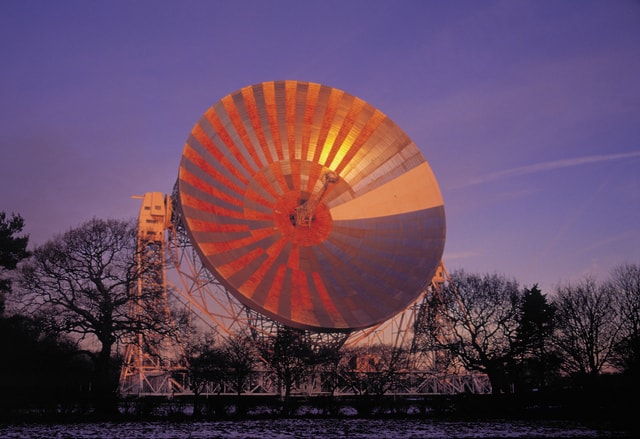
Photo of the Lovell Telescope

By James Dacey

Are we alone in the universe? It’s the age-old question that took on a whole new significance once we had built the tools to transmit and receive radio waves across interstellar distances. With the advent of radio telescopes, we had finally acquired the faculties to listen for the signs of an alien race trying to make contact. The search for extraterrestrial intelligence – better known as SETI – took a giant leap forwards in 1984, when the SETI Institute was founded in California. This institute is the nerve centre of SETI activities and it is funded almost entirely from private sources.

But while SETI activities have been strongly associated with the US, the movement has been international since its outset. Here in the UK, perhaps the most significant contribution has probably been the country’s involvement in Project Phoenix, which between 1998 and 2003 used the 76 m Lovell Telescope (pictured above) at Jodrell Bank Observatory near Manchester.

It seems that the desire among British scientists to search for aliens is still alive and well, as a bunch of academics has recently set up the UK SETI Research Network. The group held its first formal activity last Friday (5 July), during three SETI sessions at this year’s National Astronomy Meeting (NAM2013) at the University of St Andrews in Scotland.

(more…)

Why do some models behave badly?

By Hamish Johnston

In his latest book Models.Behaving.Badly: Why Confusing Illusion With Reality Can Lead to Disaster, on Wall Street and in Life, the physicist-turned-economist Emanuel Derman looks at how a superficial resemblance between the equations of physics and those of economics has led to confusion in the financial industry.

Yesterday, Derman was at the Institute of Physics in London to speak about the differences and similarities between models, theories and intuition. You can watch a video of his presentation above.

(more…)

Telescopic contact lens comes into view

An international team of researchers has built a telescopic contact lens that can switch between normal and magnified vision. Along with refinements and a pair of commercially available liquid-crystal glasses, the system could offer people with retinal problems, such as age-related macular degeneration (AMD), a relatively unobtrusive way to enhance their vision.

AMD is a medical condition that leads to the gradual loss of central vision caused by retinal damage. It is the leading cause of blindness among older adults in the western world. Patients suffer from blurry vision – with particular difficulty in reading and recognizing faces as the disease progresses – although their peripheral vision remains unaffected. Regular contact lenses do not provide any relief because they cannot restore the lost vision merely by correcting the eye’s focus.

Instead, sufferers use other types of devices that magnify incoming light and distribute it to undamaged parts of the retina. Help usually comes in the form of rather bulky spectacle-mounted telescopes or surgical implants within the eye – the latter being an intrusive and expensive procedure.

Unobtrusive aid

To fill the niche between surgery and the bulky mount, optical-engineer Eric Tremblay of the Ecole Polytechnique Fédérale de Lausanne (EPFL) in Switzerland, along with colleagues in the US, has designed and built the first contact lens that incorporates a telescope. Tremblay’s new system uses tightly fitting mirror surfaces to make a telescope that is integrated into a contact lens just over a millimetre thick. The lenses’ arrangement is such that it has two modes. The centre of the lens provides unmagnified vision, while the ring-shaped telescope, which is at the periphery of the regular contact lens, magnifies the view 2.8 times.

“A user can switch between normal and magnified vision…and to do this switching, you would use a pair of off-the-shelf 3D TV glasses that we have modified slightly,” explains Tremblay. He tells physicsworld.com that the polarizing filters within these glasses selectively block light to either section of the lens.

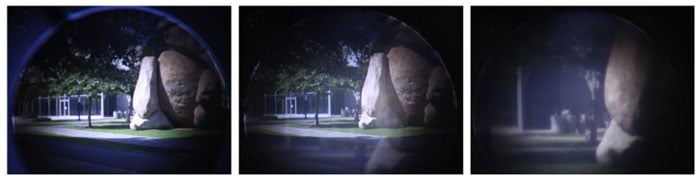
Outdoor images captured through the contact lens and mechanical model eye

After designing the lens, the team built and tested it using both computer-modelling and by creating a life-sized model eye that captured images while the lens was in use. The results showed the magnified image quality to be clear and a substantially larger field-of-view than other magnification techniques was observed. The image above shows both the magnified and normal views. The central image, taken without a filter of any kind, is greatly reduced in contrast.

Day-long wear

Tremblay says that the team is currently making some necessary refinements to the system before it can be used by consumers. “We built our prototype lens using a plastic material called polymethyl methacrylate [PMMA] that is quite robust,” he explains, to allow for some manufacturing aspects. But PMMA is not ideal for contact lenses because it is “gas-impermeable”, making it unsuitable for long-term wear.

“We are now trying to build the lens using standard contact-lens materials that are gas-permeable…these will ensure that the cornea is receiving plenty of oxygen and so can be used safely all day long,” explains Tremblay. Tremblay and the rest of the team are currently working with two companies based in the US – Paragon Vision Sciences and Innovega – that specialize in building contact-lens solutions for visual impairments, to build their new lens. Depending on the results of tests with the newly fabricated lens, Tremblay hopes that clinical trials using the lens could be carried out by the end of this year.

The research is published in Optics Express.

Japanese team sees gamma-ray pulse before lightning flash

Physicists in Japan have made the best study yet of the gamma rays that are produced in the minutes leading up to a lightning flash. In addition, the team also observed for the first time emissions that ended abruptly less than a second before the exact moment the flash occurs. The finding provides important information about the relationship between the mysterious atmospheric accelerators that produce the gamma rays and the lightning that we see in the sky.

Physicists have known for some time that gamma rays are sometimes produced when lightning strikes. Indeed, gamma-ray pulses from thunderclouds that vary in length from sub-millisecond to several minutes have been detected for the last 30 years. Most researchers agree that there are two types of bursts: very short, higher-energy bursts that coincide with lightning; and longer, lower-energy pulses that are sometimes not associated with a specific lightning event. While all of these bursts are thought to be created when charged particles are accelerated by the huge electric fields that build up in a thundercloud, the exact mechanism – or mechanisms – that produce them remains a mystery.

In this latest study, Harufumi Tsuchiya of the RIKEN High-energy Astrophysics Laboratory and colleagues at several other Japanese institutes looked at data collected in 2010 by the Gamma-Ray Observation of Winter THunderclouds (GROWTH) experiment at the Kashiwazaki-Kariwa nuclear power plant. The experiment includes several different gamma-ray detectors that are used in tandem with plastic detectors – the latter ensuring that charged particles such as muons are not mistaken for gamma rays. The system detected gamma rays at energies between 40 keV and 30 MeV.

One stormy night

At about 9:30 p.m. on the evening of 30 December 2010, the team noticed an increase in the rate at which gamma rays were being detected by the experiment. Over the next three minutes the rate increased in a way that is consistent with previous observations of prolonged gamma-ray emissions from thunderclouds. But then in the space of 800 ms, just as a lightning event was recorded by the experiment’s optical detector, the detection rate dropped back to the background level.

Unless it was an incredible coincidence that the burst ended a second before a flash of lightning occurred, it appears that the two events are linked. Indeed, a check of meteorological records shows that there were no other lightning strikes within 5 km of the experiment at around the same time. The team also saw an increase in the average energy of the gamma rays as the pulse evolved with time. For example, an excess of photons with energies greater than 10 MeV only appeared about 2 min into the pulse.

Small acceleration region

As the researchers used several detectors, they were also able to work out where the gamma rays were being produced, finding that photons with energies greater than 10 MeV were created in a region stretching across about 180 m in the thundercloud. This suggests that the gamma rays are produced in a relatively small section of the much larger cloud. Furthermore, the 800 ms delay between the end of the gamma-ray pulse and the lightning flash suggests that the lightning is initiated some distance away from the acceleration – although the process that connects the two is still unknown.

The measurements are described in Physical Review Letters.

Institute of Physics celebrates commercial innovation

By Hamish Johnston

The Institute of Physics (IOP) has bestowed its Innovation Award on five UK-based companies. The IOP, which publishes physicsworld.com, runs the annual award to “celebrate companies that make the most of physics”.

(more…)

Steady leak in the Earth’s plasmasphere found


The presence of a “space wind” in the plasmasphere of the Earth has been detected for the first time, according to a physicist in France. The direct observation of this “plasmaspheric wind” – predicted theoretically more than 20 years ago – has been made by the European Space Agency’s Cluster spacecraft. The phenomenon contributes to the loss of material from our atmosphere and may play a role in regulating the intensity of the Earth’s radiation belts.

The plasmasphere is a region of the Earth’s inner magnetosphere located above the ionosphere that is a torus of dense, ionized gas. Plasmaspheric wind was initially proposed by Joseph Lemaire and Robert Schunk in 1992. The phenomenon is caused by an imbalance in the three forces that act in the plasmasphere: the gravitational attraction of the Earth’s mass, the centrifugal force caused by its rotation, and the pressure exerted by the plasma. The wind results in a steady movement of material out of this region into the upper magnetosphere – calculations showed it to be transporting around 1 kg of plasma every second, at speeds exceeding 5000 km per hour.

Blowing in the wind

As it slowly empties, the plasmasphere is filled by material from the underlying ionosphere. As such, the plasmaspheric wind plays an important role in atmospheric escape. Previously, transport of material out of the plasmasphere had only been observed in extreme conditions, when the Earth’s magnetic field was disrupted by energetic particles coming from the Sun.

Measurements of this elusive space wind were obtained by the Cluster Ion Spectrometry experiment using the highly sensitive instrumentation aboard the four orbiting Cluster II spacecraft. “We now have experimental evidence that the plasmasphere is not in an equilibrium state, even during periods without geomagnetic storms,” says physicist Iannis Dandouras, from the Centre National de la Recherche Scientifique (CNRS) and the University of Toulouse, France. He told physicsworld.com that “The plasmasphere continuously blows out a weak but steady wind, supplying ionized material to the outer magnetosphere.”

Steady flux

A special operating mode for the sensors enabled detection of ions at very low energies. By filtering out noise within the plasma data, Dandouras was able to reveal the steady flux of material away from the Earth. Analyses were made of the ion data across a variety of timeframes and different magnetospheric conditions to confirm that the wind is indeed a persistent phenomenon.

The plasma stored in this orbital region also plays a vital role in controlling the energy balance of the Earth’s radiation belts. It is also responsible for causing delays in the propagation of global-positioning-system signals that pass through the plasmasphere.

“The plasma density in the region of space surrounding the Earth is of considerable interest,” says Tim Yeoman, a physicist at the University of Leicester who was not involved in this study. He explains that the origin of this plasma was traditionally considered in terms of photoionized atmospheric particles escaping along the Earth’s magnetic field, and the transport of ions across the boundary between the terrestrial and solar magnetic fields through magnetic reconnection. “Here, new observational evidence is provided of the transport of ions originating in the inner regions of the Earth’s magnetic field across the magnetic field to the outer magnetosphere – a potentially important new process contributing to the balance between plasma sources and sinks within the Earth’s magnetosphere,” he says.

Other studies of magnetospheric phenomena are already in progress. “Following the recent launch of the Van Allen probes, we now have more satellites flying in the magnetosphere,” Dandouras says, explaining that this will allow a greater range of simultaneous measurements across this region, which may be used for future analysis.

The work is published in Annales Geophysicae.

Laser-cooled Bose–Einstein condensate is a first


The first Bose–Einstein condensate (BEC) to be cooled using just lasers has been made by a team in Austria. The process is much simpler, faster and more efficient than previous methods, which involve an extra stage of evaporative cooling. The scientists hope that their breakthrough will lead to more widespread use of BECs in various areas of physics, including atomic clocks and atom lasers.

A BEC is a dense cluster of atoms cooled so close to absolute zero that all of the atoms are in a single quantum state and can therefore be described by the same wavefunction. The first pure BEC was made in 1995 by Eric Cornell and Carl Wieman at JILA in Boulder, Colorado. Since then, BECs have been used – or proposed for use – to create atom circuits, rotation sensors, atom lasers and other novel devices.

Making a BEC traditionally involves the two-step cooling of a cloud of atoms contained in a magnetic trap. The first step is laser cooling. It involves choosing an electronic transition of the atom to be cooled and irradiating the atom cloud with laser light of an energy slightly below this transition. For the most energetic atoms trying to climb out of the trap, the laser light is blue-shifted to the transition frequency. These atoms can therefore absorb a photon, which pushes them back. It also promotes the atoms into the excited state. When the atom decays back to the ground state, it emits a photon of a higher energy than the one it absorbed. The overall effect is that the gas cools and becomes denser.

Shifting heat around

As the density rises, however, a photon emitted by one atom becomes more likely to be absorbed by another atom. Instead of cooling the gas, this simply moves heat around. Moreover, the atom that absorbs the photon recoils in the opposite direction from the atom that emits it, thus creating a repulsive force between the atoms that stops the gas reaching a sufficiently high density for a BEC.

Researchers then have to resort to evaporative cooling, in which the higher-energy atoms are allowed to leave the trap. The remaining lower-energy atoms comprise a colder ensemble that reaches the required nanokelvin temperatures for a BEC to form. Evaporative cooling, however, is time consuming and about 99% of the atoms are lost during the process.

Achieving all-laser cooling of a BEC has been an important goal for physicists because it would allow condensates to be used in a wider range of applications. Now, Florian Schreck and colleagues at the Institute for Quantum Optics and Quantum Information in Innsbruck, Austria, have used a neat trick to achieve this. Within the initial, shallow, magnetic trap used to create their BEC, the researchers create a small “dimple” in which the trapping potential is higher. Atoms naturally have a higher density in this region and under normal circumstances the higher pressure would result in a higher temperature. A second “transparency” laser beam is focused on the dimple to increase the energy of the cooling transition in that region. This shift makes the dimple transparent to the cooling laser while still allowing the surrounding gas cloud to absorb cooling photons. Heat flows freely from the dimple trap to the laser-cooled gas cloud and this allows the dimple to become dense while staying cold. Ultimately, a BEC forms in the dimple.

“Excellent” work

Jun Ye of JILA describes the research as “excellent”. “Every aspect of their work, if you put it on individual terms, has been investigated in a different context,” he explains. “What the researchaers have done is to combine all these aspects together to achieve something that nobody has ever done before.” Ye, who works on atomic clocks, thinks Schreck’s results could be applied to that field. “We are already thinking about following their approach and exploring the use of condensates in atomic clocks,” he says, something that has been “unrealistic” using traditional methods for producing the condensates.

Schreck, meanwhile, is moving to the University of Amsterdam, where he hopes to produce a continuous atom laser. Atom lasers use the coherent atoms of a BEC to create a beam. The wavelength of the atoms is much smaller than optical photons, which would make such lasers useful for ultra-sensitive holography and inteferometry. Today, atom lasers only work for a short time before the condensate has to be refilled. The cooling system devised by Schreck’s group, however, can produce a continuous condensate, provided the trap is kept supplied with atoms. Schreck says this could lead to “a machine that you switch on once and at the other end there is a beam of condensed atoms coming out”.

The research is published in Physical Review Letters.

Is the fine structure constant affected by gravity?

By Hamish Johnston

If there is one thing our readers like it’s a good story about fundamental constants – and the fine structure constant (α) is always a favourite.

In case you are not familiar with α, it’s a dimensionless quantity (about 1/137) that measures the strength of the electromagnetic interaction. As such, it quantifies how electrons bind within atoms and molecules and therefore can be measured to great precision using spectroscopic techniques. And because atoms can be found just about anywhere between here and the edge of the universe, it’s possible to ask whether α is the same everywhere.

In a paper published this week in Physical Review Letters, an international team of physicists have measured α in the atmosphere of a white-dwarf star – where the gravitational potential is about 30,000 times greater than here on Earth.

(more…)

Xenon forms compound at extreme temperature and pressure

The noble gas xenon reacts with water ice at exceedingly high temperatures and pressures – conditions that are found within the interiors of planets such as Uranus and Neptune. That’s the conclusion of an international team of researchers who used X-ray diffraction and theoretical calculations to determine the crystal structure of the resulting compound, which has a Xe4O12H12 primitive cell. The findings take planetary scientists one step closer to solving the “missing xenon paradox” and could also improve our understanding of xenon’s isotopes.

In the early 1970s researchers noted the surprising lack of xenon in Earth’s atmosphere when compared with the concentration of other noble gases – almost 90% of the expected amount of xenon is missing. However, xenon is found at the expected abundance elsewhere in the solar system – on meteorites, for example. This suggests that the mysteriously missing noble gas is merely hiding somewhere on our planet.

Curiouser and curiouser

A multitude of theories have been purported suggesting that, for example, xenon might have been ejected into space, or be trapped on Earth in the polar caps, or stuck in sediments, deep in oceanic trenches or even within the Earth’s core. But none of the theories could account for all of the missing gas. Further research has also found that both Mars and Jupiter seem to have a similar lack of xenon within their atmospheres.

As a noble gas, xenon is assumed to be non-reactive under normal conditions. But over the years, researchers have tried to make chemical compounds containing xenon at extreme pressures and temperatures similar to those that are found deep within the Earth. In 1997 scientists tried to react xenon with iron under such conditions, but found that no compound was formed. In 2005 Chrystele Sanloup of Pierre and Marie Curie University in Paris, along with colleagues, found that the gas could displace and then substitute silicon in quartz at high temperatures and pressures. However, the researchers also noted that the xenon escapes just as easily from the material. Further work, carried out by another group, found that xenon could also bond to oxygen within quartz, allowing the researchers to synthesize xenon dioxide (XeO2) for the first time.

Extreme measures

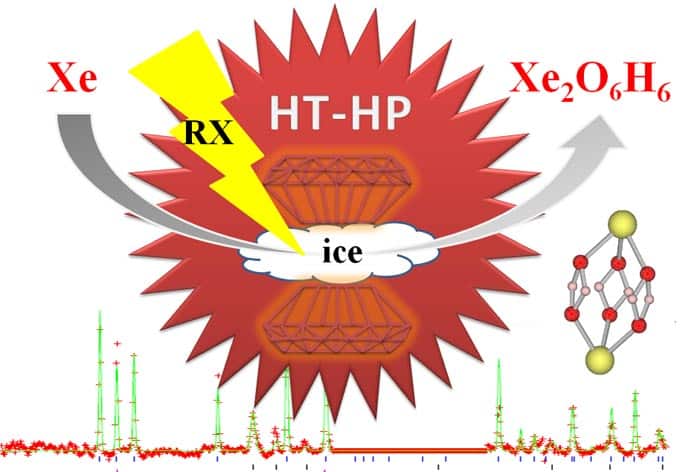
Sanloup (now at the University of Edinburgh) and colleagues in France, the UK and US have now shown that at pressures above 50 GPa and a temperature of 1500 K, xenon reacts with water ice to form Xe4O12H12. Sanloup used a diamond-anvil cell – a device that squeezes a sample between two tiny, gem-grade diamond crystals. This was laser heated to create extreme conditions similar to those in the interior of the “ice-giant” planets Uranus and Neptune. Currently, the atmospheres of Uranus and Neptune have not yet been probed for their xenon concentrations.

An illustration showing the experimental process

Sanloup carried out her experiments on the ID27 beam line of the European Synchrotron Radiation Facility (ESRF) in Grenoble, France. “Once we were above 50 GPa, we could see a reaction systematically taking place and could see a distinct diffraction pattern that suggested a new phase [was formed],” she says. Sanloup went on to tell physicsworld.com that the structure that best describes the new phase is a hexagonal lattice with four xenon atoms per unit cell. However, there were several possible distributions of the oxygen atoms.

Atom build-up

Sanloup then roped in Stanimir Bonev from the Lawrence Livermore National Laboratory in the US to analyse the structure and resolve the location of the oxygen atoms. It was during this analytical work that the team found that none of the solutions with only oxygen worked, so hydrogen was added to “build up” the final Xe4O12H12 structure. “The hydrogen would not have been seen with the X-ray diffraction as it would react too lightly,” explains Sanloup. “But in the future we could use Raman spectroscopy to see it or we could use neutron diffraction instead of X-rays, but for that we would need a much larger sample,” she says. The team suggests that its newly discovered compound has a weakly metallic character and could be formed in superionic ice – a phase of water that is believed to exist at high pressures and temperatures.

Sanloup explains that solving the mystery of the missing xenon is crucial because the relative abundances of radioactive xenon isotopes are widely used by geochemists as a tool to probe major terrestrial processes, such as when the Earth’s atmosphere formed. Naturally occurring xenon has eight stable isotopes and more than 40 unstable isotopes that undergo radioactive decay. Isotope ratios are also used to study the early history of our solar system, including to model planet formation. But most of these calculations assume that xenon is mostly non-reactive. The new findings could alter our knowledge of the xenon isotopes, which in turn would affect our models of planet formation and evolution.

The research is published in Physical Review Letters.

Copyright © 2026 by IOP Publishing Ltd and individual contributors