Between the lines

A young child working with simple electronics

Ingenious ideas

The scene: a grey Saturday in January. The problem: post-holiday blahs. The solution? Well, how about making a clock out of paperclips? Or a combination helicopter and elevator? What about a cannon that shoots carrots, a four-foot-tall set of dominoes or a rocket railroad? The Ultimate Book of Saturday Science contains instructions for all of these projects, plus 67 others, from the ingenious mind of industrial scientist and author Neil A Downie. A few of the experiments, such as the vacuum bazooka, require only common household objects (perhaps supplemented by the local DIY store) and could be built by children with minimal adult help. Most, however, require more specialized components, including motors, power supplies, lenses and chemicals (and that’s just in the first chapter, which is devoted to “simple but subtle” projects). Indeed, many of the book’s experiments are best tackled with the help of a teacher, science-club mentor or family member with access to a half-decent electronics workshop. The rocket railroad, for example, is a fairly complex piece of equipment, and the assembly instructions are probably not detailed enough for children or mechanical novices to follow. Another project, a musical instrument called a Heliracket, is a little simpler, and looks like more fun than a barrelful of puppies – but you’ll need a supply of helium gas, multiple space hoppers and an ocarina (!) to make it. The bottom line is that most of these “Saturday science” experiments are going to require a fair amount of planning on the preceding Thursdays and Fridays. However, those willing to put in the effort will get a real kick out of this book.

  • 2012 Princeton University Press £19.95/$29.95pb 576pp

Ingenious ideas, junior version

For kids who like building stuff, but aren’t yet old enough to whip up their own armour-piercing carrot cannons, Caroline Alliston’s two Technology for Fun books offer a gentler introduction to science experiments. The first book contains 30 “design and make” projects that many primary school children will be able to build on their own, using little more than office supplies, basic woodworking tools and the contents of a recycling bin. A good example is a “zip wire” for teddy bears, which features a pulley made from a wooden skewer, two CDs and the tops of milk bottles. The 14 experiments in the second book are slightly more complex, and require a basic suite of electronic components, including batteries, leads and a couple of different types of motors. If your house’s junk drawer lacks any of these things, the books’ website, www.technologyforfun.co.uk, lists a few companies that can supply parts for projects such as a paddle-powered toy boat and an electric paper-dart launcher. The science behind these contraptions is not explained in much detail, but the books are a good starting point for younger experimentalists.

  • 2012 Alliston Publishing £5.00pb 58pp

Scepticism for beginners

Electroconvulsive therapy sometimes helps people with severe depression, but we don’t know why. There is no evidence that homeopathy works, or that the MMR vaccine causes autism. Most chiropractic treatments do not work either, although for some types of back pain, they may be as good, or bad, as conventional medicine. On the other hand, humans really have walked on the Moon, we really are contributing to climate change, and we really do share a common ancestor with monkeys. These, in brief, are the messages of Darryl Cunningham’s Science Tales: Lies, Hoaxes and Scams, a graphic novel about “controversial” scientific topics that arguably should not be controversial at all. Cunningham’s book is not specifically aimed at children or young adults, but his simple, clear prose and clever illustrations – which mix pen-and-ink cartoons with photographs and reproductions of newspaper headlines – make it particularly well suited as a beginner’s guide to the scientific method.

  • 2012 Myriad Editions £11.99hb 176pp

Fusion goes on tour

Plasma physicist Melanie Windridge spent a lot of time on the road in 2010. As the Institute of Physics’s official Schools and Colleges Lecturer that year, she travelled all over the UK, giving talks about nuclear fusion to students at 35 different schools. She also blogged about her experiences, and these blog entries form the basis of Star Chambers: the Race for Fusion Power. Clearly written and lavishly illustrated, the book combines explanations of fusion physics with brief glimpses of the author’s life on the road, and its 130 pages are speckled with diagrams, photos and data from actual fusion experiments. There is even a “movie” of sorts, thanks to some cleverly placed time-lapse photos. The author’s on-the-scene anecdotes of bad weather and occasional tourist jaunts seem better suited to a regularly updated blog than a static book published two years after the fact. However, if Star Chambers helps bring Windridge’s travelling tokamak tale to a wider audience, this is surely a good thing.

  • 2012 White Label Books £12.00pb 130pp

Welcome back

By Matin Durrani

Hello everybody and welcome back to Physics World after the festive break.

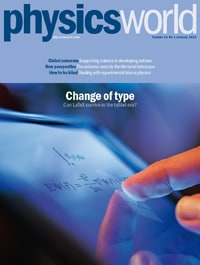
PWJan13cover-200.jpg

If you’ve just got your hands on a brand new tablet device, the first thing you’ll want to do – apart from reading the latest issue of Physics World magazine, of course – is possibly to use it to write your latest scientific paper using every physicist’s favourite typesetting language – LaTeX.

Not so fast!

Unfortunately, making LaTeX function on a tablet device has been no easy task, as software developer Duncan Steele makes clear in a fascinating feature article in the January 2013 issue of Physics World. Thankfully, LaTeX is making the switch to tablets, but it’s not been plain sailing.

If you’re a member of the Institute of Physics, you can access the entire new issue online through the digital version of the magazine by following this link or by downloading the Physics World app onto your iPhone or iPad or Android device, available from the App Store and Google Play, respectively.

If you’re not yet a member, you can join the Institute as an IOPimember for just £15, €20 or $25 a year via this link. Being an IOPimember gives you a full year’s access to Physics World both online and through the apps. It’s the start of the year – so why not join now?

Also in the January issue we look at promoting scientific entrepreneurism in the developing world, explore the new view of the universe as seen by the Herschel Space Observatory, find out how to eradicate experimental bias in science – plus much more besides.

For the record, here’s a rundown of highlights of the issue:

Italy cancels €1bn SuperB colliderMichael Banks examines the repercussions of Italy’s decision to axe a new particle collider that would have produced copious amounts of B mesons

Fuelling innovation in Africa – Joining a team of entrepreneurs and technology-transfer experts in Addis Ababa, Joe Winters asks what role physics has to play in the economic growth of one of the world’s poorest nations

Identity physicsRobert P Crease calls for your new metaphors exploiting the Pauli exclusion principle and Bose–Einstein condensation

The blind physicist – Physicists might not like to admit it, but preconception and bias taint many of their experiments. Brian Clegg explores how this “experimenter bias” manifests itself, and looks at the measures some collaborations are taking to counter its effects

The revolution will be typeset – As the computing world shifts from desktops and laptops to tablet-style devices, one of the most widely used tools in physics – LaTeX – is struggling to follow. Software developer Duncan Steele explains how this typesetting program is now starting to catch up

Cool dust and baby stars – The helium that is cooling its camera is about to run out, but the data from the Herschel Space Observatory, which is designed to study how stars and galaxies form, is likely to keep sub-millimetre wavelength astronomers busy for years to come. Steve Eales explains

Fuelling the thorium dreamJess Gehin reviews Superfuel: Thorium, the Green Energy Source for the Future by Richard Martin

Philosophical about space–timeClarissa Ai Ling Lee reviews Philosophy of Physics: Space and Time by Tim Maudlin

A clean solutionMichael Duncan, John Girkin and Tom McLeish describe how an unusual cross-disciplinary collaboration between Procter & Gamble and Durham University is generating benefits for both sides

Once a physicist – Meet Ted Hsu – member of parliament for Kingston and the Islands, Canada

The carbon-neutral gymMichael de Podesta wonders whether gym-goers could actually make a difference to the environment

Thorium could help alien life emerge

Rocky exoplanets orbiting some Sun-like stars in the Milky Way galaxy could be hotter and more geologically active than Earth and its solar-system companions, according to researchers in the US. The team looked at the abundance of radioactive elements such as thorium, which heat the interior of planets as they decay and thereby play an important role in how planets evolve. The team concluded that planets that are richer in thorium than Earth could be good candidates for the development of life – making them targets for study by astrobiologists and exoplanet hunters.

The research was done by Cayman Unterborn and colleagues at Ohio State University, who used data gathered by the European Southern Observatory’s High Accuracy Radial Velocity Planet Searcher (HARPS) spectrometer in Chile. The team focused on “solar twins”, which are stars that resemble the Sun in terms of their ages, sizes and general make-up. By looking at the abundances of radioactive elements potassium, thorium and uranium within these stars, the team was able to infer the compositions of any rocky exoplanets that may be orbiting the stars. In particular, exoplanets orbiting a star with more thorium than the Sun, for example, would be likely to contain more thorium than the planets in our solar system.

Scattered around the galaxy

Of the eight solar twins studied so far, seven display far higher concentrations of thorium than the Sun. “It all starts with supernovae,” explains Unterborn, who led the study. “The elements created in a supernova determine the materials that are available for new stars and planets to form. The solar twins we studied are scattered around the galaxy, so they all formed from different supernovae. It just so happens that they had more thorium available when they formed than [the Sun] did.”

On terrestrial planets such as Earth, plate tectonics is partially driven by heat produced in the mantle by the decay of radioactive elements. “The core is hot because it started out hot, but the core isn’t our only heat source. A comparable contributor is the slow radioactive decay of elements that were here when the Earth formed,” explains Wendy Panero at Ohio State.

On Earth, most of this heat comes from uranium. However, thorium has a longer half-life than uranium and the potential to produce more energy – and therefore thorium acts as a greater and more prolonged heat source. Planets with higher concentrations of this element would therefore not only be hotter, but would also stay that way for longer – leading to more dynamic and longer-running tectonic activity.

Recycling and replenishing

It is believed that plate tectonics might play an important part in maintaining the presence of water on a planet’s surface – along with recycling and replenishing the other chemicals needed to support basic life. Unterborn and colleagues therefore believe that any planets around these thorium-rich solar twins might be more likely to host alien life than if they were orbiting the Sun. Furthermore, longer-running plate tectonics could also mean that life on such planets would have more time to develop than here on Earth. In addition, the extra heat from the thorium could mean that the habitable zone – the range of planetary orbits in which life could exist – of such stellar systems could be larger than that of our solar system. “If it turns out that these planets are warmer than we previously thought, then we can effectively increase the size of the habitable zone around these stars,” says Unterborn.

“Across the galaxy, it makes sense that natural variation would exist in the amount of radioactive elements inside stars like ours,” comments Kathleen Campbell at the University of Auckland, New Zealand. “It is exciting to think we can remotely estimate the size of a solar system’s habitability zone, with the implication that there could be more opportunities for life to take hold amongst its suite of terrestrial inner rocky planets.” But she also points out that what is unclear from this study, however, “is why [the] longer-lived existence of plate tectonics would necessarily give more time for life to arise, since it arose quite early in Earth’s history. A key seems to be the presence of water, in liquid or solid form”.

Early stage

“At this point, all we can say for sure is that there is some natural variation in the amount of radioactive elements inside stars like [the Sun],” cautions Unterborn, as the results are at the preliminary stage. “With only nine samples including the Sun, we can’t say much about the full extent of that variation throughout the galaxy.” For Unterborn, who presented these results during last week’s meeting of the American Geophysical Union in San Francisco, the research continues. Planned developments include further analysis of the HARPS data to improve the accuracy of the computer models used in this study, as well as searching for more solar twins for comparison.

What’s in store for 2013?

Historians of physics will surely remember 2012 as the year when the Higgs boson – or a particle that looks very much like it – was finally discovered at the Large Hadron Collider (LHC) at CERN. Indeed, it should come as no surprise that the discovery was picked by us as the Physics World Breakthrough of the Year for 2012. The choice was an obvious one – too obvious perhaps – but it was one that we could hardly have overlooked. Yet for anyone who fears that Physics World is obsessed with particle physics – no, we’re not: the rest of our top 10 breakthroughs include everything from optics and astronomy to energy harvesting and the spooky properties of “twisted” light.

But what will happen in the world of physics in 2013? What will be the key discoveries of the year, who will make them and where? The beauty of physics, of course, is that no-one knows for sure. But that hasn’t stopped us here at Physics World from gazing into our (quasi) crystal ball and making our predictions for what we think will happen next year, what might take place – and what definitely won’t. One thing is for sure: we will be here to cover the world of physics next year.

Shut down and calculate

Over at CERN, physicists can expect a busy start to the year as they capture their final data from the LHC – in the form of proton and lead-ion collisions – before the collider enters a scheduled 24-month shutdown, starting on 11 February. Teams of engineers will then begin the lengthy business of fixing about 1000 defective interconnects so that the collider’s magnets can operate closer to their target bending field of 8.3 T, which ought to allow the LHC to collide particles with a total energy of at least 13 TeV starting in 2015.

The down-time in 2013 will give physicists a breather as they comb through the existing LHC data, which has been spewing out at a rate of several gigabytes per second in recent months. You can therefore expect to see a further flurry of papers about the properties of the new boson being written and then immediately dissected on blogs by the likes of Adam Falkowski, Phillip Gibbs, Matt Strassler and Peter Woit. However, we predict that firm signs of supersymmetry – the theory that could unify the weak, strong and electromagnetic forces at energies of about 1016 GeV – will be few and far between in 2013. Sorry, SUSY-lovers.

For those who are interested, CERN has a fascinating dashboard that anyone can view to keep track of the LHC’s current status. Although the collider will be down for most of 2013, we predict further debate among CERN staff in the coming year over when exactly – or even if – the LHC will be able to reach its top design energy of 14 TeV. CMS spokesperson Joe Incandela told Physics World last week that the current plan is “to ramp up to 13 TeV in the next run after the shutdown” but that going higher will be “not so practical” for the experiments. The problem, it seems, is that to get from 13 TeV,to 14 TeV, the magnets would have to be warmed up, cooled down again and then “retrained”, which takes a long time. “I believe that they will stay at 13 TeV at least for an initial meaningful period to allow us to have a decent consistent dataset,” notes Incandela.

Another matter of contention in 2013 will be which particle physicists – if any – will bag the year’s Nobel Prize for Physics

Another matter of contention in 2013 will be which particle physicists – if any – will bag the year’s Nobel Prize for Physics. Nominations for the prestigious award close at the end of January and Peter Higgs is surely a shoo-in for predicting the existence of the particle that bears his name. However, the members of the Royal Swedish Academy of Sciences will have a tough choice deciding which two other people (it can only be two) should share the prize with him. Other theorists? Or some combination of LHC scientists, such as some of the seven who earlier this month shared the new $3m prize from the Russian physicist-turned-entrepreneur Yuri Milner’s Fundamental Physics Prize Foundation?

It is a messy business because, as Higgs himself pointed out in an audio interview with Physics World last year, at least five other theorists – (the late) Robert Brout, François Englert, Gerald Guralnik, Carl Hagen and Tom Kibble – deserve credit for predicting the Higgs boson, and possibly Philip Anderson too. Our prediction is that the Nobel wonks will, after much agonizing, award the prize to Higgs, Englert and Anderson. (Brout, who previously shared the Wolf prize in 2004 with Higgs and Englert, died in 2011.) But with the Nobel-prize pot having shrunk by 20% this year to about $1.1m, Milner’s new $3m is likely to take even more of a centre stage next year.

Looking to the heavens

Away from particle physics, there are some interesting astronomy and space-science missions set for launch in 2013. They include China’s first ever lunar rover – Chang’e 3 – as well as a NASA mission (LADEE) to gather information about the Moon’s surface and its dust, which could be useful data for anyone planning to set up a lunar base. NASA will also launch one craft (MAVEN) for studying the Martian atmosphere and another (ISIS – postponed from 2012) for probing the corona and solar wind.

Not to be outdone, the European Space Agency (ESA) has its own launch programme, which includes the Sentinel-1 Earth-observation craft, its Gaia star-cataloguing mission, and a constellation of three satellites in different polar orbits, known as Swarm, to monitor the Earth’s magnetic field (also held over from 2012). Continuing the US’s shift towards commercial space transport in the wake of the retirement of its space-shuttle programme, 2013 should also see two further missions to the International Space Station from SpaceX and a demonstration flight by the Orbital Sciences Corporation of its Cygnus spacecraft, which will also aim to reach the ISS.

Over in cosmology, 2013 will be the year when bucketloads of new data about the early universe emerge from ESA’s Planck mission, with the start of April seeing a major meeting in the Netherlands at which researchers will take an in-depth look at its initial scientific results. These scientists will be able to get their hands on “temperature maps” of the whole sky at nine different frequencies, which will reveal more details of the anisotropies of the cosmic microwave background. The maps will also provide fascinating new information about everything from the Milky Way to the energy “kick” given to CMB photons passing through the hot gases of large galaxy clusters – what is known as the Sunyaev–Zel’dovich effect. And for all you amateur astronomers out there, keep an eye out for next November, when a newly discovered “supercomet” called ISON, some 15 times brighter than the Moon, could cross the night sky in spectacular fashion.

Small is beautiful

But next year, as always, most physicists will do work that is much smaller in scale and, dare one say, be more practical and relevant to the real world than anything in astronomy, particle physics and cosmology. Unfortunately, it is always harder to say what the breakthroughs in such fields will be, but you can certainly expect plenty of eye-popping advances in metamaterials, graphene, cold-atom research and quantum communication and computation, to name but four.

Tight science funding will continue to weigh heavily on physicists’ minds in 2013, as it does every year. In tough economic times, some countries will come to the narrow-minded conclusion that investing in science is a luxury they can ill avoid and scientists in these nations will have a job on their hands persuading politicians to defend their corner. But strong funding for science is, in fact, an essential tool in boosting growth, with Germany, for example, having recently decided to increase its science budget in 2013 by 6%.

And although not everything has plain sailing in the US for funding in recent times, America has been fortunate in having Steven Chu – a physicist and a Nobel laureate to boot – making a strong case for science as President Obama’s energy secretary for the last four years. But serving for so long as head of the US Department of Energy is a tough gig and we predict that Chu, 64, will find the attraction of his cold-atom lab bench simply too hard to resist. A reshuffle of other top science jobs is likely too as Obama picks his new administration.

And with money – or the lack of it – to the fore, you can be sure that some physicists will continue in 2013 to press for fundamental changes to how scientific journals are published. Many researchers cannot see any justification for why they have to pay for the privilege of reading journals containing papers they have written, done the research for and peer reviewed. The coming year will therefore see a further push for “open access”, whereby papers appear in free-to-read repositories or in journals that have no subscription fees.

Unfortunately, the transition to open access will not be easy, not least because the traditional peer-reviewed journal paper is the “unit of currency” for a successful scientific career and has served the sciences so well for hundreds of years as a powerful means of communication. Moreover, running journals is an expensive and time-consuming business – managing the peer-review process, running IT systems and making papers findable does not come cheap – and these costs have to be met from somewhere.

We can therefore expect to see journals publishers busily devising new strategies that can let their publications, which after all often act as a nucleus for the development of new fields, survive in this changing environment. Learned-society publishers such as IOP Publishing, which publishes Physics World, will be hoping that such strategies succeed, not least because the profits they make go directly back into supporting the efforts of the scientific community.

Time for celebration

As for notable scientific anniversaries, physicists will in 2013 be able to celebrate the centenary of Niels Bohr’s simple model of the atom, which used quantum ideas to predict the frequencies of light emitted by excited hydrogen – something that was impossible with classical physics alone. The coming year also marks the 100th anniversary of Lawrence Bragg’s publication of his eponymous law concerning X-ray diffraction from crystals, as well as the centenary of Robert Millikan’s measurement of the charge on the electron, Frederick Soddy’s coining of the term “isotope”, and Hans Geiger’s realization of the link between atomic number and nuclear charge.

Closer to home, 2013 marks Physics World‘s own 25th anniversary. We will be celebrating with a special issue of the magazine in October, along with some other initiatives throughout the year, so watch this space for more details of our year-long celebrations. And in addition to the regular monthly edition of Physics World, which is available free to all members of the Institute of Physics, we will also be publishing a series of five focus issues on optics and lasers (April), nanotechnology (June), vacuum technology (August), big science (October) and medical imaging (December), as well as a special report on physics in South Korea (September).

And, as always, this website will offer our regular coverage of the latest physics research, selected features from our magazine, as well as our quarterly books podcasts and video reports from the world’s leading physicists and physics labs. So, whatever 2013 has in store for physics – and hopefully no more cringeworthy Gangnam-style spoof Higgs videos – keep coming back to stay up to date. In the meantime, we wish you all the best for 2013 – and see you in the new year.

  • Happy with our predictions? Annoyed at something we missed? Tell us what you think by commenting below.


Season's greetings

By Hamish Johnston

Photograph of NGC 5189


A giant and brightly coloured ribbon in space. (Courtesy: NASA/ESA Hubble)


It’s a bleak mid-winter day here in Bristol – dark clouds are racing across the sky and the rain is pouring down. That can only mean one thing…it’s Christmas!

Things are winding down at Physics World and we are all looking forward to a well-earned break. But don’t fret, there’s plenty here to keep you amused over the holiday season – including this fantastic image from the Hubble Space Telescope of the planetary nebula NGC 5189. This has been chosen by the Hubble team as its Christmas image because “the intricate structure of the stellar eruption looks like a giant and brightly coloured ribbon in space”.

Here on Earth, groups of physicists across the globe are celebrating their inclusion in Physics World‘s Top 10 breakthroughs of 2012. This year’s top slot is shared by the ATLAS and CMS collaborations at CERN for their discovery of a Higgs-like particle at the Large Hadron Collider. You can read about the Higgs and the rest of our top 10 choices here.

Christmas is a great time to settle into your favourite chair with a good book. To inspire your holiday reading, we’ve put together a podcast in which Physics World editors discuss the merits of our Book of the Year and several shortlisted titles.

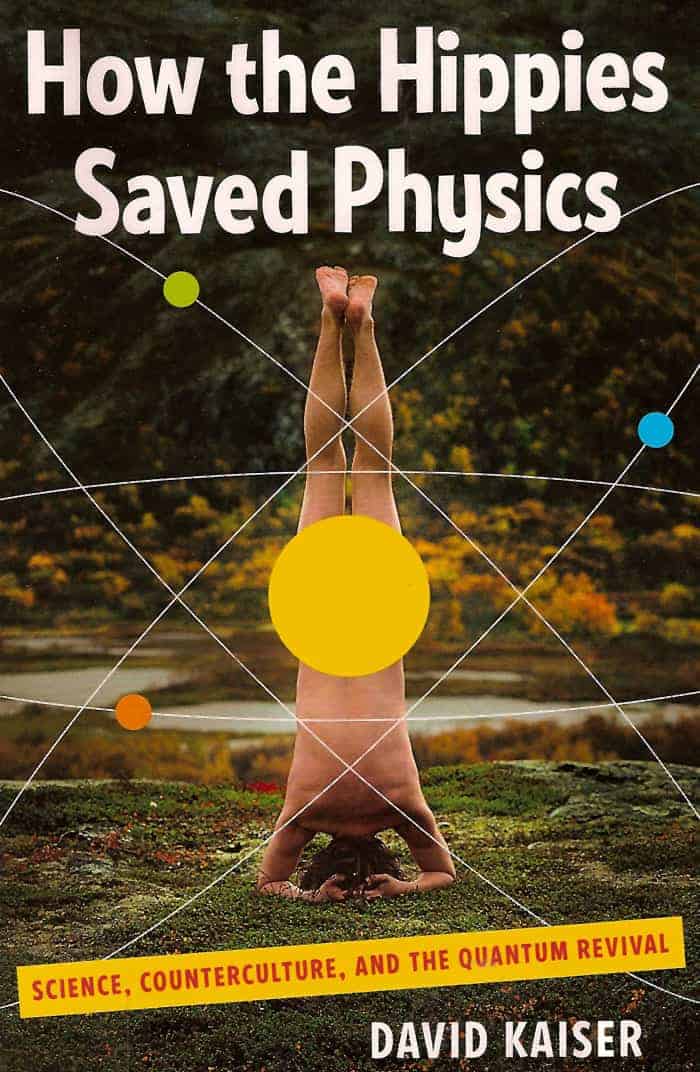
Our choice of Book of the Year is How the Hippies Saved Physics by David Kaiser, who tells the story of a group of physicists who in the 1960s and 1970s shared an interest in quantum weirdness and psychedelic drugs.

As a loyal reader, you can test your knowledge of this year’s physics events as reported in Physics World by taking our online quiz.

You can also enjoy a selection of the most stunning pictures of 2012, our favourite multimedia productions and a collection of quirky blog entries.

Finally, our prescient leader Matin Durrani has peered into his quasicrystal ball to share his predictions for 2013 with one and all.

See you all in the new year, and thanks for your dedicated interest throughout 2012.

Our favourite pictures of 2012


GRAIL mission peers beneath the Moon’s fractured surface

This kaleidoscopic image is the first ever high-resolution map of the Moon’s internal gravitational field, as created by NASA’s Gravity Recovery and Interior Laboratory (GRAIL). Launched in September 2011 from Cape Canaveral in the US, the $495m mission consists of twin spacecraft named Ebb and Flow. This image shows the variations in the lunar gravity field measured during the primary mapping mission from March to May 2012. As well as revealing surface structures that had previously never been seen, GRAIL’s new data show that the lunar crust is less dense and more fractured by massive impacts than had been thought.

Levitating drops controlled by fridge magnets

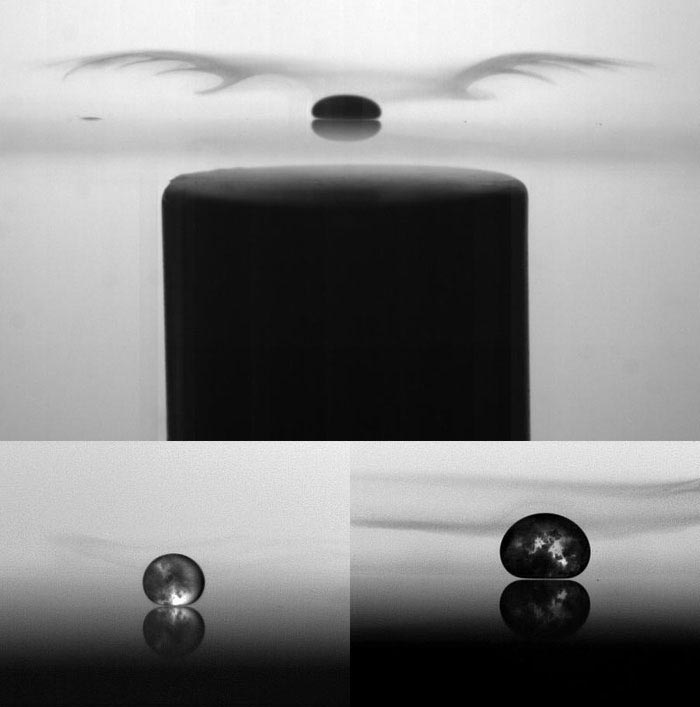
If you are wondering what the ethereal image above is showing, you are in fact looking at levitating drops of liquid oxygen, known as “Leidenfrost drops”, floating above glass plates at room temperature. The Leidenfrost effect is seen when a liquid comes into contact with a surface that is at a significantly higher temperature than the liquid’s boiling point, producing an insulating layer of vapour that keeps the drop from evaporating rapidly. The images are part of a study where researchers show that it is possible to control a paramagnetic liquid drop using a magnetic field. The top image shows the magnet below the glass plate and a “cloud” above the liquid-oxygen drop, which is at –183 °C. Water vapour in the air around the drop condenses, forming these clouds that sometimes reveal the ambient air flows. The haze seen within the close-up drop images (below) is caused by ice crystals.

Artificial jellyfish engineered from rat heart cells

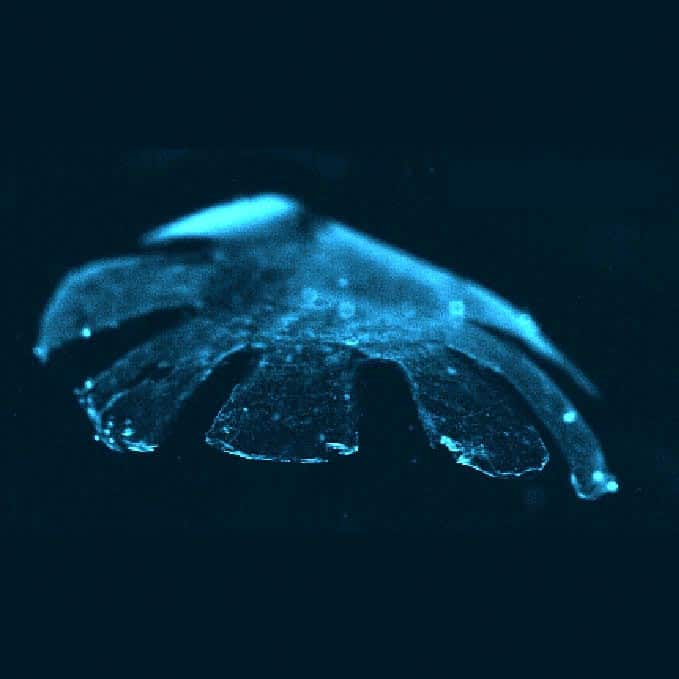
This vivid enhanced-colour image shows an artificial tissue-engineered jellyfish “swimming” in a container of ocean-like saltwater. Dubbed “Medusoid”, the bioengineered creature was fashioned from silicone rubber and powered by lab-grown rat heart tissue and swims just like its living analogue by pumping water in and out of its dome-shaped body in rhythmic pulses. Less than a centimetre in diameter when flat, Medusoid uses rat cardiac cells that were activated with a jolt of electricity to provide the “power stroke” and was built to resemble a juvenile moon jellyfish (Aurelia aurita). It possesses eight armlike appendages that bend to give it a characteristic dome shape when it surges forward.

Living tissue is laced with electronic sensors

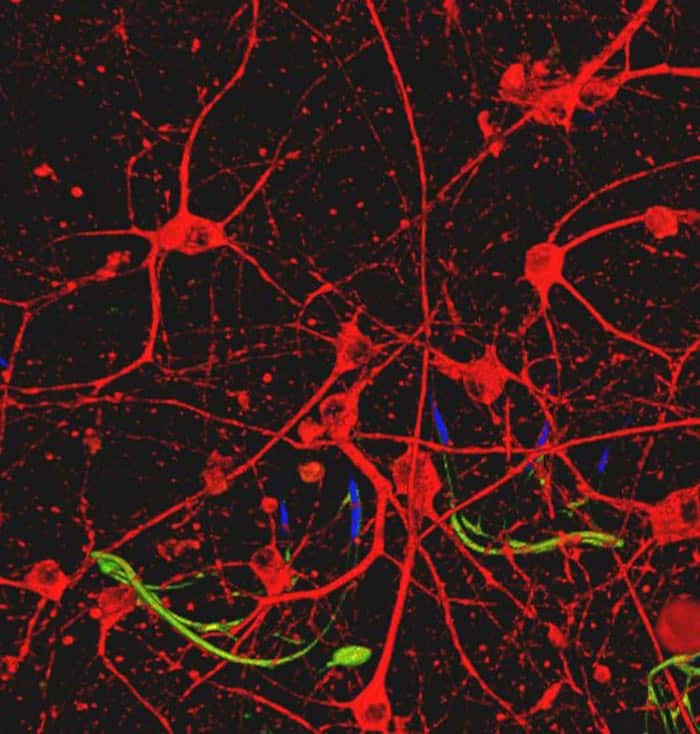
While at first glance the image above might remind you of a Jackson Pollock painting, it is in fact a reconstructed 3D image showing a network of nanosensors, depicted in blue and green, lying alongside neurons, embedded in a tissue culture of rat hippocampal neurons. The picture is the result of work carried out by researchers at Harvard University, who teamed up with tissue engineers at the Massachusetts Institute of Technology and Boston Children’s Hospital to develop a better way of integrating tissue and electronics. Instead of using traditional electrode-based detectors – which deliver weaker signals when they are made smaller – the team opted for silicon field-effect transistors (FETs)as detectors. FET sensors can be extremely small – in this case made from 30 nm-diameter nanowires – and still give accurate readings.

Getting to the froth of the matter

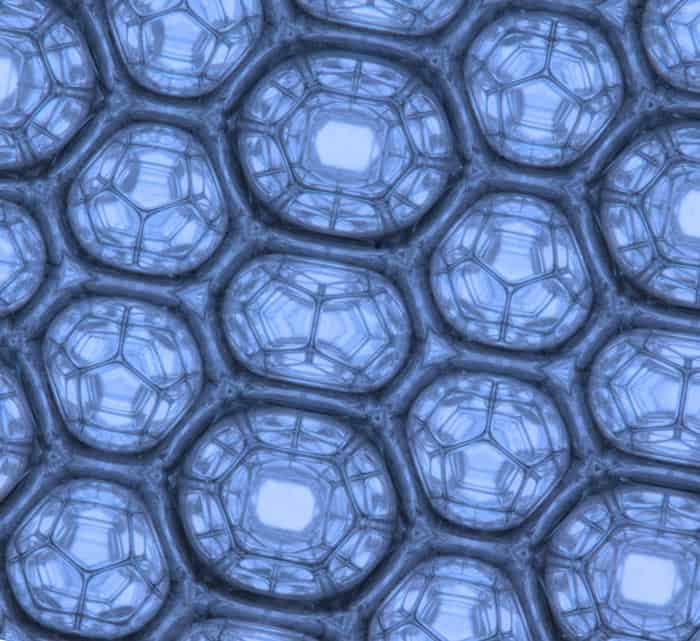
Whether it is the frothy milk on your cappuccino, the soapy suds in your bath or the large-scale structure of the universe, foam has intrigued physicists for many years. The foam in the image above might have been made using everyday Fairy Liquid detergent, but it is also the first-ever example of a “Weaire–Phelanfoam”, which physicists believe is the lowest energy structure for a foam formed of equal-volume bubbles. This foam is a complex 3D structure of two kinds of equal-volume polyhedral bubbles, and is 0.3% lower in energy than a Kelvin foam. It is created by placing a special template in a simple solution of water and Fairy Liquid, with bubbles introduced by releasing nitrogen gas from a glass capillary. The resulting foam was backlit and photographed using a digital SLR camera.

My life on Mars

In December 2011 PhD student Ashley Dale spent two weeks in the Utah desert as part of a simulated Mars mission. He gave Physics World a riveting account of his two-week stay at the Mars Desert Research Station (MDRS), a facility dedicated to developing and testing field tactics and protocols for a human expedition to Mars. His trip saw him do everything from riding on quad bikes to eating dehydrated food. The mission also aimed to study the potential psychological effects of travelling to Mars. The picture above was taken on site by Dale.

New metamaterial switches handedness on demand

A new metamaterial with a handendness, or “chirality”, that can be switched on demand was created by an international team of physicists. Operating in the terahertz region of the electromagnetic spectrum, the material can be used to manipulate the polarization of terahertz waves. The scanning electron microscope (SEM) image to the left shows the metamaterial, which is an array of V-shaped resonators. The white scale bar is 25 μm. The SEM image to the right shows one of the resonators and the scale bar is 10 μm. The pink, blue and orange structures are made of gold, while the green structures are silicon.

Dirac seen in a new light

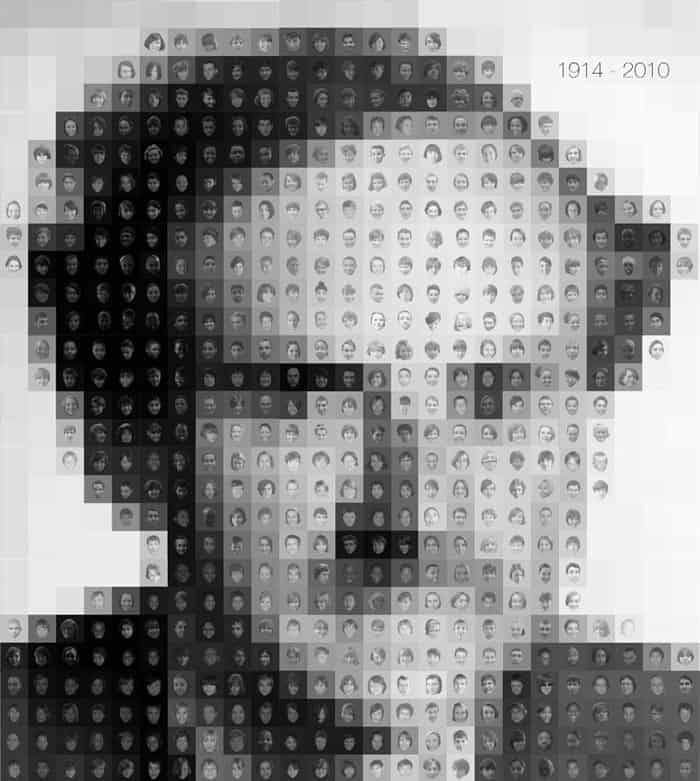
You might need to scrunch up your eyes and lean away from your keyboard, but the image above is the face of one of the great theoretical physicists of the 20th century – Paul Dirac. Dirac studied for two separate degrees in engineering and mathematics at the University of Bristol – the city where Physics World is based – and before that was a pupil at Merchant Venturers’ Technical College – an institution that was the forerunner of today’s Cotham School. Created by Eric Hardy, the work is an alternative version of the traditional end-of-year school photograph, where each pixel has been replaced by photos of pupils, teachers and other members of staff at Cotham School. The original artwork, which is printed on a canvas about 100 × 90 cm in size, was on display at the school in May when its other great former pupil – the University of Edinburgh theorist Peter Higgs – paid a visit.

Spooky action with twisted beams

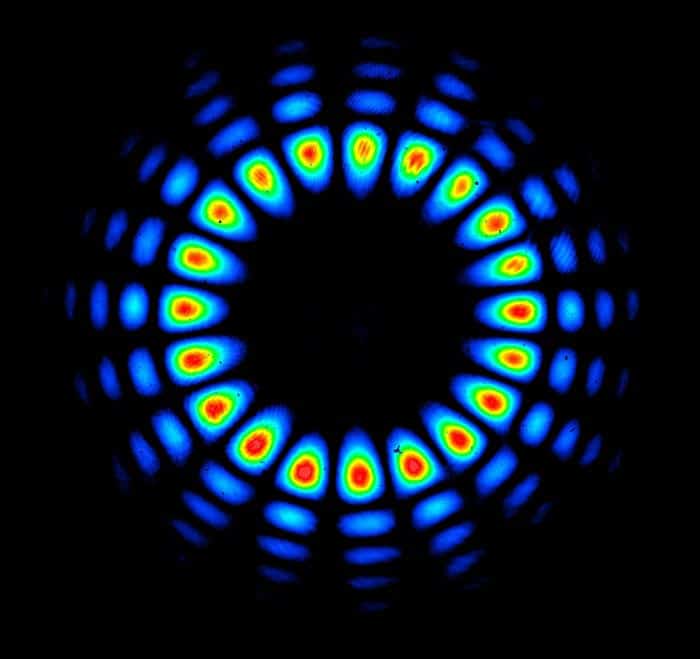
This rather vivid Pointillist-style image depicts a feat of quantum physics, showing 20 photons entangled using their “orbital angular momentum”. It was created by researchers based in Austria, who say that the large amount of orbital momentum they have imparted to the photons paves the way for the entanglement of macroscopic objects. Giving photons orbital angular momentum means twisting a beam’s wavefront so that, as the beam travels forward, its wavefront rotates around the propagation axis. The false-colour image shows a laser beam exhibiting a superposition of 10 right-handed and 10 left-handed quanta of orbital angular momenta, making 20 bright spots on the inner ring. This research was also featured as one of our top 10 breakthroughs of 2012.

Fossilized raindrops dampen theory of ancient warming

This image of a meerkat looming over a specimen of fossilized raindrops made us smile. The animal is perched on top of rocks bearing the fossil impressions of raindrops that fell in South Africa 2.7 billion years ago and that were used by researchers in the US to work out what the air pressure on Earth was billions of years ago. By analysing the shapes and sizes of raindrop imprints in volcanic ash, the team has shown that the atmospheric pressure in the Archaean eon was roughly the same as it is today. This is at odds with a popular theory of how the Earth stayed warm enough for life to exist at the time.

DNA tiles pave the way

This image may look like a collection of novelty spaghetti shapes but these detailed figures are in fact made from assemblies of DNA strands, as imaged by an atomic force microscope (AFM). The pioneering method, developed at Harvard University in the US, is used for engineering complex nanoscale structures from a set of DNA “tiles”. The canvas above shows AFM images of 100 distinct shapes, including the capital letters of the Latin alphabet, emoticons and astrological symbols, with each shape taking just one hour to produce. These images have been enlarged and their real sizes are 150 nm × 150 nm. This set of tiles costs roughly £4500, but the researchers estimate that it could make 2 × 1093 possible shapes.

Stamping across the solar system

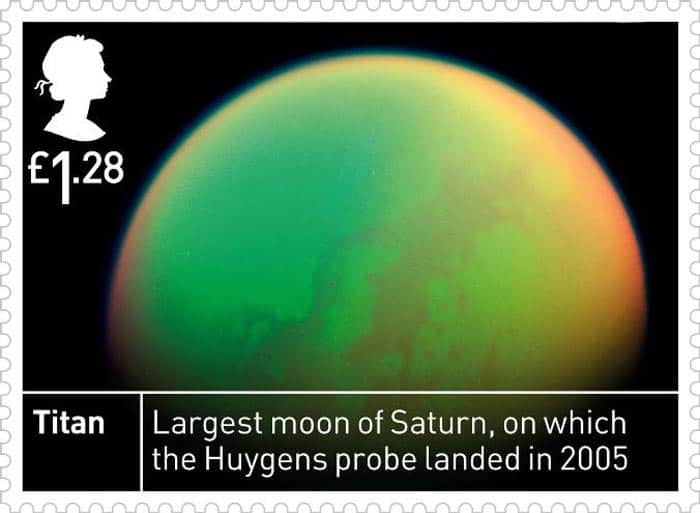
In October this year, the UK’s Royal Mail issued a set of six special stamps to celebrate the 50th anniversary of Britain’s first satellite – Ariel 1 – that was launched on 26 April 1962. All six images were taken from missions conducted by the European Space Agency (ESA) and include the cavernous craters of Mars, the dizzying rings of Saturn, a close-up image of the Sun and a filament, a green-tinged picture of Titan – Saturn’s largest moon, the Lutetia asteroid and a shimmery picture of the south pole of Venus. You can buy the set at the Royal Mail website.

Best of the blog 2012

By Michael Banks

From determining the “equation of state” of a ponytail to a zombie film shot at CERN, the world of physics has had its fair share of bizarre stories this year. Here is our pick of the best from the physicsworld.com blog.

Physicists ponder flowering masonry


Efflorescence on a masonry wall (Courtesy: Mattes)

One thing you can say about most houses is that they are solid – built from bricks or cement blocks. But there is a downside to such solid construction. Masonry – and older bricks in particular – tend to suck-up moisture from the ground. One symptom of rising damp is efflorescence (or “flowering out”), which refers to crystals of salts that grow out from the surface of masonry as the damp evaporates into the air. However, rather than emerging as a uniform coating of salt, the crystals tend to appear in clumps – but exactly why remained a mystery. That was until February when Marc Prat and colleagues at the University of Toulouse, France, performed experiments and computer simulations suggesting that salt flowers form where “efficient pathways” emerge at the surface. Once a crystal is established on the surface, its presence increases the flow of water through that particular pathway, further depriving surrounding less-efficient pathways of liquid. The result is regions with large crystals, and other regions with no salt. Mystery solved.

Fringe science

Physicists in the UK took the whole concept of “fringe science” to a new level in February by studying that hairstyle of choice for men and women of a certain disposition – the ponytail. Raymond Goldstein of the University of Cambridge, Robin Ball of the University of Warwick and Patrick Warren from shampoo-maker Unilever claim that the shape of a ponytail is defined by a competition between gravity, the elasticity of individual hairs and their mutual interactions (Phys. Rev. Lett. 108 078101). And because a ponytail can contain as many as 100,000 hairs, the problem is best addressed using statistical physics. The researchers even derived an “equation of state” for a ponytail that includes what they dub a “Rapunzel number” – a dimensionless measure of ponytail length. The equation was then used to predict how the shape of a ponytail varies with length, with a real ponytail requiring an additional term that reflects hair getting frizzier as it grows longer.

Unravelling the physics of curling

spring.jpg

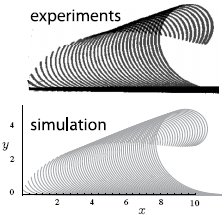
The physics of hair didn’t stop there. In May Andrew Callan-Jones of the University of Montpellier, France, and colleagues at the University of Paris made a theoretical and experimental study of how things such as hair, plant tendrils and even red blood cells curl and uncurl. Despite these processes being all around us, it turns out that physicists have a relatively poor understanding of the dynamics of curling. Callan-Jones and colleagues studied how a steel strip curls by taking images – at a rate of 7000 frames per second – as it does so. The behaviour was successfully described by a mathematical model created by the team and then incorporated into a computer simulation. The researchers even applied their new-found knowledge of curling to the bursting of red blood cells – which is caused by certain nasty bacteria and involves the curling back of the cell membrane.

The graphene name game

University of Exeter researchers


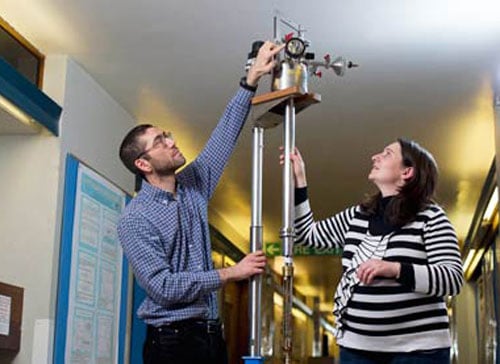
University of Exeter researchers Saverio Russo and Monica Craciun.
(Courtesy: University of Exeter)

A day rarely goes by here at physicsworld.com HQ when the word graphene is not mentioned; after all, it is the “wonder material”, with a seemingly endless list of bizarre properties and a plethora of potential applications. But it seems that researchers at the University of Exeter in the UK ran out of suitable, and indeed imaginative, names when describing their new graphene-based material. In May the researchers, led by physicist Monica Craciun, claimed to have created the most transparent, lightweight and flexible version of graphene yet by sandwiching molecules of ferric chloride between two layers of graphene (Adv. Mat. 10.1002/adma.201200489). So what did they call their exciting new material? Behold “GraphExeter”. “[The name] clearly delivers two key messages: the material is based on graphene and it was synthesized and characterized at Exeter,” Craciun told physicsworld.com. She also rejected suggestions from “some Internet blogs” for the slimmed-down “GraphEx”.

A ringing endorsement

Olympicene


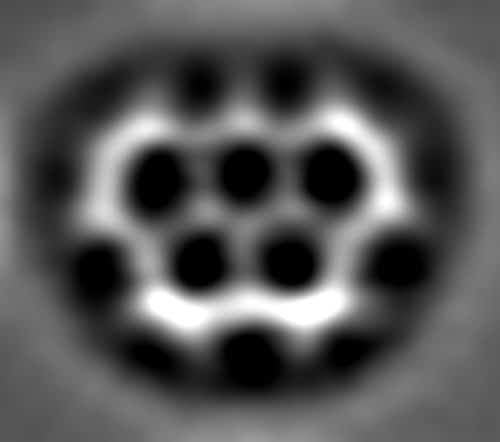
In what seemed like an impeccably well timed research finding, researchers at the Royal Society of Chemistry, the University of Warwick in the UK and IBM Research in Zurich released an image in late May of a new molecule they had synthesized that had an uncanny likeness to the five rings reminiscent of an event that happened in London this summer (no prizes for guessing which one). Given the resemblance, the press were all over it: “Scientists create smallest ever version of Olympics logo” screamed a headline in the Daily Mail. However, the team, led by David Fox from Warwick, had already synthesized the compound, which is dubbed Olympicene and has the chemical formula C19H12, back in 2011. What the researchers did that was new was to make an image of Olympicene with the help of an atomic force microscope at the IBM labs. The researchers are still yet to hear from the International Olympic Committee given how protective they can be of their image rights.

The lightest material in the world

aerographite


(Courtesy: TUHH)

In July two teams of researchers from Kiel University and Hamburg University of Technology, both in Germany, fabricated a material they claim to be the lightest in the world. Dubbed Aerographite, it is a 3D network of porous carbon nanotubes and weighs only 0.2 mg per cubic centimetre, making it 75 times lighter than Styrofoam. Most lightweight materials can easily be compressed but become weak when exposed to large amounts of stress. Aerographite, however, actually becomes stronger. Aerographite weighs four times less than the hitherto lightest material in the world – a nickel material that was revealed only six months ago. The researchers say that aerographite could have innumerable applications – it could be used to make lightweight lithium-ion batteries, to build satellites and even in water-purification systems.

Giving physics some soul

It seems that Fermilab physicist Dan Hooper finally hit the big time this year. Not for his latest theory on the Higgs boson or dark matter but rather through his involvement in a band called the Congregation. Guitarist Hooper formed the band around three years ago and it now consists of a drummer, bassist, singer, hornist and keyboard player. On 9 August the 1960s-style soul band opened a joint gig by US rock bands Garbage and the Flaming Lips in Madison, Wisconsin. Not resting on their laurels, band members released a new album in September. Hooper, who goes by the stage name Charlie Wayne and also writes the band’s lyrics, says that they steer clear of anything physics-related as well as any rock-band antics. “We don’t do a lot of smashing guitars and such anymore,” Hooper told physicsworld.com.

Zombies in the machine

A group of PhD students have made a feature-length zombie film at the CERN particle-physics lab. Called Decay, the 75 min film follows a group of students – played by actual physicists – who are desperately trying to escape the lab while being pursued by a bunch of bloodthirsty maintenance workers who have turned into zombies after exposure to the newly discovered Higgs boson. Writer and director Luke Thompson, a PhD student at the University of Manchester in the UK, came up with the idea back in 2010. Armed with a budget of just £2000 of his own cash but with no previous experience in film-making, he assembled a cast and crew of 20 who have spent the past two years filming in basement level tunnels at CERN, which he says have a “dark, creepy atmosphere”. The film has not been authorized or endorsed by CERN, but Thompson says the lab has a “relaxed attitude” towards the project, seeing the “fun side of it”.

Take a chance on Turing

Alan Turing Monopoly board


(Courtesy: Bletchley Park/Winning Moves)

And finally, for those of you looking for a last-minute Christmas present, how about the Alan Turing Monopoly board? Centred around the life of the mathematician and computer scientist who played a key role at the UK government’s Bletchley Park estate in deciphering German army messages during the Second World War, Alan Turing Monopoly costs a bargain £29.99. The new board is based on one housed in the Bletchley Park Museum that was hand-drawn in 1950 by William Newman – the son of Turing’s Bletchley Park mentor Max Newman. All the banknotes in the new version feature Turing’s face and instead of the usual London, Berlin or Atlantic City haunts occupying the squares, the board features locations that had an important part in Turing’s life such as Kings College, Cambridge. The special edition also includes a copy of the original hand-drawn board, complete with Newman’s own rules, as well as historical references for all the places mentioned.

You can be sure of more quirky stories from the world of physics next year. See you in 2013!

Physics World’s 2012 Book of the Year

Cover image of How the Hippies Saved Physics by David Kaiser

A generation from now, 2012 may be remembered as the year when research on quantum fundamentals came of age. The awarding of the year’s Nobel Prize for Physics to two quantum-control pioneers, Serge Haroche and David Wineland, was a milestone in the field’s development, and with stunning new experiments on quantum measurement or entanglement appearing in Physics World‘s annual list of top “breakthroughs” four years in a row, more honours seem likely to follow.

Not that long ago, however, the accolades were not so forthcoming. Well into the 1970s and 1980s interest in fundamental aspects of quantum mechanics was largely confined to a handful of physics oddballs, many of whom combined their enthusiasm for Bell’s theorem and quantum entanglement with a penchant for psychedelic drugs and New Age philosophy. Their story is told in David Kaiser’s book How the Hippies Saved Physics – our pick for Physics World‘s 2012 Book of the Year.

To be eligible for the award, books had to be reviewed in the magazine in 2012, and also be well written, scientifically interesting and novel. How the Hippies Saved Physics scored highly in all three categories but particularly the last, thanks to its unusual choice of subject matter. Compared with the 1920s and 1930s, or the wartime years of the Manhattan Project, relatively little has been written about the physics of the late 1960s and early 1970s. Yet as Kaiser, an historian at the Massachusetts Institute of Technology, shows in his book, these were important years for the discipline. A shift in the public perception of scientific research, coupled with a sudden downturn in funding, meant that physicists who earned their PhDs in 1975 faced a very different environment from those who had graduated 20 years earlier. Throw in the era’s wider cultural upheavals, some groundbreaking work by the likes of John Bell and John Clauser, and – of course – lashings of LSD, and the result was an environment in which topics that had been dismissed as peripheral to “real” physics began to flourish. Kaiser’s book shows how some (not all!) of these ideas grew into the modern discipline of quantum-information theory.

How the Hippies Saved Physics is a rollicking good read and a worthy successor to our previous books of the year: Graham Farmelo’s The Strangest Man (2009), Anil Ananthaswamy’s The Edge of Physics (2010) and Lawrence Krauss’s Quantum Man (2011). However, it faced stiff competition from the other titles on our 10-strong shortlist, which includes books about molecular machines, science policy and the BP oil spill, plus an outstanding collection of science trivia.

To learn more about these shortlisted books – and hear Kaiser discussing his reasons for writing the winner – you can listen to our latest podcast, in which Physics World editor Matin Durrani and reviews editor Margaret Harris discuss their books of the year with host James Dacey.

Congratulations to Kaiser and the shortlisted authors, and happy reading to all in 2013!

Book of the Year 2012

In this podcast, you will hear James Dacey quizzing Physics World‘s editor, Matin Durrani, and reviews editor, Margaret Harris, about a few of their favourite shortlisted books. What makes these books stand out? How well do they meet our criteria of being well written, novel and scientifically interesting? And above all, why should physicists want to read them?

We hope you enjoy hearing about these books as much as we enjoyed reading them. Be sure to listen all the way to the end of the podcast, which features a guest appearance by the winning author as well as a discussion about why their book deserved the award.

2012 Books of the Year Shortlist (alphabetical by author)

A Hole at the Bottom of the Sea: The Race to Kill the BP Oil Gusher Joel Achenbach

The Science Magpie: A Hoard of Fascinating Facts Simon Flynn

The Idea Factory: Bell Labs and the Great Age of American Innovation Jon Gertner

Erwin Schrödinger and the Quantum Revolution John Gribbin

The Geek Manifesto: Why Science Matters Mark Henderson

Life’s Ratchet: How Molecular Machines Extract Order from Chaos Peter M Hoffmann

How the Hippies Saved Physics: Science, Counterculture and the Quantum Revival David Kaiser

How to Teach Relativity to Your Dog Chad Orzel

Pricing the Future: Finance, Physics and the 300-Year Journey to the Black–Scholes Equation George Szpiro

Physics on the Fringe: Smoke Rings, Circlons, and Alternative Theories of Everything Margaret Wertheim

Multimedia highlights of 2012


India’s physics rebels

In December Physics World released a special report on physics in India. Alongside the report, Physics World journalist James Dacey travelled to the Indian state of Maharashtra to record an audio documentary about physics education in the country. This podcast looks at how engineering degrees still reign supreme in India, at the expense of fundamental-science courses such as physics, which many feel are in decline. But Dacey tracks down some “rebels”: top students who have rejected the allure of engineering to instead pursue their passion for the physical sciences. He also discovered that the Indian government is starting to recognize that investing in science education at university level could help to create an economy powered by innovation.

On shaky ground


The most dramatic story in the geophysics community this year was the news that seven seismologists in Italy were found guilty of manslaughter, in connection with the 6.3-magnitude earthquake that struck the city of L’Aquila in 2009 and left 308 dead. The men have each been sentenced to six years in prison for issuing false reassurances that a major quake would not necessarily follow the weaker tremors that the region had been experiencing. Since the verdict in October, however, many in the geophysics community have spoken out against the sentence, pointing out how difficult it is to foretell earthquakes. This video, “On shaky ground”, released in February gives an overview of the science of earthquake prediction, explaining why it is so hard to know when and where the next major earthquake will strike.

What is the Higgs Boson?


There are many words commonly associated with academics: clever, free-thinking, hard-working, to name a few of the more favourable. But “brief” and “concise” are not always among those adjectives, particularly when referring to a passionate professor who has been invited to talk about their life’s work. So this year we have launched a new series of videos that sets scientists a challenge in the art of brevity. In the “100 second science” series we ask academics to answer a key question from their field of research within 100 s, using nothing more than a whiteboard and some marker pens. We have already amassed a fair few of these mini lectures, covering everything from dark matter to penguins. One of the standouts so far is Helen Heath of the University of Bristol in the UK, who had the unenviable task of explaining the Higgs boson within 100 seconds – which she managed with just 2 s to spare.

Going where the beam is good

This has been a fantastic year for high-energy physics, particularly with the developments at CERN’s Large Hadron Collider (LHC). But for some members of the global community, these successes are bittersweet. The closure of the Tevatron collider – once an American rival to Europe’s LHC – in September 2011 signalled the end of an era for particle physics in the US, and forced many researchers at Fermilab, the Tevatron’s home near Chicago, to rethink their career plans. In this audio documentary Physics World‘s reviews and careers editor Margaret Harris travels to Fermilab and CERN to learn more about the changing geography of high-energy physics and how it affects individual researchers. In this behind-the-scenes podcast, you will hear senior scientists and early-career researchers talking candidly about their working lives, their reactions to the Tevatron’s shutdown and their plans for the future.

Physics World photo challenge – light in physics

In addition to presenting our news and views, we are also very keen to hear from the physics community. These two-way communication channels are growing wider and more accessible thanks to our social-media activities, such as our popular Facebook fan page and our lively Twitter feed. Another exciting new initiative launched in 2012 is the Physics World photo challenge, in which we invite amateur photographers to share their physics-related shots. We ask people to submit photos on given themes to our Flickr page, and then we choose a selection of our favourites to showcase at physicsworld.com. Some of the most stunning images we received were the ones collected in this article, which relates to the theme “light in physics”. If you are a keen photographer, you might want to tackle our latest photo challenge, which is on the theme of “animal physics”. For details see this blog post about it.

Copyright © 2026 by IOP Publishing Ltd and individual contributors