

Physics World reveals its top 10 breakthroughs for 2012

CERN discovers Higgs-like boson

If for nothing else, 2012 will be remembered as the year that physics hit the mainstream – at least for one glorious week in July when physicists working on the ATLAS and CMS experiments at CERN announced that they have discovered a “Higgs-like particle”. Camera crews and reporters from around the globe flocked to the Geneva lab where the announcement was made and the discovery led newscasts and graced newspaper front pages worldwide.

However, mass appeal is not why we chose the discovery as our breakthrough of the year. The July announcement was much anticipated because physicists have had the Higgs boson in their sights for nearly 50 years. Its discovery completes the Standard Model of particle physics – making it the most important physics breakthrough so far in the 21st century.

The Higgs boson and its associated field explain how electroweak symmetry was broken just after the Big Bang to give certain elementary particles the property of mass. The Standard Model does not, however, predict the mass of the Higgs, which had remained a mystery until July. That was when both CERN experiments announced that they had independently discovered a particle with a mass of about 125 GeV/c2. Crucially, both experiments were able to claim this figure with confidence levels of 5σ. Any finding that passes this statistical threshold is generally considered a “discovery” in the particle-physics community.

And if that were not enough, the CMS and ATLAS collaborations stand out because of the sheer scale of what has been achieved by their thousands of members over the past two decades. Starting in the early 1990s, when plans were first hatched for the Large Hadron Collider (LHC), physicists began thinking about how they could build detectors the size of small office blocks to capture and measure the multitude of particles produced when two protons collide at TeV energies. Some focused on how vast quantities of collision data could be stored and distributed to physicists around the world. Yet more began developing methods for analysing this vast and bewildering amount of information.

If both the ATLAS and CMS experiments had simply functioned as expected, that alone would have been worthy of a Physics World award. However, both have overachieved since they first started taking data in 2010. Indeed, current ATLAS spokesperson Fabiola Gianotti told us that the accelerator has produced 10 times more data than would have been expected by this time. “The experiments, the computing grid and the LHC accelerator are performing well beyond our expectations,” she says.

These are just a few reasons why both experiments have been able to home in on the Higgs after just a shade over two years of data-taking. In fact, the precise nature of the new particle is revealed by how it decays into other particles, which are then detected by the ATLAS and CMS collaborations. And while Physics World has been careful to call the discovery a “Higgs-like particle” – just as the collaborations themselves have done – evidence is now growing that the particle is a Higgs boson as described by the Standard Model of particle physics.

That idea is backed up by new analyses released by the collaborations at a conference in Japan in November, which was partially based on 8 TeV collision data that were acquired since the July announcement. Earlier this week, Gianotti told Physics World that the particle discovered is now being measured with increasing precision. “The Standard Model Higgs is in good health,” she says.

With 17 December marking the end of proton–proton collisions at 8 TeV, the LHC will collide protons with lead ions until 11 February 2013. That is when the collider will then be shut down for 24 months to allow engineers to upgrade both it and the main experiments for a subsequent run in 2015 at 13 TeV. In the meantime, both the ATLAS and CMS researchers still have a huge amount of data to analyse.

One important property of the particle that has yet to be resolved is its spin. The Standard Model predicts it should have zero spin, but it may have a spin of two (spin of one has already been ruled out). Both Gianotti and Joe Incandela – spokesperson for CMS – believe that this question could be resolved by analysing existing data, with Incandela adding that a measurement of the spin at a significance of 3–4σ could be forthcoming by the middle of 2013. While this would not be the 5σ “gold standard”, he believes it would be enough to convince particle physicists.

So what can we expect from ATLAS and CMS when the LHC is up and running at 13 TeV? Incandela looks forward to the first three-year run of data-taking at the higher energy and says that a combination of detector upgrades and higher collision rates will give physicists a better measure of just about every aspect of the Higgs. For example, scientists will be able to study rare decay channels that they cannot really see at 8 TeV. “That will fill in pieces of the puzzle that we don’t really know about today,” Incandela says. “Moreover, a Higgs below 130 GeV/c2 is what one would expect in extensions to the Standard Model such as supersymmetry, which would help to fill in a lot of the missing blanks we still have, including the origin of dark matter.”

Highly commended

So congratulations to the ATLAS and CMS teams. Now we turn to the rest of our picks for the top 10 breakthroughs of 2012. They are listed below in no particular order. The criteria for judging the top 10 breakthroughs included

  • Fundamental importance of research
  • Significant advance in knowledge
  • Strong connection between theory and experiment
  • General interest to all physicists


Majorana fermions

“To Leo Kouwenhoven and colleagues at the Delft University of Technology and Eindhoven University of Technology for spotting the first evidence of the elusive Majorana fermion in a solid.”
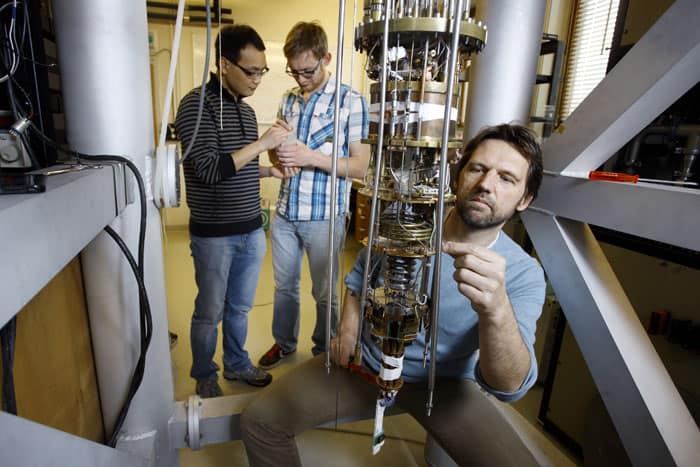
“Majorana fermions” are particles that are also their own antiparticles and were first proposed in 1937 by the Italian physicist Ettore Majorana. More recently, physicists have argued that Majorana-like quasiparticles could be lurking in materials with special topological properties. Now, Leo Kouwenhoven and colleagues have spotted the first hints of Majorana fermions at the interface between a topological superconductor and a semiconductor. Majorana fermions are expected to be impervious to environmental noise and therefore could prove useful in quantum computers.

Time-reversal violation

“To the BaBar collaboration for making the first direct observation of time-reversal violation by measuring the rates at which the B0 meson changes quantum states.”

Physicists have been waiting for almost 50 years for a direct observation of time-reversal (T) violation. Now, researchers analysing data obtained at the BaBar detector at the PEP-II facility at the SLAC National Accelerator Laboratory in California have done just that. The collaboration focused on transitions between the quantum states of the B0 meson and found that the transition rates differed. While T-violation comes as no surprise, its direct experimental measurement is an important verification of quantum field theory.

Galaxy-cluster motion

“To Nick Hand from the University of California, Berkeley and colleagues at the Atacama Cosmology Telescope (ACT) and the Baryon Oscillation Spectroscopic Survey (BOSS) for being the first to detect the large-scale motion of galaxy clusters.”

The motions of distant galaxy clusters can tell us much about how the universe formed and also shed light on the mysterious dark matter and dark energy. Some 40 years ago, the Russian physicists Rashid Sunyaev and Yakov Zel’dovich calculated that this motion could be observed by measuring a slight temperature shift in the cosmic-microwave-background (CMB) radiation. Now, Nick Hand and colleagues at ACT and BOSS have done just that in another triumph of precision cosmology.

Peering through opaque materials

“To Allard Mosk and colleagues at the MESA+ institute at the University of Twente for developing a new technique for seeing fluorescent objects behind opaque barriers.”
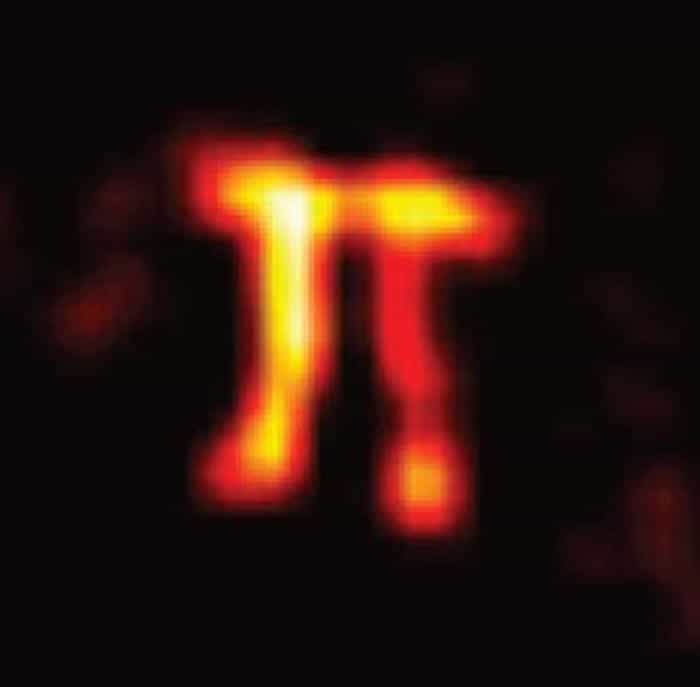
Much of modern medicine relies on the ability to peer inside the human body, with techniques ranging from X-rays to magnetic resonance imaging having been developed to do just that. However, as tissue is opaque to much of the electromagnetic spectrum – including visible light – doctors are limited in terms of what they can “see”. Now, Allard Mosk and colleagues have used a common effect called laser speckle to see micrometre-sized fluorescent objects through several millimetres of opaque material.

Room-temperature maser

“To Mark Oxborrow of the National Physical Laboratory, and Jonathan Breeze and Neil Alford of Imperial College London for building the first maser to operate at room temperature.”

Solid-state masers are extremely sensitive microwave detectors and could therefore be used in a wide range of telecommunications and imaging applications. Until now, however, masers have needed to be chilled to extremely low temperatures using liquid helium in order to work – making them impractical for most commercial applications. This could all change thanks to Mark Oxborrow, Jonathan Breeze and Neil Alford, who have developed the first maser to operate a room temperature.

Wiping data will cost you energy

“To Antoine Bérut, Artak Arakelyan, Artyom Petrosyan and Sergio Ciliberto of Ecole Normale Supérieure de Lyon, Eric Lutz of the University of Augsburg and Raoul Dillenschneider of the University of Kaiserslautern for being the first to measure the tiny amount of heat released when an individual bit of data is erased.”

Ever since James Clerk Maxwell mused over his hypothetical demon in the 19th century, researchers have been making connections between the theories of information and thermodynamics. In 1961 the German–American physicist Rolf Landauer argued that the erasure of information involves the dissipation of heat. Now, a sextet of physicists in France and Germany is the first to verify this in the lab – by using a tiny laser-trapped bead that flips between two states.

Entangling twisted beams

“To Anton Zeilinger, Robert Fickler and colleagues at the University of Vienna for devising a new technique for entangling photons using orbital angular momentum.”

The orbital angular momentum of a corkscrewing light beam is a quantity that had been largely ignored until about 20 years ago. Today, however, physicists are busy dreaming up new applications for this “twisted light”. They include Anton Zeilinger, Robert Fickler and colleagues, who have managed to entangle photons with orbital quantum numbers as high as 300 – more than 10 times greater than the previous record. As well as quantum computing, the new technique could lead to the entanglement of macroscopic objects and find applications in remote sensing.

Neutrino-based communication

“To a collaboration of physicists from the MINERvA experiment at the Fermi National Accelerator Laboratory and engineers from North Carolina State University and NASA Glenn Research Center led by Daniel Stancil from North Carolina State for being the first to demonstrate communications using neutrinos.”

If you want to send a message across the universe – or to a submarine deep below the waves – then neutrinos could be your best bet. Your message would be guaranteed to get there because the subatomic particles can easily pass through 1000 light-years of lead without being affected. The problem, however, is how to encode and detect a signal using particles that react very rarely with matter. A collaboration led by Daniel Stancil is the first to meet this challenge by using Fermilab’s NuMI neutrino beam and MINERvA detector to transmit data over the 1 km that separates the facilities. While the data rate was a sluggish 0.1 bit/s, the messages were received with a bit error rate of just 1%, showing that the principle of neutrino communication is sound.

Generating and storing energy in one step

“To Zhong Lin Wang and colleagues at the Georgia Institute of Technology for creating a new system that converts kinetic energy into chemical energy in a single step.”
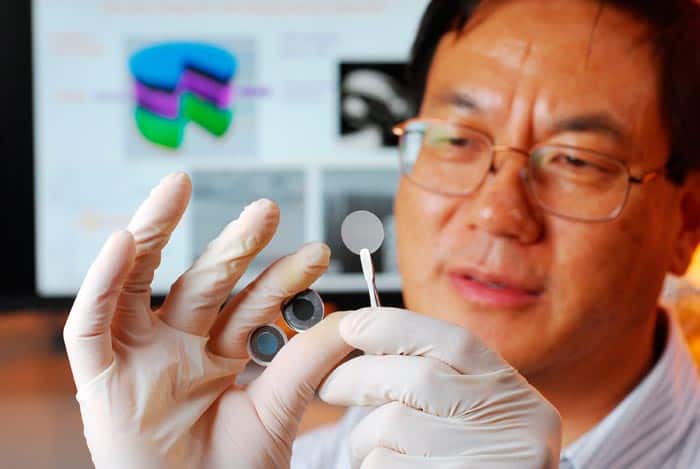
How many times have you been caught out and about with a lifeless mobile phone? Instead of having to find a charger and electrical outlet, it would be much easier to charge your phone using your shoe. That is the dream of Zhong Lin Wang and colleagues, who have developed a new system that can harvest energy from footsteps or other motion and store it in a battery. While this concept is by no means unique, the team’s technology is the first to convert mechanical energy directly to chemical potential energy – bypassing the intermediate steps of converting mechanical energy into electrical energy that is then converted to chemical energy.

Is the discovery of a Higgs-like particle the physics breakthrough of 2012?

By James Dacey

Facebook poll

Today, Physics World unveiled its Breakthrough of the Year and you may not be entirely surprised to learn that the award has gone to the ATLAS and CMS collaborations at CERN for their joint discovery of a Higgs-like particle at the Large Hadron Collider (LHC). You can read about our choice in this article.

A predictable result? Yes, clearly. But part of our mission at Physics World is to take a bird’s-eye view of physics, covering all areas of the field: the big and the small, the theoretical and the applied. From our perspective, it appears that the most significant and dramatic developments in physics this year have taken place at the LHC.

But what do you think? All signs so far suggest that the particle discovered at the LHC is a Higgs boson with the properties described by the Standard Model of particle physics. If this is the case, then should we view this as a “physics breakthrough” at all? Would it not have brought a significantly greater advance in our understanding of the physical world had the Higgs not showed up at the LHC? Perhaps we should look at the LHC as more of an engineering triumph – for building a machine so complex and precise that appears to have verified some brilliant physics that was mooted more than half a century ago.

One could also argue that CERN is getting a heck of a lot of credit for something that would not have been possible without the excellent work that was done at Fermilab’s now-retired Tevatron accelerator.

As with many awards, there is naturally an element of subjectivity in its judging, and it is always difficult to single out winning individuals and groups above others. There were plenty of other significant physics breakthroughs this year, which we have recognized as highly commended. Perhaps you feel one of these should have pipped the Higgs discovery to the top spot? Let us know what you think by taking part in last Facebook poll of the year:

Is the discovery of a Higgs-like particle the physics breakthrough of 2012?

Yes
No (please suggest an alternative in a comment)

To place your vote, visit our Facebook page.

Mesons measure collision temperatures

A new method to accurately work out the temperature of a quark–gluon plasma has been developed by researchers at the Compact Muon Solenoid (CMS) collaboration at the Large Hadron Collider (LHC) at CERN. The technique involves looking at the behaviour of certain mesons in lead–lead collisions. While a similar result was reported last year, this latest effort is claimed to be much stronger and more statistically significant.

Cosmologists and particle physicists have long been keen to understand in what state matter existed in the primordial universe. Theories suggest that in the first few microseconds after the Big Bang, the basic building blocks of matter – quarks and gluons – were not bound within composite particles such as protons and neutrons, as they are today. Instead, they existed in a “quark–gluon plasma” – a sort of hot, dense soup-like medium in which the quarks and gluons (the carriers of the strong nuclear force) exist as free entities.

As the strong force does not diminish as the distance between quarks is increased, a very large amount of energy is necessary for the bound quarks to remain free. As a result, the QGP can only exist for very short times and at very high temperatures. When heavy particles such as lead nuclei collide in the Large Hadron Collider, a QGP could form in a number of ways. But it is not easy to tell if this extreme state of matter has formed, and it is even more difficult to measure it as it is expected to be at trillions of degrees.

Excited particles

One of the ways in which the CMS collaboration looks to see if a QGP has formed is to look at the effect its formation would have on other particles. One of the signs the researchers look out for is the sequential melting of excited states of the upsilon mesons (ϒ) – a bound state of a quark and its anti-quark – that emerges from heavy-ion collisions. It exists in three states, each of which have identical properties, but different binding energies. These are referred to as 1S, 2S and 3S. The more excited a state is, the less tightly bound are its quarks, meaning that 1S is the ground state, while 2S and 3S are loosely bound excited states that would melt more easily in the presence of a QGP.

“Here at the CMS, we can distinguish the signatures of the three states very clearly and distinctly, because of the excellent mass resolution of the CMS detector,” explains Nuno Leonardo, from Purdue University, who is a member of the CMS collaboration and was one of the leaders of this experiment. The melting of these states is actually observed as a “suppression of states” – that is, fewer mesons are produced in lead–lead (Pb–Pb) collisions, compared with the number produced in proton–proton (p–p) collisions, which are known not to produce a QGP at all, making the p–p a reference system. For the three states, the fraction of ϒ(2S) and ϒ(3S) particles produced relative to ϒ(1S) in the Pb–Pb collisions should be less than the fraction for collisions between protons, where the suppression would not exist. “This is what we exploit to measure the temperature of the QGP,” says Leonardo.

Foggy effects

Ian Shipsey, another team member and the chairperson elect of the CMS Collaboration Board, refers to the suppression as a “screening effect”. He explains that the QGP screens the quark and its antiquark from their binding forces, making them fall apart even quicker than usual. “It is a bit like two people standing close to each other in a room…they form our ϒ particle. Even if there is a fog in the room, they can see each other as they are standing close,” he explains. “But for the 2S and 3S states, they are further apart and so there is more fog between them and they cannot see each other. In this case, the fog is the QGP and the two people are the quark and its anti-quark, that now act as free particles and so do not form a ϒ particle anymore,” he told physicsworld.com. Shipsey extends his fog analogy by saying that the p–p system has no fog at all, while for the Pb–Pb system the fog was expected, and now they have the evidence for it.

To determine the actual temperature of the plasma, the researchers use models that link binding energy with the temperature and the fact that the suppression of the states becomes more pronounced at higher plasma temperatures. “We know that the 3S is the least tightly bound and so if the temperature is at a certain value, the 3S will be the first to break,” says Leonardo. Similarly, at consecutively higher temperatures, the 2S and then the 1S states would be expected to break.

Suppressed states

“With the current CMS data, we found that the 3S state is completely gone, the 2S is significantly suppressed but the 1S is very subtly suppressed,” explains Shipsey. He says that the slight suppression of the 1S state may not be due to the QGP at all, but because “the amount of 1S observed depends in part on how much 2S and 3S are present as both of these states can disintegrate forming a 1S. If the 2S and 3S are suppressed the 1S is automatically suppressed”. This means that the QGP formed is at an intermediate temperature, and not at the highest temperature theoretically expected. With the new data from 2012, the statistical significance of the researcher’s findings has increased from 2.4σ to 5σ – the golden standard for a particle-physics discovery.

To ensure the effects that they have observed are really a QGP being formed, the researchers plan to look at proton–lead (p–Pb) collision taking place at the LHC early next spring, which would serve as a middle ground. These collisions would also allow the team to ensure that the fog is produced by a QGP and not a phenomenon known as “cold nuclear effects” that could produce their own fog or screening effect. So the p–Pb system would provide a final qualification.

The research is published in Physical Review Letters.

Coming soon: our bumper 2012 round-up

By Hamish Johnston

What a year it’s been for physics, and here at Physics World we are busy preparing our bumper crop of year-end features that cast an eye back over the past 12 months.

Our celebration of 2012 kicks-off tomorrow at 11.00 a.m. with the announcement of the prestigious Physics World award for Breakthough of the Year. In addition to revealing the winner, we will also be citing nine other highly commended research projects that hit the headlines this year.

Next week, Physics World‘s multimedia editor James Dacey will presenting his five favourite multimedia productions from 2012.

Reviews and careers editor Margaret Harris will be revealing the Physics World Book of the Year. Part of the fanfare will include a podcast in which Margaret and other Physics World colleagues enjoy a lively discussion about the merits of this year’s best books.

News editor Michael Banks and reporter Tushna Commissariat are also chipping in, with their picks for the best blog entries of the year and best pictures of the year, respectively.

And don’t miss Physics World editor Matin Durrani peering into his crystal ball to make some predictions for physics in 2013.

Forming a critical mass of experts

A few years ago, some colleagues and I decided to set up a specialist group within the Institute of Physics (IOP) for physicists working in the nuclear industry. This task proved unexpectedly complex because questions were asked about the new group’s relationship to the IOP’s existing Nuclear Physics Group, its distinction from the Institute of Nuclear Engineers and – importantly – what it would be called. Eventually, we were able to set out an acceptable remit for the Nuclear Industry Group of the IOP, and all parties seemed satisfied with the result.

We did not realize it at the time, but I now suspect that our skirmish was only the latest in a long-running battle to determine an identity for nuclear professionals. In The Neutron’s Children: Nuclear Engineers and the Shaping of Identity, science historian Sean Johnston describes the opening salvoes in this battle, beginning with the nuclear-power programmes that sprang up in the US, UK and Canada in the aftermath of the Second World War. He follows them until the late 1960s, focusing firmly on the development of skills and expertise among the “nuclear engineers” who were needed to see these programmes to fruition.

The UK, US and Canada worked together on the Manhattan Project, but their nuclear interests diverged after the war’s end. This was partly down to the US’s McMahon Act of 1946, which excluded its wartime partners from information about nuclear systems, and forced the UK and Canada to develop their own. Initially, only the UK had a programme for power reactors, albeit one that was secondary to its programme for producing weapons-grade plutonium. However, it was not long before the US also began to think of nuclear power as a future source of electricity, and of reactors as a source for isotopes used in medicine and agriculture. Canada, for its part, had no interest in weapons, and put all its efforts into nuclear power.

Despite these different emphases, Johnston argues that all three countries faced the same questions. Who were the workers who would develop nuclear power systems? What knowledge did they need? What should be the roles of scientists (not just physicists, but chemists and biologists) and engineers? And which disciplines of engineering were required?

As Johnston shows, the difficulties of combining knowledge and approaches from science and engineering were not easily overcome. One of the barriers was geographic. In the US, scientific research was concentrated at the University of Chicago, while the Oak Ridge facility in Tennessee carried out engineering development and the remote Hanford site in Washington state hosted the plutonium production reactors. The UK also had clear distinctions between the different roles and sites. Harwell (Oxfordshire) carried out research, Risley (Lancashire) served as the engineering development centre and the reactors were built at relatively remote sites such as Windscale (Cumbria) and Dounreay (Caithness). One effect of this was that the sites had a tendency to work autonomously and not communicate well with each other, which led to poor overall control, as described by Harold Bolter in his book, Inside Sellafield. Efforts to mitigate this problem included, at one time, a regular private air service between north-west England and Dounreay in Scotland, where the landing was on the site runway from the days when the latter was a Fleet Air Arm base.

Even within a single site, the marriage between engineering and science was not always smooth. For example, the US plutonium production project was run by DuPont, a major industrial chemical firm. DuPont needed the scientists to determine the basic reactor physics data, and the scientists needed DuPont’s expertise in chemical engineering to produce a practical system. Eventually an uneasy collaboration led to more co-operation, and Johnston explains that this was thanks in part to the sterling efforts of scientists such as John Wheeler, who acted as an intermediary between DuPont and some of the more “recalcitrant” physicists, such as Eugene Wigner.

In the mid-1950s responsibility for training nuclear personnel (whether with scientific or engineering backgrounds) was largely in the hands of government-run facilities at Oak Ridge in the US, Chalk River in Canada and Harwell in the UK. All three operated reactor training schools, and it is worth emphasizing that they were entirely reactor-focused – the issue of waste was not high up on the agenda in those days, leading to many of our current clean-up and disposal problems. Gradually, though, university courses appeared to supplement site-based training. In the US, these included undergraduate courses, and this burgeoning university training – together with employment in both government-financed organizations and private companies – helped to clarify the identity of nuclear engineering as a profession. The UK, however, concentrated on postgraduate education, believing that while specific knowledge and expertise were necessary, these should be additional to basic training.

The UK’s engineering approach was also rooted more in practical expertise than formal qualifications, and site-based training for both scientists and engineers continued well into the 1980s. Partly as a result of this approach, the profession was slow to develop a separate status, and is arguably still not established. Canada, meanwhile, developed undergraduate courses in “nuclear engineering”, but their content was not easily defined and uptake was patchy, with many courses becoming unviable by the end of the 1960s. However, the relative absence of military influence on Canada’s nuclear specialists meant professionals there were less inhibited and their public visibility was high.

I joined the nuclear industry in the 1970s, which I suppose makes me one of the neutron’s grandchildren. However, many of the situations Johnston describes were still present. These included an uneasy alliance between scientists and engineers, who had different perks and conditions of employment; a lack of openness and a high degree of secrecy due to the industry’s military origins; and the relative geographical isolation of sites as a precaution against accidents. Johnston’s thesis is that these three characteristics, coupled with the industry’s origins in governmental programmes, were defining factors in the development of professional attitudes and approaches among nuclear practitioners. And all of them, Johnston argues, meant that members of the nuclear profession “might be perceived as suffering from arrested development, peculiar idiosyncrasies and worldview, insecure self-image, weak communication skills and poor socialization with their peers”.

I can recognize much of this generalization, as there were certainly a lot of oddballs around (and some today as well), although it does not seem to acknowledge the robust group lunchtime drinking culture that once prevailed. But nuclear power and its practitioners have other, more serious, crosses to bear. The industry, even when privatized, has never escaped the dead hand of government direction and manipulation. Nor has it really shaken off its military origins. Nuclear professionals have always had to fight battles for public acceptance, and today’s politicians seem to have no greater knowledge or willingness to face the real issues.

On the face of it, The Neutron’s Children might seem like a book of limited interest to the general reader, and the author’s punning use of terms from the nuclear field grates a bit (I say this even though – as the headline of this review shows – I do not mind a pun or two). Nonetheless, it is a fascinating account of how an entire industry developed from very sparse beginnings and, like all good histories, it offers lessons to be learned. The nuclear profession was created in a relatively short period after the Second World War, but its members were never given the security of future employment that would ensure a continuing cadre. Instead, there has been a waxing and waning of interest in nuclear power and, as a result, we are losing the continuity of our nuclear knowledge and expertise. If we are to fulfil the “nuclear renaissance” goal of developing and providing carbon-free electricity, we need to focus on creating the neutron’s great-grandchildren, and several generations beyond that – whatever we decide to call them.

Physics and painting

Discoveries in science do not just revolutionize science, but can also exert a deep and lasting impact on the visual arts and on literature. One famous example is the effect that Galileo’s telescopic discoveries had on Milton’s poetry, such as in his depiction of the cosmos in Paradise Lost. Writing about connections between physics and art, however, is difficult to do well. It is easy to draw superficial connections, but hard to establish genuine artistic motivation. Fortunately, several original and substantive books have recently appeared or been reissued that shed new light on how physics influenced art, and illustrate – quite literally – their points well.

Consider the groundbreaking book The Fourth Dimension and Non-Euclidean Geometry in Modern Art by the University of Texas art historian Linda Dalrymple Henderson, which was first published in 1983 and has just been reissued with a revised introduction. The book reviews late 19th-century developments in non-Euclidean geometry and the rise of popular interest in these geometries, and then examines this impact on painting in the first half of the 20th century.

Among topics of popular fascination was the ether – the invisible medium that supposedly filled space – which prominent scientists of the day linked with the fourth dimension as containing “the invisible order of things”. Other widely publicized physics discoveries involving invisible structures of reality included the electron, radioactive elements and X-rays. As the science historian Iwan Rhys Morus is quoted in the book as saying, at the start of the 20th century, “the boundaries of the real were so weak”.

Henderson insightfully describes how and why artists listened and responded creatively to these developments. Cubists connected their work most explicitly with the fourth dimension, but they were not alone. Henderson argues that, during the first three decades of the 20th century, the fourth dimension was a “concern common to artists in nearly every major modern movement [in painting]”. The idea of the fourth dimension encouraged artists to dispense with traditional perspective and to experiment with abstraction. It also re-energized their picture of themselves as visionaries able to communicate structures of reality that others could not detect.

For the first two decades of the 20th century, the fourth dimension was popularly associated with space. But after the 1919 confirmation of Einstein’s theory of general relativity, and Minkowski’s introduction of the notion of space–time, the fourth dimension began increasingly to be associated with time. This was still true when Henderson’s book first came out in 1983. Since then, the rise of string theory, brane theory and computer graphics have rehabilitated the artistic influence of the spatial interpretation, which Henderson covers in a new, 96-page “reintroduction” in the updated edition of her book.

Surrealist thinking

Modern physics also had a huge impact on the artistic movement known as Surrealism – a topic covered in Gavin Parkinson’s 2008 book Surrealism, Art and Modern Science: Relativity, Quantum Mechanics, Epistemology. Parkinson, who is an art historian at the Courtauld Institute of Art in London, shows that Surrealist artists responded in a culturally sophisticated manner to the complex political, philosophical, psychological and scientific climate of the time. Claiming to offer “the first comprehensive history, analysis and interpretation” of Surrealism’s enthusiasm for modern physics, Parkinson begins with a sketch of the early history of relativity and quantum theory – a section of the book that, he says, was a “nightmare” to write. However, physicists will find his account, which draws on authoritative histories, both accurate and engaging.

Parkinson then traces how (mainly French) Surrealist artists and authors appropriated the language, concepts and imagery of modern physics in defining and creating their work. One of the first was André Breton, Surrealism’s “chief theorist”, who was soon followed by Marcel Duchamp, Max Ernst, Salvador Dalí and others. Relativity and quantum mechanics inspired them, Parkinson writes, by showing the utter conventionality of 3D space and ordinary sense perception, and by revealing new aspects of the real.

Breton’s collaborator, Pierre Mabille, wrote in 1940 that physicists are “the legitimate heirs to the tradition of the marvellous”. Indeed, Parkinson argues convincingly that the main currents of modern art cannot be fully understood without knowing the impact of modern physics on the artists involved. Parkinson is not afraid to point out, however, where the artists were “facile”, “engagingly frivolous”, or simply out of their depth in appealing to physics concepts and imagery.

“Like a damp stained wall,” Parkinson writes, “quantum theory can conjure up just about any view of the world if stared at long enough.” But he shows brilliantly why these artists saw what they did, and how they incorporated it into their work. His story ends when Hiroshima began to end the love affair with modern physics, with the break-up culminating in 1958 with a Surrealist manifesto called Expose the Physicists, Empty the Laboratories.

The critical point

Henderson’s and Parkinson’s books document the impact of specific scientific discoveries on particular art movements in a thorough and careful way. Other books that discuss intersections between physics and science in an engaging, though less scholarly, way include Lynn Gamwell’s Exploring the Invisible: Art, Science, and the Spiritual (2002) and Leonard Shlain’s Art and Physics: Parallel Visions in Space, Time, and Light (1991, reprinted 2007). Gamwell is a curator and art historian, and her book is lavishly and cleverly illustrated; Shlain, who died in 2009, was a surgeon by training and wrote as an enthusiast rather than as an artist or scientist.

To me what is fascinating is just how physics exerts an influence on art in so many different ways. It has also influenced sculpture, music and literature – topics that I’ll have to leave to future columns. In the meantime, I welcome your thoughts on the matter.

Magnetic metamaterials could boost wireless energy transmission

Physicists in Spain have calculated that substantial amounts of energy could be transmitted through air by using special materials to shape the magnetic fields around conductors. Although the concept has yet to be verified in the lab, the researchers say that it could lead to a viable method of transmitting electrical power, as well as applications in magnetic sensors and studies of the brain.

The idea of transmitting significant quantities of electrical energy without using wires has a long history. In 1891 Nikola Tesla showed that electricity could be sent through the air using induction coils. He continued to work on the idea alongside his work on wired transmission, but energy losses prevented its large-scale implementation.

Now Alvar Sanchez and colleagues from the Autonomous University of Barcelona have used the theory of transformation optics to propose a new way of concentrating and transmitting electrical energy. Transformation optics is usually associated with creation of invisibility cloaks, superlenses and other devices that guide and focus electromagnetic waves in ways not possible with conventional materials. This is done using metamaterials with special optical properties that transform space in much the same way as the presence of mass deforms space – as described in Einstein’s general theory of relativity. In the case of an invisibility cloak, electromagnetic waves can be made to move smoothly around an object, joining up on the other side as if the object wasn’t there.

Magnetic cloaking

The Barcelona-based team has already published a series of papers that apply transformation optics to magnetic fields. In 2011 the researchers collaborated with electrical engineers at the Slovak Academy of Sciences to build a cloak that shields a region of space from static magnetic fields. Now in this latest research, they have focused on how transformation optics could be used to cause a magnetic field in one place to induce a field somewhere else.

The team created a computer model of a transmitter-receiver system with a magnetic field source at the centre of a shell. The shell is made from a metamaterial with a magnetic energy density that would always be zero. In the case of power transmission, the magnetic field source would be a current-carrying coil.

The presence of the shell causes all the energy contained in the inner field to be delivered to the outer edge of the shell. Therefore the magnetic field radiated around the magnet into space is much stronger than if the shell had been a normal magnet or free space. If a second metamaterial shell were placed close by, the magnetic field of the first shell would then induce a magnetic response on the surface of the second shell. In this case, the effect of the shell is to transfer magnetic energy from outside of the shell to the centre of the shell without any loss.

Low frequency fields

So far, so good – however there is one important caveat. Strictly speaking, the analysis only applies to static magnetic fields. To transfer the energy of an electric current by creating a magnetic field – and then extract the energy as an electric current at the other end – would involve a magnetic field that changes with time. Nevertheless, Sanchez explains that the researchers have preliminary data suggesting that the analysis holds for very low frequency fields. “If we want to extract useful energy from our ideas, it is true that we should work on low-frequency AC fields,” he says.

Beyond energy transmission, the researchers suggest the ability of the shell to concentrate magnetic fields into a small space could enhance the accuracy of magnetic sensors. This could extend the reach of a medical research technique called transcranial magnetic stimulation, in which parts of the brain can be temporarily activated or deactivated by magnetic fields.

Transformation optics pioneer John Pendry of Imperial College London is intrigued by this latest proposal and by the researchers’ previous work using transformation optics to manipulate magnetic fields. He finds the work with static magnetic fields to be “even more exciting than optical cloaking, because it demonstrates the unique power of transformation optics to operate not just on rays of light, but to get inside the wavelength (infinitely long for static fields) and control the electric and magnetic field components of electromagnetism.”

The research will be described in a forthcoming issue of Physical Review Letters.

Higgs hunters and Stephen Hawking bag new $3m prizes

A massive $3m in prize money is to be shared by seven physicists who headed CERN’s Large Hadron Collider (LHC) and its two main experiments – ATLAS and CMS – since 1994. The award – given for the discovery of a Higgs-like particle at the LHC – is one of two “special fundamental physics prizes” from the Fundamental Physics Prize Foundation, which was set up earlier this year by the Russian physicist-turned-entrepreneur Yuri Milner. Another prize of $3m has gone to the British cosmologist Stephen Hawking for his work on black holes, quantum gravity and the early universe.

One of the winners at CERN – CMS spokesperson Joseph Incandela – told physicsworld.com that he was “very happy” to win the prize. “It recognizes the huge effort of so many great people who provided so much creativity and brilliance to the experiments and the LHC accelerator complex that made this all possible,” he says. “I am honoured to be the leader of the experiment now, but I am like many others in the experiment who have spent 15 or 20 years of their career on this project.”

The six other CERN physicists to share in the prize are Lyn Evans, who masterminded the construction of the LHC, current ATLAS spokesperson Fabiola Gianotti and her predecessor in the job Peter Jenni, as well as Michel Della Negra, Guido Tonelli and Tejinder Singh Verdee, who are all from the CMS collaboration.

In an e-mail to the Guardian newspaper, Hawking said that “prizes like these play an important role in giving public recognition for achievement in physics” but added that “no-one undertakes research in physics with the intention of winning a prize”.

Fundamental matters

The Fundamental Physics Prize Foundation has also announced the winners of its three 2013 Physics Frontiers prizes. One Frontiers prize has gone jointly to Charles Kane of the University of Pennsylvania, Laurens Molenkamp of the University of Würzburg and Shoucheng Zhang of Stanford University for their prediction and discovery of topological insulators. The second award goes to Alexander Polyakov of Princeton University for his work on field theory and string theory, while the final prize is given to Joseph Polchinski of the University of California, Santa Barbara.

These winners of the Frontiers prizes all go on the shortlist for the 2013 Fundamental Physics Prize, which is worth $3m and will be awarded in March. Any Frontiers winner who does not scoop the main prize will still receive $300,000 each.

The foundation has also revealed the three winners of its 2013 New Horizons in Physics prizes. These are Niklas Beisert of ETH Zürich for his work on quantum gauge theory and string theory, Davide Gaiotto of the Institute for Advanced Study in Princeton for “far-reaching insights” into duality, gauge theory and geometry, and Zohar Komargodski of the Weizmann Institute of Science for his work on 4D field theories. Each theorist will receive $100,000.

Yuri Milner, 51, originally studied theoretical physics at Moscow State University but dropped out of a PhD in theoretical physics at the Lebedev Physical Institute. After a stint working at the World Bank in Washington, DC, he turned to investing in start-up companies, apparently making his millions by investing in Internet firms such as Facebook, Twitter and Zynga. The October 2012 issue of Bloomberg Markets magazine named him as one of the 50 most influential people who “move markets or shape ideas or policies”.

Flexible graphene transistor sets new records

Researchers at the University of Texas at Austin in the US say that they have made state-of-the-art flexible graphene field-effect transistors with record current densities and the highest power and conversion gain ever. The transistors also show near-symmetric electron and hole transport, are the most mechanically robust flexible graphene devices fabricated to date, and can be immersed in a liquid without any ill effects.

Graphene is a single, flat sheet of carbon arranged in a honeycombed lattice. It has many unique electronic and mechanical properties, such as extremely high carrier mobility – which means that it is an ideal material for use in ultrafast transistors. The material can also absorb light over a range of wavelengths in the electromagnetic spectrum from the visible to mid-infrared and is highly transparent to light. The fact that it is mechanically flexible while being incredibly strong is good news too.

The researchers, led by Deji Akinwande and Rodney Ruoff, made their graphene field-effect transistors (GFETs) directly atop patterned dielectrics on plastic sheets using conventional microelectronic lithography. The devices have a unique structure, explains Akinwande, in which multi-finger metal gate electrodes are embedded in the plastic sheet. They are also made using graphene that has been grown by chemical vapour deposition (CVD), which can now produce as good graphene flakes as can be obtained by exfoliation (the famous “sticky-tape” method).

Record properties

The innovative production technique means that graphene can easily be integrated and fabricated on plastic sheets that have been pre-patterned with metal gates. This produces transistors in which charge carriers can move extremely fast and in which electrons and holes move in the same way. The devices are also extremely compliant and can accommodate mechanical strains of up to 9% and can be bent and unbent over for more 20 continuous cycles – a record number for flexible GFETs.

“Overall, our transistors feature record circuit performance, the largest mechanical bending and the highest extrinsic cut-off frequencies (of about 2.23 GHz) to date for any graphene flexible nanoelectronic device,” says Akinwande. “What is more, the devices are liquid-resistant thanks to the fact that the surface of the graphene is passivated with silicon nitride and the plastic substrate is self-passivated. In short, we found that they could be accidentally dropped into everyday liquids, such as milk, tea or coffee, and can even survive being run over by a moving vehicle – all without suffering damage to their outstanding properties.”

Smart applications

The extremely flexible, high-performance devices could be ideal for smart, conformal, advanced electronics that could offer performance capabilities beyond today’s silicon-based technology while also being cheaper, lighter, more environmentally friendly and with arbitrary form factors, claims Akiwande. “Potential applications include flexible smartphones, displays, fabric and even smart walls,” he adds.

The team, which is presenting its work this week at the International Electron Devices Meeting in San Francisco, is now busy trying to make flexible wireless radios and mobile systems using the new GFETs at gigahertz frequencies. “From a basic research point of view, we are also looking into heat management in these devices on flexible plastic substrates, which is a major issue for transistors operating at high speeds and current densities,” adds Akinwande.

Laser pulse makes insulator conduct like a metal

An international team of physicists has shown that an extremely short pulse of light can be used to convert an insulator into a metal, allowing an electrical current to be switched on and off for intervals as short as a few femtoseconds. The technology could be used to create transistors that are 10,000 times faster than those available today. The effect could also form the basis of a cheap and easy way of characterizing ultrafast laser pulses – something that is currently very expensive to do.

The work is reported in two papers by the team that appear in the journal Nature. In the first paper, Agustin Schiffrin and Ferenc Krausz of the Max Planck Institute for Quantum Optics in Germany, Mark Stockman of Georgia State University in the US and colleagues describe what happens when you fire short yet intense laser pulses at a sample of silicon dioxide.

Silicon dioxide is an insulator with an energy bad gap of about 9 eV separating its valence and conduction bands. In contrast, the band gap in silicon is about 1.1 eV; this means that, in principle, a switch made from silicon dioxide could operate much faster than a conventional silicon switch. The problem, however, is that a silicon-dioxide switch would have to operate at very high electric fields, resulting in a destructive electrical breakdown.

Closing the gap

One way round this problem is to apply a strong electric field for an extremely short time, so that breakdown does not occur. When the field is applied, some of the electron states in the valence band increase in energy while some states in the conduction band decrease. The upshot of this is a significant reduction in the amount of energy required to create a conduction electron and the material becomes an electrical conductor.

The team created this brief electric field using laser pulses that are only 4 fs long – so short that they only contain about 1.5 cycles of an electromagnetic wave. The pulses are fired at a piece of silicon dioxide that has two gold electrodes on its surface. They are aimed at the 50 nm gap between the electrodes and the light is polarized so that its electric field is parallel to the silicon-dioxide surface and oscillating back and forth between the two electrodes (see figure).

Sweeping back and forth

The pulse creates conduction electrons, which feel the force of the pulse’s electric field. These are first swept towards one gold electrode and then towards the other as the direction of the field switches. This effect is measured by connecting the two electrodes by an ammeter and measuring the current.

To show that the band-gap modification and current generation were independent processes, the team did a second experiment involving two pulses. One pulse had its electric field running along the gap so it cannot sweep electrons towards the electrodes but can still modify the band structure. The second pulse had its electric field running between the electrodes. The second pulse was set at a much lower intensity, so it was able to sweep conduction electrons but not modify the band structure. As expected, a current was still seen.

While the experiment shows that a semiconductor can be switched to a conductor on a timescale of about 1 fs, it does not give direct evidence that the system reverts back to a semiconductor on a timescale of about 1 fs – something that would be crucial for building circuits that operate on femtosecond timescales.

Confirming femtosecond shutdown

To do this, the team did a second, more complicated experiment that is described in the second paper. This involved measuring the absorption and reflectance of light from a silicon-dioxide sample – which confirmed that the effect is indeed shut down in about 1 fs.

Schiffrin describes the work presented in Nature as a proof of principle that an intense, ultrafast laser pulse can be used to switch a solid-state device. “Now we can fundamentally have a device that works 10,000 times faster than a transistor that can run at 100 GHz,” Stockman adds. In order to explore this possibility, the team is now looking at how it could hook up two switches to make a logic gate. Coupling between devices could be achieved using plasmonics – which involves quantized oscillations of conduction electrons in a material.

While it may be straightforward to create such logic devices in the lab, anyone wanting to make practical commercial devices would first have to create low-cost lasers that can deliver the appropriate pulses. While this would be a significant technological challenge, Schiffrin believes that it should be possible.

In the shorter term, Schiffrin says that the silicon-dioxide and gold structures could prove very useful for characterizing the output of ultrafast lasers – something that currently involves measurements done in an ultrahigh vacuum and using expensive electron spectrometers. Indeed, the team already has a patent on that particularly application, says Schiffrin.

Copyright © 2026 by IOP Publishing Ltd and individual contributors