Do spiral galaxies form from the inside out?

By exploiting a lucky accident, astronomers have for the first time measured a key property of a spiral galaxy located more than nine billion light-years away. The observations show that oxygen and iron abound at the centre of the galaxy but not at its edge, which suggests spiral galaxies – including Andromeda and our own Milky Way – formed their giant discs of stars from the inside out.

Spanning 120,000 light years, our galaxy’s disc outshines the rest of the Milky Way. The disc harbours the Sun and most of the galaxy’s other stars, as well as the beautiful spiral arms. But exactly how the disc formed is unknown.

One clue comes from the metallicity of the disc’s constituent stars. Metallicity is a measure of the relative abundance in a star of elements other than hydrogen and helium. Stars create these elements and spew them into space. Because stars congregate at a galaxy’s centre, the metallicity in most nearby spirals is greatest there and drops toward the edge. In the Milky Way’s disc, for example, travel 10,000 light-years outward and the metallicity falls 35%.

Conflicting theories

Different theories predict how this metallicity gradient changes over billions of years. Some theories predict it starts steep and later flattens; other theories predict just the opposite. If astronomers could observe metallicity gradients in spiral galaxies billions of light-years away, we could see how steep the gradients were billions of years ago and thus how they change over time. Unfortunately, such distant spirals look so small and faint that no one has ever done so – until now.

Now, Tiantian Yuan and Lisa Kewley of the University of Hawaii in Honolulu and their colleagues at Durham University in the UK observed a spiral galaxy in the constellation Leo with a redshift of 1.49. This means that the universe’s expansion has stretched the galaxy’s light waves by 149% as they travelled to Earth. Such a high redshift indicates the galaxy is 9.3 billion light years away, so we see it just 4.4 billion years after the Big Bang.

“This galaxy is just beautiful,” says Yuan. “Normally, galaxies at that redshift appear as blobs.” The galaxy looks so good because it lies behind a galaxy cluster. Named MACS J1149.5+2223, the cluster is massive and its gravity magnifies the distant galaxy. As a result, the galaxy appears 22 times brighter than it otherwise would be.

‘Very steep metallicity gradient’

Yuan and colleagues used the giant Keck II telescope atop Mauna Kea in Hawaii to measure the galaxy’s metallicity at several different points. “The galaxy has a very, very steep metallicity gradient,” she says. Travel 10,000 light years outward in the galaxy’s disc and the metallicity plummets 68%. Because we see the galaxy when it was young, this result suggests spiral discs start off with steep metallicity gradients.

“It’s a fascinating piece of work,” says Andrew Benson, an astronomer at the California Institute of Technology in Pasadena who was not connected with the new study. “It’s sort of pioneering in many ways, because doing this kind of detailed study of a galaxy at a very high redshift is extremely difficult.”

Benson says that the steep metallicity gradient agrees with the long-standing but unconfirmed idea that spiral galaxies form their discs of stars from the inside out. In this model, a mass of gas collapses and creates lots of stars at the disc’s centre, where the stars quickly boost the metallicity. However, because few stars form on the disc’s outskirts, the metallicity there stays low. Thus, the disc begins its existence with a steep metallicity gradient, like the one in the distant galaxy in Leo. Then, over billions of years, stars develop in the outer regions, raising the metallicity there and flattening the gradient.

More galaxies needed

Yuan acknowledges one weakness: this is just one galaxy. “It looks like a pretty normal galaxy,” she says. “From this point of view, we think it could be very representative.” In addition, last year other astronomers reported a steep metallicity gradient in an even farther galaxy, but that galaxy is not a spiral, so its relevance to the Milky Way is less clear.

The next step for the astronomers is to study additional spiral galaxies at great distances. Says Yuan, “In fact, I’m going to observe another one this week.”

Yuan and her collaborators describe their work in ApJ 732 L14 and arXiv: 1103.3277.
Crystallography reveals secrets of nature’s antifreeze

Two independent groups have used crystallography to gain insight into how some organisms use antifreeze proteins to protect against frost damage. The work suggests that water-repelling barbs on the protein’s ice-binding surface nestle into the holes at the centres of hexagonal ice crystals.

Freezing kills most organisms by rupturing their cells and vessels and therefore life in cold climates has evolved to take freezing risks seriously. Several species have independently developed antifreeze proteins that prevent this terrible fate by binding to tiny ice crystals and stopping their growth. However, researchers have struggled to understand how these proteins recognize ice.

Now a team led by Alberto Podjarny of the Institut de Génétique et de Biologie Moléculaire et Cellulaire in Strasbourg, France and Eduardo Howard of the Instituto de Física de Líquidos y Sistemas Biológicos in La Plata, Argentina has used a combination of X-ray and neutron diffraction to gain insight into the problem. Also, a group headed by Peter Davies at Queens University in Kingston, Canada, has used X-rays to learn more about natural antifreeze.

Elusive hydrogen

X-ray diffraction has long been used to help deduce the structure of proteins, giving the locations and species of the constituent atoms. However, hydrogen atoms are very difficult to spot because they only have one electron each and therefore don’t interact very strongly with X-rays. As a result it can be difficult to get an accurate protein structure using X-rays alone.

Neutrons, on the other hand, interact mostly with atomic nuclei and the single proton at the centre of a hydrogen atom scatters neutrons well. As a result hydrogen appears much more clearly in structures generated with neutron diffraction. Deuterium – hydrogen with a proton and neutron in the nucleus – is even better. “The advantage of using neutrons is that you see not only the positions of the carbon, nitrogen and oxygen atoms, but you also see the hydrogen,” says Matthew Blakeley of the Institut Laue-Langevin (ILL) in Grenoble, France who worked with Podjarny and Howard.

To make the antifreeze protein with deuterium in place of the ordinary hydrogen, the team modified E. coli bacteria to produce a form of the protein found in the ocean pout fish of the North Atlantic. The bacteria had lived in “heavy” water, with deuterium in place of the hydrogen, at ILL’s Deuteration Laboratory. This ensures that all parts of the protein would be visible to the neutron beam.

Binding problems

A large number of protein molecules are then placed in a solvent to create a crystal. When exposed to ILL’s intense neutron beam, the crystal produced the sharpest image yet of the antifreeze protein’s structure.

Crystallization is a prerequisite for such diffraction studies, but it also introduces challenges. Because of the way that the proteins bind together, the ice-binding part of the molecule is not usually exposed – making the binding process difficult to study. However, the team did find a small amount of exposed ice-binding surface, which gave them a glimpse of the protein at work.

The team saw four water molecules form an ice-like tetrahedral arrangement by partly surrounding one of the hydrophobic barbs. It was easy to miss, says Blakeley, because one water molecule was mobile, occupying one of two positions. X-rays couldn’t pick it up easily, but neutrons could. Using the positions of this tetrahedral cluster, the team modelled the hexagonal ice crystal structure over the entire binding surface, with the hydrophobic barbs located at the centres of the rings.

Hexagons please

Ansgar Siemer of Columbia University in New York City, who has used nuclear magnetic resonance (NMR) to identify the ice-binding sites on antifreeze proteins, believes this detailed picture of the protein’s structure will be useful to researchers. Still, he would like to see more than four water molecules attached to the ice-binding site before saying it confirms that the spikes nestle into the hexagonal holes in ice.

That issue has been addressed by an independent team led by Peter Davies at Queen’s University. The researchers used X-rays to study of the antifreeze protein from an Antarctic bacterium. They managed to make a long swath of ice-binding surface free to attract water. On this surface, about sixty water molecules arranged themselves in an “ice-like” hexagonal formation around the water-repellent barbs.

“There is no need to model or extrapolate – we see it all very clearly,” says Davies. He suggests that these pre-attached water molecules freeze to ice crystals forming inside cells, bonding the ice to the protein.

Davies and Blakeley both suspect that the proteins distort the ice structure so that it is difficult for more water molecules to attach. Davies compares the ice to a pillow, dotted with antifreeze stones; the crystal bulges between the proteins until its curvature is too great to accept more water.

Blakeley suggests that antifreeze proteins may find application in medicine, preserving cells and tissues for later use, and controversially, they are already additives in ice cream produced by Unilever.

The ILL work is described in Journal of Molecular Recognition 24 724 and the Queen’s research in PNAS doi/10.1073/pnas.1100429108

Good news from Japan

By Matin Durrani

After all the bad news coming out of Japan following last month’s devastating earthquake and tsunami — finally some good news, at least for the country’s scientific community.sacla.jpg

Researchers at RIKEN and the Japan Synchrotron Radiation Laboratory (JASRI) have officially launched a new X-ray Free Electron Laser (XFEL) facility at the SPring-8 lab west of Kyoto.

Dubbed SACLA (the SPring-8 Anstrom Compact Free Electron Laser), the facility is pronounced “sa-cu-ra” and means “cherry blossom” in Japanese. It will come fully on line by the end of this year and will be used for a wide range experiments in condensed-matter physics and in atomic and molecular science.

SACLA is only the second free-electron laser in the world, the other being at the SLAC National Accelerator Laboratory in Stanford, California. (Watch our exclsuive video report from last year for more details about free-electron lasers.)

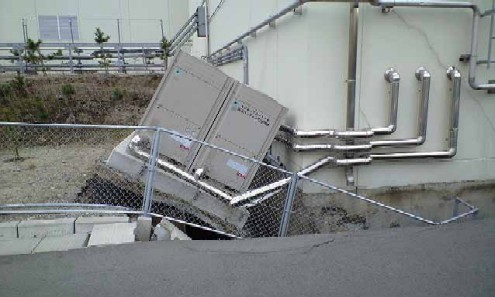
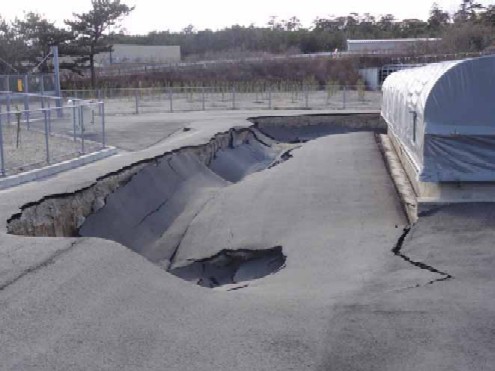
Elsewhere in Japan, however, physicists are still coming to terms with the impact of the earthquake on the country’s scientific facilities. New pictures have been released of damage to the massive new J-PARC facility at Tokai, which lies about 120 km south-west of Tokyo and consists of two proton synchrotrons, a neutron source, a neutrino experiment and a hadron facility all rolled into one. The images show the synchrotron flooded with about 4cm of water, as well as cracks in local service roads, damaged pipes, and buildings bent and distorted (see below). Thankfully, the problems are not too severe but they are certainly a setback for the facility.

J-PARCdamage1.jpg

J-PARC2.jpg

Finally, without wanting to be too flippant following the damage to the Fukushima nuclear plant, which officials today have put at a maximum, level-seven alert on the International Nuclear Event Scale, we couldn’t help raising a smile at an amusing new cartoon film on YouTube that likens the emissions from the facility to those from a toddler in nappies. The film has already had 1.6 million views and rising (see below).

Oh yes, and to put the radiation release from Fukushima into context, don’t forget the great graphic from comic-strip website xkcd by physics graduate Randall Munroe that we commented on a couple of weeks ago. It’s by far the best thing we’ve seen to put radiation fears into perspective.

Holography sharpens up

This tasty looking apple is an image of a new type of hologram developed in Japan that exploits tiny vibrations in metallic surface known as “surface plasmons”. The image holds its rich natural colours even as the viewer changes their position, unlike many existing holograms on the market. For this reason, the researchers believe that their innovation could lead to new display technologies such as smart-phone screens that can project lifelike 3D images.

A hologram is a recording of an optical interference pattern between light waves, and is generated in photosensitive materials using laser beams. Unlike 3D cinema projection, holograms appear to be 3D without the viewer needing to wear special polarizing glasses. Instead, holographic displays emit light in such a way that it produces many perspectives that allow the viewer to see the “object” from multiple angles.

Multicoloured holograms have been used for a range of applications such as the small multicolour icons used as security markers on credit cards. But these holograms tend to change colour with viewing angle due to information being lost when the holograms were produced. Now, Satoshi Kawata and his colleagues at Japan’s RIKEN research institute in Saitama have found a way around this issue.

Laser writing

Kawata’s team made their improved hologram by shining red, green and blue laser light onto a 150 nm-thick film of a light-sensitive material known as a photoresist, which was mounted onto a glass substrate. They then coated the photoresist with a 55 nm layer of silver followed by a 25 nm layer of glass.

To see the hologram, the researchers needed to illuminate the structure with white light to generate surface plasmons in the silver film. Plasmons are coherent electron oscillations that can be thought of as a quasiparticle that couples photons and electrons. By illuminating the hologram in three distinct directions, the researchers were able to generate plasmons corresponding to the red, green and blue features of the hologram.

Kawata told physicsworld.com that the tricky part was finding a way to balance the colours to represent natural colours, such as the subtle blend of reds and greens in their reconstructed apple. They managed this by carefully controlling the power of the laser when writing the holograms with multiple exposures for the three different colours.

Kawata is confident that the new technique could lead to applications, particularly for displays such as the smart phones of the future. “This hologram can be used by sales persons in a company to show their new products to their costumers,” he says.

‘A good scientific achievement’

Nasser Peyghambarian, a holography researcher at the University of Arizona, believes that this is “a good scientific achievement”. But Peyghambarian has a concern that the Japanese team will struggle to scale up the device up for practical applications.

Michael Bove Jr, another holography specialist working at Massachusetts Institute of Technology (MIT), points out that any new holography technique will face tough competition. “These fellows know a bit about physics but they clearly haven’t seen a lot of the holograms that are already on the market.”

“That said, this approach looks as if it could offer some advantages in light efficiency and view angle for mass-produced holograms, provided they can figure out how to mass produce their holograms cheaply.”

The findings are described in a new paper in Science 332 218.

Kepler picks up stellar vibrations

An international team using the Kepler space telescope has spied oscillations in the atmospheres of 500 Sun-like stars, a twenty-fold increase in the number of such objects previously studied. This bonanza of stellar data provides a new way of testing our understanding of how stars evolve, and could even help in the search for a second Earth.

Scientists have long known that the atmosphere of the Sun oscillates. In the same way seismologists use earthquakes to model the interior of the Earth, helioseismologists use vibrations observed on the Sun to probe deeper into our star. Oscillations of about 25 other stars have also been studied in the emerging field of asteroseismology. Now, thanks to the Kepler space telescope, a team led by Bill Chaplin, at the University of Birmingham, UK, has increased this figure significantly.

Launched by NASA in 2009, Kepler is better known for its planet-hunting endeavours, and the mission has identified over 1000 possible exoplanets. These are planets orbiting stars other than the Sun. In order to determine the density of an exoplanet, astronomers must know the mass and radius of its host star. These two parameters can be determined by asteroseismology and Kepler was designed with this in mind.

Continuous star gazing

“Kepler looks at the same stars continuously, it isn’t chopping and changing to different parts of the sky,” Chaplin told physicsworld.com. “This has allowed us to find small oscillations in 500 stars, compared to only a handful known previously. We can now get great coverage of the different flavours of Sun-like stars and their different evolutionary stages,” he adds.

With our own Sun, the simplest oscillations occur with periods of approximately five minutes and effectively cause the Sun to “breathe” in and out. However, this expansion and contraction only amounts to tens of metres over the 1.4 million kilometres of the Sun’s diameter, which is why finding the same phenomena in other stars had proved so difficult. “These are really tiny effects; they are tricky to measure. We’ve had to wait for a sophisticated satellite like Kepler to be able do it,” Chaplin explains.

The oscillations observed with Kepler were of comparable periods to those on our Sun, ranging from three minutes up to 25. These differences in period, and therefore frequency, provide important information about the individual properties of the stars. For example, when it comes to radius, the smaller the star the more high-pitched its song. “It is similar to musical instruments. A piccolo trumpet is small and resonates at a higher frequency than a much larger tuba. The same is true for stars: they resonate like musical instruments because they have sound trapped inside,” says Chaplin.

Models come up short

Such large ensembles of stars allow statistical analysis of their properties, which include mass and age as well as radius. When it comes to mass, variations in the star’s density alter the way sound waves permeate through the star and this leaves a tell-tale fingerprint in the observed oscillations. Using this technique Chaplin was able to measure the masses of the Kepler stars and compare this mass distribution to that predicted from theoretical models. It turns out the models come up short. “We found there are more low-mass stars, ones with around one solar mass, than predicted by theory,” Chaplin explains.

These results excite asteroseismology researcher Don Kurtz, at the University of Central Lancashire who was not involved with this work. “For decades we’ve been trying to find stars like this, and now we have 500 of them,” Kurtz told physicsworld.com. “This is one of the big results from the Kepler asteroseismic effort,” he adds.

Kurtz also believes that it could be an important stepping stone to finding a planet like the Earth. “An Earth-like planet needs to be in the ‘habitable zone’ where water can be liquid. To pin down the habitable zone for each individual star you need to know its properties accurately, something Kepler’s asteroseismology work is helping to do,” he says.

And the work is set to continue according to Chaplin. “As we add to the data, we will be able to not just measure the masses and radii more accurately, but we’ll be able to do the equivalent of a CT scan and peel away the surface layers and look in a lot more detail at what is going on inside these stars,” he explains.

The research is outlined in Science.

Zero resistance to cake

Superconductivity_cake.jpg

By Louise Mayor

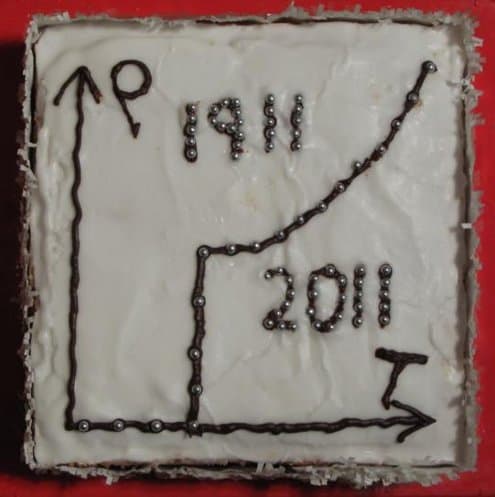
We had a good chuckle in the Physics World office when we saw how Ted Forgan and his condensed-matter group at Birmingham University in the UK are celebrating the centenary of superconductivity.

As Forgan explained, “According to my info, today is the actual day, so in our group we celebrated with a cake.” He does, however, acknowledge his “amateur icing skills”.

Apparently, comments about the cake have included “Does it contain super currants?”, “Does it contain pears?”, and the less obvious “Is it a Butter–Chocolate–Sugar supercake? (maybe this depends on Tc, the cooking temperature)”.

I had to get this last one explained to me; if you need a clue too, it refers to the Bardeen–Cooper–Schrieffer (BCS) theory of superconductivity.

Once the pun-groans have subsided, if you want to know more about what superconductivity is all about and what’s hot in superconductivity right now, then look no further than this free PDF download of our April special issue. In fact, we’re in touch with Forgan because he contributed a piece about high-temperature superconductivity called “Resistance is futile”.

You might also want to check out this video feature about superconductivity by Paul Michael Grant called “Down the path of least resistance”.

Clearly, superconductivity brings out the puns in everyone.

Study queries open access benefits

Making a research paper free to read online is likely to increase the number of times it is viewed – but it will not make the article more likely to be cited by other researchers. That’s the conclusion of a new study by Philip Davis, a communications researcher at Cornell University in the US. His finding adds fuel to the debate over the advantages of open-access publishing, which supporters promote as a fairer and more effective system for the dissemination of scientific information.

If open access has an effect on article citations, its effects are much smaller than previously reported

Open-access publishing comes in a variety of forms but its essence is to make academic papers free to all by abolishing journal subscription fees. Instead, the author usually pays a fee to have the paper published. Physicists have been at the forefront of making scientific data more freely available. For instance many researchers publish preprints of their papers on the arXiv.org server, or post links to physics preprints on the SLAC-SPIRES database.

The debates over who should pay and who should profit in academic publishing are well established and they often come down to political and business choices. But in recent years, some researchers have attempted to quantify the benefits of open access to the individual researcher who is seeking to publish their research.

Opening access

In this new study, Davis considers 3245 papers published between January 2007 and February 2008 in 36 journals spread across the sciences, social sciences and humanities. With the permission of the participating journals – and without any involvement from the publishing authors – Davis randomly assigned 712 articles as open access. The remaining 2533 articles were only available to subscribing individuals and institutions.

Three years down the line, Davis discovered that the open-access articles had received significantly more downloads and reached a broader audience. But despite this, these papers were not cited any more frequently, nor any earlier, than the subscription-access articles. “If open access has an effect on article citations, its effects are much smaller than previously reported,” Davis told physicsworld.com.

Although Davis’ study did not cover any pure physics journals, the findings agree with a related study from 2007 co-authored by the Harvard University physicist Michael Kurtz, which considered papers published in the online version of Astrophysical Journal. This journal put up a subscription barrier at the start of 1998, having previously existed as a fully open-access publication. Kurtz showed that papers published in 1997 received no more citations than papers published in 1998, when accounting for other factors.

Both Davis and Kurtz come to the same conclusion to explain why there appears to be no citation advantage in making a paper open access. They believe that papers published in core journals are likely to come from the mainstream institutions that have comprehensive access to subscription journals. In other words, when it comes to getting their hands on research papers, it does not matter to the most prolific scientists whether the papers are open access or not.

Sample too small?

However, not everyone agrees with this conclusion. Stevan Harnad, an information scientist at the University of Southampton in the UK, published a study last year in the journal PLoS One reaching the opposite conclusion – that open access does bring increased citations. Harnad criticises Davis’ new study partly on the grounds that the sample size is too small. He says that the published studies confirming the citation advantage outnumber those that do not by 8:1.

Davis defends the size of his sample, saying that his study’s strength lies in its ability to rule out external factors that determine which papers are made freely available, such as an author’s willingness to pay the open-access fees. “By implementing a true randomized controlled trial, we were able to more accurately isolate and estimate the effect of access from all other explanations,” he says.

Davis believes that the real beneficiaries of open access may be the communities that consume but rarely contribute to the corpus of literature. “It is unfortunate that some read our paper as an attack on open access, when it is not,” he says. “Indeed, it suggests that there are real benefits to the free access of the scientific literature. A citation advantage, however, is not one of them.”

[This finding] doesn’t negate the utility of open access, either to researchers or to the general public, but clarifies better what is the long-term role it plays Paul Ginsparg

Paul Ginsparg, the quantum physicist at Cornell University who developed the arXiv server in the early 1990s, agrees that the result does not spell bad news for the open-access movement. “[This finding] doesn’t negate the utility of open access, either to researchers or to the general public, but clarifies better what is the long-term role it plays.”

The Davis study is published in the Federation of American Societies for Experimental Biology Journal.

Big noises about a little bump at Fermilab

By Hamish Johnston

Particle physics blogs are buzzing about an innocuous-looking bump in data taken by the CDF experiment at Fermilab in Chicago – and the possibility that it could be evidence for a new particle.

The unexplained signal was spotted in a study of W and Z boson pairs that are created when protons and antiprotons collide in Fermilab’s Tevatron collider. It appears at about 120–160 GeV /C2 in the distribution of jets that are produced in the collisions. The bump has a statistical significance of “three-sigma”, which means that there is a one in 370 chance that the bump is not real.

While that might sound convincing to you and me, particle physicists don’t accept a new result until it has been established at five-sigma – about one in two million chance of not being real. Another problem is that CDF’s sister experiment D0 doesn’t see the bump. Rumours are also circulating that ATLAS at CERN has not seen it.

But if the bump is real, what could it be?

Theoretical physicists are now hard at work trying to explain the bump, and at least one paper – with the intriguing title Technicolor at the Tevatron – has already been posted on the arXiv preprint server. No doubt many more will follow.

What are other physicists saying?

In his blog, Tommaso Dorigo sketches out three possible ways that the bump could be an artefact of how the experiment was done or the data were analyzed. But if the bump is real, he thinks that it could be evidence for a new particle – but not a Higgs boson.

Adam Falkowski seems to agree. “It is not a Higgs; anything Higgsish with 150 GeV mass would prefer decaying to a pair of W bosons rather than to two light jets,” he writes in his blog.

But what about a “non-standard Higgs”? Flip Tanedo explores that possibility in this blog entry.

The story has also captured the imagination of veteran science writer Dennis Overbye in an here.

Einstein by numbers

einsteinface.jpg

By James Dacey

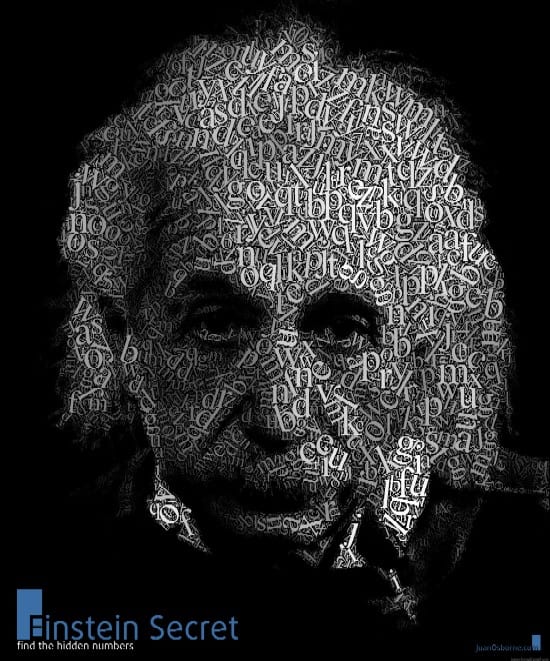
This fresh take on the iconic image of Einstein is the creation of Spanish artist Juan Osbourne. If you click through to the original work you will discover that it is also a puzzle where you have to find the numbers one to nine hidden among the letters of the alphabet. The portrait is part of a collection of images by Osbourne composed solely from letters, words and numbers, including several film stars and musicians.

Graphene transistor shines on diamond-like substrate

Diamond-like carbon could be an ideal substrate for graphene transistors. So say researchers in the US who have made advanced devices with a record-high cut-off frequency of 155 GHz and the shortest gate length ever of just 40 nm. The field-effect transistors, which also function all of the way down to temperatures as low as 4.3 K, operate at radio frequencies and so could be used in wireless communications.

Graphene is a flat sheet of carbon just one atom thick that conducts electrons at extremely high speeds. Indeed, the electrons behave like relativistic particles with no rest mass. This, and other unusual physical properties, means that graphene is often touted to replace silicon as the electronic material of choice and might be used to make faster transistors than any that exist today.

Transistors made from graphene could be used in radio-frequency microelectronic devices for wireless communications. These devices can be made by transferring high-quality graphene sheets, produced by a technique called chemical vapour deposition (CVD), onto a suitable, insulating substrate – such as silicon dioxide. However, the problem is that the substrate can severely degrade the electronic properties of graphene because of scattering of charge carriers (electrons and holes) in graphene. This scattering, which drastically limits the speed of the electrons and holes, comes about due to interactions between graphene and the dielectric substrate material.

Diamond-like, but cheap

Now, Phaedon Avouris and colleagues at the IBM Thomas J. Watson Research Center, New York, may now have come up with an answer to this challenge. The team used diamond-like carbon as the top layer of the substrate, with the carbon atop a standard silicon wafer. Diamond-like carbon is already widely used in the semiconductor industry and is created by chemical vapour deposition (CVD). It is a non-polar dielectric material, which means that it does not trap charges nor does it scatter charge as much as silicon dioxide does. It is also cheap to make in large areas; does not absorb much water; and has excellent thermal conductivity.

“The cut-off frequency we obtained is the highest so far for transistors made from CVD-graphene,” Avouris said. “However, it is not, by far, the limit of what can be achieved because the quality of the CVD-graphene we used was modest (it’s carrier mobility was less than 1000 cm2/Vs).”

At IBM and many other laboratories around the world, scientists are now perfecting the CVD process and steadily increasing its performance, he added.

High-frequency transistors could find use in a wide range of applications, but primarily in communications – for example, mobile phones, the Internet and radar. Medical imaging, security and sensors could also benefit. What’s more, the new transistors continue to work well at extremely low temperatures and could therefore be used in extremely cold environments, such as space.

“With this work, another industry compatible technology option for radio-frequency graphene field-effect transistors is now available,” commented Frank Schwierz of the Ilmenau Technical University in Germany.

The results are published in Nature 472 74.

Copyright © 2026 by IOP Publishing Ltd and individual contributors