Nobel Foundation stays firm on symposium cancellation

The Nobel Foundation is refusing to back down over its decision to cancel a Nobel Symposium on water in biology and medicine that was due to take place in August in Stockholm. The three-day-long conference was cancelled last September by the Nobel Symposium Committee because of the way in which the meeting was organized. However, physicists and other scientists who were set to speak at the conference are dismayed at the cancellation, saying that they have not been given any firm reasons as to why the meeting has been called off. The Nobel Foundation, which also awards the Nobel Prize for Physics, finances several official Nobel Symposia each year, with 2011 featuring meetings on international relations as well as on mind, machines and molecules.

The symposium on water in biology and medicine was first initiated in April 2009 by John Skår of the Karolinska Institute in Sweden. By May 2010 the proposal to hold the meeting was assessed by members of three Nobel-prize committees – physics, chemistry, and physiology and medicine – who each recommended that the meeting go ahead. The proposal was then sent to the board of the Nobel Foundation, which accepted the proposal in June and awarded it SEK 1.1m (about £100,000).

Following the board’s approval, the meeting was officially named as Nobel Symposium 151 (NS151) on water in biology and medicine, with Skår acting as co-ordinator of the meeting’s organizing committee. “Nobel Symposia are prestigious events,” says Peter Coveney, director of the Centre for Computational Science at University College London, who was also on the NS151 organizing committee. “They are taken as an indication of where future Nobel prizes may be heading.”

In September last year, after invitations were sent to speakers, the Nobel Symposium Committee (NSC), chaired by Michael Sohlman, who is also executive director of the Nobel Foundation, asked Bengt Nordén from Chalmers University of Technology in Gothenburg to assess the merits of the invited speakers. The review was initiated after two former members of the organizing committee wrote a letter to the Nobel Foundation complaining about the meeting’s organization and its speaker list.

Dissenting voices

However, one of the dissenting voices was apparently one of five people who gave evidence to Nordén for his report to the NSC. In an e-mail seen by Physics World, Nordén wrote in early October that the people he interviewed felt that the majority of the speakers “did not meet the criterion of being eligible for a Nobel Symposium”. Nordén concluded that there was “something” in the criticism of the former members.

It’s like scientific misconduct. You can’t just break a contract like the Nobel Foundation has done. Eugene Stanley, Boston University

On 30 September the NSC decided to cancel the meeting. It then sent a brief letter to the invited speakers on 5 November saying that “the planning of the Nobel Symposium 151 has not taken place in the way required for a Nobel Symposia”. The letter, sent by Sohlman, stated that the cancellation was made with “no judgements whatsoever about the scientific standing of any of the invited participants”.

Skår told Physics World that he received no explanation as to why the planning was not sufficient, given that the proposal had already been accepted, adding that the organization committee had also not been given any opportunity to refute the accusations. Indeed, many researchers are furious that the meeting has been cancelled at such a late stage. “This could become the major scientific scandal of the year,” says Eugene Stanley from Boston University, who was due to speak at the conference about anomalies in liquid water. “It’s like scientific misconduct. You just can’t just break a contract like the Nobel Foundation has done.”

Requirements not met

Sohlman told Physics World via e-mail that concerns regarding NS151 were raised in September when the NSC realized “that the work of the organizers did not meet the stipulated requirements”. When asked to elaborate what these requirements are, and whether Nordén’s report played any role in the cancellation, no response has yet been given.

Skår refutes Sohlman’s reasons. “There are no such stipulated requirements, and there are also no such criteria for selecting the eligibility of speakers,” says Skår. “One would expect the foundation to adhere to high standards of professional integrity and transparency.”

Stanley is now calling on the foundation to uphold its original decision to hold the meeting. “It is a matter of ethics,” says Stanley. “We have to stop such unethical behaviour before others cancel meetings months after they are announced.” Sohlman, however, told Physics World that the decision to cancel NS151 is “irrevocable”.

Thunder storm radiation amazes physicists

The radiation produced during a lightning storm is more energetic and potentially threatening to aircraft than previously thought, claim researchers in Italy. Studying this radiation in closer detail could help scientists to probe some of the big unanswered questions in the study of thunder storms, such as how lightning is triggered in clouds.

Scientists have known for a long time that the large electric fields and currents produced during thunder storms can also generate X-rays and gamma rays in the vicinity of clouds. But in the early 1990s a rare type of lightning event was discovered that can produce extremely bright, energetic gamma rays – known as terrestrial gamma ray flashes. So far, however, it has been difficult to determine specific details about this phenomenon such where the radiation originates from and its energy range.

Now researchers involved with the Italian Space Agency’s AGILE mission have been able to home in on terrestrial gamma ray flashes. Launched in 2007, this satellite is dedicated to observing gamma rays originating from terrestrial and cosmic sources. Its silicon-based gamma ray detector has recently been fitted with new software that enables the satellite to take snapshots of the radiation at sub-millisecond time intervals.

Flash strikes

The AGILE team led by Marco Tavani gathered data collected from 130 terrestrial gamma ray flash events occurring in the past two and a half years. Reporting its findings in Physical Review Letters, Tavini’s team noted radiation emerging in all directions from the upper atmosphere, covering a wide range of energies. In some cases gamma rays were up to 100 MeV – more than twice as energetic as previous measurements.

100 MeV is absolutely amazing considering that these things are made deep in our atmosphere by thunderstorms Joseph Dwyer, Florida Institute of Technology

“100 MeV is absolutely amazing considering that these things are made deep in our atmosphere by thunderstorms,” says Joseph Dwyer, a lightning physicist at the Florida Institute of Technology, who was not involved in this research. “For comparison, 100 MeV is even impressive coming from big explosions on the Sun.”

Tavani tells physicsworld.com that his team became interested in these gamma rays because they can reveal details about the processes occurring in thunderclouds. “People have sent probes directly into clouds but it is very difficult to catch this kind of strong lightning in action,” he says.

Runaway electrons

While the specific details of lightning initiation are not yet known, scientists do know that it requires large potential differences to be established within thunderclouds. This can transform the clouds into particle accelerators where electrons can be rapidly accelerated, producing an avalanche of particles as they liberate more electrons along the way. These “runaway electrons” are believed to be the source of gamma rays, and they may be involved in producing the initial spark for bolts of lightning.

Tavani’s team intends to continue observing gamma rays emitted during thunderstorms. The researchers are planning a programme for surveying the upper atmosphere in more detail, which will involve sending an aeroplane equipped with gamma ray detectors into the vicinity of a thunder cloud. “We will have to be careful and I think flying over the clouds will be best because you don’t get the dangerous discharge,” Tavani says.

In addition, Tavani is concerned with the potential threat the gamma rays may cause to aviation. In the next few months his team will be publishing a separate study that reviews the impacts of gamma rays on electrical equipment.

Physicists find new clue in coronal heating mystery

The latest research from a team of international astronomers could help to explain the long-standing mystery of why the Sun’s outer atmosphere – or corona – is so much hotter than its surroundings.

The corona, the vast gossamer atmosphere of plasma visible from Earth during a total solar eclipse, can notch up temperatures in excess of one million degrees Kelvin (MK). Several rival explanations have jostled to account for why the corona is unexpectedly over 200 times hotter than the visible surface, or photosphere, of the Sun. However, in recent years one theory has charged from the back of the pack to become a frontrunner in the race to solve the mystery: spicules – or fountain-like jets of plasma. These emanate from the chromosphere, a relatively thin layer separating the photosphere and corona.

Previously, the spicule theory was largely discredited due to an absence of correlating phenomena in the corona itself. Then, in 2007, researchers led by Bart De Pontieu at the Lockheed Martin Solar and Astrophysics Laboratory in California, US, found a new breed of spicule, which they dubbed “Type II”; Type II spicules are shorter-lived but faster moving than their Type I cousins. In his latest research, published in Science, De Pontieu and colleagues now believe they have found evidence implicating Type II spicules in the heating of the corona.

Tell-tale signature

“Spicules play a significant role in coronal heating, which doesn’t fit any of the current theories. This also suggests that there is significant heating going on in the first few thousands of kilometres [of the corona], which is very different from what people have assumed before,” De Pontieu told physicsworld.com. When the spicule jets occur on the solar disc they leave a tell-tale signature in the spectral lines observed in the chromosphere: fast-occurring blue-shifts, known as rapid blue-shift events (RBEs). De Pontieu used data from the Solar Optical Telescope (SOT), aboard the Sun-orbiting Hinode spacecraft, to build up a catalogue of RBEs, which he then compared to coronal data from NASA’s Solar Dynamics Observatory.

We haven’t completely solved the problem, but we’ve certainly added a significant new wrinkle to it Scott McIntosh, NCAR

“The high temporal and spatial resolution of this generation of solar observatories allowed us to discover that spicule events in the chromosphere are correlated to brightenings in the corona,” De Pontieu explained. The team found that the vast majority of the spicule plasma is only heated to between 0.02–0.1 MK and sinks back down into the chromosphere. However, the key finding is that a small but significant portion of the plasma is heated beyond 1 MK and uplifted into the corona. The researchers found this process to be ubiquitous across the Sun.

However, the search for a definitive answer to the coronal heating mystery isn’t over. “We haven’t completely solved the problem, but we’ve certainly added a significant new wrinkle to it,” second author Scott McIntosh, at the National Center for Atmospheric Research (NCAR) in Colorado, explained.

Combination of different mechanisms

Lucie Green of the Mullard Space Science Laboratory at University College London, who was not involved in the research, agrees: “My hunch is that the solution to the [coronal heating] problem is a mix of answers, a combination of different mechanisms. We shouldn’t be looking for just one ‘golden’ answer,” she said. “However, this research is something new and it will definitely sit alongside the other explanations,” she added.

Whatever mechanism, or mix of mechanisms, is responsible for the soaring temperatures of the corona, finding an answer is important. “Heating causes the corona to expand outwards, forming the solar wind. This is ultimately what drives lots of processes throughout the solar system, so it would be great to better understand how that heat is being put into the solar atmosphere,” said Green.

In order to pinpoint the exact role of spicules in coronal heating and to understand what drives and heats them in the first place, De Pontieu hopes to exploit an upcoming NASA mission. “Fundamentally we need new instrumentation. The Interface Region Imaging Spectrograph (IRIS), is due to launch in December 2012 and it is really focused on the physics of the region between the solar surface and corona,” De Pontieu explained. “That would really help us to follow up this research,” he added.

The research is described in Science.

Italy approves SuperB particle collider

The Italian government has given final approval for building a new €500m collider that will investigate the small but significant differences between matter and antimatter. The SuperB facility will smash electrons and positrons together to produce particle/antiparticle pairs of B-mesons, D-mesons and tau-leptons. Measuring the subtle differences in how these particles and their antiparticles decay could help shed light on the mystery of why there is so much more matter than antimatter in the universe.

The SuperB facility will be built by Italy’s national institute for nuclear and particle-physics research (INFN). It will consist of a 2 km circumference ring with two accelerators – one for electrons and the other for positrons. Collisions will occur within a large detector that will track the decay products and measure their energy.

The facility is expected to produce B-mesons at a rate 50–100 times greater than existing and previous “B factories” such as BaBar in the US and Belle in Japan. Marcello Giorgi from the INFN’s lab in Pisa, who is director of the SuperB project board, says that the experiment could begin taking data by 2016.

A brilliant synchrotron too

SuperB will also produce synchrotron radiation, which will be used in a wide range of experiments in condensed-matter physics, chemistry, biology and materials science. The synchrotron facility will have six beamlines – three extracting light from the electron beam and three from the positron beam. Although this is a small number of beamlines compared with other synchrotron facilities, Giorgi told physicsworld.com that “the brilliance of the light will be greater than any existing synchrotron”.

The SuperB synchrotron, plans for which were finalized in February 2010, will be run by the Italian Institute of Technology (ITT). Once particle-physics experiments are finished at SuperB, the facility will eventually be devoted solely to synchrotron-radiation research. However, Giorgi, stresses that particle physics is the priority and he does not expect the matter/antimatter studies to be adversely affected by the synchrotron research.

Although the funding announcement has been delayed by a year – due in part to the global financial crisis – Giorgi expects work to begin on the facility later this year. Commissioning of the accelerator is scheduled for late 2015 and the first data should emerge in 2016. Physicists should be able to keep to this tight schedule because many of the accelerator components will be reused from the defunct PEP-II electron–positron collider at SLAC National Accelerator Laboratory in the US, which hosted the BaBar experiment until 2008.

Site selection

Despite this tight schedule, the INFN has still not decided where to build the facility. The leading candidate is INFN’s Frascati lab just outside Rome. Frascati is already home to the DAFNE electron–positron collider, which is used to study CP violation in K-mesons. Although the INFN site is not large enough to hold the entire ring, it could be shared with the adjoining Frascati campus of Italy’s national energy research lab ENEA. According to Giorgi, the INFN is in the final stages of negotiating this plan, which includes building tunnels under a main road.

If the Frascati plan falls through, the alternative site is Rome’s University of Tor Vergata, which is about 2.4 km from the Frascati lab. According to Giorgi, a site will be chosen by the end of January.

Vote for your favourite breakthough

By Hamish Johnston

After too much turkey and water shortages in Ireland, December 20th seems like an eternity ago. That’s when we published our top 10 breakthroughs of 2010, with two research groups at CERN sharing the number one slot with their work on antihydrogen.

To create the top 10, I first went through the 360 or so news stories that we published in 2010 and came up with a shortlist of about 25. Then James, Michael, Matin and I locked ourselves in a meeting room until we could agree on a list of 10.

I won’t pretend that we were 100% objective – we all have our favourite topics and physicists – but I think we caught the essence of what went well in the world of physics last year.

Over on his blog Uncertain Principles, Chad Orzel has put our list to the test by asking his readers to vote on their favourite breakthough.

You can vote here, and you can also view the results.

I’m pleased to see that Chad’s readers agree with our number one and number two choices – and a few others as well. Folks seem less keen on the holograms, invisibility cloaks and phonon lasers.

3D magnetic domains imaged for the first time

Physicists in Europe are the first to obtain 3D images of magnetic domains – regions within a material in which all the magnetic moments point in the same direction. While 2D magnetic domains on surfaces can be imaged using several different techniques, 3D images have eluded scientists since such magnetic domains were first proposed over 100 years ago. As well as providing better insight into how domains form and evolve, the technique could also help to improve hard disks – which store data in magnetic domains.

Below a critical temperature the magnetic moments in a ferromagnetic material such as iron tend to point in the same direction as their neighbours. In the absence of an applied magnetic field, however, all the moments in an iron sample will not always point in the same direction. Instead microscopic regions – called domains – can form whereby all the moments of one domain will point in one direction, while all the moments of a neighbouring domain may point in a different direction.

While physicists have been able to study the effect of domains on the magnetic properties of materials, they had not been able to make 3D images of domains deep within the bulk of a material. Instead they had to settle on destructive techniques such as imaging domains near the surface of the sample and then shaving off a thin layer and repeating the measurement.

Talbot-Lau neutron tomography

But now Ingo Manke and Nikolay Kardjilov of the Helmholtz Centre Berlin and colleagues in Germany, Switzerland and the UK have created the first 3D images using a new technique called Talbot-Lau neutron tomography. They did this by firing a coherent beam of low-energy neutrons at a sample of an iron-silicon alloy. A small number of the neutrons are deflected slightly when they cross a boundary between two domains. This deflection occurs because the index of refraction of the material changes abruptly at the boundary. A diffraction grating with a detector behind it is scanned across the beam of deflected neutrons to determine the angle of deflection.

This measurement is repeated many times as the sample is rotated through 360°. The data are then fed into a computer program developed by the team, which produces a 3D image of the domains. The images have a spatial resolution of about 35 μm, which Manke and Kardjilov say could be improved to about 1 μm by using a neutron detector with a better spatial resolution and a higher neutron flux.

‘Significant advance’

Bruce Gaulin of McMaster University in Canada told physicsworld.com, “I am very impressed with the quality of the 3D visualization of the magnetic domains and the quantitative analysis that this quality of data enables.” Gaulin, who was not involved in the research, added that the work represents “a significant advance and I would expect it to allow much more detailed understanding of domain structures in materials of practical interest”.

As well as improving their experimental set-up, the team is also developing better ways to interpret the data. The team also plans to use the technique to put magnetic-domain theories to the test and to make measurements in strong magnetic fields.

The work is describe in Nature Communications DOI:10.1038/ncomms1125.

Pyramid metrologists

The only surviving member of the Seven Wonders of the Ancient World, the Great Pyramid of Giza has captivated the imaginations of visitors for thousands of years. Alexander the Great visited it, as did Napoleon. In the late 19th century, however, the Great Pyramid took on a new role as a prop in an anti-metric movement. In doing so, this ancient Egyptian edifice became possibly the most bizarre example ever of an object proposed as a metrological standard.

Truth be told, the pyramid’s solidity and permanence are properties one desires in a standard. Among the early “pyramid metrologists” was John Taylor, a partner in a London publishing firm, who (despite never having seen the Pyramid) believed its dimensions encoded secret knowledge, including the magnitudes of ancient units. In Taylor’s view, the pyramid’s mathematical relationships were simply too sophisticated for the ancient Egyptians to have devised – he claimed, for example, that the ratio of two sides of its base to its height is π, which is an irrational number that was unknown when the pyramid was built.

Taylor therefore asserted that the pyramid’s architect must have been an Israelite obeying divine instructions. In the pyramid’s dimensions, we can find God’s own units of length, such as the “sacred cubit” (about 25 inches), and weight and capacity (from the coffer in the King’s Chamber). The pyramid, in other words, revealed the true sizes of things both ancient and modern. For Taylor, the ancient, sacred, natural measurement system was superior to the modern, artificial, metric system – a point he voiced in his 1864 book The Battle of the Standards.

Metric scorn

Taylor’s book in turn inspired Charles Piazzi Smyth, the Astronomer Royal of Scotland and an amateur Egyptologist. Smyth became convinced that “the Great Pyramid, besides its tombic use, might have been originally invented and designed to be appropriate for no less than a primitive Metrological Monument”. Smyth wrote a 664-page book, Our Inheritance in the Great Pyramid, that included other numerological claims.

The fundamental pyramid unit was not the cubit but its 25th part – the “pyramid inch” – which Smyth said was exactly 1/500,000,000th of the Earth’s axis of rotation. It, rather than the metre, was the genuine natural standard. Smyth said that pyramid measurements were “true cosmical relations in their original units”, and that the pyramid was “a Bible in stone, a monument of science and religion never to be divorced”.

Smyth scorned the metric system, its inventors and its champions. For him, Anglo-Saxon peoples had wisely hewed to the pyramid-inch measure, from which the imperial inch differed only by a negligible fraction. “Simultaneously with the elevation of the metrical system in Paris,” he thundered, “the French nation did for themselves formally abolish Christianity, burn the Bible, declare God to be a non-existence, a mere invention of the priests, and institute a worship of humanity, or of themselves.”

In late 1864 Smyth set off for Egypt to investigate first-hand the metrological wonders encoded in the pyramid’s dimensions: the distance of the Earth to the Sun; the length of the year; and the diameter and density of the Earth. He even found a temperature scale, with a zero point that was the freezing point of water and its 50 degree mark as the temperature of the King’s Chamber.

When Smyth returned, his Royal Society colleagues were unimpressed and demolished his numerology, finding errors in his work that included the fact that the famous ratio of twice one side to height was not π but the more mundane ratio 22/7. (Martin Gardner, that great exposer of pseudoscience, analyses Smyth’s errors in his book Fads and Fallacies in the Name of Science.) As the controversy heated up, so did Smyth’s confidence, to the point where he began making absurd comparisons: himself to Kepler, and opponents to the know-nothings who ridiculed him. In a fit of rage following a tangle with James Clerk Maxwell, Smyth resigned from the Royal Society in 1874.

A few years later, however, Smyth found enthusiastic followers in the US among its extreme anti-metric movement: members of the International Institute for Preserving and Perfecting Weights and Measures. This campaign exhibited the classic signs of US anti-reform movements then and now: rabid rhetoric, fabrication of “facts”, reimagining history, conspiracy theories and appeals to preserve the purity of race, nature and nation. The enemy was the “other”: subversives, socialists, foreigners, atheism and artifice. The good guys were patriots, capitalists, Christians and adherents to God, country and nature.

US anti-reformists often trace their cause back to divine commandments and they love wacky props. The anti-metricists adopted the Great Pyramid as theirs, interpreting it as the same as the one in the Great Seal of the United States, which appears on the reverse of every dollar bill. The literary organ of the movement was the International Standard, whose issues contained numerological studies of the Great Pyramid, rants against the metric system, poems and even anti-metric songs.

The critical point

Smyth wrote frequently for the Standard, and tried to enlist the movement’s members in projects such as sending him back to Egypt for further measurements, and having the pyramid declared an international metrological park to protect it from war: “neutral ground under the guardianship of all English-speaking people, or of all Christian nations”. Were he and the institute members drawn together more by the anti-metric cause or the pyramidology? This is unclear and does not matter; the two interests fed each other. At last Smyth found in them a receptive audience, at least for as long as the organization lasted, until 1888. When he died in 1900, Smyth’s tombstone was formed from a stone pyramid topped by a cross.

The history of metrology contains numerous efforts to tether units to artefacts, natural phenomena and physical constants, but this is one of the few attempts to secure units by divine revelation. The Great Pyramid episode is fascinating in the way that it exhibits the passions that tend to crystallize around the quest for metrological finality.

The Scholar and the Caliph

N.B. This is a fictionalized account – see author’s note below

In the hush just before fajr, before the devout gather to greet the sunrise with prayers towards Mecca, the Scholar emerges from a fitful sleep and confronts the darkness. He remembers, as consciousness returns, that he is a prisoner in his own home. There is nothing to alleviate the mind-numbing sameness of days, no friendly voice or warm touch to keep the suffocating isolation at bay – not even the musty comfort of his books. Truly, I am cursed among men.

This is not how he envisioned his future as an ambitious young man back in Basra. There, he devoured the works of Aristotle and dreamed of scientific pursuits. “The ink of the scholar is more holy than the blood of the martyrs,” the Koran says, and he believed it. So he followed the throngs of Basran fortune-seekers to Cairo, home to the Dar al-‘llm (“House of Knowledge”), and found lodgings near the Azhar Mosque. He taught in the mosque’s school, and worked as a scribe in the Dar al-‘llm, copying Arabic translations of Euclid, Ptolemy and his beloved Aristotle, being careful not to smudge the pages with ink-stained fingers. All the knowledge in the world was at his fingertips. Yet the wisdom of the Ancients could not help him to foresee the ill fortune about to befall him.

One day he received a summons from Cairo’s reigning Caliph, al-Hakim bi-Amr Allah – a tremendous honour for a humble scribe. The Scholar felt small and insignificant as he passed through the palace gates into a large courtyard ringed by stone archways; twin minarets cast their shadows over a reflecting pool. He was even more cowed by the majesty of the blue-domed throne room – its stucco walls dotted with bright mosaic tiles. Even the Caliph seemed dwarfed by the setting, despite his robes of state and jewelled turban.

The Caliph was most eager to find a man who could solve a perplexing problem, he explained, and the Scholar came highly recommended. Every year, the flooding of the Nile served as a harbinger for the end of summer, and an omen for that year’s harvest. Too much flooding, and the crops would be destroyed; too little, and drought and famine would ravage the land. His people were utterly dependent on the fickle whims of the great river for their survival. Man’s ingenuity had already produced watermills to grind grain, and water-raising machines. If men could control water in this way, could they not also build a dam to control the flooding and bend the Nile to the Caliph’s will?

The Scholar was flattered by the Caliph’s attentions, and tempted by the promise of riches and fame should he succeed. Silencing the doubt in his mind, he told al-Hakim “It can be done.” And the Caliph appointed him head engineer of the project. But when the Scholar arrived at the proposed site, a cold dread ran through him, despite the dry heat of the desert: the sheer scale of the river and valley were beyond imagination. How could anything control such a force of nature? With a sick feeling he drew up detailed plans for the dam’s construction, made measurements, devised various schemes and tested inventions. But the scale of the engineering needed was beyond even the vast resources of the Caliph. In the end, he realized that it could not be done. He had failed.

The prospect of facing the Caliph with this news filled the Scholar with dread. People whispered that al-Hakim had once disembowelled a horseman in his service with a spear just outside the gates of the mosque. An abusive grocer turned muhtasib had his tongue and hands cut off before being summarily executed, and a corrupt judge was beheaded and burned for illegally seizing 20,000 dinars from a young man’s inheritance. Even minor infractions were met with arrests, stiff fines or beatings, if not death. Yet al-Hakim was not without compassion: once, after brutally beheading a man, he relented a few days later and ordered the body to be exhumed for proper burial and funeral rites.

The Scholar had heard the stories, and he feared the worst.

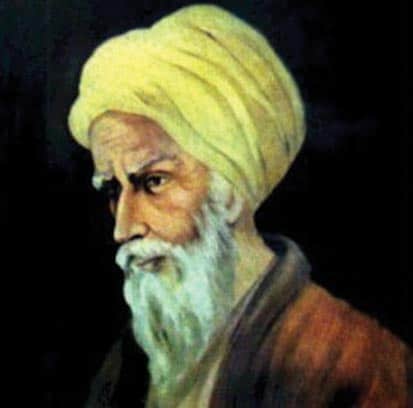
An illustration of Ibn al-Haytham

As he made his way back to his lodgings along the narrow winding streets of Cairo, he had a heavy heart, anxiety building with every step. He passed a beggar, noting the torn garments, tangled hair smeared with faeces, the jerky motions and staccato outbursts – all the hallmarks of a confused mind. He paused to drink from a public fountain and caught a glimpse of his own reflection in the water. He looked very much like that lunatic beggar: bedraggled, smelly, with unkempt hair and an unruly beard from his months camped out in the field, haunted eyes set deep in a face drawn taut with worry.

And then the Scholar had an epiphany. Would not the Caliph show mercy to a madman?

His fellow scribes at the Dar al-‘llm thought it might just work when he told them of his plan, and they agreed to help. He locked himself in his home and resisted the urge to bathe, while they spread rumours that his mind had snapped under the strain of trying to tame the mighty Nile. The gossip soon reached the Caliph, and he summoned the Scholar to gauge for himself the mental state of his engineer.

Heart pounding, the Scholar shambled into the throne room, doing his best to mimic the beggar’s behaviour – rocking and muttering to himself, even pulling out tufts of hair in only half-feigned agitation. His friends swore that he had been in this state for weeks, and they feared he would not recover. If the Caliph’s physicians who examined him suspected the pretence, they did not betray him. They told al-Hakim his engineer had, indeed, gone mad, and recommended confining the stricken Scholar to his home.

Mercurial he may have been, but the Caliph was no fool. “I see,” he murmured when his physicians gave their verdict. Eyes narrowed, hands clasped behind his back, he slowly circled the Scholar, coldly assessing the man with the supposed broken mind cringing on the ground before him. He wrinkled his nose at the stench.

“Very well,” he said at last. “He shall be placed under house arrest until further notice. But his worldly goods shall be forfeited.”

“Yes, yes, of course, a small price to pay.” The Scholar’s friends kissed the hem of the Caliph’s robes in relief, bowing repeatedly as they backed towards the door with the newly diagnosed lunatic between them.

“Wait.” Al-Hakim held up a hand, and guards promptly blocked their exit. “Confiscate his books, too.” He smiled slyly. “After all, what use does a madman have for reading?”

And so the Scholar escaped with his life, but not his freedom – a forgotten man leading a solitary life. No books, no visitors – no distractions to fill the hours. Al-Hakim chose the punishment well; it could drive a sane man mad. Each day, the Scholar counts the hours until night, when he can lose himself in slumber. He always awakens too soon.

Now, many moons later, as the merchants noisily make their way to the marketplace to set up their wares, he watches the first light of dawn stream through the bedchamber door and finds himself wondering how that light can reach him in the darkness. If only I had my books. The Scholar sighs, itching to feel the crisp pages between his fingers. He ponders what he recalls from the Ancients. Aristotle wrote of mysterious “forms” travelling from objects into the eye, while Euclid and Ptolemy proclaimed that the eye emits rays of light that strike and illuminate surrounding objects.

Yet when lying alone in his darkened room, no light shines forth from the Scholar’s eyes to illuminate the bare walls before him. He sees nothing until sunrise. There is a window high above the archway to his bedchamber, on the eastern wall. The sunlight streams through the window and reflects off the western wall directly across from the archway, sending that reflected light back through the opening to provide faint illumination in his bedchamber. As the morning light grows stronger, so does the light reflecting into his bedchamber.

Is it possible that the Ancients were mistaken? This is an audacious thought – who is he to question Aristotle? But then he conceives an alternative explanation. Perhaps light radiates in many different straight lines, from every point of a luminous object, travelling in every direction at once. We only “see” objects that reflect those rays of light that enter the eye.

The Scholar decides to put his theory to the test. He lacks his books, but he has lamps and candles; screens and wooden blocks; tubes and makeshift rulers, and a sheet of thin copper. He has paper and ink. And not even al-Hakim has the power to take away his senses, or his mind. I can still be a Scholar.

First, he gazes through a tube at objects in the room, using a ruler to measure the line of sight. He can only “see” an object when it stands directly in front of the tube’s opening. Then he covers part of the opening. Now, he can only see that part of the object that is opposite the uncovered part of the tube.

His excitement mounting, the Scholar next punches a large round hole in a sheet of copper and inserts a tube that is open at one end and closed at the other, save for a pinhole the width of a needle. He holds a candle flame to the open end and places an urn in front of the pinhole at the other. Only a little light from the flame travels through the pinhole to the urn; the copper sheet blocks the rest. Then he moves the candle, and the light cast upon the urn looks different. When just the tip of the flame is in front of the pinhole, only a little light falls on the urn; when the centre of the flame is in front of the pinhole, more light falls on the urn. But there is always some light that reaches the urn; it must radiate from each point of the fire.

There is no mysterious “form” that all objects emit, nor do our eyes emit rays of light so we can see. Instead, there are sources of primary light – the Sun or a candle’s flame – and this light is reflected from other objects (secondary light) and passes into our eyes so that we can perceive them. So Aristotle was wrong about light and vision. So were Euclid and Ptolemy. And if such great minds could be wrong about this, they might be wrong about other supposed “truths” as well!

Never again will the Scholar blindly accept assertions made by the Ancients, however revered; he vows to test and question everything. I will make myself the enemy of all I have read, attack the old ideas from every angle and dismantle all that do not pass my tests until only the truth remains.

An illustration of Ibn al-Haytham

Now the Scholar’s days and nights are filled with activity. He studies how curved mirrors and glass bend and warp the light. He places lamps at different points around his bedchamber, all facing a single pinhole in the wall, and observes how the light from each lamp appears as a distinct spot on the far wall in the darkened room next door. He screens one lamp, then another, and notes how just the spot from the screened lamp disappears from the wall next door when he does so.

The outside world fades as he works with increasingly feverish intensity, oblivious to the sounds of city life echoing in the streets beyond his stone walls. Days turn into weeks, then months, then years, as he painstakingly records the details of all he discovers. There are seven volumes by the time he is done – a unified theory of light and vision that cites not a single ancient authority. He calls his manuscript Kitab al-Manazir (Book of Optics).

A decade has passed. One morning the Scholar hears a knock on his door. No-one knocks at his door – the guards leave food, water and other necessities, but have never interacted with him. He opens the door to al-Hakim’s vizier, a servant by his side. The three men stand in awkward silence, the servant shifting nervously from one foot to the other, eyes fixed resolutely on the ground. The vizier clears his throat.

“Our Caliph is missing,” he says. Lately, he explained, al-Hakim had taken to riding out into the al-Muqattam hills at night to fast and meditate. “Alas – this time, he has not returned.”

Only his bloodstained robes and donkey had been found. There are whispers of foul play, of assassins hired by al-Hakim’s half-sister, Sitt al-Mulk, so that she can rule as regent until the Caliph’s young son comes of age. But there is no proof of such a plot, and little choice but to declare al-Hakim dead.

The vizier studies the Scholar for a moment, then pulls a scroll from his robes. “This is a decree by the court physicians that the curse of madness is no longer upon you. Your house arrest is lifted. You are free to go.”

He snaps his fingers and turns to leave with his servant, pausing at the door to glance back at the Scholar. “May Allah smile upon you,” the vizier murmurs. And he is gone.

The Scholar stands trembling in the cool shadows. Could it be true? He takes a shuffling step towards the door, then another. No guard tries to stop him. In the bright bustle of dhuhr, as the Sun reaches its zenith and the devout kneel for their noontime prayers, he emerges from his prison, blinking in the sudden glare, as if awakening from an unpleasant dream. He tilts his head back, raises his palms, and embraces the light.

Author’s note

This is a work of fiction – a fanciful re-imagining of a 10-year period in the life of the medieval Muslim polymath Ibn al-Haytham (AD 965–1040) considered by many historians to be the father of modern optics. Living at the height of the golden age of Arabic science, al-Haytham developed an early version of the scientific method 200 years before scholars in Western Europe, and is most celebrated for the seven-volume Kitab al-Manazir (Book of Optics). The first three books deal with visual perception and psychology, while the remaining volumes focus on physical optics. It is frequently ranked alongside Newton’s Principia as one of the most influential books in physics.

Very little is known about al-Haytham, other than what is contained in his written works – those that survived the pillaging of the Crusades in the 11th century and the sacking of Baghdad in the mid-13th century, which effectively ended the golden age. This story is inspired by historical accounts, but I have taken some liberties for the sake of the narrative. For instance, accounts differ as to whether al-Haytham was placed under house arrest or imprisoned in an asylum; I have opted for the former.

It is likely that al-Haytham did fail to build a dam to regulate the flooding of the Nile, at a site near the modern Aswan Dam, and feigned madness to escape execution by the Caliph al-Hakim of the Fatimid dynasty. He wrote the Book of Optics during this period, although details of the exact conditions under which he worked are lacking. There really was a House of Knowledge, and visitors to Cairo can still visit the Azhur Mosque where he taught. Al-Haytham went on to make contributions to astronomy, mathematics, engineering, medicine and physics. The year 2011 marks the millennial celebration of the Book of Optics.


Between the lines

Photo of man in front of a blackboard with a thought bubble drawn on it

No more discoveries

A century ago, the fastest human on the planet could run 100 m in 10.6 s. Since then, times have dropped steadily – the current record is 9.58 s – but at some point, athletes must surely approach a fundamental limit, and progress will then slow to a halt. There is, after all, only so much that human bone and muscle can do. But are human brains fundamentally limited as well? And if they are, does that mean there are problems in science that are not only unsolved, but insoluble? In The End of Discovery, Open University physicist Russell Stannard answers both questions with a cautious “yes”. Although he does not claim that the age of significant discoveries has finished entirely, he does suggest that we may never know the answers to a couple of dozen current problems, from the existence of other universes to the validity of string theory. It is an intriguing premise for a book. However, after a brisk and promising start with consciousness and cosmology, it quickly lapses into extremely well-trodden territory – driven, we suspect, by the need to cater for readers who have never heard of quarks or Schrödinger’s cat. It is presumably those readers that Stannard has in mind when he spends 40 pages on Young’s double-slit experiment, wave–particle duality and the like before introducing the (interesting to physicists, and quite possibly insoluble) measurement problem in quantum mechanics. Still, Stannard does raise some interesting philosophical questions. “Suppose…that there were no triangles – no physical triangles because there was no physical world,” he writes in a chapter on the laws of nature. “Would there still be such a thing as Pythagoras’s theorem?”

  • 2010 Oxford University Press £14.99/$24.95 hb 224pp

Consider a spherical piano…

Physicists like simplified models. Indeed, we like them so much that we sometimes forget the advice of Einstein, who observed that “everything should be made as simple as possible, but no simpler”. Yet when faced with a complex object such as a vibrating piano soundboard – a complete description of which requires 27 different elastic constants – is it any wonder that physicists seek solace in an ideal world of spherical cows and infinite, massless piano wires? In Physics of the Piano, Purdue University physicist Nicholas Giordano steers a middle course between the messy world of artisan piano-makers and the tidy one of simplifying physicists. His description of a piano hammer striking a string, for example, begins with the physics of an instantaneous elastic collision between a uniform hammer and an ideal string. In later sections, he peels away each of these assumptions, and examines the very different physics of what happens when real hammers of different weight and composition meet springy, massive strings. A similar de-simplifying process occurs when Giordano describes the sound produced in such collisions. The frequency spectra produced by single notes on a piano (and reproduced as graphs in the book) turn out to be nothing like the idealized single-frequency spikes found in many introductory physics books. Indeed, the spectrum of a piano’s lowest note, A0, contains almost no components at its “fundamental” frequency of 27.5 Hz. The fact that we still perceive this note as A0 despite the “missing fundamental” has attracted the attention of physicists (including Ohm and Helmholtz) for almost two centuries. All fascinating stuff, but be warned: aside from a few sections on the history of the piano, Physics of the Piano is not a quick or easy read. Rather, it is an excellent book for musicians and physicists who are serious about learning more about how real pianos work, and who are willing to engage with all the messy details that this requires.

  • 2010 Oxford University Press £35.00/$59.95 hb 184pp

Little book, big ideas

String theory has a reputation for being complicated and confusing. But if the material in Stephen Gubser’s The Little Book of String Theory is any indication, the situation is not as bad as we thought – it is much, much worse. In fairness, this probably says as much about the current state of the field as it does about the author’s explanatory powers. As Gubser frequently acknowledges, string theory really needs a third “revolution” to bring new insights – and perhaps a bit of order – to the current chaos, in which dimensions, branes, dualities and even competing versions of string theory proliferate with abandon. But even in the introductory chapters, its explanations are often frustratingly incomplete. At one point, for example, Gubser implies that the temperature of a black hole is inversely related to its mass, but he does not give any physical reason for why this is the case. The problem worsens after the fifth chapter, when the difficulty of the material increases sharply. Like most writers of popular-science books, Gubser papers over the complexities of his subject by substituting analogies for formal mathematics. This is usually no bad thing: a good analogy can be worth 50 equations, especially for readers who need to have the metric system and exponential notation explained to them (as Gubser does in the first chapter). But while some of the author’s analogies are memorably vivid, they are seldom very informative. In one particularly baffling example, we are told that the S-duality in string theory relates one type of string or brane to another, and that this is like Fred Astaire dancing with a slimy alien. The connection, apparently, is that string-theory dualities relate things we understand well (Fred) with things we do not (slimy aliens). Enlightened? No, neither were we. On this evidence, string theorists have a lot of work to do before their theories can again be described as “elegant”.

  • 2010 Princeton University Press £13.95/$19.95 hb 184pp

Watching atoms at graphene’s edge

The electronic properties of nanodevices depend strongly on structures just a few atoms in size, so being able to identify individual atoms and their electronic states is becoming increasingly important as devices shrink. Researchers in Japan have now obtained electronic spectra from single carbon atoms in a sheet of graphene using an electron microscope equipped with a tiny probe. Unlike previous methods it does not damage samples – and could be used to explore the local electronic structure in a variety of materials.

As electronic devices become ever smaller, their properties can be very different from their larger counterparts. As a result, device designers need new methods to characterize devices on an atomic scale. For example, graphene (a sheet of carbon atoms just one atom thick) is promising for making future nanoelectronic devices thanks to its unique electronic and mechanical properties that include extremely high electrical conductivity and exceptional strength. However, graphene’s properties strongly depend on the precise arrangement of atoms at the “edges” of the material.

Although researchers have already investigated graphene using transmission electron microscopy and scanning tunnelling microscopy, they have not been able to analyse edge structures with atomic-scale resolution until now. Techniques such as annular dark-field imaging or electron energy loss spectroscopy can analyse elements at the level of single atoms but obtaining detailed information about individual light atoms, such as carbon, is difficult because of the high energy beams used in these methods that invariably damage samples.

Bonding structures

Kazu Suenaga and colleagues at AIST in Tsukuba have now overcome this problem using a low-voltage electron microscope to collect energy-loss spectra from single atoms at a graphene boundary. The researchers were thus able to directly image electronic and bonding structures of edge atoms, and even distinguish between single- double- and triply-bonded carbon atoms.

“Previous such spectroscopy methods tended to destroy specimens before spectra could be acquired because of the higher accelerating voltages required for tiny probes around 0.1 nm in size,” explained Suenaga. “We exploited new electron optics based on so-called aberration correctors to make a probe the same size without raising the accelerating voltage above 60 kV.” This voltage value is below the critical energy predicted for knock-on damage of carbon atoms, say the researchers.

The technique allows the team to discriminate between reactive and non-reactive carbon atoms in a graphene sample. “It will also enable us to detect the most reactive sites in individual molecules, and so help predict how larger molecules, such as proteins, will react,” said Suenaga.

The researchers will now try to characterize elements other than carbon using their spectroscopy technique. “I am tempted to try to discriminate the electronic structure of silicon atoms in photovoltaic devices,” revealed Suenaga.

The work was reported in Nature doi:10.1038/nature09664.

Copyright © 2026 by IOP Publishing Ltd and individual contributors