Site chosen for European superscope

A site at Cerro Armazones in Chile has been chosen for a new €1bn super telescope being planned by the European Southern Observatory (ESO). The site for the European Extremely Large Telescope (E-ELT) was selected yesterday by the ESO Council from a shortlist of five, beating off three others in Chile and one at La Palma in the Canary Islands.

Cerro Armazones, which is about 20 km from ESO’s existing Paranal Observatory, was picked because it has the “best balance of sky quality across all aspects” and because the 42 m diameter E-ELT could then be operated in “an integrated fashion” with the Paranal Observatory, which is home to ESO’s existing Very Large Telescope (VLT).

“Adding the transformational scientific capabilities of the E-ELT to the already tremendously powerful integrated VLT observatory guarantees the long-term future of Paranal as the most advanced optical/infrared observatory in the world,” explained Tim de Zeeuw, ESO’s director general.

‘Ambitious project’

“This is an important milestone that allows us to finalize the baseline design of this very ambitious project, which will vastly advance astronomical knowledge,” de Zeeuw added.

E-ELT’s primary mirror will be 42 m in diameter, made from 984 smaller segments that are each 1.45 m wide. The secondary mirror will be up to 6 m in diameter. A tertiary mirror will pass the light on to a comprehensive adaptive-optics suite, consisting of another two mirrors, one of which will be continuously shape-controlled by more than 5000 actuators, thereby correcting for any blurring caused by the Earth’s atmosphere.

The telescope will be sensitive enough to detect reflected light from Jupiter-like and potentially Earth-like planets orbiting stars other than the Sun – and will try to probe their atmospheres using low- resolution spectroscopy. It will even be able to detect water and organic molecules in gas clouds around stars, thus providing clues as to which planets may become habitable in the future.

Construction of the facility is expected to begin at the end of 2010 and the telescope should be operational by 2018.

Two more big projects

E-ELT is not the only large telescope in the planning stages. The Thirty Meter Telescope (TMT) will be built by a Canada/US consortium at Mauna Kea in Hawaii and should also be operational by 2018. TMT’s 30 m diameter mirror will be made from 492 individual segments. The telescope will operate in wavelengths from ultraviolet to mid-infrared, enabling astronomers to study the origin and evolution of planets, stars and galaxies.

An Australia/US consortium plans to build the Giant Magellan Telescope (GMT) at Cerro Las Campanas in Chile. This instrument will have a primary mirror consisting of six 8.4 m diameter individual segments surrounding a seventh central mirror. The GMT could be working by 2018 and will seek to shed light on planets beyond our solar system, determine the nature of dark matter and dark energy, study the origin of chemical elements and investigate the growth of black holes. It will operate at visible, near- and mid-infrared wavelengths.
Visiting the coolest place on the equator

chair.jpg
It is really cold in there

By Michael Banks in Singapore

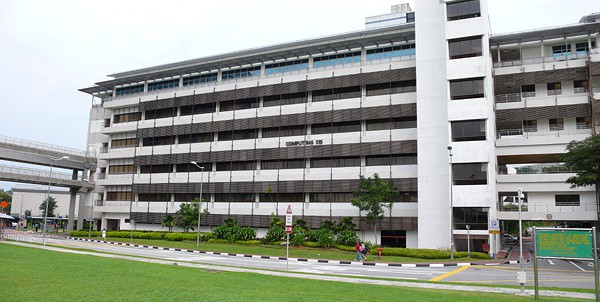
It was a humid 30 °C by mid-morning here in Singapore, so I was happy to be visiting what must be the coolest place in the country – the Centre for Quantum Technologies (CQT).

The CQT is located on the campus of the National University of Singapore, which lies on the southern tip of the island.

Founded in December 2007 by Artur Ekert from the University of Oxford, the centre carries out research into all things quantum, be it quantum computers, optics or cryptography.

I was satisfied enough to be standing in the air-conditioned labs to cool down, but that must not have been cold enough for physicists Murray Barrett and Kyle Arnold, both at the CQT.

Last year they reached a low-temperature extreme by creating a Bose–Einstein condensate (BEC) of atoms – reaching temperatures of a few millionths of a degree above absolute zero.

A poster on the wall outside their lab proudly identifies it as the first place in Singapore to have created a BEC – making it the coldest place in the country (and most likely on the equator as well).

Ekert, who is the CQT’s director, is hoping that this is the first of many breakthroughs that the centre will make in the coming years.

Ekert, one of the founders of quantum cryptography, certainly has some experience setting up successful research groups. During his PhD at Oxford, he established, together with fellow physicist David Deutsch, the first research group in quantum cryptography and computation.

Now armed with a grant of S$150m (£75m) from Singapore’s National Research Foundation, he is starting to build up the centre and attract top-notch researchers from around world.

There are already 90 researchers from no less than 24 nations at the CQT, with the majority coming from Singapore, China, Germany and the UK.

As CQT’s funding is over a five-year period, Ekert will have to apply for more funds in the coming years to keep the centre going. “We have received a lot of positive responses from the university, so I am pretty confident we will get it,” he says.

The pluses and minuses of iron superconductors

book_100x155.jpg
STM data showing quasiparticle scatterings q2 and q3 (Courtesy:Science)

By Hamish Johnston

Almost exactly 24 years ago to the day, Georg Bednorz and Alex Müller of IBM Zurich submitted a paper describing the first high-Tc superconductor. The new copper-based (or cuprate) material had zero electrical resistance at temperatures up to Tc = 35K – shattering the previous record by more than ten degrees.

Bednorz and Müller won the 1987 Nobel Prize in Physics for the discovery, which spurred intense international effort to understand the physics of high-Tc materials and pushed superconducting temperatures to 100K and beyond.

However, physicists still struggle to understand much of the physics behind the cuprates and other high-Tc materials – making it one of the great unsolved problems of physics.

The discipline received a huge morale boost in 2007-08 with the discovery of the first iron-based high-Tc material. Many more iron superconductors have been found since, and physicists hope that comparisons between these new materials and the cuprates will lead to a breakthrough.

So what do we know so far? Superconductivity arises when conduction electrons form pairs – which, unlike single electrons, can condense at low temperatures into a superfluid that travels through the material without any resistance.

The pairing mechanism in conventional low-temperature superconductors such as lead or mercury is well understood – lattice vibrations called phonons mediate a spherically symmetric interaction between electrons. This is relatively easy to describe mathematically in conventional superconductors – but calculations are much more difficult for cuprates because the electrons interact much more strongly with each other. Furthermore, physicists don’t know exactly what mediates the pairing in cuprates – it’s unlikely to be phonons and could be the electron–electron interactions themselves.

Physicists do know that the pairing interaction in cuprates is not spherically symmetric (or s-wave) but rather has a pronounced lobes at right angles to each other (d-wave).

The big question is whether the new iron-based materials are also d-wave – and evidence is mounting that the answer is no. Instead, the interaction appears to be perfectly symmetric in terms of its magnitude but involves a reversal of phase. First theorized by Igor Mazin and colleagues in 2008, this “S± symmetry” is supported by a growing number of experiments.

The latest is published today in the journal Science, where Tetsuo Hanaguri and colleagues at RIKEN in Japan present scanning tunneling microscopy (STM) studies of a superconductor made of iron, selenium and tellurium.

The team looked at the interference patterns that arise when an electron – or more precisely an electron-like quasiparticle – in the superconductor scatters from one state to another. The scattering is caused by superconducting magnetic vortices in the sample and the measurement gives the phase difference between the quasiparticle states.

The result backs Mazin’s S± theory in which the pairing interaction is mediated by spin fluctuations. This magnetic origin for superconductivity is perhaps not that surprising in iron-based materials.

As for the cuprates…the work continues!

Volcanic hazards could become fiercer and more frequent

The erupting Icelandic volcano that wrought havoc on European air traffic may have calmed for now, but geologists are warning that volcanic hazards such as this could become more commonplace due to climate change. They believe there is evidence that melting ice is placing an increasing strain on volcanic regions across the globe, which could trigger a range of different geological hazards. These findings appear in a special issue of Philosophical Transactions of the Royal Society A.

Perhaps the most topical paper is research led by Freysteinn Sigmundsson at the University of Iceland, which looks specifically at volcanic activity in Iceland. The researchers point out that volcanic activity was 10 times more frequent following the last deglaciation period in Iceland 10–12 thousand years ago. Iceland’s icecaps have been thinning continuously since 1890 so the researchers argue that we could be heading towards another period of fierce volcanic eruptions. They note, however, that there is no direct evidence to link the recent activity of the Eyjafjallajökull volcano with ice-melt.

A fiery land

Sigmundsson’s team has developed a model of how Icelandic volcanism might respond to the removal of ice mass. This model is tailored to Iceland’s volcanic situation, which is unique because the country is located along the Mid-Atlantic Ridge and is above a “hotspot” – an upwelling of hot rock that emerges from deep within the Earth’s interior. As the North American plate and the Eurasian plate diverge from each other, at the Mid-Atlantic ridge, pressure is reduced in the molten rock deep beneath Iceland. This can induce melting in this region known as the mantle, which can lead to volcanic activity at the surface.

Sigmundsson and his team suspect that a sudden removal of pressure, due to melting glaciers, could lead to additional upwelling in the Earth’s mantle. Their visco-elastic model is applied to the Vatnajökull ice cap, the largest glacier in Iceland covering 8% of the country, which is thinning at a rate of approximately 50 cm each year. They find that this extent of thinning should correspond to a pressure release of the order 0.5–1.5 kPa each year.

This figure is comparable with the 3.2 kPa per year released due to the regular plate tectonics beneath Iceland so it could significantly increase volcanism at the surface, say the researchers. They emphasize, however, that it may take decades or even centuries for this molten material to reach the surface if it makes it at all. This uncertainty is due to the complicated nature of flow in the mantle, which is dependent on a range of factors including magma chemistry and the availability of underground fissures.

The plume may reappear

Michael Sheridan, a volcanologist at the University of Buffalo in the US, believes that it is this poor understanding of the sub-surface geology that means we cannot assume that this latest eruption of Eyjafjallajökull is over just yet. “Icelandic volcanoes that erupted from fissures have, in the past, produced a profound climatic effect that can last several decades,” he warns. “This volcano has a much more enigmatic record than others that have more frequent eruptions. It’s not like we know the size of its magma chamber, the volume of its products or its history.”

Eyjafjallajökull, which lies in the south of Iceland, has been so problematic because of the plumes of volcanic ash that have been carried on the wind across western Europe. Plumes of ash, however, are not the only volcanic hazards that can emerge when volcanic material interacts with ice. A more local threat is meltwater floods that result from the sudden release of water from glacial and subglacial lakes, known locally as jökulhlaups.

But these geological hazards are not confined to just Iceland. In a separate paper in the series, Hugh Tuffen, a researcher at Lancaster University in the UK, argues that rising global temperatures could also increase the number of global hazards caused by the melting of ice on glaciated volcanoes. Tuffen says that there is compelling statistical evidence that melting ice during the last deglaciation period triggered a dramatic acceleration in volcanic activity.

Unprepared for the hazard

Tuffen believes that we could be stumbling towards a similar situation with little understanding of the physical interactions between ice and volcanic activity. “We think the melting of ice can destabilize volcanoes, but in ways that we still don’t fully understand,” he says.

Tuffen is particularly concerned about the threat of mudflows and landslides that can result from both volcano collapse and glacial melt. “The communities living beneath the volcanoes of the Andes in South America may be particularly vulnerable,” he says. The sort of threat he is referring to was realized in 1985 when the Nevado del Ruiz volcano erupted in Columbia, triggering mudflows that killed more than 23,000 people in one event.

Jenny Collier, a geologist at Imperial College in the UK agrees that there is more work to be done on the influence of ice melt on volcanism. “Volcanoes are inherently unstable structures – being steep sided and formed of layers of loose and variable material,” she says.

Scanning probe makes ‘nano Matterhorn’

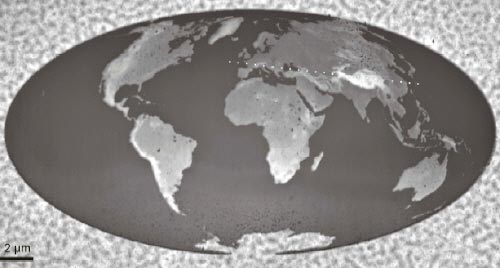
IBM researchers have used a nanometre-sized tip to create features as small as 15 nm in organic resist materials, which are normally used to make semiconductor chips. This is half the size of structures that can be produced by conventional methods such as electron-beam lithography. The technique has also been used to make a tiny model of the Matterhorn – and could help chipmakers to make smaller circuits than are possible today.

Computer chips and other microelectronic devices are made by optical and electron-beam lithography, which are used to create patterns on organic resists. These techniques, however, do not work very well for making structures smaller than about 30 nm because of so-called “proximity effects”. This is where the electron or optical beams begin to encroach on nearby, unwanted areas in the resist making features larger than desired.

Armin Knoll and colleagues at IBM in Zurich, Switzerland, and their colleagues in Almaden, California, and Yorktown Heights, New York, have now developed a new method that overcomes this problem. Their scanning probe lithography technique uses a heated nanotip to locally evaporate material from a thin film of organic glass. The nanopatterns produced can then be transferred to silicon – the most widely used electronic material – using standard nanofabrication techniques.

Technology transfer

“Being able to transfer patterns in this way opens up new prospects for fabricating nanosized electronics and objects in fields ranging from future chip technology and optoelectronics, to medicine and life sciences,” say the researchers.

The tip is 500 nm long and a few nanometres wide at its apex. It is attached to a cantilever that scans the surface of the substrate with an accuracy of just 1 nm. By applying heat and force, the tip can remove substrate material based on predefined patterns, rather like a “nanomilling” machine, says Knoll.

The IBM team chose to use organic glass in its proof-of principle experiment because the bonds between the molecules in this material can be easily broken at the temperatures of the tip (300–500 °C).

Alpine sculpture

The new technique is also cheaper than e-beam lithography because it uses less power and can sit happily on a bench top – as opposed to electron-beam machines, which are much bulkier devices. It can be used to make 2D patterns or 3D “sculptures” by successive rounds of etching. Indeed, the team have fashioned a 25 nm high 3D replica of the Matterhorn, the famous Swiss mountain.

The researchers have also made the tiniest 3D map of the world ever using a tip at higher temperatures of 700 °C. They were able to produce the map in just a couple of minutes.

The team now hopes to commercialize the technology, and also make it widely available to university researchers too. “This will also help to develop the tech further and enlarge its potential applications,” says Knoll told. The researchers also plan to improve the technique so that it can etch even smaller and deeper patterns, while operating faster.

The research is reported in Science.

Ancient Romans join neutrino hunt

Ever on the look-out for ultra-low radioactive materials to shield their sensitive experiments, nuclear physicists have struck gold with a consignment of lead that lay on the floor of the Mediterranean Sea for 2000 years. The almost completely inert ancient lead will be used to line the CUORE neutrino experiment located under the Gran Sasso mountain in central Italy.

Experiments designed to study extremely rare nuclear processes must be shielded from all possible sources of radioactive contamination, which will swamp sensitive detectors with spurious signals. The sources of interference include cosmic rays from space and radioactivity naturally present in rocks. But there is also radioactivity in the very materials used to provide the shielding, such as lead or copper. And it is here that the ancient lead comes into its own.

Sunk off Sardinia

The sunken metal comprises about 2000 ingots each weighing approximately 33 kg, and was on board a ship heading from Spain towards Italy around the year 50 BC. After going down off the coast of Sardinia, the 36 m long ship and its contents lay on the seabed for over two millennia until they were discovered about 20 years ago. This vast stretch of time means that the tiny amount of the radioactive isotope lead-210 originally present in the ingots, just as it exists in any normal lead object, has by now almost completely disappeared.

This ship was specialized to transport lead so it is a treasure. It multiplies by many times the quantity of ancient lead available in the world. Ettore Fiorini, University of Milan-Bicocca

When nuclear physicist Ettore Fiorini at the University of Milan-Bicocca read about the find in a newspaper he went to Cagliari to offer the financial support of the Italian National Institute for Nuclear Physics (INFN) in excavating the vessel and its precious cargo. Accepting the offer, archaeologists in Cagliari at the time gave the INFN 150 ingots in return, and they recently sent off a second batch of 120 ingots, which reached the Gran Sasso laboratory last week. These will now be stripped of their historically interesting manufacturers’ names, cleaned of any incrustations and then melted to provide a shield for the CUORE experiment.

CUORE, which should be ready in about two or three years time, will use 750 kg of tellurium dioxide to try and discover an extremely rare nuclear process predicted by theory and known as neutrinoless double beta decay. Involving the transformation of two neutrons into protons and electrons but no neutrinos, this decay would imply that neutrinos are, uniquely, their own antiparticle. Observing the decay would also provide physicists with a way of directly calculating the mass of the neutrino, something that to date can only be done indirectly.

Important commodity

CUORE is not the first nuclear physics experiment to have benefited from ageing lead. Researchers in the US used 450-year old lead from the hull of a sunken Spanish galleon to line their IGEX experiment. What is different about CUORE, however, is the sheer quantity, as well as the quality, of the ancient material. Rather than simply being lined with lead, the ship that sank off the coast of Sardinia had lead as its cargo, lead being an important commodity in ancient Rome since it was used for all sorts of objects, from water ducts and urns to coins and bullets for slings. “This ship was specialized to transport lead so it is a treasure,” says Fiorini, who is CUORE spokesperson. “It multiplies by many times the quantity of ancient lead available in the world.”

It is not known why the ship sank, but the fact that the vessel was anchored and the lead ingots were found still partly stacked suggests that it did not come to a violent end. Archaeologists have speculated that it was deliberately sunk by the ship’s captain in order to prevent the lead from falling into enemy hands.

First stunning images from NASA’s Sun gazer

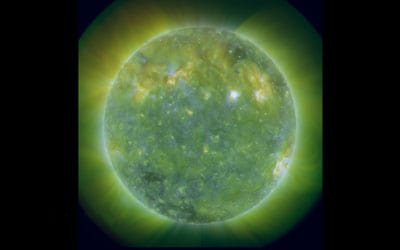
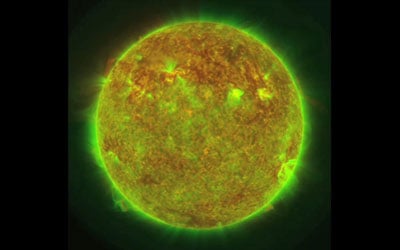
The first high-resolution images of the Sun have been returned from NASA’s Solar Dynamics Observatory (SDO), which was launched in February.

The $850m mission will investigate the causes of solar variability and how this creates a weather system in space. It is the first mission in NASA’s “Living With a Star” programme, which was established in 2001 to try and obtain a better understanding of how the Sun’s activity can impact on life on Earth.

These first images reveal a dynamic landscape, showing the Sun’s surface in the highest resolution to date. The images reveal clouds of charged particles streaming from prominences on the Sun’s surface in events known as coronal mass ejections. They also show solar flares, which are bright X-ray bursts caused by energetic explosions in active regions of the Sun.

“These initial images show a dynamic Sun that I had never seen in more than 40 years of solar research,” says Richard Fisher, director of the Heliophysics Division at NASA headquarters in Washington, DC. “This mission will have a huge impact on science, similar to the impact of the Hubble Space Telescope on modern astrophysics.”

Magnetic mayhem

The cause of the Sun’s volatility is connected to its magnetic activity, which is known to vary over a cycle of approximately 11 years. Greater magnetic activity leads to more “sunspots”, or darker patches visible on the solar surface. These sunspots are regions where the magnetic-field lines have become twisted because of differential rotation in the outer layers of the Sun.

Particularly violent sunspots can lead to coronal mass ejections from the solar surface, and some of these particles can reach the Van Allen radiation belt – the outer region of Earth’s own magnetic field – where they are accelerated to approaching the speed of light. During solar maxima, when sunspot numbers are at their peak, the abundance of particles shooting around in the radiation belt can become a real hazard to the satellites that are positioned there.

The SDO mission comes at a particularly interesting time for solar physics. We were expecting to reach the next solar maxima in around 2011–2012, but space-weather experts have been surprised over the past few years to report few signs that the number of sunspots has been increasing since the last solar minimum in 2006. This has prompted some space scientists to forecast that we are heading towards another prolonged spell of quiet sunspot activity, the last of which was observed between 1645 and 1715 in a period called the “Maunder minimum”.

Three instruments in one

The SDO will initially operate for five years with the option to extend this for a further five years after that. “It will observe the Sun faster, deeper and in greater detail than any previous observatory,” says astrophysicist Madhulika Guhathakurta, the mission’s programme scientist.

The SDO craft sits in a geosynchronous orbit, which enables it to continuously observe the Sun and makes it easier to transmit data to a ground-based station. It carries three sensitive instruments for viewing the Sun.

One instrument is the Atmospheric Imaging Assembly (AIA), an array of four telescopes that will observe the surface and atmosphere of the Sun over 10 different wavelength bands. Another is the Extreme Ultraviolet Variability Experiment (EVE), which will track the powerful outbursts that can affect the Earth’s upper atmosphere. Finally, there is the Helioseismic and Magnetic Imager (HMI), which will map solar magnetic fields and peer beneath the Sun’s opaque surface to study the magnetic dynamo.

All images courtesy of NASA/Goddard Space Flight Center Scientific Visualization Studio

The three-party voting paradox

By Margaret Harris

Last month, with space in the print edition of Physics World tight, I cut a couple of sentences from the end of a short review I’d written of Len Fisher’s new book, The Perfect Swarm. This turned out to be a bad idea. How bad? Well, you can read the published review here, but this is how it originally ended:

“UK readers may be particularly interested in [Fisher’s] explanation of how, in a three-way race, voting is not transitive. This means that it would be theoretically possible for a majority to prefer the Tories to Labour, another majority to prefer Labour to the Lib Dems, and a third majority to prefer the Lib Dems to the Tories. Ouch.”

Ouch indeed. As keen observers of British politics will have noticed, the possibility of a tight three-way race got a lot less theoretical last week, after Lib Dem leader Nick Clegg’s performance in the first-ever televised debate between party leaders boosted the (usually third-place) Lib Dems’ poll ratings.

But although I’ve clearly blown my chance of being hailed as a political oracle, it’s not too late to take a closer look at the mathematics behind a three-way race – and particularly at the Condorcet paradox, the technical name of the situation I (almost) described.

(more…)

Single atoms go transparent

Making an opaque material transparent might seem like magic. But for well over a decade, physicists have been able to do just that in atomic gases using the phenomenon of electromagnetically induced transparency (EIT). Now, however, this seemingly magical effect has been observed in single atoms – and in “artificial” atoms consisting of a superconducting loop – for the first time.

EIT occurs in certain media that do not usually transmit light at a certain wavelength, but can be made transparent by applying a second beam of light at a slightly different wavelength. EIT has famously been used to slow down pulses of light so they are effectively “stored” in a medium – the current record being a pulse stored in an ultracold cloud of atoms for over one second. This ability to store light in this way could find application in optical communication systems or even light-based quantum computers.

EIT requires the atoms to have a specific configuration of three energy levels in which transitions between one specific pair of levels are forbidden. Now Abdufarrukh Abdumalikov and colleagues at the RIKEN Advanced Science Institute near Tokyo and the University of Loughborough in the UK have created an artificial atom with the necessary energy levels using a superconducting loop about 1 μm in diameter.

Easy as 1, 2, 3

The loop is punctuated by four Josephson junctions – thin insulating layers across which the superconducting electrons must tunnel. A magnetic field is applied to the loop, which causes a persistent current to flow. The current is quantized into discrete values – with different energies. Transitions between the energy levels are made via the absorption or emission of microwaves, which are guided to and from the artificial atom using a tiny wave guide.

The team focused on the three lowest energy levels (1, 2 and 3 in ascending order), which are arranged such that transitions between levels 1 and 3 are forbidden – but 1–2 and 2–3 are allowed. When “probe” microwaves with energy equal to the 1–2 transition are fired at the artificial atom, they cause the system to oscillate rapidly between those two levels. Known as a “Rabi oscillation”, it results in most of the microwaves being reflected from the atom.

Towards switchable mirrors

EIT is achieved by firing a second beam of “control” microwaves with energy at the 2–3 transition at the atom. This causes a second Rabi oscillation. The two oscillations interfere destructively, causing the probe light to be transmitted.

Abdumalikov and colleagues put their device to the test by measuring the transmission of probe microwaves through the artificial atom while decreasing the intensity of the control beam. They found that the probe transmission dropped by 96% when the control beam was reduced to zero.

The team believes that the device could find use as a switchable mirror for microwaves – and if extended to operate optical wavelengths, it could find use in photonic quantum information processing systems.

‘A great step forward’

Suzanne Gildert of Birmingham University described the work as “a great step forward” in the development of quantum information technology. “I am of the opinion that superconducting devices are one of the most promising (if not the only) path to scalable quantum information processors,” she told physicsworld.com. “This development demonstrates a potentially new mechanism of control in quantum optics circuitry which is compatible with some existing superconducting device designs (Josephson-junction based qubits).”

Hans Mooij at Delft University of Technology added, “This is a beautiful experiment, the results are elegant and clear. I think it can be a very important development as it allows the fast control of microwave signals on the chip.”

The research is reported in the preprint arXiv:1004.2306 and will be published in Physical Review Letters.

Single-atom EIT

Meanwhile, Martin Mücke and colleagues at the Max Planck Institute for Quantum Optics in Garching, Germany, have observed EIT in just one atom of rubidium. The atom was isolated in a magneto-optical trap using a combination of laser light and magnetic fields. The team focused on transitions between three hyperfine atomic states, which involve the emission or absorption of light and were chosen because one transition is forbidden.

When both the probe and control light were shone on the atom, the probe light was transmitted through the trap. However, when the control beam was switched off Mücke and colleagues saw a 20% drop in transmission. The team then investigated the effects of adding additional atoms to the cavity and found eventually a huge, 60% fall in transmission when seven atoms were used.

This work is described in the preprint arXiv:1004.2442.

Flight of the fruit fly

chair.jpg
Aerial trickery revealed in the shadow play

By James Dacey

The fruit fly, like many winged insects, has to work very hard to stay in the air given the tiny size of its wings. To generate the vertical force necessary to maintain flight, it must beat its wings hundreds of times every second. But at these speeds and torques, how on earth does the fragile fruit fly manage to control its flight to make those sharp turns and pull off those difficult aerial manoeuvres?

Well, the answer, according to a group of researchers at Cornell University in the US, lies in a gentle, passive movement of the fly’s wings.

The Cornell research team have honed in on the turning kinematics of fruit flies by filming these insects as they fly around within a confined space. They capture the motion using three synchronized cameras, focused along orthogonal axes – the x, y and z – to capture 8000 frames per second or about 35 frames for each wing beat.

Then comes the clever bit – converting these 2D snapshots into a full 3D reconstruction of the insect’s flight motion. This was achieved using a technique known as Hull Reconstruction Motion Tracking (HRMT), which merged three separate images, one from each camera, at distinct time steps. Attila Bergou, a member of the team, says that this was like painting three silhouettes from the three cameras onto the faces of a box. “The volume you get by using a cookie cutter to cut out the shadows and peeling all but the centre away is the visual hull,” he explains.

What they found is that the fly does something very smart. By allowing aspects of their wing motion to be passively dictated by the aerodynamic and inertial forces, they end up being able to control their flight through the air in a very simple and elegant manner. Bergou says that the fly does this without “thinking”, comparing the motion to the wiggle of a boat’s oar as it cuts through the water.

Bergou believes that the manoeuvrability and efficiency of flapping flight at small length scales will be of interest to aircraft engineers. “There is a large amount of interest in the development of micro-air vehicles that use such flapping strokes to fly,” he says.

This research is documented in a new paper in Physical Review Letters.

Copyright © 2026 by IOP Publishing Ltd and individual contributors