The key skill I use on a daily basis is critical thinking. No matter the issue – whether it’s developing a strategy, working out how to structure a problem or deciding what we should work on next or how to respond to a request for information – it all requires thinking ahead and looking at things from multiple angles. Indeed, in my view, critical thinking is something that scientists are very skilled at. The same basic critical thinking skills that helped you solve textbook quantum-mechanics problems can be repurposed and applied to solving business problems and setting business strategies. That’s one thing I try to do, use those critical-thinking skills as widely and diversely as I can.
What do you like best and least about your job?
The bit I like the most is the pace at which things move – the quantum sphere is currently moving like a bullet train. Every day it seems like there is something new going on, and that’s certainly the case within Quantinuum. It is now a bigger company and there are exciting new developments all the time. So the fast pace, while very challenging, is also a lot of fun to keep up with.
On the flip side, the thing I probably like the least is, once more, the pace of it all! Sometimes, because of all the significant things happening around you, you struggle to find the time to do some of the smaller, more simple tasks. Everything from reading an e-mail to recognizing someone for their work can get side-tracked, and often these are things that you need to do, but they get overcome by all the larger projects. So I definitely wish I had more time.
What do you know today that you wish you knew when you were starting out in your career?
I think one thing in my career I have perhaps done a bit differently to others is that I have branched out from very hard-core physics problems into other areas that have more of a business focus. Thinking back to when I was a student, that would have seemed highly unlikely, almost impossible. Such a route may not have even seemed interesting to me at that time; I simply didn’t know there were exciting and interesting careers outside the lab or beyond detailed technical work. I’ve been fortunate, however, to have good mentors and received the right careers advice that helped me look at alternative paths. A combination of critical thinking and my technical physics skills offered me a unique angle for some of these roles.
A wearable strain sensor that can measure minuscule changes in the size of tumours in mice has been developed by researchers in the US. The team say that the device could drastically speed up the validation of potential cancer drugs. In trials it was able to detect changes in tumour size of around 10 µm within a few hours of starting treatment with cancer drugs.
Mice with tumours just below the skin are regularly used to test potential cancer drugs, as they have been shown to provide results that are close to clinical outcomes. The efficacy of a prospective treatment is generally determined by observing how these subcutaneous tumours change in size and volume, compared with untreated controls. But the technology for measuring the regression of these tumours is not particularly advanced. They are normally measured by hand with callipers. As well as creating issues with accuracy, this also makes the process time consuming and labour intensive, reducing the volume of drugs that can be tested and the size of trials.
Now Alex Abramson, a chemical engineer who was based at Stanford University when he conducted this research but has since moved to the Georgia Institute of Technology, and his colleagues have developed an elastomeric–electronic strain sensor that could improve the speed and volume of drug testing by providing continuous measurements of tumour size. They note that the real-time, autonomous and accurate tumour monitoring offered by their device could open up new pathways in high-throughput drug screening and basic cancer research.
The sensor – named FAST (flexible autonomous sensors measuring tumours) – consists of a 50 nm layer of gold on top of a styrene-ethylene-butylene-styrene elastomer. When strain is applied to the sensor, microcracks appear in the gold layer, increasing electrical resistance. Resistance in the sensor increases exponentially with strain, and the researchers say that when stretching the sensor, they were able to detect changes of just 10 µm.
The researchers used two cancer models to test the sensors: bioluminescent human lung cancer cells and an A20 B cell lymphoma cell line. After implanting cancer cells under the skin of mice, they measured how the tumours grew and then assessed the tumour response to known therapeutic agents. The strain sensor, a printed circuit board that sends data to a smartphone app and a battery pack were housed in a 3D-printed backpack, attached to the mice using a film dressing and tissue glue. The sensors were pre-stretched to 50% strain, to enable both growth and regression to be measured.
When observing tumour growth for a week, the team found that measurements from the strain sensors were comparable with those from callipers and a luminescence imaging system.
Within 5 hr of treatment starting, the strain sensor was able to detect changes in tumour size compared with untreated mice. This tumour regression was not picked up by bioluminescence imaging or calliper measurements – with these tools, there was no statistical difference between the treated and untreated groups in tumour measurements at the 5-hr time point. Over week-long treatment periods, measurements from the sensor were similar to those from callipers and bioluminescent imaging.
According to the researchers, FAST offers three advantages over other common tumour measurement options, such as callipers, implantable pressure sensors and imaging: it enables continuous tumour monitoring; it can measure changes in size and shape that are difficult to detect with other techniques; and as it is autonomous, it should enable faster, cheaper and larger-scale preclinical drug testing.
“It is a deceptively simple design,” Abramson says, “but these inherent advantages should be very interesting to the pharmaceutical and oncological communities. FAST could significantly expedite, automate and lower the cost of the process of screening cancer therapies.”
This episode of the Physics World Weekly podcast focuses on the 2022 Nobel Prize for Physics, which is shared by Alain Aspect, John Clauser and Anton Zeilinger for their experimental work on the quantum entanglement of photons.
The physicist and historian of science David Kaiser is on hand to talk about the physics and philosophy of entanglement. He charts the history of the curious concept from the pioneering work of Albert Einstein and Erwin Schrödinger in the 1930s; through to the brilliant insights of John Stewart Bell in the 1960s; and on to the ground-breaking experiments of this year’s Nobel laureates. Kaiser, who is based at the Massachusetts Institute of Technology, talks about the early controversy surrounding entanglement and explains why the phenomenon was swept under the carpet by the wartime generation of physicists only to be revived in the 1960s.
Physics World‘s Nobel prize coverage is supported by Oxford Instruments Nanoscience, a leading supplier of research tools for the development of quantum technologies, advanced materials and nanoscale devices. Visit nanoscience.oxinst.com to find out more.
Researchers in the US have used supercomputers to gain insights into the origins of the solar wind. This is a flux of high-energy particles from the Sun that can damage satellites, threaten astronauts and even disrupt electrical and electronic systems on Earth.
Emissions of these charged particles are generally hard to predict because they are the result of complex nonlinear processes occurring in the Sun’s corona – the outer atmosphere of our star. The corona is an extremely hot plasma of ionized particles that cannot be reproduced in a controlled laboratory environment. Now, scientists at Columbia University in New York City have developed a method for predicting these events with supercomputers.
“Since we only have a limited number of measures of the plasma properties in the vicinity of the Sun, there are significant uncertainties in the knowledge of the physical properties of the plasma,” says Luca Comisso, co-author with Lorenzo Sironi of a report that describes the research. “These uncertainties are dramatically amplified by nonlinear processes, like shocks, magnetic reconnection and turbulence.”
The uncertainty of the initial conditions of the plasma, combined with the complexity of the nonlinear processes that are involved in the acceleration of the solar particles, make this a hard problem to solve. Thus, an approach that relies heavily on new high-performance computing (HPC) methods was used.
Unique in its success
Of course, HPC is not a panacea that allows the user to receive the answer to any question they ask. People have tried – and failed – to use supercomputing to solve this problem before. Comisso and Sironi’s attempt was unique in its success.
One problem that scientists have struggled with was to explain how the high-energy particles are accelerated from the lower thermal energy of the plasma. If some particles are first accelerated by an unknown process, certain plasma processes like shocks can further accelerate these particles to the energies that threaten satellites and astronauts. The challenge is to understand that initial acceleration.
“The key unresolved problem here was to understand how some particles could start gaining energy from ‘scratch’,” says Comisso. “A major possibility was to look into the effects of turbulence in the plasma since the plasma is expected to be in a turbulent state in the Sun’s atmosphere. To analyse this possibility and see if it really works, one needs to solve complex nonlinear equations.”
Complex calculation
Solving these equations demands HPC resources and the duo relied on the particle-in-cell method to describe the process of particle acceleration in a turbulent plasma. To simplify a complex calculation, this process follows the trajectories of electrons and ions in self-consistent electromagnetic fields computed on a fixed computational grid.
To simplify the problem, previous studies employed approximations that muddied the end results. Comisso says that their latest work was uniquely able to show that turbulence in the Sun’s outer atmosphere provides the initial acceleration. Furthermore, their result was achieved using a rigorous method that did not employ previous approximations.
The large-scale simulations for this work were performed on NASA’s Pleiades supercomputer at NASA and the Cori supercomputer at the US’s National Energy Research Scientific Computing Center. In both machines, the researchers ran particle-in-cell code using 50,000–100,000 central processing units (CPUs) and about 1500 nodes for each simulation. This substantial computing resource was needed to keep track of the nearly 200 billion particles that were involved in each simulation.
Protecting space exploration
This research looks set to play a vital role in boosting our understanding of the radiation that poses a threat to astronauts and spacecraft.
“These high-energy particles pose risks to humans that are outside the protective cover of the Earth’s magnetosphere,” says Comisso. “Essentially, the Sun goes through phases of strong activity which can give rise to large solar energetic particle events, with a significant intensity of high energy protons. The large intensity of high energy protons is a radiation hazard to the exposed humans. Large radiation doses put astronauts at a significant increase of cancer risk and possibly death.”
However, the implications of this research reach beyond that. As Comisso points out, the Sun is not the only astrophysical object that can be studied with this method. For example, particles are accelerated in the proximity of other celestial objects such as neutron stars and black holes.
“I think we only scratched the surface of what supercomputer simulations can tell us about how particles can be energized in a turbulent plasma,” says Comisso.
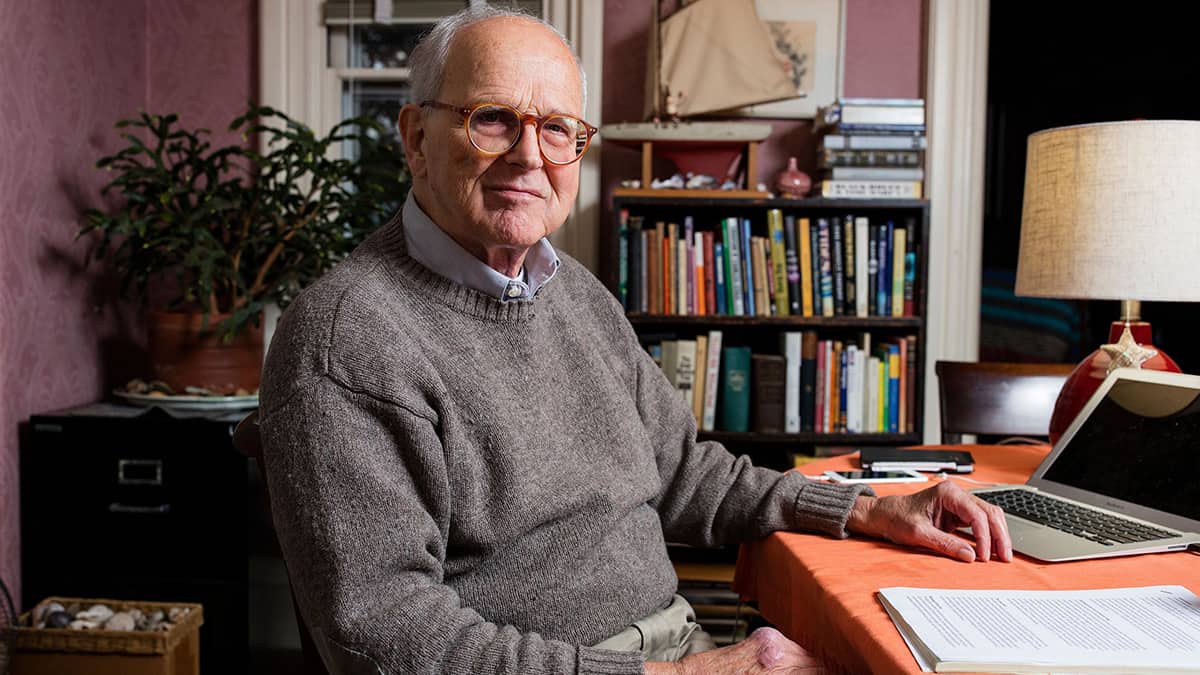
Down-to-earth, unassuming, and keen to discuss his research, physicist Rainer Weiss is remarkably easy to talk to. Five years ago, his work earned him half the 2017 Nobel Prize for Physics, with the other half going to Barry Barish and Kip Thorne, for “decisive contributions to the LIGO detector and the observation of gravitational waves”. The US-based Laser Interferometer Gravitational-Wave Observatory (LIGO) is where gravitational waves were first observed in 2015, definitively confirming the last remaining untested prediction from Albert Einstein’s century-old general theory of relativity.
Despite portending their existence, Einstein himself doubted that these waves would ever be observable because they are extremely weak. Weiss’s breakthrough idea of using laser interferometry finally made possible that first observation – of gravitational waves emitted from the merger of two black holes, 1.3 billion light-years away from Earth – and the many more that LIGO has since detected. It took decades of effort from Weiss, his Nobel colleagues and many others, and the discovery represented a pinnacle in physics that also ushered in a new era in astronomy. Since the advent of observational astronomy, we had been scanning the universe mostly by observing first visible light, then a broad spectrum of electromagnetic waves. Now gravitational waves were able to provide a new way of probing many cosmic phenomena. Only seven years after the birth of gravitational astronomy, it has already produced much valuable new knowledge.
From Nazi Germany to the US, via Prague
Starting out Rainer Weiss as a young scholar at MIT, where things didn’t go entirely to plan. (Courtesy: AIP Emilio Segrè Visual Archives, Gift of Rainer Weiss)
Each of the three Nobel laureates followed his own arc toward these successes. Weiss’s path shows how talented experimental physicists are formed, how new scientific ideas can come from unexpected directions, and how sheer perseverance is needed to bring a large-scale physics experiment to fruition.
Weiss was born in Berlin, Germany on 29 September 1932, during the Nazis’ rise to power. Weiss’s father, Frederick, who Rainer describes as “an ardent and idealistic communist” from a young age, was a physician. As a Jew and an anti-Nazi communist, who had testified against a Nazi doctor accused of malpractice, Frederick was detained by the Nazis when Rainer’s mother, Gertrude, was pregnant with him. At the behest of his Christian wife, whose family had some local contacts, Frederick was released and sent to Prague. Once Rainer was born, Gertrude travelled with her new baby to join Frederick in Czechoslovakia, where the couple had another child, Sybille, in 1937.
But when the 1938 Munich Agreement allowed German troops to enter Czechoslovakia, the family had to escape once more. “We heard the decision on a radio while on vacation in Slovakia and joined a large group of people heading toward Prague to attempt to get a visa to emigrate to almost anywhere else in the world that would accept Jews,” Rainer recalls in his Nobel biography. The family moved to the US in 1939. Under the immigration law at that time, this was only possible because of Frederick’s profession and because a “very wonderful woman” as Weiss calls her, from the philanthropic Stix family of St Louis, posted a bond to guarantee that the Weisses would not be a burden to the community.
Weiss was raised in New York City, where he initially attended public school. In the fifth grade, he received a scholarship, via a local refugee relief organization to join Columbia Grammar School – a private school in mid-Manhattan, which at one time was associated with preparing students for Columbia University. Music, science and history were his favourite courses, and as a teenager he built custom high-fidelity or “hi-fi” audio systems for classical music lovers.
That interest and his own curiosity eventually brought him to physics. Seeking perfect sound reproduction, Weiss tried to electronically eliminate the background noise a phonograph needle makes as it moves along the groove in an old-fashioned record, which marred the music. But his efforts failed and he decided to go to college to learn enough to enable him to solve the problem. That education began at Massachusetts Institute of Technology (MIT) in 1950.
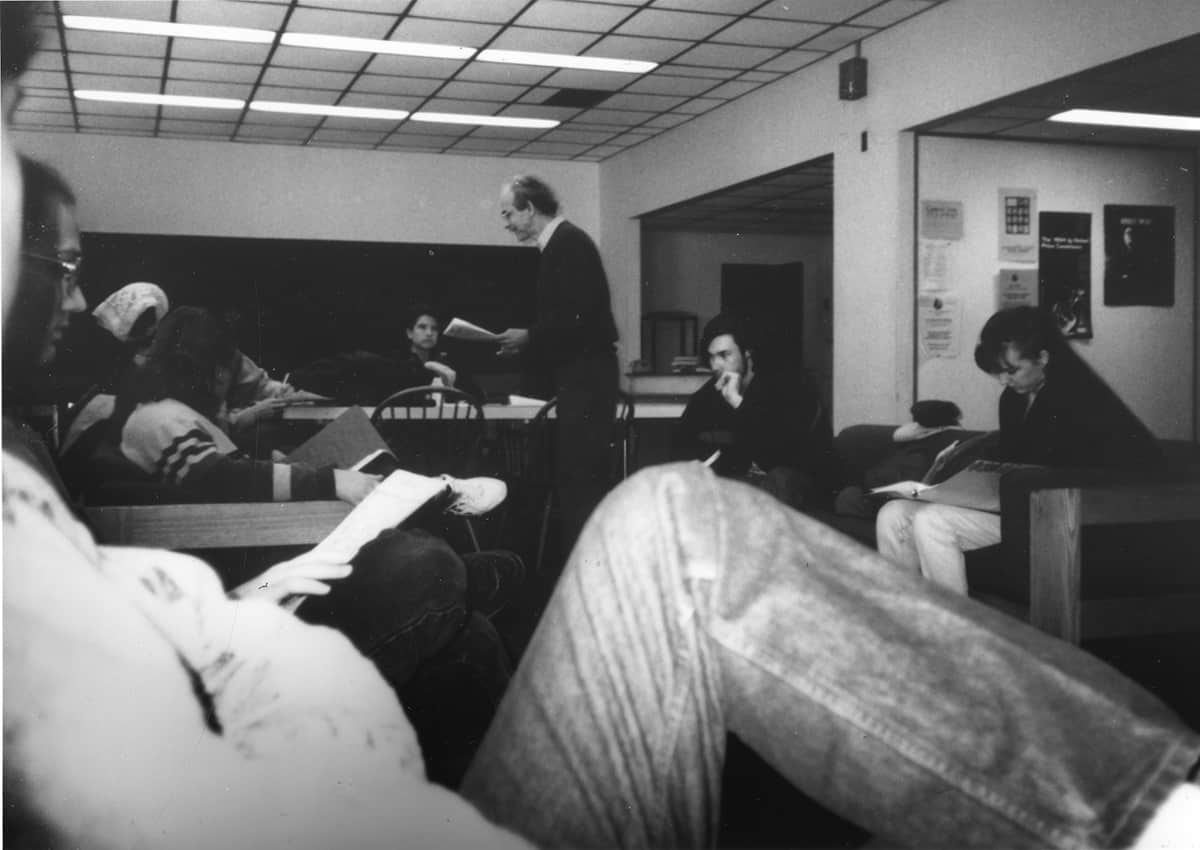
Learning together Rainer Weiss (centre) talking with students at MIT’s Junior Physics Lab in 1995. (Courtesy: AIP Emilio Segrè Visual Archives, Divens Collection/Tatiana Divens)
Electronics to physics, via a detour
As an electrical engineering major at MIT, Weiss was expected to learn about generators and transmission lines before he could study the electronics that really interested him. This rigid plan was not to his taste, so in his second year he switched to physics, because “it had fewer requirements” and a more flexible curriculum. But that did not immediately work out either. In 1952 Weiss fell in love with a young woman, a pianist. The relationship did not end well and, heartbroken, Weiss failed all of his courses and had to leave MIT.
But all was not lost. By the spring of 1953 he returned to MIT as a technician working in the Atomic Beam Laboratory of physicist Jerrold Zacharias, who had developed the first atomic clock. “The science being done in that laboratory was exquisite,” Weiss recalls. “The experiments there were looking at the properties of isolated single atoms and molecules unperturbed by neighbouring systems. Each atom was the same as the next and it was possible to ask fundamental questions about their structure and the interactions that held them together.” What started off as a role helping grad students with their thesis projects eventually led to Weiss working directly with Zacharias on developing the caesium atomic beam clock, which would eventually go on to be adopted as the standard of time for the Bureau of Standards (now the National Institute of Standards and Technology) and the US Navy.
Under Zacharias’ mentorship, Weiss completed his physics bachelor’s degree, then a PhD in 1962, and learned about high-precision experimentation, a key thread that led to LIGO. A further key theme arose when Weiss worked as a research associate under astronomer and physicist Robert Dicke at Princeton University, who Weiss calls “one of the heroes in my life”. Dicke and Weiss looked into developing a modern version of the Eötvös experiment, to understand the equivalence principle of general relativity by proving the equivalence of inertial and gravitational mass. As Dicke’s new theory of gravitation combined a scalar field with the tensor field of general relativity, his idea was to build an experiment that could measure how the whole Earth would vibrate, were a gravitational wave to pass by. The aim of the experiment was to measure the spectrum of scalar gravitational radiation, but they found that the sensitivity of their quartz gravimeter was severely limited due to geophysical noise. Despite the study being unsuccessful, Weiss learned experimental techniques that Dicke had pioneered, and would ultimately prove essential for LIGO, and many other physics experiments as well. Indeed, Weiss found those two years at Princeton “were profoundly important in my scientific development”.
Weiss continued thinking about gravitational waves, especially when he was asked to present a course in general relativity at MIT. This was not easy. The mathematics of general relativity is daunting, and courses that taught the subject were more mathematical than physical. Discussing it today, Weiss says, “I am not a theorist. I’m a plumber…a vacuum plumber, an electronic plumber, but a plumber.” So he and his students learned the maths together – but, unexpectedly, his experimental background became highly significant.
As Weiss explains, at that time Joseph Weber of the University of Maryland was trying to detect gravitational waves by measuring the change in length of large aluminium cylinders as a wave swept by. When the students asked Weiss about such measurements, he came up with a pedagogical gedanken experiment to show in principle how they could be made. Put two masses some distance apart in free space, one with a pulsed laser and the other with a mirror. Now measure the round-trip travel time of the laser light – and therefore the distance. If a passing gravitational wave changes the distance, sufficiently precise time measurements would show the effect. Since all measurements are made at the space–time location of the laser, the general relativity calculation becomes straightforward – in fact, Weiss assigned it as a class problem.
Early plan to final outcome
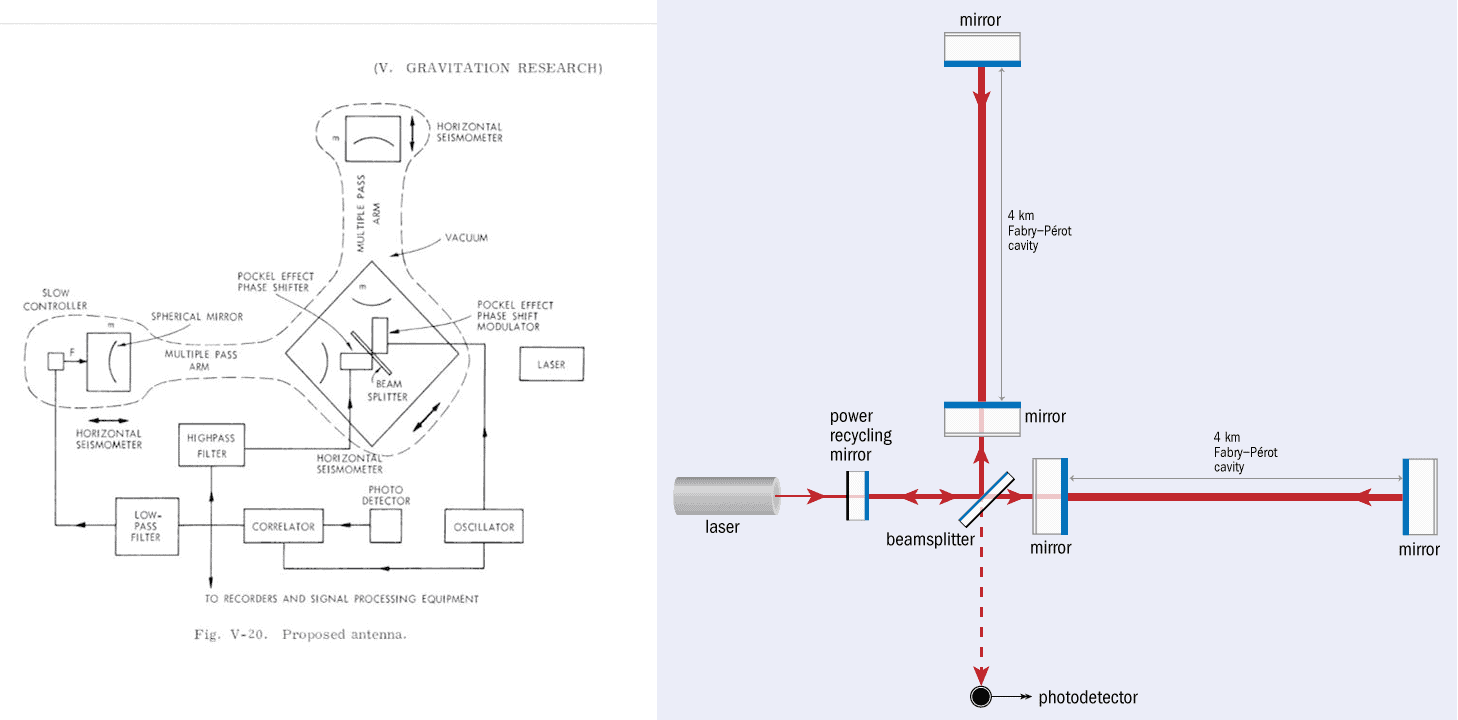
Weiss’s original design for a “Laser Gravitational Wave Antenna” (left) and the final schematic for the LIGO experiment. (Left: copyright. R Weiss (1972) “Electromagnetically Coupled Broadband Gravitational Antenna” Quarterly Progress Report, Research Laboratory of Electronics, MIT 105 54. Right courtesy: IOP Publishing)
Weber’s claimed detection of gravitational waves in 1969 was never replicated, but the example his work inspired grew into LIGO. Weiss improved the original idea by adding a second beam path with a mirror at one end, set at right angles to the first path in an “L” shape with a beam splitter at the junction. This is a Michelson interferometer, which made ultra-precise measurements of the speed of light in the 1887 Michelson–Morley experiment and also of the CMB spectrum. In general relativity, a gravitational wave travelling perpendicular to the plane of the arms would lengthen one and contract the other, changing how the light waves in the two arms interfere. This, concluded Weiss, would be far more sensitive than measuring travel time along a single path.
Weiss recalls how in the summer of 1971 he “sat in a little room calculating all the things that would interfere with that experiment” including noise sources. His result was remarkable: with arms several kilometres long, it would be possible to measure changes in distance as tiny as 10–18 m – barely one thousandth of the size of a proton – as a passing gravitational wave stresses space to cause a strain of 10–21.
Test bed and first observations
Some of Weiss’s colleagues were sceptical about gravitational waves but he continued developing his idea. It received experimental verification when small test interferometers built in his lab and by a German group bore out his calculations. Wider support came after 1975, when Weiss reconnected with an acquaintance from his Princeton days, the Caltech theoretical physicist Kip Thorne. Seeing the potential for gravitational-wave research, Thorne championed Weiss’s idea at Caltech. In 1979 the National Science Foundation funded Caltech and MIT to carry out a feasibility study of interferometric detection. By 1990 it supported LIGO as a Caltech-MIT operation with the largest grant it had ever given. This allowed the construction of identical detectors with arms 4 km long at Hanford, Washington and Livingston, Louisiana, for coincidence studies to confirm any sightings. These incorporated many technical concepts developed by experimental physicist Ronald Drever from Caltech.
A LIGO timeline
1970s–1980s Following Rainer Weiss’s feasibility study of a kilometre-scale laser interferometer, the National Science Foundation funds Caltech and MIT for further study, then establishes LIGO as their joint project.
1990–1999 Construction of LIGO at Hanford, Washington, and Livingston, Louisiana is approved, funded and completed. LIGO is inaugurated in 1999.
2002–2010 LIGO begins operations; research begins at initial design sensitivity, but no gravitational waves are observed; collaboration begins with the Virgo interferometer in Italy.
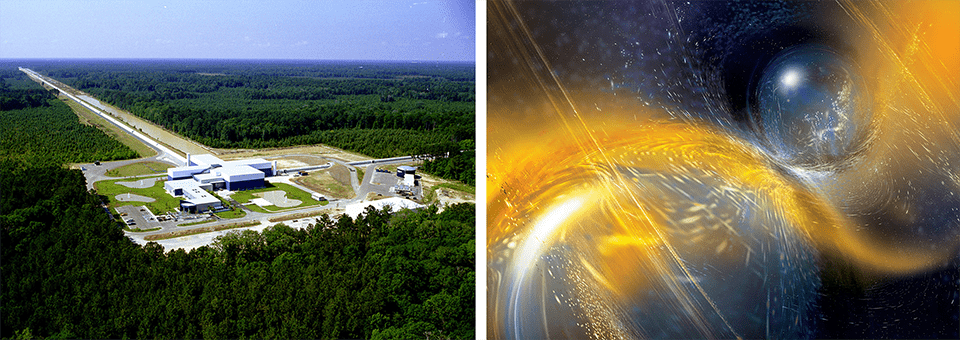
Riding the wave LIGO’s twin detectors, at Hanford, Washington (not shown) and Livingston, Louisiana (left), have now observed numerous gravitational waves from different sources, including black hole and binary neutron star mergers (right). (Photograph courtesy: Caltech/MIT/LIGO Lab; illustration courtesy: National Science Foundation/LIGO/Sonoma State University/A Simonnet)
2011–2017 LIGO is updated to advanced LIGO, with 10 times better sensitivity; observing runs O1 and O2 follow in 2015–2016, and 2016–2017, respectively.
14 September 2015 LIGO first detects gravitational waves, from two merging black holes.
17 August 2017 LIGO/Virgo first detect gravitational waves from two merging neutron stars. The event is also tracked by electromagnetic wave astronomy.
7 November 2021 The results from O3, with those from O1 and O2, total 90 events since 2015. These are binary mergers of black holes, or neutron stars, or a black hole and a neutron star.
After LIGO began operations in 2002, it achieved the predicted sensitivity, but for nine years, no gravitational waves were detected. The devices were then significantly improved, with better isolation from noise sources, resulting in “advanced LIGO” (aLIGO) over five years later. With sensitivity enhanced 10-fold, on 14 September 2015, aLIGO made the first ever observation of gravitational waves which came from two merging black holes – a miraculous discovery as the machine was still being calibrated for the first official run (Physics World October 2017 p33).
When contemplating these first seven years of gravitational astronomy, Weiss is jubilant. “I think LIGO has been a tremendous success,” he says, praising in particular how it validates general relativity and black-hole astrophysics. LIGO’s results show that we understand black holes well enough to predict the details of their two-body interaction, which within general relativity is as difficult to calculate as the three-body problem in classical physics. Another outcome is LIGO’s catalogue of interactions between black holes of varying masses, which gives clues as to how they might form into the supermassive black holes at the centres of galaxies.
Weiss also singles out one particular event that “caused the biggest stir [and] produced so much science it’s unbelievable”. The two colliding neutron stars observed in 2017 generated electromagnetic radiation as well, from gamma rays to radio waves, which was tracked by observatories around the world (see“A new cosmic messenger” by Imre Bartos). This prime example of “multi-messenger” astronomy yielded a precise location for the event; showed that the interaction produced gold and platinum, giving new insight into how stars make heavy elements; confirmed that gravitational waves travel exactly at the speed of light; and provided a new way to measure the Hubble constant and perhaps lay to rest current uncertainties about its value.
The many people behind LIGO
The paper announcing the first observation of gravitational waves (Phys. Rev. Lett.116 061102) was co-authored by Rainer Weiss, Kip Thorne, Barry Barish and some 1000 other scientists and engineers from around the world. Weiss began his Nobel speech in Stockholm in 2017 by saying “the three of us wouldn’t be here at all” without this huge group effort. In fact, Weiss regrets that the Nobel award could not somehow honour every one of the people involved.
Weiss is personally appreciative of his Nobel colleagues as well. It was Thorne’s “mantra,” says Weiss, that gravitational waves would show us absolutely new things. Thorne’s commitment to the value of this research and his work on the relevant theory were essential to LIGO. Weiss also thinks that Barish, who was LIGO project director, provided the leadership that turned scientific ideas into a working observatory. Drawing on his experience with large-scale experiments in high-energy physics, Barish made the crucial managerial and technical decisions that moved LIGO’s construction forward.
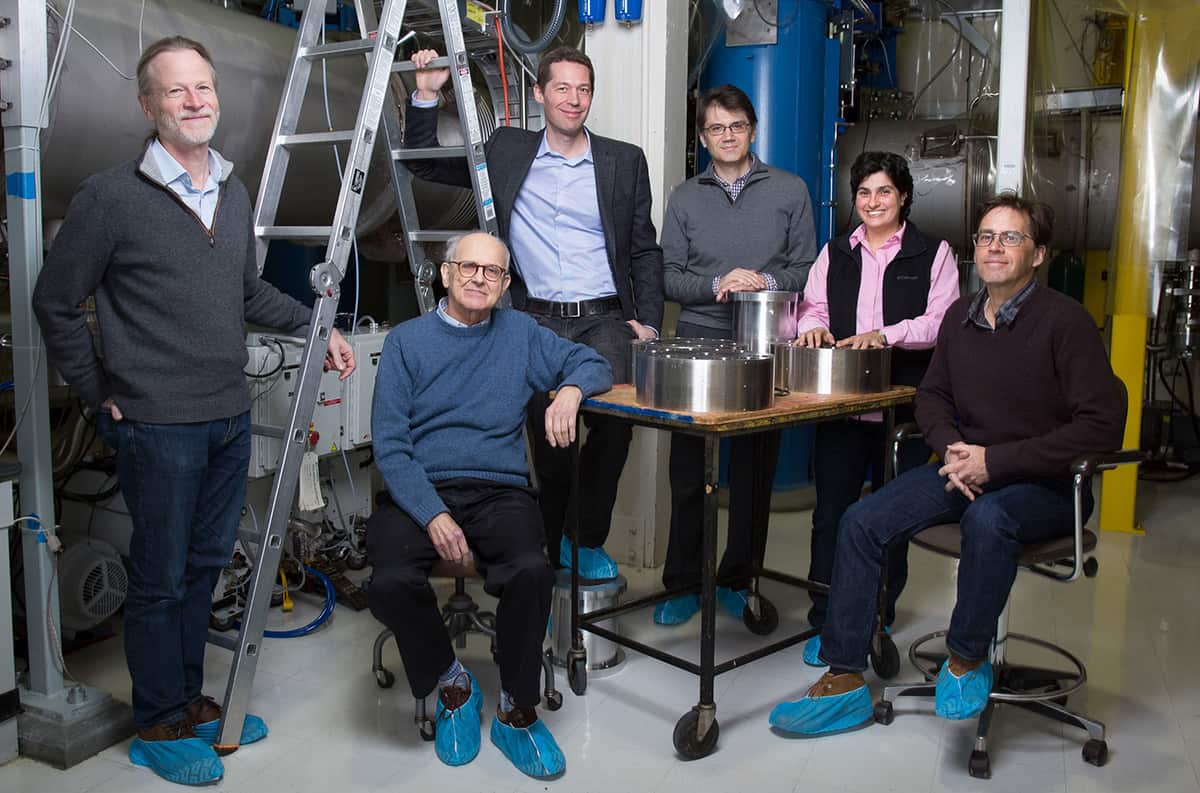
Dream team Members of the MIT LIGO team (from left to right): David Shoemaker, Rainer Weiss, Matthew Evans, Erotokritos Katsavounidis, Nergis Mavalvala and Peter Fritschel. (Courtesy: MIT/Bryce Vickmark)
Weiss is also keen to highlight the huge impact of many female collaborators at LIGO. These include Georgia Tech’s associate dean Laura Cadonati, who chaired the committee that formally validated LIGO’s first gravitational wave data. Her group now scans LIGO data for important new results. Also at Georgia Tech, Deirdre Shoemaker (now at the University of Texas at Austin) carried out computer simulations of black hole interactions, while Vicky Kalogera at Northwestern University, an early believer in the worth of gravitational wave detection, calculated the prevalence of black hole and neutron star mergers as sources of those waves. MIT physicist Nergis Mavalvala played a big role in introducing the “squeezed light” technique to reduce quantum noise in aLIGO, and contributed to the idea of a new, vastly upgraded Cosmic Explorer gravitational-wave detector.
Weiss’s enthusiasm grows when asked about the future of gravitational astronomy. One component would be the Cosmic Explorer interferometer, suggested by Matthew Evans and Nergis Mavalvala at MIT. Weiss strongly supports this next-generation device, whose 40 km-long arms would make it 10 times more sensitive than advanced LIGO. European scientists are considering the triangular Einstein Telescope with 10 km-long arms, and the European Space Agency proposes launching the triangular Laser Interferometer Space Antenna (LISA) in the 2030s. Its three spacecraft – spaced 2.5 million km apart and carrying lasers and mirrors – would form a hyper-sensitive detector.
Each detector will respond to different frequencies of gravitational waves, which depend inversely on the mass of the radiating object. Much as regular astronomy uses different parts of the electromagnetic spectrum to study varied celestial phenomena, so we are starting to see gravitational observatories tuned to detect different classes of gravitational events. For black holes, the possibilities range from seeking small hypothetical primordial black holes to understanding how supermassive black holes are related to the formation of galaxies. Gravitational waves from merging neutron stars will deepen our knowledge of stellar evolution and dense nuclear matter. The waves may also arise from pulsars to complement what electromagnetic waves reveal about them. More speculatively, some researchers suggest that multi-messenger methods might show whether the supermassive black hole at the centre of our own galaxy is really one end of a wormhole.
From dream to reality Weiss has spent most of his 50-year long career finding ways to pin down ripples in the very fabric of space–time, opening up a new window on the universe, with the advent of gravitational-wave astronomy. (Courtesy: MIT/M Scott Brauer)
What most excites Weiss about these forthcoming detectors is that they could “do spectacular science by bringing the field into cosmology, the study of the whole universe.” As he explains, the Russian theorist Alexei Starobinskyhas shown that if a vacuum fluctuation started the cosmos, then as the universe underwent rapid cosmic inflation, the unimaginable acceleration would produce lots of low-frequency gravitational waves. Like the cosmic background radiation, these would form a residual universal background, but originating from a time very near the Big Bang and carrying new information about early processes like the creation of dark matter. These waves would be difficult to detect, but researchers are planning a combination of ground- and space-based detectors that would form a new tool to attack some big questions in physics, astronomy and cosmology.
But as he reflects on his long career and future research, Weiss does not wish to sum things up saying simply “I’m not that kind of guy.” It might be disappointing not to have a final sound-bite but then, in his decades-long commitment to successfully building LIGO, in his vision of further advancing gravitational wave science, and in his contagious passion for both, Rainer Weiss has already eloquently said everything he needs to say.
Synthetic cells, engineered to mimic some of the functions performed by living cells, hold promise for applications in biotechnology and medicine. Even the smallest biological cells, however, are extremely complex and the construction of living artificial cells faces numerous roadblocks. Researchers in the Schulman Lab at Johns Hopkins University have recently made progress towards one of these challenges: the exchange of matter and information across cell boundaries.
Writing in Science Advances, the researchers – working in collaboration with the Aksimentiev Group at the University of Illinois Urbana-Champaign – demonstrate the leak-free transport of small molecules through engineered DNA nanochannels across unprecedented distances. In the future, their work may help in the construction of artificial cells, and also aid the study and manipulation of living tissue.
Cells within multicellular organisms need to exchange matter and communicate to ensure their collective survival. Since each cell is surrounded by a lipid membrane that is impenetrable to many biological molecules, evolution has produced mechanisms by which this barrier can be traversed. Signalling receptors, transporters and pores relay information and allow the passage of molecules between cells and their exterior, while cell contacts such as gap junctions directly connect the interior of neighbouring cells and enable cell-to-cell diffusion of small molecules.
To mimic these processes in artificial systems, “researchers have developed synthetic cells positioned next to each other that can communicate through protein pores on their membranes” explains first author Yi Li, who co-led the study. “However, developing synthetic cell systems where cells can communicate and exchange materials across longer distances is still a challenge.”
The protein structures that facilitate cell-to-cell communication in biology are built “bottom-up” from amino acids – the information encoded in their sequence translates into a structure. Another biological macromolecule, DNA, is mainly used for information storage in cells; but due to its ease of synthesis and potential to form high-level structures, the field of DNA nanotechnology has gone far beyond its first proof-of-concept some 30 years ago. Scientists have since assembled ever more sophisticated 2D and 3D structures from DNA, including lattices, tubes, geometric bodies and even artistic renderings of smiley faces, in efforts referred to as DNA origami.
In their study, the Schulman Lab researchers combined DNA origami nanopores, which bridge the membranes of cell-like vesicles and create small openings for molecules to cross, with engineered self-assembling DNA nanotubes. By quantifying the flux of a dye molecule into the vesicles, they showed that short nanopores made the membrane permeable to the dye. They also validated that the speed of this transport is consistent with diffusion and found that a specially designed DNA cap can block the pores and stop the dye from entering.
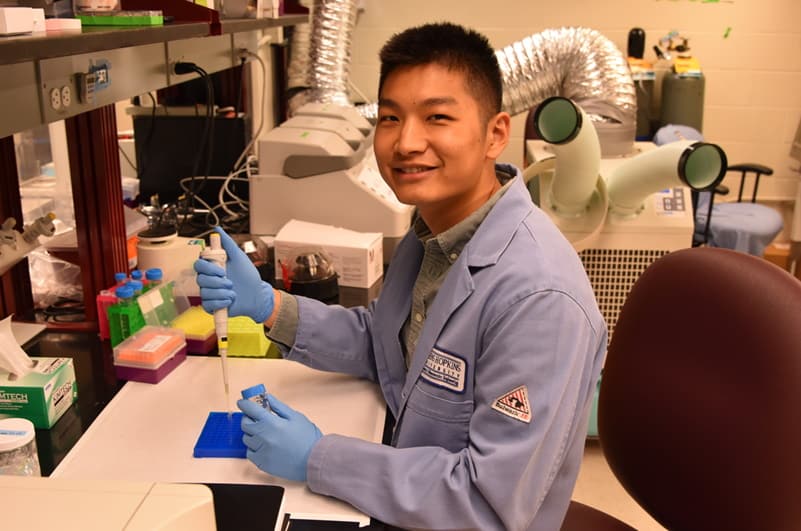
First author: Yi Li in the laboratory at Johns Hopkins University. (Courtesy: Yi Li)
The team then extended this work to DNA nanotubes with a median length of 700 nm and a maximum of over 2 µm. Again, experiments showed that dye influx is enhanced in the presence of the DNA constructs, and that the cap can arrest permeation. The implication, says Li, is that “small molecules can pass through the tubes without leaks, and we expect large molecules, such as proteins, can also be transported through these nanotubes”.
Members of the Aksimentiev Group conducted Brownian dynamics computer simulations of the nanopore–dye system. These illustrated that for molecules below a threshold size, leakage through the side wall of the DNA tube dominated influx, while for larger molecules, end-to-end diffusion becomes the preferred mechanism .
Li explains that such simulations are complementary with experiments in two ways. “They can be used as design tools to help researchers design nanoscale structures that have specific functions”, he says, for example by “simulating the self-assembly kinetics of our DNA nanostructures”, but they also help to “validate experimental results and provide additional insights into the physical processes”.
Rebecca Schulman – who co-led the research – draws an analogy to pipes. “This study suggests very strongly that it’s feasible to build nanotubes that don’t leak using these easy techniques for self-assembly, where we mix molecules in a solution and just let them form the structure we want. In our case, we can also attach these tubes to different endpoints to form something like plumbing.”
The lab has ambitious plans for application of these nanotubes. “Future developments include connecting two or more artificial cells with our DNA nanotubes and showing molecular transport among them. We can potentially show [that] the transport of signalling molecules from one cell can activate/deactivate the gene expression in another cell,” Li tells Physics World. The team also hopes to “use nanotubes to control the delivery of signalling molecules or therapeutics to mammalian cells, either to study cell signalling behaviours or to develop a drug delivery strategy”.
Scientists in the US and Slovenia have built a tiny swimming robot that paddles using liquid crystals. Kathleen Stebe of the University of Pennsylvania, alongside collaborators at the University of Ljubljana, studied rotating microparticles embedded in a liquid crystal. They discovered that the rotation triggers sudden rearrangements of the surrounding liquid crystal molecules, which acts as a swim stroke and propels the microrobot. In papers published in Science Advances and Advanced Functional Materials, they investigate this propulsion and use it to build a cargo carrying functional nanorobot.
“Like all the best projects, this project had elements of discovery and serendipity,” says Stebe, who uses the concept of “physical intelligence” to build robots below the scale of a microchip. Rather than being executed by a computer, the behaviour of the robot is encoded into the interaction with its environment. Liquid crystals are a promising material in which to build micromachines because they are anisotropic, capable of breaking symmetry around even spherical obstacles. They are also non-Newtonian and generate complex flows when pushed out of equilibrium.
“Serendipitous” discovery
Stebe’s team started with the idea that liquid crystals would add functionality to an existing system: ferromagnetic discs rotating in a magnetic field. Embedded particles produce singularities in the alignment of the liquid crystal and the researchers predicted that the interaction between singularities would allow a rotating cross shaped disc to capture and release a smaller spherical cargo particle. In the lab, they observed that as the disc rotated, the singularity hopped from arm to arm with the cargo particle following. In these experiments, which were led by graduate student Tianyi Yao (now at Intel), they also saw something unexpected: as they spun, the discs were swimming through the liquid crystal .
Wanting to understand this phenomenon, Stebe and team reduced the complexity of the system to a rotating circular disc. Again, they observed locomotion through the liquid crystal. A clue to the propulsion mechanism was a thin line, visible in a microscope and indicating disorder in the liquid crystal. This line emanated from the singularity and swept across the face of the disc (see above video). Stebe’s team collaborated with Miha Ravnik’s group at the University of Ljubljana to perform numerical simulations of the liquid crystal around the singularity. The simulations, which were performed by postdoc Žiga Kos, confirmed the structure of the defect in equilibrium and suggested that the elasticity of the liquid crystal was key to the propulsion. By combining experiment and simulation, the researchers developed a theory to describe the swimming robots.
Stretchy defects enable swimming
When the disc rotates, the defect initially remains pinned to the particle, stretching the liquid crystal in a line around the sharp edge like an elastic band. Eventually the energy of this line defect gets so big that it breaks free and sweeps suddenly across the face of the particle, like an audience wave moving through a stadium.
This sudden rearrangement exerts a force on one face of the disc, tilting it onto its edge. By the time it tilts back, the liquid crystal has returned to its unstretched configuration, and this simple movement propels the particle. The researchers also demonstrated that the swimmer can be manipulated in a curved path by changing the frequency of the applied magnetic field.
The researchers expect that investigating the microrobots further will keep them busy (see above video). Stebe says, “It’s an exciting time, because we saw something lovely, we were able to harness it in some advanced functional materials. We were able to explain many important aspects, and we were able to unveil where we need to do more work as a community.” Stebe has many questions about the interaction between the liquid crystal and the sharp edge of the disc and hopes that understanding the fundamental aspects of the swimmer will give them more power to design functional microrobots in the future.
In 1997, exactly a quarter of a century ago, a productive scientific research reactor at Brookhaven National Laboratory in Upton, New York, began its slide into a gruesome and untimely death. How this happened is the subject of a book published in October that I co-wrote with Peter Bond, who was interim director of the lab at the time. Were this story fiction, its characters, plot twists and ironies would be entertaining. But because it’s fact, it’s a tragicomedy.
Entitled The Leak: Politics, Activism, and Loss of Trust at Brookhaven National Laboratory, the book is about the end of the High Flux Beam Reactor (HFBR). It was born in 1965, one product of the US government’s post-Sputnik burst in funding for scientific projects. The HFBR was the best facility in the US for neutron scattering experiments, with researchers using it for everything from materials science and medical diagnoses to nuclear physics and isotope production. Valuable and over-subscribed, it was safely operated by those who had built it. The HFBR’s “Occurrence Reports” – accounts of unusual incidents – are dull reading.
Anti-nuclear activists used fake facts to attack the reactor and made over-the-top comparisons to Chernobyl
Then, in 1997, when the HFBR was 32 years old, the pool in which its spent fuel rods were stored was found to be leaking. Roughly 3 m wide, 14 m long, and 8–10 m deep, the pool contained about 260 cubic metres of water containing tritium. A radioactive isotope of hydrogen, tritium emits low-energy beta radiation (electrons) that can be stopped by a piece of paper. With a relatively short half-life of 12.3 years, it’s widely used in self-illuminating “Exit” signs.
The HFBR’s spent fuel pool was found to be leaking about 30 or so litres of tritium-containing water a day. The leak did not, however, go into any sources of drinking water and nearly all the tritium would have decayed before the groundwater carried it to the lab border. Federal, state and local officials all declared that the leak posed no health hazard. And yet, the disclosure that the reactor was leaking ignited a media and political firestorm.
Fake facts
Anti-nuclear activists bypassed established procedures and expert advice to advance their cause, using fake facts to attack the reactor and making over-the-top comparisons to Chernobyl. The media loved the opportunity to print lurid headlines and show pictures of protestors dressed in skeleton suits and mushroom clouds. Politicians responded to the groups with the loudest and most threatening voices.
Brookhaven’s scientists had little political clout and were generally ill-prepared for public discussion; they wrote letters too long and technical for newspapers to publish and their explanations at public meetings were too careful and conscientious to counter all the impassioned and incendiary accusations. The truth of what the scientists said, it seemed, was judged by the political implications. Administrators took actions to further their political ambitions.
Worse, the publicity about the lab generated more publicity. The lab’s activities were exhaustively dissected and its every mistake and unusual occurrence publicized, reinforcing the impression that Brookhaven was unsafe and out of control. In the months after the leak’s discovery, even incidents unrelated to the leak required press releases. When a non-employee construction worker was tragically but accidentally killed by a digger driven by another construction worker, the US Department of Energy (DOE) – now highly sensitive to accusations that it had failed to oversee the lab – painted this incident in the same picture as the tritium leak.
Occurrence reports were now issued about insignificant events. One, in a medical clinic, was for an insect sting. “The insect appeared to be a wasp,” it was noted. “There was a 0.3 cm diameter erythematous plaque in the right posterior aspect of the neck…An ice pack was applied and patient was observed for several minutes.”
Meanwhile, a celebrity-driven, well-funded anti-nuclear group, whose members included the actor Alec Baldwin and the model Christie Brinkley, lobbied the then DOE secretary Bill Richardson to close the reactor, spreading misinformation about it. On 15 November, soon after a meeting with the group, Richardson – without informing the lab beforehand – decided to terminate the reactor.
It’s a crazy story so why re-tell it now? After all, in the quarter-century since the leak, several lab directors – as well as numerous US energy secretaries – have come and gone. Brookhaven’s mission has changed to focus more on heavy-ion physics and materials science, with neutron-scattering researchers now having to go elsewhere to do their work. Wouldn’t it have been more useful for our book to focus on the scientific case for building more neutron-scattering facilities rather than to rehash the decision behind this one’s demise – or to discuss the philosophical issues of how such decisions ought to be made?
The critical point
The Leak aims to fulfil three functions of historical writing. The first is to provide an awareness of how we got to our present state. Neutron-scattering research in the US has become stunted despite the operation of the Spallation Neutron Source – completed in 2006, and itself oversubscribed – and no new research reactors have been built, partly a result of the HFBR termination.
The second is to expose the dynamics powering the story. Many examples of a similar plot are unfolding today, such as efforts to deny climate change or the results of elections, and The Leak details what made the Brookhaven plot succeed. The plot dynamics involve political ambition, celebrity influence, protest pageants with irresistible photo-ops, well-funded interest groups, rumours and fake news. By bringing these dynamics to the surface, our story makes them open to evaluation and critique.
Finally, a compelling and dramatic enough story about how an important institution was damaged could provide motivation for preventing such a plot to unfold in the future. Surely what happened at Brookhaven is not how we want important decisions about our health, safety and environment to be made?
Spinal surgeries, particularly those involving the spinal cord and nerves, carry an inherent risk of neurological injury. For such procedures, surgeons use intraoperative neuromonitoring (IONM) to map electrical activity in the spinal cord and lower the risk of damage during this delicate procedure.
IONM is currently performed using electrodes on the scalp and limb nerves to record responses on one to electrical stimulus of the other, to ensure that the critical neuronal connections between the two in the spinal cord remain intact during surgery. But this indirect approach requires high-amplitude stimulation, provides limited spatiotemporal information to guide the surgical procedure, and can lead to false positives and negatives. And while IONM can detect inadvertent neurological injuries after they occur, the large number of measurements required to produce a useful signal prevents its use for real-time monitoring.
To test this hypothesis, the researchers developed a microelectrode array with hundreds of channels that can be placed on the exposed spinal cord during surgery, describing their design in Science Translational Medicine.
The team created the microelectrode arrays using low-impedance contact materials, with the electrodes fabricated on 6.6-µm parylene C substrates. These arrays are much thinner than current (1 mm thick) clinical spinal cord grids and thus conform better to the spinal surface. In addition, the arrays are transparent, giving the surgeon an unobstructed view of the surface spinal anatomy with the grid in place.
Clinical assessment
First authors Samantha Russman, Daniel Cleary and colleagues tested their arrays in six patients undergoing tumour or biopsy surgery in the spinal cord. In the final design of the microelectrode arrays (used for patients 4 to 6), the array comprised 372 platinum nanorod contacts of 30 µm diameter, arranged in a 12 × 31 rectangular array to cover an area of 3.85 x 12 mm. The arrays were temporarily implanted directly on the participant’s spinal cord during surgery.
The researchers delivered electrical stimulation to both upper and lower limb nerves. They initially used stimulation currents at clinical amplitudes of between 30 and 50 mA, then decreased the current to half, one-quarter and one-eighth of these values, with the lowest stimulation amplitude of 4 mA (for participant 5). During surgery, the team captured SSEP patterns from the spinal cord surface, performing epidural and subdural recordings before resection and subdural recordings afterwards.
The microelectrode array recorded dynamic patterns of SSEPs with high sensitivity, outperforming a clinical IONM system and requiring shorter data recordings. The array could record both epidural and subdural responses at stimulation currents well below those used clinically and could resolve postoperative evoked potentials when standard IONM could not.
One major task during spinal cord surgery is identification of the midline – the only safe corridor to the inner structure of the spinal cord. Unfortunately, there is no consistent anatomic landmark on the surface to the midline, which is often also distorted by inflammation, tumours or scarring.
Applying the high-channel-count array to the exposed spinal cord during surgery enabled the researchers to construct high-resolution 2D maps of spine activity. They used the spatiotemporal features of these recorded SSEPs to map the electrophysiological midline of the spinal cord with submillimetre precision.
The subdural recording identified the midline with better precision than epidural measurement, in agreement with the more localized response profiles seen for subdural placement of the microelectrode grid. This set-up could isolate ipsilateral responses to stimulation and outline a midline spanning two to five channels (700 µm to 1.75 mm) – a higher resolution than reported previously. The researchers note that this midline boundary was identified at clinical stimulation currents and persisted even when scalp SSEPs could not be identified.
To validate whether smaller contacts can record high-quality SSEPs, the team fabricated an additional 54 contacts of variable diameter (30 to 480 µm) on the tip of the microelectrode array. The data showed that the 30-µm-diameter platinum nanorod contacts were as effective at recording as the larger diameters, validating their use for high-definition mapping from the surface of the spinal cord.
The researchers conclude that their microelectrode array shows promise to improve neurosurgical procedures and capture previously unexplored spinal cord activity. As these direct recordings do not require substantial trial averaging, once real-time data analysis and plotting are incorporated, the technology could provide a practically instantaneous IONM method. And in future, the team speculates, the system could offer additional applications such as monitoring, or even treatment of, spinal cord injuries.
Researchers in Australia have discovered that a type of diamond called lonsdaleite can exist independently of normal diamond in a rare type of meteorite. The team, led by Andy Tomkins at Monash University, made the discovery by using electron microscopy to identify the harder form of diamond within ancient meteorites. The team also includes researchers at RMIT University and their results provide strong evidence for how this form of diamond can form in nature, and potentially even be created for industrial applications.
Ureilites are a rare type of meteorite that probably originated in the mantle of an ancient dwarf planet that once existed in the inner solar system. Scientists believe that this planet was destroyed soon after its formation by a colossal asteroid impact. Ureilites contain a great abundance of diamonds, and are also known to contain a form of diamond called lonsdaleite – which could be harder than normal diamond.
The diamonds found in jewellery and industrial tools comprise carbon atoms that are arranged in a type of cubic lattice. In lonsdaleite, however, the carbon atoms in are arranged in a type of hexagonal lattice. The material is named after the British crystallographer Kathleen Lonsdale – who was the first woman elected as a Fellow of the Royal Society and a pioneer in the use of X-rays to study crystals.
Discrete material
Although it can be synthesized at high pressures, researchers had thought that lonsdaleite can only exist in nature as a defect of regular diamond, and not as a material in its own right. To test this theory, Tomkins’ team analysed the crystal structures of ureilite samples using electron microscopy. Their aim was to map the relative distributions of lonsdaleite, diamond and graphite they contained. For the first time, their results showed that lonsdaleite crystals can indeed exist as a discrete material – typically in the form of micron-sized grains, interspersed with veins of diamond and graphite.
The team’s observations provide the first strong evidence for how these three different phases of carbon formed in ureilites. Based on their results, Tomkins and colleagues suggest that lonsdaleite likely formed out of coarse crystalline graphite as the material rapidly cooled and decompressed, following the destruction of the ureilite-forming dwarf planet.
This reaction was enabled by the presence of a supercritical fluid (where distinct liquid and gas phases do not exist), containing a variety of compounds of carbon, hydrogen, oxygen and sulphur. As this process continued, the researchers suggest that much of this lonsdaleite would have been converted into diamond, and then back into graphite.
Tomkins’ team also draw parallels between this process and industrial chemical vapour deposition – where vapourized precursors react on the surfaces of solid substrates to produce thin, solid films. By mimicking this process in the lab, they hope that their insights could pave the way for new techniques for manufacturing lonsdaleite – which could replace regular diamond in industrial applications that require the hardest materials available.