A new approach to Hall effect measurements for researchers

This video looks at the MeasureReady™ M91 FastHall™ measurement controller, an all-in-one Hall analysis instrument from Lake Shore Cryotronics that delivers significantly higher levels of precision, speed, and convenience to researchers involved in the study of electronic materials.

The measurement controller combines all the necessary Hall measurement system functions into a single instrument, automating and optimizing the measurement process, and directly reporting the calculated parameters. With Lake Shore’s patented FastHall measurement technique, the M91 fundamentally changes the way the Hall effect is measured by eliminating the need to switch the polarity of the applied magnetic field during the measurement. This breakthrough results in faster and more accurate measurements, especially when using high field superconducting magnets or when measuring very low-mobility materials.

The M91 is extremely fast, reducing analysis time in some cases by 100 times. Most commonly measured materials can be analyzed in a few seconds. Even extremely high resistance (up to 200 GΩ) or low-mobility (~0.001 cm2/V s) samples can generally be analyzed in under two minutes.

Also available: the M91 controller provided as part of a fully integrated, high-precision tabletop system for simplified Hall measurements and less experimental setup.

Applied physicist Arati Prabhakar becomes first female US science adviser

The applied physicist Arati Prabhakar has been nominated by US president Joe Biden as the next director of the Office of Science and Technology Policy (OSTP). If approved by the US Senate, the 63-year-old would become the first woman – and the first immigrant and person of colour – to take up this key role in US science. Biden has also announced that Prabhakar will become US science adviser and will join the president’s cabinet.

Prabhakar, who was born in India but moved to the US when she was three years old, already has other significant firsts to her name. In 1984 she became the first woman to receive a PhD in applied physics from the California Institute of Technology. Following a stint at the Defense Advanced Research Projects Agency (DARPA), at 34 she became the first female director of the National Institute of Standards and Technology (NIST), a position she held from 1993 to 1997.

Prabhakar also has experience in industry, having served as chief technology officer and senior vice president of Raychem from 1997–1998. She then worked as a venture capitalist for US Ventures – a firm in Menlo Park, California, that supports information technology start-ups. And from 2012 to 2017, Prabhakar served as DARPA director, where she expanded the agency’s focus on life science and medicine.

‘Uniquely qualified’

Prabhakar’s appointment as US science adviser follows the departure of the mathematician and geneticist Eric Lander, Biden’s first science adviser and OSTP director. Lander resigned in February from both roles after an investigation found “credible evidence” that he had mistreated and demeaned OSTP staff.

Biden then appointed Francis Collins, a former head of the National Institutes of Health, as science adviser, while sociologist Alondra Nelson took up the OSTP directorship – controversially splitting the science adviser and OSTP director roles between two people when it had traditionally been held by one person. Nelson will resume her previous role as deputy director of OSTP’s science and society team once Prabhakar is confirmed.

I hope the [Senate] committee receives many letters urging quick confirmation. In my view the situation is urgent.

Neal Lane

“[Prabhakar is] a brilliant and highly respected engineer and applied physicist and will lead the [OSTP] to leverage science, technology, and innovation to expand our possibilities, solve our toughest challenges, and make the impossible possible,” says Biden.

Members of the scientific community echoed those sentiments. “Her record of excellence and innovation will be an asset to the agency,” says Deborah Cooper, the current president of IEEE-USA, which represents more than 150,000 professionals in engineering, computing, and technology.

Former presidential science adviser Neal Lane and Norman Augustine, retired chair and chief executive of Lockheed, note in a joint letter to Congressional leaders that Prabhakar is “uniquely qualified” to lead the OSTP. “Issues such as international competitiveness, climate change, a clean energy future, and advanced health research all require the kind of leadership and experience Prabhakar can provide,” they add.

Lane now calls for Prabhakar’s nomination to be prioritized. “I hope the [Senate] committee receives many letters urging quick confirmation,” he told Physics World. “In my view the situation is urgent.”

Analysis: Prabhakar faces multiple challenges as she takes up US science adviser role

In a 2020 interview with the American Institute of Physics’ Center for History of Physics, Arati Prabhakar expressed her preference for engineering over academic research. “Science’s verbs are ‘know’ and ‘understand’. Those are not my verbs,” she said. “Yes, let’s know and understand, but I want to do engineering’s verbs, which are ‘solve’ and ‘create’.”

That “solutions” approach will help Prabhakar as she becomes US science adviser and head of the presidential Office of Science and Technology Policy (OSTP). Those roles have gained more than the usual significance owing to the pandemic, the Russian invasion of Ukraine as well as the looming threat of China to the US’s dominance in science and technology.

Indeed, the five months since Eric Lander’s resignation as head of the OSTP haven’t changed Prabhakar’s in-tray of tasks. Biden had asked Lander to use lessons from the pandemic to improve public health; to enlist researchers in the struggle against climate change; to maintain US leadership in key technologies; to reduce inequality; and to convert government-funded research into jobs and products.

And there may not be currently a better candidate to tackle those issues. The Center for American Progress (CAP) – an independent policy institute – calls Prabhakar “the ideal leader” for the OSTP and with a background well suited for the presidential science adviser role. “Her work across the private sector, nonprofits, and government equips her for cross-cutting challenges, at a moment when the rigorous work of fact-based policymaking is more critical than ever and the governance of tech platforms so clearly affects the fragility of US democracy,” CAP director Patrick Gaspard noted in a statement.

Logic gate breaks speed record

ultrafast logic gates

The first logic gate to operate at femtosecond timescales could help usher in an era of information processing at petahertz frequencies – a million times faster than today’s gigahertz-scale computers. The new gate, developed by researchers at the University of Rochester in the US and the Friedrich-Alexander-Universität Erlangen-Nürnberg (FAU) in Germany, is an application of lightwave electronics – essentially, shuffling electrons around with light fields – and harnesses both real and virtual charge carriers.

In lightwave electronics, scientists use laser light to guide the motion of electrons in matter, then exploit this control to create electronic circuit elements. “Since light oscillates so fast (roughly a few hundred million times per second), using light could speed up electronics by a factor of roughly 10 000 as compared to computer chips,” says Tobias Boolakee, a laser physicist in Peter Hommelhoff’s group at the FAU and the first author of a study in Nature on the new gate. “With our present work, we have been able propose the idea for a first light field-driven logic gate (the fundamental building block for any computer architecture) and also demonstrate its working principle experimentally.”

In the work, Boolakee and colleagues prepared tiny graphene-based wires connected to two gold electrodes and illuminated them with a laser pulse lasting a few tens of femtoseconds (10-15 s). This laser pulse excites, or sets in motion, the electrons in graphene and causes them to propagate in a particular direction – so generating a net electrical current.

Virtual and real charge carriers

Researchers at the FAU and Rochester have been working on lightwave electronics for the past decade, and the latest work takes advantage of their recent discovery that exciting the gold-graphene junction excites two different kinds of electronic charge carriers: virtual and real. The virtual carriers are only set in a net directional motion while the laser pulse is on, the researchers explain, and as such are transient. The contribution of the virtual carriers to the net current must therefore be measured during light excitation.

The researchers performed this measurement by probing a net polarization induced by the virtual carriers in the gold electrodes attached to the graphene. The real charge carriers, for their part, continue propagating in the preferred direction even after the laser pulse is turned off, so their contribution to the net current can be measured after light excitation has ended.

According to the researchers, the results of the measurement were “striking”: by changing the shape of the laser pulse, they found they could generate currents in which only the real or only the virtual charge carriers play a role. Being able to control the two different types of charge carriers in this way allowed them to make a logic gate operating on the femtosecond timescale for the first time.

Logic gate operations

The basic idea of the new logic gate is to encode two binary signals (0 and 1, as is standard in computer logic) in the shape of two few-cycle laser pulses – that is, in their “carrier-envelope” phase, Hommelhoff explains. When these two laser pulses interact with the gold-graphene heterostructure, each one produces an ultrafast current pulse. Hence, from the two incoming laser pulses, the researchers can generate two current pulses that either add up or cancel each other out.

“A binary output signal (again 0 or 1) is obtained from the level of the resulting electric current measured at one of the gold electrodes,” Hommelhoff tells Physics World. “The timescale for the logic operations is fundamentally limited by the turn-on time of the two current pulses, which is intrinsically given by the underlying quantum-mechanical mechanisms driven by the frequency of the laser pulse.”

With the parameters used in their experiment, the Rochester-FAU team anticipates an upper limit for the bandwidth of their logic gate at the driving optical frequency of 0.36 PHz, or equivalently, 2.8 fs.

While the researchers are – at least for the moment – hesitant about direct applications for the new gate, they say the next step will be to prove that it can operate at much faster time scales than can conventional electronics.  “We are quite positive that this is the case, but scaling up our system to more gates to form a complex logic will be much more of an issue: here we will need to find ways to keep the speeds high,” Boolakee says.

As for integrating these gates into actual devices, the team note that the system will need to be much smaller than it is now. This will mean resorting to nearfield optics schemes to circumvent the fact that the laser focus cannot be made much smaller than the wavelengths of the actual driving laser pulses (around 800 nm), which is much too large for electronics length scales.

“Finally, the laser pulses we used in this work need to be quite intense, which is another point that will make scaling up difficult,” Hommelhoff says. “In essence, much more fundamental and well as applied research is needed to turn this proof-of-principle demonstration into a new technology. But at least we have made the initial step: the demonstration of a new logic gate.”

Advances in nuclear medicine technology reduce radiation exposure and shorten scan times

CT-free PET

Nuclear medicine modalities such as positron emission tomography (PET) and single-photon emission computed tomography (SPECT) play a vital role in many areas of healthcare, including cancer diagnostics and cardiac imaging, among others. Alongside, innovative research projects aim to continually improve these molecular imaging techniques, by minimizing the amount of radioactive tracer needed, reducing the required imaging time or enhancing the image quality. At the recent Annual Meeting of the Society of Nuclear Medicine and Molecular Imaging (SNMMI), researchers presented the latest advances in PET and SPECT instrumentation.

CT-free PET reduces radiation dose

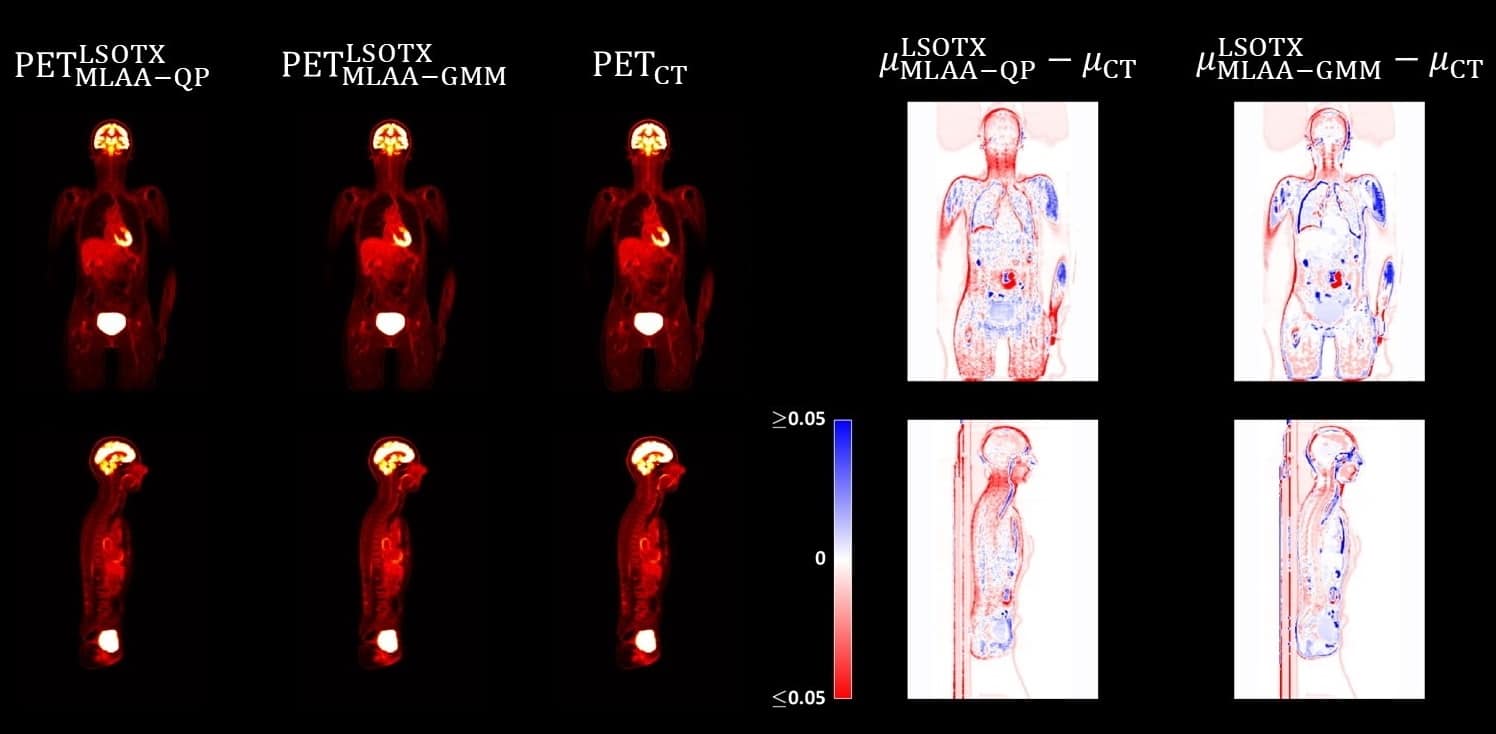
Total-body PET scanners with a long axial field-of-view can enable extremely low-dose PET scans. But the CT scan performed alongside to obtain attenuation maps can deliver a substantial radiation dose, negating these low-dose benefits. At the SNMMI Annual Meeting, Mohammadreza Teimoorisichani from Siemens Medical Imaging presented a fully quantitative PET imaging technique that does not require an accompanying CT scan and dramatically reduces the amount of radiation delivered to the patient. The approach could prove of particular benefit to paediatric patients and those requiring multiple scans.

“Most modern PET scanners use lutetium-based scintillators to detect gamma photons” explains Teimoorisichani in a press statement. “The lutetium in the scintillator contains a small amount – less than 3% – of the radioisotope 176Lu, which emits background radiation during the scan. In our study, we used this background radiation as a transmission source to simultaneously reconstruct attenuation maps and quantitative PET images without the use of CT.”

The researchers evaluated their proposed reconstruction technique using data from a clinical FDG-PET scan acquired with a Siemens Biograph Vision Quadra PET/CT scanner. The patient was injected with roughly 170 MBq of 18F-FDG and scanned 55 min post-injection for a duration of 10 min. Using the 202 and 307 keV gamma photons from 176Lu to reconstruct attenuation maps, they generated PET images using various CT-free reconstruction algorithms.

Comparing the results with standard PET/CT images showed that the largest quantification errors in the attenuation maps appeared around the patient boundary. Of the various organs examined, the brain had the largest quantitative error (activity underestimation of 15–21%). However, the CT-free reconstructed PET images showed average organ quantitative errors of 4.8% and 10% for two reconstruction techniques examined.

As well as reducing patient dose, the proposed method also eliminates potential attenuation map misregistration that can arise due to patient motion between the CT and PET scans. The approach could also provide a reliable technique for attenuation correction in hybrid PET/MR scanners.

“This study is an important step toward practical CT-less quantitative PET imaging,” notes Teimoorisichani. “In addition to reducing patient radiation exposure, a true low-dose quantitative PET scan can have a great impact on research studies that aim to better understand human physiology at the molecular level and on research involving the development of radiopharmaceuticals. The algorithm is currently being evaluated on a large number of patients to discover its full potential.”

Self-collimating SPECT offers rapid cardiac imaging

A team from Tsinghua University in Beijing has designed a cardiac SPECT system that performs scans 10 to 100 times faster than current SPECT devices. The new system employs active detectors in a multi-layer architecture that carry out the dual functionality of detection and collimation. This “self-collimation” concept improves upon conventional SPECT approaches to deliver dramatically shortened scan time, better image quality, increased patient throughput and reduced radiation exposure to patients.

Self-collimating-SPECT system

“SPECT is an important non-invasive imaging tool for the diagnosis and risk stratification of patients with coronary heart disease,” says Debin Zhang in a press statement. “However, conventional SPECT suffers from long scan time and poor image quality as a result of relying on a mechanical collimator. The new SPECT system is capable of performing fast-framed dynamic scans with high quality.”

The self-collimating cardiac SPECT consists of three identical trapezoidal detector units, joined to form a half-hexagon that encloses a spherical field-of-view. Each detector unit comprises an inner tungsten plate containing many apertures, followed by four stacked detector layers, three containing scintillators sparsely arranged in a chessboard pattern and the outer one containing closely packed scintillators. These scintillators perform the dual functions of photon detection and collimation.

SPECT reconstructions of an XCAT cardiac phantom

The researchers compared three aperture patterns in the metal plate (which also provides part of the collimation) and found that a random distribution of 140 apertures provided better signal-to-noise performance than 48 or 140 apertures in a grid pattern. Using this random configuration, the cardiac SPECT had an average sensitivity of 0.68 in the field-of-view.

In scans of phantoms, the system could separate 4 mm rods in a hot-rod phantom, and was able to identify a defect in a cardiac phantom in as little as 2 s.

The team concludes that the proposed detector design has potential to expand clinical applications of dynamic cardiac SPECT, by eliminating the impact of patient’s respiratory motion, increasing patient throughput, enabling ultra-low-dose imaging and precisely quantifying myocardial blood flow and coronary flow reserve.

Xanadu puts quantum advantage in the cloud

Researchers at Xanadu, a Canadian company specializing in photonic quantum computing, claim to have achieved quantum computational advantage with an experiment run on their cloud-accessible Borealis machine. The term “quantum advantage” (sometimes called quantum supremacy) refers to a situation in which a quantum machine carries out specific computational tasks that would be intractable for a classical computer. The latest experiment, which involves taking measurements that correspond to drawing a sample from a distribution, takes Xanadu’s Borealis 36 microseconds per sample, whereas the team estimate it would take 9000 years for the world’s fastest supercomputer to model the same experiment using the best known algorithms.

The task in this experiment is an example of Gaussian boson sampling (GBS) – a simplified framework for optical quantum computers in which quantum states of light are sent through an interferometer (an optical network with tunable parameters dictating how the photons interfere) before being measured at the outputs. This design is simpler than a universal quantum computer, and as Jonathan Lavoie, systems integration team lead at Xanadu, explains, it has restricted applications. “It is important to emphasize that quantum advantage machines are built with the purpose of proving something fundamental about the power of quantum computing, not necessarily to solve an immediate ‘useful’ problem,” Lavoie says. “The latter will likely require fault-tolerance and error correction.”

Building on previous quantum advantage results

Previous quantum computational advantage claims have met with some controversy. In 2019, a team at Google announced quantum advantage using superconducting (instead of photonic) technology, although this has been debated within the community. More recently, experimenters from the University of Science and Technology of China made similar claims for two experiments (also performing GBS) known as Jiuzhang and Jiuzhang 2.0. Although a considerable technological achievement, further papers raise questions about their results. Nicolás Quesada, who led the project alongside Lavoie and is now assistant professor at Polytechnique Montréal, notes that “more theory and verification tools are needed.” Quesada’s work continues to look at these verification tasks.

Borealis differs from Jiuzhang in several ways, including size: with 216 distinct modes (different accessible quantum states), Xanadu’s machine represents a significant increase from the previous record of 144. Xanadu also uses a new design for GBS that delays photons in loops of optical fibre before they interfere with subsequent pulses, which helps suppress errors and improves scalability. One particular achievement of this latest work is techniques implemented to stabilize these fibres to lengths far below the order of the wavelength of the light, as discussed in a blog post published by the team at Xanadu.

The new setup means that not all possible configurations of GBS can be carried out. “For photonics, when one wants to encode interesting problems reflective of real-world application instances, one needs access to a universal programmable interferometer, which will typically entail significant losses,” Quesada says. “So this is definitely a hard challenge.”

Borealis does, however, allow full programmability within the limits of the proposed structure, whereas previous GBS experiments of this scale had fixed interactions between modes. The additional flexibility is permitted by advances in generating quantum states of light, the detection rate, and fast electro-optical switching, which changes the settings of components at which pulses interfere at a sufficiently high speed to implement all the possible operations.

Borealis is unique among quantum advantage demonstrations in that the public can now access this machine and submit jobs remotely via Xanadu’s cloud service. Whether GBS produces any useful calculations beyond a demonstration of quantum advantage, however, is still uncertain. Furthermore, as Quesada explains, when it comes to the applications of GBS, further research is needed to understand “whether there are classical algorithms that can do the job well enough thus nullifying the need for quantum machines”. Nonetheless, this achievement “really helps build confidence that our hardware development and software control systems are on the right track to build a fault-tolerant photonic quantum computer at Xanadu,” Lavoie tells Physics World.

IUPAP: uniting physicists for the last 100 years

Can you remind us of IUPAP’s remit? 

IUPAP is a global organization that was founded in 1922. Its mission is to assist the worldwide development of physics, to foster international co-operation in physics and to help in the application of physics towards solving problems of concern to humanity. In our current strategic plan, we have also adapted five new principles: to foster openness and inclusiveness in physics; to promote free movement of physicists and open data; to ensure integrity and credibility; to promote physics as a building block of innovation and multidisciplinary research; and to promote physics as an essential tool for development and sustainability. 

Why was IUPAP originally set up? 

Around a century ago physics was increasingly branching into many sub-fields. By 1922 it became impossible for one person to be an expert in all existing fields of physics, so it became more important to be connected to other physicists. The subject was also flourishing in more countries, so IUPAP was set up by 13 founding member nations to bring together physicists from all sub-disciplines and from across the world. 

How did you get involved in IUPAP? 

In 2014, having just stepped down as president of CERN Council, I became a researcher in astroparticle physics. At the time there was no IUPAP working group on this emerging field – only two separate ones on astronomy and particle physics. I volunteered to create a new working group on astroparticle physics and was chair of it from 2014 to 2017. Astroparticle physicists already had their own conference, but my main action was to promote access to publications, data and instruments in the field. 

How did you become president of IUPAP? 

In 2017 I was approached by Bruce McKellar who at the time was IUPAP president. He asked if I would accept the role of president-elect. In 2017 at the triennial general assembly, I was elected president-designate for three years from 2020 to 2023. In 2019, due to Kennedy Reed’s early resignation from the role, I automatically became president sooner than expected. The general assembly that was planned for October 2020, where I would be formally elected, was deferred to 2021 because of COVID-19 and when it was held virtually in 2021, I was elected president for another three years. The next general assembly will be in 2024, so I will have an exceptionally long mandate of five years, when it is normally three. 

What are the main activities of IUPAP today? 

There are many activities but the main one is that IUPAP sponsors global conferences in various sub-fields of physics. Most of the money for the conferences comes from other sponsors, but IUPAP sponsorship is a label that guarantees high scientific quality. IUPAP also sets rules that are adopted by all conferences it sponsors to reinforce equality, diversity and inclusiveness. 

What are these rules? 

The rules focus on promoting three aspects: participation of women in conferences; participation of developing countries; and inclusiveness in terms of attracting early-career physicists. We present an early-career scientific award to physicists at all large International IUPAP-sponsored conferences. 

How have IUPAP’s goals changed since it began? 

Equality, diversity and inclusion are becoming more important as are ethics and integrity. These are big challenges. Now there are many fake conferences, fake data and fake experiments. There is fake news everywhere. Part of our job is to fight against this and promote integrity. If you don’t, you will lose credibility. What is also new compared to 100 years ago is that the challenges society faces are increasingly connected to multidisciplinary research and innovation. So, we must promote physics as a building block of this. 

How has IUPAP developed as an organization? 

Before last year, IUPAP was an informal structure without legal status or permanent headquarters. As an organization we have moved around a lot: we were hosted by the American Physical Society and then the Institute of Physics in the UK before heading to Singapore for six years. Last year, for the first time, IUPAP became a registered association under Swiss law with permanent headquarters in Geneva. 

What are some of IUPAP’s most important achievements? 

IUPAP has made progress in equality, diversity and inclusion and participation from all countries. There has been progress in gender balance at IUPAP-sponsored conferences – we have more women now participating in physics and at conferences. IUPAP has also promoted collaboration and peace through physics, for example by actively promoting the Synchrotron-Light for Experimental Science and Applications in the Middle East, which is based near Amman in Jordan. We are now promoting light sources in Africa, Asia and Latin America. 

As an international organization, how do you handle situations such as the Russian invasion of Ukraine? 

IUPAP is well known for its activity during the Cold War to support physicists from the East. This is important again during today’s difficulties. We condemn the Russian invasion of Ukraine and we have offered free IUPAP membership to Ukraine, which was not previously a member. The National Academy of Sciences of Ukraine was very proud to become a new member. We also offer Russian physicists who do not support the war a neutral IUPAP affiliation to participate in IUPAP-sponsored conferences in case they have difficulties putting their home institute affiliation. 

IUPAP is a kind of spokes-organization for all physicists and can sit at the UN and similar organizations

In the age of social media and increased connectivity between individuals why do we still need a body like IUPAP? 

IUPAP is now becoming a non-governmental organization (NGO), which has a legal structure. As an NGO, IUPAP is a kind of spokes-organization for all physicists and can sit at the UN or UNESCO and similar organizations. Social media alone cannot provide this. 

What other challenges does IUPAP face? 

The main challenge is to be more global in membership. When IUPAP started out, it had 13 member countries. Now there are 60 represented territories, but we want to increase this number. We also want to be better connected to physics outside academia. There are more physicists now in industry than in academia, which is why we are now also accepting corporate members. This change was brought in last year at the general assembly. Finally, we want to promote more equality, diversity and inclusion, collaboration and openness and integrity in IUPAP’s activities and in physics in general. 

As well as being the centenary of IUPAP, 2022 is also the UN International Year of Basic Sciences for Sustainable Development (IYBSSD). Are these events linked? 

Yes. In 2017, when I was approached to become president-elect, I had the idea to join the IYBSSD with the IUPAP centenary celebrations to emphasize that physics is a building block for interdisciplinarity and for sustainable development. The IYBSSD was initiated by IUPAP and is the main event to celebrate IUPAP’s 100th anniversary. I am also chair of the IYBSSD steering committee. 

What will the centennial symposium in Trieste on 11–13 July involve? 

A series of activities will be held to celebrate IUPAP’s centenary all over the world and we hope that many will participate in person at Trieste. But we understand that some people may have difficulties, so the meeting will be hybrid. It will include plenary talks by keynote speakers, including the president of the National Academy of Sciences of Ukraine. There will be an emphasis on IUPAP history, developing countries, collaboration among countries, and physics education in relation to attracting early-career physicists. 

Any other special events planned? 

We will have a special general assembly in 2023 to mark the 100th anniversary of IUPAP’s first general assembly. We hope to hold this at CERN’s new Science Gateway outreach and education centre, which is expected to be finished next year. 

South African robotic telescope to begin search for the afterglow of cosmic events

A new optical telescope in South Africa that will measure the brightness of transient sources will begin operation in mid-July. Located at the Boyden Observatory in Bloemfontein, the telescope – a collaboration between South Africa’s University of the Free State, University College Dublin (UCD) and the Institute of Astrophysics of Andalusia in Spain – will be used to study the afterglow from extremely energetic astrophysical events. 

Transient events often appear in the sky briefly before disappearing. The telescope – dubbed the Burst Observer and Optical Transient Exploring System (BOOTES 6) – is equipped with an extremely sensitive CCD camera to detect these faint events and it has an incredibly fast “slew rate”. This means that when an alert of a gamma-ray explosion is reported, the telescope can observe it within a few seconds, which is crucial when monitoring transient events.

Astronomer Pieter Meintjes, who is head of astrophysics at the University of the Free State, says the group is “ecstatic” about the fast slew rate as it will allow quick data collection and give the team an edge over rival groups. 

Studying extreme events

One of the main aims of the telescope will be following up on the afterglow that is produced during gamma-ray bursts that are created when very massive stars form black holes or when neutron stars collide.

“By observing the afterglow and monitoring how it fades away over time allows astronomers to pin-point the location of the explosion and also establish what kind of explosion it was,” says Meintjes, who adds that the researchers are planning to put a spectrograph on the telescope, which will allow them to determine what elements are forged in these extreme events.

Work began on the telescope two years ago, but efforts were hampered by the COVID-19 pandemic with engineers only being able to assemble the telescope in April. The telescope’s hardware was funded by the Institute of Astrophysics of Andalusia while the University of the Free State built the observing dome.

The Boyden telescope joins other BOOTES telescopes that are located in China, New Zealand, Mexico and Spain – in the search for transient events. 

The new telescope is the second observatory to be hosted by the University of the Free State after the 0.41 m Watcher telescope, which has been managed by UCD since 2001. 

Deep-learning framework identifies regions of COVID-19 infection in lung scans

Neural network identifies regions of COVID-19 lung infection

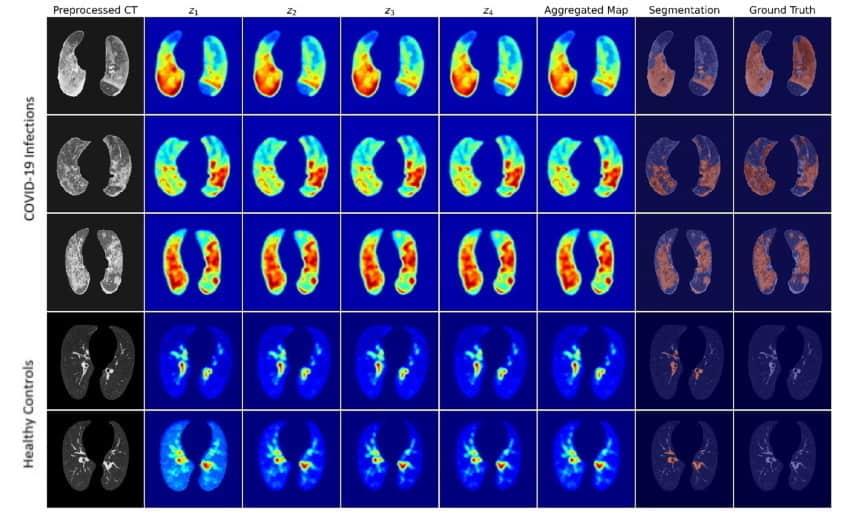
An artificial neural network that can identify regions of COVID-19 lung infection in CT scans, despite being trained only on images of healthy patients, has been developed by researchers in the UK and China. The tool can also be used to generate pseudo data to retrain and enhance other segmentation models.

One of the most significant health crises of the last century, the COVID-19 pandemic is estimated to have infected more than 250 million individuals worldwide since it first emerged back in December 2019. As we have all learnt over the last two years, the successful suppression of coronavirus transmission is dependent on effective testing and quarantine of infected individuals.

CT scanning is an important diagnostic tool — and one that has the potential to stand in as both an alternative to reverse transcription polymerase chain reaction (RT-PCR) tests where such are limited, as well as providing a way to screen for PCR false negatives.

The problem with such uses of CT scans, however, is that they are dependent on having trained radiologists to interpret them — and increasing demand in outbreak hotspots would add more strain to local medical services. One solution lies in the application of deep learning-based artificial intelligence to analyse the images, which could help clinicians screen for COVID-19 faster and also lower the expertise level needed to do so.

While various studies have shown the potential for deep learning to aid with classification of the disease on CT images, few have examined its capacity to automate the localization of disease regions. A challenge with using deep learning to complete this task, however, comes in the scarcity of annotated datasets on which to train neural networks.

In their study, computer scientist Yu-Dong Zhang of the University of Leicester and colleagues propose a new weakly supervised deep-learning framework dubbed the “Weak Variational Autoencoder for Localisation and Enhancement”, or “WVALE” for short. The framework includes a neural network model named “WVAE”, which uses a gradient-based approach for anomaly localization. WVAE works by transforming and then recovering the original data in order to learn about their latent features, which then allows it to identify anomalous regions

The team’s approach is “weakly supervised” because they used only healthy control images to train their WVAE model — rather than a mixture of CT scans from healthy and coronavirus-infected patients. The study’s main dataset comprised CT scans from 66 patients diagnosed with COVID-19 at the Fourth People’s Hospital in Huai’an, China and 66 healthy medical examiners as controls.

The researchers found that the WVAE model is capable of producing high-quality attention maps from the CT scans, with fine borders around infected lung regions, and segmentation results comparable to those produced by many conventional, supervised segmentation models —outperforming a range of existing weakly supervised anomaly localization methods. Furthermore, they were able to go on to use pseudo data generated by this model to retrain and enhance other segmentation models.

“Our study provides a proof-of-concept for weakly supervised segmentation and an alternative approach to alleviate the lack of annotation, while its independence from classification and segmentation frameworks makes it easily integratable with existing systems,” says Zhang.

With their initial study complete, the researchers are now looking to explore bringing different methods to bear on their framework.

“While the gradient-based method provides good anomaly localization performance in our case, it’s a post-hoc method — which attempts to interpret models after they’re trained — and WVAE is still a black box,” Zhang explains. “We plan to look at exploring methods that can perhaps make WVAE inherently interpretable and exploit that interpretability for tasks like anomaly localization and generating pseudo segmentation data.”

The study is described in Computer Methods and Programs in Biomedicine.

Sun NuclearAI in Medical Physics Week is supported by Sun Nuclear, a manufacturer of patient safety solutions for radiation therapy and diagnostic imaging centres. Visit www.sunnuclear.com to find out more.

Optical microphone images vibrations, women win both top prizes in UK young scientist and engineer awards

A conventional microphone contains a diaphragm that vibrates in the presence of sounds waves. These mechanical vibrations are then converted into an electrical signal. In a condenser mic, for example, the diaphragm acts as one plate of a capacitor with the changing capacitance creating the signal.

But diaphragms are not the only things that vibrate in the presence of sound waves – indeed, just about any object will oscillate to a certain extent. Now, researchers at Carnegie Mellon University in the US have created an optical system that can detect vibrations on an object and convert them into an audio signal.

The idea is very simple, a laser is aimed at an object creating a speckle pattern on the surface of the object. The speckle pattern is then imaged using two cameras – one that scans across the pattern, and one that images the entire pattern.

Interfering light

A speckle pattern is caused by the interference of light that is reflected from the microscopic texture on the surface of an object. As a result, the pattern changes as vibrations move across the surface of the objects – and these changes are captured by the cameras and converted into an audio signal using a computer program.

Mark Sheinin, Dorian Chan and colleagues used their system to capture sounds from individual guitars, loudspeakers and even from a bag of Doritos.

This is not the first time that a computer vision system has been used to capture sound, but the team point out that unlike previous systems – which used expensive high-speed cameras – this latest incarnation uses ordinary cameras at a fraction of the cost.

Sound engineers

A paper describing the system won “best paper honourable mention” at the IEEE/CVF Computer Vision and Pattern Recognition Conference, which was held this week in New Orleans. The team says that its system could be used by sound engineers to get a better idea of the sounds emanating from individual instruments. It could also be used to monitor the vibrations of individual machines in manufacturing facilities.

A PDF of the paper can be downloaded here.

For the first time, two young women have been crowned UK Young Scientist of the Year and UK Engineer of the Year in the same year. Connie Gray from Liverpool and Avye Couloute of Surbiton are both 14 and they bagged the science and engineering prizes respectively in The Big Bang UK Young Scientists & Engineers Competition.

Gray’s research involved comparing the structure of birds’ feathers to determine why some birds cannot fly. Her work aims to help with conservation efforts in areas of the world affected by climate change.

Improving air quality

Couloute invented a system that monitors carbon dioxide levels inside buildings. To test her system, she built a scaled-down pavilion and was able to show how the system can automatically improve indoor air quality using ventilation and other techniques.

Congratulations to both winners. And if you would like to be inspired by another young scientific achiever, listen to my interview with 17-year-old Rishab Jain – who is a two-time international science fair winner from the US. I chat with him about his research on the applications of artificial intelligence in medicine.

The glass that offers Ukraine hope: Oksana Kondratyeva on the interface between art, science and architecture

Just three days before the 1986 Chernobyl disaster, the power plant’s administrative building received a splash of colour. A nine-part stained-glass series was installed depicting the history of humankind’s relationship with energy, from Prometheus stealing fire from the gods, to scientists splitting the atom. When Chernobyl’s reactor building was destroyed by the nuclear inferno, this glass art survived; what is not yet clear is whether it has also survived Russia’s recent attack on the facility.

“History repeats itself,” was the verdict of Oksana Kondratyeva, a Ukrainian glass artist and architect who spoke to me in late April, shortly after giving a talk on the country’s stained glass for The Worshipful Company of Glaziers and Painters of Glass. “We have seen centuries of violence and destruction, and now we are witnessing the same. But like the legendary phoenix, the country will be reborn with new beauty.” All proceeds from that event were donated to Ukrainian relief efforts.

Like the legendary phoenix, the country will be reborn with new beauty

Oksana Kondratyeva, Ukrainian glass artist and architect

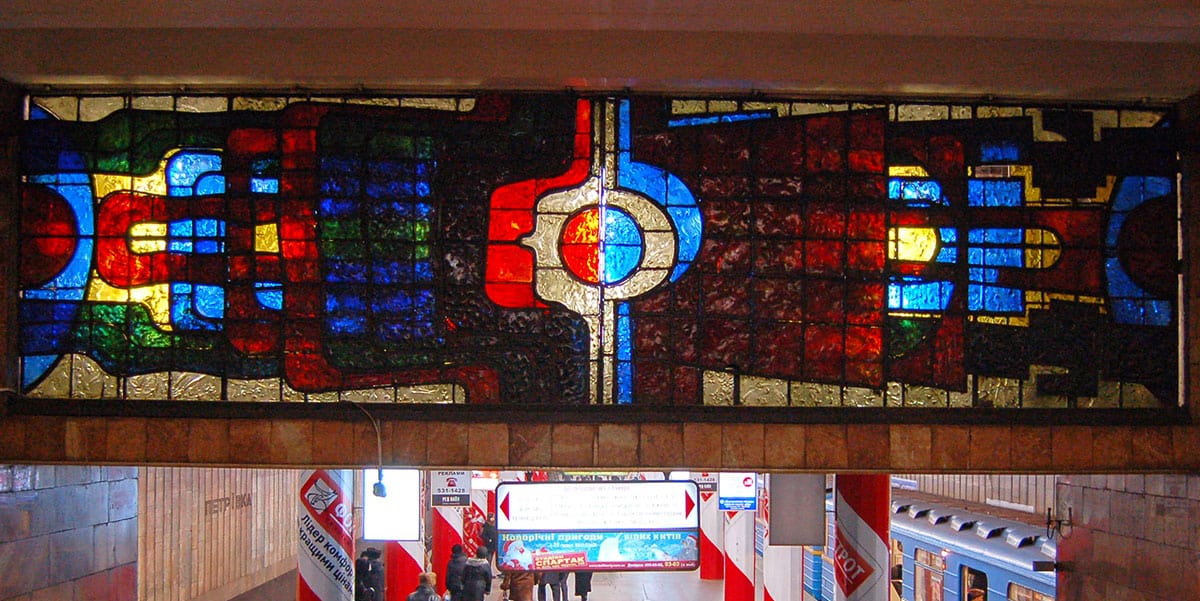
Glass mural in Petrivka metro station

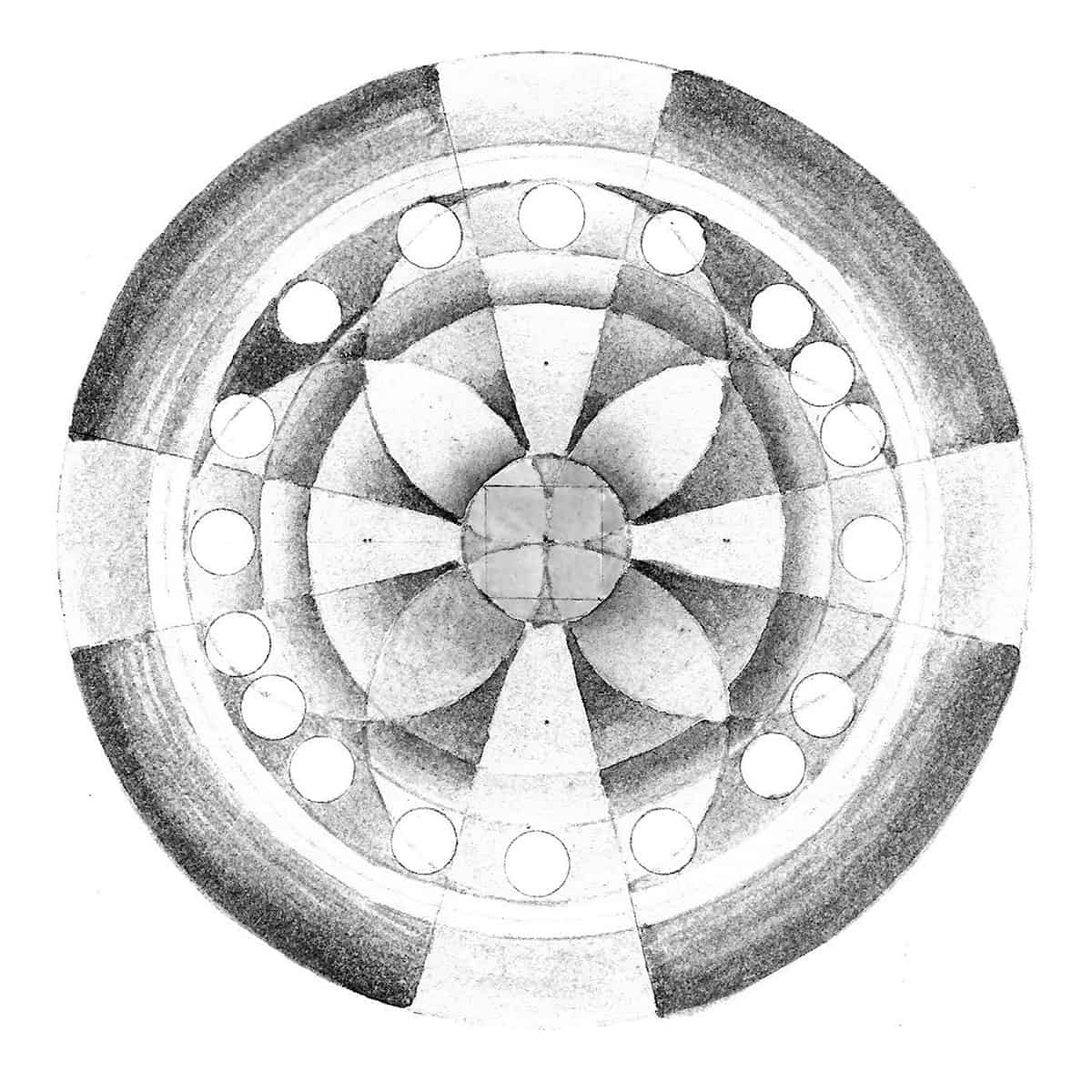
Based in London, Kondratyeva draws inspiration from Ukrainian culture – especially its folklore – in her artwork. She experiments with rhythms and textures, often using an acid etching technique in which sections of glass are selectively dissolved using hydrofluoric acid while other parts are protected with natural materials such as beeswax and tallow. Increasingly operating at the interface between art, science and architecture, Kondratyeva is currently creating designs inspired by the geometry of the quantum chips developed for the UK’s first commercial quantum computer.

Back in Ukraine, with the war still active, it is difficult to establish the scale of damage to the country. However, Ukraine’s Ministry of Culture and Information Policy has launched a platform to track war crimes against its cultural landmarks. More than 250 cases have so far been noted, including the destruction of notable stained-glass windows at Kharkiv Art Museum and the Kharkiv Korolenko State Scientific Library. Where possible, efforts are being made to protect stained glass, either by removing it entirely (which is preferable) or by boarding it up.

According to Kondratyeva, archaeological evidence suggests that the first stained glass in Ukraine dates back to medieval times, when artisans created colourful windows and mosaics, mainly for churches and other ecclesiastical buildings. But the burgeoning glass culture was cut short when the Tartar–Mongolian invasion of 1240 devastated the territory. Glass production frequently reemerged between wars and by the late 19th century Ukrainian glass art was flourishing once again.

A pencil sketch of art in a stained glass window inspired by the geometry of a quantum processor

With demand driven by building booms in Kyiv, Lviv and Kharkiv, production initially occurred outside the region, but local glass workshops soon emerged in Ukraine. Kondratyeva says that a floral secession style was particularly popular with private customers, and Ukrainian artists blended glass with different media to create Gesamtkunstwerk, or “total works of art”.

Some of this heritage was lost during the Soviet period when Communist officials destroyed glass icons, as well as works that threatened their political ideals. But within the officially atheist Soviet Union, science and technology were elevated to almost religious status, and many stained-glass windows were created for universities and research institutes. The energy series at Chernobyl was created by Mykola Linnyk when artists started to search again for a Ukrainian identity.

During Soviet times, glass art was even installed in underground stations, reflecting the ethos of public art for the working people. Today, residents in Kyiv and Kharkiv are using those same underground stations to shelter from Russian shelling. For Kondratyeva, the underground art has become a source of hope. In these troubled times, it is a proud reminder of the nation’s rich cultural heritage.

Copyright © 2026 by IOP Publishing Ltd and individual contributors