Highly eccentric black-hole merger is identified in LIGO–Virgo observation

Astronomers in the US have found strong evidence that a merging pair of black holes with highly eccentric orbits has been seen by the LIGO–Virgo gravitational wave detectors. The team, led by Richard O’Shaughnessy at Rochester Institute of Technology, made the discovery after running an extensive series of simulations – which they used to recreate the gravitational waveforms originating from a merger that was spotted in 2019. Their results suggest that the merger was the result of a chance encounter between two black holes in a dense star cluster.

The latest theories of stellar evolution place an upper limit of around 50 solar masses on the sizes of black holes produced through supernovae. However, not all observed black holes appear to obey this rule. In 2019, the LIGO–Virgo observatories detected GW190521: a gravitational-wave signal generated by the most massive pair of merging black holes observed to date, each measuring over 70 solar masses.

To explain why these hefty objects were well above the apparent mass limit, some astronomers say that they could have each been second-generation black holes – which are themselves created by black-hole mergers. Afterwards, the two bodies may have been caught in each other’s gravity by chance to form a binary that merged. Such multiple mergers are likely to occur in regions that are densely populated by black holes, such as galactic nuclei.

Lost eccentricity

So far, most mergers observed by astronomers appear to have involved pairs of black holes in highly circular orbits – whereby both objects orbit in circles around their centre of mass. Such systems would have probably begun as binary stars and would have remained stable for billions of years before merging, so that any orbital eccentricity would be lost through emissions of gravitational waves.

However, binary systems formed in chance encounters would begin in highly eccentric orbits – with both objects in elliptical orbits around their centre of mass. If the orbital radii were small, the black holes would merge before the eccentricity was radiated away.

If this occurred, information about the eccentricity would be imprinted on gravitational waves produced during the merger. However, identifying the signatures of eccentricity in LIGO–Virgo observations has proven to be difficult.

To address this limitation, O’Shaughnessy’s team did simulations of GW190521-like mergers using 611 eccentric, and 920 non-eccentric orbits. These simulations covered a full range of possible eccentricities and were also scaled to correspond to a range of black-hole masses. The result was nearly 100,000 different gravitational-wave signals. The simulations were carried out on local and national supercomputers across the US and took nearly a year to complete.

O’Shaughnessy’s team compared their results with the real waveform of GW190521, to determine which of their simulations offered the best match. For the first time, they showed that a LIGO–Virgo observation is highly consistent with a highly eccentric merger. As the capability of LIGO and Virgo’s detectors continue to rapidly improve, the astronomers now hope that their approach will identify future cases of eccentric mergers and chance black-hole encounters.

The research is described in Nature Astronomy.

Optical biopsy system aims to improve liver cancer diagnosis

A new optical biopsy technique could improve surgeons’ ability to identify early-stage cancer cells in the liver. Developed by a team at Orel State University in Russia, the approach incorporates a combination of spectroscopy and fluorescence measurements, which can be readily integrated with standard biopsy needles.

Liver cancer is among the leading causes of cancer deaths worldwide. Surgery is one of the most effective methods for treating the disease – but to ensure patient survival, it is crucial that cancer cells are detected as early as possible. To identify tumours in the liver, surgeons must obtain tissue samples using a needle biopsy. If this is successful, they will be able to differentiate between healthy and cancerous cells. Yet in order to do this, they must insert the needle in just the right place. If they miss the tumour even slightly, it could lead to an incorrect diagnosis.

Co-first authors Evgenii Zherebtsov, Elena Potapova and colleagues propose that this approach could become far more effective through the use of optical techniques, which are highly sensitive to the molecular and morphological structures of biological tissues. The system they have developed combines two separate measurements. Firstly, diffuse reflectance spectroscopy measures optical absorption and scattering, by analysing the light reflected by complex molecular structures.

Secondly, lifetime fluorescence analysis measures the average time that a group of molecules will stay in their excited states after being illuminated, before emitting a photon. This lifetime can vary significantly in the presence of different enzymes – which when bound to cell proteins, play widely varying roles in their metabolism. Since the cells surrounding liver tumours will alter their metabolism as a defence mechanism, notable changes in fluorescence lifetime can reliably indicate when a tumour is nearby.

“Although our team as well as others have previously used fluorescence intensity for tissue assessment, studies performed in other parts of the body have shown that fluorescence lifetime is less dependent on experimental conditions,” explains Potapova in a press statement. “Fluorescence lifetime measurements remain more consistent in the presence of blood, when there is non-uniform illumination, or if the contact between the probe and tissue changes due to movement.”

In selecting compact, modern components to build their probe, the team ensured that the 1 mm-diameter device was compatible with a standard biopsy needle. In addition, the probe contains separate channels for the diffuse reflectance spectroscopy and lifetime fluorescence measurements.

Initially, the researchers tested their technique in mice injected with human liver cancer cells. The optical biopsy system produced stable, reproducible results, reliably distinguishing between healthy and cancerous cells, as well as metabolically altered cells surrounding tumours. The group then performed biopsies on human patients with suspected liver cancer, producing similarly promising results.

In enabling surgeons to identify cancer cells in real time, the researchers ultimately hope that their biopsy technique will significantly improve the ability to diagnose liver cancer at the earliest possible stage. Through future research, they will aim to expand their approach to optical imaging of tumours of different types and at different stages of development.

The researchers report their findings in Biomedical Optics Express.

Magnetic crystals found in the noses of salmon could aid navigation

Tiny crystals of iron-based magnetite have been found in specialized receptor cells in the noses of salmon, suggesting that the crystals are used by the fish to navigate by Earth’s magnetic field. The research was done by an international team of scientists who have also discovered a possible evolutionary link between the magnetic sensory mechanisms of animals and magnetotactic bacteria, which contain tiny “compass needles”.

Salmon hatch in rivers, where they spend a year or so before migrating to the sea – returning as adults to their riverbed of birth to spawn. This migration can extend over thousands of kilometres and studies in which young salmon were exposed to magnetic fields suggest that the fish use an internal compass to navigate.

Some other animals also respond to magnetic fields and scientists believe that this could be related to magnetite, which is a magnetic material present in some organisms. However, a specific magnetite receptor has not been found in animals – and how animals sense Earth’s magnetic field remains a mystery.

Force microscopy

Now, Renee Bellinger at Oregon State University and colleagues used a combination of techniques to find magnetite crystals in salmon cells taken from nose tissue. First, they probed the cells using ferromagnetic resonance – which measures the coupling between electromagnetic waves and the magnetization of a substance. Then they used a combination of atomic and magnetic force microscopy – which each involve probing biological samples with a tiny mechanical cantilever – to create extremely high-resolution images of the cells and magnetic structures they contain.

The team discovered that magnetite within the salmon cells exists in compact, egg-shaped clusters. Each of these clusters measures around 200–300 nm in diameter, and contains roughly 100–200 individual crystals.

The growth of crystals inside living cells is called biomineralization, which is used by magnetotactic bacteria to grow chains of magnetite crystals. The bacteria use these tiny “compass needles” to orient themselves with respect to Earth’s magnetic field, possibly to move to regions of optimal oxygen content.

Through subsequent genetic analysis, Bellinger’s team discovered that the biomineralization genes expressed in salmon receptor cells were like those found in bacteria containing magnetite. This, they say, suggests that several billion years ago a magnetite-containing bacteria may have been incorporated into a more complex organism in a process called endosymbiosis – creating a distant ancestor of the salmon.

As well as boosting our understanding of magnetic sensing in animals, knowing how wild salmon navigate could help with their conservation. The researchers also say that knowing how magnetite is used in navigation could lead to the development of medical treatments that target specific parts of the body using magnetic fields. Research could also lead to the creation of new and compact navigation technologies.

The research is described in the Proceedings of the National Academy of Sciences

Solar panels can heat the local urban environment, systematic review reveals

A systematic review of 116 papers looking at how solar panels affect the surrounding environment has found that they can significantly warm cities during the day. This heating can also affect the performance of the photovoltaic (PV) systems, the study found. The researchers suggest future work should focus on increasing the reflectance of wavelengths of sunlight not converted to electricity. Lead author of the review, David Sailor of Arizona State University, explains why.

Why was there a need for a systematic review like this?

I was frustrated that there have been a handful of publications that have introduced inaccurate representations of the energy balance of PVs in the urban environment and have, as a result, made claims about the potential for PVs, for example, to cool the urban environment when, in fact, the energy balance is much more complex and the implications for the urban environment are correspondingly complex.

What research did you include in your study?

We felt that it would be useful to provide a more holistic viewpoint of PVs in the environment. We wanted to understand not just how putting PV systems in the urban environment affects buildings and urban air temperatures and so forth, but also – the other end of that equation – how the urban environment affects the performance of PV systems.

What did you find?

We arrived at several key conclusions. One had to do with PVs and their relationship with the urban energy balance. Specifically, we found that PVs can significantly warm the urban environment during the day, but typically cool the urban environment at night.

The second key finding was that, for a number of reasons, when you put PVs in an urban setting, they don’t perform as well as they might in some other settings, rural and suburban, for example.

Why do solar panels have this heat effect on the urban environment?

It’s important to put all of my discussion on this topic in the context that it depends on what you’re comparing a particular application to. So, the example would be if you put PVs on an existing black roof, you’re not having as much of an adverse effect on the urban thermal environment as if you put those PVs on a white roof, because a white roof would normally be a relatively cool surface.

When you put PVs on that white roof, the PV panels typically absorb in the order of 90% of the energy of the Sun. And the PV panels then do convert some of that energy to electricity, but typical panels today are only maybe 16–20% efficient. These panels are absorbing a tremendous amount of energy from the Sun, converting some of it into electricity, but then warming up because they’re not able to use all of the energy.

So, these PV panels tend to be rather hot surfaces in the environment. They’re almost always installed in an elevated format – above a roof surface or above ground level in a field. And as a result, you end up having two hot surfaces, the top surface of the panels and the underside surface of the panels. And so, as air flows over these panels, it readily picks up that heat essentially twice as effectively as it would if you had the same temperature on a building surface or a ground surface.

What effect does this heating have on the local urban environment?

There are several studies out there that have looked at panels from a modelling perspective and others have looked at observational data.

I’ve been involved in one project where we went out into the field and did measurements in and around a PV array in the desert, and then in an area not too far away that was a similar desert environment [the reference site]. What we found in that observational study was that the average air temperature at 1.5 m in the PV array site was about 1.3 °C warmer than the reference site, which is the non-PV site. At night we found almost no effect. And so, our observational studies led us to conclude that PVs do, in fact, have this warming effect during the day, whereas at night the effect can either be very small, or negligible and difficult to measure.

Other studies, particularly modelling studies, had previously suggested a daytime cooling effect of PVs. But those had a flawed representation of the PV panels, where they ignored the fact that PVs are able to convect heat from both the top and bottom surfaces.

Does this have an impact on people’s energy use for the cooling of buildings?

It does. And again, we found that impact to be very complex. There are a number of studies out there that have demonstrated that if you put PVs on a rooftop of a building, you reduce the annual air-conditioning energy consumption of that building. And that makes sense in that these PV panels provide shading from direct sunlight. So, the building doesn’t get nearly the solar load it would normally have penetrating through the roof surface. And that’s a mechanism whereby we would expect to have an air-conditioning benefit.

Likewise, you could have a heating penalty in the winter where you desire to have that solar radiation reaching the building surface, but PV panels are actually shading the building.

We found that in particularly warm climates such as Phoenix [Arizona, USA] for residential building stock, the PV panels actually have a rather complicated set of trade-offs. They do give us a benefit of shading our buildings directly from the Sun during the day. But at night, where the building roof surface would normally radiate its energy out into space and help to cool that roof surface rapidly, the PV panels actually obstruct the view of the building to the sky, slowing that heat loss at night-time. As a result, you actually increase the air-conditioning load of a residential building at night.

You mentioned that this heating can affect the solar panels. How does that work?

Traditional silicon-based PVs have what’s known as a temperature coefficient, that is, their efficiency is a function of the surface temperature of the solar cells themselves. And so, if you are in a hotter environment, if the PV surface is hotter, then it will be less efficient. The temperature coefficient is typically on the order of about 4% per degree Celsius for the cell temperature. What this means is that while PVs are typically tested at a standard test condition of 25 °C, if you’re operating in an urban environment – we’ve had plenty of measurements of PVs in installations here in Phoenix – where the PV surface temperature easily gets to 60–65 °C or even hotter, you reduce the efficiency by something on the order of 10–15% overall.

What can be done to mitigate these effects?

I don’t want to be interpreted as suggesting that PVs are not good things. PVs are a very important component of our future energy mix as we try to save the planet from global warming. That said, I think there’s an opportunity to design panels that are more effective at rejecting the heat that they don’t turn into electricity.

For the portion of the spectrum that [the panel] is not able to convert into electricity, perhaps we can design coatings on our PV systems that are essentially highly reflective of these wavelengths or more highly emissive of their own energy. You can look to some of the recent advances in material science that are known as passive radiative cooling technologies. If you can imagine a surface that is extremely efficient at radiating its energy in, say, the eight to 13 micron range, then you can essentially radiate the heat away from the surface through the atmospheric window.

I can imagine combining some of these innovations in material science with our conventional developments of PVs and creating a next generation of maybe what we might call “cool photovoltaics”. So, PV panels that are perhaps only as efficient as our current generation of PVs but are thermally much more efficient so that they run much cooler. Also, because of the temperature coefficient, they would likely receive an additional benefit in terms of efficiency – running at cooler temperatures and provide less warming to the urban environment.

The review is published in Energy and Buildings.

Life on Earth-like exoplanets could be protected by strong magnetic fields

The extreme pressures and temperatures found in the cores of Earth-like planets have been recreated using an ultrahigh-power laser at the Lawrence Livermore National Laboratory (LLNL). The research was led by Richard Kraus and suggests that rocky planets larger than Earth should have strong magnetic fields that are sustained over billions of years. The study could provide key guidance in the continuing search for life on the growing number of Earth-like exoplanets that have been observed orbiting stars other than the Sun.

When a rocky planet forms, material below the surface crust separates into a lighter silicate mantle that floats on a dense iron core. The molten core gradually loses heat to the surrounding mantle and in the case of the Earth, the inner core solidifies – releasing even more heat.

This movement of heat occurs via convection in Earth’s molten outer core – activating a dynamo process that generates a strong magnetic field. This field shields life on Earth from deadly radiation, and astrobiologists believe that such fields could be a prerequisite for organic life to emerge on other planets. However, questions remain surrounding the conditions that allow this convection to occur and remain stable over billions of years.

Melting curve

In the high-pressure, high-temperature environments of planetary interiors, molten iron convection is adiabatic. This means that it has a well-defined temperature profile as it flows up and down. At the same time, iron’s melting point is known to depend on its pressure, in a relation described by the iron “melting curve”.

Within a planet’s core, temperature and pressure change as a function of depth, and iron will solidify where the temperature and pressure intersect the melting curve. Within the Earth, this intersection occurs close to the centre – resulting in a solid inner core and processes that can drive a magnetic dynamo for billions of years.

If the intersection occurs further from the centre, crystallization will occur in a “top-down” process – a bit like ice forming on a lake. Here, solid “snowflakes” of iron form close to the edge of the core, leaving a molten centre. In this snowflake scenario, a magnetic dynamo is not expected to be sustained for long times.

Heat and high pressure

In their study, Kraus’s team recreated these varying conditions by heating iron with an ultrahigh-power laser housed at the LLNL’s National Ignition Facility. This generated pressures exceeding 1000 GPa, which is three times that experienced by Earth’s inner core. Using X-ray diffraction, the researchers could then analyse the melting curve of iron.

The team discovered that the strongest magnetic fields emerge in planets with roughly 1.5 times the radii, and around five times the mass of Earth. Such conditions generate a strong temperature gradient between the molten outer core and the mantle. This in turn drives strong convection patterns in the molten iron, generating and sustaining magnetic fields for billions of years.

Conversely, iron snowflakes are expected in planets the size of Mars – which contain an abundance of lighter elements in their cores, making it far more difficult to sustain magnetic fields. With about 1500 Earth-like exoplanets now identified to date, these results enable astronomers to better determine which of these could have sustainable magnetic fields, on timescales that may allow life to emerge.

The research is described in Science.

Playmobil figure visits the International Space Station, magnetic model predicts lizard’s spots

Playmobil’s “robotic genius” figure, also known as ROBert, paid a visit to the International Space Station (ISS) this week. The toy blasted off to the ISS on Wednesday and was soon greeted by European Space Station astronaut Matthias Maurer. ROBert had a guided tour of the ISS and in a video report (above), materials scientist Maurer discusses what astronauts do in a typical day, where they sleep and what activities they can do in the microgravity environment.

But it wasn’t all just hard work. In the video ROBert can be seen enjoying a spectacular view of Earth from the ISS’s panoramic “cupola” window. “I learned how small and fragile our planet is,” remarks ROBert, “and that we only have this one.”

Meanwhile back on Earth, the ocellated lizard can be found in south-western Europe and has green or black scales that help it camouflage to evade predators. As the lizard matures, individual scales change from one colour to the other, eventually forming a labyrinthine-like mosaic at adulthood.

Ocellated lizard

In 2017 researchers at the University of Geneva simulated this scale pattern as a “cellular automaton” – a computing system invented in 1948 by the mathematician John von Neumann in which each element changes according to the state of neighbouring elements. Although the model agreed with observations, it contained 14 parameters and so the researchers began to look for a simpler description.

They turned their attention to the antiferromagnetic Ising model that was first developed in the 1920’s to describe the behaviour of magnetic spins that can be in two states and only interact with their neighbours. When the researchers modelled this onto a hexagonal arrangement, this simple two-parameter model could explain the lizard’s labyrinthine pattern.

“These patterns are generated by a complex system that can be simplified as a single equation, where what matters is not the precise location of the green and black scales but the general appearance of the final patterns,” says biophysicist Michel Milinkovitch. The team now plans to investigate other species with colour-flipping scales to shed light on whether natural selection leads to these patterns.

Lab gender roles not due to personal choice, finds study

Male and female preferences for carrying out certain tasks during experimental laboratory work are largely the same – and do not support stereotypical gender roles that are often seen in lab settings. That is according to a study carried out by Natasha Holmes from Cornell University and colleagues, who say the tasks that students choose to do in inquiry-based lab sessions could be due to biases and different levels of confidence among men and women.

The new study follows on from research published by the same team in 2020, which found that when students make their own decisions about experimental design in inquiry-based lab sessions, male students are more likely to handle equipment while female students spend more time taking notes and in communication roles. This gender disparity seemed to develop implicitly, as individuals were not allocated roles by instructors, and group members rarely discussed which tasks they would each be doing.

To find out if the students’ personal preferences for different tasks might be driving this trend, in the new study the researchers conducted interviews with undergraduate students followed by a survey. Out of 100 individuals, the researchers found that male and female preferences for each of the tasks were largely the same. Crucially, female students expressed a similar level of preference for handling the equipment as that of male students.

The 2020 paper found that this gender bias appears in inquiry-based lab sessions, but not in traditional lab sessions, which are more structured, with students being given instructions for how to carry out the experiments. This difference presents a conundrum for the researchers as they have previously found that inquiry-based labs boost students’ engagement and encourage them to take more “ownership” of their learning, compared with traditional labs.

“We think the gendered behaviours emerge during that subtle, collegial volunteering,” Holmes told Physics World. “We think the bias is related to students’ desire to be friendly and not wanting to argue with group mates who volunteer for certain roles, as well as male and female students having different levels of initial confidence to jump into a particular role.”

Holmes and colleagues are now focussing on how to retain the educational benefits of inquiry-based labs while reducing the likelihood of gender bias emerging. “Although this study ruled out an important hypothesis, we have a lot more questions now,” she says. “We’re planning to test out different instructional interventions to see what is most effective.”

Those include assigning roles to the students and instructing them to rotate during the session or between labs; having open discussions about how some students might be more comfortable jumping into the equipment roles; and having students write down in their experiment designs how they are all going to contribute. “We think that this will make them explicitly reflect on ways to get everyone involved and make effective use of their group members,” adds Holmes.

Plastic scintillation detectors ready to shine as FLASH radiotherapy gathers momentum

Ultrahigh-dose-rate FLASH radiotherapy – whether using electron, proton or photon treatment beams – is shaping up as the “next big thing” in radiation oncology research. It’s easy to see why: a growing body of evidence – comprising preclinical experiments as well as the first small-scale clinical studies using electron and proton beams – demonstrates that radiation delivered at ultrahigh dose rates (roughly 40 Gy/s and above) can drastically reduce collateral damage and toxicity in normal healthy tissue while preserving anti-tumour activity.

Even so, it’s still early days and much work remains to be done before the at-scale clinical translation of FLASH radiotherapy becomes reality – not least the commercial development of affordable FLASH treatment machines as well as core enabling technologies such as FLASH treatment planning systems and robust dosimetry solutions for real-time beam monitoring. In the meantime, to fast-track commercial and clinical translation, medical physicists are redoubling their efforts to understand the fundamental radiobiology of the FLASH effect and, in turn, unlock research insights that will maximize the clinical impact of FLASH modalities for enhanced patient outcomes.

Online dosimetry

With this in mind, a team of scientists at the University of Victoria in British Columbia, Canada, has developed a cost-effective X-ray-tube-based system that exploits a customized beam shutter for in vitro ultrahigh-dose-rate irradiation (up to 118 Gy/s) of small samples with exposure times of less than 1 s (and latterly as short as 1 ms). Alongside the beam shutter and sample holder – which are designed and installed in close proximity to the X-ray tube window – one of the main building blocks of the benchtop system is a real-time, small-field dosimetry solution based on plastic scintillation detectors developed by Medscint, a specialist technology company in Quebec City.

“Plastic scintillation detectors are an ideal dosimeter for ultrahigh-dose-rate radiotherapy,” explains Magdalena Bazalova-Carter, lead physicist on the project and head of the X-ray Cancer Imaging and Therapy Experimental (XCITE) Lab at the University of Victoria. “By placing the scintillation detectors in close proximity of the beam shutter,” she adds, “we’ve been able to verify dose delivery and confirm that our system can accurately expose for short pulses down to 1 ms duration.”

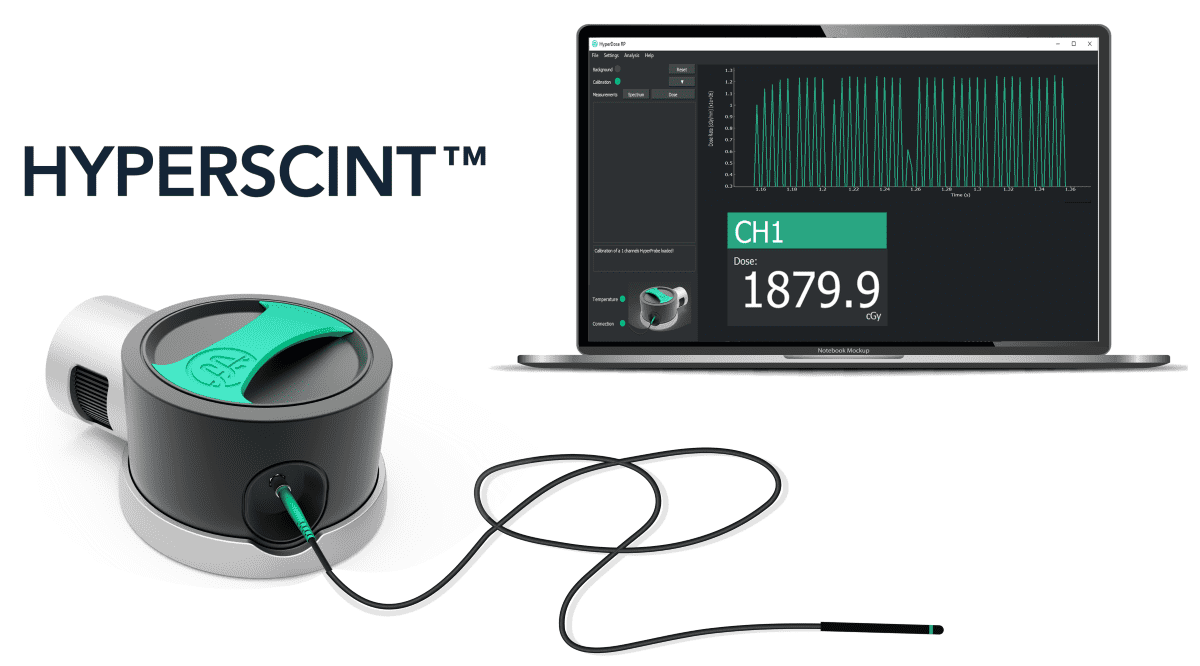
HYPERSCINT Research Platform

More broadly, plastic scintillators combine near-water-equivalence, nanosecond response times and high spatial resolution with MR-Linac compatibility and robustness against radiation damage.

Another advantage of the Medscint detectors is their compact footprint (0.5 mm long, 0.5 mm diameter), which makes them ideal for small-field and multipoint dosimetry. That’s a “must-have” for Bazalova-Carter and colleagues as their X-ray tube system is optimized for uniform dose delivery across samples no bigger than 6 mm in diameter.

In the lab, the XCITE team is currently putting the prototype X-ray tube system through its paces in a series of very-small-animal experiments, irradiating fruit fly larvae with ultrahigh dose rates and tracking comparative survival versus conventional irradiation schemes. “The early results are promising,” notes Alex Hart, a PhD student within the XCITE programme, “plus we’re now looking at the possibility of adding Medscint scintillation detectors to provide real-time, online readout of dose delivery.”

Put another way: it’s all about granularity. Inserting a small radiochromic film into the sample holder while irradiating the larvae provides the dose after the fact – i.e. if the dose is off for some reason, it’s not easy to figure out the root cause. “With a plastic scintillator in there,” Hart explains, “I could see that perhaps one of the exposures of a multipulse delivery didn’t happen at all or that it was shorter than expected.”

Beyond these proof-of-concept experiments, the next step for XCITE researchers is to deploy their X-ray tube system in the irradiation of normal and cancerous skin cells fabricated with 3D printing methods. Depending on the cell line, these so-called “multicellular cell spheroids” can be grown in a uniform fashion, such that their size can be controlled to within 5% – which, in turn, results in an interspheroid dose delivery difference of less than 1.1%. “Later this spring,” explains Hart, “we’ll use the X-ray tube system to investigate normal and cancer-cell spheroid response to ultrahigh dose rates and conventional irradiations – in each case, with and without gold nanoparticles as radiosensitizers.”

FLASH frontiers

Along a parallel line of enquiry, the XCITE team is also building a FLASH irradiation station on the ARIEL beamline at TRIUMF, the high-energy physics laboratory in Vancouver. To date, Bazalova-Carter, PhD student Nolan Esplen and colleagues have designed an electron-to-photon converter for the delivery of an ultrahigh dose-rate 10 MV photon beam on ARIEL’s existing medium-energy beam dump. Over the next three months, that cutting-edge capability will be evaluated in a series of experiments to investigate the FLASH effect on healthy lung tissue in mice.

Beam modelling suggests that the achieved dose rates at the irradiation site should be up to 200 Gy/s and above the FLASH effect dose-rate threshold of 40 Gy/s to depths of 10 cm. Here again, the R&D collaboration with Medscint will be pivotal. “We’ll use the Medscint plastic scintillators for in vivo dosimetry at TRIUMF, while evaluating scintillator response in the MV regime – something we haven’t done as yet,” explains Bazalova-Carter. “We’re also keen to work with the Medscint team to push the temporal resolution of the detectors further, down beyond the 1 ms exposure time into the microsecond regime.”

Looking further ahead, over the next 18–24 months, the XCITE R&D programme on spatially fractionated radiation therapy (SFRT) provides another opportunity for collaboration with Medscint’s development engineers. SFRT involves delivery of a single high dose fraction in a deliberately heterogeneous fashion – i.e. with high doses within the target volume as well as regions of underdosing – and shows great promise for the reduction of side-effects while maintaining efficacy for killing tumour cells. “We are developing custom hardware for SFRT beam delivery,” concludes Bazalova-Carter, “but we’re interested to see what we can achieve in partnership with Medscint on innovative SFRT dosimetry solutions.”

Further reading

D Cecchi et al. 2021 Characterization of an X-ray-tube-based ultrahigh-dose-rate system for in vitro irradiations Med. Phys. 48 7399

Putting the emphasis on customer collaboration

François Therriault-Proulx, president and CEO of Medscint, was one of the company’s co-founders in 2016, along with colleagues Simon Girard (chief science and technology officer) and Jonathan Turcotte (chief product, sales and marketing officer).

François Therriault-Proulx

Before taking what he calls the “entrepreneurship leap of faith”, Therriault-Proulx spent eight years as an academic scientist working on the fundamentals of scintillation dosimetry, spanning PhD and postdoctoral research positions at Université Laval, Quebec City, and the University of Texas MD Anderson Cancer Center, Houston. Here, he gives Physics World the headline take on Medscint’s technology and commercial offering.

What does Medscint’s addressable market look like?

Our mission at Medscint is to deliver best-in-class small-field dosimeters based on our proprietary optical know-how in the field of plastic scintillation detectors. To date, we’ve positioned our initial product – the HYPERSCINT Research Platform – with the cross-disciplinary R&D teams working to realize next-generation radiation therapy systems. This year, however, we’ll diversify with the launch of our first US Food and Drug Administration (FDA)-registered clinical system for small-field dosimetry applications in machine QA.

Following the eye-catching results presented by our customers at high-profile medical physics conferences – including last year’s AAPM Annual Meeting – we will also shortly be launching a dedicated product to bring ultrahigh-dose-rate dosimetry to the next level. Specifically, the HYPERSCINT FLASH research platform will enable linac pulse counting and dose-per-pulse measurement to support ultrahigh-dose-rate irradiation schemes.

Why are scintillation detectors a good fit for small-field dosimetry?

Plastic scintillators have a lot to offer as treatment fields get smaller and geometrically more complex. With no need for small-field correction factors to characterize device behaviour, our detectors provide a real-time measurement tool that combines high linearity with respect to dose and dose rate. That wide linear dynamic range is relevant at both ends of the treatment spectrum, whether for novel low-dose-rate irradiation schemes or ultrahigh-dose-rate FLASH applications.

How important are customers in shaping product innovation at Medscint?

As a new-entrant technology company, it’s essential that we’re there to support our customers, listening to their needs and responding proactively. We have a collaborative relationship with our customers and research partners, with their feedback shaping product iteration and the longer-term innovation roadmap.

It’s worth adding that Medscint was founded on a true willingness to generate a positive impact on society through innovations that could be easily segued from the research sector to the market. We view Medscint as something of a “connector”, building a network between our partners to help us refine and innovate our technologies versus their evolving needs. It’s thanks to this network that we’ll be able to advance the fields of scintillation, optical dosimetry and ultimately cancer care.

Two-dimensional nanoribbons make more efficient perovskite solar cells

Phosphorene nanoribbons can improve the efficiency of perovskite solar cells, a new study has shown. This is the first time that the benefits of the unique electrical properties of this novel two-dimensional nanomaterial have been experimentally demonstrated. According to the researchers, their results highlight the genuine importance of phosphorene nanoribbons.

Phosphorene consists of a single layer of black phosphorus. Like other two-dimensional materials, such as graphene, it has promising electrical characteristics that make it of interest in various applications. Since phosphorene was first produced in 2014, theoretical studies have suggested that nanoribbons of the material could produce more exciting properties. This is because the edges and confined widths of nanometre-wide strips are expected to exhibit different electrical phenomena to sheets of phosphorene.

“Phosphorene nanoribbons show great promise for optoelectronics given their high exciton binding energies, tunable band gaps, solution processability and ultrahigh hole mobilities,” explains Thomas Macdonald, a chemical engineer at Imperial College London.

Phosphorene nanoribbons were first isolated in 2019. The atomically thin ribbons typically have widths ranging from 4 to 50 nm and lengths of up to 75 μm. But until now, their predicted electronic properties had not been shown in actual devices.

Solar cell

Now, Macdonald and his colleagues have experimentally demonstrated the potential of phosphorene nanoribbons, by incorporating them into perovskite solar cells. The nanoribbons improved the efficiency of the solar cells by enhancing electrical transport between the light-absorbing perovskite layer and a semiconducting polymer. They report their results in the Journal of the American Chemical Society.

Perovskite solar cells are made from a class of materials that have a similar crystal structure to the mineral perovskite, rather than the more usual crystalline silicon. They can be created using a solution method, which makes them cheaper to produce than their silicon cousins. These newer solar cells are also thinner, making them lighter and more flexible.

“The valence band of phosphorene nanoribbons is ideally suited to promote hole-transfer between a perovskite absorber and its corresponding hole transport material in perovskite solar cells,” Macdonald says. “Since hole transport materials represent one of the major bottlenecks to further enhancing perovskite solar cell performance, phosphorene nanoribbons were incorporated as solution-processable nanomaterials.”

The team inserted the nanoribbons into a few different types of perovskite solar cells, between the perovskite layer and a polymer layer, which acted as the hole, or electron, transport layer. This layer is used in such solar cells to enhance carrier transport between the perovskite and the electrodes. They then compared the new devices with control perovskite solar cells that lacked the phosphorene nanoribbons. The nanoribbons increased the power conversion efficiencies of the solar cells from around 18% to above 21% – on a par with traditional silicon solar cells.

To examine the mechanisms behind the enhanced efficiencies, the researchers turned to photoluminescence and transient absorption spectroscopy. They showed that the nanoribbons enhance various parameters linked to electron transport, increasing the speed of electrical transport between the layers.

Macdonald tells Physics World that the team demonstrated that phosphorene nanoribbons are extremely effective as a charge-selective interlayer by enhancing hole extraction from the perovskite to the polymer semiconductor. “The functional electronic properties of the phosphorene nanoribbons improve the functionality of perovskite solar cells via more effective carrier extraction,” he adds. “In other words, the property we exploited here is that charge carriers can move fast in phosphorene nanoribbons.”

Aditya Mohite, a chemical engineer at Rice University in the US, who was not involved in the research, tells Physics World that the phosphorene ribbons seem to improve the charge collection as observed in the fill factor (a measure of solar cell efficiency). “It emphasizes the importance of using interface layers in perovskite photovoltaic devices to improve performance,” he adds. He cautions, however, that phosphorene nanoribbons could impact durability as they are moisture sensitive.

The unique properties of phosphorene nanoribbons could also benefit other devices, such as photodetectors, light-emitting diodes and hydrogen fuel cells, according to Macdonald. He notes that they could be particularly beneficial in batteries for electrical vehicles by dramatically speeding up the movement of charged ions, leading to significant increases in storage capacity and decreases in charging times.

Interference wall captures single photons

Researchers in the US have devised a new scheme for trapping single photons in a cavity that involves creating a “wall” to prevent additional photons from entering. The technique could provide a simpler way to generate single photons for use in next-generation quantum technologies such as ultra-secure quantum communications and quantum computers.

Devices that emit single photons are crucial for light-based quantum-information systems. Because the quantum state of a photon is what carries the information (in the form of a quantum bit, or qubit), these devices must also emit photons that are in the same quantum state, and therefore indistinguishable from each other.

Creating single photons in such Fock states (as they are known) is no easy matter, however. Conventional light sources such as lasers generate states containing large numbers of photons, so researchers need alternatives that allow them to manipulate non-classical, or non-linear, light. This typically requires complicated optical set-ups involving materials with an extremely large optical nonlinearity, which are difficult to create.

Preventing further photons from entering the cavity

The new scheme, developed Aashish Clerk and colleagues at the University of Chicago’s Pritzker School of Molecular Engineering, is very different from conventional “blockade” systems that use such nonlinear materials to trap single photons in a cavity. In these systems, the materials force photons in the cavity to interact strongly with each other in a way that causes the cavity’s resonance frequency to shift in the presence of even one single extra photon.

In contrast, Clerk and colleagues developed a system using only weakly nonlinear materials that allows two sources of light to emit a selected number of photons into a cavity. “Once the desired number of photons has entered the cavity, the two sources destructively interfere, which cancels out both sources and creates a ‘wall’ that prevents further photons from entering the cavity,” Clerk tells Physics World.

Expanding the potential of light-based quantum technologies

The researchers say their approach could be applied to wavelengths of electromagnetic radiation other than visible light. One possibility would be to use it to create and control microwave-frequency photons in a superconducting circuit, they explain. Such a system could make it possible to store and process quantum information.

“We think this scheme could work in a lot of different systems,” Clerk says. “If you don’t need special materials, it really expands the potential of light-based quantum technologies.”

The research is detailed in Science Advances.

Copyright © 2026 by IOP Publishing Ltd and individual contributors