Building bridges between big science and industry

How can Europe’s large-scale research facilities better engage with the industrial R&D community? That was the central question preoccupying delegates attending the Big Science Summit held in Malmö, Sweden, in November 2021, which featured talks and workshops within the broader TechConnect Europe Innovation Conference and Expo. The summit brought together applied scientists and engineers working on emerging technologies with industry experts from Europe’s top-tier laboratories such as the European Spallation Source (ESS) in Lund, Sweden, the Institut Laue-Langevin (ILL) in Grenoble, France, and DESY in Hamburg, Germany. 

One of the headline themes addressed at the meeting was how to lower the barriers so that small and medium-sized businesses, as well as established technology companies, see Europe’s large-scale research facilities as a natural extension of their own R&D and innovation efforts. “There’s work to do on both sides,” Dalia Yablon, senior adviser and technical programme chair of the TechConnect conference, told Physics World. “The big science labs, for their part, need to reduce obstacles to access in terms of bureaucracy, cost and the current low success rate for proposals received from industry.” 

Yablon believes that a phased approach to collaboration makes sense, where an industry customer might be able to start with a “quickie proof-of-concept” – minimal contracts and expense – followed by deeper levels of engagement as confidence builds between the two partners. “Equally,” she adds, “the big labs must be willing to do some ‘hand-holding’ along the way, especially with smaller companies that are likely to need their in-house expertise when carrying out one-off measurements on a specialist beamline or scientific instrument.” 

Yablon also highlights the importance of an “outreach mindset” to enable Europe’s big science labs to build bridges with applied researchers and engineers in industry. “It’s hard to know about these exotic techniques or get access to them unless you are ‘in the network’ of X-ray and neutron scientists – either through your graduate research or via colleagues,” says Yablon. “That network needs to be expanded as a matter of priority.” 

So-called “mediator companies” are crucial in this regard, helping to plan, execute and deliver high-end materials characterization services for industrial problem-solving. One such firm is Finden, which is based at the Harwell Innovation Campus in Oxfordshire, UK, and is part of a specialist network of analytical service providers called Mediators Connecting Industry to X-rays and Neutrons (MiXN). Finden and its MiXN peers help customers in a range of industries – pharmaceuticals, energy, catalysis and automotive, among others – to access Europe’s synchrotron and neutron research laboratories. “As a regular user of large-scale science facilities, we enable our industry customers to fast-track R&D projects through unique measurement capabilities tailored to their needs,” says Simon Jacques, managing director of Finden. 

The industry perspective

While many speakers pushed for an “enhanced and shared understanding” between big science and industry, others noted that significant progress is already being made. The Danish advanced materials company CTS Ceramics, for example, offered a case study in what’s called “upstream innovation”. Since 2014 it has been collaborating with the CERN particle-physics laboratory near Geneva to co-develop a custom line of piezoelectric actuators. “As a result of this innovation partnership, CTS is now a preferred supplier and selling its technology solution to CERN,” notes Nikolaj Zangenberg, work package leader for the European Network for Research Infrastructures and Industry for Collaboration (ENRIITC) and innovation manager at the Danish Technological Institute. 

Since its formation in January 2020, ENRIITC has emerged as something of an engine-room for collaboration between large-scale science facilities and industry. With nearly 400 network members – including more than 80 industry experts from Europe’s big science labs and the university research sector – ENRIITC’s goal is to accelerate the societal and economic impact of federal and pan-European research programmes. “Our members work together to map industry as a supplier and a user of Europe’s large-scale research infrastructures,” adds Anne-Charlotte Joubert, ENRIITC project co-ordinator and a grants officer at the ESS.

Zangenberg and Joubert showcased a notable example of “downstream innovation” involving French green-tech start-up Carbios, which is aiming to improve recycling treatments for poly(ethylene terephthalate) (PET) – the most abundant polyester plastic with almost 70 million tonnes manufactured annually worldwide for use in bottles, textiles and food containers. The Carbios R&D team used beamlines at several synchrotrons in Europe to resolve and screen the structures of hundreds of protein crystals. This group was able to zero in on a novel enzyme that biologically depolymerizes PET plastic waste by increasing the degradation yield to 90% in 10 hours – a significant enhancement versus the previous best-case yield of 1% after several weeks.

Clearing hurdles

Whether it’s upstream or downstream innovation, the key to closing the gap between big science and industry is an appreciation of the unique constraints faced by scientists and engineers operating in the commercial sector. “Walk a mile in your customer’s shoes and you will better understand how to reach out and engage with them,” says Jimmy Binderup Andersen, an ESS senior strategy officer. Time, or more precisely the lack of it, is probably the single biggest issue facing industry customers thinking about accessing a large-scale research facility. If a company is experiencing problems with an early-stage technology, for example, a solution might be needed in days or a couple of weeks, as opposed to the multi-year timeframes that academic scientists are accustomed to for their research projects. 

The key to closing the gap between big science and industry is an appreciation of the unique constraints faced by scientists and engineers operating in the commercial sector

Management buy-in is another hurdle for industry scientists, not least when budget holders, often with little technical background, are confronted with a significant one-off spend plus non-trivial contract paperwork. Again, a very different environment to university and government research, where the approval process is less onerous and often managed by staff who are close to the science. “The low success rate for beamline proposals from industry sources is another barrier just now,” explains Yablon. “After all, if you get management buy-in and your proposal is rejected, you will probably not get buy-in to try a second time.”

A simple three-point plan can help large-scale facilities better engage with industry, argues Caroline Boudou, an industry contact officer at the ILL. “There’s a need for a dedicated selection path,” she adds, “with appropriate criteria to give industry streamlined access and to grow collaborative industrial R&D activity.” Improved tracking – and subsequent promotion – of outcomes is another priority, with impact evaluated not just on a financial basis, but acknowledging other metrics such as savings versus energy and raw materials. “Finally,” she says, “we need dedicated industry support staff and beamtime for our scientific instruments, along with closer connections to the ‘intermediary’ companies.”

Majorana bosons could exist in dissipative systems, calculations suggest

Majorana bosons – hypothetical quasiparticles that are in many ways analogous to Majorana fermions – could exist in quantum systems with dissipation. That is according to calculations done in the US by Vincent Flynn and Lorenza Viola at Dartmouth College and Emilio Cobanera at the SUNY Polytechnic Institute. The existence of Majorana bosons suggests that in such systems a photon could be separated into two “halves”.

The Majorana fermion was first proposed as a subatomic particle by the Italian physicist Ettore Majorana in 1937. He noticed that spin-1/2 particles could be described by wave equations that were entirely real-valued. As the wavefunction of a particle is the complex conjugate of the wavefunction of its antiparticle, a particle whose wavefunction was entirely real would be its own antiparticle. It could therefore carry no charge.

Contentious existence

With the possible exception of neutrinos, whose Majorana nature remains undetermined, a real Majorana fermion has never been discovered. However, Majorana fermion quasiparticles – akin to “split” electrons – can theoretically be stable in systems such as superconductors, as predicted in 2001 by Alexei Kitaev, who is now at Caltech. In 2018, researchers in the Netherlands claimed to have observed evidence of Majorana fermions in a single indium antimonide nanowire partially covered with superconducting aluminium. However, the paper describing this observation was later retracted as the experimental data were found inconclusive.

Nevertheless, Viola explains, “from a theoretical perspective, that system is stable; it’s in equilibrium in its ground state.” Indeed, researchers have proposed that the unique topological properties of such Majorana fermions could be used in “Majorana qubits” that store information in two separate electrons, making them robust against local disorder.

The situation is different for bosons such as photons. Topological photonics has become an active area of research, and topological insulators, which are electrically insulating in the bulk but conduct electrons along scattering-free “topologically protected” paths, are expected to be useful in applications ranging from optical isolators to lasers.

Troublesome instabilities

To produce a Majorana-boson quasiparticle in a similar setting, however, was thought impossible: “There’s a really important distinction between a topological insulator and a topological superconductor,” explains Flynn. “They’re both topological, they’re both non-interacting, but the type of edge modes you get are very different. In a topological superconductor, things like Majorana fermions are possible – these are not the type of edge excitations you would see in a topological insulator…It follows from a well-known theorem that when you try to replicate the ground-state topology of a topological superconductor with photonics, you run into unavoidable instabilities.”

In the new work, however, the researchers show that this instability can be circumvented, provided the system is made dissipative. In 2013, researchers in Austria and Switzerland calculated that, rather than simply acting as a perturbation, energy dissipation can induce novel topological steady states in fermionic systems.

Inspired by this, Viola and colleagues calculated that, though the zero-energy, non-propagating Majorana bosons would never truly be stable, if suitable energy dissipation is included, the mode could become metastable. Moreover, the larger the system became, the longer the lifetime these states could have.

Tabletop experiments

“They don’t have the sub-femtosecond lifetimes of the Higgs boson,” says Flynn. “We should actually be able to detect them over practical time scales with tabletop equipment.”

The researchers hope to verify their predictions using photons in dissipative microwave cavities, but, in principle, the idea is more general: “As long as we have a physical system that could obey the dynamical equations we have and the constraints of the model we have, there is no requirement in the theory that the Majorana boson would come from a photon,” says Viola; “It could be potentially come from another boson like an atom that carries integer spin.”


Mark Dykman of Michigan State University says that this latest research builds on important work by Aashish Clerk of the University of Chicago and others showing that chains of microwave cavities could behave as polarization-selective amplifiers of radiation. “[Viola] adds another term to Clerk’s model – this is not a major difference. The emphasis of this interesting work is on introducing new auxiliary excitations in the transient regime, which are defined as bosonic analogs of Majorana fermions, and on the related topological aspects of transient dynamics.”

He sees a key difference between true Majorana fermions and the particles proposed here, however. “True Majoranas are half of a particle,” he says; “and no matter how far they are, they ‘know’ of each other, which is a major feature of fermions. Here, it’s a very different situation because the proposed excitations are bosons, and the strength of the relationship that makes them bosons depends exponentially on the distance between them.”

The research is described in Physical Review Letters.

Happy new year: the January 2022 issue of Physics World magazine is now out

Artist's illustration of proteins and music

Happy new year to all Physics World readers and welcome to 2022!

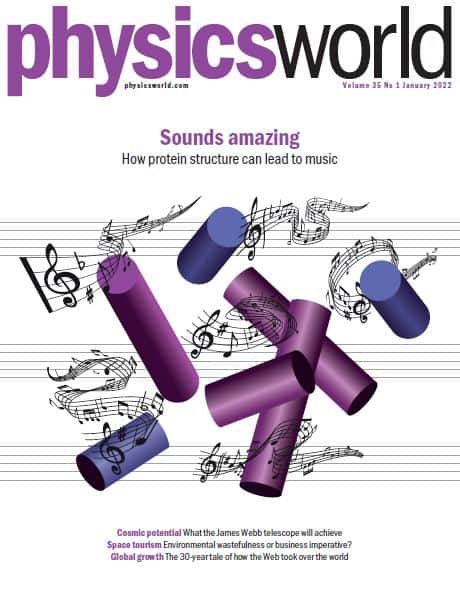
We couldn’t quite decide late last year whether to put a feature by Keith Cooper about the James Webb Space Telescope on the cover of the new January 2022 issue of Physics World magazine, which is now out in print and online.

We know you love astronomy and space, but just as we were finalizing the magazine – and putting the finishing touches to Cooper’s feature – NASA kept pushing the launch date back.

The JWST had already been delayed so many times during its troubled development that it didn’t seem wise to run a cover with a picture of this amazing telescope – just in case the mission was postponed yet again or, even worse, blew up or faced some other trouble.

Thankfully, the mission all seems to be going well after its successful launch on 25 December. Still, I’m glad we went with a cover image of another great feature from the January issue, which examines how proteins can be turned into music.

It’s written by Markus Buehler and Mario Milazzo from the Massachusetts institute of Technology, who have studied a wide range of biomaterials, from amino acids and viruses to spider silk. In the article, they explain how they have been able to explore new avenues of research by translating living structures directly into sound. Do check it out as I’m sure you’re intrigued.

If you’re a member of the Institute of Physics, you can read the whole of Physics World magazine every month via our digital apps for iOSAndroid and Web browsers. Let us know what you think about the issue on TwitterFacebook or by e-mailing us at pwld@ioppublishing.org.

For the record, here’s a rundown of what else is in the issue.

• Macroscopic entanglement bags award – The Physics World 2021 Breakthrough of the Year goes to work on the fuzzy interface between the quantum and classical worlds, as Hamish Johnston reports

• Building bridges between big science and industry – Delegates at a recent Big Science Summit in Malmö, Sweden, discussed how best to boost the economic impact of Europe’s research facilities. Joe McEntee reports

• What’s in a name? – Naming phenomena after discoverers is traditional, but not necessarily permanent says Matin Durrani

• Contaminating the night sky – Karel Green says that while private space endeavours are to be welcomed, we should not ignore the social and ethical concerns that they raise

• Space for all – With launch costs plummeting fast, James McKenzie examines the huge commercial potential of the space sector

• Your holiday secrets – Robert P Crease reveals readers’ favourite holiday-physics problems – and outlines some new teasers too

• A new cosmic dawn – As NASA’s James Webb Space Telescope gears up to open its eyes on the universe, Keith Cooper explores the mission’s troubled past, its technological advances and the exciting future ahead for astronomy

• A matter of sound – Often called the universal language, music may well represent life itself. Having studied a wide range of biomaterials, from amino acids and viruses to spider silk, Markus Buehler and Mario Milazzo explain how they have been able to explore new avenues of research by translating living structures into sound

• Going global: the world the Web has wrought – Thirty years after the World Wide Web first expanded from Europe to North America, Michael Riordan reveals how physicists and programmers played important roles in shaping the current wave of globalization

• The twin streams of time – Sidney Perkowitz reviews The Janus Point: a New Theory of Time by Julian Barbour

• Indefatigable wonder – Laura Hiscott reviews the new television show Universe, presented by Brian Cox, which was broadcast in October and November last year and is now available on BBC iPlayer

• Bringing physics into hospital clinics – Suman Shrestha, who is doing a PhD in medical physics in the US, tells Tami Freeman how the devastating earthquake that hit Nepal in 2015 has made him determined to one day bring his new-found skills and expertise back home

• Ask me anything – Careers advice from Giulia Grancini, an expert in next-generation materials for photovoltaic cells at the University of Pavia

• New year, new physicist – Laura Hiscott reveals physicists’ new-year’s resolutions

Snowflakes, snorkelling and spacewalks: your holiday secrets revealed

snowflakes

Whenever the physicist and aerospace engineer Theodore von Kármán (1881–1963) visited Lake Constance – then on the western fringes of the Austro-Hungarian empire – he’d head down to the lakeshore to watch the seagulls. Von Kármán understood aerodynamics so well that, standing on the dock, he was able to use food to guide the birds so that they stalled while in flight. It was clever stuff, but then von Kármán is far from the only physicist to spend vacation toying with physics.

That, at least, is what I learned after asking Physics World readers what they do while supposedly on vacation. In fact, no-one admitted to simply lolling around. Giancarlo Franzese of the University of Barcelona spoke for most respondents when he described his guilt at having to tell family members that the long August break was “the only opportunity to focus on research and write the papers that have been waiting for months to be completed”.

Lee Jones, an accelerator physicist from Daresbury in the UK, takes his backlog of 3–5 months’ worth of indispensable magazines – including Physics World – on holiday to binge-read while basking in the sunshine. He can’t do this at home, for “basking-in-the-sun opportunities in the UK are notably lacking”. Jones then returns with lists of interesting points, features, websites and contacts to follow up. “My holiday actually generates homework!” 

David Wolfe, who now lives in London but used to be at the University of New Mexico, remarked that “holiday” in the US means the likes of the fourth of July or Labor Day, while in the UK it is equivalent to what Americans call a two-week “vacation”. The amount of free time also varies by country. In parts of Europe, Wolfe noted, there is at least a month’s holiday time. It runs from 14 July until mid-to-late August in France – and longer in Germany. 

Time for problems

Ed Cracknell, a physicist in the nuclear industry, noted that age and marital status are variables. “I recall spending Christmas holidays improving my calculational methods so that I could work more efficiently on my return,” he says. Now, with a family, “I wouldn’t dream of doing that!” Many respondents, though, dreamed big.  

Tom McLeish, a soft-matter physicist at the University of York, admits that he occasionally “works” during holidays, but seeks out holiday-specific challenges. In Pembrokeshire last summer, for example, McLeish tackled the problem of why wind-excited, short-wavelength gravity waves don’t propagate into the wakes behind boats. The correct answer, he believes, is that the vorticity in the wakes suppresses the surface gravity waves.

“I tried at odd moments in the garden of the little cottage we were hiring,” McLeish explained, “to develop an effective medium theory of fluid with the vorticity in it to show that gravity waves would be damped below a critical wavelength.” Sadly for him – and for physics for that matter –the need to ferry his family down to the beach kept interrupting McLeish just as he was about to solve the “smooth-wake” problem.

Another coastal problem he pondered is breathing while snorkelling. If we could genetically modify our haemoglobin to cycle all four oxygens rather than one – while at the same time maximizing our metabolic efficiency – how long could you theoretically dive for with a single breath?

Farther from the coast, McLeish watched a hot-air balloon rise. “Does the differential adiabatic lapse rate between the interior and exterior of the balloon,” he wondered, “increase or decrease lift as it rises?” This buoyancy-stability problem involves factors such as demands on the burner and estimates of heat loss.

On clear summer nights, McLeish has also found himself estimating the height of the atmosphere from the duration of twilight and the Sun’s position, or calculating how high a satellite has to orbit overhead to be sunlit at any time of night. Or, if you are at a holiday campsite, looking up at the Perseid meteor showers, and a meteor falls towards the horizon, over what point on the globe did it finish its burn?

While on a flight, McLeish and a colleague once discussed the G-forces passengers would experience if the plane hit the ocean after an uncontrolled dive. Don’t make the mistake he did, however, and discuss it out loud while in flight. A safer question involves going on a spacewalk with a friend while on a SpaceX flight and unfortunately getting untethered from each other and from the ship. Floating two metres apart with nothing to propel you, how long would it take to bump into each other under your own mutual gravitational attraction? McLeish insists we have to guess the answer, then work it out.  

The critical point

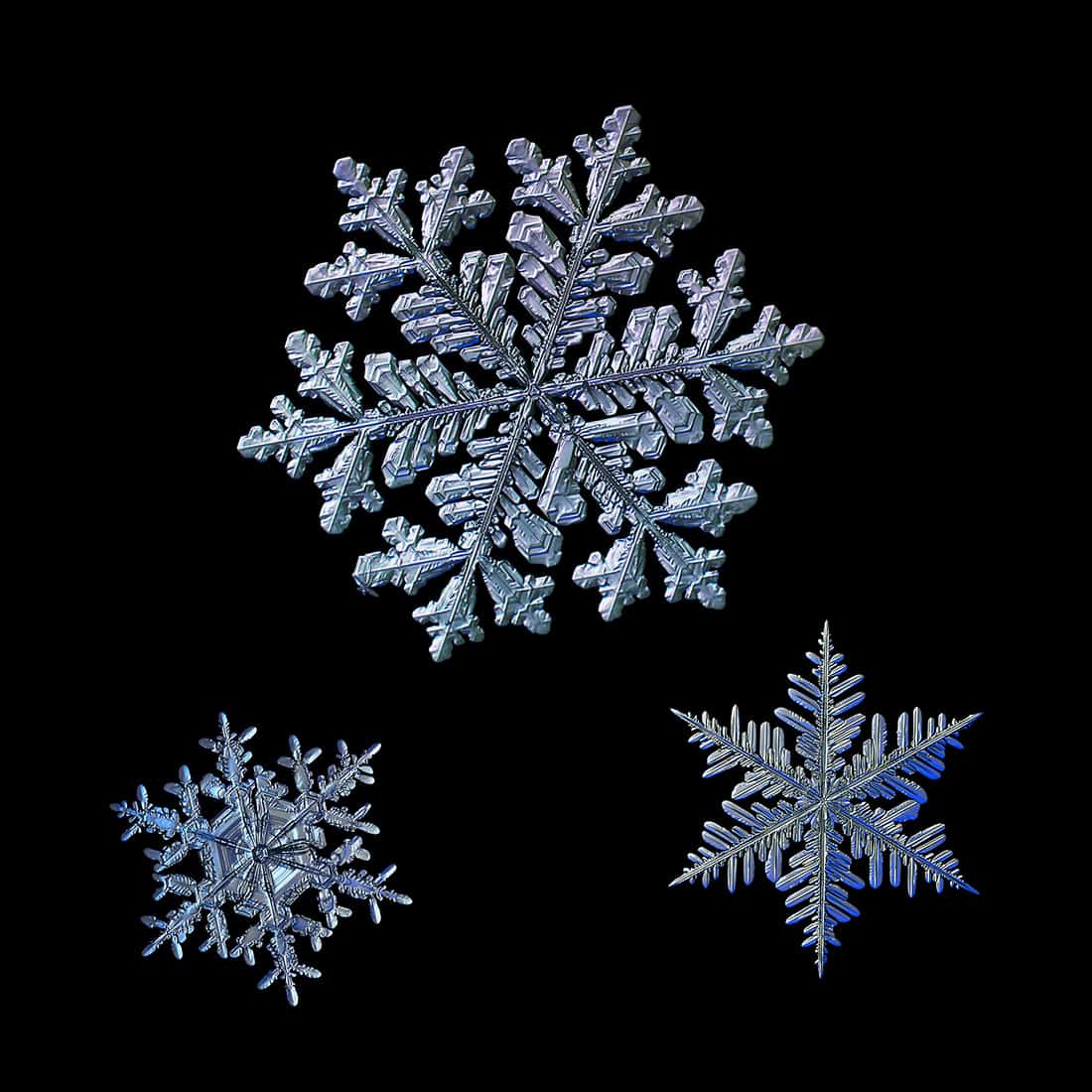
But you don’t have to wait for summer holidays to think of physics questions. I’m reminded of Johannes Kepler’s humorously written 1611 book On the Six-Cornered Snowflake, in which he describes snowflakes falling onto his coat while crossing a bridge in Prague. The incident inspired him to wonder why snowflakes always display a six-fold symmetry, rather than, say, five or seven. In the end Kepler realizes he cannot solve the puzzle, leaving it to chemists.

Snow is an inexhaustible source of natural wonder and scientific riches

Or take the new book Snowflake Science by Kenneth Libbrecht, a physicist at the California Institute of Technology. It has sections on everything from aerodynamics, kinetics and imaging to crystallography, optics and “identity” (one chapter is called “No two alike?”). Isn’t it amazing that the science of snow has continued for over 400 years? Like rainbows, geysers, the aurora borealis, glaciers, how wonderful that snow is an inexhaustible source of natural wonder and scientific riches.  

Surely Physics World readers are active and alert enough to pick out more. Send me your ideas and I’ll devote a future column to your natural wonders – which I’ll, of course, write during my next vacation.

New year, new goals: physicists’ resolutions for 2022

The start of a new year is often as much about looking backwards as it is about trying to do better in the future. Perhaps that’s why I recently got side-tracked rifling through one of my old university undergraduate lab books after clearing out my belongings. As I flicked through the pages I found myself reminiscing about calculating Planck’s constant by measuring the spectra of filaments glowing at different temperatures, and investigating how an aluminium cylinder scatters radiation from caesium-137.

Nostalgia aside, I’m ashamed to say that I found more than one graph without a title, a table of measurements without units and generally incomprehensible scrawls alongside badly drawn diagrams of experimental set-ups. I recalled that, at the beginning of each new experiment, I resolved to keep my book neat and decipherable, but that never seemed to last long. I also remember vowing to approach each new practical as if I didn’t already know what the result should be, rather than tweaking the equipment until it yielded the right answer.

But, with 2022 upon us, my trip down memory lane got me wondering whether “proper” physicists, not just former students like myself, have transcended all bad practice, or whether they also have habits that they’re keen to kick in the new year. After asking a dozen or so scientists if they had any new year’s resolutions, I discovered that, yes, they are indeed human too. Not wishing to embarrass any of them, what follows is entirely anonymous but I’m sure you’ll find yourself nodding in agreement.

The responses featured a few recurring themes. Several people who regularly do programming told me they were determined to comment their code as they write it, rather than when they return to it months later and have no idea what they did. Even more people said that 2022 would be the year they keep up with their arXiv e-mails and read all the papers they save. Grammar and notation was another sore point, with one physicist resolving “to treat ‘data’ as plural” and another “to put decimal places on the line rather than floating, where they could be mistaken for a multiply symbol”.

I also learned that academics are as prone to procrastination as anyone else, even if they have different ways of putting off work. The time-sinks that they are determined to avoid next year include “searching for jobs in exotic locations on a bad day”, “lamenting how much more money I could be making as a banker or consultant” and “doing deep research to figure out who my paper’s referee is, instead of actually responding to the referee report”.

Now, while I always thought that researchers are supremely driven – since they are largely left to their own devices with few concrete deadlines – it turns out that some get creative about staying productive. One physicist told me that, as a graduate student, they had a resolution to miss fewer self-imposed research deadlines than the budget negotiations in US Congress. Game-ifying a task and making it a competition is a brilliant life hack.

That’s not to say that academics are not motivated by their passion for their subject. Indeed, some of them find it spilling over into every aspect of their life, with one researcher’s resolution being to stop subconsciously steering every conversation towards their field of research, regardless of who they’re talking to or how the discussion starts. Others, however, find that their intellectual curiosity applies a bit too broadly and can lead them astray; one physicist told me they’re resolving not to get into any heated debates about topics outside their field of expertise. 

I’m also relieved to discover I’m not alone in still being puzzled by concepts from my student days. One researcher mentioned that they’d like to finally get their head around what a tensor is and I have a feeling there are other academics who might share this goal. I once had a lecturer who likened tensors to rattlesnakes – if you meet one, just turn round and walk the other way.

One physicist resolves to “try not to panic when someone assumes I understand quantum mechanics or general relativity”

Feeling like you don’t properly understand a subject is always worse if someone else expects you to, though. This was demonstrated by one physicist’s resolution to “try not to panic when someone assumes I understand quantum mechanics or general relativity, and to really try not to panic if another physicist assumes this”.

Perhaps it would help us if another academic who sent me their resolutions achieves them this year, given that one of their goals is “to convince the colleague who’s been teaching undergraduate quantum for the last 20 years to take a research leave (so that I can teach it from now on)”. Indeed, the backbiting and politics of university life might be the source of many more resolutions, with another physicist resolving “to get out of the awards committee – so that I can be nominated for a prize”.

So whether you’re aiming to reach new heights within academia or shed bad habits, rest assured you’re not alone. But of all the resolutions I came across, my personal favourite came from an astrophysics PhD student, and will make you laugh or groan, depending on your sense of humour: “I hope to achieve”, they said, “a new year’s resolution of less than one microarcsecond.” It’s a good job we have very long baseline interferometry.

Happy new year!

The 10 quirkiest stories from the world of physics in 2021

Despite the continuing impact of the COVID-19 pandemic, physicists still found time to carry out research that touched on the quirkier side of science. Here is our pick of the 10 best, not in any particular order.

Chicken slap down

Three years ago a Reddit user asked how many times you’d have to slap a frozen chicken to cook it. A bit of a mad question, but armed with a few assumptions (kinetic energy of a hand slap, heat capacity of a 1 kg chicken, etc), US physics student Parker Ormonde worked out that it would take around 23,000 slaps to reach 205 °C. He also reckoned that to cook the chicken in a single slap your hand would need be travelling at about 1660 m/s. In January, Twitter user Aden took to the platform to show a “finite element” calculation of the slap in action. The simulation, which quickly went viral, shows a hand obliterating the chicken, which for a fraction of a second is presumably “cooked”. The simulation also reveals the hand shattering like glass, but if it was ever possible to thrust your hand at supersonic speeds it would probably get annihilated too. “The simulation is more or less accurate in this scenario,” notes Aden. “But even then, it should be taken with a grain of salt.” Perhaps with some rosemary or sage too?

Parity pioneer Chien-Shiung Wu

Stamp of success

The US Postal Service issued a commemorative stamp honouring the Chinese–American physicist Chien-Shiung Wu in February. The 1957 Nobel Prize for Physics was shared by Chen Ning Yang and Tsung-Dao Lee “for their penetrating investigation of the so-called parity laws, which has led to important discoveries regarding the elementary particles”. However, some physicists argue that Wu should have shared the prize for providing the experimental evidence for Lee and Yang’s theoretical prediction of parity violation. Wu now follows in the footsteps of Albert Einstein, Enrico Fermi, Richard Feynman and Maria Goeppert Mayer with a commemorative stamp. Just a shame it was never a Nobel too.

The case of the cubic poo

If there’s one mystery that has long puzzled biologists, it is why wombat poo is not round but shaped like a cube? The thinking used to be that cubic faeces are formed during the act of defecation, with the wombats producing this shape to stop the poo from rolling away, thereby helping the animals to communicate. This year, however, physicist David Hu from Georgia Institute of Technology, along with colleagues in the US and Australia, discovered that wombat poo is cube-shaped thanks to the muscles that line the marsupial’s intestines. They do not have cylindrical symmetry but rather create two stiff and two flexible regions, which means that as the material moves through the intestines, rhythmical muscle contractions sculpt the poo into cubes. The team says its discovery could “have applications in manufacturing, clinical pathology and digestive health”. And where was the research published? Soft Matter, of course.

It’s in the air

Still on toilet troubles, researchers at Florida Atlantic University analysed how aerosols with the potential to carry disease are created and dispersed by flushing toilets and urinals. Siddhartha Verma and colleagues studied three scenarios – toilet flushing, covered toilet flushing and urinal flushing – in a public facility on the Florida campus. After three hours of tests and more than 100 flushes, the team detected droplets smaller than 3 mm in size at a height of 1.5 m above a toilet or urinal (face height for many people) and found that the droplets persisted at that height for more than 20 seconds after the flush. Unfortunately, closing the toilet lid before flushing did not do much to cut the number of particles detected – suggesting that aerosol particles can easily escape through gaps around the seat and lid. Maybe it’ll still be worth wearing facemasks once the pandemic is over.

Hawking hawking Hawking

When the Cambridge cosmologist Stephen Hawking died in 2018, he not only left a large scientific legacy but a hefty tax liability too. His archive, some personal belongings and the contents of his office at the University of Cambridge were acquired this year by the UK state via the Acceptance in Lieu scheme, which allows families to offset tax. The office contents – including Hawking’s books, blackboards, coffeemaker and medals – headed to the Science Museum in London to settle a £1.4m tax debt. The archive, meanwhile, which features television scripts from The Simpsons in which Hawking appeared, went to Cambridge University Library to settle a £2.8m tax liability. The Science Museum, which will also get six of Hawking’s wheelchairs, says it will display some of the items in 2022. It also plans to recreate Hawking’s office.

Space-aged wine

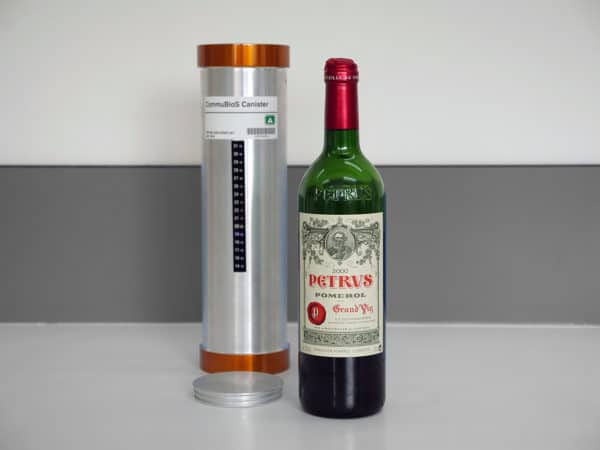
Of all the things you could do with a dozen bottles of fine red Bordeaux wine, sending them into space might seem the least sensible, especially when they cost a couple of thousand pounds a pop. But that’s exactly what researchers did back in November 2019, when they placed a crate of Château Pétrus 2000 onto the International Space Station (ISS). After spending 14 months circling the globe in microgravity conditions, the bottles thankfully returned back home in one piece in January, when they were dispatched to the Institute of Vine and Wine Science at the University of Bordeaux for chemical analysis. A blind sampling of one of the bottles by 12 connoisseurs revealed this year that the wine had developed “heightened floral characteristics” on its journey into space and was one to three years further “evolved” compared with a bottle that had stayed firmly on the ground. The team now plans to take a closer look at the biochemical properties of the wine after its space jaunt – followed, of course, by more tasting.

Flippin’ science

If you’re worried about meeting up with friends after yet another lockdown, you could always just sit in the pub on your own and ponder the physics of beer mats. Unlike a Frisbee flying disc, you’ll find that if you throw one of these cardboard coasters, it’ll flip over as it spins through the air. Now, using a combination of computer simulations and experiments, three physicists from the University of Bonn in Germany have worked out why this is. They found that a lifting force acts on the forward edge of a spinning disc, causing it to flip over. Frisbees, in contrast, don’t suffer from this instability because of their thick edges. So if your friends do turn up, you’ve now got something apart from coronavirus to talk about.

Bottle of Chateau Petrus 2000

Scientific Olympians

The Tokyo 2020 Olympics, held in July and August 2021, was full of breath-taking displays of human endeavour – including some incredible efforts by physicists and mathematicians. In the swimming pool, US breast stroker Andrew Wilson – who was about to start a PhD on mathematical modelling and scientific computing at the University of Oxford – bagged gold in the 400 m medley relay. In cycling, Anna Kiesenhofer of Austria, who is doing a maths postdoc at the École Polytechnique Fédérale de Lausanne, won gold in the road race. Meanwhile, in athletics, Irish runner Louise Shanahan, who is doing a PhD in atomic, mesoscopic and optical physics at the University of Cambridge, competed in the 800 m race. Shanahan had been forced to put her studies at Cambridge on hold to qualify for the Olympics, which she did by completing races in the Czech Republic and Switzerland, and by winning the Irish national championships. Sadly, she was eliminated in the first heat in Tokyo, but Shanahan can now look forward to completing her PhD – a task that she describes as “much more manageable” than training while studying for her bachelor’s degree back home in Ireland.

Dribbling teapots revisited

Researchers in Austria and the UK claimed in September to have finally formulated a “complete” theory of the dribbling teapot effect – one that considers the inertial, viscous and capillary forces at play when a drop forms at the edge of the teapot spout that then wets the underside of it. By carrying out experiments – presumably by drinking lots of tea – they confirmed their theoretical analysis, finding that the liquid trickles down the underside of the teapot spout when poured slowly but not when poured at a faster rate. The end of tea-stained tablecloths could be in sight.

Manfred Steiner

Ageless physicist

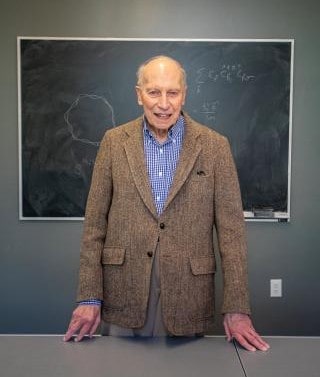
And finally, ending somewhat on an uplifting note. Manfred Steiner is proof, if any were needed, that you’re never too old to follow your dreams. Growing up in his native Austria, he loved physics but listened to his family, not his heart, by studying medicine instead. Steiner qualified in 1955 from the University of Vienna before moving to the US where he had a distinguished career in haematology, eventually retiring in 2000. With a bit more time on his hands, Steiner decided to rekindle his passion for physics and enrolled as a part-time undergraduate student at Brown University in the US, graduating in 2007. Still wanting more, he started a PhD and finally defended his thesis in September aged 89. Entitled “Corrections to the geometrical interpretation of bosonization”, it was not even Steiner’s first PhD as he had got a doctorate in biochemistry from the Massachusetts Institute of Technology in 1967. “It is important not to waste your older days,” Steiner insists. “There is a lot of brainpower in older people and I think it can be of enormous benefit to younger generations.”

You can be sure that next year will throw up its fair share of quirky stories from the world of physics. See you next year!

Joining the dots: how seemingly unrelated fields of science are fundamentally linked

John Gribbin must like counting. Following on from his books Six Impossible Things (2019) and Seven Pillars of Science (2020), the veteran science writer’s latest offering is Eight Improbable Possibilities: the Mystery of the Moon and Other Implausible Scientific Truths. As the title promises, this is a whirlwind tour of the most fantastical discoveries science has revealed – the facts that are almost impossible to believe, but are true according to the best available evidence. With chapters on topics from gravitational waves to the butterfly effect, Gribbin not only presents facts, but also deftly joins the dots to reveal a bigger picture that is even more awe-inspiring than the sum of its parts.

In the eponymous chapter, for example, he relates that scientists believe the Moon was formed from a collision with another planet, and that plate tectonics are considered important for life, since they act as a temperature-buffering system against hostile extremes. I knew of both these theories already. What I did not know was that the collision that formed the Moon actually gave rise to plate tectonics, by flinging lighter material out into space to leave a crust that was thin enough to be moved slowly around by a dynamic mantle. Furthermore, the chapter explains, it is through the gravitational interplay between the Moon and the waves on Earth that the Moon is gaining energy, allowing it to drift slowly away from us. How poetic, then, that humans – and our ability to understand this phenomenon – should coincide with the transient time when the Moon appears the same size as the Sun, giving us solar eclipses.

Gribbin uses an analogy to explain why the more we know, the more we realize we don’t know. Taking a circle to represent our knowledge, as the circle grows, so too does its circumference – the boundary between our knowledge and ignorance. Perhaps another relevant analogy would be several separate circles representing seemingly unrelated scientific fields; as they grow, they eventually merge to reveal a bigger picture underlying all of them. While we’re far from a complete picture, I think it’s safe to say that science is at the stage where circles are merging. And that’s what reading this book admirably reminds us.

  • 2021 Icon Books £10.99hb 160pp

How geometry can help us understand everything from biology to politics

geometric shapes

Geometry – Greek for “measuring the world” – is one of the oldest branches of mathematics and concerns shapes and their properties. In Shape: the Hidden Geometry of Information, Biology, Strategy, Democracy, and Everything Else, Jordan Ellenberg, a mathematician at the University of Wisconsin, argues that what is often considered a head-spinning and irrelevant topic is anything but dull and can in fact shed light on many aspects of modern life.

Ellenberg begins – following a foray into Euclid geometry – in topology and considers the deceptively taxing question of how many holes a humble straw has. He then delves into the theory of random walks and Markov chains, including how these concepts can be linked with the stock market or how “tree geometry” can be used to win certain games.

Later chapters explore more recent topics such as artificial intelligence and – given that the book was mostly written during the COVID-19 pandemic – Ellenberg gives a stimulating analysis of “geometric processes” and how they can be applied to the spread of diseases. In the final chapter – which is rather taxing for the non-US reader – he examines the US voting system and how maths can tackle gerrymandering.

Shape is a hefty volume and feels too detailed in parts, especially on historical aspects where the narrative can sometimes veer off on a tangent from the maths being discussed. Yet it is worth persevering with, not only because Ellenberg is an entertaining guide, but also for the many fascinating mathematical insights that show geometry at its intriguing best.

  • 2021 Allen Lane £20.00hb 480pp

Quantum science & technology: Highlights of 2021

Last month, Physics World reported on a campaign to make 2025 the official UN International Year of Quantum Science and Technology. Although we wish the campaigners well, here at the magazine’s socially-distanced HQ we’ve already found plenty to celebrate in 2021, thanks to researchers around the world. Here are a few highlights.

Quantum-secure Zoom calls (almost)

For April Fool’s Day 2021, Physics World dipped into the pandemic zeitgeist and published a made-up story about a Zoom call running on a quantum computer. A few months later, the joke was kind of on us after researchers in the UK and Germany used quantum entanglement to securely distribute secret keys among multiple users in a network – an achievement that could pave the way for quantum-secure Zoom calls. During their 177-hour experiment, physicists at Heriot-Watt University and Heinrich-Heine-Universität Düsseldorf generated a secure key containing over a million bits and used it to securely share an image between four users in a network. This being the Internet, the image contained a cat – specifically, the Cheshire cat from Lewis Carroll’s Alice’s Adventures in Wonderland.

Putting chemistry to a quantum test

Although quantum computing soaks up most of the commercial attention (and the lion’s share of the venture capital funding), there’s a broad consensus within the quantum community that quantum simulation – that is, using simple quantum systems to probe complex phenomena in chemistry, condensed-matter physics and materials science – offers the greatest near-term advantages for pure research.

The work of Kang-Kuen Ni offers a taste of what that advantage look like. In May, Ni and colleagues at Harvard University in the US reported that they had cooled molecules of potassium and rubidium down to a fraction of a degree above absolute zero, thereby reducing the number of possible chemical reactions between the molecules from essentially infinite to just 57. In a tour-de-force series of experiments, they then followed each of these Heinz 57 varieties of reaction to its conclusion and measured its probability. While 50 of these probabilities matched theoretical predictions, the other seven didn’t – a fascinating result heralding new possibilities in quantum chemistry.

Warwick Bowen and colleagues

Using quantum entanglement to reveal biological structures

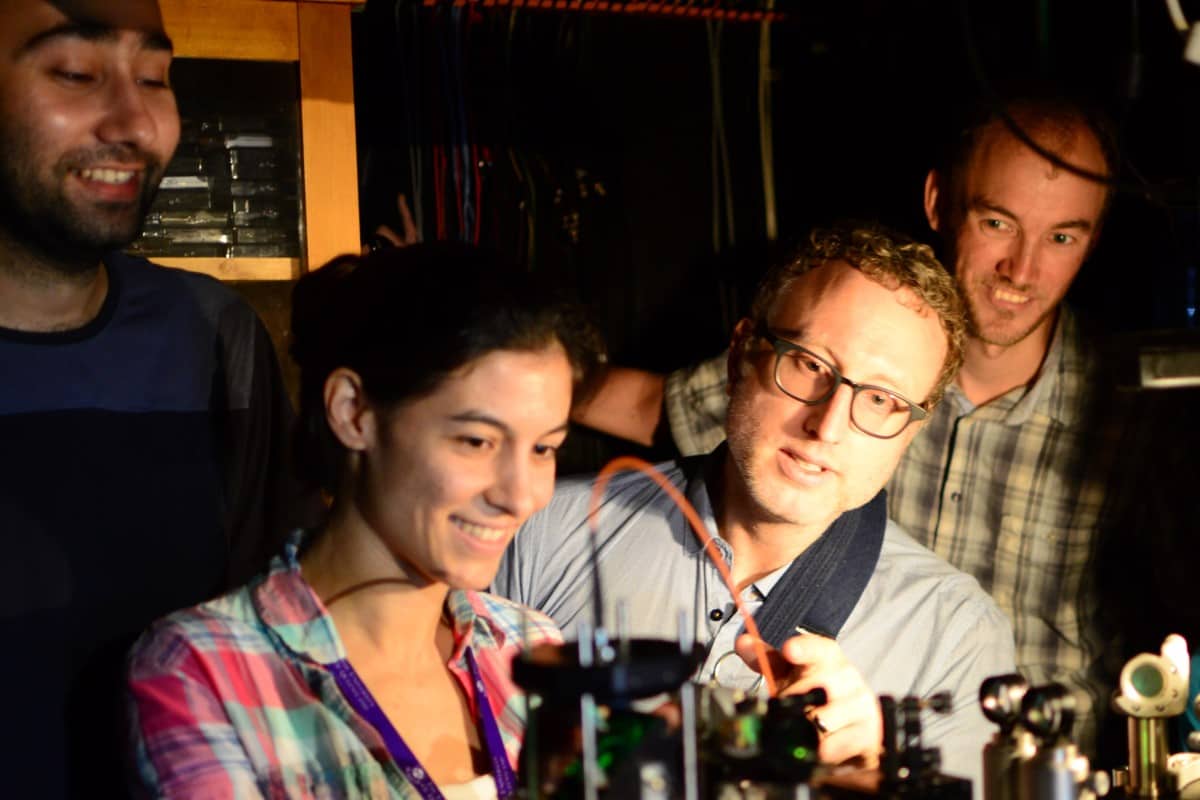
Stimulated Raman scattering (SRS) is widely used to image biological tissues at the molecular scale. In June, researchers in Australia and Germany gave SRS a quantum upgrade, significantly reducing the noise in their imaging system by replacing ordinary photons with entangled ones in so-called “squeezed-amplitude” quantum states. The new approach enabled Warwick Bowen and colleagues to observe biological structures that could not otherwise be resolved. The researchers also detected molecular samples at 14% lower concentrations than were previously possible, without the need to crank up the optical power of their imaging laser, which can damage delicate biological structures.

Quantum advantage gets even more advantageous

Towards the end of last year, researchers led by Jian-Wei Pan and Chao-Yang Lu at the University of Science and Technology of China (USTC) made headlines by showing that their optical circuit could perform a quantum operation called Gaussian boson sampling 1014 times faster than an ordinary supercomputer. In October 2021, the group went one better – or rather, a factor of 1010 better, with new results indicating that an improved version of the circuit could perform the same sampling task a staggering 1024 times faster than a classical machine. That same month, a second team led by Pan also demonstrated quantum advantage on a more conventional type of quantum computer, one that uses 66 superconducting transmons as qubits. We look forward to seeing what further milestones the USTC team (and its competitors) will pass in 2022.

Artist's rendering of a time crystal, showing a procession of quantum spins and laser beams interacting as far as the eye can see

Time crystals, times two

Breakthroughs in time crystal research are like buses: you wait ages for one, only for two to come along at once. In early November, a team of physicists from QuTech, the University of California, Berkeley and Element Six showed that nuclear spins in diamond could constitute a specialized version of a time crystal – that is, a system that exhibits periodicity in time, just as crystalline materials are periodic in space.

A few weeks later, a separate group led by researchers at Google and Stanford University published their own time crystal result, demonstrating that these exotic quantum objects constitute a non-equilibrium phase of matter. Intriguingly, the latter group used Google’s Sycamore quantum processor to put its time-crystal candidate through its paces, rigorously checking that it met all the requirements – a fine example of an early-stage quantum device acting as a testbed for studying condensed-matter systems.

Keeping quantum weird

No list of quantum highlights would be complete without a few results to remind us just how wonderfully strange the quantum world can be. In 2021, we learned, inter alia, that quantum thermodynamics limits the precision of nanoscale mechanical clocks; that complex quantum operations obey a speed limit of 17 millimetres per second; that an ensemble of just six atoms can exhibit collective behaviour; that quantum properties can become detached from their parent object and wander into regions where the object itself never travelled; and finally, gloriously, that if you throw information into a black hole, not even a quantum computer can help you get it out again.

As the year 2021 slinks off into the past, let us rejoice that some things about it, at least, were worth remembering.

Bluefors logo block

Physics World‘s Breakthrough of the Year coverage is supported by Bluefors, a leading supplier of cryogen-free dilution refrigerator measurement systems with a strong focus on the quantum computing and information community. Our aim is to deliver the most reliable and easy to operate systems on the market which are of the highest possible quality.

How the technology we create changes us

Ruth Belville at Greenwich Royal Observatory

The stories of major scientific leaps forward have been told many times, but what is less often examined is how those discoveries and inventions changed the human experience in profound ways. This is what materials scientist Ainissa Ramirez explores in The Alchemy of Us: How Humans and Matter Transformed One Another. She concentrates on eight inventions – quartz clocks, steel rails, telegraph wires, photographic film, light bulbs, magnetic data storage, glass labware and silicon chips. In her telling, these are not single “aha” moments; each story lasts decades (or centuries) and involves many people.

For each invention, Ramirez takes time to depict the world beforehand, the stumbling blocks along the way, and its effect on society. Photographic film is not just the story of Reverend Hannibal Goodwin who spent decades working on the invention in his attic, and then the rest of his life fighting Eastman Kodak for the patent. It’s also Eadward Muybridge trying to capture a photograph of a galloping horse at a time when studio portraits required subjects to remain still for a full minute. It’s how camera film was optimized for white skin, at great cost to people of colour (a problem only addressed when chocolate and furniture manufacturers complained that Kodak film did not accurately depict the brown tones of their products). It’s Polaroid employees fighting against the use of their company’s products to monitor Black people in Apartheid South Africa.

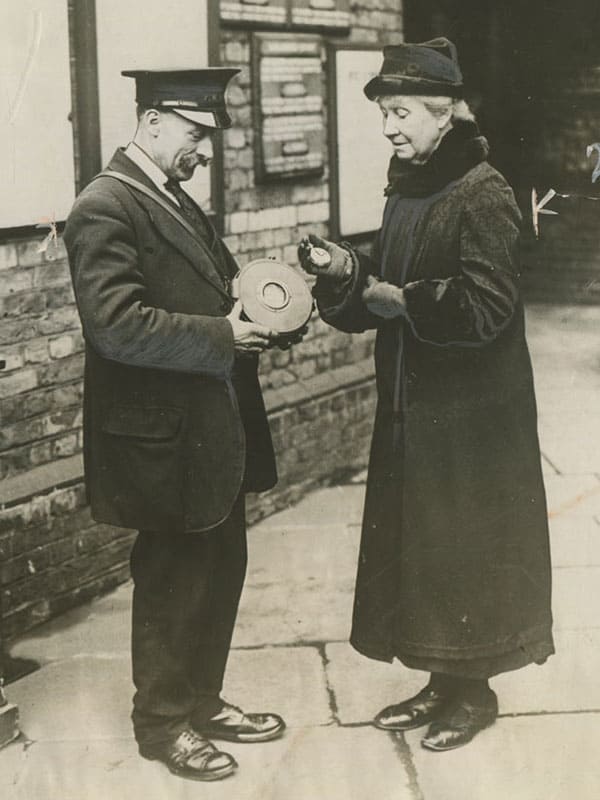
Science and technology do not exist in a vacuum, and Ramirez fully explores this. The details matter and they’re fascinating. Clocks and light bulbs changed how humans sleep. The telegraph gave Hemingway’s writing style its famous brevity. For almost 50 years accurate time was distributed by Ruth Belville carrying a pocket watch from the Royal Observatory at Greenwich to individual homes and businesses.

In her epilogue, Ramirez writes that as a Black woman scientist, she found that her “reflection in textbooks was hidden, missing, overshadowed or cast in a poor light”. Although each central inventor in this book is a white man, they aren’t the whole story. Even when they worked alone, they relied on others’ work to make their own a success. And their inventions affect all humans, not just people like them.

  • 2021 MIT Press $17.95pb 328pp
Copyright © 2026 by IOP Publishing Ltd and individual contributors