Some parents would probably baulk at the idea of teaching their 11-year-old about quantum mechanics, but here at Physics World we believe that it’s never too early to ponder the weirdness of the quantum world. Indeed, children tend to have fewer preconceptions about the world around them, so starting young could make them “quantum native” and destined for a lucrative career in quantum technology.
If that’s the career path you have in mind for your little ones, you are in luck because physicists at the Würzburg-Dresden Cluster of Excellence for Complexity and Topology in Quantum Matter have created a mobile phone app that introduces quantum mechanics to children 11 and older. Called “Kitty Q — a quantum adventure” after Schrödinger’s famous cat, the app serves up 20 different puzzles that each teach something about quantum physics.
The researchers say that Kitty Q is aimed at children and young teens because this the age at which young people develop their views of science. In particular, the team hope that Kitty Q will help encourage girls to study physics and other sciences where they are currently underrepresented.
Kitty Q will be launched later this month, but you can get a preview here.
Staying on physics education, the Perimeter Institute for Theoretical Physics (PI) in Canada asked teachers to make videos about their favourite science demonstrations that you can do in your kitchen. The PI has put the eight submissions on its website and is asking the public to vote for their favourites.
The demos include a lesson on entropy using nuts and raisins, building your own hydrometer – demonstrated by a winemaker – and how to measure the acceleration due to gravity using a plastic bag and a mobile phone (as shown in the above video). You can watch all the videos and vote here.
Fantastical adventures
Baron Munchausen is a fictional character created in the 18th century by the German writer Rudolf Erich Raspe. The Baron is famous for his fantastical adventures such as riding a cannonball, travelling to the Moon and extracting himself and the horse he is sitting on from quicksand by pulling up on his own hair.
Now I’m guessing that the majority of 11-year-olds know that the latter is an impossible feat, but that hasn’t stopped Matthias Schmidt and Sophie Hermann from the University of Bayreuth in Germany from writing a paper that offers “a new and more comprehensive refutation” of Munchausen’s rescue.
The paper has been uploaded to the arXiv preprint server and their refutation involves the application of Noether’s theorem to statistical mechanics – something that is probably beyond the comprehension of most 11-year-olds.
For me, one of the joys of working in physics is that it is a truly global affair. Many university physics departments, for example, have large numbers of people who were born abroad – from students to senior professors. I believe that this diversity is crucial to the success of these institutions, which seek to attract the best physicists from around the world. Also, people from elsewhere bring with them a broad range of experiences that can enhance how research is done. And from a personal point of view, I suspect many physicists enjoy meeting and working with scientists from different cultures.
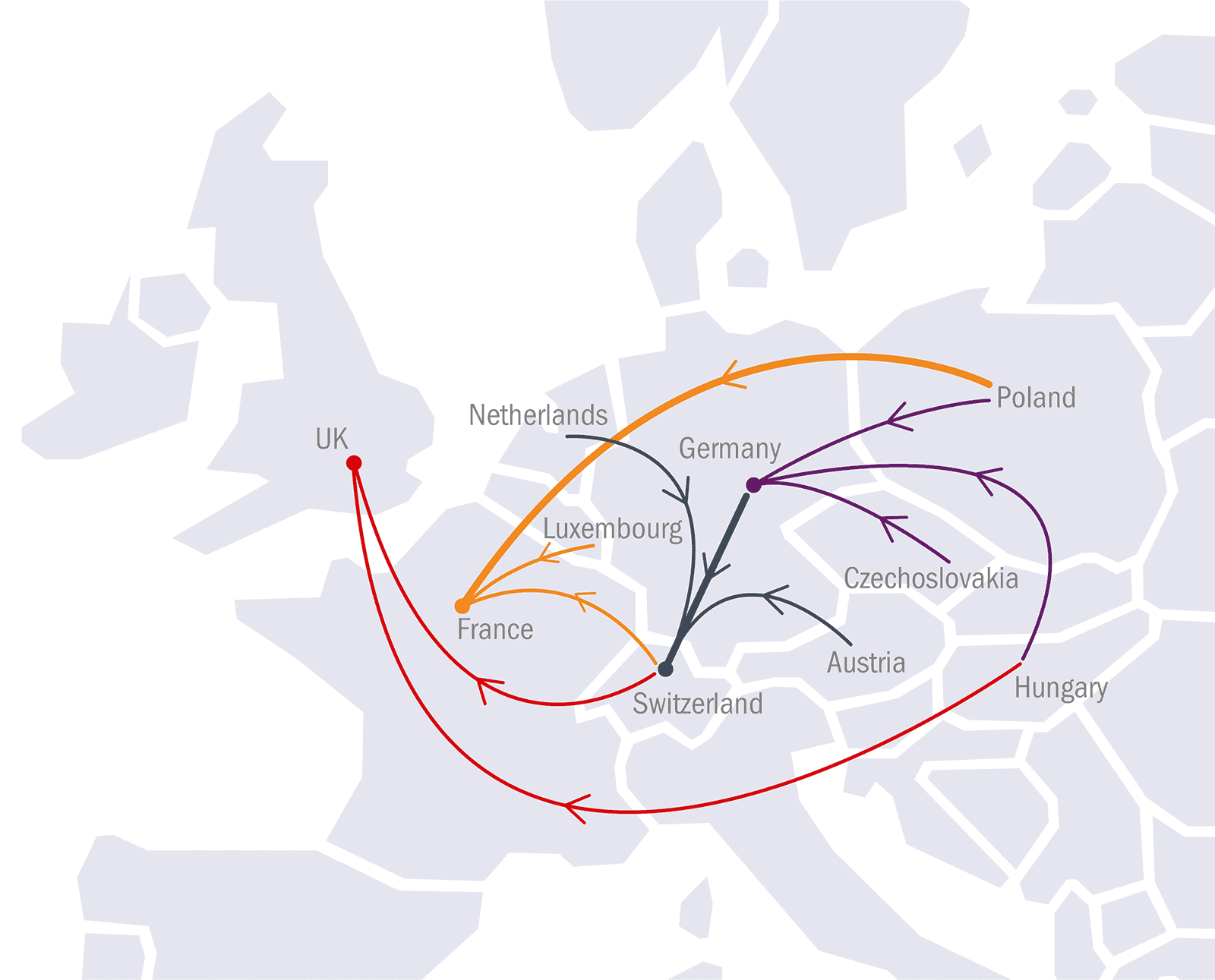
Continent in motion: the movement of laureates within Europe. The thickness of the lines is proportional to the number of laureates. (Courtesy: Paul Matson/ IOP Publishing)
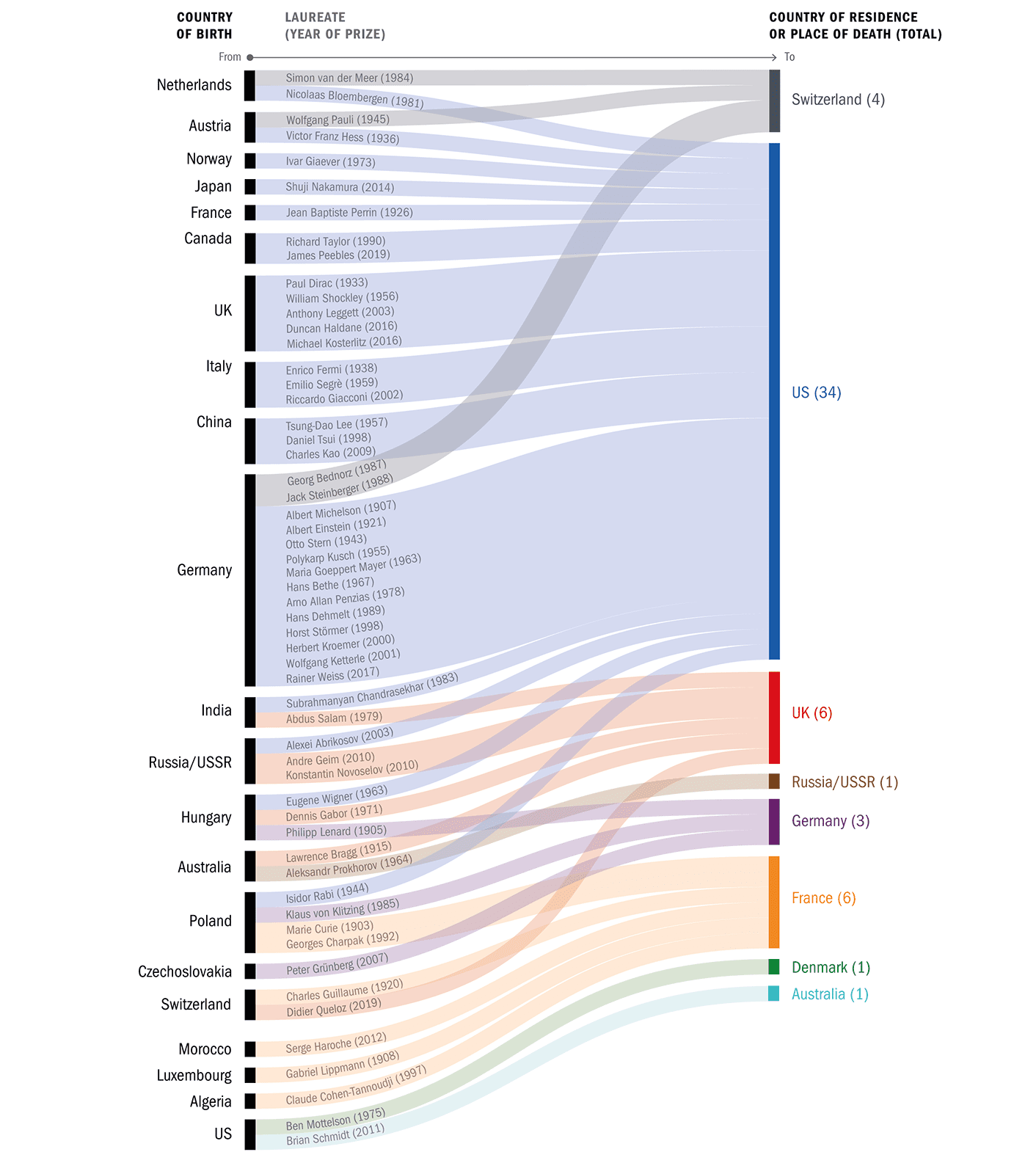
It is no surprise, therefore, that many Nobel laureates are immigrants, as illustrated in these three infographics that we first produced in 2015 and have since updated. There are two maps that show the volume of international migration of physics Nobel laureates since the first prize was given – one showing the world outside of Europe and the other focussing on movements within Europe. The third is an “alluvial” infographic that provides more information about origins and destinations of individual laureates.
The biggest challenge in creating these infographics was deciding who is an immigrant. After much deliberation we came up with our own definition, which I admit is not perfect and may raise some hackles.
Our rather crude definition is that an immigrant laureate is someone who died or currently lives in a country other than that of their birth. Crucially, we are not interested in where a laureate did their award-winning work because we also want to include people who migrated after they bagged their prizes. We think that is important because some physicists made important scientific contributions in their adopted countries after they did their Nobel-winning work at home. An example is Enrico Fermi, who left his native Italy in the year he won his prize and went on to make important breakthroughs in nuclear physics in the US.
Elite flow: alluvial infographic showing where migrant physics Nobel laureates were born (left) and where they died or live today. (Courtesy: Paul Matson/IOP Publishing)
So, who are the most recent additions to our list of immigrant laureates? There were none last year, with Roger Penrose, Andrea Ghez and Reinhard Genzel all currently living in the countries where they were born. It was a different story in 2019, with Canada-born James Peebles living in the US and Switzerland-born Didier Queloz living in the UK.
That means that out of a total of 215 physics Nobel laureates, 56 are immigrants – at least by our definition – or a little over one quarter. I think you would be hard pressed to find such a high percentage of immigrants at the pinnacle of any field outside of the sciences – with the possible exception of professional football.
If you are interested in how we created these infographics, I wrote a comprehensive blog in 2019 that describes many of the issues we struggled with when deciding who is and isn’t an immigrant. These included shifting borders in Europe after the two world wars as well as the partition of India and other acts of decolonization.
The blog also digs deep into the data, looking at which countries are the big winners when it comes to Nobel laureate migration, which countries are the losers – and which countries have managed to break even.
Physics World‘s Nobel prize coverage is supported by Oxford Instruments Nanoscience, a leading supplier of research tools for the development of quantum technologies, advanced materials and nanoscale devices. Visit nanoscience.oxinst.com to find out more.
Global solutions: What physicists can do to tackle the climate crisis.
“A code red for humanity” is how António Guterres, the United Nations’ secretary general, described the latest report from the Intergovernmental Panel on Climate Change, which summarizes our current scientific understanding of the Earth’s climate and the potential impact that changes to it could have on the planet.
Without steep cuts in greenhouse-gas emissions, the report reminds us, the world will warm by over 2 °C this century – triggering more frequent heat waves, greater flooding, higher sea levels and more extreme heavy rainfall and droughts.
It’s easy to ignore such warnings as distant, vague and alarmist, something only of concern to policymakers and politicians at gatherings like next month’s COP26 climate summit in Glasgow. But the challenges of climate change shouldn’t be “other people’s problems”; they concern all of us.
• Do high-energy neutrinos lurk in SN1987A? The SN1987A supernova event might be the source of four particles detected in Japan and the US – and so possibly explain the origin of the most energetic cosmic rays, as Edwin Cartlidge reports
• A life in China – Italian astrophysicist Roberto Soria talks to Ling Xin about the opportunities and challenges of living in China and how that changed when the pandemic hit
• The challenge of change – James McKenzie believes the climate crisis offers opportunities to business – but warns that solutions will only be found with the help of governments and financial markets
• The nuclear fight – Robert P Crease talks to William D Magwood IV, director-general
of the Nuclear Energy Agency, about the battle to keep nuclear power on the agenda
• Why ‘net zero’ needs nuclear – Henry Preston and Saralyn Thomas say that nuclear energy must be part of the conversation during the COP26 climate talks in Glasgow next month
• Getting physical with the climate crisis – With world leaders set to gather in Glasgow next month for the United Nations’ COP26 climate summit, James Dacey examines four vital challenges where physicists can help the world to decarbonize and adapt to the reality of global warming
• Scanning the cosmos for signs of technology – Ever since planets beyond our solar system were first discovered, astronomers have been hunting life beyond our world. While biological signatures are crucial, the idea of scouring the skies for signs of technosignatures from advanced civilizations is gaining momentum, as David Appell discovers
• Towards proton arc therapy –Do we need proton arc therapy, and can we deliver it? At the recent European Society for Radiotherapy and Oncology (ESTRO) 2021 congress, Tami Freeman heard from researchers describing the latest developments with the technique and its potential to improve cancer treatments
• Frames of reference and objectivity – Immanuel Adewumi reviews The Disordered Cosmos: a Journey into Dark Matter, Spacetime, and Dreams Deferred by Chanda Prescod-Weinstein
• Between the lines: Environment special
• Green jobs for physics graduates – With their mix of technical knowledge and problem-solving skills, physics graduates are ideally placed to tackle the world’s environmental
challenges. Laura Hiscott speaks to a range of physicists who are doing their bit to build a greener, more sustainable future
Museum collections across the world feature characteristic clothes from different time periods that showcase human history. Such garments can identify a wearer’s country, social status, approximate age and religion. Clothing also provides a historical link to the materials and textile technologies available at the time. Today, researchers envision that clothes’ functionalities could reach beyond fashion, protection and comfort to provide sophisticated biosensing and tracking capabilities.
Electronic clothing aims to combine flexible fabrics – that seamlessly morph with the body’s anatomy – with electronics that can capture signals such as the electrical activity of the heart in electrocardiograms (EKGs). For textile biosensing to succeed, however, the electronics must match the fabric’s flexibility and not affect the material’s thermal and moisture-transfer functions.
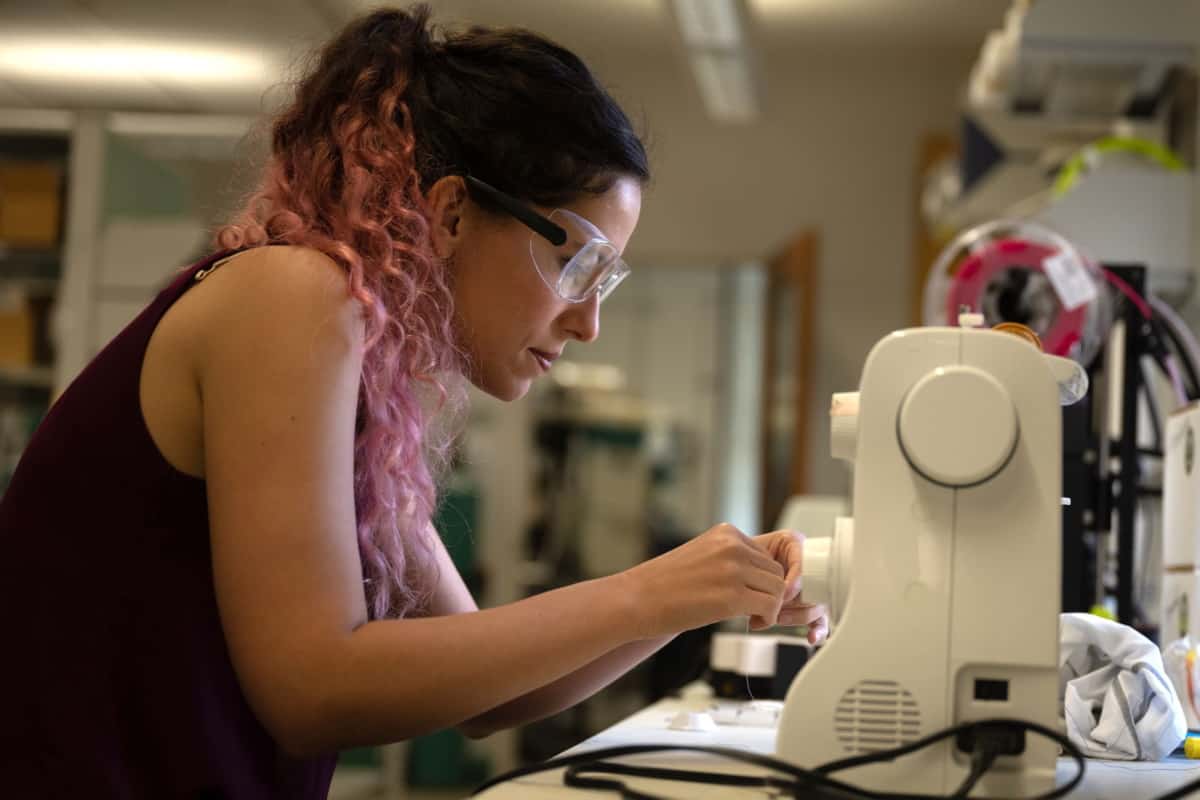
To achieve this, researchers in Matteo Pasquali’s laboratory at Rice University fabricated carbon nanotube-based conductive threads and sewed them into stretchable fabrics. Reporting their findings in Nano Letters, they demonstrate the durability and functionality of textile-based wearables as future health monitoring systems.
The researchers detail a non-invasive continuous monitoring strategy that uses the carbon nanotube electrodes to precisely record the heart’s electrical signals – even after 10 machine washes and 1000 stretching cycles.
“The major challenge with existing commercial hybrid electronic clothing is that the metal alloys used in these fabrics tend to have poor mechanical properties and cannot withstand repeated washing and wear,” explains lead author Lauren Taylor, a former graduate student in Pasquali’s laboratory. “This is where I feel our technology has demonstrated a major breakthrough. Our carbon-based conductive threads have the conductivity necessary for electronics but outstanding mechanical strength with the softness and flexibility of cotton.”
Textile nanomaterials
To form the carbon nanotube threads, Taylor and co-authors wove 21 cylindrical carbon nanotube filaments into a sewable thread, using a custom-built rope-making device. The resulting carbon threads have an electrical conductivity comparable to that of metals, and are soft and mechanically flexible.
The team then sewed 2, 15, 30 and 60 cm lengths of thread into elastic wrist straps, using a zigzag pattern to facilitate fabric stretching. Despite having a larger skin impedance than commercial electrodes, the all-carbon electrodes placed on the wrists could clearly capture the EKG signals used by physicians to assess heart conditions. Moreover, the wrist-mounted textile electrodes could also measure electrical signals generated during muscle activation cycles.
Weaving the fabric of health
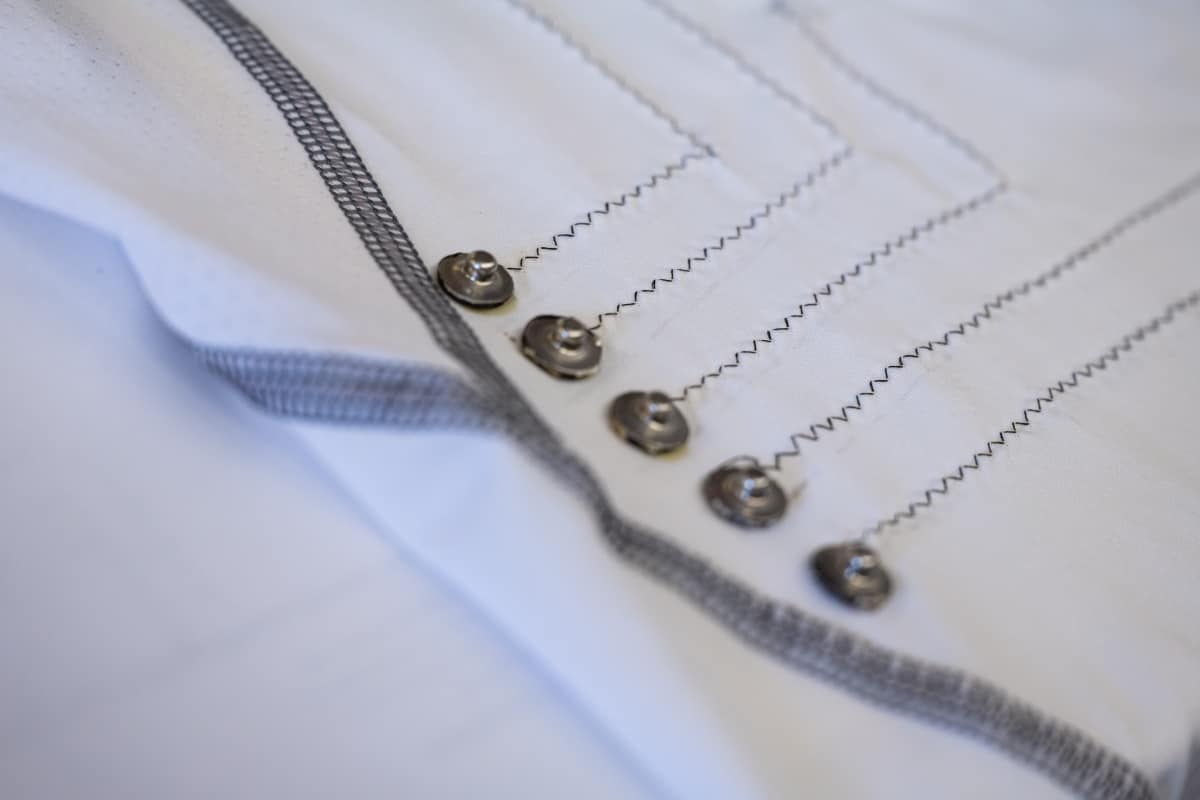
Athletic clothing is designed with flexible fabrics that closely contact the skin and facilitate body motion during physical activities. To enable health monitoring using electronic textiles, the authors sewed five 15 cm carbon nanotube electrodes on an existing athletic shirt in a Holter configuration (the electrode placement pattern used in continuous EKG monitoring) to record a complete EKG while the wearer is running, jogging, walking and sitting.
Fitness tracking: Carbon nanotube threads in an athletic shirt could record EKG and heart rate data better than standard chest-strap monitors. (Courtesy: Jeff Fitlow/Rice University)
Additional carbon nanotube threads sewn through the shirt connect the electrodes to a Bluetooth monitor located in the back of the neck, which wirelessly transmits the recorded data to a nearby smartphone.
The authors asked three cardiologists to evaluate the quality of blinded EKG signals recorded by the carbon nanotube and commercial electrodes. All agreed that signals from the textile-based electrodes were “slightly better”, due to a better definition of the heart waves.
“When we made the EKG shirt, I had anticipated the advantages in wearability and washability – in essence, convenience. I had not expected that EKG quality would also be superior – that was a bit lucky,” senior author Matteo Pasquali tells Physics World.
Emily Draper The University of Glasgow chemist uses neutrons to develop self‑assembling materials. (Courtesy: University of Glasgow)
What materials do you study
My research group is looking at small organic molecules – normally based on dye molecules that we functionalize using amino acids. These molecules are designed to self-assemble in water to create a variety of structures. The molecules are conductive, and we are interested in how we can use different structures to make conductive devices for various applications.
What are some potential uses for these structures?
We are focused on three different types of applications. One involves chromic materials, which change colour upon either light stimulation or electrical stimulation. These materials can be used in smart windows such as those you see in modern aeroplanes – where the switch of a button darkens the windows. We are also looking at organic semiconductors, which are thin-film materials.
More recently, we have been making flexible thin-film devices that change their conductivity upon bending. These could be used to monitor muscle movement on the body with applications such as tocodynamometers, which monitor uterine contractions during pregnancy.
What are the benefits of using self-assembly to make devices?
Traditional devices are made from metals, which only assemble in a limited number of ways. Furthermore, the world is running out of metals, and they must be processed at high temperatures, which makes them expensive. Our self-assembly processes are done at room temperature in water, using simple molecules that can be easily made in large quantities. No dangerous chemicals or high temperatures are needed – it is very environmentally friendly.
You use small angle neutron scattering (SANS) to study these materials. How does that work?
SANS is done at a large-scale neutron facility such as the Institut Laue Langevin (ILL) in Grenoble, France. We put a sample into a neutron beam and then collect the neutrons that have scattered at small angles. This allows us to study the structure of a sample from the molecular length scale all the way up to the bulk scale.
SANS is important for my research because our materials are not appropriate for electron microscope studies – the organic molecules would be destroyed by the electron beam.
What are the pros and cons of using large neutron facilities?
An important benefit of using a large facility like ILL is that there are many experimental stations on the neutron beamline that you can use to do a variety of measurements. Also, the neutron flux is very high so you get really great data.
Another benefit is that the facility is used by a wide range of scientists – not just chemists – so the conversations you have over dinner can be very interesting. Working with the facility’s beamline scientists is also an important plus – they are experts in their fields who can give you loads of new research ideas.
One of the downsides is that you have to use your allotted beamtime 24 h a day. That means long, tiring nights – but that normally only lasts a few days. Also, the process of applying for beamtime can be laborious. If your application is successful, you may have to wait six months before you can start – so you need to be thinking ahead all the time of the experiments that you want to do.
A big plus for ILL visits is being in Grenoble. It’s really pretty and people can go skiing
Do you and your research group enjoy working at big facilities like ILL?
I was so excited when I was doing my postdoc and I got to go on my first beamline experiment. Being at a huge facility is completely different from working in a typical chemistry lab under a fume hood. It can be a bit scary at first with the safety protocols and the radiation dosimeters, but it’s quite cool and something that my team enjoys doing. And a big plus for ILL visits is being in Grenoble, which is in the middle of the mountains. It’s really pretty and people can go skiing.
Unfortunately, ILL has been closed for the lockdown and all our beamtime has been postponed or cancelled – so lots of my team haven’t been there yet. But recently I was able to send one of my PhD students to the ISIS neutron facility in Oxfordshire and she absolutely loved it.
Looking to the future, are there any new or planned neutron facilities that you are looking forward to using?
The European Spallation Source (ESS), which is being built in Sweden, looks interesting. I know that the ESS has been engaging with the neutron community to develop some exciting experimental stations. One technique that I am really interested in using is ultra-small-angle neutron scattering (USANS), so having new facilities for that would be great.
At current facilities, I enjoy working with beamline scientists to develop new experiments and instruments on existing beam lines. I love doing rheology, so developing experiments for that is something that I am interested in. The beamline scientists we work with at ILL trust me and team, so we can do all kinds of wacky experiments and I’m really appreciative of that.
A new way of studying matter that is created when photons collide has been developed by CERN’s Compact Muon Solenoid (CMS) collaboration. Their experiment, done on the Large Hadron Collider (LHC), sheds new light on a mystery surrounding the nature of high-energy collisions between heavy ions. While the team’s results are consistent with the expectations of the Standard Model of particle physics, they hope that further observations could lead to observations that could challenge our conventional understanding of physics.
When a high-energy photon collides with matter it will often transform into an electron–positron pair – a process that involves the energy of the massless photon being converted into the masses of the pair. A similar conversion occurs when heavy ions are smashed together at high energies at facilities like the LHC. These ions are surrounded by clouds of photons and when these photons collide with each other, they can also produce pairs of particles.
In the past few years, Shuai Yang at Rice University and colleagues on the STAR collaboration have been studying these energy-to-mass conversions using the Relativistic Heavy Ion Collider (RHIC) at Brookhaven National Laboratory in the US.
Quark–gluon plasma
A primary aim of RHIC is to smash ions together to create a “quark–gluon plasma” (QGP), which is an extremely hot state of matter in which quarks and gluons, normally stringently bound within nucleons, have enough energy to exist independently. Much to the surprise of Yang and colleagues, it appeared that particles produced by photon–photon collisions affect the properties of the QGP. This was not expected because the photon–photon collision process and the particles in produces are governed by the electromagnetic force, which is much weaker than the strong force that mediates the QGP.
To explore this effect in more detail, the CMS collaboration (which includes Yang) has studied “ultraperipheral” heavy ion collisions at the LHC. These collisions occur when ions narrowly miss each other but pass close enough for their photon clouds to collide. The closer the near miss, the more likely it is that the ions will be excited into higher energy states and then decay by emitting neutrons. Detecting these neutrons provides the team with an accurate measure of ion separation distances.
In the photon–photon collisions that resulted, muon–antimuon pairs are generated and the particles typically fly off in opposite directions. As the ion separation distances became smaller, the CMS team found that the angular distribution of the particles was affected by quantum interference between the photons prior to the collision – something that is predicted by the Standard Model of particle physics. According to Yang, this interference is enhanced at smaller separation distances because close proximity cause the photon clouds to move away from their host ions in directions perpendicular to the ion beams.
According to the researchers, this effect can explain most of the QGP anomalies mass first measured by the STAR collaboration. However, Yang and his CMS colleagues believe that future observations of these photon collisions could reveal that the anomalies are related to new physics beyond the Standard Model, which would be a ground-breaking observation.
Eastern promise Roberto Soria says there are many opportunities for researchers in China, despite the impact that the pandemic has had. (Courtesy: Roberto Soria)
How did you end up working in China?
I was born in Italy and did a PhD in astrophysics at the Australian National University. In 2004 I moved to the Harvard-Smithsonian Center for Astrophysics before heading to University College London in 2008. In 2011 I returned to Australia to work at Curtin University and in 2017 moved to China to the University of Chinese Academy of Sciences (UCAS) in Beijing. There I work on several projects and also collaborate with colleagues worldwide.
Why did you decide to move to China?
When my contract with Curtin University was coming to an end, I assessed my options. Liu Jifeng from the National Astronomical Observatories (NAOC) in Beijing, whom I had met when I was at the Harvard-Smithsonian Center for Astro-physics, encouraged me to come to China and apply for a tenured position at UCAS. I already had some connections in China as I had been regularly visiting Tsinghua University between 2008 to 2010 thanks to a programme called China-UK Fellowship for Excellence. So, it was not like jumping into a completely different universe.
What are your main research areas?
I work on the physics of accretion onto compact objects. For example how a neutron star or black hole receives mass from a nearby star or other sources of gas. I explore how the gas falls towards or into the compact object, how much radiation is emitted, how much mechanical energy is carried by outflows and transferred to the host galaxy, and what is the maximum power that can be generated by such sources. I use X-ray, optical and radio data, and work with different groups that specialize in various areas.
Does that involve international collaboration?
I spend about 30% of my time collaborating with scientists at NAOC and the Institute of High Energy Physics in Beijing. The rest of my time is spent with colleagues in Australia, the US, France and Italy. I’m now part of the $300m SiTian “Sky Monitoring” project, which is a proposed Chinese network of dozens of 1 m-class telescopes in different parts of the world to scan and monitor the whole sky every night. It aims to detect gravitational-wave events, fast radio bursts, or supernovae on the largely unknown timescales of less than one day. We hope to get the project approved in the 15th National Mega-Project Five-Year Plan (2026–2030). Construction could then start in 2026, with facilities operational by 2032.
What are some advantages of working long-term in China as a researcher?
Science has a good social status here. For instance, I was surprised to see pictures of the FAST telescope used as one of China’s landmarks along with the Great Wall and the Forbidden City. That is rare from a western perspective. The level of scientific and technical knowledge in the media is very good in China – the public seem to have a good understanding of science. The money available for building scientific infrastructures is also attractive: telescopes, space missions and so on. You feel that there is interesting science going on and there are opportunities for the future. There are always new missions and facilities to look forward to and you can also think of new topics of research, new ideas and new collaborations.
What’s the biggest challenge?
For me it is the language barrier. I can learn how to buy food or talk to a taxi driver, but it is very difficult to reach the level of Chinese sufficient to participate in technical discussions. Most scientific meetings here are in Chinese, which means that I am often excluded from the astronomy community. For example, the annual conference of the Chinese astronomy community is in Chinese and I was not even invited last year as it would have been a waste of time for me to fly to Shanghai to attend a meeting in which I could not understand any of the discussions. Also, PhD theses must be written in Chinese so it is hard for me to supervise students. Language is important, because it is difficult to do good research if you must spend half of your time trying to communicate with PhD students, postdocs, or even senior professors.
How have you dealt with the pandemic?
When the travel ban was first introduced in February 2020, I was in South Africa for a conference and then went to the University of Sydney, where I have an honorary associate position. I only had a small bag of summer clothes with me. Luckily, I got on a plane before all international flights were shut and made it back to China. I saved my belongings and my job! During the pandemic, I spent time visiting new places in Beijing. I went hiking several times on the Western Hills. I also had the chance to visit Sun Yat-sen University in southern China, where they are developing satellites to detect gravitational waves. I stayed in touch with my parents in Italy via Skype. Luckily, they have been in good health. I do not know what I would do if they needed my immediate assistance.
What do you think of the Chinese government’s pandemic response?
I think China has managed the pandemic pretty well. It avoided an economic recession, which is now badly affecting western Europe. There was no social unrest or dissatisfaction with the government. Lockdowns and restrictions in Europe and the US were often imposed by local governments without co-ordination, which created chaos.
Tell us about your meeting earlier this year with Li Keqiang, the Chinese Premier
I was selected as one of the two speakers to give a 10-minute presentation at the foreign experts’ symposium, which is a meeting between the -Chinese Premier and 30–40 foreign academics working in China. My speech was about the need to keep open channels for collaborations with foreign countries because it is necessary for us to do research at the international level. I mentioned China’s long history of international exchanges, to present-day multinational collaborations on projects such as the FAST telescope.
Premier Li Keqiang was very sympathetic. I think he had seen the texts of our presentations beforehand and his comments were much to the point. Of course, we couldn’t shake hands due to COVID restrictions, but it was nice to be sitting next to him. It was also a good opportunity to get to know other foreigners here, including someone who teaches Latin in Beijing and is originally from Turin like me.
What are your future plans?
I would like to return to Italy eventually. It is hard to remain in China where I don’t speak the language well enough and I’m always a visible minority. However, my retirement plans are still a long way off and I think I can still contribute to China’s science and perhaps later as an overseas collaborator.
I want to continue developing international projects from the Chinese side and in the longer term explore the possibility of continuing to work for UCAS, but be based at least half of my time closer to my family or to some of my other scientific collaborators.
Is this international approach something that institutions in China could do more of?
I think it would be important for UCAS and the Chinese Academy of Sciences (CAS) to think of themselves more like an international brand that can open research offices and support scholars based in other countries. In fact, the CAS has already started doing that with CAS South America Center for Astronomy in Chile. Moreover, the presence of many second-generation Chinese immigrants in western countries is an untapped market for the possible opening of Chinese university campuses overseas.
A new atomically-thick strain sensor is 100 times more sensitive than commercial devices and 10 times more sensitive than alternative versions based on graphene. According to its developers at China’s Peking University, the prototype device, which is made from tungsten diselenide, could be used to make a new generation of electronic skin.
Tungsten diselenide (WSe2) belongs to a family of crystals known as transition metal dichalcogenides (TMDCs). These two-dimensional, van der Waals layered materials have the chemical formula MX2, where M is a transition metal such as molybdenum or tungsten and X is a chalcogen such as sulphur, selenium or tellurium.
In their bulk form, TMDCs act as indirect band-gap semiconductors. When scaled down to monolayer thicknesses, however, they behave as direct band-gap semiconductors, capable of absorbing and emitting light at high efficiencies. This property means that TMDCs in their 2D form are attractive building blocks for devices such as light-emitting diodes, lasers, photodetectors and solar cells. They could also be used to make circuits for low-power electronics and sensors. And unlike bulk semiconductors, which are usually brittle, TMDCs are able to withstand in-plane strains as high as 11%, which makes them promising materials for flexible electronic devices and strain sensors.
Nonlinear Hall effect
Researchers recently found that strain significantly affects the physical properties of TMDCs because it induces a form of magnetization when an electric field is applied. The result is a nonlinear version of the anomalous Hall effect in which the magnetic field exerts a sideways force on the material’s electrons, leading to a voltage difference proportional to the strength of the magnetic field and the longitudinal electric field. This is different from the conventional Hall effect, which occurs when electrons flow through a conductor only when an external magnetic field is present. The voltage produced also scales quadratically with the strength of the longitudinal electric field, in the absence of an external magnetic field, rather than linearly.
This type of Hall effect occurs when a Hall current is generated in response to a “second-order” component, which is related to the electrons’ orbital magnetism (that is, the magnetization induced by the particles’ orbital motion, rather than that caused by their spin), due to an applied electric field. It means that the charge carriers in a current travelling along a material can be deflected – thereby producing a Hall voltage without an externally applied magnetic field.
In 2019, researchers observed the nonlinear Hall effect for the first time in few-layer tungsten ditelluride, WTe2, a material that also belongs to the TMDC family of materials. Then, earlier this year, a team led by Zhi-Min Liao of Peking University’s School of Physics found it in a monolayer WSe2 when the material is strained along its crystalline axis.
Strain-resistance experiments
In the latest work, which the team report in Chinese Physics B, the researchers decided to investigate this effect further by studying how the resistance of WSe2 changes when strain is applied along the material’s crystalline axis. They performed their experiments on flakes of WSe2 obtained by shaving off monolayer-thin slivers from bulk crystals of the material. To apply strain in the direction they wanted, they selected flakes with long, straight edges and transferred these onto a single crystal piezoelectric substrate (PMN-PT). After they had aligned the WSe2 flakes along the [001] orientation of the PMN-PT crystal, they attached external electrodes to the flakes so that they could apply a voltage to the crystal to generate a piezoelectric displacement and induce strain in the WSe2 flakes in this direction.
By controlling the amount of strain applied, the team observed a so-called Berry curvature dipole, which is a quantum mechanical property that dictates how moving charges (such as electrons) propagate through solid semiconductors. With increasing strain, this Berry curvature dipole can generate an orbital magnetization, which decreases electron mobility and thus increases the material’s resistance. The researchers found that this resistance strongly depends on the strain applied in monolayer WSe2 at various temperatures and that the strain gauge factor (the ratio of the relative change in a material’s resistance to its mechanical strain – a key parameter of strain sensors) is as high as 2400 at 2 K.
The new work shows that the performance of strain sensors can be effectively improved by modulating the Berry curvature by changing the strain applied to 2D van der Waals materials like WSe2. “The technique should allow us to make highly sensitive strain sensors and flexible electronics,” Liao says. “The atomically-thick material is also easy to integrate into various nanodevices, which could be useful for nanoelectromechanical systems (NEMS),” he tells Physics World.
For the past half a century, Japan has led the world in neutrino science. In the 1980s the Japanese physicist Masatoshi Koshiba masterminded the construction of a huge neutrino detector located 1000 m underground in a lead and zinc mine in Japan in Hida, Gifu Prefecture. Called Kamiokande, it was an enormous water tank surrounded by photomultiplier tubes to detect the flashes of light produced when neutrinos interacted with atomic nuclei in water molecules.
Takaaki Kajita – who was still a physics student when Koshiba did his Nobel-prize-winning work – was intrigued by the study of these ghostly particles and decided to carry out a PhD at the University of Tokyo under the supervision of Koshiba. The work fascinated him enough such that in 1988, Kajita joined the Institute for Cosmic Ray Research (ICRR) at the University of Tokyo where he spent the next two decades working on neutrino physics.
In 1996, Kamiokande’s successor – the Super-Kamiokande experiment – began operation and two years later, Kajita played a key role in using the facility to show that the ratio of electron to muon neutrinos coming from opposite sides of the Earth were different. This meant that these neutrinos – created when cosmic rays interact with nuclei in the upper atmosphere – were changing flavour as they passed through the Earth. This showed, for the first time, that neutrinos must have mass, albeit at only about 0.1 eV.
Science has become so important for deciding the direction of society – or even the future of the Earth
For the work, Kajita followed in Koshiba’s footsteps and in 2015 shared half that year’s physics Nobel with the neutrino physicist Arthur McDonald “for the discovery of neutrino oscillations, which shows that neutrinos have mass”. Experiments at the Sudbury Neutrino Observatory (SNO), led by McDonald, determined how many of the electron neutrinos produced in the Sun change into muon neutrinos or tau neutrinos as they travel to the Earth. SNO data were able to confirm the fact that about two-thirds of the solar electron neutrinos change flavour by the time they reach the Earth.
Switching fields
Despite adding to Japan’s rich legacy in neutrino physics, in 2008 – before Kajita was awarded the Nobel prize – he made a bold decision to switch research fields. “After many years of neutrino research, I wanted to do something new that would be important and exciting,” Kajita told Physics World. “Fortunately, our institute had been planning a gravitational-wave project as the next major project to come after Super-Kamiokande.” That facility was the KAGRA gravitational-wave observatory, which would be based underground nearby Super-Kamiokande.
Kajita became director of ICRR in 2008 and played a major role in getting KAGRA funded and constructed. KAGRA is a huge interferometer in which a laser beam is split down two 3 km-long arms. The beams are reflected multiple times between mirrors suspended at the ends of each arm and then combined at a detector. A gravitational wave is a ripple in space–time and when it passes through an interferometer, it can change the distances between the mirrors. This is detected as a change in how the laser light interferes at the detector.
Construction of KAGRA, which is based 200 m underground, began in 2010 and became operational in 2020. Given the impact of COVID-19, KAGRA is expected to join the international hunt for gravitational waves next year. Kajita is currently the project’s principal investigator.
As well as switching research fields, Kajita also delved into other aspects of science, becoming a member of the Science Council of Japan (SCJ) in 2017. The role of the SCJ is to make recommendations to the government and wider society about certain issues. In 2020 he was nominated by the other SCJ members as its president. “I do not know why many of them voted to me,” admits Kajita. “But I guess that the Nobel prize had some influence on the vote!”
Kajita says he joined the SCJ to communicate the importance of basic science to the public and indicates that can be as important as doing the science itself. “Science has become so important for deciding the direction of society – or even the future of the Earth,” he says. “Physics is clearly one of the important parts of science. So I hope that physicists dedicate their time for other activities such as science policy.”
Physics World‘s Nobel prize coverage is supported by Oxford Instruments Nanoscience, a leading supplier of research tools for the development of quantum technologies, advanced materials and nanoscale devices. Visit nanoscience.oxinst.com to find out more.
Muons are elementary particles that have proven to be very useful for studying the properties of materials, as Peter Baker of the UK’s ISIS Neutron and Muon Source explains. Baker talks about how muons are made at the Oxfordshire facility and how they are used to study a range of things including new battery designs, superconductors and quantum decoherence.
The 2021 Nobel Prize for Physics will be awarded on Tuesday, 5 October and in the run up to the announcement our “Life beyond the Nobel” series looks at Nobel laureates who have shifted gears after bagging their prizes. Physics World’s Laura Hiscott joins me to talk about the amazing career of Luis Alvarez, who solved the mystery of why dinosaurs went extinct 66 million years ago after winning a Nobel in 1968 for his work on particle detection.
You can find all our 2021 Nobel prize coverage in a special panel on the Physics World website.
Physics World‘s Nobel prize coverage is supported by Oxford Instruments Nanoscience, a leading supplier of research tools for the development of quantum technologies, advanced materials and nanoscale devices. Visit nanoscience.oxinst.com to find out more.