When most solids are heated, they melt into liquids. This behaviour makes sense in terms of entropy, or disorder: a liquid state is usually more disordered than a solid state, and higher temperatures mean that the particles within a material vibrate randomly with more energy. One exception, however, is helium-3. This isotope of helium solidifies on heating, because in its solid state, fluctuations in its atoms’ nuclear spin (or internal “rotation”) give it a higher entropy than its liquid counterpart. This phenomenon is known as the Pomeranchuk effect after the theoretical physicist Isaak Pomeranchuk, who predicted it in 1950.
Two independent teams of researchers – one led jointly by Shahal Ilani of Israel’s Weizmann Institute and Pablo Jarillo-Herrero of the Massachusetts Institute of Technology, US (MIT) and the other by Andrea Young of the University of California, Santa Barbara, US – have now unearthed an analogue to the Pomeranchuk effect for electrons in magic-angle twisted bilayer graphene (MATBG). These first measurements of electron entropy in MATBG revealed an unexpected phase transition in this two-dimensional carbon system, and could provide fresh insights into the physics of other strongly-correlated systems such as high-temperature superconductors.
Artificial “superlattice”
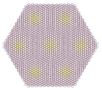
MATBG consists of two sheets of graphene (crystals of carbon atoms arranged in a one-atom-thick hexagonal lattice) stacked on top of each other with a small misalignment angle. This twisting arranges the atoms in a moiré pattern with a period that depends on the relative angle between the sheets’ crystallographic axes rather than the spacing between individual atoms.
The moiré pattern acts as an artificial “superlattice” in which the material’s unit cell (the simple repetition of carbon atoms in its crystal structure) hugely expands in all directions. This stretching dramatically affects the way electrons interact in the material. At the so-called “magic” angle of 1.1°, the energy bands of the electrons flatten out, causing the electrons to slow down almost to a halt. This dramatic reduction in velocity leads to correlated behaviour such as superconductivity, magnetism and other quantum phenomena.
In MATBG, the electrons come in four flavours: spin up, spin down, and two “valleys”. Each lattice site in the moiré pattern than thus hold up to four electrons. When all moiré sites are completely full — that is, when each site has four electrons – MATBG behaves as a simple insulator.
Deceptively simple system
At filling levels of around one electron per moiré site, most electron transport measurements to date have indicated that the system’s behaviour is likewise relatively straightforward: it acts like an ordinary metal, or Fermi liquid (with an electrical resistance that remains finite even in the limit of zero temperature). This superficially simple picture, however, turns out to hide a wealth of detail, since this is the filling at which the Weitzmann/MIT and UCSB teams noticed the Pomeranchuk effect in action.
The researchers, who report their work in two back-to-backNature papers, have now found, counterintuitively, that the (Fermi) liquid phase transforms to a solid-like highly exotic correlated metal phase upon heating near a metal-like filling of one electron per moiré site in MATBG. In the liquid phase, the spatial positions of electrons are disordered, but their magnetic moments (arrows) are perfectly aligned. In the solid-like phase, the electrons are ordered in space but their magnetic moments fluctuate freely.
Like in solid helium-3
“The large entropy we see in the correlated metal phase is analogous to that observed in solid helium-3, but instead of atoms and nuclear spin, in MATBG we have electrons and electronic spins (or valley magnetic moments),” explains theoretical physicist Erez Berg of the Weizmann Institute, who collaborated with both teams. “The fact that the effect disappears when a strong magnetic field is applied to the material confirms that the effect is coming from the fluctuations of the electron magnetic moments.”
The researchers also found that that the entropy per electron of the high-temperature correlated metal phase was greater than that of the low-temperature Fermi liquid phase by a fraction of the Boltzmann constant, KB (where KB=1.38 x 10⁻²³ J/K) per lattice site. In the UCSB experiments, the increase in entropy was 0.2 KB, while the Weizmann team found a value of 0.8 KB. This value is close to the entropy expected when the MATBG has one free electronic spin per moiré site.
Measuring the entropy of electrons in atomically-thin structures like graphene is no mean feat. This is because 2D materials contain very few electrons – unlike their bulk counterparts, which have them in abundance. Indeed, this is the first time researchers have succeeded in measuring the entropy of an atomically thin 2D system.
Biao Lian, a physicist at Princeton University in the US, notes that the new findings, while important, “leave many open questions”. In a related News and Views article, he notes that it is not yet known whether the low-temperature metal phase is separated from the high-temperature phase by a first-order phase transition (characterized by an abrupt change in thermodynamic properties) or a smoother “crossover” transition.
Another mystery is the absence of the electronic Pomeranchuk effect at other integer fillings of the band structure of MATBG (that is, when the bands are half or three-quarters full). Similar behaviour, Lian argues, could occur at these fillings, but it has not yet been observed.
Dementia with Lewy bodies (DLB) is the second most common cause of degenerative dementia in elderly patients. Small amounts of protein – Lewy bodies – clump together within nerve cells in the brain. As a result, communication between cells is significantly reduced over time, eventually leading to cell death.
There are several symptoms that lead to the diagnosis of DLB. These include significant variations in the patient’s attention and alertness and rapid eye movement. But many DLB symptoms are also commonly seen in Parkinson’s disease (PD) and Alzheimer’s disease (AD). Although the diagnostic sensitivity for DLB has increased over time, the clinical detection rate is considerably lower than that at autopsy, attributed to the misdiagnosis of DLB as AD. This can significantly impact the clinical management of each individual patient.
One approach considered to help differentiate between DLB, PD and AD is SPECT imaging using the radiotracer 123I-FP-CIT. This established imaging technique is able to detect nigrostriatal degeneration – depletion of dopamine-producing neurons in the brain’s striatum – a common indicator of both PD and DLB, but not seen in AD.
Upon injection, the 123I-labelled tracer binds to dopamine transporters located on dopamine-producing neurons. As 123I decays, it releases high-energy gamma photons that are detected by the SPECT system. A reconstructed image of the spatial distribution of 123I can be used to highlight presynaptic neuron degeneration, shown via reduced tracer uptake. Previous studies have reported abnormal binding findings as indicative of probable DLB.
Current methods, however, including qualitative visual evaluation of SPECT scans, have proved unable to accurately differentiate DLB from PD. To address this, a research team headed up by Francisco Oliveira at Champalimaud Centre for the Unknown has re-evaluated the diagnosis of patients with dementia using quantitative analysis of 123I -FP-CIT SPECT images, comparing the results with final diagnosis at autopsy.
Quantitative evaluation
The researchers studied 123I-FP-CIT SPECT scans of 36 patients and their histopathological diagnoses at autopsy. They performed quantitative analysis on the SPECT images to compute the binding potential in two structures in the brain’s striatum – the caudate and the putamen – and the putamen-to-caudate ratio for all cases. The binding potentials represent the signal intensity in the target region compared with the background reference intensity.
The group performed statistical analysis to compare the binding potentials and putamen-to-caudate ratio across all three patient groups. Additionally, they evaluated the ability of these parameters to differentiate between different dementia types, using receiver operating characteristic curve analysis.
In comparison with diagnosis from visual assessment, quantitative evaluation of the binding potentials and putamen-to-caudate ratio showed significant improvement in differentiating DLB from AD and PD. The caudate binding potential helped separate patients with DLB from those with AD with high accuracy (94%).
The group established that although visual evaluation can accurately discriminate between patients with DLB and AD, this was not the case with DLB and PD. However, Oliveira and colleagues identified that, using the putamen-to-caudate ratio, DLB could be differentiated from PD patients with an accuracy of 94%.
The authors believe that “being able to quantitatively make these distinctions between diseases is crucial”, as misdiagnosis of DLB can have a significant impact on patient management.
Future implementation
The ability to accurately discriminate between different types of dementia using the computed binding potentials and putamen-to-caudate ratio from 123I-FP-CIT SPECT imaging is clear. “Our findings may have a significant impact both for patients and caregivers,” claim the researchers. Patients with DLB can be highly sensitive to some specific types of medication, which can lead to accelerated deterioration. By accurate diagnosis of DLB, the administered medication could be tailored accordingly.
In the future, the researchers aim to utilize the putamen-to-caudate ratio to distinguish, as early as possible, patients with DLB from those with Parkinson’s disease with dementia. This may ensure that an appropriate treatment strategy is implemented. “Nevertheless, further studies need to be done to prove our hypothesis and also to ascertain whether changes in putamen-to-caudate ratio would be sensitive in predicting cognitive decline,” say the researchers.
Like most people, Abigail Harrison has a big dream – to become an astronaut, and be the first person to walk on Mars. Humans are yet to set foot on the red planet (or indeed any planet beyond our own), but Harrison is on the right trajectory to do so – and her pathway to achieving this is the subject of her new book Dream Big: How to Reach for Your Stars.
Written primarily for young people, the book has a decidedly chatty tone. Indeed, at times it reads almost like a conversation with a friendly and knowledgeable career adviser. The book is also a practical guide, with exercises to help the reader to map their own plans, from conception through to fruition, using the processes Harrison herself has used and developed. “I got so much great advice and Dream Big is my way of passing that on to the next generation,” she says.
I got so much great advice and Dream Big is my way of passing that on to the next generation
The book opens by encouraging the reader to dream and to envision their future, as well as following up with practical advice – how to turn an idea into manageable steps, making plans, facing your fears and dealing with failure. There are, for example, chapters on being a “disruptor” – after all to be the first, one must push past social norms – and the importance of finding and being a role model.
Harrison’s dream, to be the first to walk on Mars, has been in the making since she was just five years old; but she’s been public about it since she was 13, setting herself up online as “Astronaut Abby”. Now 23, she has gained a wealth of experience, and Dream Big is peppered with inspirational stories from public figures, some of whom are further along their journeys in the growing space industry. They include Clayton Anderson, who is now a retired NASA astronaut, but in 2007 was a member of the ISS Expedition 15 crew. Despite his successes, Anderson was rejected by the astronaut programme 15 times, before finally succeeding in 1998. His story comes as part of an interesting chapter about dealing with and accepting failure as part of the process. It might be tempting to think that a book from a 23-year-old might not have much to teach the generations above her, but it’s possible to think of recent world leaders who might benefit from reading this chapter.
Dream Big is peppered with inspirational stories from public figures, some of whom are further along their journeys in the growing space industry
Other key figures in the book include climate-change activist Greta Thunberg, and the recently deceased US Supreme Court justice Ruth Bader Ginsburg. While Thunberg is still working hard on her goal of changing the minds of politicians with regards to climate change, it’s fair to say that many lessons can be learned from the young activist’s achievements to date. Harrison has also had the opportunity to learn from pioneering mentors such as Buzz Aldrin; her book is infused with insight she has gained from them.
The chapter on facing and tackling fears is another one that readers of all ages could benefit from, as Harrison reminds us that successful people have often battled with anxieties and insecurities. She touches on examples from Abraham Lincoln’s fear of public speaking to her own fear of heights – not exactly ideal for an astronaut and pilot. She had to tackle this challenge head-on, learning from others who faced similar challenges. This chapter includes an exercise plotting out the worst thing that could happen and the concept of “chair flying”.
Shared dream Abigail Harrison has given a TEDx talk and spoken on news programmes about travelling to Mars. (Courtesy: Michael Seeley)
This visualization technique, popular in the aviation industry, involves sitting in a chair and imagining everything that could go wrong when piloting an aircraft. Harrison swears it has saved her life. While the technique might sound slightly odd, it is surprisingly at the heart of astronaut training. The reason why British astronaut Tim Peake remained calm when he experienced a last-minute glitch while docking his Soyuz capsule with the ISS is because he, like all astronauts, had already run through and trained for every single possible worst-case scenario, before stepping on board a rocket.
To wish to be the first person to set foot on Mars, one has to be relatively single-minded. To succeed in being chosen as the representative of humankind, one must seek to represent humanity and community – and this is central to much of the advice in the book. Finding your community, being part of it, finding support but also providing your own knowledge, skills and support to the community in return. Perhaps one of the most compelling chapters in Dream Big covers diversity and the importance of doing everything you can to enable those who don’t already have a “seat at the table”, and to be able to pull up a chair. As Harrison writes, “Kindness makes the world go round. Well not, literally of course (the world goes round because of conserved rotational energy from the protoplanetary disc that our solar system was formed out of), but figuratively, kindness is what it’s all about.”
Harrison is multilingual, has worked in a NASA astrobiology lab, conducted research in Siberia and is an advanced scuba diver and pilot. She has delivered an address to Congress and co-founded the not-for-profit The Mars Generation. With Dream Big, she hopes to enable other young people to have similar achievements by the same age. If Harrison does achieve her ultimate goal of being the first person to walk on Mars, this book will become a collector’s item. If the contents of this book are anything to go by, she might well succeed.
In an underground laboratory near Shenzhen, southern China, officials gathered on 12 December 2020 to say goodbye to a decade-old experiment that not only unveiled secrets of the neutrino but also fostered China–US scientific collaboration. A little after 10.30 a.m., Yifang Wang from the Institute of High Energy Physics (IHEP), Chinese Academy of Sciences, pressed a red button that stopped the Daya Bay Reactor Neutrino Experiment from taking data. A few minutes later, covers were removed and four massive, cylindrical tanks appeared in a pool filled with highly purified water.
“Today we are here to celebrate the completion of the Daya Bay Reactor Neutrino Experiment, which has fulfilled all its missions,” noted Jun Cao, co-spokesperson of the collaboration, during the ceremony. Only a small audience was present due to coronavirus restrictions, but 1.7 million people joined online to see the experiment come to an end. Among them was Kam-Biu Luk, a particle physicist from the University of California at Berkeley and Lawrence Berkeley National Laboratory and the experiment’s US spokesperson, who watched the livestream from his home in California. “I’ve worked on a number of experiments in my life,” he told Physics World, “but Daya Bay has achieved so much that it is extremely rewarding. This is certainly a happy ending for all of us.”
Early days
Born in nuclear interactions, neutrinos are extremely light and hard to catch, yet they are everywhere around us. They come in three types – electron, muon and tau – that morph into each other as they travel near the speed of light. Thanks to large-scale neutrino detectors in Japan, the US, Canada and other countries, by the early 2000s physicists had a good idea about how electron neutrinos transform into muon and tau neutrinos (as in solar neutrino oscillation) and how muon neutrinos transform into tau neutrinos (as in atmospheric neutrino oscillation). However, the case of electron–muon oscillation – the last missing piece in the puzzle of neutrino oscillations and dictated by the parameter “theta-13” – remained unclear.
Some scientists proposed using nuclear reactors to study this neutrino oscillation, since reactors are well-understood neutrino sources, and Luk realized it could be the best way to solve the theta-13 problem. He started searching for potential sites in Japan, South Korea and the US. Originally from Hong Kong, Luk also knew about the Daya Bay nuclear power plant and added it to his list.
Daya Bay stood out in many ways, not least because the Daya Bay and Ling Ao reactors are powerful enough to produce a large number of antineutrinos. The site is also next to a mountain range, making the construction and shielding of cosmic rays much easier. Given that the most efficient scheme to infer theta-13 was to compare antineutrino events at the near and far sites, the team planned eight detectors, four placed between 300 and 500 m from the reactors – dubbed “near detectors” – and four positioned 2 km away.
Daya Bay remains the largest collaboration between China and the US in basic research and has benefited scientists from both sides
Luk opted for Daya Bay and in late 2003 contacted IHEP for potential collaboration. Despite a lack of neutrino researchers in China, Wang, who was leading the institute’s experimental department, knew that it was an opportunity not to be missed and began searching for funding and people. The idea also quickly won support from the US’s Department of Energy, which later contributed about one third of the total cost, with Cao among the first to join. Wrapping up his postdoctoral research in the US at Fermilab, he immediately got down to basic design issues such as the shape of the detectors and the development of the liquid scintillator, which was done together with collaborators at Brookhaven National Laboratory.
Students also got involved in the project. They included Liangjian Wen, who was studying nuclear physics at the University of Science and Technology of China in Hefei, and came to IHEP Beijing to work on his undergraduate project. Inexperienced with building detectors, he was asked to develop the reflecting panels placed at the top and bottom inside the detector, a technique never used in similar experiments before. “The panels can reflect photons to the side, so we got to use fewer photomultiplier tubes and save about 20 million yuan,” says Wen. Doing everything from scratch, Wen learned what materials to use for the supporting structure, how to apply the reflecting film between the panels, and how to assemble the panels with high precision. “We made it in the end,” he adds. “The reflecting panels gave the detectors a simpler structure and better performance.”
Surprising findings
Daya Bay began taking data on 24 December 2011, when only six of the eight detectors were in place. Researchers were quick to remove noise signals and identify something indicative from data collected within the first few days. Cao remembers vividly how they worked late into the night, had lots of meetings and used a variety of cross-checking methods to make sure the results were correct. Then on 8 March 2012 the collaboration announced its groundbreaking findings on theta-13 at a press conference in Beijing.
Based on tens of thousands of antineutrino events observed, about 6% of the reactor’s antineutrinos transformed into other types of neutrinos on their way from the reactors to the far site. The transformation rate was surprisingly large, allowing Wang to announce the discovery of a new type of neutrino oscillation. For Cao, it was a wonderful surprise given it only took 55 days to get a definitive answer to the critically important theta-13 problem, the value of which turned out to be much larger than expected. In the eight years that followed, as the team collected and analysed more data, the measurement precision of theta-13 improved by sixfold to 3.4%, a milestone no other experiment is expected to surpass in the next 20 years.
Besides theta-13, the experiment also made other important findings. For example, it strongly challenged the assumption that a fourth type of neutrino, the sterile neutrino, exists. Observations at the near detector clearly showed that the reactors gave off far fewer antineutrinos than predicted – potentially because some had morphed into sterile neutrinos. To clarify the case, the team made separate measurements on uranium and plutonium, two major reactor fuel components and antineutrino sources. They found that the modelling and observation matched well for plutonium but there was a major discrepancy with uranium. “This largely ruled out the theory of explaining the deficit with sterile neutrinos,” says Wang. “If sterile neutrinos did exist, they should have acted on plutonium and uranium the same way.”
The Daya Bay legacy
Daya Bay remains the largest collaboration between China and the US in basic research and has benefited scientists from both sides. For China, the neutrino research team has grown from a small number of people in the early 2000s to about 100 today. For the US, the Daya Bay experiment turned out to be much cheaper and quicker than if the US had done the experiment alone.
We yearn for tomorrow, to reveal more unknowns in neutrino physics with the new generation of experiments
Jun Cao
Since the shutdown ceremony, the eight detectors have been taken apart, with some components such as the electronics being reused in the Jiangmen Underground Neutrino Observatory (JUNO) – China’s next major neutrino experiment. Other parts have been donated to overseas experiments, including 32 tonnes of gadolinium-doped liquid scintillator and 50 tonnes of undoped liquid scintillator to a Japanese experiment called JSNS2.
The rest of the experiment will be given to schools for educational or outreach use. The main laboratory hall, meanwhile, will be repurposed into an exhibition facility about the experiment. The team will also continue to analyse the complete dataset, which will take another year or two to complete.
IHEP researchers are working hard to make sure that JUNO will be up and running by the end of 2022. It will seek to work out the mass ordering of different types of neutrinos, which will help other upcoming neutrino facilities such as the Deep Underground Neutrino Experiment in the US and the Hyper-Kamiokande neutrino observatory in Japan to examine their absolute values as well as possibly reveal why the universe is made up of matter instead of antimatter. “These questions will keep particle physicists fully occupied for a few decades from now,” says Luk.
Researchers are also developing crucial technologies for a second phase of JUNO, which will conduct a neutrino-less double-beta decay experiment to study whether neutrinos are their own antiparticles and seek to measure the absolute masses of neutrinos. Yet Cao does not feel sorry to witness the end of Daya Bay. “On the contrary, we yearn for tomorrow,” he says, “to reveal more unknowns in neutrino physics with the new generation of experiments.”
Under the right conditions, the transport of electrical charges through wires with nanometre-scale thicknesses could become more efficient as disorder in the nanowire increases. This counterintuitive behaviour could be possible following a theoretical discovery made by physicists in Italy and Mexico. Nahum Chávez at the Meritorious Autonomous University of Puebla and colleagues hope that this “disorder-enhanced transport” effect could soon be observed experimentally.
When electrical wires are shrunk down to just several nanometres in width they behave essentially as 1D conductors with properties that are heavily influenced by quantum mechanics. Such nanowires are increasingly being used in nanoelectronics applications and designers must contend with negative aspects of their quantum behaviour. For example, conductivity within quantum wires is suppressed exponentially as the level of atomic disorder in the wire increases. This phenomenon is called Anderson localization and is associated with interference effects that arise from the scattering of electrons from defects.
Physicists are keen on finding ways to avoid this suppression of conductivity, and one possibility is to explore systems in which long-range interactions between electrons could allow a charge carrier to move between all lattice sites in the nanowire – rather than just hopping to its nearest neighbour site as is the case in the Anderson localization model. A long-range interaction, for example, is responsible for superconductivity whereby charge carriers in the ground state of a material can flow freely.
Hop to it
In their calculations, Chávez and colleagues added an interaction to the Anderson localization model that allows carriers to hop between any two lattice sites in a 1D lattice. Specifically, their model describes a chain of molecules that is coupled to an optical cavity. This resulted in mixed quantum states that have characteristics that are both localized and delocalized – and therefore both suppress and support carrier transport.
As disorder is introduced into the system, transport is first suppressed as expected from Anderson localization. However, as more disorder is added there is more mixing of localized and delocalized states and this causes transport to sharply increase in what the team calls a disorder-enhanced transport (DET) regime. As even more disorder is added to the system, transport remains constant over several orders of magnitude of increasing disorder in what the team call the “disorder-independent transport” (DIT) regime. Finally, after disorder reaches the next threshold, transport drops steeply once again.
The predictions of Chávez and colleagues could be tested in several different experiments where long-range hopping can be implemented – such as ultracold atoms trapped in optical lattices and Bose-Einstein condensates.
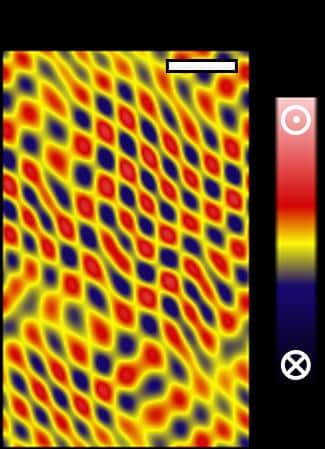
The measured domain pattern of the “incommensurate spin crystal” phase. Credit: University of Warwick
Scientists searching for magnetic skyrmions – quasiparticles with a vortex-like structure – have instead stumbled upon something even more unusual. The researchers at the University of Warwick, UK, say the object they call an “incommensurate spin crystal” resembles a skyrmion hidden in an ultrathin film with ferroelectric and ferromagnetic layers, and could be used to make storage bits for next-generation computer memories.
Skyrmions exist in many structures, notably magnetic thin films and multilayers, and are robust to external perturbations. At just tens of nanometres across, they are much smaller than the magnetic domains used to encode data in today’s disk drives. That makes them ideal building blocks for future data storage technologies such as “racetrack” memories.
Researchers identify skyrmions in a material by spotting unusual features (for example, abnormal resistivity) in the Hall effect, which occurs when electrons flow through a conductor in the presence of a magnetic field. The applied magnetic field exerts a sideways force on the electrons, leading to a voltage difference that is proportional to the strength of the field. If the conductor has an internal magnetic field or magnetic spin texture, this also affects the electrons.
Ferroelectric-ferromagnetic bilayer
Recent studies of a ferromagnetic material called strontium ruthenate (SrRuO3) produced conflicting evidence for why these unusual features exist. To investigate further, a team led by Marin Alexe constructed a bilayer consisting of a thin film of SrRuO3 and a thin film of lead titanate (PbTiO3), which is ferroelectric. Both layers are atomically flat at just 3 nm and 10 nm thick, respectively.
In these bilayer systems, the ferroelectric material (which has permanent electric dipole moments in the same way as a ferromagnet has permanent magnetic dipole moments) induces an electric field that distorts the atomic structure of the ferromagnet. This distortion, the researchers explain, breaks the ferromagnet’s symmetry.
By measuring this symmetry breaking with electron microscopy, Alexe and colleagues confirmed that an electron interaction known to stabilize skyrmions (the Dzyaloshinskii–Moriya interaction) was at work. They also measured the electrical resistivity of their SrRuO3–PbTiO3 bilayer and identified features analogous to a Hall-effect variant known as the topological Hall effect. This type of Hall effect occurs when a voltage is applied along a thin conducting sheet (like the one studied in this work) at the same time as a magnetic field is applied perpendicular to its surface, and it is an expected feature of a skyrmion system.
Not a skyrmion at all
At that point, results took a surprising turn. When the researchers used magnetic force microscopy to study the topology of their material’s micromagnetic structure, they observed a lattice based on rectangles, not hexagons as they expected. This rectangular lattice contains magnetic domains in which skyrmions should be found as individual isolated particles, but the domains they observed looked more like beads on a string or necklace. The beads did not quite form a perfect circle either, further implying that the domains actually present are not topologically protected, or isolated.
Careful examination of the images revealed that the structures were not a skyrmion at all, explains study lead author Sam Seddon. “A skyrmion causes its own complicated Hall effect and when similar-looking effects are observed it is often treated as a signature of the skyrmion,” he says. “We’ve found a very ordered domain structure, just as a skyrmion lattice would form, however they are simply chiral and not topologically protected. What this shows with real-space imaging evidence is that you don’t need a topological domain to cause a Hall effect of this kind.”
These types of interfaces between ferroelectric and ferromagnet materials could be useful for new types of computer memory, Alexe adds. “Because ferroelectric polarization can be switched permanently, this modifies a quantum effect in a ferromagnet and that might give us direction for materials for the next quantum computers,” he says. “These will need stable materials which work at extreme temperatures, are low-power consumption, and can store information for a long time, so all the ingredients are here.”
The researchers, who report their work in Nature Communications, say they now plan to continue probing the unusual physics that can arise from this type of symmetry breaking. “We will investigate, for example, novel functionalities induced by artificial symmetry breaking in different systems, including these complex spin textures, as well as two-dimensional and optically active materials,” Alexe tells Physics World.
It’s the late 1990s deep inside an underground data room at the Argonne National Laboratory near Chicago. The committee that awards beam time at the lab’s heavy-ion accelerator has approved an experiment in which we’ll fire a beam of uranium at a tungsten target. One of us (Philip Walker) and his PhD student Carl Wheldon have flown over from the University of Surrey in the UK to do the work.
Our uranium beam emerges from Argonne’s linear accelerator in pulses, exciting the tungsten nuclei to high energy, which then emit gamma rays as they decay. Most of the gamma rays are created whenever a pulse strikes the target, but for this experiment we’re more interested in what happens between pulses. In fact, we can watch the build-up of gamma rays on a screen in real time.
We know that some uranium–tungsten collisions will create nuclei like tantalum and rhenium, which will undergo beta decay – and that each daughter nucleus will then release its own gamma rays when it in turn decays. Because the shortest of these beta decays has a half-life of about 10 minutes, we reckon we’ll have to wait a few minutes before we see anything of interest on our screen. But then, whoosh! Within seconds, the gamma-ray signals are rising rapidly. What on earth is going on?
Initially, we wonder if the uranium beam is accidentally hitting the aluminium frame holding our tungsten target, rather than the tungsten itself. That would create lots of short-lived beta decays from nuclear reactions we hadn’t even thought about. But when we look closely at the energies of the gamma rays, it quickly dawns on us that the rays are coming from a form of tungsten-186 that had never been seen before. We’ve stumbled upon a new “nuclear isomer” – a long-lived excited nuclear state.
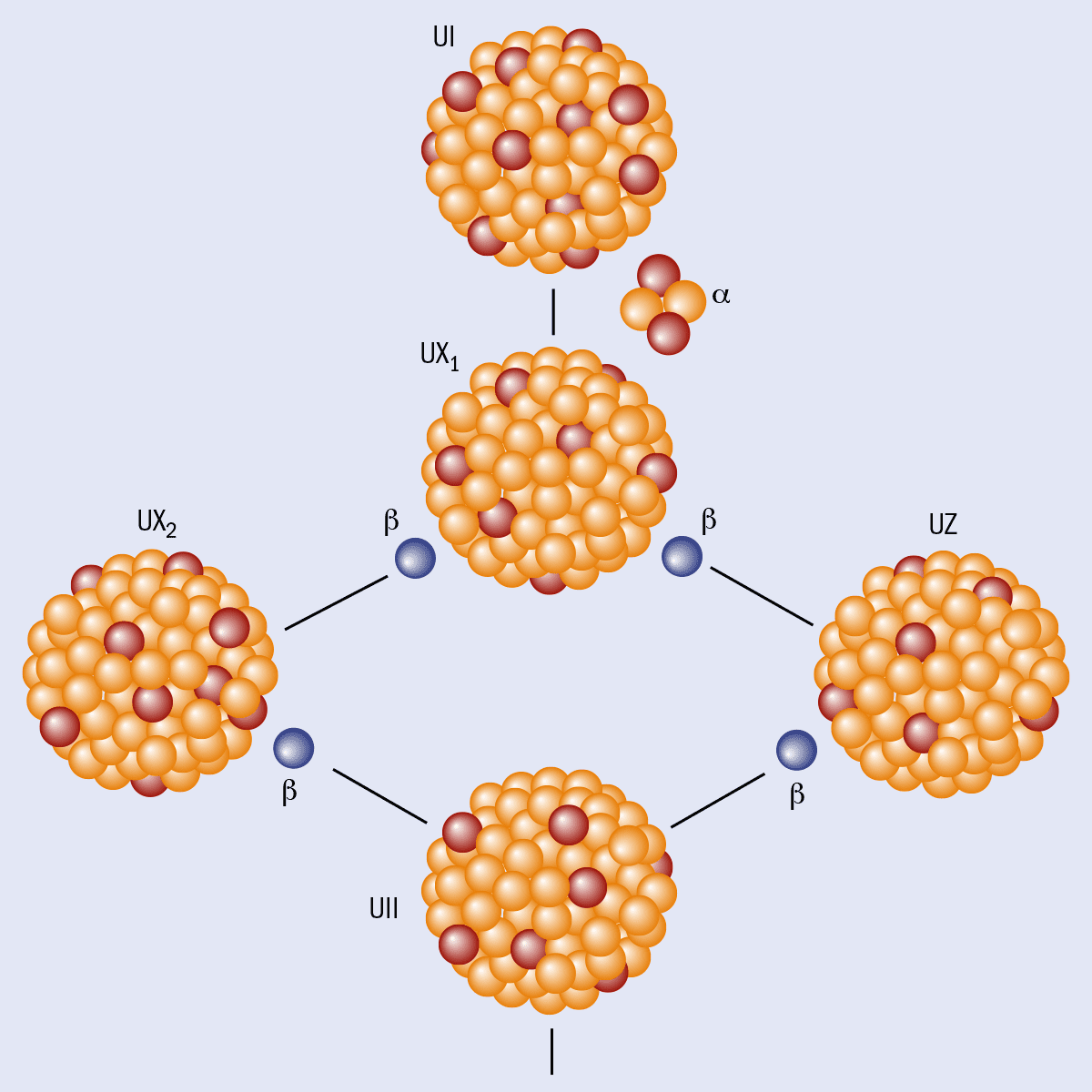
1 Otto Hahn and the discovery of nuclear isomerism Having studied the decay of uranium, German physicist Otto Hahn noticed that what he called UI (uranium-238) emits alpha particles to create UX1 (thorium-234). It can then undergo beta decay to form either UZ (the ground state of protactinium-234) or UX2 (an excited state of protactinium-234). Both UX2 and UZ can then beta decay to form UII (uranium-234). The two states of protactinium proved that isomers exist.
Since the first nuclear isomer was discovered in 1921 – exactly a century ago – nuclear physicists have discovered almost 2500 different examples of these excited nuclei with half-lives of at least 10 ns. But our discovery was even more exciting than usual, because most new isomers are found when unstable nuclei decay, whereas ours was created when a stable nucleus decayed. For isomer enthusiasts, it was something special.
Most isomers are fleeting objects, typically lasting less than a microsecond, which makes new examples hard to find. But with our pulsed beam at Argonne, we could investigate what happens between pulses, making it easier to pick out the gamma rays emitted by an isomer of interest from the mess of radiation created by other reactions. In fact, our study showed that it takes 3.5 MeV of energy to create our isomer by raising tungsten-186 from its ground to excited state. Later work showed it has a half-life of two seconds, although its other characteristics remain largely unknown to this day.
The birth of nuclear isomers
Nuclear isomers were discovered in 1921 by the German chemist Otto Hahn (1879–1968) while working at the Kaiser Wilhelm Institute for Chemistry in Berlin. It was the dawn of the nuclear age and scientists were still coming to terms with the discovery by the British chemist Frederick Soddy in 1913 of chemical “isotopes”. These are variants of chemical elements that have the same number of protons, but different numbers of neutrons – although neutrons were yet to be discovered.
Soddy had, however, also discussed the possibility of “a finer degree of isotopy”. Writing in a paper published in 1917, he hypothesized the existence of what he called “isotopes with identity of atomic weight, as well as of chemical character, which are different in their stability and mode of breaking up”. Soddy had, in effect, predicted what we now call nuclear isomers, though science historians are unsure if Hahn was directly inspired by Soddy’s work.
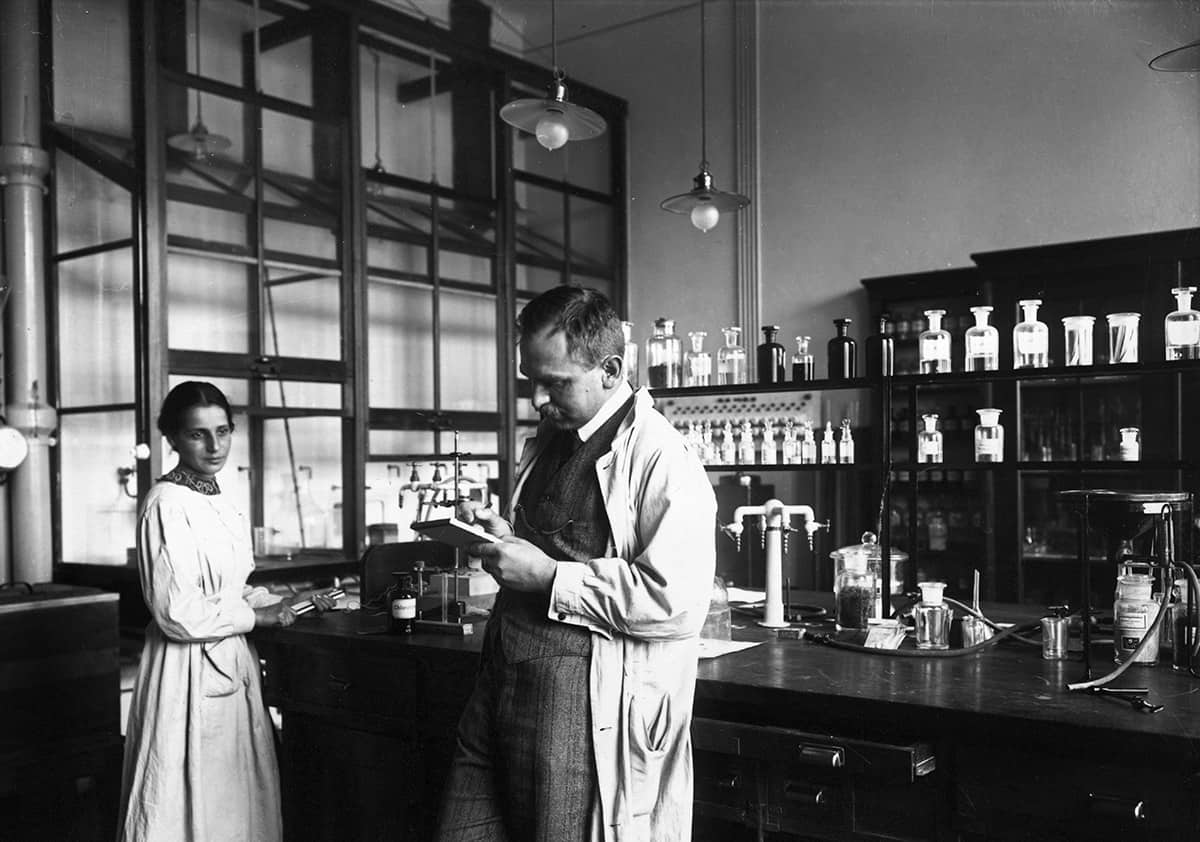
Methodical mappers Nuclear isomers – long-lived excited nuclei – were discovered 100 years ago in 1921 by the German physicist Otto Hahn (1879–1968), shown here with his colleague Lise Meitner at the Kaiser-Wilhelm Institute in Berlin in 1913. (Courtesy: Archives of the Max Planck Society, Berlin)
Instead, Hahn and his colleague Lise Meitner had been methodically mapping the complex process by which uranium-238 nuclei radioactively decay to form stable lead-206 nuclei. The decay chain involves a number of different nuclei, including a completely new chemical element with an atomic number of 91. Having discovered one particular isotope of this element, Hahn and Meitner dubbed it proto-actinium, now shortened to “protactinium”.
While looking back at his uranium-decay work in more detail, Hahn noticed something odd. What he called UI (uranium-238) can decay by emitting alpha particles to create UX1 (thorium-234), which then beta decays either into UZ (the ground state of protactinium-234) or into UX2 (an excited state of protactinium-234). Hahn, in other words, had discovered that protactinium-234 nuclei have two different states: a lower-energy ground state with a half-life of seven hours and an excited state with a half-life of one minute (figure 1).
Hahn’s work marked the discovery of nuclear isomerism and the birth of the new field of nuclear structure. However, progress in our understanding of isomers was slow and it was not until James Chadwick’s discovery of the neutron in 1932 that the concept began to catch on. Physicists now had theoretical ideas and experimental tools at their disposal to make sense of isomers, although the word itself did not appear in the scientific literature until a paper by the Ukrainian-born theoretical physicist George Gamow in 1934.
He suggested that the protactinium-234 isomer could be due to an antiproton in the nucleus – a concept that was greeted with considerable scepticism. It was 1936 before the German physicist Carl Friedrich von Weizsäcker came up with the accepted explanation for isomers. Von Weizsäcker realized that all nuclei have an angular momentum, or spin, and that different arrangements of the orbits of the protons and neutrons can create different spin states, just as “chemical isomers” have different spatial arrangements of atoms.
If the excited state has a very different spin from the ground state, it will take a long time to emit a gamma ray and decay to the ground state. In the case of protactinium-234, for example, the difference between the two states is four units of spin or 4ħ, where ħ is Planck’s constant divided by 2π. That makes the gamma decay so slow that the excited state is actually more likely to decay by emitting an electron (beta decay).
Uses and applications
A funny thing about isomers is that there is no agreed definition of the minimum half-life needed for an excited nuclear state to be an “isomer”. These states typically have a half-life of less than a picosecond (10–12 s) but some people say that isomers should live longer than a nanosecond (10–9 s) for them to count. But however you define them, isomers are only useful in a practical sense if they have a much longer half-life more like 1 s.
Thankfully, there are plenty that survive that long. Some are used in medical imaging, while others could potentially be used to store energy as “nuclear batteries” or to make super-accurate clocks (see box “Weird and wonderful: five applications of nuclear isomers“). Another interesting possibility is creating a new state of matter in which a gas of caesium atoms – whose nuclei are in an isomeric state – is cooled down to 100 nanokelvin to form a Bose–Einstein condensate (Phys. Lett. B777 281). The atoms will be in their lowest-energy “condensed” state, but not the isomers, which are, by definition, excited states. Apart from being a bizarre and counterintuitive state of matter, you could potentially use it to create a “gamma-ray laser” by harvesting the coherent gamma rays given off when the isomers decay. Such a laser has never been made before.
An interesting possibility is creating a new state of matter in which a gas of caesium atoms is cooled down to form a Bose–Einstein condensate. The atoms will be in their lowest-energy state, but the isomers are, by definition, excited
Away from applications, spin isomers have been of fundamental importance in nuclear physics, especially to the “nuclear shell” model, which was developed in 1949 by Maria Goeppert Mayer and independently by Otto Haxel, Hans Jensen and Hans Suess. Just as electrons form atomic shells that can contain no more than a certain number of electrons, so neutrons and protons form nuclear shells, with similar limits to how many protons and neutrons each nuclear shell can hold.
The first can have up to two, the second goes up to eight, with subsequent shells having a maximum of 20, 28, 50 and 82 nucleons. Known as “magic numbers”, they have the same values for both proton and neutron shells, although neutrons have an additional magic number of 126. But the parallels between the electron and nuclear shell models aren’t perfect because while the spin-orbit force between electrons is weak and repulsive, the spin-orbit nuclear force is strong and attractive. This affects the spin structure, in particular making it more likely for isomers to form when the shells are full or almost so.
Nuclear physicists have also recently discovered that the proton magic numbers (2, 8, 20 and so on) can vary depending on how many neutrons are present and vice versa for neutron magic numbers. Given that the original magic numbers were found in nuclei that were stable (or nearly so), the fact that they might not be so magic after all has forced us to rethink our ideas about the structure of unstable nuclei, with isomers playing a key role in that quest.
Stranger and stranger
A century after nuclear isomers were discovered, there is plenty still to investigate. We’ve mentioned that nuclear isomers can exist if there are large changes in nuclear spin. But remember that spin, being a vector quantity, has a direction as well as a magnitude. In fact, there’s another type of isomer that depends on the change in spin direction. First understood in 1955, we now know of more than 100 such “K-isomers”, which often exist in heavy, deformed rugby-ball-shaped nuclei. The spin typically points along the long axis of the nucleus, but when the isomer decays, the spin in the populated state usually is at 90° to the axis.
There is also another type of isomer in which the excited nucleus changes shape significantly when it decays to the ground state. First discovered in the early 1960s, we now know of about 50 such “shape isomers”, which can go, for example, from being round to prolate. In very heavy nuclei, there is even a subset of shape isomers, known as “fission isomers”, in which the excited nucleus spontaneously splits into two lighter nuclei when it decays. Since fission limits how heavy a nucleus can be, fission isomers have been vital in helping us to understand the stability of heavy nuclei.
The heaviest element made in the lab so far is oganesson-118, which has an atomic number of 118 and is named after the Russian-Armenian physicist Yuri Oganessian, who discovered it in 2006. Wouldn’t it be great if nuclear isomers could help us to find even heavier elements still? And given that isomers can even help us understand how stars explode and create life-giving chemical elements here on Earth, we can truly say that isomers give us a window onto our origins.
Weird and wonderful: five applications of nuclear isomers
Medical imaging
(Courtesy: BMJ)
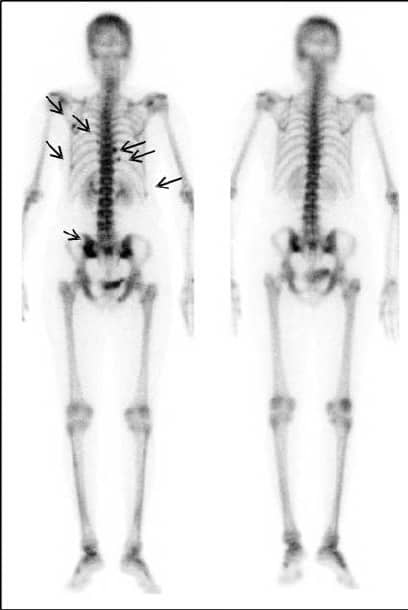
Many different radioisotopes are used in medicine for both diagnostics and therapy. The most widely employed, with about 20 million applications a year, is an isomer of technetium-99. It’s ideal for imaging, emitting a single 141 keV gamma ray with no accompanying beta particles. Its six-hour half-life, meanwhile, is long enough for a scan of a particular organ to be carried out, but short enough to decay away fast, thus reducing the overall dose to the patient. Used as a tracer in bone, brain and heart scans, the technetium-99 isomer is introduced into the body as part of a molecule specifically chosen to have an affinity for the organ of interest. The rapid decay, however, means that the isomer cannot be stored, forcing hospitals to order its parent nucleus – molybdenum-99 – instead. Created from the fission of uranium-235 in nuclear reactors, molybdenum-99 has a much longer half-life of 66 hours and can easily be transported around the globe. It decays into technetium-99, which hospital staff chemically extract from the molybdenum/technetium mixture.
Nuclear clocks
(Courtesy: iStock/Panuwat Sikham)
The isomer with the lowest energy we’re aware of is thorium-229, which has an energy of just 8.1 eV, corresponding to light with a wavelength of 150 nm. Tremendous progress has recently been made in understanding its properties, but even measuring its excitation energy has been a challenge, requiring the development of new types of radiation detector. The half-life of neutral thorium-229 atoms is 7 μs but calculations suggest its ions could survive for many orders of magnitude longer. That possibility has led physicists to propose many potential applications, including building a clock that is more accurate than any other (Nature573 202) and finding out if the fundamental constants of nature vary with time.
Super-heavy elements
(Courtesy: iStock/Evgeny Gromov)
Elements with an atomic number, Z, of 104 or above are called super-heavy elements. Short-lived, they do not exist naturally on Earth, but can be synthesized in laboratories by fusing together lighter nuclei. Super-heavy elements are important for nuclear physics, atomic physics and chemistry, with the heaviest element created to date being oganesson (Z = 118). But the heaviest element with a known isomeric state is darmstadtium (Z = 110), which was first created in 1994 at the GSI lab in Darmstadt. The darmstadtium-270 isomer has a half-life of 4 ms, meaning it is much more stable than the ground state (half-life of just 0.2 ms). If this principle holds more widely, then isomers could play a crucial role in the discovery of new and even heavier nuclei (Phys. Rev. Lett.92 252501).
Nuclear batteries
(Courtesy: iStock / happyphoton)
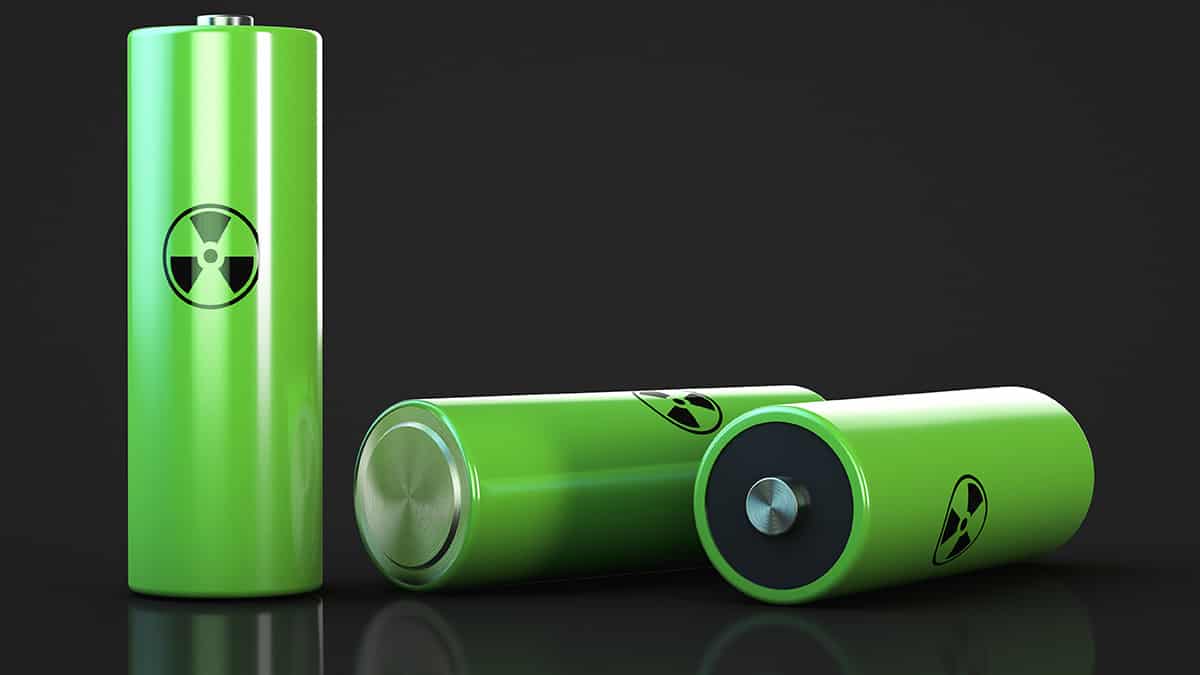
Nuclear isomers could be used to make a new kind of super-charged battery as they have energies of several mega electron volts (MeV) per atom, which could be released by shining light on them. One possibility would be to use tantalum-180m – one of two naturally occurring isotopes of tantalum. It is the longest-lasting isomer we know of, having a half-life longer than the age of the universe. This isomer, which has an excitation energy of 75 keV, can release its energy by shining 1 MeV photons onto it. But as that energy is rather high, one promising alternative is the molybdenum-93 isomer, whose stored energy of 2425 keV can be released by exciting it with photons of just 5 keV (Nature554 216). Unfortunately, it has a half-life of only seven hours, which is why researchers are also looking at the americium-242 isomer. It stores an energy of 49 keV, has a half-life of 141 years and its energy could be released by exciting it with photons of just 4 keV.
Exploding stars
(Courtesy: NASA’s Goddard Space Flight Center/CI Lab)
Roughly half of every element in the solar system that lies above iron in the periodic table was made in colliding or exploding stars. Precisely how is a matter of debate, but neutron-star mergers and supernova explosions are the two most likely possibilities. So extreme is the environment in such locations that nuclei with enormous neutron-to-proton ratios are created, most of which have never been produced on Earth. Nevertheless, a few of them can be studied in accelerator laboratories. One example is the palladium-128m isomer, which has 46 protons and a magic number (82) of neutrons (Phys. Rev. Lett. 111 152501). With a half-life of 6 μs, it lasts long enough for the isomer to be whisked away from the accelerator where it’s made and studied in low-background conditions. Such studies have shown that 82 remains a robust “magic number” (see main text), with palladium-128m playing a central role in the synthesis of new elements in exploding stars.
NASA are preparing a second test flight of their Ingenuity rotorcraft as early as Thursday following a successful vertical lift-off and landing yesterday. The second flight will aim to reach an altitude of 5 m, then fly laterally about 2 m, come back 2 m before landing softly in the same spot. What is discovered over the next few weeks of test flights will help planetary scientists and engineers plan for future missions to Mars and other planets — including the Dragonfly rotorcraft that will head to Saturn’s moon Titan later this decade.
Ingenuity is a 49 cm-tall helicopter technology demonstration that arrived at Mars 18 February attached to the belly of NASA’s Perseverance rover. On 3 April, Perseverance set the helicopter onto the surface, which opened a 30-Martian-day testing window. Engineers then began preparing Ingenuity for its first flight by testing the battery, insulation, solar panel and rotor blades. Yet when they did so, engineers discovered a software error, which pushed the flight back by roughly a week.
Once that was fixed, Ingenuity lifted off Mars’ surface yesterday for the first time. It reached an altitude of 3 m, hovered for about five seconds, rotated 60 degrees, hovered for another 20 seconds and then 39 seconds later landed softly, taking images as it did so. Those 39 seconds marked the first flight on another planet, a feat that shows future Martian missions and other planetary explorations have the potential to not only stay on the surface but to also move vertically. “This morning, our dream came true,” said MiMi Aung, the Ingenuity Mars Helicopter project manager, during a press briefing hours after the flight.
We’re going to go farther and faster, especially towards the end of the experimental window
MiMi Aung
This first flight was full of unknowns given that Mars has a significantly lower gravity – one-third that of Earth’s – and an extremely thin atmosphere with only 1% the pressure at the surface compared to our planet. “This is a flight that we’ve done hundreds, if not a thousand, times before, but always in a computer simulation,” noted Ingenuity Mars Helicopter chief pilot Håvard Grip in the press briefing. “And to see it now finally happen on Mars and happen exactly how we imagined it, it’s just a really incredible feeling.” Grip also announced that the International Civil Aviation Organization (ICAO) presented NASA with an official ICAO designator “IGY”.
Next steps
There are about two weeks left in the 30-Martian-day testing period and the Ingenuity team expects to fully utilize that time with up to four more flights. They are targeting Thursday for the second flight while a third flight will again reach a height of 5 m, but then fly faster and laterally 50 m, return those 50 m, and land softly. The results of the second and third flights will determine what the mission team plans for the fourth and fifth flights. “We’re going to go farther and faster, especially towards the end of the experimental window,” noted Aung. “We will be pushing the envelope and really stretching and understanding how well we can fly.”
Thomas Zurbuchen, associate administrator of NASA’s Science Mission Directorate, reiterated during the briefing that Ingenuity is a technology demonstration. “We really want to be sure that when everything is said and done, we know the full scope of what is possible with that type of flying machine.”
Researchers at the laboratory Physics for Medicine Paris have performed the first microscopic mapping of the vascular network in the human brain. The team used transcranial ultrafast ultrasound localization microscopy (ULM) of intravenously injected microbubbles to capture intracranial blood flow dynamics with a resolution of around 25 µm.
This breakthrough in ULM technology, described in Nature Biomedical Engineering, may help expand the fundamental understanding of brain haemodynamics and shed light on how vascular abnormalities in the brain are related to neurological diseases and disorders.
“By revealing both the human cerebral vascular anatomy and flow dynamics at microscopic scales, transcranial ULM is very likely to become of major importance for the management of cerebrovascular diseases in the future,” state the researchers. “Its low cost, ease of use, sensitivity and quantification capabilities, in combination with an improvement of almost two orders of magnitude in resolution compared with current clinical modalities, could transform the workflow of cerebrovascular patient management.”
Vascular dysfunctions are the underlying cause of many neurologic disorders, but diagnosing and treating these diseases has been difficult due to limitations of CT-angiography and MR-angiography, today’s most commonly used cerebrovascular imaging methods. These modalities are unable to detect capillaries with micron-sized diameters and do not provide dynamic information at the different spatial scales of the vascular network.
First-in-human study
Principal investigator and laboratory director Mickael Tanter and colleagues examined three patients receiving treatment at the University of Geneva’s clinical neurosciences centre, plus one healthy volunteer. The participants were intravenously injected with an ultrasound contrast agent consisting of a suspension of tiny microbubbles (SonoVue), which improves signal-to-noise ratio by enhancing the echogenicity of blood.
The researchers acquired transcranial images using an ultrafast programmable scanner and a phased array ultrasonic probe placed in front of the temporal bone window (the thinnest area of the lateral skull). For data acquisition, the ultrasound is on for 1 s, pulsing diverging waves at 4900 Hz from four virtual sources while acquiring data, then the ultrasound is off for 1 s. This process loops for a desired duration ranging from 24 s to 2 min 15 s. To process the signals, the team developed methods to measure and correct for skull-bone aberrations and motion artefacts.
The researchers employed a vesselness filter, an image processing filter optimized to improve the contrast of vascular structures, to make microbubbles moving in time appear as tubular structures in a 3D matrix. After building vascular maps, they performed flow quantification and estimated functional resolution, and used computer-generated animation to help visualize the functional information extracted from the bubble positions and tracking data.
By determining the positions of millions of microbubbles within a few seconds, the researchers were able to map the anatomy of the vascular network to functionally characterize blood-flow dynamics with microscopic resolution. They were also able to detect blood vortices in a small deep-seated aneurysm in a patient.
The team achieved this feat by combining several techniques. “The first technique is ultrafast imaging, which provides a tremendous amount of data in a very short time, and enables us to discriminate the acoustic signature of each individual microbubble,” lead author Charlie Demené explains in a press statement. “Then, ultrasound localization overrides the resolution limits inherent to wave physics: the image of a tiny object is a blurry spot which is larger than the actual object. But if this object is isolated, we can reasonably assume that its exact location is the centre of the blurry spot.”
“In our case, the microbubbles circulating in the blood stream play the role of isolated objects and allow us to recover the exact location of each blood vessel,” he adds. “Finally, recording the echo of each microbubble gives access to the history of the wave coming from this micron-sized object, and hence enables us to recover what occurred during the propagation of the wave through the skull in order to correct its perturbations.”
“The next step will be to demonstrate the enhanced diagnostic capabilities of this new brain angiography technique for the survey of brain aneurysms and post-stroke recovery,” Tanter tells Physics World. “On the technical side, we are currently expanding this imaging to full 3D imaging. We are collaborating with Iconeus, a spinoff company of our lab, to develop a commercial product using transcranial ULM technology.”
Astronomers have spotted X-ray emissions from the planet Uranus for the first time. The international team, led by William Dunn at Mullard Space Science Laboratory in the UK, discovered the signals through new analysis of data from NASA’s Chandra X-ray Observatory. The observations could provide important guidance for upcoming X-ray studies of Uranus and Neptune.
X-ray emissions have been detected from most planets in the solar system and can originate from a variety of processes including the scattering of X-ray photons from the Sun; collisions between plasmas and planetary rings; and aurorae generated as solar winds interact with polar atmospheres. Until recently, however, evidence for X-ray emissions were notably absent from the solar system’s two ice giants: Uranus and Neptune.
Through new analysis of data gathered by the Chandra X-ray Observatory, Dunn’s team have identified three clear X-ray signals originating from Uranus: first in 2002, and then on two consecutive days in 2017. These observations are particularly interesting because of the planet’s unique orientation. Unlike other planets in the solar system, Uranus’s rotational axis lies parallel to its orbital plane and the planet’s magnetic field has a significant tilt relative to its axis of rotation. Indeed, the magnetic field misses the planet’s centre by roughly a third of its radius.
Complex relationship
This unusual configuration creates a complex relationship between Uranus’ magnetosphere and the solar wind. The resulting effects have already been probed at other wavelengths: during its 1986 flyby, Voyager 2 picked up patchy clusters of auroral emissions around both magnetic poles. Three decades later, the Hubble Space Telescope detected far more complex and time-variable emissions in the Uranian aurora. These results, combined with the known mechanisms for X-ray emissions on other planets, enabled Dunn and colleagues to present several theories for their X-ray observations.
The strengths of all three signals detected by Chandra were stronger than would be expected, had they originated from solar X-ray scattering. According to Dunn’s team, this could mean that Uranus is more reflective to incident X-rays than Jupiter and Saturn – but may also hint at additional mechanisms on the planet itself. These could include particle collisions in the aurora; or a glow in Uranus’ two icy rings, triggered by collisions with surrounding protons and electrons.
Further observations will be required to constrain these potential mechanisms, and to pin down the locations of X-ray sources on the Uranian surface. Dunn’s team hope this could be achieved through deeper observations with Chandra. However, future observations will be greatly improved by upcoming missions including ESA’s ATHENA X-ray Observatory, and NASA’s Lynx X-ray Observatory – both planned for launch in the 2030s. The team’s results could one day provide valuable guidance for these future observations.