There is no magic in having 32 neutrons, reveals study done at CERN

The nuclear shell model of the atomic nucleus, more than 70 years old, stays firmly in place now that researchers from CERN’s nuclear physics facility ISOLDE have shown that the series of magic numbers of nucleons does not need an update. However, their result joins a list of contradictory studies of nuclei with around 32 neutrons, which continue to puzzle physicists.

Atomic nuclei are called magic if their nucleon shells – similar to the orbitals of atomic electrons – are completely occupied by protons or neutrons. Magic nuclei are more stable against radioactive decay than their neighbors, even if they live in an exotic, very neutron-rich or proton-rich region of the chart of nuclides. Complete shells correspond to the magic numbers 2, 8, 20, 28, 50, 82 and 126. When both the numbers of protons and neutrons are magic, a nucleus is even more stable – and labeled doubly magic.

In the past two decades several experiments have hinted towards a new magic number, at least for neutrons, at N=32 (N and Z signify the numbers of neutrons and protons respectively in a nucleus). In 2013, while exploring neutron-rich calcium isotopes, the ISOLTRAP mass spectrometer at CERN revealed a sudden drop in the two-neutron separation energy of isotopes beyond N=32, which is an experimental signature for a magic number. Earlier studies of the excitation spectrum of calcium-52, also at ISOLDE, found a higher excitation energy than expected, which also is a signature for a double magic nucleus (Z=20, N=32). Furthermore, researchers from the Radioactive Ion Beam Factory at RIKEN in Japan found similar hints, not only for calcium-52 but more recently also for calcium-54 (N=34).

Charge radius

However, determination of the charge radius – a measure of the nucleus’ size – of potassium-51 and calcium-52 (both having 32 neutrons) did not show any decrease, as would be expected if doubly magic nuclei. An international group of physicists saw this in measurements previously done at CERN’s nuclear physics facility ISOLDE, which produces beams of exotic radioactive particles. Now, the researchers have looked at the very exotic potassium-52 (N=33). The goal was to check for a sudden relative increase in radius, which is another powerful indication for a magic neutron number of 32. Again, a negative result was found.

The new results challenge current nuclear theories. “We don’t refute the outcomes of the earlier experiments, as these were done in the right way and with the best equipment available,” says Thomas Cocolios, a nuclear physicist at the KU Leuven in Belgium and member of the ISOLDE team. “But we do question the claims that those experiments would have showed the existence of a new magic number for neutrons.”

Now the ISOLDE researchers plan to perform similar measurements for calcium-53 and calcium-54, so that they can also check a N=34 magic number claim.

Last year other teams at ISOLDE showed that the established magic numbers are preserved in heavy exotic, extremely short-living nuclei like nickel-78 or tin-132, which are doubly magic and form islands of relative stability. However. in lighter nuclei this is not always the case, like in the hypothetically but non-existing oxygen-28. “But this is an extreme example,” says Cocolios, “with more than twice as many neutrons than protons.”

Sub-shell closing

The observation that while crossing N=32, the energies of the isotopes point towards magic behaviour, but not the charge radius, is something theorists will have to resolve. “They support a sub-shell closing at 32 neutrons,” says Gerda Neyens, a nuclear physicist at the KU Leuven and ISOLDE’s head of physics research. Nuclear sub-shells are analogous to the familiar atomic sub-shells for electrons. “We see a contradiction between the interpretation of experiments that all provide reliable results, and the consistent interpretation of all observables in theoretical models. This is a call for action for the theorists.”

Indeed, the researchers worked together with theorists to analyse the data using state-of-the-art models, finding that the data only challenge these. They report their results in a paper in Nature Physics and lead author Ági Koszorús, formerly at Leuven, comments, “The best models on the market cannot reproduce the data in a satisfactory way”.

According to Neyens, the theoretical models have difficulties because the strong interaction that keeps protons and neutrons together does not act directly on them, but at the sub-nucleon level, on the quarks. Cocolios adds: “This hinders our understanding of atomic nuclei, especially exotic ones. The more we study exotic nuclei, the more we realize that the models have difficulties to reproduce all experimental results in a coherent way”.

Fostering a culture of inclusivity

Simone Hyater-Adams and Corey Gray

2020 was a year of unexpected changes and challenges. Apart from the impact of the COVID-19 pandemic across the world, issues surrounding marginalized racial or ethnic groups, especially in the US, were brought to the forefront. The significant under-representation of minorities in physics is an issue for the community as a whole. The American Physical Society (APS) has a number of programmes geared towards inclusion, and to increase the recruitment and retention of Black/African American, Latinx, and Indigenous physicists.

For those minority students who have decided on physics as an undergrad – apart from the stresses of a difficult and demanding programme – they are often faced with a number of other barriers including isolation and a lack of representation and community support. With this in mind, the APS National Mentoring Community (NMC) was formed to increase the number of under-represented minority students who complete Bachelor’s degrees in physics. 

“Essentially, the NMC was set up to provide mentoring relationships for students from backgrounds that are typically marginalized in physics. Right now, we specifically focus on undergraduate students of colour from the Black, Latinx and Indigenous communities,” says NMC programme manager Simone Hyater-Adams, who is also the APS education and diversity programmes manager. After receiving her BS in physics from Hampton University in the US, Hyater-Adams pursued graduate studies at the ATLAS Institute at the University of Colorado Boulder. Her graduate work included interdisciplinary research examining the connections between performance art and identity for Black physicists. While she was not a part of the NMC as an undergrad, she attended her first meeting as a graduate in 2017, when she was invited to give a talk. 

“The idea is that this community can provide undergrad physics students with faculty mentors, hopefully at their local institutions, to support them through their degree,” she says. Mentors can also be from other institutions, from industry, and even other walks of life, as long as they have a background in physics. Mentees are encouraged to have more than one mentor, depending on their particular interests. “A local mentor will know the institution and will be able to provide guidance on how students can navigate in that specific context ,” says Hyater-Adams. “And then potentially other mentors might be able to support students in additional ways – either connect with them culturally, or perhaps they have a career path that these students are interested in. Ultimately, the goal of the programme is to retain and thereby increase the number of under-represented students who successfully complete physics Bachelor’s degrees.”

Alternative aid 

While the main goal of the NMC is to set up mentoring relationships, there are also some other key components. An essential one is the Bringing Emergency Aid to Mentees (BEAM) fund, which provides small monetary grants to mentees, to help them with unforeseen expenses that impede their ability to stay in school. BEAM serves as emergency financial assistance that mentees can apply for. “While there is a cap of around $1500 that they can apply for from the fund, a real benefit is how rapidly they can get some extra help,” explains Hyater-Adams. 

“Applications undergo a very quick review, where we typically just ask ‘Are you a mentee? Do you have a mentor, and are they aware of this issue? Does this seem reasonable?’ Once approved, there is a very quick turnaround because it’s an emergency fund. Sometimes we have paid for tuition while in some other cases, mentees are in a situation where they do not have the resources to live off at that time,” she adds. Expenses cover many areas including food, medical costs, transportation, childcare and more. 

Yearly meetings

Another key component of the NMC is its annual conference, which is organized in collaboration with the National Society for Black Physicists and the National Society for Hispanic Physicists. According to Hyater-Adams, the conference benefits the largest number of members, but she adds that “there’s many students who come to the conference who aren’t members of NMC, but then sign up after”. Each year, for three to four days, mentors and mentees gather for talks, panel discussions, workshops, careers fairs and visits to local institutions. The main purpose of the conference is to build and foster the community as a whole; allowing not only mentors and mentees to meet in an informal setting; but also, for students to meet peers from institutions across the US. 

The 2020 conference, which took place in February at the University of Central Florida in Orlando, involved some 140 attendees. “Undergraduate-focused conferences are much needed – there’s opportunities for students to present as well as participate in sessions,” says Hyater-Adams. “For example, we offer training for mentors, including best practices on how to best support students. But the conferences also include graduate-focused offerings such as career workshops, industry talks or networking fairs, which we had at the last two conferences.” 

The first plenary session of the 2020 conference was given by Laser Interferometer Gravitational-Wave Observatory (LIGO) physicist Corey Gray, who is a member of the Blackfoot tribe and the Siksika nation from southern Alberta, Canada. His talk, “A wrinkle in space–time: connecting gravitational waves and Albert Einstein with Blackfoot culture”, was a conference highlight for many.

“I’ve been involved with the NMC for a while now, so when they approached me to be a keynote speaker, I was delighted,” says Gray. “This was back in February 2020, before any of the lockdowns – I was there for two nights, and even got to visit the Kennedy Space Center as part of the conference.” The best part though, for Gray, was meeting all the other attendees. “I got to meet so many undergrads and had the chance to speak to many of them after my talk. Now, we’re friends on Instagram and Facebook. I also met other professionals and scientists like me… It’s cool when you get to network and meet people. I was really so honoured and appreciative to have that opportunity,” he adds. 

“I think the students especially love the conference, because they are looking to build their community. There’s a lot of isolation with students of colour in physics, and the conference really shows them that they aren’t alone,” says Hyater-Adams. This sentiment is echoed by NMC mentee Alexander Vasquez, a physics student at Texas State University. He told APS News that the meeting “is the most valuable asset in the NMC in my opinion – I get to see other minority physics majors and know that I’m not alone”. His mentor, Texas State University physicist Alice Olmstead, agreed, adding that the conference is “so rich and has so many resources for my students to make connections that I can’t provide myself”.

Unsurprisingly, the 2021 NMC Conference will be held virtually this year, from February 18 to 21. Apart from all the usual offerings, the conference committee is encouraging more student-organized community-building sessions, as reported by APS News. According to Hyater-Adams, “these could be things like a virtual game night, a hobby chat, a murder mystery, or any other topic that you think will be beneficial for conference goers”.

Digital connections

As much of the world moved to a more virtual existence last year, plans were already under way for the NMC to create a Slack channel to facilitate more peer-mentoring among the undergrads. “The thing that I don’t think many people have considered as much when it comes to the structuring of this programme is the power dynamic. As an undergrad, reaching out and talking to faculty can be intimidating. In some cases, it may be easier for students to reach out to peers for advice – and perhaps that student might be able to foster a faculty connection,” says Hyater-Adams. The new NMC Slack workspace was set up at the end of last year, and is designed as a member resource hub, as well as a platform to host online events including the conference. 

Today, the NMC is ramping up its recruitment for the programme, to get more mentors and mentees. “Part of that will be getting more pairs successfully matched, but also creating more structure for the programme, especially with our Slack workspace in place,” says Hyater-Adams. According to her, the NMC’s best success stories are those where mentees have felt truly championed by their mentors. “The most impactful mentoring relationships are those where a mentor will truly advocate for the mentee – they become that person who will look out for them, who believe in them, all the while providing them with the resources to succeed.”

Quantum-enabled scanner will boost our understanding of brain function, doing research 6.5 km under the ocean’s surface

In this episode of the Physics World Weekly podcast, we meet Hannah Coleman, Ryan Hill and Matt Brookes of the UK’s University of Nottingham, who talk about a new way of scanning the brain using quantum devices called optically pumped magnetometers. A key feature of the technique is that it allows magneto-encephalography to be used to study the brains of children, which had not been possible using other technologies.

We also hear from Adam Soule, an undersea expert at the Woods Hole Oceanographic Institution in the US. Soule talks to Physics World’s James Dacey about doing science in the Alvin submersible vehicle, which is currently be refurbished to allow it to reach the astonishing depth of 6.5 km.

Finally, my colleague Margaret Harris joins me for a chat about some of the unexpected consequences of the recent cold snap in Texas.

Thermal vacuum test systems: gearing up for preflight qualification of small satellites

Space, it seems, is no longer the final frontier that it used to be. The emergence of small satellites – broadly, instruments with a mass ranging from 1 to 500 kg – has, in large part, levelled the playing field in the space industry over the past two decades. Agile start-up companies, established manufacturers and even university research groups are all now in a position to compete with the big-budget missions of government space agencies – opening up commercial and scientific opportunities in applications as diverse as remote sensing, environmental protection, asset tracking and logistics, and machine-to-machine communication for the “Internet of Things”.

The upward trajectory is clear to see: the evolution of small-satellite technologies will continue apace, squeezing more and more functionality into ever-decreasing payloads while further lowering the barriers to entry for new-entrants to the space industry. All of which translates into relentless downward pressure on the capital/operational spend of satellite developers and their engineering teams – not least when it comes to the exacting test programmes needed to qualify satellite systems for launch and, ultimately, long-term operation in orbit.

Vacuum versatility

With this in mind, US start-up Rydberg Vacuum Sciences (RVS) is busy establishing itself as a “go-to” equipment provider in the emerging test-and-measurement ecosystem serving the small-satellite community. More precisely, RVS is targeting a specialist niche in the preflight qualification workflow for small satellites and their constituent systems: the provision of affordable, off-the-shelf thermal vacuum bake-out and thermal vacuum cycling products.

“I see RVS as a direct response to the democratization of the satellite launch industry,” explains Joshua Gurian, founder and president of the Seattle-based test-and-measurement specialist. “Right now, we’re seeing more orders from private-sector entrants to the space industry, though it’s worth noting that the long-term goal is also to make our ‘drop-in-place’ test solutions accessible to burgeoning small-satellite R&D initiatives within North American universities and further afield.”

That twin-track approach is already evident. Last year, for example, RVS supplied two thermal vacuum test systems to AST&Science, which is developing a space-based cellular broadband network (SpaceMobile) to provide 4G/5G connectivity to smartphones anywhere on the planet. “We’ve shipped to AST&Science facilities in Texas and Israel, where they’re testing fold-out solar panels for their SpaceMobile satellite constellation,” says Gurian. “Another three test systems are on their way to the Space Dynamics Laboratory at Utah State University, which is looking to increase its small-satellite testing capacity for both in-house and for-hire projects.”

Passing the test

JG headshot

For satellite developers big and small, there are no short-cuts into orbit. Consider the thermal vacuum test programme for any small-satellite project: it’s an exhaustive undertaking that requires granular evaluation at the component, subsystem and system level. A thermal vacuum cycling test, for example, will see the craft’s hardware and instrumentation put through its paces and subjected to a “step-and-repeat” programme of extreme hot and cold temperatures in a high-vacuum environment, while a thermal balance test aims to demonstrate the effectiveness of the craft’s thermal control systems for maintaining the temperature of key systems within predefined limits. There’s also a vacuum bake-out requirement, in which the satellite hardware is heated to high temperature under high vacuum to quantify levels of material outgassing (the products of which can adversely affect the performance of on-board imaging systems, thermal radiators, solar cells and the like).

“Although the detail of the vacuum test programme is generally dictated by the satellite launch provider,” notes Gurian, “we have a lot of technical domain knowledge here at RVS to support our research and industry customers.” Equally, the RVS emphasis on off-the-shelf vacuum systems provides thermal testing at a palatable price-point for any developer seeking to launch inexpensive small satellites. “Ease-of-use is paramount,” Gurian adds. “With a footprint of just 0.6×1.2 m, installing an RVS thermal vacuum system is as simple as unpacking the crate and connecting the utilities.”

Modelling vs real-world measurement

As part of the prelaunch test programme, a satellite developer will typically generate a model of the temperature extremes the craft is likely to experience once it’s in orbit and traversing from day to night on the dark side of the Earth. Trouble is, many satellite subsystems – for example, battery packs and on-board cameras – are not optimized to handle the environmental extremes encountered in orbit. As such, thermal vacuum testing is essential to validate the modelling and to ensure that any localized heating/cooling units are having the desired effect.

A typical thermal vacuum cycling test might look something like this: an engineer first pumps the test chamber down to high vacuum (say 10-6 mbar) before taking the unit under test (UUT) up to Tmax – ramping at roughly 3 °C/min to 100 °C, for example. After which the UUT will undergo a “soak” for typically 4 h (but anywhere from 1–24 h) at Tmax, before cycling down for another extended soak at Tmin (at –100 °C), before a gradual ramp again to Tmax. “The whole step-and-repeat programme is often run more than 10 times over a period of several days, after which the UUT is brought back to room temperature to make sure that everything is still working to specification,” adds Gurian.

For RVS, the task is to provide the vacuum infrastructure to support this test-and-measurement workflow, helping customers to ensure that their small-satellite components/subsystems are fit-for-purpose and guaranteed for long-term survivability in orbit. “The thermal test regime generates lots of data – there are thermocouples slapped all over the UUT,” concludes Gurian. “Those data allow the user to compare the actual thermal performance of the UUT versus the modelled behaviour and to make mission-critical design adjustments ahead of launch.”

Hot stuff: thermal vacuum testing

The RVS line of small-satellite test systems provides a “drop-in-place” solution for compliance with GSFC-STD-7000 or MIL-STD-1540 test standards. Key specifications include…

  • Operational performance: atmospheric pressure to high vacuum in <30 min; temperature range –150 °C to +150 °C; controllable ramp rate up to 5 °C/min
  • A 6U vacuum test volume (370×240×120 mm)
  • Turbomolecular pump (300 l/s) backed by a frame-integrated dry Roots pump
  • Temperature-controlled platen with 50×50 mm M6 grid for UUT fixturing and integrated thermal radiation shielding
  • Two blank ISO-100LF user ports for pass-through of electrical/instrumentation cabling and gas lines as required
  • Optional accessories include: residual gas analyser (100–300 amu); optical witness sample holder; and temperature-controlled quartz-crystal microbalance.

Standard vacuum test systems ship in 8–10 weeks, with rental options also available for customers requiring a short-term testing capability.

Quantitative MRI for biological image-guided adaptive radiotherapy

Want to learn more on this subject?

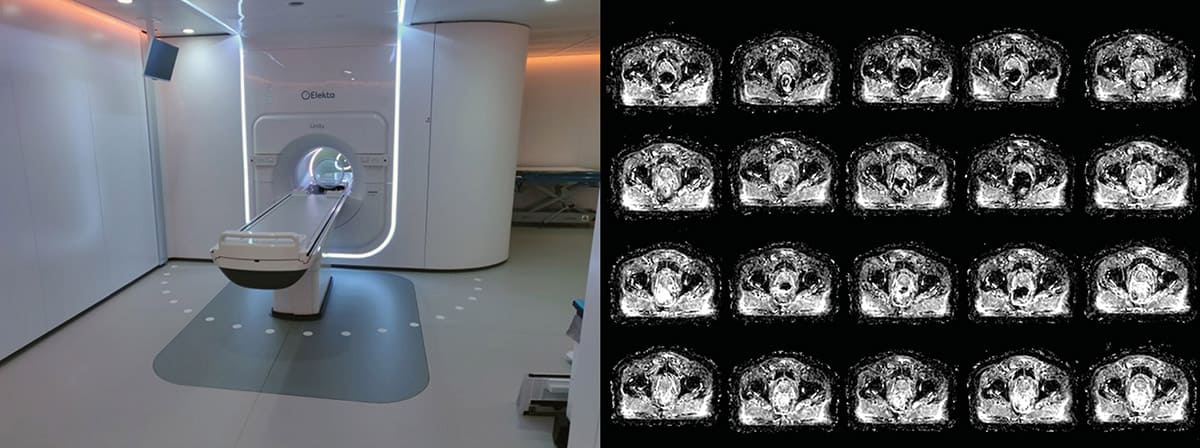
MRI-guided radiotherapy (MRIgRT) systems have the capacity to acquire functional, quantitative images in addition to the anatomical images required for online treatment guidance. This creates the potential to bring two important concepts in modern radiotherapy together: adaptive radiotherapy and biological targeting. Based on frequent anatomical and functional imaging, monitoring the changes that occur in volume, shape as well as biological characteristics, a treatment plan can be updated regularly to accommodate the observed treatment response. For this purpose, quantitative imaging biomarkers (QIB) need to be identified that show changes early during treatment and predict treatment outcome.

The first pilot studies have shown that QIB measurements are feasible on MRIgRT systems. However, the MR parts of these systems differ from regular diagnostic systems. This impacts the performance of QIB measurements and warrants technical validation. To ensure that the results of QIB studies on MRIgRT systems are also valid for diagnostic platforms outside the MRIgRT domain, QIB trials should be designed to establish reproducibility between systems. To identify if changes observed during the course of treatment are significant, the trials should include test-retest acquisition of the QIB prior to the first irradiation.

Within the Elekta MR-Linac Consortium, a working group on MRI biomarkers for response assessment is active in developing trial strategies, acquisition and analysis methods to make QIB research on Elekta Unity possible.

In this webinar, hosted by Prof. Uulke A van der Heide, an overview of the activities within the working group will be presented.

Want to learn more on this subject?

Uulke van der Heide received his training as medical physicist at the department of radiotherapy of the University Medical Center in Utrecht, the Netherlands, and worked there as a medical physicist until 2011. Since then, he has worked as a medical physicist and senior group leader at the Netherlands Cancer Institute in Amsterdam, the Netherlands. He holds a chair as professor of imaging in radiotherapy at the Leiden University Medical Center.

His research group works on the improvement of target definition in radiotherapy by application of MRI and the development and validation of quantitative imaging methods for tumour characterization for radiotherapy dose painting. He further leads the MR-guided radiotherapy programme at the Netherlands Cancer Institute.

Dynamic light scattering in electrochemical energy conversion systems

Want to learn more on this subject?

Dynamic light scattering (DLS) is a common technique to determine size and zeta potential of colloidal particles in a suspension. It is used to determine relevant properties of the catalyst inks used to fabricate electrodes of electrochemical energy conversion devices, such as fuel cells and electrolysers. These properties include the surface charge of catalyst and catalyst supports, ink stability, catalyst-ionomer interaction.

In this webinar, Prof. Iryna Zenyuk and Prantik Saha discuss how DLS helps prepare catalyst inks with the high electrochemical performance required for the optimal design of these systems, and thus, helps build a zero-carbon emissions society.

Want to learn more on this subject?

Iryna Zenyuk is associate professor of Chemical and Biomolecular Engineering at the University of California, Irvine, US. She has a joint appointment as associate professor in the Mechanical and Aerospace Engineering Department and is associate director of the National Fuel Cell Research Center (NFCRC). Prof. Zenyuk holds a PhD from Carnegie Mellon University, US. Her graduate work focused on the fundamental understanding of meso-scale interfacial transport phenomena and electric double layers in fuel cells. As a postdoc in Dr Adam Weber’s group at Lawrence Berkeley National Laboratory (LBNL) from 2014–2015, Prof. Zenyuk investigated water-management in proton-exchange membrane fuel cells (PEFCs) using X-ray CT (computed tomography) and modelling. She joined Tufts University, US, as assistant professor from 2015–2018 and moved to the University of California, Irvine in 2018. Her mission at NFCRC is to accelerate and facilitate the development and deployment of fuel cell technology and fuel cell systems. Prof. Zenyuk has published more than 40 journal articles on electrochemical technologies and given more than 60 invited presentations. Her passion is to enable renewable energy technologies and ensure that society advances toward a zero-emissions electric grid.

Prantik Saha joined Prof. Iryna Zenyuk’s lab at the University of California, Irvine, US, in 2017 as a PhD student researcher. Saha’s thesis focuses on understanding aspects of electrochemical double layer at electrocatalyst-electrolyte interface, for which he developed a new method combining electrochemistry and electrokinetics. He uses dynamic light scattering (DLS) occasionally for his thesis research. Along with research in zero-carbon energy systems, he is passionate about networking activities at the professional level to develop the business of these technologies. Saha received his BSc in physics from the University of Calcutta, India, and MS in physics from Tufts University, US.


Graphene and its supercapacitor applications

Want to learn more on this subject?

Graphene is the ultimate two-dimensional material consisting of a single layer of sp2 hybridized carbon. A facile, inexpensive, solid-state method for generating, patterning and electronic tuning of laser-converted graphene will be discussed. Briefly, graphite can be converted into graphene oxide (GO) sheets, which readily disperse in water, and can then be reduced by various methods. Due to its unique ability to be solution-processed and patterned, GO can be laser-reduced to graphene directly onto various substrates without masks, templates, post-processing or transfer techniques.

This work paves the way for the fabrication of inexpensive electrochemical energy-storage devices that combine the energy density of batteries and the power density of capacitors. Additionally, due to its unique graphitic domain size and abundant functional groups, carbon nanodots (CNDs) will be shown to have the ability to patch defects in a graphene lattice, demonstrating an unprecedented fast response for potential AC-line filtering applications. This study paves the way for the development of miniaturized graphene-based supercapacitors that demonstrate outstanding electrochemical performance.

Want to learn more on this subject?

Dr Richard B Kaner received a PhD from the University of Pennsylvania, US, in 1984, working with Prof. Alan MacDiarmid (Nobel Laureate 2000, deceased). After postdoctoral research at the University of California, Berkeley, US, he joined the University of California, Los Angeles, US, in 1987, earned tenure in 1991, became a full professor in 1993, a distinguished professor in 2012, and was appointed to the Dr Myung Ki Hong Endowed Chair in Materials Innovation in 2017.

Richard has published more than 425 papers in top peer-reviewed journals and holds 47 US patents. According to the most recent Clarivate Analytics/Thomson-Reuters rankings, he is among the world’s most highly cited authors. He has received awards from the Dreyfus, Fulbright, Guggenheim, Packard, and Sloan Foundations along with the Materials Research Society Medal, the Royal Society of Chemistry Centenary Prize, the Chemical Pioneer Award from the American Institute of Chemistry, and the American Chemical Society’s Buck-Whitney Research Award, Tolman Medal, and Award in the Chemistry of Materials for his work on refractory materials including new synthetic routes to ceramics, intercalation compounds, superhard metals, graphene, and conducting polymers. He is a Fellow of the American Association for the Advancement of Science, American Chemical Society, American Physical Society, European Academy of Sciences, Materials Research Society, and Royal Society of Chemistry.

Reinventing the science museum

I love museums. Art museums, history museums, museums dedicated to illusions or Communism or ceramics or seafaring – I’ve spent happy afternoons in all of these and many more besides. But there is one exception, and although it feels like sacrilege to write it, that exception is science museums. Apart from a couple of work trips and a visit to Berlin’s Deutsches Technikmuseum (which, with its halls full of steam trains and printing presses, is more about the history of technology than science per se), I have not voluntarily set foot inside a science museum for at least 10 years.

It’s not that I don’t like science. I do. It also isn’t that science-related things feel too much like work; if they did, I wouldn’t visit science labs on holiday. And it certainly isn’t that I already know everything about the exhibits. In fact, my lack of enthusiasm for science museums was a complete mystery to me until I read Michael John Gorman’s book Idea Colliders: the Future of Science Museums. In the opening chapter, Gorman, who is the founding director of Science Gallery at Trinity College Dublin and BIOTOPIA Naturkundesmuseum Bayern, makes a crucial observation. Most science museums, he notes, “limit our engagement with science to a form of ritualized play”.

While theme-park-like science centres full of interactive exhibits are, Gorman writes, “generally quite successful in stimulating the curiosity and interest of children”, the downside is that “the playful brand of hands-on science they purveyed sometimes struggled to engage older teenagers and adults to the same degree”. Simply put, if you’re over 14, you probably aren’t the target audience for your local science museum, so you shouldn’t feel surprised (or in my case guilty) if it’s not your cup of tea.

At this point, I can imagine a certain type of physicist reader – one who is dismayed by science illiteracy among the general public; believes that “dumbing down” in museums, schools and TV documentaries is largely to blame for it; and probably never cared much for hands-on exhibits in the first place – nodding in agreement. Gorman, however, is not advocating a return to the text-heavy exhibits of 50 years ago. He also holds little truck with the instructional approach that some physicists might prefer. While setting up Science Gallery, Gorman declined a Trinity College physicist’s request that a panel of distinguished scientists should vet all material for accuracy, and gave short shrift to the same unnamed physicist’s demand that event planners should focus on the questions “What significant scientific information is this event intended to convey?” and “How does it serve to promote science?”

Rather than presenting visitors with a set of promotional scientific facts, Gorman decided that Science Gallery should do three things. First, it should connect people from different communities. Second, it should foster participation in ways that go beyond mere interactivity to involve members of the public in actual science. Finally, it should generate surprise by capturing the imaginations of visitors and media organizations alike.

To this end, Gorman set up an advisory board made up of a rotating cast of “creative individuals” drawn from art, design, technology and media as well as science. The ideas they generated included an exhibit called Selfmade, in which a biologist and an artist teamed up to create cheese using bacteria samples from public figures. While Selfmade lasted, visitors to Science Gallery’s Community BioLab could sniff (though not taste) the various human cheeses on display and contribute to the project by making their own. Naturally, the project kicked off with a wine and human cheese evening, complete with a sign proclaiming “Don’t worry, the wine is normal.”

Another exhibit, I Wanna Deliver a Dolphin, was based on a tongue-in-cheek proposal (made by a Japanese designer, Ai Hasegawa) that an environmentally conscious woman might wish to give birth to an endangered species rather than increase the human population. This provocative idea served as an entry point for visitors to explore the ethical, psychological and biological barriers to interspecies gestation, and come to their own conclusions about whether such an act would be possible or desirable.

To help visitors interpret these non-traditional exhibits, Science Gallery recruited mediators – generally university students in science, engineering or humanities – to engage members of the public in conversations inspired by the artworks or other objects on show. Gorman is full of praise for these mediators, but his remarks on the “many positive and sometimes amusing comments” they received in the museum’s visitors’ book – including “the mediators are hot!” – may raise a few eyebrows. In the age of #MeToo, is it really still amusing for young people to get leched over in their workplace?

Barriers sometimes arise not from superficial things like monolingual signage, but from a museum’s content

Apart from this solitary sour note, Gorman’s ideas about how to make science museums more welcoming are a major strength of the book. In one thought-provoking passage, he notes that barriers sometimes arise not from superficial things like monolingual signage, but from a museum’s content – either because it doesn’t speak to the concerns of minoritized groups, or because it conveys “a colonialist and exclusionary narrative”. While many museums try to promote inclusion through visits by disadvantaged schools, Gorman notes that these otherwise laudable efforts can backfire if students feel they were “dragged to the museum” by their teachers and never engage with the content on their own.

Toward the end of Idea Colliders, Gorman explores the subject of “fake news” and conspiracist thinking. Some defenders of science have suggested that to combat misinformation, scientists (and by extension science museums) should gloss over internal debates in public, and instead adopt a “united front” strategy that treats science as a set of indisputable facts.

Gorman, unsurprisingly, thinks this approach will fail. Trust needs to be earned, and insights from social science suggest that individuals are trusted when they are viewed not only as competent and reliable (scientists generally do well at this), but also as empathetic and having integrity (in the sense of shared intentions and words that align with deeds). To build that kind of trust, Gorman thinks that science museums should embrace uncertainty (where it exists) and demonstrate empathy by engaging visitors on subjects that matter to them. It’s a laudable goal, and if I ever get a (post-pandemic) free afternoon in Dublin or Munich, I might just break my science-museum duck and find out if he’s achieved it.

  • 2020 MIT Press $25.00 176pp

Could gravitational-wave detectors spot hairy black holes?

Black holes may defy the famous “no-hair” theorem by leaking residual gravitational ripples that could one day be observed by gravitational-wave detectors. Such an observation would provide evidence for physics beyond the Standard Model, according to several new lines of research.

Conventionally, black holes can be described by only three properties: their mass, their spin and their charge. Therefore, some physicists say that black holes resemble a bald head with no hair. So, if two black holes have the same mass, spin and electric charge, then in theory they should be identical.

Over the years, scientists have looked for ways around the no-hair theorem via various loopholes, one of which is the possible existence of scalar fields that could interact with a black hole. We know of one scalar field that exists, namely the Higgs field, for which the force carrier is the Higgs boson. The Higgs field, however, is unstable and decays rapidly, but other scalar fields associated with everything from dark matter and dark energy, to various strands of string theory and modified gravity, have also been posited.

The Aretakis charge

In 2011, Stefanos Aretakis, now at the University of Toronto, and colleagues, showed how a scalar field could leave a trace of its existence in the form of a perturbation on a simplified model of a non-rotating, extreme black hole (one that possesses either the maximum electric charge or spin that a black hole of its mass can have). This would give the black hole hair that they called the Aretakis charge, and it would differ from black hole to black hole.

Now, Lior Burko of Theiss Research in California, Gaurav Khanna of the University of Massachusetts and the University of Rhode Island, and Subir Sabharwal of the University of Massachusetts have shown that extreme rotating black holes could have a gravitational equivalent of the Aretakis charge. They describe their finding in Physical Review D.

“What Aretakis found through his mathematical analysis is that there is a trace of the [scalar] field left on the horizon, says Khanna. “This is the so-called Aretakis charge, and what we found is that there is a similar charge associated with the gravitational field.”

This gravitational hair originates from perturbations in the curvature of space-time at a black hole’s event horizon and is dependent upon how the black hole was formed. Since there will be differences in the exact details of how each black hole forms, it means that this gravitational hair will be different from one black hole to another, distinguishing them even when their mass, spin and charge are the same.

Hair support

Jamie Bamber, of the University of Oxford, describes the findings as looking “robust”, and that, in principle, “such a mechanism for supporting hair is feasible.” However, Bamber points out that extreme black holes are probably quite rare, if they even exist at all.

Khanna acknowledges this but tells Physics World of the caveat that he “expects our result would hold true for black holes that are ‘near extreme”’.

Bamber, working with his Oxford colleagues Katy Clough and Pedro Ferreira, as well Lam Hui and Macarena Lagos of Columbia University in New York, has recently published a preprint on arXiv exploring a different avenue for finding black hole hair resulting from the scalar fields associated with some models of dark matter.

Black hole wig

In their model, when a cloud of dark matter accretes onto an ordinary (non-extreme) black hole, the scalar field associated with the dark matter also grows around the black hole, at a rate that is dependent upon characteristics such as the black hole’s mass and spin, or the angular momentum of the dark matter cloud. However, the scalar field would not last forever; once all the dark matter accretes, the field – and its associated hair – would disappear. Given its temporary nature, this hair is referred to as a “wig”.

What both models have in common is the possibility that their hair could be detected by gravitational-wave detectors.

“It’s something that we could measure from far away,” says Khanna. How far away remains uncertain at this point, and Khanna’s group is planning to analyse the possibilities soon.

Monochromatic waves

In the dark-matter accretion model, the gravitational-wave signal is expected to be too weak for our current generation of detectors to observe. However, if future detectors with greater sensitivity were to detect this hair, they would measure a signal that “looks like a series of monochromatic waves, with frequencies set by the scalar-field mass,” says Bamber. “These could show up as peaks on a spectrum of the gravitational-wave background.”

There is also the possibility that gravitational hair could be spotted during a black-hole merger. “The imprint of such clouds on a binary merger is something we are actively working on,” says Bamber. Theoretical work has shown that during the in-spiral phase as the two black holes get closer and closer, and the ring-down phase following the merger when the gravitational waves decrease, the imprint of the hair would be negligible. However, the hair could be evident during the moment where the gravitational waves are strongest.

If gravitational hair could be detected, it would provide precious insight into physics beyond the Standard Model, involving new particles associated with the scalar fields. In the case of Bamber’s model, it could provide further information about the nature of dark matter; in Burko and Khanna’s work, it would also tell us more about the history of individual black holes, which would be important for cosmologists trying to explain the origin of the supermassive black hole at the centre of most large galaxies.

Living bioink could enhance bone repair and regeneration

Induced mineralization

Tissue engineering offers the potential to improve treatment of injured or diseased bone, by using stem cell-laden biomaterials that promote tissue repair, for example. Three-dimensional bioprinting of such biomaterials can fabricate complex scaffolds that mimic bone in composition and can be customized to a patient’s particular bone defect. Developing the optimal bioink to fabricate these living implantable constructs, however, remains highly challenging.

Researchers in Portugal have now developed a nanocomposite bioink containing bioactive materials that instruct stem cells to change into bone cells. They demonstrated successful printing of their bioink into stem cell-laden constructs, reporting their findings in Biofabrication.

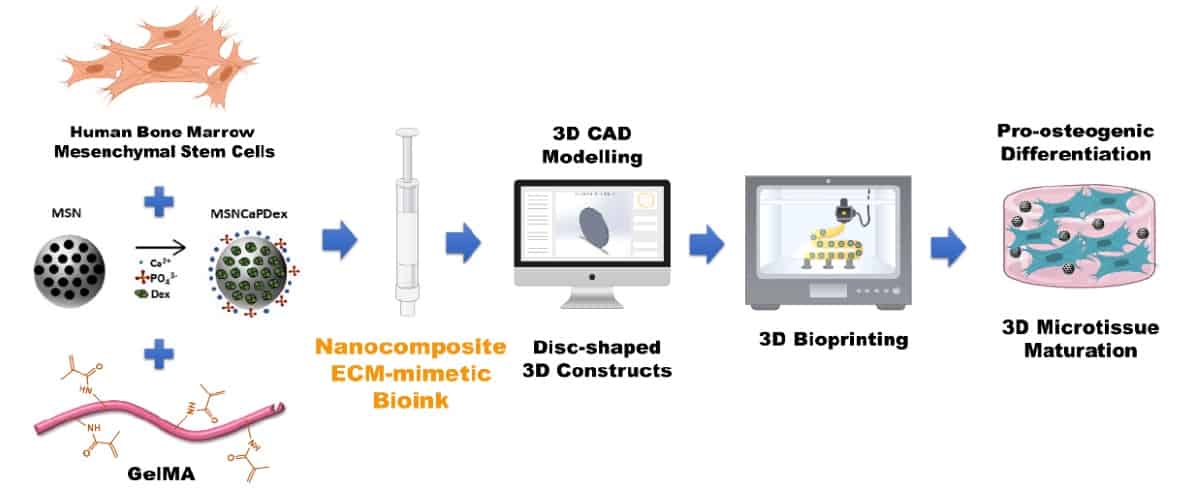
The distinctive feature of this new bioink is that it contains both the organic and inorganic constituents of bone. “In nature, the building blocks of bone tissue include organic biomolecular and inorganic nanostructured functional elements,” explains senior author João Mano, leader of the COMPASS research group at the University of Aveiro. “The nanocomposite bioink recapitulates these components.”

For the organic component, the team chose gelatin methacrylate (GelMA) – a collagen derivative used for 3D bioprinting that exhibits adjustable mechanical properties and biocompatibility. The gelatin also contains functional groups that can attach to cells, such as stem cells.

For the inorganic part, the researchers used mesoporous silica nanoparticles functionalized with calcium, phosphate and dexamethasone (MSNCaPDex). Calcium and phosphate ions positively influence bone matrix deposition and mineralization, as well as encouraging osteogenic differentiation (where the stem cells develop into bone cells). Dexamethasone, meanwhile, also induces such osteogenic differentiation. They completed their bioactive bioink by loading the GelMA/nanoparticle combination with human bone marrow-derived mesenchymal stem cells (hBM-MSCs).

Proving printability

In a first proof-of-concept step, Mano and colleagues demonstrated that they could print stable 3D constructs using GelMA. They employed 3D extrusion bioprinting to create small discs from 10% solutions of GelMA prepared at 37 °C and then cooled to increase viscosity. They found that incubating the GelMA on ice for 5 min, then printing at a pressure of 65 kPa and speed of 10 mm/s created 3D constructs with highly defined shapes.

Bioprinting process

After optimizing the GelMA printing process, the researchers added MSNCaPDex (0.5%) to create the nanocomposite bioink. The bioactive nanoparticles should release calcium, phosphate and silicate ions, all of which are involved in bone repair. To test this, they assessed the bioactivity of printed GelMA discs with and without nanoparticles, after three days in simulated body fluid.

In the nanocomposite hydrogel discs, energy dispersive spectroscopy (EDS) mapping clearly showed the presence of silica, calcium and bone-like calcium phosphate apatite. Conversely, only traces of calcium and phosphorous were seen in plain GelMA discs, with no structures resembling apatite. FTIR spectroscopy and X-ray diffraction confirmed the mineralization activity of the nanocomposite hydrogel.

“The existence of deposited hydroxyapatite in the bioink is highly valuable since it is a key component of native living bone tissues,” says Mano. “Its presence is known to have a positive influence on bone regeneration, particularly upon constructs implanted in vivo, since it allows the establishment of a bone–implant interface where de novo deposited bone binds to hydroxyapatite, hence improving osteointegration.”

Next, the researchers assessed the viability of the stem cells after bioprinting. They observed that the stem cells remained viable after two weeks of culture, with stable metabolic activity and DNA content for 21 days. These results show that neither 3D bioprinting nor encapsulation in GelMA affected the cells’ viability.

Bone generation

The other function of the bioactive nanoparticles is to induce the stem cells to differentiate into bone cells. To assess this property after bioprinting, the team examined the behaviour of stem cells within GelMA incubated in basal medium (negative control), GelMA in osteogenic medium (positive control) and GelMA/MSNCaPDex in basal medium.

The researchers evaluated two biomarkers involved in bone formation: bone morphogenetic protein (BMP-2) and osteocalcin. After 14 days, BPM-2 levels were significantly higher for stem cells in the nanocomposite hydrogel than in either control. After 21 days, the BMP-2 level in the positive control was similar to that of the bioprinted nanocomposite. The positive control and nanocomposite hydrogels exhibited similar levels of osteocalcin, both higher than that of the negative control.

“Owing to the intrinsic bioactivity and bioinstructive features of ion/drug-loaded silica nanoparticles, their inclusion in GelMA enabled a guided differentiation of mesenchymal stem cells towards osteoblasts, the cells that naturally build bone, without requiring further synthetic supplementation that is usually necessary for this process,” Mano tells Physics World.

The researchers are now exploring the fabrication of more morphologically complex constructs using this new bioink. “We are also using more advanced 3D bioprinting technologies such as suspension bioprinting using a viscoelastic supporting bath,” says Mano. “This allows truly freeform bioprinting and the manufacture of higher-order nanocomposite bioink-based constructs.”

Copyright © 2026 by IOP Publishing Ltd and individual contributors