Things we don’t know about Uranus (and Neptune)

Uranus and Neptune are the least-explored planets in our solar system. Apart from the Voyager 2 spacecraft, which flew past them in the 1980s, no human-built probe has ever ventured near them. They are also small and far away, covering just 3.8 and 2.3 arc-seconds of the Earth’s sky, respectively. That makes it hard for even the best telescopes to pick out their features. Indeed, one of the few things we do know is that much of our knowledge about their appearance is no longer accurate, because they are not static. Instead, they are incredibly active worlds, with convective clouds that rise up like thunderheads and send streamers flying through their slushy atmospheres and giant storms that last for years.

The other thing we know about Uranus and Neptune is that planets of this type are very common. According to Heidi Hammel, vice-president for science at the Association of Universities for Research in Astronomy (AURA), most of the exoplanets discovered so far are in “the Neptune to sub-Neptune range” in terms of their size, yet these so-called “ice giants” have never been thoroughly investigated. “We’d like to change that,” Hammel told audience members at the annual Appleton Space Conference, which was held virtually this year on 3 December.

During her talk, Hammel laid out numerous reasons for sending spacecraft back to these icy outer worlds. The ice giants, she explained, have interiors that differ fundamentally from those of rocky planets like Mercury, Venus, Earth and Mars. But they aren’t composed of hydrogen like Jupiter and Saturn. Instead, they are made of ices, which in astronomical terms are mixtures of various frozen stuff. Theoretical models suggest that both planets have cores composed of iron, nickel and silicates, but “The bottom line is, we don’t know what the interior is,” Hammel said.

Limited knowledge

Hammel went on to explain that our knowledge of Uranus is especially limited because of the timing of the Voyager 2 flyby. For reasons that are not fully understood, but likely stem from an impact early in its formation, Uranus’ rotation is tilted at 90 degrees with respect to its orbit. This is very unusual for a planet, and unfortunately it meant that Uranus was in its southern solstice when Voyager 2 made its nearest approach. In this configuration, the planet’s northern hemisphere is completely dark – meaning that Voyager 2 couldn’t image half its surface (or half of its moons), and that half of it was not receiving any energy from the Sun.

An image of Uranus showing dark and light bands

This lack of sunlight helps to explain why images obtained during the 1986 flyby were, in Hammel’s words, “fairly dull”, with only 10 features visible. By 2004, when the 10 m diameter ground-based Keck telescope was trained on Uranus, it was a different story. With the planet now side-on to the Sun, Hammel noted, “funny things happened: the planet turned on”. Instead of a smooth, pale-blue dot, the Keck images showed popcorn-like clouds similar to the ones the Cassini spacecraft saw on Saturn. Similarly, an image obtained by the Hubble Space Telescope in 2006 showed dark bands that were absent when Voyager 2 made its historic visit.

Neptune, in contrast, was plenty active during its Voyager 2 flyby in 1989. At the time, it exhibited a huge dark patch on its flank that observers likened to the “Great Red Spot” on Jupiter. Within five years, though, images obtained by Hubble showed that Neptune’s dark spot had vanished. (Jupiter’s spot, in contrast, has been around for at least 400 years.) The dark spot was still absent in 2011, when Neptune was imaged again, but by 2016 it – or, rather, something like it – had reappeared.

The star of the Uranus–Neptune system, though, is Neptune’s moon Triton. This icy chunk of rock is a twin of the dwarf planet Pluto, and it was probably captured from the Kuiper belt by the pull of Neptune’s gravity. Unlike Pluto, though, Triton has active cryovolcanoes, and Voyager 2 flew past during an eruption that sent a plume of material 8 km into the moon’s tenuous atmosphere before the winds captured it. That makes Triton one of only five moons in the solar system known to be geologically active, and thus an attractive target for a space mission like the ones sent to explore the others: Saturn’s moons Enceladus and Titan (Cassini) and, soon, Jupiter’s moons Io and Europa (JUICE).

Heidi Hammel holding a cute stuffed toy version of Uranus with eyes drawn on and a ring stitched around its edge

At present, no mission is scheduled for either of the ice giants. Though a Uranus orbiter was discussed during the last decadal survey for planetary science – a prioritization exercise conducted every 10 years by the US National Academy of Science, Engineering and Medicine on behalf of NASA – it wound up third on the list, behind missions to Mars and Europa. Several missions have, however, been proposed for the next decadal survey, including a Triton-only mission called Trident and a wider system explorer called Neptune Odyssey. And with the results of that survey due out in 2023, it’s certainly not too early for lobbying. Speaking with stuffed toy versions of Uranus and Neptune displayed prominently in the background, Hammel reminded her audience that Uranus’ rings are a particular mystery. It has grown new ones since the Voyager 2 flyby, and we know they are coloured red, blue and grey. But what are they made of? Where do they come from? So far, the answer isn’t clear. “We must send a spacecraft there to really study the rings in detail,” Hammel concluded. “We are all hoping that this is finally the era for going back to the ice giants.”

Spin-guided scattering of light is observed in a liquid crystal

Just as topological insulators provide protection to electrons travelling along their edges and surfaces, photons can also be topologically protected. This can occur when photon scattering modes are associated with just one spin state. Now, researchers in India and the Netherlands have found that spin-selective or spin asymmetric scattering modes can be observed using a twisted nematic-liquid-crystal-based spatial light modulator. Their work indicates that liquid crystals can host topological states by controlling the interaction between disorder of the material and the spin-orbit interaction of light.

Topology goes photonic

Topology is the field of mathematics concerned with geometric objects that do not change when continuously deformed. Properties that are invariant when deformed are said to be topological. Recently, physicists have become more and more interested in applying topological principles in physical systems with a view to exploiting topological invariance whereby particles are not affected by local perturbations. A spin-polarized current of electrons, for example, can flow without scattering in topological materials that could have significant technological applications. Although much of the research focus has been on electronic, many research groups are now turning their attention to photonics.

In the case of photons, topological protection can arise when photons travelling through a medium are controlled so that their spin is “locked” to a particular propagation direction. This can be achieved by controlling the interplay between the spin angular momentum of the beam (its circular polarization) with its orbital angular momentum. When travelling through certain materials, it is thought that a Gaussian beam can be manipulated so that its scattering modes are spin selective.

Shining a light on anisotropic materials

In their recent study, published in Physical Review A, Ankit Kumar Singh and colleagues at the Indian Institute of Science Education and Research Kolkata and Delft University of Technology have demonstrated a method for producing spin-selective scattering modes in the Fourier spectrum of a Gaussian beam passing through a liquid crystal-based modulator.

Their experiment used a helium-neon laser to produce a Gaussian beam which was spatially filtered and then linearly polarized. The beam then passed through the medium — a transmission spatial light modulator made of a liquid crystal. This had properties that could be controlled using an applied voltage, resulting in a random phase distribution. Following this, the beam was passed through a polarization state analyser consisting of a quarter wave plate and another polarizer. This enabled researchers to measure the distribution of left circularly polarized and right circularly polarized light once the beam was focused onto a photodetector.

They found that randomly scattered modes were only observed for the right circularly polarized projection, whereas the left circularly polarized projection showed no scattering modes. From this, they concluded that the randomly scattered modes only occur for one spin state of the light, while the other travels through the medium mostly unaffected by the disorder of the system.

The future of photonics

Though still in its infancy, the field of topological photonics provides exciting possibilities for the future of light-based technologies. Potential applications of spin-controlled photon systems range from high-resolution imaging techniques to microparticle trapping. Understanding the topological properties of light as it interacts with different materials will enable researchers to develop more robust technologies in the future.

Japan’s Hayabusa 2 mission returns asteroid sample to Earth

The Japanese space agency, JAXA, has successfully retrieved a 16 kg capsule that is hoped to contain flecks of an asteroid. The capsule landed in Australia’s remote outback following a six-year mission by the $250m Hayabusa 2 mission to retrieve samples from the asteroid Ryugu. Scientists will now study the contents of the capsule to find out about the origin of the asteroid’s organic matter and water and how these are related to life and ocean water on Earth.

Hayabusa 2 is a successor to Japan’s original Hayabusa craft, which returned with the first-ever samples from an asteroid back in 2010.  Japan’s second asteroid sample-return mission was launched on 3 December 2014 from the Tanegashima Space Centre in Japan. It arrived in 2018 at Ryugu – an almost spherical carbon-rich asteroid that is 920 m in diameter and is thought to contain organic matter and hydrated minerals.

I hope this will shed light on how the solar system was formed and how water was brought to Earth

Hiroshi Yamakawa

The original Hayabusa mission managed only to scrape the surface of the asteroid Itokawa bringing back miniscule grains of rock. Hayabusa 2 instead released a 2 kg impactor months before touching down on the body, which it managed to do in November 2019.

The impactor hit the asteroid’s surface and make a small crater several metres in diameter allowing fresh material to be exposed. After collecting samples, Hayabusa 2 then headed home in November 2019, releasing the capsule from an altitude of about 200 km on 5 November 2020 when it returned to Earth via parachute.

The capsule was located by officials and then flew by helicopter for analysis at the Woomera Test Range – a weapons testing facility in South Australia. JAXA noted that the sample container was properly sealed and the team also carried out preliminary gas-sampling but this was inconclusive. The capsule was then flown to Japan from Woomera Airport where it will be transported to a JAXA research facility for further analysis.

“I hope this will shed light on how the solar system was formed and how water was brought to Earth,” JAXA’s president Hiroshi Yamakawa told a news conference.

Tiny particles get the panoramic treatment

A new label-free optical imaging technique based on unscattered light can detect nanoparticles as small as 25 nm in diameter. The technology overcomes several limitations of other advanced methods for imaging tiny particles, and its developers at the University of Houston and the University of Texas M D Anderson Cancer Center in the US say it might be used to study viruses and other structures at the molecular level.

Imaging nanoscale objects via optical techniques is difficult for two reasons. First, the objects’ small size means that they scatter little light, making it hard to distinguish them from the background. Second, individual nano-objects within a close-packed group tend to be separated by distances that are smaller than the diffraction limit for visible light (around a few hundred nanometres) making it impossible to resolve them with conventional methods.

Surface plasmons

In recent years, researchers have developed techniques that go some way towards overcoming these problems. For example, methods such as surface plasmon resonance (SPRI) imaging and localized surface plasmon resonance imaging (LSPRI) rely on propagating light-excited plasmons rather than photons. Plasmons are collective oscillations of the conductive electrons on the surfaces of nanoparticles, and they allow the particles to act like tiny antennas: absorbing light at certain resonant frequencies and efficiently transferring it to nearby molecules so that they shine brighter.

These plasmon-based methods work by detecting the minute changes in the refractive index of an object placed on a metallic thin film. Since most materials have a refractive index that is higher than the ambient medium (usually water or air), SPRI can detect features of the object without having to label them with tracers such as the fluorescent dyes routinely employed in conventional optical imaging.

SPRI, however, still suffers from diffraction-limited resolution in the direction across the sample. This is due to the propagating-wave nature of surface plasmons, which “smears out” the image produced. LSPRI is better in this respect because it relies on non-propagating surface plasmons, which are localized in metallic nanostructures and nanoparticles that are roughly the same size as (or smaller than) the wavelength of the light being used to excite them.

Until now, researchers have mainly used LSPRI in conjunction with dark-field microscopy, which only collects light that is scattered by the sample onto a cone centred around the instrument’s optical axis. While this scattered light produces a bright image of the sample’s features, in contrast to the dark background, the technique often transmits insufficient light. This means it can “miss” some features and be “blind” to anything outside the sensing near-field.

Monitoring changes in the unscattered light transmitted

The new technique, developed by Wei-Chuan Shih at the University of Houston and colleagues, addresses the issues currently blighting SPRI and LSPRI. Known as PANORAMA (for PlAsmonic NanO-apeRture lAbel-free iMAging), it uses a glass slide covered with gold nanodiscs. This setup allows researchers to monitor changes in the unscattered light transmitted by the sample (in this work, an ensemble of polystyrene nanospheres) through the slide. They can thus determine characteristics of the sample, such as the number of particles in it and the size of individual particles.

With PANORAMA, Shih notes that there is no need to label a sample since the technique does not rely on detecting the light scattered from a nanoparticle. Another important advantage is that it uses a standard bright-field microscope commonly found in any laboratory. This means it can simultaneously image everything within the objective’s depth of focus with a single (tungsten-halogen) lamp source and a single camera, he explains.

True to its name, the new technique also provides a panoramic view of a sample in both lateral and longitudinal directions, overcoming the lack of imaging depth in both SPRI and LSPRI and insufficient lateral sampling in LSPRI, Shih adds. The bright-field approach also provides much higher light throughput compared to dark-field microscopy.

Smaller than 25 nm?

The researchers think the resolution of their techniques may be even smaller than 25 nm. They say they stopped at this size only because that is the smallest polystyrene nanoparticle they could buy.

The team, which includes researchers Nareg Ohannesian and Ibrahim Misbah in Houston and Steven Lin at the M D Anderson Cancer Center, now plans to employ PANORAMA to analyse functionalized single biological nanoparticles (such as proteins, viruses and extracellular exosomes) for diagnostic applications.

The technique is described in Nature Communications.

Nanoparticle sensitizers could enhance radiotherapy effectiveness

Nanoparticle uptake

Radiotherapy plays an essential role in the management of cancer, but unwanted irradiation of healthy tissues can lead to adverse side effects and limit the deliverable tumour dose. Radiosensitizers, which preferentially sensitize tumour cells to irradiation, can increase the therapeutic window and enable higher target doses without increasing normal tissue damage.

One approach under investigation to improve the effectiveness of radiotherapy is the use of nanoparticles as radiosensitizers. And at the recent ESTRO 2020 congress, attendees heard about some of the latest developments and clinical studies in this field.

Dual-purpose particles

At an ESTRO session focused on novel technologies, Camille Verry from Grenoble Alpes University Hospital described the first-in-man study of gadolinium-based AGuIX nanoparticles as radiosensitizing agents. AGuIX nanoparticles, which are around 4 nm in size, are also MRI contrast agents, enabling visualization of their localization.

Camille Verry

In a phase I study, NANO-RAD1, the researchers treated 15 patients with multiple brain metastases from melanoma, or lung, breast or colon cancer. After intravenous injection with the nanoparticles, the patients received a 30 Gy dose of whole-brain radiotherapy in 10 fractions. The team used five AGuIX dose levels, from 15 to 100 mg/kg, to determine the maximum tolerated dose.

“The study design is simple, we give one injection on the day of the first radiotherapy fraction,” explained Verry. “Two hours after the injection, we perform MRI for each patient to see the nanoparticle distribution, and then perform the radiotherapy.”

MR images showed that AGuIX localized in all of the metastases, regardless of primary tumour type, with no nanoparticles seen in healthy brain tissues two hours after injection. The results also revealed that the nanoparticles were safe at all dose levels. “There was good immediate tolerance, no pain, no systemic reactions and no local complications,” said Verry. “So we can treat with 100 mg/kg, which is now the recommended phase II dose.”

The team also noted that at seven days post-injection, AGuIX was still present in all the brain metastases, albeit at a lower level. “That’s good news if you want to perform dose enhancements with daily radiotherapy,” added Verry.

Of the 14 evaluable patients, 12 experienced a clinical benefit from the treatment, with a decrease in tumour volume. The overall survival was approximately 5.5 months and roughly one third of patients were alive at 12 months.

The researchers also analysed each metastatic lesion (255 in total) before and 28 days after treatment. They observed a correlation between AGuIX uptake and tumour response, with increased AGuIX in the tumour leading to a greater clinical response one month after treatment.

Verry described two example case studies. In the first, a male with lung cancer and eight metastases that had not responded to chemotherapy, radiotherapy with AGuIX at 15 mg/kg reduced the tumour volume from 45 to 15 cm3 three months after treatment. In a second example, a woman with pulmonary adenocarcinoma and 28 metastases was treated with whole-brain radiotherapy plus AGuIX at 100 mg/kg. This led to a large reduction in the number of metastases at up to nine months after treatment.

“We have performed the first administration in humans of AGuIX,” Verry concluded. “The immediate tolerance of this treatment is good and the nanoparticle distribution is favourable, with very important tumour uptake without nanoparticles in healthy brain.”

The next steps are to demonstrate the efficacy of this approach, optimize AGuIX administration and learn about any long-term toxicities. To achieve this, the team had launched a phase II clinical trial, which is currently recruiting in 15 French hospitals. The trial will include 100 patients with multiple metastases not suitable for stereotactic radiotherapy or surgery, randomized to receive whole-brain radiotherapy with or without AGuIX nanoparticles.

Dose enhancement

Speaking in the same ESTRO session, Christophe Le Tourneau from Institut Curie described the use of radiotherapy-activated hafnium oxide nanoparticles for treatment of head-and-neck squamous cell carcinoma (HSNCC). The standard-of-case for patients with unresectable locally advanced HNSCC is concurrent chemoradiation. But chemotherapies do not confer much benefit in older patients and their prognosis is poor, with a median overall survival of 12-13 months.

To address this shortfall, Le Tourneau and collaborators aim to use the non-toxic hafnium oxide nanoparticle NBTXR3 to boost the effects of intensity-modulated radiotherapy (IMRT).

Christophe Le Tourneau

“NBTXR3 is designed to trigger cellular destruction, first by multiplying the number of electrons that are produced when they are irradiated, and also to prime the immune response,” said Le Tourneau.

With these nanoparticles present, he explained, the dose delivered during radiotherapy is multiplied by nine times at the cellular level compared with irradiation alone.

The team’s Phase I dose escalation study (performed in five centres in France and Spain) included 19 elderly patients with stage III or IVa HNSCC who were older than 65 and ineligible for chemotherapy. The investigators tested four nanoparticle dose levels, calculated as 5, 10, 15 and 22% of the primary tumour volume.

Patients received a single intra-tumoural injection of NBTXR3, followed by 35 2-Gy radiotherapy fractions over seven weeks. The study participants experienced no dose-limiting toxicities or serious adverse events (SAEs) related to the nanoparticles. As such, the team defined the recommended dose as 22% of baseline tumour volume. “Interestingly, nine out of 13 evaluable patients treated at a dose of 10% of volume or more had a complete response of the treated tumours,” said Le Tourneau.

Next, the researchers performed a dose expansion study including 44 patients from 12 centres across Europe. Patients had a median age of 70 and many comorbidities. In this group, 7% of patients had at least one SAE due to injection procedure or the nanoparticles. There were also 21 SAEs related to radiotherapy, but these toxicities were as expected with IMRT alone. Overall, 67.7% of the patients had complete response of their primary tumour.

“The intra-tumoural administration of NBTXR3 prior to IMRT is well tolerated and safe in frail HNSCC patients with multiple morbidities,” Le Tourneau concluded. “We saw an objective response in 83.9% of patients who were evaluable. Recruitment into the dose expansion trials is now being finalized. And based on these promising results, a global randomized phase III trial is being planned.”

Why is quantum key distribution so secure?

Johannes Handsteiner explains the principles of quantum key distribution (QKD) and why – in theory – it is significantly safer than classical secure communication protocols. While working at the Institute for Quantum Optics and Quantum Information (IQOQI) in Vienna, Austria, Handsteiner tested a form of QKD based on entangled photons.

The interview was recorded in 2019 before the COVID-19 pandemic. Handsteiner now works at Quantum Technology Laboratories, a company involved in contract research using QKD.

Superconducting thermometer takes the temperature of ultracold microwave devices

A simple miniature thermometer that can quickly and accurately measure the temperature of ultracold microwave-based devices has been built by Joel Ullom and colleagues at the National Institute of Standards and Technology (NIST) in Boulder, US. The device works by monitoring temperature-sensitive shifts in the frequency of a superconducting microresonator – rather than measuring changes in electrical resistance, which is how most conventional electronic thermometers operate. The team believes that its thermometer could soon be used to monitor the temperatures of cryogenic microwave devices including superconductor-based quantum processors.

From superconducting qubits to kinetic inductance detectors in telescopes, a growing number of microwaves devices must be maintained at sub-Kelvin temperatures to operate effectively. However, there are many ways that heat can get into these devices, so it is critical to monitor devices’ temperatures in real time. This can be done using existing low temperature thermometers, but integrating these devices in ultracold systems requires a connection to room-temperature electronics, which can introduce heat or otherwise adversely affect device operation.

Two-level systems

The new NIST thermometer instead uses existing microwave connections to monitor temperature. The device was made by coating a superconducting niobium microwave resonator with silicon dioxide. This creates “two-level systems” (TLS), which are quantum states that interact with the photons in the resonator. Crucially, the presence of the TLS changes the resonant frequency of the resonator – and this frequency shift is a function of temperature. Therefore, the temperature of the resonator can be determined by simply measuring its frequency.

Ullom and colleagues used their TLS thermometer to measure the temperature of a microwave device called a kinetic inductance travelling-wave parametric amplifier. After achieving strong coupling between the thermometer and the microwave cable used to feed the amplifier, they showed that the thermometer can measure temperatures between 50-1000 mK – with a uniform sensitivity across this range. By using the existing microwave cable to read out the thermometer, there was no need for a connection to room-temperature electronics.

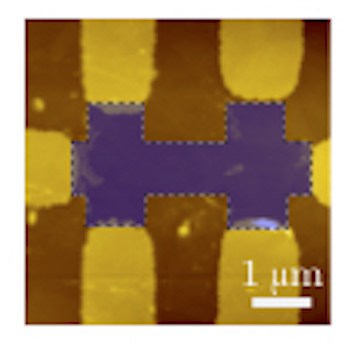
Measuring just 2.5×1.15 mm in size, the thermometer can be mounted onto a chip, and can make measurements in around 5 ms – a significant improvement on the 100 ms times possible with existing thermometers.

“The thermometer allows researchers to measure the temperature of a wide range of components in their test packages at very little cost and without introducing a large number of additional electrical connections,” says Ullom.

The team says that the thermometer could be mass-produced and could soon be used to monitor temperature in a range of applications including superconductor-based quantum processors and quantum sensors.

The research is described in Applied Physics Letters.

Nanomesh pressure sensor preserves skin’s sense of touch

Researchers in Japan have developed the first artificial-skin patch that does not affect the touch sensitivity of the real skin beneath it. The new ultrathin sensor, which is made from multilayers of conductive and dielectric nanomesh structures, could be used in applications as diverse as prosthetics, robot-assisted surgery, human-machine interfaces and wearable health care monitors.

Skin is our largest sensory organ, with an abundance of neurons that continually monitor stimuli in our environment and transmit this information to the brain. A good artificial skin must replicate this ability. In particular, an electronic skin, or e-skin, needs to be highly sensitive to touch, while also responding quickly to applied pressure.

To achieve these goals, the e-skin needs to incorporate a high density of sensors, over areas at least as small as 50 microns. But they also need to avoid interfering with a person’s natural sense of touch, and this has proved difficult. Human fingertips, for example, are so sensitive that a piece of plastic foil just a few microns thick is enough to impair a person’s sensations.

“A wearable sensor for your fingers has to be extremely thin,” explains Sunghoon Lee, a member of Takao Someya’s group at the University of Tokyo and an author of the paper. “But this obviously makes it very fragile and susceptible to damage from rubbing or repeated physical actions.”

For this reason, Lee adds, most e-skins developed to date – made from, for example, sensor arrays of assembled nanowires or microstructure rubber layers that change capacitance or resistance in response to pressure or force – have been relatively thick and bulky.

Two layers

In contrast, the sensor developed by Someya, Lee and colleagues is thin and porous. It consists of two layers, both made using a process called electrospinning, and is based on a design proposed by Akihito Miyamoto and colleagues in 2017. The first layer is an insulating mesh-like network comprising polyurethane fibres around 200 to 400 nm thick. The second is a network of lines that makes up the functional electronic part of the device – a parallel-plate capacitor. This is made of gold on a supporting scaffold of polyvinyl alcohol (PVA), a water-soluble polymer often found in contact lenses. Once this layer has been fabricated, the researchers wash away the PVA to leave only the gold support. The finished pressure sensor is around 13 microns thick.

When a finger covered with this sensor grasps an object, the dielectric nanomesh layer deforms, producing a change in the capacitance measured between the two layers. When the researchers evaluated the device’s sensitivity as determined by the slope of the capacitance change-pressure curve, they found values (of 0.141 kPa-1 in the low applied pressure range of less than 1 kPa and 0.010 kPa-1 in the high applied pressure range of more than 10 kPa) that were comparable to the grip forces measured for a bare finger.

“We performed a rigorous set of tests on our sensors with the help of 18 test subjects,” Lee says. “They confirmed that the sensors were imperceptible and affected neither the ability to grip objects through friction, nor the perceived sensitivity compared to performing the same task without a sensor attached. This is exactly the result we were hoping for.”

Robust and resistant

As an added benefit, the researchers found that their nanomesh sensors continued to work even after being compressed repeatedly. Indeed, the devices’ capacitance changed by just 0.15% after they had been squeezed 1000 times at 19.6 kPa. The conductivity of the gold electrode also remained relatively stable during these experiments.

Another point in favour of the sensor is its resistance to friction: tests showed that it could be rubbed 300 times with a 50 g object (equivalent to applied pressures of more than 100 kPa) without breaking. The sensor’s electrical characteristics changed only slightly during these tests, and the device remained sensitive to applied pressures even after being rubbed.

The researchers, who report their work in Science, say they plan to increase the number of sensing points in their device and determine how pressure is spatially distributed across it. “We also hope to further develop other imperceptible sensors, such as temperature, strain and humidity sensors, to achieve multimodal sensing,” Lee tells Physics World.

New fuel gauge for spacecraft could keep satellites active for longer

When a spacecraft launches, it uses roughly 75–90% of its propellant getting into orbit. The remaining fraction determines how long it can remain up there, but gauging how much fuel is left in the tank is no easy task in zero gravity. Researchers at the US National Institute of Standards and Technology have now developed a solution based on a suite of sensors that detects the capacitance of liquid inside a spacecraft’s fuel tank and uses these data to reconstruct a three-dimensional picture of the remaining fuel. According to the team, the prototype design could enable satellites to operate for longer, while also helping to avoid damaging end-of-life collisions.

Under zero-gravity conditions, liquid propellants adhere to the inside of fuel tank walls due to surface tension and capillary effects. This unpredictable spatial distribution makes fuel levels hard to determine. Propellants are also free to slosh about, float and form bubbles – none of which happens on Earth.

Several techniques have been developed to measure onboard spacecraft propellant. One of the most common, known as the bookkeeping technique, involves estimating how much is burned with each thrust and subtracting this from the volume of fuel left in the tank. However, while this method is highly accurate at the beginning of a mission, the error of each estimate carries over to the next and accumulates with each thrust, explains team member Nick Dagalakis, a mechanical engineer. “By the time a tank is low, the estimates become more like rough guesses and can miss the mark by as much as 10%,” he says.

Without reliable fuel measurements, satellite operators are in a bind, Dagalakis adds. Retiring a satellite when it still has plenty of fuel left is a waste of money, but letting the tank run dry could leave the satellite stranded, with no fuel left to evade other craft or move to a safe orbit.

An array of capacitance sensors

The new fuel gauge, which was developed by NASA technology transfer manager Manohar Deshpande, relies on a 3D imaging technique called electrical capacitance volume tomography (ECVT). Tomography in general is a way of imaging the internal structure of an object without damaging it; familiar examples include the magnetic resonance imaging (MRI), positron emission tomography (PET) and X-ray tomography routinely employed in hospitals.

ECVT is a more recent variant, and it uses an array of sensors that emit electromagnetic waves. These waves can be detected by the other sensors in the array, and how well they are transmitted depends on the capacitance of whatever lies between the sensors. If there is nothing there, transmission will be high. However, if an object is present, transmission will drop since the object will absorb some of the electromagnetic waves. By placing these sensors around a container, and measuring the signal at many locations, it is therefore possible to build up a 3D picture of the objects inside the container.

Sensor fabrication

To make their ECVT sensors, Dagalakis and colleagues used soft lithography to print wax-coated solid inks onto paper-thin laminated copper sheets. They then etched the copper strips to remove the inks and form the patterns of the sensors and their electrical connections.

Prototype fuel tank

Dagalakis notes that because the sensors can be made using well-known MEMS fabrication techniques, the dimensions of the electro-capacitance plate arrays, their gaps and shielding strips can be set with a high degree of accuracy. These fabrication techniques also eliminate the need to solder electrical wires on the plates and strips and route wires through the sensor arrays and tank structures. Finally, since the strips are flexible, they can be applied to the interior of an egg-shaped vessel – like a spacecraft fuel tank.

3D image of fuel content

Many liquid propellants (including liquid hydrogen and hydrazine) are highly flammable in the Earth’s atmosphere. As a safer alternative, the researchers tested their sensor array using a fuel substitute that has a dielectric constant similar to that of real spacecraft propellant but is stable in air.

The researchers placed their sensors around a test tank (a miniature version of a real NASA fuel tank) and measured the difference in transmission of every possible sensor pair in their array. By combining these measurements, they determined where the tank contained fuel and where it did not, gradually building up a 3D image of the fuel content along the length of the tank. Their reconstructed images showed a good match with the real shapes of the liquid inside the tank.

Space simulations

To better understand how this system would perform in space, the NIST team suspended a fluid-filled balloon inside the test tank, mimicking a liquid droplet in microgravity. They then input the resulting capacitance data into a software program to produce a series of 2D images, which they subsequently compiled to produce a 3D rendition of the balloon. The balloon’s measured diameter differed by less than 6% relative to its actual diameter.

As well as gauging fuel, the researchers say the new ECVT sensor could help overcome other problems related to liquids in space. For example, Deshpande suggests that it might be used to continuously monitor fluid flow in the many pipes aboard the International Space Station and study how sloshing fluids can alter the trajectory of spacecraft and satellites.

The researchers, who report their experiments in the Journal of Spacecraft and Rockets, plan to further test and explore various image reconstruction techniques. They are also studying ways to incorporate their sensors into new generations of long-distance spacecraft.

“The flexible and inexpensive design and fabrication of these sensors may allow several of them to be used in a spacecraft or satellite fuel tank working independently to create a composite image of the total fuel volume,” Dagalakis tells Physics World. “These sensors could have different sizes and shapes for covering the surface of the tank, any internal piping, fuel feeding pipes and fuel concentration structures.”

Sound waves in fermionic superfluid are studied in a ‘beautiful’ experiment

The acoustic properties of an ultracold fermion gas have been measured either side of the superfluid transition temperature in an experiment that has been described as “near perfect” and “beautiful”. The results could have significant implications for understanding everything from superconductors to the aftermath of the Big Bang.

Superfluidity occurs at very low temperatures when bosons such as helium-4 form a single, macroscopic quantum ground state. As well as being able to flow indefinitely without losing kinetic energy, a superfluid can famously climb uphill over a barrier to reach an energy minimum. Some fermions such as helium-3 can also form a superfluid by first pairing up to form bosons.

In helium-3, the interactions between atoms are relatively weak. However, strongly interacting Fermi gases, in which the mean free path of the particles is barely longer than the spacing between them, can also become superfluids. These systems display markedly different properties from superfluid helium-3 and cannot be described by the standard theory of superfluidity developed by the Soviet physicist and Nobel laureate Lev Landau.

Extremely useful

Despite their strong interactions, these superfluids have lower viscosities than helium-3. “Landau’s paradigm just doesn’t work,” says Martin Zwierlein of Massachusetts Institute of Technology. Finding a theory that does, however, could be extremely useful because strongly interacting Fermi gases are widespread in physics. “Take, for example, the high temperature cuprate superconductors, in which electrons interact very strongly,” explains Zwierlein. “The resistance of these materials is very difficult or impossible to calculate theoretically, we do not understand these materials.”

One way to investigate any unfamiliar material, explains Zwierlein, is to tap it and listen to the resulting sound waves. “Hilariously, this had not been done,” he says, “because for 25 years we had been using focused laser traps that were grabbing onto the atoms, creating a very inhomogeneous soup which had high density in the centre and low density at the edges – it was not nice for such an experiment.”

In the new research, Zwierlein and colleagues built a “box trap” using three laser beams. “We shape light, roughly into the shape of a Coke can, and as this light is repulsive, whenever atoms hit the walls they bounce back into the box,” he says.

First, the researchers measured the speeds at which various acoustic waves propagated through the gas in both the normal and superfluid regimes by modulating the intensity of one of the trapping lasers. They found that sound travelled at approximately the same speed, and with the same dispersion, regardless of the material’s state. The measurement enables them to predict the speed of sound in neutron stars, which are also thought to comprise strongly interacting Fermi gas, albeit with 25 orders of magnitude higher density.

“Quantum amount of friction”

Next, the researchers measured the diffusivity of the material, or how well it damps sound waves. This quantity, which has never previously been measured in a strongly interacting Fermi gas, gives crucial information about the material: “Total sound diffusivity has two components to it,” explains Zwierlein, “viscosity and thermal conductivity.” Once again, the researchers found that there was no dramatic discontinuity in sound diffusivity at the superfluid transition, but instead it reached the lowest amount permitted: “Even in the superfluid, you still have a quantum amount of friction,” says Zwierlein, “That is something I don’t think even many experts in my field realized.”

The team is now aiming to measure the thermal conductivity of the material directly, as well as looking into a bizarre phenomenon called “second sound” which occurs only in the superfluid phase. Moreover, they anticipate that their results may provide fertile ground not only for those studying high temperature superconductors and neutron stars but even for cosmologists. This is because a split-second after the Big Bang, the universe is thought to have comprised a strongly interacting quark-gluon plasma: “It turns out people predict very similar diffusivities to what we have if you replace the masses we have with the energies in the quark-gluon plasma,” says Zwierlein.

Joseph Thywissen of the University of Toronto in Canada praises the high quality of the experiment:  “It’s a place in which new innovations in theory can be tested,” he says, “You can’t hide behind a messy experiment or imperfections, because the experiment is near perfect…You’ve got to get the number right if your theory is right.”

John Thomas of North Carolina State University agrees, adding “This new experiment on sound diffusivity is absolutely beautiful.” Thomas’s own group have measured the viscosity dropping to zero below the superfluid transition temperature using a different technique – which is inconsistent with Zwierlein and colleagues’ results. “There’s several different issues in this that make it unclear who’s right and what’s really going on,” he says: “It’s not a trivial problem.”

The research is described in Science.    

Copyright © 2026 by IOP Publishing Ltd and individual contributors