Physics in China attempts to rise from the pandemic

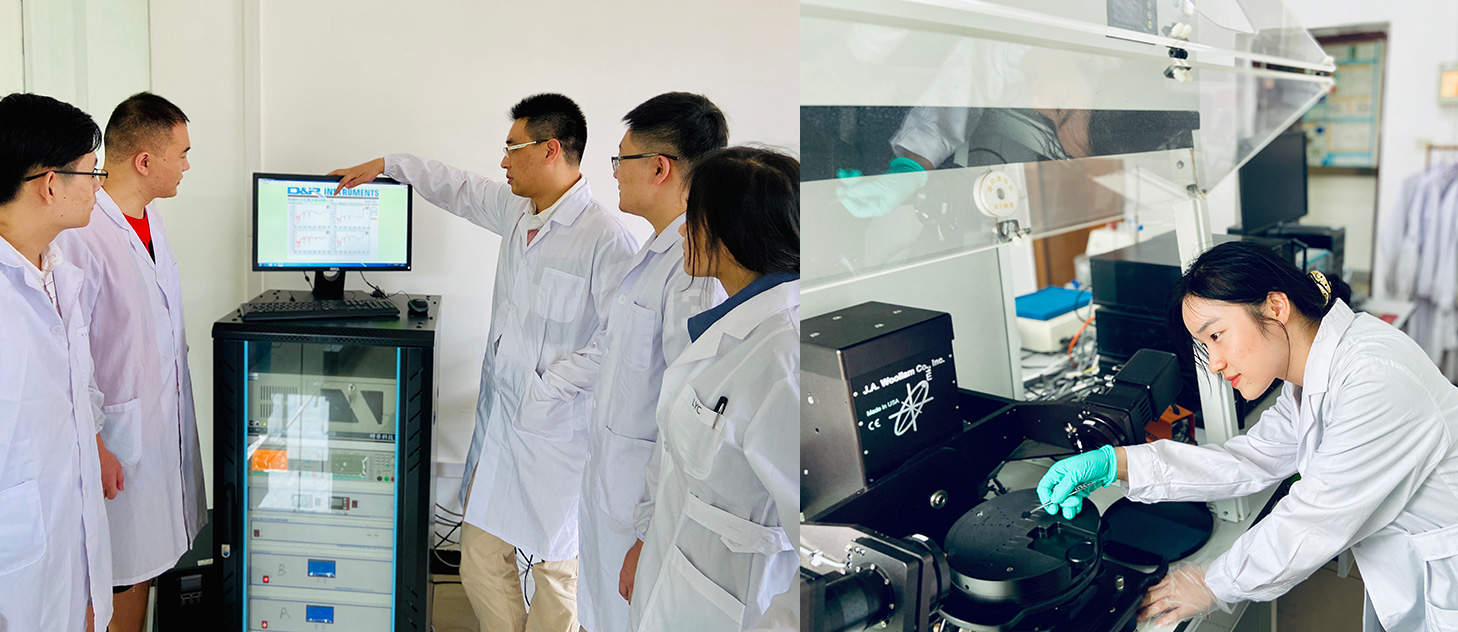
Researchers at the Wuhan University of Technology

A few days after the Chinese New Year in late January, Huiqian Luo – a physicist from the Institute of Physics at the Chinese Academy of Sciences in Beijing – flew to Australia. He was travelling to a neutron source in Sydney where he was set to study a novel iron-based superconductor. Luo planned to arrive early so that he could prepare the experiment at the facility before his students joined.

Luo’s travel occurred just as a previously unknown and highly contagious coronavirus was spreading through the Chinese city of Wuhan. Almost 1700 people had already died and hundreds of new cases were being confirmed every day in already overwhelmed local hospitals. Despite a strict lockdown in Wuhan, the infections worsened so quickly that many countries started to issue travel bans against visitors from mainland China.

Luo arrived in Australia on 30 January – two days before it imposed a travel ban meaning Luo had to complete the two-week-long experiment on his own. When his return flight was cancelled, Luo was forced to scramble to get back home, arranging a detour via Guangzhou, a city near Hong Kong. He finally made it back to Beijing on 15 February, just as the COVID-19 outbreak was nearing its peak in China.

Luo’s story typified the many disruptions that COVID-19 has caused to the lives of physicists around the world – and to experimentalists who work at large facilities in particular. Declared a global pandemic in mid-March, many facilities in Asia, Europe and the US shut down entirely, with only a handful remaining open, mostly to focus on coronavirus-related research. Lots of experiments, which often take years to plan, may now never happen.

Many countries are still struggling to battle the pandemic, which has swept the world and claimed hundreds of thousands of lives. China – where the virus first broke out – battled too. But as in other countries, researchers quickly adapted and discovered ways to remain productive during the lockdown.

Luo, for example, found time during the lockdown to pause, ponder and draw new inspiration from past research, leaving him relatively optimistic for the future. “I don’t think there will be long-term impacts on the discipline of physics as a whole, because the cycle of physics research is very long,” says Luo. “Scientists around the world are adapting well to the new reality of working remotely.”

Indeed, Luo and his colleagues were able to finish a few manuscripts during the lockdown, including a paper based on the February experiment in Australia. He also gave several online talks watched by more than 500 people – far more than ever saw the in-person talks he had hosted at the institute. And despite a few smaller virus outbreaks since the first wave passed, researchers in China are now starting to get back to the “new normal”.
GECAM

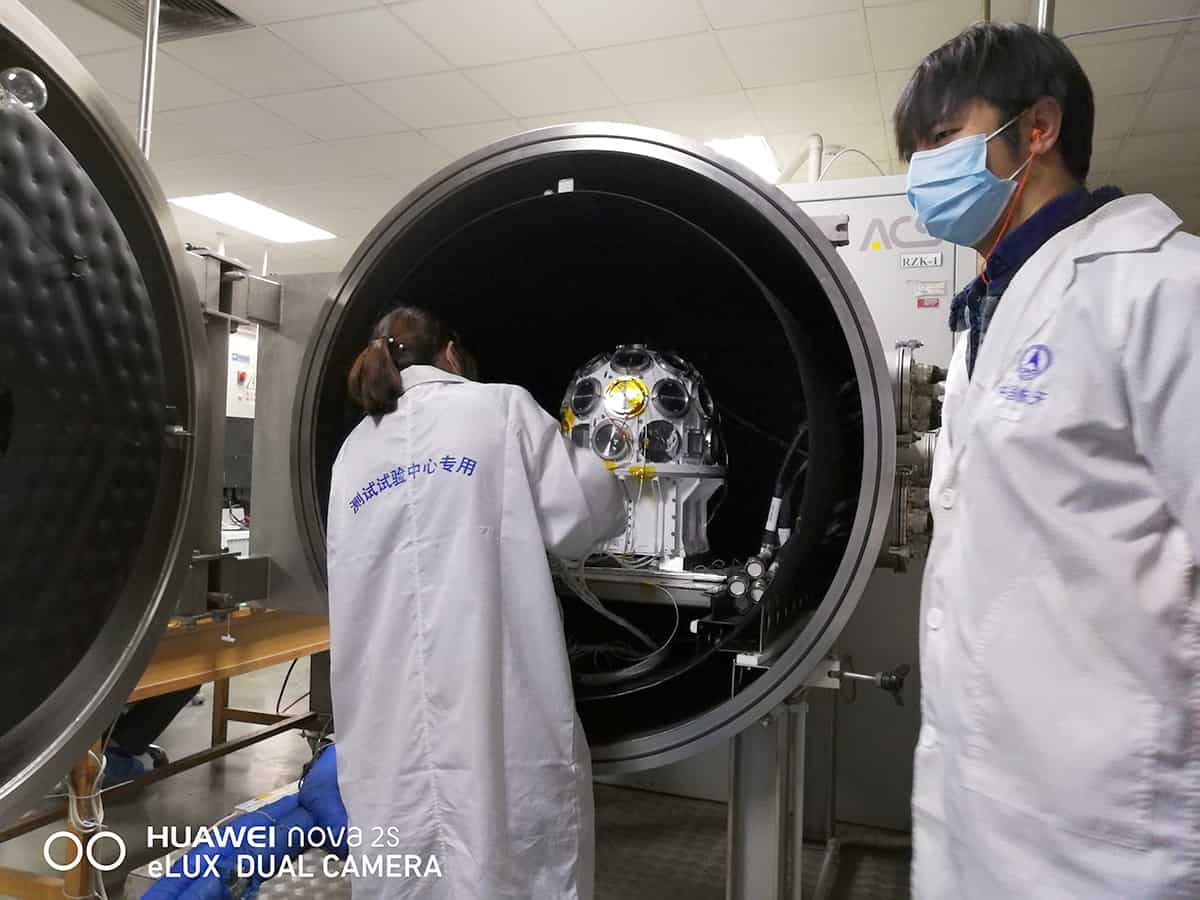
However, many scientists still face uncertain funding delays as the country recovers, while for other researchers the problems caused by the virus are more tangible. One such scientist is Shaolin Xiong – an astrophysicist at the Institute of High Energy Physics (IHEP), Chinese Academy of Sciences – who has been working around the clock with his team since officials lifted the original lockdown order in Beijing in late April . Xiong is principal investigator of a space science mission called the Gravitational-wave high-energy Electromagnetic Counterpart All-sky Monitor (GECAM), which is scheduled for launch by the end of the year.

The GECAM mission was proposed following the first detection of gravitational waves by the US-based Laser Interferometer Gravitational-Wave Observatory (LIGO). It is designed to catch gamma-ray bursts associated with gravitational-wave events – such as the merger of two neutron stars – and help locate the sources with high precision. GECAM consists of two small satellites, each weighing about 150 kg, which will orbit on opposite sides of the Earth to monitor the entire sky for these extremely energetic, short-lived bursts.

Most teams in China may face tighter budgets for the rest of 2020 and possibly beyond, but the entire physics community believes the difficulties are temporary

Yifang Wang

Xiong says that the temporary closure of electronics factories during the worst phase of the outbreak in China set the team back by a month. “We’ve been working very hard to deliver our commitment to the scientific community by sending GECAM into orbit by the end of 2020,” says Xiong, adding that they plan to deliver the assembled detectors to the satellite platform by mid-July. Once the satellites are in orbit, they will work together with ground-based detectors in the US, Europe and Japan to study gamma-ray bursts associated with gravitational waves. Physicists say that GECAM might spot several associated events each year. “GECAM will represent one of the first new ‘all sky’ devices that will be able to look for associated signals, wherever a gravitational wave event occurs in the sky,” says Nobel laureate Barry Barish, who is a former LIGO director.

Challenges in sight

Compared to GECAM, some projects are facing financial and logistical uncertainties as they navigate longer timelines. Funding delays have already impacted some major physics research infrastructure under construction in China. In May, the National Development and Reform Commission notified IHEP director Yifang Wang that about half of this year’s grant for the planned High Energy Photon Source will not be given out until next year or later. That will leave a hole of 300 million yuan ($42m) in the contract for construction of the facility that is being built on the outskirts of Beijing.

With a total investment of 4.8 billion yuan (nearly $700m), the High Energy Photon Source is one of the most expensive research facilities China has approved and the delay will increase the project’s cost. When it opens in 2025, it will be one of the world’s most powerful multi-purpose machines to probe the inner structures of materials. “It’s totally understandable if the government feels financially strained under such circumstances,” says Wang.

Wang suggests that one possible solution is to borrow “idle money” from other projects and return it later. However, the team must first secure a set of government permissions. “If we can get a green light on this, the photon source project will probably pull through,” says Wang. He adds that most teams in China may face tighter budgets for the rest of 2020 and possibly beyond, but that the “entire physics community believes the difficulties are temporary and will be overcome”.

With scientific evidence, we answered the question of how the world will see us – and how we should see ourselves – when the pandemic is over

Tao Wang

Other concerns face Chinese projects that involve international contributions. The Jiangmen Underground Neutrino Observatory (JUNO) that is being built in southern China will aim to measure the mass hierarchies of neutrinos when it comes online by the end of 2021. Researchers expect to receive a liquid scintillator purification system from Italian partners this September, but that could now be delayed. “If the international travel bans remain in place by that time, our team will not be able to go to China and install those plants,” says Gioacchino Ranucci from the National Institute for Nuclear Physics in Milan, Italy, who is the European co-ordinator of the JUNO consortium. Ranucci notes that its supplier, an Italian company called Polaris, has worked hard to keep up with the schedule even during the lockdown. Indeed, Ranucci and his coworkers are now looking for ways to travel to the JUNO site. “We are considering applying for a special permit [from the government],” he says.

But many international projects involving China will almost certainly experience delays. The Space Variable Objects Monitor (SVOM) – a telescope jointly developed by France and China to detect gamma-ray bursts from the most distant explosions of stars – is now running late by at least five months. In January scientists from the two countries completed the integration and environmental testing of the prototype satellite in Shanghai. They were supposed to meet in Chengdu after that and finish the review for the test. Instead, the team finished the review online during the lockdown.

The launch date has slipped from late 2021 to the first half of 2022, says Bertrand Cordier of the Saclay Nuclear Research Centre in France, who co-ordinated French involvement in SVOM. Now the challenge is building the satellite and the team has encountered delays from suppliers and from their inability to go back to the lab to assemble those parts. “For the first part of the flight model test, I’m afraid our Chinese colleagues may need to do it on their own with remote support from us here in France,” says Cordier.

The new “normal”

On 8 April materials scientist Tao Wang was back on the campus of the Wuhan University of Technology for the first time since the coronavirus hit his city. After 76 days of lockdown, citizens of Wuhan were allowed to leave their homes and Wang made a quick trip to the office. His building was quiet and empty, and his desk and laboratory equipment were covered in dust. Only two pot plants had managed to survive. Wang and his colleagues were not ready to restart experiments, so they used April and May to catch up with university paperwork due at this time every year. They also finished online interviews with nearly 1000 incoming graduate students.

Wang was relieved that Wuhan, the first and one of the hardest-hit epicentres of the pandemic, seemed to be bouncing back quickly. Citywide testing in the second half of May revealed 300 infections – all asymptomatic – among its 10 million residents. “With scientific evidence, we answered the question of how the world will see us – and how we should see ourselves – when the pandemic is over,” says Wang.

On 8 June five of Wang’s graduate students were back in his lab. “It’s been five months….we are all thrilled,” says Hui Wang, a PhD student from Wuhan. “The campus is clean and calm as ever, as if we had never been away.” Hui Wang plans to work at the lab throughout the summer and is eager to carry out experiments on perovskite solar cells to test numerical simulations she did during the lockdown. She also says that the lockdown gave her time to think about new research ideas.

Back in Beijing, Huiqian Luo is still waiting for an official permit for his students to return to the lab – a step that might face further delay because of the June cluster of cases that were linked with a wholesale food market in the south of the city. For now, his group can remotely conduct experiments at neutron sources in Japan, France and the UK. “It’s a good way to engage with students when travel is not free,” says Luo. “But I really look forward to seeing them soon.”
COVID-19 pandemic has made weather forecasts less reliable

The grounding of commercial air flights during the COVID-19 pandemic has made weather forecasts less reliable. As well as affecting short-term forecasts, the reduction in aircraft weather observations has impacted longer-term forecasts and could handicap early warnings of extreme weather, warns Ying Chen, an environmental scientist at Lancaster University in the UK. This could affect predictions of monsoons and hurricanes latter this year, Chen says, leading to additional economic damage from the coronavirus pandemic.

Commercial aircraft are a critical component of meteorological observations, collecting data on wind, air pressure, temperature and humidity as they traverse the globe. But the availability of these observations has reduced dramatically due to the global coronavirus lockdown. More than 20 commercial airlines had grounded all flights by the end of March, and around 12 had stopped all international flights. According to the World Meteorological Organization this led to a loss of 50‐75% of aircraft weather observations between March and May.

When Chen analysed weather forecasts in March, April and May 2020 compared with the same period in the previous three years, he found a significant drop in the accuracy of predictions of surface temperature, relative humidity, air pressure and wind speed. The study, described in Geophysical Research Letters, reveals a fall in the accuracy of short-term, 1-3 day forecasts, particularly over remote areas and regions that are usual very flight heavy, and a larger deterioration in longer‐term, 4-8 day forecasts.

Significant drop in accuracy

In February 2020 weather forecasts were more accurate than in 2017, 2018 and 2019, and that improvement could have continued if aircraft observations had carried on as usual. Instead, the accuracy of surface temperature forecasts over Greenland and Siberia reduced by up to 2 °C, and predictions of surface wind speed and pressure deteriorated as forecasts extended. Forecasts in North America, southeast China and Australia have also been greatly affected. However, western Europe’s dense network of around 1500 meteorological stations appears to have lessened the impact in the region, despite a dramatic reduction in normally heavy flight traffic.

Forecasts in the northern hemisphere have been greater effected, as air traffic is usually heavier than in the southern hemisphere.

Chen warns that as the pandemic develops the lack of aircraft observations may become more severe, leading to a further drop in forecast accuracy. The error could become very large for longer-term forecasts, and Chen told Physics World that tropical storms need to be watch closely. “My study shows less reliable pressure forecasts, this could impact the forecast of monsoon and hurricane development,” he explains.

The loss in meteorological data could affect climate change monitoring. “The question is how large the impact on future climate analysis will be,” Chen says. “This I cannot tell, it will depend on how much longer we have to wait to return to normal.”

To tackle the dearth of measurements, Chen says more ground-based and balloon observations need to be introduced, as “these can buffer the impacts to some extent”. He adds that Europe has already started to do this.

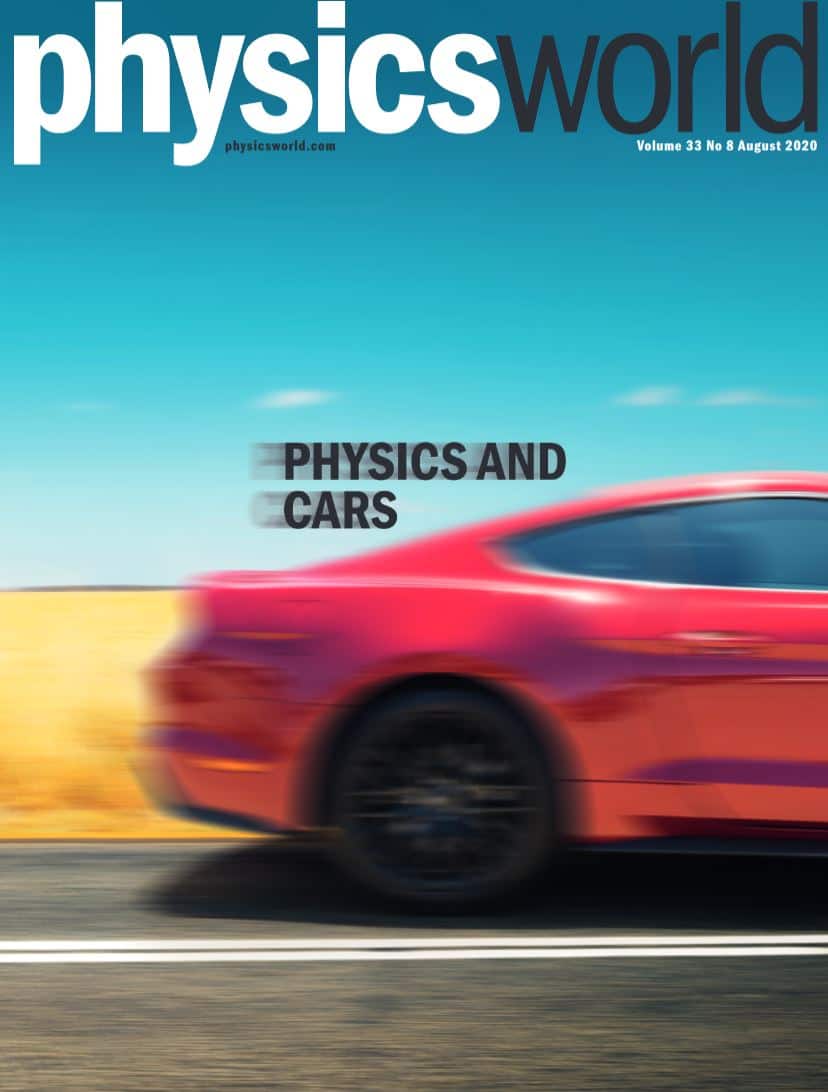
Physics and cars: the August 2020 issue of Physics World is now out

Physics World August 2020 cover

Whether you love cars or hate them, they do rely on plenty of fascinating physics-based concepts, as the new special issue of Physics World reveals.

Take the fuel-injection systems that let cars burn precise, electronically controlled amounts of fuel far more efficiently than old-fashioned carburettors. At their heart lie ultrasonic piezoelectric transducers, which – as David R Andrews from Cambridge Ultrasonics explains – are also vital for humble parking sensors.

Of course, petrol or diesel cars still spew out lots of carbon dioxide, which is one reason why more and more of us are turning to electric vehicles. Susan Curtis shows how the electric-car industry is working hard to make life easier for drivers worried by the practicalities of owning an electric vehicle, offering smart charging, wireless charging and power points in street furniture.

In fact, modern cars are so hi-tech that they contain as many as 150 separate “electronic control units” (ECUs), even leading us steadily towards a world of self-driving or even driverless cars. That prospect might sound great, but the ECUs are a target for hackers. Stephen Ornes reveals how that’s providing new ways to steal vehicles or even endanger passengers’ lives.

On a more positive note, we can be thankful that modern cars are far safer than in the past. Even racecars, such as those on American NASCAR tracks, have benefited from better structural support, seat belt restraints and barriers. Diandra Leslie-Pelecky – author of The Physics of NASCAR – shows how a great way to enhance safety is through science.

If you’re a member of the Institute of Physics, you can read the whole of Physics World magazine every month via our digital apps for iOSAndroid and Web browsers. Let us know what you think about the issue on TwitterFacebook or by e-mailing us at pwld@ioppublishing.org.

For the record, here’s a rundown of what else is in the issue.

• CERN collider gets design go-ahead – The European particle-physics strategy update proposes further work on a huge 100 km circular collider at CERN, but a final decision to build it will not be made until 2026, as Michael Banks reports

• Rising from the pandemic – Physicists in China are beginning to return to the lab following the COVID-19 pandemic, but many of their projects face delays, as Ling Xin reports

• COVID-19: an economic perspective – J Doyne Farmer – a physicist who has studied the economic impact of the COVID-19 pandemic – talks to Benjamin Skuse about lockdown easing and the prospects of financial recovery

• Putting new physics on the syllabus – Niki Bell calls on physicists to insist that exam boards integrate modern discoveries into the education system

• Survival of the fittest –COVID-19 has clobbered the global economy, which is why – argues James McKenzie – innovation is so vital for business success

• The power of authority – the COVID-19 pandemic has underlined why the authority of science is so important – and how it’s so easy to lose. Robert P Crease explains

• The science of racing safely – Being a racecar driver in NASCAR is a dangerous job. One small mistake can send cars flying, cause multi-car crashes and, in some cases, be fatal. Diandra Leslie-Pelecky explores the science behind some of the features in NASCAR that are designed to keep the drivers safe

• Charging ahead – With electric cars set to enter the mainstream over the next few years, Susan Curtis investigates the new charging solutions that will be needed to power what are effectively large batteries on wheels

• How to hack a self-driving car – Cars that drive themselves may one day improve road safety by reducing human error – and hopefully deaths by accidents too. However, the hardware and software behind the technology opens up a range of opportunities to hackers, as Stephen Ornes finds out

• Good vibrations – Without mechanical vibrations, a modern car wouldn’t get far down the road – in fact it wouldn’t start. David R Andrews examines the role of sound and ultrasound in fuel injection and parking sensors

• Artificial stupidity – Margaret Harris reviews You Look Like a Thing and I Love You: How Artificial Intelligence Works and Why It’s Making the World a Weirder Place by Janelle Shane

• A matter of trust – Philip Ball reviews Why Trust Science? by Naomi Oreskes

• Scepticism beyond pessimism – Andrew Glester reviews For Small Creatures Such As We: Rituals and Reflections for Finding Wonder by Sasha Sagan

• Our perilous planet – David Appell reviews Dangerous Earth: What We Wish We Knew about Volcanoes, Hurricanes, Climate Change, Earthquakes, and More by Ellen Prager

• In it for the long run – For the past 22 years, physicist Corey Gray has worked at the Laser Interferometer Gravitational-wave Observatory in Hanford, Washington. He spoke to Tushna Commissariat about building LIGO, the big detection, inspiring the next generation of Indigenous physicists, and having a healthy work–life balance

Isotope ratios yield clues to element synthesis

DS

Novae – explosions of white dwarf stars – are among the most frequent and violent events in our galaxy. They are thought to play a key role in synthesizing heavy elements, but the mechanisms behind this stellar nucleosynthesis process are not fully understood. A new set of ultra-precise estimates of sulphur isotopes produced during astrophysical nuclear reactions promises to shed fresh light on this question by making it easier to identify traces of nucleosynthesis in ancient meteorites.

Novae occur in binary systems made up of a white dwarf and a main sequence star. In such systems, known as “cataclysmic variables”, the white dwarf’s gravitational pull distorts its companion star, causing stellar material to transfer to the white dwarf. As a result, the system becomes alternately brighter and dimmer until the white dwarf accrues enough matter to trigger a runaway thermonuclear reaction on its surface. The ensuing luminous explosion is energetic enough to fuse lighter atoms into heavier nuclei and eject them into space. Indeed, many elements found on Earth are thought to originate when a star very much like our Sun exploded in this fashion.

Large uncertainties in nuclear physics processes

Over the last 30 years or so, optical, ultraviolet and infrared observations of novae have provided detailed information about the chemical composition of the matter they eject. These observations have revealed that the nature of the explosion depends on the original composition of the white dwarf. For example, “oxygen-neon” novae produce especially massive explosions capable of creating elements as heavy as silicon and calcium.

More recently, researchers have also studied nova nucleosynthesis by isolating microscopic grains from primitive meteorites. These meteorites date from before the solar system’s formation, and their isotopic composition reflects the nucleosynthesis processes that took place in the parent star around which they formed.

Despite all the data available, however, some stages of nova nucleosynthesis are still not well understood. An example is the 33Cl(p,γ)34Ar astrophysical nuclear reaction, which produces heavy elements from two lighter “seed elements”, oxygen and neon, via a chain of proton captures and beta decays. Although the 33Cl(p,γ)34Ar reaction is known to determine the ratio of sulphur isotopes in grains of pre-solar meteorites, large uncertainties in several experimentally unconstrained nuclear physics processes make it hard to use isotope-ratio data to determine how a given meteorite formed.

Detailed gamma-ray spectroscopy of 34Ar

A team led by physicists from the Argonne National Laboratory in the US and the University of Surrey in the UK have now made the best estimates yet of the ratio of 32S/33S isotopes produced in the 33Cl(p,γ)34Ar  reaction – a result they say can be used to identify the origin of presolar grains found in primitive meteorites.

The researchers obtained their results by bombarding a target of 12C with a 95 MeV beam of 24Mg ions produced by the ATLAS accelerator for 140 hours. This bombardment produced excited 34Ar, 34Cl and 34S nuclei, which then decayed by emitting gamma rays. Thanks to an array of detectors called GRETINA, the researchers were able to detect the gamma rays, analyse their energies and use this spectrum to determine which energy levels of 34Ar, 34Cl and 34S were involved in the 33Cl(p,γ)34Ar reaction.

Close to theoretically calculated values

“Our results point to 32S/33S ratios in some presolar grains that are close to theoretically calculated values for novae,” team member Dariusz Seweryniak tells Physics World. This, he adds, implies that ratios of other isotopes in these grains can also be used to constrain nova models and thus the creation of heavy metals in the universe.

The researchers, who report their work in Physical Review Letters, say their technique will be used in the near future to study other astrophysical reactions such as 59Cu(p,g) and 59Cu(p,a), which are also important for heavy element synthesis.

3D microscopy reveals how human sperm swim

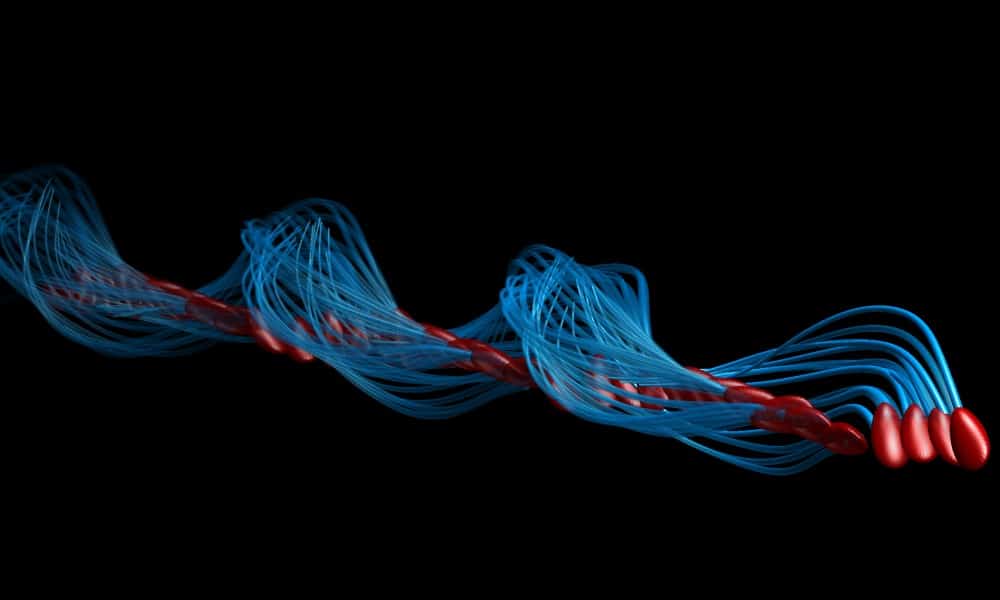
Human sperm swim in corkscrew motions to compensate for the asymmetry in their tails. That is according to researchers in the UK and Mexico who have used high-speed 3D microscopy to determine how sperm maintain their forward swimming direction. The results correct a long-standing misconception about the motions of sperm and could enable biologists to better understand human infertility.

In the 17th century, pioneering Dutch microbiologist Antoine van Leeuwenhoek became the first person to view human sperm cells under the microscope. He described their motions as being “like eels in water”, propelling themselves forward by lashing their tails, or flagella, from side to side in a seemingly symmetric way. Centuries since van Leeuwenhoek’s work, observations with 2D microscopes have been unable to challenge his conclusions.

Nature has shown us that there are many ways to swim in a straight line

Hermes Gadêlha

In the latest study – led by mathematician Hermes Gadêlha at the University of Bristol – the team used a 3D camera capable of taking images at over 55,000 frames per second to view sperm as they swam in a low-viscosity fluid. The resulting images and mathematical analysis let the researchers describe the beating of the sperm’s flagella from a frame of reference which moved and rotated with the cells in all three directions as it moved.

Swimming sperm in 3D

The results reveal that sperm cells swim in corkscrew motions that were governed by two separate controls. One is an asymmetric travelling wave along the flagella that results in a one-sided, or asymmetric, stroke. With this movement alone, the sperm would swim in circles – like a one-handed breast stroke. However, the team found that pulsating standing waves along the tail rotate the entire sperm around their swimming directions. The overall movement resembles a precessing spinning top: as the head of the sperm spins – drilling into the surrounding fluid – its tail rotates about a central axis at the same rate.

Gadêlha and colleagues suggest that the lop-sidedness in the sperm’s swimming beat is down to various asymmetries in the molecular structure of the sperm’s flagella, which is then compensated for in the rolling motion to allow the sperm to swim forward. “Nature has shown us that there are many ways to swim in a straight line,” says Gadêlha. Indeed, their observations show that the 2D side-to-side motion of sperm as first seen by van Leeuwenhoek is simply an optical illusion. Therefore, resolving a centuries-long misconception about how the cells propel themselves forward.

Move with the beat

David Smith from the University of Birmingham, who studies the mathematics of swimming sperm and was not involved in the work, told Physics World that the results are “technically very impressive”. “There has not been a huge amount of 3D imaging data on human sperm, and the concept of one-sided beating combined with rolling is intriguing and will undoubtedly lead to a lot of interest from modellers,” he says.

Smith adds that human sperm show a lot of different behaviours so further work will be needed with larger samples and in different environments. Indeed, in the female reproductive tract, sperm encounter a fluid that is more viscous than the one used in the current work and it has been shown that human sperm swim in a much smoother, less chaotic way in higher-viscosity fluids.

Yet the researchers hope that their findings could lead to new diagnostic tools for identifying unhealthy sperm and subsequent factors that could cause male infertility. The current gold standard for sperm examination during infertility investigations is computer-aided sperm analysis, which tracks several parameters of sperm including head shape, size and swimming ability. Gadêlha says that the new results point to other important parameters that could now be considered. “What this work shows is that the rotation of the sperm is also critical,” adds Gadêlha.

The research is published in Science Advances.

‘Quantum go machine’ plays ancient board game using entangled photons

A quantum-mechanical version of the ancient board game go has been demonstrated experimentally by physicists in China. Using entangled photons, the researchers placed go pieces (called stones) in quantum superpositions to vastly increase the complexity of the game. They foresee the technology serving as the ultimate test for machine players that use ever more sophisticated artificial intelligence (AI).

In 1997, chess grandmaster Garry Kasparov was defeated by IBM’s Deep Blue computer – but having a machine defeat a go master was considered a greater challenge given the far higher number of possible board positions in go. Game enthusiasts were therefore stunned in 2016 when the world’s leading player, South Korean Lee Sedol, was beaten by a deep-learning algorithm from AI company DeepMind known as AlphaGo.

Developers of AI programs are now looking for an even greater challenges and want to beat humans at games such as poker and the tile-based game mahjong. These involve both randomness and what is known as imperfect information – the fact that one player cannot see another player’s hand.

Challenge to AI

Now, Xian-Min Jin of Shanghai Jiao Tong University and colleagues have used the counter-intuitive effects of quantum mechanics to introduced these elements into go, which is otherwise deterministic and completely transparent. A version of “quantum go” was proposed in 2016 by physicist André Ranchin, although this, like a quantum-mechanical take on chess developed at about the same time, had an educational aim. However, Jin and colleagues have devised their system to challenge game-playing AI programs.

Go involves two players alternately placing black and white stones at the vertices of 19 rows and columns drawn on a board. Each player aims to gradually enclose a greater area of the board with their stones than is enclosed by their opponent. In the process, rival pieces are captured by encirclement.

While based on a handful of simple rules, the game has complex patterns of play. That complexity is boosted even further in quantum go by using the superposition of states. Whereas classical go involves each player laying down a single stone on each move, the quantum version has them place pairs of “entangled” stones. Both pieces remain on the board until they contact a stone at an adjacent vertex, at which point a “measurement” collapses the entangled pair so that only one stone remains in play.

As each entangled pair is added to the board, the number of possible configurations is doubled. This makes it harder for each player to work out the best course of action. As in normal go, a player can capture an opponent’s stones by placing their own pieces on all neighbouring vertices. But those pieces must be classical. If any are in an entangled state, the player will generally not know before they carry out the respective measurements which of the two stones in each pair will remain on the board, and therefore whether or not they will succeed in encircling their opponent.

Imperfect information

Jin and colleagues explain that the measuring process can be tuned by engineering the quantum entanglement. If the two stones in each pair are maximally entangled, then the outcome of the measurement will be completely random. Otherwise, one stone will have a higher probability of remaining on the board than the other. With these probabilities known only to the person positioning the stones, the game loses some of its randomness but gains an element of imperfect information.

The Chinese researchers put these ideas into practice by generating pairs of photons entangled in term of their polarizations, then sending the photons through beam splitters and measuring coincidence counts in four single-photon detectors. With one set of outputs corresponding to a “0” and another to “1”, they were able to generate and then store a random series of 0s and 1s. This series was used to assign collapse probabilities to each half of a pair of virtual stones positioned at random vertices on a virtual go board by Internet bots.

By continuously generating entangled photons and storing the measurement results, the team produced about 100 million collapse probabilities in an hour. That, they point out, is more than enough for any normal game of go. Indeed, it is enough data to support a game with 100 million moves played on a board with 10,000 rows and columns. Analysing the distribution of 1s and 0s in time, they were also able to confirm that there was no significant correlation between one data point and the next. The data, in other words, were indeed random.

Clearly random

Jin points out that some classical physical processes could also generate the random series of 1s and 0s (as opposed to pseudo-random series produced by computers). But he says that these processes are not easy to manipulate. The randomness that his team generated, he argues, is in contrast “much clearer due to the inherent nature of quantum mechanics”.

The team points out that the exact relation between the complexity and difficulty of quantum go “is still an open question”, but argue its beauty lies in being able to cover a wide range of difficulties rather than just one. By increasing the size of the virtual go board and tuning the entanglement, they claim it should be possible to match the difficulty even of those games that hide the most information, such as mahjong. As such, they say, quantum go could provide “a versatile and promising platform for testing new algorithms for artificial intelligence”.

The team describes the machine on the arXiv server.

A fluttering nebula, Twitter poster session winners, physics of insulated cups, pondering spin

Move over Butterfly Nebula, there is a rival diaphanous object in the sky. Pictured above is the NGC 2899 nebula as seen by the ESO’s Very Large Telescope in northern Chile. Located between 3000-6500 light-years away in the Southern constellation of Vela, the nebula has two central stars. One star has reached the end of its life and has cast off its outer layers. This gas glows in response to radiation from the stars and the object’s two-lobed shape is a result of the second star influencing the flow of gas. The object is several light-years across, and the outer pinkish light is from hydrogen gas, whereas the inner blue light is from oxygen.

A few weeks ago, my colleagues Tami Freeman and Tim Smith were on the Physics World Weekly podcast talking about a Twitter poster session that was being organized by Institute of Physics Publishing – which publishes Physics World.

The session was held over 24 h on 15–16 July and the posters were judged by a panel of leading physicists selected from the editorial board of the journal IOP SciNotes.

Now the winners in seven categories have been announced and they are listed below.

You can look at all of the entries on Twitter using this hashtag #IOPPposter.

It is pretty hot today in Bristol and once I finish this column it would be nice to chill out with a cold drink – preferably in an insulated cup to keep it cool. In his blog Nanoscale Views, the condensed-matter physicist Douglas Natelson describes a simple at-home experiment he did to work out what happens to the performance of a stainless-steel insulated cup after it has been dented. You can review the results in “Kitchen science: insulated cups”.

Unraveling the mystery of spin

“Electron spin explained: imagine it’s a ball that’s rotating, except it’s not a ball and it’s not rotating,” is an apt meme that the mathematical physicist Peter Woit spotted recently in a Twitter thread that ponders the mystery of quantum-mechanical spin.

Writing on his blog, Woit says that thread inspired him “to make a stab at explaining what ’spin’ really is”. You can read that explanation in the blog entry “What is ‘spin’?”.

Test your knowledge of medical physics in this trivia quiz

1. The image above shows an electron tree. But which piece of medical physics equipment was used to create this striking pattern?
A. An MRI scanner B. A linear accelerator C. An infrared laser D. An X-ray CT system

2. Marie Curie’s laboratory notebooks are so radioactive that they must be stored in lead-lined boxes. But where are these boxes now?
A. The Musée Curie in Paris B. The University of Paris C. The Maria Sklodowska-Curie National Research Institute of Oncology in Warsaw D. The Bibliothèque Nationale de France

3. Which of the following is used as an informal measurement of ionizing radiation exposure?
A. Coconut equivalent exposure B. Mango unit dose C. Banana equivalent dose D. Grapefruit level exposure

The Queen Mother with an MRI magnet

4. How did Queen Elizabeth the Queen Mother describe her experience of pulling on an iron chain hung near an Oxford Instruments MRI magnet?
A. Like taking the corgis for a walk B. Like launching a ocean liner C. Like ringing a dinner bell D. Like steering a horse-drawn carriage

5. Nobel laureate and MRI pioneer Peter Mansfield was told at the age of 15 that science was not for him. He then left school to work as:
A. A printer’s assistant B. An apprentice plumber C. A hospital porter D. A miner

6. Bats use ultrasound to navigate and forage in the dark, a technique called echolocation. Many other animals also navigate using sound waves, but which of the following does NOT?
A. Killer whale B. Hyena C. Shrew D. Porpoise

7. Wilhelm Röntgen created the first X-ray image of a human body part. What did the image show?
A. Röntgen’s hand B. His wife’s hand C. A knee joint D. Röntgen’s foot

The Little Linac

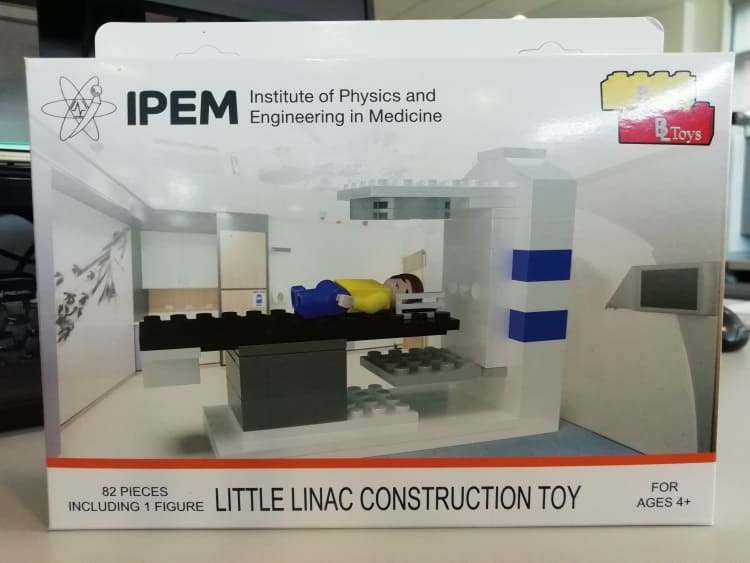
8. IPEM’s Little Linac contains all the bricks needed to create a model linear accelerator. Which of these other machines can be created by the kit?
A. MRI scanner B. Gamma camera C. CT scanner D. All of these

9. Which technique is sometimes referred to as “radiology done inside out”?
A. Nanomedicine B. Immunotherapy C. Nuclear medicine D. Optical coherence tomography

10. An LED technology developed by NASA for plant growth experiments in space has also proved successful for what medical application?
A. Imaging cardiac and lung diseases B. Patient alignment during complex brain surgeries C. Wound healing and reducing painful side effects of chemotherapy and radiotherapy  D. Helping to design and create personalized prosthetic limbs

Sponsored by Elekta. For almost five decades, Elekta has been a leader in precision radiation medicine. Their more than 4000 employees worldwide are committed to ensuring everyone in the world with cancer has access to – and benefits from – more precise, personalized radiotherapy treatments. Learn more at Elekta.com.

Update: The answers are 1. B  2. D  3. C  4. A  5. A  6. B  7. B  8. D  9. C  10. C

NASA launches Mars Perseverance rover

The summer of Mars launches continued yesterday as NASA successfully sent its Mars 2020 on a seven-month journey to the red planet. Taking off from the Kennedy Space Center in Florida at 7:50 a.m. local time, the probe is the third mission sent to Mars in just 10 days following China’s Tianwen-1 orbiter and rover as well as the United Arab Emirates’ Hope orbiter. All three craft will reach the red planet in February 2021.

The Mars 2020 mission is set to land in a river delta within Jezero Crater and it will aim to repeat the same thrilling entry, descent and landing that happened for NASA’s Curiosity rover in 2012, which continues to roam the martian surface today. The main aspect of Mars 2020 is the Perseverance rover that will use seven instruments to explore Mars’ geology and climate and look for signs of past microbial life. “The science goal ultimately is to search for signs of life,” says Mars 2020 team member Melissa Rice, “like biosignatures that would be preserved in the rocks and to understand the geologic context in which these rocks formed.”

The rover also carries an instrument to test the conversion of atmospheric carbon dioxide into oxygen – something that future crewed explorations would require. The drilling arm on Perseverance has the ability to take samples of the Martian rock, put them in sealed tubes, capture images and spectra of the samples and then store them so that a future sample-return mission can return them to Earth for further testing.

A “Wright brothers” moment

Perseverance also contains a 1.8 kg helicopter – dubbed Ingenuity – that is set to demonstrate controlled flight on another planet for the first time. On Earth, the atmosphere helps keep helicopters and drones aloft but the Martian atmosphere is just 1% as dense as Earth’s. To help keep Ingenuity aloft, its two 1.2 m-long carbon-fibre blades spin at nearly 2500 revolutions per minute – around five times quicker than a helicopter on Earth.

Ingenuity contains two cameras as well as several devices to measure altitude, movement and tilt angles. Once deployed, Ingenuity will sit on the martian surface and hopefully survive the frigid temperatures of a Mars night. It will then undergo up to five flights, the first three of which will test the craft’s ability to hover, move from side-to-side, and travel some tens of metres. The fourth and fifth flights could either repeat those basic motions or be more ambitious such as flying faster, farther or in higher-speed winds. “The main goal of this tech demonstration is to collect as much engineering data as we can to motivate the design in future rotorcraft on Mars,” says Jaakko Karras, robotics electrical engineer with the Ingenuity team at NASA.

[The mission] is about laying the groundwork for the next 10, 20, 50, 100 years of Mars exploration

Melissa Rice

Indeed, the results from Perseverance will be used to focus on what might come next for our exploration of Mars. “[The mission] is about laying the groundwork for the next 10, 20, 50, 100 years of Mars exploration,” says Rice.

Did a supernova trigger the late Devonian extinction?

The explosion of a nearby star could have caused a mass extinction that occurred long ago on Earth. That is the conclusion of a study by an international team of scientists, which suggests that this scenario could be confirmed by looking for a plutonium isotope in fossils.

Around 359 million years ago, at the boundary between the Devonian and Carboniferous periods, the Earth suffered an intense loss of species diversity that lasted for at least 300,000 years. Called the Hangenberg Crisis, the event is thought to have been caused by long-lasting ozone depletion, which would have allowed much more of the Sun’s ultraviolet (UV) radiation to reach and harm life on Earth.

One possible cause of this event is that increased water vapour in the lower stratosphere contributed to a catalytic cycle in which the ozone-damaging free radical chlorine monoxide was produced. However, the duration of this effect would have been far too short to account for the lengthy Hangenberg Crisis. Furthermore, this mechanism would have caused ozone reduction over a limited geographic region, which contradicts evidence that this extinction event was global in nature. Some other mechanism, far more violent and enduring, is therefore be needed to explain the Hangenberg Crisis.

Cosmic rays

In a recent preprint, Brian Fields of the University of Illinois at Urbana–Champaign and colleagues propose a new explanation, arguing that a supernova could have caused the Hangenberg Crisis. Supernovae are exploding stars that release vast quantities of high-energy photons including UV light, X-rays, and gamma rays. These photons are known to collide with interstellar gas, which accelerates charged particles to create cosmic rays.

Cosmic rays from a nearby supernova could have showered the Earth in abundance for up to 100,000 years at a time. This would have continuously depleted the ozone layer on a timescale that would be consistent with the Hangenberg Crisis, and its impact would be global. A supernova could therefore account for both the timescale and the large geographic range of the extinction event, unlike previous hypotheses. Although there are many other candidate astronomical events that could damage the biosphere, such as solar proton events and gamma-ray bursts, these would impact the Earth for just years at a time.

In the preprint, the team suggests that the Hangenberg Crisis was driven by a type of stellar explosion called a core-collapse supernova (CCSN). A CCSN within 10 parsecs (33 light-years) of the Earth would be catastrophic for life on Earth, defining the so-called “kill radius” of such a supernova. The team therefore speculates that the CCSN that caused the Hangenberg Crisis was about 20 parsecs from Earth. This is far enough away not to extinguish the entire biosphere, but close enough to drive many species out of existence.

Evidence for such a CCSN could be found in the form of radioactive isotopes created in the supernova and deposited on Earth. While some of these isotopes will have long since decayed away, others have long enough half-lives to still be around. These include samarium-146, uranium-235, and plutonium-244. Indeed, the discovery of even a few plutonium-244 atoms in late Devonian fossils would be corroborating evidence for the supernova hypothesis.

There are other extinction events that occurred earlier in the Devonian period, and it is possible that these could have be caused by other supernovae. Stars tend to be born in clusters, so it is plausible that if one exploding star impacted the Earth, other supernovae could have occurred in the same cluster at around the same time. These, too, would be corroborated by evidence of ozone reduction and radioactive isotopes in the fossil record that could only have been deposited by a supernova. Indeed, we may discover that events in the cosmos have steered the history of life on Earth more than scientists had previously supposed.

Copyright © 2026 by IOP Publishing Ltd and individual contributors