How to time quantum tunnelling using atomic stopwatches, fitness trackers could help with breathing disorders

How long does a particle take to quantum-mechanically tunnel through a barrier? Physicists have pondered this question since tunnelling was first identified 90 years ago. In this episode of the Physics World Weekly podcast, Aephraim Steinberg of the University of Toronto explains how his team used the spins of ultracold atoms to measure how long it took for the atoms to tunnel through an optical barrier. Steinberg also chats about the importance of understanding the concept of measurement in quantum mechanics.

Later in this episode, Physics World’s Tami Freeman explains how relatively inexpensive fitness tracker watches could help monitor breathing during sleep. Our Madrid correspondent James Dacey is also on hand to talk about how quantum dots could help preserve ancient stone monuments and we marvel at a stunning new telescope image of two huge exoplanets orbiting a Sun-like star.

Web-based tool estimates foetal radiation dose from CT scans

Web-based tool

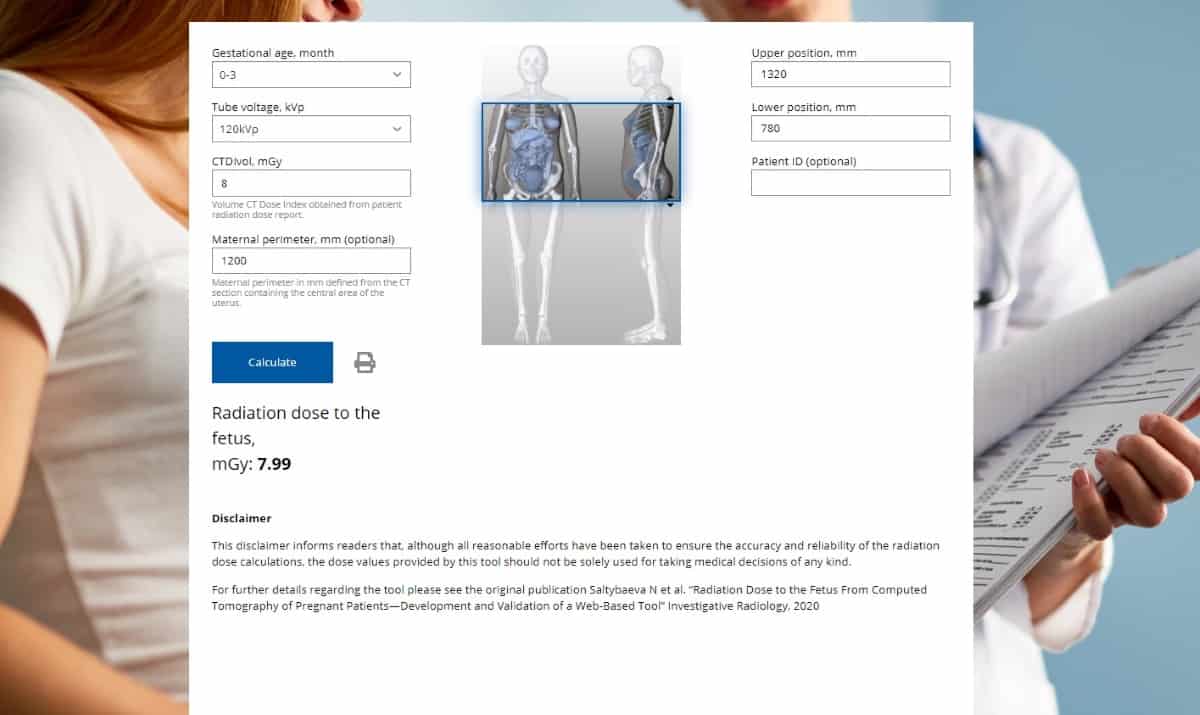
The number of CT examinations in pregnant patients has grown constantly during the past decades. But human embryos and foetuses are sensitive to ionizing radiation doses greater than 0.1 Gy. The potential health risks make it important to estimate radiation dose absorbed by the foetus when a pregnant woman has a CT scan. A free, web-based tool developed at the University Hospital Zurich’s Institute of Diagnostic and Interventional Radiology makes this calculation easier.

In addition to the type and technical parameters of the CT scan performed, the radiation dose absorbed by the foetus is also dependent upon the proximity of the uterus to the scanned body region, the anatomy of the patient and gestational age. Estimation tools exist, but because the developers consider these either expensive or difficult to use, they developed a user-friendly tool to make rapid foetal dose calculations, explaining their validation process in Investigative Radiology.

Hatem Alkadhi and Natalia Saltybaeva

In this work, Hatem Alkadhi, together with medical physicist Natalia Saltybaeva and colleagues used hybrid computational phantoms to represent patients at the end of their third, sixth and ninth months of pregnancy. For each phantom, they simulated 47 axial CT scans with 15 mm width in the cranial direction to obtain radiation dose distributions from the upper chest to the lower pelvis.

To validate their findings, the researchers used patient-specific Monte Carlo (MC) dose simulations performed on 29 women who were imaged at two different hospitals using 64-slice GE Healthcare or 128-slice Siemens Healthineers CT scanners. The patients, aged between 20 and 42, and eight to 35 weeks pregnant, included 10 who underwent whole-body CT for polytrauma and 19 who had abdominal scans.

During the validation process, the researchers determined that the accuracy of their tool’s dose calculations could be improved by factoring in the maternal perimeter, defined from the CT section containing the central area of the uterus. With this addition, the average relative difference between foetal doses calculated by the computational algorithm and patient-specific MC simulations was just 11%.

The vendor-independent tool, accessible at www.fetaldose.org, can be used to calculate radiation dose exposure for any scanned body region, scan length and CT protocol. Its pull down-menu allows users to select gestational age and tube voltage. Additionally, users need to enter the volume CT dose index (CTDIvol), and select the upper and lower positions of the scan. The users can also add the maternal perimeter in millimetres to improve the accuracy of calculations, and the patient ID for their records. Calculations can be saved in PDF format to be added to the patient’s electronic health record.

“Comparing with previous literature and available tools in this field, our computational algorithm and web-based tools provide the advantages of realistic pregnant patient geometry, and the ability to take patient-specific size into account,” state the researchers. They say that high accuracy and the ability to make rapid calculations with only a few input parameters make the tool easy and appropriate for use in daily clinical routine.

“Our main goal was to make this tool as simple as possible, while guaranteeing a high accuracy of calculations,” Saltybaeva tells Physics World. “The current set of parameters requested by the tool for calculations can be easily provided by the referring physician. I think that this is our main advantage.”

She added that the tool potentially could be extended to other modalities, such as fluoroscopy, and that the research team may consider developing this in the future.

Liquid metal flows smoothly at room temperatures

Researchers in the US have eliminated the instabilities in liquid metal streams for the first time, creating steady, controllable cylindrical “wires” that flow at room temperatures. Minyung Song and colleagues at North Carolina State University achieved the result by applying a small voltage to the metal, which allowed them to drastically lower its surface tension.

When fluids are pumped out of a nozzle, they typically minimize their surface energy by breaking up into droplets. This behaviour is driven by the Rayleigh-Plateau instability, and it occurs particularly rapidly for liquid metals, which have surface tensions that are significantly higher (and viscosities that are far lower) than room-temperature liquids like water. The effects of the instability can be suppressed by firing liquids from nozzles at high velocities, but for metals, such streams are short-lived, and travel only slightly further before breaking into droplets.

A flowing oxide skin

In their study, Song and members of a research team led by physicist Karen Daniels and chemist Michael Dickey overcame the issue by injecting a liquid stream of eutectic gallium indium (EGaIn) into a water-based electrolyte bath. At the same time, they applied a small voltage across the liquids. This applied potential triggered an oxidation reaction at the interface between the liquids, producing a thin, flowing oxide skin on the metal surface.

Once formed, this skin reduced the metal’s surface tension from over 500 mN/m to less than 0.1 mN/m – significantly lower than that of water. Subsequently, the EGaIn stream was able to retain its initial cylindrical shape for far longer, and over greater distances, before breaking up into droplets. The researchers compare this effect to adding soap molecules to water – although in this case, the metal’s original surface tension could be restored simply by removing the applied voltage.

Hair-like filaments

The researchers used this technique to produce flowing cylindrical “wires” of EGaIn on demand and in real time. These streams had numerous advantageous properties, including long lifetimes and velocities of around 1cm/s – far slower than the nozzle speeds required in previous techniques. In addition, the wires could be thinned down to diameters of just 0.1mm, forming hair-like filaments that flowed and bent over long distances.

Furthermore, the team found that the stream’s surface tension (and consequently its shape) could be finely tuned by varying the applied voltage. Beyond producing cylindrical wires, they could also generate diverse morphologies including balloons, clustered blobs, and tree-like fractals. Such a high degree of control over these shapes could give researchers powerful new tools for studying and manipulating the behaviours of fluids.

As well as having implications for fundamental research, Song and colleagues believe that their technique, which they describe in PNAS, could also make it possible to construct thin, stretchable conductive wires by coating electrolytes containing liquid metal streams with elastic sheaths. They now hope to explore the numerous potential applications for this technology through their future research.

Acoustical tweezers trap microbubbles

Researchers at Imperial College London, UK have demonstrated for the first time that microscopic bubbles of gas can be manipulated using sound waves. The new “acoustical tweezers” overcome certain limitations of their optical cousins (such as not propagating well through opaque tissues), and could therefore enable a host of biomedical applications.

Microbubbles are already routinely employed in medicine as contrast agents in applications such as sonography. They could also be ideal in emerging ultrasound therapies such as tumour and kidney-stone destruction; stroke management; and delivering drugs to areas of the body that are hard to reach using conventional techniques. The first step, though, is to develop better ways of manipulating them. “It is important to be able to control the position of a microbubble in a contactless fashion in its native and complex environment to precisely analyse its response to ultrasound,” says Diego Baresch, the study’s lead author. “This is what we have now demonstrated in our work.”

Acoustic vs optical tweezers

Baresch began working on acoustic manipulation as a PhD student at the Université Pierre & Marie Curie in Paris. There, he and his colleagues showed that specially-structured sound waves could produce a trapping force on a solid object in all directions of space. “This implies that the object can be pulled in the direction opposite to the propagation of the sound waves,” he explains. “This is counter-intuitive for scientists because of momentum conservation rules and is exactly what Arthur Ashkin achieved in 1986 with lasers to develop the device known as ‘optical tweezers’, for which he received the Nobel Prize in Physics in 2018.”

Whereas optical tweezers used light to trap and manipulate molecules, particles and cells, Baresch explains that the acoustic version employs a helicoidal or “vortex” beam of ultrasound. This, he says, has several benefits for medical applications. “We now know that the force exerted on objects at moderate acoustic pressures is orders of magnitude higher compared to optical forces,” he tells Physics World. “This radiation force could be used to probe a wealth of systems – for example, intercellular forces in biological cells, cellular adhesion forces and many other mechanisms involved in tissue development.”

Ultrasound can also penetrate deeper into opaque media such as biological tissue than optical waves, adds study co-author Valeria Garbin. This is an advantage over laser light, which is highly attenuated and can cause irreversible damage to cells – an effect that Ashkin termed “opticution”.

Single-beam acoustical trap

To test their technique, the researchers used a single-beam acoustical trap to manipulate microbubbles in three dimensions through three-centimetre-thick layers of elastic materials. They found that they could indeed move the microbubbles through this test material, which was designed to mimic biological tissue. They also showed that they could controllably release nanoparticles contained in the microbubbles using a second acoustical trigger, proving that their approach could be used to deliver therapeutic agents.

The work opens the way for acoustical tweezers to be used in a broad range of applications in biology and medicine, say the researchers, who report their work in PNAS. “We hope we will now have the chance to employ this technique in collaboration with other experts in biophysics and biomedicine and take it a step further,” Baresch says.

Ask me anything: Sabine Hossenfelder

Sabine Hossenfelder

What skills do you use every day in your job?

Primarily I use maths, mostly specialized techniques that build on what I learned during my PhD, but on occasion there’s some area of maths that is new to me and that I have to learn from scratch. I also quite frequently draw on what I learned about making graphs and figures. I don’t do coding myself any more, but I occasionally do some numerical analysis. I have had to learn to cope with Excel spreadsheets to make finance people happy, but luckily, I don’t have to deal with that a lot.

What I do in science communication I learnt largely by trial and error. After 15 years, I hope that I have most beginners’ mistakes behind me. The most important things I need today that I didn’t learn anything about during my education are proposal writing and online literature searching. My time- and people-management is greatly aided by free online services for notes, lists and reminders, which are especially helpful for organizing conferences, or keeping track of long-time projects that involve people I don’t meet frequently.

What do you like best and least about your job?

It’s the research part that I like best about my job; it’s what I came for. I like to dig into a topic I am interested in, find out what people have done, and add my own ideas. While I don’t like it, I understand the reason for most of the paperwork I have to do, such as filing in reports and filling out forms – it makes sense that every once in a while, I should explain what I have done with my time and money. I don’t enjoy travelling and I am not particularly social, but going to conferences and giving lectures and seminars is a necessary part of the job. I have found that practice makes it easier, and I have learned to say “no” if I feel that travelling and social commitments are becoming too stressful.

Proposal writing and administrating funds are tedious tasks and I don’t enjoy them – but again I understand it’s mostly necessary (though in some cases it feels excessive, in particular European Research Council proposals spring to mind). The part about my job that bothers me most is the need to work on something that is popular or to work with people who are popular. I have always had, and still have, trouble funding my research because I tend to be interested in topics that few of my colleagues find relevant. I almost left academia because of this several times, and I still feel every other year that academia just isn’t for me. If I can only get funding to work on research I don’t consider promising, then what’s the point?

What do you know today, that you wish you knew when you were starting out in your career?

I know now that 20 years later I am still working in the same field. In light of this, the advice I’d give to students and postdocs who want to stay in academia is to think about long-term prospects. Research trends come and go, and when they go, you’ll be better off if you’re not a one-trick pony, so don’t specialize too early.

Also, don’t feel like you have to continue working on the topic of your PhD. The younger you are (“young” in working years after PhD) the easier it is to get financial support for individual research. Use this time wisely. Once you’re 10+ years past your PhD, it’ll get much more difficult. Having said this, I know a lot of people who left academia, and few of them regret it. So don’t feel like leaving means failure; it’s not. Maybe the most important advice I have is to pay attention to your work–life balance. If you are permanently stressed and burned out, your research will suffer. So if you need time off, don’t be apologetic about it.

Could proton FLASH prove optimal for clinical application?

FLASH radiotherapy, the delivery of therapeutic radiation at ultrahigh dose rates, was the subject of several scientific sessions at the 2020 Joint AAPM|COMP Virtual Meeting. One area that particularly caught my eye was the idea of performing FLASH using protons, as described by Jan Schuemann from Massachusetts General Hospital.

The promise of FLASH is that it can vastly reduce normal tissue toxicity while maintaining anti-tumour activity. And while many modalities could potentially be used to translate FLASH into the clinic, “in my opinion, protons are one of the ideal candidates for clinical translation of FLASH radiotherapy,” said Schuemann, noting that several small-animal systems have already been designed to deliver proton FLASH.

The original FLASH irradiator, developed by a team in Lausanne, uses low-energy electrons and has been employed for most FLASH experiments to date, as well as for the first patient treatment. But low-energy electrons have a low penetration depth and are not ideal for clinical translation. Other options include the use of megavoltage photons from a converted linac, the dedicated PHASER system, or an intraoperative radiotherapy set-up.

But the big advantage of using proton FLASH in the clinic lies in the distal layer effect. Proton therapy is typically delivered in layers, starting with the distal layer and building up to cover the entire target. In patients, however, this distal layer typically lies just outside the target in healthy tissue or even within organs-at-risk. “If we just could deliver the distal layer in FLASH mode, we would greatly save important tissue,” Schuemann explained. “This could have a huge impact for how we can deliver treatment plans and bring FLASH into the clinic.”

Clinical proton FLASH could be delivered via double scattering or pencil-beam scanning, both of which would need some technical adjustments. Double scattering, for instance, would use a single modulator wheel rotation to deliver dose to the distal layer instantaneously at FLASH dose rates. Proximal layers, however, may not receive such high dose rates. Schuemann noted that double-scattering systems would need to deliver sufficiently high dose rate across the entire treatment field, which limits the field size but could be a good option for small fields.

Most new proton treatment centres, however, use pencil-beam scanning, which provides a beneficial dose distribution. “The question is, if we have to use scattering systems to achieve FLASH irradiations, is it worth giving up pencil-beam scanning benefits?” he said.

The other option is to use proton scanning for FLASH delivery, as each single pencil beam already delivers a high dose rate. And because FLASH delivery is so fast, the rescanning often used to mitigate motion effects in pencil-beam treatments would no longer be needed. This approach would require additional imaging to ensure the tumour target is correctly positioned.

Schuemann also noted that, while each pencil beam has a very high dose rate, the beam edges contain regions without sufficient dose rate to induce FLASH effect. “So is it better to use scanning beams with high dose rates than what we are currently doing?” he asked.

He also considered which treatment sites are likely candidates for proton FLASH. Any site currently treated with radiosurgery or hypofractionation could be suitable, or sites where normal tissue toxicity currently limits the deliverable dose. “Intraoperative treatments are probably where FLASH radiotherapy will first see clinical daylight,” Schuemann suggested.

The answers to these many questions depend on the underlying mechanisms of FLASH. “Understanding whether it’s a single mechanism or multiple will strongly impact how to plan and deliver FLASH radiotherapy,” Schuemann explained. “We have to know how we can vary the dose rate, how many beams we can use, how timing limitations play a role and whether there’s a limit to the field size we can deliver. Many groups are working on this.”

“I believe there is large potential for FLASH radiotherapy, but there are also many pitfalls, especially if we move too fast,” he concluded. “Most importantly, I believe we should be careful not to rush FLASH into the clinic, because if we don’t understand the mechanisms, we may actually deliver worse treatment and kill off the field of FLASH, which I believe has huge potential benefit.”

Reducing proton FLASH uncertainties

Eric Diffenderfer also discussed the promise of protons for FLASH, telling the meeting attendees about the proton FLASH experiments at the University of Pennsylvania. “Compared with electrons, protons have increased potential for treating deep-seated tumours, with better dose conformality and smaller lateral penumbra,” he said. “And it should be easier to upgrade commercial proton therapy systems, which are typically cyclotron-based, to achieve the very high dose rates required for FLASH.”

Penn team

As Schuemann pointed out, understanding the underlying mechanisms of FLASH will be key to its clinical deployment. But measuring the biological effects of proton beams is technically difficult, with many variables to consider. One way to improve the reproducibility of radiobiological experiments is to reduce the uncertainty in physical beam parameters. This is the goal of Diffenderfer and his colleagues.

The first task on the route to implementing proton FLASH, Diffenderfer explained, is reducing uncertainty due to beam delivery and positioning. For their experiments, the Penn researchers use a cyclotron-based system in a dedicated proton research room, with a small-animal radiation research platform (SARRP) on rails that slides in and out of the proton beamline. They developed quality assurance systems that confirmed an alignment reproducibility of better than 1 mm between the SAARP and proton beam isocentres.

For FLASH, Diffenderfer explained, it’s important to consider the efficiency of beam transport. Most clinical systems use cyclotrons that produce a fixed beam energy, limiting the extraction efficiency. The major beam loss occurs within the degrader used to select the proton beam energy, with additional loss in the transport system and treatment nozzle. And spreading the beam to increase field size also reduces its intensity.

So to exploit as much of the beam as possible, the team implemented a double-scattering system to efficiently increase the field size. This produced a flat beam profile that can be collimated to a field size of about 2.5 cm across, which the researchers used for their in vivo small-animal FLASH experiments. They also developed a ridge filter that generates a spread-out Bragg peak fast enough to maintain FLASH delivery.

The researchers’ second goal was to reduce uncertainty due to dosimetry at high dose rates. They validated the PTW Advanced Markus chamber that they employed for proton FLASH dosimetry by comparison with a Faraday cup (which is independent of dose rate). Results showed that the ratio of measurements was uniform with dose rate.

Their third aim was to reduce uncertainty due to dose rate variations. The proton beam current from the cyclotron varies slightly over time, which translates to dose rate variation over time. To measure this, Diffenderfer and colleagues used a prompt gamma counter to monitor intra-beam dose rate variations during experiments and correlated these with measured biological effects. “We decided to use a fixed-dose beam control system, as opposed to a fixed-time delivery system, to maintain consistent dose across all experiments,” he noted.

In initial studies using this system, the researchers performed focal proton therapy of mice with pancreatic tumours, treating the animals with either FLASH or standard dose rate protons. Changes in tumour volume after treatment were similar for both modalities, with survival somewhat (but not statistically significantly) increased after FLASH. Intestinal fibrosis – a common limitation in of abdominal radiotherapy – was, however, significantly reduced after FLASH versus standard treatments.

“We have implemented methods to reduce uncertainties and validated the FLASH effect for protons in an in vivo setting,” Diffenderfer concluded.

2D Fermi gas hosts ideal Josephson junction

Researchers in Germany have created a new platform for studying quantum phenomena by realizing a Josephson junction in an ultracold 2D Fermi gas. This structure, in which fermionic lithium (Li) atoms at temperatures just above absolute zero tunnel back and forth across an energy barrier, exhibits strongly correlated quantum behaviour as well as reduced dimensionality – a combination that appears to be critical in materials that superconduct at temperatures above 73 K.

The everyday three-dimensional world contains two types of elementary particles: fermions and bosons. Fermions, such as electrons, obey the Pauli exclusion principle, meaning that no two fermions can ever occupy the same quantum state. This tendency to avoid each other is at the heart of a wide range of phenomena, including the electronic structure of atoms, the stability of neutron stars and the difference between metals (which conduct electric current) and insulators (which don’t). Bosons such as photons, on the other hand, tend to bunch together – a gregarious behaviour that gives rise to superfluid and superconducting behaviours when many bosons exist in the same quantum state.

In recent years, researchers have succeeded in coaxing boson-like superfluid behaviour out of pairs of ultracold fermions. Until 2018, however, such fermionic superfluids had never been observed in a two-dimensional configuration.

Josephson oscillations

In their new work, Niclas Luick and colleagues in Henning Moritz’s group at the University of Hamburg began by cooling a 2D gas of 6Li atoms to temperatures of a few tens of nanokelvin, bringing the gas below the critical temperature for superfluidity. They then projected a tightly focused laser beam onto the gas, splitting it into two reservoirs separated by a narrow barrier. The resulting structure is analogous to a conventional Josephson junction, which is typically made by sandwiching a thin layer of a non-superconducting material between two layers of superconducting material. It is named after Brian Josephson, who predicted in 1962 that pairs of superconducting electrons could “tunnel” from one superconductor to another right through the non-superconducting barrier.

 The Hamburg researchers have now observed so-called Josephson oscillations as particles in their system coherently tunnel back and forth between the two sides of the junction. “Remarkably, this particle current does not require a potential difference but can be driven by just a phase difference between the coupled 2D Fermi gases,” Luick explains. “This provides strong evidence that our gas is indeed superfluid.”

 A tool to study strongly-correlated 2D superfluids

The team also showed that the Josephson oscillations they observed can be used to measure the current phase relation of the junction. From this, they extracted the condensate fraction of their 2D Fermi gas – that is, the number of fermions occupying the lowest quantum state, at which quantum phenomena emerge.

“Our measurements show that Josephson junctions can be used as a tool to study the fundamental properties of strongly correlated 2D superfluids,” Luick tells Physics World. “Such a tool could provide the basis for future experiments to gain a better understanding of high-temperature superconductors.”

 The researchers, who report their work in Science, say they are now interested in studying how strongly correlated superfluids evolve as the dimensionality of the system is tuned from 3D to 2D. They hope that these measurements will help provide a better understanding for the role of reduced dimensionality in high-temperature superconductivity.

Training a computer to hunt cancer

For more than 30 years, Maryellen Giger has worked on using artificial intelligence (AI) to improve the accuracy of medical imaging, specifically when it comes to cancer. Indeed, Giger is a pioneer in developing artificial neural networks that allow computers to identify, classify and diagnose medical images, be it radiographs, MRIs or CT scan images. Here, she talks about her physics background, how she established the use of AI in breast cancer imaging, and about how she got involved in the first companies that received approval from the Food and Drug Administration (FDA) for computer-aided cancer detection and diagnosis systems.

What sparked your initial interest in medical physics?

I was always interested in maths and physics growing up, and I majored in the subjects as an undergraduate. I went to Illinois Benedictine College, just outside Chicago. While it was a small university, it had great internship opportunities, and I spent three summers working at the Fermi National Accelerator Laboratory (Fermilab). At that time they had a neutron-therapy system, so I spent one summer working on an assembler, where I programmed some of the temperature controls within the centre. The other two summers I worked more on the hardware of beam diagnostics, and that’s how I found medical physics.

After my undergrad I was given the opportunity to go to the University of Exeter in the UK, in 1979. At Exeter, they had a project looking at the electrocardiograms for sudden infant death syndrome (SIDS, also known as cot death or crib death). While there, I created the electrocardiogram system, programmed it in an assembler, which I luckily knew already, and wrote my MSc dissertation on the topic, looking at whether there was a type of rhythmic change among the subjects.

What did your PhD work focus on?

When I came back from the UK, I began my PhD at the University of Chicago, which covered diagnostic imaging physics, as well as therapy imaging physics. I decided I wanted to go into the diagnostic end. We learned all the physics that goes into the whole imaging process – from what kind of source would be used in a device, to types of detectors, to what happens after you get an image, and even how to present the final report to a patient. Because if you don’t optimize all the steps, the process isn’t going to work. My dissertation research was evaluating the physical image quality of digital radiographs, which, interestingly, are the only type of radiograph most people are accustomed to now – but back then in the early 1980s, we started with screen films. It would take an hour to digitize a single chest radiograph – a process that is now relatively instantaneous.

Following my PhD, I spent a few years as a postdoc, and then became faculty at the university’s department of radiology. I worked on analysing chest radiographs to detect lung nodules, and after that worked on screening mammograms to detect mass lesions. While a chest radiograph used to take an hour to digitize, it would take four hours to process. That eventually led to us developing computer-aided detection algorithms for medical analysis.

How did you and your colleagues pioneer the use of AI in breast-cancer imaging?

The term computer-aided diagnosis started with us in the 1980s and 1990s, which then segmented into computer-aided detection (CADe), and computer-aided diagnosis (CADx). Once a digital image of a mass has been captured, we need to interpret it – something that is usually done by radiologists, who are making qualitative judgements based on their experience and knowledge. A digital image contains a lot of information – for example, the size and irregularity of a tumour can be estimated by a radiologist – but an AI algorithm can calculate this quantitatively. This can help radiologists catch cancer quicker, and aids clinicians to make more informed diagnoses. What we do is teach the AI how to analyse an image and what to look for.

A digital image contains a lot of information. We teach the AI how to analyse an image and what to look for

To understand the difference between detection and diagnosis, you can think of the Where’s Waldo? books. Screening mammography can be thought of as being a thousand-page book, in which you have to find Waldo, who is only on five of those pages – and you have to do this in a finite amount of time. So CADe is having a computer to help you find items that have red and white stripes. Then once you find these, you have another program – CADx – that will help you determine whether those stripes are something random, like a bucket, or if they are indeed Waldo. CADx was always supposed to be used together with a radiologist, who would first look at the case and make a decision. The computer would then serve as a second reader, mostly to catch something that may have been missed.

What was the process in developing the first FDA-cleared computer-aided breast-cancer detection system?

I learnt early on that if you really want to get your product to patients, you must protect your idea by taking out a patent, and then licensing it. There’s a lot of money involved in developing any idea or product, and that’s the only way a company will invest. In 1990 we patented our CADe method and system to detect and classify abnormal areas in mammograms and chest radiographs. These were later licensed by a company called R2 Technologies (which was acquired by Hologic in 2006). By 1998 it had translated our research, and its further developments, into the first FDA-approved CADe system, called ImageChecker.

Translation of your lab’s research also led to the first FDA-cleared CADx system to aid in cancer diagnosis – tell me about this.

In breast cancer screening, if something suspicious is found in the image, the patient may undergo another mammogram, or an ultrasound or MR scan. You end up with images from multiple modalities, and the radiologist then has to assess the likelihood that the lesion is cancer, decide whether to request a biopsy and how quickly to follow up. So we wondered how a computer could help process all that information to aid the radiologist in their decision-making process. With breast MRIs, we quantitatively extracted various image characteristics, similar to what radiologists observe, and then we created algorithms, trained and validated them. We performed a reader study in house and showed that radiologists performed better if they were given this aid.

We began the translation of our research development and findings in 2009, through the New Venture Challenge at the Chicago Booth School of Business. The team included two MBA students, one medical student, and a medical-physics student from my lab. Out of 111 teams, we made it to the final nine. After the challenge, we created a company, Quantitative Insights (QI), which was later incubated at the Polsky Center for Entrepreneurship and Innovation. QI conducted a clinical reader study, with multiple cases and manufacturers, which was submitted to FDA.

In 2017 QI received clearance for QuantX, the first FDA-cleared machine-learning-driven system to aid in cancer diagnosis. The system analyses breast MRIs and offers radiologists a score related to the likelihood that a tumour is benign or malignant, using AI algorithms based on those we developed. Soon after, Paragon Biosciences – a Chicago-based life-science innovator interested in AI research – bought QuantX. In 2019 Paragon launched Qlarity Imaging, and units are now being sold and placed. I’m an adviser for the company.

How do you see AI being used in medical imaging in the future?

There are many needs in medical imaging that could benefit from AI. Some AI will contribute to creating better images for either human or computer vision, for example, in developing new tomographic reconstruction techniques. For interpretation, AI will be used to extract quantitative information from images, similar to what we did for CADe and CADx, but now also for concurrent reader systems and ultimately autonomous systems.

There are also many ancillary tasks that AI could help streamline for improved workflow efficiency, such as assessing whether an image is of sufficient quality to be interpreted, maybe even while the patient is still on the table. Then during treatment, monitoring the patient’s progress is important. Thus, using computer vision AI to extract information from, for example, an MRI could yield quantitative metrics for therapeutic response. I believe in the future, we need to watch AI grow and continue to develop AI methods for various medical tasks. Much still needs to be achieved.

What are some of the skills that you learnt during your physics degree that you use all the time? And what other skills did you have to develop on the job?

Two major skills required in my work are running a lab, and translating research. During your degree, you are not really trained on how to run and manage a lab. We have to work as a team, and around the scientific table we are all equal. You can learn this as a student by watching others, and seeing what works and what does not. You learn by your mistakes too, and now I try to tell others about it, but they all have to find their own path.

When it comes to successful research and translation, it’s really important to talk to everyone involved in a project. For us that meant understanding the aspects of the medical-imaging process, the algorithms and computation, the validation and testing, and talking to clinicians to aim for clinical impact. Thanks to being part of the Polsky Center, we received a lot of free advice as well as funding as we translated our research prototype into a commercial product. We also benefited from the Chicago Mentors group, which put us in touch with established industry people in different roles – marketing, legal, even a chief executive – and we could ask them all our questions.

What’s your advice for today’s physics students?

You have to love what you’re doing, so make sure whatever job or area of research you choose is something you really enjoy. I enjoy my job so much that it’s not just work. If I have free time in the evening, I’ll often read a scientific paper in the field or review research findings from the lab. I do work very hard, but what’s enjoyable is to sit back and bounce ideas off colleagues. My favourite time of the week is when I meet with one or two students or colleagues in the lab. We review data, and think, and question, and that’s how a new idea is formed. I enjoy teaching students in my lab and try to show them how to become independent investigators. I always tell them to look for red flags, and that it’s fine to make mistakes – we all do. I would also say that I benefited greatly from being mentored by many folks. And my most rewarding moment is when a student becomes a colleague.


Low-cost wearable devices quantify breathing activity while you sleep

Assessing respiratory activity during sleep is a vital step in diagnosing sleep-related breathing disorders. In clinical practice, this is performed via respiratory inductance plethysmography (RIP), which measures breathing-induced volume variations using belts around the abdomen or thorax. This is, however, an obtrusive approach that only measures movements of a single specific body part.

The increasing prevalence of smart-watches and fitness trackers holds promise for reducing both the obtrusiveness and cost of sleep monitoring. Many of these wearable devices employ reflective green light photoplethysmography (PPG) to measure blood volume variations. PPG pulses contain information about changes in peripheral blood flow generated by various physiological processes – including respiration.

“The PPG respiratory component is caused by the intrathoracic pressure variation resulting from the overall respiratory activity,” explains Gabriele Papini from Eindhoven University of Technology (TU/e). “And while RIP can measure only respiration, PPG can also measure cardiovascular activity. It is an ideal sleep monitoring candidate because it allows continuous long-term monitoring and it is rich in physiological information.”

Papini and colleagues – from Eindhoven MedTech Innovation Center (e/MTIC), Philips Research and Sleep Medicine Center Kempenhaeghe – have now developed and tested a respiratory activity surrogate (RAS) obtained from wrist-worn reflective PPG signals. Writing in Physiological Measurement, they showed that this surrogate compares well with a reference thoracic RIP signal.

Sleep study

To validate the PPG-RAS, the researchers examined 389 sleep recordings from a sleep-disordered population, including 226 patients with obstructive sleep apnoea, 108 with insomnia and 45 with sleep movement disorders. Patients wore a wrist-worn device containing a green-light reflective PPG sensor and a three-axial accelerometer to record motion data.

To extract the PPG-RAS from the recorded data, the team used a four-stage method: PPG pulse segmentation; identification of landmarks on the pulses; pulse-by-pulse quality evaluation; and calculation of surrogate respiratory activity from the reliable landmarks.

Following segmentation and rejection of any low-quality pulses, the researchers identified four landmarks in each pulse: the foot (starting point), end (endpoint), systolic peak (maximum) and diastolic peak (second inflection point after the systolic peak). They found that the distance between the foot and the systolic peak produced the PPG-RAS with the best breathing rate estimation performance.

To assess the overall PPG signal quality, they divided the signals into 30 s time periods (epochs) and calculated the median pulse quality index over each epoch. A second quality indicator assessed the ratio between the sum of the interbeat intervals divided by the epoch duration.

Surrogate accuracy

Using the foot–systolic peak measurements, the team compared the calculated PPG-RAS with reference respiratory activity signals measured using thoracic RIP. Quantifying the similarity between the reference RIP signal and the PPG-RAS in the time and frequency domains demonstrated good agreement between the two, with respiration rate estimation in line with published results from other types of PPG sensors.

Similar signals

The researchers next evaluated the impact of PPG signal quality and patient motion. They found that the similarity between the reference signal and the PPG-RAS increased with increasing signal quality, because more high-quality pulses are available to calculate the surrogate. Although most epochs had low motion levels, movement decreased the similarity and for medium-to-high movement levels, the similarity was weak. This confirms that it is easier to accurately capture respiratory activity during quieter sleep.

“A few low-quality pulses have a negligible impact on the RAS estimation if they are removed. But if the RAS is estimated on a group of pulses with an average low pulse quality, it is likely to not be accurate,” Papini explains. “This might be due to a low amount of pulses available after single-pulse rejection or the overall quality of the pulses being low.”

To mitigate the effects of low pulse quality or high motion levels, the team proposed three post-processing steps. These steps exclude any 30 s epochs with a median pulse quality index lower than 0.8, any with an interbeat interval coverage lower than 66%, and any with activity counts higher than 21. Applying these steps improved the similarity between the reference signal and the PPG-RAS. Each step, however, caused a drop in coverage (of 5%, 6%, and 17%, respectively) and some recordings had a low number of epochs after applying all post-processing steps.

Finally, the group examined the impact of sleep stage and obstructive sleep apnoea severity on PPG-RAS accuracy. The lowest performance was observed in waking epochs, followed by stage N1 sleep (transition between wake and sleep). Epochs from participants with severe obstructive sleep apnoea exhibited the lowest similarity between reference signal and PPG-RAS. In all cases, post-processing significantly increased performance.

The researchers conclude that wrist-worn PPG can enable respiration monitoring in real-world sleep medicine applications using consumer wearable devices. They are now using the PPG-RAS together with cardiovascular features such as heart rate variability to monitor obstructive sleep apnoea using wrist-worn devices. “Another topic is improving the RAS and comparing it with respiratory effort measurements, i.e., changes in intrathoracic pressure due to respiration, since these are closely related to obstructive sleep apnoea presence,” Papini tells Physics World.

Researchers form single molecule in an optical tweezer

Researchers at Harvard University in the US have used optical tweezers to create a single molecule from a single pair of atoms. The technique they employed, known as magnetoassociation, made it possible to create the molecule in a specific, reversible, quantum state. The work is thus an important step towards creating low-entropy samples of molecules for applications in quantum computing and quantum simulation.

In their experiment, researchers led by Kang-Kuen Ni confined a sodium (Na) atom and a caesium (Cs) atom at the centre of an optical trap formed by focusing a laser beam to an intense spot. They then converted the trapped atoms into a molecule by ramping up the ambient magnetic field. “In this process [magnetoassociation], the resulting quantum state of the molecule is entirely determined by the state of the initial atoms,” explains study lead author Jessie Zhang. “By carefully preparing the initial atomic states, we can create the molecule in specific motional and internal states.”

Simply put, this means that if the atoms are all prepared in their lowest motional state, the molecule that forms will also be in its lowest motional state. If, on the other hand, the atoms are carefully prepared in an excited motional state, the molecule formed is rotationally excited.

Improving on earlier methods

The magnetoassociation method has previously been employed to create molecules in various other cold-atom systems, Zhang says, but these were generally larger ensembles containing more atoms. While the lifetime of the molecules thus produced was sometimes much longer than in the current work, it proved more difficult to control the molecules individually. “Our work builds on this previous research and expands it to form single molecules from single pairs of atoms in optical tweezers,” Zhang tells Physics World.

The new technique also improves on two earlier methods demonstrated by Ni and her team. In their first study, the researchers used a laser to bind a pair of atoms into an excited molecular state through a process called photoassociation. In the second, they used a pair of laser beams to convert an atom pair into a weakly-bound molecule. Both efforts had drawbacks, Zhang says. “In the first method, the excited molecule decayed into a large number of states that we couldn’t detect and in the second, the laser beam destroyed the molecule it formed,” she explains. In contrast, the molecules created by magnetoassociation live long enough to be dissociated back into atoms in their original states, and subsequently detected.

Weak bonds

The molecules formed in the new study, which is detailed in Physical Review Letters, are, as yet, only weakly bound. Among other implications, the weakness of the bond between the atoms means that the molecules do not possess a large electric dipole moment – a necessary condition for quantum computing applications that require entanglement between the atoms’ quantum states. To overcome this problem, Ni and colleagues say they will attempt to bring the molecules into their absolute ground state, where they are more stable and can interact with each other via dipole-dipole interactions.

As well as producing entangled molecules, the team also hope to scale up their technique. “At present, we only have one molecule in a single tweezer, but the idea is to scale up to multiple tweezers, each holding a single molecule that we can individually control,” Zhang says. “We can then envision using such a system as a quantum computer or quantum simulator.”

Copyright © 2026 by IOP Publishing Ltd and individual contributors