Life-like airway can be printed on a chip

Researchers at Pohang University of Science and Technology (POSTECH) and Seoul National University (SNU) have fabricated a biomimetic airway-on-a-chip using a 3D printing technique that exploits bioinks laden with cells taken from human trachea. The device, which contains a network of blood vessels connecting with epithelial cells, could be used as a model to study respiratory diseases, such as asthma, rhinosinusitis, and chronic lung disease.

Rising air pollution in many counties is both increasing the number of people who suffer from respiratory diseases, and making their symptoms more severe. Researchers have therefore attempted to create life-like models that could be used to characterize these inflammatory diseases.

In this new research, a team led by Dong-Woo Cho made a biomimetic airway structure by 3D printing the various different types of cells that are found in natural mucous membranes. The bioink was composed of a decellularized extracellular matrix (dECM) isolated from pig trachea, which was laden with mucosal isolated from human trachea (Biofabrication 11 015002).

“We reproduced an in-vivo-like 3D vascular network by assembling endothelial cells and fibroblasts using the dECM bioink in a one-step printing process,” explains lead author of the study, Ju Young Park. “The structure we produced has the same physiological functions as the biological airway epithelium and so can be used to model diseases like asthma. The presence of blood vessels, for example, leads to an excessive production of proinflammatory cytokines in our airway model. This process (also known as the ‘cytokine storm’) occurs during asthmatic airway inflammation and allergen-induced asthma exacerbation in the physiological context.”

The researchers also confirmed that their model epithelium airway becomes sensitized by house dust mites, which are well-known respiratory allergens. These allergens stimulate the expression of an adhesion molecule on the vascular endothelium that can then recruit immune cells into the inflamed tissue. “Our results show that pathological interactions between the airway endothelium and the vascular network in the airway are reproducible in our airway-on-a-chip model, and that the exacerbation of inflammatory responses by the vascular network in vivo is also reproducible in vitro.”

Mimicking complex 3D structures

The Korean team printed its structures using an in-house 3D cell printer equipped with six dispensing heads. “Two of the printing heads were connected to a pneumatic pressure-based system that dispenses a synthetic polymer to fabricate the supporting framework for the airway,” explains Park. “The other four printing heads operate on a three-axis motorized stage and we control their movement using computer programs.”
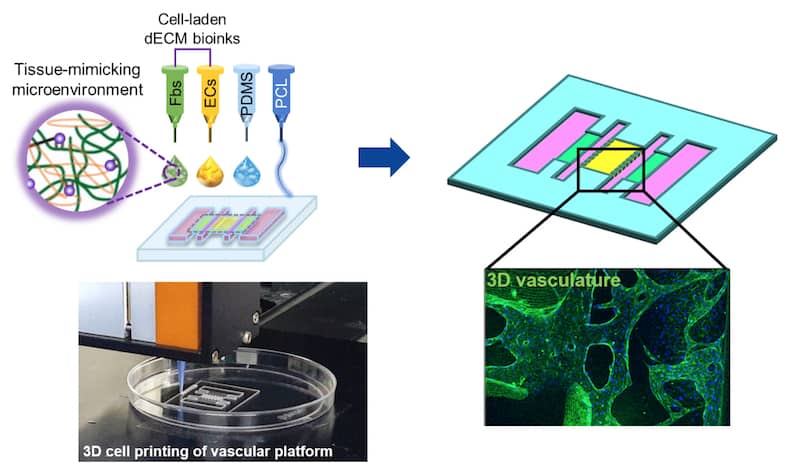
3D cell printing using dECM bioink

Park explains that the epithelium in the human airway mainly contains ciliated goblet and basal cells in contact with basement membrane. Lamina propria, which contain blood vessels and stromal fibroblasts, lie under this membrane. “To mimic this complex 2D/3D structure and the cellular composition of the airway mucosa, we assembled a 2D airway epithelium on a 3D vascular platform,” she says. “We reconstructed the natural 3D vascular network by 3D cell printing the dECM bioink containing endothelial cells and fibroblasts. The dECM bioink in fact provides the cell with an in-vivo-like niche of native tissue that induces tissue-specific differentiation and function.”

According to Park, the cell-printing technique is much faster than traditional fabrication techniques, and is also better at replicating the fine cellular arrangement and complex 3D microstructure found in natural tissue. “Our 3D cell-printing system allows us to easily fabricate airway prototypes in high throughput and also allows us to directly place various types of cell at specific locations on the airway structure to mimic how cells arrange themselves in native tissue,” she explains. “The technique could be used to design many types of chip and even print organ models other than the airway.”

Towards multiple organs-on-a-chip

The interaction between the epithelium and the blood vessels in the mucous membrane is known to be important for the health of the tissue and to protect against allergens or toxins. “Our new model could be used to study these interactions and better understand the role they play in human respiratory diseases,” says Park. “The 3D cell printed airway-on-a-chip could therefore be used as a powerful complement to animal models for analysing pathophysiology and testing the efficiency of drugs in the preclinical phase.” This technology is currently under development for commercialization by T&R Biofab, a Korean company that makes biomedical products using 3D cell printing technology.

The researchers, reporting their work in the journal Biofabrication, say that they would now like to 3D cell print different organs-on-a-chip and even multiple organs-on-a-chip. These structures would integrate a number of interacting tissues and organs, and could ultimately replace animal models for studying human pathophysiology and evaluating systemic drug effects.

  • Read our special collection “Frontiers in biofabrication” to learn more about the latest advances in tissue engineering. This article is one of a series of reports highlighting high-impact research published in Biofabrication.

Mumbai’s plastic ban

In June 2018 Mumbai became the largest Indian city to impose a ban on single-use plastics. The move came in the same month as World Environment Day, which was hosted this year by India with the theme “Beat Plastic Pollution”. Mumbai’s Plastic Ban is a short film by Maithili Padukone and Atul Prasad exploring the motivations behind the ban and the challenges of implementing the change.

Local authorities and the citizens of Mumbai have long recognized the problem of plastic pollution. The sheer quantity of discarded plastics and the lack of effective waste-management solutions mean that discarded bottles and other packaging are a common sight on the streets, waterways and coastline. Pollution clogs up drainage systems exacerbating flooding, while microplastics can enter the food chain when ingested by fish.

Brought into effect by the Municipal Corporation of Greater Mumbai (BMC), the all-out ban has triggered strong feelings. While most parties recognize that a drastic change is required to tackle Mumbai’s plastic problem, the speed of the ban’s implementation has created challenges for local consumers and traders. Some believe that banning plastics is just a small part of a larger solution that requires societal change. While some organizations and entrepreneurs have come up with innovative alternatives and ways to deal with the plastic waste.

Mumbai’s Plastic Ban is the fourth in our series of films about environmental challenges and their solutions. The first film looked at how Mexico City’s unique geology makes it difficult to provide a reliable source of fresh water to citizens. The second film looked at efforts in the US city of New Orleans to adapt to live with increasing flood risk in the face of climate changes. The third film investigated the curious case of a wind farm in the North Sea that appears to be attracting harbour porpoises.

You can see all those films, along with a range of articles about how science and technology can help tackle environmental challenges, in our Sustainable Futures collection.

Microneedle patch heals heart attack damage

Researches at North Carolina State University (NCSU) and University of California, Los Angeles (UCLA) have developed a biocompatible microneedle patch topped with a layer of cardiac stromal cells (CSCs) enveloped in fibrin gel. When positioned on damaged regions of a rat’s or pig’s heart, the patch led to heart repair and protection of cardiac function (Sci. Adv. 10.1126/sciadv.aat9365).

Myocardial infarction, known as heart attack, happens when a blockage prevents blood flowing to the heart, causing heart cells (cardiomyocytes) to starve and die. The patient’s outlook is bleak: scar tissue will replace the injured heart muscles; genetic, structural and biomolecular changes will then occur at the affected site, a process known as heart remodelling. Survivors typically face higher risks of developing heart failures in the future. There is, therefore, a need for therapies that can reduce the size of heart scar tissue and prevent heart remodelling.

In the past 20 years, stem cell therapy has been in the spotlight due to its ability to promote tissue healing by secreting growth factors (molecules capable of stimulating cell growth). Previous studies and clinical trials showed that directly injecting CSCs (a cardiac stem cell) with syringes can regenerate damaged cardiac tissues. However, this injection method is not ideal because of the high stem cell loss at transplantation sites. Instead, researchers are attempting to create various stem cell delivery systems that can improve cell retention rate on injured heart muscles.

Pushing the boundaries of therapeutic cell delivery

A research team led by Ke Cheng at NCSU and Zhen Gu at UCLA developed a biocompatible patch studded with an array of 5 μm microneedle tips. They then covered the top of the patch with a protein-based, biodegradable fibrin gel that encases the heart stromal cells. They call this CSC-biomaterial hybrid a microneedle patch (MN-CSC). Looking like a mini velcro tape, the tips not only secure the patch’s position on injured heart muscles, but also act as channels capable of releasing growth factors from CSCs.

Zhen Gu and Ke Cheng

Next, the research team incubated the MN-CSC with cardiomyocytes derived from neonatal rats. They found no inhibition in cell growth and indeed, the heart muscle cells contracted. In subsequent tests with rats, the researchers induced myocardial infarction, then attached a 0.5 x 0.5 cm MN-CSC patch to the rat’s heart. They found that the implanted patch did not cause an elevated infiltration of T cells (immune system cells that recognize and destroy foreign pathogens or infected cells), demonstrating that the heart tissue did not reject the patch.

In the final part of this study, the authors used pigs as experimental subjects, due to the close resemblance between blood flow mechanisms in pig hearts and human hearts. The results showed the MN-CSC patch was non-toxic to pig heart tissue. The team also reported that the patch improved left ventricular ejection fraction (LVEF) in pigs’ hearts treated with MN-CSC. LVEF measures the percentage of blood leaving the left ventricular each time it contracts and is an excellent indicator of heart function.

Further research is needed to optimize the design of the MN-CSC patch. Will by-products from degradation of the biomaterials affect animals or even the human body? Can researchers devise a minimally invasive method to implant this MN-CSC patch to the heart, as opposed to an open-heart surgery? Without a doubt, the tissue-regenerating, non-toxic device may push the boundaries of heart regeneration.

‘Pause’ in global warming was never real, scientists say

Claims of a ‘pause’ in observed global temperature warming are comprehensively disproved in a pair of new studies published today.

An international team of climate researchers reviewed existing data and studies and reanalysed them. They concluded there has never been a statistically significant ‘pause’ in global warming.  This conclusion holds whether considering the ‘pause’ as a change in the rate of warming in observations or as a mismatch in rate between observations and expectations from climate models.

Their papers are published today in Environmental Research Letters.

Dr James Risbey, from CSIRO Australia, is the lead author of one of studies, which reassessed the data and put it into historical context.

He said: “Many studies over the past decade have claimed to find a pause or slowdown in global warming and have typically posited this as evidence that is inconsistent with our understanding of global warming.”

The study examined the literature on an alleged ‘pause’. It looked at how the ‘pause’ had been defined, the time intervals used to characterise it, and the methods used to assess it. The study then tested historical and current versions of the Earth’s global mean surface temperature (GMST) datasets for pauses, both in terms of no warming trend and a substantially slower trend in GMST.

Dr Risbey said: “Our findings show there is little or no statistical evidence for a ‘pause’ in GMST rise.  Neither the current data nor the historical data support it. Moreover, updates to the GMST data through the period of ‘pause’ research have made this conclusion stronger. But, there was never enough evidence to reasonably draw any other conclusion.

“Global warming did not pause, but we need to understand how and why scientists came to believe it had, to avoid future episodes like this. The climate-research community’s acceptance of a ‘pause’ in global warming caused confusion for the public and policy system about the pace and urgency of climate change.

“That confusion in turn might have contributed to reduced impetus for action to prevent greenhouse climate change. The full costs of that are unknowable, but the risks are substantial. There are lessons here for the science, and for the future.”

The group’s companion study looks at the alleged mismatch between the rate of global warming in observations and climate models.

The team carried out a systematic comparison between temperatures and projections, using historical GMST products and historical versions of model projections from the times when claims of a divergence between observations and modelling were made.

The comparisons were made with a variety of statistical techniques to correct for problems in previous work.

Professor Stephan Lewandowsky, from the University of Bristol, is this paper’s lead author. He said: “We found the impression of a divergence – i.e. a divergence between the rate of actual global warming and the model projections – was caused by various biases in the model interpretation and in the observations. It was unsupported by robust statistics.”

Despite this, the authors point out that by the end of 2017, the ‘pause’ was the subject of more than 200 peer-reviewed scientific articles. Many of these articles do not give any reason for their choice of start year for the ‘pause’, and the range spans 1995 to 2004.

Professor Lewandowsky said: “This broad range may indicate a lack of formal or scientific procedures to establish the onset of the ‘pause’. Moreover, each instance of the presumed onset was not randomly chosen but chosen specifically because of the low subsequent warming. We describe this as selection bias.

“This bias causes a problem. If a period is chosen because of its unusually low trend, this has implications for the interpretation of conventional significance levels (“p-values”) of the trend. Selection of observations based on the same data that is then statistically tested inflates the actual p-value, giving rise to a larger proportion of statistical false positives than the researcher might expect. Very few articles on the ‘pause’ account for or even mention this effect, yet it has profound implications for the interpretation of the statistical results.

“This is important, because some of the biases that affect the datasets and projections were known, or knowable, at the time.”

When the researchers reanalysed the data, accounting for the selection bias problem, they found no evidence for a divergence between models and observations existed at any time in the last decade.

They also offer some possible explanations why some scientists believed climate warming lagged behind modelled warming.

Co-author Professor Kevin Cowtan, from the University of York, UK, said: “One cause may be that surface temperature data providers struggle to communicate the limitations of the data to climate scientists. This is difficult because users need to focus their expertise in their own problem areas rather than on the temperature data.

“Additionally, there can be delays of several years in updating surface temperature datasets. It takes time to find a bias, find a solution, and then for a paper to be published before most providers update their datasets.  This process is good for transparency, but it may leave users in the position where they download data with knowable biases and unwittingly draw incorrect conclusions from those data.

Co-author Professor Naomi Oreskes, from Harvard University, US, added “A final point to consider is why scientists put such emphasis on the ‘pause’ when the evidence for it was so scant. An explanation lies in the constant public and political pressure from climate contrarians. This may have caused scientists to feel the need to explain what was occurring, which led them inadvertently to accept and reinforce the contrarian framework.”

 University of Bristol climate scientist Dr Dann Mitchell, who was not involved with either study, said: “As climate scientists we often look back at previous bodies of evidence and wonder why certain topics were so prominent in discussion; the so-called climate hiatus being an excellent example of this. Given the fast pace of increasing climate change understanding, the conclusions of this paper will be very relevant for the inevitable future ‘apparent’ climate contradictions that emerge over time.”

Crunch time for carbon reduction

Can we limit climate change by switching to renewables or are other carbon reduction measures also needed? The first and most obvious point is that, despite the rapid expansion of renewables, we are not doing very well globally on carbon emissions.

After remaining flat for three years, total global CO2 emissions in 2017 rose by 1.4%, dashing hopes that they had peaked. Indeed, energy sector carbon emissions will rise in 2018, according to Fatih Birol, the head of the International Energy Agency (IEA), who warned that the aim of keeping global warming at “well below“ 2 °C and at 1.5 °C if possible was unlikely to be achieved: “the chances of meeting such ambitious targets, in my view, are becoming weaker and weaker every year, every month“.

That may be too pessimistic, given that there are scenarios suggesting that renewables can be ramped up much faster so that emissions will fall. Indeed, the International Renewable Energy Agency is looking to renewables to supply maybe 85% of global electricity and two thirds of all energy by 2050. However, that still means that fossil energy continues to play a major role – in fact, an expanding one, since energy demand is rising in most places, often led by demand in the transport sector. So emissions may continue to rise. Carbon capture and storage (CCS), which the IEA has in the past seen as a key way to slow emissions, has so far only developed very slowly, and of course CCS could not help (directly) with emissions from fossil-fuelled vehicles.

Demanding efficiency

It is conceivable that renewables could expand much faster, to supply near 100% of global electricity by 2050, or perhaps even all global energy so avoiding emissions in all sectors. That would require a massive effort, but it would be made easier if it was possible to cut energy demand significantly. Most of the high renewable scenarios assume that demand is cut, but some say much more can and should be done, including the IEA, which says that “the right efficiency policies could…enable the world to achieve more than 40% of the emissions cuts needed to reach its climate goals without requiring new technology“. Certainly, there are improvement in energy use efficiency and fossil fuel substitution that can lead to significant cash and carbon saving – enough, some say, to halt overall energy demand growth or even reduce global energy demand to 40% lower than today.

That is all good news and may help us to keep below 2 °C, but it’s far from certain to happen. So far, only 16 of the 197 countries that signed the Paris Climate Agreement have defined national climate action plans ambitious enough to meet their carbon reduction pledges. What’s more, even if it was all done and done instantly, it would not reduce the cumulative level of CO2 in the air, which will stay high for some while, whatever we do about current and future energy use. That includes nuclear power, which in any case is more or less stalled globally and unlikely to grow for a while, if at all. So there is a risk of carbon over-shoot and major climate impacts. That is why there are calls for the rapid adoption of negative-emission technologies (NETs), to extract CO2 from the air.

Negative positives?

It seems like a desperate measure and some fear that it is just a way to compensate for continued fossil fuel use. After all, you could equally say that efforts to get renewables going faster should be made. But if you don’t think renewables and energy saving can expand fast enough and don’t like the prospects of massive nuclear expansion, then NETs may be seen as the only way to avoid carbon over-shoot. That certainly is what the Intergovernmental Panel on Climate Change has suggested may be needed to hold the temperature increase to 1.5 °C: “Global net human-caused emissions of carbon dioxide (CO2) would need to fall by about 45% from 2010 levels by 2030, reaching ‘net zero’ around 2050. This means that any remaining emissions would need to be balanced by removing CO2 from the air.” It is also what the UK Energy Research Centre (UKERC) says may be needed; to meet climate targets, global net carbon-dioxide emissions must become negative between 2060 and 2070 in all the scenarios it looked at. So NETs are vital – and urgent.

If we are really serious about moving towards 1.5 °C then any further delay is not a realistic option

UKERC

However, there is a range of NETs. Which ones should be used? The most talked about carbon negative option is biomass energy with carbon capture and storage (BECCS), with the CO2 produced when biomass is burnt being captured, but there are others, including direct air capture (DAC) — absorbing CO2 chemically. In both cases, the captured CO2 is stored geologically, but in the case of DAC, energy is needed to power the extraction process, whereas with BECCS you get energy production. The disadvantage of BECCS is that you need large areas of biomass plantation, whereas DAC plants can be sited anywhere there is room and a power supply. However, both options assume that CCS is viable on a large scale, which is far from clear — many fossil CCS projects have been halted.

Nevertheless, assuming that the NETs route is tried, how much of each option might be needed? The UKERC’s modelling found that “when we compare the amount of NETs required in both the ‘well-below 2 °C’ and ‘towards 1.5 °C’ scenarios, then two things become clear. First, that a 2 °C target can be met with BECCS only, and second, that this is not the case for 1.5 °C, which requires about double the amount of negative emissions. In this instance, even with significant availability of biomass worldwide, substantial amounts of other NETs beyond BECCS will be required. These include direct air capture, afforestation and advanced weathering, and will need to be about enough to capture between 250–700 Gt CO2.”

The IPCC also put some numbers to what might be expected from what it calls carbon-dioxide removal (CDR) technologies: “In pathways limiting global warming to 1.5 °C with limited or no overshoot, BECCS deployment is projected to range from 0–1, 0–8, and 0–16 Gt CO2/yr in 2030, 2050 and 2100, respectively, while agriculture, forestry and land-use (AFOLU)-related CDR measures are projected to remove 0–5, 1–11, and 1–5 Gt CO2/yr in these years.” However, it added that “some pathways avoid BECCS deployment completely through demand-side measures and greater reliance on AFOLU-related CDR measures”.

That caveat reflects the view that there are other, arguably better, NETs/CDRs available, which don’t need CCS, including changed land use/farming practices and forestry — growing more trees. For most environmentalists these bio-options have more attractions than complex technology, and in the case of BECCS, vast biomass plantations, and, as I have noted in an earlier post, there have been studies making that case.

Whichever options are used, the UKERC insists that rapid action is needed on all fronts, including NETs and renewables, as well as demand reduction. It says it will all get harder if we delay: “delaying action always means that faster rates of emissions reductions are required, which may prove to be technically difficult to achieve and may result in a higher reliance on negative emissions later in the century. If we are really serious about moving towards 1.5 °C then any further delay is not a realistic option”.

 In my next post, next year, after the seasonal break, I will look at how the UK Energy Technologies Institute sees the options for the future: there certainly are some choices to be made.

Geckos sprint on water using surface tension and body motion

Geckos sprint across the surface of water using a combination of body motion and surface tension. The lizard’s technique was revealed by high-speed observations made by Jasmine Nirody at the University of Oxford and colleagues in the UK, US and Germany. Their work could inform designs of quadrupedal robots which mimic the actions of geckos to run across water.

Currently, over 1000 animal species are known to have mechanisms for moving across the surface of water without sinking. On smaller scales, animals including insects are able to stay afloat even when standing still due to the effects of surface tension. For animals such as the basilisk lizard, however, surface tension has a negligible effect; instead, these species can move by vigorously slapping the water with their legs, while propelling themselves forwards with their tails.

Geckos lie in between these size regimes and this raises the question of whether they exploit surface tension to move, or whether their body motions are more influential?

Trotting gait

In their study, Nirody’s team used high-speed cameras to analyse the gaits of geckos running across tanks of water in their lab. The observations confirmed that the lizards use a combination of mechanisms when running, including a distinctive trotting gait that creates air cavities below the water’s surface, allowing the animals to keep their heads and upper bodies above water as they ran. In addition, the geckos laterally undulated their submerged tails and lower bodies to generate thrust for forward propulsion, while their superhydrophobic skin reduced drag.

To test for the influence of surface tension, Nirody and colleagues reduced its impact by adding soap to the water. The cameras confirmed that the velocities of lizards sprinting across this soapy water were reduced by down to half their normal values compared to those in pure water. The result revealed that unlike larger species, geckos do indeed exploit surface tension when running across water, although this advantage must be combined with other physical mechanisms in order for them to stay afloat.

The team believes that a better understanding of this combination of processes could inform new designs of quadrupedal water-running robots, which exploit similar mechanisms to stay above the water’s surface. Such robots could be used for applications including search-and-rescue operations during floods. Nirody now hopes to use the insights gained in the study to carry out similar experiments with flagellating bacteria such as e-coli, potentially informing designs of microbe-mimicking nanobots for use in drug delivery.

The research is described in Current Biology.

3D printing and genetic engineering bring biofilms to life

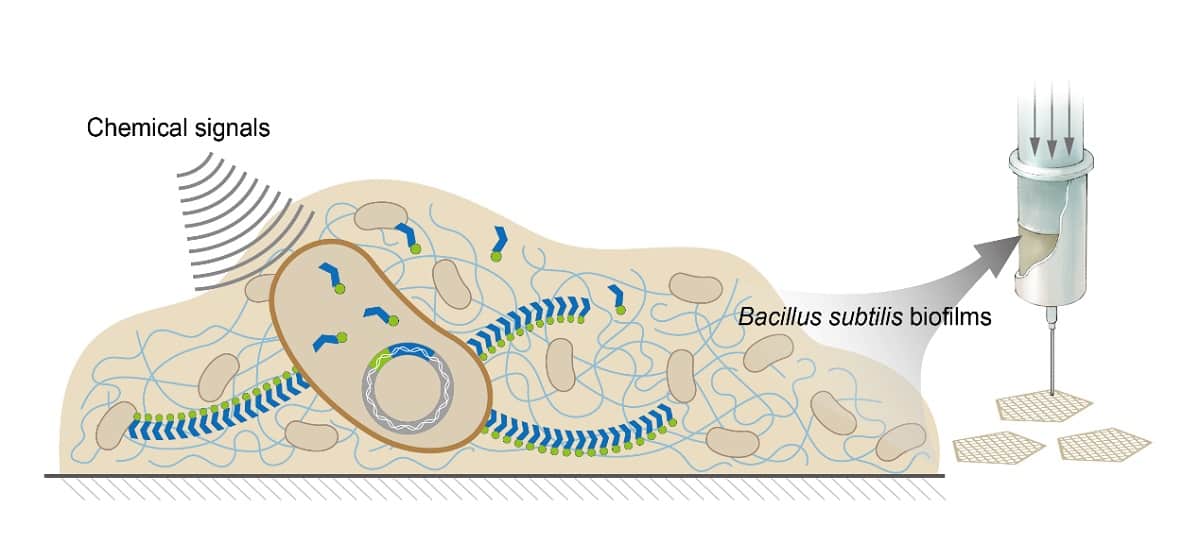
Design for a programmable and printable B. subtilis biofilm production platform. Credit: Chao Zhong

Bacterial biofilms could form the basis of a new biomaterial system with a range of tunable properties from fluorescence to tailored chemical activity. Work by a collaboration of researchers led by Chao Zhong at ShanghaiTech University has exploited the natural secretion of amyloid fibres from the bacterium bacillus subtilis for 3D printing to produce customized nanoscale biomaterials.

B. subtilis bacteria generate biofilms by secreting amyloid fibres via a tightly controlled cluster of genes known as the tapA-sipW-tasA operon. TapA nucleates the extracellular assembly of TasA proteins to create the amyloid nanofibres that give the biofilm its structural integrity. By genetically modifying the TasA protein, the researchers were able to introduce functional chemical groups onto the TasA fibres excreted by the bacteria. Hence, the bacterial films could be designed to act as functional living materials.

Material properties customized by genetic engineering

Material properties controlled by genetic engineering. Credit: Chao Zhong

In particular, they were able to engineer bacteria to secrete fibres containing enzymatic functional groups into harmless products. They were also able to combine biofilms produced with multiple bacterial strains allowing them to perform a two-step degradation of the pesticide paraoxon, demonstrating the potential for designing eco-friendly and highly efficient functional materials.

In addition to showing the functional capabilities of the biofilms, the researchers then studied their processability as materials. The viscoelastic properties of  the biofilms make them ideal for printing.  Modifying the functional groups on the secreted enzymes did not hinder the processability of the biofilms and even allowed the researchers to tune their viscoelastic properties for 3D printing applications.

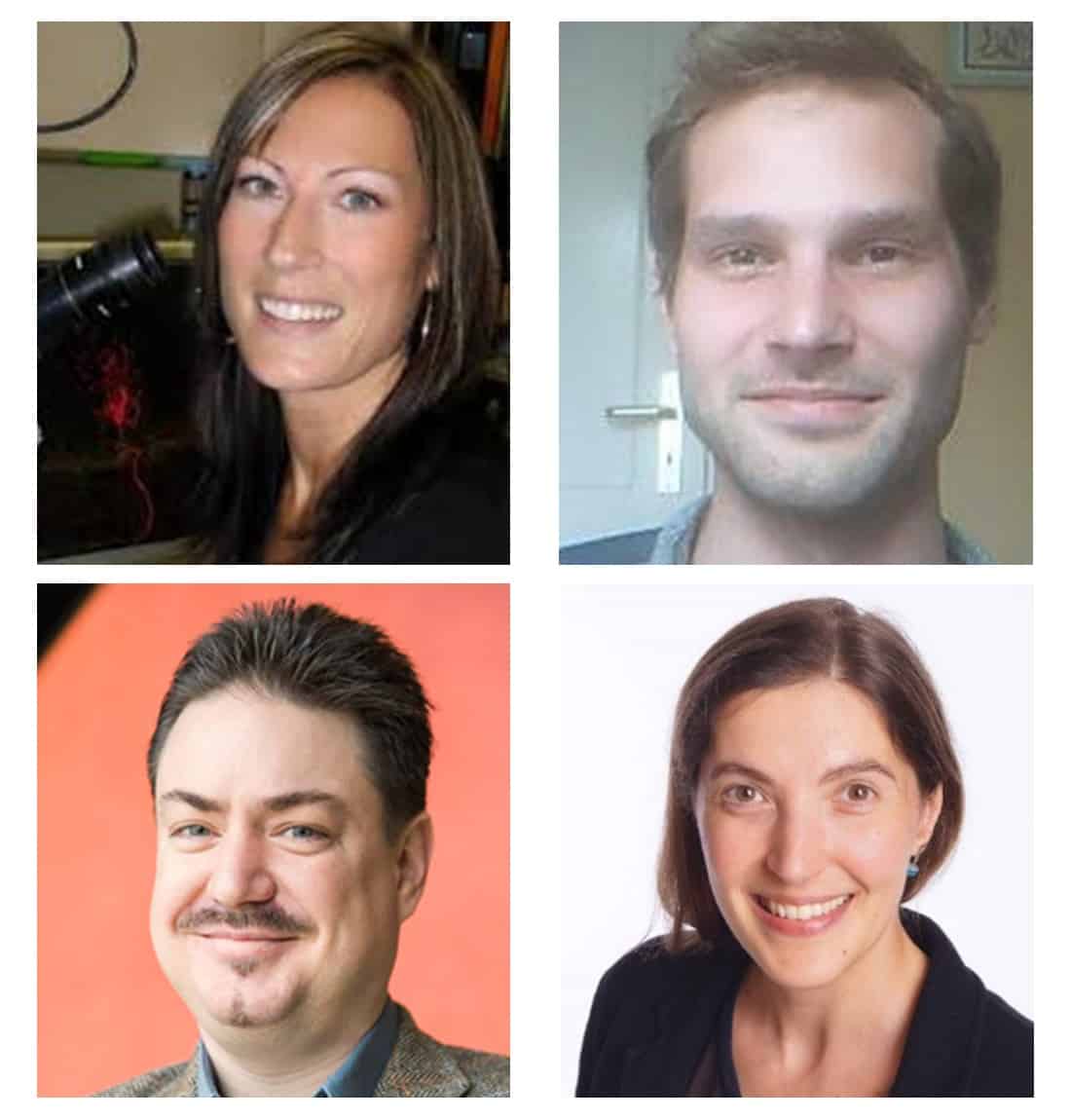
The first co-authors and corresponding author (from left to right: Suying Liu, Chao Zhong, Jiaofang Huang and Chen Zhang)

Finally, the authors showed that their living materials could self-regenerate after printing and sustain their initial printing shape as well as their viscoelastic and functional properties. Furthermore, the bacteria could incorporate onto their fibres without affecting biofilm growth or cell viability. They remain viable for five weeks without supplemental nutrition making them ideally suited for many applications.

Full details of the research are reported in Nature Chemical Biology

Fibre-based probe enables real-time deep-brain imaging

Neuronal structures

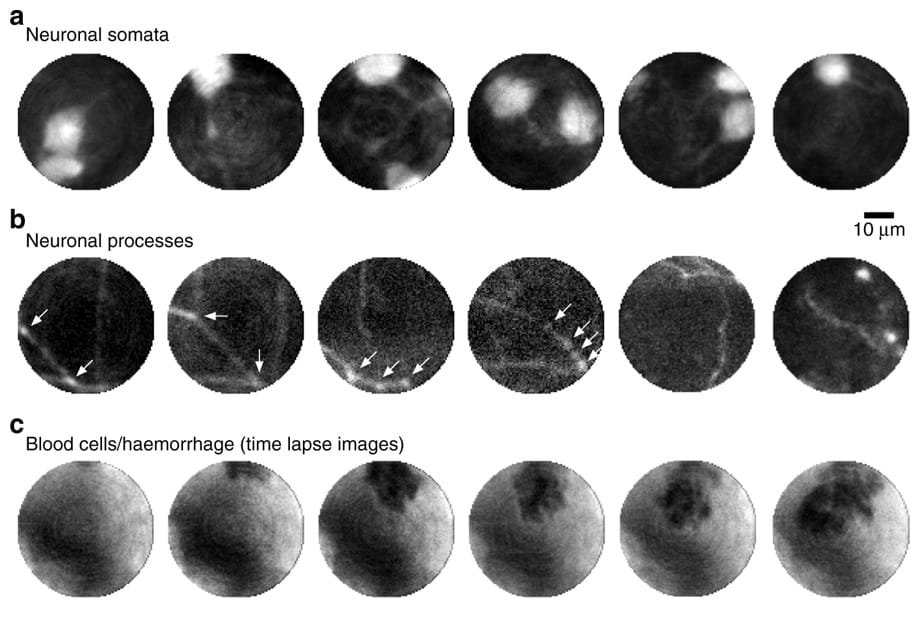
Researchers in Germany and the UK have developed a real-time imaging technique to capture neuronal dynamics in deep-brain layers of living mice, achieving a resolution of around one micron. The high-speed fibre-based fluorescent imaging probe is capable of recording subcellular neuronal structures in the most minimally invasive manner reported to date (Light: Science and Applications 10.1038/s41377-018-0094-x).

Advances in spatial light modulation technologies have led to promising progress in biomedical research. An encouraging example of this is the use of multimode fibres (MMFs), which work as ultranarrow endoscopic probes that allow high-resolution imaging. MMFs also overcome the limitation on the size of optical elements used deep inside living tissues, leaving no structural and functional impact.

Currently, the deep layers of the visual cortex and the hippocampus are fairly inaccessible due to lying deep within the brain. While current massive endoscopes with hundreds of optical fibres are too invasive to penetrate deep-brain regions composed of very tiny structures, non-invasive imaging methods like MRI cannot resolve the tiny neurons within sensitive brain areas. Therefore, designing a compact and carefully optimized imaging system for time-lapse observation and study of neuronal connectivity in vivo could enable a new level of potential biomedical investigations.

Multimode fibre-based imaging system

The researchers — from the Leibniz Institute of Photonic Technology (Leibniz IPTH) and the University of Edinburgh (Centre for Discovery Brain Sciences), led by Tomáš Čižmár and Nathalie Rochefort — took advantage of high-tech holographic methods to achieve single fibre-based imaging of neuronal subcellular processes over several hours. They achieved a resolution of about 1.18 µm across a 50 µm imaging field-of-view, at 3.5 frames/s.

Research team

The 2 cm long fibre was post-processed into a flat-cone to minimize destructive tissue compression as the fibre penetrated to more than 2 mm below the brain’s surface. To confirm the extent of damage after fibre penetration, the researchers looked at a post-mortem section of a perfused brain and saw minimal tissue damage. In addition, single fibre-based imaging not only shortens the post-operative recovery period but also eliminates the need to implant optical imaging elements such as a graded index lens.

“We are very excited to see our technology making its first steps towards practical applications in neuroscience,” says lead author Sergey Turtaev from Leibniz IPTH. Furthermore, Rochefort, the co-supervisor of the project, believes that one of the future applications of this new minimally invasive approach would be to observe neuronal activities in deep-brain structures in behaving animals. This way, neuroscientists will hopefully be able to investigate the many remaining knowledge gaps regarding memory formation and sensory perception, for instance.

Despite the many optimizations that were performed on the imaging system, a considerable level of background was still visible in the obtained images. The origin of this background is the out-of-focus light at the time of sample excitation. “Eliminating out-of-focus light by means of confocal rejection of incoherent fluorescent signals returning from the MMF is currently not possible without prohibitive power losses. Therefore, future work will focus on the development of computational post-processing algorithms to further enhance the imaging quality,” the authors conclude.

Beyond Weird by Philip Ball wins Physics World Book of the Year 2018

Philip Ball

Quantum mechanics – its fundamental interpretations, contemporary technical applications, and even its history and philosophy – has dominated the headlines in physics this year. It is no surprise then, that the field was also a hot topic when it came to popular-science writing, with three books on the subject making our 2018 top 10 list. But if you were to read one of the many books on the subject released this year, then it should the winner of the 2018 Physics World Book of the Year – Beyond Weird: Why Everything You Thought You Knew About Quantum Physics is Different by Philip Ball.

Spooky, strange and apparently impenetrable, quantum mechanics is often thought of as impossible to truly comprehend. It is also notoriously difficult to explain to a general audience, especially without falling into the trap of analogies that never quite work. In Beyond Weird, Ball, a veteran author and science writer, takes to task the long-held view that the quantum world is “weird” – instead, he points out that quantum theory simply reveals how nature truly works, absurd though it may seem to us at times, with our everyday experiences in the “classical” world. The inherent “weirdness” is in our understanding, says Ball, as he tackles the varied interpretations of quantum mechanics.

Rife with science, Beyond Weird also contains a hefty helping of philosophy, as Ball attempts to reconcile quantum reality with seemingly confounding experimental results. Quantum theory may actually be a theory about information, and how we gain it. As Ball writes, a more “if this, then that” approach to understanding the outcome of an experiment may be what we need to meaningfully understand the quantum world.

Our reviewer Brian Clegg described Beyond Weird as “the most original and interesting book on quantum physics for the general public in a long while”, adding that what Ball “successfully does is to enable the reader to look at quantum physics in a different light.” Poignant, profound, bold and extremely well researched, Beyond Weird is the book to read to get a contemporary and comprehensive take on the quantum world, as we know it today.   

We’ve based our choice on the 37 books we’ve reviewed over the last 12 months in Physics World, picking our favourite 10 using the same three criteria that have been in place since we launched our book of the year award in 2009. These are that the books must be well written, novel and scientifically interesting to physicists. This year also marks our 10th winner, so listen to the December Physics World Stories podcast, which features some previous winners, as we look back on a decade of awarding our Book of the Year. The podcast also includes a discussion with Ball, so tune in to find out how and why he decided to pen his quantum tome.

Shortlist

The other nine titles in our shortlist (in no particular order) are:

Treknology: the Science of Star Trek from Tricorders to Warp Drives by Ethan Siegel

Ad Astra: an Illustrated Guide to Leaving the Planet by Dallas Campbell

Exact Thinking in Demented Times: the Vienna Circle and the Epic Quest for the Foundations of Science by Karl Sigmund

Beyond Weird: Why Everything You Thought You Knew About Quantum Physics is Different by Philip Ball

The Order of Time by Carlo Rovelli

Lost in Math: How Beauty Leads Physics Astray by Sabine Hossenfelder

The Dialogues: Conversations About the Nature of the Universe by Clifford V Johnson

When the Uncertainty Principle Goes to 11: Or How to Explain Quantum Physics with Heavy Metal by Philip Moriarty

What is Real: the Unfinished Quest for the Meaning of Quantum Physics by Adam Becker

Hello World: How to be Human in the Age of the Machine by Hannah Fry

Ion-based commercial quantum computer is a first

The first commercial quantum computer that uses trapped ions for quantum bits (qubits) has been launched by the US-based start-up IonQ. The device is unlike other commercial systems, which use qubits made from superconducting circuits. The company is now working with a small number of users to improve the technology.

Over the past few years, quantum computing has gone from an enticing promise of vastly superior computing power to real devices that can do increasingly useful calculations. A modest number of commercial quantum computers have already been made by small companies such as Rigetti as well as tech giants such as IBM. What these systems all have in common are qubits made from superconducting circuits.

But now University of Maryland spin-out IonQ is bucking this trend by using trapped-ion technology developed by Maryland physicist Christopher Monroe, who is the company’s cofounder and chief executive.

“More accurate”

The IonQ device can host 160 ion qubits. The company has performed simple quantum operations on a string of 79 qubits and full quantum computations on 11 qubits. It was announced on 11 December at the “Quantum for Business” conference in Mountain View, California. The company claims that “IonQ’s systems are the first in the market that store information on individual atoms. They are more accurate and can perform more complex calculations than any quantum computer built to date.”

“I think the announcement is significant, and shows they are making good progress”, says quantum-information specialist John Preskill at Caltech, who was not involved in the work. He believes that the ion-trap technology is competitive with superconducting qubits.

Even at this early stage, the results show the ion trap design has all the advantages we expected and more

Christopher Monroe

Ion-trap computers work by holding the ions in a geometrical array – IonQ uses a simple linear arrangement (see figure). Laser beams encode and read-out information to and from individual ions by causing transitions between an ion’s electronic states. During a computation, the ions “feel” one another’s state via electrostatic interactions.

The IonQ device uses ytterbium ions, but unlike superconducting qubits, they don’t need to be cooled to within a fraction of a degree of absolute zero. Bulky cryogenic equipment is therefore not needed and the entire system occupies about one cubic metre.

Progressions of power

The qubit tally of IonQ’s device exceeds the 50-qubit devices reported by IBM and Google, although Google is said to be preparing a 70-qubit machine. But the power of a quantum computer is not simply a question of how many qubits it has; it’s equally important how well each of them performs.

This is where Monroe and colleagues think ion-trap devices might show an advantage. Ensuring that every qubit is identical, for example, is easier with ions because superconducting circuits are much more complicated to make. What is more, the ions are less error-prone, showing an excellent “gate fidelity” of more than 99%.

Gate fidelity is the probability that the gate produces the quantum state it is supposed to, explains Monroe. “A fidelity of 99% roughly means that you can do about 100 operations before the quantum state becomes gibberish”, he says. This means that IonQ’s quantum computer might be able to handle “deeper”, more complex algorithms with more operations.

Preskill adds “I don’t think the other companies have reported two-qubit gate fidelities this good in their multi-qubit devices”.

Benchmark test

The IonQ device reportedly performs well for a standard benchmark test for quantum computing called the Bernstein-Vazirani algorithm. This encodes a number, represented by several bits, into a mathematical function from which the number can be extracted by making a single ‘yes/no’ enquiry on one of the qubits of the encoding function.

The IonQ device has also been used to calculate the binding energies of simple molecules. In principle, quantum computers can do these calculations exactly, rather than needing the approximations that must traditionally be used for any atom or molecule with more than one electron. The IonQ machine was used to do this calculation for a water molecule – a more complicated case than the lithium and beryllium hydrides studied using IBM’s quantum computer.

IonQ’s announcement “came as a pleasant surprise”, says Umesh Vazirani of the University of California at Berkeley, one of the creators of the benchmark algorithm. “They are much further along than I was expecting, and I am impressed with the performance they claim. IonQ’s ion traps are serious contenders with devices that use superconducting qubits.”

Rainer Blatt of the University of Innsbruck in Austria, who conducts experimental work on ion-trap quantum computation, says “the race is still on for which platform is the best, but ions are surely at the front.” Although ion-trap devices often receive less publicity, he says, they “often yield notably better performance.”

“Long road ahead”

But “there is a long road ahead and it is too early to declare winners”, Vazirani warns. “It is also quite possible that it may not end up being an either/or situation”, he says. “The two technologies have different strengths, and eventually a quantum computer might incorporate both for different functions.”

“We have a very long view on the business plan”, says Monroe. “Since it is very unlikely that quantum computers will be able to solve useful problems anytime in the next few years, we are starting to train our system on small problems and algorithms that are of the same form as those that are more difficult.”

The IonQ device is not, unlike the IBM Q quantum computer, yet available to all comers. Monroe explains that they are still a small company, with just 32 employees, and so “we will be partnering with a few users that can help us design and improve our current and future systems.” Ultimately, however, the company aims to make the computer more widely accessible via a cloud server.

Copyright © 2026 by IOP Publishing Ltd and individual contributors