Poking and prodding the molecules of life

Applying physics to the properties and underlying structures of the molecules of life offers an insight into the mechanisms that make living beings tick. But even seemingly simple actions like muscle contraction involve a wide array of biological interactions, which has shrouded the dynamics and function of individual molecules behind a curtain of complexity.

The scientific community has developed a powerful toolbox of methods to probe these interactions over the past two decades, uncovering previously hidden information about the structure, dynamics and function of individual biomolecules. And Miklós Kellermayer, who heads up the Department of Biophysics and Radiation Biology at Semmelweis University, Hungary, has been at the forefront of this rapidly growing field, called single-molecule biophysics, since the very beginning.

“In 1995/6, I was a postdoc at Washington State University, where we collaborated with single-molecule visualization pioneer Carlos Bustamante,” Kellermayer recalls. “We built an optical trap and succeeded in pulling the muscle protein titin – the first protein molecule to be mechanically manipulated in the history of biophysics.”

Following this success, Kellermayer’s career can be thought of as a microcosm for how the wider single-molecule biophysics landscape has evolved. He returned to his country of birth in 1997, and since then has both invented novel techniques and branched out to explore and expose the inner workings of a wide range of proteins.

Precision positioning

One of these techniques represented a step change in capabilities for the community. In 2006, Kellermayer and collaborators used a Mad City Labs objective piezo translator – a device that allows ultra-precise positioning – to focus a high magnification objective within a total internal reflection fluorescence (TIRF) microscope; a powerful method whereby molecules are usually made to fluoresce via chemical or genetic means so that they can be selectively imaged.

The piezo-electric stage allows us to obtain much more precise measurements, and manipulate structures like titin, DNA and longer proteins

Professor Miklós Kellermayer, Semmelweis University, Hungary

They then combined the enhanced TIRF microscope with an atomic force microscope (AFM) – a high-resolution technique that ‘feels’ a surface with a mechanical probe – for the first time. This unique spatially and temporally synchronized set-up allowed the researchers to track the molecular topography and manipulate individual biomolecules, while at same time monitoring changes in fluorescence – even in living cells.

Kellermayer and his team continue to explore the bleeding edge of what is possible with today’s technology. For instance, they have built unique optical tweezers that allow them not only to trap different molecules using radiation pressure from a focused laser beam, but also to manipulate and measure how much movement is necessary to pull a molecule with a certain force. “The central piece of this instrument is a hyper-strength Mad City Labs xyz piezo-electric stage,” explains Kellermayer. “It allows us to obtain much more precise measurements, and manipulate structures like titin, DNA and longer proteins.”

Flexing muscles

Kellermayer’s group has applied these and other techniques to a host of previously intractable problems in recent years, including further important contributions to understanding the role of the titin molecule inside muscle. Titin is the largest protein ever discovered, measuring more than 1 µm in length, and it is known to act as a molecular spring that imbues muscle with its elasticity. But whether titin unfolds during muscle extension, and how this unfolding might contribute to muscle contraction, are questions that have been hotly debated among the biophysics community.

To answer these questions and illuminate the molecule’s folding mechanisms, Kellermayer and colleagues have used high-resolution optical tweezers to manipulate individual titin molecules that were purified from back muscle taken from rabbits. They discovered that some protein domains in titin can unfold under very low physiologically relevant forces, and in later work they were able to partially unfold the molecule and then allow it to refold. This was one of the first experiments to reveal that titin refolding assists muscle contraction by generating mechanical force.

Tapping at viruses

Beyond titin, the group is also highly active in elucidating how DNA is ejected by a virus when it infects a host cell. A virus consists of a nanoscale shell called a capsid that encapsulates the hostile genomic material. After binding to surface receptor sites, most viruses transfer their genome inside the host cell while leaving the capsid outside. This material fools the host organism into manufacturing the viral structural elements, which spontaneously reproduce the virus particle by self-assembly.

Given viruses are already being used as a blueprint for targeted drug delivery, surprisingly little is known about the dynamics of capsid behaviour, let alone how a virus releases its genetic material. “Using AFM, we studied the virus bacteriophage T7 – a virus that infects susceptible bacterial cells, such as E. coli – and found a very interesting structural change in the virus’s capsid wall when we pushed it with the AFM cantilever,” explains Kellermayer. More specifically, force from the cantilever prompted the capsid to buckle in discrete steps that were integer multiples of around 0.6 nm.
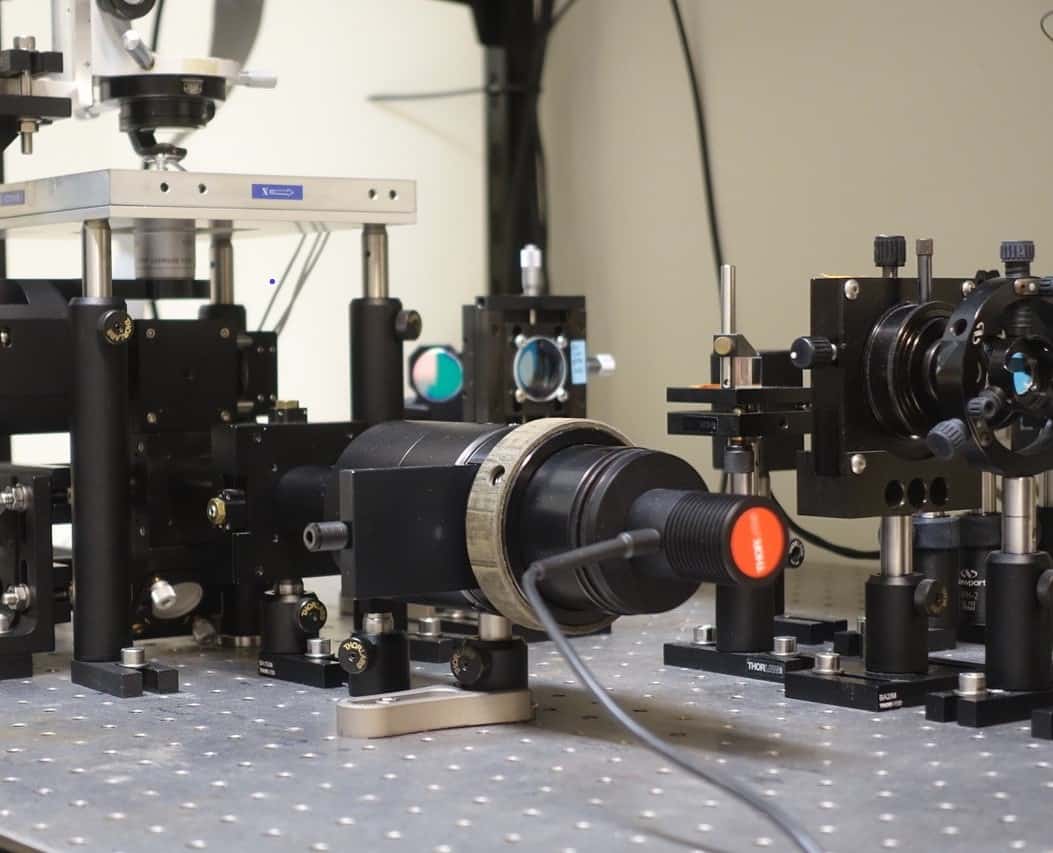
A close-up of the equipment

Then, when the researchers retracted the cantilever, the capsid recovered its structure in the same discrete steps. “It’s a reversible structural change,” Kellermayer says. “The bacteriophage can heal itself, can recover from mechanical distortion.” This discovery offers an insight into how capsids protect viruses from harsh environmental impacts.

Yet Kellermayer and his team did not stop there. In their most recent paper, the group again used AFM on T7, but instead of applying constant force on the capsid, they gently tapped it by oscillating the AFM cantilever. To their surprise, when they knocked on the virus’s door, it answered by opening up and releasing its DNA. “We still don’t understand the mechanism behind this, but it is certainly remarkable,” explains Kellermayer, who also found that increasing the cantilever force accelerated the DNA release process. “Hopefully, this will lead us to a better understanding of how viruses eject their DNA into the host cell.”

With further insights likely to come from current attempts to measure the force required to pull out the DNA from the viral capsid, as well as studies of how different ligands might influence the behaviour of titin and numerous other topics the team is investigating, Kellermayer’s research is testament to how single-molecule experiments can solve the ‘unsolvable’ and unlock an incredible wealth of hidden information about the molecules of life.

Silicon resonators pass the Bell test for quantum entanglement

Quantum entanglement in a macroscopic mechanical system has been demonstrated by physicists in Austria and the Netherlands, who confirmed that their experiment passes the “Bell test” for entanglement. The system was created by Simon Gröblacher and colleges at Delft University of Technology and the University of Vienna and could lead to the development of new quantum-information technologies such as memory nodes.

Entanglement is a curious consequence of quantum mechanics that allows two particles to be connected in a way that cannot be described by classical physics. It is normally observed as correlations between measurements made on two particles (such as their polarizations). In 1964 the Northern Irish physicist John Bell described his famous test of whether such correlations are stronger than those allowed by classical physics – as defined by a violation of what is now called Bell’s inequality.

It turns out that entanglement can also occur in systems that are much larger than fundamental particles. Earlier in 2018, Gröblacher’s team showed that it is possible to entangle two identical 10 micron-long pieces of silicon – each containing around 10 billion atoms – that were clamped at each end and functioned as mechanical resonators.

Now, writing in Physical Review Letters, the team says it has used a similar system to perform “the first Bell test using correlations between light and microfabricated mechanical resonators, which constitute massive macroscopic objects”.

Optical interferometer

The test involved putting the resonators into the two separate arms (paths) of an optical interferometer so that the resonators were separated by 20 cm. The interferometer is created using two optical beam splitters – one that splits a beam of light into the two arms and another that combines the two beams before splitting it again and sending two beams to two different photon detectors.

The resonators are cooled to well below 1 K and the experiment begins with a blue laser pulse being fired into the interferometer, which creates vibrations in one of the resonators. This vibrating resonator then emits a photon, which is detected by one of the detectors as it emerges from the interferometer – thereby confirming the excitation. Because the resonators are identical, there is no way of knowing which resonator emitted the photon and this puts the two resonators into a state of entanglement.

Correlated pairs

Then, a second pulse of red light is fired into the interferometer, which causes the vibrating resonator to emit a second photon, which is also picked-up by one of the two photon detectors. Entanglement of the resonators is confirmed by measuring the correlations between which detectors measured the photon pairs – for example, the number of times that a measurement of the first photon in detector-1 was followed by the second photon in detector-2.

Using a phase-shifter in one arm of the interferometer, the team could adjust the phases of the blue and red pulses as they passed through the different arms. By measuring the correlations as a function these phases, they were able to confirm that Bell’s inequality was violated by more than 4σ.

The lifetimes of the excitations in the resonators are currently several microseconds. However, if this could be increased significantly, the system could be used as a memory node in a quantum computer. Gröblacher and colleagues now hope to demonstrate entanglement on even larger scales, and with more complex quantum states of optomechanical resonators.

The experiment is described in Physical Review Letters.

Brain–computer interface gives people with paralysis full control of a tablet computer

Researchers from the BrainGate consortium have, for the first time, shown that a brain–computer interface (BCI) can be used by people with paralysis to control a commercial tablet computer. A small device implanted in the motor cortex of the patient was able to interpret neural signals and translate these into mouse movement on a tablet.

For patients with paralysis, assistive technologies can be vital tools to regain functionality. Recent research has aimed to create a direct link between such assistive technology and the brain of a user. BCI-based devices have previously been used to operate a tablet for general programs such as web browsing, painting and games. However, the latest work with the team’s BrainGate2 sensors has demonstrated the ability to use an unmodified off-the-shelf tablet device. Participants were able to make use of commercial apps from the Google Play store, even when these were not included in the original trial design (PLOS ONE 10.1371/journal.pone.0204566).

Giving back control

The BCI uses a decoder to interpret brain waves for intended movement from the motor cortex and present these to the tablet in the same way as a signal from a Bluetooth mouse. Each participant had their own imagery to produce a click; for instance, one imagined clenching their left hand. When asked about how easy this method was to get to grips with, one of the patients said that “the tablet became second nature to me, very intuitive. It felt more natural than the times I remember using a mouse.”

During the study, three participants from the larger BrainGate2 clinical trial were asked to perform certain tasks, such as replying to e-mails and searching for videos and pictures of their hobbies. The patients were able to complete all tasks set for them and also demonstrated use of other apps of their choice, such as shopping or calculator apps. They were also monitored on the speed at which they could type when using the chat features. Participants were able to increase the speed at which they typed by making use of the word completion function, to achieve rates of up to 31 characters per minute.

One limitation of the BCI is that complex mouse movements such as click and drag, or scrolling, were not available. However, the researchers aim to improve on this in future work. The study was designed to not make use of any preloaded accessibility software; however, many tasks such as typing and scrolling can be made more efficient by using these features. Showing that this level of functionality is possible without accessibility software demonstrates the level of control that the study participants had.

Personal impact

Perhaps most importantly for the participants themselves, was their ability to use the BCI for tasks other than those in the original study design. One, who was a musician, was able to play music again through a keyboard piano app. Another participant managed to send their first text message through the tablet. This work has thus not only demonstrated technical control, but also the impact the technology had on the participants themselves.

The lead author Paul Nuyujukian said: “It was great to see our participants make their way through the tasks we asked them to perform, but the most gratifying and fun part of the study was when they just did what they wanted to do– using the apps that they liked for shopping, watching videos or just chatting with friends.”

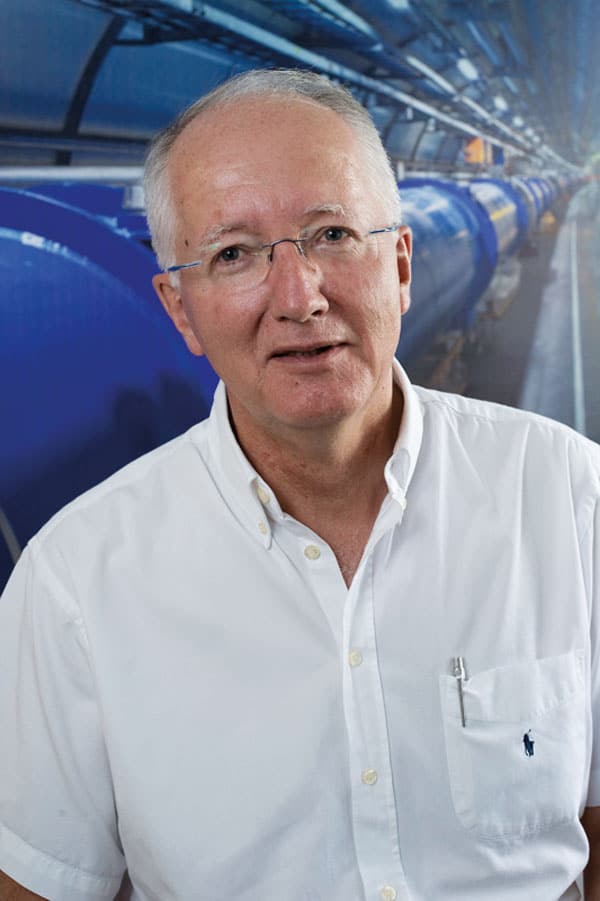
Celebrating 50 years of the European Physical Society

Rüdiger Voss

What has been the biggest achievement since the European Physical Society (EPS) was founded?

The EPS has succeeded in building and supporting a scientific community of universal stature, federating nearly all European countries. Today, we count among our members 42 national physical societies – and all disciplines of physics.

How significant was it that five Communist nations – including the Soviet Union – were founding members back in 1968?

It was very significant. The EPS was the first learned society that brought together scientific societies and individual scientists from both sides of the Iron Curtain. This was an early and powerful demonstration of the potential of scientific collaboration to bridge political divides and cultural barriers.

With the political divisions of the Cold War long gone, what do you see as the main role for the EPS today?

The Cold War is history, but 30 years later, Europe is still not a level playing field in scientific education, research opportunities, funding and access to infrastructure. More subtle political divides persist and new ones are opening up – for example the UK leaving the European Union (EU). The EPS has an important role to play in preserving the cohesion of the European physics community.

The Cold War is history, but 30 years later, Europe is still not a level playing field in scientific education, research opportunities, funding and access to infrastructure

How does the EPS help EU-funded efforts?

The EPS has started late in developing a science-policy profile, but we are beginning to be recognized by both the European Parliament and the European Commission as the voice of European physicists. Our action is driven by scientific arguments and scientific expertise across all fields of physics, not by individual groups or national interest, and this gives us strong credibility.

How do you think Brexit will affect physics in Europe?

The UK and the rest of Europe have drawn huge benefits from scientific collaboration in the past, both in and outside EU Framework programmes. I sense a strong determination and a lot of goodwill on both sides of the English Channel to preserve this culture of exchange. Of course, it is desirable that the UK can remain attached to future Framework programmes, similar to the schemes that have worked successfully for other non-EU countries such as Norway or Switzerland in the past. History has shown that collaboration in physics can bridge much deeper gaps than the one that will open up after Brexit.

What would you say to those who argue that the EU has too much influence on European research?

We should keep in mind that EU research funding corresponds to only a few per cent of total European R&D expenditure. Nonetheless, it has produced substantial benefits and has served physics in Europe well. The success of past Framework programmes, their wide visibility and the stiff competition mean that EU visions and priorities tend to strongly influence national policies. Also, there is a risk that EU funding is perceived as a replacement for, not a complement to, national R&D funding. We must watch that Framework programmes set an example to follow in scientific excellence while addressing the problems that Europe can only solve as a whole.

In terms of physics, what are Europe’s biggest strengths?

What sets European physicists apart is the ease with which we transcend national boundaries and national interests. The ability and determination to pool intellectual and material resources to develop joint scientific visions and to pursue common goals has become an integral part of our approach. This makes physics in Europe particularly strong in areas that rely on large-scale collaborations and infrastructures, including my own field of high-energy physics – but there are many others.

Where is Europe weakest in physics?

I am not aware of any field of physics where Europe is weak. Scientific collaboration in Europe is constantly facing new levels of complexity because of diverse cultures, languages, policies and bureaucracies, that can slow down development. However, I adhere to the African proverb: “If you want to go quickly, go alone. If you want to go far, go together.”

What actions is the EPS taking to make the physics community in Europe more diverse?

The EPS promotes diversity in multiple ways. We award Emmy Noether Distinctions to female physicists who are internationally visible role models. We are also introducing policies to ensure a fair representation of women at EPS organized conferences. Diversity – or the lack of it – is rooted in high-school and undergraduate education. Yet the EPS does not have the resources to effectively reach out to the educational systems of more than 40 European countries. This is an area where we need to work more closely with our national member societies.

What will be the most important challenge for the European physics community over the next 50 years?

In the public debate of science policies, priorities shift increasingly from scientific to societal challenges. The design of the Horizon Europe programme is the most recent manifestation of this trend. This is a legitimate development because the challenges are massive, and physics help to address issues such as energy and climate change. However, history teaches us that genuine technological innovations are ultimately the products of curiosity-driven research and disruptive discoveries. The European physics community will need to watch that science policy and funding opportunities safeguard a healthy balance of applied and basic research.

Hurricane Maria: a haircut, resilient palms and NASA’s Black Marble

As well as killing almost 3,000 people in Puerto Rico in September 2017, Hurricane Maria killed or severely damaged some 30 million trees, according to Maria Uriarte of Columbia University, US, speaking at the AGU Fall Meeting. And it broke trees in half at a rate between two and four times the amount that earlier hurricanes did.

In 1989 Hurricane Hugo hit Puerto Rico with maximum windspeeds of 120 mph whilst Hurricane Georges in 1998 brought 115 mph winds, compared to Maria’s 155 mph, Uriarte explained. The researcher has studied trees on the island as part of a 30-year programme at the Luquillo Long-Term Ecological Research site in the northeast.

Following Maria, Uriarte and colleagues visited field plots throughout the island and measured the damage suffered by each tree. By scaling up these figures, the team estimates that Maria killed or severely damaged 30 million trees, resulting in the loss of 5.28 Tg of stored carbon.

The number one risk factor predicting damage from Maria, the researchers found, was canopy height, with taller trees suffering more damage. Rainfall, not wind speed as they’d expected, was the number two risk factor, with wind speed in third place, followed by factors linked to prior rainfall and soil wetness, both of which affect tree stability.

Maria uprooted a similar number of trees to earlier hurricanes but killed slightly more, and broke between two and four times as many. The exception to this was a native palm species, which suffered similar break rates in both Maria and earlier hurricanes. Uriarte predicts that the composition of the forest could change to include more of these flexibly-trunked palms as hurricanes increase in maximum wind speed and rainfall under climate change. And forests may move from acting as a carbon sink to becoming a source under a more severe storm regime.

Maria also brought unexpectedly large nitrogen losses that lasted a long time. William McDowell of the University of New Hampshire, US, detailed how the hurricane both elevated the baseline for nitrate concentrations in Puerto Rico’s rivers and increased variability. “The wheels have come off the bus,” he said, with stream concentrations increasing and decreasing wildly in response to individual rainstorms. Those higher nitrate levels, once they reach the ocean, could cause algal blooms that smother coral reefs.

3-D view

Whilst Uriarte looked at the forest from the ground, Douglas Morton of NASA Goddard and colleagues investigated from the air, retracing the path of a survey they’d done six months before the storm. Goddard’s Lidar, Hyperspectral and Thermal (G-LiHT) airborne imager produces a 3D model of the forest by bouncing a laser beam off the trees and ground. It “can tell how many trees fall in a forest even if no-one is watching”, as Morton put it. Normally gaps from fallen trees are rare and small, but Morton’s data show that Hurricane Maria caused the equivalent of 30-50 years’ worth of tree gaps in just one day.

LIDAR also showed that Maria gave Puerto Rico’s forests “a haircut”. The storm reduced forest heights by roughly a third, created gaps in the forested area of around 10%, and damaged 55% of the canopy across the island. Morton stressed that the ecosystem is resilient and is now exhibiting lots of growth, but Maria set it on a new trajectory.

Dark skies

Miguel Román, also of NASA Goddard, examined Puerto Rico from even higher altitudes. He combined data for Earth at night from the Suomi National Polar-orbiting Partnership satellite with data from Landsat and OpenStreetMap to track where people were able to turn their lights back on across the island for the six months after Maria hit. The results showed that there was a lag between power plants being switched on and electricity access by communities. And that some communities fared better than others; at least one mountaintop community didn’t have power for a year. NASA’s Black Marble product, which can show electricity usage street by street, will be available from January 2019 for anywhere in the world; Román believes it could be useful for use in Syria or the Rohingya refugee camps.

Could legalizing cannabis help the environment?

Cannabis might make people feel high, but from an environmental perspective it could be a real downer. In the US state of California a massive expansion in cannabis farms has resulted in deforestation, overstretched water supplies, wildlife poisoning, and destabilization of steep hillsides. Without suitable policy intervention and careful planning, other parts of the world are likely to suffer too as demand for cannabis continues to rise.

In Humboldt County, northern California, the number of greenhouses has increased nearly twentyfold over the space of eight years. Located far from markets and main roads, and often teetering on steep slopes, these greenhouses were never designed for growing tomatoes or cucumbers. Instead, they’re almost certainly a response to the burgeoning cannabis trade.

Using high resolution satellite imagery for the years 2012 and 2016, Van Butsic from the University of California, Berkeley and his colleagues found a boom in cultivation of cannabis in Mendocino and Humboldt Counties. By zooming right in, the researchers could identify the distinctive shape of the cannabis plants, the regular pattern in which the crop is planted, and the greenhouses perched in unusual places.

The number of cultivation sites and area under cultivation nearly doubled in five years, the team found, while the number of plants produced nearly quadrupled. Much of this expansion took place in areas of high environmental sensitivity, with a 40% increase on steep slopes, a 44% increase in remote regions, and as much as a 116% increase near rivers inhabited by endangered fish.

“The chances of environmental damage are much greater in these regions because of the high potential for erosion, which threatens water quality, high potential for using water directly from headwaters, and the need to build roads to access these farms,” says Butsic.

California has fairly robust environmental laws, but they appear not to have been applied to these remote cannabis farms. Cannabis was legalised for medical production in California in 1996, but there was little regulation of the market until 2016, with no state-wide collection of information on cultivation locations. Couple this with a booming illegal export market and it is hard to know whether the observed expansion was driven by the need for increased medicinal supplies, or for profits to be made on the black market.

“The paucity of regulation and enforcement around cannabis has been one of the major drivers in the increase of cultivation in environmentally sensitive areas, we think,” says Butsic.

Ultimately the authors believe that the trend to legalise cannabis, for both medicinal and recreational use, may lessen the problem of cannabis cultivation in environmentally sensitive areas.

“Through liberalization one can imagine a path where cannabis production is normalized and farmers maximize profit by using land that is best suited for growing cannabis instead of areas chosen to avoid detection,” they write in Environmental Research Letters (ERL).

Model tackles nonlinear optics in 2D materials

True to form, observations of nonlinear behaviour in graphene – such as parametric frequency conversion, third harmonic generation and self -phase modulation – has revealed extremely strong responses. Despite the attention these nonlinear optical responses have attracted for photonic devices, gaps remain in how scientists understand the processes governing them. By devising a description for the effective electric field and the sheet current density in a 2D material under specified incident light beams, a collaboration of researchers in China, Canada, Belgium and the US provide a model for extracting nonlinear optical responses for all 2D materials.

Reporting in the first issue of the Journal of Physics: Photonics, JinLuo Cheng at the  Chinese Academy of Sciences in Changchun and University of Chinese Academy of Sciences in Beijing, Chunlei Guo at the Chinese Academy of Sciences in Changchun and Rochester University in the US, and co-authors highlight the discrepancies between theory and experiment that have hindered efforts to fully exploit the optical properties of graphene. Taking the third order effective susceptibility as a case in point, in their report they describe calculated values based on phenomenological relaxation time approximations for scattering as “about two orders of magnitude smaller than most values extracted from earlier experiments for lightly doped graphene.” They add, “Several effects have been considered that might bring theory in better agreement with these experiments, including saturation of the optical nonlinearity, the influence of cascaded second order processes, and novel plasmonic effects, but none of them can sufficiently enhance the calculated conductivities.”

Modelling with a “structure factor”

The researchers describe their approach as modelling the current density in graphene as a ‘current sheet’ described by a Dirac δ-function, where the current density is zero for all coordinates except those defining the position of the graphene monolayer. They then derive a key equation for graphene nonlinear optics using a structure factor that describes environmental effects. With their equation they can determine the effective electric fields and current density inside 2D materials as a response to incident laser beams.  The model also includes the feedback radiation from the structure’s own sheet current density.

Applying their results to a graphene covered multi-layered structure they explore the second and third harmonic generated signals, as well as the output light generated through second order nonlinearity for parametric frequency conversion processes. They conclude their equations are suitable for modelling the entire family of 2D materials including bi-layer graphene, functionalized graphene, monolayer transition-metal dichalcogenides, black phosphorene, silicene, stanene, and that their results provide “a starting point for further nonlinear optical investigations of graphene or 2D materials in  layered structures.”

Full details are provided in the first issue of Journal of Physics: Photonics.

2018 Breakthrough of the Year: Liz Kalaugher’s shortlist

It’s only a few days until we announce Physics World’s 2018 Breakthrough of the Year. In the run-up to the announcement on Thursday, each specialist editor has been selecting the top 5 breakthroughs in their field.

Our top 5 shortlists have been chosen the research we have covered in 2018, based on three criteria:

  • Significant advance in knowledge or understanding
  • Importance of work for scientific progress and/or development of real-world applications
  • Of general interest to Physics World readers

Now that all the shortlists have been published, the Physics World team will get together to debate and decide which of the breakthroughs will make it into the Top 10 – and which will be the overall winner. The final announcement of the Physics World 2018 Breakthrough of the Year will be made on Thursday 13 December.

In no particular order, here is my top five shortlist from our coverage in the environment and energy section.

IPCC Special Report on 1.5 °C climate change

The IPCC released its Special Report on 1.5 °C climate change in October. The work of 91 authors and review editors from 40 countries, the report resulted from the Paris climate talks in 2015 and highlights the climate-change impacts that could be avoided if the world gets its act together and limits global warming to 1.5 °C. “Every extra bit of warming matters, especially since warming of 1.5 °C or higher increases the risk associated with long-lasting or irreversible changes, such as the loss of some ecosystems,” said Hans-Otto Pörtner, co-chair of IPCC Working Group II. Read more in our special collection on climate change at 1.5 °C.

Combustion-free plane takes flight

Aviation has, until now, been an industry stubbornly tricky to make fossil-fuel free using technology. But the first flight of a five-metre wingspan plane that propels itself not with a combustion engine but via charged ions from wire electrodes running off a battery – as demonstrated by Steve Barrett and colleagues at MIT – could eventually change the face of aeroplanes as we know them today.

Combustion-free plane


Outlook for Arctic ice

With temperatures rising, the Arctic continued to suffer. Julienne Stroeve of University College London and colleagues reviewed the state-of-the-art research, concluding that in just two decades the Arctic Ocean is likely to be ice-free during August and September, and by 2060 the Arctic Ocean will be ice-free throughout the summer months. Distressing but important findings.

Photo of Arctic ice

Regime shift for pacific cyclones

The outlook for cyclones and hurricanes as climate changes has proved controversial over the years, with early research giving conflicting results and the different climate and geographies of the Pacific and Atlantic basins confusing matters further. This study by Jianjun Xu and colleagues at the Guangdong Ocean University, China, found that tropical cyclones over the western North Pacific underwent a “regime shift” in their destructive potential in 1998. In their study of the years 1979 to 2016, the destructiveness of the cyclones increased rapidly after 1998, rising 97% from the interval 1998–2003 to 2012–2016. The researchers believe the shift results from the impacts of the strong La Niña weather phenomenon of 1998–2001, and the strong El Niño in 2014–2016.

And finally, it’s not strictly a breakthrough but our columnist Dave Elliott has done sterling work analysing the debate about 100% renewables, so we’re including one of his articles in the list:

Prospects for 100% renewable electricity

It’s increasingly urgent that we cut global carbon emissions but argument has raged in academic and industry circles over how feasible it is to create an electricity system that’s 100% renewable. Physics World columnist Dave Elliott has been following the debate, concluding that there’s a strong case that it is indeed possible. He’s even cautiously optimistic about the prospects for a 100% renewable heat and power system.

  • Take a look at the shortlists from Hamish JohnstonAnna Demming, and Tami Freeman, and check back on Thursday to find out which of our shortlisted breakthroughs have made it to the Top 10 – and which is the overall winner

Nanotweezers probe single cells

A new type of nanotweezer capable of trapping and extracting single entities such as DNA, RNA and mitochondria from a living biological cell could help researchers better understand the fundamentals of cellular processes and how these processes occur in real time. The device, which does not damage cells, unlike many existing such analytical techniques, could also help in the construction of the Human Cell Atlas – the most ambitious genomics project after the sequencing of the human genome.

Many biological cells of the same type – for example brain, muscle or fat cells – look very similar to each other but they have quite different structures and compositions at the single-molecule level. The problem is that conventional approaches to unearth these differences typically require the target cell to be removed from its environment before it can be analyzed. This destroys important information on how the cell contents interconnect, and the process often kills the cell too. Such techniques thus only provide a snapshot of a cell’s transcriptional profile at a given point in time, and cannot provide dynamical information such as molecular changes in the cell as they occur.

Non-destructive technique

A team led by Joshua Edel and Alex Ivanov from Imperial College London has now developed a technique that overcomes this problem. “Our nanotweezers are capable of extracting single molecules from live cells in real time without destroying them,” explains Edel. “We can extract several different parts from different regions of the cell, including mitochondria from the cell body, RNA from different points in the cytoplasm and even DNA from the cell nucleus.”

The researchers made their nanotweezers by depositing carbon at the tip of a sharp two-chambered glass capillary to form a pair of electrodes with a 10 to 20 nm insulating gap between them. By applying an alternating current voltage between the electrodes, it is possible to generate a powerful and highly localized electrical field at the tip of the nanotweezers that can be used to trap and extract entities from living cells with single-molecule precision.

“This technique works thanks to an effect known as dielectrophoresis and it could provide us with a deeper understanding of cellular processes – and, for example, find out why cells of the same type can be very different to each other,” say team members Binoy Paulose Nadappuram and Paolo Cadinu. “For example, nerve cells require a lot of energy to fire signals so they contain many mitochondria (which are the “powerhouses” of living cells). By adding or removing mitochondria from individual nerve cells, we could better elucidate their role – particularly in neurodegenerative diseases.”

Testing the nanotweezers

The researchers tested out their nanotweezers by using them to trap and extract small protein- and single DNA molecules from aqueous solutions. They also used them to perform “single-cell biopsies” and extract DNA directly from the nucleus of a human osteosarcoma cell and primary human pulmonary artery endothelial cells. They also succeeded in extracting RNA from the cytoplasm of these cells for subsequent genomic analysis.

And that is not all: the researchers show that the nanotweezers can be used to manipulate single organelles too by trapping and extracting single mitochondria from the hippocampal neurons of mice.

Helping to construct the Human Cell Atlas

“These tweezers are effectively a new tool to interact with single cells and their constituents and have unprecedented spatial resolution, they tell Physics World. “For instance, monitoring cells over time and thus performing multiple biopsies at different points in different locations may help us better understand how cells react to external stimuli and the cellular processes involved in different signaling pathways.”

The team, reporting its work in Nature Nanotechnology 10.1038/s41565-018-0315-8, says that it is now busy integrating the nanotweezers into different scanning probe techniques. “This will allow for spatial and temporal quantification of single gene expression and understanding the role of different organelles in cell function,” say Nadappuram and Cadinu. “The technique could ultimately help in the construction of the Human Cell Atlas, which aims to create a reference map of all human cells.”

Ultrasound-activated nanoparticles provide targeted control of brain activity

Drug uncaging

Researchers at Stanford University have developed a technique to non-invasively control activity in specific regions of the brain, using drug-loaded nanoparticles activated by a focused beam of ultrasound (Neuron 10.1016/j.neuron.2018.10.042).

Precise control of activity in specific regions of the brain is a major goal in the treatment of many neurological and psychiatric disorders, as well as in neuroscientific research. Currently, localized control of brain function either requires electrodes to be implanted directly into the brain, which is extremely invasive, or use of trans-cranial magnetic or acoustic stimulation of neurones. Such stimulation is imprecise, has a limited range of effects and has an unclear mechanism of action.

The Stanford researchers have demonstrated a new non-invasive approach for targeted control of brain activity. They embedded the anaesthetic propofol inside polymer nanoparticles, which are about 400 nm in diameter and can be injected intravenously in solution. When in the blood, the drug usually remains encased inside the nanoparticles. However, when exposed to ultrasound, the nanoparticles break up, releasing the drug, which can then diffuse into the surrounding tissues.

The ultrasound pulse can be focused onto a specific target area, meaning that, unlike with conventional anaesthesia, the drug’s effects are localized only to precise regions of the brain.

The team tested the technique on rats, by focusing ultrasound onto the animal’s visual cortex. The brain’s response to visual stimuli was recorded using electrodes, and the visual cortex showed significantly reduced activity after treatment. Activity in the motor cortex was unaffected, however, demonstrating that the response to the procedure was localized.

The researchers also performed PET scans to identify which regions of the brain were taking up most glucose and therefore had more activity. They saw that other, distant regions of the brain associated with those deactivated areas had their activity affected too. The authors suggest that the technique could therefore be used as a way of mapping interactions between different parts of the brain.

Unlike more common techniques to control brain activity, this approach is non-invasive, has a clear mechanism, and could in future be used with different drugs to generate a wide range of effects.

To check the safety of the process, the authors also looked for any adverse effects due to the ultrasound or nanoparticles, such as haemorrhaging or disruption of the blood-brain barrier. Raag Airan, whose group conducted the research, comments: “We have now completed ultrasonic drug uncaging in over 100 rats without evidence of significant toxicity or parenchymal [tissue] damage. It seems we have a wide window of safe ultrasound parameters that we can use with these nanoparticles.”

Ultrasound has been widely used in medical imaging for decades, but its applications in drug delivery have only recently been realized. While this is the first study to use the technique to control brain activity, ultrasound-triggered drug release has previously been used to improve the effectiveness and safety of chemotherapy drugs, and clinical trials in humans are currently ongoing.

There are still some regulatory hurdles to overcome before this particular technique can be safely tested on humans, but Airan is optimistic about its clinical potential.

“The first trial we’re looking to do is to localize epileptogenic regions in the brain of patients with treatment resistant epilepsy who are slated for neurosurgery, to validate that the intended surgical volume is indeed the generator of abnormal brain activity – and to ensure that removing it wouldn’t induce an unexpected functional deficit like aphasia or amnesia,” Airan says. “While it is speculative to say when this might come together, I think it is reasonable for us to expect this trial to start within about three years”

Copyright © 2026 by IOP Publishing Ltd and individual contributors