Hydrogel bioprinting takes to the air

Hydrogel produced using the airborne technique

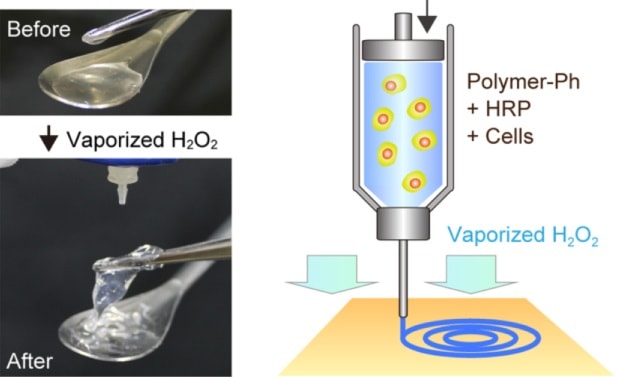
Researchers in Japan have devised an improved technique for producing the cell-laden hydrogels, or “bioinks”, that are crucial for 3D bioprinting (Biofabrication 10 045007). The technique can form hydrogels within just six seconds and, when used with a micro-extrusion device, can create 3D hydrogel constructs in which 90% of the live cells survive the fabrication process.

The researchers have re-invented an established technique in which an enzyme called horseradish peroxidase (HRP) is used to catalyse the cross-linking of various polymers to form hydrogels. Bioinks produced by this enzymatic reaction are often used in extrusion-based bioprinting – the most widely studied to date – in which the hydrogel is forced through a syringe or a printer-head nozzle and then quickly stabilized to produce a fixed, printed structure.

The technique is popular because it does not harm the live cells encapsulated within the hydrogel, plus it enables a variety of polymers to be used as the bioink. One problem, however, is that the reaction requires HRP to be mixed with hydrogen peroxide (H2O2), which is usually done in an aqueous solution. Once these mixtures are loaded into a syringe for subsequent printing, the HRP-catalysed reaction starts to form cross-links almost immediately – which can clog and plug up the needle.

Air replaces water

The new technique, developed by Shinji Sakai and colleagues of the Graduate School of Engineering Science at Osaka University, overcomes this problem by supplying hydrogen peroxide as a gas. By passing air through an aqueous solution of hydrogen peroxide, the researchers created an airflow that was rich in hydrogen peroxide. Extruding the bioink into this airflow catalyses the HRP reaction and allows the hydrogel to form.

“We prepared our hydrogels by contacting air containing between 10 and 50 ppm H2Owith an aqueous solution filled with polymers comprising phenolic hydroxyl (Ph) groups and horseradish peroxidase,” explains Sakai. “In this system, HRP catalyses cross-linking of the Ph groups by consuming the airborne H2O2.”

According to Sakai, the researchers can tune the hydrogelation rate and mechanical properties of the resultant hydrogels by controlling the concentration of hydrogen peroxide in the air, the exposure time of the bioink to the airflow, and the HRP concentration in the bioink.

The airborne technique, which the researchers report in the journal Biofabrication, can be used in a micro-extrusion device containing bioinks made up of HRP, polymer(s) cross-linkable by HRP, and biological cells. “These bioinks are extruded into air containing H2Oand cross-link though the HRP enzymatic reaction,” Sakai tells Physics World. “They gel immediately after contacting with air.”

Sakai and colleagues proved that the hydrogels were biocompatible by enclosing mouse fibroblast cells inside the structures. 90% of these cells survived and, what is more, successfully spread throughout the hydrogels.

A variety of polymers can be cross-linked through the HRP enzymatic reaction, and the researchers say that they would now like to develop cell-laden 3D hydrogel constructs using multiple bioinks. “These could contain different types of cells and different polymers for fabricating functional 3D tissue,” explains Sakai.

How long does the photoelectric effect take?

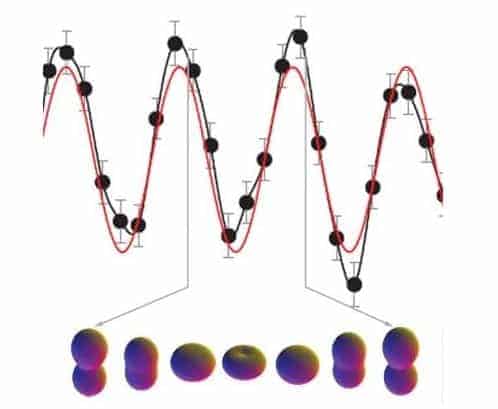
Just 45 quintillionth of a second (45 attoseconds) is all it takes for a photon to liberate an electron from the surface of a metal. That is the conclusion of Joachim Burgdörfer from the Technical University of Vienna and colleagues, who have done a clever sequence of experiments to make the most precise measurement ever of the duration of photoelectric emission. Their technique promises to provide new information about how electrons behave in materials and could lead to improvements to photoelectric technologies, such as solar cells and optoelectronic telecoms components.

Albert Einstein may be most famous for his theories of relativity, but he bagged the 1921 Nobel Prize for Physics for his work on the photoelectric effect. Einstein had worked out why light incident on the surface liberates electrons – but only if the frequency of the light is above a certain threshold. He explained this phenomenon by assuming that light exists as discrete particles (later called photons) in what an important early contribution to the development of quantum mechanics.

As the photoelectric effect occurs so fast, physicists used to think the emission time is too short for them to measure with any precision. But thanks to the development of shorter and shorter laser pulses, they have been encouraged to try to measure the emission time using an “attosecond streak camera”. This involves firing two successive ultrashort laser pulses at a material, with the first ejecting an electron and the other accelerating it towards a detector.

The problem with this technique is that, for most materials, it cannot determine the time it takes for one electron to be emitted, although if two electrons from different electronic states are liberated by the first pulse, the time delay between the emissions can be determined.

Atomic “clocks”

Burgdörfer and colleagues have now developed a new technique that uses iodine and helium atoms as “clocks” to measure the absolute time for electron emission from tungsten metal. The method involves depositing iodine atoms on a tungsten surface and using an attosecond streak camera to measure the delay between the emission of electrons from tungsten and emission of electrons from iodine. A second streak-camera measurement is then made on a gas containing iodine and helium – giving delay between electron emission from iodine and helium.

Helium is used because it is a very simple atom, having just two electrons. This means that, unlike tungsten and iodine, the absolute emission time can be calculated from streak-camera data.

Working back via the iodine measurements, the team calculate that tungsten emission times range from about 45 attoseconds for conduction electrons to about 100 attoseconds for electrons in the inner shells of the tungsten atom. Analysis of the times for several different electron states in tungsten, suggests that the emission process is more complicated than previously thought.

“[The technique] gives us the opportunity to study important physical processes with an accuracy that would have been inconceivable a few years ago”, says Burgdörfer. “It is an exciting field of research that provides remarkable new insights – for example into surface physics, and into electron transport processes inside materials.”

The research is described in Nature.

Flexible X-ray detector, revolutions in computing, hurricane flooding, quantum noise goes to work

In this episode of the Physics World Weekly podcast we talk about an X-ray detector that you can wrap around your finger; new computing technologies that are giving physics a boost; and how to minimize flooding risk during tropical storms. We also take a fresh look at quantum noise in a round-up of what is new on Physics World this week.

If you enjoy what you hear, then you can subscribe via the Apple podcast app or your chosen podcast host.

Graphene plasmon devices take on quality and scale

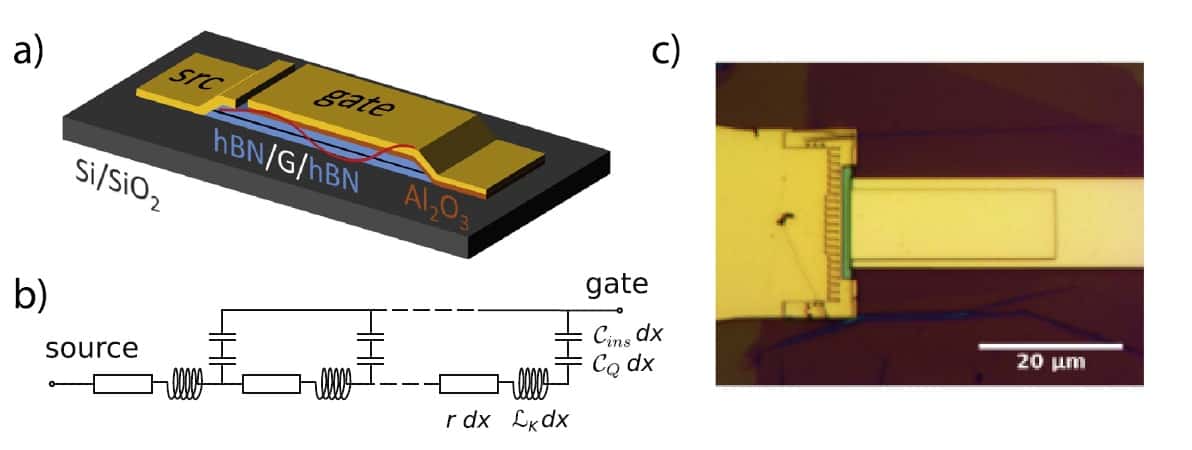
A graphene plasma resonance capacitor.

Graphene plasmonics has been caught between a rock and a hard place, with high-energy plasmons readily coupling into hybrid modes, while low-energy plasmons are prone to damping. Now researchers in Japan, Germany and Singapore report in the first issue of Journal of Physics: Materials how they can protect low-energy plasmons from damping by encapsulating the graphene in hexagonal boron nitride (hBN). What is more, in the same issue another group of researchers demonstrate a transfer-free process that could enable mass-production of high-quality hBN-encapsulated graphene devices.

Not high energy proves no great loss

Plasmons – the collective excitations that couple the electromagnetic fields associated with incident light to the electrons in a material – have long attracted interest for potential applications including high-sensitivity sensing and information processing. Graphene plasmons hold the additional allure of being tunable, but so far it has been difficult to produce graphene plasmons that remain uncoupled to surface modes, which form hybrid plasmon-polaritons, while avoiding ohmic losses.

“Tunability is always interesting because then you can really have a recipe, which tells you not just how to generate a property, but also how to switch it on and off,” says ICREA research professor Stephan Roche, editor-in-chief of Journal of Physics: Materials in his discussion of some of the papers in the first issue.

Interview with Stephan Roche

By encapsulating high-quality exfoliated graphene in hBN Bernard Plaçais at Sorbonne University in France and his collaborators produce devices where the graphene plasmons are both very weakly coupled to any other source and have a high Q factor. They demonstrate the approach in plasma resonance capacitors with a 100 μm quarter-wave plasmon mode, at 40 GHz, and a quality factor of around two.

“Our capacitor GHz experiment constitutes a first step toward the demonstration of plasma resonance transistors for microwave detection in the sub-THz domain for wireless communications and sensing,” they point out in their report. “It also paves the way to the realization of doping modulated superlattices where plasmon propagation is controlled by Klein tunnelling.”

Producing better quality and bigger quantities

In the same issue Vincent Bouchiat and colleagues at the University of Grenoble and CNRS in France, and the National Institute of Material Science in Japan report how to produce hBN encapsulated graphene with fewer defects by chemical vapour deposition, a technique that readily lends itself to upscaling production.

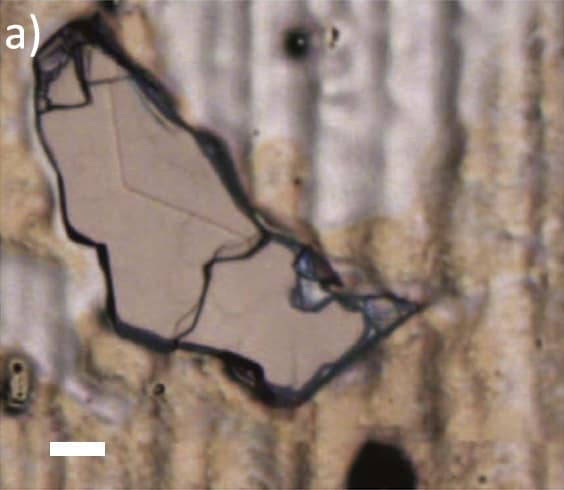
Optical micrograph of a large h-BN crystal exfoliated on a copper foil, fully covered with graphene after the growth. Credit: Journal of Physics: Materials

As with the work by Plaçais and colleagues, when researchers want to show how to exploit graphene’s unique optoelectronic properties in a given device, the preferred graphene fabrication technique is exfoliation, where individual layers are stripped of pristine graphite. However – production scale limitations aside – transferring exfoliated layers of graphene onto hBN inevitably introduces defects, which impinge on the device performance. Instead by growing the boron nitride and then the graphene together without changing the growth parameters Bouchiat and his team show that they can produce high-quality large-area encapsulated graphene with a charge carrier mobility that reaches 2.0 × 104 cm2V-1s-1.

“These two papers are very illustrative of the challenges of research in 2D materials,” says Roche, who was not involved in either piece of research. “On one side you have the forefront of research trying to get really high-quality research devices, and then trying to explore what is unique about these 2D materials, and to demonstrate that they can really bring high value in terms of applications. Then on the other side you have people making efforts to integrate these materials and to upscale their growth so that they can be practical for industries in the medium term.”

Whether the potential of the reported CVD approach can provide mass production of the graphene plasmonic devices remains to be seen. Full details of both reports are found in Journal of Physics: Materials issue 1.

Topological photons could make qubits for quantum computers

Topological insulators are a recently discovered phase of matter that are electrical insulators in the bulk but which can conduct electricity on their surface via special “topologically protected” surface electronic states. These states have remarkable properties, including the fact that they are robust to defects and noise in the surrounding environment. A team of researchers in Australia, Italy and Switzerland have now shown that topological states made from single photons can be used as quantum bits (qubits) to process quantum information in a reliable way. The work could help in the development of more robust quantum computers.

While classical computers store and process information as “bits” that can have one of two states – “0” or “1” – a quantum computer exploits the ability of quantum particles to be in “superposition” of two or more states at the same time. N such qubits could be combined or “entangled” to represent 2N values at once, which could allow for parallel processing of information on a massive scale. Such a device could, in principle, outperform a classical computer for solving some advanced computational problems, such as factoring large numbers or simulating the interactions between many fundamental particles.

There is a problem though: qubits are very fragile and any surrounding noise can easily degrade the quantum nature of the qubits. This process is called decoherence, and if not checked, will prevent a quantum computer from functioning.

Great promise for quantum computing applications

Researchers first discovered topological phases of matter in experiments ten years ago (in the binary alloy bismuth-antimony). The sturdy surface conduction seen in these materials comes from their topology. In fact, the energy difference between the surface states and the bulk states is so big that an electron moving along the surface cannot scatter into the bulk. Topological insulators thus show great promise for quantum computing applications, where scattering from defects will destroy quantum information carried by electrons.

In their study, researchers led by Albert Peruzzo of the RMIT University in Australia studied topologically protected states made of single photons rather than electrons. They began by localizing these states at the opposite edges of a waveguide array, which they made using a femtosecond laser writing technique in borosilicate glass. This technique allows them to control the waveguide coupling coefficients in the device with high precision.

Replicating the Hong-Ou-Mandel experiment

They then quantum mechanically interfered these photonic topological states in their waveguide chip by replicating the so-called Hong-Ou-Mandel (HOM) experiment, which is normally done in a 50:50 beamsplitter. Such quantum interference is a key phenomenon in quantum physics and is at the heart of optical quantum computing, says Peruzzo. “In our experiment, we relocated the photonic topological states from the opposite edges of our waveguide array towards the centre, where they could interfere. We then relocated them back to the edge so we could collect and measure them.

“Our device is in fact the first ‘topological beamsplitter’ – a completely new component of its kind.”

The team, which includes scientists from the Politecnico di Milano and ETH Zurich, says it's observed HOM interference with over 93% visibility. “Demonstrating such high-fidelity quantum interference is a precursor to transmitting accurate data using single photons for quantum communications – a vital component of a global quantum network,” says study lead author Jean-Luc Tambasco at RMIT.

“We expect that our demonstration will open the way to a new area of topologically robust quantum processing and simulations in integrated photonics technology,” Peruzzo tells Physics World.

The research is detailed in Science Advances 10.1126/sciadv.aat3187.

Ingenious inventions

Audrey The Inventor illustration

It’s not often that a large, brightly covered children’s book lands on my desk, so it’s sure to catch my eye when one does. Imagine how delighted I was to discover that the book featured a young girl who is an inventor. It’s likely that most folks would be hard-pressed to name any female inventors and a book aimed at young children may be just the way to fix that. Audrey the Inventor, written by Rachel Valentine and illustrated by Katie Weymouth, is the perfect addition.

The short, quirky book tells the story of Audrey who lives with her father and her pet “Happy Cat” and decides to become an inventor. Inquisitive and adventurous Audrey dreams up and creates a number of devices – from an egg collector to a strawberry jam dispenser to a “cat washer” – in the hopes of being helpful. Alas, her builds soon fall apart or, worse, cause chaos. Our young heroine is despondent, convinced that she is the “world’s worst inventor”. Thankfully, daddy steps in with words of encouragement and advice, suggesting that she learn from her mistakes and try again. This time around, Audrey carefully plans her project and repeatedly tests her invention before unleashing it on the household with huge success.

What makes this simple story interesting is first, the fact that our little inventor is a girl, but also that she has a realistic experience of working in science – it includes failure, null results, multiple iterations and, ultimately, success. Parents would do well to read this book as a bedtime story to encourage all little boys and girls into science.

  • 2018 Words & Pictures, 32pp, £11.99hb
Audrey The Inventor illustration


Can you solve the first of 10 puzzles linked to Stephen Hawking’s new book?

Photo of Stephen Hawking

Physics World turns 30 next month, but it's not the only big anniversary in physics this year. That's because 1988 also saw the publication of Stephen Hawking's best-selling popular-science book A Brief History of Time.

Hawking, who died on 14 March, went on to write several other books, but it turns out he was working on a final title at the time of his death. Entitled Brief Answers to the Big Questions, the book is set to be published by John Murray on 16 October.

Full details of the book are still under wraps, but according to the publishers, it is "drawn from his extraordinary personal archive and has been completed in collaboration with his academic colleagues, his family and the Stephen Hawking Estate". The book will comprise Hawking's "most profound, accessible, and timely reflections" on 10 questions, such as the existence of God, whether we can predict the future and whether artificial intelligence will outsmart us.

To mark its publication, John Murray has also commissioned Josh Kirklin, a PhD student at the Department of Applied Mathematics and Theoretical Physics at the University of Cambridge, where Hawking was based, to set a series of fiendish puzzles inspired by the book.

The puzzles will be released every week starting later today (20 September) on the website briefanswerstothebigquestions.com, but the publishers have given Physics World readers a sneak preview to the first puzzle (see below). The answer to each puzzle is a nine-letter word. The first nine answers, put into a nine-by-nine grid, form the basis for the tenth question.

The first quiz question in a series of 10 linked to Stephen Hawking's latest book.

There's a prize from John Murray for the first correct entry in the form of an "exclusive Hawking print" provided by the Stephen Hawking Estate. To enter the quiz and for more details, go to briefanswerstothebigquestions.com.

I'm sure Physics World readers will enjoy the challenges, given that you responded in such large numbers to our own set of five puzzles that we created to celebrate the 25th anniversary of Physics World five years ago in conjunction with GCHQ.

Finally, if you want to find out more about Hawking's life and work, check out our free-to-read collection "Remembering Stephen Hawking".

mRNA nanoparticles restore tumour-suppressor gene

Cancers such as prostate cancer can develop and progress because tumour-suppressor genes have either been lost or have mutated, but restoring these suppressors has proved difficult. A team of researchers from Brigham and Women’s Hospital (BWH), Boston Children’s Hospital and Memorial Sloan Kettering Cancer Center has now succeeded in reintroducing “PTEN” messenger RNA (mRNA) into prostate cancer cells by encapsulating it in nanoparticles. The innovative technique effectively restores tumour suppression in vivo, even when the cancer is in the metastatic stage, and might lead to the development of a new type of precision medicine for treating cancer.

PTEN (phosphatase and tensin homologue deleted on chromosome 10) is a tumour-suppressor gene that is lost or mutated in about half of all metastatic castration-resistant prostate cancers and in many other human cancers, explains co-team leader Jinjun Shi of BWH. Restoring functional PTEN as a way to treat prostate cancer has proved to be no easy task though. We have now shown that we can reintroduce functional copies of PTEN mRNA into PTEN-depleted prostate cancer cells both in vitro and in vivo by encapsulating it in polymer-lipid hybrid nanoparticles coated with a polyethylene glycol shell. This mRNA, which can be thought of as a tiny delivery vehicle that can get messages of genetic information into cells, restores the function of the PTEN tumour suppressor gene. It so turns the body’s natural tumour suppressing mechanisms “back on” to kill the cancer cells.

Restoring a function

“We designed the nanoparticles so that they protect the mRNA from degradation, prolong mRNA circulation in blood and improve cellular uptake and cytosolic transport,” says study lead author Mohammad Islam. “The circulating mRNA nanoparticles enter tumour tissue thanks to the naturally leaky vasculature of the tumour. They are then internalized by the cancer cells for efficient mRNA transfection.”

“Most conventional cancer therapies are designed to block something, such as pro-tumorigenic drivers, for instance,” adds co-team leader Bruce Zetter of Boston’s Children Hospital. “Our approach is different in that it restores a function – in this case the lost tumour suppressors. It could thus complement current cancer treatments for correcting both pro-tumorigenic and tumour-supressing pathways at the same time.”

“Since loss of tumour-suppressor function is highly correlated with tumour growth and metastasis, the technique might lead to the development of new types of precision medicine for treating cancer,” Shi tells Physics World.

“Exciting times”

“These are exciting times for the field of nucleic acid therapeutics with the recent regulatory approval of the first siRNA therapeutics and numerous mRNA treatments under clinical investigation,” adds co-team leader Omid Farokhzad, of BWH.

The researchers, reporting their work in Nature Biomedical Engineering s41551-018-0284-0, say they are now busy looking into additional tumour suppressors, such as p53, using their nanoparticle-mediated mRNA delivery strategy. “We also plan to combine this approach with other therapies for more effective overall cancer treatment,” says Shi.

Offshore wind farms could protect coastlines

Offshore wind farms may have a greater capacity for coastal protection than first imagined. Scientists had shown previously that arrays of turbines placed in the sea may buffer storm surge and flooding. Now simulations featuring data from Hurricane Harvey suggest that smart wind farm designs have the capacity to protect coastlines from heavy rains.

The researchers, based at the University of Delaware, US, considered six hypothetical wind farm arrays along the coasts of Texas and Louisiana, comparing outputs from the model to a control case where no turbines were deployed. The arrays differed in their turbine size, spacing and site location, among other factors.

The team knew from earlier studies that winds slow down in the vicinity of offshore turbine arrays. “You can picture a scene where moisture is ‘squeezed out’ of the hurricane upstream of hitting land as winds converge at the offshore site,” says Cristina Archer. “But there’s also a second effect that occurs downstream of the farm where winds pick up again, which causes the storm winds to diverge, further reducing precipitation.”

It was important in this first step of the research to confirm this behaviour so that researchers and planners can dig deeper into future designs. Ideas on the table include adjustable turbine blades that could lengthen or shorten depending on whether the objective is energy extraction or storm protection. There’s also more to discover regarding the optimum layout of an offshore array, balancing energy generation efficiency against the performance of the wind farm as a weather defence.

One way to marry the two functions would be to make the setup dynamic. “With floating turbines, you could even think of moving them strategically closer or further apart and varying their distance from the coast depending on the weather,” adds Archer.

In all the group’s simulations, the presence of an offshore wind farm reduced precipitation inland and increased rainfall out at sea. However, the scale of the reduction varied with the layout and location of the turbines.

The most widely-spaced array modelled by the team still featured thousands more turbines than the largest array in use today, making the scenario appear somewhat futuristic. But the researchers acknowledge this and are keen to offer more practical advice.

“The next phase of this study will identify the smallest array size that still has significant benefits, focusing on the optimal layout that would maximize this benefit while, at the same time, minimizing the turbine installation costs,” writes the team in Environmental Research Letters (ERL).

There’s also scope to link the analysis to an ocean model to investigate properties such as surface stress, currents, vertical mixing, sediments and wave behaviour.

Isolated female students more likely to drop out of PhD programmes

Female doctoral students in science subjects are more likely to drop out if there are few other women in their cohort. That is according to an analysis carried out by economists Valerie Bostwick and Bruce Weinberg from Ohio State University, who call on female graduate students to receive additional support if they are in the minority or the only ones entering a doctoral class.

A study by economists at Ohio State University found that lone females in a PhD cohort were up to 16% less likely to graduate than their male counterparts

The study tracked 2541 students who enrolled in graduate programmes in science, technology, engineering and mathematics (STEM) at six public universities in Ohio between 2005 and 2016. For the analysis, which was published on the website of the National Bureau of Economic Research, the students were grouped into cohorts based on a doctoral programme identifier code, known as the Classification of Instructional Programs.

The duo found that when female STEM post graduates were the only women in their intake group, they were 12% less likely to complete their PhD than their male counterparts. Such women were also 10% more likely to drop out in the first year of their doctoral programme than men. A 10% increase in females in a cohort, however, increased the probability of women graduating by more than 2%.

Supportive role

The gender gap in PhD completion rates was found to be larger in subjects that are dominated by men such as physics, chemistry, mathematics and engineering, with lone females being 16% less likely to graduate from these subjects than their male counterparts. They are also 18% more likely than men to drop out in their first year. “We should be concerned about women having systematically higher drop-out rates in more male-intensive STEM programmes,” Weinberg told Physics World.

The researchers found that differences between males and females in first-term grades or the likelihood of obtaining research funding are not enough to explain the drop out and on-time graduation rates. Instead, they say that their findings show that having more female students creates a female-friendly environment that encourages women to persist in doctoral programmes.

Weinberg adds that recruiting more women into programmes, avoiding classes with very low proportions of women and creating more female-friendly environments would all help to reduce the female drop-out rate. “Although this goes beyond our study, my sense is that change often comes from the top, so having faculty and mentors be more supportive, model, and encourage more supportive behaviours would be obvious policies,” says Weinberg.

Copyright © 2026 by IOP Publishing Ltd and individual contributors