Smartphone apps shake up earthquake early-warning systems

On 19 September 1985 Mexico City was reduced to rubble by a magnitude-8.0 earthquake. While the epicentre was more than 370 km from the city, about 10,000 people died, with 3000 buildings damaged of which 400 collapsed. It was one of the worst tragedies in the metropolis’s 700-year history. To commemorate the disaster, as well as raise awareness of the danger of earthquakes, the city now holds drills on that same day every year.

In 2017, however, that year’s drill quickly turned into a real event when two hours later a 7.1-magnitude earthquake struck the city without warning. Mexico City resident Alejandra Castillo recalls the shock when the ground began to shake violently beneath her. “I remember everyone was screaming and we were all trying to reach the safety zones,” she told Physics World. “I couldn’t make it because the movement was too intense, so a colleague dragged me.”

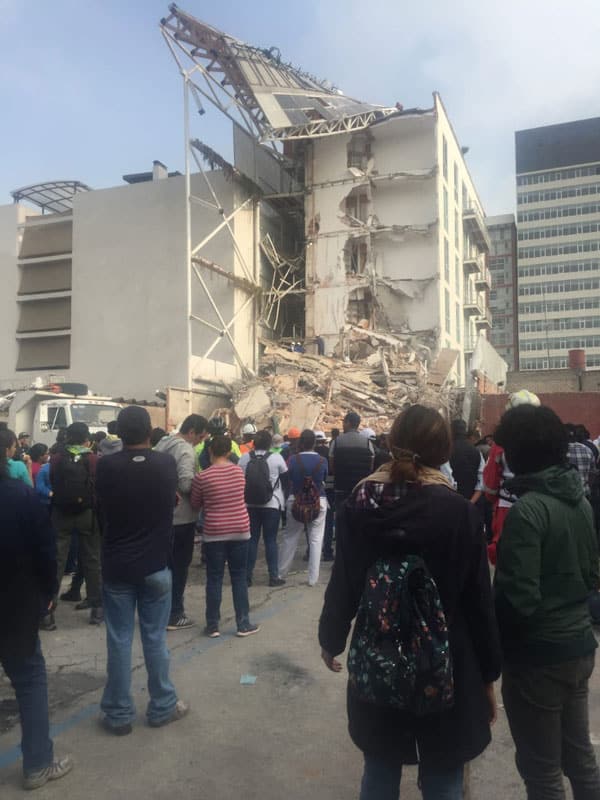
When Castillo returned home, her apartment, which she had just purchased six months earlier, was no longer there. The entire five-storey tower block had collapsed with volunteers still desperately searching for two women trapped inside. “When my husband arrived, we held each other in silence,” she says, adding that all they had left were the clothes they were wearing that day. The earthquake – dubbed 19S – killed 228 people in Mexico City, damaging almost 6000 buildings with more than 40 collapsing.

This was the second big earthquake to hit Mexico that month. At 11.50 p.m. on 7 September 2017 – just 12 days before 19S – Mexico City was awoken to 12,000 loudspeakers warning of an incoming quake. People had two minutes to exit buildings and find safe spots to wait. While the 8.2-magnitude earthquake had devastating effects in the southern states, Mexico City was unharmed.

Getting the message out

Back in 1985, the only early quake-detection system in the world was in Japan, solely introduced so that engineers could stop the country’s high-speed bullet trains before they potentially derailed. But a team of engineers in Mexico realized there was a huge difference between earthquakes in Japan and those in Mexico City. The former occur mainly right underneath the city, whereas the latter mostly occur off Mexico’s coastline, which is hundreds of kilometres away. Mexico City is also particularly vulnerable to earthquakes because the city is built over an ancient lakebed so that the ground amplifies the effects.

Seismic primary waves (P-waves) are the fastest type that are produced by earthquakes and since they are basically sound waves their speed is limited by that of sound. This means that, in principle, once a quake is detected, it is possible to send an alert (via radio waves) faster than the quake approaches. The distance from the quake’s epicentre determines not only the intensity at which it hits locally, but also how much time in advance the alarm can alert people about it.

This was the idea that inspired engineer Juan Manuel Espinosa and his team in the late-1980s to start the Mexican Seismic Alert System (SASMEX) – the very first automated public earthquake alert system in the world. He developed an algorithm to identify quakes from other types of vibrations and installed earthquake sensors along the coastlines of Mexico. If a quake exceeded magnitude five, the system would issue an alert and people would be able to find safe spots in advance, sometimes up to two minutes in advance.

SASMEX is operated with government funding but is owned by Espinosa’s non-profit company CIRES, which develops seismic instrumentation. The system has been working since 1991 and today it interrupts public TV and radio broadcasts to transmit the alarm, while 12,000 speakers relay the news across the city. According to Espinosa, the system now has 97 seismic sensors, mostly distributed along the coastlines where most strong earthquakes are expected to start.
Mexico earthquake

Why the supposedly weaker second quake in 2017 caused so much devastation is due to the make-up of the tectonic plates. Mexico is located over three large tectonic plates, with the country being one of the world’s most seismically active regions. Usually earthquakes in Mexico are caused by the collision of the North American plate with the Cocos plate in the Pacific Ocean, so epicentres are near the coastlines.

This system works well for earthquakes that arise along the coastlines because most of the sensors are located there. Indeed, the epicentre of the earthquake on 7 September was 650 km away from Mexico City in the Gulf of Tehuantepec off the southern coast of Mexico, near the state of Chiapas. 19S, however, was different. It occurred inland within a plate itself and with a epicentre only 120 km away from Mexico City. According to witnesses and local media, the alarm went off only after the impact of 19S was felt in Mexico City.

Espinosa told Physics World that the reason for this was because the epicentre was too close to Mexico City. Espinosa adds that the algorithm they were still testing in that region was not fast enough to send the signal on time before the earthquake. “We’re working on improving our algorithms to make them faster,” says Espinosa, adding that other developments will include extending their network of seismic sensors by 60 to include the state of Chiapas and other regions, as well as developing graphic alerts for people with hearing impairments.

Blazing the trail

Having SASMEX government-funded but not publicly managed has inconveniences. In February 2018 SASMEX suspended its service in Oaxaca, a southern state on Mexico’s coastline that was severely affected by the earthquakes in September 2017, because the government had overdue payments for using the service. Having a state without service affects other cities – including Mexico City – because quakes often strike along Oaxaca’s coastlines.

Given such disadvantages, entrepreneurs are sensing an opportunity. Founded in 2011, SkyAlert is perhaps the most popular earthquake-alerting start-up. The Mexican firm offers a free app that warns users of an incoming quake as well as the local intensity in six different levels ranging from weak to severe. For a subscription of £3.70 per year, it offers a filter so that users only receive alerts relevant to their location.

Álvaro Velasco, SkyAlert’s co-founder and chief technology officer, told Physics World that the number of subscribers doubled after 19S to seven million. He says that recent investment has allowed the firm to expand its network of seismic sensors to 120. These span from Chiapas to the western state of Jalisco – more than 20% larger than SASMEX’s network – and covering 80% of the quake-vulnerable population. “We’re working on changing the algorithm to let people know how much time they have before the quake reaches their location,” says Velasco.

Richard Allen, a seismologist at the University of California, Berkeley, has spent 10 years developing a similar system for the US. Called ShakeAlert, it uses sensors that have been built by the US Geological Survey but has a different algorithm to the Mexican version as earthquakes affecting California have their epicentres right next to the cities. “Mexico really was the first place to do public earthquake early warnings – so Mexico should get all the glory for blazing the trail – and here in the US we are continuing to learn from that system,” Allen told Physics World.

Damage assessment

Mario Ordaz, an engineer at the National Autonomous University of Mexico (UNAM), has been providing seismic-risk assessment services for over 25 years. In 2005 he developed an automated system that, within 10 minutes of an earthquake, delivers Mexico City’s Civil Protection Agency an early damage assessment map so that authorities know where to send aid immediately. This provides information such as local seismic intensities, probable building damage, an estimate of human casualties and possible water-supply interruptions.

It is a one-of-a-kind system that works even if power and communications are down. But Ordaz says Civil Protection – despite being the commissioning agency– has dismantled their reception network and they are not even aware of the system anymore. “The only sector that has truly been interested in these developments, hasn’t been the government or Civil Protection, but rather the insurance industry,” says Ordaz. Civil Protection did not respond to Physics World’s request for comment.

Ordaz’s detailed seismic-loss estimation models have been used by the insurance industry since the 1990s, even setting their natural hazard guidelines. “Many of these developments have been paid by the insurance industry, and since 1998 the National Insurance Commission has used a model we developed, building by building all over the country, to measure risk against their clients, and with that info determine how many reserves they need to insure their clients,” says Ordaz. “It’s pioneering regulation in the world that demands insurance companies have enough money to provide coverage based on real risk estimates.”

A simple version of his model is available through a free app, called quakeRisk. After choosing any given historical earthquake through a database, users input GPS location, type of building, age of construction, number or storeys and a few other parameters, to obtain “risk of loss” for that particular earthquake. Ordaz explains that the technology behind the app can be used for any given purpose, for example, owners checking their construction blueprints against an earthquake. “It could have been complicated to do this assessment for the entire city, but the technology’s been there, so maybe if we had started this in 1985 we would have already finished by now,” adds Ordaz.

Mexico has many systems in place to prevent buildings from collapsing but most of the new buildings that suffered damage did not comply with construction regulations

Even so, in 2004 building regulations in Mexico City were updated to issue specific guidelines for buildings in six different zones divided by ground conditions, adding additional guidelines in the annexes with an even finer mesh. UNAM’s Engineering Institute has a vibratory table where construction companies can test their structures to different quake stresses before starting construction. Mexico has many systems in place to prevent buildings from collapsing but most of the new buildings that suffered damage did not comply with construction regulations. Having all these systems in place does not mean much without law compliance and enforcement.

City strategy

Most people who lost their homes in 2017 are still waiting for reconstruction funds. Only 4.7% of the £467m reconstruction fund for Mexico City has been accounted for, according to the non-profit firms NGO Nosotrxs and Mexico’s Network for Public Accountability (RRC). Liliana Veloz, RRC’s executive director, says that she believes that while Mexico’s emergency response is solid, there are no real strategies in place when it comes to dealing with reconstruction and accountability.

“Mexico simply doesn’t have short- and medium-term strategies to prevent this from happening again,” says Veloz, pointing out that there are buildings that were damaged back in 1985 that are still occupied and people still homeless after all these years. “We’ve seen that even with the current law, if it was enforced, things would work a lot better,” she adds. “What Mexico really needs is to establish controls to ensure law-compliance.”

What happened with Castillo’s building should never have happened. No-one has been held legally responsible for the deaths and damages caused, even though forensic analysis determined the building collapsed because it did not comply with construction regulations. Castillo is now back to being a tenant and hopes justice will serve her soon. “I used to feel angry, but now, I can’t understand how some housing developers can walk around knowing they could be responsible,” she says. “I feel rather disgusted.”


19 September 2017 Central Mexico earthquake examined

19 September 2018 marks the anniversary of the 2017 Central Mexico earthquake that killed 228 people in Mexico City, damaging almost 6000 buildings with more than 40 collapsing. This video explains why the earthquakes in Mexico City are so strong and how the seismic-warning systems work. Seismic waves in Mexico City are intensified locally because the city is built on the sediments of an ancient lake.

For further reading, Lucina Melesio has written an article for the September 2018 issue of Physics World examining how the development of early-warning smartphone apps could help save lives in the future.

Thermal ablation effectively treats early-stage lung cancer

Abation versus SRT

Thermal ablation is a safe, effective treatment for early-stage lung cancer, according to a study from Yale School of Medicine. The results show that ablation may provide an alternative approach for patients who are ineligible for lung cancer surgery (Radiology 10.1148/radiol.2018180979).

Non-small cell lung cancer (NSCLC) accounts for approximately 85% of all lung cancer cases. For early-stage disease, surgery is the treatment of choice. But older patients and those with comorbidities may not be suitable for surgery due to a higher risk of complications. Stereotactic radiotherapy (SRT) is a viable alternative for such patients and can provide high local control rates.  Irradiation, however, sometimes harms healthy tissue surrounding the tumour and carries a risk of short-term and long-term toxicities.

Another option is thermal ablation, in which a probe is inserted directly into the tumour under precise image guidance. The tumour is then destroyed via application of extreme heat, extreme cold or radiofrequency (RF) waves.

“Thermal ablation is most often a one-time treatment, unlike SRT, which requires multiple visits,” says senior author Hyun “Kevin” Kim. “In addition, ablation delivers highly accurate and precise localized treatment only to cancer cells, minimizing the effects to surrounding tissue and keeping the toxicity low.”

For the study, Kim led a multidisciplinary team of thoracic oncology investigators in comparing the outcomes of thermal ablation and SRT for treatment of early-stage NSCLC. The study group included almost 29,000 patients from the 2004-2013 National Cancer Database, including more than 1100 who had undergone thermal ablation (cryosurgery, laser ablation or local tissue destruction such as RF ablation).

The researchers performed one-to-one matching of patients, based on their respective propensity to undergo thermal ablation, and obtained a matched cohort of 2140 patients. In this matched cohort, both treatment methods delivered comparable performance in terms of overall survival. The two-year survival rate in the thermal ablation group was 65.2%, compared with 64.5% for the SRT group. At five years, survival rates were 24.6% and 26.1% for thermal ablation and SRT, respectively.

“The outcomes for patients who received thermal ablation for early lung cancer were quite similar to those who received SRT,” says Kim.

The team also examined unplanned hospital readmission within 30 days after treatment, as a surrogate parameter for complications. Readmission rates were higher after thermal ablation than SRT — 3.7% (40 of 1070) versus 0.2% (two of 1070), respectively — possibly due to the more invasive nature of the ablation treatments. The authors note, however, that complications from thermal ablation (mostly pneumothorax) manifest immediately or within a few days, while adverse events after radiotherapy usually occur over a prolonged treatment phase and would not be captured by the 30-day metric.

Other advantages of thermal ablation include direct access to the tumour itself, which enables physicians to collect biopsy samples during the procedure — an option not available with SRT. “This is a real value to our patients, especially as tissue sampling becomes more and more important in personalized, precision cancer treatments,” Kim explains. The one-time treatment also has lower direct costs and could prove a more cost-effective alternative to radiation therapy.

The researchers are now planning further studies of thermal ablation’s potential role in the total care of lung cancer patients. Combining ablation with immunotherapy, for instance, may produce better results than those of ablation or immunotherapy alone.

Machine learning: a game-changer for radiation therapy

Finance, automotive, agriculture, telecoms and professional sports: these are just a few of the diverse industries being fundamentally disrupted by the inexorable rise of machine-learning technologies (more generally known as artificial intelligence or AI).

Machine-learning algorithms can solve problems by learning from experience, and without being explicitly programmed. In so doing, they can already control self-driving vehicles, spot plagiarized academic papers and translate the spoken word from one language to another.

And that’s just for starters. The long-game looks even more compelling.

RaySearch Laboratories certainly thinks so. The Stockholm-based oncology-software company is currently making significant investments in machine-learning and “big-data” – a fusion of technologies and applications that promises to transform radiation therapy and other cancer-treatment modalities such as chemotherapy and surgical intervention.

“Machine learning has the potential to support and augment radiation oncology teams while freeing up their time,” explains Fredrik Löfman, head of machine learning and algorithm at RaySearch. “The power of sharing knowledge through machine-learning models will have a huge impact. Any clinic could potentially generate the same tumour target volume and radiation treatment plan as the best clinics in the world do. Radiation oncologists and medical physicists will all learn from each other through machine-learning models.”

Knowledge transfer

With these opportunities in mind, Löfman is intent on scaling RaySearch’s in-house capability and collective domain knowledge in machine learning. Right now, he heads up a dedicated division of machine-learning engineers located in RaySearch’s Stockholm headquarters.

“Ours is a multidisciplinary programme,” Löfman explains. “We have mathematicians, computer scientists and physicists with backgrounds in different industries [such as automotive and finance] that are further along with machine-learning technologies than healthcare. Cross-fertilization with these sectors is crucial.”

This open, outward mindset is evidenced in several high-profile R&D collaborations that, RaySearch hopes, will fast-track its innovation in machine-learning technologies. On the academic side, RaySearch is funding joint research at the KTH Royal Institute of Technology in Stockholm (automation of radiation therapy), while clinical partners include the Princess Margaret Cancer Centre in Toronto (automated treatment planning and model training) and Massachusetts General Hospital in Boston (deep learning for target-volume delineation and analytics prototypes).

“We have a history of collaboration with The Princess Margaret and Mass Gen,” says Löfman, “so when we started the machine-learning division it was natural for us to partner with these institutions.”

Partnership = progress

The tie-up with The Princess Margaret, Canada’s largest radiation-therapy facility, has been in place for more than a decade and focuses on the use of machine learning to automate treatment planning in the radiation-therapy clinic. The goal is twofold: to deliver workflow efficiencies versus manual treatment planning (with plans delivered in minutes rather than hours or days) and to generate personalized treatment plans tailored to the unique needs of each patient.

It’s been a productive collaboration. Last year, for example, RaySearch licensed The Princess Margaret’s AutoPlanning technology, a custom AI and machine-learning system that harvests information from a database of proven high-quality radiation-therapy plans – effectively learning from and optimizing against thousands of prior clinical treatments.

AutoPlanning itself is the result of a six-year cross-disciplinary initiative involving researchers at The Princess Margaret and Toronto’s Techna Institute. The development work was led by Tom Purdie, a medical physicist at The Princess Margaret, and his colleague Chris McIntosh, a computer scientist at the hospital.

“Machine learning is a natural fit for automating the complex treatment-planning process,” explains Purdie. “It will enable us to generate highly personalized radiation treatment plans more efficiently, [thereby] allowing clinical resources or specialist technical staff to dedicate more time to patient care.”

Ultimately, Purdie reckons that machine learning will help to lower the cost of cancer treatment. “We’re going to reach a stage – in the not-too-distant future – where we will be relying on machine-learning technologies to deliver the highest-quality cancer care,” he adds.

Into the clinic

RaySearch, for its part, is pressing ahead with the roll-out of advanced machine-learning capabilities into the radiation-oncology clinic. In December, the vendor will unveil RayStation 8B*, the latest release of its treatment-planning software with machine-learning-automated organ segmentation (quantitative 3D visualization) and machine-learning-automated treatment planning.

“We are evaluating the automated treatment planning with several clinics just now, so we are getting more and more data on how it performs,” says Löfman. “As a vendor, we can point to the efficiencies of automation, we can point to the consistency inherent to the approach. But in terms of treatment quality and patient outcomes, it’s the clinics that will need to provide the real-world evaluation and validation.”

The collaboration with The Princess Margaret has broadened in scope too, with the two partners signing an agreement in July to jointly develop RayCare, the vendor’s flagship oncology information system (OIS).

Watch this space, says Löfman: “Ultimately, RayCare OIS will use machine learning to improve workflow efficiency, manage resource allocation and enhance quality assurance across different treatment modalities – medical oncology, radiation oncology and surgical oncology.”

* Subject to regulatory approval in some markets

Fredrik Löfman and Tom Purdie will present a live webinar on “Machine learning and automation in radiation oncology” on 26 September 2018. Register now to view the webinar.

No need for BECCS?

Global warming can be kept to below 1.5 °C above pre-industrial temperatures without using Bioenergy with Carbon Capture and Storage (BECCS), or at least not much. So says a study in Nature Climate Change. Whereas the IPCC, IEA and others have suggested that negative emission technologies like BECCS would be vital, the new paper claims that a range of ambitious mitigation options can minimize or, collectively, eliminate the need for BECCS.

The study, by researchers at the PBL Netherlands Environmental Assessment Agency, and the Copernicus Institute for Sustainable Development at Utrecht University, looks to the much more rapid adoption of renewables and energy efficiency, more emphasis on non-carbon greenhouse gas reduction, and also to lifestyle changes, including less car use and less meat-eating. That may be hard, but so would BECCS – vast land areas of biomass would be needed to have a significant impact, and that anyway assumes CCS can be done at scale. The paper says “existing studies hardly look into more aggressive implementation of options, such as rapid implementation of the best available technologies or deep reduction of non-CO2 GHGs [greenhouse gases]. Technology development could also be more rapid than typically assumed”.

So it may be possible to limit or avoid BECCS. Not so, says Bert Metz, former co-chair of the Intergovernmental Panel on Climate Change (IPCC) working group on mitigation and now senior adviser to the European Climate Foundation. He told Carbon Brief: “It is highly unlikely that the investigated options can indeed all be applied simultaneously to the extent assumed in the paper and that the full impacts of each of the options can be delivered in practice, as the assumptions are very ambitious.”

It may come down to faith in technology and change

Dave Elliott

However, Stephan Singer, senior adviser on global energy policies to the NGO umbrella group Climate Action Network, told Carbon Brief: “Lifestyle changes for the globally high-consuming and emitting rich…are [a] fundamental part of the equation…This is not limited to individual dietary changes…[it] also includes significant transport and travel behavioural change, institutionalized longer durability of products, higher reusability of components, new materials and, overall, a circular economy.” Indeed, as Carbon Brief noted, some would go further and look to a world without relentless economic growth. But for now, what seems to have happened is that BECCS has been dethroned as a default “backstop”. Detlef van Vuuren, senior researcher at PBL and lead author of the new report, told Carbon Brief that it was “unfortunate” that work to date on meeting 1.5 °C has been so dominated by BECCS.

Wider debate

You could say the same for CCS generally. The BECCS debate is, after all, a subset of the wider debate about CCS. As I have reported in previous posts, although the IPCC, IEA and most oil companies are keen on fossil CCS, and it plays a major role in most of their long-term energy scenarios, the reality is that, with some exceptions, it is pretty much stalled, with just two fossil CCS projects in North America. That isn’t surprising. In the absence of serious carbon emission taxes, there is no real incentive for CCS – and it’s costly. There is some interest in CCU – utilization of captured fossil-sourced carbon dioxide for making synfuels, since they have value. But when they are burnt they generate carbon dioxide again. So we are no further forward. Certainly, in the UK, the latest scenario from the UK government Department for Business, Energy and Industrial Strategy (BEIS) has hardly any CCS/CCU, even by 2035.  ­

However, bucking that trend, a new wider report published by the Royal Society says that what it labels as Carbon Dioxide Removal (CDR) is still vital to meet the 1.5 °C Paris target without overshoot. As I noted above, the PBL BECCS paper criticized existing studies for not looking at the alternative options enough, but this new wider study, by researchers from Germany’s Potsdam Institute and others (including, interestingly, from PBL and the Copernicus Institute), has now tried to do that, at least in part.

Exploring a range of system models, the report concludes that they will be not be sufficient – we will need CDR in nearly every case. It says that “for a 1.5 °C CO2 budget up to 550 Gt CO2, overshoot will be inevitable; CDR will be required to return to the 1.5 °C limit if the limiting cases formulated in our analysis hold. For budgets between 550 and 650 Gt CO2, we find CDR trajectories that allow to stay below 1.5 °C without overshoot in the steepest fossil fuel and industry-related CO2 emissions reduction cases. For budgets of 650 Gt CO2 and higher, the steepest emissions reduction cases are sufficient to limit warming to 1.5 °C without CDR deployment”.

What’s more, it says “these steepest cases are based on limiting cases for carbon intensity improvements of electricity and non-electric energy supply, electrification of energy end-use, final energy demand reductions, and CDR deployment. They are designed to describe outer bounds beyond which developments are very unlikely. But they themselves may also be unlikely to attain, with the exception of power sector decarbonization”.

Although there are sectorial exceptions, overall, the “below 1.5 °C” target can’t be attained without CDR. Even staying under 2 °C would be hard. But that’s essentially because of the continued use of fossil fuels. It is true that it would be very hard to phase all of them out rapidly: we are struggling with coal, while resistance to oil use is patchy and gas use is still booming. Renewables too are booming, but not fast enough to squeeze the fossil fuels – and also nuclear – out quickly. A much more rapid expansion of renewables and efficiency would help – as proposed in the first study, along with other measures aimed at taming energy demand. But the numbers in the second study say that’s still not enough.

Choice of views

Which view to believe?  The modelling, which seems to be saying we must continue with fossil fuels, and so with CDR? Or approaches looking to more creative strategies but wary of technical fixes like CDR, and BECCS in particular? And more prone to believing that accelerated conventional and newly-emerging renewables, and greatly improved efficiency, along with social change, can succeed. Both routes have risks, as well as possible strategic benefits and synergies, as I have explored in my last few posts. It may come down to faith in technology and change. CCS has been promoted as a key way ahead but has not so far delivered. Renewables have, and strikingly so, with costs falling. So why not give them a chance?

The debate continues and indeed expands, with, as Carbon Brief reports, a new study in PNAS claiming that there is a range of non-BECCS natural carbon capture options (including reafforestation, biochar production, “no till” soil management) that can possibly avoid the need for BECCS. If true, that changes everything. The net CO2 balance calculations are, however, complex and depend on what type of biomass is used and where it is grown. So there is still some uncertainty. Nevertheless, depending on the sources used and their impacts, it may be that BECCS may not be the best option in many cases and may not lead to much in the way of negative carbon. If that proves to be the case, then we should maybe forget about BECCS, although some might say “not entirely”: we might need a bit, and other carbon capture options – belt and braces – in case renewables can’t accelerate fast enough.

Communicating science at music festivals

As the summer draws to a close in the northern hemisphere, Andrew Glester looks back on two festivals he attended this year – the Blue Dot Festival in Cheshire and Green Man Festival in Wales. Glester meets a range of people involved in communicating science to festival audiences, often in surprising and innovative ways. He wants to know what motivates these people and what they have found to be the most effective ways of combining science with entertainment.

Along the way, Glester meets the following people:

  • Tim O’Brien, who curates the science elements of Blue Dot Festival. O’Brien talks about the festival’s origins and his personal journey in science communication from shy early-career researcher to addressing thousands from the Blue Dot stage.
  • Jim Wild, a space physics researcher from Lancaster University, who was at Blue Dot festival to talk about space weather. Delving into the science, Wild speaks about the hazard to astronauts posed by solar radiation – something that would be especially challenging in a manned mission to Mars.
  • The playwright Dave Windass who speaks about Pale Blue Dot, a new play he’s scripted that tackles global environmental issues and the search for more sustainable ways of living. Windass, who had not previously worked with science themes, speaks about the challenges of marrying science communication with successful storytelling.
  • Sam Illingworth, a science communicator who is part of the Games Research Network at Manchester Metropolitan University. With a particular interest in table-top games, Illingworth believes that puzzles can lead to deep engagement in science. You will also hear recordings of some of Illingworth’s science-inspired poetry, which he delivered to audiences at Green Man festival.
  • Maddie Foard, who runs the Solar Stage at Green Man Festival. She explains why her approach is to grab the attention first, then slip in the science almost by stealth.
  • Will Hunter, the curator of Einstein’s Garden, a performance area at Green Man that blends a diverse range of acts relating to science and technology. Hunter describes his approach as “playful” because he wants to embrace the ethos of the festival.
  • Anna Ploszajski, materials scientists and science communicator who was at Green Man speaking about the wonders of “smart materials”. Ploszajski, who often takes a humorous look at science and engineering, speaks about the various unexpected skills you can develop in the process of science communication.

If you enjoy what you hear, then you can subscribe via the Apple podcast app or your chosen podcast host.


Wave concentrator could help capture renewable energy from the sea

A new device that can triple the amplitude of a water wave by concentrating it into a small, shallow space has been unveiled by researchers in China and the US.  As well as concentrating waves incident on the device, it does not reflect a significant amount of wave energy back into open water. As a result, the team believes that their prototype could soon be scaled-up to tap into the enormous potential for power generation provided by the oceans.

As waves crash into coastlines around the world, they dissipate a vast amount of kinetic energy. Over previous decades, there have been numerous attempts to collect this abundant source of renewable energy by concentrating waves into small areas, where their combined energy can be harvested more efficiently. However, the unwanted reflection of a sizable portion of wave energy from harvesting systems diminishes the actual amount of energy that is collected.

Now, an international team led by Huanyang Chen at Xiamen University and Zhenyu Wang at Zhejiang University have created a device that minimizes wave reflection. To do this, they built an annular structure consisting of a central open region surrounded by 50 thin, vertical metal sheets extending radially outwards from the centre (see figure). The top of the device stands above the incoming waves and the device has a solid floor that slopes up from the outer edges – gradually decreasing the water depth towards the centre.

Designer slope

The metal sheets create narrowing channels that that focus incoming waves towards the central region. The wavelength of a shallow-water wave is strongly dependent on water depth. This allows the upward slope of the floor to be designed so that incoming waves with certain wavelengths pass through the channels with a minimum of reflection.

The team tested their design calculations through both simulations and practical demonstrations, including a device with an outer radius of 43 cm. For incoming waves of two particular wavelengths, the measured amplitudes were tripled in the shallow central region of the concentrator. However, waves in the water surrounding the device were almost entirely undisturbed.

Chen, Wang and their colleagues now want to implement their device on the much larger scales required to make ocean energy harvesting a viable economic option. Already, they have planned to test a large-scale device in the city of Xiamen in the near future. In the longer term, the researchers expect their work will have a significant influence over coastline engineering – perhaps allowing wave power to join solar, wind and hydroelectric energy as a dominant force in the renewable energy industry.

The concentrator is described in Physical Review Letters.


Light controls a ‘living biomaterial’

Living biomaterial

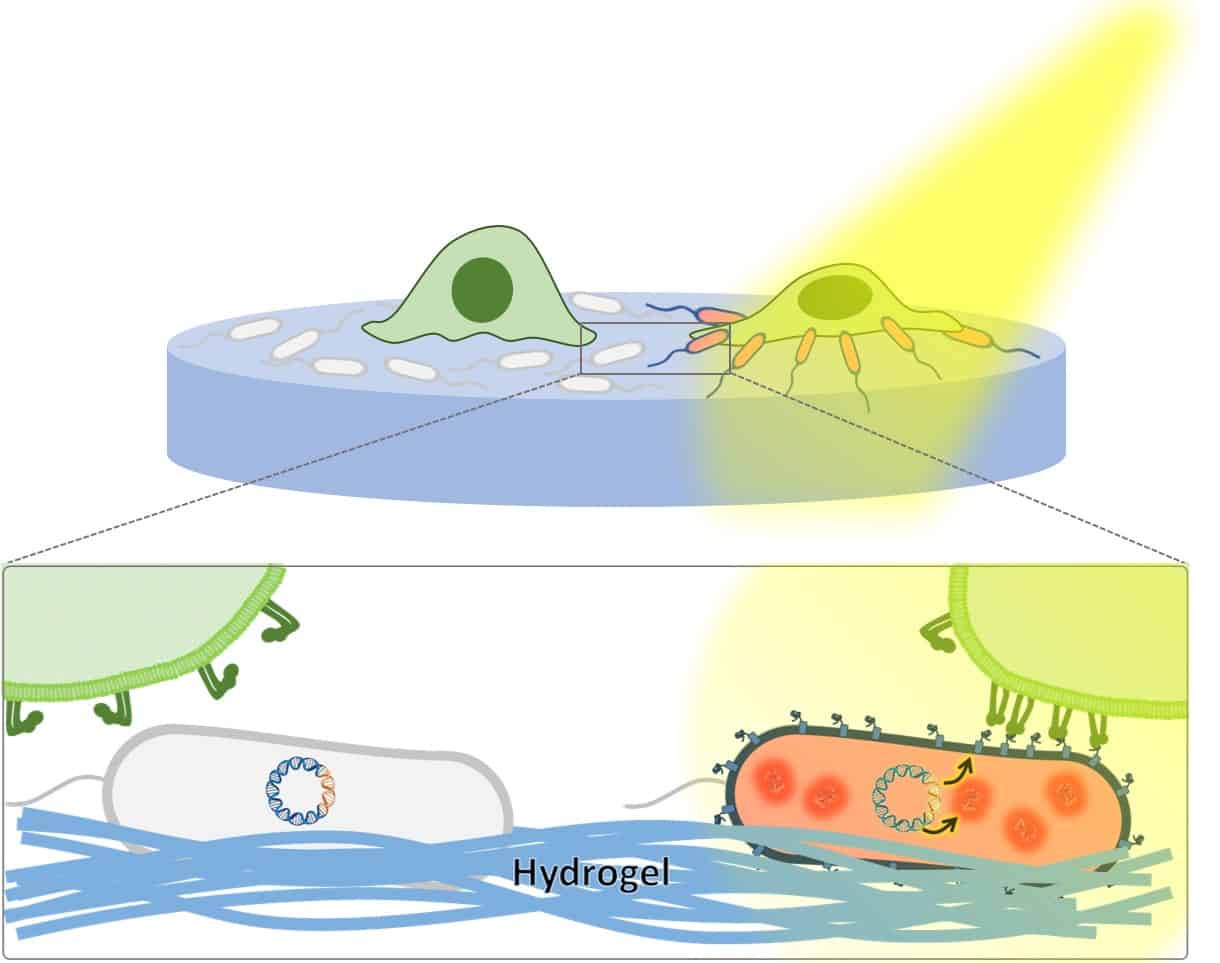
Scientists in the Dynamic Biomaterials group at the Leibniz Institute for New Materials have demonstrated a proof-of-concept design for a light-regulated “living biomaterial” (Advanced Science 10.1002/advs.201800383).

An ideal biomaterial for use in medical applications would have the ability to transmit and respond to signals from attached or encapsulated cells, in order to mimic the molecular interactions that occur within living tissues. Recent advances in this area include the timed release of sequestered growth factors, or in situ changes in mechanical properties, in response to an external stimulus, which then may alter cellular behaviour in real time. Although useful, these approaches are limited in that they are generally irreversible and do not truly establish a dynamic and mutual relationship between the cells and the biomaterial.

Living biomaterials offer a novel approach, in which incorporated bacteria imbue the material with organism-like properties, including the ability to become adaptive, productive and regenerative. In this study, the researchers expanded upon the living biomaterial concept, by providing a design in which the bacterial behaviour can be precisely controlled by light, thereby enabling manipulation of cell–material–bacteria interactions in real time.

The researchers genetically modified a strain of E. coli bacterium to display a cellular adhesion protein at its surface (the amino acid sequence RGD) upon stimulation with a drug (IPTG), which then enables the bacteria to interact with mammalian cells. In addition, they modified the bacteria to express red fluorescent protein (RFP) upon stimulation with IPTG, in order to identify activated bacteria. They then synthesized a photo-activatable version of IPTG (PA-IPTG), which would only activate the generation of the proteins upon light stimulation.

Effects of light stimulation

The team then seeded mouse embryonic fibroblasts (MEFs) onto the light-regulated living biomaterial and then tested how they could modulate MEF behaviour with light exposure. They found that without light, the MEFs did not interact with the bacteria and did not stretch out much across the material. Upon light exposure, the bacteria began to express RGD and RFP. The RGD sequence was recognised by MEF receptors, which enabled the formation of focal adhesions — the dynamic protein complexes that enable the cell cytoskeleton to interact with the environment. This formation of focal adhesions allowed the cells to fully stretch out and pick up the bacteria whilst migrating across the biomaterial.

Interestingly, the researchers also noted that the E. coli appeared to be secreting RFP over time, which was then taken up by the MEFs. This observation was unintentional but may potentially demonstrate a mechanism for the transfer of proteins from bacteria to cells within a living biomaterial.

This study provides an interesting proof-of-concept for a light-regulated living biomaterial. The team’s approach provides a simple method of inducing desired protein expression through light in E. coli. True reversibility and versatility however, may be obtained in the future through optogenetics technology. Optogenetics enables the use of light as a true “on–off” stimulus to induce a wide variety of cellular processes such as gene expression, cell signalling cascades and paracrine signalling.

Dynamic Biomaterials group

It will be interesting to see whether future studies expand upon the work demonstrated here to further enhance the interactions of cells with biomaterials. Indeed, the researchers have already submitted extensions to this work in which they induce E. coli RFP secretion in a biomaterial through optogenetics (10.26434/chemrxiv.6852617.v1 and 10.26434/chemrxiv.7087010.v1).

Putting quantum noise to work

Noise doesn’t get good press, but physicists made their peace with it long ago. Typically, it’s seen as just a bit of random grit in the wheels: the low-level, unpredictable stuff that jiggles your experiment and which you can’t really know about. But there’s another sort of noise too, and it comes from quantum mechanics. Rather than being stuff you don’t know about, it is stuff that you fundamentally can’t know about: the randomness at the heart of quantum theory.

Ever since the random nature of quantum mechanics was first proposed by its pioneers in the 1920s, it has been controversial. Most famously, Albert Einstein went as far as to say that “God does not throw dice” to determine the outcome of measurements. Quantum noise continues to tantalize researchers today, as it seems to hold clues about what this perplexing theory is all about.

But some researchers think it does even more than that. They think quantum noise might act as a resource that can do work – if only we can learn how to tap into it. As well as suggesting intriguing practical opportunities for making strange new kinds of microscopic engines, quantum noise offers an alluring glimpse of deep connections within physical theory: between the quantum and classical worlds, between information and work, and between quantum theory and the statistical laws of thermodynamics.

Quantum noise might act as a resource that can do work – if only we can learn how to tap into it

Philip Ball

The random, noisy nature of the quantum world stems from the limits to our knowledge of it, as described by Werner Heisenberg’s uncertainty principle, formulated in 1927. This states that we cannot know, at the same time and with arbitrarily fine accuracy, all the properties of a quantum system. Certain of them – most famously, position and momentum – are so-called “conjugate variables”, meaning that they are linked by an uncertainty relation. The more precisely we know the position of a quantum particle, say, the less precisely we can know its momentum. The product of these two uncertainties is proportional to Planck’s constant h, the basic yardstick of quantum action, postulated in 1900 by Max Planck.

In formal terms, the uncertainty relation stems from the mathematics describing how we make predictions about outcomes of measurements on a quantum system. Any observable has a corresponding “operator”: a mathematical transformation applied to the wavefunction, that shows the possible values a measurement can elicit. During measurement, the operator is said to “project” one such value out of the wavefunction. Operators for conjugate variables – say, for position p and momentum q – are characterized by the fact that the outcomes of the operations pq and qp differ by an amount proportional to h. This property where pq and qp are non-equivalent is called non-commutation.

Wiggle room

It’s tempting to regard the uncertainty principle as a kind of fuzzy veil that obscures the real values of these variables. But that’s not the right way to see it. As far as we can tell, what it really means is that the variables are themselves defined no more precisely than Heisenberg’s limits allow. This gives the quantum world some wiggle room… and within that space, wiggle it does. So-called quantum fluctuations – the source of quantum noise – happen all the time. A well-known example is the tendency of particles and their corresponding antiparticles to pop in and out of existence in a vacuum, bringing it alive with a quantum hum.

These fluctuations can be regarded as the origin of physical, observable effects ranging from the Casimir force – which causes attraction between two closely spaced surfaces – to Hawking radiation, which is thought to stream from the event horizons of black holes. The fluctuations can drive low-temperature “quantum phase transitions” between different states of exotic materials dominated by quantum effects. This is similar to how classical fluctuations caused by heat underpin “critical” phase transitions such as the switch between ordered and disordered states of ferromagnets.

The difference is that you can reduce classical noise by lowering the temperature – at absolute zero it vanishes altogether – but you can’t get rid of quantum noise. The universe is always alive with it. “Classical noise is usually thought of as ‘lack of knowledge’, meaning that if we knew all the details (of every particle), there would be no noise, or heat,” says Vlatko Vedral, a quantum theorist at the University of Oxford, UK. “Quantum noise, on the other hand, is fundamental, in the sense that even a complete knowledge of the system would still leave us with some residual quantum uncertainty.”

Noise is generally regarded as an inconvenience – something apt to disrupt our ability to control systems precisely. For a long time, quantum noise was thought to be no different. It “has been known from the beginning of quantum physics”, says Vedral, and “was thought of as always being bad”. But that’s changing. “Now we think of it very differently and are asking how to harness it,” he says.

Working demon

Maxwell's demon

How, though, do you get anything useful from random fluctuations? Well, there is already a scheme for doing that with classical noise, and it dates back to the 19th century. In a warm environment, there’s plenty of energy around. But if it’s uniformly spread, there seems to be no way to put it to use. That’s one way of looking at the second law of thermodynamics, which can be expressed as the notion that heat passes from hot to cold. Unless a temperature gradient exists, there’s no reservoir that can be tapped to do work.

But in 1867 James Clerk Maxwell used the new microscopic understanding of heat as random molecular motions to suggest a way of cheating the second law. He conjured up the image of a tiny being – later dubbed a demon – that can see individual molecules moving about in two chambers of gas. This demon selectively opens and shuts a trapdoor linking the two compartments, so as to let faster-moving, more energetic molecules congregate on one side, and slower ones on the other. This divides a gas of initially uniform average temperature into a hot and a cool side, thereby creating a temperature gradient that can then be used to do work of some kind. In that process, the entropy of the system decreases – it becomes less random and more structured, in contradiction of the second law’s insistence that total entropy must always increase in any process of change.

The key here is that the demon has access to information that we, at the macroscopic scale, lack: it knows the details of all the molecular motions. Information itself becomes a resource for doing work. The notion that there is an equivalence between information and energy has been demonstrated in recent experiments. For example, in 2010 physicists in Japan used precise observations of randomly moving particles in solution to increase their energy. In 2016 researchers at Aalto University in Finland built an autonomous microelectronic device that enables electrons to move against an “uphill” energy gradient (voltage) – thereby cooling the device – by sensing their motions and adjusting the voltage accordingly.

But Maxwell’s demon can’t in fact evade the second law, although the reasons for that were not fully understood until 100 years after Maxwell posed his thought experiment. The problem is that information about the particle motions can’t be accumulated forever, in the mind of a finite demon. In 1961 the physicist Rolf Landauer showed that there is an unavoidable entropic cost to erasing information, and this offsets any work that the demon is able to extract.

Quantum mine

Maxwell’s demon mines thermal noise (while ultimately respecting the second law). But is there an equivalent for quantum noise? At first glance, there’s a problem with that idea. Maxwell’s demon can use classical thermal fluctuations as a resource because it has access to the information that exists within them, albeit hidden from human eyes. But in quantum fluctuations there is no hidden information. It’s not that we don’t know about the “true” values of variables underlying the uncertainty, but that such a notion has no meaning.

In quantum fluctuations there is no hidden information. It’s not that we don’t know about the “true” values of variables underlying the uncertainty, but that such a notion has no meaning

Philip Ball

Ah, but it can be given meaning: by measurement. That is how the probabilistic unknowns (or rather, unknowables) of a wavefunction collapse to particular values. So, in principle, quantum fluctuations can be turned into definite information by observation. But how can that be used to do work? It’s possible because, as several researchers have recently shown, a measurement of some quantum observable can increase the average energy of the system. This happens in specific cases, namely those where the quantum operator (which projects out of the wavefunction a value for the observable in question) does not commute with the energy operator of the system, known as the Hamiltonian – in other words, the observable and the energy are conjugate variables, like position and momentum.

In that case, the system’s “extra” energy comes from the measurement apparatus itself. Just as in the classical case, measurement reduces entropy and creates a source of energy that “can be transformed into work by an engine”, explains Juan Parrondo of the Universidad Complutense in Madrid, Spain. But whereas for the classical Maxwell’s demon it’s the “heat bath” of the surrounding environment that is mined to produce this work, in the quantum case there’s no actual heat bath – just the energy reservoir of the measuring apparatus, which becomes coupled to the quantum system by the very act of measurement. “You can look at the measurement as a battery that delivers energy in a random (noise-like) way,” says Peter Talkner of the University of Augsburg in Germany. At root this is a consequence of the uncertainty relation between time and energy. During the finite interaction time of the quantum system and measuring apparatus (when the measurement is made), there is some quantum noise in the energy that lets it leak into the system.

Hot bit

This principle can be used to draw energy into a quantum system by making measurements on it. The idea is that the quantum system – a simple quantum bit, say, which can exist in two states – is coupled to some system on which it can perform work. The qubit is prepared in a superposition of states, and by then making a measurement of its state you can increase its average energy. You could say that it seems to get “hotter”. That heat can then be tapped to carry out work: it’s a “quantum engine”. In 2011 Talkner, working with Juyeon Yi, showed that, in theory, repeated measurements of the position of a single quantum particle can eventually drive it into a state corresponding to “infinite temperature”, which means that the system occupies all its energy states with equal probability.

Several researchers have proposed types of quantum engines that run by using measurement to tap into this quantum noise. Unlike classical heat-engines, such devices don’t need a heat bath or temperature gradient from which they draw their power. Once the measurement has been conducted, a feedback signal can reset the qubit to its initial superposition at no energy cost – but just as in the classical system, to fully close the cycle, the outcome of the measurement must be erased: the measuring apparatus is reset without looking at the result it measured. That has an entropic cost, and so no energy is being obtained free – the second law is still respected.

Alexia Auffèves at CNRS’s Institut Néel in Grenoble and colleagues have proposed how to make such a device, using a superconducting circuit, rather like those used for qubits in several prototype quantum computers. The output of this “quantum engine” would be photons that can be used to do something useful, like switch an optical device (Phys Rev. Lett. 118 260603). Talkner and Yi have described a quantum engine without the feedback step, which plays the role of resetting the memory for a classical Maxwell demon (Phys. Rev. E 96 022108). In that case there’s still no free lunch: the second law is protected because of entropy generated when the engine is reset for the next cycle. That’s done by letting it come into equilibrium with a thermal bath at a constant temperature, which washes away any information about the measurement.

Physical fundamentals

Looking at quantum fluctuations in the light of Maxwell’s demon doesn’t just raise the prospect of exploiting it to our benefit. It also suggests a way of linking these fundamental quantum phenomena to the discipline of thermodynamics. Auffèves believes that quantum fluctuations should be seen a source of noise intrinsically different from the randomness injected classically into a physical system by heat. But where, really, does that noise come from? It’s all very well to put it down to the non-commutation of quantum operators – but that’s an abstract mathematical thing that doesn’t offer much physical insight. Can we provide an intuitive explanation for quantum randomness?

Wavefunction image

That question goes to the heart of quantum theory. The wave equation proposed in 1924 by Erwin Schrödinger to describe quantum “particle waves” provides us with a wavefunction from which all observable properties of a quantum system can be predicted. The Schrödinger equation doesn’t predict outcomes in the way that Newtonian mechanics does for classical systems; rather, the wavefunction supplies the probabilities for what we might observe. In general, we can’t know for sure what value we’ll measure until we look. There’s apparently a fundamental randomness to quantum mechanics, which was what troubled Einstein so deeply about the theory.

A big unresolved question in the foundations of quantum theory is whether this inability to make exact predictions is truly fundamental, or just due to our lack of knowledge about some “real state of affairs”. The latter situation is comparable to the way we must treat classical noise as random because we can’t see all the molecules. The former, though, denies that there is any underlying “real state of affairs” at all.

Regardless of the exact origin of quantum randomness, we can understand why it has to be present. In 1935, while working at Princeton, Einstein and two younger colleagues, Boris Podolsky and Nathan Rosen, developed a thought experiment that they said cast doubt on the “completeness” of quantum mechanics, supporting the idea that the apparent randomness was just the result of our inability to access a true underlying state of affairs in which every variable had a definite, fixed value, albeit hidden from direct observation. This “EPR” experiment seemed to imply that, if quantum mechanics was all there is, particles would have to be able to influence each other instantly across space – an option precluded by Einstein’s theory of special relativity, which forbids any causative influence to travel faster than light.

Thanks to the work of Northern Irish physicist John Bell in the 1960s, we now know from experiments that Einstein’s “hidden variables” almost certainly don’t exist. But instantaneous “action at a distance” doesn’t exist either: it turns out that quantum randomness protects the universe against violations of faster-than-light communication – and thus rescues causality.

Context is key

That still doesn’t tell us where the randomness comes from, though. Auffèves and her colleague Philippe Grangier, of the University of Paris Saclay, have recently proposed a way of looking at quantum theory that they think might explain it – by starting with the long-known fact that the outcomes of quantum measurements depend on the context of the measurement. This was another of Bell’s profound insights in the 1960s, although this so-called quantum contextuality is more often ascribed to the mathematicians Simon Kochen and Ernst Specker, who derived the result at much the same time and published it before Bell in 1967. The Kochen–Specker theorem – which has been borne out by experiments in the past two decades – says that for quantum systems in general, it is meaningless to ask “What value does the variable x have?” Instead we must ask “What value does x have when measured in context y?” If we made the measurement differently from y, we might find a different value for x, without any theoretical inconsistency.

Quantum entanglement

Auffèves and Grangier say that a quantum state – defined by a wavefunction, and amenable to experimental interrogation – can be defined only in a given context. That contrasts with classical systems, where a state – how fast a ball is travelling, say – doesn’t depend on the context of asking. The researchers call the possible outcomes of a measurement of some property of a system, made in a particular context, “modalities”. These are mutually exclusive: if you observe one of them, you can’t observe another too. There’s a fixed number of modalities for any system: say, if a photon hits a half-mirrored beam splitter, it can only be reflected or transmitted, and nothing else. This existence of discrete and exclusive modalities is what characterizes quantum systems, they say.

In this scheme, there’s nothing indeterminate or probabilistic about the quantum states themselves – they are perfectly objective, echoing Einstein’s conception of physical reality. “Instead of starting with probabilities, we start à la Einstein with certainties,” says Auffèves. But the crucial difference is that the quantum states don’t refer directly to the underlying system, but to the system and context as a whole. “While systems and contexts exist on their own and are ultimately made of the same stuff,” says Auffèves, “only together can they give rise to states, which correspond to definite, repeatable phenomena.” It’s only an old habit that we have from the classical world, she says, to think that systems alone should have states.

In this view, the probabilities characteristic of quantum mechanics aren’t then intrinsic to the quantum state, but arise in our efforts to make predictions about it. Only when we make an observation on the system – which demands a particular context – do we realize one of the possible modalities for sure. Quantum mechanics is then not a theory of the fundamental systems in themselves, but a formalism for dealing with the modalities that arise from them. The two researchers call this the Contexts-Systems-Modalities (CSM) approach (Phil. Trans. A 10.1098/rsta.2017.0322).

Auffèves and Grangier show that, given these axioms, their approach produces all the characteristic features of quantum mechanics, such as superpositions and the Born rule for calculation probabilities. But here’s the catch. A system has a fixed number of modalities, but there are more contexts we could apply for measurement than those modalities can satisfy. In other words, there are more possible questions we can ask of a quantum system than there are certain, repeatable answers it can give. You could say that the definite modalities get “used up”, such that any additional modalities – the outcomes of probing the system further – are then delivered at random. It’s this randomness that is experienced as quantum noise.

Finite information

This view of quantum mechanics is still very speculative, but the basic idea echoes others that have been suggested previously. In 1999, for example, quantum physicist Anton Zeilinger at the University of Vienna suggested that a possible fundamental axiom of quantum theory is that all the fundamental entities (whatever they may be) can encode at most one bit of information (Found. Phys. 29 631). In other words, they can supply a definite answer to just a single yes/no question.

Zeilinger and his colleague Časlav Brukner have explained how this condition could lead to distinctly quantum behaviours, such as the results seen in EPR measurements where two entangled particles have correlated properties even though the values of those properties appear to be undefined before measurement. In essence, imposing the condition of correlation uses up all the possible “information-bearing” capacity of the two particles, so that the actual values of their individual variables (spin, say) have to be random. “Essentially, the main idea is that quantum system cannot answer incompatible questions because it has limited information content,” says Borivoje Dakić of the University of Vienna. “Thus, quantum randomness naturally shows up when we ask the system a question to which it lacks the capacity for an answer.”

That idea has been developed by Brukner, Zeilinger, Dakić (arXiv:0911.0695) and others (arXiv:1511.01130) to give full-blown “reconstructions” of quantum theory based only on simple axioms about how information is encoded in and shared between quantum particles. This quantum reconstruction is closely similar to the CSM approach, says Dakić.

Auffèves agrees that there are clear parallels. “I am pretty sure that we can compare our maths and fruitfully inspire each other,” she says, “but the original dressing and the philosophical choice are different.” Dakić admits, though, that there’s not yet any firm justification for assuming that an inability to supply a deterministic answer must lead to a random one. “Why the system then answers in a probabilistic way is not clear to me,” he says. “I could imagine that the system simply remains silent, or could provide some uncertain answer. I think the question remains open.”

The existence of quantum randomness and noise seems, then, to be allied somehow to the issue of how information can be carried and distributed in quantum entities. But unlike the classical Maxwell’s demon, information here is not a question of how closely we can look at a system. Rather, it depends on how we decide to look. It’s as if information exists as a resource that we, by our choice of how to measure, can choose to channel into one property or another.

It’s as if information exists as a resource that we, by our choice of how to measure, can choose to channel into one property or another

Philip Ball

And that’s why quantum mechanics is still, a century after it was conceived, making us scratch our heads. It looks as if our intervention somehow calls the elements of reality into being – not in some vague “quantum woo” manner, but in a way that is rule-bound and quantifiable. Whether the CSM of Auffèves and Grangier supplies the right way of thinking about that conundrum remains to be seen. But perhaps the truth is that we need many ways of looking at this strange theory before we can start to discern its real shape.

Two paths, diverged

“The experiment I am about to relate…may be repeated with great ease, wherever the sun shines.” That was how polymath Thomas Young described his newly devised experiment that revealed the true nature of light, to the members of the Royal Society in November 1803. Young was referring to the very first iteration of what we now know as the “double-slit experiment”, which forms the backbone of quantum mechanics and reveals to us the truly baffling way in which light behaves. In Through Two Doors at Once: the Elegant Experiment that Captures the Enigma of Quantum Reality, author Anil Ananthaswamy dives into the 200-year history, science and legacy of this beautiful and inscrutable experiment.

A journalist by trade, Ananthaswamy has written for a number of publications, including New Scientist, Nature, the Wall Street Journal and, indeed, Physics World; but he has also penned a few popular-science books over the years. His first, The Edge of Physics – a travelogue-style book, covering cutting-edge experiments in cosmology located in some of the most extreme locations on the planet – did particularly well, and even won our 2010 Book of the Year award. His second book The Man Who Wasn’t There, which dealt with the complex and difficult subject of mental disorders and the neuroscience behind them, was equally well received. With this latest book, Ananthaswamy has once more picked a labyrinth of a subject, as he attempts to nail down what we do and don’t know about the nature of light.

To describe the double-slit experiment as an enigma is an understatement

To describe the double-slit experiment as an enigma is an understatement. Despite being around for over two centuries, the experiment has equally delighted and frustrated the best and brightest minds in physics, from Albert Einstein, Erwin Schrödinger and Werner Heisenberg to some of today’s top physicists, including Anton Zeilinger, Alain Aspect and Roger Penrose. Its results and conclusions are still a matter of debate. But despite the uncertainty that surrounds the experiment, it is one that is indeed as simple to perform as Young suggested, and so is taught to physics undergraduates the world over. When I carried out the experiment as an undergrad, it was a sweltering hot summer day in India, and despite the overabundance of sunlight, we used a sodium vapour lamp and had to work behind thick black curtains. I was so focused on setting up my grating to get a perfect diffraction pattern (the aim of the experiment was to calculate the half angular width of the central maximum) that I completely missed the truly spectacular implications of the experiment itself.

It was only later, when we studied the theory behind the experiment in depth, that its mind-boggling aspects were revealed to me. Although the smallest unit of light – a quantum – is a particle, it can also behave like a wave. The very act of us observing (or not observing) quantum particles seems to change the outcome of the experiment. The double-slit experiment, done with a single quantum particle, still produces an interference pattern. And for whatever reason, there seems to be some boundary between the quantum and classical worlds – after all, the Schrödinger’s cat experiment does not work with actual cats.

It’s no surprise then that Ananthaswamy felt compelled to pen an entire book on this one experiment, albeit going into its many forms and versions. The book does a very good job at describing how the experiment has grown and developed since Young’s first rudimentary set-up (there wasn’t even one slit, let alone two), which involved a pinhole in the shutter of his window and a piece of card he held up to split the incoming ray of sunlight.

Today, we have diffraction gratings that are much slimmer than a strand of hair, laser beams of all strengths and advanced light-detectors to pick up the patterns. I recall a team of scientists fabricating a grating from graphene, while another used the silica-based exoskeleton of a diatom (unicellular marine algae) to split up light. Not only that, researchers have discovered that it works with not just light but also any number of quantum particles, including electrons, large molecules and, in one rather unbelievable instance, a bacterium.

An enjoyable and useful aspect of Through Two Doors at Once is the fact that Ananthaswamy has not only covered the historical aspects of the experiment (not to mention other related facets of quantum theory, its interpretations and more), but also devoted nearly half the book to describing the much more recent studies featuring the double slit. These include the famous entanglement experiments carried out by Zeilinger and colleagues, where photons were sent over a distance of 144 km, with the experiment set up over two mountain-tops in the Canary Islands. I particularly enjoyed the chapter where he meets up with Penrose to talk about the latter’s ideas on the quantum–classical boundary and some of the issues around the measurement problem – that the act of measurement is necessary for a wavefunction to collapse. Penrose’s ideas and solutions, which involve the curvature of space–time and certain inherent properties of gravity (you’ll have to read the book to learn more), are rather radical, but no less perplexing that the reality of quantum mechanics itself.

Ananthaswamy’s writing is nearly always lucid, although lay readers may find certain parts – such as the chapter on the delayed-choice quantum eraser experiment – hard going. The book is not chronological in its description of the science, but I can see why the author has chosen to divide it by topic instead. Through Two Doors at Once is a fascinating read and a must for anyone who would like to find out the latest experimental advances made in this most fundamental of quantum experiments. Don’t expect a resolution though – we’re still far from cracking the many mysteries of the double-slit experiment, and the book’s last sentence enticingly reads “The case remains unsolved.”

  • 2018 Penguin Random House, 304pp, £15.99hb
Copyright © 2026 by IOP Publishing Ltd and individual contributors