Brownian motion melts a quasicrystal of tiny Penrose tiles

A quasicrystal made from tiny Penrose tiles that undergo Brownian motion has been created by Po-Yuan Wang and Thomas Mason at the University of California-Los Angeles. The duo was able to track changes in the 2D structure as tiles moved around, observing a range of effects including melting. As well as shedding further light on the properties of quasicrystals, the new lithographic fabrication technique could be used to study a wide range of colloidal systems.

Until relatively recently, scientists had assumed that all crystals have translational symmetry. This means they comprise a periodically-repeating unit cell of atoms that fills space without any voids. In contrast, quasicrystals do not have translational symmetry – they possess rotational symmetry – but also fill space without any voids.

The unexpected discovery of quasicrystalline materials was made in 1984 by the Israeli materials engineer Dan Shechtman, who was later awarded the 2011 Nobel Prize for Chemistry. Although the discovery was first met with scepticism, hundreds of solid-state quasicrystals have since been discovered. Furthermore, researchers are looking at potential applications of quasicrystals that range from aerospace to coatings of surgical and kitchen utensils.

Much more to learn

Quasicrystals have also been observed in several types of soft matter including colloids and dendrimers. However, after 34 years of research and over 11,000 publications on quasicrystals there is still much more to learn about these materials.

In their study, Wang and Mason created a “Penrose P2” quasicrystalline 2D metamaterial using two types of plastic tiles each measuring about 10 µm in size. These kite- and dart-shaped tiles were designed by a computer-aided method and lithographically printed onto a glass wafer covered with a thin 10 nm layer of a solid lift-off release material that functions like a temporary glue. Unlike the original Penrose P2 tiling – in which the tiles are packed tightly together – the practicalities of lithographic production meant that gaps were left between the tiles. The release material dissolves upon addition of a chemical solution, freeing the tiles from the glass wafer so they are free to move on the glass surface.

Before release, the dart- and kite-tiles are arranged into local motifs that are in turn arranged into various superstructural patterns. After release, Brownian motion causes the orientation and position of the tiles to change as they become free to move.  Wang and Mason were then able to observe the structure of the quasicrystal as it fluctuated. This study revealed a range of interesting behaviours before the quasicrystal “melted” to resemble a liquid as the tile density decreased. At certain densities on the way to melting, for example, the system creates a “pentatic liquid quasi-crystal” – which is an exotic phase of matter that has not been previously seen.

Circumventing self-assembly

Creating these lithographically pre-assembled monolayers (litho-PAMs) of tiles differs from techniques for making self-assembled monolayers (SAMs). One of the big goals in self-assembly has been the creation of a five-fold symmetric quasicrystal over large areas. The litho-PAMs method circumvents the self-assembly step and this opens many viable routes to different tile sizes and shapes, including the potential to expand to 3D materials.

“New applications of the litho-PAMs method will allow researchers to study of other forms of matter– not only quasicrystals, but also other types of multi-scale materials that have different structures at different length scales,” says Mason. He adds, “This method opens the door for studying all these systems without having to solve the problem of encoding interactions between particles to create the system in the first place. Our new method enables experimentalists to jump beyond self-assembly in terms of making new 2D Brownian tile systems and exploring them, possibly even before theorists can dream them up.”

Ronan McGrath of the University of Liverpool told Physics World, “this work represents a very interesting and original addition to the small but growing number of fabricated quasicrystalline metamaterials”. He adds, “The work differs from previous colloidal approaches in that the quasicrystalline structure is pre-assembled through an ingenious lithographic process. This allows the study of the temporal evolution of the quasicrystalline pattern under Brownian motion with and without hard-wall constraints.”

“It will be especially interesting to see if the approach can be extended to three dimensional structures which would complement more established colloidal self-assembly protocols,” says McGrath.

The research is reported in Nature.
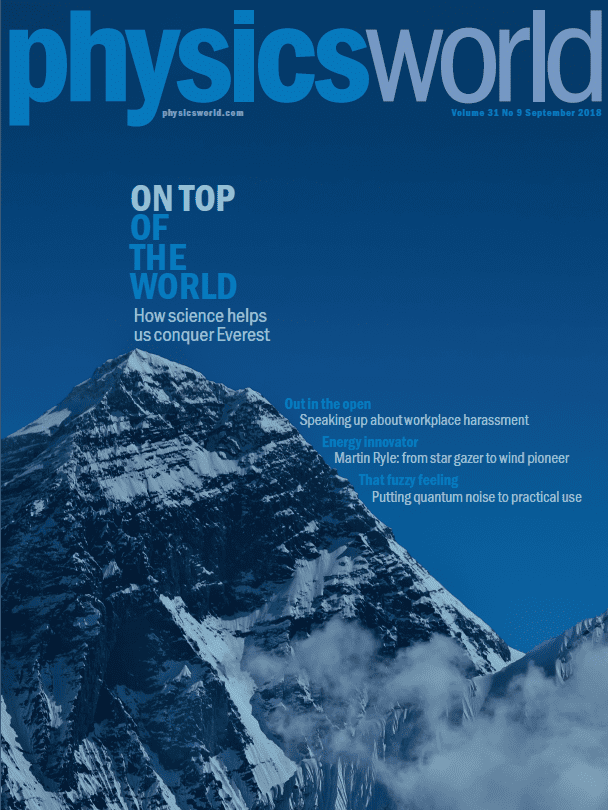
 

The science of climbing Everest – the September 2018 issue of Physics World is now out

Cover of the September 2018 issue of Physics World magazine

Melanie Windridge’s ascent of Mount Everest is the cover story of the September 2018 issue of Physics World magazine, which is now out in print and digital format. Windridge, who is a physicist by training, describes how science and technology are vital for any successful ascent, whether it’s for communication, clothing or climate.

Elsewhere in the issue, James McKenzie offers his top tips for shining at a job interview, while Robert P Crease reveals your best metaphors for doing physics. We also have Philip Ball writing on how to exploit quantum noise, while Alan Cottey looks at the life of Nobel laureate Martin Ryle, who was born 100 years ago this month.

Remember that if you are a member of the Institute of Physics, you can read the whole of Physics World magazine every month via our digital apps for iOS, Android and Web browsers.

For the record, here’s a run-down of what else is in the issue.

• Building the next collider – Yifang Wang, director of China’s Institute of High Energy Physics, talks to Physics World about the country’s plans for a 100 km circumference collider to study the Higgs boson

• Shaking up the system –A year after a devastating earthquake hit Mexico City, Lucina Melesio examines how the development of early-warning smartphone apps could help save lives in the future

• Breaking the silence –Emma Chapman, who suffered sexual misconduct as a PhD student at a UK institution, urges universities to reform their complaints procedures to allow other victims to speak out

• Physics is like… – Robert P Crease muses on the metaphors for physics that you sent him

• Talent spotting – People are said to be the biggest asset of any hi-tech business. But they have to be the right people, warns James McKenzie

• Physicist on top of the world – Reaching the summit of Mount Everest takes courage, fitness, mental strength and organization, but advances in science and technology are making it a safer adventure. Melanie Windridge discusses the science that helped her climb to the highest point on Earth

• Noisy work in progress – Could noise in a quantum system be used to do work? Philip Ball looks at new research that’s attempting to make a feature of a fault, which may also link quantum mechanics to thermodynamics on a fundamental level

• Martin Ryle: an energy visionary – Born 100 years ago this month, Martin Ryle was more than just a Nobel-prize-winning astronomer. Alan Cottey takes a fresh look at the life of a brilliant and conflicted scientist who was also a visionary about the human use of energy

• The trouble with beauty – David Appell reviews Lost in Math: How Beauty Leads Physics Astray by Sabine Hossenfelder

• Two paths diverged – Tushna Commissariat reviews Through Two Doors at Once: the Elegant Experiment that Captures the Enigma of Quantum Reality by Anil Ananthaswamy

• Ingenious inventions – Tushna Commissariat reviews Audrey the Amazing Inventor by Rachel Valentine and illustrated by Katie Weymouth

• My years in China – Richard de Grijs, who spent eight years as a senior scientist in China, outlines the advantages and disadvantages of working in this burgeoning scientific powerhouse

• Once a physicist: Noel Bakhtian – Meet the director of the Center for Advanced Energy Studies  at the US Department of Energy’s Idaho National Laboratory

• Schrödinger’s cat – Eugenia Viti and Ivan Viti depict the famous feline as you’ve never seen it before

NASA’s next-generation asteroid telescope set for South Africa

NASA has announced that a next-generation asteroid-hunting telescope will be located in South Africa. The $3.8m telescope, part of the Asteroid Terrestrial-Impact Last Alert System (ATLAS), will be hosted by the South African Astronomical Observatory (SAAO) in Sutherland. The construction of the telescope’s dome and other supporting infrastructure is expected to start next year with the 50 cm telescope installed in 2020.

The ATLAS project currently consists of two telescopes that are located on the islands of Maui and Hawaii in the northern hemisphere and run by the University of Hawaii. They began operation in 2015 and have discovered over 300 asteroids passing near Earth’s orbit. However, the current location of the telescopes means that ATLAS is blind to roughly 30% of the southern sky. Building two new telescopes in the southern hemisphere will let astronomers search the entire sky for near-Earth objects.

The telescope in South Africa, which may be renamed ATLAS 3, will aim to discover, track and classify hundreds of asteroids via a 110 megapixel camera and scan the sky roughly twice a night.

Nicolas Erasmus, a SAAO post-doctoral researcher who works on characterising asteroids, says the search for asteroids by using an algorithm that will scan each image to determine if any object has moved. A detection will then be cross checked to a database that contains about 800 000 asteroids to see whether it is a new discovery. “The observations will also be used to calculate orbits of any newly discovered asteroids and this can be used to predict if there is any chance that it can impact Earth,” says Erasmus.

A second telescope site in the southern hemisphere is yet to be selected, but one option could be Chile, which lost out to South Africa to host the first telescope.

Medium-height trees survive drought best

Forests with canopy heights of around 18 metres are more resistant to the effects of severe drought than those with shorter and taller trees, according to researchers in China and the US.

In the past, studies have disagreed on whether forests with lower or higher canopies will be more likely to make it through prolonged spells of hot, dry weather. The discrepancy has made it difficult for forest managers, who need to know which tree heights to encourage to ensure the highest growth and survival rates during extreme drought.

Study leader Peipei Xu at Beijing Normal University in China and her colleagues believe the issue is increasingly pressing. “Climate data indicate that warm areas of land are increasing, and the warmed areas are also drying,” says Chuixiang Yi at the City University of New York, US. “Hot-dry-induced forest mortality poses a significant global concern for the future as carbon dioxide continues to rise and the climate continues to warm.”

Xu, Yi and the rest of the team aimed to quantify the relationships between canopy height, growth and survival rates during drought accurately for the first time. They analysed data gathered during a severe drought in the southwestern US in 2002 that showed the effect on the ring widths of tree trunks, a useful indicator of their yearly growth. In addition, satellite data revealed how the density of vegetation changed over the course of the drought; the team used this to calculate both leaf growth and tree mortality rates.

The results revealed that trunk and leaf growth under drought conditions increased with canopy height for trees shorter than 18 metres but decreased with height for trees taller than 18 metres. “Our results indicate that both high and small trees have relatively low drought resistance,” says Yi.

After establishing these relationships, the researchers could determine the biological mechanisms governing tree growth and survival during drought.

“All organic matter in a tree is formed on the leaves at the top of the tree by photosynthesis,” Yi explains. “Tall trees have a longer water transport path from roots to leaves and [it’s] more difficult to overcome tissue resistance and … gravity, particularly under dry conditions. The roots of small trees are short, and their abilities to access water and nutrient supplies unavailable to the surface soil layer are extremely limited.”

The researchers believe that using their results to inform the active management of canopy structure could safeguard vulnerable forests. As climate models predict hotter, drier droughts becoming more commonplace, this could be essential to combat forest dieback – a phenomenon that will also drive climate change.

“Our findings provide insights into how to manage forests or plant what trees to increase forest drought resistance in facing hot-dry climate conditions to mitigate climate change,” says Yi.

The team reported the findings in Environmental Research Letters (ERL).

Artificial intelligence predicts cancer evolution

The ever-changing nature of tumours is one of the biggest challenges in treating cancer. If doctors could predict how a tumour will evolve, however, they could alter the treatment before the tumour has a chance to adapt and develop resistance, thereby increasing the patient’s chances of survival.

With this aim, a research team led by scientists at The Institute of Cancer Research (ICR) and the University of Edinburgh has used artificial intelligence to predict how cancers will progress and evolve – enabling doctors to personalize treatment at an earlier stage than is currently possible. They developed a technique called REVOLVER (repeated evolution of cancer), which picks out patterns in DNA mutation within cancers and uses this information to forecast future genetic changes (Nature Methods 15 707).

“We’ve developed a powerful artificial intelligence tool that can make predictions about the future steps in the evolution of tumours based on certain patterns of mutation that have so far remained hidden within complex data sets,” explains study leader Andrea Sottoriva from the ICR. “With this tool, we hope to remove one of cancer’s trump cards – the fact that it evolves unpredictably, without us knowing what is going to happen next.”

The researchers also found links between certain sequences of repeated tumour mutations and survival outcome. For example, breast tumours with a sequence of errors in the genetic material that codes for the tumour-suppressing protein p53, followed by mutations in chromosome 8, survived less time than those with other similar trajectories of genetic changes. This suggests that repeating patterns of DNA mutations could be used as an indicator of prognosis, helping to shape future treatment.

Finding patterns

Sottoriva and colleagues developed a machine learning technique that transfers knowledge about tumours across similar patients. The method identifies patterns in the order in which genetic mutations occur that are repeated both within and between patients’ tumours, applying one tumour’s pattern of mutations to predict another’s.

They examined datasets from lung, breast, renal and colorectal cancer (768 samples from 178 patients), and analysed each cancer type to detect and compare genomic changes in each tumour. By identifying repeating patterns and combining this with current knowledge of cancer biology and evolution, the scientists could predict the future trajectory of tumour development.

If tumours with certain patterns are found to develop resistance to a particular treatment, this technique could be used to predict whether patients will develop resistance in the future.

“This study shows how collaboration across disciplines adds value to research. By solving a statistical machine learning problem, we were able to shed light on cancer evolution,” says joint study leader Guido Sanguinetti from the University of Edinburgh’s School of Informatics. “It is an example of how the power of artificial intelligence to detect complex patterns in data can be harnessed to further our scientific understanding to improve human health.”

Breaking the silence

My experience of sexual misconduct in academia could be described as both average and exceptional. Average, because it is the same old story of a disastrous combination of power imbalance and lack of protection and oversight. Exceptional, because in demanding justice over my experience, I was lucky to achieve what many have been denied – the right to speak out.

Anyone who makes a harassment complaint at a university is usually bound by confidentiality rules that prevent you from saying anything in public, even about the existence of the process, whether upheld or not. You must go through witness statements, interviews and hearings while in a state of continual fear and anxiety, and at the end you are lucky if you get an e-mail even acknowledging that the process happened, let alone the outcome.

Retaliation and reputation damage are also commonplace, with the enforced silence leaving you defenceless as close colleagues wrongly assume your complaint was malicious, minor or not upheld, or the perpetrator spreads false rumours about you or their false innocence. The career of the complainant, not the perpetrator, is too often forfeit.

Waiving confidentiality

Having endured a 21-month complaints procedure, I could not stay silent knowing that the system in place is discriminatory and protects the perpetrators at the expense of those complaining. I recently won a legal settlement with my former university that waived my confidentiality, in what could be a legal first of its kind in the UK. This agreement allows me to discuss my experiences of making a complaint and the ensuing disciplinary process. It gives me the right to share documents, such as the outcome, which previously had been sent to me only “in strictest confidence”.

The legal fight was in some ways the easiest part of the larger battle for justice. I had employed a law firm that has expertise in dealing with sexual harassment in academia, McAllister Olivarius, which was willing to take my case on a no-win, no-fee basis due to its strength and potential to set precedent. The university settled fairly quickly, giving me what I asked for without requiring continued court action, though the potential for this to be another year-long struggle caused me sleepless nights. We did achieve that precedent though and, directly following on from my settlement, the university announced that it would no longer be using confidentiality clauses in settlements relating to sexual misconduct – an excellent step forward.

The freedom to speak out has been a significant help in my campaign work reforming harassment policy as, for the first time, I can make reference to evidence of real obstacles to justice and offer solutions. In my experience, the enforced silence is the largest block to reform. Silence removes accountability from universities for their role in safeguarding students, and it disarms victims from protecting themselves against retaliation while protecting the perpetrators. My eventual success came, however, after experiencing great personal and professional cost and I was just one case in one university. How do we go about changing this on a larger scale?

Sexual misconduct is rife in the university system. In a study carried out by the Association of American Universities, one in six female postgraduates and one in 20 female undergraduates were found to have experienced sexual misconduct by staff. A survey carried out by the National Union of Students and the 1752 Group – a UK research organization and lobby group tackling staff:student sexual misconduct in higher education – showed that victims of sexual misconduct are unable to continue fully with their studies or their career and experienced serious mental health repercussions.

There is no question that the topic of sexual harassment is finally being taken seriously within institutions. The hiring of dedicated harassment officers and the reform of policies show promise, and zero-tolerance policies are now commonplace. I am concerned, however, that this reform is happening piecemeal, with efforts repeated in institutions across the nation.

Reforming the system

Institutions are still unwilling to acknowledge the mistakes of the past and with that comes a loss of valuable insight into obstacles and solutions to reform. We do not need to dredge up every case publicly, but what we do need is for a sector-wide acknowledgment of the mistakes made. There must be transparency when we evaluate the past, so that any lessons learned are shared successes.

To truly break the silence, my confidentiality waiver should be standard and the fact it was achieved without legislative change shows it can be the norm. Those who come forward should be given the same rights as those accused; the same access to advocacy and legal advice, and the right to appeal. When you have university processes that result in women and minority groups being pushed out of academia for complaining, then this is not just unfair, it is a violation of the Equality Act 2010.

Breaking the silence not only empowers victims and prevents perpetrators from falsely claiming innocence, but it also brings the spotlight back on the institution’s role by allowing whistleblowing. Universities should not be free to ignore warning signs, to settle complaints informally and, without victims’ involvement, to avoid paperwork and confrontation. Universities have a duty of care to their students and their staff, and silencing people from whistleblowing in these situations is dangerous and perpetuates toxic cultures.

In the past year both the UK’s Equality and Human Rights Commission and the House of Commons’ Women and Equalities Committee have expressed disquiet at the use of non-disclosure agreements (so-called gagging orders) in cases of sexual misconduct for this very reason. There is a growing movement towards regulation, if not an outright ban on their use, and yet they are routinely used within universities. How can one reconcile enforcing silence on victims with the zero-tolerance policies plastering corridor walls?

How can one reconcile enforcing silence on victims with the zero-tolerance policies plastering corridor walls?

The responsibility for change is something that should be shared by all of us to ensure reforms are made. Conference organizers are responsible for having codes of conduct that help to keep events accessible to all. Those who hire staff bear responsibility for checking the background of the applicant, while the current employer has a responsibility to tell the truth, not to hide behind “we wish them well in their new endeavour” in a never-ending game of “pass-the-perpetrator”.

Funding agencies have a role here too, as they have the power to withhold funding opportunities from those who use their positions to exploit or harass their students or colleagues. The precedent already exists, with the Wellcome Collection now placing responsibility for declaring upheld cases at institutional level. Gender accreditation schemes such as Athena Swan can also go further by including this as part of their guidelines – something the JUNO award of the Institute of Physics (which publishes Physics World) is implementing in October this year.

There is a huge amount of work to be done. The 1752 Group has been drawing professional boundaries and investigation guidelines for national dissemination, alongside an online wiki to enable activists to campaign and enforce those changes within their own institutions. To make all these efforts succeed we need a sector-wide, collaborative push, where successes and failures are shared. We should never lose sight of the fact that the inconvenience of reform is nothing compared to the daily devastation inaction brings on victims.

Flood risk in deltas and estuaries may be higher

Between 1980 and 2016, flooding caused an estimated $1 trillion in damage and 215,000 deaths worldwide, with populations centred around river deltas and estuaries suffering particularly heavy losses. Now a team has found that in some areas raised sea-level and increased river discharge, which together can produce severe floods, are more strongly dependent on each other than previously thought.

“Many of the large and disastrous floods in deltas and estuaries are the result of a combination of coastal floods – for example, caused by storm surges – and floods from rivers and rainfall,” says Philip Ward at Vrije University Amsterdam in The Netherlands. “When they interact, the floods can be more severe than when they occur in isolation. These are examples of so-called ‘compound events’.”

With climate change set to bring higher sea levels and heavier rainfall, the threat of flooding is likely to increase in the coming decades. “Deltas and estuaries are home to a large proportion of the global population, and the number of people is expected to grow rapidly in the 21st century,” says Ward. “At the same time, they are located in areas that are prone to flooding from the sea, rivers, and rainfall. It is therefore essential that we understand how these phenomena interact, in order to improve planning of flood risk reduction and mitigation measures.”

Ward believes this will require a greater knowledge of the combinations of natural events that cause the most severe seaside floods. He and colleagues used statistical analysis of flooding events in deltas and estuaries, aiming to ascertain a relationship between coastal and river flooding for the first time.

The calculations were based on sea-level data from the Global Extreme Sea Level Analysis (GESLA-2) project, combined with river discharge data from the Global Runoff Data Centre, gathered at 187 coastal locations around the world.

“Our paper shows that there is a strong statistical dependence between river and coastal floods in many locations all around the globe,” Ward says. High sea-levels and high river discharge showed significant dependence at more than half of the measurement station combinations.

The researchers argue that their results reveal a need for an update of flooding risk assessments so that they account correctly for compound events. “By ignoring this dependence, the chance of a really large flood occurring in a delta or estuary can be underestimated, which means that flood defence infrastructure could be under-designed,” says Ward. “By getting a better understanding of the dependence between coastal and river floods, we can improve policies and measures to reduce the impacts of floods.”

Interventions such as river channelling, reforestation, and adapting agricultural practices to increase water retention in soils could greatly reduce the risk of flooding.

Ward and colleagues reported their findings in Environmental Research Letters (ERL).

High-efficiency perovskite photovoltaics beat deterioration and cost

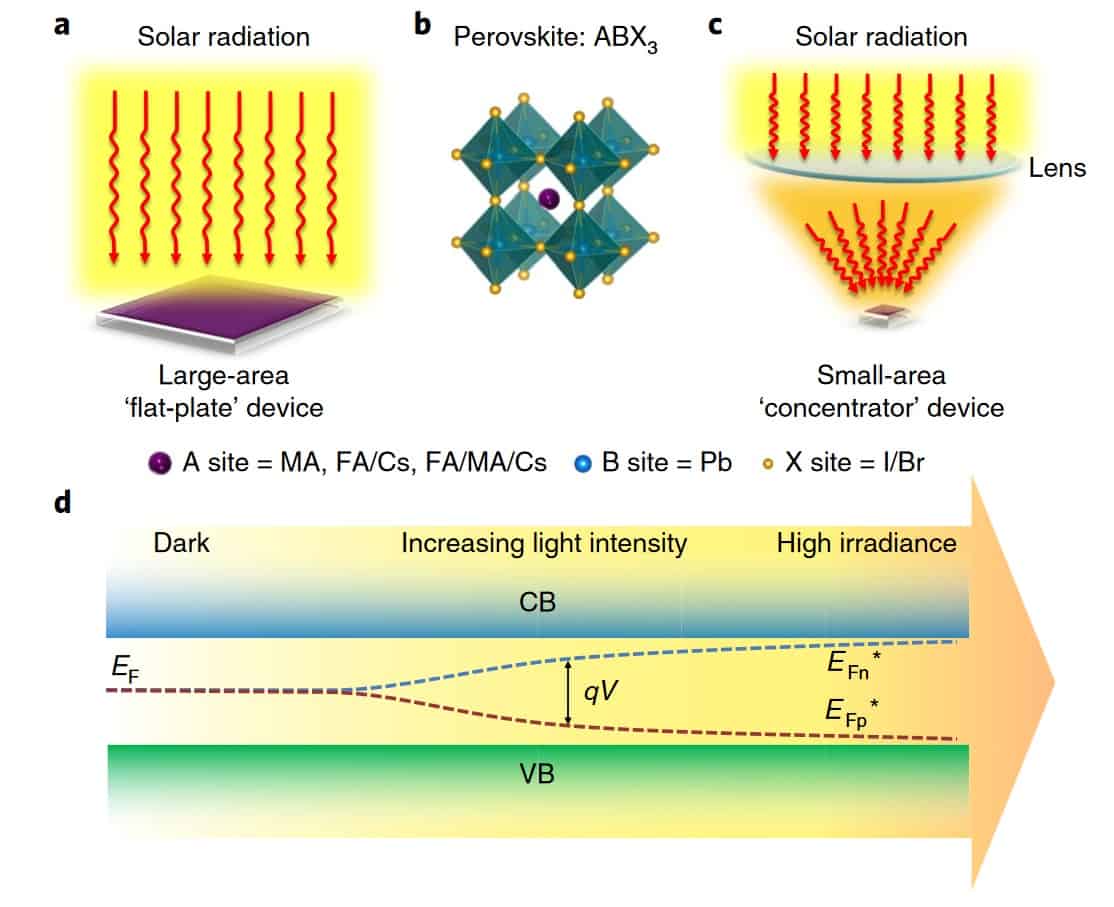
Perovskite-based concentrator photovoltaics. Courtesy Nature Energy

In 2014  a concentrator photovoltaic (CPV) device achieved a power efficiency of 46%, the highest reported power conversion efficiency to date. Four years later, they have failed to compete with thin film photovoltaics simply because of their high production costs. Researchers from The Photovolatic and Optoelectronic Device Group at the University of Oxford, however, have shown that perovskite-based CPVs may solve the issue of cost while providing devices that perform comparably to commercialized silicon-based devices.

The devices owe their success to metal halide perovskites, which have the chemical formula APbX3 (A is methylammonium, formamidinium or cesium, and X is iodine, bromine or chlorine).  Known for their high solar power conversion efficiency, researchers have explored use of these materials in photovoltaic windows and X-ray detectors. While much research continues to focus on the fundamental properties that make these materials so attractive for these devices, issues regarding their stability have plagued advancements in their applications, particularly under light and high temperatures.

The Oxford researchers, led by Henry Snaith, focused their search on a material that would be stable under high irradiance, and found the mixed-halide perovskite Fa0.83Cs0.17PbI2.7Br0.3 served them best. The group found that their devices, when cooled constantly to maintain close to room temperature, retained 90% of their original efficiency after 150 hours spent under 10 Suns (10 kW/m2) of concentrated light.

Deteriorated but undeterred

Beyond 10 Suns of irradiance, the group observed a significant deterioration of their fill factor, a major contributor to the maximum power conversion efficiency of a solar cell. In their study recently published in Nature Energy, they have now found that the power conversion efficiency using the halide perovskite increased by 2.5% when the irradiance was increased from 1 Sun to 14 Suns , despite the deterioration of fill factor. The group’s proof-of-principle study therefore provides an opportunity to explore perovskites as an option for development of CPVs.

Going forward, much more work must be done to bring CPVs to the market – in their article, the researchers emphasize that besides improving their fill factor, the stability of perovskites remains a concern for long-term use. Once researchers characterize the material, the development and optimization of the device and its optics will also affect the device’s commercialization.

Humans can withstand stronger gravity found on distant exoplanets, say physicists

How much stronger would gravity have to be before humans would find it impossible to walk? That question could face humanity if it ever embarks on the colonization of exoplanets – planets orbiting stars other than the Sun. Now, using relatively simple calculations, Nikola Poljak, Dora Klindzic and Mateo Kruljac at the University of Zagreb in Croatia have proposed an upper limit on exoplanet gravity that would allow a trained athlete to live comfortably on a distant world.

Astrobiologists often consider the potential habitability of newly-discovered exoplanets by measuring the properties of their atmospheres.  However, as the Apollo Moon missions proved, humans can use technology to survive in a distant hostile atmosphere. Gravity, however, is an environmental factor that humans would find extremely difficult (if not impossible) to control. Indeed, the three researchers argue that gravity should be a crucial parameter when evaluating whether humans could survive on a distant world.

In their study, the physicists considered how the performance of various systems in a trained athlete’s body would change when subjected to gravitational fields stronger than the Earth’s field (gᴇ). They first calculated the maximum stress a typical human skeleton could withstand while running. Inputting various properties of human bone into their equations, they ascertained an upper limit of 10gᴇ before bones begin to break.

Inverted pendulum model

Next, the trio made a similar assessment for muscular strength – calculating that a trained athlete could no longer get up while seated or lying down above a stricter upper limit of 5gᴇ. By studying the ability of a “strongman” to walk while carrying a 650 kg log the researchers placed an upper limit of 4.6g for locomotion. To do this, they used an ”inverted pendulum” model of the legs to consider the energy the body uses in the walking process.

The team also showed that in stronger gravitational fields, blood would tend to sink towards the legs, requiring the heart to work harder to pump it up towards the brain. Ultimately, survival would require higher blood volumes – making the body feel weaker initially while blood cells are created. It would also result in higher blood pressures, which pose significant health risks. These factors drive the limit down to 4g as the maximum gravity an athlete’s circulatory system could withstand in the long term.

These limits may narrow the range of potentially habitable exoplanets, but the physicists showed that through rigorous strength and endurance training, future colonists could broaden their options for a new home. The researchers calculated that by training an average human to the level of a typical athlete, planets with up to 4g would be a more feasible option. The team now hopes their work will help astronomers to make their search for potential future colony sites more precise – although any future colonization would be contingent on the development of a vast array of new technologies for interstellar space travel.

The calculations are described in a preprint on arXiv.

Nanodiamonds shine brighter

Nitrogen-vacancy (NV) impurities in nanodiamonds could be used as single-photon sources in quantum technologies, such as quantum computers and quantum sensors, thanks to their unique optical and electronic properties. However, the problem is that their emission spectra contain unwanted broad emission bands in the red part of the electromagnetic spectrum. These are known as phonon sideband emissions and they need to be suppressed if real-world applications based on these defects are to see the light of day. A team of researchers in the Department of Physics at the Indian Institute of Technology (IIT) Ropar in India is now reporting on a new way to suppress these emissions in nanodiamonds using photonic crystals. Their technique, which works at room temperature, also enhances zero phonon line intensity in these materials as a further improvement.

Quantum information technologies will require stable quantum light emitters that can emit single photons at room temperature, explain Sachin Sharma and Rajesh V. Nair, who are from the Laboratory for Nano-scale Optics and Meta-materials (LaNOM) at IIT Ropar. In recent years, solid-state emitters, such as the colour centres in diamond have emerged as good candidates for such emitters because they are photostable and have a high quantum efficiency at room temperature.

The NV centre is one of the hundreds of colour centres found in natural diamond. These colour centres are atomic impurities and give rise to the pink, blue and yellow hues often seen in the precious stones. The NV centre involves two adjacent carbon atoms in the diamond lattice being replaced by a nitrogen atom and an empty lattice site (or vacancy).

When illuminated with laser light of a certain colour, the NV centre emits light of another colour and the wavelength of this light depends on the charge state of the NV. Another important property of the NV centre is its good coherence, that is, its spin is shielded from the surrounding environment. This is why it can be used to store and process quantum information.

Two charge states

The NV centre mostly exists in two charge states, namely the neutral NV centre (NV0) and negative NV centre (NV), explain Sharma and Nair. The NVis particularly interesting because it has optically addressable spin states, which makes it more suitable for applications like high-resolution magnetometry, nanoscale thermometry and quantum information processing.

The NV centre emission spectra contain peaks at 575 nm and 637 nm. These correspond to the so-called zero phonon lines (ZPLs) of NVand NV– centres respectively. These peaks are accompanied by broad light emission bands on the red side called phonon sidebands (PSBs), which limit the use of the NV centre as a single-photon source at room temperature, explains Nair. “These phonon sidebands are in fact non-resonant transitions in the crystal lattice that cause decoherence in the system and hence need to be suppressed. But, to reduce decoherence completely, we also need to enhance the ZPL intensity as well as suppressing the PSBs.”

Making use of photonic “stop gaps”

The researchers say they have now developed a simple but efficient way to do both of these things at room temperature. “For supressing the PSBs, we made use of photonic ‘stop gaps’ of photonic crystals with closely spaced lattice constants to cover the broad spectral range of PSB emission,” says Nair. “The multiple stop gaps cover most of this emission.”

Photonic crystals are nanostructured materials in which a periodic variation of the refractive index on the length scale of visible light produces a photonic “band gap”. This gap affects how photons propagate through the material and is similar to the way in which a periodic potential in semiconductors affects the flow of electrons by defining allowed and forbidden energy bands. In the case of photonic crystals, light of certain wavelength ranges can pass through the photonic band gap while light in other ranges is reflected.

Photonic band gaps form thanks to the interplay between two resonance light scattering mechanisms. It is one of these, the macroscopic Bragg resonance (which is the resonance from a periodic array of light scatterers in a material) that is responsible for producing photonic stop gaps. These form an exponentially decaying wave in the direction of the periodic variation of the refractive index when an integer number of half wavelengths coincides with the lattice spacing of the photonic crystal itself.

Enhancing the ZPL intensity too

In their experiments, which they report in Optics Letters, Sharma and Nair used commercial nanodiamonds that are around 70 nm in size and which contain more than 300 NVs. “We thus considered an ensemble of emitters rather than a single one,” they explain, “and synthesized our photonic crystals using polystyrene spheres with diameters of 196 nm, 287 nm and 295 nm in a technique called colloidal self-assembly.” The researchers used the 196-nm-sized sample as their “reference” since its stop gap (of 445 nm) is centred far away from the NV centre emission spectra, which makes it easier to study.

And as a plus, they also succeeded in increasing the ZPL intensity by precisely tuning the photonic band edge of the photonic crystal to the ZPL wavelength. ZPLs are pure electronic transitions that do not involve lattice phonons, so enhancing these means that there is no decoherence in the system, says Nair.

“Our work could open the way to studying the NV centre in more detail for quantum nanophotonics and biophotonics applications,” he tells Physics World. “It might even help, for example, in the development of advanced technologies such as NV-centre-based lasers operating at ZPLs.”

Copyright © 2026 by IOP Publishing Ltd and individual contributors