Physicist on top of the world

It was still dark when we finished our snack break and I heaved my rucksack onto my back again. I pulled at the straps as they caught on the puffy sleeves of my down suit and made sure not to get the hose from the oxygen tank trapped, twisted or pulled. I needed that more than ever now.

I was with my Sherpa partner, Tenzing, a bit beyond the South Summit of Mount Everest (figure 1). It was just the two of us – the other four climbers of my expedition team were ascending at their own pace, with their own guides to help them. We were more than 8700 m above sea level and well into the “death zone” – altitudes above 8000 m, where humans cannot survive for long even with a supplementary oxygen supply. I adjusted my connection to the fixed rope leading up the mountain and looked at the route ahead in the beam of my headtorch. It went up steeply in a dramatically narrow path through rock and ice. It was time to start walking again.
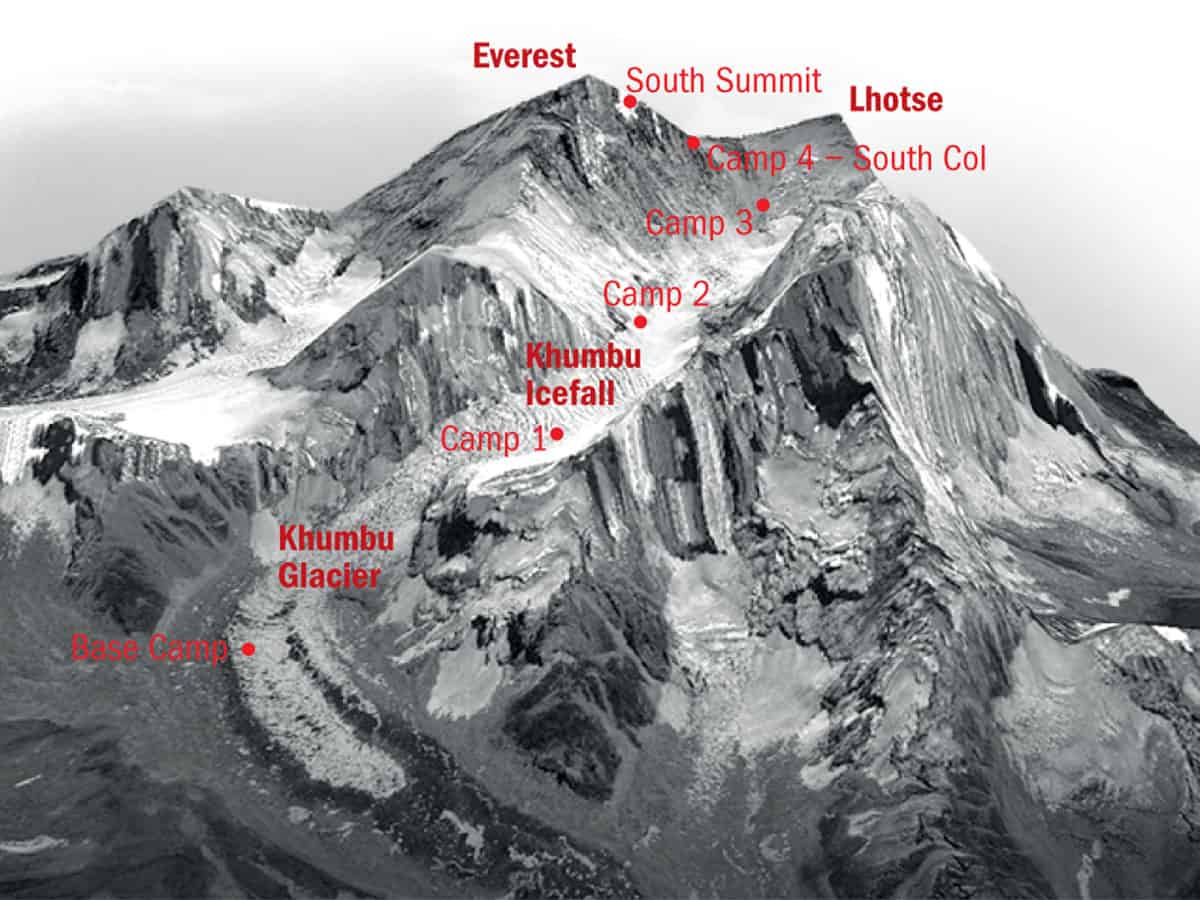
Melanie Windridge's Everest route

At about 4.30 a.m. on 21 May 2018, after almost seven weeks on the mountain and years of preparation, we finally reached the 8848 m-high summit and watched the sunrise from the highest vantage point on Earth. It was incredible. Everything seemed so small. Even Lhotse, the 8516 m peak that had towered over us at Camp 4 on the South Col, now looked tiny. Everest is high, and truly extreme.

Mint cake on the mountain

On 29 May 1953 at 11.30 a.m. Edmund Hillary and Tenzing Norgay completed the first known successful ascent of Mount Everest (see box below). While at the highest point in the world, the pair took photographs, buried sweets and a cross, collected rocks, and ate mint cake – but they couldn’t share their achievement with anyone else. It wasn’t until they returned to the South Col five hours later (it’s much quicker to descend) that the first of their team learnt of the momentous achievement. This small group then tried to signal the rest of the expedition further down the mountain by arranging sleeping bags in a “T” for “top” on a visible snow slope, but clouds blocked the view. Only once they arrived at a lower camp the next day did expedition leader John Hunt finally hear of his team’s success.

The first to the summit
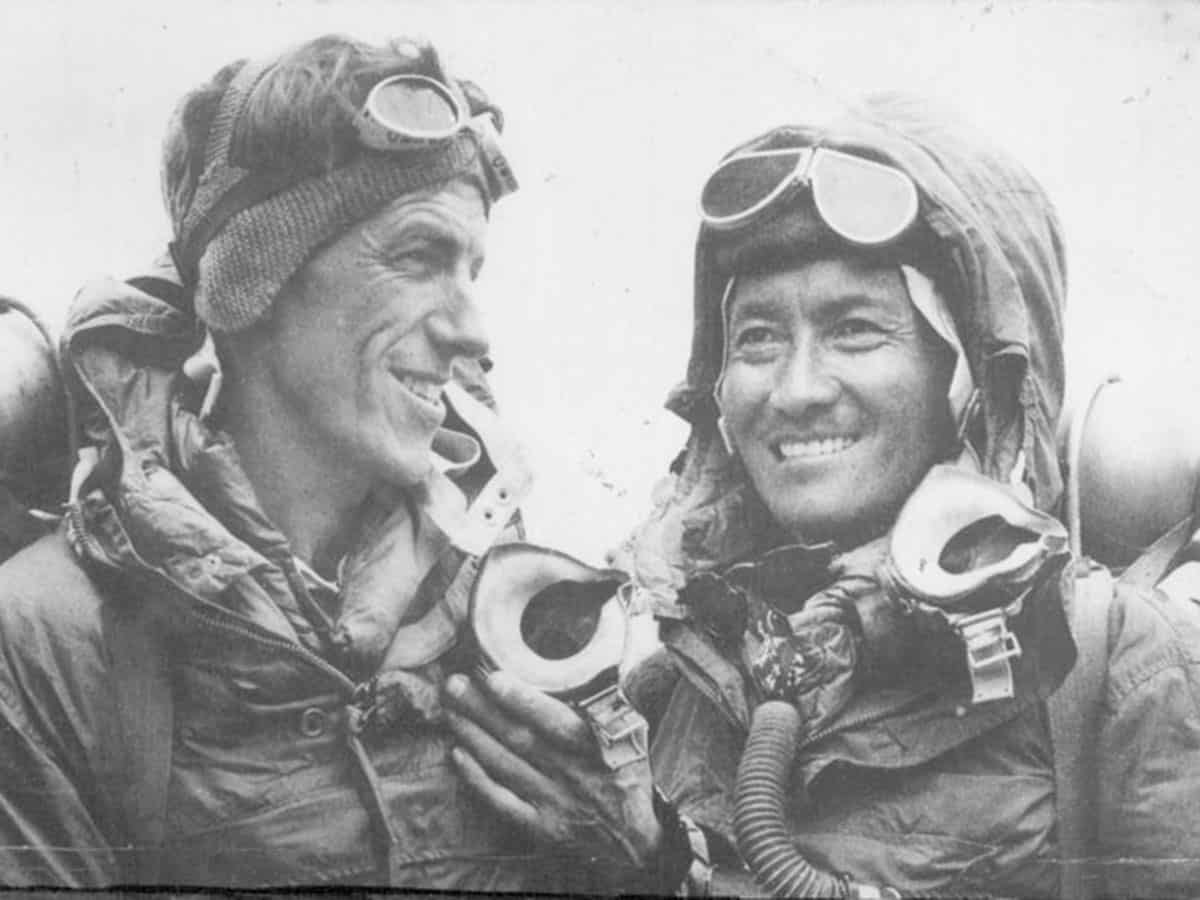
Edmund Hillary and Tensing Norgay

Edmund Hillary and Tenzing Norgay were the first known people to reach the highest point on Earth. They were part of a large British expedition led by John Hunt, involving 12 other mountaineers, 20 Sherpa guides, 362 porters and over 4500 kg of luggage. This ninth attempt by the British was considered their last chance to be the first to the summit; the northern route through Chinese-controlled Tibet was closed in 1949, while Nepal allowed only one expedition a year through the southern route – and France and Switzerland had already booked the next two years.

The expedition took more than a month to get from Base Camp to the South Col (Camp VIII). From there Hunt sent out the first pair of climbers, Tom Bourdillon – a research physicist who had studied at the University of Oxford – and Charles Evans. Although they reached Everest’s South Summit, the pair began to run low on oxygen and were therefore forced to retreat with only 100 m to go.

Next came Hillary and Norgay’s attempt. An advance party went ahead of them to establish an even higher camp, Camp IX, and dropped off equipment and oxygen for the pair to pick up on their way. By the time they reached Camp IX, Hillary and Norgay were carrying 29 kg and 23 kg respectively. The advance party hurried back down the mountain while the pair rested, and at 6.30 a.m. on 29 May 1953 Hillary and Norgay set out for the final, gruelling climb.
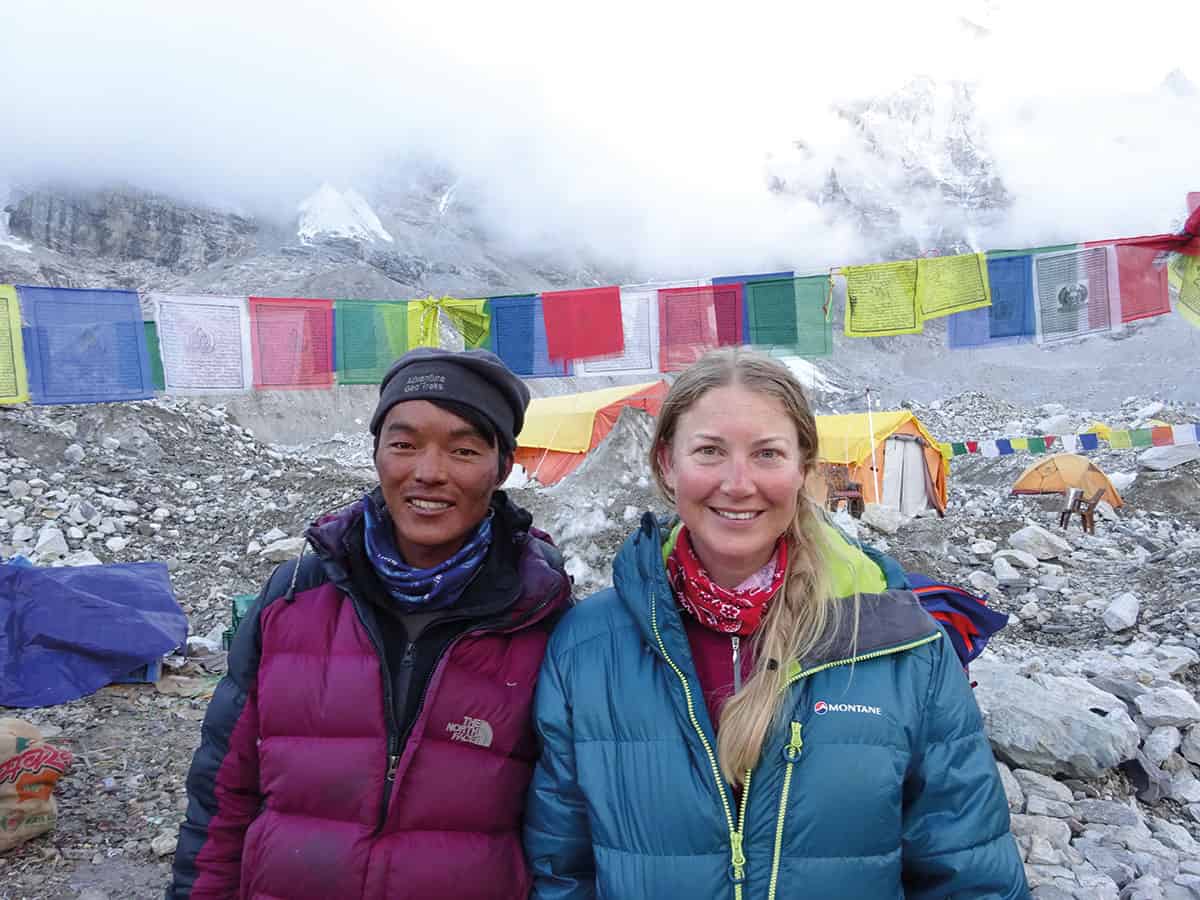
Melanie Windridge and Tenzing

My own experience of reaching the summit 65 years later demonstrates just how much has changed since that first expedition. When we got to the top, Tenzing simply radioed Base Camp to update them on our progress while I took numerous photographs with my digital camera.

The simple fact is that technological developments have made it slightly easier for climbers and improved our chances of success and survival. We have more lightweight clothing and equipment, less cumbersome oxygen sets, easier communication with Base Camp and the outside world, improved medical understanding and facilities, and the possibility of helicopter rescue. All in all, Everest is busier, but it is safer.

To date, more than 5000 people are known to have successfully summitted Everest (some multiple times) but almost 300 have died trying – this year alone there were six reported deaths on the mountain and more than 700 summits. But the death rate (the number of deaths per attempt of expedition members above base camp) has been reducing over a period of commercialization, from above 10% at the turn of the 1990s to about 1–2%, or even lower, now.

Sure, some of this improvement in safety is due to better management and greater experience among climbers, but the rest is due to improvements in science and technology.

A dangerous adventure

It was science that first got me seriously interested in the tallest mountain in the world, when five years ago I read Hunt’s book The Ascent of Everest. I began to see that climbing Everest was not entirely a crazy game of Russian roulette and that, approaching it from a scientific point of view, I could investigate the things that now make Everest safer and think about how I could give myself the best chance.

Climbing Everest is not entirely a crazy game of Russian roulette and, approaching it from a scientific point of view, I could investigate the things that now make Everest safer

There is, of course, still risk involved in climbing Everest. The biggest danger is that the human body is not designed to live up there. If you were taken from sea level and dropped at the summit of Mount Everest you would be unconscious in a matter of minutes and die shortly afterwards because your body would not be getting enough oxygen to function properly. While the percentage of oxygen in the air at altitude is the same as at sea level – 21% – the air pressure is reduced at the top of Everest to just 34 kPa compared with 101 kPa at sea level. A lungful of air on Everest will therefore contain fewer molecules than at sea level.

Acute mountain sickness (AMS) is caused by low oxygen levels at altitude and kills climbers every year. It presents in a range of symptoms that resemble flu, carbon-monoxide poisoning or a hangover, but can be countered by descending immediately. In extreme cases, however, the body can react by accumulating fluid in the lungs (a high-altitude pulmonary oedema) or creating swelling in the brain (a high-altitude cerebral oedema), both of which can be fatal. Fortunately, as anyone who has gone up a mountain to use a telescope will attest, the body can adapt to use less oxygen. This does, however, take time and you don’t know until you try whether or not your body can adapt. That’s why climbers ascend slowly, ascend and descend in a shuttle-like fashion, and spend days at a time acclimatizing at the various camps at different altitudes.
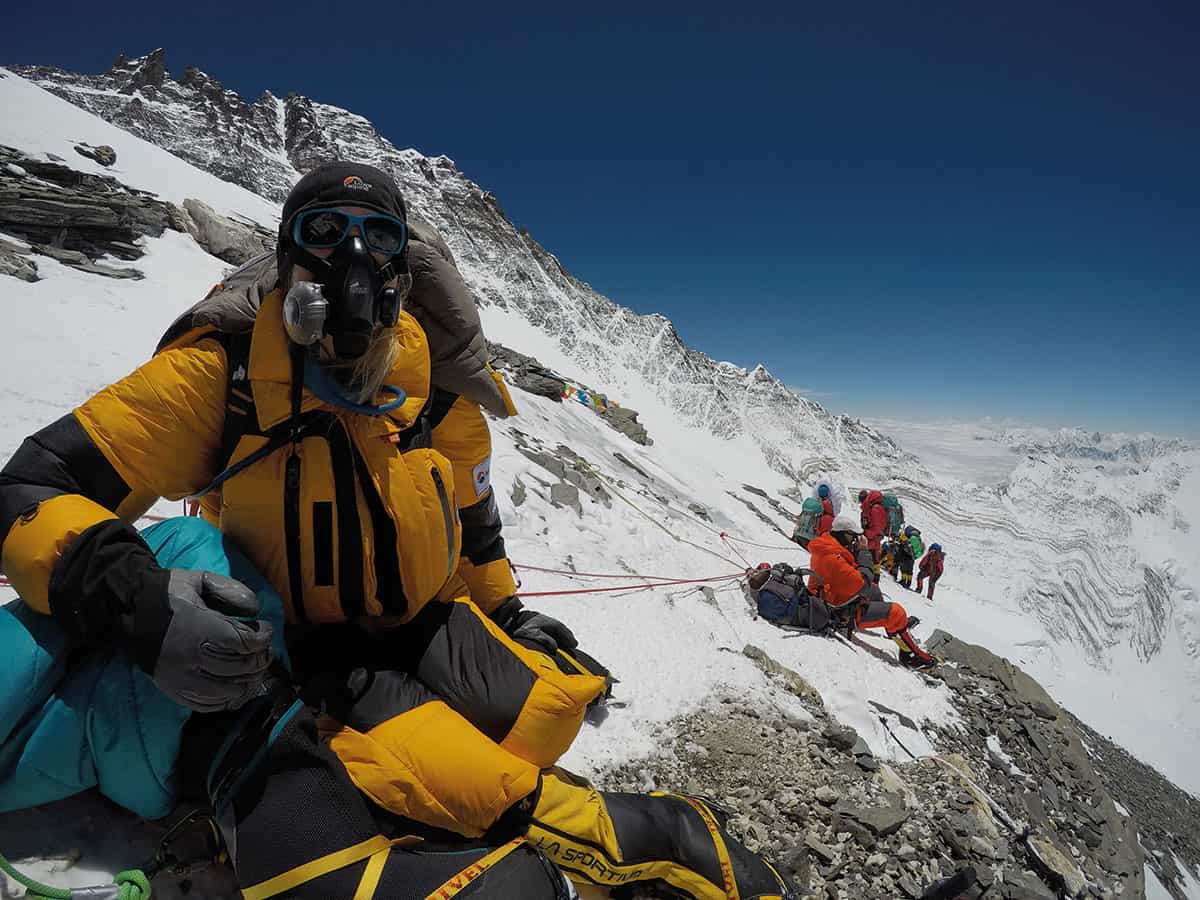
Melanie Windridge at Everest

Then there’s the weather. Obviously, it’s cold on Everest, with the summit never rising above –10 °C. The elevation also means it’s in the jet stream so it is buffeted by unpredictable winds that are above 160 km/h for most of the year. March sees the jet stream begin to drift north, and by May there are just a few weeks that are safe for climbers, with winds below 55 km/h. At this time of year, the summit temperature averages about –25 °C. Frostbite and hypothermia are a real danger, but there’s also the possibility of eye damage and sunburn from the sunlight and ultraviolet rays reflecting off the snow.

One of the most deadly parts of Everest is the summit ridge, the steep section between the South Col and the summit – the last day’s push. This is in the death zone. The body is wasting away, and you have to do a steep, demanding climb. Even with supplementary oxygen you are asking a lot of your body. Some people push too hard and collapse exhausted, never to get up again; some die from accidents, such as falls; some will succumb to AMS; and some get caught in bad weather.

The other most deadly part of the mountain is further down – the Khumbu Icefall. Here the glacier makes a rapid descent, splitting and cracking into a tumbling obstacle course of ice blocks and crevasses. Along with the danger of a climber falling into a crevasse, or ice dislodging or collapsing, there is also risk from above. The steep mountain walls to either side collect thick deposits of snow and ice, which occasionally fall on climbers. In 2014 some 16 Sherpas were killed in this way and the mountain closed for the season.

While some of these dangers are unpredictable, it is possible to reduce the risk surrounding others. Two key factors that have helped increase safety on Everest are improved weather forecasting and communication methods, but developments in medicine, helicopter rescue, oxygen systems, clothing and equipment have also made a difference.

Forecasting a safe trip

Climbing Everest is a risky business and you need almost a week of clear weather to avoid adding storms to the list of dangers. Thankfully weather forecasting has significantly improved due to advances in computer processing power.

The weather models that describe and evolve atmospheric and oceanic processes are hugely complex and necessarily require simplifications, approximations and compromises between scale and resolution in order to run. Increased computer processing power means more calculations can be performed per second so that models can incorporate greater detail or run in higher resolution.

Three decades ago the UK Met Office’s supercomputer was only as powerful as a modern-day smartphone, but their current supercomputer does 14 thousand trillion calculations per second. Better representation of weather patterns means predictions can be made further into the future with the same accuracy – the four-day forecasts nowadays are as accurate as the one-day forecasts of 30 years ago.

Mountain weather forecasting is particularly challenging. Rising, cooling air leads to clouds and rainfall; temperature – which can be fairly stable across a large flat area – drops quickly with increased altitude; and winds swirl and travel through the valleys, often moving the building clouds with them. But comparing forecasts can help. As Victor Saunders, a mountain guide on our team, commented: “The general rule is that if they all agree then you probably have a correct forecast.”

For climbers in the world’s highest mountains the improved forecasting accuracy over a longer period is a big advantage. My summit team of four took six days to get from Base Camp to the summit of Everest and back (we had two rest days at Camp 2 for logistical reasons). Accurate predictions stretching several days ahead ensured we had a sufficiently long window of good weather to make the climb safely.
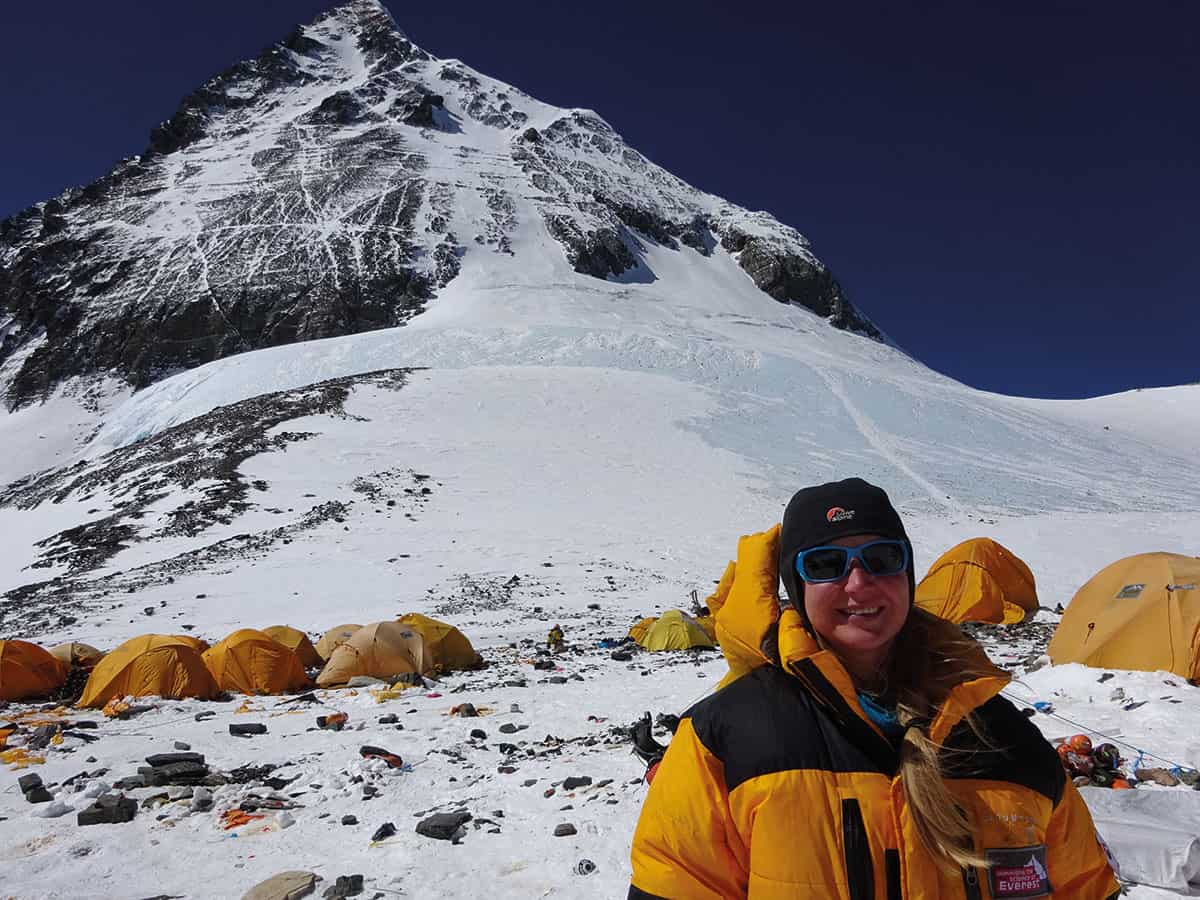
Melanie Windridge at Everest

Staying connected

Communication between camps and climbers on the mountain is also incredibly important, not just for monitoring progress and safety (and sometimes for co-ordinating rescues), but also for organization. Camps have to be set up; food, fuel and oxygen need to be carried; and ropes need to be fixed. All of these things are co-ordinated from Base Camp via radio. Thankfully, radio sets have become much lighter than the “walkie-phone” that was carried between camps in 1953, which weighed 2.3 kg – now we have handheld radios that are less than 500 g.

Climbers also have satellite phones, and there is even mobile phone signal and WiFi at Base Camp (albeit subject to variations in reliability). On peaks more remote and inaccessible than Everest, or after natural disasters such as the 2015 Nepal earthquake, satellite phones can mean the difference between life and death when a rescue needs to be initiated. They can also boost a climber’s morale, allowing them to keep in touch with loved ones back home. When Tenzing and I got back to Camp 4 at the South Col I called my father on the satphone and the signal was brilliant.

The miniaturization of electrical components and advances in materials for clothing and equipment have helped reduce the weight of the loads that climbers need to carry

The miniaturization of electrical components and advances in materials for clothing and equipment have also helped reduce the weight of the loads that climbers need to carry. This is important because, in the mountains, speed is safety, and heavy packs dramatically slow climbers down. We still carry quite weighty bags, but they are far lighter than those of the 1953 expedition. My pack was around 15–17 kg at most and on summit night it was under 10 kg. Climbers have even been known to snap toothbrushes in half or cut labels out of clothes to save weight.

We can also thank developments in materials – particularly microfibres for wicking sweat away from the body. Merino wool does this naturally but synthetic fibres have also been developed – indeed sometimes the natural and synthetic are blended to get the advantages of both. There are also Gore-tex membranes that are waterproof and breathable – so keep out big droplets of water but can let out individual molecules through tiny pores – as well as better-quality down with high warmth-to-weight ratio.

Descending for the last time through the treacherous Icefall, climbing down ice blocks and crossing crevasses by balancing on ladder rungs in spiky crampons, I felt that these ladder crossings became more uncomfortable – more scary – than they had been previously. Perhaps, as I neared the end of the adventure, the mental barriers that I had put up were fading. I just wanted to get down, to get home. All the time I was on Everest I would tell myself to hold on – just one more month, just one more week, one more day. For all the improvements in technology that have made Everest a little bit safer, a little bit easier, your psychology can still be the difference between success and failure. Getting to the highest point on Earth is still a mental game.
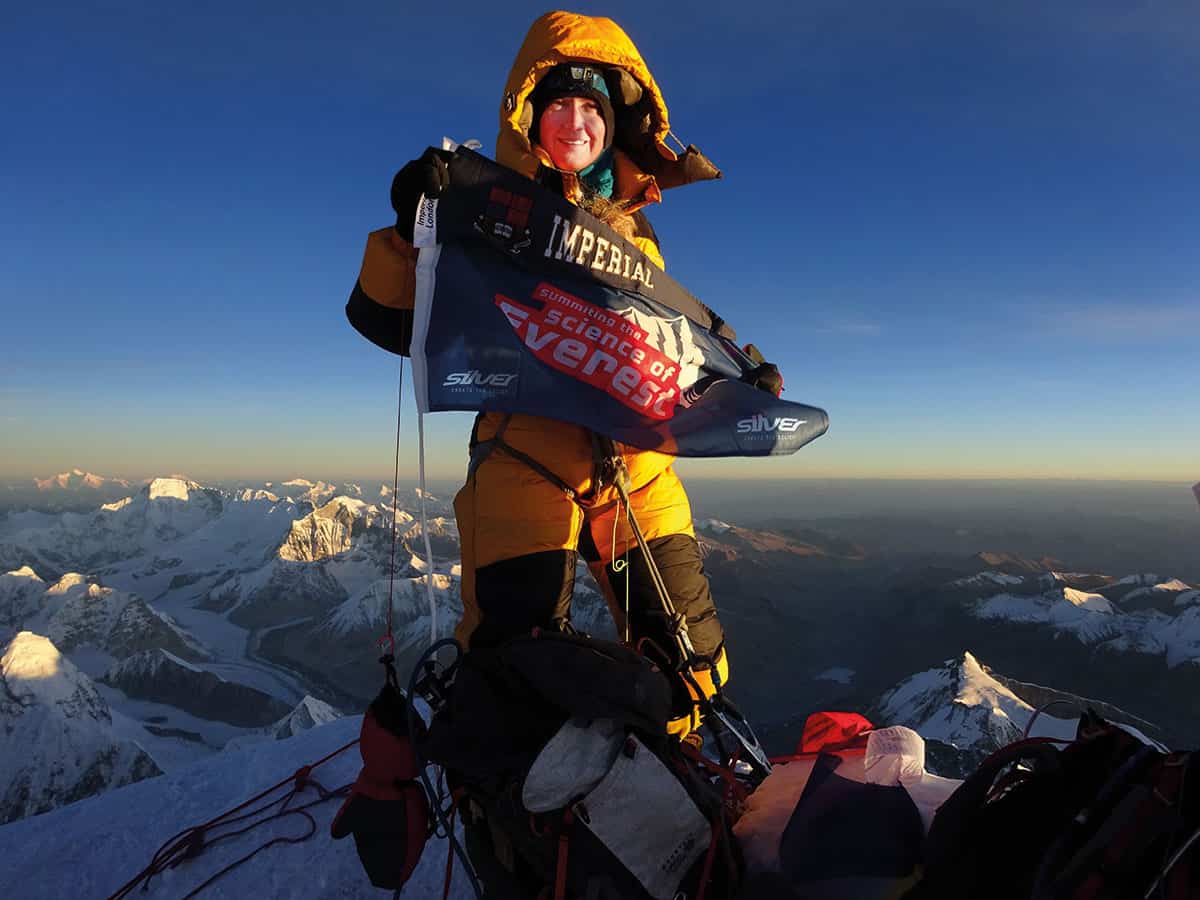
Melanie Windridge at Everest

Human activity leaves diminished oceans

Humans huddle on a small part of the Earth’s surface, but our activity on the rest will leave our descendants only diminished oceans. Thanks to us, the wilderness of the world’s wide seas has shrunk drastically.

Earth is a waterworld: 70% of it is swept by ocean. And 87% of this waterworld has been to some degree fouled, polluted, poisoned or impoverished by the actions of one almost entirely terrestrial mammal. That is, according to a new survey, only 13% of the high seas can now be considered true wilderness.

Terrestrial life is smeared thinly. It is concentrated almost entirely in an altitude bounded by tree roots and canopy. But all the ocean is habitable, from the tidal shallows to the abyssal plain. It is home to the greatest mountain chain on the planet and to the deepest chasms, and in all it makes up 99% of the living space on Earth.

Researchers who looked at 16 different kinds of watery realm and tested them for 15 different kinds of human impact – among them commercial shipping, sediment and fertiliser run-off, and overfishing – report in the journal Current Biology that humans had left their mark almost everywhere.

“We were astonished by just how little marine wilderness remains,” said Kendall Jones, a researcher at the University of Queensland in Australia, and also of the Wildlife Conservation Society.

Huge extent

“The ocean is immense, covering over 70% of our planet, but we’ve managed to significantly impact almost all of this vast ecosystem.”

The surviving watery wilderness is estimated at an area of 54 million square kilometres. Although this is seemingly an enormous tract – think of the land areas of Russia, China, Canada, the US and Australia rolled up together – it is still less than a seventh part of the sea surface.

Most of this “untouched” ocean is concentrated in the Arctic, the Antarctic, and around the more remote Pacific islands. Hardly any marine wilderness survives along the continental coastlines.

The study comes only weeks after a survey of land conservation areas – once again, led by researchers from the University of Queensland and the Wildlife Conservation Society – found that even those stretches of mountain, savannah, forest and wetland formally recognized by governments as nature reserves or conservation zones were in many cases significantly disturbed or degraded by human intrusion.

The plight of the high seas has been disturbing marine scientists and oceanographers for some time. They have repeatedly warned that human-driven climate change is affecting ocean temperatures and compromising the health of the ecosystems on which, for instance, commercial fisheries depend.

Human actions have created “dead zones” and great tracts of toxic algal growths fed by nutrients from the landPlastic waste has been found almost everywhere, and changes in water chemistry threaten many species at all depths.

But the Queensland study looks only at those measurable human impacts that are not connected with climate change: the implicit message is that acidification, sea level rise, and ocean temperature increase, all of them driven by profligate human combustion of fossil fuels, will ultimately affect even those areas of ocean defined as surviving wilderness.

Research of this nature is inevitably a matter of meticulous accounting: scientists comb through huge numbers of studies, and identify the data on which they can rely, and then find ways to test their hypothesis. This involved, for instance, checking the range and distribution of more than 21,000 marine species, and separately considering submarine kelp forests, coastal reefs, warm and temperate zones, the deep ocean and the polar waters.

Little protection

The researchers found that more than 8% of the wilderness was in the warm Indo-Pacific and that only 5% of the remaining marine wilderness enjoyed any formal governmental or international protection.

“Pristine wilderness areas hold massive levels of biodiversity and endemic species and are some of the last places on earth where big populations of apex predators are still found,” Kendall Jones said.

“This means the vast majority of marine wilderness could be lost at any time, as improvements in technology allow us to fish deeper and ship farther than ever before.

“Thanks to a warming climate, even some places that were once safe due to year-round ice cover can now be fished.”

Vote for your favourite physics photos, space cats on the prowl, secrets of graphene watch revealed

Voting is now open for the 2018 Global Physics Photowalk competition, so vote for your five favourite photographs from a shortlist of 54. The competition invites the photographing public into 17 major physics labs worldwide. Voting closes at 7:59 BST on 16 September and the winner and two runners-up will be announced on 1 October.

The above photo was the winner of the 2018 CERN Photowalk and is on the global shortlist. It was taken by Cédric Favero in front of huge concrete blocks surrounding the Antiproton Decelerator.

The Arecibo Observatory in Puerto Rico nestles in a giant karst sinkhole surrounded by lush green hills. The iconic radio dish has found fame well beyond the world of professional astronomy – it was used to search the heavens for alien civilizations (none were found) and it has also appeared on film, television and video games. But did you know that the telescope is also known for its cats? In “Arecibo Observatory’s Space Cats Need Your Help!“Space.com’s Hanneke Weitering explains how the telescope’s feline population has grown in size after Hurricane  Maria – which caused many people to leave the island and abandon their cats. They have become so numerous that observatory staff are concerned that the population is getting out of control. As a result, researchers have started a GoFundMe campaign to raise funds to spay cats and provide veterinary care.

Graphene watch

The world’s lightest mechanical chronograph watch was launched with much fanfare in 2017 by the University of ManchesterRichard Mille Watches and McLaren Applied Technologies. Now, the scientists involved in creating the RM 50-03 watch have explained how graphene – a sheet of carbon just one atom think – was used to make the device. One reason why the watch is so light, say its makers, is that graphene was used to strengthen the carbon-fibre composite material used in the device. This meant that less of the composite was needed to achieve the desired mechanical properties. You can read more in “Science behind world’s lightest graphene watch revealed”.


Designer metal-organic frameworks grow on graphene

3D Metal-organic frameworks (MOFs) are an important class of materials that could be used in applications as diverse as sensing, gas storage, catalysis and optoelectronics. Their 2D versions might even be used as flexible material platforms to realize exotic quantum phases, such as topological and anomalous quantum Hall insulators. The problem is that such 2D sheets are usually synthesized on metal substrates and the strong interactions between the two unfortunately masks the intrinsic electronic properties of the MOF itself. Researchers at Aalto University School of Science in Finland say they have now overcome this problem by fabricating MOFs on graphene (a 2D sheet of carbon), which only weakly interacts with them. The resulting 2D honeycombed frameworks could be used to make MOF-based designer materials with complex, tuneable electronic structures.

“We have shown that we can synthesize 2D MOFs on epitaxial graphene and so probe the intrinsic electronic properties of the MOFs,” explains Peter Liljeroth, who led this study. “This opens the way to making 2D MOFs with exotic electronic properties.”

In the lab

The researchers began by depositing organic ligand “linkers”, such as dicyanobiphenyl (DCBP) or dicyanoanthracene (DCA) with cobalt (Co) metal atoms on their graphene substrate to produce individual metal-ligand complexes. They then annealed the sample at temperatures below 100°C to form the extended MOFs.

2D band structure in MOF decoupled from the substrate

We characterized the structures using low- temperature scanning tunnelling microscopy (STM) and atomic force microscopy (AFM),” says Liljeroth. “We are able to access the intrinsic electronic properties of the materials and show that the Co-DCA MOF behaves as a 2D system with delocalized states.” This result, which the team backed up with density-functional theory (DFT) calculations, proves that the 2D band structure in the MOF is decoupled from the substrate.

“2D MOFs have been theoretically predicted to be a flexible platform for realizing various quantum materials, and our work is a first experimental step in that direction,” Liljeroth tells Physics World. “The MOFs we have made are – if you like – just simple semiconductors, but we have shown that it is now feasible to proceed to something more exotic.”

The work also opens the way to making MOF-based designer electronic materials with complex, engineered electronic structures, he adds. And being able to directly grow 2D MOFs on graphene means that these heterostructures might be readily used in applications such as electronics, sensors and catalysts.

The researchers, reporting their work in Nano Letters 10.1021/acs.nanolett.8b02062, say that they will now be looking to expand the types of MOFs that they can synthesize on weakly interacting substrates. “The complexation reactions on these different substrates may work differently compared to those occurring on a metal substrate, and we have much less published literature to go on here,” says Liljeroth. “We will then attempt to incorporate heavy metals into the MOFs since these have high spin-orbit coupling, which should result in the formation of a 2D topological insulator, according to theoretical predictions.”

Molecules cooled to record-breaking low temperatures by lighting-up dark states

A dense cloud of optically-trapped molecules has been cooled to record-low temperatures by Lawrence Cheuk and colleagues at Harvard University and the Massachusetts Institute of Technology in the US. Using advanced laser techniques, the researchers were able to cool molecules occupying previously-inaccessible quantum states. Their methods also allowed them to construct images of the ultracold gas.

For decades, physicists have studied the behaviours of clouds of atoms at temperatures just above absolute zero. To cool atoms to these temperatures, atoms are made to absorb and then re-emit photons from a laser beam, losing some energy in the process. After this process occurs, the atom returns to its original electronic state and the cycle repeats; steadily cooling the particle.

For molecules, however, the process is more difficult. Molecules have additional degrees of freedom including vibrational and rotational states, meaning they will not necessarily return to their original states after re-emitting a photon. Instead, they can slip into more complex states that are quantum superpositions of two ground states. In previous experiments carried out by Cheuk’s team, molecules in these “dark” states were not able to absorb incoming laser photons. This prevented the atoms from being cooled any further.

Counterpropagating lasers

Drawing from their earlier research, the team developed a more sophisticated laser-cooling technique to induce cooling in dark-state molecules of calcium monofluoride (CaF). This involved subjecting the molecules to two counterpropagating laser beams separately tuned to the frequencies of the two superimposed ground states comprising the molecules’ dark state. For the first time, the researchers could cause dark-state molecules to scatter incoming photons, allowing them to be cooled to ultralow temperatures.

The technique allowed Cheuk and colleagues to cool a gas of 1300 CaF molecules to just 20 µK – significantly lower than the 60 µK temperatures reached in their previous work. The physicists also maintained a density of 80 million molecules per cubic centimetre in their gas – 10 times higher than in their last study. In addition, each molecule emitted around 2700 photons in total as they cooled – making them 200 times more fluorescent than achieved before. By collecting these photons, the researchers could precisely locate each particle in its optical trap, allowing them to accurately image the CaF gas.

The potential applications for creating and imaging an optically-trapped, ultracold gas of molecules are diverse. By adapting their techniques further, Cheuk’s team hopes their findings will be used in further studies to gain insights into fields ranging from quantum simulations and information processing to precision tests of fundamental physics.

The research is described in Physical Review Letters.

Gravitational-constant mystery deepens with new precision measurements

Two extremely precise measurements of the gravitational constant G have yielded significantly different values. The two experiments were done by physicists in China and the results deepen the mystery of why it has so far proven impossible to reach a consensus on the value of G, which is a fundamental physical constant.

According to Newton’s universal law of gravitation, the gravitational force (F) that attracts two objects of mass m1 and m2 separated by a distance d is given by Gm1m2/d2. The first measurement of G was made in 1798 by Henry Cavendish, who used a torsion balance designed by John Michell to measure the constant with 1% uncertainty.

A torsion balance comprises a dumbbell-shaped mass suspended from its centre by a thin wire. Two large external masses are positioned on either side of the dumbbell in such a way that their gravitational attraction can exert a torque on the dumbbell, causing it to rotate. As the wire twists, the gravitational torque is countered by torsion in the wire until the dumbbell comes to rest. By analysing this motion, G can be calculated.

Twisted results

Since then, more than 200 experiments have been done to measure G to ever higher precision. Today’s accepted value is a combination of several independent measurements and has a relative uncertainty of 47 parts per million (ppm). However, some individual experiments have much smaller uncertainties – until now, the smallest was 13.7 ppm – and some of these very precise measurements disagree by more than 500 ppm.

This has left physicists puzzled as to why it has not been possible to reach an experimental consensus on the value of G. Now, that mystery has been deepened by Shan-Qing Yang, Cheng-Gang Shao, Jun Luo and colleagues at the Huazhong University of Science and Technology and other institutes in China and Russia. They ran two different variations on the torsion balance experiment in the same lab, only to measure significantly different values of G.

One of the experiments uses the time-of-swing (TOS) technique, in which the pendulum oscillates. The frequency of oscillation is determined by the positions of the external masses and G can be deduced by comparing frequencies for two different mass configurations. The second experiment uses the angular-acceleration feedback (AAF) method, which involves rotating the external masses and the pendulum on two separate turntables. A feedback mechanism monitors the twist angle of the pendulum, which is held at zero by changing the angular speed of one of the turntables. G is then calculated from the rate of change required to zero the angle.

Agree to disagree

The Huazhong TOS and AAF measurements of G have record-breaking uncertainties of 11.64 ppm and 11.61 ppm respectively. While the TOS measurement agrees with the accepted value of G to within uncertainties, the AAF result does not. Indeed, the AAF value is about 45 ppm larger than the TOS result. Furthermore, these latest results are in disagreement with previous measurements made by the Huazhong team.

Despite the latest improvement in precision, the reason (or reasons) for the discrepancies between G measurements remains a mystery. The most likely explanation is that researchers have underestimated or overlooked one or more sources of experimental error. The Huazhong team suggests that anelasticity of the wire could be the culprit. This could affect the TOS experiment because it would mean that the spring constant of the wire could be different at the two different oscillation frequencies.

More tantalizing is the possibility that that some unknown aspect of physics is at play, but more measurements are needed before we can know for certain.

The experiments are described in Nature.


Nanovesicles block hepatitis B

A new biomimetic nanodecoy that can block the hepatitis B virus (HBV) and prevent it from spreading in the body has been developed by a team of researchers at Xiamen University in China and the US National Institutes of Health (NIH). The nanomimic, which is based on cellular membrane vesicles bearing a HBV-specific receptor, could help in the development of next-generation anti-viral strategies in nanomedicine.

The researchers, led by Gang Liu from the School of Public Health at Xiamen University, engineered their nanoplatform using a nine-transmembrane HBV-specific receptor made from human sodium taurocholate co-transporting polypetide (hNTCP). They then immobilized this receptor on a cell surface, and triggered a process that causes giant plasma membrane vesicles (MVs) to bud from the cell surface. This process occurs in a way that is very similar to how exosomes – tiny membrane-bound spheres – are excreted from cells. The MVs, which have the same content as the cells themselves, have a particular affinity for the HBV virus, and so bind it.

“Catching” the HBV virion

“In this study, we designed the hNTCP-MVs as bioinspired artificial nanodecoys to ‘catch’ the HBV virion in a cell culture or mice serum and liver cells,” explains Liu. “The hNTCP-MVs completely bind to the HBV virions and so block further infection from the virus.”

The researchers tested out their nanodecoys on a human-liver-chimeric mouse model, which is an important model for HBV infection and drug evaluation. They made their hNTCP-MVs without any chemical agents, which means that they are biocompatible and non-toxic to cells.

“These structures might be a useful tool to block acute exposure and mother-child transmission of HBV,” Liu tells Physics World, “What is more, since receptor-virus binding does not involve administering any drugs, the technique also overcomes the problem of drug resistance and side effects. If developed into a treatment, it might be particularly beneficial for chronically infected HBV patients who suffer from a high viral load and who generally need large doses of a medicine.”

Immune response might be a problem

It will not all be plain sailing though, he admits. “Although we have shown that hNTCP-MVs can inhibit HBV infection in cell cultures and human-liver-chimeric mice, we know little about their fate in the body. They are much bigger (around 300 nm in size) than the HBV virions (which are around 40-50 nm) and might thus be sensed by antigen-presenting cells, such as macrophages and dendritic cells, and trigger a host immune response.”

In this work, the researchers did their experiments on immuno-deficient animals. They say they now plan to extend the study to normal (immuno-competent) animal models to investigate this problem further – and hopefully solve it.

The present research is detailed in Angewandte Chemie 10.1002/anie.201807212.

Exotic quark-matter plus 100 Second Science reaches a century

In this episode of Physics World Weekly, Hamish Johnston is in conversation with the particle physicists Greig Cowan and Tim Gershon, authors of Tetraquarks and Pentaquarks. Published as part of the Physics World Discovery series, the free-to-read ebook explores the latest research on the exotic particles comprising four or five (and sometimes even more) quarks.

Later in the podcast, James Dacey celebrates the landmark of reaching 100 published videos in our 100 Second Science series. Launched in 2012, the series of explainer videos has covered the breadth of physics, from astronomy to quantum entanglement to antimatter, via Noah’s Ark, philosophy and physics education. Watch this site for more videos in the series soon.


Nano-pillars fight the build-up of bacteria

Bacterial adhesion and viability

Natural cell growth — which is essential for bacterial cell division — appears to favour the destruction of E. coli adhered to cicada-wing-like nano-pillars, report researchers in Germany. By understanding the process in more detail, scientists hope to find new solutions for fighting the build-up of bacteria around medical implants, to assist current drug-based treatments (Biomed. Phys. Eng. Express 4 055002).

“Innovative anti-bacterial implant surfaces, which are effective by their topography, might be a possible strategy,” says team member Manfred Köller from BG University Hospital Bergmannsheil in Bochum. “For example, in orthopaedics, such approaches could help to combat bacterial adherence, which is the first step in the formation of unwanted biofilms.”

The group’s study is inspired by observations made elsewhere that nano-pillar surfaces on cicada wings exert bactericidal effects on certain adherent bacteria. The result, reported back in 2012, continues to fascinate the biomedical engineering community, and researchers are keen to determine exactly how such nano-topographies are able to hinder bacterial colonization and growth.

To find out more, the team — which also includes scientists based at Ruhr University Bochum’s Institute for Materials — fabricated test surfaces (5 x 5 mm) covered with titanium nanopillars to mimic the insect wings. Gram-negative E. coli bacteria were allowed to adhere and proliferate on the nanostructured samples for three hours at 37 °C. The researchers incubated one batch under optimal cell growth conditions (brain heart infusion (BHI) medium), and placed the other in limited growth conditions (RPMI1640 medium). This led to an interesting discovery.

As the bacteria grew — a process that involves cell elongation of their rod-like structure — the titanium nano-pillars appeared to represent more of a threat to the micro-organisms. And the stronger the cell growth, the greater the antibacterial effect of the textured sample surface, as measured by the ratio of adherent dead E. coli to adherent living E. coli.

“Our results show that the bacterial growth of gram-negative micro-organisms adherent to nano-pillar-like structures is somehow involved in the phenomenon known as the cicada wing effect,” Köller comments

The team point out the likelihood that cylindrical elongation during growth induces additional mechanical strain on the cell when the bacterium is entangled by nano-pillars. And it follows that a disruption in the cell wall remodelling processes could lead to a loss of pressure inside the micro-organism, putting the E. coli at risk.

Electron microscopy images taken by the scientists show cell bodies collapsed and laid down on, but not punctured by (at least when viewed from above), the spike-covered test specimens used in the study.

The theory that cell growth plays a role in the overall mechanism is bolstered by previous work by the researchers where they observed a delay in the occurrence of bactericidal effects – a result that can be explained by the time gap between attachment and subsequent cell division.

Next steps

Back in the lab, the group is working on ways to increase the potency of the nanostructures to keep surfaces sterile for longer, which would further benefit implant applications. This involves decorating the nano-pillars with silver-iridium caps, which enhance the antibacterial activity of silver via an electrochemical process. Properties of the system include protection against gram-positive bacteria.

“The combination of both the cicada wing effect and such a sacrificial anode system is the next step forward,” Köller predicts.

Talking tech transfer at TRIUMF

What is TRIUMF Innovations?

We are the private sector-facing part of TRIUMF. If you are a company or a private investor wanting to interact with TRIUMF in any way, we are here to help facilitate that. Originally, our focus was very much on creating spin-off companies, but we also offer proton and neutron irradiation services, and we have a longstanding relationship with Nordion to produce medical radioisotopes for distribution across North America and the world.

What is your background?

I’ve been at TRIUMF for a little over a year, starting in February 2017. Before that I was in the biotech world – I worked for an organization called the Centre for Drug Research and Development as part of the founding executive team, and previously for a public biotech company. For me, the big overlap has been in nuclear medicine, because historically, a lot of the commercialization that TRIUMF does has been in that area. So there are definitely some things we’re working on where we’ll be able to leverage my experience and networks in biotech, but I’ve also learned a lot about physics in the past year.

How does TRIUMF Innovations help spin-offs get started?

It depends on the technology and who’s involved, but we might look for champions for a technology to develop it further; help companies create business plans; or try to find partners to license or invest in new technologies. A good example is ARTMS Products, which makes a cyclotron-based system for producing technetium-99m, a short-lived isotope used in medical imaging. Many hospitals have a small cyclotron in their basement where they produce isotopes for patient treatments, and the ARTMS product can either be added to this or the original equipment manufacturer can incorporate it into their system.

This technology was developed at TRIUMF in partnership with a consortium of Canadian research organizations to solve the problems associated with Canada shutting down the Chalk River nuclear reactor, which had previously produced essentially all of this important isotope. We helped ARTMS develop its business plan and find investors, and in 2017 it won the British Columbia Tech Association’s impact award for the most promising pre-commercial technology. It also closed its first round of venture financing just before Christmas that year, so we’re excited to see ARTMS evolve into a real operating business. It’s still a relatively early-stage company, but it has multiple successful installations with GE and the venture financing should enable it to ramp up.

What, in your view, are the biggest challenges facing start-ups in the instrumentation and vacuum sector?

Funding is a challenge for any start-up, but spin-outs based on laboratory research or equipment encounter an additional hurdle, which is that the funding available is generally intended for innovative new research. You don’t necessarily get funding to validate results, or to repeat an experiment to make sure you’ve got it right. So development funding is always a challenge. The other challenge is gathering the expertise you need from different areas and translating it out of a research setting and into a business setting. Suppose you have a bunch of scientists with a great idea. How do you present that idea as an investment opportunity? To do that, you need a new set of skills, a new language and new networks, and that’s a gap that we’re trying to fill.

We are working on a programme in partnership with the University of British Columbia’s Sauder School of Business that is designed not just for people who are going to found companies (although they are incredibly important and I look for them every day), but also for scientists who want to innovate and get their ideas out into the world while remaining involved in basic, discovery-driven research. We want to broaden the culture of entrepreneurship within TRIUMF so that even career scientists are informed about concepts such as confidentiality and intellectual property. The goal is to get these “intrapreneurs” more involved in creating technologies quickly, efficiently and cost-effectively so that these technologies are attractive for private-sector investment, while also educating people who are interested in working for spin-off companies about how that is different from working in a government laboratory or in academia.

Aside from ARTMS, what are some other projects that TRIUMF Innovations is working on right now?

A few years ago, a mining researcher at the University of British Columbia asked us if we could help her reconfigure a medical PET scanner so that she could use it to examine mining slurry. Our response was essentially, yes, we could, but we could also create a PET scanner that was specifically designed for mining applications – on the right size and scale, for example, and with detectors designed not for human disease but for industrial samples. And the professor was like, “Oh, yeah, that would be great!” However, there are other applications for this technology, too. It’s all about trying to understand what is flowing within a liquid sample, so you could also imagine using it with pulp in a paper mill or even in food manufacturing. The challenge is to figure out where the market need is and then develop the technology to meet that need.

Another company I’ll mention is CRM GeoTomography. It was initially funded via a grant from Canada’s Centres of Excellence for Commercialization and Research, which were set up to encourage commercialization and spin-off creation. That grant enabled CRM GeoTomography to develop a prototype detector that uses muons – which of course we study all the time at TRIUMF – to create a 3D map of the Earth’s crust, down to about a kilometre or so. A mining company might use that kind of map to understand where an ore deposit was, but we’re also looking at future applications in the oil and gas industry and even in border security. An interesting side note is that CRM GeoTomography is as much about data science as it is about muon detection. You can build a detector, place it in the ground and have it take a bunch of readings, but the real value is in using all that detector data to create a reliable, useable 3D map. The importance of data science skills to technology development is something we’re seeing more and more.

What advice would you offer to would-be entrepreneurs (or maybe intrapreneurs) in this sector?

There are a lot of resources that can help, not just in Canada or at TRIUMF but at facilities and institutions around the world, so my advice is to go looking for them. Pretty much every university and large laboratory will have some kind of technology transfer office that can help answer questions such as “How do I decide what the market might need?” or “How do I talk to potential clients about my technology?” We try to be proactive about this here at TRIUMF – my team is involved in a lot of research meetings to try to identify technologies that could be commercially interesting – but we also have researchers just walk into our office and say, “Hey, can I talk to someone about the idea I have?” We welcome them in, listen to their idea, help them determine whether they need to make an invention disclosure or whether there’s something that could be patentable, and also get them thinking about who might use their technology or whether there are industry partners who would be interested in licensing it. Just taking that first step of connecting with people is incredibly important.

Copyright © 2026 by IOP Publishing Ltd and individual contributors