Fluorescent ‘flipper’ probe measures membrane tension

The tension of cell membranes (which are made of lipid bilayers) plays an important role in a host of biological processes, such as cell motility, endocytosis and cell division, but measuring this tension is no easy task. Researchers at the University of Geneva in Switzerland have now invented a new fluorescent push-pull probe to do just this. The device, which can accurately determine the membrane tension of live cells, might help in the development of many new biomedical applications, including the detection of cancer cells, which characteristically have very high membrane tension compared to healthy cells.

Cell membranes are fluid surfaces around 4 nm thick that surround a cell and prevent its contents from “spilling” out. Since the volume of a cell changes dramatically during everyday biological processes, cells have evolved to continuously monitor the tension of their membranes. For example, when the tension becomes too high, they increase the amount of lipid in the membrane. And when it becomes too low, they decrease it, which has the effect of “tightening” the membrane. Cell membranes are pretty resistant to stretching though and can withstand tensions of up to 10-2 N/m before breaking apart.

Important though it is, membrane tension is notoriously difficult to measure in cells. The only technique available today involves making measurements on small membrane tubes that have been extracted from the outer membrane of the cell (its plasma membrane). Although this approach has provided much valuable information in the past, it is complicated – both to perform and obtain results from.

A push-pull system: FliptR

The new probe, created by a team led by Aurélien Roux and Stefan Matile, works in a completely different way. Dubbed FliptR (for fluorescent lipid tension reporter), it consists of two large fluorescent flipper groups made of dithienothiophene molecules connected by a single carbon bond.

“This chemistry was designed by Matile’s group so that the two flippers are in a twisted configuration at rest,” explains Roux. “The molecule also has an electron donor group at one end and an electron group on the other end – which is why we call it a push-pull system.”

When the molecule is inserted into a cell, it partially untwists (“planarizes”) because of the pressure exerted by the lipid tails on the cell membrane. This untwisted structure increases the time it takes for the molecule to fluoresce (that is, the time it takes for electrons to transfer through the molecule). Since this fluorescent lifetime increases as the membrane tension of the cell increases, the researchers are easily able to quantify it using fluorescence lifetime imaging microscopy. Indeed, they have already produced florescent lifetime calibration curves for the membrane tension of two of the most commonly used cell lines in biology, MDCK and HeLa cells.

Access to internal membranes too

“The technique is an improvement on existing methods to measure tension that apply local force (using pipettes or optical tweezers, for example) to pull on the membrane and monitor the reaction,” says Roux. “These approaches are thus limited solely to the outer, plasma membrane. Our technique, on the other hand, allows us to image the membrane tension all over the cell and follow tension gradients and inhomogeneity,” he tells Physics World. “And last but not least, it allows us to access the internal membranes of organelles for the first time, so we could now start measuring their tension too.”

Indeed, researchers in Matile’s team say they are busy designing such internal membrane probes.

The research is detailed in Nature Chemistry 10.1038/s41557-018-0127-3.

3D printing facilitates complex spinal surgery

© AuntMinnieEurope.com

Dutch researchers have developed a workflow involving 3D virtual and 3D-printed models that may change how complex spinal surgeries are managed. Using this new technique, surgeons were able to repair a 12-year-old girl’s severe and debilitating spinal deformity.

In a technical report, first author Peter Pijpker and colleagues from University Medical Center Groningen outline how they constructed a 3D virtual model and 3D-printed model of the spine of a patient with a severe deformity. Clinicians used the 3D models to both preoperatively plan a challenging surgical treatment for the patient and intraoperatively guide the operation (World Neurosurg 10.1016/j.wneu.2018.07.219).

The 3D virtual planning and 3D printing technique was feasible for the surgery of a complex spinal deformity and may help improve clinical outcomes in the future, the authors noted.

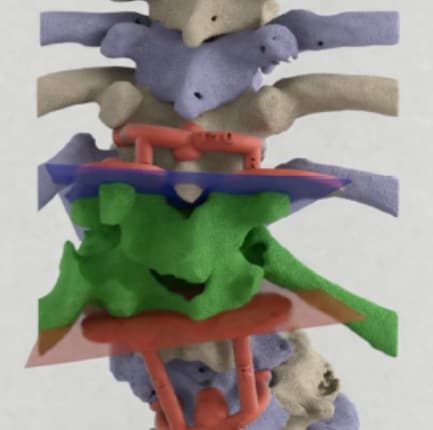
3D-printed spine model

“The [3D-printed] templates and bone models provided valuable guidance during the osteotomy in the severely deformed anatomy,” they wrote. “Moreover, the surgeons report that studying the 3D anatomy in a multidisciplinary team facilitated the surgical procedure due to enhanced spatial orientation.”

Accurate planning

Pedicle subtraction osteotomy is a technically demanding procedure for repairing spinal deformities and is associated with a risk of major complications. The surgery is particularly challenging when dealing with severely deformed spines.

“Operations of the severely deformed spine call for new, more precise methods of surgical planning,” the authors wrote. “[Three-dimensional] technology can give rise to new possibilities for the surgical planning of spinal deformities.”

In a recent case, Pijpker and colleagues applied 3D technology not only to facilitate the surgical team as they planned the best course of action, but while they performed the operation as well. The case centred on a 12-year old girl with a combination of bone diseases — skeletal dysplasia and severe congenital kyphoscoliosis — that required the expertise of specialists from several different fields for surgical treatment.

The group began by acquiring MRI and CT scans of the patient’s spinal cord. Next, they segmented and reconstructed these CT scans and then created a 3D virtual model of the spine using 3D-modeling software (Mimics Innovation Suite, Materialise). Examining the 3D virtual model, they were able to plan the ideal way to complete the surgery — allowing them to prevent the patient’s spinal deformity from progressing any further and minimize the risk of future neurological deficit.

To guide the procedure itself, the researchers 3D printed the virtual model of the patient’s spine, and they additionally 3D printed individualized guiding templates that fit directly onto the bone. The 3D-printed templates helped direct the surgical chisel during the procedure and also ensured the spine would maintain its position while the surgeons were cutting away pieces of bone.

The production cost of the 3D-printed spine was approximately Euro 154, and the image segmentation and template design took the 3D printing specialists a full day of work to complete.

Successful correction

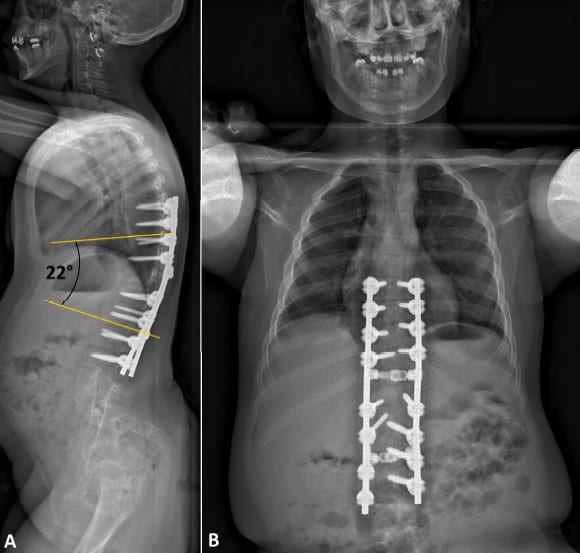
With the 3D-printed spine and guiding templates at hand, the surgical team was able to successfully resect the spinal deformity and close the separation. The young patient left the hospital eight days after surgery without any neurological deficit. Postoperative X-rays demonstrated the surgeons had properly corrected her spinal deformity.

Spinal deformity correction

The authors described the following four key ways in which the 3D virtual model and 3D-printed models facilitated the operation:

  • Provided insight of case-specific anatomy
  • Helped in the identification of spinal bones during surgery
  • Allowed for the visualization of deformed bones and their relation to the spinal cord
  • Made sure the preoperative plan correlated precisely with the actual operation

One drawback of the technique was that intraoperative use of the 3D-printed models was limited to the first stages of the procedure. For the final step of the procedure, the surgeons had to temporarily replace the 3D-printed guiding templates with rods to further stabilize the spine. The investigators hope that subsequent template designs incorporate openings into which the surgeons can place the support rods. They also plan to assess the accuracy of using 3D-printed models for this surgery and the effect of doing so on patient outcomes, compared with other techniques.

“[Three-dimensional] virtual planning, 3D-printed spine models, and osteotomy-guiding templates have facilitated the performance of the osteotomy and may, in [the] future, contribute to safer spinal osteotomy procedures,” they wrote. “The presented method … might hypothetically reduce surgery time and preclude the need for intraoperative radiography, especially when combined with patient-specific drill guides.”

  • This article was originally published on AuntMinnieEurope.com © 2018 by AuntMinnieEurope.com. Any copying, republication or redistribution of AuntMinnieEurope.com content is expressly prohibited without the prior written consent of AuntMinnieEurope.com.

Mind the gap

If I were to ask you what could be considered a strong contender for “the most far-reaching technological breakthrough of the 21st century to date”, it’s unlikely your answer would be “graphene”. And yet that is the bold claim made by Brian Clegg in his latest book The Graphene Revolution: the Weird Science of the Ultrathin.

The so-called “wonder material” graphene is an atom-thick tessellated-hexagon lattice of carbon atoms, and was first isolated by Russian physicists Andre Geim and Konstantin Novoselov in 2004. The opening chapter of the book describes in vivid detail the now-popular story of the scientist duo’s regular “Friday night experiment” slots, levitating frogs and how the pair used a bit of sticky tape to create the first layer of graphene – work that led them to win the 2010 Nobel Prize for Physics.

Clegg looks into the history of atomic physics and also provides the quantum basis to a lot of the unique and bizarre material properties that graphene exhibits. But despite its title, it is only in the final chapter of the book that Clegg describes the actual applications that have utilized this wondrous material and one can’t help but feel as though the graphene revolution is far from its heyday just yet.

  • 2018 Icon Books 176pp £8.99pb

Negative carbon not on

A report by the European Academies’ Science Advisory Council (EASAC) evaluates the potential contribution of negative emission technologies (NETs) for removing carbon dioxide (CO2) from the atmosphere, in order to help meet the Paris Agreement’s climate targets. It says that NETs have “limited realistic potential” to halt increases in the concentration of greenhouse gases in the air at the scale envisioned in the Intergovernmental Panel on Climate Change scenarios. Even taken together, NETs did not have the potential to deliver carbon removals at the 12 gigatonne (Gt) per annum (p.a.) scale and at the rate of deployment envisaged by the IPCC.

The EASAC report concluded that “scenarios and projections that suggest that NETs’ future contribution to CO2 removal will allow Paris targets to be met appear optimistic on the basis of current knowledge and should not form the basis of developing, analysing, and comparing scenarios of longer-term energy pathways for the EU. Relying on NETs to compensate for failures to adequately mitigate emissions may have serious implications for future generations”.

The options looked at include reforestation, afforestation, carbon-friendly agriculture, bioenergy with carbon capture and storage (BECCS), enhanced geo-chemical absorption, ocean fertilization, and direct air capture and carbon storage (DACCS), i.e. extraction of CO2 direct from the atmosphere using absorbents and then the separation and storage of CO2.

…the implication is that we need to accelerate renewables and energy efficiency, these surely being a better bet than trying to (re) bury carbon.

Dave Elliott

The IPCC had looked to BECCS in particular, suggesting, in one scenario, that it could capture up to 3.3 Gt of carbon p.a. But the land-use and eco-implications of that are huge and, like the other carbon capture options, it would take a long time to have an impact. What’s more, since CCS was not developing as fast as had been hoped – see below and my next post – the prospects of BECCS now looked limited. EASAC says: “The loss in momentum in implementing CCS technologies not only has serious implications for mitigation pathways, but also one of the most commonly cited NETs (BECCS) assumes the availability of cost-effective ’off-the shelf’ CCS, while another (direct air capture) relies on the widespread availability of CO2 storage”.

Although the potential of direct air capture was put at 3.3 Gt p.a, or more, it was, so far, undeveloped, with just two prototype projects. If it was to expand on a significant scale, EASAC asked, who would pay for it? Turning CO2 into a valuable fuel, the CCU (or DACCU) option, i.e. CO2 utilization rather than storage, might offset the cost, but EASAC does not look at that since it is not a carbon negative option – the resultant synfuels would be burnt, releasing CO2. However, the report does say that fossil CCS, although not carbon negative, could cut emissions by 4 Gt p.a. from fossil fuel-fired plants.

Afforestation and reforestation could capture up to 3.3 Gt and new farming practices and the use of biochar – made from biomass – to retain CO2 in soil could help (2–3 Gt p.a), but “we remain in an era where deforestation and soil degradation are continuing to add substantial quantities of GHGs [greenhouse gases].” So, though growing trees is cheap and better soil management techniques are available, making net positive carbon gains will be hard.

Advanced geochemical “weathering” – adding carbonate or silicate minerals such as olivine and basalt to oceans and soils – has promise and may, EASAC says, offer 1 Gt C absorption p.a. Ocean fertilization with ferric compounds, to increase phyto-plankton productivity and CO2 absorption, could also capture perhaps up to 1 Gt p.a., if done on a vast scale, but that could have unknown, though potentially large ecological impacts.

So what’s the bottom line? Taken together, the EASAC report says, NETs and fossil fuel CCS might in theory eventually offer up to a total of around 12 Gt C capture p.a. but in practice nothing like this would be viable ecologically, quite apart from the economic costs. Even 10 Gt would be a very high maximum, given the technical limitations and land-use conflicts. And for the moment, CCS seems to be off the agenda and NETs look a long shot: trees apart, few of them exist beyond the R&D, test and/or prototype level and some are just concepts. John Shepherd at the University of Southampton, UK, an author of the report, said: “Negative emissions technologies are very interesting but they are not an alternative to deep and rapid emissions reductions. These remain the safest and most reliable option that we have.”

Moral hazard

All of which led the EASAC president Thierry Courvoisier to warn that: “Whether consciously or subconsciously, thinking that technology will come to the rescue if we fail to sufficiently mitigate may be an attractive vision. If such technologies are seen as a potential fail-safe or backup measure, they could influence priorities on shorter-term mitigation strategies, since the promise of future cost-effective removal technologies is politically more appealing than engaging in rapid and deep mitigation policies now. Placing an unrealistic expectation on such technologies could thus have irreversibly damaging consequences on future generations in the event of them failing to deliver. This would be a moral hazard which would be the antithesis of sustainable development.”

However, the EASAC report does accept that some of the technologies “can make some contributions to remove CO2 from the atmosphere even now, while research, development and demonstration may allow others to make a limited future contribution. We thus conclude it is appropriate to continue work to identify the best technologies and the conditions under which they can contribute to climate change mitigation, even though they should not be expected to play a major role in climate control at the present time.”

So, given the uncertainties with NETs and their likely significant impacts, it says that we have to strive as hard as possible to mitigate emissions, for example “through energy efficiency and energy saving by technical and regulatory measures, rapid deployment of renewable energies, land use management, reducing emissions of other GHGs etc.,” so as to meet emission reduction targets and to make any need for NETs more manageable.

The basic message of this study is thus that, in the main, we need to look elsewhere for a way to cut carbon. There are other options, nuclear being one, but given its problems, the implication is that we need to accelerate renewables and energy efficiency, these surely being a better bet than trying to (re)bury carbon.

Fossil CCS, although not carbon negative, is still being promoted by some. The Global CCS Institute says that “CCS is needed because the amount of fossil fuels we burn continues to rise”. It claims that “CCS is not a ‘front’ for the coal or wider fossil fuel industry” and sees CCS and renewables working together, although it also quotes some very low potential contributions for renewables.

However, renewables are booming while the prospects for CCS do not look good. There are just two coal CCS power station projects working at present, the $1bn Petra Nova project in Texas, US, and the $1.5bn Boundary Dam project in Canada. But, apart from the high cost, the final capture rates are low (33% in the case of Petra Nova) and energy requirement are high (25% of the plant’s output in the case of Boundary Dam). What’s more, the captured CO2 is being used for enhanced oil recovery (squeezing extra oil out of low-productivity oil wells), which means that, quite apart from any leaks, CO2 will be produced again when the oil is burnt. Full CCS, with the CO2 kept in geo-storage, would avoid that and could be carbon neutral, but as I will explore in my next post, CCS development work has all but halted, and although Australia has been looking at this idea, fossil CCS does not look likely to spread. With, as subsequent posts will describe in more detail, the various NETs, like BECCS and DAC, also mostly looking less than overwhelming, we may have to look elsewhere for solutions to our climate problems.


Chaotic cavity boosts stability of high-power laser

Unwanted fluctuations in the output of high-power lasers can be reduced by using a laser cavity that allows light to bounce around chaotically. That is the counterintuitive conclusion of scientists in the US, UK and Singapore, whose research could also boost our understanding of weather patterns and turbulent fluid dynamics.

High-power lasers have an immense range of applications, from materials processing to surgery, but keeping light emission stable is difficult. Complex non-linear interactions of a laser’s active medium with the light field can lead to chaotic fluctuations that degrade its output and reduce its usefulness. Researchers have tried to suppress these fluctuations, but this can restrict the laser’s power.

An ideal laser would transmit all its power at a single frequency, with all its wavefronts perfectly parallel. In reality, however, the desired longitudinal modes in a traditionally-shaped laser cavity inevitably excite transverse modes as well.

Making waves

“It’s like a ship propagating through water,” explains Ortwin Hess, a theoretician at Imperial College London specializing in quantum nanophotonics: “You’ve got waves pushed in front of it and waves pushed aside created in the wake.”

Narrow laser cavities supporting only one transverse mode generally remain stable. High-power lasers, however, require large laser cavities and, within these, multiple transverse modes can pile up, leading rapidly to chaotic fluctuations in the light output.

Attempts to tame these fluctuations have focused on suppressing these multiple transverse modes to make the cavity field resemble that of a small laser. Such strategies can be moderately successful, says Hess, but the cavities remain inherently unstable.

“The characteristic thing about a semiconductor laser is that, within the semiconductor active material, light and matter interact quite intimately,” explains Hess. “It’s a bit like the light changing the viscosity of a very viscous fluid while propagating through it.” Injecting a stable control pulse, for example, may successfully suppress the multiple transverse modes at one pumping current, but increasing the current further may cause them to reappear.

Sweeping-up instabilities

In the new research, Hess and his colleagues at Imperial joined forces with researchers at Yale University and Nanyang Technical University in Singapore. The team took the opposite approach and maximized the number of modes in a semiconductor laser. They produced a D-shaped cavity without longitudinal or transverse modes. Instead, light bounced around chaotically. The fluctuations in the properties of the semiconductor were therefore effectively random and below the scale of the wavelength. This prevented large-scale instabilities from forming, sweeping-up instabilities from the light field and spreading throughout the laser.

Amazingly, this resulted in a laser cavity that, macroscopically, was inherently stable independent of pump power and could emit light at multiple frequencies simultaneously without its output succumbing to unstable fluctuations.

“We don’t have to inject anything,” says laser physicist Hui Cao, who led the Yale group. She adds, “Instead, we design the cavity shape to eliminate instabilities.” Hess compares this approach of stability through sub-wavelength chaos to the reduced likelihood of tornadoes to form in hilly regions than over flat country.

Focus on industry

Some issues remain, however. Although the laser’s output profile is highly stable, its beam cannot yet be very tightly focused. Cao says this is not necessarily a problem for applications such as machining and material processing: “For those applications, what’s important is to produce a particular beam profile”. She adds, “People have used a Gaussian beam shape and converted it to a line, a square or a triangle because they want to write that pattern onto their device. They do not require very good spatial coherence because the shape is larger than the diffraction limit, and relatively broad bandwidth is also not a big issue. What they do need is the intensity and beam-shape stability.”

The researchers believe their cavity design should be applicable to many laser types, which can all suffer from similar instabilities at high powers. Beyond this, they believe there could be applications to the study of chaotic and unstable behaviour in other systems: “We’re trying to reach out to other communities to see whether our scheme could be used to suppress spatio-temporal instabilities in other non-linear wave dynamic systems,” says Cao. “Fundamentally the equations are the same.”

“Random or chaotic resonators has been an active field for some time in optics and photonics, but it was mostly fundamental research,” says semiconductor physicist Alessandro Tredicucci of University of Pisa in Italy. “This is clearly a situation in which a chaotic cavity has some potential benefits over a conventional laser cavity.” He cautions, however, that “You have to put more power in to get all these modes lasing at the same time, which lowers the efficiency and means that typically these chaotic lasers have lower performance than conventional ones.”

The research is described in Science.

Innovation: patent applications review

A round-up of the latest international patent applications in medical imaging.

Fusion images guide interventional procedures

GE has developed a system that obtains fusion images of a patient’s anatomy for use in guiding interventional medical procedures (WO/2018/112063). The technique fuses fluoroscopy images taken during the interventional procedure with pre-operative CT angiography (CTA) images, in real-time. This enables the operator to see the anatomy in the fluoroscopy image without having to inject contrast agent. To correct for anatomical deformation due to the insertion of interventional devices, a 3D ultrasound image is obtained after insertion and used to correct the pre-operative CTA images and provide the current vascular anatomy. This updated CTA image is fused with the intra-operative fluoroscopy images to provide an accurate 3D roadmap image that matches the deformed anatomy.

Time-of-flight detects, corrects PET/CT misalignment

Philips has devised a scheme for using time-of-flight (TOF) to detect and correct misalignment between PET imaging data and the attenuation map in PET/CT images (WO/2018/127470). The described device performs TOF image reconstruction (which utilizes the TOF localization of the PET imaging data) on PET data to produce a TOF-reconstructed image. Non-TOF image reconstruction, which does not utilize the TOF localization, is also performed. The device then computes a comparison image, which indicates differences between the TOF and non-TOF reconstructions. An adjustment – such as alignment correction of an attenuation map – is determined based on the comparison image. The TOF image reconstruction is then repeated on the PET data with the determined adjustment, resulting in an adjusted TOF-reconstructed image.

Ultrasound delivers non-invasive blood pressure measurement

Physio-Control has described a method and apparatus for non-invasive measurement of instantaneous blood pressure using pulse wave velocity (WO/2018/136135). A measurement component containing one or more sensors (such as ultrasound sensors) is fixed to the patient near to a blood vessel. This device simultaneously measures the vessel’s pulse wave velocity and the instantaneous blood velocity within the vessel. It then computes the instantaneous blood pressure of the vessel using, for example, the Waterhammer equation. The filing notes that the sensors may be contained in a disposable patch or co-located with another sensor, such as a patient monitor.

X-ray device generates multi-energy images

Varian Medical Systems has published details of a device for multi-energy X-ray imaging (WO/2018/132284). The system includes an X-ray source, which generates a series of individual X-ray pulses with different energy levels, and an X-ray imager that detects the received X-rays for generation of a composite image. It also incorporates a generator interface box (GIB) that controls the source to provide the series of individual X-ray pulses and synchronizes detection with pulse generation. The GIB controls these processes to optimize image generation while minimizing unnecessary X-ray irradiation.

OCT provides low-cost central nervous system characterization

Researchers at the University of Coimbra have created a data processing method for characterizing the health status of the central nervous system, based on non-invasive optical coherence tomography (OCT) of the retina (WO/2018/127815). The technique involves processing OCT fundus imaging data to compute a texture parameter(s), and then classifying the texture parameter(s) into a central nervous system health status. The method, which uses a low-cost and compact acquisition device, overcomes the need for expensive and complex MR and CT instrumentation to assess central nervous system status in humans and animals. It enables classification of healthy controls and patients into the correct group and monitoring of longitudinal changes, in a fraction of the previous time and at lower cost.

SPECT images processed with improved resolution isotropy

A method for processing a SPECT image with improved resolution isotropy is disclosed by Molecular Dynamics in patent application WO/2018/146691. The image is obtained using at least one gamma detector that detects gamma radiation emerging from the region-of-interest at multiple detector configurations. The method includes: obtaining data indicative of the detector configurations and their spatial relationships to the region-of-interest; using these data to determine a resolution level for each of a number of directions in each point in the image; and processing the image based on the determined resolution levels.

Investing in the climate

Hurricanes Harvey, Irma, Jose and Maria, which swept across the Caribbean last year, caused an estimated $200bn of damage. Recent studies indicate the frequency of Harvey-like downpours over Texas may have already increased by up to six-fold since the late 20th century. Since a hotter atmosphere has a more energetic water cycle, and warmer air can hold more moisture, future climate change is likely to increase the intensity and perhaps the frequency of hurricanes still further.

The study of extreme weather events such as hurricanes is one example of how science can raise thought-provoking and important questions regarding the appropriate actions of both investors and companies. In the wake of the devastation of the 2017 Atlantic hurricane season, the question is whether some companies should be held at least partially liable for their activities, with possible implications for investment. Could carbon-intensive industries be held liable for some of this damage? And how would you even quantify their responsibility?

Risk and responsibility

The economic impact of extreme-weather damage is already beginning to be incorporated into risk assessments, with some fund managers considering climate issues in decision-making. Yet the financial liability of carbon-intensive industries for such damage may not be reflected in companies’ market valuations.

Apportioning responsibility for such damage is, in principle, possible. We know that cumulative carbon-dioxide emissions are the primary cause of changes in the global climate, which means we can start to quantify contributions from individual nations and companies, including extreme weather-event frequency increases. In 2015, for example, the fossil-fuel sector accounted for 91% of global industrial greenhouse-gas emissions. From 1988 to 2015, some 25 companies and state producers generated 51% of global industrial emissions. Seven of these were publicly owned companies, collectively accounting for 9.5% of “scope 1” and “scope 3” emissions and with a combined market capitalization of around $1220bn.

If such firms contributed 9.5% of the 2017 hurricane damage ($19bn), this would decrease their share price by 1.6% – a not insignificant sum, particularly if contributions are requested for other past and future extreme-weather events. If global warming increases hurricane losses, under a hypothetical climate-liability regime, damage contributions approximating 1–2% of companies’ market capitalizations might become more usual with each annual hurricane season. This ignores other climate impacts, such as sea-level rise, which could readily run to much larger sums.

Despite the science, however, no legal precedent yet exists for extreme weather-event climate-damage liability. The 2015 Paris Agreement explicitly rules out damages associated with climate change as a basis for liability. It is hard to say how investors might react to the possibility of companies having to contribute for damages associated with climate change caused by their past emissions. Barriers to successful climate-damages compensation cases remain substantial, but as insight develops, the possibility remains. For major insurance companies or governments footing the bill, the prospect of multi-billion-dollar pay-outs may focus attention on whether legal barriers could be overcome, potentially allowing them to pass on costs.

Climate change highlights the challenges faced in making research accessible and relevant to the broader community. Members of the public, industrialists and financiers rarely read scientific journals, so society’s response to such research can therefore take a long time. The need for scientists to be open to broader uses for their research is now more crucial than ever. Regular engagement outside academia would help to ensure that wider society has a more robust scientific understanding, as well as a clear demarcation of where the current knowledge boundaries lie.

Based on scientific insights that highlight and communicate possible investment risks, environmentally aware investors can actively nudge companies away from destructive behaviours towards a more constructive role. Selective investment in firms facilitating the transition to a net-zero-carbon economy supports them, while refusal to buy shares in those companies failing to do so can make it harder for them to raise capital. Even small investors’ accumulated views matter, just as individuals should believe that recycling their plastic bottle or casting their democratic vote makes a difference.

The ever-developing world of “sustainable investing” is a valuable way for climate scientists to have a real influence on financial markets. Environmentally focused investors are integrating climate risks into financial decision-making in many different areas.

Ethical investment

Apart from reaching out to broader society, scientists have another route to express their insights. As individuals, many invest savings in funds and pensions schemes. By actively seeking out sustainable, environmentally focused investments, they too can support companies that share their values while avoiding those that do not contribute to climate solutions.

To influence social and corporate behaviours, scientists need to engage with the wider world through social media and other routes not normally used by academics. Physicists with cross-disciplinary skills are also contributing to this effort by making their research accessible and relevant to finance and business.

Experts agree on advantages of direct current power in buildings

Experts broadly agree that a widespread adoption of direct current (DC) power systems in commercial and residential buildings could offer significant advantages over alternating current (AC) systems, according to a new study. The finding could help change perceptions of DC among industry professionals, potentially resulting in safer, more reliable, more energy-efficient buildings.

Brock Glasgo at Carnegie Mellon University, US, and colleagues consulted 17 experts in a variety of industrial and academic fields to identify the advantages of a more widespread adoption of DC power systems while acknowledging their potential challenges.

Our society’s use of electricity is changing rapidly. While developments in renewable energy generation have seen sources for the power grid becoming more dispersed, increases in modern electrical components and devices in buildings have caused power consumption to grow steadily. In light of these changes, many scientists have encouraged increased adoption of DC power distribution in commercial and residential buildings.

According to Glasgo, the case for DC power has three key aspects. “Firstly, we now have semiconductor-based power electronics that function as DC-DC transformers and are nearly as efficient as modern AC-DC and DC-AC transformers,” he says. “Secondly, we’re seeing consistent growth in the installation of solar PV [photovoltaic] and other distributed generation sources that generate DC. And thirdly, a growing fraction of the electricity consumed in modern buildings is either consumed as DC or passes through a transient DC state on its way to being consumed.”

To some, these advantages prove that power systems that incorporate both AC and DC are becoming overly-complex and outdated. “Eliminating unnecessary DC-AC and AC-DC conversions by distributing DC power would not only simplify our building-level power supply but would also save energy,” says Glasgo.

Yet despite its technical and economic advantages, the widespread adoption of DC faces major barriers in other areas. Through their interviews, Glasgo’s team identified the two biggest obstacles as an unfamiliarity with DC among industry professionals, and the under-representation of DC devices and components in the market.

“The AC grid has been in place for over 120 years, and all of the physical components, the design, maintenance, construction, operation, and end users’ interactions with the electric transmission and distribution system are based on a long history and the physics of AC,” Glasgo says. “A transition to DC-powered buildings will depend on far more than the technical feasibility of the systems themselves.”

However, the experts generally remained hopeful that these challenges could be overcome; identifying areas which they believed should be prioritised to make a better case for widespread adoption.

“Our experts proposed training engineers and electricians on DC systems and identifying niche use cases where DC power distribution holds a clear advantage over AC and building pilot projects to help build the market for DC devices and components,” says Glasgo. “The professionals responsible for DC power systems and the markets needed to support them will need to undergo a major transformation before they [DC power systems] can be employed to more efficiently, safely, and reliably meet the demands of future buildings.”

Glasgo and colleagues reported the findings in Environmental Research Letters (ERL).

Lithium-oxygen batteries broach 100% coulombic efficiency

If you’re reading this with a rechargeable battery powered appliance, the chances are it’s a lithium-ion battery based on intercalation chemistry. But with increasing demands for higher energy density power banks the search is on for alternatives.

“Intercalation of a cation into a structure (along with the accompanying stored electron) doesn’t change the framework very much.  Charging and discharging is like driving a car in and out of a parking garage, where the framework remains intact,” explains Linda Nazar, a professor in the Department of Chemistry at the University of Waterloo in Canada. “But if you try to drive too many cars in you get irreversible changes to the structure.” In addition to this fundamental limitation to the energy storage capacity this poses, lithium ion batteries use metals such as cobalt, whose cost is increasing and where sustainable mining is problematic.

The push towards alternatives to the intercalation chemistry of lithium-ion batteries has led to increased interest in lithium-oxygen batteries, which charge and discharge by converting lithium and oxygen into a metal oxide and back again. However parasitic side reactions have plagued efforts to maximize the efficiency and reversibility of this reaction for several years.

After years of working on lithium-oxygen batteries, Nazar’s group came to the conclusion that the organic solvents used for the battery electrolyte were simply not workable. Using selected inorganic electrolyte counterparts that operate at temperatures of 150 °C, and a bifunctional electrocatalyst, her team was able to demonstrate high-energy-density reversible lithium-oxygen battery charging and discharging with close to 100% coulombic efficiency that operates with a four electron redox reaction.

Chemistry coming together

Previous designs of lithium-oxygen batteries have largely used a carbon electrode and an organic electrolyte and form lithium peroxide (Li2O2) on discharge. Instead Nazar and her team use a noncarbonaceous composite cathode composed of nickel nanoparticles for the cathode and a lithium nitrate/potassium nitrate (LiNO3/KNO3) eutectic molten salt as a liquid electrolyte.

The molten salt electrolyte has a number of key properties. Reduction of oxygen forms reactive superoxide that is primarily responsible for the parasitic side reactions that impinge on the reversibility and efficiency of the cell. However in Nazar group’s design the nickel nanoparticles at the cathode become coated with LixNiO2 in situ, and this LixNiO2 catalyses the four electron conversion of oxygen into lithium oxide (Li2O) a process that is reversed on charge with the aid of the electrocatalyst. Reduction-oxidation to Li2O also doubles the electron storage, increasing the energy density of the cell by 50% compared with the peroxide.

In addition, the electrolyte provides just the right solubility for the ions, sufficient for Li2O crystals to nucleate at the electrode but not so great that they accumulate all over the cell and lose contact with the electrode.

“There are numerous facets of this chemistry that have to come together to make it work,” says Nazar. “While I wouldn’t say I was surprised that it worked I was pleased – there has been a lot of frustration in the field, so it was nice to see that oxygen chemistry can work well.”

Molten inspiration

Nazar points towards a wealth of literature on the properties required for a good oxygen evolution and reduction catalyst, including several papers by Yong Shao Horn at MIT. However she attributes the success of their battery design largely to inspiration from previous work published on molten salt oxygen electrochemistry by Liox Power and colleagues at Caltech and Berkeley that used a carbon cathode, and the tenacity of her postdoc Chun Xia for attempting to build on the work. Finding the right bifunctional catalyst/metal cathode was key.

While the elevated operating temperatures of the battery may limit applications, there are examples of other types of battery and fuel cells with higher operating temperatures that are already commercialized. However Nazar tells Physics World, “For us the main impact is demonstrating that lithium-oxygen chemistry is reversible.” Future work will focus on improving the electrochemistry.

Full details are available in Science.

Dispersible nano-electrode sensors could detect early-stage cancer

Dispersible electrodes based on gold-coated magnetic nanoparticles modified with DNA can detect microRNA in unprocessed blood samples at extremely low concentrations and over a broad range – a first for sensors of this kind. The devices, which have been tested on mice, can produce results in just 30 minutes and might be used to make a finger-prick test for early-stage cancer diagnosis.

“There are many microRNAs (short ribose nucleic acid sequences between 19 and 25 bases long) that are post-transcriptional gene expression regulators – that is, they can turn genes on and off,” explains John Justin Gooding of the University of New South Wales in Australia, who led this research effort. “The levels of these miRNAs are indicative of a range of pathologies, including cancers. If we could detect these RNAs in blood, where they circulate, we could make a finger-prick test as an early cancer diagnostic.”

 Detection levels as low as 10 attomoles

“The problem is that the RNAs are found at very low concentrations of 10 femtomoles (fM) to 1 picomole (pM), so this is no easy task. Our new technique can detect levels as low as 10 attomoles (aM) and above 1 nanomoles (nM), so covering this entire range. What is more, it produces a result in just 30 minutes.”

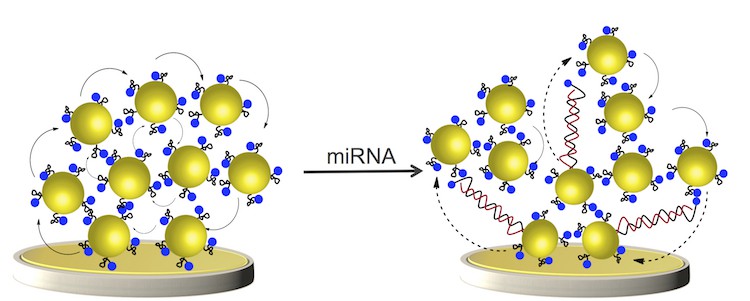
Gooding and colleagues developed gold-coated magnetic nanoparticles (Au@MNPs) modified with DNA that is complementary to the miRNA they want to detect. “We call these magnetic nanoparticles ‘dispersible’ electrodes because they diffuse throughout the sample to capture the miRNA,” says Gooding. “When we then apply a magnetic field, these tiny electrodes reassemble to form a bigger electrode.

Collecting Au@MNPs

“When miRNA is bound to the DNA of the nanoparticles, the electrochemical current through the macro-electrode changes. The electrode measures this change and produces a signal,” he explains. “Since the nano-electrodes disperse throughout a sample, they capture nearly all the miRNA in it and the more they capture, the bigger signal. This is why our device is so sensitive.”

Fast response time

The sensor also has a fast response time since it makes use of an applied magnetic field to “bring back” all the captured miRNAs to the macro-electrode, he adds. “It can be likened to a hunter-gatherer that is on a motorcycle rather on foot. When sent out to find ‘food’, it covers more territory, so collects more food and brings it back faster.”

The technique is better than the current gold standard to profile miRNA, the real-time polymerase chain reaction (qRT-PCR), which does not work on samples of whole blood (it requires isolated and purified RNA). Although highly reliable, qRT-PCR is also labour-intensive and time consuming.”

“Our sensor is the first to be able to detect concentrations of miRNA from 10 aM to 1 nM in unprocessed blood samples,” Gooding tells Physics World. “We found that it can also distinguish small variations in miRNA concentrations in blood samples taken from mice with growing tumours.

“We believe that our work is an important advance for developing liquid biopsies for early cancer detection, that is before symptoms of the disease actually appear, and to monitor how well, or not, a treatment is working,” he adds.

The researchers, reporting their work in Nature Nanotechnology 10.1038/s41565-018-0232-x, will now be trying to multiplex the technology so that they can simultaneously measure different types of miRNAs.

Copyright © 2026 by IOP Publishing Ltd and individual contributors