Build it and they will have fun

Educational physics project

Bold, bright and easy to decipher, Build It! 25 Creative STEM Projects for Budding Engineers by award-winning educator, engineer and author Caroline Alliston is the perfect book for any burgeoning engineers, as well as their teachers and parents. The glossy book features 25 STEM projects for children, varying from constructing a marble maze to building a clock. The book’s main aims – to teach children to think scientifically and creatively, while also showing them the applications of science in the real world – are well achieved, thanks to the clear directions and explanations provided throughout. Alliston provides a list of tools and materials that most of the projects require, as well as a detailed section on how to put together a circuit board for some of the projects. While most of the materials should be pretty straightforward to source, the claim that they are “easy-to-find objects from around the home” is an overstatement – I don’t know about you, but I don’t have a spare toggle switch or 13 V motor lying around. Despite this, Alliston does provide a handy list of websites from where you can purchase the necessary electrical parts.

Putting aside this small grievance, Build It! is a great project guide. The projects cover the spectrum of physical forces and concepts including light, air, water and electricity, as you build models that fly, zip around the floor and light up. Each project has a specified difficulty level from one (the easiest) to three (the hardest), and includes a “How it works” box that explains the basic principles behind the build.

Another good feature of the book is that the projects vary a lot in terms of complexity, time required to make them and the skills necessary – not to mention the final product. For example, “the glider” (a more solid version of a paper plane) would be a quick project as it requires only printing out a template and pasting together sections from the polystyrene discs that come with supermarket pizza. The “motorized buggy” on the other hand, if executed perfectly, will give you a driverless vehicle that you can programme to move, turn and even park. With the detailed cut-outs and circuitry necessary, you could easily spend a few days working on this. For the same reasons, the book has projects that could be done with very young children as well as teenagers; just pick the right project. All in all, Build It! is an excellent companion for parents and teachers looking for fun and engrossing projects to keep young hands and minds busy.

  • QED Publishing, Quarto Kids £10.99hb 120pp
Jovian giant

Jupiter

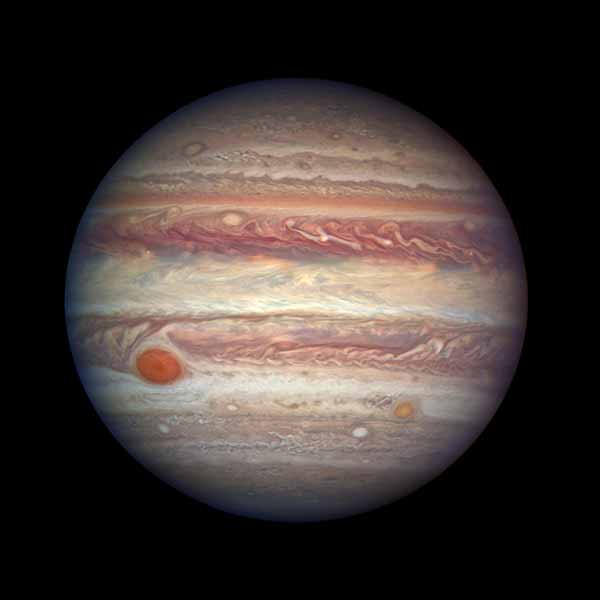
Ask anyone what their favourite planet in our solar system is, and it’s usually a 50:50 split between Saturn and Jupiter (all jokes about Uranus notwithstanding). But there seems to be something particularly captivating about the biggest planet in our system, with its swirling surface, Giant Red Spot and battalion of satellites (67 to be precise). Having fascinated humans for millennia, it’s no surprise then, that new books on the fifth planet from the Sun keep popping up, despite the many already available tomes on the subject.

Jupiter by William Sheehan and Thomas Hockey is the latest book in the Kosmos series by publisher Reaktion Books. Sheehan is a psychiatrist by training, but has long been an amateur astronomer and historian, and has written many books on the subject. Hockey is professor of astronomy at the University of Northern Iowa. Although A5 in size, this book is a glossy coffee-table title, packed with more than 100 images and illustrations. The opening chapters do a good job in tackling the birth of the solar system and all the Jovian planets; describing how they formed; before delving into Jupiter itself, layer by layer, from atmosphere to core. The book does contain a substantial amount of historical background, both observational and theoretical, but this is interspersed throughout the text rather than being clumped into the start, which might otherwise have slowed down readers.

Apart from talking about very early observations of the planet, the book covers all the many missions and probes that have visited Jupiter from Pioneer onwards, slowing peeling back the layers and mysteries of our favourite gas giant. Sheehan and Hockey’s language is clear and mostly lacking in jargon, if occasionally effusive, and the book is well-paced, if a bit clogged with facts and figures. The final chapter, “Juno to Jupiter”, is particularly interesting as it details some of our most recent discoveries thanks to the NASA mission, ending the book on a good note. While not being revelatory, Jupiter is a useful and practical planetary-science primer.

  • Reaktion Books £25hb 192pp

Towards renewable life-support systems in space

The atmosphere on Mars doesn’t support human life, so if humanity is going to travel to – and survive – on the red planet, we’ll need to pack our space rockets with everything needed to support life. That will be a heavy load, so it’s no surprise that space agencies are looking to develop life-support technologies and renewable fuel production that are lightweight and regenerative.

This makes photoelectrochemical cells, which convert solar energy to produce oxygen while simultaneously releasing hydrogen for fuel, an attractive option. Now, solar-fuel researchers in California and Germany have demonstrated a semiconductor half-cell that, unlike conventional designs, efficiently releases hydrogen in microgravity conditions.

“We wanted to figure out if we can actually do photochemistry in microgravity and produce fuels,” says first author Katharina Brinkert from the California Institute of Technology. But testing and designing a cell that’s capable of working under zero-gravity conditions proved quite the challenge.

Dropping into microgravity

Experiments in zero-gravity aren’t easily conducted here on Earth. But at the Center of Applied Space Technology and Microgravity (ZARM) in Bremen, Germany, there is a specially designed drop tower that enables short experiments under weightless conditions.

Photo of the ZARM drop tower

In the experiments at ZARM, all the equipment must be installed into a single capsule that is launched up the 120 m tower by a pneumatic piston, reaching 168 km/h. When the capsule falls it experiences weightlessness for 9.3 seconds, and it’s in that fall-time that experiments must be conducted. “We weren’t sure the experiment would work because we only had 9.3 seconds of microgravity to perform difficult electrochemistry,” says Brinkert.

Brinkert says that the research team relied on the expertise of the scientists at ZARM to set up and automate the experiment. And to make it easier, the team chose to test the simplest half of the photoelectrochemical cell, where hydrogen is released at the photocathode.

The researchers already knew that the efficiency of the electrodes in traditional solar-fuel cells falls in microgravity. “In microgravity conditions you have an absence of buoyancy and that makes the gas bubbles produced stick to the electrode surface,” says Brinkert. These hydrogen bubbles gather together to coat electrodes in a “froth layer” that increases resistance and reduces current and voltage through the electrode.

As expected, the team’s traditionally designed, indium-phosphide photocathodes with flat rhodium deposits experienced up to a 70% reduction in circuit voltage, with froth formation evident on camera footage. To prevent the formation of the froth layer, the California-based solar-fuel scientists sought help from Michael Giersig at the Freie University in Berlin, who is an expert at creating nanostructured surfaces that can alter the properties of component materials. While nanostructuring catalysts is nothing new in the solar-fuel community, Giersig specializes in shadow nanosphere lithography (SNL), which has not previously been used with solar-fuel cells in microgravity.

The nanostructured fuel cells were composed of the same indium phosphide, but the rhodium was deposited using SNL. Employing latex spheres as a type of template, the scientists were able to form the rhodium into 3D hexagonal nanostructures.

Tests in the drop tower revealed that the nanostructured cells performed much better than the traditional cells in microgravity, with only a 25% drop in voltage. Experiments in terrestrial conditions yielded the same efficiencies between catalyst designs, confirming that the difference in voltage generated in microgravity was related to surface topology.

Images of bubble formation in microgravity combined with theoretical analyses helped the researchers to understand how nanostructuring improved performance. “Our theory is that the bubbles are produced along the tips (of the 3D structures) and that these tips are so small that this limits the gas bubble growth,” says Brinkert.

Completing the cell

The researcher’s findings suggest a new design principle that could help realize simple and lightweight life-support systems for future space travel. Shaowei Chen, a professor of electrochemistry at the University of California, Santa Cruz, also thinks this technique could improve the performance of terrestrial water splitting technologies.

Brinkert and colleagues are now keen to advance their studies to look at the other half of the cell, which releases oxygen for life support. “We’d like to have two half cells working together, splitting water at the photoanode and feeding electrons to the photocathode to reduce the species you want to produce for fuel,” she explains. “Ultimately we’d like to take such a device up to the international space station and do experiments there.”

The research is described in Nature Communications.

Road map aims to cut environmental impact

A highly detailed map reveals global patterns of current and potential future road infrastructure. The Global Roads Inventory Project (GRIP) integrated many previous datasets with the hope of informing global policies to reduce the environmental impacts of road development.

“Roads are important for socio-economic development by providing access to resources, jobs, and markets, but they also bring about various environmental impacts,” says Johan Meijer of the PBL Netherlands Environmental Assessment Agency. “Ecosystems are affected mainly because roads provide access to otherwise undisturbed areas. This results in habitat fragmentation, deforestation, and reduced wildlife abundance though disturbance, road kills and overhunting.”

Along with these issues, road construction also increases emissions of greenhouse gases and air pollution, driving global climate change and posing significant health risks.

Many previous efforts have mapped global road networks using georeferenced data, from groups including governments, commercial and non-profit organizations and through crowdsourcing. Typically, these maps are outdated, and are biased in coverage towards more developed nations, particularly in Europe and North America.

Meijer’s team aimed to solve these issues by unifying information from almost 60 previous datasets. The georeferenced data covered 222 countries and 21 million km of roads – over twice the total length of any current dataset. By showing the position of every road they had data for – from local tracks to major highways – the researchers created a global roadmap with an unprecedented level of detail.

GRIP global road density map on 5 arcminute resolution (approximately 8 × 8 km at the equator), representing the densities summed across the five road types. (Courtesy: Johan R Meijer et al 2018 Environ. Res. Lett. 13 064006)

The team also created a regression model that incorporated variables including each country’s area, population density, and GDP. The researchers concluded that high densities of roads are most likely to be found in wealthy, densely populated countries.

“To derive potential future infrastructure developments, we applied our regression model to future population densities and GDP estimates,” Meijer explains. “We obtained a tentative estimate of 3 to 4.7 million km additional road length for the year 2050, a 20% increase compared to the current situation.”

The team concluded that many roads are likely to be built within globally important ecosystems. “Large increases in road length were projected for developing nations in some of the world’s last remaining wilderness areas, such as the Amazon, the Congo basin and New Guinea,” continues Meijer. “This highlights the need for accurate spatial road datasets to underpin strategic spatial planning in order to reduce the impacts of roads in remaining pristine ecosystems.”

The team’s focus is on supporting and improving global policy assessments and outlooks, according to Meijer. “In order to adequately quantify the benefits as well as the impacts of roads, using global assessment models, accurate and up-to-date georeferenced information…is essential.”

Ultrasound can trigger and enhance cancer drug delivery

Scientists in the UK have shown for the first time that focussed ultrasound from outside the body can improve the delivery of cancer drugs to tumours in humans. In the clinical trial, the team injected 10 patients with heat-sensitive capsules filled with a chemotherapy agent and then heated tumours with ultrasound. The technique could reduce the dose of toxic drugs needed to treat cancers and lead to news ways of dealing with tumours that are hard to treat with conventional chemotherapy, according to the researchers.

Delivering an effective dose of drugs to a tumour while minimizing toxicity elsewhere in the body is a major challenge in cancer treatment. One promising idea involves using drug-filled nano-capsules. These capsules increase the half-life of chemotherapy agents in the body and are designed to accumulate – either passively or through active targeting – in tumours. But they do not always release their payload effectively.

In the latest study, described in The Lancet Oncology, Paul Lyon and colleagues at the University of Oxford conducted a 10-patient phase 1 clinical trial to test the safety and feasibility of using focussed ultrasound to heat liver tumours and trigger the release of a chemotherapy drug from heat-sensitive, lipid-based carrier.

Temperature-sensitive carrier

All 10 patients had inoperable liver tumours. Under general anaesthetic, they each received a single intravenous dose of the chemotherapy agent doxorubicin encased in a temperature-sensitive liposomal carrier. A focussed ultrasound device, operating at a frequency of 0.96 MHz, was then used to heat the target liver tumour to over 39.5°C – which is the temperature at which the capsule is design to release the drug.

In six patients the temperature of the tumour was monitored using a temporary implanted probe, and tumour biopsies were taken before and after drug infusion, and after ultrasound exposure to estimate drug concentration within the tumour at different treatment stages. In the remaining four patients, biopsies were only taken after ultrasound exposure. The researchers used predictive models to calculate the ultrasound parameters needed to heat the tumours to a temperature in the range of 39.5–43°C. The researchers say this procedure better reflects how the technique might be used in clinical practice.

Following focussed ultrasound exposure, doxorubicin concentrations within the tumours increased by an average of 3.7 times. In seven out of the 10 patients there was at least a doubling of the drug within the tumour. One patient showed an estimated nine times increase in drug concentration within their tumour after ultrasound heating.

Safe trigger

The researchers say that their results build on decades of promising preclinical research to demonstrate that it is possible to safely trigger the release of cancer drugs deep within the body using focussed ultrasound. They add that the several-fold average increase in drug concentration seen highlights the clinical potential of such techniques.

“Only low levels of chemotherapy entered the tumour passively. The combined thermal and mechanical effects of ultrasound not only significantly enhanced the amount of doxorubicin that enters the tumour, but also greatly improved its distribution, enabling increased intercalation of the drug with the DNA of cancer cells,” explains Lyon.

This opens the way not only to making more of current drugs but also targeting new agents where they need to be most effective

Mark Middleton

“A key finding of the trial is that the tumour response to the same drug was different in regions treated with ultrasound compared to those treated without, including in tumours that do not conventionally respond to doxorubicin,” adds Oxford’s Mark Middleton. “The ability of ultrasound to increase the dose and distribution of drug within those regions raises the possibility of eliciting a response in several difficult-to-treat solid tumours. This opens the way not only to making more of current drugs but also targeting new agents where they need to be most effective.”

Precise anatomical location

Jeff Karp, Professor of Medicine at the Brigham and Women’s Hospital, in Boston, US, told Physics World that “this is a very well performed study in human patients”. He adds: “Although some limitations exist, this study demonstrates that by using thermo-sensitive liposomes in combination with ultrasound, it’s feasible to safely enhance the intratumoral delivery of therapeutic molecules to a precise anatomical location in human patients and improve the therapeutic outcome.”

Karp says that the next step in this line of research is to test this approach in other solid tumours and with other drugs. He adds that the development of ultrasound devices that can precisely target different types and sizes of tumours, and ultrasound-sensitive delivery vehicles may further improve drug delivery and reduce side effects.


Nanowire thickness alters GaAs band structure

Researchers at Lund University, Sweden, have grown single continuous GaAs nanowires consisting of segments of pure wurtzite and zincblende phases. Using photoluminescence spectroscopy, they found that the spatial confinement along the radius of a nanowire resulted in bending of the band structure of the material.

Wurtzite/zincblende GaAs interface

Since it is only in recent years that phase-pure wurtzite and zincblende GaAs have been grown successfully, we have yet to uncover many fundamental properties of these materials. However already the staggered alignment of the conduction and valence bands at the interface  between wurtzite and zincblende GaAs – type II heterojunction characteristics – is attracting interest for potential use in future electronic and optoelectronic devices.

When the wurtzite phase is sandwiched between the zincblende phase, the minimum of the conduction band and the maximum of the valence band are physically separated in the two different materials. Such an alignment of the energy bands aids the separation of photo-induced electron−hole pairs across the interface of the heterojunction, which is necessary for photovoltaic applications.

Photoluminescence spectroscopy of the nanowires

To investigate nanowire size effects on the band separation, lead author Irene Geijselaers and her team performed photoluminescence spectroscopy on a number of GaAs nanowires with diameters ranging from 70 nm to 150 nm.

They grew the nanowires by metal-organic vapour phase epitaxy (MOVPE) using gold nanoparticles as the catalyst. By simply varying the concentration of the As-precursor in the MOVPE growth reactor, the researchers could switch between growing either the wurtzite or zincblende GaAs phases. This method does not require any changes in growth temperature (which can result in strain and subsequently defects in the nanowire) and creates atomically sharp interfaces between the two phases. In addition, they could control the diameter of the nanowires with the diameter of the gold catalyst nanoparticles.

As the diameter of the nanowire increased, they found the transition energy (the measured energy gap between the conduction and valence bands) decreased. The researchers explained the result as being due to an increase in bending of the band structure in thicker nanowires compared with thinner ones.

In the paper, the authors remarked, “our results will improve accuracy of future modelling of electronic properties of wurtzite-zincblende GaAs heterostructures and other engineered polytypic materials.”

The research is detailed in Nano Futures 10.1088/2399-1984/aac96c.

Vertical perovskites make efficient photodetectors

Films of vertically grown halide perovskites (VGHPs) can be used to make efficient nanopillar photodetectors, according to new work by researchers in Korea. The structures, which are made using a nanoimprinting crystallization technique, have a low defect density and high electrical conductivity. The photodetectors have an increased photoresponsivity compared to flat film-based devices.

Halide perovskites have the chemical formula ABX3 (where A is typically methylammonium, formamidinium or caesium, B is lead or tin, and X iodine, bromine or chlorine). They show much promise as next-generation photoelectronic materials thanks to their excellent photophysical properties. These include a tuneable optical absorption bandgap, slow recombination kinetics (the rate at which electron–hole pairs recombine to make a photon) and the fact that charge carriers can diffuse through them quickly and over long lengths.

Most research to date has focused on engineering these materials’ composition and interfacial properties. As a result, researchers have succeeded in increasing the power-conversion efficiency (PCE) of solar cells made from perovskites from just 3% to more than 22% in recent years.

Reduced defect density and improved charge-carrier mobility

A team led by Jong Hyeok Park of Yonsei University in Seoul and Jeong Ho Cho of Sungkyunkwan University in Suwon has now developed a new and simple way to make VGHP nanopillar films using engraved nanopatterned polymer stamps to form nanopillars. The researchers grew their nanostructures by crystallizing a softly baked methylammonium lead iodide (MAPI) gel film.

“Previous work by our group showed that the pressure induced by the nanopatterned polymer stamps changes the crystallinity of the halide perovskite films,” explain Park and Cho. “In this new work, we designed the perovskites with a 1D geometry and observed reduced defect density and improved charge-carrier mobility in the MAPI films, as measured with time-resolved photoluminescence (PL) spectroscopy and conductive atomic force microscopy.”

The researchers found that the defect density in the VGHP films was reduced by approximately one-fifth – from 5.27 × 10¹⁷ to 9.81 × 10¹⁶. These values are almost the same as those of a typical polycrystalline MAPI film. They also observed that the pressurizing process shrinks the perovskite grain boundaries, which normally behave as defect sites after the nanoimprinting process. The reduced defect density extends the carrier diffusion length and enhances the charge-carrier mobility, they say.

Park, Cho and their colleagues, reporting their work in ACS Nano 10.1021/acsnano.8b04170, then turned their attention to making two-terminal photodetectors using the nanopillar films. They illuminated the perovskite channel region with light of a wavelength of 520 nm and an optical power of 500 μW. Photoabsorption generates electron−hole pairs in the channel layer, which subsequently dissociate into holes and electrons under the electric field applied between the two electrodes in the device, dramatically enhancing the photocurrent (the rate at which electron–hole pairs are created).

The VGHP photodetectors also boast lower dark current (or unwanted leakage current) compared to their flat film-based counterparts thanks to their reduced channel thickness (∼130 nm) and decreased defect density, add the researchers. And importantly, they also have an increased “responsivity” (efficiency in generating charge carriers when photons hit the photodetector).

DNA origami produces silica ‘diatoms’

Using a technique called DNA origami, researchers in the US and China have succeeded in designing biomimetic silica nanocomposites with pre-defined sizes and shapes at sub-5-nm resolution. The technique is a new way of exploiting the structure of DNA to guide silica mineralization and it could be extended to other inorganic materials as well as metal oxides. The structures produced could find applications in nano-electronics, photonics and robotics.

DNA-silica hybrid materials

DNA origami relies on exploiting the base pairing of DNA’s four nucleotides, A, T, C and G, to produce an infinite variety of self-assembled engineered shapes. The resulting nanostructures can be used as scaffolding or as miniature circuit boards for precisely building components such as carbon nanotubes and nanowires.

Powerful though it is, one of the main limitations of the technique is that the DNA shapes need to be formed in a saltwater solution, which produces surface charging that can actually prevent material assembly. It can also damage surfaces such as silicon wafers.

Modified Stöber method

Researchers led by Chunhai Fan of the Chinese Academy of Sciences and Shanghai Jiaotong University and Hao Yan of Arizona State University have now used the so-called Stöber method, which is widely employed to produce silica nanostructures in industry, to overcome these problems.

“The Stöber method is a chemical process that makes use of tetraethyl orthosilicate (TEOS) to prepare SiO2 particles of controllable and uniform size for applications in materials science,” explains Fan. “It was first pioneered by Werner Stöber in 1968. We modified this method by pre-mixing TEOS with N-trimethyloxysilylpropyl-N,N,N-trimethylammonium chloride (TMAPS) to form prehydrolyzing clusters of silica that have enough positive charge to electrostatically bind to the surface of the negatively-charged DNA templates.

“The process, which we have dubbed DNA Origami Silification (DOS), induces the growth of amorphous silica on the DNA.”

2D and 3D nanostructures

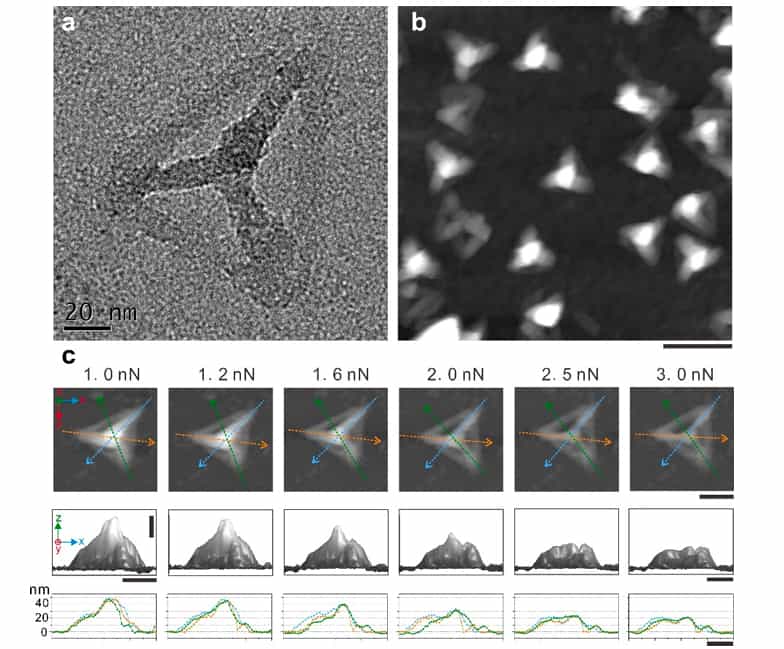
The researchers made different-shaped nanostructures, including 2D squares, triangles, crosses and structures that mimic diatoms (marine unicellular organisms). They also made 3D objects, including cubes, tetrahedrons, hemispheres, toroids and ellipsoids. The structures could be made to be anywhere between 10 nm and 1 µm in size and their thickness (and thus rigidity) could be controlled by varying growth time.

Importantly, the structures have high specific strength (a measure of how resistant a material is to breaking, relative to its density), say Fan and study lead author Xiaoguo Liu. “We measured a compressive E-modulus of the DNA-silica hybrids that was 10 times higher than pure DNA nanostructures, and the 3D frameworks were found to be rigid and flexible – like a spring.”

In this respect, the structures resemble diatoms, whose silica exoskeletons boast the highest specific strength of any known biomaterial.

“In our work, we have proved that DNA nanostructures can be used as templates for synthesizing inorganic materials,” Fan tells Physics World. “The technique we have presented allows us to transfer geometric information from ‘designer’ DNA structures (the nucleic acids framework, for example) to the inorganics. Provided suitable synthetic conditions can be found, it should, in principle, be possible to create composites in which other inorganic materials coat the DNA origami shapes. Multi-component composites, through the stepwise deposition of more than one inorganic material on the DNA templates, should also be achievable.”

The technique is detailed in Nature 10.1038/s41586-018-0332-7.

Hybrid nanoparticles restore blood-clotting activity

Qb virus-like particles (VLPs) are small nanoparticles that can be used to deliver drugs to the human body. Natural Qb VLPs form from 180 copies of the coat protein – self-assembling proteins that viruses produce to encapsulate and protect their genetic material. Researchers at Occidental College engineered hybrid VLPs by co-expressing normal coat proteins and coat proteins fused to peptides that bind heparin, a widely used blood-thinner. The assembled nanoparticles, containing up to 31% peptide-fused coat protein, effectively hindered heparin activity in a laboratory-based clotting assay (Mol. Pharmaceutics 10.1021/acs.molpharmaceut.8b00135).

Controlling blood clotting

Heparin is a natural molecule that is the most commonly used anticoagulant, or blood-thinner. It is an extremely important medication, even included on the WHO Essential Medicines List, and is used to prevent blood clots. However, too much heparin can cause uncontrolled bleeding and lead to death.

The only current available drug for reversing heparin activity is a mixture of peptides (very small proteins composed of fewer than 50 amino acids) called protamine. Protamine can, however, cause severe side-effects when administered in humans, which makes finding other therapies with reduced toxicity an important clinical goal.

Anti-heparin nanoparticles

Justin Choi and a team of researchers from Andrew Udit’s laboratory have found an alternate way of stopping heparin activity. Previous research showed that different cationic peptides (peptides with a positive charge) interact with heparin. This led Choi’s team to hypothesize that the effectiveness of these peptides will increase when combined in greater number on a nanoparticle. The scientists also hypothesized that conjugation could reduce the toxicity of the peptides.

To test this hypothesis, the research team fused many different peptides onto Qb coat proteins and assembled the particles by expressing these coat proteins alongside unmodified coat proteins. The peptides that they tested all had the sequence XBBBXBX, where B was a basic amino acid and X was a hydrophobic amino acid.

The generated hybrid particles had different amounts of peptide displayed on their surface, ranging from 8-31%.

Determining nanoparticle effectiveness

Heparin works by activating antithrombin, a protein that inactivates enzymes in the human blood that cause it to clot. To measure heparin and heparin-inactivating drug activity, scientists use a laboratory-based test called the activated partial thromboplastin time (APTT) assay, which measures the overall speed at which blood clots.

The California researchers saw that normal blood-clotting in the assay took 37 s, whereas blood clotting was hindered when heparin was present. The addition of conjugated Qb VLPs to samples containing heparin restored blood-clotting to almost normal times. The effectiveness of the particles varied, with the best particle being the one with the greatest amount (31%) of incorporated peptide. They note that the peptides benefit from being conjugated onto a VLP – the same amount of unconjugated peptide did not fully antagonize heparin activity in the assay.

The future of nanoparticles

The research presented by Andrew Udit’s team shows that conjugating heparin blockers to VLPs improves their activity. This is highly important since less concentrated therapeutic doses of peptides means less toxicity to the human system. Exciting avenues for future exploration include optimizing the peptide sequences even further and creating particles with higher conjugation. In general, the field of VLPs and nanoparticles is growing fast, with recent advances in drug delivery, targeting of drug-resistant tumours and even as vaccines against Alzheimer’s disease.


Nobel laureate Burton Richter dies at 87

Burton Richter, the US particle physicist who shared the 1976 Nobel Prize for Physics, has died aged 87. Using a particle collider that he helped design and build at the Stanford Linear Accelerator Center (SLAC) in the 1960s, Richter co-discovered a new particle that proved the existence of a fourth quark.

Born in 1931 in New York, Richter studied physics at the Massachusetts Institute of Technology before completing a PhD at the institute in 1956. He then went to Stanford University’s High-Energy Physics Laboratory where he helped to design and build the world’s first particle collider in the early 1960s.

In 1963, Richter moved to SLAC setting up a group to design a 3.2 km high-energy electron-positron collider called the Stanford Positron-Electron Accelerator Ring. A year after it opened in 1973, Richter and his team spotted a new particle with a mass around 3.1 GeV.

[Richter] was a visionary director of SLAC, with a forceful personality and a tremendous drive

Persis Drell

When Richter told Samuel Ting from the Brookhaven National Laboratory about the new particle, Ting informed him that he had also seen it while working on the lab’s Alternating Gradient Synchrotron. While Ting called his particle J, Richter dubbed it psi. The researchers then issued a joint statement saying they had discovered a new particle called J/psi, which experimentally proved the existence of a fourth quark — later named charm. For the discovery, Richter shared the 1976 Nobel Prize for Physics with Ting.

Accelerator advances

Richter became SLAC’s technical director in 1982 and then two years was named the lab’s director. During this time Richter oversaw the design and construction of the world’s first linear collider – the 3 km SLAC Linear Collider — that was built in 1987 and smashed together electrons with positrons at an energy of around 90 GeV.

Richter retired from SLAC in 1999 but he remained active in physics and spent time working on other issues such as energy, environment and sustainability. He was also vocal in urging the particle-physics community to plan the next big particle collider that would come after CERN’s Large Hadron Collider.

In addition to the Nobel prize, Richter also received the National Medal of Science in 2014 as well as the US Department of Energy’s Enrico Fermi award in 2012. “[Richter] was a visionary director of SLAC, with a forceful personality and a tremendous drive,” says Persis Drell, who served as SLAC director from 2007 to 2012. “His fingerprints are all over many of the advances in accelerators in the 20th century, as well as in the development of the X-ray light sources enabled by electron accelerators.”

Copyright © 2026 by IOP Publishing Ltd and individual contributors