Today the FIFA World Cup kicks off in Russia as 32 nations battle it out to be crowned the football champions of the world. In this episode of Physics World Weekly, James Dacey and Matin Durrani consider some of the ways physics interacts with the beautiful game.
Dacey and Durrani discuss how footballs curve in the air, the secret to the perfect throw in, and how physics principles can help in designing safe stadiums. They also take a look at a couple of recent studies that attempt to predict the results of the tournament.
If you enjoy what you hear, then you can subscribe via iTunes or your chosen podcast provider.
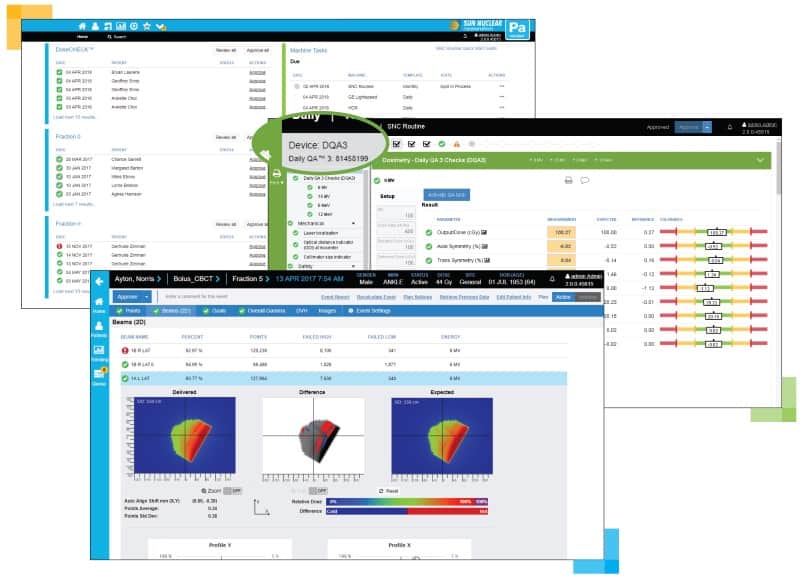
SunCHECK combines routine mechanical and routine patient checks into one user interface.
The delivery of radiation therapy is supported by a wide range of information on the patient, the treatment plan, and the linear accelerator (linac) that manufactures and administers the dose. It’s a branch of medicine that has become highly computerized, involving different combinations of hardware and software, and featuring a wide range of clinical tools and devices.
“One of the biggest challenges facing clinicians is being able to keep up with the rapidly evolving technology and ensure that the treatments are being delivered as intended to the patients,” comments Jeff Simon, CEO of Sun Nuclear – a provider of solutions for radiation oncology quality assurance (QA). “There are a lot of different checks that have to occur in managing, verifying and validating across the whole workflow.”
These steps involve a combination of machine and patient QA to ensure that the whole process runs according to plan.
As part of a multi-year programme, Sun Nuclear has been busy harmonizing each step in the QA process to make radiotherapy much simpler and intuitive for its customers – predominantly medical physicists and radiotherapists working in cancer clinics.
It’s a mission statement that few would argue against, but it’s also a bold undertaking. According to the firm’s figures, more than 4000 cancer treatment facilities worldwide use Sun Nuclear solutions.
“Being able to tap the brakes and create a whole new architecture while keeping current product lines competitive and up-to-date is definitely easier said than done,” admits Simon.
However, the benefits are compelling. “Integration and standardization are really important themes and goals here,” he emphasizes. “With SunCHECK 2.0, we’ve essentially combined the routine mechanical and the routine patient checks into one user interface with a common architecture and a common database.”
Robert Biggar – a principal clinical scientist based at the Clatterbridge Cancer Centre NHS Foundation Trust in the UK – has been involved in beta-testing the software. He sees unified architecture as a major step forward in helping him to do his job more efficiently thanks to the software’s ability to gather and process results in the background.
“It can be difficult to get different pieces of radiotherapy equipment, databases and patient information systems to interact with each other, but Sun Nuclear has managed to get inside the bare bones of how their systems work and integrate all of these information flows into a single platform,” Biggar comments. “One of the biggest benefits is the automation, which helps to focus our resources on the cases that need the most attention.”
Another key requirement was to make the SunCHECK platform agnostic to specific vendors’ technologies. “It doesn’t matter what treatment machine you have or which planning system you have, you’ll get the same results,” Simon explains. “You have standardization across the entire workflow.”
Rather than create a “wrapper” on top of older software, Sun Nuclear decided to re-write and expand its product suite from the ground up, which delivers a number of advantages to users.
“With our software there’s no waiting – the device data show up instantaneously,” Simon highlights. “There’s no need for manual synchronization or mapping of data fields – it’s all automatic.”
The web-based network architecture allows users to connect multiple geographic locations to gain a top-down view in the same dashboard, supported by the same database. What’s more, SunCHECK’s server installation streamlines updates and makes it straightforward to access.
User licenses are based on the number of linacs, rather than having to worry about separate licensing for each workstation.
SunCHECK integrates a number of the company’s QA and dosimetry tools as well as the linacs’ electronic portal imaging devices (EPIDs). “We calibrate the EPID to absolute dose so that you can use it for both pre-treatment QA as well as in vivo monitoring to check each specific treatment delivery,” says Simon. “We can automatically capture the EPID data and bring it into our system for automatic processing to show what dose was delivered and warn the user if there are any deviations from what was expected.”
The EPID can highlight any positioning errors or changes in patient anatomy since it detects the beam after passing through the patient. The EPID also provides a way of verifying the linac’s log files – for example, after routine servicing or the installation of a new component in the setup.
“A lot of the basic routine QA that we used to do with phantoms and ion chambers we are now able to do directly to the imaging panel,” Biggar explains. “Effectively your setup for QA purposes is instant, as you are leveraging equipment that’s already in place on the treatment machine.”
There are other possibilities too, thanks to a combined patient and machine QA environment. “When you have all of those data together, you are now in a position to use machine learning to look for correlations and different predictive analytics that weren’t possible before,” says Simon. “The intention is to take these data and provide decision support to clinicians to help them understand where the issues and opportunities may be.”
Installed across networked cancer centres, the software makes it much easier to spot any deviations between results at one site versus another. “It is a powerful tool for looking across your network,” adds Simon. “We have the broadest range of hardware products, and now with SunCHECK, we have the broadest software platform for comprehensive and independent quality assurance.”
It came out of something called the Biomagnetometer Project, which was set up by Quentin Pankhurst at University College London (UCL). He was looking for applications of magnetic nanoparticles, and a surgeon, Michael Douek, told him that although everybody is terribly interested in new cancer drugs, he and his colleagues would also really like new tools to help them perform operations. One idea they discussed was to use magnetic material to track lymph flow from the area around a tumour through to the lymph nodes, so that surgeons could biopsy the right nodes and thus determine whether a cancer had spread. This information is critical to providing correct treatment for the patient, as over-treatment (unnecessary surgery and chemotherapy) can be almost as damaging as under-treatment. The existing techniques for doing this involved using a blue dye and a radioactive tracer that can be very difficult to obtain, and there’s also a lot of regulatory inconvenience associated with radioactivity. So there was clearly a possibility of using magnetic particles to do the localization instead, and Quentin managed to get a research grant to pursue this. That’s when I got involved.
What had your career been like up to then?
I worked for a very long time at a company called Sira, and I did all sorts of interesting things there: electronics, software, testing instrument systems, developing tools for automatically inspecting things like float glass, and so on. That was very good training for something like the Biomagnetometer Project, and my physics background was incredibly helpful as well because it means you’re up for taking on new challenges and analysing new things. So when Quentin came to Sira in 2004 looking for someone who could replace a researcher he had lost, I jumped at the opportunity.
At what point did the project become a company?
It was quite a long and difficult road. We celebrated a notional 10-year anniversary in May 2017, but the first board meeting didn’t happen until July 2009. The delay was partly because we were spinning out from UCL, and we had considerable issues with doing a deal on the intellectual property. At one point, we thought we had an agreement, but then the proposed deal was withdrawn. That left us in a situation where we really thought the company was going to die, because we couldn’t see how we were going to move forward.
How did you get out of that situation?
Two things happened. The first was that we managed to get a medical device manufacturing company, ITL, to apply to the Technology Strategy Board (now Innovate UK) for a grant to do collaborative development between researchers and industry on a new product. The other was that I worked out a better way of doing the underlying technology, one that was much more practical to commercialize. Our original system for detecting the magnetic nanoparticles was based on a superconducting quantum interference device (SQUID) sensor that operated in liquid nitrogen, and although we managed to cope with supplying liquid nitrogen to the operating theatres during the clinical trials, it was a hell of a nuisance. There were issues even with small things like taking nitrogen up and down in a lift – people get quite exercised about the possibility of spillages in small spaces. Also, SQUIDs are very sensitive to radiofrequency fields, and under certain circumstances they will become completely non-operative if there’s a sufficient level of background interference, however good your screening is – and we spent a long time trying to produce good screening.
On one occasion, the SQUID simply failed to tune in the operating theatre, and it was only after the operation was over (all the trials were done using both the radioactive technique and our magnetic technique) that we worked out that the radiofrequency interference was coming from one of the overhead lights. If I’d known that and I’d been able to turn off that one set of lights, we’d have been able to continue, but that lack of robustness in a system you’re hoping to market everywhere is just not going to be acceptable. Then there’s the fact that not many companies make SQUIDs that work at liquid-nitrogen temperatures – and of course, the low-temperature ones, which require liquid helium, were completely out of the question.
Eventually, I managed to work out a way of doing our measurements with room-temperature electronics by pushing up the frequency to increase the level of sensitivity, using really low-noise amplifiers and developing our correlation techniques a bit more. That realization – together with £400,000 in free money, essentially, from the Technology Strategy Board to do the collaborative venture with ITL – was absolutely key to bringing UCL Business back on board and completing a deal.
Who did you bring in to help get the company started?
In addition to Quentin and myself, we also have a third founder, Audrius Brazdeikis, who is a biomedical physicist at the University of Houston in Texas, US. He got involved as part of a London–Texas initiative for collaborative working in biosciences; he worked at the superconductivity centre in Houston, so the idea was that he would provide advice about the SQUID magnetometry and magnetic sensing. Subsequently, Audrius has produced many beautifully engineered prototype probes during the development process. During the research project, we got considerable support from Michael Douek in getting our equipment into the operating theatre. But when we moved beyond the research project and were trying to set the thing up as a company, we went through about three potential CEOs. The difficulties of completing a deal meant that various people got bored with the process and disappeared, or we decided they were no longer suitable.
It wasn’t until late 2010 that our current CEO, Eric Mayes, joined us. He arrived at quite a critical time, because while our focus had been largely on building a machine that was sensitive enough to detect magnetic nanoparticles, we soon learned there was a real problem with the nanoparticles themselves. We were using a material called Endorem, which is an intravenously-injected contrast agent for magnetic resonance imaging, but then other types of contrast agent, which are gadolinium-based and completely unsuitable for our purposes, essentially took over the market. This was a little bit of a blow, but it was also a very good opportunity, because Eric tracked down an alternative manufacturer of nanoparticles and got an agreement to supply the particles we needed to our specification. He also got a CE mark [European regulatory approval] for nanoparticles that could be injected into tissue. We’d been using the previous stuff “off-label”, so although we could tell surgeons “This is what you have to go out and buy”, we wouldn’t have been able to market it ourselves because it was an unofficial use. And when you do the sums, it becomes quite obvious that it’s the consumable product that makes money for you, not the instrument itself. It’s like printers and ink – you make money out of the ink, not out of selling the printers.
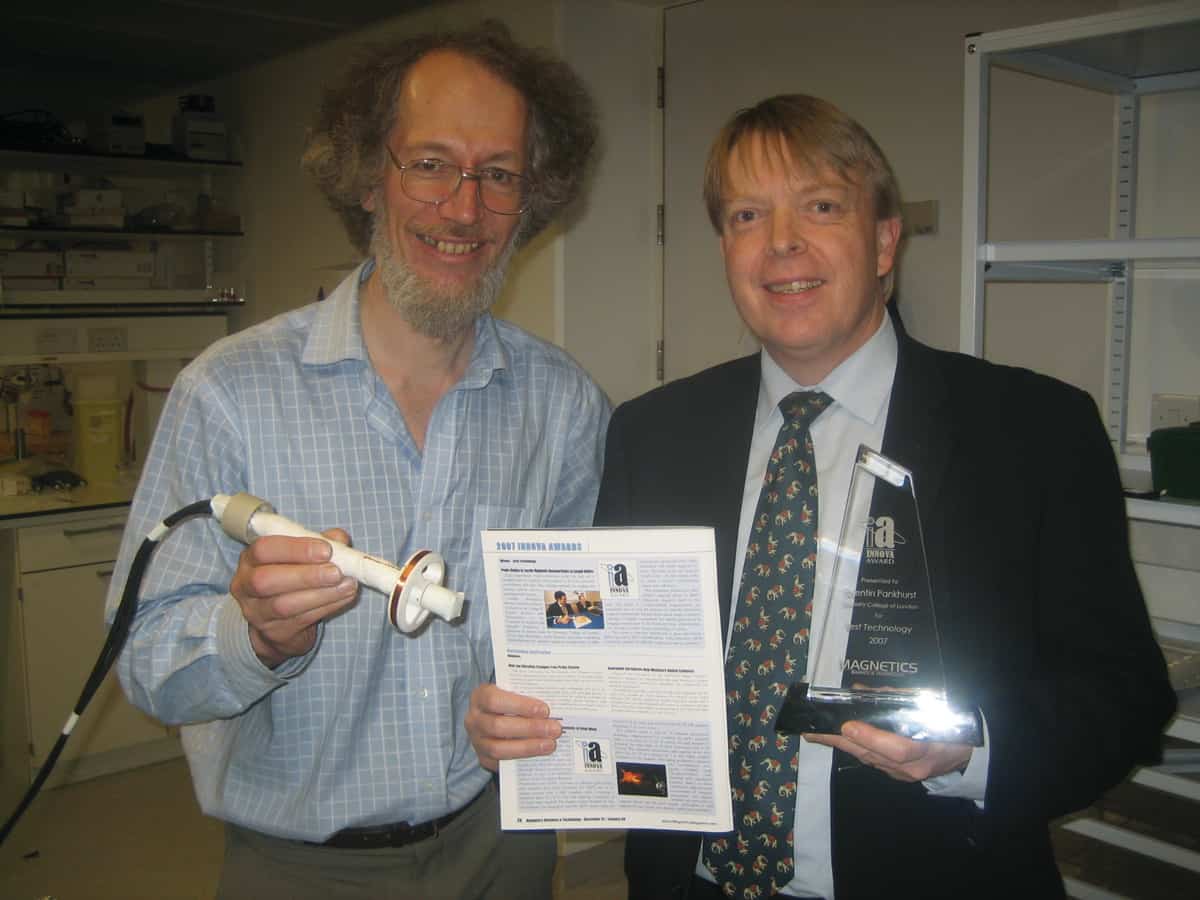
Magnetic tracking: Endomagnetics co-founders Simon Hattersley (left) and Quentin Pankhurst (right) developed a tool to help surgeons determine whether cancer has spread. (Image courtesy: Endomagnetics)
What’s the next step for the company?
Our magnetic nanoparticles have been used to treat more than 25,000 women so far, primarily in Europe, and Endomagnetics are in the process of obtaining approval from the US Food and Drug Administration (FDA). Getting approval for our product in Europe was actually not too bad, but the US process has been more lengthy because we needed to conduct a clinical trial of the products in the US first, and the pre-market approval process is more complex: the result was something like two crates full of paper that needed handling with a forklift. It would be a very big thing for Endomagnetics to get into the US, because it’s such a big share of the world market. Endomagnetics has also launched another product for marking breast tumours, and it is now on the market in Europe and the US. Most breast cancers are identified when they are only a few millimetres in size, which is good for the patient, but means that surgeons require some guidance to find and remove the cancer. The Magseed marker is placed in the tumour under radiological guidance before surgery and the surgeon uses Endomagnetics’ Sentimag probe to locate the marker and remove the tumour. The Magseed marker is in use at some of the top cancer hospitals in the US and featured on the BBC’s “Trust Me, I’m a Doctor” programme in January 2018.
What do you know now that you wish you’d known when you started?
I think I was a bit naïve about how the investment process works, particularly during the technology-transfer stage. The technology-transfer departments of universities are run as investment businesses. They are not the same as venture capitalists, but they are primarily interested in making money, so although they tend to promote themselves as being there to “help researchers commercialize their ideas” (and they do have that role), they can take an extremely hard-nosed attitude. It’s not nearly as straightforward as it is sometimes painted, and you can end up in a situation where you feel you are losing a massive amount of the company to the university. But there are so many things where you just have to live and learn.
Such as?
Well, Endomagnetics has actually gone extremely well in many ways. We’ve never had the dreaded “down round” – we’ve always been able to raise new investment at either the same share price or an increased share price, and that’s really quite important for the position of founders. My other company, Michelson Diagnostics, started off well, with some really cracking technology; the main product is a skin imaging system that can diagnose skin cancers without the need for a biopsy. But it’s never met the level of sales that it needed, and while prospects are now improving, the interim has been absolutely dire. Our larger investors completely lost patience with us: at one funding round they would only put in money on terms that essentially gave them the whole company. This means that the founders have ended up with next to nothing, and the early-stage smaller investors were completely wiped out. It’s a real shame that people who put in so much time, effort and intelligence into the development of something that is fundamentally good can essentially lose the lot. When we set the thing up I was thinking, “Well, it might fly or it might fail, but if it fails, so be it; we’ve given it our best shot.” What I wasn’t psychologically prepared for was that something in-between could happen, where the company keeps going but you’ve got no ownership or control of it anymore.
What led to that situation?
We didn’t realize how difficult it would be to sell our imaging technology to clinicians. It seems that in the field of dermatology, people are very, very conservative, and even with lots of research papers published to show how useful our system is, that doesn’t necessarily make people buy it. Apart from that, there’s the fact that developing medical devices and getting them to market is a long-winded process. Between the really complex technologies and the amount of regulatory stuff that’s involved, you can easily be talking 10 to 15 years from an initial idea through to actually making any money out of it. (Money is not the be-all and end-all, but it is some indication that you are actually getting the product out there.) That is far beyond the time horizons for a lot of investors: even assuming they come in when the idea has got a bit more sorted out, are they really going to want to wait perhaps eight to 10 more years before they’ve got any hope of getting their money back? The answer, probably, is “no”. That’s something particularly difficult with medical devices: finding investors who are prepared to go the distance with you. On a brighter note, Michelson Diagnostics is now selling a device that can image blood-vessel networks within the skin and is developing new applications in the treatment of burns and scars.
Do you have any advice for anyone thinking of starting a new firm in medical devices?
Talk to a lot of good people. It’s difficult to find the good people, but you can sniff them out eventually. There’s so much you need to know, frankly, so it’s very good to find some people who’ve been through it.
A new technique to print soft materials that undergo complex and rapid shape changes when a magnetic field is applied to them can be used to create tiny, untethered, robots capable of useful movement, such as rolling, jumping and grasping objects. Such objects might be used in a host of biomedical applications, like minimally invasive surgery or targeted drug delivery.
“Existing robots are often heavily tethered because they need to be actuated pneumatically, which makes them unsuitable for biomedical applications,” explains study lead author Yoonho Kim of the Massachusetts Institute of Technology. “Soft active materials that change shape in response to external stimuli, such as heat, light, solvents, electric and magnetic fuels, are better alternatives in this context because they can be controlled remotely. Magnetic fields are a particularly good stimulus option because they are a safe, fast and effective way to actuate magnetically responsive soft materials. The problem with most of the materials made so far, however, is that their shape change has been limited to simple bending or elongation.
“Our new way to print ferromagnetic domains in soft materials has allowed us to make far more complex shape-morphing structures that transform between different 3D shapes within fractions of a second.”
Toothpaste-like ink
Current methods to create magnetic materials rely on using “already cured” elastomers containing non-magnetized particles. These elastomers need to be temporarily deformed into the desired shapes and the embedded particles magnetized by applying a strong magnetic field in a certain direction. “One of key differences between these techniques and our approach is that we can directly inscribe magnetic polarity in complex 3D structures from the start to form complicated patterns of magnetic domains,” Kim tells Physics World.
Unlike previous methods, which were limited to simple geometries and simple deformation, the new technique is based on a 3D direct ink writing. “Toothpaste is the best way to describe the inks employed in this technique,” says Kim. “When we squeeze a tube of toothpaste, we in fact apply a shear-yield stress to it, which allows the paste to come out of the nozzle. The paste then maintains its cylindrical shape if we apply no further stress.
“Direct-writable ink materials also possess this rheological property and the ‘paste’ we used in our study is an ‘uncured’ elastomeric composite containing already-magnetized microparticles.”
Specific transformations in a magnetic field
The researchers, led by Xuanhe Zhao, of the Mechanical Engineering Department at MIT, made their ink by mixing microparticles of ferromagnetic neodymium-iron-boron (NdFeB) with silicon resin. To introduce the shear-yielding behaviour, they added fumed silica nanoparticles as a rheological modifier. “These particles form a network based on van der Waals interactions that helps the whole elastomer matrix maintain its shape,” says Kim. “It also helps the embedded magnetic particles to disperse throughout the matrix rather than agglomerating to form large clusters.
“We then apply a magnetic field to magnetize the embedded particles. Each microparticle (which is around 5 microns in size) becomes a strong permanent magnet.”
Before printing (that is, before squeezing the toothpaste-like composite out of a nozzle), the magnetic particles are randomly oriented. Thanks to the applied magnetic field, the particles reorient along the applied field direction during printing. “In this way, we can control the magnetic polarities of the magnetic fibres and thereby programme different regions of the printed material to undergo specific transformations in a magnetic field. For example, they can switch between different static shapes or morph dynamically in response to changing magnetic fields.
“A 3D construct built by arranging and stacking these fibres maintains its shape during the printing process. Once printed, we then cure the structure to make a rubber-like elastic solid, which is encoded with intricate patterns of magnetic domains.”
A hexapedal spider-like grabber
As a proof-of-concept, the researchers printed several structures with programmed magnetic domains capable of performing multiple tasks. One example is a hexapedal spider-like grabber. “By applying magnetic fields in different directions and of different strengths to different parts of its structure, this robot can be made to crawl, roll over, carry a drug cargo and even catch and release a fast-moving ball,” says Zhao.
“These demonstrations prove that our shape-morphing structures are strong and agile enough to interact with fast-moving objects. We hope our technology will allow us to develop untethered magnetically-remote-controlled magnetic soft robots that can operate in confined and enclosed spaces, like the human body.”
Indeed, the team, reporting its work in Nature 10.1038/s41586-018-0185-0, says that it is now focusing on developing specific biomedical applications for its technology. “This line of work will also require us to improve our materials and fabrication platform and advance magnetic field control for actuating such soft robots,” adds Zhao.
A bill aimed at restructuring the US’s approach to quantum computing research has been introduced by Kamala Harris, who is a US senator representing California. If passed by Congress, the Quantum Computing Research Act of 2018 would form a centrally-coordinated Defense Quantum Information Consortium that would include researchers from the academia, government and the private sector.
Elsewhere in Washington DC, Lamar Smith of the US House Science, Space and Technology Committee says he will introduce a bill to create the National Quantum Initiative. The member of the US House of Representatives from Texas says the initiative “will promote greater quantum research, standards, federal coordination, and collaboration among the key quantum players – laboratories, industry and universities”.
Harris says that the Defense Quantum Information Consortium will provide grants and assistance to scientists, with the goal of establishing the US as a global leader in quantum computing research. This, she believes, would give the nation a competitive edge in areas ranging from healthcare to national security.
Early stages
Developments in quantum computing may still be in their early stages, but experiments involving small numbers of qubits have already promised significant future advances in the technology. Much of this research has been done in California; carried out by institutions such as Stanford University and the University of Southern California, as well as companies including Google and Rigetti Computing.
Quantum computing is the next technological frontier that will change the world and we cannot afford to fall behind
Kamala Harris
Harris argues that coordinated support for these entities will accelerate the development of advanced quantum technologies. “Quantum computing is the next technological frontier that will change the world and we cannot afford to fall behind,” she says. “It could create jobs for the next generation, cure diseases, and above all else – make our nation stronger and safer.”
Smith adds, “Quantum computing could work up to millions of times faster than our conventional computing systems and solve problems we thought were unsolvable. The United States must get there first.”
The Defense Quantum Information Consortium would include officials from the Office of Naval Research, the Army Research Lab, the Office of Science and Technology Policy as well as the proposed National Quantum Initiative. The consortium would award competitive grants to researchers and administer research collaborations. It would also coordinate research in the US to ensure that different institutions do not compete with each other but work on separate tasks to accomplish larger-scale goals. The bill also seeks to ensure that research results are published at the lowest possible level of secrecy classification.
Harris says that the US faces a need for increased collaboration within quantum computing research. “Without adequate research and coordination in quantum computing, we risk falling behind our global competition in the cyberspace race which leaves us vulnerable to attacks from our adversaries,” she says. “We must act now to address the challenges we face in the development of this technology – our future depends on it.”
Current efforts to tackle sexual harassment in the sciences at US universities are failing and need urgent reform. That is the stark conclusion of a new report from the US National Academies of Sciences, Engineering and Medicine, released yesterday. The report finds that most targets of sexual harassment are women and it calls for a dramatic change in culture and awareness so that they can have fulfilling scientific careers in a safe environment.
The report — Sexual Harassment of Women: Climate, Culture and Consequences in Academic Sciences, Engineering and Medicine — defines three dominant forms of harassment. These are sexual attention, such as undesired verbal and physical sexual advances; sexual coercion, for example when favorable professional or educational treatment is conditioned on sexual activity; and gender harassment such as being subject to sexist remarks, put downs, and a degrading atmosphere.
This is all about moving away from a culture of compliance – a culture of complying with the bare minimum that the laws require — and instead moving toward a culture of change and a culture of respect
Lilia Cortina
Noting that sexual-harassment training has not been shown to change behaviour, the report makes several recommendations for addressing the issue in the sciences. These include making findings of sexual harassment more transparent as well as classifying it on a par with professional misconduct such as plagiarism. As a university’s legal advice would be to prioritize protecting the university when sexual misconduct has been raised, the report calls for universities to move beyond a strictly legalistic response to sexual harassment.
“The legal system alone is not an adequate mechanism for reducing or preventing sexual harassment,” says Lilia Cortina, a University of Michigan psychologist who co-wrote the report. “This is all about moving away from a culture of compliance – a culture of complying with the bare minimum that the laws require – and instead moving toward a culture of change and a culture of respect.”
Serious consequences
The report notes that the impact of sexual misconduct can be serious and include the victims experiencing depression and diminished academic performance. This can lead to them being criticized by colleagues who are unaware of, or indifferent to, the incident of sexual harassment. Cortina told Physics World that gender harassment is the most common form of misconduct that women face in the academic sciences. “More often than not sexual harassment is a put down, not a come on,” says Cortina, who has studied sexual harassment for over two decades.
The report highlights two university studies of sexual misconduct. The University of Texas System conducted a survey of its graduate and undergraduate students last year finding that 20% of women said they were harassed during their university science education. The other – carried out by the Pennsylvania State University System — found that 30% of women said they were harassed during undergraduate years and 40% during graduate studies. According to these surveys, the highest rate of harassment in the sciences is in medicine, with the Pennsylvania State survey noting that half of women have been harassed.
According to the report sexual harassment is more prevalent in areas dominated and led by men as well as when research is done at geographically isolated sites such as at observatories.
The “desert solar” idea has been around for some time, and several large concentrated solar power (CSP) projects are now running in North Africa. Morocco, for example, is building a series of CSP arrays covering about 1.4 million square metres, with Noor 1 already generating power from its 160 MW of capacity and expansion to 580 MW under way. One early vision was for some of the power from projects like this to be exported to Europe via undersea marine cables. Nothing has come of that so far (all the energy produced from the existing projects is used locally), but it has recently been revived by London-based TuNur Ltd. This company has filed a request to the Tunisian Ministry of Energy, Mines & Renewable Energy for the authorisation of a 4.5 GW CSP parabolic mirror focused solar project in the Sahara desert in southwest Tunisia. If fully realised, the development would cover 25,000 hectares. Phase 1 of the plant would cost $85m, and the power cost would, it was claimed, be $101/MWh. It’s a bold plan – especially the export idea.
TuNur said “the site in the Sahara receives twice as much solar energy compared to sites in central Europe, thus, for the same investment, we can produce twice as much electricity”. Power would be exported to the EU via three High Voltage Direct Current undersea cables. The first one planned would be 500 km to Malta, at a cost of $1.6bn, and with a capacity of 250–500 MW. Malta has an existing 100-mile link to Sicily, so the power could then go north through Italy. The second link, with 2 GW capacity, may go direct to Italy (near Rome) and the third, at almost 2 GW, to France (landed possibly near Marseilles).
However, some see projects like this as an exercise in “neo-colonial” land grabbing. The early pioneer in the field, the Desertec Foundation, had made clear that only some of the power from the CSP projects it wanted in North Africa was to be exported (just 15%), the rest being used locally. However, neo-colonialism was the political charge laid at the door of the Desertec Industrial Initiative (DII), launched in 2009 and promoted by various German banks and industrial consortia, which was looking to a €400bn investment programme. That project has now been abandoned: with renewables developing rapidly in Germany there was less need to look to imports and the costs of the project did seem high. So did the risks, given the increasing political turmoil in much of the MENA region. Most of the original DII partners left in 2014.
The political critiques within the EU may also have had an impact. Many “greens” in Germany thought that renewables should be developed on the smaller local community scale, as was being done in Germany, not via giant corporate projects like this, with all the neocolonial implications. From an African perspective, in 2011, Daniel Ayuk Mbi Egbe of the African Network for Solar Energy said, “Many Africans are sceptical about Desertec. Europeans make promises, but at the end of the day, they bring their engineers, they bring their equipment, and they go. It’s a new form of resource exploitation, just like in the past.”
In a 2015 critique of the Desertec Industrial initiative published in the New Internationalist, Algerian activist Hamza Hamouchene said: “The Sahara is described as a vast empty land, sparsely populated; constituting a golden opportunity to provide Europe with electricity so it can continue its extravagant consumerist lifestyle and profligate energy consumption. This is the same language used by colonial powers to justify their civilizing mission and, as an African myself, I cannot help but be very suspicious of such megaprojects and their ‘well-intentioned’ motives that are often sugar-coating brutal exploitation and sheer robbery.”
It didn’t help that most of the DII planning seemed to be done in the north, with little involvement from the south. Hamouchene argued that: “Any project concerned with producing sustainable energy must be rooted in local communities, geared towards providing and catering for their needs and centred around energy and environmental justice. Projects involving large transnationals tend to take a top-down approach, increasing the risk of displacement, land-grabbing and local pollution. Without community involvement, there is no guarantee that such schemes will help with alleviating poverty, reducing unemployment or preserving a safe environment. This has been a major failing of the Desertec initiative. Only a few actors from the south of the Mediterranean were involved in its development, and most of them represented public institutions and central authorities, not the local communities who would be affected by the project”.
In the event, as noted above, all the CSP projects that have so far gone ahead in North Africa have been just for local/national energy supply, with no long-distance export. TuNur would be the exception.
Will the new project be any better? Hopefully, yes. TuNur chief executive Kevin Sara told Climate Home that people in the region were supportive of the project. Indeed, he argued that building a solar industry would help redress the inequality between Tunisia’s wealthy coastal cities and underdeveloped interior. A press release on the application to the government quotes Mohamed Larbi Ben Said, chair of the management board for El Ghrib Collective, which owns the land, as saying: “This project provides the economic development necessary for our region and our community; it gives true value to quasi-desert lands in an environmentally sustainable way.”
The debate will no doubt continue. There are technical arguments on both sides. On one hand the project makes use of the best resources – where solar energy is most available. So North Africa makes more sense than northern Europe. And with transmission losses via HVDC supergrid links being low (2%/1000 km), a CSP input from Africa could help with balancing variable renewables in the EU. On the other hand, solar energy is available on every roof everywhere to some degree, distributed naturally and for free. Why spend vast resources collecting and concentrating it, to transfer over long distances to remote consumers? The grid links would be susceptible to failure or disruption e.g. by terrorists.
The political arguments are equally divided. In theory, it should be possible to build positive, fair trading links, aiding poor areas, rather than exploitative relations with supplier countries. Everyone could benefit and the global environment too. However, the EU would just be swapping reliance on imported oil and gas for imported solar electricity – the North could be held to ransom by the South. Shouldn’t each country sort out its own energy problems? Wouldn’t importing green energy be used as an excuse not to do so? We will have to wait to see what becomes of the TuNur initiative…and what impacts it has.
Meanwhile, the issues discussed above are not unique to western interventions in Africa. Certainly, there have been concerns about China’s pragmatic, “no strings” commercial investment approach to energy projects in Africa, in terms of proper attention being given to local accountability, environmental impacts and international trade rules. So far, China has invested around $6 billion in renewable energy projects in Africa, mostly hydro. But a worry in the West, with its professedly more nuanced social and environmental concerns, is that the Chinese approach will not only cut corners, but that this will enable it to corner markets and undermine western development efforts, and the West’s (rival) pursuit of markets.
All this and much more is explored in a new Pivot book I’ve produced with Terry Cook Renewable energy: from Europe to Africa, now out from Palgrave. We will be presenting a paper on this topic at the World Renewable Energy Congress at Kingston University, UK, which starts at the end of July.
While I’m mentioning new books, it would be remiss not to note that the fourth edition of the very popular OUP/OU text Renewable Energy, Power for a Sustainable Future, originally edited by my Open University colleague Godfrey Boyle is now out, this edition edited by Stephen Peake. It’s fully updated and includes a lot of new material.
This article was updated at 17.31 on 13/6/18 to correct the edition of Renewable Energy, Power for a sustainable future from fifth to fourth.
The UK is a world leader in life-sciences research. The life-sciences industry is also increasingly regarded as a vital part of the nation’s economy, with the government’s Industrial Strategy (published in November 2017) setting out many ambitious goals for the sector. However, until recently the process for translating top-class research and innovations into benefits for patients in the National Health Service (NHS) was not well developed. While the NHS has a long history of conducting research funded by research councils and medical charities, its track record of effective and appropriate working with industry partners has historically been much patchier. As little as a decade ago, both commercial and non-commercial research partners regularly complained of lengthy delays in setting up studies, and a relatively high proportion of studies failed to recruit enough patients to arrive at robust conclusions. It was clear that a much more systematic approach to conducting clinical research was needed.
This was the situation in 2006, when my organization, the National Institute for Health Research (NIHR), was founded with a mission to “improve the health and wealth of the nation through research”. It does this by funding high-quality research; training and supporting health researchers; providing world-class research facilities; and working with the life-sciences industry and charities across England. Crucially, our work involves patients and the public at every step: more than 650,000 patients participated in NIHR-recognized research studies in 2016/17. In terms of industry support, we give life-science firms unparalleled access to (and understanding of) the NHS research environment, helping them with study feasibility analysis, set-up, costings, contract negotiation and performance monitoring. This support covers a wide range of research types, from early-stage, translational research through to later-stage clinical trials in the NHS. By working collaboratively with the life-sciences industry in this way, the NIHR helps patients gain earlier access to breakthrough treatments and encourages broader investment in (and economic growth from) health research.
Improving radiotherapy
Although the initial focus within the NIHR was, understandably, on drug trials, we are now working with commercial partners from the pharmaceutical, biotechnology, diagnostics and medical-technology industries, as well as contract research organizations. As an example, consider the NIHR Manchester Biomedical Research Centre, which is part of a network of organizations set up to conduct experiments in areas that include medical imaging and radiotherapy. One of the Manchester centre’s projects is to identify and develop biomarkers that can predict the effectiveness of different types of radiotherapy and drug-radiotherapy combinations, while minimizing the risk of long-term side effects. The centre’s researchers are also working with industry and outside experts to overcome the operational challenges (such as build, installation, calibration and use) associated with embedding new technology in a clinical setting. In particular, they are part of an international consortium supported by Elekta, a major manufacturer of radiotherapy machines that is developing guidelines for targeting tumours more accurately using linear accelerators equipped with magnetic resonance imaging (MR-linacs).
Current radiotherapies are already personalized and adaptive to some degree, with treatments based on the size and shape of both the individual and the tumour, along with the tumour’s location. Depending on the latter, patients may be scanned during their radiotherapy and their treatment may be adjusted accordingly. MR-linacs have the potential to take this personalization a step further, because they make it possible to image the patient at the same time as each dose or “fraction” of radiotherapy is delivered (“see while you treat”). This means that clinicians can create adaptive radiotherapy plans that are fine-tuned to daily changes in the patient’s anatomy – something that could revolutionize cancer treatment by lowering the radiotherapy dose to surrounding organs, thereby reducing side effects and improving patients’ quality of life.
There is, however, one drawback, which is that the strong magnetic field of the MR scanner affects radiation treatment. Researchers on the MR-linac team at Manchester have recently published a review article (Clin. Oncol.29 662) describing the benefits and challenges of introducing this technology, and setting out progress to date. The review highlights how the MR-linac’s superior imaging capabilities when compared to current technologies (notably cone-beam CT imaging) will enable treatment plans to be adapted while a course of radiotherapy is being delivered. It also discusses the difficulties of developing imaging protocols for certain areas of the body, such as the lung, that are harder to image with MRI machines.
Tests and technologies
Both radiotherapy and imaging are traditionally very strong areas for physics-led medical research. Increasingly, however, they are not the only fields where physicists and engineers are playing prominent roles (often in partnership with industry) in the NIHR’s work. In September 2017, for example, the NIHR began setting up 11 new centres – known as medical technology and in vitro diagnostics co-operatives, or MICs – dedicated to developing technologies and tests related to conditions such as kidney and liver disease where patient morbidity is high. One of these MICs is at the Leeds Teaching Hospitals and University of Leeds. Its scientific director, Steve Evans, specializes in molecular and nanoscale physics and is developing physics-based tools for characterizing single cells. The position of the Leeds MIC at the interface between the physical sciences and medicine is exemplified by its work on novel nanomedicines for cancer therapy (see image below). The involvement of numerous industry partners in the Leeds MIC is typical of the programme as a whole.
Novel strategies: Nanoparticles targeting colorectal cancer cells. (Image courtesy: Yazan Khaled, MRC Clinical Research Fellow, University of Leeds)
Another area where physicists are getting involved in health research is the NIHR’s Invention for Innovation (i4i) programme, which funds translational research into healthcare technologies, devices and interventions that could benefit patients in areas of existing or emerging clinical need. The programme aims to reduce the risk of embarking on such projects, thereby making them more attractive to follow-on funders and investors, and the expected outputs are advanced or clinically validated prototypes.
Nick Stone, a medical physicist at the University of Exeter who has used this “pot” of funding for several projects, calls it “the ideal funding stream to enable us to translate our novel technologies into real clinical tools”. Stone’s most recent i4i-funded research project has been carried out in collaboration with experts at the University of Bristol and Gloucestershire Hospitals NHS Foundation Trust, and it uses lasers to detect oesophageal cancer. This type of cancer is often discovered so late that treatments (even successful ones) are very distressing, dangerous and difficult, but Stone and his team have found a way to tell the difference between healthy and diseased tissue by shining a low-power laser on the tissue and looking at the resulting inelastically scattered light – a technique known as Raman spectroscopy.
Before receiving the i4i funding, Stone and his collaborators had designed a miniature probe that slides through a channel in an endoscope and onto the surface of the oesophagus. In the lab, this device can assess the condition of oesophageal tissue almost instantly, determining whether it is healthy, pre-cancerous or cancerous without the need for biopsies. The i4i project currently underway aims to finish developing the probe and begin assessing the effectiveness of Stone’s technique in actual patients. The hope is that if this work can be translated from the lab into clinical practice, doctors will have a new way of diagnosing oesophageal cancer and pre-cancerous lesions much earlier, when treatments are more likely to be effective.
Physicists as brokers
I am a physicist myself, and although medical physicists and engineers comprise a relatively small proportion of the NHS workforce, I am passionate about promoting the value of a “physics-based” approach to medicine, in which quantitative models of disease are increasingly prominent. In the NHS, physicists can also play an important role as “brokers” between medical staff, basic scientists and industry experts. Another exciting development is the “Physics of Life” network, which is jointly funded by the Engineering and Physical Sciences Research Council and the Biotechnology and Biomedical Sciences Research Council, and which shows promise in promoting research at the interface between the biological and physical sciences. The Institute of Physics’ Biological and Medical Physics groups also have well-established programmes of multidisciplinary activity.
For such networks to function effectively, however, we need scientists who are enthusiastic about working across boundaries between disciplines and sectors; willing to spending time understanding the underlying science; and open to applying approaches developed for one discipline to other areas (an excellent and contemporary example of this is the application of statistical physics to problems in biology). Interdisciplinary areas such as medical physics and engineering, biological physics and biomathematics have come of age in recent years, and if we are to truly exploit their scientific potential, we need to continue the drive to create vigorous interdisciplinary networks.
Although the rewards of working with good medical collaborators are immense, collaborating with – or even finding! – busy clinicians is often fraught with frustration and difficulty. The demands on medics’ time are significant, so would-be collaborators – whether they are academics doing basic research or industry partners seeking clinical advice – need to adopt some simple, practical steps to ensure that collaborative discussions are made as easy as possible. In many circumstances, the best approach for UK-based collaborators will be to link to one of the elements of the NIHR infrastructure (see www.nihr.ac.uk), or its equivalent in Wales, Scotland or Northern Ireland. Academic physicists and industry partners who do this will find that there is plenty of enthusiasm to work together to realize the benefits of physics in medicine.
Safiye Celik, Josh Russell, Matt Kaeberlein and Su-In Lee.
There is currently no cure for Alzheimer’s disease (AD), a progressive neurodegenerative disorder that affects about 50 million people worldwide. Hallmarks of the disease such as toxic amyloid-beta (Aβ) plaque aggregation or abnormal tau protein tangles are well known. However, the molecular mechanisms underlying AD neuropathology remain unknown and it is critical to identify positive biomarkers. Researchers from the US have resorted to big data analysis to find potential targets for future AD treatments (bioRxiv 10.1101/302737).
AD and AI
A team from the University of Washington, led by Su-In Lee and Matt Kaeberlein, undertook the challenge of developing a probabilistic model-based framework for identifying robust expression markers. They called this framework DECODER (discovering concordant expression markers) and applied it to AD. The framework was built from a meta-analysis combining three different studies that used a total of nine brain regions to form a pool of data that the model could draw conclusions from.
In order to use the whole database, regardless of tissue origin, the researchers first had to establish common features in each brain region. Comparing the overlap between the top 1000 Aß-associated genes in each region allowed them to hypothesize that basic mechanisms leading to the development of the disease were common across regions.
Three scores were then generated to quantify gene-concordant associations with neuropathology levels (such as Aβ levels) in multiple brain regions. The researchers found that global concordance-based scores were statistically more robust and informative than scores computed from each individual area. The top-scoring genes were also more likely to be part of a 144-gene AD pathway taken as a reference, which highlighted the biological relevance of the designed scores.
Identification and validation
Repeating the same approach for other pathways related to neurodegenerative diseases revealed that of all the top-scoring genes tested, only NDUFA9 was common to all pathways. This gene is part of a Complex I subunit in the mitochondria and plays a big part in mitochondrial respiration and synthesis of adenosine triphosphate (ATP).
To confirm the role of NDUFA9 in AD, the team carried out experiments on an animal model. A transgenic worm line was engineered to develop AD-like pathologies in its muscle cells at a specific stage in its life cycle. This leads to observable paralysis of the worms. By feeding the worms with bacteria that delivered an interfering RNA (RNAi), the researchers were able to inhibit the expression of NDUFA9.
The results were highly encouraging – RNAi feeding strongly reduced Aβ plaque toxicity and significantly delayed any paralysis. Further experiments showed that altering any of other 13 Complex I subunits also delayed paralysis and significantly suppressed Aβ toxicity. This puts further emphasis on the importance of mitochondrial function in the development of AD.
Could it work in humans?
The next big challenge will be to replicate these results in humans. There are some major differences between human mitochondria and those of the worms used in the study, which makes the extrapolation of these results in worms to humans far from straightforward. More importantly, while partial inhibition of Complex I might be protective, Complex I also plays an integral part in the correct functioning of mitochondria. A balance will have to be achieved.
This study introduces a framework that will only get more powerful with time. As more AD studies on brain gene expression and neuropathology are published, the learning sample size of the framework will increase. The framework also has the potential to be applied to other pathologies such as cancers.
But is the term geoengineering even appropriate? Alan Robock of Rutgers University, US, explained that although it’s been in use for several years, the name geoengineering could conjure up the idea that a solution was calculated precisely and has known outcomes. Climate intervention is an alternative; this wording allows for the fact that we can’t predict exactly what will happen following any action, or what amount or combination of actions are best. This is a relatively new science with unknown unknowns, making it difficult to calculate global outcomes and to communicate the related risks to society.
Geo-engineering strategies fall into two groups: carbon dioxide removal (CDR) and solar radiation management (SRM). Afforestation and land management are soft approaches to CDR; Chris Juhlin of Uppsala University, Sweden, suggested that such techniques are low-risk. They don’t permanently store carbon, however, and aren’t enough to solve the problem on their own. At present, we are losing forest, so the first step is to stop cutting down trees. Ocean fertilisation could increase biological activity and uptake of carbon dioxide, but this is higher risk. An alternative is carbon capture and storage (CCS). This needs large-scale infrastructure and big investment, and would provide a more permanent removal of emissions. But how prepared are we to build such installations?
After presenting the current SRM technologies, Robock concluded that there are currently no low-risk technologies, and further research is needed to quantify risks. And what about the behavioural impact if we employed one or a combination of these “solutions” to climate change? Is there a risk of moral hazard, where we neglect mitigation strategies since technology is working against the natural system to prevent warming of the planet? Or perhaps making these technologies visible would have the opposite effect and lead society to increased mitigation effort.
According to Juhlin, without CCS we will breach the 2 °C warming threshold. Robock concluded that current emitting is a risk itself, so it is a risk-risk decision. Geo-engineering strategies that act to cool the planet and mitigate against global warming exist, but the question remains, how should the approach be implemented, if at all? There are over 7 billion people on Earth. What temperature should the Earth’s climate be set to? And who has the right to dictate what temperature this should be? Robock, along with Frank Schilling of Karlsruhe Institute of Technology, Germany, agreed that there would be winners and losers as both climate change and any geoengineering would vary by region. Understanding the risks is crucial and, as yet, there are no low risk solutions that could tackle this issue permanently and in full.