Printed metal-polymer conductors make stretchy biodevices

Stretchable biocompatible devices can be used in a host of medical applications, but most stretchable conductors made to date are toxic, expensive, difficult to make and break or degrade easily. A team of researchers at the National Center for Nanoscience and Technology in Beijing, China, has now printed the first flexible metal-polymer electronic circuits that are at once highly conductive and stretchable, biocompatible, non-toxic and easy and cheap to make. The circuits, which are made of eutectic gallium indium particles embedded in a polymer matrix, can take most 2D shapes and could find use in motion sensors, wearable glove keyboards, soft robotics and implantable devices to name but a few applications.

Eutectic gallium indium (EGaIn) is a liquid metal and can thus withstand large deformations. The material also boasts a high conductivity and is much less toxic than other metals that are also liquid at room temperature, such as mercury. Since it cannot be directly patterned using conventional techniques like stencil or ink-jet printing (its surface tension is too high), the researchers, led by Xingyu Jiang, embedded particles of the liquid metal onto the surface of a polymer (PMDS) instead. They did this by casting and peeling off steps rather than using a marker or nozzle.

The result is a printed conductive material with a good stretchability of 2.316 S/cm at a strain of 500% over more than 10 000 cycles of repeated stretching. Another advantage of the technique employed to make it is that the liquid metal particles remain on the surface of the substrate (rather than being buried deep inside), which means that functional electronic components can easily be mounted on top of them.

Many applications

The researchers used the printed metal-polymer conductors in a variety of applications, including in sensors for wearable keyboard gloves, motion sensors and in electrodes for electroporation (stimulating the passage of DNA through the membranes of live cells).

“The applications of the metal-polymer conductors depend on the polymer employed,” says study first author Lixue Tang. “We cast super-elastic polymers to make metal-polymer conductors for stretchable circuits or biocompatible and biodegradable polymers when we want to make implantable devices. In the future, we could even build soft robots by combining electroactive polymers.”

The technique can be used to make printed materials that can conform to any 2D shape, say the researchers. And they can be made in different thicknesses with varying electrical properties depending on the concentration of the liquid metal inks employed. This means that they could be used in a host of biomedical applications, including flexible patches that could even be wrapped around the heart to monitor and treat cardiac disease.

Indeed, the researchers say that they are now planning to fabricate a biodegradable cardiac patch patterned by their metal-polymer conductor electrodes to enhance the conductivity of myocardial cells and monitor electrophysiological signals. The applications are many: “Wearable electronics, implantable devices, soft robotics, future fabrics, virtual/augmented reality, flexible displays, artificial organs, brain-computer interfaces, and wherever biocompatible, soft electronics is necessary,” says Tang.

The research is detailed in iScience 10.1016/j.isci.2018.05.013.

Silicon carbide LEDs make bright single photon sources

A variety of new colour centres (luminescing crystal defects that can emit individual photons) have been found in light-emitting diodes made from silicon carbide (SiC). The result confirms once again that it is a promising single-photon source and a good material out of which to make quantum bits (qubits).

Single-photon emitters operating at room temperature could be used in on-chip quantum communication applications, and as a source of “flying” qubits for quantum computers. Such computers exploit the ability of quantum particles to be in a “superposition” of two or more states at the same time unlike classical computers that store and process information as “bits” that can have one of two logic states – “0” or “1”

Quantum computers could, in principle, outperform classical computers on certain tasks, like code decryption for example, because their processing speed should increase exponentially with the number of qubits of information involved. In reality, it is difficult to create even the simplest quantum computer, however, because the fragile nature of these quantum states means that they are easily destroyed and are difficult to control.

Colour centres in SiC

In recent years, there have many studies on point defects (or colour centres) in SiC, a material that is already widely used in high-power electronics thanks to its high thermal conductivity and high maximum current density to name but two good properties. These defects possess electron spin states that can be coherently controlled and manipulated as qubits using light.

Researchers led by Jorg Wrachtrup of the University of Stuttgart in Germany have now confirmed these previous findings.  They have discovered a variety of new colour centres in lateral p-i-n diodes made from a polytype (a crystal structure) of silicon carbide called 4H-SiC that contains naturally occurring defects (or “divacancies”). These defects, which correspond to a missing silicon atom next to a missing carbon atom in the crystal, are very much like the defects in diamond known as “nitrogen-vacancy centres” – that form when a nitrogen impurity finds itself next to a missing carbon atom in the diamond lattice.

Both types of defect form a muti-electron system that has a net angular momentum (or spin) that can be aligned either parallel (“1”) or antiparallel (“0”) to an applied magnetic field, and can so be exploited as a qubit. SiC has an advantage, however, in that it is CMOS-compatible and so could more easily be scaled up to larger systems than hard diamond can.

Photoluminescence experiments

The newly-discovered centres in 4H-SiC emit non-classical light in the visible and near-infrared range. One type of defect can even be excited using electrical means. This means that it might be integrated into compact electronics devices as there would be no need for an additional bulky laser system to optically excite it.

As in previous experiments on diamond nitrogen vacancy centres and SiC point defects, Wrachtrup and co-workers measured the spin of the divacancies in 4H-SiC using photoluminescence. This involved shining laser light onto the sample and collecting the fluorescence light subsequently emitted by it. And, as for diamond nitrogen vacancies, the fluorescence of the silicon carbide divacancies depends on their spin state, so it is possible to “read out” the state of the qubits in this way.

“In this work, a key concept is the generation and manipulation of individual particles of light – photons,” says Marina Radulaski of Stanford University, who was not involved in this study.  “The researchers have not only discovered new colour centres in silicon carbide that can generate single photons at high rates, they have also succeeded in integrating these with electronic elements that can turn the light emission on and off. In a way, they have developed an early prototype of a ‘quantum telegraph’.”

Sophia Economou of Virginia Tech, who was not involved in the study either, agrees: Electrically operated single photon sources are of interest for miniaturized quantum devices and silicon carbide is an especially promising material for such devices thanks to its industrial maturity, compatibility with CMOS fabrication techniques and low cost. Despite its maturity, however, new colour centres are still being discovered in SiC and these will provide a range of properties in terms of emission frequency, spin structure and photon polarization.

“Wrachtrup and colleagues’ work opens new directions both for device engineering and for basic physics studies,” she adds. “It will be good to further understand the nature of the newly discovered colour centres — their composition, their spin structure, their dynamics under optical versus electrical excitation, and whether they can provide useful transitions for spin-photon entanglement interfaces.”

Full details of the research are reported in Applied Physics Letters 10.1063/1.5032291.

Ambitious climate targets could protect millions from heat waves

The degree to which policies succeed in curbing the rise in global temperature to below 2.0 °C could have a profound effect on our exposure to heatwaves. As many as 420 million fewer people would see frequent extreme heat waves if the rise can be limited to 1.5 °C, based on recent simulations.

Both 1.5 °C and 2.0 °C scenarios indicate hot spells ahead. For example, in a 1.5 °C world, 13.8% of the world population will be exposed to severe heat waves at least once every 5 years. But this fraction becomes nearly three times larger (36.9%) under 2 °C warming, which – as the researchers point out – corresponds to a difference of around 1.7 billion people.

A very high-resolution global model designed to resolve local details and small-scale processes provides the foundation for the analysis. The work was performed by a team based at the European Commission’s Joint Research Centre, ETH Zürich, Switzerland, and the Swedish Meteorological and Hydrological Institute.

Resolving atmospheric conditions at high-resolution pushes up the amount of time needed to generate results; the group notes that its study is based on a relatively limited number of model simulations. However, the team believes that over the regions most affected by a future increase in intensity and frequency of extreme heat waves – Africa, South America, and South-East Asia – its results are statistically significant and robust.

Regional maximum temperature on land is expected to increase more than mean global temperature. Together with greater temperature variability, this could result in more intense and longer heat waves. But heat waves are not the only impact of rising global temperature. To be better prepared, institutions need to consider a wide range of events.

“We are working to assess, in an integrated and consistent way, the risks of multiple climate hazards that also include floods, droughts, forest fires, coastal surges and sea level rise to evaluate different adaption options,” says Alessandro Dosio of the EC Joint Research Centre. “The aim is to quantify the risk of these hazards in current and future time-frames taking into account different climate change scenarios to understand the possible impact on people and critical infrastructures.”

High-resolution models such as the simulations used in the current study could help identify regions where adaptation options may be needed in more detail.

Dosio and colleagues presented their work in Environmental Research Letters (ERL).


Super spins appear in carbon sheet

Researchers in the US and Japan say they have observed spin superfluidity and very long distance spin transport in an antiferromagnetic insulator made from graphene for the first time. If confirmed, the new result could bring nearly dissipation-less spin-transport devices, which could be used in information processing and storage applications, a step closer to reality.

Spintronics is a technology that makes use of the spin magnetic moment of the electron and it could be used to make devices that are smaller and more energy efficient than conventional electronics. Individual electron spins – which can point up or down – could also be used to store and transfer information in quantum computers.

Practical spintronics devices have proven to be very difficult to make, however. This is because electron spin does not travel very far in most materials, which means that information being carried by the spins is quickly lost. The main culprit here is the “spin-orbit interaction”: as electrons travel through a material, the relative motions of the positively charged atoms create magnetic fields that have the effect of rotating the electron’s spin.

Researchers have recently started to look into transporting spin current in antiferromagnetic insulators (AFMIs). The energy band gap in these materials prohibits such spin-orbit interactions while supporting pure spin current. More importantly still, an effect called “spin superfluidity” has been predicted to exist in them.

“Spin superfluidity is the coherent spin supercurrent that allows for dissipation-less transport, similar to the flow of electrons or Cooper pairs without resistance (as in a superconductor) or of atoms (as in a superfluid),” explain Petr Stepanov, Jeanie Lau and Marc Bockrath of the University of California at Riverside and Ohio State University, who led this research effort. “Much progress has been made here, but the best experimental evidence for such an effect so far has been limited to thermally excited magnons (spin waves) in oxide-based AFMIs. These still suffer from short spin decay lengths of around 0.2 to 10 nm though.”

Enter graphene

“Interestingly, when a strong magnetic field is applied to an undoped (charge-neutral) piece of monolayer graphene it becomes an AFMI containing opposite spin polarizations (that is, spins pointing in opposite directions) on alternate carbon atoms in the material’s hexagonal lattice,” says Lau. “In our work, we used an all-electrical circuit originally proposed by So Takei and colleagues of Queens College, City University of New York, in 2016, to realize the first robust, long-distance spin transport through this AFMI.”

Working with Allan MacDonald’s team at the University of Texas, Austin, Roger Lake’s group at the University of California, Riverside, Dmitry Smirnov at the National High Magnetic Field Lab, and Takashi Taniguchi’s group at NIMS, Japan, Lau and colleagues used graphene in the quantum Hall regime. This occurs when charge carriers like electrons are confined to a 2D plane, as they are in graphene, and subjected to a perpendicular magnetic field in the Z-direction. To make their measurements, the researchers contacted spin injecting and detecting leads to quantum Hall edge states, which lie adjacent to the antiferromagnetic region in the material. They then applied a voltage between these spin-up and spin-down states.

“We measured non-local voltage signals across a 5-micron long AFMI region, a distance that is 10to 10times longer than previously measured spin current decay lengths. In control experiments, the signal disappears when the filter regions of the leads are tuned away from these edge states.

“Among the possible transport mechanisms to explain this effect, our data are most consistent with spin superfluidity in the so-called Néel texture of the AFMI that allows for dissipation-less transport of pure spin current,” she tells Physics World.

“This is a new field, and we hope that our experiments are the first of many,” says Lau. “There are still many questions that need to be answered following our results. For example, how efficient is our spin injection technique? And could we observe similar spin transport in bilayer graphene? This would theoretically allow us to control spin directions because electrons residing on the top and bottom layers in this material have opposite spin polarizations. By using an electric field, we could ‘persuade’ the electrons to reside on one of the two layers and so switch their spin directions.”

Full details of the research are reported in Nature Physics 10.1038/s41567-018-0161-5.

Avoiding strife on Mars, the physics of football, calling all psychic pets

Notes in the fridge, a chores rota and other signs of housemate strife could be things of the past thanks to a new space programme launched by SpareRoom, which is a UK-based flat and house sharing service. SpareRoom has teamed up with former NASA astronaut Terry Virts to help housemates get along. Virts should know how to cooperate in a cramped space because has commanded the International Space Station (ISS).

In his capacity as “House Share Goodwill Ambassador”, Virts gives some top tips in the above video.

Speaking of the World Cup

The 2018 FIFA World Cup kicks off this week in Russia and we couldn’t help jumping on the bandwagon by devoting much of our weekly podcast to the beautiful game. Find out what position Niels Bohr played on the football pitch and why “The physics of football” is the most popular article every published in Physics World.

Can physics predict which country will win the World Cup, or perhaps the family pet stands a better chance? If you are keen on the former, see “Prediction of the FIFA World Cup 2018 – A random forest approach with an emphasis on estimated team ability parameters” by physicists in Belgium and Germany. If you would rather put your trust in a hamster, check out Psychic Pets.

CERN begins major upgrade to the Large Hadron Collider

Work has begun on a major upgrade to CERN’s Large Hadron Collider (LHC) that will see the luminosity increase by a factor of 10. The High Luminosity Large Hadron Collider (HL-LHC), which will be switched on by 2026, will enable the collider’s experiments to boost the amount of data they collect to improve the possibility of detecting new particles. The HL-LHC’s components are expected to be ready in 2023 and installation will take around 30 months. The LHC will be turned off during that process.

It’s a big upgrade and a good investment

Lucio Rossi

The HL-LHC project began in November 2011 and two years later became a top priority by the European Strategy in Particle Physics. CERN approved the design report in 2015, after which researchers and engineers started building and testing prototypes at the lab.  Costing around SwFr1.5bn (£1.1bn), the upgrade will require significant modification to the beam line around the two largest LHC detectors – ATLAS and CMS. This will involve upgrading about 1.2 km of the 27 km ring by including 11-12 T superconducting magnets and superconducting “crab” cavities — that reduce the angle at which the bunches cross — to increase the number of collisions at the two detectors.

Certain parts of the LHC ring will also be upgraded with new dipole magnets so that the LHC can handle the increase of luminosity. “It’s a big upgrade and a good investment,” says Lucio Rossi, the Italian physicist who is HL-LHC project leader. “It will double the lifetime of the LHC up to 2040.”

Rossi adds that as well as testing new collider technologies and improving the precision of existing measurement of known particles, the HL-LHC will also increase the discovery range of new particles by around 20-30% over the current LHC. This will make the LHC more sensitive to heavier supersymmetric particles. “The HL-LHC will be a bridge between the LHC and the next big collider,” says Rossi. “It will tell us where to go next.”

Cost of fossil fuel investment is too high

European and Chinese scientists have identified a simple new way to become poor: fossil fuel investment. Not only could it leave you without a penny to your name. It could perhaps precipitate a global financial crash within one generation.

Coal, oil and natural gas are already huge investments. The International Energy Agency foresees price rises until 2040, and investor confidence is high. But researchers from the Netherlands, the UK and Macao don’t see it that way. They warn in the journal Nature Climate Change that, whatever the markets think, and whatever governments do, change is on the way.

Other forces are now driving global power and transportation in directions that suggest a dramatic decline in demand for fossil reserves. These will become what the money markets call “stranded assets”, and their value will slump some time before 2035.

And this bursting of what researchers call “the carbon bubble” – a reference to a three-centuries old financial disaster known to historians as the South Sea Bubble – could wipe between one and four trillion US dollars off the global economy. The financial crash of 2008  was triggered by a loss of a mere $0.25 trillion.

The scientists base their conclusion on a computer simulation known by the migraine-inducing acronym E3ME-FTT-GENIE, which is short for Energy-Environment-Economy Macroeconomic-Future Technology Transformations Grid Enabled Integrated Earth. They say it is the only such model that looks at the big picture: the macroeconomy, energy, the environment and global energy and transport systems according to both sector and geography.

Their argument is that the world is heading towards greater fuel efficienciesrenewable energy and low carbon technologies, whatever governments and the money markets may think.

In 2015, in Paris, 195 nations vowed to contain global warming – driven by greenhouse gases emitted from fossil fuel combustion – to “well below” 2°C above the historic levels. Economists and climate scientists have repeatedly warned that fossil fuels would be a bad bet. There has been evidence since the Paris Agreement that national and international action so far taken is not enough: the world could be heading for at least a 3°C rise this century.

The implication of the latest study is that, unless the world faces this reality, and switches to low-carbon investments, the global economy could suddenly collapse.
“Our analysis suggests that, contrary to investor expectations, the stranding of fossil fuel assets may happen even without new climate policies. This suggests a carbon bubble is forming and is likely to burst,” said Jorge Viñuales, of the University of Cambridge, and one of the authors.

“Individual nations cannot avoid the situation by ignoring the Paris Agreement or burying their heads in coal and tar sands. For too long, global climate policy has been seen as a prisoner’s dilemma game, where some nations can do nothing and get a free ride on the efforts of others. Our results show this is no longer the case.”

There is a catch: suppose nations become aware of the danger. A sudden push to fulfil the 2°C promise, combined with declines in fossil fuel demand but continued high output of fossil fuels, could trigger a collapse that would wipe $4 trillion off the global balance sheets.

Canada, Russia and the US would see their fossil fuel industries collapse. Fuel-importing nations such Japan, China and most EU countries might gain, especially if they had invested in low-carbon technologies to create jobs and boost gross domestic product.

“If we are to defuse this time-bomb in the global economy, we need to move promptly but cautiously. The carbon bubble must be deflated before it becomes too big, but progress must also be carefully managed,” said Hector Pollitt, of the University of Cambridge, and another of the authors.

“If countries keep investing in equipment to search for, extract, process and transport fossil fuels, even though their demand declines, they will end up losing money on these investments on top of their losses due to limited exports,” said Jean-François Mercure of Radboud University at Nijmegen in the Netherlands, and of Cambridge, who led the study. “Divestment from fossil fuels is both a prudent and necessary thing to do.”

Software creates personalized ‘virtual brain’ models

© AuntMinnieEurope.com

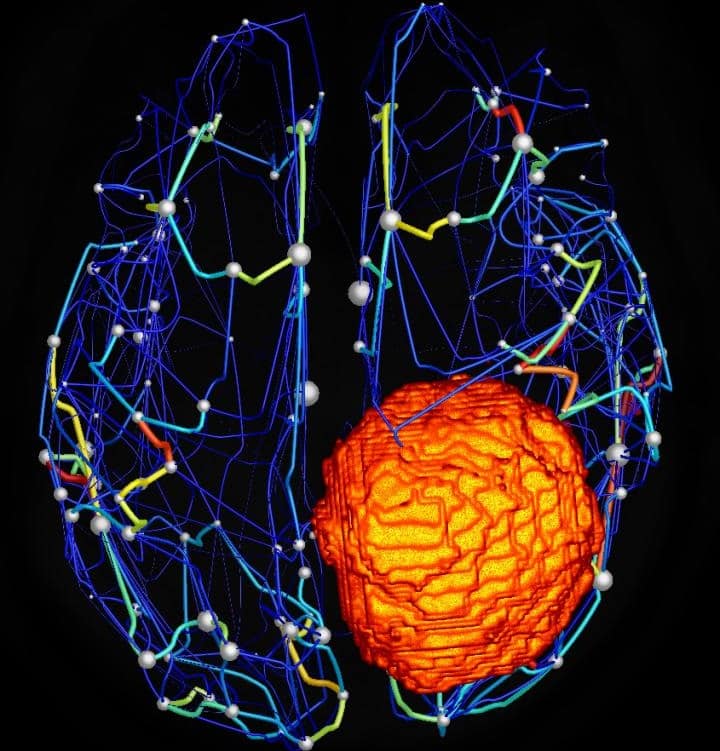
Researchers from Belgium have created virtual models of the brain individually tailored to patients’ functional MR images (fMRI), according to an article published online in eNeuro. These models can predict the effects of brain tumours and may help improve surgical planning for their removal (eNeuro 10.1523/ENEURO.0083-18.2018).

When planning for brain tumour resection, clinicians typically examine functional MR images to identify key areas around the tumour as they develop a surgical strategy. But the complex dynamics of the brain make it difficult to predict postsurgical outcome based on the limited information these images provide.

One recent measure to improve the visualization of the brain has been to create more comprehensive brain models that simulate neural activity. These models can integrate fMRI data with the biophysics of the brain to predict brain function and help determine the optimal surgical approach, wrote senior author Daniele Marinazzo and colleagues from Ghent University.

Structural brain network

To test the viability of this technique, Marinazzo and colleagues used open-source software called the Virtual Brain to construct personalized brain models. They used neuroimaging data from 25 patients who had brain tumours and who underwent an MRI exam at Ghent University Hospital between May 2015 and October 2017. They also made similar brain models of 11 patients without brain tumours.

The investigators found that studying these models allowed the surgical team to assess brain function in all of the patients, as well as accurately predict the effect of tumours on brain function. Specifically, the models revealed that the number of connections in the tumour regions of the brain was much lower (p = 0.0007) and more variable (p = 0.01) than in non-tumour areas.

“Reliable prediction of patient-specific large-scale brain dynamics would open up the possibility … to investigate what types or extent of damage the brain can withstand, and conversely, which kind of distortions can be expected after brain lesions, including those purposively induced by surgery,” the authors wrote.

One of the main limitations of the study was its small sample size, but the authors plan to expand their research in the future and look into whether the virtual brain model can reliably predict postsurgical brain function.

“This [future research] would be a major step toward presurgical virtual exploration of different neurosurgical approaches and to identify an optimal surgical strategy,” they wrote.

  • This article was originally published on AuntMinnieEurope.com © 2018 by AuntMinnieEurope.com. Any copying, republication or redistribution of AuntMinnieEurope.com content is expressly prohibited without the prior written consent of AuntMinnieEurope.com.


Silicon nanowires sense single ion channel currents

“Just like the transistor is the basis of computers, the ion channel is the basic element in many processes in biology,” explains Peter Burke, who heads the nanotechnology group at the University of California at Irvine. He lists some of the aspects of the body they affect, which include neurons (and hence human thought) but also a variety of other processes, such as synthesis of the energy-storage molecule ATP in mitochondria. In fact, ion channels are crucial to so many physiological functions that they are the target of 25% of drugs produced, yet the technology for studying them using external current amplifiers has remained largely unchanged for 30 years. “Since we can manipulate and sense individual electrons in circuits, I thought it would be interesting to apply some of this knowledge in biology,” adds Burke.

Unsurprisingly, Burke and his colleagues are not the first to try to measure the currents of single ion channels. However, these measurements require a wide range of expertise covering both nanowires and physiology. Fortunately, Burke who holds multiple professorships at UCI was able to draw on his expertise in both these fields, as well as the extensive knowledge and experience of his collaborator Mark Reed from Yale University alongside co-authors Weiwei Zhou, LuyeMu, and Jinfeng Li.

“Previously people were looking at the action potential on a membrane, and treating the membrane like a capacitor;” says Burke.  “This looks at a single channel so it’s a more difficult measurement.” Their nanowire device is the first to integrate the current measurement into the ion channel, which should ultimately allow much greater measurement sensitivity.

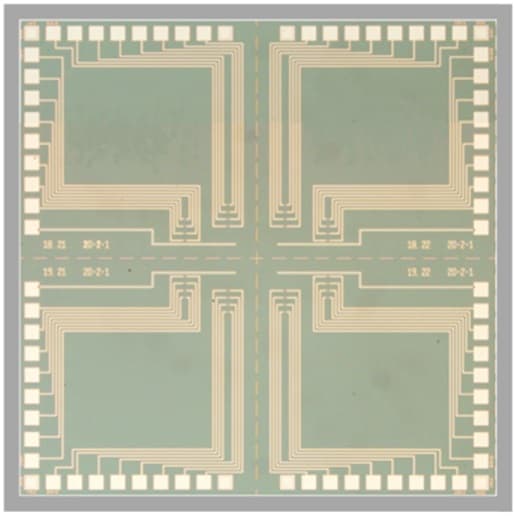
Optical micrograph of a chip containing nanoribbon devices

Sensing success

The researchers first demonstrated the ability to measure single ion channel currents using carbon-nanotube and graphene devices. However, Burke and his colleagues were keen to demonstrate the capability in a top-down fabricated silicon device that could leverage on the decades of development in that industry. This meant finding the right surface chemistry to attach the lipid bilayers, which act as artificial cell walls, to the silicon nanowire. They could then observe the behaviour of ion channel molecules on these bilayers.

They tested the device with two text book ion channels – alamethicin and gramicidin A. Both have antibiotic functions and work by making the bacterial membrane permeable. Ion channels responsible for vision and other neural functions have additional voltage and light dependencies and multiple states making observations of their behaviour more complicated. In their study the researchers observed the opening and closing of the gramicidin A ion channel and three of the four states in alamethicin.

The channels can open and close due to conformational changes in response to thermal fluctuations or interactions between peptides and the cell wall or by admitting some ions and blocking others. “One of the hopes of this work is to be able to apply this technology to answer in more detail: How do ion channels function?” says Burke.

While the behaviour of these ion channels was not affected by being integrated into the sensor, he points out that for larger ion channels that extrude into the space between the nanowire and membrane, this could be an issue. To tackle this the team have been able to demonstrate how to vary the space between nanowire and membrane with a tether.

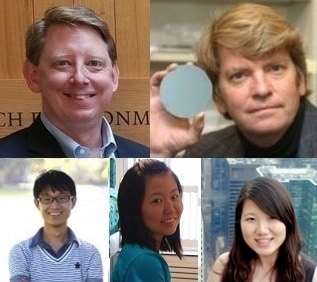
The researchers

Dynamic modelling

Different ion channels also have different opening times, leading to different “spike widths” in the observed current. “To be able to understand the dynamic behaviour of the ion channel itself we need to understand the behaviour of the ion channel within the circuit it makes with the sensing device,” Burke tells Physics World Materials. “We have a comprehensive circuit model that explains the connected system, which I call the ‘modified Hodgkin-Huxley model’.”

Alan Lloyd Hodgkin and Andrew Fielding Huxley won the Nobel Prize in Physiology and Medicine in 1963 for their mathematical description of how ionic transport gives rise to action potentials and allows them to propagate and carry signals through the neural system, enabling movement and other physical responses to sensory input. In the Hodgkin-Huxley model circuit elements represent different parts of the cell – for example a capacitor represents the lipid bilayer; a voltage- and time-dependent conductance represents the ion channel. Since the capacitance of the nanowire device is comparable to the lipid bilayer, Burke and co-authors could add this as another capacitance in the circuit model of the cell.

Next the team will look into scaling up the system to run millions of devices on a chip in parallel. They are also interested in measuring single ion channels from specific systems such as the heart, brain and other organs. Full details are reported in Nano Futures

Astrophysicists pin down jet from merging neutron stars

The short gamma-ray burst (GRB) that followed gravitational waves from the GW170817 neutron star merger was created in an astrophysical jet pointing 30° away from Earth, according to computer simulations by astrophysicists in the US and Italy.

Carried out by Davide Lazzati of Oregon State University and colleagues in the US and Italy, the simulations of the merger also offer an explanation for why the short GRB was much weaker than expected.

Typically lasting for less than 2 s, short GRBs and their origins have puzzled astronomers for decades. An important clue came in 2005 when X-rays and visible light were detected from the sources of two short bursts. This provided evidence that a short GRB can be created by the merger of two neutron stars to form a black hole.

The idea is that the merger creates two astrophysical jets of fast-moving material that flow out in opposite directions from the poles of the rapidly spinning black hole. Violent interactions that occur within the jet just after the merger create a short GRB. As the jet moves outward and slows down, a radiation afterglow at longer wavelengths is emitted.

This model was backed up by the GW170817 event, in which a short GRB was observed at the same time as the gravitational waves from two merging neutron stars.

However, the GW170817 observations did not fit exactly with what astrophysicists expected from a neutron-star merger. For one thing, the short GRB was much fainter than predicted by theory. Furthermore, the afterglow observed in the days and weeks after the short GRB increased in brightness over time – which was not expected.

Increasing visibility

Now, Lazzati and colleagues have done computer simulations of how radiation is emitted from such a jet and concluded that we are viewing the object 30° away from the direction of the jet. Most of the luminosity of the short GRB is expected to be in a relatively tight beam along the jet, which is why it appeared weak on Earth. Conversely, as the jet blasted out into space it spread out, which means that more of it is visible on Earth. This, say the researchers, is why the afterglow brightened over time.

Writing in Physical Review Letters, the team also estimate that about 5% of short GRBs that are detected in coincidence with gravitational waves will involve jets that point directly at Earth.

Copyright © 2026 by IOP Publishing Ltd and individual contributors