Physicists working on the Mini Booster Neutrino Experiment (MiniBooNE) at Fermilab in the US have released new results that they argue provide strong evidence for the existence of a new type of particle known as a sterile neutrino. The researchers say that their data are fully consistent with a previous hint of sterile neutrinos that emerged more than 20 years ago from the Liquid Scintillator Neutrino Detector (LSND) at the Los Alamos National Laboratory in New Mexico, although other groups have failed to reproduce the findings.
Sterile neutrinos, if they exist, would be even more elusive than standard neutrinos, which themselves are chargeless and nearly massless. The Standard Model of particle physics tells us that neutrinos come in three flavours – electron, muon and tau – and that they “oscillate” from one flavour to another as they travel through space. But some extensions of the Standard Model predict that these known neutrinos can also oscillate into and out of sterile neutrinos, which might not interact at all with any other ordinary matter.
MiniBooNE monitors the tiny flashes of light that are produced occasionally when electron neutrinos interact with atomic nuclei in about 800 tonnes of pure mineral oil contained in a spherical tank located underground on the Fermilab site near Chicago. Those neutrinos are generated after protons from the lab’s Booster accelerator are fired into a beryllium target to create muon neutrinos, which then oscillate to electron neutrinos as they travel several hundred metres through the Earth to the detector.
Statistically speaking
In a preprint uploaded recently to the arXiv server, the MiniBooNE collaboration reports having detected far more electron neutrinos than would be expected from purely Standard Model oscillations after collecting data for 15 years. According to collaboration member William Louis of Los Alamos, the measurement suggests that some of the muon neutrinos oscillate into sterile neutrinos that in turn transform into electron neutrinos. That interpretation, he says, is bolstered by the fact that the variation of electron-neutrino excess with neutrino energy – a parameter of neutrino oscillations – seen in MiniBooNE matches that recorded at LSND. He and his colleagues conclude that the combined excess from the two experiments has a statistical significance of 6.1σ, which is well above the 5σ that is normally considered a discovery in particle physics.
Although MiniBooNE is quite similar to LSND – in using mineral oil to observe neutrinos from an accelerator-based source – and indeed has inherited personnel from the earlier project, its researchers are nevertheless confident that there are no common sources of error. “We think that is very unlikely,” says Louis. “The two experiments have very different energies and backgrounds, and therefore very different possible systematic errors”.
Not a done deal
However, the existence of sterile neutrinos is not yet a done deal. While some groups operating experiments that exploit neutrinos from nuclear reactors or radioactive sources have also gathered (somewhat weaker) evidence for the hypothetical particles, other groups have looked and found nothing. These include the IceCube collaboration, which operates a detector at the South Pole, and the now completed Main Injector Neutrino Oscillation Search (MINOS) at Fermilab.
Indeed, researchers outside the MiniBooNE collaboration remain unconvinced by the latest results. Luca Stanco of Italy’s National Institute of Nuclear Physics in Padua takes issue with the way the group combined its statistics with those of LSND. He says that doing so assumes the two measurements correspond to the same physical effect, which, he argues, isn’t necessarily the case. “I am quite disappointed by the way MiniBooNE chose to report its new results,” he says.
Likewise, Werner Rodejohann of the Max Planck Institute for Nuclear Physics in Heidelberg, Germany, says a number of question marks hang over MiniBooNE’s experimental data, such as exactly how many electron neutrinos are generated following the proton collisions. He also says that sterile neutrinos are typically predicted to be many orders of magnitude heavier than the ones claimed by MiniBooNE. “One can make them light,” he says, “but that needs theory voodoo that seems somewhat unnatural.”
To try and settle the issue, numerous other dedicated experiments are either operating or under development. For their part, Louis and colleagues are currently setting up another three detectors at Fermilab – one of which is now running – to monitor the neutrino flux closer to the beryllium target than MiniBooNE and also further away. The idea, he says, is to show beyond doubt that the electron neutrino excess really is due to oscillations, given that the measured oscillation rate should vary with distance from the source as well as with energy. Results are expected “over the next three to five years,” he says.
To merit incorporation in a billion-dollar space mission, new technologies need to deliver more than just a promise of enhanced functionality. The properties of new materials and the impact of their use on all other aspects of the space equipment need to be reliably defined. As Jamshid A Samareh and Emilie J Siochi from NASA’s Langley Research Center emphasize in a recent review, a key factor preventing greater uptake of nanomaterials in space missions has been a lack of a deep understanding of their behaviour within the complex and sophisticated systems of spacecraft. “The barrier is understanding the measurable benefits over materials that are currently being used – especially when you have to trade risk and cost with current paradigms,” says Emilie Siochi, senior materials scientist in the Advanced Materials and Processing Branch at NASA Langley Research Center in Virginia, USA. As for the electronics used, Meyya Meyyappan Chief Scientist for Exploration Technology at Ames Research Center points out that making sure the radiation tolerance and packaging meet requirements can preclude adoption of “the state-of-the-art”. Scaling up production from lab levels to the volumes needed for a rocket can also compromise the nanomaterial properties that recommended their use in the first place, deterring uptake.
Despite the overarching caution in space technology the lure remains for harnessing nanomaterials to take on the challenges of blasting free from Earth intact, facing the furnace of take-off and the chill of outer space, as well as the cosmic cocktail of radiation exposure. And there are a growing number of nanomaterials whose manufacture and device application has reached a level of maturity that allows for a valuable contribution in aerospace missions.
Know your strengths
Carbon nanotubes (CNT) were among the first nanostructures to capture the imagination of engineers in aerospace and other industries, and they form the focus of Samareh and Siochi’s review. A 2002 report of the potential applications of CNTs in space missions highlighted the mechanical strength enhancements CNTs bring to composites, with both polymer and aluminium matrix composites reinforced with single-wall CNTs showing orders of magnitude greater strength than the aluminium 2219-T87 typically used for high-temperature structural applications such as space boosters and fuel tanks.
Chiara Daraio and colleagues at Caltech, Rice University and Clemson University in the US combined carbon nanotubes with carbon fibres to harness the mechanical properties and energy dissipation characteristics of these structures. Their “bucky sponge” is capable of damping impact forces by as much as 50%, providing valuable protection given the high risks of potential collisions between spacecraft and other extraterrestrial debris.
In practice, Samareh and Siochi suggest that the numerous design considerations such as supporting structures and durability may have inhibited wider CNT use in aerospace composites so far. There has also been a frustrating compromise in the thermal conductivity, as well as mechanical and other properties of mass-produced CNT composites compared with those from a lab. As a result, commercial sectors with less exacting requirements on mass reduction, reliability and environmental durability have seen faster progress in exploiting carbon nanotube composites. Significant progress in manufacturing CNT composites over the past 15 years allows for a more optimistic prognosis of their future contribution in aerospace applications, but as Samareh and Siochi highlight, the ultimate outlook for this field will depend on how well the advantages identified in CNT technology match with the needs of aerospace to spur on investment in affordable mass production of materials that retain the properties observed in the lab.
Handling the heat
The thermal resilience of structural properties alone is not enough for a rocket to withstand the extremes of temperature in lift-off and re-entry. The spacecraft’s electronics and sensing devices also require protection. To meet these wide-ranging demands sophisticated thermal management systems draw on technologies ranging from effective heat conductors and radiators, to layers of sacrificial material on the rocket surface that absorb the heat generated as rockets slow down on entering an atmosphere. Nanostructures are promising materials for heat management systems, which can exploit their large surface area per unit volume for heat transfer.
The increasingly reduced size of electronic devices in itself causes heating. In the Nanotechnology’s Aerospace focus collection Michael T Barako, Vincent Gambin and Jesse Tice at NG Next, Northrop Grumman Corporation go over the heat challenges specifically associated with high power electronics in aerospace technologies, where the pressure to decrease device size can escalate heating effects that add to issues of heat exposure from the flight itself, culminating in what they describe as “the most aggressive thermal management challenges”. They describe some of the options nanomaterials can provide at different points from heat source to sink. These include the use of synthetic diamonds with high thermal conductivity to ease heat transport, nanoporous materials and vertically aligned copper nanowires as high performance thermal interface materials, and phase change materials (PCMs) that can absorb heat energy in changes in microstructure. While aerospace applications set a high bar on the ability to reproduce nanostructures exactly so that their performance can be reliably defined, these heat-transfer solutions are also increasingly relevant to nanoelectronics for other uses. Barako et al. suggest that in general, a bottle neck has arisen as thermal management technologies lag behind progress in device size reductions that exacerbate heating. As a result, solutions transferred from aerospace research may be welcome across a range of applications.
Side-by-side photographic comparison of traditional multicomponent electronics module (∼250 cm2) and a 3D integrated analog/CMOS circuit (∼1 cm2). This compaction technology enables a dramatic reduction in device size and weight with improvements in overall system performance, but these benefits are accompanied by increased heat fluxes and an exacerbated thermal management challenge. Courtesy: Nanotechnology
As well as keeping the electronics for the instrumentation cool manned space missions need to be equipped to protect humans from the extremes of temperatures as well, and here again PCMs can come in handy. NASA has already invested in the potential of PCM technology for thermal regulation of space suits. While a lot of PCMs are based on hydrated salts, the textiles for space suits use microcapsules of a combination of paraffins with different crystallization and melting points. Global Markets Insights Inc have forecast a compound annual growth rate of 15.8% in the PCM market worldwide, exceeding US$4 billion by 2024. The growth is largely driven by their environmental benefits as alternatives to fossil-fuel-powered heaters and coolers, with textiles contributing significantly to that growth.
Cool coatings
Once outside the Earth’s atmosphere radiation from the Sun becomes a significant thermal management issue. Traditional quartz tiles are used as solar reflectors but while these provide excellent thermal properties for radiating heat from the spacecraft and reflecting heat from the Sun, they are heavy and fragile. Researchers at the University of Southampton have now developed a coating for satellites and rocket exteriors that reduces the mass burden and is easier to apply to curved or even flexible surfaces. They use an aluminium-doped ZnO metamaterial that combines infrared plasmonics and the high visible transparency of transparent conducting oxides for a broadband spectral response. They conclude that their material provides “a new ultrathin approach to thermal radiators that could eventually replace conventional technologies such as metallized quartz tiles for use in space.”
Oxford nanoSystems have also developed a coating for thermal regulation. Theirs is a paint that dries with a nanoscale dendritic structure, which encourages bubble formation in fluids for enhanced cooling. The initial market for the innovation was boiler systems but the company has since begun investigating the fit of their technology with a range of other markets. As a high-cost low-volume application, where the profit on delivery may justify the substantial investments to optimize the product, aerospace has cropped up as a tempting potential application.
Hot know-how
Electronics aside, knowledge of how to deal with temperatures exceeding several thousand degrees Kelvin turns out to be quite a transferrable skill. When Kevin Jordan, chief engineer of BNNT LLC wanted to produce boron nitride nanotubes (BNNTs) without catalysts to improve the quality and purity, he needed to work at temperatures of around 4000 °C. “I have a friend who is a rocket scientist, so we were able to work at these temperatures,” he says. The BNNT LLC approach allowed production of higher quality BNNTs at costs that were actually lower than catalytically produced counterparts. While the company does not work directly with space missions, the wide-ranging applications of BNNTs – as additives for improving properties such as thermal stability, piezoelectric properties and radiation shielding – suggests a plausible role in future space exploration.
New and old connections
In their new vision for Human and Robotics Space Exploration, NASA identified two key technology requirements for aerospace nanoelectronics. The first is highly integrated electronics with over a 1 billion devices per chip to minimize mass, a goal that would seem to favour next-generation nanoelectronics technologies over traditional electronics, where the constant reduction in feature sizes seen over the past 50 years is now struggling to keep pace with Moore’s law. However, as Meyya Meyyappan, Jessica E Koehne and Jin-Woo Han at Ames Research Center point out in a recent review – in reality the electronic devices onboard missions into space are more likely to be “a few generations behind the state-of-the-art” allowing time to check for the necessary packaging and radiation tolerance. Radiation tolerance is the second of the two key technology requirements for aerospace nanoelectronics.
In fact guarding against radiation may give older technologies cause for re-invention. Charge transport in vacuum is immune to radiation damage, so while silicon has mostly superseded vacuum-based electronics for terrestrial technologies, advantages remain for space. “The shortcomings of vacuum devices include high operating voltages, fragility, and large sizes relative to solid-state devices, and as a result, they have disappeared except for niche applications, for example, in satellites,” explain Meyyappan, Koehne and Han. However, although most vacuum electronics is on the microscale, the clunky vacuum equipment of the 1960s has been significantly upgraded since, and Meyyappan, Koehne and Han add, “Efforts to combine the best of vacuum transport and silicon technology have yielded nanoscale vacuum devices with electrode gaps of 50–150 nm.” An absence of scatterers also makes transport in vacuum faster.
Since their discovery in 1990 the field emission properties of carbon nanotubes have been an enduring topic of research, particularly with the ability to produce vertically aligned CNT arrays. As Valerie J Scott and colleagues from the Jet Propulsion Centre and Chevron Energy Technology Company in the US point out in their report in the Nanotechnology focus collection on aerospace, “The high aspect ratio and electrical properties of carbon nanotubes (CNTs) make these materials ideal candidates for use as field emitters in miniature vacuum electronics.” The drawback has been the absence of a robust adherence between CNT array and substrate, which introduces both mechanical and electrical weaknesses. Scott et al. look into how they can make these field emitters less fragile. By growing CNTs directly onto titanium they show they can anchor them more robustly to the substrate instead of relying on the weak van der Waals forces attaching them to silicon substrates. The result is low threshold voltages, high field enhancement factors, and long operating lifetimes, with current densities of 25 mA cm−2 held for over 24 h. They also show a transfer process of CNTs from polished silicon to titanium with copper, offering further performance improvements.
Handling the rays
Meyyappan, Koehne and Han’s review outlines three different types of radiation damage that affect electronics in space: single event effects (SEE) from collisions with a single energetic particle; long-term effects defined by a total ionizing dose (TID) and displacement damage from lattice atoms knocked out of place (DD). Should the technology reach a sufficient stage of maturity, CNT field effect transistors may fare particularly well as they have 45% greater resistance to SEEs that propagate through the circuit (single event transients) than conventional electronics. They remain susceptible to TID.
Memory technology that does not rely on charge transport is also immune to radiation damage, and here the review points out that PCMs offer a potential solution. Setting the phase of chalcogenide materials – compounds of group 16 anions, particularly sulphides, selenides, and tellurides such as Ge2Sb2Te5 – as either amorphous or crystalline is a way of defining 0 and 1 logic bits. So far the current needed to provide the thermal energy for the phase change has been a limitation of phase change random access memory but using nanowires such as GeTe instead of thin films greatly reduces the energy needed to write bits with this technology, alleviating current restrictions.
Protecting the vulnerable
(a) Silicon-based nanoscale vacuum transistor with a bottom gate. (b) The highly doped source and drain electrodes (E and C) with a specified gap are created by plasma ashing, as shown in the scanning electron microscope image. (Courtesy: MRS BULLETIN)
There will inevitably be times where radiation-resistant device options fall short, or humans are manning the flight, and here materials that effectively protect against radiation are crucial. As John Yeow and colleagues at the University of Waterloo and the Canadian Space Agency point out in their Nanotechnology focus collection on aerospace report, although materials from elements with a high charge to atomic mass ratio are better at absorbing radiation, larger atoms are more prone to breaking into smaller atoms, which lead to further secondary radiation damage. Hydrogen, which has the highest charge to mass ratio is too difficult to store even as water, but polymers that have a low charge to mass ratio but a high hydrogen content could make good radiation-resistant materials. However radiation-resistant materials also need to meet the stringent mechanical and thermal resistance requirements of a space rocket, and in polymers are generally weak in terms of mechanical and thermal properties.
“Numerous studies have investigated different types of polymer-based composites in order to find lightweight alternatives to aluminium alloys with acceptable strength and good performance against radiation,” explain Yeow and colleagues in their report. While adding nanomaterials to polymer composites has been widely explored to improve thermal and mechanical properties, there has been little progress in identifying additives that improve the radiation resistance as well. Yeow and colleagues form a composite from multiwalled CNTs and polymethyl methacrylate (PMMA) and report a weight reduction of 18–19% against aluminium alloys both with and without the CNTs. In addition, they note that adding the CNTs improved both the mechanical strength and thermal resilience of the material while also reducing the generation of secondary neutron radiation by up to 5%.
Radiation repair
The effects of radiation damage include changes to the threshold voltages, drive and leakage currents and ultimately lead to failure of the device completely. The damage is the result of trapped charges and increases with their concentration, which nanoscale device sizes can exacerbate
In 2016 Jin-Woo Han and Meyya Meyyappan at NASA Ames Research Center, and Mo Kebaili at KEBAILI Corp. in the US developed a thermal treatment system for repairing various device aging mechanisms including TID. “If the degradation can be healed during the life of post-processed silicon akin to a human immune system, the circuit reliability and lifetime can be improved,” they suggest in a report of the work. They explain the benefit of matching the treatment temperature to the damage, showing that annealing at 200 °C for 3 hours can recover drain current versus gate voltage characteristics for their device. They fabricate the microheater and the system on chip it is designed to repair separately, and then combine them in a stack, making the approach applicable to “any arbitrary commercial-off-the-shelf device”. “I am hoping to fly something like this to the Moon perhaps by 2020,” Meyya Meyyappan tells Physics World Materials.
In the Nanotechnology focus collection on aerospace Sedki Amor at the Université Catholique de Louvain and colleagues in Belgium and Tunisia also look at thermal repair for radiation damage. They point out that while the damage is receptive to repair when subject to annealing at 300-400 °C for an hour, or even just room temperatures after a significantly more protracted period of over seven months, for a speedier recovery they propose higher temperatures with a built-in MEMS device. With their silicon-on-insulator micro-hotplates for low-power and in situ annealing mitigation, they show they can restore normal device operation in just 8 minutes.
Mature enough to reach for the stars
While the technology of the tiny may seem an unlikely ally for taking on the vast unknown of space, nanostructures clearly have a lot to offer when dealing with harsh environments. While it remains the case that the level of investment required for each mission discourages gambling with new technologies, comparatively mature fields of CNT and PCM technologies are increasingly staking their claim to play a role in space exploration. The push-pull factor identified by Samareh and Siochi holds relevance for all potential aerospace nanotechnologies, and what is ultimately incorporated in space missions will depend on whether the apparent advantages match with the needs of those in aerospace tasked with the optimization for space missions. The sheer volume of promising alternative nanotechnologies with potential in this sphere however, suggests that when it comes to big space projects, the future is nano.
Gold nanowire nanorobots coated with a combination of two kinds of natural cell membranes might be used to fight bacterial infection, according to new work by researchers at the University of California San Diego. The nanobots can move through whole blood and, thanks to their natural coatings, which “cloak” the devices from the body’s defence mechanisms, can absorb and neutralize pathogenic bacteria as well as the toxins they produce.
Tiny micro- and nanoscale robots have come along in leaps and bounds in recent years. These devices have enormous potential, especially in the areas of healthcare and biomedicine. The nanobots can overcome low Reynolds number viscous drag and Brownian motion by converting fuels or external energy (such as light, magnetic or acoustic) into propelling forces and so move themselves through liquids.
When they infect the body, some bacteria (Gram-positive ones) release a number of haemolytic toxins, namely pore-forming toxins into the bloodstream. These toxins cause pores to form in cell membranes, thus destroying them. This is one of the main ways in which bacteria infect the body, sometimes with fatal consequences.
Different physiochemical structures
The toxins not only have very different physiochemical structures from the bacteria that produce them, they also have their own biological targets. For example, toxins typically infiltrate red blood cells (RBCs) but bacteria may not interact with RBCs at all and instead attach to other cell types such as blood platelets (PLs). Infection-fighting strategies thus need to home in on both toxins and bacteria, something that has been difficult to do so far.
A team of researchers led by Joseph Wang and Liangfang Zhang has now done just this by coating gold nanowire nanorobots with cellular membranes derived from RBC and PL membranes. “These dual membrane-coated nanorobots mimic the behaviour of natural cells and have the same functionalities as the source cell membranes themselves, so the body doesn’t recognize them as toxic agents,” explains team member Berta Esteban-Fernández de Ávila, who is the first author in this study.
“The membranes possess the same multiple functional proteins present in RBCs and PLs. These proteins are involved in the detoxification of different pathogenic bacteria and toxins. In fact, PLs bind pathogenic bacteria (like Staphylococcus aureus, or MRSA) and RBCs function as toxin-absorbing ‘nanosponges’ to neutralize and remove dangerous pore-forming toxins from the bloodstream.”
Driven by ultrasound
The researchers made the gold nanowires for the nanorobots using a nano-sized membrane template electrodeposition protocol that allowed them to control the device’s size. They then separated membranes from PLs and RBCs and fused the two together. Finally, they combined these membranes with the nanowires using specific surface chemistry.
The nanorobots are driven by ultrasound. “Our fabrication technique produces nanowires of an asymmetric structure. This asymmetry allows each individual wire to convert the acoustic steady stream produced over its surface into axial motion with an independent trajectory, rather than being dragged as an aggregate by the acoustic radiation of flow forces,” explains Esteban-Fernández de Ávila.
As the nanobots rapidly propel through a contaminated sample, they increase the number of contacts with the bacteria and toxins present. This allows them to effectively detoxify and neutralize both in minutes.
Although the study is at an early stage, the researchers say that it shows much promise as a nanorobotic platform for diverse therapeutic and detoxification applications, and even targeted drug delivery.
“Smart work”
I think this is smart work, comments Xiangzhong Chen of the Institute of Robotics and Intelligent Systems (IRIS) at the Swiss Federal Institute of Technology (ETH) in Zurich. “The biocompatibility of microrobots is always one of the big concerns in this field. Recently, researchers have started looking into hybrid micro-robotic systems that combine synthetic materials and biogenic species to facilitate their biomedical application. This work provides one potential way towards solving this problem and is a good example.”
The team, reporting its work in Science Robotics 10.1126/scirobotics.aat0485, is now busy improving how the nanorobots propel through complex biological fluids. “We are also looking into how stable they are,” adds Esteban-Fernández de Ávila, “and will then be testing them on animal models.”
Although oils only contain trace levels of water molecules, they can direct supramolecular processes by forming new hydrogen bonds. Since many chemical processes, both industrial and non-industrial, take place in oil, this unexpected new result means that much previous research will have to be reevaluated to take into account the effect of water. The findings will also be important for designing supramolecular materials in a host of applications, including electronics and catalysis.
Oils such as alkanes contain less than 0.01% dissolved water, so its chemical role in these compounds has often been overlooked. “We have now found that this water can direct structural changes in one-dimensional supramolecular structures,” explains Bert Meijer of the Eindhoven University of Technology, who led this study. “Since supramolecular assembly is in many cases performed in hydrocarbon solvents, it is important to take this water into account.”
Thanks to spectroscopy, calorimetry and theoretical modelling, Meijer and colleagues found that water molecules form new hydrogen bonds with supramolecular structures in oils. “Water molecules are polar – that is, one side of the molecule is negatively charged and the other positively charged,” explains study first author Nathan Van Zee. “They bond via hydrogen bonding but since oil is hydrophobic it repels water. This repulsion means there is little space for the water molecules to bond with other water molecules, which leaves them isolated.
Thermodynamic driving force
“These ‘frustrated’ water molecules thus possess potential enthalpic energy in the form of unrealized hydrogen bonds,” says Van Zee. “And this energy in fact becomes a thermodynamic driving force for the molecules to hydrogen-bond with the supramolecular structures in the oils instead.”
The researchers unexpectedly obtained their result when studying the self-assembly of biphenyl tetracarboxamide. In the bulk, this compound forms helical liquid structure aggregates. It also forms 1D aggregates when diluted in solvents such as methylcyclohexane (MCH). At micromolar concentrations in MCH, however, the helical aggregates sometimes have a clockwise structure and sometimes an anticlockwise structure.
The underlying cause of this puzzling variation in chirality turned out to be directly linked to the amount of water present in the sample – even though it is only a few parts per million.
“Non-covalent synthesis”
“We suspect that many previous reports of unexplained phenomena in oils – be they changes in structure, size or processing – are fundamentally related to interactions with water,” says Meijer. “We hope that researchers will now consider reexamining their previously (unexplained) results in light of our new findings,” he tells Physics World.
“Importantly we believe that our results take the topic of self-assembly and self-organization onto a whole new level. Indeed, we think this is the beginning of ‘non-covalent synthesis’, a completely new field in supramolecular chemistry.”
Songhi Han of the University of California Santa Barbara, who was not involved in this work, agrees: “This study illustrates ‘the wonder of water’ in mediating self-assembly, as it can metamorphose into a reactant (as shown here), or into a lubricating layer or a solvent (as revealed in other studies), and everything in between.”
The Eindhoven researchers say that they will now be looking to exploit water molecule interactions in oils and create new stimuli-responsive gels. “These interactions might also be used to modulate the structure of materials like 1D supramolecular polymers. These polymers can be designed to have a somewhat flexible hydrogen bonding network that holds them together, which makes them highly sensitive to water binding and consequential structure changes. Water is important in dictating the structure of rigid 1D supramolecular fibres too, since it appears to play a role in controlling the lateral interactions between supramolecular fibres.”
Oak Ridge National Laboratory is now producing the radioisotope actinium-227 (227Ac), to meet projected demand for the prostate cancer drug Xofigo (radium-223 dichloride). Production is enabled through a 10-year contract between the US DOE Isotope Program and German pharmaceutical and life sciences company Bayer.
Xofigo is used to treat prostate cancer that has spread to the bone but not elsewhere, and which no longer responds to hormonal or surgical treatment to lower testosterone. The drug’s active ingredient, radium-223 (223Ra), is currently derived from global supplies of existing 227Ac. After FDA approval of Xofigo in 2013, it was clear that an alternative source of 227Ac was needed. Indeed, the drug is now approved in 52 countries worldwide.
“We are excited to enter this partnership with Bayer to ensure prostate cancer patients have a reliable supply of this drug,” says Jehanne Gillo, director of the facilities and project management division for the DOE Office of Science for Nuclear Physics. “This is a great example of the public and private sectors working together to address a vital need that affects tens of thousands of lives each year.”
The new 227Ac production process begins with recovering radium-226 (226Ra) from legacy medical devices secured by the DOE Isotope Program (which produces high priority isotopes in short supply) and diverted from a radioactive waste landfill. After recovery and extensive purification, the 226Ra feedstock – which is fabricated into small targets – is irradiated in the High Flux Isotope Reactor.
After irradiation, technologists dissolve the targets and chemically separate and purify the 227Ac that was generated during irradiation. The 227Ac is then packaged in a cask and shipped to Bayer in Norway. Bayer’s team periodically extracts 223Ra, which is created from the 227Ac via radioactive decay processes, and ships it around the world for immediate use as a cancer therapy.
“Bayer made it clear that the company needed to expand its current supply of 227Ac to meet the increasing demand for Xofigo,” says Saed Mirzadeh, the project’s principal investigator. “Development and demonstration of our new production capability was a very rigorous process to ensure nuclear safety and product quality. Everyone worked very hard to ensure that our deadlines were met safely. We all felt that it was an honour to work on a project that will make a difference in the lives of so many people.”
The influx of wealth into a neighbourhood can increase house prices through a process dubbed “property gentrification”, but could changes in climate also modify residential markets? In a recent study, researchers at Harvard University, US, focused their attention on Miami-Dade County, Florida – an area with exposure to sea level rise – to explore market mechanisms for “climate gentrification”.
The team investigated whether the rate of price rise for single-family properties in Miami-Dade County has links to their elevation.
Map of random effect regression coefficients for elevation on price appreciation by jurisdiction. (Courtesy: Jesse M Keenan et al 2018 Environ. Res. Lett.13 054001)
“It is speculated that comparatively high- and low-elevation properties in Miami-Dade County will be more or less valuable over time by virtue of a property’s capacity to support habitation in the face of nuisance flooding and relative sea level rise,” writes the team in Environmental Research Letters (ERL).
Jesse Keenan and colleagues examined whether the rates of price appreciation in the lowest elevation cohorts have kept up with the rates of appreciation of homes at higher elevations since the year 2000, when environmental conditions seem to have become more challenging for the region.
Properties in the 2–3 metre and 3–4 metre above sea level cohorts have had slightly higher rates of price appreciation than the 1–2 and 0–1 metre cohorts, the team found. And interviews with local officials, researchers, real estate developers, investors, financiers, residents and activists, suggest a growing awareness of what the scientists term the “elevation hypothesis”.
“In light of accelerated sea level rise, these preferences may become more robust and may lead to more widespread relocations that serve to gentrify higher elevation communities,” writes the team.
The result points to a pathway for climate gentrification to disrupt economically vulnerable communities at higher elevations. Families living at lower elevations could also experience financial hardship through a deterioration in environmental conditions.
“This would be primarily due to the increased costs of insurance, property taxes, special assessments, property repairs, transportation and consumer goods, as well as a loss in overall productivity – for example, from sitting in traffic in water-clogged streets,” note the researchers.
The group also has concerns on the climate gentrification front about the unintended consequences of making public investments in the engineered resilience of buildings and infrastructure.
Chest pain accounts for a large number of emergency department visits, and distinguishing between ischaemic heart disease (IHD) and non-cardiac chest pain is a major challenge. Currently, patients are assessed via a time-consuming process based on electrocardiography (ECG) and blood tests. But almost three-quarters of patients with chest pain do not have a cardiac related condition. The ability to rapidly rule-out IHD could improve patient care and save hospital resources.
One possible approach is magnetocardiography (MCG), which maps the magnetic fields generated by electrical activity in the heart. MCG offers improved diagnostic capability over ECG, as it can be used to help physicians identify patients not presenting with active myocardial ischaemia.
The heart’s magnetic field, however, is millions of times smaller than the background noise in a hospital. To detect such small fields, MCG systems normally use superconducting quantum interference devices (SQUIDs), which are bulky, expensive, and require liquid helium cooling with extensive shielding. To overcome these limitations, a team at the University of Leeds developed a portable magnetometer to perform MCG scans at the patient’s bedside. They went on to set up Creavo Medical Technologies to commercialize the device.
“We needed to develop something entirely new,” explained Ben Varcoe. “The key technical development was using a different quantum effect called the ‘Hanbury Brown and Twiss effect’. This is used by large astronomical microwave antenna arrays to separate distant signals from closer noise sources by looking for correlations in the data. We employ the same effect but in reverse: we use the antenna array to remove the distant background so we can see the local field from the heart.”
Varcoe and colleagues recently demonstrated that the device can rapidly distinguish patients with non-ischaemic chest pain from patients with IHD (PLOS ONE 13 e0191241).
Initial studies
To create the portable MCG device, the research team employed induction coil magnetometers, which offer high sensitivity, are inexpensive, do not require cooling and can be run on batteries. Such a system can detect the magnetic field of the heart with sufficient sensitivity and low inherent noise (Biomed. Phys. Eng. Express3 015008).
The researchers used two prototype devices to perform a technical performance study and a pilot clinical study. The former included patients with suspected IHD and healthy age-matched volunteers, plus a subgroup of patients with non-ST-elevated myocardial infarction (NSTEMI); the latter was conducted in NSTEMI patients admitted for chest pain and a control group of non-IHD patients with chest pain. Additional data were collected from a young healthy reference group.
They divided the participant data into three groups. Group A included 70 IHD patients: 55 from the first study and 15 from the second. Group B included 69 controls: 51 from the performance study with no IHD and 18 from the clinical study, who had non-ischemic chest pain. Group C included 37 healthy volunteers.
MCG scans were recorded for 10 min in an unshielded room. The researchers baseline-corrected and averaged the MCG signals to increase the signal-to-noise ratio, extracted 10 MCG predictors from the data, and used logistic regression modelling to evaluate these candidate predictors. Three predictors showed promise for differentiating patients from age-matched controls: QR_peak, RS_peak and RS_MMR.
“Q, R and S are features on an ECG trace that can be used as diagnostic markers; the same features are seen in the magnetic field traces so it makes sense to use the same notation,” Varcoe explained. “In reaching a diagnosis, we use the slope of the transitions in the trace. So QR, for example, is the slope between Q and R.”
The researchers investigated three logistic regression models: Model 1 used Groups B and C as the control group; Model 2 used Group B; and Model 3 used Group C. The patient group (A) was the same across all three. They examined the ability of the models to distinguish patients and controls using the area under the receiver operator characteristics curve (AUC). The ability to rule-out subjects was assessed via sensitivity, specificity and negative predictive value (NPV).
All models showed respectable rule-out ability. Model 1 yielded an AUC of 0.82, specificity of 33.0%, sensitivity of 98.6%, and NPV of 99.3%. Model 3 achieved a near perfect separation between groups, with an AUC of 0.96 and specificity of 78.4% (sensitivity and NPV both 100%). Separation between the groups was lower in Model 2, with an AUC of 0.75, specificity of 20.3%, sensitivity of 94.3% and NPV of 95.2%. Cross-validation revealed that, using Model 1, the magnetometer ruled-out 35.0% of the control group with 97.7% NPV.
Moving forward
More recently, the team at Creavo has produced prototype clinical devices that are CE marked and FDA approved for clinical investigations. “The current device developed by Creavo is a substantial improvement over the original devices that we created at the University of Leeds,” Varcoe told Physics World. “It has 37 sensors, increased from 15, and uses a set of bespoke sensors that are smaller, lighter and more sensitive.”
Creavo is now using these new systems in a multi-centre clinical trial to evaluate performance in an emergency department. “They have been used in five hospital emergency departments in the UK by a huge number of staff to collect the magnetocardiograms of 750 patients,” Varcoe noted. “A similar trial is also about to launch in the US.”
“From here we will assemble the information that we have gathered, including user experience and patient feedback, to evolve the current design into a device that can be used to aid emergency physicians in the exclusion of active, acute myocardial ischaemia in patients presenting with symptoms consistent with chest pain of cardiac origin.”
In biomedical science there are dreams and there are realities. Here is one of the realities: right now, more than 5000 people in the UK need a new kidney. Over the next year, after a median wait of about 30 months, slightly fewer than half of them will receive one. The rest will continue to wait, but they cannot hold on forever: in 2016, 457 Britons died while waiting for a new kidney, liver, heart or lung. Another 875 were taken off the waiting list, mostly because they had become too ill to receive a transplant.
Build your own
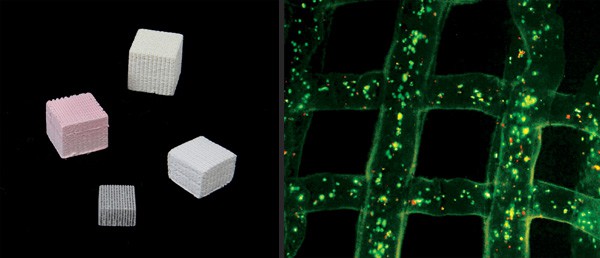
Now here is one of the dreams: what if, instead of relying on scarce donated organs, scientists could quickly and cheaply build healthy new ones in the laboratory, with cells taken from the patients themselves as the raw material? For the past 15 years this dream has helped drive investment and research in an interdisciplinary field known as 3D bioprinting. The basic idea is to take principles from additive manufacturing – where three-dimensional objects are “printed” layer by layer according to a pre-programmed design – and apply them to challenges in tissue engineering. So, in a typical bioprinting experiment, researchers might fill a specialized 3D printer with liquid or semi-liquid “bioinks” containing living cells, and input a blueprint for a desired final structure. The printer’s nozzles will then scoot back and forth, extruding material line by line until a three-dimensional chunk of tissue (such as the human ear shown above) takes shape. Depending on the type of cells being printed and the goal of the experiment, the cells may then spend days or weeks in a controlled environment, or bioreactor, that keeps cells supplied with nutrients and stimulates them to develop into mature tissue.
The list of tissues printed by this method is already impressively long, and includes tumours, blood vessels and organ tissues, as well as simpler structures such as cartilage, skin and bone. Given these achievements, it is easy to see why many have speculated that bioprinting could one day stretch to creating entire organs. At this point, though, another reality intrudes. “People are saying, ‘Oh, we will be printing organs, we will live forever’,” says Gabor Forgacs, a biophysicist who co-founded the first commercial 3D bioprinting firm, Organovo, in 2007. “And of course, that’s what we also thought at the very beginning. But that’s wishful thinking. This is a beautiful field. I think it has incredible promise. But one needs to be realistic.”
Getting realistic
Fortunately, more realistic dreams are also available, short of printing whole organs for transplant. One of these dreams is that 3D bioprinting could make it easier and cheaper to develop new drug treatments. Innovation in this area would certainly be welcome. In the early stages of the standard “drug discovery” method, biomedical researchers test thousands of chemicals to determine their effect on cells or tissue samples. Only the most promising “hits” are marked for further study. Even after this weeding-out process, though, failure rates are high: of the tiny fraction of hits that make it as far as pre-clinical trials, barely one in 5000 are ever approved for clinical use. Late-stage failures, when compounds are found to be harmful or ineffective only after animal or human trials, are particularly expensive, contributing disproportionately to the average £1bn+ cost of taking a new drug to market.
Reasons for late-stage failures in drug development vary, but one contributing factor is that much of this work is done in 2D cell cultures. These systems are cheap, well-established and widely understood by researchers across medical science. The only trouble is that what happens in 2D slices of tissue is sometimes very different from what happens inside 3D mice or humans. The structures that form in 2D cultures are simple, and sheets of cells do not take in nutrients or expel waste products in the same way as clusters do. In the cheapest and quickest drug tests, the target cells are also isolated from other tissues, including those that exist alongside them in a living organism. “Cells in a two-dimensional configuration essentially don’t communicate with each other,” Forgacs says. “They are not revealing about a three-dimensional body at all.”
To create a more realistic, but still cost-effective environment for drug testing, some researchers have used 3D printers to create complex structures out of non-biological materials. Once printed, these objects act as a scaffold for cells to grow on, promoting more lifelike behaviour than is possible for cells grown in traditional 2D cultures. Start-ups such as the US-based firm 3D Biotek specialize in creating these 3D scaffolds for the medical-research market, and some established device manufacturers such as Germany’s GeSIM have developed 3D printers optimized for printing common scaffolding materials. More advanced applications of bio-compatible scaffolds include materials that mimic human cartilage. Such materials could potentially replace the “shock absorbers”, or menisci, in damaged knees, bridging the gap between metal or plastic replacement joints and fully biological substitutes.
Hardware and wetware
For purists, though, creating bio-compatible scaffolds is not true bioprinting, because the inks used are typically polymers rather than living cells. The distinction is more than just academic. “If you print with a substance that is not animate material, then at the end of the printing process you have a product – it could be a chocolate cookie, it could be a part of an airplane,” Forgacs explains. “It’s not so in bioprinting. There, the product comes about after an elaborate maturation process. The biological material has to do the work.”
Framework for growth: 3D-printed structures (left; courtesy: SunP Biotech) can support living cells that are either introduced afterwards or (right; courtesy: Wei Sun) printed simultaneously with a biocompatible scaffolding material.
Synthetic bioscaffolds are also of limited use for more complex types of medical research – including another prominent bioprinting dream, which is to create physiologically and anatomically correct cancerous tumours for ex vivo study. “Oncology research has been traditionally done either in 2D or straight into animal models,” says Hector Martinez, co-founder and chief scientific officer of Cellink, a Swedish bioprinting start-up. “If we can create 3D cancer-tissue models that replicate not only the cancer cells but also the surrounding tissue, we can better study how drugs penetrate into the cancer.” Better tissue models could reduce the number of animals used in medical research – “a fantastic goal” in its own right, Martinez says – and would also have clinical applications. For example, tumours printed from a patient’s own cells could enable physicians to develop drug-treatment regimes tailored to attack that specific tumour, rather than generalized from tests on other cancers of a similar type.
Moving from biocompatible structures to fully biological ones introduces several novel technical challenges. “The key criteria are to minimize the damage to cells while they are being printed, and to form a stable three-dimensional structure after printing,” says Wei Sun, a biomedical engineer at Drexel University in the US and co-founder of SunP Biotech, a bioprinting start-up. The problem, he observes, is that these two criteria frequently clash. Many bioinks are a mixture of living cells and hydrogels, which are highly absorbent networks of polymers such as gelatin or alginate. The hydrogels help to protect the cells from excessive shear stress during the printing process, but they are structurally weak. Adding stronger synthetic polymers to the mix makes it easier to produce multi-layered structures that maintain their shape. In addition, physical and chemical methods of crosslinking, or “curing”, the hydrogels after printing can improve their mechanical strength.
Fundamentally, though, developing inks that can be readily extruded without damaging the cells, yet still form self-supporting features after they leave the nozzle, is difficult.
Sun and his colleagues have addressed this problem by developing printers that operate at different temperatures, so that users can tweak the viscosity of their bioinks by changing the ambient conditions. They have also built printers with multiple nozzles optimized for different types of cells and delivery media. Other groups have focused on non-extrusion-based bioprinters: in particular, one start-up, Poietis, has developed a commercial bioprinter that uses a laser to selectively evaporate bioinks from a substrate onto a platform. Regardless of the machines’ design, though, Sun hopes that by making bioprinters available commercially, more researchers will engage with the technology. “We need biologists to be with this community,” says Sun, who is editor-in-chief of the journal Biofabrication. “We need them to know how printing more complicated tissue structures can help them, so they are not just focused on 2D Petri dishes.”
In training
In Forgacs’ view, though, printers are not the only aspect of bioprinting that needs additional R&D. “A printer is a machine – a cool machine, but a machine,” he says. “Biology is much more complicated.” The hard part, Forgacs explains, is developing the right bioinks and then getting them to “do what they need to do to be living tissue”. He cites blood vessels as an example. Their shape is relatively simple, and larger vessels are big enough – 50 to 100 microns in diameter – for extrusion bioprinters to reproduce. Even so, a newly printed blood vessel cannot function like a natural one. Instead, its cells must first be “trained” to handle high fluid pressures in a bioreactor that mimics blood flow, so that they organize themselves in the correct way: endothelial cells on the inside, closest to the flow; smooth muscle cells next, to give the vessel elasticity; and then fibroblasts on the outside.
Flexible design: Bioprinters with multiple nozzles make it possible to build more complex structures. (Courtesy: SunP Biotech)
Martinez agrees that reproducing cellular-level structures is among the biggest challenges in bioprinting. “It’s not possible to reproduce nanometre-scale features directly with the bioprinter extrusion method,” he acknowledges. Instead, he and his Cellink colleagues are creating tissue-specific bioinks that can support the kind of micro-scale development Forgacs describes. “You have to use the biological system – if you give the cells the right stimulation, they know exactly what to do.”
Harnessing biology
Jennifer Lewis (Courtesy: Harvard University)
One of the most important steps towards bioprinting tissues for implantation into living organisms is getting the printed tissue to form blood vessels. This process, known as vascularization, was demonstrated for the first time in 2014 by a team led by Jennifer Lewis, a materials scientist at Harvard University. She spoke to Physics World about that breakthrough and how research in the field has progressed since then.
Why is vascularization so important?
All cells need to be within a few hundred microns of a nutrient supply, so if you want to build true three-dimensional tissues – that is, tissues that are thicker than about half a millimetre – you need to embed a vascular network in the structure. This requires different materials to be co-deposited, and it also requires the ability to erode or erase one of those materials, leaving behind an open-channel network. What we did in 2014 was to demonstrate a full, multi-material bioprinting approach that allows you to simultaneously print cells, the extracellular matrix (ECM), and something we call a “fugitive ink”, which we use in effect to “draw” the vascular pattern of interest. After the tissue with the fugitive ink embedded in it has been constructed, we cool it down to about 4 °C. At that point, the ink becomes fluid, so we can just flush it away, leaving an open, cylindrical feature 100 to 200 microns in diameter that’s akin to what you would find in a vascular “highway” in your body.
What was the most difficult step in that process?
The actual printer design was relatively straightforward – we just needed to add additional print heads so we could simultaneously dispense multiple materials in a sequential fashion. The real problems were optimizing the material properties so that all of them would print appropriately; making sure that the extracellular matrix would foster cell proliferation and growth; and making everything compatible with the fugitive ink. We had to have different temperature-induced phase transitions, such that when we cooled the sample down, the cells that were suspended in the ECM surrounding the fugitive features remained intact and didn’t liquify. Otherwise we would have had a big puddle!
How has the field developed since then?
Our next goal was to create much thicker tissues – around 1 cm thick and inches on a side. In this case the cells we used were mesenchymal stem cells, which can be made to differentiate into things like bone, muscle or fat. We used the vasculature inside these thick tissues to feed in growth factor and other materials that not only kept the cells alive, but helped to program their differentiation. After 30 days, the cells had begun to turn into bone: they deposited their own collagen membrane and started to deposit minerals – calcium phosphate – that you would have in native, natural bone.
What’s next?
Our thesis is that bioprinting alone is not the best way to create human tissues – we need to harness as much biology as we can. That could mean starting with stem cells and programming them along the same paths as your body does, or it could mean allowing blood vessels that have been printed at a large scale to start to form tips and sprouts – capillaries, if you will – through a process called angiogenesis. We want biology to do as much of the heavy lifting as possible, because if you think about what it would take to print a kidney or a liver, we’re talking about tissue volumes that might range from a few hundred millilitres up to a litre. That’s a lot to print, and then the tissue has to function, which is a tall order as well.
An even bigger challenge, as we move forward, is to integrate that tissue into a host without triggering rejection or other immune responses, and have it not only function but be sustained. These are grand challenges, but it’s something that we’re working towards, and both we and others (such as Sangeeta Bhatia at MIT and Chris Chen at Boston University, and also Mike McAlpine at the University of Minnesota) have got steps along the way that we’re mapping out, one at a time.
A dream revived
This line of research raises the possibility of printing more complex tissues – initially as better testbeds for drug discovery and cancer research, but eventually as something that could be implanted into a patient. Erik Gatenholm, Cellink’s co-founder and CEO, is particularly bullish about bioprinted cartilage. The clinical need for replacement cartilage is strong: the tissue cannot readily repair itself once damaged, and worn-out knees are becoming increasingly common as populations age across the developed world. Cartilage’s structure is also relatively simple, and the material has been the subject of extensive bioink research. Gatenholm also points out that the nature of cartilage injuries is well-suited to incremental improvements in bioprinting technology. “If you have a partial tear of the meniscus, you’re going to want to come in and implant a partial repair to fix it,” he explains. “After that, we can study [the repair], and if it works really well you can go in with a bigger piece and a bigger piece. Eventually you replace the whole thing.”
The timeline for translating these and other bioprinting advances into the clinic is uncertain. Gatenholm predicts that patients could benefit from bioprinted cartilage or skin within the next 10 years. Sun says he can imagine a “major breakthrough” in bioprinted tissue models for cancer research in 5–10 years. And while Forgacs is pessimistic about the chances of bioprinting entire organs, the company he co-founded, Organovo, nevertheless announced in 2016 that it was shifting focus from pharmaceutical to therapeutic applications of its bioprinted liver tissue.
As with cartilage, Forgacs observes that even a small piece of bioprinted liver tissue could be clinically useful. “Somebody who needs liver transplantation typically has to wait quite a bit of time before a suitable donor is found, and they may die before such a donor is located at all,” he says. “But if you can implant a patch of tissue that would maintain somebody’s liver, giving it temporary functionality until a full donor is found, that would be fantastic.” As dreams go, it may not be quite up there with new organs arising like magic from lab-grown ooze. But for patients waiting for a transplant, it’s definitely a reality worth hoping for.
The 2018 FIFA World Cup, which will be held in Russia, is just around the corner with kick-off set for Thursday 14 June when the hosts play Saudi Arabia in Moscow.
As with every major football tournament, the ball itself is once again under the spotlight with comments from some goalkeepers that it wobbles too much when kicked.
They have painstakingly put the 2018 World Cup ball – dubbed the Adidas Telstar 18 — through its paces. This includes being crushed 250 times in a water tank, being fired against a steel wall 200 times at 50 kilometres per hour to being measured at 4000 points around its circumference to make sure the ball is a perfect sphere.
While the ball passed all those tests, EMPA researchers also used a computer controlled “foot” to measure its trajectory when kicked. They found no evidence that it did wobble mid-air, so goalkeepers ought to have no excuse for any embarrassing mishaps. Just as well then that Liverpool shot-stopper Loris Karius isn’t in Germany’s squad after two catastrophic fumbles in last weekend’s 3-1 defeat against Real Madrid in the Champions League final.
Place your bets
Who will you be supporting from the 32 teams that have made it to Russia? Researchers at the University of Innsbruck have devised a model to predict the probability of your favourite team becoming world champions.
The model is based on the quoted odds from 26 bookmakers and betting exchanges and puts Brazil as the favourites with a 16.6% chance of winning. They are followed by Germany at 15.8% with Spain and France being the only other two teams having winning probabilities above 10%, at 12.5% and 12.1%, respectively.
The most likely final – with a 5.5% chance of happening – is a match between the top two favourites, Brazil and Germany. Perhaps it’ll be a chance for Brazil to avenge their humiliating 7-1 semi-final defeat against die Mannschaft at the 2014 World Cup.
The human load on the Earth, an audit of all life on the planet shows, is out of kilter with our numbers: we constitute a hugely heavier presence than all wild mammals together.
Israeli and US researchers found the whole package of living tissue – bone, blood, shell, chitin, collagen, timber, cellulose, muscle, blubber, teeth, hair, hoof, horn and all the myriad cells that make up self-replicating, greedy, carbon-based organisms – if tossed on the scales, would (if reduced to carbon) weigh an estimated 550 billion tonnes.
Most of it would be foliage, wood, root and fruit: the green plants that have colonised the terrestrial globe account for about 450 billion tonnes, or gigatonnes, of carbon. Another 70 gigatonnes would be composed of bacteria, and most of that would be invisible: at work beneath the surface of the land and sea.
And although the oceans cover 70% of the globe, the share of marine life is much smaller: the blue water is home to a mere six billion tonnes of living things. The fungi that colonise the forests and grasslands alone account for twice that mass.
Top mammal
Mammalian life in sharp contrast to all this sheer weight of living things is almost inconsequential: even so, one mammal dominates.
The mass of all the humans on the planet – just humans, not their livestock – is more or less 10 times the mass of all other living wild mammals.
Research like this is fundamental. It is vital. And it is provisional.
It is fundamental because, ultimately, it can help answer questions about how life survives: how the energy of the sun is turned into, and then sustains, life everywhere. That is because, ultimately, all the carbon in living things is derived from atmospheric carbon dioxide, in a process powered by photosynthesis.
It is vital because to make long-term reliable calculations about the carbon budget, and therefore calculations about the future rate of global warming and climate change as factories and exhaust pipes pump ever more greenhouse gases into the atmosphere, climate scientists need to understand the big picture: how life sequesters and recycles carbon on a massive scale.
And it is provisional because some of the calculations are almost certainly wrong: estimates of global plant life can be checked by satellite data and national forestry accounting, but some questions have barely been addressed. The authors concede – “our work highlights gaps in the current understanding of the biosphere”, in their words – that their estimates for the mass of bacteria could be wrong by a factor of 10, and viruses by a factor of 20.
But the researchers report in the Proceedings of the National Academy of Sciences that they see a full census of life on Earth as key to understanding how the biosphere works, and a step towards that would be a better understanding of how biomass – the sheer weight and substance of life – is concentrated, and shared.
Insects abound
And the sums are bewildering. Insects make up the richest group of creatures, with so far one million described species. But their fraction of biomass, say the authors, is negligible. Some single species contribute much more than entire families or even classes.
The Antarctic krill Euphausia superba adds up to about the same mass as humans, or cows. The measure of a huge variety of termites far surpasses the entire biomass of birds. The nematode worms contain more individuals than any other species, but their collected mass is only about 1% of the grand total for all life.
There are entire environments, the authors say, “for which our knowledge is very limited.”
The research also assesses the impact of Homo sapiens – one mammalian species among many – on all other life on Earth. The biomass of domesticated poultry is three times that of all other birds. “In fact”, the authors say, “humans and livestock outweigh all other vertebrates combined, with the exception of fish.”