Unenlightened thinking

Are you incensed when Deepak Chopra, the US alternative-medicine advocate, promotes “quantum healing”? Are you infuriated by people throwing around abstract concepts like relativity, energy and evolution without understanding what they mean to scientists? Then you may understand how I feel when scientists make ignorant assertions about philosophy and the humanities.

My current source of annoyance is Enlightenment Now: the Case for Reason, Science, Humanism, and Progress – a new book by the Harvard University cognitive psychologist Steven Pinker. Life is wonderful, Pinker says, and claims he has data to show it. The book has more than six dozen graphs demonstrating that good things such as life expectancy, literacy, income, education, human rights, leisure time and tourism are on the way up, and that bad things such as wars, violence, poverty, crime, disease, plane crashes and death by lightning are on the way down.

A “war on science”?

The chief menace Pinker sees in the modern world is an “intellectual war on science” that is “wreaking havoc in universities and jeopardizing the progress of research”. The rightful rule of “Enlightenment optimists” like himself, Pinker says, is threatened by anti-science “Romantic declinists”, whose leaders are philosophers such as Nietzsche, Heidegger, Foucault and Derrida.

Imagine that! Four dead white males, one of them long gone from this planet, are leading an army of humanists that threaten to bring down science! Pinker’s on shaky ground, however, given that scientists like him get by far the lion’s share of grant money and public adulation. His ground is even shakier given that he reveals he knows as much about what these four said as Chopra does about quantum mechanics.

Let me give just one example. Pinker claims Nietzsche recommended that people become – he’s quoting Nietzsche now – “hard, cold, terrible, without feelings and without conscience, crushing everything, and bespattering everything with blood”.

You can hardly get Nietzsche more wrong. Pinker plucks these words from Nietzsche’s book On the Genealogy of Morals. Published in 1887, it is, as its subtitle suggests, a polemic (ein Streitschrift). Polemics, especially by authors who are well known for their use of metaphor, irony and hyperbole, cannot be read as if they were conventional journal articles. As the philosopher Robert Scharff likes to say, one might just as well cite the famous beginning of The Social Contract (“Man is born free…”) to mock Jean-Jacques Rousseau for believing that everyone is walking around wearing chains.

Humanities scholars like to read carefully and know context is important. Pinker’s lifted phrase comes from the 11th section of the first essay of The Genealogy. Nietzsche, a philologist by training, is scrutinizing the origins of the concepts of “good” and “bad”. He notes that the masters and cultural victors – the top 1%, we would say – are likely to have one understanding of these concepts; the oppressed and cultural losers another.

As an example, he cites the Greek epic poet Hesiod’s classification of history chronologically into five Ages of Man. Two of these ages are actually the same age, Nietzsche says, but one represents the perspective of the winners, the other of the losers. Hesiod’s “Heroic” age is the world seen from the perspective of the likes of the heroes of Thebes and Troy, while the “Iron” (Erz) age is that world as seen from the perspective of “those who have been crushed, despoiled, brutalized, sold into slavery.” That latter age, Nietzsche writes, is the one with leaders whose actions are “hard, cold, terrible”, and so forth.

Nietzsche is not recommending we behave the way the wretched see their oppressors acting. Nor is he saying the two perspectives are equal. He is holding up a mirror to the conventional Christian morality of his time, trying to jolt readers into reflecting on its impact on their lives. Nietzsche is also showing that, if you simply banter about abstractions without connecting them to the life source from which they arose, you can say anything you damn well please, because you have lost track of life itself. You can say the world is terrific or terrible, depending on your perspective.

It’s ironic that Pinker has misunderstood a passage in which Nietzsche was illustrating the misleading use of abstractions

Robert P Crease

It’s ironic that Pinker has misunderstood a passage in which Nietzsche was illustrating the misleading use of abstractions. For one can imagine an anti-Pinker writing a book packed with graphs illustrating the rise of inequality between rich and poor, numbers of refugees, data breaches, industrial-scale political lying, mass shootings, genocide and so on. Such graphs would not capture the world as seen from the privileged perch of a tenured position at Harvard. Yet the fact that abstractions can channel privilege or oppression is not the worst of it. Nietzsche’s point is that when we live by abstractions, we forget how we live. Using only psychological theories to, say, guide our behaviour towards others, we forget what human relationships are.

In Pinker’s case, the forgetting is coupled with a false confidence that expertise in one thing makes you an expert in everything, such as how to read Nietzsche. Later in his book, Pinker quotes more passages from Nietzsche and labels them “genocidal ravings”. He’s culled these passages from secondary sources. To understand them in context, you’d have to learn how to read a brilliant writer who uses metaphor and irony to connect and transform people in ways that literal language does not. That would require taking a humanities course. And if you can read better, you can appreciate many things better, including the value of science.

The critical point

Thank you, Steven Pinker, for showing the harm when scientists don’t take enough humanities courses. A humanities education helps provide a deeper grip on one’s experiences and on the world in ways other than through graphs and abstractions. Isn’t it more likely that the very lack of humanities education is what fosters thoughtless about the world and the dangerous sway of science denial today?

China launches ‘Queqiao’ lunar satellite

China has successfully launched a satellite to the Moon that will perform radio astronomy as well as communicate between Earth and a separate lunar lander, which is set for launch later this this year. Dubbed Queqiao, or Magpie Bridge from an ancient Chinese folklore tale, it took-off from the Xichang Satellite Launch Center on 21 May. It will now be put at Langrange Point 2 “L2” – a gravitational-balance point about 65000 km behind the Moon – where it will stay visible both to ground stations on Earth and the future lander.

Due to tidal locking between the Earth and the Moon, only one side of the Moon is visible to Earth. This “far side” remains of enormous interest to scientists as studies have indicated that there is a very different world on the far side, being geologically more ancient and dominated by highlands, unlike the planar landscape that prevails on the near side.

A radio antenna behind the moon will open up a new window on the universe

Marc Klein Wolt

The far side is also of interest for the radio-astronomy community. While almost all celestial radio wave frequencies can be received on Earth, those that are below 30 MHz are blocked by the atmosphere. Yet such frequencies contain important information about the early universe and can only be measured from a special vantage point like the back of the moon, which is free from atmospheric and man-made interference. This means the far side is one of the best places to measure the 21 cm hydrogen emission line that can be used to study the mass and dynamics of galaxies and will allow scientists to peer into the “cosmological dark ages” – a period between the Big Bang and the birth of the first stars.

Queqiao will include a Dutch-built antenna – the Netherlands-China Low-Frequency Explorer (NCLE) – that is designed to measure radio waves between 1-80 MHz. “A radio antenna behind the moon will open up a new window on the universe,” says NCLE project leader Marc Klein Wolt, who is managing director of the Radboud Radio Lab at Radboud University. According to Albert-Jan Boonstra from the Netherlands Institute for Radio Astronomy in Dwingeloo, the Dutch antenna is especially designed to receive low-frequency radio waves over a larger range. “We have found ways to avoid the electromagnetic interference of the satellite itself and successfully developed a broadband receiver,” he says.

Limited observations 

Also riding on Queqiao is a pair of microsatellites that will be released into an elliptical lunar orbit for similar radio astronomy experiments as the Dutch antenna. The twin microsatellites, developed by Chinese scientists, will carry out interferometry tests to demonstrate the feasibility of a future microsatellite array, which would be more sensitive than a single probe in detecting faint-radio signals from afar. However, due to the size of the microsatellites, their observation times will be limited to 10 minutes from the far side and 20 minutes of data transmission from the near side every orbit.

As well as performing radio astronomy, another key aim of the Queqiao mission is to enable the transmission of commands and data from Earth to the Chang’e-4 lander that will launch later this year. Chang’e-4, which will land in the South Pole-Aitken Basin area, will be the first mission to land on the far side of the Moon and it will also have a low-frequency radio-spectrum analyzer, which has been developed by scientists from the Institute of Electronics, Chinese Academy of Science in Beijing.

Rising temperatures could boost antibiotic resistance

Current forecasts of the burden of antibiotic resistance could be significant underestimates in the face of a growing population and climate change, according to a team from the US and Canada.

The researchers found that the common bacterial strains Escherichia coli, Klebsiella pneumoniae and Staphylococcus aureus showed a higher degree of antibiotic resistance where local temperature and population density were higher.

“The effects of climate are increasingly being recognized in a variety of infectious diseases, but so far as we know this is the first time it has been implicated in the distribution of antibiotic resistance over geographies,” said Derek MacFadden of Boston Children’s Hospital, US. “We also found a signal that the associations between antibiotic resistance and temperature could be increasing over time.”

MacFadden and colleagues looked at antibiotic resistance data from 2013–2015 for a total of 1.6 million bacterial pathogens. Areas with higher antibiotic prescription rates tended to exhibit increased antibiotic resistance.

“Estimates outside of our study have already told us that there will already be a drastic and deadly rise in antibiotic resistance in coming years,” said John Brownstein of Boston Children’s Hospital and Harvard Medical School. “But with our findings that climate change could be compounding and accelerating an increase in antibiotic resistance, the future prospects could be significantly worse than previously thought.”

A local average minimum temperature increase of 10°C was associated with a 4.2% increase in antibiotic resistant strains of E. coli, a 2.2% rise in antibiotic resistant K. pneumoniae and a 3.6% rise in S. aureus, the team found.

What’s more, the study linked an increase of 10,000 people per square mile to a 3% increase in antibiotic resistance in E. coli and a 6% increase in K. pneumoniae. The antibiotic resistance of S. aureus did not appear to change with population.

“As transmission of antibiotic resistant organisms increases from one host to another, so does the opportunity for ongoing evolutionary selection of resistance due to antibiotic use,” said MacFadden. “We hypothesize that temperature and population density could act to facilitate transmission and thus increases in antibiotic resistance.”

The team published the study in Nature Climate Change.

One step closer for kidney tissue engineering

Dutch researchers have engineered 3D cellular constructs called organoids for kidney research using human induced pluripotent stem cells (iPSCs) and embryonic stem cells (ESCs). The organoids were successfully vascularized once implanted in vivo (Stem Cell Reports 10 751).

The kidney has multiple functions: homeostasis (balance of many body functions), control of blood pressure, production of red blood cells, and elimination of waste (from food, medication or toxic substances), while keeping a balance of essential substances, fluids and minerals in the body.

One kidney is composed of more than 1 million nephrons, the functional unit of the kidney. The nephron filters the blood, processes nutrients and passes out waste from the blood. The blood is first filtered by the capillary network (glomerulus). The filtrate is collected in the Bowman’s capsule and passes through a series of renal tubules (proximal tube, loop of Henle and distal tube). These absorb water, minerals and glucose. Filtered fluids leave the nephron by the collecting duct and enter the renal pelvis.

The cells composing the kidney can be developed in the lab. However, the classic way to cultivate cells in vitro is using a 2D structure, which does not represent the complexity of the organ. Instead, researchers are investigating ways to cultivate cells in a 3D system, as organoids. Organoids are cellular 3D constructs that replicate fully or partially the structure, cellular organization and composition of the in vivo organ. One limitation of organoids is their incapacity to undergo morphogenesis, meaning that they can’t be physically modified to achieve a complete maturation. For example, functional vascularization is not achievable yet.

Now, Ton Rabelink and his team at the Leiden University Medical Center in the Netherlands have developed a kidney organoid which, once implanted in vivo, becomes vascularized and starts to become more mature.

The researchers were able to generate kidney organoids from ESCs and iPSCs obtained by reprogramming of somatic cells to the pluripotent state. Both cell types were able to develop into kidney organoids.

Observed structures

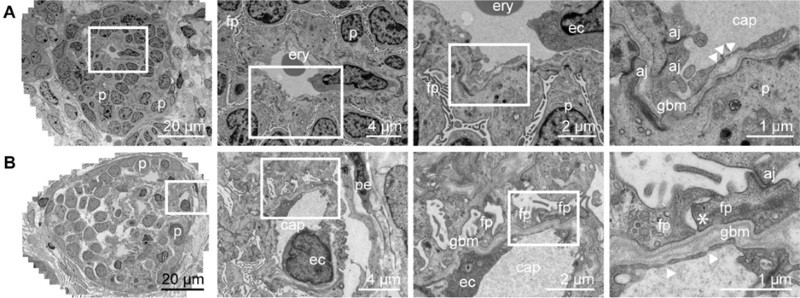
They identified many structures in these kidney organoids, including the glomerulus surrounded by the Bowman’s capsule, the renal tubules and the collecting duct. They also observed more specific features, including the presence of podocytes in the glomerulus (cells involved in the retention of plasma proteins from going into the urine), interstitial cells, which act as the kidney scaffold, endothelial cells (that form blood vessels) and pericytes, which are cells localized around the vessels.

Upon implantation of the organoid under the renal capsule of mice, the researchers observed glomerular vascularization by the mouse endothelial cells, without needing further stimulation. Also, organoid maturation and organization was more advanced upon transplantation in vivo, compared with prolonged culture in vitro.

Vascularized glomerular structures

This study presents the development of a more mature kidney organoid that is more comparable to adult kidneys. This research will be useful in many applications, such as drug screening, disease modelling and studying kidney regeneration.

Butterfly wings inspire nanostructured medical implants

Glaucoma is the second leading cause of blindness worldwide, with numbers expected to increase every year, according to the World Health Organization. Though the cause of glaucoma remains unclear, research suggests that the disease damages eyesight via random increases in pressure inside of the eye. Medication can alleviate the pressure to prevent long-term damage, but currently, no cure for the disease exists. Developments from the Choo lab at Caltech and Sretavan lab at the University of California, San Francisco, however, could ease the lives of glaucoma patients by providing them with real-time readings of their intraocular pressure.

The team recently published the successful fabrication and testing of a new microscale implantable intraocular pressure (IOP) sensor in Nature Nanotechnology (doi:10.1038/s41565-018-0111-5). Five years in the making, the device relies on nanostructures with optical properties the team first discovered in the wings of the longtail glass butterfly species Chorinea faunus.

A flutter of inspiration

Certain sections of the wings of the butterfly are coated in nanostructures about 100 nm or 150 nm apart depending on the location on the wing. This distribution gives the wings of the species an optical property called angle-independent anti-reflection, in which their wings scatter light uniformly in all directions during transmission. The wings therefore appear transparent.

“Nature often evolves with multifunctional nanostructures for their diverse biological functions,” said co-author Radwanul Hasan Saddique, a post-doctoral fellow in the Choo lab. “The longtail glasswing was not an exception.”

The angle independency of the wings’ transparency inspired the Choo group because existing IOP sensors prior to the work reported here heavily depended on the readout angle for signal, limiting the range of detection to 10 degrees. The group therefore sought to fabricate nanostructures with the same transparency as the wings to see if they could eliminate angle dependency in IOP sensors. They found success using a silicon nitride (Si3N4) membrane, increasing the readout range to 30 degrees.

Beyond its optical properties, the membrane also prevented bio-fouling, or buildup of biological material, on the device through strong structurally mediated hydrophilicity. According to Vinayak Narasimham, a PhD student in the Choo lab, prevention of biofouling can improve the lifetime of the in vivo sensor.

Now that the team has performed initial animal studies, they are pursuing long term in vivo studies in animals. They hope to see the technology available to glaucoma patients within five years.

Deep neural networks synthesize full-dose PET images

For individuals receiving multiple PET scans, especially children, there is a particular incentive to reduce the doses they receive to minimize the long-term risk of radiation-induced cancers. However, low-dose scans lack diagnostic power due to higher levels of noise. An international collaboration is using deep neural networks as a potential solution to the problem.

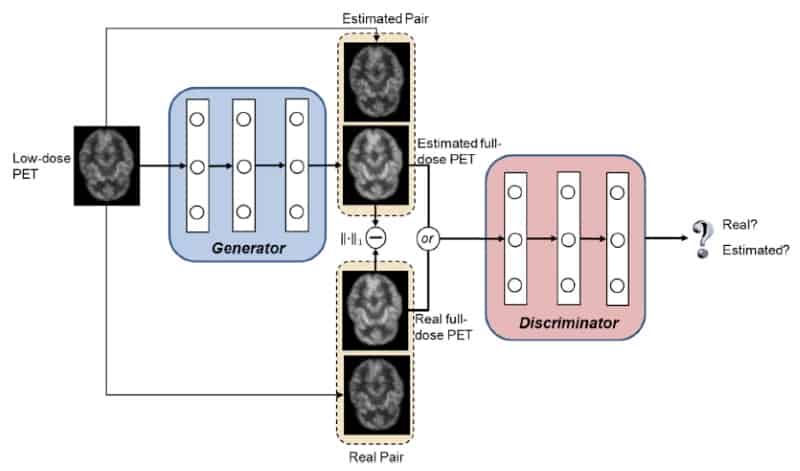
“Our technique uses unique machine learning algorithms – known as 3D conditional generative adversarial networks (or 3D c-GANs) – to estimate the high-quality full-dose PET images from low-dose ones,” said co-author Luping Zhou from the University of Sydney. Developed by Zhou, first author Yan Wang from Sichuan University, and co-authors in China, the US, South Korea and Australia, the new technique performed well against other methods used to synthesize full-dose PET images (NeuroImage 174 550).

GAN models use two deep neural networks, a generator and a discriminator, which achieve the best possible result by competing against one another. In the new application, the generator’s goal is to synthesize a full-dose PET image of sufficiently high quality to convince the discriminator that the image is genuine. The discriminator’s goal is to spot that the output of the generator is not a true full-dose image.

Each network is trained using a database of pairs of low- and full-dose PET images from the same individuals. Once trained, a new individual’s low-dose PET image is then fed into the generator for it to synthesize the corresponding full-dose, higher quality PET image.

Image synthesis framework

In a key feature, the technique handles 3D image data sets. Many other, previously reported techniques handle 2D axial slices independently which, though less data intensive, leads to the loss of information in the coronal and sagittal planes.

To train and validate the 3D c-GANS technique, the researchers acquired 18F-FDG brain scans of eight individuals with normal uptake and eight with mild cognitive impairment (MCI). Conventional full-dose clinical scans, delivering an effective dose of 3.86 mSv, acquired counts for 12 minutes. They were immediately followed by three-minute acquisitions that were used as low-dose scans in the 3D c-GANS model.

Following the common “leave-one-out” cross-validation approach, the researchers used data from 15 individuals to train the model and data from the remaining individual to test the model’s capabilities. The process was repeated such that the model was tested using data from all 16 individuals.

To maximize the training data set, 125 individual sub-volumes were extracted from each scan, making 1875 training samples and 125 test samples for each leave-one-out case. The final entire synthesized full-dose PET volumes were then constructed by merging the individually synthesized sub-volumes generated by the model. By maximizing the number of training samples, the likelihood of overfitting by the model was minimized, improving its potential performance in a wider clinical population.

Quantitative technique comparison

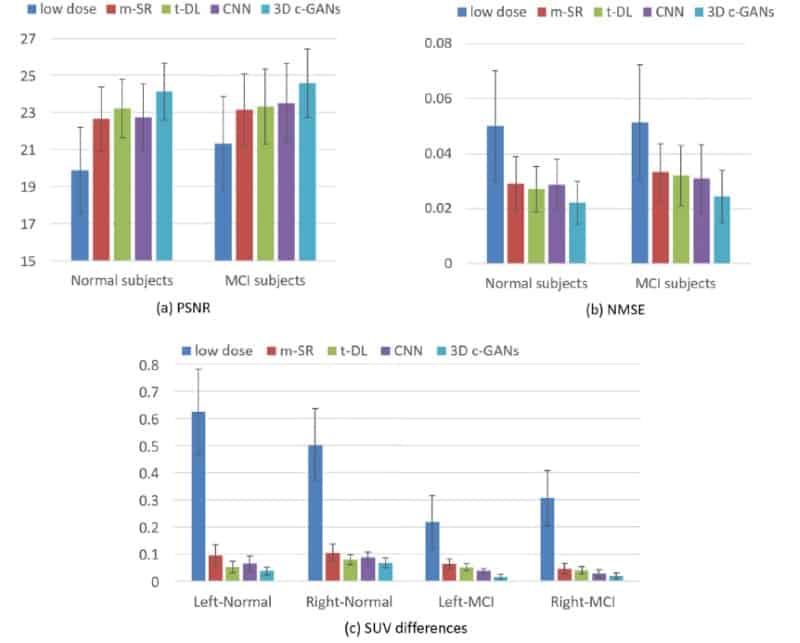
The researchers found the image quality achieved with 3D c-GANS compared favourably against three existing methods used to synthesize full-dose PET images. In a quantitative comparison, for example, the normalized mean square error (NMSE) – a measure of the difference in voxel intensities between synthesized and true full-dose PET images – was lowest using the 3D c-GANS technique. This was seen both in individuals with normal scans and those with MCI. Standard deviations in the parameter did, however, overlap between the different methods. The new technique performed similarly well when standardized uptake values (SUVs) and peak signal-to-noise ratios were examined and in a further, qualitative comparison.

Amongst several lines of further research, the authors plan to investigate a multi-modality approach to full-dose PET synthesis, incorporating clinical CT or MRI scans that are acquired alongside the PET scans. They also plan to increase their training database size to improve 3D c-GANS generalizability – its ability to work effectively in the clinical patient population at large.

Take a teacher and a pupil

The dialogue as a method of discourse on philosophical matters has fallen out of favour these days, but that’s a recent development. As Frank Wilczek points out in his introduction to physicist Clifford Johnson’s The Dialogues: Conversations About the Nature of the Universe, the format was preferred by Plato (who often included his teacher Socrates as a protagonist), and was also chosen by Galileo for his epoch-making Dialogue Concerning the Two Chief World Systems. Although Galileo’s tract was a self-conscious post-Renaissance echo of the classical form, framing a rational explanation of the world as a discussion between an experienced teacher and an eager but naïve pupil has been popular throughout the history of Western thought. English philosopher Adelard of Bath used it for his Questiones Naturales in the 12th century, one of the books that belies the myth of an irrational Middle Ages. Jane Marcet’s 1805 book, Conversations in Chemistry, in which a teacher-governess instructs her two female pupils, not only challenged the notion that science was a male pursuit but also proved a pivotal influence on the young Michael Faraday, who never forgot the debt.

The appeal of the dialogue form is easy to appreciate. It allows multiple points of view to be explored and interrogated. This is the approach Galileo championed to debate the merits of the Ptolemaic/Aristotelian and Copernican world views, although his bias is painfully clear – Simplicio, who defends the Ptolemaic model with the blinkered mulishness that his name implies, was suspected by Galileo’s opponents of being a lampoon on Pope Urban. And the pupil, whether in Adelard or Marcet, represents the reader, expressing confusion, incredulity or enthusiasm in the face of the teacher’s calm authority.

The ancient and the modern formats turn out to be made for each other

In The Dialogues, Johnson demonstrates how useful and versatile this novice/expert structure can be in conveying complex scientific knowledge, in the form of 11 conversations, on topics ranging from inflation and relativity to simple discussions of experimentation and geometry. But he reinvents the dialogue for our times as a graphic novel. It’s an inspired choice, for the ancient and the modern formats turn out to be made for each other. Not only does the question and answer structure lend itself to dramatization, but the interaction comes alive when the characters are situated in time and space. In the short narratives of Johnson’s book, they meet at a costume party in a natural history museum, or they are siblings at home working out how to conduct a simple experiment to find the answer to a question, or they are two scientific colleagues chatting over a coffee, and so on.

Using the comic-book approach to talk about science isn’t new in itself. Mathematician and illustrator Larry Gonick was one of the first to bring the cartoon to science – most famously in his multi-volume The Cartoon History of the Universe, begun in the late 1970s, and also in his regular “Science Classics” strip for Discover magazine. Sydney Padua’s The Thrilling Adventures of Lovelace and Babbage, first conceived in 2009, offered a hugely popular, knockabout version of the “invention of the computer” by Ada Lovelace and Charles Babbage in the 19th century. These and other explorations of scientific themes in comic form were, however, more humour-driven than Johnson’s book, which aims for something more sober and adult-oriented in the tradition of the “mature” graphic novel, the genesis of which is often traced to Art Spiegelman’s Maus (1980–1991), a story of the Holocaust.

Johnson says he was also inspired to use this approach to science popularization by the realization that it is perfectly suited to the material. While mostly his stories adhere to a realist pictorial style, from time to time they mutate into the diagrammatic. In The Dialogues, characters assemble giant pieces of a jigsaw puzzle bearing the fundamental equations of physical law: we segue from a sidewalk to a vista of the deep universe; a character unfolds a protoplanetary disc from between her outstretched hands. This is perhaps the most successful feature of the project, and it makes the traditional illustrations of popular-science books look rather dry and creaky.

The visual innovations are all the more impressive given that Johnson, a specialist on string theory and general relativity at the University of Southern California, taught himself illustration from scratch. It’s easy to discern his passion for the classic comic-book tradition in his use of cinematic perspectives – the close-ups, panning shots and unusual viewing angles – which no doubt also benefitted from Johnson’s experiences as a scientific consultant for Marvel movies such as Thor: Ragnarok. In this regard, the book is just the latest instalment of Johnson’s extensive outreach activities in physics.

Occasionally the ambition of The Dialogues somewhat exceeds the delivery. Even the “naïve” characters tend to have a rather firmer grasp of physics than the average general reader is likely to, and while a readiness to delve into actual equations is a refreshing departure from the orthodoxy of science popularization, it may well prove a step too far once characters start saying things like “So we write their field as Ψ, and working with A and V allows us to write an equation describing how electrons interact with E and B fields”. As that quote suggests, the speech is also rather stilted at times, the visual friendliness not always quite managing to compensate for a lecture-like tone.

But this is, after all, an experiment, with room still for refinement. The Dialogues presents a new and exciting way to communicate sophisticated ideas, full of potential. I can’t help fantasizing now about seeing papers in Physical Review written this way – a thought that will no doubt horrify some, just as the first serious graphic novels horrified folks convinced that the only “true” literature can be words on paper.

  • 2017 MIT Press 246pp £24hb

4D smart scaffolds for tissue engineering

While 3D bioprinting is widely used to construct complex biocompatible structures, researchers are now attempting to extend the technique into the fourth dimension. Here, 3D printed objects can be made to “self-transform” over time, which means that they can take on different forms or functions when exposed to physical stimuli such as osmotic pressure, heat, current UV light or other energy sources.

Researchers in the US have now shown that they can fabricated 4D hierarchical micropatterns by exploiting natural soybean oil as the bioink material. The work, which is published in Biofabrication, describes how the micropatterns can be used as biocompatible, shape-changing scaffolds for use in tissue engineering and regeneration applications (Biofabrication 10 035007).

“We used smart natural lipids, that is, soybean epoxidized acrylate (SOEA), as an ink material to fabricate biocompatible, topographical and 4D dynamic shape-changing tissue scaffolds,” says team leader Lijie Grace Zhang of The George Washington University in the US.

Such 4D materials have already been demonstrated in other fields. One of the best-known examples are shape-memory alloys, in which a change in temperature triggers a change in shape of the alloy. Although still in its infancy for tissue engineering applications, 4D printing may ultimately allow for tissue transplants that better mimic biological tissues and organs, which are highly organized and contain structurally anisotropic components.

This structural organization affects the way the cells arrange themselves in a biological structure, since they respond to “cues” that depend on the biostructure’s surface topography. Although researchers have developed many techniques to manufacture nano- and microstructures that can regulate the behaviour of cells, it is still difficult to fabricate biomimetic tissue scaffolds that respond to topographical cues in the same way as their natural counterparts.

Complex surface micropatterns

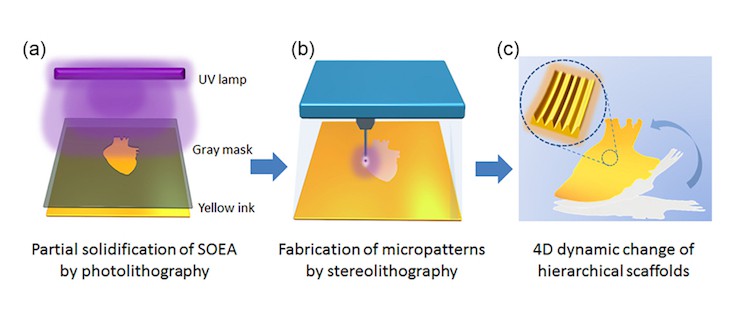
What’s needed, says Zhang, is a technique that generates surface structures on a macro-architecture. “The technique we employed, photolithographic-stereolithographic-tandem strategy (PSTS), relies on sequentially treating the same ink feedstock with photolithography and stereolithography,” she says.

The photolithographic-stereolithographic-tandem process

The team used SOEA as the ink material, which is derived from soybean oil – a natural, renewable source that has been attracting much attention as a biomaterial in recent years. “We were able to make a 10 micron-thick liquid SOEA film in a matter of seconds using the photolithography step,” says Zhang. ”This film then further solidifies after stereolithography to generate complex surface micropatterns, thanks to a layer-by-layer process.”

Shape-shifting constructs

The fabricated scaffolds can change shape when stimulated by an external trigger, which means that they can better mimic natural biostructures that adapt to their morphology. The subtle surface patterns could also be used to regulate the behaviour of human stem cells, such as human bone-marrow mesenchymal stem cells (hMSC). “The images that we obtained and analysed (using National Institute of Health software) show that hMSCs actively grow and highly align along the micropatterns, forming an uninterrupted cellular sheet,” Zhang told Physics World.

As a proof of concept, the researchers made a 4D patch for regenerating heart cells that showed significant growth of heart tissue – as confirmed by immunofluorescence staining and a technique called qRT-PCR analysis. “This study shows the great potential of these smart patching scaffolds as implantable materials for future tissue and organ regeneration,” says Zhang.

The team, which includes scientists from the University of Maryland in Baltimore, says that it is now planning to 4D bioprint light-sensitive smart biomaterials and reprogrammable architectures for use in heart regeneration and bionanorobot applications.

  • Read our special collection “Frontiers in biofabrication” to learn more about the latest advances in tissue engineering. This article is one of a series of reports highlighting high-impact research published in the IOP Publishing journal Biofabrication.

High-resolution direct laser writing exploits scruffy edges

While not the first to be plagued by fine webbing effects spoiling their laser-written structures, Joel K W Yang’s group have been the first to exploit it to achieve feature sizes below 10 nm. “A lot of interesting physical phenomena such as quantum confinement and plasmonic field enhancements occur at these length scales,” Yang points out.

Yang, an associate professor at the Singapore University of Technology and Design (SUTD), had been focusing his research on high-resolution nanofabrication methods and their applications. Having worked with electron-beam lithography, where he was routinely able to achieve sub-10 nm feature sizes, he turned his attention to direct laser writing (DLW), keen to see how far he could push the resolution he could achieve with this technology.

DLW has the advantages of speed and simplicity over ion- and electron-beam lithography, which require vacuum technology and are slow and fiddly to implement. However, DLW is traditionally limited to feature sizes of hundreds of nanometres, around 10 times bigger than ion- and electron-beam lithography. Smaller feature sizes are possible by modifying the equipment and incorporating stimulated emission depletion lithography, but Yang was interested in pushing the basic method to its limits. So when his student complained about webbing structures that he could not get rid of, Yang suggested, “What if instead of getting rid of them we investigate how to control them.”

Intensity matters

DLW exploits two-photon absorption to create cross-linking molecules from a resin, which then link up where the laser beam “writes” the structure. The remaining resin is then washed away. Yang and his co-workers used a 780 nm wavelength laser. As the resin absorbs light with a wavelength below 400 nm, it will only absorb light at the focus of the beam where the light intensity allows absorption of two lower-energy 780 nm photons.

The problem is that fine filaments still form outside where the laser focus has written. “Above-threshold laser powers can cross-link polymers in the wake of the beam but lower powers lead to lower concentrations of crossilinking molecules in the wake,” says Yang. “We think at low power you need a percolative pathway for cross-linking to happen, so you have regions where the concentration is just high enough.”

To exploit these effects Yang and colleagues used a laser at half power to control the spread of these filaments from the wall of one structure to another. This way they could write 20 nm features with a yield of 80% and with some filaments as narrow as 7 nm only 33 nm apart. The filaments grow with residual tensile strain that pulls the walls down if they are not well anchored to the substrate. However, Yang points out that this strain is actually helpful for making the filaments thinner.

“There’s a game where you pick up drinking straws – you stretch it to make it really thin, and use it to saw one another’s straws to see whose straw would break first. It’s a similar effect here,” says Yang.

Pushing DLW further

With improvements to the chemistry of the resin so that the cross-linked material has greater structural integrity to resist fragmenting, Yang thinks even smaller feature sizes should be possible. The team has already experimented with writing a series of filaments that are vertically displaced so that closer lateral spacing is possible without the features merging. It may also be possible to pattern filaments at off-normal angles to the anchoring structures, although Yang expects the angles may be limited to within 10° of the normal as that is the shortest percolation path.

Yang is still keen to better understand the mechanism of the sub-threshold intensity ultrafine DLW and improve the uniformity of the features. At present the filaments grow thicker towards the adjoining wall, most likely due to thermal effects.

Possible applications include use as a template resist for plasmonic structures and 4D printing, where the strain can act as an actuator for printing dynamic structures defined in space and time.

Full details are reported in Nano Futures, and for more research on sub 10 nm nanofabrication visit the Nanotechnology focus collection.

Inorganic semiconductors can be more flexible in the dark

Despite the useful electronic properties that sparked the semiconductor industry, the brittle mechanical properties of semiconductor materials have become an increasingly limiting factor in developing new applications. Now experiments under cover of complete darkness suggest that semiconductors that appear brittle may be capable of extraordinary plastic deformations when the lights are out.

Yu Oshima, Atsutomo Nakamura, and Katsuyuki Matsunaga at Nagoya University in Japan tested the response of single crystal ZnS samples under applied stress when illuminated with white light, UV and in complete darkness. The electrical and optical properties of ZnS have already found use in luminescent and infrared optical devices as well photocatalysts, and it is readily available in large crystals that are convenient for deformation tests.

Behaviour changes with the lights out

The researchers found that although under white light and UV illumination the structures fractured at strains of just a few per cent, in total darkness they withstood strains of up to 45%. The bandgap of the crystal was also affected by the presence or absence of illumination giving crystals deformed in the dark a more orangey hue.

Oshima, Nakamura and Matsunaga attribute the difference in mechanical properties to the difference in the dislocations induced with and without the presence of light. Illumination can excite electrons into bandgap states at the dislocation edge so that the dislocation is charged and less mobile, inhibiting plastic deformation.

“It is interesting to find out that the inorganic semiconductor can exhibit extraordinary plasticity when it deforms in complete darkness,” they conclude in their report. “This suggests that the mechanical strength and fracture properties in inorganic semiconductors maybe controlled by exposure to light.”

They also highlight the ramifications for materials processing. The behaviour of dislocations plays a critical role in the synthesis and processing of most crystalline materials, including film synthesis and epitaxial crystal growth. The results suggest light exposure may also affect these processes.

Full details are available in Science.

Copyright © 2026 by IOP Publishing Ltd and individual contributors