It’s heating up as summer arrives in North America and that means tornadoes, especially near Oklahoma State University, which is in a hotspot for the violent storms. To get a better view of what goes on inside a twister, Brian Elbing and colleagues are listening to the low-frequency infrasound produced by the storms using microphones positioned on the roof of a university building. They were able to detect a tornado that was about 20 km away and were able to calculate its diameter to be about 45 m, which was confirmed by the trail of destruction left by the storm. You can read about how the sounds are created inside the tornado in Wired.
Physicists Edward Ramirez and Stephen Hagen from the University of Florida have come up with a way of quantifying and comparing the fame of individuals. Using statistical methods, they determined how famous someone is by looking at various metrics including Google searches and the number of edits to a person’s Wikipedia page. After analysing fame for hundreds of people who died in 2016 and 2017, they concluded the top three celebrities were Muhammed Ali, Fidel Castro and Prince. Delving deeper, the researchers also found that the statistical distribution of fame obeys a power law that has similar characteristics to “other natural and social phenomena” such as landslides and market crashes.
They even tackle the perception of “celebrity death clustering” showing that it is rather a “statistical consequence” of the large number of famous deaths each year. They describe their analysis in “The quantitative measure and statistical distribution of fame”.
The weak charge of the proton has been measure to high-precision for the first time. The work was done at the Thomas Jefferson National Accelerator Facility (Jefferson Lab) in Virginia and the result is in excellent agreement with the Standard Model of particle physics. The team that made the measurement hopes that further, related experiments will provide even more insight into physics beyond the Standard Model.
Done by the international QWEAK collaboration, the experiment involved scattering a beam of spin-polarized electrons from stationary protons in a liquid hydrogen target. The scattering process is dominated by the electromagnetic interaction, but a tiny contribution comes from the weak nuclear force. By measuring the weak contribution, the team can calculate the weak charge of the proton. The weak charge quantifies how a particle couples to the Z0 boson via the weak interaction. It has been measured at high-precision for the electron, but not the proton – until now.
Helping handedness
The measurement process got a helping hand from a quirky property of the weak interaction. The probability of a particle being scattered by the electromagnetic interaction is unaffected by the direction of its spin angular momentum. Remarkably, however, this is not true for weak nuclear scattering. A particle whose spin angular momentum vector points in the same direction as its velocity is scattered differently than a particle with its spin pointing in the opposite direction. This is both a deep, puzzling asymmetry in the fundamental laws of physics and a convenient experimental fingerprint of scattering through the weak interaction.
Team member Gregory Smith of Jefferson Lab says that making the proton measurement presents both significant challenges and tantalizing opportunities: “The nice feature about the weak charge of the proton is that it’s predicted in the Standard Model to be almost zero,” he explains, “so the effects of any new physics that might show up on top of that small background will show up more easily.” The tiny value of the scattering asymmetry, however, makes it very difficult to measure. Furthermore, scattering asymmetry comes not just from the weak interaction but also from the internal structure of the proton.
The asymmetry caused by proton structure increases with the square of momentum transfer, so the researchers kept the beam energy low. They carried out two six-month experimental runs, making improvements to their experimental apparatus in the gap between runs. They then compared their results with other experiments done with higher-energy beams. This allowed them to estimate how the asymmetry changed with energy, and therefore what it would have been if no energy had been exchanged between the particles – impossible as it would have required zero-energy scattering. Their calculated value was about 226 parts per billion.
Constraining leptoquarks
This allowed the team to calculate the proportion of scattering from the weak interaction, and therefore the weak charge of the proton. Their results are in almost perfect agreement with the Standard Model prediction, and put new constraints on the possible existence of leptoquarks. These are hypothetical particles in some extensions of the Standard Model that have quantum numbers of both quarks and leptons.
Xiaochao Zheng of the University of Virginia, who was not involved in the research, believes the finding is significant. “As time goes on, these kinds of high-precision measurements will be done with increasingly higher precision, such as the planned Moller and the PVDIS experiments using the upgraded accelerator at Jefferson Lab.” she says.
Researchers at the University of Mainz in Germany are currently planning an even more accurate determination of the weak charge of the proton, and some QWEAK members are part of that team.Jefferson Lab, meanwhile, is planning to measure the weak charge electron to a new and record-breaking precision. This he says, will lead to an even more stringent test of the Standard Model.
Physicists are voicing concerns over academic freedom and the value of international collaboration after the Trump administration revealed that it is considering restricting Chinese scientists’ ability to carry out research in US universities and institutes. The move – which could directly affect 300 000 researchers – is apparently motivated by fears that Chinese researchers may be involved in espionage activities and secretly transferring sensitive discoveries to the Chinese government.
The administration’s attitude towards Chinese scientists is hardly new. In Senate testimony earlier this year, FBI director Christopher Wray asserted that Chinese “professors, scientists, students [in] basically every discipline” who are working in the US may be covertly gathering intelligence for the Chinese government. Speaking to a House of Representatives panel last month, former national counterintelligence executive Michelle Van Cleave stated that US R&D is “systematically targeted by foreign collectors to fuel their business and industry and military programmes at our expense.” China, she added, “easily tops the threat list.”
“Ill-conceived and damaging”
While the Trump administration has yet to decide to press on with the restrictions, critics of the move foresee long-term consequences for US universities to attract top-rated scientists and students from around the world. “We are concerned that the US administration is considering further restrictions on visas that could limit the travel of Chinese students and scholars from China to the United States,” noted Rush Holt the former physicist and congressman who heads the American Association for the Advancement of Science in a statement. “Where specific and confirmed espionage is occurring, action must be taken, but obstructing scientific exchange based on non-specific concerns that could be applied to broad swaths of people is ill-conceived and damaging to American interests.”
If Chinese students are to be restricted from participating in open research, it will hurt scientific and technological advances in the US
Xioaxing Xi
The Chinese-American community has also voiced its strong feelings about the issue. Charlie Woo, a former physicist and policy committee chair of the Committee of 100, an organization of leading Chinese Americans in business, government, academia, and the arts, acknowledges that “there are bad apples” among Chinese scientists and students who visit the US. “But if you single out only scientists from China, that’s a slippery slope,” he says. “I think this kind of policy can lead to racial profiling that in the long run will not be good for the country.”
Xioaxing Xi, a Chinese-American physicist at Temple University, says that the freedom to publish and disseminate research is paramount to US universities. In 2015, Xi was indicted for sharing sensitive information with a Chinese colleague about a commercial product called a “pocket heater” that was made by US-based Superconductor Technologies Inc. However, the case was dropped later that year when prosecutors realized that they had misinterpreted the blueprints that they used as evidence. Xi has now filed a lawsuit against government agents alleging malicious prosecution and invasion of privacy. “If Chinese students are to be restricted from participating in open research, it will hurt scientific and technological advances in the US,” he told Physics World.
Meanwhile, another case of purported spying for China ended last week when Judge Michelle Schroeder ordered the National Weather Service (NWS) to reinstate Chinese-American hydrologist Sherry Chen. FBI agents had arrested Chen in 2014, accusing her of using a stolen password to obtain information about US dams and of lying about a meeting with a Chinese official. Although the case collapsed before it reached trial stage, the Weather Service sacked Chen for “conduct demonstrating unworthiness” and “misrepresentation”. Ruling against the dismissal, Schroeder saw “no reason why [Chen] cannot continue to be a productive employee and continue to contribute to NWS’s mission.”
An international team of scientists is mounting an ambitious research programme to find how soon a vast Antarctic glacier may collapse, with implications for sea levels worldwide.
The Thwaites Glacier in West Antarctica could significantly affect global sea levels. It already drains an area roughly the size of Britain or the US state of Florida, accounting for around 4% of global sea-level rise, an amount that has doubled since the mid-1990s. Its collapse would destabilise other parts of the ice sheet.
If – or more likely when – Thwaites and its neighbour, the Pine Island glacier, ultimately lose all their ice, one estimate suggests that could raise global sea levels by about 3.4 m, enough to affect every coastal city on Earth.
Fastest-moving
Satellites have shown for more than a decade that the Thwaites region is an area of massive change and rapid ice loss as the global climate warms in response to rising greenhouse gas emissions from humans’ profligate use of fossil fuels. The two glaciers are among the fastest-moving in the Antarctic.
One of the scientists involved in the research is David Vaughan, director of science at the Cambridge-based British Antarctic Survey (BAS). He says he and his colleagues are involved in “a race against time”.
Professor Vaughan told the Climate News Network: “Understanding sea level rise is the front line of climate change, and sea level rise doesn’t happen overnight. [What’s happening to Thwaites] is not an emergency this year, but I’m very glad we’re doing the research this decade, because we can’t wait too long.”
Understanding collapse
As part of a new £20m (roughly US$27.5m) research collaboration, the UK Natural Environment Research Council and the US National Science Foundation are about to send a team of scientists to Antarctica to gather the data needed to understand when the collapse of the Thwaites glacier could begin – in centuries, or in the next few decades.
NERC and NSF are jointly funding eight large-scale projects that will bring together leading polar scientists in the International Thwaites Glacier Collaboration (ITGC), the largest joint project undertaken by the two nations in Antarctica for more than 70 years. The ITGC involves around 100 scientists from leading research institutes in both countries with researchers from South Korea, Germany, Sweden, New Zealand and Finland.
There are signs that the process of Thwaites’ collapse has already begun. Antarctica’s glaciers add to sea-level rise when they lose more ice to the ocean than they gain from snowfall. To fully understand the causes of changes in ice flow requires research on the ice itself, the nearby ocean, and the Antarctic climate.
The collaboration will use drills that can make access holes 1500 m into the ice with jets of hot water, as well as other state-of-the-art techniques and equipment, such as autonomous submarines like the Autosub Long Range, the first of whose fleet is named Boaty McBoatface.
While NERC is funding the UK’s share of the project, it is being co-ordinated by BAS, whose total annual budget is around £50m. The agency co-ordinating the US share is the National Snow & Ice Data Center.
As well as the cost of the research itself, the physical problems of mounting a scientific campaign in one of the most remote places in Antarctica could cost as much again in logistical support. The nearest permanently occupied research station to the Thwaites glacier is more than 1600 km away, so even getting the scientists to where they need to be will be demanding.
Collaboration welcome
Researchers on the ice will rely on aircraft support from UK and US research stations, but oceanographers and geophysicists will approach the glacier from the sea in British and American research icebreakers.
The UK’s science minister, Sam Gyimah, says “Rising sea levels are a globally important issue which cannot be tackled by one country alone. The Thwaites glacier already contributes to rising sea levels, and understanding its likely collapse in the coming century is vitally important.”
The five-year programme begins in October this year and continues to 2023. Its data will be archived and freely shared when it ends.
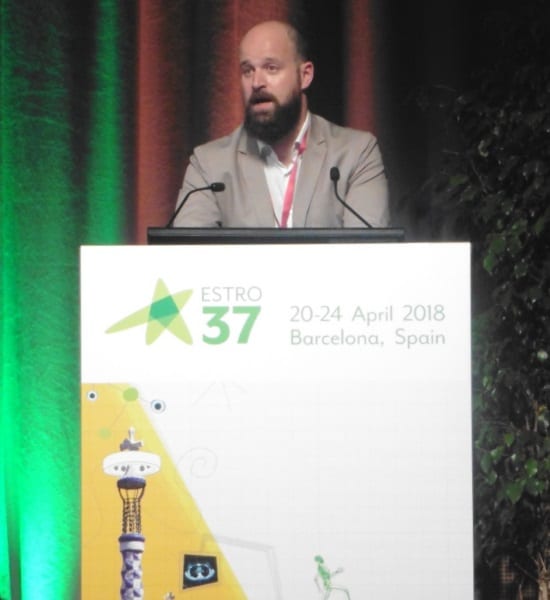
Surface guidance – in which advanced 3D camera technologies are used to track the patient’s skin surface – is increasingly employed for motion management in radiation treatments. At the recent ESTRO 37 congress in Barcelona, Philipp Freislederer from LMU Munich University Hospital explained the rationale behind surface-guided radiotherapy (SGRT).
Philipp Freislederer, from LMU Munich University Hospital
“SGRT uses technology to position and monitor the patient’s external surface to ensure they are in the correct position throughout their radiation treatment,” Freislederer explained. “It matches surface data, in six degrees-of-freedom and in real time, to a reference model captured during planning or at the point of internal imaging in the treatment room.”
SGRT can be applied both for patient setup and during the treatment. Traditionally, daily patient positioning is performed using skin marks to align the patient on the treatment coach, followed by verification with cone-beam CT (CBCT) or MV imaging. Surface guidance offers the advantage of being able to see local deviations in areas without skin marks, increasing the accuracy within such regions of the body.
Freislederer and colleagues performed a study evaluating the setup accuracy of an optical surface scanner (C-RAD’s Catalyst HD) in four treatment regions: head-and-neck, thoracic, abdominal/pelvic and extremities. They analysed 1902 treatment fractions in 110 patients. After positioning the patients using conventional skin marks, 3D deviations were detected by SGRT and using CBCT (as a gold standard).
The team found that SGRT provided similar positioning accuracy to CBCT, without the associated additional radiation exposure. They noted particularly good results in areas with fixed tumour-surface relations, such as the cranium, and lower accuracy when moving from the head to thoracic and abdominal regions.
So could surface guidance replace image guidance? “It’s not clear,” said Freislederer. “Image guidance should still be standard, but maybe for some body regions and some fractions, image guidance could be partially replaced.” He noted that staff training will be essential for accurate positioning, and that the small extra time required for SGRT may impede its acceptance.
Intrafraction monitoring
The other key application of SGRT is intra-fractional monitoring, where surface guidance can constantly monitor the patient position throughout the whole treatment fraction, and any shifts can quickly be observed and accounted for. SGRT can also enable automatic beam holds, an important additional safety feature.
One area where SGRT is particularly useful is to guide deep inspiration breath-hold (DIBH), in which patients hold their breath whilst radiation is delivered. DIBH is employed to limit dose to heart and lungs, particularly during radiotherapy to the left breast, and the beam is switched on and off as the patient breathes.
Freislederer described a prospective study at LMU Munich examining the use of SGRT for DIBH in 168 patients with left-sided breast cancer. The study confirmed the benefits of DIBH. Dose to the heart was reduced compared with free breathing and, in about 25% of patients, the heart was seen to move completely out of the radiation field. He noted that it is possible to perform DIBH using skin marks, but that surface guidance delivers additional safety features and removes the need for invasive procedures such as spirometry.
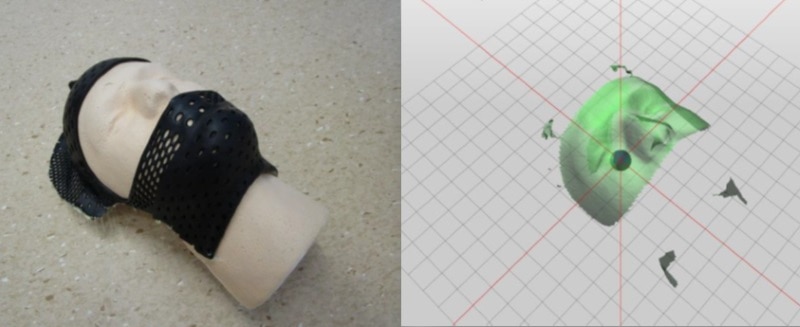
Another important use of SGRT is in whole-brain radiotherapy using open masks, for patients who cannot tolerate fixed full masks. Instead, a chin immobilization mask can be used and SGRT employed to monitor any residual movements throughout the treatment. Tolerance settings can be employed to perform automated beam hold if required.
Patient monitoring during frameless cranial SRS using an open mask
One step further, there’s the possibility of using SGRT to monitor the patient’s position during frameless cranial stereotactic radiosurgery (SRS). Here again, the patient wears a mask with an opening for their eyes and nose and is monitored continuously (about twice per second) during beam-on. Using a mask material with a high contrast to skin enables auto-cropping of the open region in the recorded images.
This approach demonstrated an accuracy of better than 1 mm for isocentric couch rotations. The reproducibility was better than 0.15 mm/0.05° for small translations and better than 0.25 mm/0.1° for small angular deviations – in the same range as for frame-based SRS.
Finally, surface guidance can be applied for respiratory-correlated 4DCT scanning. Here, SGRT could serve as an ideal surrogate with which to measure the patient’s breathing, without the need for belts or other sensors. One important consideration is the best place to measure motion. Freislederer suggested that this could be the upper abdomen on the right side of the patient.
Limitations and possibilities
While there are many applications for SGRT in radiotherapy, Freislederer cautioned that there are limitations too. Surface guidance is not suitable for gating or tracking in stereotactic body radiotherapy of the lung or liver, for example. Respiration is not stable and a breathing curve prediction algorithm would be required. Also, there are currently no models available that accurately correlate motion of the patient’s surface and tumour.
Freislederer concluded that surface guidance offers great potential for fast and accurate patient positioning and continuous intra-fractional motion surveillance during radiotherapy. He emphasized that staff training is essential and that vendors will need to adapt clinical workflows and standards. “SGRT can provide extra safety, improved accuracy, and the possibilities of implementing new radiotherapy techniques,” he told the delegates. “But one must keep in mind that an extra effort must always be made, such as training, quality assurance and time expenses.”
The results from the first ever meta-analysis of its kind suggest that nanotechnology could help improve the design of today’s agrochemicals. It might thus help reduce the impact that modern agriculture has on the environment and human health in the future, and also contribute to global food security.
According to the United Nations, the world’s population will reach 9.7 billion in 2050, explains study lead author Melanie Kah of the University of Vienna in Austria and CSIRO in Australia. This means that overall agriculture production will need to increase by 60%, compared to 2005 levels. This increase should of course be sustainable – that is, the quest for high yields and more efficient agricultural practices should not damage the environment or human health.
Nano-based versions of existing pesticides and fertilizers
Nanotechnology shows promise here and researchers have already begun to develop nano-based versions of existing pesticides and fertilizers. These nanoagrochemicals have several advantages over conventional formulas – for example, they might be delivered directly to a pest and/or may be more efficient.
The types of nanopesticide being developed are mainly reformulations of registered active ingredients that have insecticidal, fungicidal or herbicidal properties, explain Kah and colleagues. They can either contain “soft” nanoparticles (such as polymers or solid lipids) or “hard” materials like silica nanoparticles, carbon nanotubes or graphene oxides. Most active ingredients are organic molecules, but some are also inorganic. Copper, for instance, has been used as a fungicide for centuries.
Quantitative evaluation
The problem is that many existing pesticides are not very efficient and their widespread use has already contaminated both terrestrial and aquatic environments. One of the promises of nanoagrochemicals is that farmers might need to use less of these overall.
In their study, published in Nature Nanotechnology doi:10.1038/s41565-018-0131-1, Kah’s team set out to quantitatively evaluate how nanoagrochemicals compare to conventional pesticides and fertilizers. To do this the researchers collected and analysed data from around 80 recently published papers. They found that some reported nanoformulations can alter the properties of pesticides and fertilisers, but not all. Indeed, some changes may not necessarily reduce impact on the environment, they say.
“A critical assessment of nanoagrochemicals is crucial”
“For instance, while some nanoformulations are potentially 10 times more efficient than their conventional counterparts, our analysis shows that the median gain in efficacy is generally only about 20-30%,” says Kah. “On the plus side, reducing the use of agrochemicals by 20-30% could significantly mitigate environmental contamination. At the same time though, one might question whether the typical benefits reported in the literature – that is, observed in the laboratory – will actually translate to the field. For example, when real-world agricultural practices, inherent environmental variability, and issues related to scalability and cost-efficiency are taken into account.”
Such critical assessment of nanoagrochemicals is neverthless crucial for evaluating their associated benefits and risks, however, she tells nanotechweb.org. “There is currently no comprehensive study that evaluates the efficiency and environmental impact of nanoagrochemicals under field conditions. Our analysis also highlights that many published studies lack nano-specific quality assurance and adequate controls. We hope that our work will guide researchers in designing improved studies in the future that better evaluate the benefits and new risks that nanoagrochemicals represent compared to existing products.”
Developing competitive new products
Agriculture needs to modernize and innovate to meet the increasing demands in food of the growing global population, she adds. To this end, we need to carry out more research to develop novel products that are competitive and can help in making tomorrow’s farming more sustainable.
“I will continue to provide guidance and develop tools and techniques underpinned by sound science to support the development of such products,” states Kah. “There is a definite need to empower both regulatory bodies and industry to facilitate innovation in this sector.”
E-bikes – pedal cycles fitted with an electric motor and rechargeable battery pack – could play a significant role in shifting our transport choice from cars to more environmentally friendly alternatives. Analysis by researchers in Switzerland showed that a two-week e-bike trial induced long-term changes in the mode of transport that came to mind when participants considered nine scenarios, including “visiting a friend in the closest city”, “commuting to work”, “going shopping” and “visiting the mountains with friends for a day”.
In the 2015 Bike4Car programme, car owners in 32 Swiss cities received free use of an e-bike for 14 days in exchange for their car keys. Participants’ views were surveyed immediately after they signed up to the trial. One year later, the same group completed a follow-up questionnaire.
People who took part were keen to experience the new mode of transport, which can be faster than conventional bicycles and allow riders to travel much larger distances. Participants also looked forward to having fun and becoming healthier. Typically, thoughts of improving transport efficiency or protecting the environment were lower down the list of motivations.
“We think that this is because increased health, fitness or fun has direct implications for our personal lives and wellbeing while energy-efficiency and environmental protection are much more abstract and distant concepts to many people,” said Corinne Moser of Zurich University of Applied Sciences (ZHAW).
Examining the longer-term effects of the trial revealed some extremely promising results.
“After one year, participants’ habitual association with car use had weakened significantly,” said Moser. “What’s more, we observed this not just for participants who decided to buy an e-bike once the free trial was over, but also for those that did not.”
Providing access to e-bikes helped people discover new paths and routes, and opened the door to thinking about alternative forms of transport.
The researchers conclude that e-bike trials such as Bike4Car have the potential to break mobility habits and contribute to more sustainable mobility patterns, which is an important breakthrough.
“With many other interventions – such as providing a free one-month travelcard for public transport – participants quickly revert to their previous behaviour once the campaign is over,” said Moser.
The idea behind the research is to assess the impact of interventions to promote energy-efficient behaviour at the local level. This involves collaborating closely with city representatives to identify upcoming schemes and evaluate their outcomes. As well as mobility choices, the team is also focusing on food and household warm water use as part of a drive towards more sustainable lifestyles in cooperative residential areas.
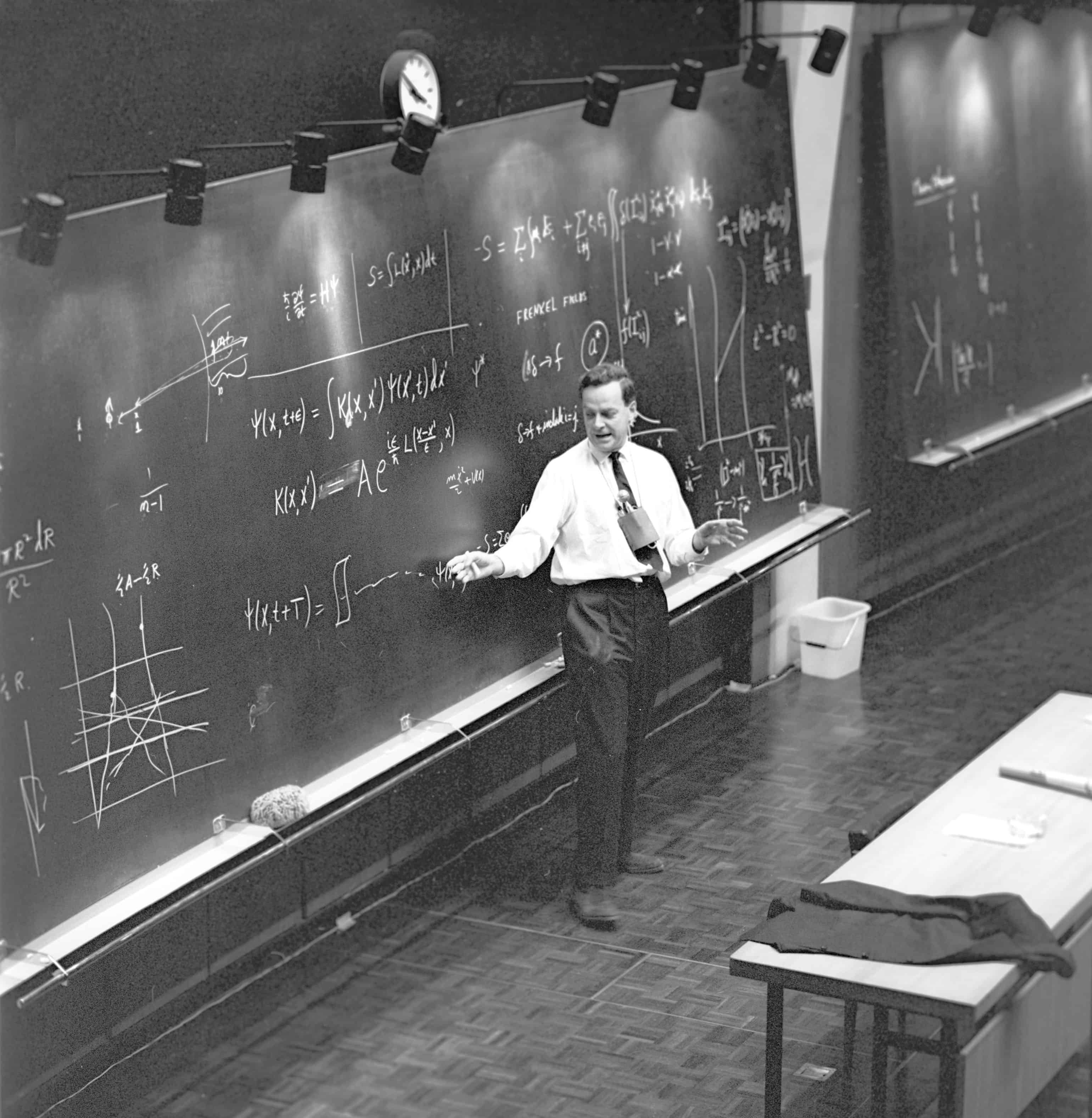
The legend lives on: born 100 years ago, Richard Feynman won the 1965 Nobel Prize for Physics and is shown here lecturing at CERN shortly after picking up the prize. (Courtesy: CERN)
Richard Feynman – one of the most iconic physicists of the 20th century – was born exactly 100 years ago today on 11 May 1918. Like the late Stephen Hawking, he was one of the few physicists to have entered the wider public consciousness, gaining celebrity status through his pioneering lectures, his best-selling books, his much talked-about private life and, of course, his unique way of doing physics. Unlike Hawking, though, Feynman went on to win a Nobel Prize for Physics, sharing the 1965 award with Julian Schwinger and Shin’ichirō Tomonaga. He also helped to build the atomic bomb.
Feynman’s enduring fame is one reason why various events are being held around the world today to celebrate the centenary of his birth. Much of the focus will be at the California Institute of Technology, where Feynman worked for almost four decades until his death in 1988. It is hosting a two-day meeting featuring a star-studded line up of guests who include Feynman’s sister Joan and his adopted daughter Michelle. Also present at the “Feynman 100” celebration and symposium will be other top scientists like Freeman Dyson, David Gross, Lisa Randall, Sara Seager, Leonard Susskind and Kip Thorne who will “survey the current frontiers of knowledge and share their vision of where science is heading”.
Over on the other side of the world, meanwhile, Feynman’s long-time friend, biographer and sidekick Ralph Leighton is hosting an event in the remote Russian region of Tuva, which lies near the border with China. Feynman had a long fascination with this region, which emerged from Tuva having issued its own postage stamps in the 1920s. Feynman spent many years with Leighton trying to visit Tuva – his attempts blocked first by Soviet red tape and later by Feynman’s involvement in the Challenger space-shuttle disaster. Feynman died of cancer before his dream was fulfilled, though the pair’s attempts to visit are documented in Leighton’s 1991 book Tuva or Bust!: Richard Feynman’s Last Journey. Leighton is today planning to host a party at the “Centre of Asia” monument in Kyzyl, before carving a Feynman diagram into a Tuvan rockface.
Elsewhere, a UK-based production company Simian Stories is launching a crowd-funding campaign to raise the production budget for a new short film about Feynman. It will be “a non-linear montage” of key moments in the relationship between Feynman and his first wife Arline, who tragically died of tubercolosis in 1945 aged just 26. Feynman was devastated by her death and the following year wrote a love letter to her that he instructed should remain unopened until after his death. The letter expresses his continuing love and longing for her – and Simian Stories has been awarded the rights to use it in the film. There’s more information about the film online here.
Finally, BBC Radio 4 has a new episode of its “Great Lives” series, in which the British businessman Tej Lalvani– who runs the UK vitamin maker Vitabiotics and stars on the Dragon’s Den show – discusses the life and times of Feynman with presenter Matthew Parris and theoretical physicist David Berman from Queen Mary University of London.
Elephant “rumbles” can be detected by seismic sensors after the low-frequency vocalizations have travelled more than 6 km through the ground – according to a team of geophysicist and biologists in the UK. The researchers say that the elephants likely use these ground vibrations – and those created by their movement – for long-range communication and information sharing. The scientists also suggest that networks of seismic sensors could be used to study elephants and also to monitor poaching by detecting elephants that run in panic.
Previous research has hinted that elephants monitor ground vibrations and use them to communicate, but the nature of these vibrations was not well understood. In the latest study, Beth Mortimer and colleagues at the University of Bristol and the University of Oxford, used seismic sensors called geophones to record ground-based vibrations from wild elephants in Kenya.
They discovered that different elephant behaviours create distinguishable seismic signatures. Perhaps unsurprisingly given their immense size, the ground vibrates when elephants move, but they also generate distinct ground-based vibrations through their rumbles. These are low-frequency vocalizations, usually under 20 Hz, that are below the audible range for humans.
The team also recorded natural and human generated seismic signals, such as car noise. Using seismic modelling techniques they then calculated how far elephant seismic vibrations can travel while still being detectable – taking into account different terrains and background noise levels.
Surprising forces
“We were surprised by the size of the forces acting on the ground that were generated by elephants when they vocalize,” says Mortimer. “We found that the forces generated through elephant calls were comparable to the forces generated by a fast elephant walk. This means that elephant calls can travel significant distances through the ground and, in favourable conditions, further than the distance that calls travel through the air.”
Rumbles of bull elephants were found to produce higher input forces than fast elephant walks, with maximum seismological forces of 2546 N versus 946 N respectively, and the resulting seismic waves were therefore able to travel much further. The maximum propagation range estimate for rumbles was 6.4 km, compared to 3.6 km for a fast elephant walk.
According to the researchers, the results suggest that elephants have the option of using seismic signals created by rumbles for long-range communication. They also say that long-range information transfer is possible from high-force movement. For example, rapid running is a sign of distress or aggression in elephants and the vibrations from such behaviour can travel long distances, potentially providing useful information to promote vigilance in other elephant groups.
Seismic recording could also provide biologists with a continuous, non-intrusive way to remotely monitor elephants and study their behaviour, the researchers claim. Oxford’s Tarje Nissen-Meyer told Physics World that the information available would depend on the nature of the seismic network.
“We estimate that rumbles as well as panic and run are discernible modes of behaviour,” he explains. “We can possibly also constrain the numbers of elephants in a herd by these means.”
Detection, localization and discrimination
Mortimer adds: “We will aim for detection, localization and discrimination – both of elephants from other wildlife and between elephant behaviours. This is likely to be in combination with other monitoring methods, as an extra source of information.”
It might also be possible to use seismic sensors to develop a real-time alarm system that can detect elephants under threat from poachers, by picking up signals from elephant behaviours like panic running, the researchers say. Nissen-Meyer explains that while this research only suggests “that a quick determination of elephant panic behaviour can in principle be detected over considerably large distances”, the team is seeking financial support to further investigate the idea.
Christian Rutz, an evolutionary ecologist at the University of St Andrews, recently proposed the development of anti-poaching tags for large mammals that alert ground teams in real-time when animals come under attack, enabling rapid intervention. He says that he is intrigued by the idea of a seismic monitoring network for elephants. “I think the idea to use seismic detection to identify when elephants are being chased by poachers, or have been wounded and fallen over, is worth exploring,” he says.
It is no secret that efficient solar energy conversion is a top priority for many scientists worldwide. A potential solution to this comes in the form of photocatalytic devices that incorporate molecular adsorbates on metal nanostructures. These photocatalysts can be chemically activated by local surface plasmon resonances – collective oscillations of electrons in metals that can be excited by electromagnetic radiation. Bonds in the molecules either form or break due to the transfer of electrons, through a complex process initiated by the decay of plasmons. An international team of researchers led by Emiko Kazuma at RIKEN has used a scanning tunnelling microscope (STM) to observe and investigate plasmon-induced reactions of single molecules in real time.
Inducing chemical reactions with surface plasmons
In metal nanostructures, surface plasmons resonate in response to specific frequencies of light and can generate strong electric fields or cause intramolecular chemical changes by exciting electrons to higher molecular orbitals. Researchers have used this phenomenon to controllably induce molecular dissociation on a range of metals. They then monitor the reaction with STM, a powerful tool that maps surface topography with atomic resolution by measuring the current that tunnels between a metal tip and the surface.
The experiment involved bringing the tip close to a metal surface onto which the team had adsorbed dimethyl disulfide (DMDS) molecules. Exciting a local surface plasmon (LSP) resonance by illuminating the area below the tip results in a strong electric field within the gap, and the nonradiative decay of the LSP excites electrons to unoccupied states in the adsorbed DMDS causing chemical changes in the molecule. The researchers used STM to observe single molecules splitting into two parts through plasmon-induced cleavage of the sulphur-sulphur bond.
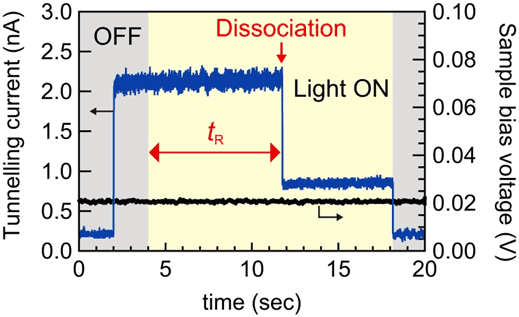
The current trace shows the time taken for the reaction to occur (tR) in a single molecule once the light is switched on. Image courtesy of Emiko Kazuma, RIKEN
Increasing the efficiency of photocatalysts
Some photocatalytic devices operate by direct photodissociation – where photons rather than plasmons induce chemical changes – to break bonds in molecules. The researchers compared molecule populations with STM both before and after irradiation to compute the efficiency of LSP-induced dissociation and found the yield to be 400 times greater than has been observed for direct photodissociation. They also analysed the wavelength dependence of the reaction to determine the dissociation mechanism for LSP-induced chemical reactions. The results show that LSP-induced dissociation is based on a direct intramolecular excitation to the lowest unoccupied molecular orbital of the anti-bonding sulphur-sulphur orbital, the same reaction pathway by which direct photodissociation operates.
An especially attractive aspect of studying LSP-induced dissociation with STM is the high temporal resolution. The tunnelling current of the STM is highly sensitive to the size of the nanogap, i.e. the tip height above the surface. If the tip height is maintained by fixing the gap resistance, the rate of the chemical reaction can be measured in real time by continuously measuring the current under irradiation with the light source. The ability to correlate spatial and temporal information with such precision is unprecedented and offers a route to controlled chemical reactions induced by LSP.
These findings offer new perspectives on plasmon-induced chemical reactions that are invaluable in the advancement of efficient solar energy collection and conversion. Further details can be found in Science.