Light up your life

Cast your mind back to 2008 and think about what you remember of that year. Perhaps it was the global banking crisis and Gordon Brown’s alleged rescue of international finance. Maybe it was CERN switching on the Large Hadron Collider and then swiftly needing to repair its blown magnets. Or perhaps it was all the talk about high-temperature iron-based superconductors. But whatever your personal recollections, you surely won’t remember that the United Nations (UN) declared 2008 to be the International Year of the Potato.

Now it’s easy to laugh at the idea of celebrating potatoes, which is why I just did, but then the UN has been good for science too. In the decade since the potato was king of the crop, we’ve had international years devoted to astronomy (2009), chemistry (2011), crystallography (2014) and then light (2015). Physics, of course, took centre stage in 2005 to mark the centenary of Einstein’s papers on Brownian motion, the photoelectric effect, special relativity and E = mc2.

The International Year of Light was an apparent success, with organizers claiming more than 13,000 activities in almost 150 countries attended by an audience of more than 100 million. You might wonder, therefore, why we need an International Day of Light, the first of which is to be celebrated on Wednesday 16 May. Surely we’ve “done” light?

Not so, according to the organizers, who kick off with a launch event today at the headquarters of the UN Educational, Scientific and Cultural Organization (UNESCO) in Paris. The goals are ambitious: improve the public’s understanding of light; show the link between light and culture; highlight research and careers in light science; and seek ways to curb light pollution. But to me the most worthwhile effort is promoting alternative sources of light for people in developing nations not connected to the electricity grid, many of whom rely on dangerous kerosene lamps for light after dark.

My favourite is GravityLight – a lamp attached to a heavy 12 kg bag. Simply lift the bag up to a height of about 2 m with your hands and, as it descends slowly over the course of half an hour to the floor, gravitational energy is converted into electrical energy to turn on a light-emitting diode (LED) bulb. It’s a beautiful idea with some simple physics principles at its heart.

So my message is – don’t let the International Day of Light pass you by. There are lots of activities and events to get involved in. If nothing else, check out the Physics World website on 16 May for some light-themed treats in our special light-themed collection or read this month’s Focus on Optics and Photonics. It would be a shame if the International Day of Light went the way of the International Year of the Potato, which is to be well and truly forgotten.

Bioprinting builds 3D model of a brain tumour

Patients who are newly diagnosed with high-grade gliomas (GBMs), one of the most aggressive brain tumours, only have a median survival time of around 15 months – reducing to just 5–7 months for recurrent tumours. Glioma stem cells are thought to be at the root of these poor outcomes, so researchers are focusing on therapies that could target these cells. An important first step is to develop realistic models that will enable scientists to study the biology of glioma stem cells and to investigate the resistance of GBMs to chemotherapy.

To date, researchers have mainly exploited 2D monolayers of glioma lines as a model for the tumour, providing a way for studying how gliomas evolve and how they react to anti-cancer drugs. However, this model fails to take into account the 3D environment of the tumour, and it doesn’t allow researchers to study other significant factors such as cell–cell and cell–matrix interactions, spatio-temporal signalling and metabolic gradients. Unfortunatel,y this means that most anti-glioma drugs that proved to be effective in vitro have failed miserably in clinical trials.

Now, a team of researchers led by Tao Xu and Qin Lan from Soochow University, Tsinghua University and the Tsinghua-Berkeley Shenzhen Institute, all in China, and Medprin Biotech GmbH in Germany, have turned to 3D bioprinting to create a glioma stem-cell model. “Our work shows that we can use bioprinting technology to build 3D glioma models,” explains team member Xingliang Dai. “This is just beginning of our studies on the glioma microenvironment.”

Building a glioma stem-cell model

The advantage of bioprinting is that it can be used to fabricate complex 3D biological structures by building up layers of bioinks, essentially biomaterials mixed with cells. In the novel technique reported by Xu and his colleagues, which they reported in the journal Biofabrication, the researchers created a porous gelatine/alginate/fibrinogen hydrogel structure that mimics the extracellular matrix of glioma stem cells. They made the hydrogel more stable by adding the cross-linker transglutaminase (a non-toxic transferase that naturally exists in the human body) to reinforce the gelatine, which is the main component of the structure.

The team are now working to upgrade and improve their current system, and to optimize the bioinks used for printing. They also need to enhance the design the tumour model so that it more accurately mimics tumours in the body. “We have made much progress since the publication of the Biofabrication paper – including the fact that we observed differently expressed transcriptase profiles of the 3D bioprinted glioma stem cells compared to 2D-cultured ones,” says team co-leader Xu.

According to Xu, several other research teams have been in touch to request more details about the study. “We are also happy to say that we have also received funding support from the National Natural Science Foundation, the National High Technology Research and Development Program of China (863 Program), and the Suzhou Science and Technology Project,” he continues.

The researchers have also started to investigate the interactions between glioma stem cells and bone marrow mesenchymal stem cells, whih can be done by fusing these two types of cells together during the bioprinting process. “By applying the technology to glioma research, we have succeeded in shedding more light on glioma stem-cell behaviour, the glioma microenvironment, tumour-stromae interactions and glioma chemosensitivity,” concludes Xu.

  • Read our special collection “Frontiers in biofabrication” to learn more about the latest advances in tissue engineering. This article is one of a series of reports highlighting high-impact research published in the IOP Publishing journal Biofabrication.

Acoustofluidics separates circulating tumour cells

Circulating tumour cells (CTCs) are cancer cells that escape from primary tumour sites and enter the bloodstream. This metastasis is responsible for the majority of deaths from cancer. Monitoring the level of CTC levels in blood is thus important but has proved difficult to do. A team of researchers in China and the US has now developed a new way to isolate these cells using a technique called size-amplified acoustofluidics in which the CTCs selectively bind to microbeads.

The bound cancer cells are significantly different in terms of size and physical properties (they are stiffer, for example) compared to normal cells, explain the researchers led by Feng Guo of Indiana University in Bloomington in the US. This means that their acoustic radiation force is a 100-fold higher than that of bare CTCs or normal blood cells. They can thus be efficiently sorted from blood using microbeads (the “size-amplifiers”) in a travelling acoustic wave microfluidic device, and then released from the amplifiers by being degraded with enzymes.

The technique is 77% efficient and produces CTCs with a 96% yield.

Acoustofluidic devices

Acoustofluidic devices use ultrasonic waves within microfluidic channels to separate suspended micro- and nanoscopic entities (in this case, biological cells). They work thanks to a process called acoustophoresis, in which the suspended objects move when subject to sound energy.

The objects must be smaller in size than the incident wavelength of the sound and the width of the fluidic channels are usually tens to hundreds of microns across. This means that acoustofluidic devices generally make use of ultrasonic waves generated from transducers pulsating at high (megahertz) frequencies. At certain frequencies that depend on the geometry of the devices, it is possible to produce an acoustic field that shifts the moving trajectory of particles across streamlines that flow within the bulk of a fluid. In this procedure, the acoustic radiation force generated by the sound waves is key in sorting the complexes formed between the CTCs and the microbeads, say the researchers, since it is this force that pushes the complexes along in the fluid flow.

Selective capture

In their work, Guo and colleagues used 40-micron diameter silica microbeads coated with biodegradable gelatine and grafted with the capture agent EpCAM. These beads can selectively capture CTCs and can then be removed from them after they have been separated in the acoustofluidic device.

Not only can the microbeads efficiently and specifically bond onto CTCs to form CTC/size-amplifier complexes, they also enhance the differences in physical properties between the CTCs and normal blood cells, as mentioned.

Lab tests

The researchers tested out their platform on 1-millilitre-volume blood samples from eight colorectal patients and eight breast cancer patients. They collected the cell/size-amplifier complex using a centrifuge and then counted the number of cells obtained using an optical microscope. They found that the devices separated several to tens of CTCs respectively. They also calculated how pure the cells were (as the ratio of cells sorted with size-amplifiers versus all cells collected at the device outlet).

The technique could be a promising alternative to patient biopsies that are difficult or impossible to perform in some cases – for example, in some lung or breast cancers. It could also help us better understand the mechanisms involved in cancer metastasis, say Guo and colleagues, and so guide targeted cancer therapy.

The research is detailed in the IOP journal Nano Futures.

How clean is tropical hydropower?

Hydropower in the Mekong river basin in Southeast Asia is not a “categorically low-emission” energy source, according to researchers who studied its long-term greenhouse-gas output.

The study – the first to assess emissions on a large scale over a lifetime of 100 years – paints a mixed picture for hydropower in the tropics. Although many of the Mekong reservoirs have emissions comparable to renewable energy sources, a large portion have considerably greater emissions, with some even matching those from fossil-fuel power plants.

The researchers believe that if low emissions are to be considered important, many factors must be taken into account and the merits of hydroelectric reservoirs must be assessed on a case-by-case basis.

“Things are rarely simple,” said Timo Räsänen of Aalto University, Finland. “[… Our] understanding should be used for developing region- and location-specific energy alternatives from a mix of energy sources that minimize the total greenhouse-gas emissions.”

The Mekong region has undergone rapid social and economic development in recent decades. Since the 1960s, to meet rising energy demands, hydroelectric reservoirs have steadily multiplied, with a sharp increase this century.

Hydropower projects are often assumed to be a low-carbon source of energy, although this is not always backed up by what little data has been collected. In 2011, for instance, the consultancy Environnement Illimité in Canada found that emissions from 18 equatorial and tropical reservoirs ranged from 2 to 4100 kg of carbon dioxide-equivalent per megawatt-hour – compared with 380 to 1300 kg from typical fossil fuel plants.

Räsänen and colleagues from Aalto University and Leiden University in the Netherlands chose the Mekong region for their analysis because of its 141 existing and planned hydropower reservoirs. Data on reservoir emissions are lacking for the Mekong region, so the team borrowed data on carbon dioxide and methane emissions from other sources, and fed them into an existing statistical model.

The researchers also incorporated basic reservoir data they collected themselves from the Mekong region, such as age, size, net primary productivity, air temperature, erosion and annual energy production. “Our study is the first to make such [a] regional analysis which also considers the change of emissions in time,” said Räsänen.

Emissions ranged from 0.2 to 1994 kg of carbon dioxide-equivalent per megawatt-hour, with a median of 26 kg, the team found. Some 80% of general hydropower reservoirs and 45% of reservoirs also used for irrigation had emissions comparable to renewable sources, while the rest had greater emissions, some beyond those of fossil-fuel power plants.

According to Räsänen, the reasons for the variability include the amount of organic matter in the reservoirs, the warmth of the reservoir (which aids decomposition), and the shape of the reservoir – with relatively large surface areas also helping decomposition. But he stresses that educated guesses can only be so accurate, and many other specific factors need to be taken into consideration.

“The existing models are relatively simple and there is room for improvement,” he said. “For example, we should develop a typology of the physical characteristics of the reservoirs, and analyse the effect of reservoir characteristics on the emissions to make better predictions.”

The team published the findings in Environmental Research Letters (ERL).

Echoes of gravitational waves could point to quantum gravity

The first detection of gravitational waves in 2015 created huge excitement because it confirmed a long-standing prediction of Albert Einstein’s general theory of relativity and opened up a completely new way of observing the universe. Physicists have also been scrutinizing data from the growing number of gravitational-wave detections for “echoes” – the existence of which could mean that our understanding of relativity is incomplete. Physicists in Canada and Iran have found tentative evidence for such echoes gravitational waves from colliding black holes, and now say a stronger signal exists in data from colliding neutron stars.

Many physicists believe that general relativity is incomplete because it is at odds with quantum mechanics, leading to the information paradox when considering the extreme gravitational fields generated by black holes. Relativity tells us that whenever anything, including light, crosses a black hole’s event horizon the information it contains is lost to the rest of the universe forever. But quantum mechanics requires that information can neither be created nor destroyed. This is a problem given the existence of Hawking radiation, which implies that black holes can evaporate away to nothing and in the process erase all of the information that flowed into them.

If gravitational-wave echoes exist, it would suggest that black holes are not bounded by a classical event horizon but instead by a quantum-mechanical Planck-scale structure. One such structure put forward by theorists is the “firewall”, which would destroy any object passing through it but retain that object’s information and so keep it outside the black hole. Firewalls, however, are controversial. While physicists generally agree that quantum mechanics comes into play deep inside black holes – even though it is impossible to see its effects – they are largely sceptical about its role outside the event horizon.

Barrier bouncing

Gravitational-wave echoes would be created thanks to the presence of the Planck-scale structure, or “membrane”, and what is known as the angular momentum barrier. The latter is a boundary lying around 1.5 times as far as the event horizon (typically around 200 km from the centre of a black hole) that is predicted by relativity and which partially confines gravitational waves. Any outgoing wave generated between the event horizon and the barrier would normally bounce off the barrier and then pass through the horizon, never to be seen again. But the membrane, lying within a Planck length of the horizon, would instead reflect the wave back, allowing it to either bounce off the barrier again or, less likely, pass through the barrier into space.

As a result, the barrier can act like semi-reflective mirror that releases a small fraction of the gravitational-wave energy into space after each reflection from the membrane. This would appear as weak bursts of gravitational radiation – the echoes – separated by a well-defined time interval that depends only on the black hole’s mass and rate of spin.

This proposal is based on an idea originally put forward by Vitor Cardoso of the University of Lisbon in Portugal and colleagues in February 2016, just a couple of weeks after the LIGO collaboration in the US had announced the first detection of gravitational waves. Then in December that year, Niayesh Afshordi of the University of Waterloo and the Perimeter Institute for Theoretical Physics in Canada and colleagues said they had evidence to back up the idea, claiming to have found a 2.5σ signal for the echoes in gravitational waves from three pairs of merging black holes, including that seen in the first detection.

Consistent with noise?

That claim was met by scepticism from nine members of the LIGO collaboration, who did their own analysis of the data. They included more background than considered by Afshordi’s team and colleagues, and found a signal, but with less significance – about 2σ. The result, said the LIGO team, was “entirely consistent with noise”. They therefore concluded that the rival analysis did “not provide any observational evidence for the existence of Planck-scale structure at black hole horizons”.

Undeterred, Afshordi and his colleague Jahed Abedi of the Sharif University of Technology in Tehran looked for echoes in data from the merging neutron stars announced with much fanfare by LIGO and Virgo in Italy in October 2017. First, they calculated the range of expected echo frequencies and time delays between merger and echoing – 60-90 Hz and up to 1 s, respectively (the latter depending on whether the neutron stars collapsed directly to form a black hole or first produced a very massive neutron star). They then scanned the data set to find out whether there were waves matching those criteria. As they reported recently on the arXiv server, they did indeed find such a signal – at 72 Hz, around 1 s after the merger. What’s more, they found only a few similar repeating patterns at other times within the data. As such, they claim, the signal has a significance of 4.2σ.

Cardoso says it is “puzzling” that the neutron-star echoes should have a higher significance than those from the merging black holes – given that the latter signal was more intense. He also cautions that the repeating waves could be a consequence of conventional physics, such as “radiation from leftovers of the merger”. Nevertheless, he argues that the prospect of new physics makes such searches worthwhile. “It would be foolish not to dig deep into this,” he says.

Afshordi admits he was surprised to find such a strong signal in the neutron star data, and acknowledges that fresh observations from LIGO and Virgo will be needed to settle the issue. But he argues that the evidence is building, pointing out that another group, at the University of Toronto, has seen 3σ evidence for the echoes. “So far everyone who has looked for echoes has found them, including the LIGO group,” he maintains. “We have yet to have a group that doesn’t find anything.”

Recognizing mental health in the research environment

We are hearing more and more about the impact that poor mental health has on our working lives and environment and a recent review commissioned by the Royal Society and the Wellcome Trust highlighted the high incidence of mental health problems amongst researchers in the UK.

So as we start Mental Health Awareness Week 2018, last Friday’s one-day workshop exploring mental-health issues in the science, engineering, technology and mathematics (STEM) research environment was very timely.

The meeting was held at the Royal Society of Chemistry (RSC) in London, having been organized by the RSC with support from the Royal Society, the Royal Academy of Engineering, the Royal Society of Biology, the Wellcome Trust and the Institute of Physics, which publishes Physics World.

Opening the workshop, Susan Guthrie of RAND Europe, who carried out the review, said that one third of researchers in the UK reported they experienced unacceptable levels of stress and over three-quarters worked more than 48 hours per week. Alongside this, over half reported some degree of bullying and harassment. Academic burnout was on a par with other high-stress occupations such as teaching and social work. Guthrie estimated that the impact of the loss of productivity and talent to the UK’S research and science based through not addressing these issues ran to hundreds of millions of pounds per year.

Bringing a very personal perspective to the day was Joanna Waldie, a semiconductor-physics postdoc at the University of Cambridge, who talked courageously about her own experiences of coping with mental-health conditions. Dealing with isolation, setbacks in research and rejections from grant funders is all part of being a researcher but is particularly challenging when experiencing episodes of poor mental health. As Waldie reminded us, “It’s okay to take time out to look after your mental health.”

The third speaker was Sara Shinton, head of researcher development at the University of Edinburgh, who spoke about the challenges of working across a very complex institutional structure and getting the right messages across. She started by acknowledging that the academic research environment is challenging, that years of uncertainty takes its toll, and that the fragmentation of academic time all erode well-being. By addressing mental-health issues openly, the university wanted to encourage everyone to talk about their mental health, which would ultimately make it easier for people to access support. But one of the biggest challenges was engaging everyone to talk about these issues. “This could be the next revolution… having scientific people at scientific conferences talking about mental health” said Shinton.

During the workshop session, many ideas emerged about how the professional bodies can support everyone working in STEM to develop an environment that nurtures wellbeing, supports those who have mental health conditions and challenges stereotypes. Promoting mental health awareness week is just the start of the journey.

Super resolution microscopy gets a dose of deep learning

Super resolution localization images typically require hundreds or thousands of frames to provide a single reconstructed coordinate map of molecular positions. This takes time to acquire, and therefore limits temporal resolution – how fast you can image. Here researchers from Paris use deep learning – a kind of machine learning/artificial intelligence that uses neural networks to massively accelerate the process.

How it works

ANNA-PALM (artificial neural network accelerated-photo activated localization microscopy) is based on the idea that a computer can predict the structure of a biological entity from sparse data if it has enough prior information about its expected structure. Training the system requires two bits of data. First, the system needs high-density training data of the structure, to represent its true nature. This can be conventionally acquired using Photoactivated localization microscopy (PALM) or other types of microscopy such as Stochastic Optical Reconstruction Microscopy (STORM) or DNA points accumulation for imaging in nanoscale topography (DNA PAINT) – which all use thousands of frames to get extremely dense structural maps. The second requirement is very low-density input data from the same cell, mirroring the number of frames you want to use for the real experiment. The fewer the frames, the higher the temporal resolution.

The artificial neural network (ANN) is used to recover approximations of the dense training data from the under-sampled data, and its success is measured using a ‘loss’ criterion that takes into account various components of the structure. Once this criterion reports reliable reconstruction of the dense image from the under-sampled image, the ANN is trained. By using a widefield image of each cell of interest in conjunction with the reconstructed ANNA-PALM image, the authors built in an error detection method inspired by a technique called SQUIRREL but using neural networks, to identify how well the software has reconstructed the structure.

After training the ANN on multiple datasets, it can be used to predict the structure of dense images based only on under-sampled images from experimental imaging data. These dense reconstructions, the product of the trained neural network, are therefore new data. They approximate the real situation had the sampling met the Nyquist requirement, where for a given resolution unit there must be at least two independent localizations. (In practice this could refer to the hypothetical ability to label every single G actin protein within an actin fibre, for example.)

What it can do

The researchers report that the technique is even able to pick up changes in the network due to drug perturbation – a major question if the goal of an experiment is to compare structural networks in multiple experimental conditions. It may therefore be possible to use sparse data to reconstruct more complex structures, such as actin networks that differ in separate parts of the cell – for example the dense actin in the leading edge compared with the stress fibre like actin in the lamella of T cells or dictyostelium. However, careful experimental planning would have to be included in situations where the status of the structure in condition B is completely unknown. Using a few conventionally acquired super-resolution images obtained from a high number of frames is one way of validating this technique.

Clear advantages of the technique exist. The first is its application to high throughput super resolution microscopy. The high temporal resolution afforded by ANNA-PALM means that you can practically image many more cells in a single day. By using an automated imaging system, Ouyang et al. were able to obtain super resolution images of microtubules in more than 1000 fixed cells in a single day. Each cell only required 10 seconds of imaging time to produce a reliable map of microtubules. Transforming a sparse localization image into a dense super-resolution image using ANNA-PALM takes less than 1 second per field of view.

Applying ANNA-PALM to live cell microscopy in conjunction with automated imaging systems, could reduce human bias during cell picking, decrease phototoxicity and increase the technique’s applicability to fast moving cells such as leukocytes.

There are other approaches that also aim to achieve higher temporal resolution. For live cell super-resolution microscopy, some researchers in the field are trying to increase temporal resolution by engineering bright fluorescent proteins that provide sufficient signal for 1 millisecond frame rates. Other researchers are attempting to increase temporal resolution by decreasing the number of required molecules per reconstructed frame to extract meaningful statistical data about protein clusters. Bayesian statistics allows researchers to successfully quantify very sparse datasets, but focuses on the biological phenomenon of protein clustering. Structures, as opposed to clusters, are notoriously hard to capture and quantify by super-resolution localization microscopy, since extracting meaningful quantitative data requires the full structure.

This technique gives researchers access to maps of entire fibre networks (actin, microtubules etc) and other structural components within cells (microtubules, nuclear pores, spectrin repeats etc) with only a few frames of acquisition data. When combined with multiplexed imaging, quantitative analysis techniques, and advances in fluorophore engineering as mentioned above, ANNA-PALM will be a useful technique to elucidate the role of such structures, and how they interact with signalling networks inside living cells.

Full details of the work can be found at Nature Biotechnology.

Astronauts use ultrasound to measure spinal health

© AuntMinnie

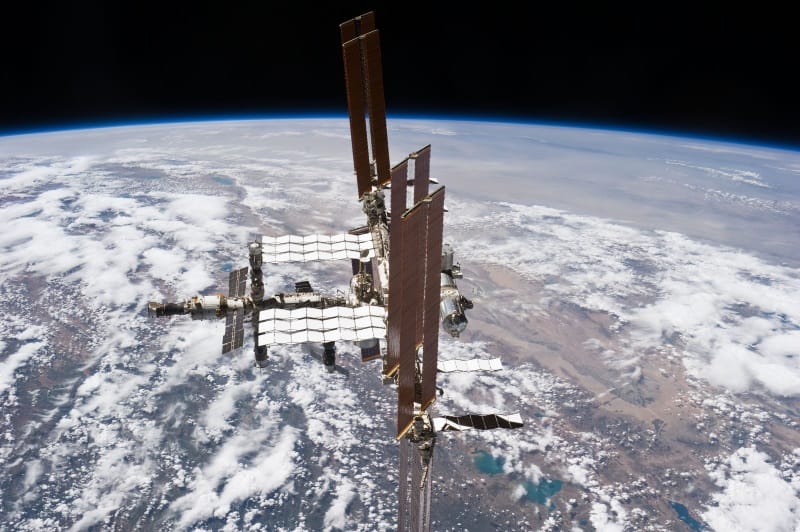
Astronauts armed with a compact ultrasound system successfully performed scans on each other while on the International Space Station. The scans were part of a study to assess spinal changes during long-term spaceflight that could lead to back pain, researchers wrote in the April issue of the Journal of Ultrasound in Medicine.

A group from Henry Ford Hospital worked with NASA to train astronauts on the International Space Station to use ultrasound for imaging the spines of their colleagues during flight. The researchers found that it was feasible to teach these novice users to use ultrasound effectively for this purpose. In addition, the data collected could help in the development of countermeasures to protect astronauts’ spines during spaceflight, as well as the creation of protocols for treating injury once the astronauts have returned.

“Focused ultrasound monitoring of the spine for longitudinal changes during long-duration spaceflight may influence additional strategies or nutrition/drug therapies to reduce disk degeneration,” lead author Kathleen Garcia and colleagues wrote. “[Our] study demonstrates a potential role for ultrasound in evaluating spinal integrity and alterations in the extreme environment of space.”

The ISS

Aches and pains

Starting with the Apollo program and continuing into the International Space Station era, moderate to severe back pain has been a common medical complaint among astronauts, corresponding author Scott Dulchavsky told AuntMinnie.com.

Scott Dulchavsky

“When there’s no gravity, the spine loosens, making it less stable and putting stress on muscles and ligaments,” he said. “The spine can actually elongate by as much as three inches, and that puts astronauts at higher risk of problems when they return.”

MRI and CT are the clinical standards for spinal imaging, but they aren’t available in space. Ultrasound can be carried on space vehicles thanks to its compact size, but a framework for imaging spinal structures in space hasn’t been clearly formulated, Garcia’s team wrote.

To address this problem, the researchers developed an ultrasound protocol for spaceflight, and they investigated whether astronauts on the International Space Station could effectively perform ultrasound assessments of the lumbar and cervical regions of the spine. Seven astronauts participated in the study and served as both ultrasound operators and research subjects; two additional crew members were trained as backup operators. The exams were read remotely, and the researchers then compared these in-flight results with preflight and postflight MRI and ultrasound exams (J. Ultrasound Med. 37 987).

The astronauts were trained six months before their mission via an online program that included a review of spinal anatomy, procedure demonstrations, equipment setup orientation, and a software review, as well as a one-hour, hands-on session during which they alternated between patient and operator roles. The exams were conducted with GE Healthcare’s Vivid q device, a laptop-sized ultrasound scanner. The astronauts were assisted remotely by experts at NASA’s Lyndon B. Johnson Space Center in Houston.

When the astronauts underwent the exams, they were placed supine on a medical restraint system on board the space station. To evaluate the effects of a lack of gravity on the spine over time, each study participant had three in-flight ultrasounds: one at day 30, one at day 90, and one at day 150.

The astronauts easily obtained high-quality images of the lumbar and cervical vertebrae, the researchers found. Overall success rates for image acquisition were 95% in the lumbar spine and 90% in the cervical spine. In addition, there was “no appreciable difference in success rates for either image acquisition or image quality between expert operators and astronaut crew members in the lumbar and cervical regions,” they wrote.

The study findings fill in a data gap, according to Garcia and colleagues.

“Given the previous void of in-flight spinal imaging capabilities in space, to our knowledge, this study represents the first attempt to monitor microgravity-associated acute changes to the spine while they are occurring,” they wrote.

Greater purpose

One of the benefits of this kind of research is that the findings can influence healthcare on Earth, according to Dulchavsky.

“By putting smart people into constrained environments like space, we can find solutions to health problems that can be used beyond the space station,” he said. “Our work here found not only that nonphysicians can be trained to effectively use imaging devices, but it also pointed to further research on exercise and dietary regimens that could help keep the spine healthy in patients on Earth.”

As the US sets its sights on sending astronauts on longer missions – such as to Mars – understanding how the human body is affected by space is crucial, Garcia and colleagues wrote.

“As the duration of space missions continues to increase, [ultrasound’s utility] will only gain importance in monitoring crew health and diagnosing disorders,” the group concluded. “Further investigations should be performed to corroborate this imaging technique and to create a larger database related to in-flight spinal disorders during long-duration spaceflights.”

  • This article was originally published on AuntMinnie.com. © 2018 by AuntMinnie.com. Any copying, republication or redistribution of AuntMinnie.com content is expressly prohibited without the prior written consent of AuntMinnie.com.

Renewables in France – good targets, slow progress

Although progress has been relatively slow, France has a quite ambitious energy policy. Nuclear is to be cut back by around 25% by 2025, so that it supplies a maximum of 50% of power, with renewables accelerating to supply 32% of energy by 2030 and doubling their share of electricity to 40% by then. Last year, according to BNEF data, France invested $5bn in clean energy, up 15% on 2016.

It has some interesting renewable energy projects at a range of scales. For example, the go-ahead has been given for 17 GW of small-scale renewables. At the larger scale, a 493 MW offshore wind farm also got the go-ahead off Brittany – its biggest offshore project so far. France has also launched its first floating wind turbine – a 2MW Floatgen “damping pool” unit.

However, it is still some way from reaching its EU-agreed target of getting 23% of its energy from renewables by 2020. Progress has been slowed by bureaucratic constraints and policy shifts. But the problems are gradually being addressed. For example, the government now has a 10-point plan to simplify admin procedures to boost wind so it can double its capacity to 26 GW by 2023. It hopes to halve the time taken to process wind farm applications: some have been opposed locally and some, for offshore sites, can take up to nine years.

Detailed overall plans are still hard to come by, but recent PPE (Plan de programmation pluriannuelle de l’Energie) targets imply total renewable-energy capacity of 70 GW (low scenario) – 77 GW (high scenario) by 2023, delivering 150 and 167 TWh of electricity per year respectively, and increased annual installation rates from 1 to 2 GW for solar, and from 1 to 1.8 GW for wind (though less offshore than expected), as part of the overall goal of increasing renewables share to 23% of gross energy consumption in 2020, on the way to 32% by 2030.

An earlier study by the French environment and energy agency Ademe had claimed that it would be in theory possible to supply all electricity with renewables by 2050. It looked to a mix of 63% off and onshore wind, 17% solar, 13% hydro, and 7% thermal energy (including geothermal). EDF thought this was somewhat optimistic.

Initially it looked as if Macron, the new president, would back an ambitious renewables programme and the nuclear partial phase-out, especially given the appointment of a strongly pro-renewables energy and environment minister. However, after a long delay, the new Macron-led government has now made some adjustments – perhaps following a campaign by the pro-nuclear lobby, including input from the Energy for Humanity group. The partial nuclear phase-out plan has been delayed by five years, maybe more, since it was argued that renewables couldn’t expand fast enough. But this may only be a short-term pause; the aim is still to push renewables strongly. The government it seems may make state-owned utility company EDF shift its focus from nuclear to renewables. Minister Nicholas Hulot says cash-strapped EDF “can revitalize itself through renewables”.

For its part, EDF says it will install 30 GW of PV solar between 2020 and 2035, pushing PV’s input up to 6% of EDF’s total. EDF says that PV is easier to deploy, since there has been resistance to some wind projects, even though, by 2017, France did have around 12 GW of wind, against only about 8 GW of PV. Nevertheless, EDF does seem keen to push all renewables. It’s also supporting offshore marine energy, for example backing Open Hydro’s tidal turbine.

As elsewhere in the EU, while green electricity supply is doing quite well, the heat side has been less successful. However, French utility Engie plans to switch all its gas operations to biogas/renewable hydrogen by 2050, making it 100% green. Engie has 70 biogas projects globally, including 40 in France. It estimates that biogas from farm and other waste – but not using food crops – has the potential to grow from about 1% of gas use in France to 10% by 2025, 30% by 2030 and 100% by 2050. It also wants to produce hydrogen gas with solar by the electrolysis of water at a price that would make it more competitive with steam reforming of hydrocarbons, which accounts for 95% of hydrogen produced today and costs about €2/ kilo, compared to €6/kilo for electrolysis. But it may do that overseas, e.g. in Chile where it has a market base.

In the meantime, France is still faced with its ageing nuclear fleet. Despite the nuclear phase-out delay, the government still aims to shut the old Fessenheim plant and any others that the Nuclear Safety Authority considers dangerous. But it also wants to upgrade the rest, extending their usable life. This may not be easy given the high cost and the financial and technical problems EDF is facing.

EDF’s much-delayed new Flamanville EPR seems to be beset with endless problems. EDF and Avera have certainly had a bad few years with technical crises. For example, the nuclear safety regulator has asked EDF to examine the manufacturing records of all components produced by the Avera Creusot forge in use at its operating nuclear power plants, and other problems have evidently also now emerged, with further delays likely due to welding faults. It has clearly been a long and costly struggle to get this plant built and no further new plants seem likely, unless heavily subsidised.

Given this backdrop, with at one time many of France’s nuclear plants also closed for safety checks, it does seem odd that Macron chose to portray renewables as being unable to take the strain. Macron has been quoted as saying “A large drop in nuclear capacity can’t be immediately compensated by renewables, because solar and wind are intermittent. As distribution networks stand, we can’t replace several gigawatts of nuclear by equivalent amounts of wind or solar. With current technology, the only way to shut down reactors massively would be, as the German case clearly shows, to open thermal or coal, or rely on foreign gas.”

This may be a little disingenuous. Germany does use coal still, but it exports some of its surplus power to France, some of that surplus being due to the success of renewables, with over 100 GW of wind and PV installed so far. The planned 25% nuclear phase-out in France could hopefully have worked if renewables had been accelerating faster there too, going well beyond the 45 GW it had at the end of 2016. They weren’t, so now the nuclear phase-out has been delayed, with, it might be argued, inflexible nuclear still in effect blocking progress with renewables, despite claims that nuclear can ramp up and down more.

France does seem to be making heavy weather of its energy transition, but that was perhaps inevitable given its huge nuclear element. Germany had much less and is managing to phase that out reasonably well, although, as Macron notes, not without some issues. See my next post on Germany – its coal use has actually been falling.

Meanwhile, back in France, looking to the far future, ITER, the €20bn 500 MW international fusion test plant in the south of France, is half built. But it will be a big net power user – not “10 times more out than in”, as was claimed. A way to go then before fusion might be a serious contender in France or anywhere else. See my separate article on fusion and this very cautious look at ITER and what might follow it, stressing the safety problems. 

Nanoporous carbon electrodes harvest blue energy

Blue energy, which is the free energy lost when salty sea water and less salty river water meet and mix in estuaries, could become a significant source of global electricity in the future. Capacitive mixing, an up-and-coming technique that exploits the charge-discharge cycle of capacitors, can be used to harvest this energy but optimizing the devices employed here has been no easy task. Researchers in France have now shown that molecular simulations can realistically predict the capacitance of devices that contain nanoporous carbon materials as the electrodes and salty water as the electrolyte. When run in reverse this technique is also an efficient way to desalinate water in a process known as capacitive deionization.

In both capacitive mixing (CapMix) and capacitive deionization (CDI), electrodes made from nanoporous carbon have a bigger contact surface area with the electrolyte, thus upping the device’s specific capacitance. Researchers previously found that the capacitance of supercapacitors (also known as electric double layer capacitors, or EDLCs) unexpectedly increases when the pore size of carbide-derived carbon (CDC) electrodes used in these energy storage devices decreases down to the size of electrolyte ions. The problem is that these devices do not behaves as models suggest when the size of the pores in the material reach this size.

Molecular scale description

“Our starting point is a molecular scale description of water molecules, ions and of the nanoporous carbon electrodes, with a simplified representation of the interactions between them,” explains team leader Benjamin Rotenberg of the French National Center for Scientific Research (CNRS) and Sorbonne Université in Paris. “We take two important features into account: the complex structure of the electrode material and how it is polarized by the electrolyte when a voltage is applied between the electrodes.

“We then proceed to ‘numerical experiments’ and look at the trajectory of every atom/molecule in the system. From the data obtained, we compute properties that can be directly compared to experimental results – for example, the capacitance of the devices. Good agreement between the two backs up our model.”

In the context of blue energy, researchers rely on two theories of the interface between electrodes and electrolytes: the Debye-Huckël and Poisson-Boltzmann theories. These are very useful in many cases – for example, for planar or porous electrodes with very large pores. “However, they do fail in the present case of extreme confinement, in which molecular effects play an important role,” says Rotenberg.

Simpler description

As for CDI, another model, the modified Donnan model is frequently used. “This is an even simpler description of the equilibrium between the nanopores and the bulk electrolyte,” explains Rotenberg. “It introduces effective parameters that are usually adjusted to fit experimental data.

“While using parameters from the literature for similar materials does not allow us to reproduce our experimental results under all conditions, we can obtain good predictions by fitting the parameters of a modified Donnan model to reproduce the simulations at high electrolyte salt concentrations. In this way, we can extrapolate the predictions to lower salt concentrations without doing any actual experiments.”

Although not ideal, the researchers say the approach allows them to predict the experimental capacitance of their devices at lower salt concentrations fairly well.

Reliably predicting capacitance

“Our work confirms that nanoporous carbon electrodes, which are already employed in supercapacitors to store energy, show promise for both CapMix and CDI,” Rotenberg tells nanotechweb.org. “It also proves that realistic molecular dynamics simulations are good for investigating the fundamental mechanisms at play in these materials. And that the simulations can be used to reliably predict capacitance – especially at high salt concentrations.”

The team, which includes scientists from the Université de Toulouse, within the framework of the French research network on electrochemical energy storage, RS2E, says that it is now busy simulating other salts to address ion specific effects.

“We are also looking into different carbon structures and developing improved simple descriptions that will allow us to overcome the shortcomings of our molecular simulations. Their computational cost unfortunately does not yet allow us to simulate the behaviour of electrolytes that have salinities comparable to that of river water.”

The research is detailed in Physical Review X DOI: https://doi.org/10.1103/PhysRevX.8.021024.

Copyright © 2026 by IOP Publishing Ltd and individual contributors