Smoke from El Niño fires subdued dawn chorus in Singapore

In 2015 the El Niño drought brought severe fires to Indonesia’s forests and peatlands. The resulting air pollution spread across much of Southeast Asia. Now a study has linked the haze to changes in the dawn chorus some 300 km away in Singapore.

“We’re the first to show a clear effect of the haze pollution on biodiversity,” says Matthew Struebig of the University of Kent, UK. “Previous studies have demonstrated impacts of the forest fires on wildlife activity or the suitability of habitat, but no-one has looked at the pollution effects over in Southeast Asia.”

Although fires occur each year in Indonesia’s forests and peatlands, those in 2015 were exacerbated by a prolonged drought caused by the El Niño -Southern Oscillation and Indian Ocean Dipole. In September and October 2015 the air pollution from the haze regularly reached “unhealthy” or “very unhealthy” levels. Pollution levels near the fires were 15 times greater than in Singapore.

Struebig, Benjamin Lee and Zoe Davies analysed recordings of the dawn chorus made before, during and after the haze at the ‘EcoLink’ wildlife overpass in forest in central Singapore. The prevailing winds at the site brought smoke from Indonesia.

Built in 2013, the 62-m long EcoLink bridge is 50 m wide and re-connects two tropical lowland rainforests, the Bukit Timah Nature Reserve and Central Catchment Nature Reserve. Construction of the Bukit Timah Expressway 30 years ago separated these two reserves.

“The acoustic work was originally intended as a cost-effective way to sample bats remotely,” says Struebig. “Ben was tasked with setting up a monitoring scheme of the new green bridge infrastructure that had been built in Singapore. We recorded the dawn chorus as a bonus, but it quickly became evident that this was changing during the onset of the haze.”

The team assessed four acoustic indices from the soundscape recordings, for a total of 78 mornings between January 2015 and March 2016. All four indices decreased – by up to 37.5% – when the smoke pollution began in September 2015. The acoustic complexity and bioacoustic indices had recovered almost completely 16 weeks after the smoke dispersed but the acoustic diversity and normalized difference soundscape index remained low.

“This suggest that some components of the ecological community continued to be absent or torpid for at least four months after the smoke dissipated,” writes the team in Environmental Research Letters (ERL). The recordings mainly picked up noise from birds and insects, as well as human activity.

Terrestrial vertebrates are likely to suffer from air pollution in similar ways to people, including respiratory diseases, lack of oxygen, irritated eyes and skin, increased stress, and death. The haze may also harm animals indirectly through its reduction of light and sound, which could hamper foraging, decrease the availability or size of prey or alter plant timings.

“We show that (relatively) simple acoustic indices can…track biodiversity patterns in response to quite rapid environmental changes,” says Struebig. Rolling the technique out over a larger area could show how far the pollution impacts reach from the source, and the extent to which biodiversity recovers. “We don’t expect acoustic studies to replace core field research – nor would we want them to – but in some situations, such as dangerous pollution conditions, they are safer and more cost effective to implement,” he adds.

Struebig is now monitoring a site in Borneo with a network of recorders whilst the landscape undergoes conversion. “The idea is to see whether acoustic techniques could be used to monitor biodiversity – in particularly species of conservation concern – as part of conservation commitments by landowners, particularly oil palm and forestry,” he says. “It’s early days and it’s much more challenging than the context in Singapore, but there are some early signs that this is possible.”


100% biodegradable packaging company expands

While a lot of biomedical researchers aim to save lives, Suvi Haimi, CEO and co-founder of Sulapac, wanted to save the planet. “We were devastated by the plastic pollution of the oceans,” says Haimi. Working in biomedical materials research at the time, she realized she could use her expertise in this field to develop an alternative to plastic.

Sulapac produces materials made from wood composites using natural binders derived from starch and glucose. Their products are 100% biodegradable and contain 0% microplastics.

Founded in 2016, the company’s first focus was the cosmetic industry. “I looked in my bathroom cabinet and saw it was full of plastic,” says Haimi. Unsurprisingly, there was more to the decision of which industry to focus their initial attention on than a cursory glance while getting ready for bed. “We spent a lot of time looking into customer segments,” Haimi told Physics World. “A new material costs money so we needed pioneering customers.” They then spent a lot of time defining the properties with their customer, bringing not just a material to market but a full design. Haimi believes this may be a crucial factor in the company’s success, compared with others who have attempted to introduce environmentally friendly plastic alternatives.

Embarking on a portfolio for the food sector will require new designs, but Haimi believes this should be easier the second time around. Certainly there is plenty of demand for alternatives to plastic for food packaging to protect and prolong food lifetimes and reduce food waste.

In May 2018 Sulapac started collaborating with Fazer, a leading producer of food and food services in the Baltic region, who plan to use Sulapac materials for packaging their Christmas products in December 2018. “Fazer is actively involved in discussions on recycling and re-use of packaging waste, as well as the development of new kinds of environmentally friendly packaging solutions,” says Nina Elomaa, Corporate Responsibility Director of the Fazer Group.

Sulapac CEO Suvi Haimi (left) and co-founder Laura Kyllӧnen.

Sustainability at every stage

Haimi and co-founder Laura Kyllӧnen have long been aware of the plastic pollution issue on account of their field of work. But while a lot of public education work was previously needed to raise awareness, nowadays plastic pollution is big news with the general public too. Yet in some ways available alternatives lag behind demand.

“A lot of alternatives to plastics are only 97% biodegradable and still contain 3% microplastics,” Haimi comments. “We think 0% microplastics is important.”

She also highlights her concerns about the slow biodegradation rate of some bioplastics, such as polylactic acid, which can still take 10 years to degrade in the ocean. Sulapac use barrier materials inside their jars to keep the contents sealed from the environment, and this barrier layer is the slowest to biodegrade. Yet testing their materials in industrial compost, Sulapac products degrade in less than 30 days in compost, which is even a little faster than wood.

Haimi and her team are keen to establish the sustainability of every stage in the life cycle of their products from production to re-use and recycling, and studies to clarify this are ongoing. Already the company is keen to source the wood sustainably using local resources, and while the world’s forests may not cope with demand if everyone switched entirely from plastic to Sulapac material, Haimi says they can use a range of primary materials including grass.

They also use unprocessed wood, which both saves energy and improves the scalability of production. Another bonus in their production compared with other ecological packaging material producers is that they can use the same moulds as plastics, saving on resources and reducing obstacles for companies to work with Sulapac composites instead of plastic.

Next steps

Now in its second year, the company began as the brain child of Haimi with Kyllӧnen, who was her first graduate student. They soon brought on board Taneli Vӓisӓnen and Antti Pӓrssinen, who not only had expertise in wood composites but had also founded their own company and could bring their business experience to the table as well.

In the interests of staying focused enough to remain successful, Sulapac will not be working on alternatives to plastic bags. “There are good alternatives for this already,” says Haimi. However, they are looking into flexible versions of the material for other single-use applications to further increase the impact of their products in reducing plastic pollution.


Giant lasers pass new milestone towards fusion energy

Physicists working at the National Ignition Facility (NIF) in the US say they have passed another important milestone in their quest for nuclear fusion energy. They have shown that the fusion energy generated by the laser implosion of a deuterium-tritium fuel capsule is twice that of the kinetic energy of the implosion. By further trebling the fusion energy, they say they will be close to the long-sought goal of an overall net energy gain.

The $3.5bn NIF trains 192 pulsed laser beams on to the inner surface of a centimetre-long hollow metal cylinder known as a hohlraum. Inside is a fuel capsule, which is a roughly 2 mm-diameter hollow sphere containing a thin deuterium-tritium layer. Each pulse lasts just a few nanoseconds and the lasers can deliver about 1.8 MJ of energy. This powerful blast causes the capsule to implode rapidly, creating immense temperatures and pressures inside a central “hot spot”, where fusion reactions occur.

The long-term goal is that the energy of neutrons given off by fusion can generate electricity. Before this is possible, NIF must show that it is possible to achieve ignition – the point at which fusion reactions generate at least as much energy delivered by the laser system. This involves self-sustaining reactions, in which the alpha particles that are also emitted during fusion give off enough heat to initiate further fusion.

High-footing it

After experiments done in 2009-2012 fell well short of ignition, Omar Hurricane and colleagues at NIF made significant changes to their strategy. They changed the shape of the laser pulses to create much more stable implosions. In 2014, these “high-foot” pulses each yielded up to 17 kJ of fusion energy (and later 26 kJ ) – exceeding the roughly 10 kJ created in earlier experiments.

Now, the team has modified the “high-foot” pulses and changed the composition of the outer layer of the capsules from plastic to carbon. The new material is three times as dense as the plastic, which means that laser pulses with a third of the duration can impart the same kinetic energy to implosions. Less helium gas is needed inside the hohlraum to prevent its walls from blowing in prematurely, which in turn makes for more stable implosions. And that means that more laser energy is ultimately converted into the kinetic energy of capsules’ collapse.

In 2017, the researchers obtained 54 kJ of fusion energy per laser pulse – as measured by the number of neutrons and alpha particles produced. This is twice the kinetic energy of the imploding capsules, which they established by measuring the implosion speed using X-ray radiography and by simulating the changing mass of the evaporating shell. In contrast, the 2014 experiments only just about recouped the kinetic energy.

Closer to the threshold

Team member Sebastien Le Pape says that the new experiments created a greater density and pressure within the hotspot and about twice as much heating by alpha particles. Although the latest energy output is less than a thirtieth of that needed for ignition, he points out that self-heating makes the fusion process highly nonlinear. What is crucial, he says, is generating a “burning plasma”, in which alpha particles dump more energy in the hot spot than is lost through radiation and electron conduction. Reaching this point, he estimates, will require a fusion energy of around 150 kJ. “We are much closer to that threshold than we were before,” he says.

The team is now using capsules and hohlraums with diameters about 10% larger than before. The larger capsules absorb more energy, which should make them collapse more quickly and generate more fusion reactions. Having carried out eight laser shots since January, he says the preliminary results look promising. “Nothing is telling us that we can’t make a burning plasma,” he says.

Le Pape believes a burning plasma could be achieved within two years if the group can solve additional engineering problems. As to how much longer it will then take to reach ignition, he refuses to speculate. “It is really hard to answer that question,” he says. “It depends on what challenges we find.”

Cautious enthusiasm

Fusion experts outside NIF are enthusiastic but remain cautious. Steven Rose of Imperial College London says that the research is “a significant advance on previous work at NIF,” arguing that although it remains to be seen how much higher the fusion output can be pushed, the group’s step-by-step approach is “plainly the right one”.

The University of Oxford’s Steve Cowley says that the group is “beginning to understand better how to control the asymmetries that have plagued NIF,” but points that even if it does achieve ignition “many more steps” will still be needed to turn fusion into a practical source of energy.

The research is described in Physical Review Letters.

Compensator expands global access to advanced radiotherapy

Ring-based compensator

Cancer is a major healthcare concern worldwide, with 20 million new cases per year expected by 2025. Recent reports suggest that around 70% of the 7 million yearly cancer deaths occur in low- and middle-income countries (LMICs), and that 60% of cancer patients in such countries will require radiotherapy.

Intensity-modulated radiotherapy (IMRT) can increase a patient’s quality-of-life by sparing more normal tissue, while also reducing costs associated with managing toxicities. But while IMRT is available in essentially all radiotherapy clinics in high-income countries, it is largely absent in vast regions of LMICs. One obstacle is that most IMRT systems use multileaf collimators (MLCs), which contain hundreds of moving parts that need to be maintained to strict tolerances.

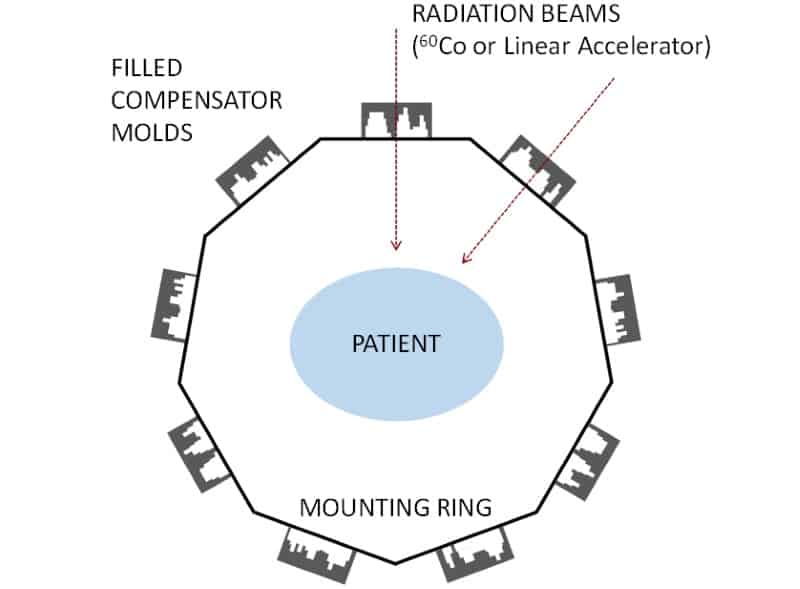
A team headed up at the University of Washington Medical Center has come up with a simple and cost-effective alternative: replace the moving MLCs with a ring of physical compensators. Importantly, the proposed device can be retrofitted to existing linac and cobalt teletherapy units – allowing clinics to add IMRT without having to purchase a new treatment system (Med. Phys. 10.1002/mp.12985).

“The overall goal of this project is to improve access to radiotherapy in low- and middle-income countries,” said senior author Eric Ford. “Due partly to the successes in dealing with infectious diseases in these parts of the world, cancer is becoming a big problem and many people have no access to care. To me, that is a problem worth solving.”

Reusable beads

The compensators comprise plastic moulds, which are lightweight and easy to manufacture, filled with attenuating material such as tungsten beads. After each treatment the attenuator can be emptied from the moulds and re-used for another patient, minimizing the required amount of expensive attenuating material.

The compensators are mounted around the patient on a ring structure. The treatment gantry rotates around the ring and delivers each beam through each compensator in turn. Compared with MLCs, compensators offer simplicity, lower cost, streamlined QA and more efficient use of MUs. Another advantage is that the compensators do not need to be manually exchanged between delivery of each field, greatly increasing treatment efficiency.

To assess the dosimetry of this new set-up, the researchers used the Pinnacle treatment planning system to create plans for 60Co teletherapy beams used with the compensator. They chose a 60Co system as these are widely used in LMICs, and present the most challenging scenario due to their unfavourable depth-dose characteristics and large source sizes.

The researchers generated 60Co-compensator IMRT plans for five head-and-neck cancer and five gynaecological cancer patients, and compared these to MLC-based plans using a 6 MV linac. Ford noted that the treatment planning process is similar to that for standard IMRT.

“Inverse planning is performed and an idealized fluence map made,” he explained. “At this point the fluence map would normally be turned into a pattern of beam shapes using MLCs. Instead, we turn it into a compensator shape. Some treatment planning systems have this capability already, but even in those that do, it is not well developed. More work needs to be done to refine it.”

Isodose lines

Comparing dose distributions revealed that 60Co-compensator plans had, on average, equivalent planning target volume (PTV) coverage to the MLC plans. The 60Co-compensator plans had higher mean parotid dose (for head-and-neck cases) and higher rectum D60% (for gynaecological cancers), but the differences in organ-at-risk (OAR) dosimetric endpoints were clinically acceptable. The 60Co-compensator plans were roughly twice as fast to deliver, with average total delivery times of 4.1±0.7 min compared with 8.2±2.6 min for the MLC plans.

Design details

The team also examined the effect of various compensator design parameters on plan quality. First, they varied the compensator resolution from 2 to 10 mm for the five head-and-neck plans. While there was no clear trend in OAR doses, PTV coverage was inferior at resolutions of 6-10 mm. PTV dose distribution was more homogeneous for finer resolutions.

They also assessed the effect of varying the maximum compensator thickness between 0.5 and 3.0 TVL (tenth-value-layer, which for tungsten is 2.14 cm) for two plans. In both cases, PTV doses were unaffected by maximum thickness, while OAR doses decreased as thickness increased. At 2 TVL, OAR sparing was similar to 6MV-MLC plans. The authors note that there is little benefit to using greater than 2 TVL and that 1.5 TVL may be acceptable.

Examining the source-to-compensator distance (SCD) revealed no clinical difference in plan quality between SCDs of 63 and 53 cm. Likewise, varying the number of beams from five to 13 did not reveal any clear trends in tumour or OAR dose. The team suggests that seven or nine beams would usually be appropriate.

The authors concluded that the compensator can deliver plans of comparable quality to MLC-based systems, even for 60Co beams. This makes the system well-suited to large portions of LMICs where 60Co units are the only available technology. They note that the compensator-ring system will also work as an add-on to a linac.

The team is now developing a prototype compensator system. “We have completed our initial round of planning studies, which has been very helpful in informing the design,” Ford told Physics World. “Together with our commercial partner in India under the NCI grant, we are pursuing a prototype and are about six months away from having something ready to test.”


Doing business in space

In this month’s Physics World Stories podcast, Andrew Glester looks at some intriguing developments in the space industry. He is in conversation with Harvard University astrophysicist Martin Elvis about the prospects of asteroid mining moving from science fiction to reality.

Later in the podcast, Glester investigates how the UK space industry might be affected by Brexit – the UK’s imminent departure from the European Union. Lucy Berthoud from the Space Universities Network explains why it is so important for the UK government to get the right deal because of what is at stake in the space sector.

Finally, Glester takes a trip to Goonhilly Earth Station on the south-western tip of the UK. Goonhilly representative Kat Hickey explains why the site is such a unique place to do science and why she believes it should be chosen for the UK’s first spaceport.

Look out for a special collection of articles about the space industry to be published on this site in the next week or so. Also, if you enjoyed this podcast then you can subscribe via iTunes or your podcast provider. Also check out Physics World Weekly – our news-focused podcast presented by the Physics World editorial team.


Printed metal-polymer conductors make stretchy biodevices

Stretchable biocompatible devices can be used in a host of medical applications, but most stretchable conductors made to date are toxic, expensive, difficult to make and break or degrade easily. A team of researchers at the National Center for Nanoscience and Technology in Beijing, China, has now printed the first flexible metal-polymer electronic circuits that are at once highly conductive and stretchable, biocompatible, non-toxic and easy and cheap to make. The circuits, which are made of eutectic gallium indium particles embedded in a polymer matrix, can take most 2D shapes and could find use in motion sensors, wearable glove keyboards, soft robotics and implantable devices to name but a few applications.

Eutectic gallium indium (EGaIn) is a liquid metal and can thus withstand large deformations. The material also boasts a high conductivity and is much less toxic than other metals that are also liquid at room temperature, such as mercury. Since it cannot be directly patterned using conventional techniques like stencil or ink-jet printing (its surface tension is too high), the researchers, led by Xingyu Jiang, embedded particles of the liquid metal onto the surface of a polymer (PMDS) instead. They did this by casting and peeling off steps rather than using a marker or nozzle.

The result is a printed conductive material with a good stretchability of 2.316 S/cm at a strain of 500% over more than 10 000 cycles of repeated stretching. Another advantage of the technique employed to make it is that the liquid metal particles remain on the surface of the substrate (rather than being buried deep inside), which means that functional electronic components can easily be mounted on top of them.

Many applications

The researchers used the printed metal-polymer conductors in a variety of applications, including in sensors for wearable keyboard gloves, motion sensors and in electrodes for electroporation (stimulating the passage of DNA through the membranes of live cells).

“The applications of the metal-polymer conductors depend on the polymer employed,” says study first author Lixue Tang. “We cast super-elastic polymers to make metal-polymer conductors for stretchable circuits or biocompatible and biodegradable polymers when we want to make implantable devices. In the future, we could even build soft robots by combining electroactive polymers.”

The technique can be used to make printed materials that can conform to any 2D shape, say the researchers. And they can be made in different thicknesses with varying electrical properties depending on the concentration of the liquid metal inks employed. This means that they could be used in a host of biomedical applications, including flexible patches that could even be wrapped around the heart to monitor and treat cardiac disease.

Indeed, the researchers say that they are now planning to fabricate a biodegradable cardiac patch patterned by their metal-polymer conductor electrodes to enhance the conductivity of myocardial cells and monitor electrophysiological signals. The applications are many: “Wearable electronics, implantable devices, soft robotics, future fabrics, virtual/augmented reality, flexible displays, artificial organs, brain-computer interfaces, and wherever biocompatible, soft electronics is necessary,” says Tang.

The research is detailed in iScience 10.1016/j.isci.2018.05.013.

Silicon carbide LEDs make bright single photon sources

A variety of new colour centres (luminescing crystal defects that can emit individual photons) have been found in light-emitting diodes made from silicon carbide (SiC). The result confirms once again that it is a promising single-photon source and a good material out of which to make quantum bits (qubits).

Single-photon emitters operating at room temperature could be used in on-chip quantum communication applications, and as a source of “flying” qubits for quantum computers. Such computers exploit the ability of quantum particles to be in a “superposition” of two or more states at the same time unlike classical computers that store and process information as “bits” that can have one of two logic states – “0” or “1”

Quantum computers could, in principle, outperform classical computers on certain tasks, like code decryption for example, because their processing speed should increase exponentially with the number of qubits of information involved. In reality, it is difficult to create even the simplest quantum computer, however, because the fragile nature of these quantum states means that they are easily destroyed and are difficult to control.

Colour centres in SiC

In recent years, there have many studies on point defects (or colour centres) in SiC, a material that is already widely used in high-power electronics thanks to its high thermal conductivity and high maximum current density to name but two good properties. These defects possess electron spin states that can be coherently controlled and manipulated as qubits using light.

Researchers led by Jorg Wrachtrup of the University of Stuttgart in Germany have now confirmed these previous findings.  They have discovered a variety of new colour centres in lateral p-i-n diodes made from a polytype (a crystal structure) of silicon carbide called 4H-SiC that contains naturally occurring defects (or “divacancies”). These defects, which correspond to a missing silicon atom next to a missing carbon atom in the crystal, are very much like the defects in diamond known as “nitrogen-vacancy centres” – that form when a nitrogen impurity finds itself next to a missing carbon atom in the diamond lattice.

Both types of defect form a muti-electron system that has a net angular momentum (or spin) that can be aligned either parallel (“1”) or antiparallel (“0”) to an applied magnetic field, and can so be exploited as a qubit. SiC has an advantage, however, in that it is CMOS-compatible and so could more easily be scaled up to larger systems than hard diamond can.

Photoluminescence experiments

The newly-discovered centres in 4H-SiC emit non-classical light in the visible and near-infrared range. One type of defect can even be excited using electrical means. This means that it might be integrated into compact electronics devices as there would be no need for an additional bulky laser system to optically excite it.

As in previous experiments on diamond nitrogen vacancy centres and SiC point defects, Wrachtrup and co-workers measured the spin of the divacancies in 4H-SiC using photoluminescence. This involved shining laser light onto the sample and collecting the fluorescence light subsequently emitted by it. And, as for diamond nitrogen vacancies, the fluorescence of the silicon carbide divacancies depends on their spin state, so it is possible to “read out” the state of the qubits in this way.

“In this work, a key concept is the generation and manipulation of individual particles of light – photons,” says Marina Radulaski of Stanford University, who was not involved in this study.  “The researchers have not only discovered new colour centres in silicon carbide that can generate single photons at high rates, they have also succeeded in integrating these with electronic elements that can turn the light emission on and off. In a way, they have developed an early prototype of a ‘quantum telegraph’.”

Sophia Economou of Virginia Tech, who was not involved in the study either, agrees: Electrically operated single photon sources are of interest for miniaturized quantum devices and silicon carbide is an especially promising material for such devices thanks to its industrial maturity, compatibility with CMOS fabrication techniques and low cost. Despite its maturity, however, new colour centres are still being discovered in SiC and these will provide a range of properties in terms of emission frequency, spin structure and photon polarization.

“Wrachtrup and colleagues’ work opens new directions both for device engineering and for basic physics studies,” she adds. “It will be good to further understand the nature of the newly discovered colour centres — their composition, their spin structure, their dynamics under optical versus electrical excitation, and whether they can provide useful transitions for spin-photon entanglement interfaces.”

Full details of the research are reported in Applied Physics Letters 10.1063/1.5032291.

Ambitious climate targets could protect millions from heat waves

The degree to which policies succeed in curbing the rise in global temperature to below 2.0 °C could have a profound effect on our exposure to heatwaves. As many as 420 million fewer people would see frequent extreme heat waves if the rise can be limited to 1.5 °C, based on recent simulations.

Both 1.5 °C and 2.0 °C scenarios indicate hot spells ahead. For example, in a 1.5 °C world, 13.8% of the world population will be exposed to severe heat waves at least once every 5 years. But this fraction becomes nearly three times larger (36.9%) under 2 °C warming, which – as the researchers point out – corresponds to a difference of around 1.7 billion people.

A very high-resolution global model designed to resolve local details and small-scale processes provides the foundation for the analysis. The work was performed by a team based at the European Commission’s Joint Research Centre, ETH Zürich, Switzerland, and the Swedish Meteorological and Hydrological Institute.

Resolving atmospheric conditions at high-resolution pushes up the amount of time needed to generate results; the group notes that its study is based on a relatively limited number of model simulations. However, the team believes that over the regions most affected by a future increase in intensity and frequency of extreme heat waves – Africa, South America, and South-East Asia – its results are statistically significant and robust.

Regional maximum temperature on land is expected to increase more than mean global temperature. Together with greater temperature variability, this could result in more intense and longer heat waves. But heat waves are not the only impact of rising global temperature. To be better prepared, institutions need to consider a wide range of events.

“We are working to assess, in an integrated and consistent way, the risks of multiple climate hazards that also include floods, droughts, forest fires, coastal surges and sea level rise to evaluate different adaption options,” says Alessandro Dosio of the EC Joint Research Centre. “The aim is to quantify the risk of these hazards in current and future time-frames taking into account different climate change scenarios to understand the possible impact on people and critical infrastructures.”

High-resolution models such as the simulations used in the current study could help identify regions where adaptation options may be needed in more detail.

Dosio and colleagues presented their work in Environmental Research Letters (ERL).


Super spins appear in carbon sheet

Researchers in the US and Japan say they have observed spin superfluidity and very long distance spin transport in an antiferromagnetic insulator made from graphene for the first time. If confirmed, the new result could bring nearly dissipation-less spin-transport devices, which could be used in information processing and storage applications, a step closer to reality.

Spintronics is a technology that makes use of the spin magnetic moment of the electron and it could be used to make devices that are smaller and more energy efficient than conventional electronics. Individual electron spins – which can point up or down – could also be used to store and transfer information in quantum computers.

Practical spintronics devices have proven to be very difficult to make, however. This is because electron spin does not travel very far in most materials, which means that information being carried by the spins is quickly lost. The main culprit here is the “spin-orbit interaction”: as electrons travel through a material, the relative motions of the positively charged atoms create magnetic fields that have the effect of rotating the electron’s spin.

Researchers have recently started to look into transporting spin current in antiferromagnetic insulators (AFMIs). The energy band gap in these materials prohibits such spin-orbit interactions while supporting pure spin current. More importantly still, an effect called “spin superfluidity” has been predicted to exist in them.

“Spin superfluidity is the coherent spin supercurrent that allows for dissipation-less transport, similar to the flow of electrons or Cooper pairs without resistance (as in a superconductor) or of atoms (as in a superfluid),” explain Petr Stepanov, Jeanie Lau and Marc Bockrath of the University of California at Riverside and Ohio State University, who led this research effort. “Much progress has been made here, but the best experimental evidence for such an effect so far has been limited to thermally excited magnons (spin waves) in oxide-based AFMIs. These still suffer from short spin decay lengths of around 0.2 to 10 nm though.”

Enter graphene

“Interestingly, when a strong magnetic field is applied to an undoped (charge-neutral) piece of monolayer graphene it becomes an AFMI containing opposite spin polarizations (that is, spins pointing in opposite directions) on alternate carbon atoms in the material’s hexagonal lattice,” says Lau. “In our work, we used an all-electrical circuit originally proposed by So Takei and colleagues of Queens College, City University of New York, in 2016, to realize the first robust, long-distance spin transport through this AFMI.”

Working with Allan MacDonald’s team at the University of Texas, Austin, Roger Lake’s group at the University of California, Riverside, Dmitry Smirnov at the National High Magnetic Field Lab, and Takashi Taniguchi’s group at NIMS, Japan, Lau and colleagues used graphene in the quantum Hall regime. This occurs when charge carriers like electrons are confined to a 2D plane, as they are in graphene, and subjected to a perpendicular magnetic field in the Z-direction. To make their measurements, the researchers contacted spin injecting and detecting leads to quantum Hall edge states, which lie adjacent to the antiferromagnetic region in the material. They then applied a voltage between these spin-up and spin-down states.

“We measured non-local voltage signals across a 5-micron long AFMI region, a distance that is 10to 10times longer than previously measured spin current decay lengths. In control experiments, the signal disappears when the filter regions of the leads are tuned away from these edge states.

“Among the possible transport mechanisms to explain this effect, our data are most consistent with spin superfluidity in the so-called Néel texture of the AFMI that allows for dissipation-less transport of pure spin current,” she tells Physics World.

“This is a new field, and we hope that our experiments are the first of many,” says Lau. “There are still many questions that need to be answered following our results. For example, how efficient is our spin injection technique? And could we observe similar spin transport in bilayer graphene? This would theoretically allow us to control spin directions because electrons residing on the top and bottom layers in this material have opposite spin polarizations. By using an electric field, we could ‘persuade’ the electrons to reside on one of the two layers and so switch their spin directions.”

Full details of the research are reported in Nature Physics 10.1038/s41567-018-0161-5.

Avoiding strife on Mars, the physics of football, calling all psychic pets

Notes in the fridge, a chores rota and other signs of housemate strife could be things of the past thanks to a new space programme launched by SpareRoom, which is a UK-based flat and house sharing service. SpareRoom has teamed up with former NASA astronaut Terry Virts to help housemates get along. Virts should know how to cooperate in a cramped space because has commanded the International Space Station (ISS).

In his capacity as “House Share Goodwill Ambassador”, Virts gives some top tips in the above video.

Speaking of the World Cup

The 2018 FIFA World Cup kicks off this week in Russia and we couldn’t help jumping on the bandwagon by devoting much of our weekly podcast to the beautiful game. Find out what position Niels Bohr played on the football pitch and why “The physics of football” is the most popular article every published in Physics World.

Can physics predict which country will win the World Cup, or perhaps the family pet stands a better chance? If you are keen on the former, see “Prediction of the FIFA World Cup 2018 – A random forest approach with an emphasis on estimated team ability parameters” by physicists in Belgium and Germany. If you would rather put your trust in a hamster, check out Psychic Pets.

Copyright © 2026 by IOP Publishing Ltd and individual contributors