Current efforts to tackle sexual harassment in the sciences at US universities are failing and need urgent reform. That is the stark conclusion of a new report from the US National Academies of Sciences, Engineering and Medicine, released yesterday. The report finds that most targets of sexual harassment are women and it calls for a dramatic change in culture and awareness so that they can have fulfilling scientific careers in a safe environment.
The report — Sexual Harassment of Women: Climate, Culture and Consequences in Academic Sciences, Engineering and Medicine — defines three dominant forms of harassment. These are sexual attention, such as undesired verbal and physical sexual advances; sexual coercion, for example when favorable professional or educational treatment is conditioned on sexual activity; and gender harassment such as being subject to sexist remarks, put downs, and a degrading atmosphere.
This is all about moving away from a culture of compliance – a culture of complying with the bare minimum that the laws require — and instead moving toward a culture of change and a culture of respect
Lilia Cortina
Noting that sexual-harassment training has not been shown to change behaviour, the report makes several recommendations for addressing the issue in the sciences. These include making findings of sexual harassment more transparent as well as classifying it on a par with professional misconduct such as plagiarism. As a university’s legal advice would be to prioritize protecting the university when sexual misconduct has been raised, the report calls for universities to move beyond a strictly legalistic response to sexual harassment.
“The legal system alone is not an adequate mechanism for reducing or preventing sexual harassment,” says Lilia Cortina, a University of Michigan psychologist who co-wrote the report. “This is all about moving away from a culture of compliance – a culture of complying with the bare minimum that the laws require – and instead moving toward a culture of change and a culture of respect.”
Serious consequences
The report notes that the impact of sexual misconduct can be serious and include the victims experiencing depression and diminished academic performance. This can lead to them being criticized by colleagues who are unaware of, or indifferent to, the incident of sexual harassment. Cortina told Physics World that gender harassment is the most common form of misconduct that women face in the academic sciences. “More often than not sexual harassment is a put down, not a come on,” says Cortina, who has studied sexual harassment for over two decades.
The report highlights two university studies of sexual misconduct. The University of Texas System conducted a survey of its graduate and undergraduate students last year finding that 20% of women said they were harassed during their university science education. The other – carried out by the Pennsylvania State University System — found that 30% of women said they were harassed during undergraduate years and 40% during graduate studies. According to these surveys, the highest rate of harassment in the sciences is in medicine, with the Pennsylvania State survey noting that half of women have been harassed.
According to the report sexual harassment is more prevalent in areas dominated and led by men as well as when research is done at geographically isolated sites such as at observatories.
The “desert solar” idea has been around for some time, and several large concentrated solar power (CSP) projects are now running in North Africa. Morocco, for example, is building a series of CSP arrays covering about 1.4 million square metres, with Noor 1 already generating power from its 160 MW of capacity and expansion to 580 MW under way. One early vision was for some of the power from projects like this to be exported to Europe via undersea marine cables. Nothing has come of that so far (all the energy produced from the existing projects is used locally), but it has recently been revived by London-based TuNur Ltd. This company has filed a request to the Tunisian Ministry of Energy, Mines & Renewable Energy for the authorisation of a 4.5 GW CSP parabolic mirror focused solar project in the Sahara desert in southwest Tunisia. If fully realised, the development would cover 25,000 hectares. Phase 1 of the plant would cost $85m, and the power cost would, it was claimed, be $101/MWh. It’s a bold plan – especially the export idea.
TuNur said “the site in the Sahara receives twice as much solar energy compared to sites in central Europe, thus, for the same investment, we can produce twice as much electricity”. Power would be exported to the EU via three High Voltage Direct Current undersea cables. The first one planned would be 500 km to Malta, at a cost of $1.6bn, and with a capacity of 250–500 MW. Malta has an existing 100-mile link to Sicily, so the power could then go north through Italy. The second link, with 2 GW capacity, may go direct to Italy (near Rome) and the third, at almost 2 GW, to France (landed possibly near Marseilles).
However, some see projects like this as an exercise in “neo-colonial” land grabbing. The early pioneer in the field, the Desertec Foundation, had made clear that only some of the power from the CSP projects it wanted in North Africa was to be exported (just 15%), the rest being used locally. However, neo-colonialism was the political charge laid at the door of the Desertec Industrial Initiative (DII), launched in 2009 and promoted by various German banks and industrial consortia, which was looking to a €400bn investment programme. That project has now been abandoned: with renewables developing rapidly in Germany there was less need to look to imports and the costs of the project did seem high. So did the risks, given the increasing political turmoil in much of the MENA region. Most of the original DII partners left in 2014.
The political critiques within the EU may also have had an impact. Many “greens” in Germany thought that renewables should be developed on the smaller local community scale, as was being done in Germany, not via giant corporate projects like this, with all the neocolonial implications. From an African perspective, in 2011, Daniel Ayuk Mbi Egbe of the African Network for Solar Energy said, “Many Africans are sceptical about Desertec. Europeans make promises, but at the end of the day, they bring their engineers, they bring their equipment, and they go. It’s a new form of resource exploitation, just like in the past.”
In a 2015 critique of the Desertec Industrial initiative published in the New Internationalist, Algerian activist Hamza Hamouchene said: “The Sahara is described as a vast empty land, sparsely populated; constituting a golden opportunity to provide Europe with electricity so it can continue its extravagant consumerist lifestyle and profligate energy consumption. This is the same language used by colonial powers to justify their civilizing mission and, as an African myself, I cannot help but be very suspicious of such megaprojects and their ‘well-intentioned’ motives that are often sugar-coating brutal exploitation and sheer robbery.”
It didn’t help that most of the DII planning seemed to be done in the north, with little involvement from the south. Hamouchene argued that: “Any project concerned with producing sustainable energy must be rooted in local communities, geared towards providing and catering for their needs and centred around energy and environmental justice. Projects involving large transnationals tend to take a top-down approach, increasing the risk of displacement, land-grabbing and local pollution. Without community involvement, there is no guarantee that such schemes will help with alleviating poverty, reducing unemployment or preserving a safe environment. This has been a major failing of the Desertec initiative. Only a few actors from the south of the Mediterranean were involved in its development, and most of them represented public institutions and central authorities, not the local communities who would be affected by the project”.
In the event, as noted above, all the CSP projects that have so far gone ahead in North Africa have been just for local/national energy supply, with no long-distance export. TuNur would be the exception.
Will the new project be any better? Hopefully, yes. TuNur chief executive Kevin Sara told Climate Home that people in the region were supportive of the project. Indeed, he argued that building a solar industry would help redress the inequality between Tunisia’s wealthy coastal cities and underdeveloped interior. A press release on the application to the government quotes Mohamed Larbi Ben Said, chair of the management board for El Ghrib Collective, which owns the land, as saying: “This project provides the economic development necessary for our region and our community; it gives true value to quasi-desert lands in an environmentally sustainable way.”
The debate will no doubt continue. There are technical arguments on both sides. On one hand the project makes use of the best resources – where solar energy is most available. So North Africa makes more sense than northern Europe. And with transmission losses via HVDC supergrid links being low (2%/1000 km), a CSP input from Africa could help with balancing variable renewables in the EU. On the other hand, solar energy is available on every roof everywhere to some degree, distributed naturally and for free. Why spend vast resources collecting and concentrating it, to transfer over long distances to remote consumers? The grid links would be susceptible to failure or disruption e.g. by terrorists.
The political arguments are equally divided. In theory, it should be possible to build positive, fair trading links, aiding poor areas, rather than exploitative relations with supplier countries. Everyone could benefit and the global environment too. However, the EU would just be swapping reliance on imported oil and gas for imported solar electricity – the North could be held to ransom by the South. Shouldn’t each country sort out its own energy problems? Wouldn’t importing green energy be used as an excuse not to do so? We will have to wait to see what becomes of the TuNur initiative…and what impacts it has.
Meanwhile, the issues discussed above are not unique to western interventions in Africa. Certainly, there have been concerns about China’s pragmatic, “no strings” commercial investment approach to energy projects in Africa, in terms of proper attention being given to local accountability, environmental impacts and international trade rules. So far, China has invested around $6 billion in renewable energy projects in Africa, mostly hydro. But a worry in the West, with its professedly more nuanced social and environmental concerns, is that the Chinese approach will not only cut corners, but that this will enable it to corner markets and undermine western development efforts, and the West’s (rival) pursuit of markets.
All this and much more is explored in a new Pivot book I’ve produced with Terry Cook Renewable energy: from Europe to Africa, now out from Palgrave. We will be presenting a paper on this topic at the World Renewable Energy Congress at Kingston University, UK, which starts at the end of July.
While I’m mentioning new books, it would be remiss not to note that the fourth edition of the very popular OUP/OU text Renewable Energy, Power for a Sustainable Future, originally edited by my Open University colleague Godfrey Boyle is now out, this edition edited by Stephen Peake. It’s fully updated and includes a lot of new material.
This article was updated at 17.31 on 13/6/18 to correct the edition of Renewable Energy, Power for a sustainable future from fifth to fourth.
The UK is a world leader in life-sciences research. The life-sciences industry is also increasingly regarded as a vital part of the nation’s economy, with the government’s Industrial Strategy (published in November 2017) setting out many ambitious goals for the sector. However, until recently the process for translating top-class research and innovations into benefits for patients in the National Health Service (NHS) was not well developed. While the NHS has a long history of conducting research funded by research councils and medical charities, its track record of effective and appropriate working with industry partners has historically been much patchier. As little as a decade ago, both commercial and non-commercial research partners regularly complained of lengthy delays in setting up studies, and a relatively high proportion of studies failed to recruit enough patients to arrive at robust conclusions. It was clear that a much more systematic approach to conducting clinical research was needed.
This was the situation in 2006, when my organization, the National Institute for Health Research (NIHR), was founded with a mission to “improve the health and wealth of the nation through research”. It does this by funding high-quality research; training and supporting health researchers; providing world-class research facilities; and working with the life-sciences industry and charities across England. Crucially, our work involves patients and the public at every step: more than 650,000 patients participated in NIHR-recognized research studies in 2016/17. In terms of industry support, we give life-science firms unparalleled access to (and understanding of) the NHS research environment, helping them with study feasibility analysis, set-up, costings, contract negotiation and performance monitoring. This support covers a wide range of research types, from early-stage, translational research through to later-stage clinical trials in the NHS. By working collaboratively with the life-sciences industry in this way, the NIHR helps patients gain earlier access to breakthrough treatments and encourages broader investment in (and economic growth from) health research.
Improving radiotherapy
Although the initial focus within the NIHR was, understandably, on drug trials, we are now working with commercial partners from the pharmaceutical, biotechnology, diagnostics and medical-technology industries, as well as contract research organizations. As an example, consider the NIHR Manchester Biomedical Research Centre, which is part of a network of organizations set up to conduct experiments in areas that include medical imaging and radiotherapy. One of the Manchester centre’s projects is to identify and develop biomarkers that can predict the effectiveness of different types of radiotherapy and drug-radiotherapy combinations, while minimizing the risk of long-term side effects. The centre’s researchers are also working with industry and outside experts to overcome the operational challenges (such as build, installation, calibration and use) associated with embedding new technology in a clinical setting. In particular, they are part of an international consortium supported by Elekta, a major manufacturer of radiotherapy machines that is developing guidelines for targeting tumours more accurately using linear accelerators equipped with magnetic resonance imaging (MR-linacs).
Current radiotherapies are already personalized and adaptive to some degree, with treatments based on the size and shape of both the individual and the tumour, along with the tumour’s location. Depending on the latter, patients may be scanned during their radiotherapy and their treatment may be adjusted accordingly. MR-linacs have the potential to take this personalization a step further, because they make it possible to image the patient at the same time as each dose or “fraction” of radiotherapy is delivered (“see while you treat”). This means that clinicians can create adaptive radiotherapy plans that are fine-tuned to daily changes in the patient’s anatomy – something that could revolutionize cancer treatment by lowering the radiotherapy dose to surrounding organs, thereby reducing side effects and improving patients’ quality of life.
There is, however, one drawback, which is that the strong magnetic field of the MR scanner affects radiation treatment. Researchers on the MR-linac team at Manchester have recently published a review article (Clin. Oncol.29 662) describing the benefits and challenges of introducing this technology, and setting out progress to date. The review highlights how the MR-linac’s superior imaging capabilities when compared to current technologies (notably cone-beam CT imaging) will enable treatment plans to be adapted while a course of radiotherapy is being delivered. It also discusses the difficulties of developing imaging protocols for certain areas of the body, such as the lung, that are harder to image with MRI machines.
Tests and technologies
Both radiotherapy and imaging are traditionally very strong areas for physics-led medical research. Increasingly, however, they are not the only fields where physicists and engineers are playing prominent roles (often in partnership with industry) in the NIHR’s work. In September 2017, for example, the NIHR began setting up 11 new centres – known as medical technology and in vitro diagnostics co-operatives, or MICs – dedicated to developing technologies and tests related to conditions such as kidney and liver disease where patient morbidity is high. One of these MICs is at the Leeds Teaching Hospitals and University of Leeds. Its scientific director, Steve Evans, specializes in molecular and nanoscale physics and is developing physics-based tools for characterizing single cells. The position of the Leeds MIC at the interface between the physical sciences and medicine is exemplified by its work on novel nanomedicines for cancer therapy (see image below). The involvement of numerous industry partners in the Leeds MIC is typical of the programme as a whole.
Novel strategies: Nanoparticles targeting colorectal cancer cells. (Image courtesy: Yazan Khaled, MRC Clinical Research Fellow, University of Leeds)
Another area where physicists are getting involved in health research is the NIHR’s Invention for Innovation (i4i) programme, which funds translational research into healthcare technologies, devices and interventions that could benefit patients in areas of existing or emerging clinical need. The programme aims to reduce the risk of embarking on such projects, thereby making them more attractive to follow-on funders and investors, and the expected outputs are advanced or clinically validated prototypes.
Nick Stone, a medical physicist at the University of Exeter who has used this “pot” of funding for several projects, calls it “the ideal funding stream to enable us to translate our novel technologies into real clinical tools”. Stone’s most recent i4i-funded research project has been carried out in collaboration with experts at the University of Bristol and Gloucestershire Hospitals NHS Foundation Trust, and it uses lasers to detect oesophageal cancer. This type of cancer is often discovered so late that treatments (even successful ones) are very distressing, dangerous and difficult, but Stone and his team have found a way to tell the difference between healthy and diseased tissue by shining a low-power laser on the tissue and looking at the resulting inelastically scattered light – a technique known as Raman spectroscopy.
Before receiving the i4i funding, Stone and his collaborators had designed a miniature probe that slides through a channel in an endoscope and onto the surface of the oesophagus. In the lab, this device can assess the condition of oesophageal tissue almost instantly, determining whether it is healthy, pre-cancerous or cancerous without the need for biopsies. The i4i project currently underway aims to finish developing the probe and begin assessing the effectiveness of Stone’s technique in actual patients. The hope is that if this work can be translated from the lab into clinical practice, doctors will have a new way of diagnosing oesophageal cancer and pre-cancerous lesions much earlier, when treatments are more likely to be effective.
Physicists as brokers
I am a physicist myself, and although medical physicists and engineers comprise a relatively small proportion of the NHS workforce, I am passionate about promoting the value of a “physics-based” approach to medicine, in which quantitative models of disease are increasingly prominent. In the NHS, physicists can also play an important role as “brokers” between medical staff, basic scientists and industry experts. Another exciting development is the “Physics of Life” network, which is jointly funded by the Engineering and Physical Sciences Research Council and the Biotechnology and Biomedical Sciences Research Council, and which shows promise in promoting research at the interface between the biological and physical sciences. The Institute of Physics’ Biological and Medical Physics groups also have well-established programmes of multidisciplinary activity.
For such networks to function effectively, however, we need scientists who are enthusiastic about working across boundaries between disciplines and sectors; willing to spending time understanding the underlying science; and open to applying approaches developed for one discipline to other areas (an excellent and contemporary example of this is the application of statistical physics to problems in biology). Interdisciplinary areas such as medical physics and engineering, biological physics and biomathematics have come of age in recent years, and if we are to truly exploit their scientific potential, we need to continue the drive to create vigorous interdisciplinary networks.
Although the rewards of working with good medical collaborators are immense, collaborating with – or even finding! – busy clinicians is often fraught with frustration and difficulty. The demands on medics’ time are significant, so would-be collaborators – whether they are academics doing basic research or industry partners seeking clinical advice – need to adopt some simple, practical steps to ensure that collaborative discussions are made as easy as possible. In many circumstances, the best approach for UK-based collaborators will be to link to one of the elements of the NIHR infrastructure (see www.nihr.ac.uk), or its equivalent in Wales, Scotland or Northern Ireland. Academic physicists and industry partners who do this will find that there is plenty of enthusiasm to work together to realize the benefits of physics in medicine.
Safiye Celik, Josh Russell, Matt Kaeberlein and Su-In Lee.
There is currently no cure for Alzheimer’s disease (AD), a progressive neurodegenerative disorder that affects about 50 million people worldwide. Hallmarks of the disease such as toxic amyloid-beta (Aβ) plaque aggregation or abnormal tau protein tangles are well known. However, the molecular mechanisms underlying AD neuropathology remain unknown and it is critical to identify positive biomarkers. Researchers from the US have resorted to big data analysis to find potential targets for future AD treatments (bioRxiv 10.1101/302737).
AD and AI
A team from the University of Washington, led by Su-In Lee and Matt Kaeberlein, undertook the challenge of developing a probabilistic model-based framework for identifying robust expression markers. They called this framework DECODER (discovering concordant expression markers) and applied it to AD. The framework was built from a meta-analysis combining three different studies that used a total of nine brain regions to form a pool of data that the model could draw conclusions from.
In order to use the whole database, regardless of tissue origin, the researchers first had to establish common features in each brain region. Comparing the overlap between the top 1000 Aß-associated genes in each region allowed them to hypothesize that basic mechanisms leading to the development of the disease were common across regions.
Three scores were then generated to quantify gene-concordant associations with neuropathology levels (such as Aβ levels) in multiple brain regions. The researchers found that global concordance-based scores were statistically more robust and informative than scores computed from each individual area. The top-scoring genes were also more likely to be part of a 144-gene AD pathway taken as a reference, which highlighted the biological relevance of the designed scores.
Identification and validation
Repeating the same approach for other pathways related to neurodegenerative diseases revealed that of all the top-scoring genes tested, only NDUFA9 was common to all pathways. This gene is part of a Complex I subunit in the mitochondria and plays a big part in mitochondrial respiration and synthesis of adenosine triphosphate (ATP).
To confirm the role of NDUFA9 in AD, the team carried out experiments on an animal model. A transgenic worm line was engineered to develop AD-like pathologies in its muscle cells at a specific stage in its life cycle. This leads to observable paralysis of the worms. By feeding the worms with bacteria that delivered an interfering RNA (RNAi), the researchers were able to inhibit the expression of NDUFA9.
The results were highly encouraging – RNAi feeding strongly reduced Aβ plaque toxicity and significantly delayed any paralysis. Further experiments showed that altering any of other 13 Complex I subunits also delayed paralysis and significantly suppressed Aβ toxicity. This puts further emphasis on the importance of mitochondrial function in the development of AD.
Could it work in humans?
The next big challenge will be to replicate these results in humans. There are some major differences between human mitochondria and those of the worms used in the study, which makes the extrapolation of these results in worms to humans far from straightforward. More importantly, while partial inhibition of Complex I might be protective, Complex I also plays an integral part in the correct functioning of mitochondria. A balance will have to be achieved.
This study introduces a framework that will only get more powerful with time. As more AD studies on brain gene expression and neuropathology are published, the learning sample size of the framework will increase. The framework also has the potential to be applied to other pathologies such as cancers.
But is the term geoengineering even appropriate? Alan Robock of Rutgers University, US, explained that although it’s been in use for several years, the name geoengineering could conjure up the idea that a solution was calculated precisely and has known outcomes. Climate intervention is an alternative; this wording allows for the fact that we can’t predict exactly what will happen following any action, or what amount or combination of actions are best. This is a relatively new science with unknown unknowns, making it difficult to calculate global outcomes and to communicate the related risks to society.
Geo-engineering strategies fall into two groups: carbon dioxide removal (CDR) and solar radiation management (SRM). Afforestation and land management are soft approaches to CDR; Chris Juhlin of Uppsala University, Sweden, suggested that such techniques are low-risk. They don’t permanently store carbon, however, and aren’t enough to solve the problem on their own. At present, we are losing forest, so the first step is to stop cutting down trees. Ocean fertilisation could increase biological activity and uptake of carbon dioxide, but this is higher risk. An alternative is carbon capture and storage (CCS). This needs large-scale infrastructure and big investment, and would provide a more permanent removal of emissions. But how prepared are we to build such installations?
After presenting the current SRM technologies, Robock concluded that there are currently no low-risk technologies, and further research is needed to quantify risks. And what about the behavioural impact if we employed one or a combination of these “solutions” to climate change? Is there a risk of moral hazard, where we neglect mitigation strategies since technology is working against the natural system to prevent warming of the planet? Or perhaps making these technologies visible would have the opposite effect and lead society to increased mitigation effort.
According to Juhlin, without CCS we will breach the 2 °C warming threshold. Robock concluded that current emitting is a risk itself, so it is a risk-risk decision. Geo-engineering strategies that act to cool the planet and mitigate against global warming exist, but the question remains, how should the approach be implemented, if at all? There are over 7 billion people on Earth. What temperature should the Earth’s climate be set to? And who has the right to dictate what temperature this should be? Robock, along with Frank Schilling of Karlsruhe Institute of Technology, Germany, agreed that there would be winners and losers as both climate change and any geoengineering would vary by region. Understanding the risks is crucial and, as yet, there are no low risk solutions that could tackle this issue permanently and in full.
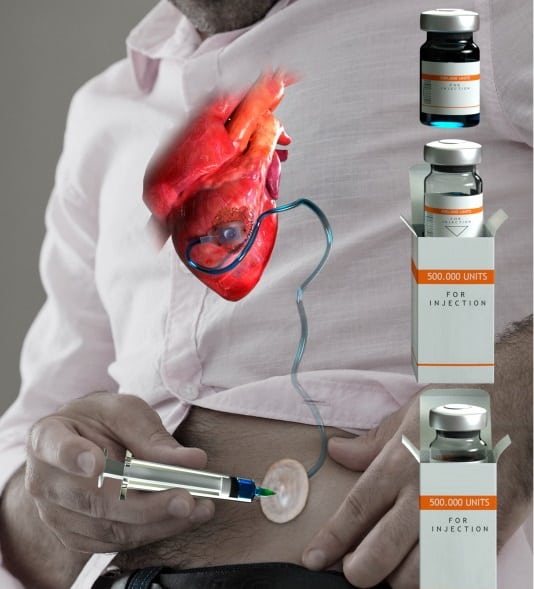
Therepi’s reservoir can be connected to a port or pump via a tube when it needs to be refilled. (Courtesy: Second Bay Studios/Harvard SEAS)
After a patient has a heart attack, residual scarring can lead to heart failure. Current therapies, such as drugs, proteins and stem cells, could treat scarring – but these treatments are often delivered systemically, rather than directly to the site of the damage, and can require multiple doses to work.
Hoping to halt the progression from heart attack to heart failure, researchers from the USA and Ireland have developed an implantable device that sits directly on the heart and delivers drugs and other therapies directly to damaged heart tissue (Nature Biomed. Eng.2 416).
The device, dubbed Therepi, is a small patch that is sutured onto the heart. The patch contains a sponge-like biomaterial that acts as a reservoir, holding and releasing therapies through a semi-permeable membrane. The biomaterial is connected to a port or pump outside the body, where therapies can be injected by the patient or a healthcare professional.
The reservoir also provides a unique opportunity for administering stem cell therapies. Rather than pass through the membrane into the heart, the cells stay within the reservoir where they produce paracrine factors that promote healing in the damaged heart tissue.
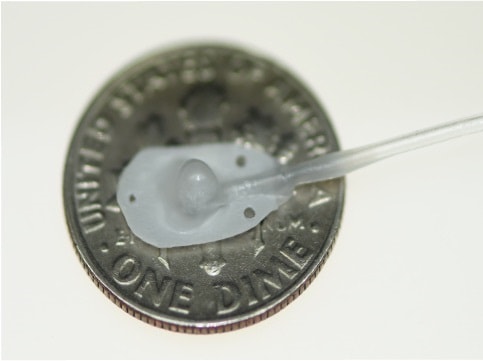
Therepi’s reservoir, which would attach directly to damaged heart tissue, placed on a dime for size reference. (Courtesy: Nature Biomedical Engineering, Whyte et al)
“The material we used to construct the reservoir was crucial. We needed it to act like a sponge so it could retain the therapy exactly where you need it,” says co-first author William Whyte, a PhD candidate at Trinity College Dublin and AMBER. “That is difficult to accomplish since the heart is constantly squeezing and moving.”
The team performed a pre-clinical study in a rat model, using the device to administer multiple doses of stem cells to a damaged heart over a four-week period. Hearts that received multiple dosages of cells via Therepi had more cardiac function than those who received only a single injection or no treatment at all.
“After a heart attack we could use this device to deliver therapy to prevent a patient from getting heart failure,” explains co-first author Ellen Roche from MIT. “If the patient already has some degree of heart failure, we can use the device to attenuate the progression.”
Therepi addresses the problems with current drug delivery methods by administering localized, non-invasive therapies as many times as needed. The device’s reservoir can be implanted on the heart in just one surgical procedure. By optimizing the design and adjusting the materials used to construct the reservoir, Therepi could also be used to treat diseases and health problems in other parts of the body.
At a Royal Air Force (RAF) base in northern Scotland, it has just turned 0200 GMT on a blizzardy winter morning. A bleary-eyed maritime patrol crew make final aircraft and mission system checks before air traffic control clears 1JF to line up on runway 08. As the plane positions itself for departure, a final brake check is conducted just as take-off clearance is issued. Auto-throttle is engaged and the two throttles advance to full power. The engines spool up with a howl, and the cold silence of the night is shattered as this hunter powers down the runway. At the call of “rotate”, the pilot pulls back on the controls propelling 1JF into a pitch-black moonless sky and en route to a long night over the north Atlantic. The hunt for submarines is on.
Hide and seek: Planes and helicopters are used as maritime patrol aircraft. (Courtesy: REX/Shutterstock)
A very short underwater history
While submarines are now relatively commonplace in the world’s oceans, it has taken mankind thousands of years to get there. Underwater military operations can be traced back to the Peloponnesian War from 431 to 404 BC, which was fought between the Delian League led by Athens and the Peloponnesian League led by Sparta. Thucydides (a main source from that era) records the Athenians using “divers” – probably men just holding their breath – during the Siege of Syracuse in Sicily. The divers cleared stakes that had been driven into the harbour floor by the Syracusans to defend against and damage Athenian ships.
Skipping forward to the early 1500s, Leonardo Da Vinci made some sketches of potential underwater vehicles, and the first prototype submersible was designed in 1578. However, it took another 42 years for the first successful submarine to be built. It was made by Cornelius Jacobszoon Drebbel, a Dutch engineer in the service of King James I of England. Propelled by oars and supplied with air from floating tubes, it was a simple vehicle and probably was not able to travel much below the surface.
Underwater acorn: the Turtle was one of the first military submarines. (Farnham Bishop 1916)
One of the next major advances occurred in 1775 when the Turtle – among the first military submarines to be constructed – was built by the US. Its purpose was to attack British warships by attaching explosives to the enemy hulls. Although it looked more like an acorn than any well-evolved sea creature, its design pioneered underwater propulsion by using hand-screws to turn a propeller.
As technology advanced and various engineering challenges were solved, submarine propulsion and power evolved from human to mechanical, electrical, diesel and nuclear. Some modern vessels even power themselves with radical technologies that don’t rely on nuclear motors or access to atmospheric oxygen either. Indeed, the ability to remain submerged without surfacing for air is a critical advantage so the submarine can avoid poking bits of the vessel above the water’s surface, which could lead to a “detection opportunity” for a hunter’s sensors.
The first submarines were designed to sink surface ships, but today’s military vessels have many different roles: they can carry and launch cruise or ballistic nuclear-tipped missiles to hit far away land targets (deterrence and/or attack), deploy special forces for midnight raids, conduct surveillance, or simply deter an enemy by their assumed presence in a critical sea lane.
Many world powers possess and invest in an undersea military capability including the UK, US, Russia, China and North Korea, while the technology has also been exploited to a lesser extent by drug cartels, the tourist industry, adventurers and even the Beatles. Consequently, the cat-and-mouse game you might recall from Hollywood movies such as The Hunt for Red October is alive and well, with surface warships, aircraft and other submarines all used to detect and deter these (almost) silent vessels.
Submarine spotting in the First World War
Peeking above. (Courtesy: iStock/iLexx)
In response to the big threat posed by enemy submarines in the First World War, which saw more than 5000 ships destroyed and 15,000 sailors lose their lives, the British Board of Invention and Research (BIR) came up with multiple counter-strategies. Working “to initiate, investigate and advise generally upon proposals in respect to the application of science and engineering to naval warfare”, the BIR included top physicists such as William Bragg and Ernest Rutherford. Switching his focus during the war from radioactivity and atomic structure to underwater acoustics, Rutherford made significant contributions to improving the underwater detection of sound from submarines.
There were, however, some rather odd solutions too for detecting submarines. One of the more unusual ideas proposed by the BIR involved dragging a dummy periscope behind a ship while food was discharged nearby. The aim was to attract a flock of seagulls to the periscope and, following repeated runs, condition the birds to associate periscopes with a good meal. Ergo, anytime a periscope popped above the surface, a flock of seagulls would beeline towards it giving the game away. Sadly, this idea didn’t work and the seagulls were left in peace to harass small children with ice creams.
Enter the maritime patrol aircraft
As with all new military technologies, the construction of submarines soon led to the development of techniques to spot enemy vessels. Some of these, dreamt up during the First World War, were rather odd (see box, above). That conflict also saw the introduction of aerial anti-submarine warfare (ASW) patrols. Blimps and early land-based planes became the first marine patrol aircraft (MPAs) and, by the Second World War, converted bombers and airliners were used in addition to purpose-built aircraft. Since then, most MPAs have derived from civilian airliners as they can fly long distances, stay airborne for a long time and have lots of interior space for the crew and mission equipment.
Two early examples of converted-airliner MPAs were the RAF’s Nimrod (originally the de Havilland Comet), which was retired in 2010, and the US Navy’s still-active P-3 (originally the Lockheed Electra). The most recently developed MPA, the Boeing P-8A Poseidon, is based on the Boeing 737, and is set to enter service with the RAF in the near future. Related to the MPA is the shipborne maritime ASW helicopter. It cannot fly as far or for as long as the planes but operates closer to the threat as the landing pad is at sea – something that keeps the crew highly motivated to hunt submarines so their own base doesn’t get sunk.
Submarine search science
All these aircraft are designed to exploit the fact that submarines can be found using physics. During an ASW mission, an aircraft crew use an array of hi-tech sensors to find any tell-tale trace left by a submarine as it glides under the water. Broadly speaking, these sensors can be classified as acoustic or electromagnetic, and active or passive.
Acoustic sensors look for sound pressure waves under the water, while electromagnetic sensors identify various parts of the electromagnetic spectrum. As for active sensors, they emit a shaped pulse of energy, or a ping, and collect any returning signal that has reflected off part of the submarine. Passive sensors, meanwhile “listen” to and collect any noise in the environment, which hopefully includes an emission from the target.
Perhaps the most familiar sensor is radar (which stands for radio detection and ranging). Radars send out a pulse of a radio frequency and then wait for a return pulse as it bounces off a target. Knowing the speed of light and the time it takes to get a return, you can calculate the distance to the target. This active method has been around since the late 1930s and while its original purpose was military, it is now used in a wide variety of commercial applications including weather tracking and crop surveillance.
The two most common passive sensors for the electromagnetic spectrum are electronic support measures (ESM) and optical devices. Optical sensors are possibly the oldest method of detecting submarines, dating back to the venerable but still useful, “Mk 1 eyeball” – the military nickname for the human eye. Modern variants are sophisticated electro-optical digital devices that extend beyond the visual spectrum and into the infrared, and include a high-power zoom function to see at extended ranges. Meanwhile, ESM listens to a broad range of radio frequencies, hoping to pick up the submarine’s emissions, such as its radar.
Both of these sensor types can, however, only be used when the submarine is at the surface or lies at “periscope-depth” – the depth at which their periscope and mast-mounted sensors can break the surface. Given that this is when a submarine is at its most vulnerable, it’s not surprising that submarine commanders prefer to keep their vessels fully underwater, leaving only the acoustic domain as the main detection medium for an MPA crew to exploit during their hunt.
There is, however, one exception – the magnetic anomaly detector (MAD). This is an extremely sensitive magnet usually housed in a pod at the back of an aircraft to isolate it from electromagnetic noise generated by the aircraft. This sensor measures the Earth’s magnetic field and senses any anomalies, alerting the crew to the potential presence of a submarine (or other large metal object) under the water.
Sounds like trouble
One of the issues with using underwater acoustics as a submarine detection device is that it is unfeasible to get an aircraft down into the water to listen and ping for the submarine. This is why the disposable sonobuoy was developed during the Second World War. Sonobuoys are cylindrical canisters dropped by parachute from an aircraft. They contain a hydrophone (special microphone) tuned to the water and a radio transceiver to send the information back to the aircraft. When it hits the water, the sonobuoy immediately deploys the hydrophone to a preset depth and erects a small floating antenna for a simple on-board radio to transmit the signal back to the aircraft. The range of sonobuoys and where they should be placed depends on the target and the local environment and is one of the most highly classified areas in ASW operations.
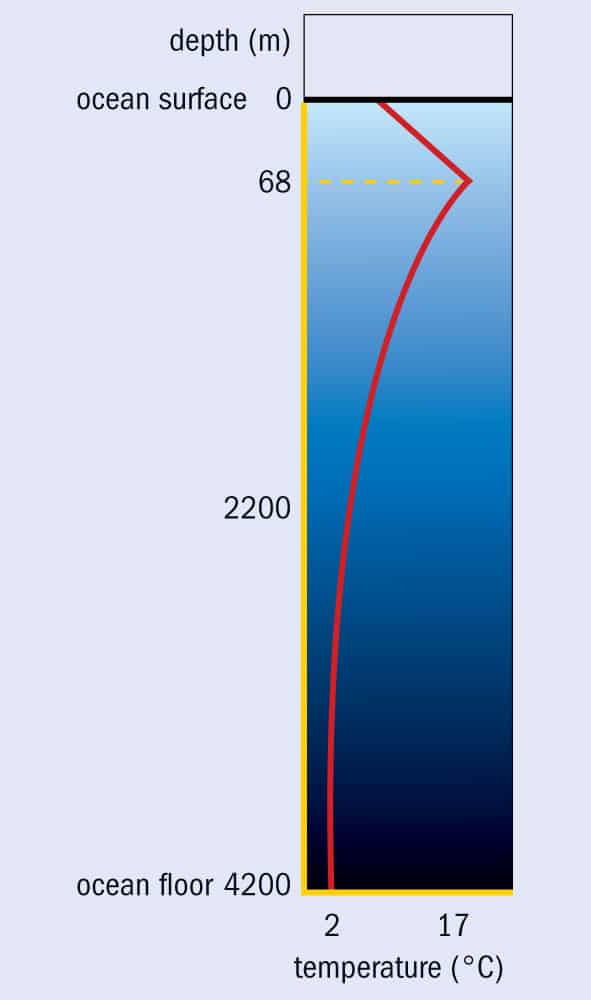
Figure 1: The temperature of ocean waters varies with depth.
Sonobuoys come in two basic varieties: active and passive. The passive sonobuoy is a fairly simple, inexpensive hydrophone; its sole job is to gather all the acoustic energy in the water and convert it to a radio signal, which is transmitted back to a computer processor on the aircraft. The active sonobuoy (sonar), on the other hand, works like an underwater radar, but instead of radio waves, it transmits high-frequency sound waves (the pings) that can be remotely controlled by the crew. Any wave that leaves the sonobuoy and hits a solid surface in the water reflects back towards the transmitter, where a hydrophone collects the acoustic energy and transmits it back to the aircraft via its radio. Once received on the aircraft, the passive and active signals are digitally processed and converted into a visual format for the crew to analyse. This allows them to establish whether they’ve found an acoustic contact of interest and, more importantly, determine if it is a submarine. The crew can then calculate its course and speed using a variety of techniques including Doppler analysis.
There are several difficulties with finding submarines using sound. The biggest of these is other sources of sound in the water. The oceans are a noisy place and they are getting noisier all the time. Everything from ships to oil rigs creates noise but there are also geophysical movements and marine animals that inject their signals into the water.
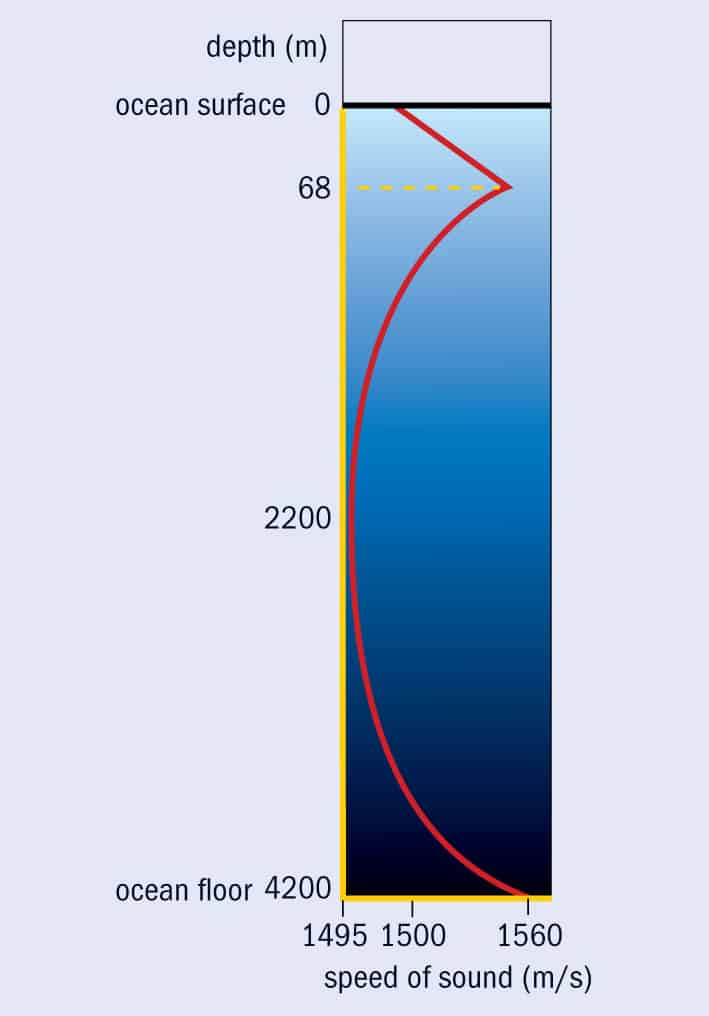
Figure 2: The speed of sound in the ocean is initially dominated by water temperature, but past 900 m it becomes strongly influenced by depth and pressure.
Another problem is that underwater sound doesn’t travel in a straight line. Much like light refracting through lenses, sound waves are subject to Snell’s law of refraction and bend in fluid because of changes to the speed of sound in the propagation medium. In the case of the ocean, the principal factors affecting the speed of sound in water are: temperature, depth, salinity and amount of suspended particulate.
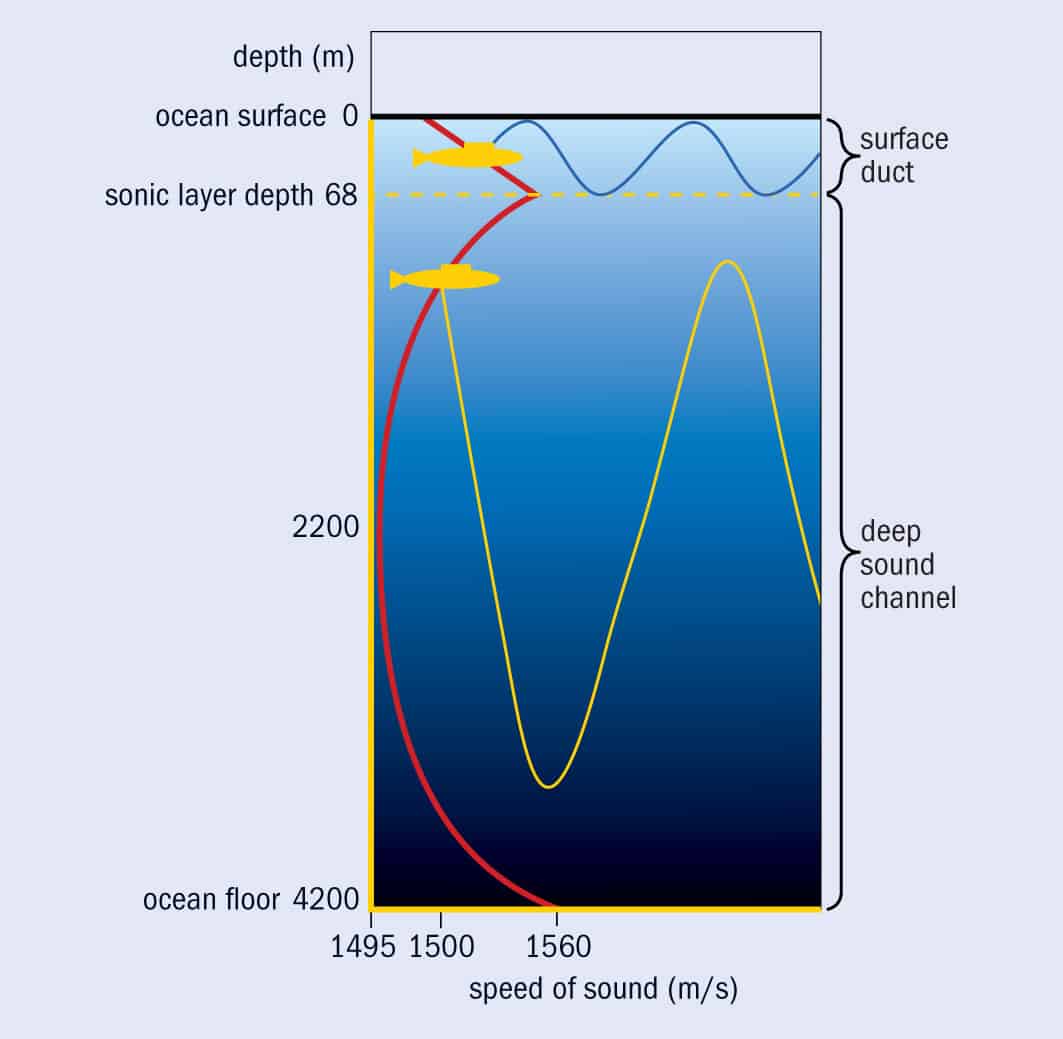
In the first 900 m of the ocean, temperature is the most important factor in determining the speed of sound (figure 1), while below that depth, the dominant factor is how far you are below the surface (figure 2). A sub hunter can measure or calculate most of these and as a result, vertical and horizontal profiles of the sound speed can be determined.
The most common way to measure the vertical speed component is to drop a disposable bathythermograph (a temperature and depth sensor) sonobuoy into the water, which gives a temperature profile similar to that in figure 1. If you know the temperature as a function of depth, you can now fairly accurately calculate the sound speed.
Figure 3: The variations in the speed of sound with depth creates zones – the surface duct and the deep sound channel – where sound waves are confined.
In the arbitrary example of figure 1, you will notice that from the surface to about 68 m, the temperature of the water increases before it suddenly decreases; this inflection in the graph is called the sonic layer depth (SLD) and is typical of a North Atlantic water mass early in the morning. The residual heat from the previous day is still latent in the lower levels of the SLD, but the higher levels have cooled off overnight. The consequence is that the speed of sound increases with depth in this shallow region as shown in figure 2, resulting in what is called a “surface duct” (figure 3). Sound waves from here heading towards the bottom of the ocean will be refracted back up to the surface. As for sound waves heading from this region towards the surface, they will bounce off the air–water interface and then refract off the lower layer much like light in a fibre-optic channel. Any sound source emanating in this region will therefore get trapped. Both active and passive sonobuoys in the surface duct will detect noise at extended ranges; however, all moving surface vessels inject noise into this duct, making it a very noisy region, allowing a submarine to blend into the background.
Below the SLD, as mentioned, the ocean water cools with depth, until the temperature eventually levels out. From this point the sound speed then increases dramatically due to the effects of water pressure. This increase creates a different, deeper sound duct. Known as the deep sound channel (DSC), it exists all over the world. Lacking all the noise of the surface duct, it tends to be quieter and, because it is physically larger, it favours lower frequencies, which attenuate less as a function of distance. These two types of propagation paths (surface and deep) are jointly referred to as direct-path propagation.
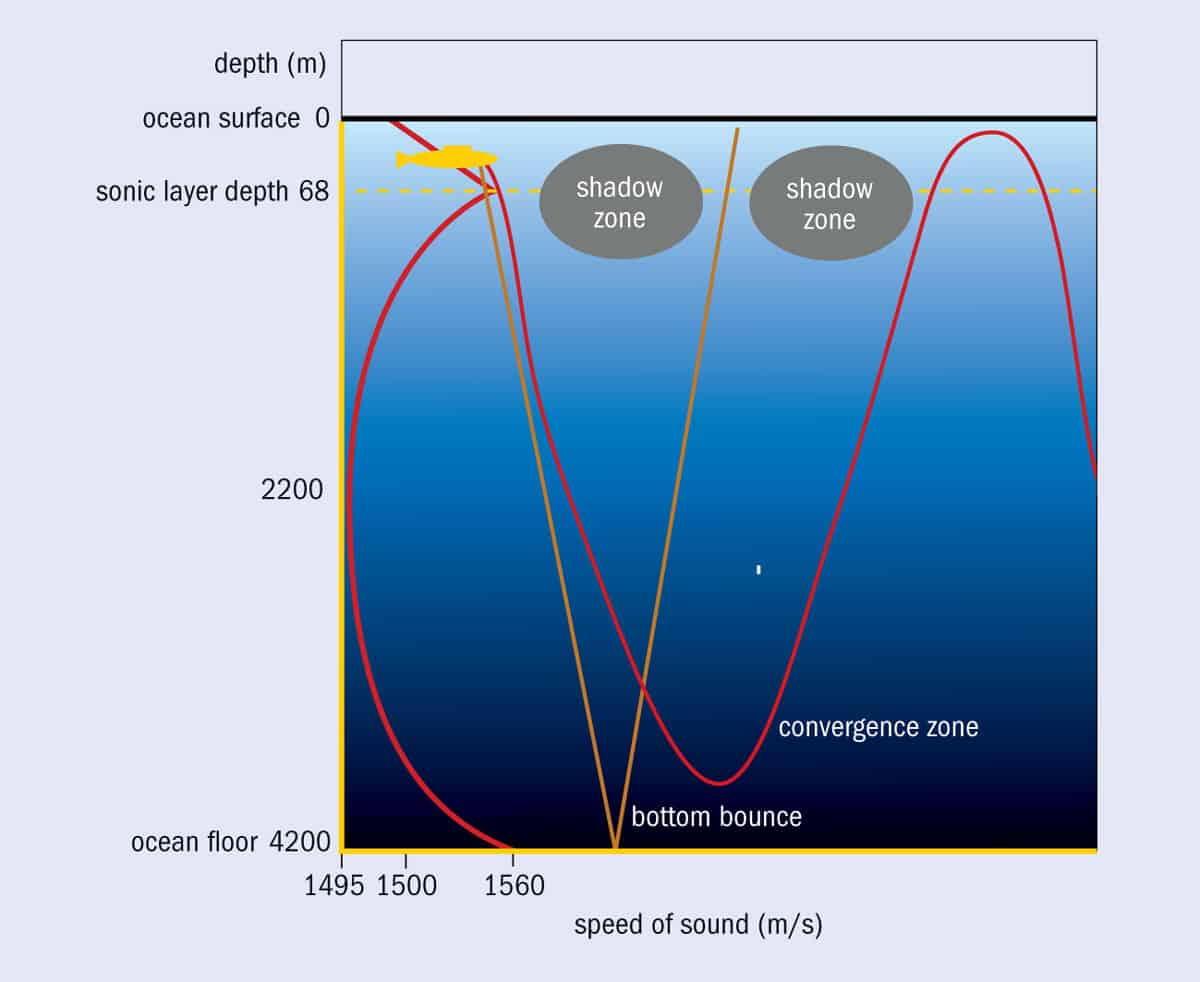
Figure 4: The convergence zone and bottom bounce are two other types of sound propagation that influence the search for submarines.
Two other types of sound propagation that bear mentioning are bottom bounce and convergence zone (CZ). Bottom bounce occurs when the sound waves reflect off the ocean floor and return back to a receiver. These are the most downward-oriented rays of sound that emanate from the source, overcoming the refracting effects of the layers to strike the ocean bottom and reflect back up to the receiver.
CZ occurs in very deep water, where there is space between the ocean floor and the bottom of the sound channel. High-volume sounds emanating from the near-surface area, like bottom bounce, penetrate the layers and then return back to the surface at a distance of 40–50 km away from the source. Because the sound waves are travelling at extreme depths, there is a blank region where there is no signal. This forms a doughnut-shaped annulus around the submarine making it vulnerable to detection in a specific area, but also creating areas called shadow zones where the submarine can hide. Plotting these other types of propagation paths on a diagram for a typical submarine, you get something that looks like figure 4.
Mission planning
Given all these factors, an MPA crew will spend a lot of time calculating the optimal placement of the sonobuoys and their depth settings before taking to the air. A variety of mathematical models have been developed that take into consideration all these factors so the crews can maximize their detection chances. Satellite images, weather buoys and underwater topographical charts all contribute to building an environmental picture so the crew has an idea of how to best configure the sensors. If the surface duct is weak, will the submarine hide in the noisy shallows or will it descend below the layer to hide? What is the time of day of the search? If it is late afternoon, then diurnal heating will increase the surface temperature and the water immediately below, erasing the effect of the surface duct so only the DSC exists. All these factors need to be taken into consideration by the crew. Of course, the submarine’s mission needs to be factored into the planning as the submarine captain will use tactics that best exploit the observed conditions to achieve mission success.
Now, this is just how sound works in the deep ocean. Once you get closer to shore, sea-bottom topography plays a larger part in the propagation of sound, adding to the already formidable list of factors that make it difficult to find an underwater target.
Springing the trap
Back in the North Atlantic and five hours into the patrol, the bleary-eyed crew of 1JF wait for the curry in the oven to heat up, while staring at their screens looking for a faint whisper to indicate the presence of their prey. Suddenly, the acoustic sensor operator cries out “Contact!” over the intercom, jolting the crew into action. The tactical co-ordinator sends a new waypoint to the pilot; the plane banks and the chase is on. With careful co-ordination between pilots and tactical crew, sonobuoys are surgically deployed to capitalize on the weak signal and soon the presence of the submarine is confirmed as it is trapped in a carefully laid pattern of submerged “trip-wires”. Now the crew must maintain acoustic contact until it can be handed over to another aircraft, helicopter, ship or possibly even a friendly submarine. Of course, in wartime, the crew will be waiting for another call over the radio; one that authorizes an attack.
Physicists in the US have used machine learning to determine the phase diagram of a system of 12 idealized quantum particles to a higher precision than ever before. The work was done by Eun-Ah Kim of Cornell University and colleagues who say that they are probably the first to use machine learning algorithms to uncover “information beyond conventional knowledge” of condensed matter physics.
This is an example of machines beating prior work by humans
Roger Melko
So far, machine learning has only been used to confirm established condensed matter results in proof-of-principle demonstrations, says Roger Melko of the University of Waterloo in Canada, who was not involved in the work. For example, Melko has used machine learning to sort various magnetic states of matter that had already been previously classified. Instead, Kim and colleagues have made new predictions about their system’s phases that are unattainable with other methods. “This is an example of machines beating prior work by humans,” says Melko.
Kim’s group studied the physics of 12 idealized electrons interacting according to the Ising model – which describes the interaction between the spins of neighbouring particles. Although their 12-particle model is simplistic compared to real-life materials, this system can just barely be simulated by supercomputers. This is because the complexity of quantum simulations grows exponentially with every additional particle.
The team was particularly interested in understanding the many body localization (MBL) phases that can arise in quantum systems. These phases occur when particles are out of equilibrium and do not behave as a collection of non-interacting particles nor as an ensemble. Physicists struggle to describe MBL phases because statistical concepts like temperature and pressure are ill-defined. “They challenge our understanding of quantum statistical mechanics and quantum chaos,” says Kim.
90% classification accuracy
The team taught the machine learning algorithm to draw a phase diagram that includes two different MBL phases and one conventional phase. To do this, they first generated simulated data of different configurations of the 12 quantum particles that correspond to known phases. They fed each configuration to a neural network, which classified the data as a particular phase. At this point in the machine-learning process the researchers told the neural network whether its classification was correct. Given that feedback, the neural network iteratively developed an algorithm based on matrix multiplication that could distinguish among phases. The neural network could achieve 90% classification accuracy after being trained with 1000 different particle configurations.
The next step involved using the neural network to classify particle configurations of unknown phase. By sorting these configurations, they could fill a phase diagram with boundaries that were more distinct compared to prior diagrams made from other techniques.
How do they learn?
One important downside of using neural networks to predict new physics is that we do not have a clear understanding of how the systems learn. This is a broad area of current research known as the interpretability problem. Fortunately, Kim’s neural network is relatively simple. Many neural networks, such as those that power speech and image recognition algorithms, involve feeding input data through multiple iterations of matrix multiplication called “hidden layers” before they produce an output. These hidden layers are the most opaque parts of the learning process, and Kim’s neural network only has one hidden layer. Her group is now trying to pick apart what exactly that hidden layer is doing. “It’s possible to look inside a simple, custom-built neural network and figure out how it’s making its decisions,” says Kim.
In addition, Kim wants to see if the team can apply a more sophisticated type of machine learning, known as unsupervised learning, to condensed matter problems. Unlike supervised learning, where the algorithm is given the correct answer as feedback, an unsupervised learning algorithm does not receive such feedback.
Condensed matter problems are particularly well-suited for machine learning because they involve many interacting particles, and therefore lots of data, says Melko. The field is moving fast, he says. “Just like you pick up your phone and take for granted that Siri works, in a few years I think everyone’s going to take for granted that there’s some integration of AI technology in these very complex quantum experiments,” he says.
A paper describing the research has been accepted for publication in Physical Review Letters and a preprint is available on arXiv.
By combining the best optical properties of inorganic and organic waveguides in a hybrid chip, researchers at the Chalmers University of Technology in Sweden demonstrate evanescent-wave microscopy using just a conventional microscope. The development allows low-cost and low-energy fabrication of a waveguide that can make imaging of biomaterials more accessible.
Traditionally, evanescent-wave microscopy is carried out using a total internal reflection fluorescence (TIR) microscope. In such a microscope, scientists produce a thin slither of “non-propagating” evanescent light that hovers just above the sample surface and allows observation of surface-bound fluorophores, which is useful in the study of molecular interactions such as cell adhesion, protein binding, and hormone binding. Using evanescent light for these observations limits the amount of background signal compared with what scientists typically observe in conventional fluorescence microscopy. Still, however, the area of illumination is small, the penetration depth of the light is limited to around 200 nm, and the method is totally reliant on the use of fluorescent material for signal generation.
The waveguide developed by the researchers at Chalmers eliminates the need for costly TIR microscopes and allows for nanoscopic objects to be detected without the use of fluorescent labels. The waveguide only requires the use of a conventional light microscope combined with a fibre-coupled laser and generates an evanescent wave with an improved penetration depth of below 100 nm. The penetration depth can also be varied by tailoring the thickness and refractive index of the core-layer of the slab.
“The design and fabrication is rather simple and straightforward compared to most nano-devices out there,” said co-author Bjorn Agnarsson, a post-doctoral fellow in the Department of Physics. The biggest challenge in development was keeping the surface of the waveguide’s core layer flat and free of contaminates to ensure the structural integrity of the fabricated chip. Now, however, using the fabrication technique detailed in the paper published in Nano Futures, the team can easily fabricate 100 chips within a few days.
Tailoring to task
According to co-author Mattias Sjöberg, a PhD student in the Department of Physics, the device can be tuned to different applications simply by changing the material of the device’s cladding layer. Since their team is interested in biological applications where molecules are in aqueous environments, they chose cyclized transparent optical polymer (CYTOP), a polymer that has the same refractive index as water.
“CYTOP allows for reduction of stray light, which is an advantage that other devices don’t have,” said Sjöberg. “Plus, we significantly reduce costs since we don’t need to use specially designed TIR microscopes and objectives.”
With their device optimized, next the team plans to look at using it for label-free studies of the interactions between proteins and biological nanoparticles such as vesicles.
A new experiment has revealed how sheared granular materials emit sound waves that evolve in characteristic patterns as grains suddenly slip and rearrange themselves. The research, carried out by Ted Brzinski and Karen Daniels at North Carolina State University, could improve our ability to forecast natural disasters by monitoring the sounds emitted by granular materials in nature.
When granular materials experience shear forces – such as when tectonic plates rub against each other, or as the weight of snow on a steep slope acts against friction – the microscopically-vibrating grains will initially stick to the interface as stress builds in the material. When the stress becomes too high for the overall system to cope, many grains will slip at once; suddenly rearranging themselves into different patterns. During this stick-slip transition, grains develop low-frequency vibrational modes as stress is suddenly dissipated. The presence of these modes can be detected in the form of sound waves that are emitted at the material interface.
In a recent experiment, Daniels studied this effect by firing sound waves into granular materials and measuring how they changed as the sound had passed through. The study successfully documented how acoustic waves evolve in a characteristic pattern shortly before grains underwent stick-slip transitions. However, Daniels realized that manipulating the material directly made the technique somewhat invasive.
Rotating wall
In this latest study, she and Brzinski devised a way to observe the signals passively. To do this, the researchers created an annular chamber, with an inner wall that rotated once per hour, and a static outer wall. The space in between was filled with a single layer of 8000 small plastic disks, packed together as closely as possible to replicate a granular material. The disks resisted the rotation of the inner wall, which generated shear forces in the overall system. When stick-slip transitions eventually occurred, the disks rearranged themselves rapidly in about 0.5 s in a process that repeated roughly once every minute. The sounds produced by the events were then picked up by sensors embedded in the outer wall.
As stress built up in the system, the sensor data revealed that individual disks vibrated in a narrow range of modes. This resulted in the generation of a spectrum of sound waves with similar frequencies, which did not evolve significantly over time. However, in the moments shortly before each slip, the frequency distribution of the disks’ vibrational modes began to broaden, while the average frequency increased gradually. After each slip, this average frequency dropped rapidly, and the distribution narrowed once again.
The researchers believe that the evolution they observed in the frequency distribution is characteristic enough to be useful for predicting slips in natural materials. Using sensors to measure changes in the sounds emitted at sites of potential avalanches, landslides or volcanic eruptions, it could become easier to predict when natural disasters are more likely to occur. Systems for predicting earthquakes would be a particularly useful application, although the researchers realise that they could still be a long way off. In the future, Brzinski and Daniels aim to collaborate with seismologists, which could allow them to develop some of the most sophisticated detection technology yet produced.