Brachytherapy proves safe for cervical cancer

Lars Fokdal

Ureteral stricture – a narrowing of the tube that takes urine from the kidneys to the bladder – is a rare but potentially serious complication following radiation treatment for cervical cancer. The stricture can lead to kidney damage and sometimes life-threatening infections.

Previously, concerns have been raised that brachytherapy might increase the risk of ureteral stricture, although the treatment itself is associated with better survival. However, research presented today at the ESTRO 37 conference in Barcelona shows that intracavitary and interstitial (IC/IS) brachytherapy is safe and does not increase the risk of ureteral stricture.

Intracavitary brachytherapy involves placing an applicator in the uterus, while interstitial brachytherapy involves inserting needles directly into the tumour. The appropriate radiation dose is then delivered to the cancer via one or both of these approaches.

Lars Fokdal, from Aarhus University Hospital, and colleagues examined data from 1772 patients with locally advanced cervical cancer enrolled in two international trials: the retrospective RetroEMBRACE and the prospective EMBRACE studies. Image-guided brachytherapy (IGBT) was delivered with the combined IC/IS technique in 36% of patients.

The team followed up the patients treated with IC/IS IGBT for between one and 163 months. At a median follow-up of 29 months, 36 patients were diagnosed with severe grade 3-4 ureteral stricture. The overall risk of developing grade 3-4 ureteral stricture was 2% after three years and 3.2% after five years. The risk was lowest (1.3% at five years) in patients with small, stage 1-2 tumours and slightly higher in those with stage 3-4 tumours (1.8%/4.8% at three/five years).

The highest risk was seen among patients with advanced cancer who also had swollen ureters (hydronephrosis) at diagnosis. In these patients, the risk of ureteral stricture was 13.6% and 23.4%, at three and five years, respectively.

“The incidence of ureteral stricture in cervical cancer patients generally is between 2-3%, so the overall risk of developing the complication after IC/IS IGBT compares well,” explained Fokdal. “It is good to know that the interstitial component of IGBT does not increase the risk of this complication. However, the risk is more pronounced in patients with advanced stage and hydronephrosis at diagnosis.”

One strategy to avoid ureteral stricture in higher-risk patients could be closer observation following IC/IS IGBT so that ureteral strictures could be detected earlier before they become too severe. Another option could be insertion of ureteral stents before radiotherapy to visualize the organ on imaging and reduce the delivered dose.

“Results from the RetroEMBRACE and EMBRACE trials have also shown that IC/IS image-guided brachytherapy is associated with a better outcome for patients in terms of survival and adverse side-effects,” Fokdal added. “The increased, but targeted radiation dose to the tumour controls the cancer better without adversely affecting nearby organs and tissues. Taking all these results together, we have growing evidence in favour of IC/IS IGBT for treating cervical cancer.”

Artificial scaffolds target bone-ligament interfaces

The interface between bones and ligaments plays a crucial role in the human body, since it helps us to move our joints and also allows them to bear weight. This interfacial zone is composed of heterotypic, “graded” tissue, that transitions from soft ligament to hard bone, which means that it contains a complex mix of different cell types, matrix components and structures.

A research collaboration between scientists at the University of Twente and Maastricht University in the Netherlands, and the University of Pisa in Italy, recently fabricated a new type of triphasic scaffold that mimics this multi-tissue environment within the bone-ligament interface. These engineered structures could be used to develop tissue grafts that could help regenerate diseased or damaged interfacial zones.

Growing cells on a triphasic scaffold

The new biomimetic scaffold, reported in the journal Biofabrication, was made of two different materials that together reproduce the mechanical, structural and physiochemical properties of the ligament–bone interface. The first component is a 3D structure of polycaprolactone (PCL), produced using fibre deposition, which is routinely used in tissue engineering for its bone-like characteristics. This is complemented by an electrospun network of polylactic co-glycolic acid (PLGA), a bioresorbable polymer that mimics the properties of ligament tissue.

Natural properties

The scaffold was designed to have a gradient of physical and mechanical properties, similar to that found in natural heterotypic tissue. The  researchers found that the combination of materials was able to imitate the properties of the bone, ligament and calcified/uncalcified fibrocartilagineous regions of tissue at the micro- and nanoscale. Since the work was published, the researchers have been further developing the electrospun network in their 3D construct.

“We are designing this structure to capture some of the physicochemical and biological characteristics of the ligament interface, including fibrillary geometrical cues, and are incorporating biological recognition sites into it too,” explains team leader Lorenzo Moroni. “Our scaffold may result in faster tissue regeneration if the recognition sites that we have engineered prove to be effective.”

Moroni explains that the work forms part of his lab’s strategy of developing biofabrication technologies that recapture the complexity of the native environment. “We are in fact trying to move from scaffolds containing a single biomimetic tissue to multiple ones in an ensemble, since it is virtually impossible to dissect a specific tissue from its associated vasculature and neural network in the human body,” he says.

Ultimately, Moroni adds, these are the first steps towards more sophisticated experiments that will attempt to connect the lymphatic network and the immune system to the regenerated tissue. “Adding the lymphatic network too would be a fascinating future development but will require more fundamental work,” he says. “For instance, we would need to culture together multiple types of cells here, which is an important challenge from the culture technique point of view.”

Towards the clinic

A more immediate priority is to test the behaviour of the new scaffold in situ. “We still need to understand if these scaffolds can be easily translated into an animal model for ligament regeneration,” says Moroni. “We have planned some experiments for 2018 to help us answer this question.”

The team has obtained funding from the European Research Council to test some of the ligament regenerative scaffolds in pre-clinical animal models. “If the results of these experiments prove promising, we will then be looking at the possibility of partnering with a company or even creating our own spin-off to further translate our findings into a product that could reach the clinic,” he continues.

One purpose of those tests will be to evaluate the lifetime of the regenerative products. “Ideally, the materials we have used should provide a long-lasting solution, but this is still a challenge to achieve,” Moroni concludes.

  • Read our special collection “Frontiers in biofabrication” to learn more about the latest advances in tissue engineering. This article is one of a series of reports highlighting high-impact research published in the IOP Publishing journal Biofabrication.

A fishing rod for electric eels, Jian-Wei Pan and Elon Musk honoured by Time

Research universities and labs can be treasure troves of antique scientific equipment – some of which can look very perplexing to the modern eye. The National Institute of Technology and Standards (NIST) in the US has its own museum and staff there are asking the public to help identify some mysterious objects in their collection. What, for example, is the above apparatus – a fishing rod for electric eels?

Time magazine has names its 100 Most Influential People of 2018 and among the celebrities and politicians is a name that most people will probably not recognize, but I was very pleased to see – the Chinese physicist Jian-Wei Pan.

Quantum satellite

Pan was nominated by his former PhD supervisor at the University of Vienna, Anton Zeilinger, who wrote in Time “I can’t imagine the emergence of quantum technology without Jian-Wei Pan”. Pan was the leading force in the development of China’s Micius quantum satellite, which has managed to share quantum information between China and Austria. “His long-term goal of a quantum Internet has come a few leaps closer because of this,” says Zeilinger, “I consider it a privilege to have been his teacher”.

Before he was discovered by Time, Pan was cited by Physics World as the winner of our Breakthrough of the Year 2015 for his work on double quantum-teleportation.

Another physicist I spotted on the list is the entrepreneur Elon Musk, of Tesla and SpaceX fame. He was nominated by fellow physicist and billionaire Yuri Milner, who writes “Through original thinking, technical precision and smart marketing, Elon is making space transport rise up to our biggest ambitions”. Milner, who made his fortune investing in technology companies, has also made his mark on the world of physics by founding and partially funding the Breakthrough Prize in Fundamental Physics.

North Atlantic ocean currents are slowing

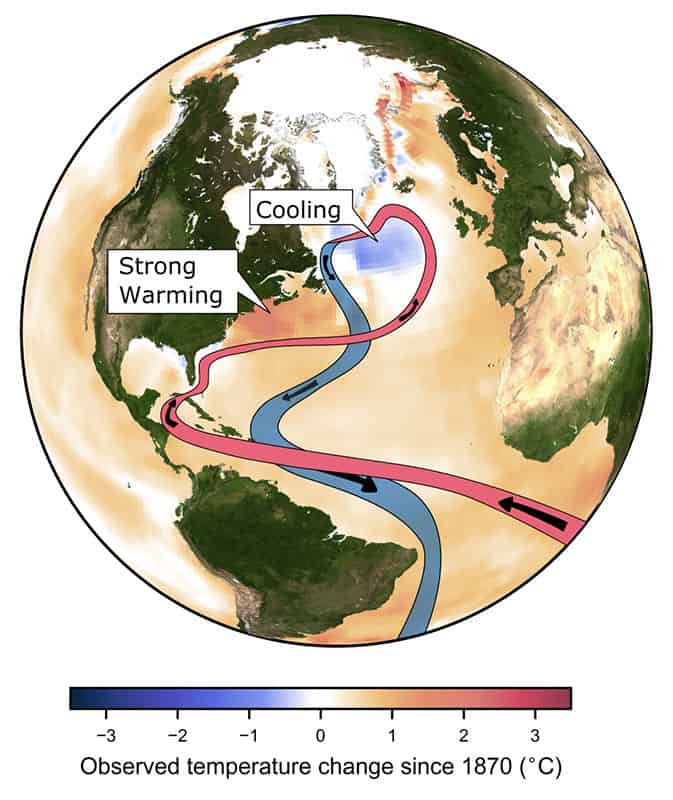
Observed temperature change

The Gulf Stream is slowing, the North Atlantic is cooling. An international scientific study has found new and harder evidence that one of the planet’s key heat pumps, the currents which exchange warmth between the tropics and the Arctic, are weaker today than at any time in the last thousand years.

The currents, known as the Atlantic overturning – its scientific name is the Atlantic Meridional Overturning Circulation, the AMOC – bring warm water north from the tropics and return south with cold water.

Earlier studies suggested strongly that any weakening of the AMOC would speed sea level rise on the US east coast and cool north-west Europe by up to 5°C.

Those studies made use of computer simulations. But the latest research is radically different. It is based on direct observation of what is happening in the ocean. And it is, in non-scientific language, hard evidence that the Gulf Stream is slowing down.

A team from Germany’s Potsdam Institute for Climate Impact Research (PIK) and the US National Oceanic and Atmospheric Administration has found evidence which it says not only supports the earlier predictions, but makes them hard to dispute.

In a study published in the journal Nature the researchers say analysis of sea surface temperature data shows that the AMOC has slowed down by roughly 15% since the middle of the 20th century, with human-made climate change a prime suspect.

“We detected a specific pattern of ocean cooling south of Greenland and unusual warming off the US coast – which is highly characteristic for a slowdown of the Atlantic overturning, also called the Gulf Stream system,” said the lead author, Levke Caesar from PIK. “It is practically like a fingerprint of a weakening of these ocean currents.”

For decades computer simulations have generally predicted that the AMOC will weaken in response to human-caused global warming. But whether this is already happening has until now been unclear, because of a lack of long-term direct current measurements.

Most robust

Not any more, though. “The evidence we’re now able to provide is the most robust to date,” says Stefan Rahmstorf of the Potsdam Institute, who conceived the study. “We’ve analysed all the available sea surface temperature data sets, comprising data from the late 19th century until the present.”

“The specific trend pattern we found in measurements looks exactly like what is predicted by the computer simulations as a result of a slowdown in the Gulf Stream system, and I see no other plausible explanation for it.”

The Atlantic overturning is driven by the differences in the density of the ocean water: when the warm, lighter water flows from south to north it becomes colder, denser and heavier, making it sink deeper and flow back southwards.

Global warming is not the only influence on the AMOC. Increased rainfall and meltwater from the Arctic sea ice and Greenland ice sheet are also diluting the waters of the northern Atlantic, reducing the salinity. Less saline water is less dense and so less heavy, making it harder for the water to sink from the surface to the ocean depths.

Second study

There have been long debates about whether the AMOC could collapse, which would constitute a tipping element in the Earth system. The PIK study does not consider the AMOC’s future, instead analysing how it has changed over the past century.

A second study, by a team including David Thornalley, from University College London, in the same issue of Nature, looks into the Earth’s past climate to reconstruct Atlantic overturning changes over the past 1,600 years.

It provides independent confirmation for earlier conclusions that the weakness of the circulation today is unprecedented for more than a millennium at least.

“Several lines of evidence are coming together to a consistent picture now, all pointing at the same weakening since the 1950s,” says Professor Rahmstorf: “[They include] sub-polar Atlantic cooling, the warming inshore of the Gulf Stream, Thornalley’s proxy data for subsurface Atlantic temperatures, and earlier proxy data from deep sea corals showing water mass changes in the Gulf of Maine.”– Climate News Network

• This report was first published in Climate News Network

Europe emerges as neutron science powerhouse

Europe’s neutron facilities are leading the world in terms of the number and quality of publications – but their pre-eminence could be threatened in the coming decade as new facilities in Asia ramp up. That is the conclusion of a new analysis carried out by researchers at Forschungzentrum Jülich (FZJ) in Germany and published on arXiv.

They found that in the 10-year period from 2005 to 2015, some 42,689 papers were published by researchers based on experiments carried out at neutron labs worldwide, with Europe accounting for more than half (52%) of all papers in the field. Labs in Asia/Oceania were second with 16,220 (20% of the total), followed by North America at 15,347 papers (19%). Within Europe, the strongest countries were France with 8091 neutron-science publications followed by Germany (8041) and the UK (5510).

The closure of smaller neutron centres in Europe will result in a drop in output that opens the way for Asia

Thomas Gutberlet

France’s strength in neutron scattering is helped by the success of the Institute Laue-Langevin (ILL) in Grenoble. During 2005–2015, more than 4000 papers had an author who was affiliated at the centre. The next most productive lab was the Materials and Life Science Experimental Facility (MLF) at the J-PARC facility in Tsukuba, Japan with more than 2000 papers, followed by the Spallation Neutron Source (SNS) at the Oak Ridge National Laboratory, US, with just under 2000. Both the MLF and SNS were, however, closed or not in full operation for part of the 10-year survey period.

Quantity and quality 

The survey, which used data from Thomson Reuters’ Web of Science, also showed that the quality of the publications in neutron science is increasing. In 2005, some 14% of papers produced at the ILL, for example, were published in journals that had an impact factor, which is a sign of journal quality, of greater than five. By 2015 the proportion in such higher-quality journals, had risen to 21%.

Thomas Gutberlet from the FZJ, who led the study, fears that Europe’s dominance in neutron scattering could end despite the European Spallation Source coming online in the coming five years. “The closure of smaller neutron centres in Europe will result in a drop in output,” he says. “That opens the way for Asia especially as new facilities in China and Japan increase productivity.”

Gutberlet adds that their analysis supports the conclusion of a 2016 report carried out by the European Strategy Forum on Research Infrastructures. It called on Europe to replace its ageing neutron sources to maintain its “competitive edge” in the field.

A self-tightening suture

The self-tightening suture material

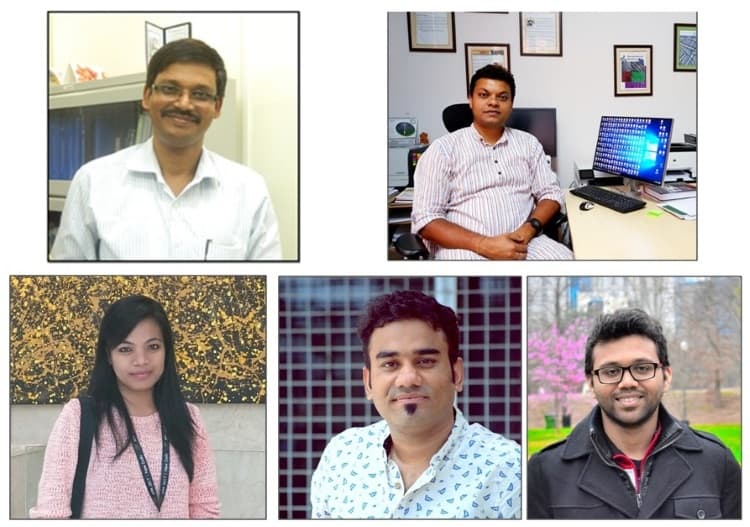
Rituparna Duarah and her colleagues at Tezpur University and the Indian Institute of Technology Guwahati have developed a suture material that can tighten itself, to close wounds with the perfect amount of pressure. In their recent study, the authors describe how they synthesized the suture from a bio-based material and tested its physical and biological properties (Biomed. Mater. 13 045004).

While the suture was not as strong as commercially available sutures, it appeared to be strong enough. In addition, it degrades over time and provides a scaffold for the growth of new cells. When tested for biological reactions, using cells like those in muscles and blood vessels, the material exhibited minimal negative effects.

How it works

At room temperature, the suture is short, but when heated, it can be stretched to up to twice its length. This long shape is then fixed by cooling to -15°C, and the suture can then be brought back to room temperature in the elongated shape. At this point, knots can be introduced. Upon reaching body temperature, the suture returns to its short state and thereby tightens the knot and any stitches that were made.

The advantage of a self-tightening suture is that the surgeon cannot over- or under-tighten the material. Too tight and the suture might rip, leading to wound opening; too loose and the wound is not closed properly. If the surgeon notices the problem and repeats the suture, valuable time is lost; if not, wound healing is delayed. This inspired the researchers to find a suitable self-tightening material.

Study authors

But inventing a self-tightening suture is not easy. Previously tested materials were not strong enough and not as biologically compatible. Further, the suture needs to degrade in the wound over time, or else the wound will have to be opened up again to remove the suture from lower tissue layers. A matrix made from bio-based hyperbranched polyurethane (HPU) and reduced carbon dots, a form of graphite, yielded a new material that fulfilled these requirements. HPU alone was not stable enough, but the carbon dots improved how much the suture could be stretched before breaking.

Is it biocompatible?

To test bio-compatibility, the researchers performed a number of in vitro tests on three types of blood cells. When in contact with the suture material, significantly more red blood cells stayed intact than in a control condition, implying that the material does not cause blood lysis. Platelet cells did not attach to the material as much as to a control material. This is good because platelet attachment can lead to thrombosis. When macrophages, which are immune cells, were exposed to the material, they did not signal for an inflammatory immune response as strongly as they did when exposed to a control substance. These assays showed that the suture material did not have negative effects on blood cells.

On top of that, Duarah and her team found that the material promoted the attachment of muscle and blood vessel cells, which then grew well. This suggests that the material does not only not cause damage, but also has the positive effect of allowing cells to attach, grow and heal the wound.

In a surgical procedure, cuts are made through several layers of tissue – each of which needs to be sewn back together afterwards. Self-degrading sutures allow stitching of lower-lying layers of tissue together without the need to open up the wound to remove the suture. To investigate whether the new suture material degrades, Duarah and her colleagues placed it in PBS, a salt solution at stable pH. The material lost up to 7% of its weight in 90 days. It is expected that the degradation might be faster in the presence of the body’s enzymes.

Bose–Einstein condensate forms in a nanoparticle lattice

A condensate forms when the lowest possible energy is reached

Bose–Einstein condensation occurs when a gas of atoms is cooled until the de Broglie wavelength of the atoms becomes comparable to the distance between them. The atoms then collapse into the same quantum ground state and can therefore be described by the same wavefunction. The phenomenon was predicted nearly a century ago by Albert Einstein and Satyendra Nath Bose, and researchers created the first such condensate in 1995 with rubidium atoms.

Since then, Bose–Einstein condensates (BECs) have also been observed in polaritons, photons and magnons, to name but three systems. A team of researchers at Aalto University in Finland has now succeeded in creating the first-ever BEC of light coupled with surface plasmon polaritons (the particle-like collective oscillations that occur when light interacts with a metal’s conduction electrons).

New condensate is very different

“Observing a new type of condensate such as this one is important since it will push the limits of the BEC phenomenon and open the way for new technological applications,” says team leader Päivi Törmä. Surface plasmon polaritons, for example, are expected to play an important role in future photonics devices that would use light instead of electricity to process information. Such devices should be much faster and use less energy than their electronic counterparts.

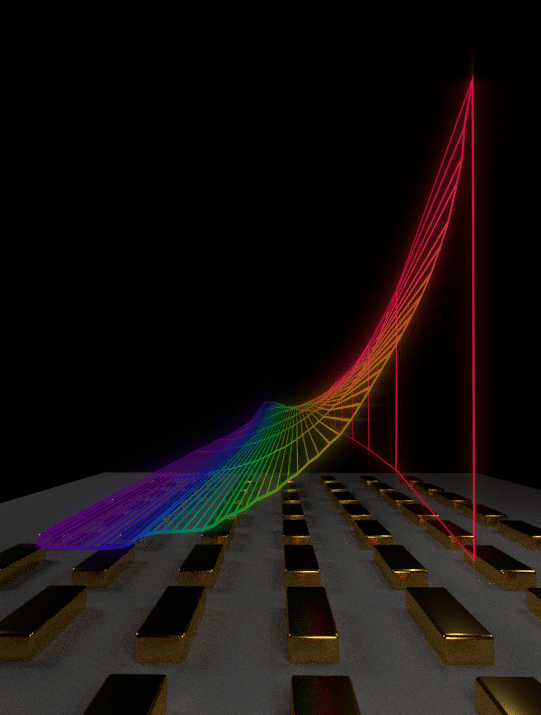
The new condensate is very different from most of those made before in that it can form at room temperature rather than at near-zero temperatures. It also appears extremely quickly – on the picosecond timescale – and is based on an easy-to-fabricate on-chip nanoparticle lattice whose geometry can readily be tuned to modify the properties of the condensate.

Periodic array of gold nanoparticles

To make their lattice, Törmä and colleagues begin by fabricating a periodic array of gold nanoparticles on a glass slide, using nanofabrication techniques such as electron beam lithography. The particles are separated by around 580–610 nm and the array is 100 x 300 μm2 in size. They then overlay the array with a solution containing dye molecules.

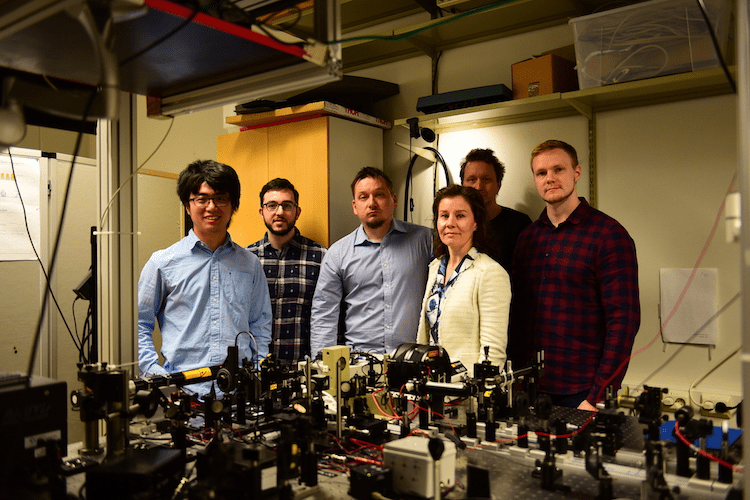
The team

“Using a femtosecond laser, we then ‘pump’ the molecules at a spot located at one end of the array,” explains Törmä. “The molecules then emit light and thereby excite the plasmonic modes of the lattice – that is, they create those particles that will then condense. These particles are mostly photons but they also contain electron plasma oscillations in the gold nanoparticles.”

Tracking how the condensate forms

“The particles start to propagate from the end of the array and interact with the dye molecules by light absorption and emission,” she tells nanotechweb.org. “Between the absorption and emission, the molecules lose some of their energy to vibrations and the energy of the light therefore decreases at each absorption-emission cycle. By monitoring the frequency of the emitted light when the particles propagate in the array, we can thus observe how the condensate forms.”

The condensate in fact forms when the lowest energy state possible in the lattice (the so-called band edge) is reached, she explains. “By monitoring the emitted light as it propagates along the lattice, we can track how the condensate forms over time. This propagation would be extremely difficult to monitor using other techniques since it occurs so quickly – in just one picosecond.”

Lasing or BEC?

By altering the distance between the gold nanoparticles in the lattice, the researchers say they can control whether BEC condensation or ordinary lasing occurs. “The two phenomena are similar and studying the crossover between them will help us better understand how they are related and how they differ,” says Törmä. “Both lasing and BEC produce bright beams of light but the coherences of the light they offer have different properties, which means they might be used in different applications. The new condensate can produce light pulses that are extremely short and so may offer faster speed for information processing and imaging applications.

“As well as looking into such applications, we will also be trying to increase the amount of dye molecules in our system so that we have strong coupling between them and the plasmonic modes, and see how this affects BEC,” she adds.

The present research is detailed in Nature Physics 10.1038/s41567-018-0109-9.

Grain boundaries give inorganic perovskites huge potential

For nearly half a century, researchers have struggled to harness the curious property of above band-gap photovoltage in metal-oxide perovskites because of their poor bulk conductivity. But now, an international team led by researchers at INRS and ÉTS in Canada have paved the way for progress by identifying and manipulating nanoscopic conductive channels that lie between the grains of a BiMnO3/BiMn2O5 composite absorber. They say that the high voltage and long lifetime of this set of materials provides a serious competitor to the much-hyped lead-halide perovskites.

Charge carrier conduction plays a vital role in solar energy conversion, as a high photocurrent relies on charges being able to separate quickly before they recombine. Therefore, despite the possibility of giant voltages in metal oxide perovskites, their low conductivity has rendered them more of a scientific curiosity than a viable candidate for commercial solar cells.

It is for this reason that Joyprokash Chakrabartty and co-workers took to their conducting atomic force microscope (C-AFM) when trying to understand the remarkable efficiency of 4.2% obtained from their BiMnO3/BiMn2O5 composite. They found that although most of the material developed negligible photocurrent, there was a huge contribution coming from conducting channels along the boundaries between grains.

In these areas, the electronic bands that carry the charges are bent downwards, and the resulting local barrier potential enhances the conductivity. This finding flies in the face of much of the contemporary understanding of solar cells, in which grain boundaries are generally considered as a nuisance on account of their numerous defects that induce charge recombination.

Added benefits of knowing your boundaries

The band-bending effect is also responsible for the large voltage of 1.48V exhibited by the device. BiMnO3 and BiMn2O5 both have a band gap of around 1.25eV, and so the standard p-i-n model would limit the maximum voltage of this device to 1.25V. However, when charges accumulate at the grain boundaries, the warped electronic bands can work to enhance the voltage beyond the band gap of the composite’s constituents.

The researchers were also able to manipulate these conducting channels to improve device performance in a completely novel way. By applying voltage pulses to the device, they could switch the polarization of the ferroelectric BiMnO3, thus injecting more carriers into these channels and inducing a 20-fold increase in the photocurrent.

“Our findings are highly promising for the development of future solar technologies,” says Chakrabartty, “and also potentially useful in other optoelectronic devices.” Indeed, the insight gained in this work could break the deadlock in this field and allow for a host of next-generation inorganic perovskite devices to reach their potential.

Full details of the work can be found in Nature Photonics.

Handgrip strength indicates survival in NSCLC patients

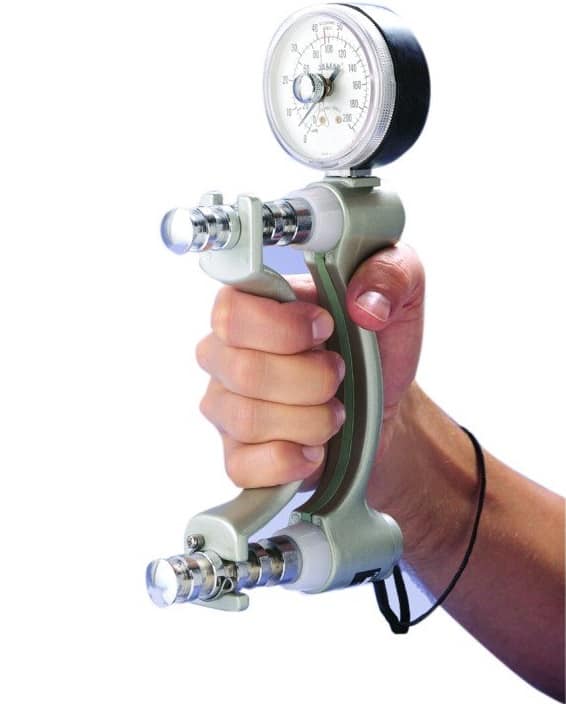
A hand dynamometer

Patients with inoperable stage I non-small cell lung cancer (NSCLC) treated with stereotactic body radiotherapy (SBRT) have an excellent oncological prognosis, but a high mortality rate due to co-morbidities. Therapeutic decisions are influenced by factors such as the WHO performance status, but refinement with more objective factors could prove beneficial. With this in mind, a Dutch research team has demonstrated that a simple test of handgrip strength provides a good indicator of short- and long-term survival in such patients.

The study, conducted at the MAASTRO Clinic in The Netherlands, examined 226 NSCLC patients who were about to receive SBRT. Patients were asked to grip the handle of hand dynamometer (a device that measures grip strength) as hard as they could for 3 s, three times for each hand. The test results were adjusted to take account of gender, age and height.

The researchers observed handgrip weakness (defined according to the norm in the general population) in 31% of patients, whereas 69% had no weakness. Among those with handgrip weakness, only 12% were still alive five years later, while 40% of patients with strong handgrips were still alive. They note that even at 1-year, handgrip was an independent prognostic factor for overall survival. Stéphanie Peeters, a radiation oncologist at the MAASTRO Clinic, will present the findings tomorrow at the ESTRO 37 conference in Barcelona.

“We have found that handgrip strength is an objective, cheap and easy way to measure short- and long-term overall survival in stage I patients with NSCLC who are being treated with SBRT with the aim of curing them,” said Peeters. “The WHO performance status measurement is quantified by a physician, and therefore may be prone to subjectivity. The handgrip test, on the other hand, is a more objective measure that may provide additional information on the general condition of a patient.”

The extra information provided by the grip strength measurements may help guide physicians in how to manage a patient’s lung tumour, Peeters notes. “In patients with poor prognosis, it may be decided not to give an active treatment, and having an objective measure such as the handgrip test may give more weight to this important decision. Close surveillance may then be an option,” she explained.

The handgrip test now needs to be validated in other patient groups to justify its widespread use. In addition, the researchers do not know whether improving a patient’s general health and fitness might help improve their life expectancy. “Future studies could explore the impact on survival of improving the handgrip strength in patients with weakness before the start of a curative treatment,” said Peeters.

Gender gap in physics among highest in science

Physics has one of the largest gender gaps in science, technology, engineering, mathematics and medicine (STEMM) according to an analysis of more than 36 million authors of academic papers over the last two decades (PLoS Biol 16(4) e2004956). The study, carried out by researchers at the University of Melbourne in Australia, says that at current rates it will be more than two centuries until there are equal numbers of senior male and female researchers in physics.

While the proportion of women in most STEMM fields is increasing, Luke Holman and his colleagues used computational methods to estimate the speed of change. They did this by estimating the gender of 36.6 million authors on 9.7 million papers the databases PubMed and arXiv. In the latter, for example, the researchers say they were able to estimate – with 95% confidence – the gender of 1.18 million authors from 538,688 preprint published since 1991.

If we want to see 50% of physicists being women sooner we need to implement new initiatives to do this – over and above any currently-running initiatives

Luke Holman, University of Melbourne

Of the 115 scientific disciplines examined, 87, including physics, had fewer than 45% female authors. Around 13% of last authors in physics were women – a figure that is currently increasing at a rate of just 0.1% per year. The researchers say that as last author is usually associated with seniority, based on this data, their model predicts that it will be 258 years before the gender ratio of senior physicists comes within 5% of parity. “It’s almost the most male-biased STEMM discipline that we have data for,” Holman told Physics World.

Evidence-based interventions 

The researchers also highlight computer science, maths and surgery as field with gender gaps that are likely to persist for generations. They conclude that further reforms in education, mentoring and academic publishing, beyond current initiatives, will be needed to close the STEMM gender gap. “If we want to see 50% of physicists being women sooner we need to implement new initiatives to do this – over and above any currently-running initiatives,” adds Holman.

The authors acknowledge, however, that the lack of a consistent style for authors’ names in arXiv, with many only providing initials, could have affected the quality of the analysis. Patricia Rankin, chair of the American Physical Society’s committee on the status of women in physics, also cautioned against assuming that the last author on a paper is the most senior. “The meaning of paper order can vary from field to field, in high-energy physics, for example, its often just alphabetical,” she says. “The 258 years to parity also assumes no change in the current conditions but I think we are getting much more focused on understanding why the participation of women in physics is low – and in designing evidence-based interventions.”

Copyright © 2026 by IOP Publishing Ltd and individual contributors