Alpha particles treat deeper into solid tumours

Alpha particles are a powerful cancer-killing tool, directly damaging tumour cell DNA regardless of the level of oxygenation or cell cycle stage. The downside of alpha particles is their extremely short range (40-90 µm) in tissue. Now, Israeli start-up company Alpha Tau Medical has created a method to overcome this range limit and showcased its technology at the recent ESTRO 37 congress in Barcelona.

The company’s Alpha DaRT (diffusing alpha-emitters radiation therapy), invented by Itzhak Kelson and Yona Keisari from Tel Aviv University, is based around a radioactive seed containing 224Ra atoms. The seed is injected into a solid tumour and as it decays, it continually releases short-lived daughter atoms (220Rn, 216Po, 212Bi and 212Po), which are also alpha emitters. These atoms diffuse into the tumour, where they emit high-energy alpha particles that destroy tumour tissue. This approach increases the treatment range to a radius of several millimetres.

“Instead of directly irradiating the tumour, 224Ra decays and pushes daughters into the tumour. These are alpha emitters, which start to diffuse and decay again,” explained Amnon Gat, chief operating officer at Alpha Tau. “This enables clinical use of alpha for tumour destruction.”

The 224Ra atoms are fixed onto the seed, so they don’t diffuse into tissue themselves. The daughter atoms diffuse well in the tumour but hardly in healthy tissue, making the treatment highly conformal with no systemic side effects. Alpha radiation also has a high relative biological effectiveness, so less dose is required to induce damage. Another advantage is that because alpha particles are not impacted by oxygen level, Alpha DaRT can treat hypoxic tumours that are resistant to other type of radiation.

Into the clinic
Preclinical trials demonstrated that Alpha DaRT is effective and safe for treating a range of solid tumours, including squamous cell, colon, prostate, brain, pancreatic and lung carcinomas. The therapy is now undergoing clinical trials in Israel and Italy, and has been used to treat 16 patients to date.

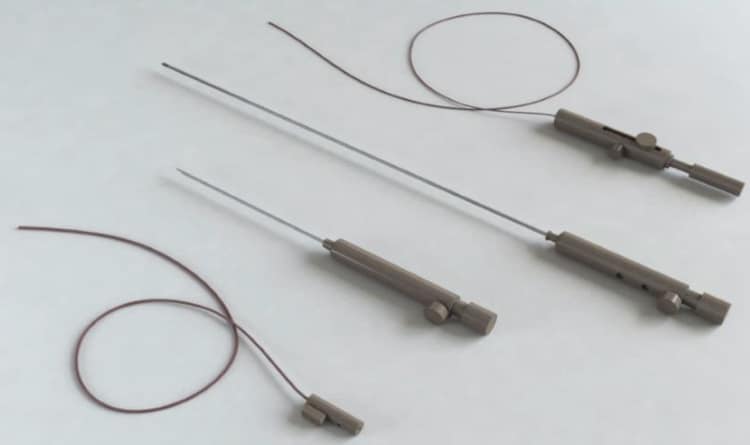
Minimally invasive applicators for the Alpha DaRT seeds

The initial trial is examining superficial indications – squamous cell carcinoma of the skin and oral cavity. In such cases, the seeds are placed temporarily (under local anaesthesia) into the lesion using minimally invasive applicators and are removed after 15 days. Thanks to the short half-life of 224Ra (3.7 days), Alpha DaRT can be applied as a single-session treatment that achieves clinical outcome within a few days.

Early results from this feasibility study have demonstrated complete local control of about 80% and zero systemic toxicity. Gat notes that the company also has protocols in place for treatment of pancreatic and prostate cancers. For such deep-seated tumours, the biocompatible seeds are simply left in place.

“Alpha Tau Medical is now focused on starting clinical trials of 12 different protocols at 55 centres in 24 countries around the world,” stated Gat. “The company also plans to open production facilities in each of the key markets, to ensure the supply of the Alpha DaRT.”

How vortexes cool earthquake faults

Geological faults could be cooled during earthquakes by the formation of granular vortexes – according to a new study by researchers in Australia and France. The finding could explain why there is little evidence for frictional melting along geological faults and could boost our understanding of how temperature-related phenomena affect active fault systems.

Rising temperatures within fault systems could play a vital role in the motions associated with earthquakes. This is because heat can activate various processes that make fault slippage more likely – including melting, pore fluid pressurization and silica gel lubrication. While fault temperatures have been predicted to rise significantly during earthquakes, evidence of frictional melting along exposed fault gouges is rare. This presents a conundrum: where is the extra heat going?

Now, Itai Einav and colleagues University of Sydney and Laboratoire Navier say they have come up with an answer. They say that the previously-overlooked phenomenon of transient granular vortexes could be cooling faults during earthquakes. These vortexes are known to form in granular materials that are subjected to a shear force. The size of the vortexes is related to grain size, density, stress and strain rate – and the vortexes last for between a fifth and a tenth of an earthquake’s shear time.

Along for the ride

The researchers propose that these vortexes enable convection-based heat transfer in geological faults through the mixing of solid particles. Previously, it was assumed that heat generated at faults during earthquakes could only diffuse away by conduction. “It is simply more effective for heat to move in space as the passenger of grain motions than to molecularly diffuse through grains and contacts,” the team writes in in Geophysical Research Letters.

While it is not possible to observe granular vortexes as they occur in real time in fault slips, evidence can be found in the geology of fault planes that connect different rock types. “The effect of the vortexes will be seen through the mixing of the various minerals,” Einav tells Physics World. He points out that an example of this mixing across a fault plane can be seen on the Glarus Fault in the Alps of eastern Switzerland.

To test their hypothesis, Einav and colleagues created their own granular vortexes in the laboratory by using a stadium shear device. This is a belt system that applies shear to a series of granular discs set on a glass plate. By tracking disc motion and larger-scale eddy evolution, the team could model the impact vortexes would have on the thermal evolution of faults during slip events. The researchers then applied their model to a case study by looking at California’s active San Andreas fault system.

1000-fold boost

“Transient granular vortexes can boost the effective thermal diffusivity of earthquake faults by a factor of up to 1000 times,” says Einav. As a result of this, he adds, “crustal faults such as those in the San Andreas system may experience a maximum temperature rise 5-10 times smaller than previously thought.”

Reduced temperatures could delay the thermal activation of fault weakening mechanisms, leading to faults that are stronger – at least temporarily. Future investigations into earthquakes, Einav says, will need to reassess the role of the different fault-weakening mechanisms in light of the impact of granular vortexes.

Game changer

“This is a game changer in the mechanics of earthquakes,” says Christopher Scholz, a geophysicist at Columbia University in the US. He adds, “This mechanism for convective heat transport within the cataclastic core of faults during seismic slip readily explains a host of previously enigmatic problems: the scarcity of friction melt in faults, the lack of a conductive heat flow anomaly over the San Andreas fault, and the lack of evidence for thermal weakening in earthquakes.”

With their initial study complete, Einav and colleagues are planning further experiments with more realistic test materials. They are also evaluating how the presence of granular vortexes would impact the various fault weakening mechanisms and larger-scale earthquake dynamics.

Plastic particles now infest the Arctic

Plastic particles have colonized one of the last once-pristine oceans. German scientists sampled sea ice from five locations within the Arctic Circle and counted up to 12,000 microscopic particles per litre of ice.

They have even been able to identify the sources and piece together the journey to the icy fastness. Some tiny lumps of plastic detritus have made their way north from what has become known as the Great Pacific Garbage Patch, a swirling assembly of an estimated 80,000 tonnes of plastic floating in the ocean across a stretch of water bigger than France.

Other fragments, that began as paint and nylon, date from the invasion of increasingly ice-free Arctic summer waters by more freight ships, and more fishing vessels, the scientists report in the journal Nature Communications.

“During our work, we realised that more than half of the microplastic particles trapped in the ice were less than a twentieth of a millimetre wide, which means they could easily be ingested by Arctic micro-organisms like ciliates, but also by copepods,” said Ilka Peeken, a biologist with the Alfred Wegener Institute.

“No one can say for certain how harmful these tiny plastic particles are for marine life, or ultimately also for human beings.”

The researchers gathered their samples during three expeditions to the Arctic aboard the icebreaker Polarstern in the spring of 2014 and the summer of 2015, following an ice movement called the Transpolar Drift from Siberia as far as the Fram Strait where warm Atlantic water enters the polar ocean. The Transpolar Drift was first identified by the Norwegian explorer Fridtjof Nansen aboard the Fram, late in the 19th century.

Microplastic particles are defined as 5 mm or smaller, and many are measured in millionths of a metre. These are formed by the deterioration of larger pieces of plastic dumped into landfills in billions of tonnes, or released into the waterways and thus into the ocean.

Man-made synthetic polymers are effectively indestructible, and now represent a major source of marine pollution and a constant hazard to wildlife.

More than two-thirds of the particles measured 50 millionths of a metre or smaller. Some were as small as 11 micrometres – one sixth of the diameter of a human hair.

Multiple sources

The researchers identified 17 different types of plastic in the sea ice: from paints, nylon, polyester, cellulose acetate – used in cigarette filters – and the packaging materials polyethylene and polypropylene.

The guess is that the plastics endure in the sea ice for between two and 11 years before melting from their icy packaging in the Fram Strait, to begin sinking in deeper waters. One study recently found 6,500 bits of microplastic per kilogram sampled from the sea floor.

“This is an important finding because it means that they were always present in the water under the ice as it was growing, and drifting, within the Arctic Ocean,” said Jeremy Wilkinson, a sea ice physicist with the British Antarctic Survey, commenting on the study.

“Sea ice grows from the freezing of seawater directly onto the bottom of the ice (i.e. it grows vertically downwards), thus it was incorporating microplastic particles as it grew. It suggests that microplastics are now ubiquitous within the surface waters of the world’s oceans. Nowhere is immune.”– Climate News Network

Amazon set to dry as trees narrow stomata

As carbon dioxide concentrations rise, the Amazon rainforest is likely to become drier whilst woodlands in Africa and Indonesia become wetter. That’s at least partly due to the direct response of vegetation to higher levels of the gas, according to a new study.

James Randerson

“People tend to think that most of the disruption will come from heat going into the oceans, which, in turn, will alter wind patterns,” said James Randerson of the University of California, Irvine, US. “We have found that large-scale changes in rainfall can, in part, be attributed to the way tropical forests respond to the overabundance of carbon dioxide humans are emitting into the atmosphere, particularly over dense forests in the Amazon and across Asia.”

Small pores known as stomata on the underside of tree leaves open to take in carbon dioxide for photosynthesis and emit water vapour in a process known as transpiration. If there’s more carbon dioxide in the atmosphere, the stomata open less widely, reducing the amount of water evaporated into the air. When multiplied across the rainforest, this process can affect winds and the flow of moisture from the ocean.

“In many tropical forest regions, the moisture supplied by transpiration, which connects water underground at the root level directly to the atmosphere as it is pulled up to the leaves, can contribute as much as moisture evaporated from the ocean that rains back down at a given location – which is normal rainforest recycling,” said Gabriel Kooperman, who’s now at the University of Georgia, US.

With higher carbon dioxide concentrations, however, forests evaporate less moisture into the air and fewer clouds are likely to form above the Amazon. “Rather than [joining with the usually abundant clouds and] raining over the forest, water vapour from the Atlantic Ocean blows across the South American continent to the Andes mountain range, where it comes down as rain on the mountain slopes, with limited benefit to the rainforest in the Amazon basin,” Kooperman said.

The forests in Central Africa and the Maritime Continent, an area between the Pacific and Indian oceans that includes Malaysia, Papua New Guinea and the Indonesian archipelago, are predicted increased rainfall, on the other hand.

On islands such as Borneo, Java and Sumatra, which are surrounded by humid air above warm ocean surfaces, the reduction in evaporation is projected to lead to warming over the forests.

“You’ll get a stronger contrast in heating over the islands compared to the nearby ocean, and so it will enhance a natural ocean-land breeze, pulling in more moisture from these neighbouring ocean systems to increase rainfall over the forests,” said Randerson.

The team’s results, published in Nature Climate Change, indicate that the response of tropical vegetation to higher carbon dioxide can be an important driver of climate change in the tropics.

According to Kooperman, the resulting droughts and forest mortality in the Amazon and a potential increase in flooding in other rainforests may have an impact on biodiversity, freshwater availability and food supplies for economically vulnerable populations.

Distorted neutron stars give up secrets of dense nuclear matter

New insights into the properties of neutron stars have come from two independent analyses of gravitational waves from the GW170817 neutron-star merger. The work was done by teams led by Farrukh Fattoyev at Indiana University Bloomington and Eemeli Annala at the University of Helsinki. The teams used different methods to calculate the relationship between the radius and mass of neutron stars and came up with the same result.

In October 2017 the LIGO and Virgo detectors made the first-ever observation of gravitational waves from two neutron stars as they spiralled into each other and then merged to form a black hole. The observation is also notable as the first time that electromagnetic radiation was detected from a gravitational-wave event.

GW170817 offers astrophysicists new and exciting information about the equation of state (EOS) of neutron stars. The EOS describes the complex behaviour of the dense nuclear matter that makes up neutron stars. Little is currently known about the EOS because it is difficult to glean information from conventional astronomical observations and because theoretical calculations of dense nuclear matter are extremely difficult to do. Before GW170817, the most important piece of information about the EOS came from observations published in 2010 and 2013, which showed that neutron stars can have masses at least as large as two solar masses.

Tidal distortions

Just before the GW170817 neutron stars merged, the shapes of both stars are distorted by their mutual gravitational attraction – with the nature of the distortion being defined by the EOS. This tidal distortion affects the gravitational waves emitted by the pair, which means that careful analysis of LIGO-Virgo data should provide valuable information about the EOS.

LIGO Scientific Collaboration member Francesco Pannarale from Cardiff University explains: “The EOS determines the radius of a neutron star, and how easily it can be distorted as it experiences the tidal forces generated of another object, including another neutron star”.  “This distortion is quantified in the tidal deformability, which was constrained by the analysis of GW170817.”

Fattoyev’s team used this constraint to assess experimental data from nuclear physics experiments that measure properties of protons and neutrons in atomic nuclei. “The researchers used the constraint on tidal deformability to determine a constraint on the neutron skin thickness – the difference between the radius of a neutron and a proton,” Pannarale says. “They then contrast the prediction to experimental skin thickness measurements. Right now the two values are compatible, but future experiments will provide a more accurate measurement of the neutron skin thickness.”

Thicker or thinner skins

Indeed, future experiments could lead to new discoveries about the elusive properties of matter at extremely high densities. “If the skin thickness value measured on Earth became no longer compatible with the value derived from gravitational-wave observations, it would mean that matter suddenly behaves differently from some density onward,” Pannarale explains. “Matter would undergo a phase transition, indicating that the way in which terrestrial and astronomical results are connected must break down.”

Taking a different approach, Annala’s team used the tidal deformability value to narrow the range of possible EOS models of neutron stars. “The researchers tried many possible EOS models where the GW170817 constraint on tidal deformability is obeyed, two-solar-mass neutron stars are allowed, and theoretical results at low and high density are respected,” says Pannarale. “Once they narrowed down the possibilities, they ended up with around 100,000 EOSs, allowing them to make predictions about neutron star properties.”

Using their results, both groups separately calculated a relationship between the mass and radius of neutron stars. “Both teams determined that the maximum radius of a 1.4 solar-mass neutron star is 13.6 km,” Pannarale explains. “While the two values are in very good agreement, they stem from very different approaches, indicating that the conclusions of the two teams are solid.” The remarkable result is promising for future studies of neutron star properties, and could soon be improved further through forthcoming observations of merging neutron stars.

Papers by Annala’s team and Fattoyev’s team appear in Physical Review Letters.

Can you spot the difference in DESY’s new logo?

We have noticed that the DESY lab in Hamburg has had a rebrand that involves a change to its logo. At first glance, however, it might not be obvious what those tweaks are.

On closer inspection, you will just make out the addition of a small orange dot after DESY while the lines that go through the six balls now stop rather than sticking out at the other end (and are slightly thicker).

So why did the lab feel the changes were necessary? “The new logo is a way of expressing and keeping up with the momentum of our research centre [and] we think [the new logo] is clearer and more dynamic,” a DESY spokesperson told Physics World. “The new orange dot represents the undiscovered, the unknown. If you see it as a punctuation mark it also turns the logo – and with it DESY as a whole – into a statement.”

Given that the orange dot has such a deep meaning, do the six blue balls represent anything in particular? “They are completely up to the interpretation of the beholder, so no matter whether you see a simplified model of an atom, the six quarks, lollipops, dumbbells or a particle collision it’s all correct,” adds the spokesperson.

I will stick with lollipops then.

Stephen Hawking’s science: the May 2018 issue of Physics World is now out

The cover of the May 2018 issue of Physics World magazine

Stephen Hawking, who died on 14 March at the age of 76, was the physicist the whole world knew. But what exactly were his key scientific achievements? Out now in print and digital format, the May 2018 issue of Physics World examines Hawking’s scientific legacy through the eyes of Seth Lloyd from the Massachusetts institute of Technology, who knew the great man and includes some of his favourite Hawking anecdotes too. It’s an unmissable article that you can also read online here.

Elsewhere, you can discover the eight most promising wearable technologies for monitoring your health and find out why research into the mysteries of liquids could help us know what’s going on at high pressures inside planets like Jupiter.

Plus learn about the upcoming International Day of Light on 16 May, explore working in the Paralympics “pit lane” in this month’s Lateral Thoughts article, and find out what life’s like as a PhD physicist with a career at NASA’s Jet Propulsion Laboratory in California.

Remember that if you’re a member of the Institute of Physics, you can read the whole of Physics World magazine from the start of every month via our digital apps for iOSAndroid and Web browsers. Let us know what you think about the issue on TwitterFacebook or by e-mailing us at pwld@iop.org .

For the record, here’s a run-down of what else is in the issue.

A day of light – James McKenzie reflects on the business impact of lasers and light-emitting diodes

A cancer collaboration – David Scott outlines why we need physics to drive change in cancer research

Unenlightened thinking – Steven Pinker may be a talented scientist, but he abuses the humanities, argues Robert P Crease

Hawking’s gift – The late Stephen Hawking is an icon of modern physics. As well as inspiring generations of scientists, his contributions have changed our understanding of the universe. Seth Lloyd looks back over Hawking’s key scientific achievements, from gravitational singularities to quantum cosmology

Making health digital – With wearable tech now a staple of modern life, it’s never been easier to keep track of your health. But what will be the next big innovation? Jess Wade gives her top eight technologies-in-the-making that will lead to a new generation of health aids

Liquid mysteries – It’s easy to assume there’s nothing new to learn about liquids. John Proctor explains just how weird liquids can be at high pressures and why this work could shed light on planetary interiors

Take a teacher and a pupil – Philip Ball reviews The Dialogues: Conversations About the Nature of the Universe by Clifford V Johnson

From dust to dust – Tushna Commissariat reviews Losing the Nobel Prize: a Story of Cosmology, Ambition, and the Perils of Science’s Highest Honour by Brian Keating

Engineering a career in terahertz – A PhD in physics is the perfect basis for a career as an engineer, as Ken Cooper from NASA’s Jet Propulsion Laboratory tells Susan Curtis

Once a physicist – meet LeeAnn Janissen, who divides her time between her ceramic-art practice and her role as managing director of research for East Coast Fund Management in Toronto, Canada

Life in the Paralympics ‘pit lane’ – Maddy Nichols, who is a PhD student at the Bristol Centre for Functional Nanomaterials in the UK, describes her role at the 2018 Pyeongchang Winter Paralympic Games in South Korea.

And don’t forget, if you have any thoughts on the issue do let us know on TwitterFacebook or by e-mailing us at physics.world@iop.org.

From dust to dust

I’ve been a science journalist for the past seven years. In that time, I’ve covered my fair share of ground-breaking discoveries, such as the Large Hadron Collider’s discovery of the Higgs boson in 2012 and LIGO’s first detection of gravitational waves in 2016. I’ve also covered controversial claims, like that made by researchers on the Opera experiment in 2011, who said they had seen faster-than-light neutrinos. But the most intriguing, and ultimately tragic, saga in modern physics was that of the BICEP2 experiment and its (as it turned out) non-detection of primordial gravitational waves. In Losing the Nobel Prize: a Story of Cosmology, Ambition and the Perils of Science’s Highest Honour, experimental astrophysicist Brian Keating tells this tale from an insider’s perspective.

These days Keating is director of the Simmons Observatory and is based at the University of California San Diego, but in 2006 he was the key researcher who conceptualized and designed the original Background Imaging of Cosmic Extragalactic Polarization (BICEP) experiment. Its purpose was to detect the polarization of the cosmic microwave background (CMB), and it served as a successor to the BOOMERanG experiment, which measured the CMB’s radiation. While Losing the Nobel Prize tells the story of BICEP and BICEP2, it is also three books all packed into one long (sometimes confused) narrative.

First and foremost, the book is an autobiography of Keating – his life, his work, his family, his religion and his colleagues all feature greatly in this tale. A few relationships in particular stand out. There’s Keating’s father, who left the family while his son was still a young child, and who he reconnects with later and has a deep relationship with until his death in 2005. We also read about Keating’s close collaborator and mentor Andrew Lange, the principal investigator of BOOMERanG, who sadly died by suicide in 2010, just as BICEP2 was deployed. Keating talks openly about his grief at the situation and his frustration at why Lange didn’t reach out for help.

Another person Keating mentions throughout is Galileo. Keating seems to identify with Galileo from a very young age, reading about Galileo’s work and discoveries, and the astronomer’s own struggles with dust. But beyond that, Keating keeps mentioning the Italian polymath, charting situations in his own life and work against that of Galileo’s numerous times. Occasionally, this comes off as egotistical, but I think that Keating invokes Galileo in an almost talismanic way, rather than deeming himself Galileo’s equal.

Problem prize?

Keating also does what he says on the tin, and spends several chapters talking about the history and background of the Nobel prize, its influence on him personally and science in general. Indeed, the book’s introduction is a vivid description of the Nobel family, including Alfred Nobel and how the prize came to be. This is woven in with Keating’s closest brush with the award – an invitation from the Royal Swedish Academy of Sciences to nominate a discovery or invention for the 2016 physics prize. A large chunk of the book is about the prize and its problems from Keating’s point of view, with the author willingly admitting that many may see this whole book as a case of sour grapes on his part. What Keating does is openly acknowledge his near-obsession with winning the prize for a large part of his career despite claiming that it’s an affliction that most – if not all – scientists suffer from too. He eventually comes to terms with the fact that he won’t, simultaneously noting the many problems with this most well-known of prizes.

Keating openly acknowledges his near-obsession with winning the prize for a large part of his career, before coming to terms with the fact that he won’t

In this part of the book I found myself agreeing with Keating on many points – the Nobel’s arbitrary rules about not awarding it to more than three people; its severe lack of female laureates, especially in physics and chemistry; not to mention the rather insular and secretive way in which nominations and nominees are handled by the Academy. But at other times I wasn’t quite sure what his point was. For example, Keating talks as if no other prizes or honours exist in the sciences, or that every large physics collaboration today is working towards a Nobel in fierce competition with others. He also compares the Nobel prize both to the Olympics and the Oscars, which I found a bit bizarre. Finally, he makes the claim that the prize is “broken” and that if Alfred Nobel (who he describes multiple times as an idealist) were to come back today, he “might be shocked at how far we’ve strayed from his dreams for a more peaceful world catalysed by his prizes”. This was a bold claim to make and I’m not sure Keating has the data to back it up, especially as at no point in the book does he speak to anyone involved in executing the Nobel estate or from the Academy. Towards the end of the book, Keating suggests five ways to reform the “church” of Nobel. Some are obvious, such as adding prizes in other scientific disciplines, but others, including the suggestion that prizes should be given “primarily for unexpected discoveries”, do not make sense to me.

Dusty lens

At this point, I feel like I can finally talk about the one remaining aspect of the book – the science! This can be broken down into two parts – cosmology in general, and BICEP in particular. Keating spends a chapter or two talking about the birth of the universe, the CMB and its discovery, before getting into polarization and inflation – the supposed period of very rapid expansion of the early universe. When it comes to the story of BICEP and BICEP2, the author describes how he was involved in coming up with the original experiment, but also how his decision to later also be a part of a competing experiment (POLARBEAR) meant that he was relegated to the footnotes of BICEP2 history.

In the week before BICEP2’s big announcement on 17 March 2014, rumours were already rife, and on that fateful Monday, scores of physicists and journalists listened to the jubilant press conference. The fact that physicists had found actual evidence for inflation was amazing, and as I penned my headline an hour and a half later – “BICEP2 finds first direct evidence of cosmic inflation” – I was suitably impressed. The team claimed that its experiment had spotted the first evidence for the primordial “B-mode polarization” of the CMB. Theory suggests that this polarization is a remnant of gargantuan primordial gravitational waves that would have abounded in the early universe, had it undergone inflation. This concept was first proposed by Alan Guth and Andrei Linde in the 1980s. Their proposal was both popular and poetic, and is still a widely accepted solution by most cosmologists.

By the end of the press conference, researchers the world over were rushing to praise BICEP, and a Nobel prize was already being mentioned. The one slight niggle that I remember having on this exciting afternoon was the fact that the team’s paper – titled “BICEP2: Detection of B-mode polarization at degree angular scales – had not yet been peer reviewed or assessed by anyone outside of the BICEP2 team.

Before I could assuage my own doubts, I got a rather unexpected phone call from Neil Turok, director of the Perimeter Institute in Canada. I had reached out to him via e-mail for his views on BICEP2’s findings, having contacted several cosmologists as I intended to write a follow-up piece the next day, full of what I assumed would be praise. But Turok wanted to speak with me about some issues he had with the news. After an hour of speaking with him, I was left dazed and confused. Turok was convinced that something was amiss with BICEP’s observations, when taken into consideration with previous measurements made by both the WMAP and Planck experiments. His other worry was that BICEP’s signal could be contaminated due to interstellar dust in our galaxy.

As it turned out, Turok was bang on the money with his prediction about dust, but it would take nearly a year for BICEP2 to officially retract its discovery. In the book, Keating spends three chapters – “Elation!”, “Inflation and its discontents” and “Deflation” – outlining the whole story, so if that is specifically what you are after, I’d suggest skipping forward to them. Particularly interesting to read about were Keating’s initial misgivings about the BICEP2 team’s idea to lift an unofficial Planck slide from a PowerPoint presentation, after being denied an official dust map from the Planck collaboration, which could have potentially scooped BICEP2. Keating describes their rivalry in detail and I was surprised by how guarded both collaborations were to begin with, all in the hopes of being the one to bag a Nobel prize, if Keating is to be believed.

On 22 September 2014, as I wrote a much more pessimistic headline – “BICEP2 gravitational wave result bites the dust thanks to new Planck data” – I couldn’t help but feel sorry for the whole BICEP2 team. As it happened, the polarized emission from dust across the sky was much more significant than BICEP2 had allowed for, or than was evident from that one purloined PowerPoint slide of Planck data. Apart from the fact that the detection was not what it seemed, the whole situation inadvertently created a furore over the scientific process. There were the rather presumptuous celebrations from the team and the wider scientific community; the now cringe-worthy video they filmed telling Linde about the “discovery”, complete with clinking champagne glasses; and most importantly, the fact that BICEP2’s results had not been vetted by anyone outside the team. Much debate followed about how breakthroughs should be announced, be it to the scientific community or the world at large.

Keating does admit culpability for many of the team’s decisions (especially when it comes to the dust data), writing that “it was BICEP2’s vision which was clouded: a bit by fear, a bit by greed and mostly by bits of dust”. At the same time, he maintains until the end that the BICEP2 signal was true, and that it was a matter of erroneous interpretation.

Whether you agree with him or not, Losing the Nobel Prize makes for an interesting read. If you are not a part of the scientific community, it will offer you a window into science as it is done today, warts and all.

  • 2018 W W Norton 352pp £20hb

Functional MRI maps neural activity

Alan Jasanoff

Existing brain imaging techniques are either unable to penetrate the brain or are not of a high enough resolution to follow specific brain processes. Researchers at the Massachusetts Institute of Technology have now created a sensor that can detect neural activity using functional magnetic resonance imaging (fMRI), which is non-invasive.

The new sensor targets calcium ions (Ca2+), the extracellular concentrations of which fluctuate during synaptic activity. These fluctuations can last for tens of seconds and can push Ca2+ concentrations down to as low as 100 µM. Even slower variations are associated with sleep-wake transitions, for example.

Abnormal Ca2+ signals are thought to be implicated in brain disorders, such as epilepsy and Alzheimer’s disease. However, the problem is that most current fMRI techniques are unable to monitor the dynamics of Ca2+ ions over large volumes in brain tissue.

Clustered nanoparticles look darker in MRI

As in standard MRI, fMRI involves using a fixed magnetic field to align the spins of protons inside the water molecules of biological tissue. Radio waves are used to deflect these spins, which then relax back to their original alignment. This relaxation is probed with a radio receiver coil, and the result provides information on the tissue’s composition. In the new calcium-dependent fMRI method, paramagnetic molecules known as “contrast agents” are used to interact with some of the water molecules and change their brightness in scans.

“Our new sensors are bioengineered paramagnetic nanoparticles that cluster together in the presence, but not the absence, of calcium ions,” explains Alan Jasanoff, who led this research effort. “Clustered nanoparticles look darker in MRI than non-clustered ones and this allows us to monitor changes in calcium levels based on the changes in the darkness of MRI scans obtained with the sensors.”

Jasanoff and colleagues engineered their magnetic calcium-responsive nanoparticles using synaptotagmin proteins. These proteins are components of the synaptic machinery that releases neurotransmitters and which naturally responds to changes in Ca2+ concentrations ranging from 0.1 to 1.0 mM. This range is suitable for monitoring extracellular calcium signalling processes in the brain.

Measuring the strength of the contrast agent

The researchers observed the nanoparticles using a technique called dynamic light scattering (DLS). Atomic force microscopy (AFM) further confirmed that the particles aggregate in the presence of Ca2+ ions.

“We injected the nanoprobes into rat brains and showed that the probes produce a MRI response when injected brain tissue is stimulated with chemicals or electrodes,” says Jasanoff. “In one set of experiments, we detected responses to rewarding brain stimuli that emulate the action of certain illegal drugs.”

The researchers say they were easily able to detect the nanoprobes’ responses with MRI by measuring the strength of the contrast agent, or transverse relaxivity, r2. Indeed, they observed a calcium-dependent increase in r2 from 0 mM Ca2+ to 1.2 mM Ca2+.

Towards human trials

“Such functional brain imaging using the new sensors provides us with a more direct measure of neural activation than earlier fMRI methods,” Jasanoff tells nanotechweb.org. “Using the new technique, we should be able to map activity across large areas of the brain with much better precision than current fMRI methods permit. We will also learn how to interpret calcium-related brain imaging signals in terms of the underlying function of specific calcium-related proteins in the brain, including receptors involved in neurotransmitter signals or learning and memory.”

The team, reporting its work in Nature Nanotechnology 10.1038/s41565-018-0092-4, says that it is now busy optimizing its new calcium sensors and the way they are delivered to large regions of the living brain in animals. “In the long term, we are interested in seeing whether we can use the probes in human patients, probably initially in surgical contexts, in which brain injections are feasible.”

Huddling emperor penguins undergo phase transition

Emperor penguins huddle together for warmth when weather conditions deteriorate below a critical “apparent temperature” in a process that resembles a physical phase transition. That is the conclusion of an international team of scientists who have studied the penguins in Antarctica and developed a mathematical model of their behaviour. Their research could lead to a new way of measuring the health of emperor penguin colonies and how they adapt to a changing climate.

Emperor penguins breed during the frigid Antarctic winter. Once they have mated and the females have set off to forage, the males are left to incubate the eggs. A bird will rest its egg on its feet and cover it with a fold of skin to maintain its offspring at a balmy 38° C.

The males must endure temperatures below -50° C, wind speeds in excess of 150 km/h and starvation for as long as 130 days until the females return. As a result, they need to conserve as much energy as possible if they and their chicks are to survive.

Penguin teamwork

The males keep warm by working as a team. Waddling into a densely packed huddle, the colony shares body heat and individuals shelter each other from the biting conditions. This works so well that temperatures deep inside a huddle can reach as high as 37.5° C.

But exactly what weather conditions must be present to drive the penguins into a huddle remained a mystery until it was investigated by Sebastian Richter and colleagues at the University of Erlangen-Nuremberg, the Scientific Centre of Monaco, the University of Strasbourg and the Woods Hole Oceanographic Institution.

We did not have a concept of what ‘feeling cold’ actually means for an emperor penguin

Sebastian Richter, University of Erlangen-Nuremberg

“It is an intuitive thought that the colder a penguin feels the more likely it is to look for the proximity of others to share body heat and shelter from the wind,” says Richter. “But we did not have a concept of what ‘feeling cold’ actually means for an emperor penguin.”

Time-lapse photographs

To study the huddling behaviour, the physicists set up a camera to take time-lapse photographs of an emperor penguin colony less than a kilometre from the French Antarctic research station Dumont d’Urville. They chose a period between mid-April and the end of May to take the pictures in order to ensure no chicks were present that could influence the colony’s behaviour, and used the facilities at Dumont d’Urville to record meteorological data.

The team draws an analogy between the huddling transition and the phase change that occurs when a liquid or gas becomes a solid. In their model, the area occupied by the penguins indicates the phase of the colony. A tight huddle occupying a small area signifies a solid state and less dense clusters are described as liquid or gas phases. A similar analogy was used in previous work by team members that analysed the distribution of sites occupied by breeding pairs of king penguins.

Richter and colleagues then defined a phase transition point to be the “apparent temperature” at which half of the penguins are in a huddle. The apparent temperature is a combination of temperature, wind speed, sunlight and humidity. Applying a Bayesian sampling process, the researchers used weather observations from Dumont d’Urville to quantify the contribution of each of the meteorological factors to the apparent temperature.

Adaptive advantage

The mathematical biologist Mauricio Canals Lambarri of the University of Chile is enthusiastic about the results. “I think it is a remarkable example of an environmentally triggered process of self-organization that extends to a group,” he says. “And this group acquires an adaptive advantage that ultimately results in a better biological fitness of the species.” However, he also says the work would benefit from studying a larger number of specimens and more species, which would allow the researchers to generalize the conclusions.

Richter and colleagues are now focusing on expanding their model with more data over a larger time interval and across different colonies and locations. He believes the team’s relatively simple and affordable method could in future be applied to measure how different colonies cope with a changing climate.

“A shift in the phase transition temperature, i.e. the temperature at which penguins begin to feel cold and start huddling, could provide valuable information on the energy budget of a colony,” he says. “A higher transition temperature could indicate a lower cold tolerance – hence lower insulation and less energy reserves – serving as an integrated indicator of the pre-breeding foraging success at sea and the strain experienced on land during the breeding period.”

The research is described in Journal of Physics D: Applied Physics.


Copyright © 2026 by IOP Publishing Ltd and individual contributors