Graphene meets the standard for industry

Alongside graphene’s mounting industry appeal there has been increasing interest in setting a standard so that everyone in the conversation is on the same page. In 2017 the International Organization for Standardization released ISO/TS 80004-13:2017, which lists terms and definitions for graphene and related two-dimensional (2D) materials. We spoke to Intellectual Property Specialists at Potter Clarkson and the production company for Nanene+, Versarien, at the Materials Research Exchange 2018 to see how they felt it was helping.

“In the past the rule of thumb has been you know an elephant when you see one,” says Jason Teng, patent attorney for Potter Clarkson. Even so he adds that in the past patents for graphene products have tended to define graphene within the document. “IP needs to be free from ambiguities – the standard really helps here.”

Although graphene hit the scene as a single monolayer carbon lattice of carbon atoms, the richness of the research field soon saw developments on “bilayer” and “multilayer” graphene raising the question – among others – when does multilayer graphene become graphite? The standard defines single layer, bilayer and multilayer graphene so that in terms of patents there should be no doubt what material is involved.

But speaking to David Kerr from Versarien – a company that specializes in producing graphene in large quantities by exfoliation – the standard could go much further. “According to the standard, 10 layers can still be referred to as graphene – we think it should stop at nearer five.” That said he adds that the standard has helped “separate the wheat from the chaff” in the sector. “Now industry is getting really excited about using graphene in products it’s important.”

Before and after the standard

So where does that leave patents placed before the standard was introduced? Teng feels confident that they will be upheld in the context in which they were placed, as must be the case for many fields in materials science where knowledge and understanding are constantly evolving. “That may not stop people trying to use it as the basis of a claim but I don’t think they will be successful.”

The standard is timely for graphene as the first of a growing sea of 2D materials to attract industry attention. Ambiguities remain around others – how many layers of a heterostructure still constitutes a 2D material? How thin is a thin film? While further standards may yet be set, the case is clear now for graphene at least.

Full details on the standard definitions for graphene are available at ISO/TS 80004-13:2017

CdS nanostructure excels for hydrogen generation

Solar cells are a great alternative energy source – when the Sun is out. To reap the benefits of solar power at other times requires some means of energy storage, and a popular choice is splitting water into hydrogen and oxygen – “hydrogen storage”. Researchers at The Australian National University in Canberra have now fabricated an inverse opal structure uniformly coated in CdS as a photoanode for splitting water that outperforms all other reported CdS-based devices.

A compound as common as water is an appealing resource to exploit for alternative energy storage. But splitting water for hydrogen generation requires a semiconductor that can provide charge carriers with the right energy for both the reduction and oxidation reactions of hydrogen and oxygen, and here cadmium sulphide with its low photoconversion efficiency and high tendency to corrode is one of a very short list of candidates. While there are reports of successfully preventing corrosion using co-catalysts in heterostructure configurations with TiO2 and ZnO nanostructures, these heterostructures remain prone to poor control over thickness and uniformity in high aspect-ratio forms.

“Photoelectrochemical generation of hydrogen from water using a semiconductor material involves various important steps including electron-hole pair generation, charge separation, transfer and surface chemical reactions,” explains Siva Karuturi, the lead author on the report of these results. “These processes are highly sensitive to the semiconductor film properties such as uniformity of its distribution in nanostructured surfaces. Thus, achieving uniformity control plays a prominent role in improving the overall photoelectrochemical performance.”

Karuturi and his colleagues, led by Chennupati Jagadish, achieved this uniformity by combining atomic layer deposition (ALD) and solution ion transfer (SIT) to coat TiO2 inverse opals in CdS. “To our understanding, this is the first report of CdS from the SIT method, although various chemical and physical methods of synthesizing CdS have been reported previously including SILAR,” says Karuturi. “Most of the reported methods fail to achieve conformal CdS coating with uniform distribution in a high aspect ratio nanostructure. The SIT method solves this long-standing issue and it can be extended to many semiconductors.”

The resulting structures achieved a saturation photocurrent density of 9.1 mA cm−2 – the highest ever reported for CdS-based photoelectrodes – and paves the way for unassisted solar hydrogen generation.

The precise advantages of ALD with SIT

The researchers created an inverse opal structure of TiO2 by coating polystyrene beads using ALD, a process that exposes the structure to the constituent elements of the desired chemical to build up a coating of one atomic layer at a time. The process is particularly useful for creating uniform, high-quality coatings with excellent thickness control. Subsequent heat treatment removed the beads leaving the TiO2 inverse opal – a structure with many advantages for catalysis.

“Inverse opal is a three-dimensional interconnected nanostructure offering high interfacial surface, which is critical for efficient catalytic reactions and direct charge transport paths,” explains Karuturi. “Besides, its feature size is comparable to the wavelength of incident light providing opportunities to tailor light–matter interactions.”

While direct deposition of CdS with ALD can be an option to achieve uniform CdS coating on high aspect ratio surfaces, ALD metal sulfide processing is shown to be complex and requires handling of toxic substances in gaseous form. Instead the researchers used the same ALD process to coat the TiO2 inverse opal structure with 10 nm of ZnO, before subsequent anion and cation exchange SIT steps to convert the ZnO film first into ZnS and then CdS, respectively.

Adding a further 1.5 nm of amorphous TiO2 helped improve the photoconversion efficiency further by suppressing carrier recombination. The researchers attribute the record saturation photocurrent density of ∼9.0 mA cm−2 and hydrogen gas generation rate of 141.3 μmol cm−2 h−1 at 0.1 V versus RHE to the improved interfacial charge transfer and high quantum efficiency. They also report a photocurrent density of 6.6 mA cm−2 at 0 V versus RHE, which suggests the potential of the structure for unassisted solar hydrogen generation.

Next steps

Previous work has attempted hydrogen solar energy storage by water splitting using either a dual-electrode cell configuration – one for the oxidation and another for the reduction steps – or combining separate photovoltaic light harvesting and electrolytic water splitting systems. Demonstrating this improved photoconversion efficiency with a CdS-based system demonstrates the practical potential of an electrolytic cell based on a single bandgap semiconductor as a simpler and more cost-effective alternative.

The researchers are now working to improve the stability of CdS non-sacrificial electrolytes and the possible extension of this SIT fabrication approach to other semiconductor systems.

Full details are reported in Nano Futures.

The pioneer princess

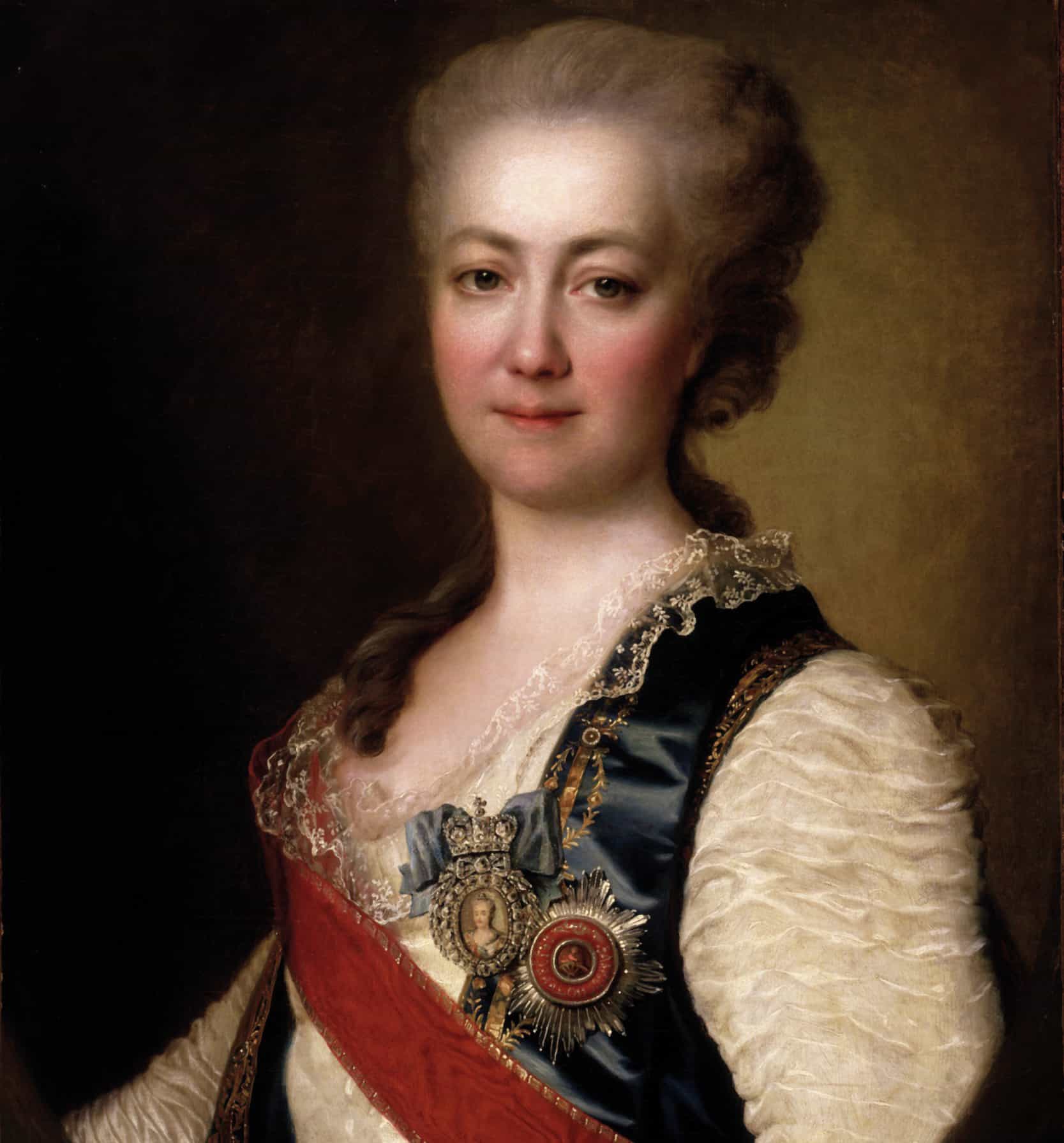
Photo of Ekaterina Dashkova

Here’s a quiz question.

It wasn’t the US, where the National Academy of Sciences chose its first female member in 1925 and first female president barely two years ago. It wasn’t Britain. The Royal Society didn’t elect a female fellow until 1945 and has never had a female president. Nor France, whose first female full member of its Academy of Sciences was allowed in 1979, and has also never had a female president.

The answer is Russia, where a princess named Ekaterina Dashkova (1743–1810) served as director of the Imperial Academy of Arts and Sciences from 1783 to 1796. Dashkova enhanced the academy’s reputation, balanced its budget, revamped its printing services and earned the admiration of academy members. Even more importantly, her actions pointed the way towards modern science management.

An extraordinary appointment

Dashkova, the daughter of a Russian count named Vorontsov, was born 275 years ago on 28 March 1743 in St Petersburg. Like many Russian nobility, her native tongue was French. At the age of 15 she married Prince Mikhail Dashkov, and learned Russian to communicate with his family. Independent and intellectually gifted, she played some role in the coup d’état of 1762, which turned the Grand Duchess Catherine Alexeyevna into Catherine the Great, Empress of Russia. Dashkova became Catherine’s closest female friend, but the two fell out as Catherine seemed to suspect that Dashkova was a rival. In 1768, after her husband died, Dashkova embarked on a 14-year excursion through Europe, where she met the likes of Voltaire, Benjamin Franklin and Adam Smith.

Shortly after Dashkova returned to St Petersburg in 1782, Catherine drew her aside at a court ball and announced she was appointing her director of the Imperial St Petersburg Academy of Arts and Sciences. Michael Gordin, a historian of Russian science at Princeton University, told me it was a brilliant stroke. “First, it kept Dashkova occupied so that she wasn’t engaged in court intrigue. Second, it helped Catherine that there was another woman in an important position, for female rule was touchy not just in Russia but across Europe. Finally, the Imperial Academy was in trouble.”

Peter the Great had established the academy in 1725 to import European science. Despite a promising start with luminaries such as Leonhard Euler – the greatest mathematician of the era, who was lured to Russia in 1727 – the academy atrophied. Its nominal president was an absentee administrator with court connections, and it was effectively run by the director, Sergei Domashnev, a petty and vindictive poet who had embezzled funds and alienated members. Things were so bad that Euler refused to come to meetings. Catherine jumped at a chance to solve the academy’s bureaucratic headache, and her own, by firing Domashnev and appointing Dashkova the director.

“I was struck dumb with astonishment,” Dashkova wrote in her memoirs. She initially refused, then bowed to Catherine. The next day she ran into Domashnev, who began “mansplaining” to her – as we would now say – how she should behave. She cut him off. That evening she read through academy reports and memorized the names of its officers. The academy was almost bankrupt, with demoralized and poorly paid employees, a badly functioning print shop and few students at its school, which was supposed to train Russia’s future scientists.

Dashkova’s appointment was so extraordinary – before women in Russia even had access to higher education – that officials were unsure whether to administer to her the usual loyalty oath to the empress

Robert P Crease

Dashkova’s appointment was so extraordinary – before women in Russia even had access to higher education – that officials were unsure whether to administer to her the usual loyalty oath to the empress. But Catherine insisted they treat Dashkova the same as any male.

Dashkova, who was 40 at the time, knew her every slip-up at the academy would become big news, and carefully staged her first meeting. She dropped in on Euler, who was 75 years old, blind and in failing health, but universally adored and respected. She begged him to introduce her on her first visit to the academy. He agreed, and academy members were moved by the warmth and respect shown between the princess and the mathematician.

Using humility and repeated avowals of duty to the empress – and tapping what she had learned from her experiences abroad – Dashkova created for herself the same political space to act that a man would have had. She increased salaries of the academy’s faculty, and integrated them better into the Table of Ranks – a list of formal positions in the government and military.

She made the academy solvent, renovated its printing house and constructed new buildings. The academy’s reputation climbed and school enrolment rose.

Dashkova later founded and became president of another academic institution to deal with matters of the Russian language: the Russian Academy, which she modelled on the Académie Française. She initiated the first comprehensive dictionary of the Russian language, modelled on what Samuel Johnson had done for English in 1755. Dashkova wrote poetry, plays and articles, and edited a journal. Nominated by Franklin, she became a foreign member of the American Philosophical Society.

Dashkova eventually fell out of favour again, after allowing the Imperial Academy to publish a play that Catherine found offensive. She withdrew from active participation in the academy in 1794, and formally stepped down in 1796 after Catherine died.

The critical point

What’s interesting about Dashkova, Gordin told me, is not that she was a glass-ceiling breaker, but that, without explicitly planning to, she personified a new way to govern scientists. When she arrived, the academy was structured as a group of scholars at the whim of the state, paid as a line item in the court budget. Dashkova changed that.
“She did not think that her job was to do research or direct the scientists,” Gordin said. “She carved out a space for them in which they could carry out their work the way they wanted, arranging for resources without intervening in their work.” It was a step towards modern science administration.

Stephen Hawking dies aged 76

The cosmologist Stephen Hawking has died at age 76 at his home in Cambridge, UK. He achieved worldwide fame for his groundbreaking work on black holes and his great success at bringing physics to a wider audience.

Announcing his death, his children Lucy, Robert and Tim said “We are deeply saddened that our beloved father passed away today.”

Famed for his bestselling popular-science book A Brief History of Time and his battle with motor neurone disease, Hawking carried out ground-breaking research in cosmology, quantum gravity and black holes.

“Very easy” first

Stephen William Hawking was born in Oxford, UK, on 8 January 1942 after his parents moved from London for his birth to escape war-time bombardment of the capital. In 1950 Hawking’s family moved to St Albans in Hertfordshire, where he attended St Albans School. He then received what he later described as a “very easy” first-class degree in physics at the University of Oxford, reputedly only working for an average of about an hour a day for his qualification.

After graduating in 1962, Hawking went to the University of Cambridge, UK, to do a PhD in cosmology, hoping to carry out his research under the guidance of astronomer Fred Hoyle, whom he had admired from childhood. Instead, he worked under the supervision of Denis Sciama, a former graduate student of Paul Dirac.

Eponymous radiation

It was while working in the late 1960s with Roger Penrose, who was then also at Cambridge, that Hawking used Einstein’s general theory of relativity to determine the conditions under which there must be singularities in the early universe and in black holes – regions of space where gravity is so strong that not even light can escape. Using a novel geometric approach to these mathematically complex problems, Hawking showed that singularities are not mathematical curiosities but are a fairly generic feature of general relativity.

Hawking’s next big discovery took place in the early 1970s when, building on the work of the late Jacob Bekenstein, he demonstrated that the area of a black hole’s event horizon – the point of no return for matter falling inward – could be linked to its entropy through a simple equation. In 1974 Hawking then showed that black holes are in fact not completely black, as classical general relativity implies, but that they emit radiation, thus indicating a deep connection between gravity and thermodynamics.

This “Hawking radiation” arises from quantum fluctuations taking place near a black hole’s event horizon. The fluctuations generate pairs of short-lived virtual particles, one of which is pulled into the black hole by gravity while the other escapes. Hawking published many further papers on black holes, in particular examining the problems for physics associated with the possibility that information can permanently disappear into a black hole – what is known as the black-hole information paradox – and potential resolutions to this effect. He was also influential in efforts to unify quantum mechanics and general relativity – the enduring quest of theoretical physicists.

Richly recognized

Hawking was recognized with numerous awards throughout his career, becoming a fellow of the Royal Society at the age of 32 and being appointed Lucasian Professor of Mathematics in 1979 at Cambridge – a post once held by Isaac Newton. In 1987 he was the inaugural winner of the Dirac medal of prize of the Institute of Physics and in 2006 was awarded the Copley medal of the Royal Society – its oldest and most prestigious award. Hawking also became only the fourth physicist after Edward Teller, John Bardeen and John von Neumann to be given a US presidential medal of freedom, receiving his honour from Barack Obama at a ceremony in the White House in 2009.

Hawking officially retired in 2009, but despite stepping down as Lucasian professor, he remained as an active scientist as director of research at the Centre for Theoretical Cosmology at Cambridge. That year also saw Hawking accept a visiting professorship at the Perimeter Institute for Theoretical Physics in Waterloo, Canada, which opened a major new extension – known as the Stephen Hawking Centre – in 2011. Later the following year he won a “special fundamental physics prize”, worth some $3m, from the Fundamental Physics Prize Foundation set up by the Russian physicist-turned-entrepreneur Yuri Milner.

Medically challenged

Hawking’s many achievements came despite his motor neurone disease, with which he was diagnosed in 1964 while doing his PhD. Far outlasting doctors’ predictions that he would not survive more than two or three years, he nevertheless became increasingly disabled. Initially confined to a wheelchair, by the early 1970s Hawking was unable even to turn the pages of a book. In 1985 he contracted pneumonia while visiting the CERN particle-physics lab near Geneva and needed an operation known as a tracheotomy that meant he could no longer speak.

Hawking subsequently used a distinctive electronic voice synthesizer to communicate – its androidal American accent became his trademark – and increasingly had to rely on a team of nurses for his day-to-day care. Initially, Hawking was able to use a special hand-controlled lever to operate a computer, which let him scan a dictionary of words and spell out sentences. But in later life he lost the ability to even press a lever and actuated the computer by twitching a face muscle.

Fame and fortune

Hawking had three children by his first wife Jane, whom he met at about the time his condition was diagnosed. However, his marriage to Jane became increasingly bitter as she felt sidelined by his growing public fame from his book A Brief History of Time, which he had written in part to help pay for his ongoing medical and nursing costs. As a strident atheist, Hawking also rowed with Jane about her Christian beliefs and the pair divorced in 1991, with details of their unhappy relationship laid bare in her 1999 book Music to Move the Stars, which later inspired the 2014 film Theory of Everything. Hawking remarried in 1995 to his former nurse Elaine Mason, but he filed for divorce from her in 2006.

Hawking sold an estimated 10 million copies of A Brief History of Time, and wrote several other popular science books, including The Universe in a Nutshell and A Briefer History of Time, which was an attempt to make his landmark work more accessible. In 2007 his daughter Lucy – one of three children from his first marriage – also co-wrote an adventure story entitled George’s Secret Key to the Universe with Hawking and a former PhD student Christophe Galfard. In 2010 Hawking published The Grand Design – which he co-wrote with Leonard Mlodinow from the California Institute of Technology – while three years later his own memoirs, entitled My Brief History, appeared.

Hawking popped up regularly on television – appearing in The Big Bang Theory, The Simpsons and Star Trek – and even took part in advertisements for Specsavers opticians and the GoCompare price-comparison website. Dramas and documentaries about his life also made it onto the stage and screen, including the play God and Stephen Hawking in 2000 and a two-part TV series on the UK’s Channel 4 in 2008, although these were easily eclipsed in quality by the candid 2013 biopic Hawking, which he co-wrote and narrated.

Never one to shy from publicity, in 2007 Hawking left the confines of his wheelchair while travelling in a zero-gravity simulating aeroplane, having been keen to raise awareness of spaceflight so that potential disaster on Earth does not wipe out the human race, which he feared could happen. He also divided opinion in 2013 after accepting – and then declining – an invitation to speak at a prominent conference in Jerusalem in protest against the policies of the Israeli government. Opponents attacked his decision to boycott the Israeli Presidential Conference, saying his criticism should have had more weight had he delivered them in person.

Lasting legacy

Hawking was regarded by some who knew him as stubborn and irreverent. Some also thought him arrogant, particularly when, at the end of A Brief History of Time, he wrote that the development of a unified theory of physics could lead us to knowing “the mind of God”. But he was nevertheless also willing to admit when he was wrong. In 1997 he and Caltech theorist Kip Thorne bet John Preskill, also of Caltech, that information falling into a black hole is lost forever to the outside universe, in contradiction with quantum mechanics. In 2004 he conceded the bet, having worked out a solution to this “black hole paradox“. To honour the bet he presented Preskill with a baseball encyclopaedia “from which information can be recovered with ease”.

At a special dinner held in Hawking’s honour in 2007 at Gonville and Caius College, Cambridge – where Hawking had a been a fellow since his PhD days – the cosmologist Martin Rees tried to answer the question of why Hawking had become such a cult figure. Rees suggested that “the concept of an imprisoned mind roaming the cosmos” had grabbed the public’s imagination and argued that “if [Hawking] had achieved equal distinction in (say) genetics rather than cosmology, his triumph of intellect against adversity probably wouldn’t have achieved the same resonance with a worldwide public”.

Hawking, however, was always at pains to remind people the he was not “another Einstein”. Indeed, when Physics World polled more than 130 of the world’s leading physicists in 1999 to find out who had made “the most important contributions to physics“, Hawking received just one vote. Nevertheless, he had done, in Rees’s view, “at least as much as anyone since Einstein to improve our knowledge of gravity, space and time”.

“His name will live in the annals of science,” concluded Rees, who ranked him as one of the top 10 theoretical physicists of the time. “Millions have had their cosmic horizons widened by his best-selling books; and his unique achievement against all the odds is an inspiration to even more.”


Rotons spotted in Bose–Einstein condensate

Quasiparticles called rotons have been seen for the first time in a Bose–Einstein condensate (BEC) of ultracold atoms. The research was done by physicists in Austria, Germany and Italy and could lead to new insights into superfluids and supersolids.

Almost 80 years ago, the Soviet physicist and Nobel laureate Lev Landau developed the mathematical underpinnings of superfluid helium, which flows without loss of kinetic energy and exhibits other bizarre behaviour due to quantum mechanical effects that dominate at extremely cold temperatures. His ground-breaking work revealed that some of this odd behaviour is the result of phonons and rotons. These are two types of particle-like collective excitations (quasiparticles) in the superfluid.

These quasiparticles are distinguished by their differing dispersion relations – the relationship between the momentum and energy of a quasiparticle. Phonon energy typically increases with momentum, but rotons combine large momentum with low energy.

Long-awaited quasiparticle

BECs are ultracold atomic gases in which the majority of atoms are in the same low-energy quantum state. BECs share some properties with superfluids, but before 2003 it was believed that the relatively low density of a BEC would preclude the existence of rotons. However, subsequent calculations suggested that roton excitations might occur in BECs with special types of interactions – specifically, magnetic atoms with long-range anisotropic dipole–dipole interactions.

Now, Francesca Ferlaino at the University of Innsbruck and colleagues have created a BEC with these properties by cooling approximately 100,000 erbium atoms in a cigar-shaped trap made from laser light. In this geometry, the atomic dipoles attract each other when they sit along the short axis of the trap and repel when they sit along the long axis. The team was then able to detect roton peaks in the momentum spectrum of the BEC.

Supersolids

The team now plans to investigate the interplay between phononic and rotonic modes in BECs as well as the role of roton excitations in the formation of quantum droplets. Ferlaino and colleagues also plan to put their experimental system to work on supersolids. These are rigid crystalline structures that have superfluid properties and have been made using BECs.

The research is described in Nature Physics.

Hubble Space Telescope confirms mismatch in cosmic expansion

A group of astronomers in the US has made a new and more precise measurement of the universe’s rate of expansion by using NASA’s Hubble Space Telescope (HST) to observe miniscule shifts in the apparent position of stars known as Cepheid variables. The group’s results reinforce a disagreement over the value of the Hubble constant as measured directly and as calculated via observations of primordial radiation – a disparity, say the researchers, which likely points to new physics.

In his pioneering work of the 1920s Edwin Hubble observed that galaxies further away from Earth recede more quickly, as measured by their red-shifted radiation. This implied that the universe was expanding, and that expansion has since been described by the Hubble constant, which states how many kilometres per second faster galaxies move apart from one another for every megaparsec, or 3.25 million light-years, of distance between them.

Measurements of the famous constant were imprecise until the launch of the HST, which allowed scientists to pin down a value of 72±8 in 2001. That result has since been improved upon by Adam Riess at the Space Telescope Science Institute in Baltimore, US, and colleagues, who from 2009 have reported a series of improved values thanks to data from the HST’s Wide Field Camera 3 – arriving at 73.2±1.8 in 2016.

Shortly after the Big Bang

The Hubble constant can also be deduced by calculating the universe’s rate of expansion shortly after the Big Bang using data from the cosmic microwave background (CMB) and then extrapolating to the present assuming certain properties of dark matter and dark energy. This CMB-derived value is in clear disagreement with the HST value. In 2016, the European Space Agency’s CMB-measuring Planck satellite reported a value of 66.9±0.6, implying that the cosmos ought to be expanding more slowly today than is observed.

The mismatch has now been reinforced by new results from Riess and colleagues, who have looked at Cepheid variables. These stars pulsate at a rate fixed by their intrinsic brightness, which means their apparent brightness can be used to work out how far away they are. They can also be used to calibrate the (known) brightness of type 1a supernovae, given that both are visible in some nearby galaxies, with such supernovae in turn being used to establish the distance to further-flung galaxies. This process creates a billion-parsec long “distance ladder” used to calculate the Hubble constant.

Since astronomers must initially calibrate the Cepheids themselves, the first (and hardest) rung on the ladder involves independently measuring the distance to these objects. This is done using parallax, the apparent change in position of an object compared to the background stars as seen by a moving observer. The distance between object and observer is obtained via triangulation – combining the (apparent) change in the object’s position with that of the observer.

More distant objects

Previously, Riess and colleagues had measured the parallax of Cepheids lying just a few hundred light-years from Earth. They have now turned their attention to more distant objects – eight Cepheids situated between 6000-12,000 light-years away (although still within the Milky Way). These are particularly well suited to the distance ladder since they pulsate at the lower rates characteristic of Cepheids found together with type 1a supernovae in other galaxies.

Riess’s group measures parallax by observing each Cepheid twice a year, with the Earth (and with it the HST) on opposite sides of its orbit around the Sun. But because this change in position is tiny compared to the distance separating the stars and Earth, the parallax is correspondingly minute – amounting to just one hundredth the size of a single pixel on Wide Field Camera 3.

To get around this problem, rather than taking a snapshot of each Cepheid the researchers instead scanned the camera across it as the HST moved in its orbit, so spreading the light over 4000 pixels. As Riess explains, doing so overcomes the fact that each pixel is like a well and fills up after receiving a certain number of photons. “You get more photons altogether by scanning,” he says.

“Conspiracy of errors”

Using this approach, the group calculate a Hubble constant of 73.5 ±1.7, which is a 3.7σ disagreement with the Planck results. This means that there is a 1 in 5000 chance that the disparity is a statistical fluke. What is more, Riess points out, over the last couple of years independent probes have confirmed both the distance-ladder and CMB results – gravitational lensing and baryon acoustic oscillations, respectively. “There would have to be a series of systematic errors in techniques that have nothing to do with each other,” he says. “And once you start to think about a conspiracy of errors that doesn’t look very likely.”

As to what new physics might be responsible for the disparity, Riess says that it could be caused by hypothetical “sterile neutrinos”, interactions with dark matter, or a strengthening over time of dark energy (which accelerates the universe’s expansion). He adds that the team will use the HST to measure more Cepheids and that data from ESA’s Gaia satellite, due to be released in April, should contain parallax information from around 200 such stars – thus further reducing the Hubble constant’s uncertainty and potentially narrowing down the source of the disparity, he says.

Chuck Bennett of Johns Hopkins University in the US, who led the team on Planck’s predecessor WMAP, is cautious. He says that the new result “places even further stress on some potential cracks in the standard model of cosmology” but argues that more work needs to be done. “Unfortunately, none of the commonly discussed potential modifications to the standard model seem to solve the tensions while also being compelling.”

A preprint describing the work has been uploaded to arXiv and has been accepted for publication in The Astrophysical Journal.

Dual-layer artificial skin may heal burns more effectively

Full-thickness skin wounds, especially those caused by burns, require skin grafts to fully heal and prevent infections. An ideal skin substitute for such grafts should have similar mechanical properties to human skin, support cell attachment and proliferation, degrade at a comparable rate to the formation of new skin, and prevent infections. To date, no such product exists.

To address this shortfall, a research collaboration from Iran, UK, USA and Portugal is developing a novel skin substitute based on decellularized human amniotic membrane (AM). AM is a natural bio-scaffold that offers high elasticity and structural integrity, antibacterial activity and support for cell growth. While AM is widely used to manage burn wounds, its weak mechanical properties and rapid degradation make it less than optimal. By coating AM with silk protein, the researchers hope to overcome these disadvantages (Biomed. Mater. 13 035003).

“Burn injury – from fire, battlefield or acid attack – has been reported as an important cause of morbidity and mortality and is still considered an unmet clinical need,” explained Alexander Seifalian, from the Nanotechnology and Regenerative Medicine Commercialisation Centre, The London BioScience Innovation Centre.

Stable structure

Seifalian and co-workers – including first author Mazaher Gholipourmalekabadi – fabricated the artificial skin by electrospinning nanofibrous silk fibroin solution onto decellularized AM. After electrospinning for 20 minutes, scanning electron microscopy (SEM) revealed that the electrospun silk fibroin (ESF) nanofibers had successfully collected on the AM. For further experiments, the team created AM/ESF bilayer membrane samples by electrospinning for 3 hr, followed by ethanol treatment for 1 hour to induce transition into an insoluble β-sheet conformation.

The researchers first evaluated the biomechanical behaviour of AM and AM/ESF samples. They found that the AM/ESF bilayer showed significantly improved mechanical and viscoelastic properties – including maximum load value, suture retention strength, strain deflection at break and thickness – compared with AM samples.

The degradation rate of tissue scaffolds can profoundly affect healing effectiveness. If a biomaterial degrades too quickly the scaffold may disintegrate before the damaged tissue is healed. The team tested the in vitro degradation rates of AM and AM/ESF, and observed that coating the AM with ESF slowed the degradation rate of the resulting bilayer membrane. “ESF keeps the biological structure in place for regeneration of skin while the AM gradually bioabsorbs,” Seifalian explained.

Stem cell seeding

One of the most important characteristics of scaffolds used in tissue engineering is their ability to support cell attachment and growth. As such, the researchers examined the growth of adipose tissue-derived mesenchymal stem cells (AT-MSCs) on AM samples and on AM/ESF before and after ethanol treatment.

The researchers first used SEM to analyse the morphology of AT-MSCs cultured on the various substrates. Three days post-seeding, they clearly observed the spindle morphology of the AT-MSCs on all samples, demonstrating effective cell-substrate attachment. All samples exhibited similar cell density, implying that both AM and AM/ESF offer desirable cell adhesion properties for tissue engineering applications.

They also examined the long-term cell viability and cytotoxicity, using MTT and LDH assays, respectively. They found that neither AM nor AM/ESF affected the viability of the AT-MSCs after specific incubation intervals, and that neither sample conferred any cytotoxic effects on the cells.

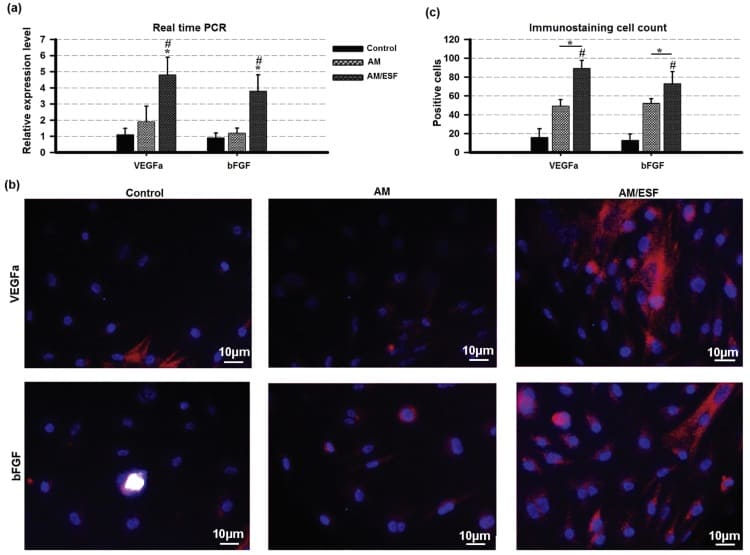
Finally, the team investigated whether AM/ESF could accelerate blood vessel growth after injury, following previous reports that AM possesses anti-angiogenic properties. They seeded AT-MSCs on AM and AM/ESF and incubated the samples in 5% CO2 and 95% air for seven days. They observed that AM/ESF significantly increased expression of the pro-angiogenic VEGFa and bFGF from the AT-MSCs, compared with the AM, indicating that the ESF coating enhanced angiogenesis in vitro.

In vitro angiogenesis

“We have shown that the AM/ESF bilayer membrane provides a good microenvironment for growth and attachment of AT-MSCs,” said Seifalian. “We suggest this membrane as a promising cell delivery system for scaffold/cell-based therapy.”

Next, the team plan to evaluate the AM/ESF artificial skin in vivo in a rodent model, then if the outcome is satisfactory, they will start GLP (good laboratory practice) preclinical evaluation. “At this stage, we will also talk to the regulatory body, MHRA in the UK, with regard to their requirements for a clinical feasibility study,” Seifalian told medicalphysicsweb.

Europe’s cars are ‘untapped gold mine’

Europe’s vehicles could be an “urban mine” for scarce and critical metals, with around 20 tonnes of gold discarded in scrapped vehicles each year. That’s according to the Prosum project, which created the Urban Mine Platform database of metals in vehicles and electronic and electrical equipment.

Europe is highly dependent on imports of metals such as gold, cobalt and lithium for batteries, mobile phones, electronic gadgets and vehicles. In 2015 Europe’s vehicle fleet contained around 400 tonnes of gold.

“These metals are required for the ongoing transition to greener technologies, such as electric cars, solar cells, LED lighting and wind power, so any supply risks are a strategic and economic problem for the EU,” said Maria Ljunggren Söderman of Chalmers University of Technology, Sweden. “What’s more, these are finite resources that must be used in a sustainable way.”

Ljunggren Söderman assessed the 260 million light-duty vehicles in Europe’s vehicle fleet. The quantities of critical and scarce metals have increased substantially, she found, and vehicles also now include many new metals.

“This is mainly because we are constructing increasingly advanced vehicles, with a great deal of electronics, lightweight materials and catalytic converters,” she said. “The increase in the numbers of electric vehicles adds to this development, even though they so far represent a small proportion of the vehicle fleet.”

By 2020, for example, there could be nearly 18,000 tonnes of the rare earth metal neodymium in vehicles, nine times the amount in the year 2000.

“Our calculation shows that the quantity of gold in end-of-life vehicles is now in the same order of magnitude as the quantity in electrical and electronic scrap,” said Ljunggren Söderman. “This is an increase that cannot be ignored.”

In the EU, Norway and Switzerland about 10 million tonnes of electrical and electronic equipment and 2 million tonnes of batteries are disposed of as waste each year, while 14 million tonnes of vehicles leave the fleet.

The EU has regulations for recycling precious metals from electrical and electronic equipment but not from vehicles. It’s difficult to recycle scarce metals from cars as they tend to be spread out in small quantities – a new vehicle may contain a couple of grams of gold in total, in several tens of components.

“There are clear economic values here that I don’t think people have realised the extent of,” said Ljunggren Söderman. “Automotive manufacturers and the recycling and material industries need to work together to ensure that something happens. It must be possible to do more than at present – after all, this has been achieved with electrical and electronic equipment.”

The researcher added, however, that gold is a comparatively low-hanging fruit and the prospects for recycling other critical and scarce metals are significantly less favourable – from both electrical and electronic equipment and vehicles. “If we want to alter this, policy changes may be necessary,” she said.

Ljunggren Söderman presented her findings at the IEA Experts’ Dialogue on Material Trends in Transport.

‘Digistain’ imaging improves cancer diagnosis

Researchers from Imperial College London have developed a new technology to grade tumour biopsies. The method, which uses mid-infrared imaging to map out chemical changes that signal the onset of cancer, could significantly reduce the subjectivity and variability in grading the severity of cancers (Converg. Sci. Phys. Oncol. 4 025001).

The majority of cancers are still diagnosed by doctors taking a biopsy of the tumour, then slicing it thinly and staining it with haematoxylin and eosin, vegetable dyes that have been used for over 100 years. They then examine this H+E stained sample under a microscope and judge the severity of the disease by eye alone.

Life-changing treatment decisions are based on this grading process, yet if the same biopsy is graded by different practitioners, they typically only agree about 70% of the time. This results in an overtreatment problem that constitutes a massive unmet need worldwide.

The team’s new “Digistain” technology addresses this problem by using mid-infrared imaging to map the nuclear-to-cytoplasmic ratio (NCR) – a recognized biological marker for a wide range of cancers – across an unstained biopsy section.

“Our machine gives a quantitative Digistain index (DI) score, corresponding to the NCR, and this study shows that it is an extremely reliable indicator of the degree of progression of the disease,” explained team leader Chris Phillips “Because it is based on a physical measurement, rather than a human judgement, it promises to remove the element of chance in cancer diagnosis.”

Phillips and colleagues performed a double-blind clinical pilot trial using two adjacent slices taken from 75 breast cancer biopsies. The first slice was graded by clinicians using the standard H+E protocol. It was also used to identify the region-of-interest (RoI) containing the tumour. The team then used Digistain to acquire a DI value averaged over the corresponding RoI on the other, unstained, slice and ran a statistical analysis on the results.

“Even with this modest number of samples, the correlation we saw between the DI score and the H+E grade would only happen by chance one time in 1400 trials,” said Phillips. “The strength of this correlation makes us extremely optimistic that Digistain will be able to eliminate subjectivity and variability in biopsy grading.”

The NCR factor that Digistain measures is common to a wide range of cancers. It is elevated by increased mitotic activity, because cells divide when they are younger and, on average, become smaller as the disease progresses. Also, extra DNA and RNA are generated as the nuclear transcription machinery goes awry. As such, it is likely that in the long run, Digistain will help diagnose a wide range of cancers.

The authors note that the Digistain imaging technology can easily and cheaply be incorporated into existing hospital labs.

Elastomeric bioink makes 3D printing more flexible

3D printing opens the door to the engineering of complex tissues, but its success depends on making the right materials available to developers. When printing any material, one of the challenges is to match the material properties to the printing process.

“For extrusion-based printing, the ink must flow during printing and then be rapidly stabilized after extrusion to maintain the desired print structure,” explains Jason Burdick of the University of Pennsylvania’s Department of Bioengineering.

Burdick‘s team – which includes researchers Yi-Cheun Yeh, Christopher Highley and Liliang Ouyang – is looking to expand the number of materials that can be 3D printed, particularly elastomers. These flexible polymers are needed by developers to better match the mechanical properties of tissue-repair scaffolds to the elasticity of target locations in the body. In addition, the deformable designs must be strong enough to withstand cyclic loading, which is essential for scaffolds targeting the repair of certain parts of the body, such cardiac tissue or cartilage.

In a recent study, published in the journal Biofabrication, Burdick’s group carefully altered the viscosity of a biocompatible elastomer so that it could be extruded during printing. At the same time, the scientists formulated their ink to ensure that the material could still be cured effectively with light. If the viscosity was too low, the ink would run too rapidly – which would compromise the fixing stage of the process.

Tests showed that the printed filaments supported cell growth and proliferation.

“Until this study, there were few examples of 3D printed elastomers, so it was encouraging to show that photocurable acrylated polyglycerol sebacate is a promising material for the fabrication of elastomeric scaffolds for biomedical applications,” said Burdick. “We hope that other groups will be inspired by the work to print new materials and to find new applications for 3D printed structures.”

Back in the lab, the team has followed up on its study by printing elastomers using additional cross-linking processes to give further control over the material properties.

  • This article is one of a series of reports reviewing progress on high-impact research originally published in the IOP Publishing journal Biofabrication.
Copyright © 2026 by IOP Publishing Ltd and individual contributors