Working near each other can boost collaboration among researchers, according to a team at Massachusetts Institute of Technology (MIT) in the US. Matthew Claudel and colleagues examined the relationship between researchers’ collaborations and their physical proximity with each other around the MIT campus.
By analysing 40,358 papers and 2350 patents covering MIT research between 2004 and 2014, they found that spatial relationship was more important than departmental and institutional structures. “Intuitively, there is a connection between space and collaboration,” says Matthew Claudel. “That is, you have a better chance of meeting someone, connecting, and working together if you are close by spatially.”
Campus-wide study
The study confirms and extends the Allen Curve – a theory by Thomas Allen in the 1970s that proposed collaboration and interaction decrease as a function of distance. Allen even found that basic conversations were less like to occur when people were 10 m apart. Rather than just focusing on a single building as Allen did, the current work looked at campus-wide collaboration and interdisciplinary research across 33 MIT departments and programmes.
The team found that collaboration on patents has a slightly different dependence on distance than papers. Researchers in the same workspace are more than twice as likely to work together on both papers and patents than those 400 m apart. For papers the likelihood drops by a half when researchers are separated by 800 m, but for patents it drops in half less steeply, over 1600 m.
Importance of architecture
The paper, published in PLOS ONE, also discusses the importance of architecture on interdisciplinary research. The MIT buildings with the most collaboration were specifically designed to house a diverse set of researchers. For example, the Koch Institute for Integrative Cancer Research – which had the highest rate of co-authorship – was specifically designed to mix research scientists and bioengineering experts so as to encourage novel cancer-fighting technology. “If you work near someone, you’re more likely to have substantive conversations more frequently,” says Claudel.
One for the future Condensed-matter physicist Xinzheng Li from Peking University. (Courtesy: Xinzheng Li)
What research does your group carry out?
Since 2012 I have led the path-integral group in the Institute of Condensed Matter and Materials Physics at Peking University (PKU). We have around seven people in the group. Our research lies between traditional condensed-matter physics and chemical physics. We focus mainly on the development of computer-simulation methods and their applications to molecular and condensed-matter systems.
What specific systems are you studying?
We use path-integral molecular dynamics to study the influence of nuclear quantum effects on the properties of molecules
and condensed-matter systems. We recently discovered a low-temperature metallic liquid state of hydrogen at high pressure (Nature Comms4 2064) and also study the quantum nature of hydrogen bonds (Science352 321). More recently, we have been working on phase transitions between paraelectric and ferroelectric states and the existence of quantum paraelectricity.
Do you collaborate with other groups in China?
We work with an experimental group at PKU that undertakes low-temperature scanning tunnelling microscopy imaging.
What about further afield?
We have intensive collaborations with universities outside of China, for example University College London and the University of Cambridge in the UK. Maintaining such collaborations is crucial in keeping my own research in China to a good standard.
Why did you go to Europe early in your career?
I completed my Master’s degree in physics in 2003 at the Institute of Semiconductors, Chinese Academy of Sciences. I initially planned to go to the US for my PhD, but student visas were restricted following the terrorist attack on New York in September 2001. I then applied to the group of Matthias Scheffler at the Fritz-Haber Institute of the Max-Planck Society in Berlin, who offered me a PhD position. When I look back on this experience at one of the top research groups in my area, I am extremely pleased that I went to his group.
Was it unusual at the time for Chinese students to go abroad?
For Chinese scientists of my generation, getting good training in Europe or US is a very natural choice. Personally, I really wanted to learn something new so that when I finished my studies and eventually came back to China I could carry out decent research of my own.
What did you do after your PhD?
From 2008 to 2011 I did a postdoc at University College London where I learned how to carry out independent research.
How did your time in Europe affect you?
My time in Germany and the UK basically defined me as a scientist.
Why did you come back to China?
There are much better funding programmes in China for young researchers and this is very important if you want to have an academic career. The 1000 Talents programme is well known for successfully attracting young researchers to come back. In addition to this – and even more important – the National Natural Science Foundation is very supportive to young researchers. All of this together can help one get a good start in their research career.
How would you compare the research culture between the West and China?
Research in China is much more influenced by what is carried out in the US than, say, Europe. At least this is how I feel as a young researcher. In Europe, people can work on one specific topic for years without being pressured to publish in high-impact journals. So, for example, they can work on different computer-simulation methods without the need to deliver immediate results.
How can China learn from this?
We do need to learn. But one advantage we have is that the funding system is very generous and I hope that continues. If it does, we really need to make good use of such an opportunity to catch up.
How has your research experience influenced how you recruit your own research team?
My independent academic career started five years ago and since then I have recruited one postdoc and some PhD students, who are all from China. I strongly recommend them to go to Europe or US for further training. I also hope that I can recruit some members outside of China in the future.
What challenges are there in recruiting people from outside China?
The challenges include facing up to what is the traditional pattern for having a successful academic career. For people who want to work or study in China, but eventually go back to their own countries for a permanent job, the experience in China may not help them that much. In recent years, I see some change in that there are more students or postdocs coming to China, but the number is low. For them, it may take a longer time to create an academic reputation.
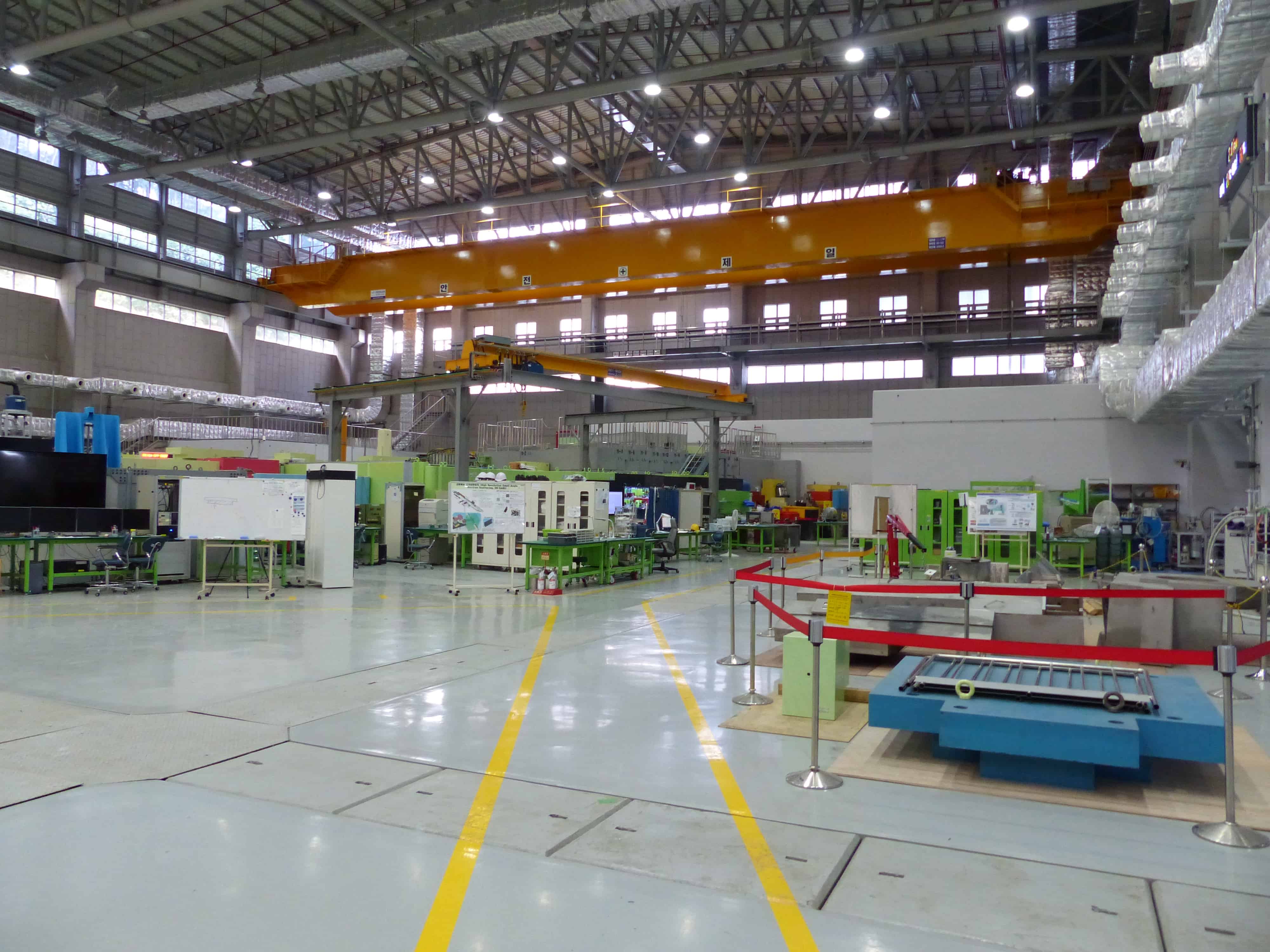
The guide hall at the HANARO research reactor in Daejeon, Republic of Korea.
By Margaret Harris in Daejeon, Republic of Korea
For almost three years, the HANARO research reactor has been idle. Built in 1995 as a hub for neutron-scattering experiments, radioisotope production and other scientific work, HANARO (High Flux Advanced Neutron Application Reactor) is the only facility of its kind in the Republic of Korea, and it underwent a major upgrade in 2009. Then, in 2014, the facility became a delayed casualty of the meltdown at Japan’s Fukushima Dai-Ichi nuclear power station, as enhanced regulatory scrutiny led to the discovery that the reactor hall’s outer wall was not up to the latest standards. An enforced shutdown followed while the wall was reinforced, and although the works were supposed to take just 18 months, opposition from local citizens’ groups has led to further delays.
Physicists at the University of Kaiserslautern in Germany have observed how individual atoms diffuse through a gas for the first time, and how individual collisions between particles affect diffusion. The new study could help model diffusion in rarefied environments, such as thin layers of air in the upper atmosphere, in interstellar space or in vacuum systems.
Diffusion is the process whereby tiny particles uniformly disperse throughout a gas or liquid. Although these media are made up of individual particles, researchers usually describe diffusion as a continuous process.
Diffusion was first described by the Scottish botanist Robert Brown, who observed that grains of pollen appear to quiver as they zigzag through a liquid. This movement came to be known as Brownian motion and it allows substances to disperse and mix. Albert Einstein, in his seminal 1905 paper, explained diffusion at the microscopic level and showed that Brownian motion comes about thanks to collisions of particles with molecules of the surrounding medium.
Billions of collisions
In early studies of Brownian motion, the particles considered were much larger than the molecules in the medium. This means that billions of collisions are required to change the path of such particles. Not every collision is tracked in such studies. Rather, the collective effects of impacts are modelled as a randomly fluctuating process. When combined with the medium’s viscosity, the particle’s energy loss to its surroundings can be calculated. This approach is described by the Langevin equation, which can be used to calculate, for example, how a particle’s average speed changes over time.
However, individual collisions are much more important when the particles have roughly the same mass as the atoms of the gas or liquid medium. To study this scenario, a team led by Artur Widera looked at how a few caesium atoms diffuse through a thin cloud of ultracold rubidium atoms held within an optical trap. Operating at a very low temperature drastically reduces collisions between the caesium and rubidium atoms so that their individual motions can be observed.
The experiment involves firing caesium atoms one by one into the gas. After a certain time delay the team froze the motion of the caesium atoms by applying a light field to the trap and recorded the positions of the trapped atoms using a different laser beam.
Nearly thermalized
By varying the delay between when the caesium atoms are introduced and when they are frozen, the researchers were able to determine how the motions of the caesium atoms change when they collide with the rubidium atoms. They showed that just one collision can strip enough kinetic energy from a caesium atom so that it ends up with almost the same energy as the surrounding rubidium atoms. The caesium atom is thus nearly in thermal equilibrium with the surrounding rubidium atoms after one collision.
Although far from the classical situation in which the Langevin equation applies, Widera’s team discovered that the equation can work under these experimental conditions. However, the equation must first be modified to include a friction coefficient that describes how the viscosity of the medium depends on the velocity of the diffusing atoms.
This modified Langevin equation could be used to describe diffusion that does not involve a continuous medium, say the researchers. Examples are aerosols (mixtures of suspended particles) dispersed in thin layers of air in the upper atmosphere, in interstellar space or in vacuum systems.
Almost 10% of people working in US astronomy have suffered from physical harassment at work, according to a survey carried out by researchers in the US. Led by Kathryn Clancy, a social scientist from the University of Illinois at Urbana-Champaign, the survey asked 423 students, academics and administrators 39 questions about their working environment.
Around 88% of respondents reported hearing, experiencing or witnessing negative language or harassment that was related to race or gender. The survey also found that 39% of respondents were verbally harassed and that 40% of non-white female respondents said that they felt unsafe at work as a result of their race and gender.
Clancy’s co-authors on the study are Illinois social scientist Katherine Lee, astrophysicist Erica Rodgers of the Space Science Institute in Colorado, and Christina Richey, who is a planetary scientist at the American Astronomical Society.
Physicists in China have achieved the first quantum teleportation from Earth to a satellite, while their counterparts in Japan are the first to use a microsatellite for quantum communications. Both achievements suggest that practical satellite-based quantum communications could soon be a reality.
Jian-Wei Pan of the University of Science and Technology of China in Hefei and colleagues used China’s $100m Quantum Experiments at Space Scale (QUESS) satellite to receive a quantum-teleported state. This was done over a distance of 1400 km from a high-altitude (5100 m) ground station in Tibet to QUESS. This is more than 10 times further than the 100 km or so possible by sending photons through optical fibres or through free space between ground-based stations.
Meanwhile, Masahide Sasaki and colleagues at the National Institute of Information and Communications Technology in Japan have shown that quantum information can be transmitted to Earth from a 5.9 kg photon source called SOTA – which is on board a 48 kg Japanese microsatellite called SOCRATES.
Quantum key distribution
Writing in Nature Photonics, Sasaki’s team reports that they were able to receive and process the information at a ground station in Japan using a quantum key distribution (QKD) protocol. QKD uses principles of quantum mechanics to ensure that two parties can share an encryption key secure in the knowledge that it has not been intercepted by a third party.
Two previously unseen molecules have been detected within the remnant of supernova 1987A. Using the Atacama Large Millimeter/submillimeter Array (ALMA), Mikako Matsuura from Cardiff University in the UK and colleagues have found formylium (HCO+) and sulphur monoxide (SO) alongside previously detected compounds such as carbon monoxide (CO) and silicon oxide (SiO).
Supernova 1987A (SN 1987A) is located 163,000 light-years away and its dramatic explosion was witnessed, as the name suggests, in 1987. Observations over the following 30 years have revealed details about how stars die and how their atoms – such as carbon, oxygen and nitrogen – spread into space.
In the past, scientists believed the molecules and dust present within a star would be destroyed during a supernova explosion. However, observations of molecules in SN 1987A suggest otherwise, and the current study, presented in Monthly Notices of the Royal Astronomical Society, further supports an alternative fate.
Dust factory
“Our results have shown that as the leftover gas from a supernova begins to cool down to below –200 °C, the many heavy elements that are synthesised can begin to harbour rich molecules, creating a dust factory,” explains Matsuura. “What is most surprising is that this factory of rich molecules is usually found in conditions where stars are born. The deaths of massive stars may therefore lead to the birth of a new generation.”
The international team has also published an accompanying study in The Astrophysical Journal Letters. In this work they used ALMA data to build detailed 3D maps of CO and SiO inside SN 1987A. These show vast stores of the molecules in discrete clumps within remnant core. The new data will help astronomers test and improve their simulations of supernova evolution.
Increasing global demand for renewable energy makes energy storage in batteries a critical area of research. Two-dimensional (2D) nanomaterials could be excellent candidates given their layered structures, offering well-defined pathways for ion movement. However, no single 2D material has yet demonstrated the perfect combination of properties needed. Writing in Nature Energy, Ekaterina Pomerantseva and Yury Gogotsi at Drexel University in the US propose a solution involving stacked nanomaterial architectures. The structures would combine the advantages of different 2D nanomaterials while eliminating their individual shortcomings.
Major technology breakthroughs within the past decade have produced a plethora of interesting nanomaterials. While these materials display a variety of useful properties, currently none can be used alone as an ideal battery electrode. Pomerantseva and Gogotsi propose the combination of multiple two-dimensional nanomaterials to achieve synergistic property enhancement. By interlayering different 2D materials within a deck-of-cards-like structure, the researchers believe higher energy and power densities can be achieved, as well as longer battery lifetimes.
Current battery limitations
The three critical battery properties are energy density, power density and lifetime.
Energy density is a measure of the amount of charge a material can store. An ideal phone battery, for example, would have a high enough energy density to allow the device to last a long time before dying. While some nanomaterials, such as transitional-metal dichalcogenides like molybdenum disulphide, show impressive energy densities, they also suffer from poor lifetimes, as the formation of a solid-electrolyte layer over time disrupts charge movement.
Power density refers to a battery’s ability to obtain charge. A phone battery with a high power density requires a short amount of time to charge, but also dispenses charge rapidly. Attention to application is required when considering a battery’s power density. The power density of nanomaterials can be manipulated by controlling particle morphology, which is not easily accomplished in a traditional 2D nanomaterial system.
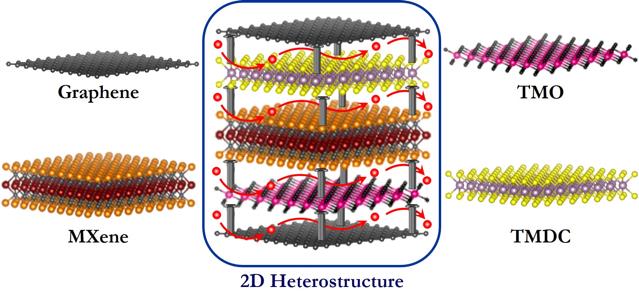
More than the sum of its parts: Proposed 2D heterostructure deck of cards where different nanomaterial cards are mixed together for synergistic property enhancement.
The lifetime of a battery is typically limited by the reversibility of intercalation (the insertion of a molecule into a layered structure) and the mechanical strength of the battery material. Nanomaterial transition-metal oxides (e.g. V2O5) show appropriate intercalation but poor electron conductivity. Transition-metal carbides and nitrides (e.g. Ti2C and Ti2CN) display better conductivity and are mechanically robust but require a complex synthesis.
Deck-of-cards heterostructure
The heterostructures proposed by Pomerantseva and Gogotsi combine known 2D materials in a deck-of-cards arrangement, where each card has a different composition. The properties of the structure as a whole are better suited to energy-storage applications than those of the components taken individually.
For example, the interstratification of a transition-metal oxide and a transitional-metal carbide could produce a battery with exceptional ion intercalation, electron conductivity and mechanical strength. Different combinations of known 2D nanomaterials in the form of heterostructures could theoretically produce efficient batteries boasting high charge density, appropriate power density and long lifetimes. Selecting the appropriate elements to be placed between the layers in a heterostructure could not only further facilitate the movement of ions, but also improve the stability of the electrode.
Pomerantseva and Gogotsi stress the need for additional experiments to evaluate the energy-storage properties of such 2D heterostructures. They also highlight the importance of assembling “a genome for 2D material heterostructures for energy storage” to bridge the gap between the electronic materials and energy-storage communities. Completion of such an extensive project could “open a door to next-generation batteries with improved storage capabilities, faster charging and much longer lifetimes.”
Full details of the research are reported in Nature Energy.
A node for quantum computing that uses two different species of ion has been unveiled by Chris Monroe and colleagues at the University of Maryland in the US. The system uses a barium ion to communicate externally via light and a ytterbium ion to store quantum information.
Trapped ions show great promise for use in quantum computers because they can store quantum information for long periods of time and can also be made to interact with photons, which serve as carriers of quantum information. A practical quantum-computing node must be able to do both of these things at the same time, and this is a significant challenge because the ions that are very good at storing information are usually not very good for interacting with photons and vice versa.
Long coherence time
One possible solution is to use two different types of ion – one for storage and one for communications – and transfer quantum information between the two. Now, Monroe’s team has done just that. A ytterbium ion was chosen as a memory because it can store quantum information for about 1.5 s, which is a very long coherence time in the world of quantum computing. This ion is also attractive because it is insensitive to the light used to manipulate the barium ion, which is located just a few microns away in the ion trap.
In contrast, quantum information can only be stored in the barium atom for about 4 ms, but this is long enough to both interact with the outside world via a photon and also transfer quantum information to the neighbouring ytterbium ion.
Motional modes
Quantum communication via light was demonstrated by causing the trapped barium ion to emit a photon and then showing that the ion and photon are entangled. The team also showed that quantum information can be transferred between the barium and ytterbium ions via two processes that involve the coupled motions of the ions in the trap.
Writing in Physical Review Letters, the team says that the process could be further improved and implemented in fabricated chip traps, which could ultimately form the basis of a practical quantum computer.
A new way of using a laser cavity to study the emergence of topological defects has been unveiled by researchers in Israel.
Topological defects emerge when a system makes a rapid transition from a disordered to an ordered phase – a process called quenching because it often involves rapid cooling. In the case of magnetic order, quenched magnetic moments form small domains in which the moments point in the same direction. Moments in neighbouring domains can point in different directions and the interfaces between domains are called topological defects.
These defects can occur in a wide range of systems, from atomic gases to the rapidly cooling early universe. Understanding how to eliminate topological defects could even be exploited to solve hard computational problems.
Multiple lasers
How topological defects emerge can be very tricky to study in the laboratory because controlling the rapidly changing temperature throughout a sample can be very difficult. In this latest study, Vishwa Pal, Nir Davidson and colleagues at the Weizmann Institute in Israel have used a set of up to 30 coupled laser beams to create a system with topological defects that can be studied more easily.
Their system comprises a laser cavity containing a mask with a number of holes arranged in a circular pattern. Each hole produces its own laser beam, which overlaps a bit with its two neighbours – leading to an interaction between beams. The laser cavity is pumped by an external light pulse and the interaction causes the laser beams to undergo rapid phase oscillations before settling into a steady state that is then measured by the team.
The laser cavity contains about 1000 modes and this provides the system with a large number of initial phase relationships between the laser beams. In most cases the beams synchronize, but occasionally the system gets locked into a state in which there are phase differences between the beams. These states can be described as topological defects, and the team found that their number increased as the number of holes is increased from 10 to 30 – and also when the intensity of the pump pulse is increased.
Pump intensity
The team reckons that when the pump intensity is high, the system reaches equilibrium much faster than when the pump intensity is low. This timescale is analogous to the cooling rate in a quenched system, in which more topological defects occur when the temperature drop is more abrupt. The ring is essentially a 1D system, and the team now plans to extend its work to a 2D system.