Chemists at the Technical University of Munich have used scanning tunnelling microscopy (STM) to give the world’s first insight into the atomic behaviour of catalytically active sites during electrochemical reactions. The results were obtained via a little-used variant of the technique which measures noise in the signal. The information can be used to improve reactions and processes in many fields through the targeted design of better catalysts.
A staple analysis tool in the field of surface science, STM involves bringing an atomically sharp metallic probe, or tip, very close to a conducting sample. When a bias is applied across the two, electrons that were originally localized on the tip are given the energy to “tunnel” across the empty space onto the sample. The flow of tunnelling electrons gives rise to a current, which is monitored to build up information about the surface of the sample.
Writing in Nature, Aliaksandr Bandarenka and colleagues report how a modified version of this technique – scanning noise microscopy (SNM) – can be used to investigate the link between the atomic structure of a catalyst and its chemical activity during a reaction.
Listen closely
As with STM, SNM relies on the idea that the quantum-mechanical tunnelling barrier is altered by the structures and processes beneath the device’s tip. The researchers found that sites of catalysed chemical reactions produce a higher level of noise in the tunnelling-current signal observed under a constant bias. This noise manifests as a broader distribution of tunnelling-current magnitudes received from the active area, and can be picked out through statistical analysis.
Investigating these active sites does not require any modification to the electrochemical STM setups commonly found in many labs, and can proceed directly under reaction conditions. Although not investigated in the reported research, there is also scope to improve upon the technique to include chemical sensitivity in the measurements.
Predictions confirmed
Using SNM, the Munich group studied the catalytically active sites of gold and palladium surfaces during the economically important hydrogen-evolution and oxygen-reduction reactions, and found them exactly as predicted by theoretical calculations. The relationship between the atomic structure of a catalyst and its chemical activity during a reaction has long been suspected within the field, and hence this proof has been highly anticipated.
The unprecedented resolution afforded by STM in the 1980s allowed the electronic and topographic construction of materials to be studied at an atomic level, which was vital for the understanding of a huge variety of chemical and physical interactions. The work by Bandarenka’s team can be expected to do the same for catalysis, with knock-on effects reaching much further afield.
Heterogeneous catalysis, in which the phase of the catalyst is different to the phase of the reactants, underpins 80% of the world’s chemical and energy production processes, and provides everything from fertilizer for food crops, to hydrogen for use as an alternative source of energy. A better understanding of the dynamics will allow the design of new and effective industrial catalysts, leading to more efficient reactions and a cleaner, greener and less energy-consumptive future.
Hands down, it is the most dramatic chandelier I’ve ever seen.
I am standing in the foyer of an ordinary-looking office building in the Seattle, US, suburb of Bellevue that’s home to Intellectual Ventures – a company that develops and licenses intellectual property. Suspended above me is a plain copper hoop about a metre in diameter near a small rod attached to a Tesla coil. Nathan Myhrvold – founder and chief executive of the firm – flicks a switch. Bluish-yellow streamer arcs, crackling and humming, burst out of the rod.
But I’m not here for this miniature lightning storm, spectacular though it is. Nor have I come to see any of the other exhibits of Myhrvold’s enthusiasm for science strewn around the building, which include an antique barometer, part of a Saturn launch vehicle and a replica of a Babbage machine. I’ve also paid only a cursory glance at the gleaming, three-storey Van de Graaff generator that stands guard outside. I’m not even here to discuss intellectual property.
Instead, I’ve come to ask Myhrvold about the physics of bread-making, on which he is the reigning authority. The 58-year-old physicist and former chief technology officer of Microsoft has long been interested in food science. In 2011 he published Modernist Cuisine, a six-volume, 2438-page monster of a book, weighing 23.7 kg that Physics World picked as one of the top 10 books of 2011 and the Wall Street Journal declared to be the “cookbook to end all cookbooks”.
This month, Myhrvold releases the sequel: Modernist Bread, a five-volume, 2642-page monster of a book (plus bonus recipe manual), weighing 24.2 kg. Self-published like its predecessor, Modernist Bread is based on about 1600 experiments that Myhrvold and his team have carried out with state-of-the-art equipment. It promises to be the ultimate book on the history and science of bread. But what, I’m wondering, remains to be learned about this common, simple yet sometimes delicious foodstuff that humans have been baking for more than 30,000 years?
Enter the Cooking Lab
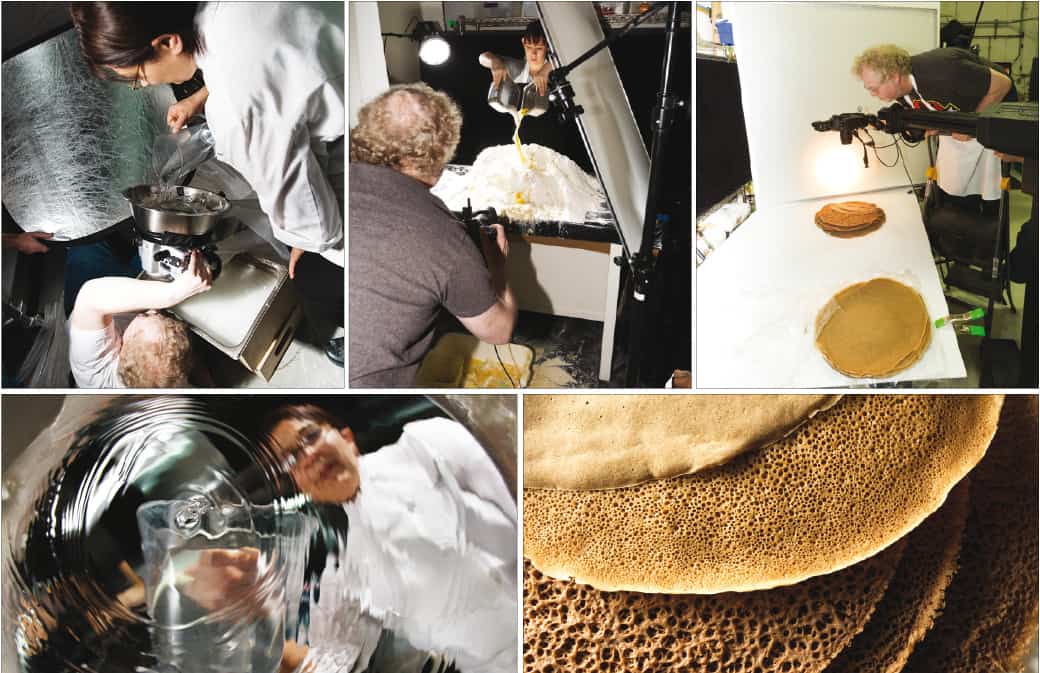
Leaving the entrance lobby to Intellectual Ventures, I climb a flight of stairs to Myhrvold’s self-styled Cooking Lab. There I meet Francisco Migoya, a professional chef who has co-written Modernist Bread, and Larissa Zhou, the Cooking Lab’s research scientist, who received her BA in physics from Harvard University, US, in 2011. A large, open, well-lit space in the middle of the building, the Cooking Lab is fully stocked with big ovens, refrigerators and other professional kitchen gear (the lab could easily serve any restaurant or bakery) as well as more homely equipment such as blenders, cutters and cabinets. Next to the lab itself, around one stack of equipment, is a photography studio.
Try it, test it: Nathan Myhrvold and R&D chef Rebecca Spector at work in the Cooking Lab in Seattle. (Courtesy: The Cooking Lab LLC)
My eye is drawn, however, to an array of centrifuges, rotary evaporators, vacuum chambers and thermocouples of the type more commonly seen in physics labs. Migoya explains that he and others on the team use these devices to create new cooking techniques. “We found you can cook better French fries if you put them in an ultrasonic bath before frying them,” he says, pointing to a device of the sort used to clean jewellery. “The ultrasonic waves create little divets on the surface, exposing more area to the oil and making for a crispier French fry while preserving tenderness inside.” It also works for spaghetti, too, he adds, where the divets make creamy sauces cling better.
Migoya and Zhou launch into a description of the physics of ovens – and how restaurants can optimize bread-making – when suddenly I hear good-natured, boisterous laughter behind me. I turn to find Myhrvold standing next to a technician mixing flour and water. “Looks like you’ve just made a load of snot!” he says, with irreverent glee. Myhrvold, I discover, is rarely without a smile or laugh, and believes that research should be interdisciplinary and fun. Today he’s wearing a T-shirt that’s a Weather Channel send-up: “Deep Space 7 Day Forecast,” it runs, with seven boxes forecasting identical conditions – “Clear. Chance of precipitation 0%. Temperature –270 °C”.
We retire to a conference room, where Myhrvold – whose short, ruddy (albeit whitening) hair juts from his head as if he’s brushed against that Van de Graaff accelerator – does not seem easily able to sit still. Energetic and restless, he seizes every opportunity to get up to show me something, or to draw diagrams on the blackboard. Following him is like trying to keep up with a wave that keeps darting off in new directions. But his curiosity is grounded in a solid scientific pedigree.
Filling the vacuum
After getting a BA in mathematics in 1979 from the University of California, Los Angeles, aged just 20, Myhrvold did a PhD at Princeton University, US, in theoretical and mathematical physics. He then spent a year as a postdoc working with Stephen Hawking at the University of Cambridge in the UK on quantum field theory and quantum gravity, before founding his own software company in 1984. It was bought by Microsoft two years later and Myhrvold spent 14 years at the firm, ending with a four-year stint as Bill Gates’ chief technology officer.
When Myhrvold founded Intellectual Ventures in 2000, he began to spend more time cooking as a hobby (though he’d already taken leave at Microsoft to go to culinary school), and became fascinated by “sous vide” cooking, in which you seal fish or meat in a bag under vacuum and then cook it in a water bath. As the temperature of the bath can be precisely controlled, sous vide (the French for “under vacuum”) lets you cook fish or meat far more evenly than using a hot stone or oven. So rather than having the inside of the food done while overcooking the outside, sous vide preserves the same “done-ness” throughout.
It sounds a great idea, but back then sous vide was a controversial technique, suspected of being unsafe. “I assumed that there were some studies of it,” Myhrvold explains. “Some data that would set it all out for me. There was nothing!” So in his spare time, he began to generate the data himself. As he produced that data, and explored scientific dimensions of cooking, Myhrvold’s curiosity morphed into a passion. His interest coincided with the rise of “molecular gastronomy” – a term coined in the 1980s by the University of Oxford physicist Nicholas Kurti to describe the use of scientific knowledge and techniques to explore new culinary opportunities.
That movement spawned research centres and new restaurants – the most famous being elBulli in Catalonia, Spain – and Myhrvold found his culinary research deeply satisfying both personally and intellectually. “Cooking is the only science experimentation that most people do regularly,” he says. “It’s got variables – some you can control and some you can’t. It doesn’t always turn out, and you can learn to do it better from both your failures and successes. Chemistry describes much of the detail, but physics is a key layer.”
Breaking bread
After about a decade researching the scientific basis of cooking, during which he says he spent several millions of dollars of his own money, Myhrvold distilled his findings into Modernist Cuisine, which he co-wrote with chefs Chris Young and Maxime Bilet. The six volumes contained a huge assembly of photographs and information about food and food preparation – from how to wash your hands to a biography of the French mathematician and physicist Joseph Fourier, who discovered the partial differential equation for the conductive diffusion of heat. The book also busts a few food myths, such as insisting that certain red wines taste better if you add salt and that you can aerate wine by whizzing it in a food blender (two sacrilegious notions that had been ridiculed by wine snobs).
Critical reaction to Modernist Cuisine was awed, if occasionally mixed. Reviewing the book for the New York Times, the US food writer Michael Ruhlman called it “mind-crushingly boring, eye-bulgingly riveting, edifying, infuriating, frustrating, fascinating, all in the same moment.” In the end, though, Ruhlman thanked Myhrvold for allowing chefs to ditch “molecular gastronomy” for the more pleasant term “modernist cuisine”, and concluded with a “bow to him and his crew for their work of unprecedented scope and ambition”.
Myhrvold tells me he has no apologies for all the physics in the book. “One interviewer asked me what made me think I could put science in the kitchen. I said, ‘Science is always there! I only took the ignorance out!’”
So what is the ignorance that Modernist Bread is now taking out of baking?
“A lot, it turns out,” he says. “Just because a cooking practice is old doesn’t mean it’s good. In the 1970s, there was an artisanal bread movement that advocated returning to the supposedly good bread-making of the past. Nonsense! The best bread is being baked now!”
Myhrvold leads me to a nearby room that includes every book on bread that his staff could track down – more than 300 ancient and modern volumes. It also has several historical artefacts, such as a stamp used in ancient Rome to identify the provenance of loaves of bread. But when Zhou put the books into a database to discover what similarities there were in bread recipes, it turned out there were surprisingly few.
1 Bubble formation The role of bubbles in bread-making is simple in principle: the yeast produces carbon dioxide, causing pockets of gas to grow like tiny balloons until they break open, connecting with others to produce an open-cell foam, like a sponge. Yet there’s a surprising amount of physics in that process. Yeast itself cannot produce bubbles because of a phenomenon known as Laplace pressure. The inverse of surface tension, which pulls drops of water into tight spheres, Laplace pressure squeezes together bubbles of gas that float in a fluid such as dough. The smaller the bubble, the higher the Laplace pressure and the more energy it takes to form one. Bubble formation in bread therefore relies on nucleation – on thousands of small, already-formed bubbles of air that form in the mixing process. Carbon dioxide produced by the yeast enters these bubbles, overcoming the Laplace pressure enough to form what Nathan Myhrvold cutely dubs “little gluten balloons”. When we let a dough “rise”, these bubbles expand. The scruffy texture of flour particles also helps to form bubbles by providing a favourable environment for sheltering the bubbles long enough for them to grow. You can see this for yourself by plunging a wooden rod and then a glass rod into soda water, and noting that tiny bubbles cling more easily to the wood, which is rough, than the smooth glass. (Courtesy: The Cooking Lab LLC)
“Many ancient documents, including the Bible, mention bread,” Myhrvold says. “Was that bread the same as today? Did it even look the same? How can you find out? There were no cameras!” He decided to spend time investigating old paintings, but found that art historians tended not to include foodstuffs in their catalogues of paintings. But Last Supper paintings always had bread in them, and Myhrvold spent a day examining several at the Louvre museum in Paris. “I noticed a funny cultural thing – artists would paint the bread of their time on Jesus’s table. There’s a German painting of the 15th century showing Christ and the apostles eating pretzels! How could God not have had pretzels!”
There’s physics scattered through Modernist Bread, including details of how heat flows through food and of how baking “works” thanks to the presence of tiny bubbles of carbon-dioxide gas (figure 1).
“A Harvard professor once asked me, ‘If I’ve got a roast about this size’ ” – Myhrvold holds up his hands about half a metre apart – “ ‘it takes me a few hours to cook. If I’m cooking the same amount of bread, it’s done in 20–30 minutes. Why?’ It turns out it has to do with heat transport.” As Myhrvold explains, while heat flows into a roast by conduction, in bread it flows more because the bursting bubbles open “heat pipes” through which heat can move by convection. The two have different scaling laws. Indeed, the physics of heat pipes shapes other natural phenomena, including various geological processes such as volcanoes (figure 2).
2 Heat pipes When you place raw bread dough in a warm oven, heat travels from the walls of the oven to the centre of the dough through a mechanism called a “heat pipe”. To understand how, remember that raw dough has lots of tiny bubbles containing carbon dioxide (excreted by yeast cells) and minute amounts of water. The oven first warms bubbles lying near the surface of the dough, with water on the hotter side of a bubble boiling to steam that rapidly fills the entire bubble. The steam condenses on the bubble’s cooler side, releasing its cargo of latent heat, which then diffuses through the thin wall of dough into the adjacent bubble, where the cycle continues. In this way, steam percolating inside the bursting bubbles from the outside reaches the centre of the bread, in a process that slowly expands the bread’s volume. Dubbed “oven spring” by bakers, most of this expansion is due to the gas thermally expanding as it warms up, although a smaller fraction of the oven spring is from carbon dioxide released by the warming yeast. (Courtesy: The Cooking Lab LLC)
Bubble size is also crucial in bread-making: in a baguette, for example, you want fewer, larger bubbles. However, surface tension increases nonlinearly with bubble size, meaning it takes far more energy to expand a tiny bubble by a given volume than it does to inflate a large bubble by the same size. “That interests me as a cosmologist, for the same topic crops up in space–time foam research, or in multiverse theories,” says Myhrvold. “Infinitesimal bubbles with infinite curvature are impossible to make!” That’s one of the beauties of Modernist Bread: readers will learn that physics is not only implicated in cooking, but also has a broad interdisciplinary impact on the wider world.
Knead to know
Cases of myth busting, which Myhrvold clearly enjoys, are scattered through this book too. Take kneading. “When I tell people that kneading bread is not required,” he says, “they are horrified. ‘Mom always did it!’ But it’s pretty much a fraud. Kneading has some effect, but it doesn’t do what people thought – mix it [the flour and water] thoroughly somehow. The mechanical reaction does heat up the flour, which is good for mixing with water. But a vacuum sealer [which lets the flour and water react chemically in a vacuum-sealed package] is superior.”
Bread-baking, it seems, is a simple practice that takes advantage of deep physics principles that also appear elsewhere. “Like why is the sky blue,” says Myhrvold. “I was even asked that question at the end of my orals at Princeton, by Val Fitch I think. Do you know it’s for the same reason that non-fat milk is blue? Do this experiment at home: take a glass of water, put in a spoonful of non-fat milk and you’ll see it’s blue-ish. It’s for the same reason.”
Rayleigh scattering?
“Exactly! Particle size. Air molecules are small enough that you get blue scattering. The colour of the sky tells you the particle size. If you try this with full-fat milk, the fat globules are bigger, and it goes from Rayleigh scattering to Mie scattering. [Gustav] Mie was the German physicist who figured this out. Mie scattering is also the reason why bread is white! Here’s a case where a piece of equipment totally changes your view of something. If you look at bread in a microscope, it’s a clear gel; it looks like shower glass.”
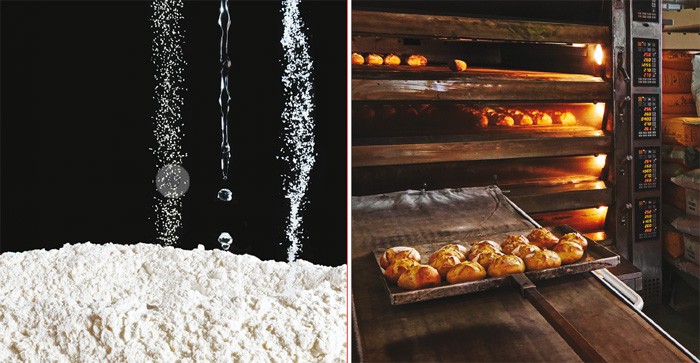
Doing it right: Nathan Myhrvold’s book explores every detail of breadmaking, including the basic ingredients of flour, yeast, water and salt (left) as well as different cooking methods and ovens. (Courtesy: The Cooking Lab LLC)
I must look sceptical, for Myhrvold suddenly orders his assistants to bring bread – any kind they can find at a moment’s notice – and they return with four hot-dog buns. He leads me to his private office down the hall. “You see I’m a micromanager!” he says, laughing. For a moment I am unsure what he’s referring to: his ability to get food delivered instantaneously or – most probably – meaning the row of half a dozen microscopes along one wall. Then Myhrvold puts a piece of one under a microscope. Sure enough, it resembles a pile of shattered shower glass.
Public passions
I ask Myhrvold how his Cooking Lab differs from the long-running US TV show America’s Test Kitchen, in which staff test different ways of preparing a recipe and explain the science to the audience. “I like America’s Test Kitchen,” Myhrvold says. “But we start where they leave off. They’ll try a dozen or so recipes to find the best and most reliable one for people to do at home. We use advanced scientific equipment to try to understand why something happens.”
But if your research requires advanced scientific equipment, I ask, how could it interest the average working person?
“You are not giving the average working person enough credit,” Myhrvold says, in the only flicker of annoyance I see in our hour-long chat. “Don’t dumb people down! People are interested in the why. While I was at Microsoft, Steve Hawking published A Brief History of Time and Madonna published Sex. Who sold more copies? It was not even close – Hawking outsold Madonna more than 10 to one. You don’t have to be a high-end chef to be fascinated by food science.”
The way someone who is not an astronomer might be fascinated by astronomy?
“Right. Plus, the Cooking Lab’s food science also makes it possible for people to do high end and exotic kinds of cooking if they want. Plenty of books have recipes that say, ‘Do this, this, and this.’ If you like doing such things without understanding why or how, buy those books! The unofficial tag line is that our books are for people who are passionate and curious about food. If you are not passionate, a 2640-page cookbook is not for you!”
Myhrvold draws an analogy with engineering, where insight lets engineers build not just mundane safe stuff, but new and extraordinary structures as well. “Most bridges in the world are pretty boring – exercises in building trusses – but deep understanding lets people like [Spanish architect and engineer Santiago] Calatrava make them incredibly beautiful.”
I ask Myhrvold for a simple example of how the knowledge of cooking he has developed might help ordinary home cooking.
“If you have a steak that is twice as thick as the one you cooked the last time,” he asks me, “how much longer is it going to take to cook?”
I say I don’t know exactly. Somewhat longer.
“Most chefs can’t even tell you exactly,” he says, “because even though it’s a really basic question nobody taught them. The answer is four times. Heating in a steak works by conduction, and conduction has a scaling law that goes by the square of the depth.”
So is there then no intuition or fingertip knowledge to cooking?
“Sure there is! A Japanese chef cuts fish more quickly and deftly than I can. But if you talk to the guy at the local steak house, he may have an intuitive sense of how long it takes to cook a steak, but it’s from long experience.”
What’s wrong with that?
“Three things,” Myhrvold says. “First, learning from experience means that you’ve screwed up a lot. That guy has ruined a lot of steaks! Second, learning from experience doesn’t help teaching people. Why not speed things up by telling learners the principles? Third, sometimes the right way of doing something is counterintuitive, as it was with sous vide, and you’ll probably never find it from experience. Active research can uncover new things.” Myhrvold then reminds me of several episodes involving nautical engineering where boats built by extending the tried-and-true, such as the 17th-century Swedish warship Vasa, flipped and sank because of ignorance of principles related to the centre of buoyancy.
Bagels and beyond
So the conversation goes, ranging over many subjects covered in Modernist Bread – the difference between rye and wheat bread, for instance, or why a croissant’s crust is flakey and a bagel’s is not. We talk about heat effects, and why you can reach your arm safely into a dry oven at 250 °C but not over a pot of boiling water. We talk about instruments, and how Myhrvold buys expensive ovens only to cut them apart for pictures.
Before Myhrvold gets whisked off to another commitment, I ask him how food physics differs from other branches of the subject. “Food physics isn’t like particle physics,” Myhrvold admits. As he reminds me, if you want to discover the Higgs, you have to build a big accelerator, with the technology driving the discovery and what you do. “But most science is not like that. Most science is driven by interests and focus, not by the tool. That’s true of the physics in this lab. The research takes us where it takes us.”
As I leave the Cooking Lab and begin my journey back to New York, I realize I’ve got one thing badly wrong. I’d been expecting to learn what physics can teach us about bread and baking. But as Myhrvold has made it abundantly clear, plenty of knowledge flows in the other direction too.
Are you a young physicist about to complete your degree? Contrary to what you or your supervisors believe, you will most likely find a permanent career in the private sector. Indeed, a 2016 report by the American Institute of Physics’ Statistical Research Center (AIP SRC) found that 70% of the (potentially permanent) initial hires of physics PhD graduates in the US are in the private sector. A survey by the US National Science Foundation, meanwhile, has found that, over the past three decades, 40–55% of all PhD graduates go on to work in the private sector. And while four-year colleges (universities) were the second most common employer for the same group, most of those jobs were temporary positions such as lectureships and postdoctoral positions. Even at the bachelor’s and Master’s degree levels, of those graduates who go straight into the workforce after receiving their degrees, more than half will be in the private sector.
It should come as no surprise that physicists have an important role to play in the wide variety of careers available outside of academia. The far-reaching expertise that physics students develop while receiving their degrees – through exposure to a broad set of skills and techniques – makes them exceptional problem solvers. Moreover, their ability to approach problems from general principles often means that physicists can apply their knowledge in novel contexts, leading to innovative advances in technological development. Their intimate understanding of the laws that govern the universe, along with the ability to harness the powerful machinery of mathematics to model and predict, puts physics graduates in a unique position to tackle some of the world’s biggest challenges.
However, many of these graduates find private-sector careers in spite of, rather than because of, the career mentorship of their physics department. In the US, there are generally few faculty members in physics departments with prior experience of working in industry. This is in stark contrast with other STEM (science, technology, engineering and mathematics) disciplines, which often – especially in engineering – employ staff with private-sector experience. Furthermore, while many well-meaning physics faculty members want to advise their students on how to pursue careers outside of academia, few have industrial colleagues in their professional network who could offer advice, or whom they could ask to be industrial mentors for their students.
Beyond this, there is also a prevailing attitude in some university physics departments that the only worthy career path for students is to follow in their mentors’ footsteps and pursue permanent academic roles. Given that nearly 1800 new physics PhD graduates enter the US workforce each year, while only some 350 permanent faculty members depart their positions, this career aspiration is simply not attainable for most students – including those who are considered the “best candidates” for becoming career academics.
Shaping your skills
In order to bring the physics discipline forward into the 21st century, physics graduates must shape their skills for careers in industrial and entrepreneurial settings, while faculty members must confront the attitude that careers in private sector and entrepreneurial settings are somehow inferior to their academic counterparts. Fortunately, there are many things that you as a graduate can do to broaden your career focus. You can (and should) spend time on career planning and self-assessment years before you anticipate entering the job market. There are several good tools available – often through a university’s career resources centre – which will help you gain insights into which career paths might be a good match for you as a person, rather than just a collection of skills. These tools can provide a baseline of suggestions (besides “academic physicist”) that you can consider.
Another good way of learning more about careers outside of academia is by setting up a meeting with people in businesses or organizations of interest so that you can find out more about the opportunities they offer and the skills they demand. This type of informational interview is a “classic” job interview turned on its head: you, as the jobseeker, get to ask the questions. You can take this opportunity to ask everything from what a typical work day involves to what special training they recommend to successfully work in their field – you could even ask for typical salaries for a specific job as a reference.
If the interaction goes well, your industry contact might become a valuable member of your professional network. Setting up these kinds of meetings while you are still studying will mean that you have a contact who can be useful later on, when you are getting more focused on entering the job market. The American Physical Society (APS) has some good advice on arranging these informational interviews as well as some sample informational interview questions.
Learning mentorship
Academic staff can also play an important role in helping students widen their career nets by inviting industry speakers to their departments to talk about the exciting work they do. Graduate students often say that one of the main reasons they do not seek industry experience before graduation is that their adviser disapproved of or even forbade such activity. Faculty members should not only allow, but also encourage students to take advantage of research opportunities in company settings. Academics can also learn basic professional-development concepts (such as the difference between a CV and a résumé) and be able to point their students towards appropriate resources that address questions about applying to industry jobs that they can’t answer. These include career websites from the likes of the APS and the Institute of Physics, which publishes Physics World, as well as university career services.
Responsible career mentorship means giving students a clear idea of their future employment options, and affording them every reasonable opportunity to explore those possibilities. We owe the next generation of scientists – most of whom will be chief executives, research scientists or entrepreneurs solving important world problems – the best support and encouragement they can get.
Faults, the natural fractures on the Earth’s surface that move during an earthquake, vary in roughness. Yet the influence of fault roughness on the nucleation of earthquakes has so far received little attention. Now, researchers at the University of Durham, UK, have revealed a connection between the roughness of a fault and the formation of earthquakes.
Historically, faults were believed to release energy in two possible ways: through great, destructive earthquakes, where faults get stuck and break past each other, or by aseismic “creeping”, where the faults slide past one another. But 20 years ago geologists studying the San Andreas fault in California discovered “slow-slip” earthquakes, where faults slip and release energy over days, weeks or months. Such earthquakes go unnoticed by the general population, and share characteristics of both seismic and aseismic events. The existence of these slow earthquakes has so far puzzled researchers.
Recent laboratory work by Chris Harbord and colleagues at the University of Durham has shown that the roughness of the fault can have a major impact on the processes of earthquake nucleation, as well as controlling whether a fault slips aseismically or generates a great earthquake.
By conducting experiments on a range of faults of different roughnesses, they observed a transition from seismic to aseismic slip that they believe is controlled by the stabilizing influence of increasing stress on rough parts of the fault. Furthermore, their results support observations at place boundaries, most notably subduction zones, where rough seafloor topography appears to be related to aseismic behaviour, while smooth seafloor topography is related to the nucleation of great earthquakes.
“The work shows how heterogeneity, in this case induced by structure, can be a fundamental cause of earthquakes,” Harbord commented. “Our observations indicate that it can lead to nucleation of earthquakes under conditions that are commonly viewed as unfavourable to seismicity. We also observed that increasing stress stabilizes faults, providing a different mechanism to the view that temperature is a major control on the depth distribution of earthquakes.”
Extremely bright and short-lived pulses of X-rays from a free-electron laser have been used to generate 3D images of virus particles. Unlike existing methods, the technique can be used to identify asymmetries in the structure of biological molecules and could lead to the development of drugs that target molecules whose properties cannot be studied using conventional crystallography.
The X-ray crystallography of molecules involves exposing a lattice of regularly spaced molecules to a beam of X-rays. Interference of the scattered radiation creates a diffraction pattern that is then used to calculate the structure of the constituent molecules.
Although the technique is used today at synchrotrons to carry out a wide range of research in biology, chemistry and physics, it has a weakness: it requires molecules to be assembled into crystals. That leaves out many molecules that are of interest scientifically and practically, including the “membrane proteins” involved in regulating cellular input and output that would need to be targeted by certain drugs.
Ten billion times brighter
This is where X-ray free-electron lasers (XFELs) come into their own. These devices use magnets to direct accelerated electrons along slalom trajectories to generate laser-like pulses of X-rays. The pulses are about 10 billion times brighter than that available at synchrotrons, allowing diffraction patterns to be created from a single molecule – the interference in this case occurring between photons scattered off different points of the molecule. Such intense radiation rips the molecule apart but because the laser pulses are also exceptionally brief – lasting just a few femtoseconds (10–15 s) – most of the diffraction information escapes before the molecule disintegrates.
XFELs, however, struggle to produce 3D images. In a synchrotron, crystals can be placed in the X-ray beam and are then slowly rotated over the course of several hours to generate thousands of diffraction patterns from very slightly different angles. In XFELs, molecules are typically passed through the laser beam inside droplets at a rate of several hundred or thousand a second. The 3D structure can in principle be worked out by passing many copies of the same molecule through the beam one after another. However, the molecules are oriented at random and the challenge is to establish the orientation of each diffraction pattern – a process hampered by noise.
In the latest work, researchers at the SLAC and Lawrence Berkeley laboratories in California and others at the European XFEL near Hamburg, Germany, demonstrate a way round this problem. Rather than determining orientations, their approach exploits what are known as cross-correlation functions. The idea, according to team member Ruslan Kurta of European XFEL, is to correlate intensity values across the diffraction patterns “for all possible combinations of scattering vectors”, in order, he explains, to “work out how those correlations vary as a function of the vector magnitudes and angles between the vectors”. More succinctly, he says, these functions resemble a molecule’s “fingerprint”.
The new research is not the first to use XFELs to make 3D images of virus particles – the genome-carrying part of viruses. Two years ago, a group led by Janos Hajdu of Uppsala University in Sweden employed the Linac Coherent Light Source (LCLS) at SLAC to image 450 :nm-diameter “mimivirus” particles. However, that work relied on the fact that these particles are not only relatively large, but also symmetrical – important because symmetry simplifies 3D reconstruction.
Iterative algorithm
Kurta and colleagues avoid the need for symmetry by using an iterative algorithm to hone the limited information provided by cross-correlation functions. They too put their technique to the test at the LCLS, but used 70 nm-diameter rice dwarf and bacteriophage virus particles. They were able to see nanometre-sized “structural features” of the viruses, including asymmetrical ones. That asymmetry, says team member Adrian Mancuso of European XFEL, might be inherent to the viruses or might instead be an artefact – caused, for example, by the samples getting squashed. But either way, he argues, what matters is that the team has observed asymmetry.
One scientist involved in the previous research, Jean-Michel Claverie of Aix-Marseille University in France, agrees that the latest work represents “sizeable progress” in 3D imaging of single particles. But he cautions that other viruses that might be probed with the new technique – such as the oblong-shaped pandoravirus and pithovirus particles – have quite variable lengths and therefore “might violate” a requirement of the scheme: its need for “reproducible objects”.
Mancuso acknowledges this potential stumbling block, but is confident that it can be overcome. He says that the team now aims to improve the technique’s resolution by using shorter wavelength X-rays and by placing multiple molecules, rather than just a single molecule, in each laser. Using shorter-wavelength X-rays, he adds, should be easier if the group can get beam time on the European XFEL, which opened last month.
The research will be described in an upcoming paper in Physical Review Letters.
The 2017 Nobel Prize for Chemistry has been given to Jacques Dubochet, Joachim Frank and Richard Henderson “for developing cryo-electron microscopy for the high-resolution structure determination of biomolecules in solution”. The prize is worth SEK 9m (£823,000) and will be presented at a ceremony on 10 December in Stockholm. It is shared equally by the three laureates, who are all physicists by training.
Cryo-electron microscopy gets around two major challenges when studying large biological molecules with a transmission electron microscope. First, the molecules exist naturally in water, the vapour from which destroys the vacuum required to run the microscope. The molecules could be dried out before being examined, but this can alter their structure so much that the study would be pointless. The second challenge is that the electron beam heats up and destroys delicate biological molecules. This can be addressed by using a weaker beam, but that would result in fuzzier images.
Henderson showed in the early 1970s that a protein called bacteriorhodopsin can be studied under an electron microscope if the molecules are naturally bound within a biological membrane. This keeps the molecules wet and stops water from evaporating into the vacuum. To minimize destruction by heating, Henderson exploited the fact that the bacteriorhodopsin molecules in the membrane are arranged in a regular array, which lets him use a weak beam of electrons to build up a diffraction pattern. He obtained the protein’s structure in 1975.
Atomic-scale images
As electron microscopes improved, Henderson was eventually able to deduce the structure at the atomic scale by 1990 – showing that it was possible to do high-quality studies of biological molecules using an electron microscope.
Working independently in 1975, Frank unveiled an image-analysis algorithm for merging multiple fuzzy 2D images from an electron microscope to create a 3D image of a molecule. This involves taking thousands of images of randomly oriented molecules and sorting them into groups of similar images. Each group is then processed to create a set of much sharper images. The spatial relationships between the groups are then calculated, leading to the assembly of a high-resolution 3D image.
It turned out that Frank’s algorithm could be directly applied to a technique for imaging biological molecules that had been developed independently in 1982 by Dubochet. This involves dispersing molecules in a thin film of water suspended in the gaps of a mesh. The water is then frozen rapidly by plunging the mesh into liquid ethane at –190 °C. Rapid freezing means that the water molecules in the ice do not have a regular crystal structure, but instead resemble a glass. This “vitrification” of water is crucial because it does not cause electron diffraction and allows images to be taken – albeit fuzzy ones.
Better microscopes
In 1991, Frank combined Dubochet’s vitrification technique with his imaging algorithm to obtain images of ribosomes. As electron microscopes have improved over the intervening years (in part thanks to Henderson’s efforts) cryo-electron microscopy can now image biological molecules at the atomic level.
Born in Scotland in 1945, Henderson did a BSc in physics at the University of Edinburgh before completing a PhD in molecular biology at the University of Cambridge, UK, in 1969. After a three-year stint at Yale University, he joined the Medical Research Council’s Laboratory of Molecular Biology, also in Cambridge, where he is a group leader.
Dubochet was born in 1942 in Switzerland and is based at the University of Lausanne, where he is honorary professor of biophysics. He studied physics and engineering at the École Polytechnique Fédérale de Lausanne before obtaining a PhD in biophysics in 1973 from the University of Geneva and the University of Basel.
Frank was born in 1940 in Germany and studied physics at the University of Freiburg and the University of Munich. He completed a PhD on electron microscopy in 1970 at the Technical University of Munich. He later worked at several universities and research labs worldwide before joining Columbia University as professor of biochemistry and molecular biophysics and of biological sciences in 2008.
I think it’s safe to say that most Nobel-watchers were predicting a LIGO-related physics prize this year, and for very good reasons.
For millennia, humans could only see visible light from the cosmos. It was only during the previous century that we have been able to view the universe across much more of the electromagnetic spectrum – as well as through the arrival of high-energy particles such as cosmic rays and neutrinos.
But until very recently there had been a gaping hole in our knowledge, which is now being filled by the LIGO and Virgo gravitational observatories.
Before LIGO detected its first signal in 2015 – gravitational waves from the merger of two black holes – we weren’t sure that black holes with masses of several tens of suns even existed. Just two years (and three more black-hole mergers) later we are beginning to understand how such black holes are formed.
The era of gravitational astronomy is well under way, but that is not the end of the story. With three gravitational-wave detectors spread out over two continents (and more on the way), astronomers can now point an array of telescopes at the sources of gravitational waves to capture electromagnetic radiation. Particle physicists can also monitor underground detectors to look for related pulses of high-energy cosmic neutrinos.
Dubbed multimessenger astronomy, this new way of seeing the heavens could reveal astronomical events that had been beyond the view – and even beyond the imagination – of astrophysicists.
You can find a fantastic introduction to this emerging discipline in Multimessenger Astronomy, which is a Physics World Discovery ebook by Imre Bartos of the University of Florida and Marek Kowalski of Humboldt University and DESY. It is free to read, so dive in and enjoy.
Samira Musah is a researcher with an intriguing goal – to recreate a human kidney on a chip. A bioscientist by training, Musah is now part of an interdisciplinary team of researchers at the Wyss Institute for Biologically Inspired Engineering in Boston. Human Organs on Chips takes you inside the lab to find out more about this futuristic technology, which could lead to personalized drug development.
“It’s extremely exciting to be able to interact with people from so many different backgrounds,” says Musah. “This project has engineers, physicists, chemists, biologists and developmental biologists. And I think that working together with this team is really what makes this kind of work possible.”
Founded in 2009, the Wyss Institute specializes in developing real-world products from fundamental research. Inside the Wyss, scientists work alongside commercial and legal specialists, translating ideas from the lab to the marketplace. “We bring in expertise based on wherever the need is,” explains Institute founding director Don Ingber. “At the Wyss, we have the freedom to ask: what are you really excited about? What do you think could have really big impact?” Ingber explains the Wyss philosophy in this Q&A from the Physics Worldspecial report on physics in the US.
Human Organs on Chips is the final film in our “Faces of Physics” series, a collection of short films about the lives of people working in physics, exploring their motivations and the impact of their work. By telling personal stories, we hope to show that physics is an ordinary activity that can lead to an extraordinary array of careers. It follows these earlier films in the series:
To find out more about the social side of physics, you can also still access the March 2016 issue of Physics World, a special edition about diversity issues in physics. Find out how to access that issue here.
An early form of plate tectonics on a hotter young Earth may have been responsible for the initial rise of the Earth’s great landmasses and even for an increase in atmospheric oxygen levels, new modelling suggests.
Rocks older than 3 billion years are rare on Earth, suggesting most of the continents we see today formed after this time. However, previous research has suggested that the total volume of continents 3 billion years ago was already 60–70% of what it is today. Priyadarshi Chowdhury and collaborators at Ruhr-Universität Bochum (RUB), Germany, and the Swiss Federal Institute of Technology (ETH), Zurich set out to tackle this conundrum, publishing their findings in Nature Geoscience.
The researchers investigated how plate tectonics may have operated differently on a hotter, younger Earth. Plate tectonics is associated with the majority of crust production, at mid-ocean ridges and volcanic arcs, as well as crust recycling (in the form of subduction), so it’s likely that there’s a close link between the histories of crustal growth and recycling, and the style of plate tectonics.
The mechanism of plate tectonics is closely related to the thermal state of the planet’s interior. The Earth has cooled throughout its history as the heat produced from its initial formation slowly dissipates. Today, modern plate tectonics operates with extensive oceanic crust production and recycling, while there is relatively little recycling or production of continental crust. Chowdhury and his colleagues investigated how these plate tectonic processes differed on a younger Earth with a hotter interior.
This embryonic plate tectonics differed from the modern setup chiefly during mountain building, which occurs when two continental fragments collide. Today, the last piece of ocean crust left in between detaches and sinks into the mantle, taking only a small amount of continental crust with it. Three billion years ago, such collisions may have removed large portions of the lower continental crust. This removal, and melting processes that added extra new crust, made the remaining upper crust less dense.
The less dense crust was much more likely to survive, rather than being recycled into the mantle during later collisions. This is probably why nearly all of the modern crust is younger than 3 billion years. It could also lead to the crust having a higher average elevation, perhaps giving the first emergence of the continents above the oceans.
Other scientists have shown that the emergence of the continents may have led to changes in the composition of gases emitted from volcanoes. And changes in the composition of the crust may have influenced weathering cycles that provide long-term controls on atmospheric composition.
This period also saw the atmosphere switch from a methane-CO2-rich state, to one with significant free oxygen. It’s possible the formation of the continents and the origins of an oxygen-rich atmosphere are linked. “The changes that occur in the skin of Earth, that is, the atmosphere and lithosphere, are a reflectance of the processes operating deep inside it,” Chowdhury told environmentalresearchweb.
Processes as seemingly unrelated as cooling of the Earth’s interior and the appearance of free oxygen in the atmosphere could be more closely linked than we thought. “We need to unify different lines of evidence to explain such an intricate link and understand the infant Earth’s dynamics” said Chowdhury.
The 2017 Nobel Prize for Physics has been awarded to Rainer Weiss, Barry Barish and Kip Thorne for decisive contributions to the LIGO detector and the observation of gravitational waves. The winners will receive their medals at a ceremony in Stockholm on 10 December.
The prize is worth SEK 9m (£823,000). One half of the prize goes to Weiss. Barish and Thorne have equal shares of the second half of the prize.
In February 2016 Weiss, Barish, Thorne and colleagues working on the Laser Interferometer Gravitational-wave Observatory (LIGO) in the US announced that they had made the first direct detection of gravitational waves. The observation was made in September 2015 and the gravitational waves had been created by the merger of two distant black holes.
A similar event was swiftly detected in December of that year and announced in June 2016. A third event was seen in January 2017 and just last week LIGO physicists announced that they had detected their fourth black-hole merger, this time in conjunction with the Virgo gravitational-wave detector in Italy.
Fully clothed
“I even have clothing on,” quipped US-based Weiss on an early-morning telephone call to Sweden shortly after the winners were announced. He said that the prize recognizes the work of thousands of people who worked on LIGO. “At first, we failed but slowly we got things to work,” he said.
When asked about the first detection by LIGO he said “Many of us didn’t believe it. It took us two months to convince ourselves that we had detected a gravitational wave.”
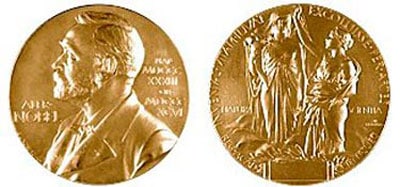
Winners announced: the physics Nobel medal
Weiss said he is looking forward to the detection of gravitational waves from supernovae and merging neutron stars by LIGO and Virgo. He also said that the next generation of gravitational-wave detectors could provide important clues about the early universe.
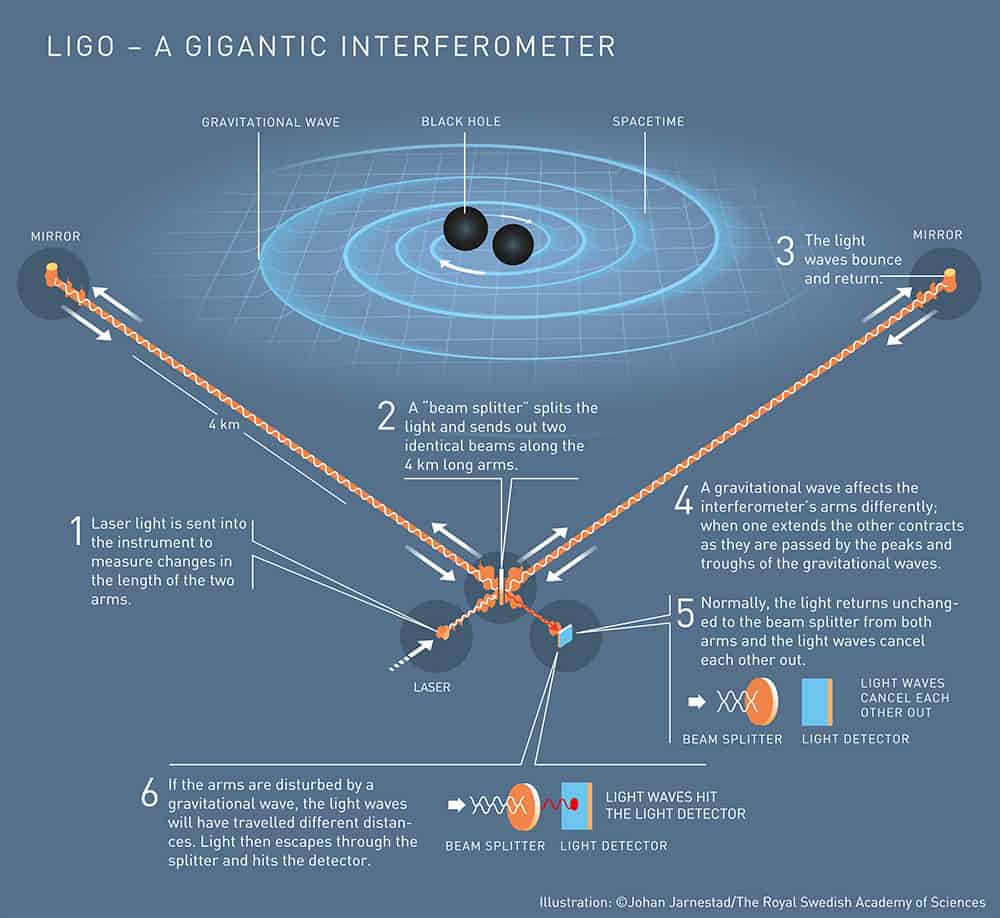
LIGO comprises two 4 km-long interferometers – one in Hanford, Washington and the other in Livingston, Louisiana (see above video). Each instrument can measure extremely small changes in distance along the interferometer arms that occur when a gravitational wave passes through Earth.
Weiss played a crucial role in designing and building LIGO. He was born in Berlin in 1932 and fled Germany with his family in 1939, settling in New York City. He studied physics at the Massachusetts Institute of Technology (MIT), where he gained a PhD in 1962. After a brief stint at Princeton, Weiss returned to MIT where he started an experimental group that focused on gravitation and cosmology.
Barish became the principal investigator of LIGO in 1994 and was named director of the observatory in 1997. He was born in 1936 in Omaha, Nebraska. He did a BA in physics and PhD in experimental high-energy physics at the University of California, Berkeley. He joined Caltech in 1963. He is Ronald and Maxine Linde Professor of Physics, Emeritus at Caltech.
Thorne was a co-founder of LIGO and did important calculations that showed how gravitational waves would be picked up by the detectors. Born in 1940 in Logan, Utah, Thorne studied physics at Caltech and then moved to Princeton University to complete a PhD in 1965. He then returned to Caltech, where he is now Feynman Professor of Theoretical Physics, Emeritus. Thorne’s research has focused on theoretical astrophysics and relativity.
LIGO: a gigantic interferometer
LIGO’s (and lately Virgo’s) success has opened a new window into the universe by ushering in the era of gravitational-wave astronomy. There is also the potential for multimessenger astronomy, whereby telescopes are pointed at the source of a gravitational wave to detect electromagnetic radiation emitted by the source. While no such radiation has been seen from the four black-hole mergers, events involving neutron stars and other astronomical objects are expected to be picked up by telescopes.
Accelerating masses
First predicted by Albert Einstein’s general theory of relativity, gravitational waves are ripples in the fabric of space–time that are generated by accelerating masses. Since the theory was published a century ago, Thorne and other physicists have predicted that binary-star or binary-black-hole systems would be prolific sources of gravitational waves.
In the above video, researchers from the LIGO collaboration, based at Cardiff University in the UK, talk about the history of gravitational waves, how LIGO’s interferometers work, the new era of gravitational-wave astronomy and what it was like finding out about their pivotal first observations.
You can read about Physics World’s visit to the LIGO detector in Livingston, Louisiana in “The great detector”.
Additional reporting for this article was provided by Tushna Commissariat, reviews and careers editor of Physics World.