Skip to the content

IOP A community website from IOP Publishing

Search


About

This page contains a single entry from the blog posted on May 12, 2008 12:38 PM.

The previous post in this blog was The return of the "Science Warrior".

The next post in this blog is Nearly seeing Hawking radiation?.

Many more can be found on the main index page or by looking through the archives.

Powered by
Movable Type 3.33

physicsworld.com Blog

« The return of the "Science Warrior" | Main | Nearly seeing Hawking radiation? »

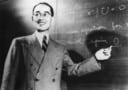
Einstein's Mistakes

albert.jpg

"Many of [Einstein's] ground-breaking discoveries were blighted by mistakes, ranging from serious misconceptions in physics to blatant errors in mathematics".

So says a promotional blurb for Einstein's Mistakes: The Human Failings of a Genius, a new book from the American physicist and author Hans C Ohanian that will be published in September by W W Norton.

Ohanian has posted an eight-page taster of his work on the arXiv preprint server, in which he presents a "critical examination" of how Einstein went about proving his most famous equation E = MC2. All of these proofs, claims Ohanian, "suffer from mistakes".

This is not the first time that Einstein's proofs have come under scrutiny, with various detractors and supporters arguing since at least 1908 — three years after the equation was first derived.

Elsewhere in the world of Einstein biography, a letter on religion written in 1954 by the physicist to the German philosopher Eric Gutkind has come up for auction in London. "The word God is for me nothing more than the expression and product of human weakness...", wrote Einstein who died the next year — and has presumably discovered whether or not this letter was a mistake.

Comments (10)

  • 1 ZEPHIR May 13, 2008 4:15 PM

    My understanding is, Einstein the guy was more farseeing, than we can realize. His predictions were intuition driven often. For example, he didn't believe in black holes - now, after 50 years of BH research we are recognizing, he was right. He didn't believed in gravitational waves - and the situation just repeats by now. He even considered Aether theory in his later time, which nobody of relativists haven't believed seriously. Einstein has predicted many fundamental quantum mechanics phenomena, despite his conceptual stance to quantum mechanics as such. Try to imagine some string theory fundamentalist (..no redundant name calling, please), which is helping to improve LQG...

    We can say, Einstein was the last theorist (with honor exception of Feynman), who ruled the understanding of practical physics - the more surprising in the context of fact, Einstein never did some serious experiments at all.

  • 2 Lurp May 16, 2008 5:11 AM

    "For example, he didn't believe in black holes - now, after 50 years of BH research we are recognizing, he was right."

    You are quite mistaken. Most scientists accept that black holes are not only quite real but in fact pretty common in the Universe. Black Hole research is intensifying not diminishing. When the LHC comes online we will be able to delve deeper into the mysteries of these massive objects by creating microscopic ones here on earth. Dr. Stephen Hawking, the most brilliant man on this rock, has done a lot of research to help prove their existence. Einstein had his reasons not to believe but then again we know so much more now about the Universe than he was able to at the time. He made his conclusion from the limited data available to him so I don't fault him on this mistake but it does not change the fact that he was wrong.

    Also there are several teams of scientist searching for signs of gravitational waves. They wouldn't be spending their time and money if the research didn't show that they are likely to exist....which it does.

    Einstein was a great man but he was also just a man....and ask any woman and they can tell you every man is far from perfect.

  • 3 Gaina Alex May 16, 2008 12:25 PM

    It is easy to found mistakes of a great man.

  • 4 Paulo Gotac May 16, 2008 3:56 PM

    Poor Einstein! His achievements are no longer discret! They entered in the continuum of events!
    When this happen, mistakes (or pseudo-mistakes) emerge. The scientific argument gives place to History.

  • 5 Eugene Sittampalam May 16, 2008 8:24 PM

    ________________________________________
    Then [Fermi] delivered his verdict in a quiet, even voice. "There are two ways of doing calculations in theoretical physics", he said. "One way, and this is the way I prefer, is to have a clear physical picture of the process that you are calculating. ..."
    A meeting with Enrico Fermi, Freeman Dyson (Institute for Advanced Study, Princeton), Nature 427, 297 (2004)
    ________________________________________

    That clear physical picture, however, wasn?t there for Einstein since science was in its infancy in those days compared to what it is today.

    E = mc^2 was indeed a stroke of genius at that time without the true picture or model at hand. Little wonder the derivation is not readily accepted by all even to this day. However, with the simple, classical mechanical and all-embracing model now at our disposal (1), the derivation of E = mc^2 from first principles becomes child?s play; and it has had nary a refutation the past nine years; see section 2 of (2).

    What is perhaps most 'blatant' of all 'Einstein?s Mistakes' comes into focus with the moving body. To keep it short here, readers would do well to answer just one profound yet seemingly simple question:

    DOES THE MOVING BODY CONTRACT TRANSVERSE TO MOTION?

    A textbook scholar would say no, since that?s what the books say.

    On the other hand, a true physicist would substantiate his/her answer, whatever it be. Alternatively, such a principled physicist (who would also believe in the dictum, To Thine Own Self Be True) would accept or refute what is given in (3) - that the moving body DOES also contract transverse to motion, thereby causing the final demise of special relativity. If it's a refutation, then the upfront US$25,000 offered therein would be my way of saying a wholehearted - Thank You.

    (1) www.sittampalam.net/Summary.pdf
    (2) www.sittampalam.net/Synopsis.htm
    (3) www.sittampalam.net/LateralThoughts.pdf

  • 6 Eugene Sittampalam May 16, 2008 8:33 PM

    ________________________________________
    Then [Fermi] delivered his verdict in a quiet, even voice. "There are two ways of doing calculations in theoretical physics", he said. "One way, and this is the way I prefer, is to have a clear physical picture of the process that you are calculating. ..."
    A meeting with Enrico Fermi, Freeman Dyson (Institute for Advanced Study, Princeton), Nature 427, 297 (2004)
    ________________________________________

    That clear physical picture, however, wasn?t there for Einstein since science was in its infancy in those days compared to what it is today.

    E = mc^2 was indeed a stroke of genius at that time without the true picture or model at hand. Little wonder the derivation is not readily accepted by all even to this day. However, with the simple, classical mechanical and all-embracing model now at our disposal (1), the derivation of E = mc^2 from first principles becomes child's play; and it has had nary a refutation the past nine years; see section 2 of (2).

    What is perhaps most 'blatant' of all 'Einstein's Mistakes' comes into focus with the moving body. To keep it short here, readers would do well to answer just one profound yet seemingly simple question:

    DOES THE MOVING BODY CONTRACT TRANSVERSE TO MOTION?

    A textbook scholar would say no, since that's what the books say.

    On the other hand, a true physicist would substantiate his/her answer, whatever it be. Alternatively, such a principled physicist (who would also believe in the dictum, To Thine Own Self Be True) would accept or refute what is given in (3) - that the moving body DOES also contract transverse to motion, thereby causing the final demise of special relativity. If it's a refutation, then the upfront US$25,000 offered therein would be my way of saying a wholehearted - Thank You.

    (1) www.sittampalam.net/Summary.pdf
    (2) www.sittampalam.net/Synopsis.htm
    (3) www.sittampalam.net/LateralThoughts.pdf

  • 7 Yanick Toutain May 16, 2008 10:32 PM

    Only and single interesting question is: this book is a return to Newton and true science? We wait until finally researchers materialists appear fixing itself like drank the discovery of the dream of Newton: Which is our objctive speed, which is our absolute velocity, our speed of an absolute place to another absolute place? Only this choice will make it possible science to start.
    La seule et unique question int�ressante est : ce livre est-il un retour � Newton et � la science v�ritable ?
    Nous attendons qu'apparaissent enfin des chercheurs mat�rialistes se fixant comme but la d�couverte du r�ve de Newton : Quelle est notre vitesse objctive,quelle est notre vitesse absolue, notre vitesse d'un lieu absolu � un autre lieu absolu ?
    Seul ce choix permettra � la science de commencer.

  • 8 draft.gr May 17, 2008 2:15 PM

    I believe that, while composing his Special Relativity Theory (SRT) Einstein was mostly correct in his reasoning, save for one significant error of cardinal importance:

    The most important and revolutionary conclusion of his theory comes into direct contradiction with one of his two fundamental hypotheses.

    Let me demonstrate why, as simply as I can.

    It is well known that the Principle of Relativity of the Uniform (linear) Translatory Motion of matter was first introduced by Galileo Galilei.

    According to tradition, while in the hold of a ship he was performing some mechanical experiments. Galileo made sure that the results of his experiments were independent of whether the ship was moving in a uniform translatory motion in calm sea, or whether it was fastened at the harbor.

    Thus, he came to formulate the following proposition:
    ?It is impossible to reveal the uniform translatory motion of matter through experiments that take place in a moving system.?

    Albert Einstein, in 1905, extended this Principle to electromagnetism and by taking it to be a general principle of Nature, he incorporated it in SRT as his first fundamental hypothesis.
    (The second Einstein?s hypothesis is the independence of the velocity of light from the velocity of its source.) Thus the Principle of Relativity of the uniform translatory motion is expressed by the following simple and general proposition:

    ?The uniform translatory motion of matter is relative.? (1)

    However, one of the important conclusions of the SRT is the famous ?time dilation? effect that is stated by the following proposition:

    ?Clocks moving in a uniform translatory fashion slow down on account of that very motion alone.? (2)

    This is a conclusion resulting from the Lorentz Transformation.

    I am afraid that propositions (1) and (2) contradict each other.
    That is, if one of them is true than the other is, definitely, false.

    To clarify this let me give an example:

    Suppose two identical clocks A and B.
    Clock A is in our system of reference (is the clock in our arm when we stand at attention listening to the National Anthem) and clock B moves in a uniform translatory motion with respect to clock A.

    So I ask:
    Since proposition (1) is true, then in which magical fashion does clock B ?detect? that it is THE ONE moving, so that it will slow- down in order to satisfy that proposition (2) is ALSO true?

    I believe that, if one is to try to provide a strictly logical and scientific answer to the above question, he will come to realize the big conceptual error of SRT, an error that eventually led to all the other Einstein?s ?mistakes?.
    I believe that, while composing his Special Relativity Theory (SRT) Einstein was mostly correct in his reasoning, save for one significant error of cardinal importance:

    The most important and revolutionary conclusion of his theory comes into direct contradiction with one of his two fundamental hypotheses.

    Let me demonstrate why, as simply as I can.

    It is well known that the Principle of Relativity of the Uniform (linear) Translatory Motion of matter was first introduced by Galileo Galilei.

    According to tradition, while in the hold of a ship he was performing some mechanical experiments. Galileo made sure that the results of his experiments were independent of whether the ship was moving in a uniform translatory motion in calm sea, or whether it was fastened at the harbor.

    Thus, he came to formulate the following proposition:
    ?It is impossible to reveal the uniform translatory motion of matter through experiments that take place in a moving system.?

    Albert Einstein, in 1905, extended this Principle to electromagnetism and by taking it to be a general principle of Nature, he incorporated it in SRT as his first fundamental hypothesis.
    (The second Einstein?s hypothesis is the independence of the velocity of light from the velocity of its source.) Thus the Principle of Relativity of the uniform translatory motion is expressed by the following simple and general proposition:

    ?The uniform translatory motion of matter is relative.? (1)

    However, one of the important conclusions of the SRT is the famous ?time dilation? effect that is stated by the following proposition:

    ?Clocks moving in a uniform translatory fashion slow down on account of that very motion alone.? (2)

    This is a conclusion resulting from the Lorentz Transformation.

    I am afraid that propositions (1) and (2) contradict each other.
    That is, if one of them is true than the other is, definitely, false.

    To clarify this let me give an example:

    Suppose two identical clocks A and B.
    Clock A is in our system of reference (is the clock in our arm when we stand at attention listening to the National Anthem) and clock B moves in a uniform translatory motion with respect to clock A.

    So I ask:
    Since proposition (1) is true, then in which magical fashion does clock B ?detect? that it is THE ONE moving, so that it will slow- down in order to satisfy that proposition (2) is ALSO true?

    I believe that, if one is to try to provide a strictly logical and scientific answer to the above question, he will come to realize the big conceptual error of SRT, an error that eventually led to all the other Einstein?s ?mistakes?.
    I believe that, while composing his Special Relativity Theory (SRT) Einstein was mostly correct in his reasoning, save for one significant error of cardinal importance:

    The most important and revolutionary conclusion of his theory comes into direct contradiction with one of his two fundamental hypotheses.

    Let me demonstrate why, as simply as I can.

    It is well known that the Principle of Relativity of the Uniform (linear) Translatory Motion of matter was first introduced by Galileo Galilei.

    According to tradition, while in the hold of a ship he was performing some mechanical experiments. Galileo made sure that the results of his experiments were independent of whether the ship was moving in a uniform translatory motion in calm sea, or whether it was fastened at the harbor.

    Thus, he came to formulate the following proposition:
    ?It is impossible to reveal the uniform translatory motion of matter through experiments that take place in a moving system.?

    Albert Einstein, in 1905, extended this Principle to electromagnetism and by taking it to be a general principle of Nature, he incorporated it in SRT as his first fundamental hypothesis.
    (The second Einstein?s hypothesis is the independence of the velocity of light from the velocity of its source.) Thus the Principle of Relativity of the uniform translatory motion is expressed by the following simple and general proposition:

    ?The uniform translatory motion of matter is relative.? (1)

    However, one of the important conclusions of the SRT is the famous ?time dilation? effect that is stated by the following proposition:

    ?Clocks moving in a uniform translatory fashion slow down on account of that very motion alone.? (2)

    This is a conclusion resulting from the Lorentz Transformation.

    I am afraid that propositions (1) and (2) contradict each other.
    That is, if one of them is true than the other is, definitely, false.

    To clarify this let me give an example:

    Suppose two identical clocks A and B.
    Clock A is in our system of reference (is the clock in our arm when we stand at attention listening to the National Anthem) and clock B moves in a uniform translatory motion with respect to clock A.

    So I ask:
    Since proposition (1) is true, then in which magical fashion does clock B ?detect? that it is THE ONE moving, so that it will slow- down in order to satisfy that proposition (2) is ALSO true?

    I believe that, if one is to try to provide a strictly logical and scientific answer to the above question, he will come to realize the big conceptual error of SRT, an error that eventually led to all the other Einstein?s ?mistakes?.
    I believe that, while composing his Special Relativity Theory (SRT) Einstein was mostly correct in his reasoning, save for one significant error of cardinal importance:

    The most important and revolutionary conclusion of his theory comes into direct contradiction with one of his two fundamental hypotheses.

    Let me demonstrate why, as simply as I can.

    It is well known that the Principle of Relativity of the Uniform (linear) Translatory Motion of matter was first introduced by Galileo Galilei.

    According to tradition, while in the hold of a ship he was performing some mechanical experiments. Galileo made sure that the results of his experiments were independent of whether the ship was moving in a uniform translatory motion in calm sea, or whether it was fastened at the harbor.

    Thus, he came to formulate the following proposition:
    ?It is impossible to reveal the uniform translatory motion of matter through experiments that take place in a moving system.?

    Albert Einstein, in 1905, extended this Principle to electromagnetism and by taking it to be a general principle of Nature, he incorporated it in SRT as his first fundamental hypothesis.
    (The second Einstein?s hypothesis is the independence of the velocity of light from the velocity of its source.) Thus the Principle of Relativity of the uniform translatory motion is expressed by the following simple and general proposition:

    ?The uniform translatory motion of matter is relative.? (1)

    However, one of the important conclusions of the SRT is the famous ?time dilation? effect that is stated by the following proposition:

    ?Clocks moving in a uniform translatory fashion slow down on account of that very motion alone.? (2)

    This is a conclusion resulting from the Lorentz Transformation.

    I am afraid that propositions (1) and (2) contradict each other.
    That is, if one of them is true than the other is, definitely, false.

    To clarify this let me give an example:

    Suppose two identical clocks A and B.
    Clock A is in our system of reference (is the clock in our arm when we stand at attention listening to the National Anthem) and clock B moves in a uniform translatory motion with respect to clock A.

    So I ask:
    Since proposition (1) is true, then in which magical fashion does clock B ?detect? that it is THE ONE moving, so that it will slow- down in order to satisfy that proposition (2) is ALSO true?

    I believe that, if one is to try to provide a strictly logical and scientific answer to the above question, he will come to realize the big conceptual error of SRT, an error that eventually led to all the other Einstein?s ?mistakes?.

  • 9 Eugene Sittampalam May 17, 2008 6:49 PM

    ________________________________________

    Then [Fermi] delivered his verdict in a quiet, even voice. "There are two ways of doing calculations in theoretical physics", he said. "One way, and this is the way I prefer, is to have a clear physical picture of the process that you are calculating. ..."
    A meeting with Enrico Fermi, Freeman Dyson (Institute for Advanced Study, Princeton), Nature 427, 297 (2004)
    ________________________________________

    That clear picture, however, wasn't there for Einstein since science was in its infancy at the time compared to what it is today.

    E = mc^2 was indeed a stroke of genius at that time without the true picture or model at hand; and little wonder its model-poor derivation is not readily accepted by all even to this day.

    However, with the simple, classical mechanical and all-embracing model now at our ready access (1), the derivation of E = mc^2 from first principles becomes high-school stuff; see section 2 of (2); and it has had nary a refutation the past nine years.

    What is perhaps most 'blatant' of all 'Einstein's Mistakes' comes into focus with the moving body. To keep it short here, readers would do well to answer just one profound yet seemingly simple question:

    DOES THE MOVING BODY CONTRACT TRANSVERSE TO MOTION?

    A textbook scholar would say no, since that's what special relativity books say.

    On the other hand, a true physicist would substantiate his/her answer, whatever it be. Alternatively, such a principled physicist (who would also believe in the dictum, To Thine Own Self Be True) would accept what is given in (3) - that the moving body contracts not only in the direction of motion (with implication to inertial force) BUT ALSO transverse to motion (with implication to centrifugal force) - or refute it. If it's a refutation (to the satisfaction of ones own physics department head ONLY), then the minimum upfront US$25,000 offered therein would be my way of saying a wholehearted - Thank You.
    (1) www.sittampalam.net/Summary.pdf
    (2) www.sittampalam.net/Synopsis.htm
    (3) www.sittampalam.net/LateralThoughts.pdf

  • 10 John May 18, 2008 11:12 AM

    Hindsight is easy. Foresight and insight are a bit harder, and Einstein had an abundance of the latter two. Rather then just show with hinsdight that a theorist was wrong in this or that respect, is it more interesting to analyse, using mere hindsight admittedly, which human and cultural traits cause theorists to choose one option from another?

    Why does a question seem best answered in one way than in another to this or that person? It is not sufficient, I believe, just to amswer, "The observations", because they need interpreting against the background of human experience. It is then that the individual and cultural background must come into play.

    Is theory-space infinite? Are our theories and solutions highly anthropomorphic becasue they can only be so. If so, what made Einstein become the arch geometerist of space-time rather than finding another soution in the infinity of theories? Why was he uneasy about quantum mechanics when others were not?

    As sure as Einstein is "proved wrong", so will many of today's foremost theorists one-day be "proved wrong" as theory continues its very human development in the infinity of thoeries awaiting our dicovery.

Post a comment

(If you haven't left a comment here before, you may need to be approved by the site owner before your comment will appear. Until then, it won't appear on the entry. Thanks for waiting.)

Your comments