Skip to the content

Sign up

To enjoy free access to all high-quality "In depth" content, including topical features, reviews and opinion sign up

Share this

Blog

Big bucks for physicists

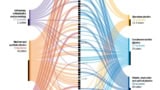
physics salaries.jpg
How salaries stack up. Credit: PayScale

By Margaret Harris

Here’s a rare bit of economic good news: people with physics degrees earn more, on average, than their fellow graduates in all but a handful of disciplines.

According to this study by the US website PayScale, physicists are the sixth-highest-earning group of graduates, with a median salary of $98,800 (just under £60k) after at least 10 years in the workforce. Indeed, physics was one of only three non-engineering majors to crack the top ten, along with computer science and economics. Starting salaries for physicists aren’t bad either: $51,100, or a respectable 14th on the same list of 75 different subjects.

In addition to looking at degree subject, the study also ranked 320 US colleges and universities according to their graduates’ salaries. Readers familiar with the US educational system will find some fascinating results in the list; for example, graduates of Loma Linda University, a religious college in southern California, have the highest median starting salary, while Dartmouth College grads earn the most at mid-career.

Now for the caveats. PayScale’s data set is based on information provided by users of the website, not a random sample of US graduates. Moreover, the survey didn’t include people with advanced degrees; the researchers wanted to compare salaries for those who earned a bachelor’s degree and no more. So all those physicists working as relatively low-paid teachers (not to mention postdocs) 10 years after graduation weren’t included.

Curious about how these factors might affect the results, I spoke with PayScale’s director of quantitative analysis, Al Lee. Lee is a particle physicist by training, having worked at CERN before moving to Duke University — where, among other things, he taught my first physics course. (It’s a small world sometimes.) Back then, he had a fairly evangelical attitude towards physics, regarding it as great preparation for almost any career, so I was keen to hear his opinion.

Lee explained that while their data set of 1.2 m users “skews white collar”, this has little effect on rankings by major degree subject. “The main bias in the majors data is in the people who choose them,” Lee says. “If you’re a mediocre high school student who goes to a mediocre university, and you major in physics, will you make as much as the people who earn the median? Probably not.” However, such unmotivated students are less likely to choose a physics degree — “it isn’t an accidental major” — so that tends to boosts physics’ median-salary rank.

And of course, medians aren’t the whole story: the difference between mid-career physicists earning in the 90th and 10th percentiles is a massive $108,400. That’s less than degrees like economics ($166,800) but much higher than, say, medical technology ($40k).

As for PayScale’s decision to focus on undergraduate degrees, Lee notes that only 25% of those who earn bachelor’s degrees in the US go on to earn advanced degrees, so the sample size is bigger. It’s also hard to determine which institution or degree — graduate or undergraduate — had the greatest effect on a person’s salary. However, physicists will, on average, receive a salary boost from earning a master’s or PhD. That isn’t the case for those who study English, he says.

So would he still recommend a physics degree? “My kids have to at least minor in physics,” he says, adding that he might bend the rules a little if they wanted to do, say, mathematics or economics instead. “At this point in the history of the US, the ability to do math and think logically is something that pays well.”


TrackBack

TrackBack URL for this entry:
http://www.iop.org/mt4/mt-tb.cgi/3347

Comments (5)

  • 1 Fatcat Jul 28, 2009 6:14 PM

    When's the last time the IOP did its salary survey?

  • 2 Michael Cooke Aug 7, 2009 10:30 AM

    I don't think this is stricktly true as I am a physicist of over 10 years and have a relatively low salry with no job prospects, and equally know a lot of physists with PhDs in the same position.

  • 3 Lydia Solvay Sep 28, 2009 1:29 AM

    Perhaps Michael you have a low salary and no job prospects because you cannot spell

  • 4 Matthew Ciesler Nov 19, 2009 7:24 PM

    Currently a sophomore in High School, I was researching on the internet for information and statistics about the salary of physicists. The paper is a minimum twenty pages, and it about what you want to do when you leave high school, detailed career path, etc. I found this site useful for that purpose.
    Also, it gave me a good feeling that the field of physics is credible, when compared to other well-paying engineering or science jobs. These engineering jobs were looking hard to avoid, but throughout the cource of writing the paper and learning more about physicists, I have become more confident (and more well-informed).

    --a comment to Michael
    It dissapoints me that a physicist, who supposedly has gone through a lot of education and experience with computers, has gotten themself into such a sad, sad situation. It, in an indirectly dirogatory way, is a reminder of the student sitting next to me as I type this that talk all day and do not work to the best of their abilities, suffocating their possibilities later on.

    This will probobly be the only time I look at this sight, but I will try to come back to it in time and look at any replies. Thank you, Physicsworld.

  • 5 Margaret Harris Author Profile Page Nov 20, 2009 9:27 AM

    Glad it was useful, Matthew.

Post a comment

(If you haven't left a comment here before, you may need to be approved by the site owner before your comment will appear. Until then, it won't appear on the entry. Thanks for waiting.)

Your comments