Telltale patterns of antineutrino emissions could reveal whether fusion reactors have been reconfigured to produce material for nuclear weapons, say physicists in the US. Although commercial fusion power plants are still some years away, members of the team at Virginia Tech and Princeton University argue that it is nevertheless useful to develop robust ways of monitoring their output now, to ensure the technology is not misused.
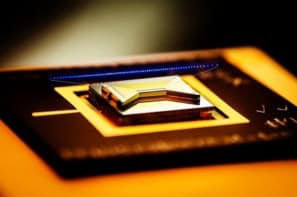
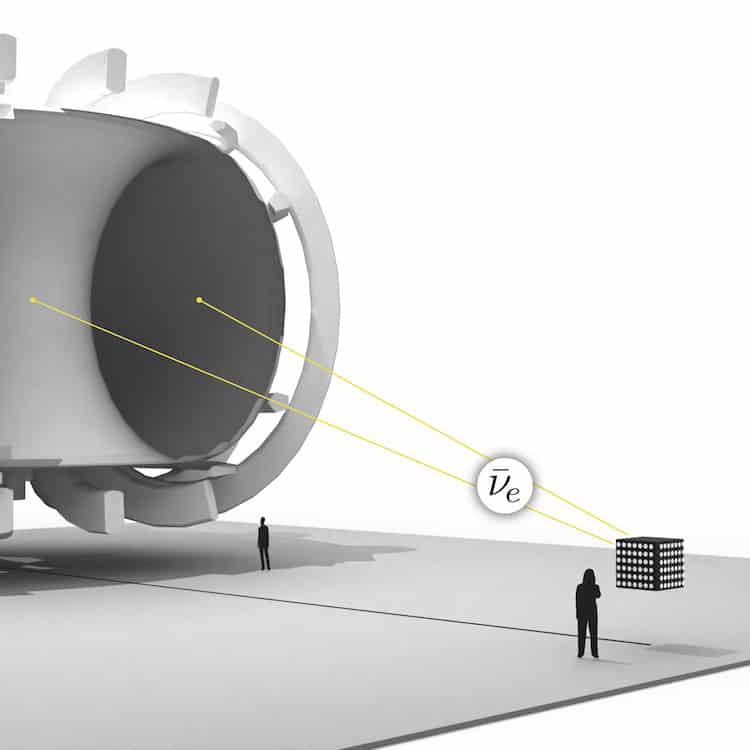
“Neutrinos cannot be shielded, their signatures cannot be spoofed and they can be detected from a distance, either onsite or offsite, allowing for nonintrusive monitoring of reactor operation,” says team member Patrick Huber, a physicist at Virginia Tech’s Center for Neutrino Physics. Better still, the team’s calculations show that existing antineutrino detectors such as Virginia Tech’s mobile MiniCHANDLER are sensitive enough to spot these signatures.
The DT process and nuclear proliferation
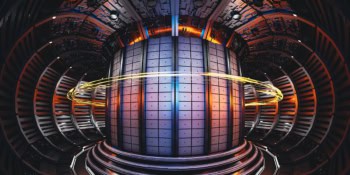
Most fusion technologies rely on the deuterium-tritium (DT) fusion process, which occurs when a deuterium nucleus (a proton bound to a neutron) and a tritium nucleus (one proton and two neutrons) fuse to produce helium-4, a free neutron and large amounts of energy. Because fissile materials are not directly involved in this reaction, the nuclear proliferation risk of fusion reactors is widely regarded as being much lower than that of fission power plants.
That said, if neutrons released in the DT process were combined with small amounts of material such as uranium-238 or thorium-232 in the “blanket” that surrounds the DT fuel in the fusion reactor, it would, in principle, be possible to use the reactor to produce plutonium-239 or uranium-233. Both materials are used in nuclear weapons, and a gigawatt-scale fusion reactor operating in this mode could produce tens of kilograms per week – enough for several first-generation bombs.
Checking for nuclear fingerprints
Crucially, though, this clandestine production would not necessarily go unnoticed. Whenever radioisotopes in the blanket absorb neutrons during the fusion process, they give off a distinctive pattern of antineutrinos. And according to the Princeton-Virginia Tech team’s simulations, the current generation of antineutrino detectors is already capable of distinguishing this pattern from the one produced during normal reactor operations.
In the current study, which appears in Phys. Rev. Applied, the researchers focused on the plutonium antineutrino signal. Using a Monte Carlo particle transport code called MCNP6, they modelled the output of a simplified toroidal fusion reactor with an outer radius of 6.2 m and an inner radius of 2.0 m. This reference reactor would operate at a typical power density, and Huber explains that it would produce a total of 1500 MW of power through plasma fusion via the DT reaction. The team also analysed two designs for the “blanket”: one featuring a molten salt (LiF-BeF2 or FLiBe) and one that relied on dual-coolant lead-lithium (DCLL).
Next, the two Princeton members of the team, Alexander Glaser and Robert James Goldston, defined and evaluated a reference fissile material production scenario. As part of this, they estimated both the plutonium production rate and the energy release that occurs as some of the covertly introduced nuclear material undergoes fission. Huber explains that this evaluation provided the first part of the antineutrino background signal.
Glaser and Goldston then analysed the neutron activation and antineutrino signatures driven by neutrons emanating from the fusion plasma. These provided the second part of the background. Finally, the team used these signatures to assess the detectability of covert fissile material production against the combined background from neutron activation and cosmogenic antineutrinos.
The dirtiest words in fusion and fission

Based on these simulations, the team concluded that a detector like MiniCHANDLER could pick up on the production of a few kg of plutonium over 30 days – a result that Huber says should be applicable to any fusion power system that relies on DT fusion. Importantly, he points out that unlike some alternatives, antineutrino-based monitoring does not require inspectors to have access to reactor buildings and could allow plants to be monitored around the clock.
Practical advantages
The idea of using antineutrinos to detect illicit nuclear material production is not new. It dates back to the 1970s, and the two Princeton team members have previously worked on nuclear monitoring and verification for a variety of nuclear reactors and nuclear fuel-cycle facilities (including some in Iran). Given the rapid development of fusion energy systems, Hubner tells Physics World it was “a natural next step” to consider non-intrusive, antineutrino-based monitoring options for them, too. He adds that the group has been studying possible safeguards for fusion reactors since the early 2010s and was part of an IAEA consultancy on the topic in 2013.
As well as optimizing the design of detector systems, Huber says he and his colleagues are also interested in studying thorium as an alternative “fertile” material. “Even though the fission signature would be weaker compared with the uranium reference case analysed in this study, the results we have reported on already suggest that such an effort is well justified,” he says.