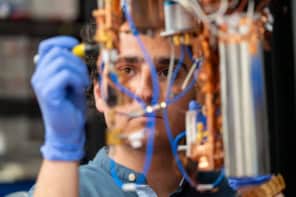
Quantum Design’s acquisition of Oxford Instruments NanoScience has created a global company with the engineering firepower to create innovative measurement solutions and large-scale cryogenic systems for quantum computing and physics research
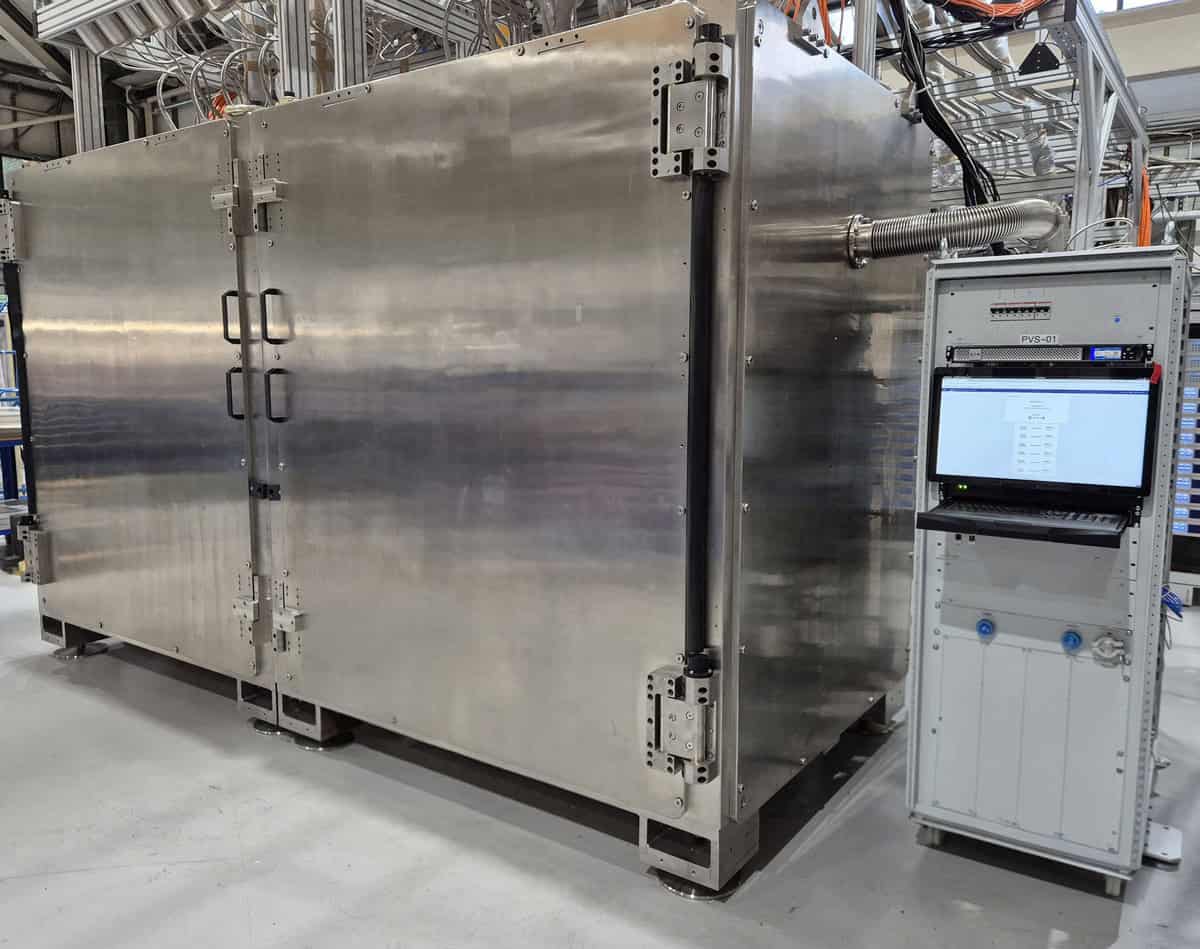
When Oxford Instruments sought to sell its NanoScience business in 2024, the goal was to find a partner that would enable the physics-based business to thrive in a global market. The ideal fit turned out to be Quantum Design, a US firm based in San Diego, California, that designs, manufactures and distributes scientific instruments for understanding the properties of materials. In January 2026 the acquisition was complete, and Quantum Design Oxford was formed.
“In Quantum Design, we have found a natural home,” says Matt Martin, Managing Director of Quantum Design Oxford. “We both have a similar focus on cryogenics, magnets and measuring physical properties, and we share the same philosophy for making complex technologies simple to use. But Quantum Design will enable us to scale quickly with its global network for sales and customer service.”
The merger has created the largest global supplier of cryogenic equipment for materials characterization. Quantum Design has built a strong reputation within the research community for creating multifunction platforms that combine automatic protocols for measuring a variety of physical parameters with the flexibility for users to design their own experiments. Quantum Design Oxford offers a complementary suite of measurement systems, and a core competency in designing and building superconducting magnets for high-field applications, up to 20 Tesla.
The UK-based facility also has a long history of producing dilution refrigerators that exploit progressive cooling stages to reach temperatures down to a few millikelvin. Once built primarily for physics experiments at ultralow temperatures, large-scale versions of these cryogenic systems have more recently become a critical enabling technology for building and testing quantum computers based on superconducting and spin qubits. Indeed, Quantum Design Oxford has installed a number of these systems across the globe over the last few years.
Adding this capability to Quantum Design’s existing technology portfolio offers a major growth opportunity for the combined company. “With the acquisition, Quantum Design has become a major player in quantum systems and large-scale cryogenic platforms,” says John Burgoyne, Head of Strategic Partnerships and Business Development for Quantum Design Oxford. “As Oxford Instruments, we had the technical expertise and a full range of dilution fridges, but we did not have the commercial reach that Quantum Design can provide.”
A critical element of that commercial offering is Quantum Design’s global network for sales and support. “Quantum Design is renowned for its customer service, and we are already seeing the benefits of being able to scale and improve our customer-facing activities,” says Burgoyne. “Having local access to expert support is particularly important for our industrial quantum computing customers, since uptime and resilience are key requirements for supporting their commercial activities, especially as they reach into quantum-enabled data centres.”
Bridging national quantum strategies
For applications in quantum computing, the dual nationality of the combined company offers a particular advantage. Both the UK and the US have set clear mandates for maintaining a sovereign capability in such a strategically important technology, with the British government stipulating that Quantum Design Oxford should remain a UK-domiciled company after the acquisition. But coming under US ownership opens up a much larger customer base and also offers opportunities that previously would have been off limits, such as supplying equipment into government or defence organizations.
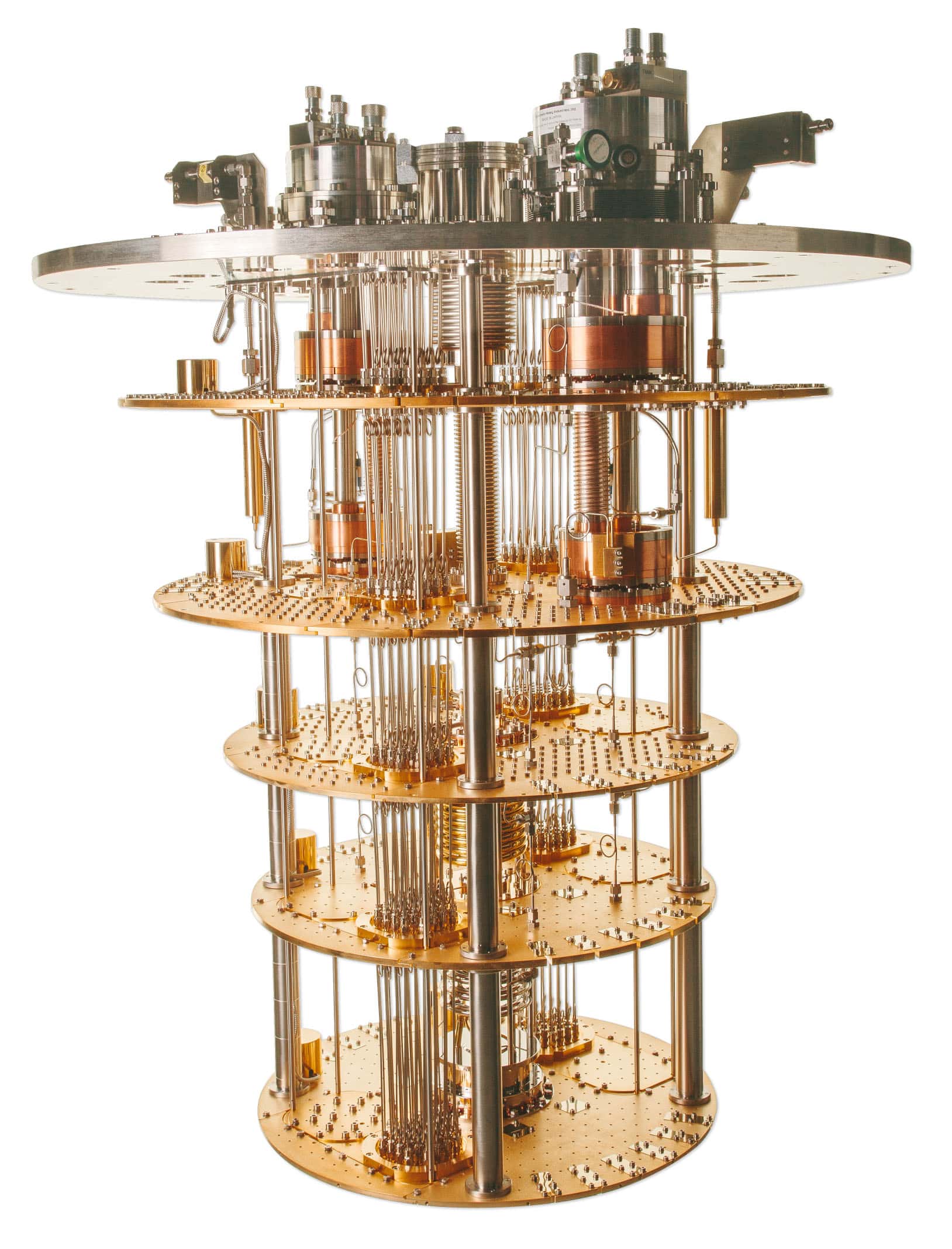
At the same time, Quantum Design Oxford remains solidly anchored within the UK’s supply chain for quantum computing, again allowing it to participate in projects where national security might be a factor. That also means that the firm’s R&D activities will remain in the UK, allowing Quantum Design Oxford to build on its existing collaborations with Innovate UK and the science research councils. “Quantum Design bought us for what we are already doing,” says Martin. “We will continue to follow our technology roadmap, and to maintain our R&D collaborations to scale and develop our systems, while also marrying these activities to the Quantum Design global network. ”
Crucially, however, the acquisition is already bringing extra investment into the business to better support those development activities. One key focus in recent years has been to make the complexities of the cryogenics technology invisible to users, while also ensuring that the systems deliver the reliability and repeatability needed for operational use. “We have already gone a long way down that path, but we have lots of ideas and Quantum Design has given us the backing to ramp up our development activities,” says Martin.
Such a strong focus on systems engineering is already bearing dividends, with the firm winning several contracts to deliver cryogenic platforms to commercial quantum computing companies. Notable among them is OQC, a UK-based full-stack quantum computing company that has been installing its superconducting Quantum-Computing-as-a-Service (QCaaS) platforms into operational data centres in major international hubs, including London, Tokyo and New York.
The team at Quantum Design Oxford has been working with OQC to engineer cryogenics systems that can be integrated seamlessly into such an operational environment, while also providing the stability and resilience that OQC needs to maintain cloud access to its quantum resources. “Those first quantum data centres are running and they are using our dilution fridges, which is a huge success story for us, our partner OQC, and for physics-based industry in the UK,” says Burgoyne.
Extra funding is also being directed towards the manufacturing facilities at the UK site, another move that is designed to provide better outcomes for customers. “Quantum Design is prepared to invest in our factory, which will add further resilience to our operations,” adds Martin. “It will allow us to shorten our lead times and assure on-time deliveries, ensuring that we put the customer first in very tangible ways.”
Focusing on the fundamentals
Meanwhile, both Martin and Burgoyne are keenly aware that today’s version of quantum computing is just the beginning of a much longer journey. The emerging era of quantum utility will require more qubits and larger quantum systems, and scaling up the quantum hardware will also require a renewed focus on the fundamental capabilities of ultracold systems. “The quantum industry has stretched cryogenics technology that was originally developed for university research as far as it can reasonably go,” says Martin. “Existing systems will keep pace until around 2030, but more research is needed to develop new materials and capabilities, such as cryo-electronic systems that can operate in ultracold temperatures.”
With its strong connections into the research community, Quantum Design Oxford has been championing the need for new projects in low-temperature physics and in liquid-helium technology for large-scale quantum systems. “We need to go back and do some absolutely fundamental research in a way that has not really been done for several decades,” says Martin. “Re-anchoring the technology back into the universities will be crucial for building the scalable and deployable quantum systems of the future.”
At the same time, the physics community continues to search for new materials and structures that could enable different qubit modalities and other next-generation applications. Both the US and UK teams of Quantum Design have deep expertise in developing tools for probing the properties of matter, and they have a shared goal of creating systems that make it easier for researchers to extract useful measurements from their samples. As an example, both companies have been adapting their measurement platforms to allow researchers to use open-source tools for common tasks such as data capture and post-measurement analysis.
Joining forces has also created a much larger team of technologists who are working to improve the system design and to develop new measurement techniques. “We have very complementary product roadmaps,” says Martin. “We now have a large engineering team working on very similar problems, and we can already see synergies for developing new measurement applications for our customers.”
That core commitment to meeting the needs of the research community is deeply rooted in the Quantum Design identity. While the emerging quantum industry offers an enticing market opportunity for the combined company, the systems now being engineered for commercial use have been built on a fundamental understanding of the physics. “We have followed progress as physicists have moved from measuring quantum properties of materials to building large-scale machines for quantum computing,” says Burgoyne. “There is much more to come, and we are well positioned to support the whole ecosystem from fundamental discovery through to commercial deployment.”